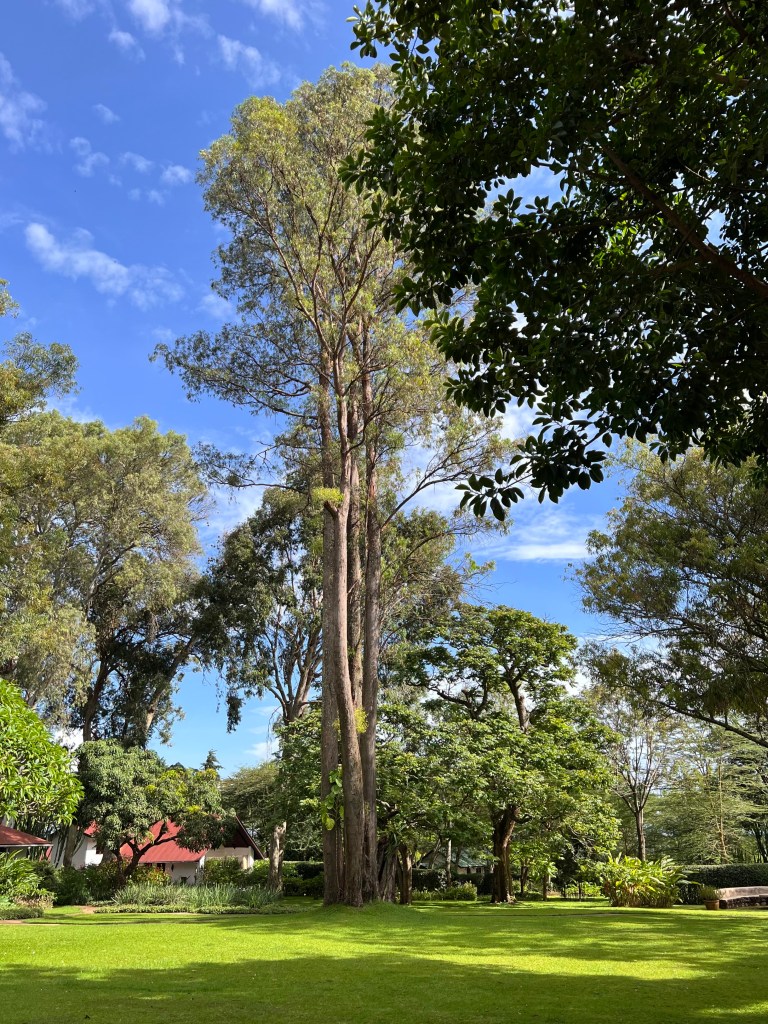
The elegant farm houses along with beautiful tropical gardens
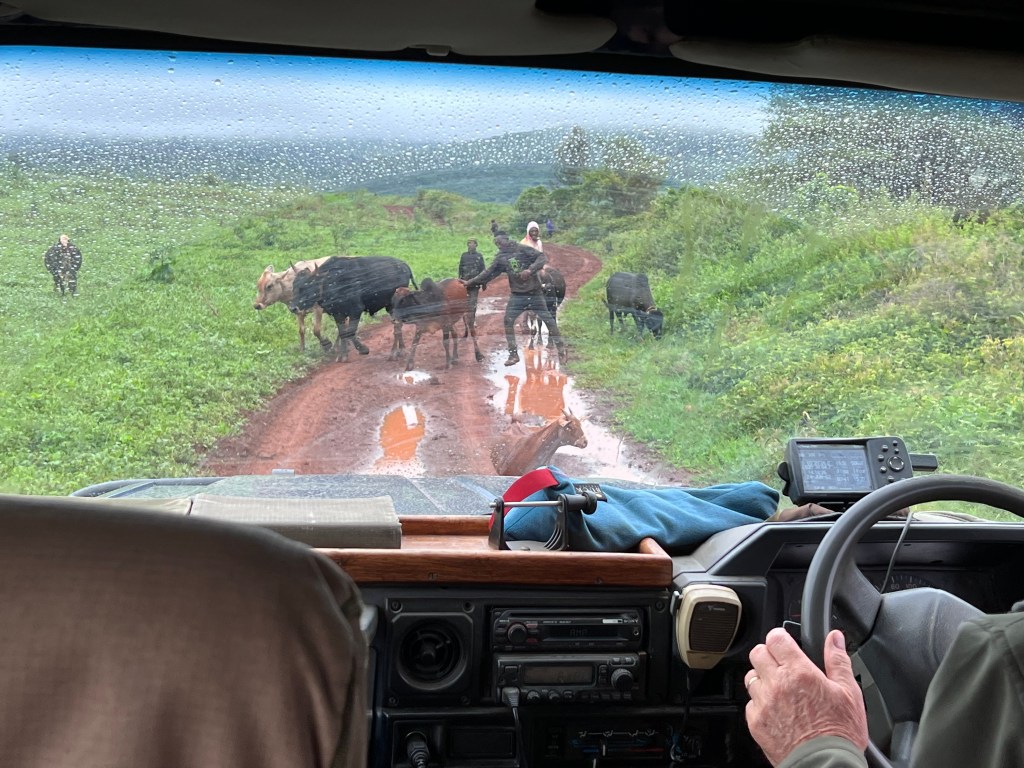
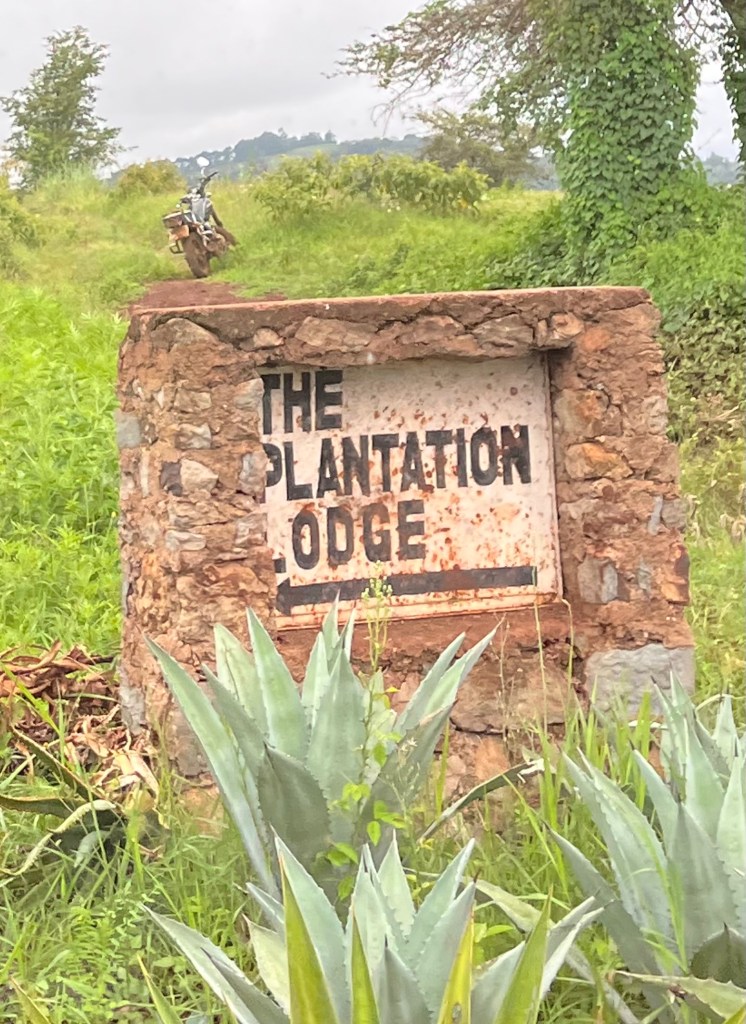
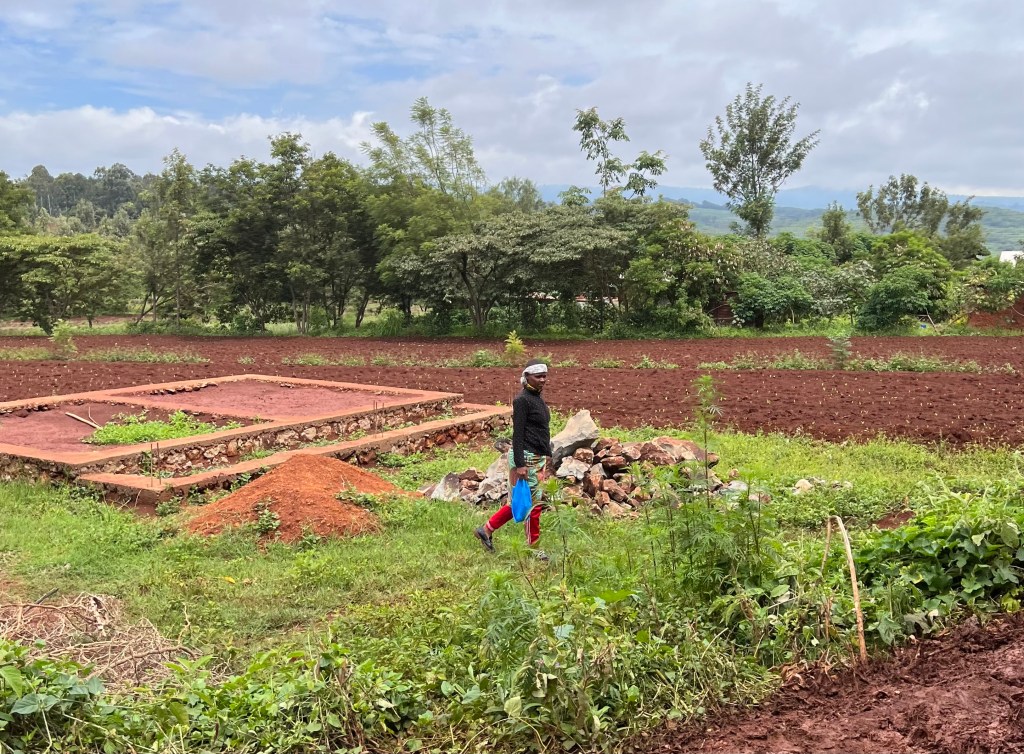
What the roads were like and yes we turned left Gary! Homes often are started with the money they have at the time and left until they have more money to add the walls etc. This foundation was on the road up to the plantation. Note the wonderful red volcanic soils.
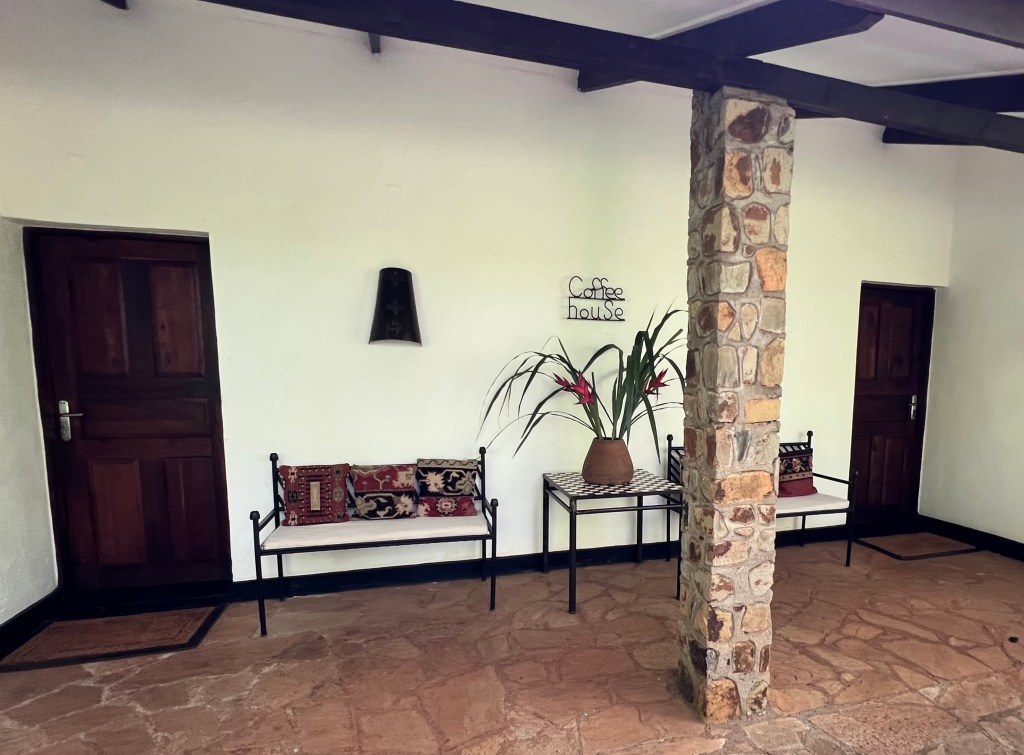
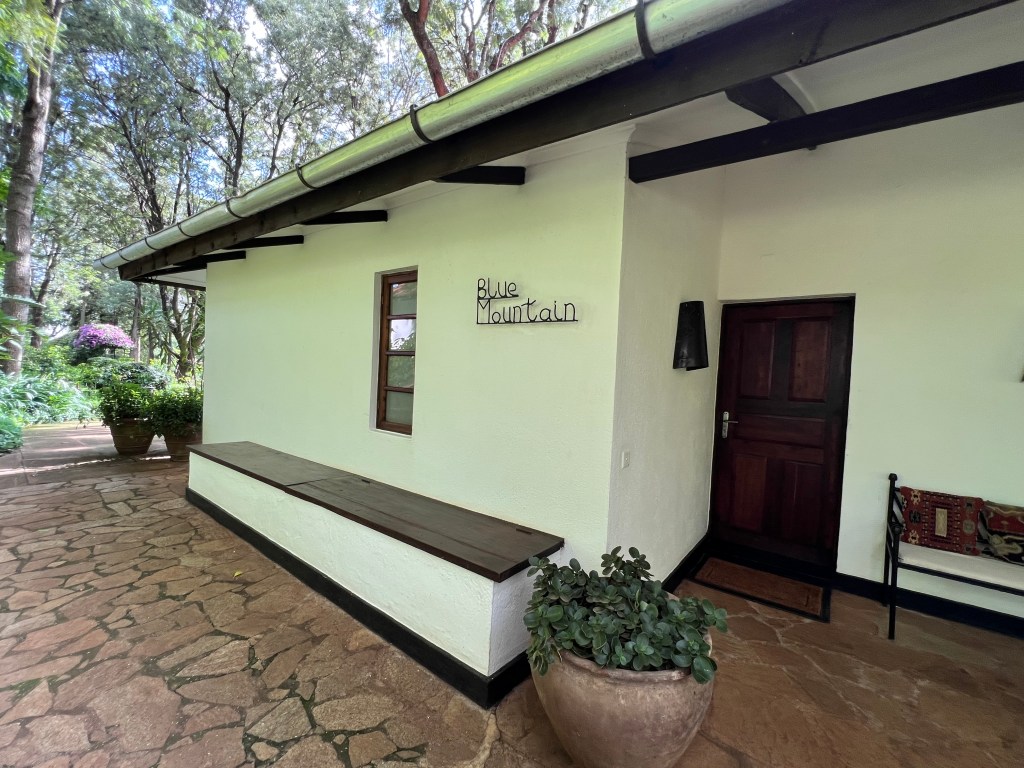
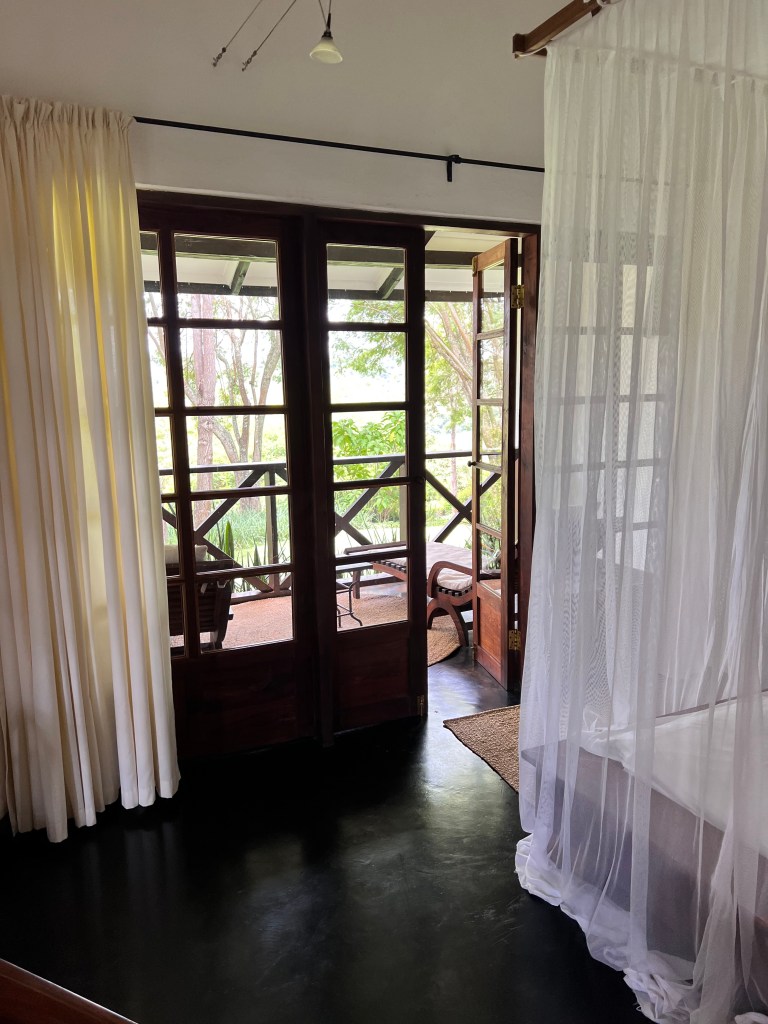
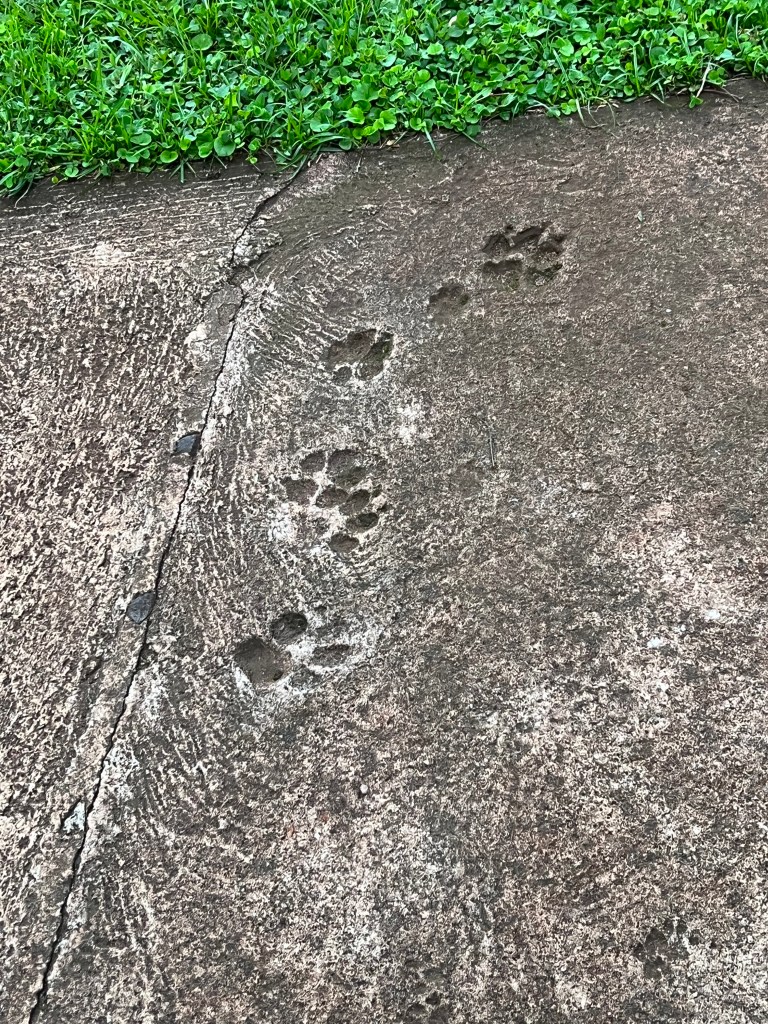
We spent our first night at the Plantation Lodge in Karatu where we arrived late afternoon after our full day in the Ngorongoro Crater. We each had a part of our own house. We were Blue Mountain at the Coffee House. The far side of camp folks we’re once again relegated to walking the farthest. Ralph and Deborah Mcleran who were always in tent one were in the right side of the Coffee House. Our room had a shower and a bathtub. A yummy bathtub! The big cat paws were in the concrete as we walked back and forth. Not sure if they were real but it did makes us very aware of where we were. The Lodge was totally fenced and seemed secure but you never know!
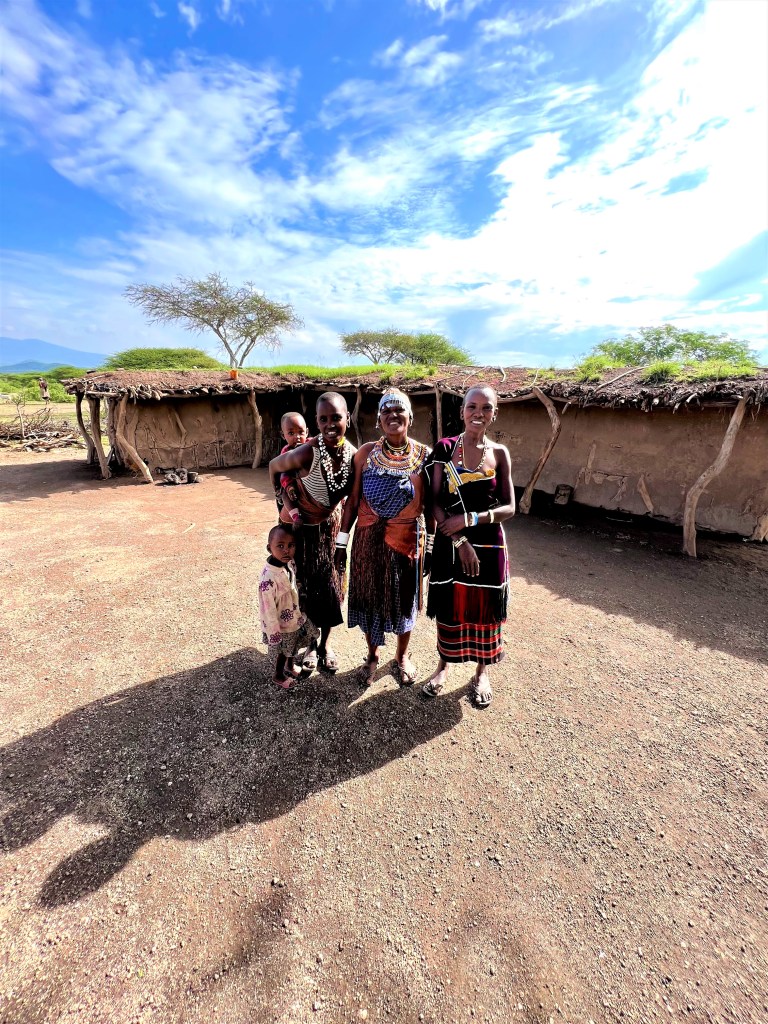
The Datoga live on the shores of Eyasi Lake near Karatu in their traditional huts. They descend from populations of the Nilotic strain who settled in Northern Tanzania over 3,000 years ago from Ethiopia and South Sudan. Their main source o living may be animal breeding but over the centuries they introduced farming and grow corn and millet. They are decreasing in numbers . The government in the past have canceled local traditions and have let other tribes immigrate onto their ancestral lands. The Maasai are not their friend.
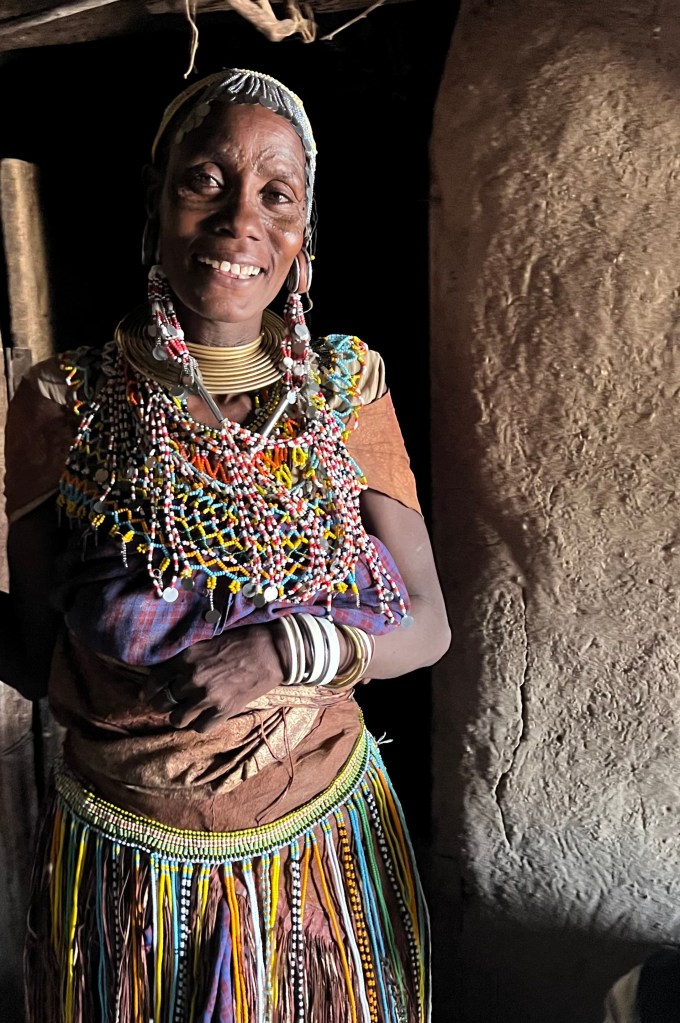
The women are beautiful and graceful and some still have the mask-shaped tattoo and large holes in their ear lobes although this tradition is being lost. Their buildings are rectangular buildings using branches and mud. They are mostly goat herders in comparison to the Maasai who still believe tribes wealth is only the number of cattle they own and all the cows in the world belong to the Maasai – although the government is trying to help various tribes diversify their wealth.
The Datoga speak a different language than Swahili and we had a translator. While looking over these photos, tears still come to my eyes as I remember the morning they shared their life with our group. No language to bond over …just love of a simple life and moms and kids. Both human and goat…lol!
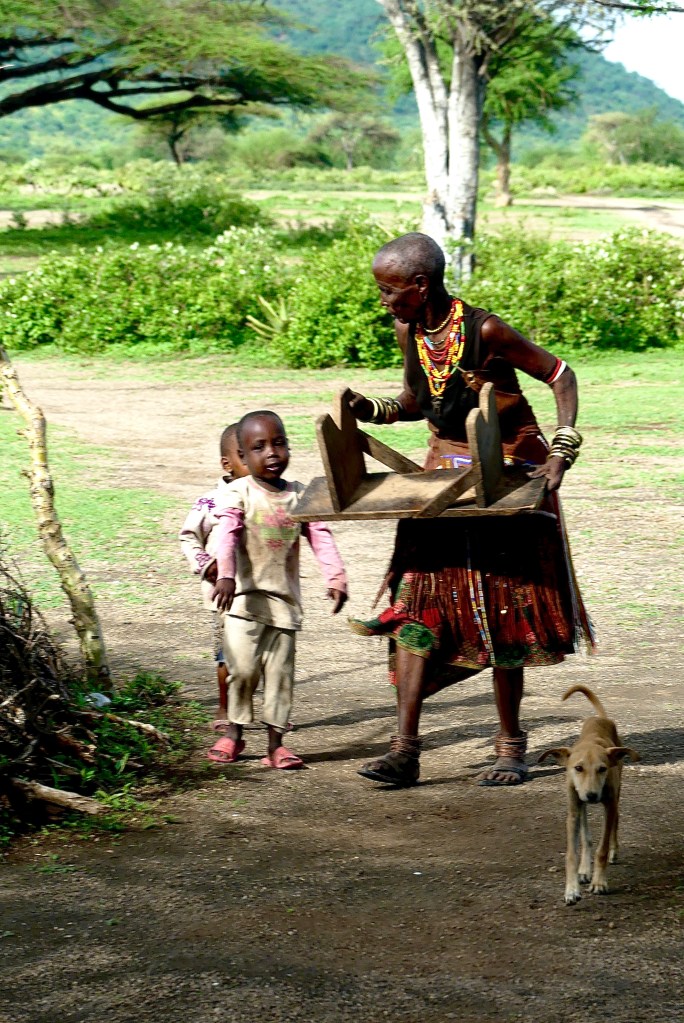
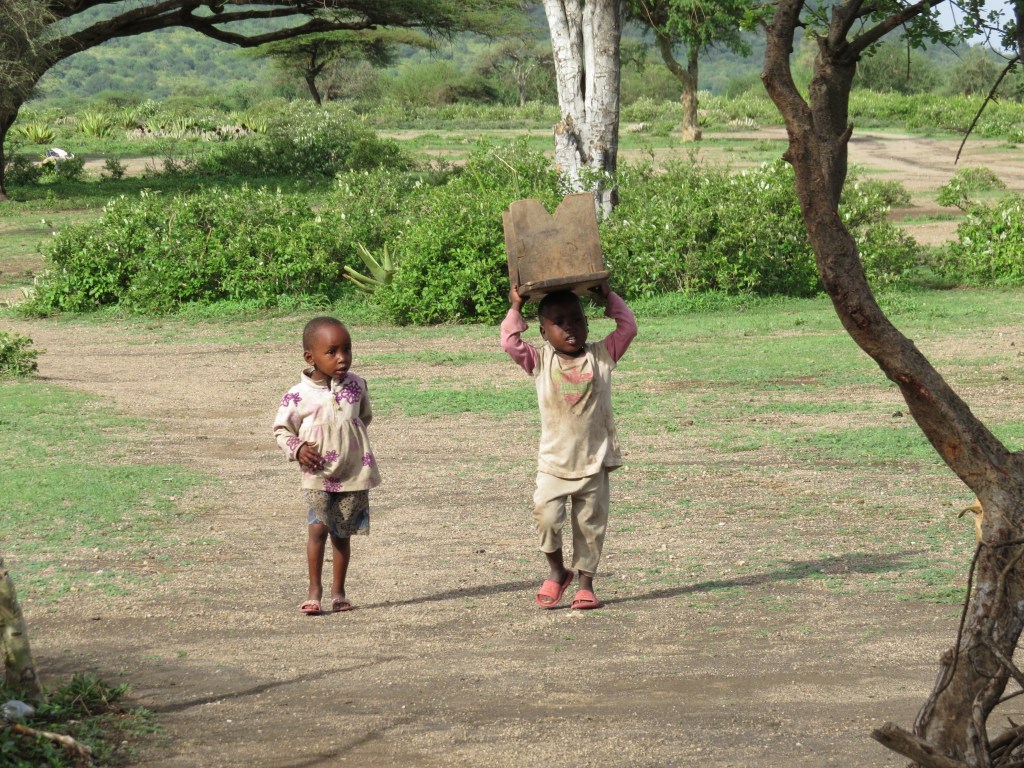
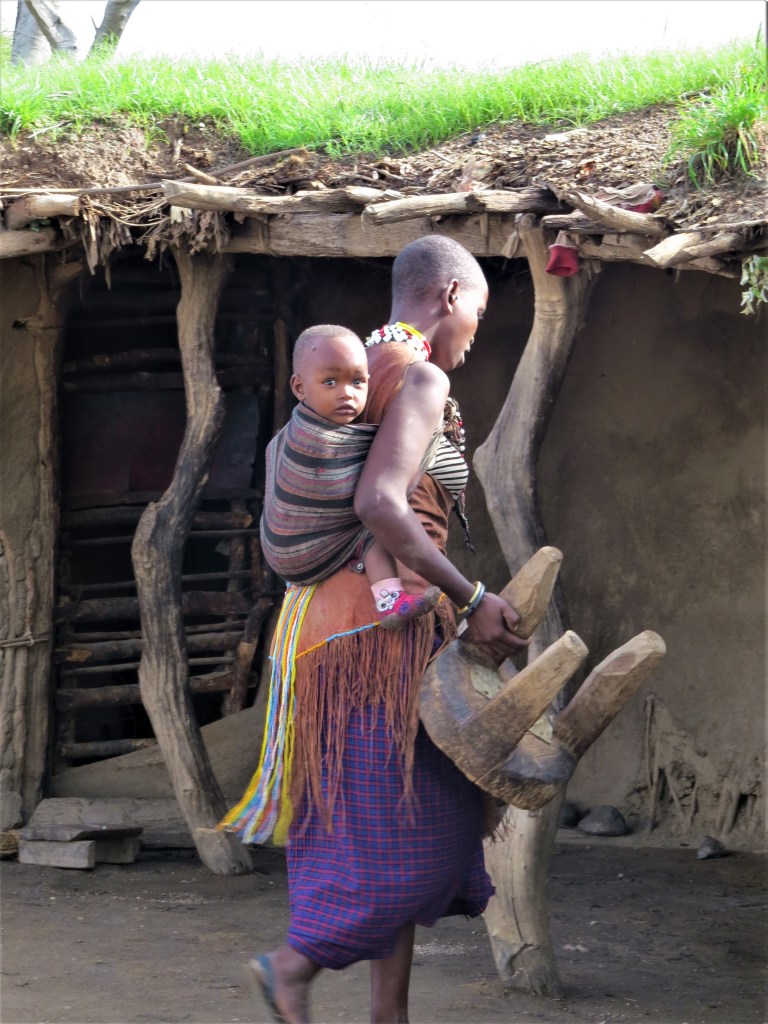
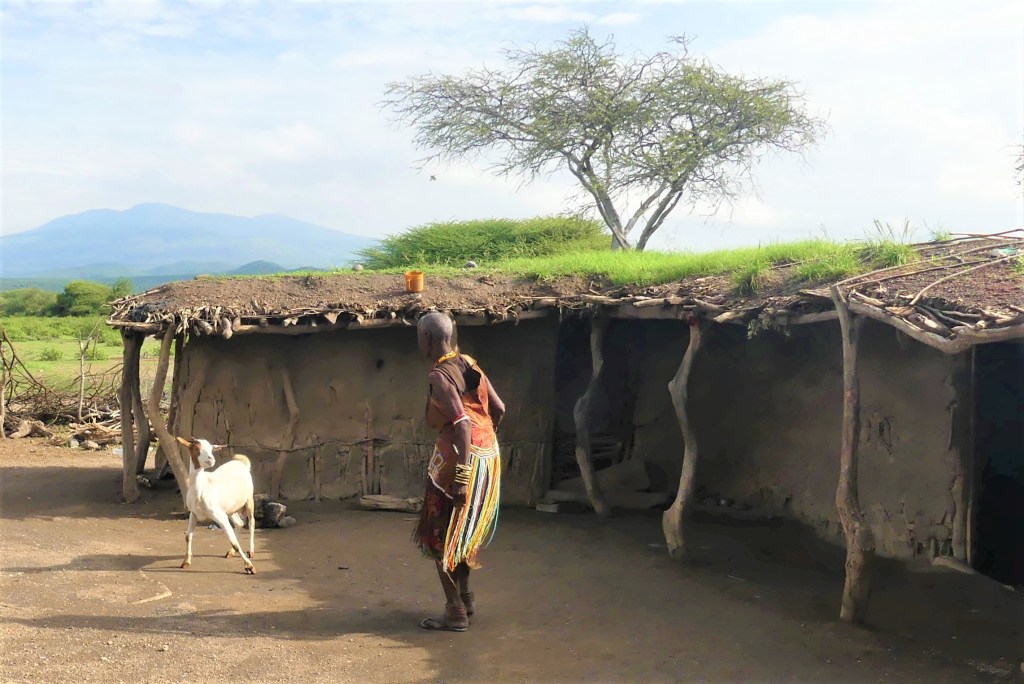
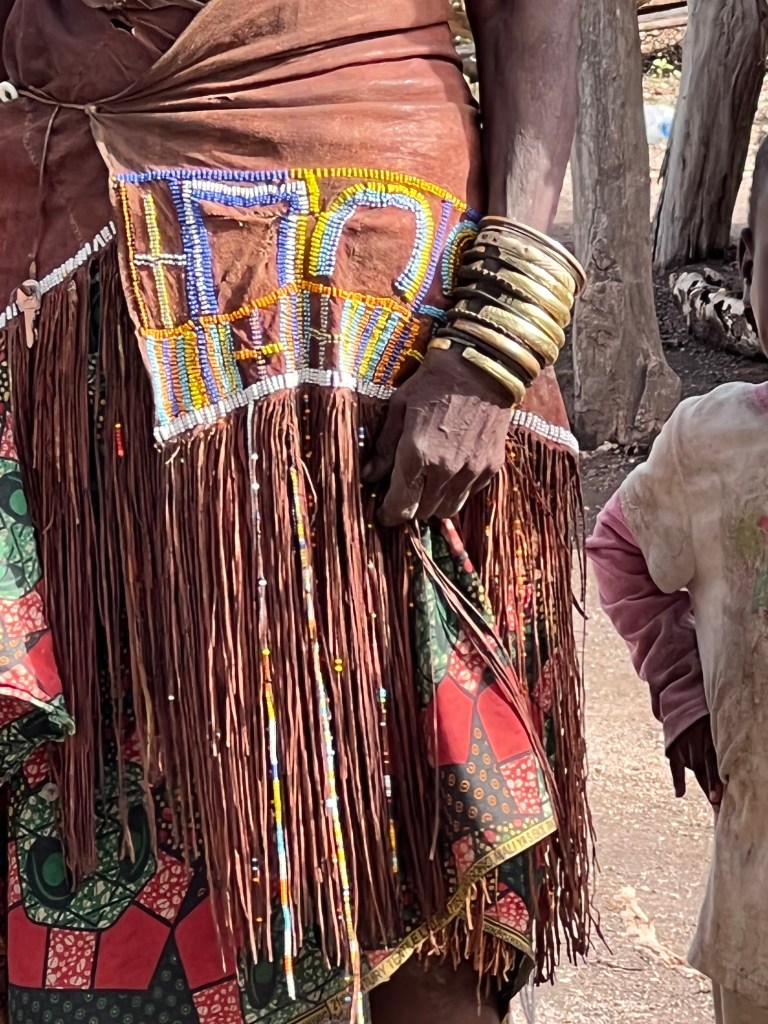
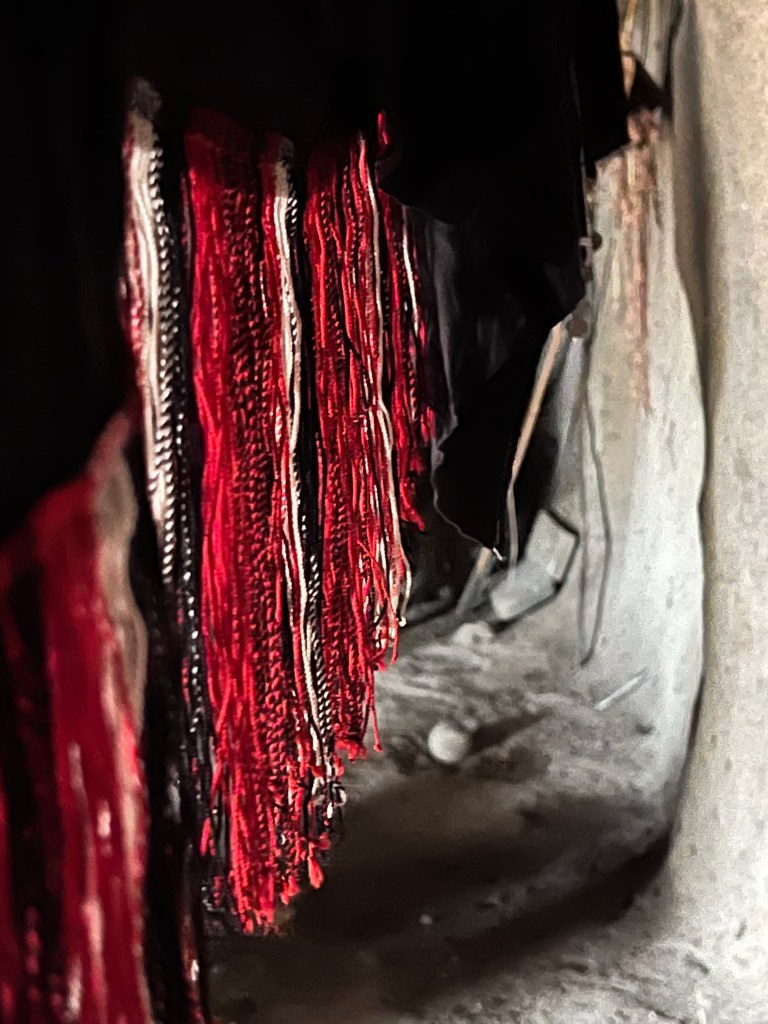
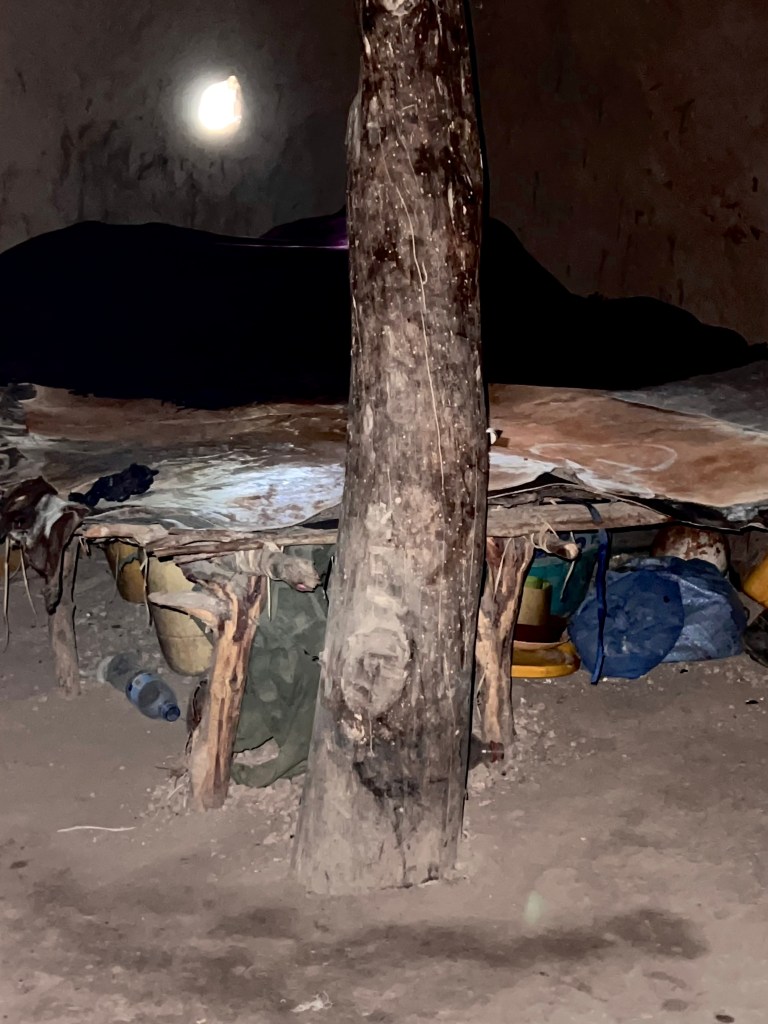
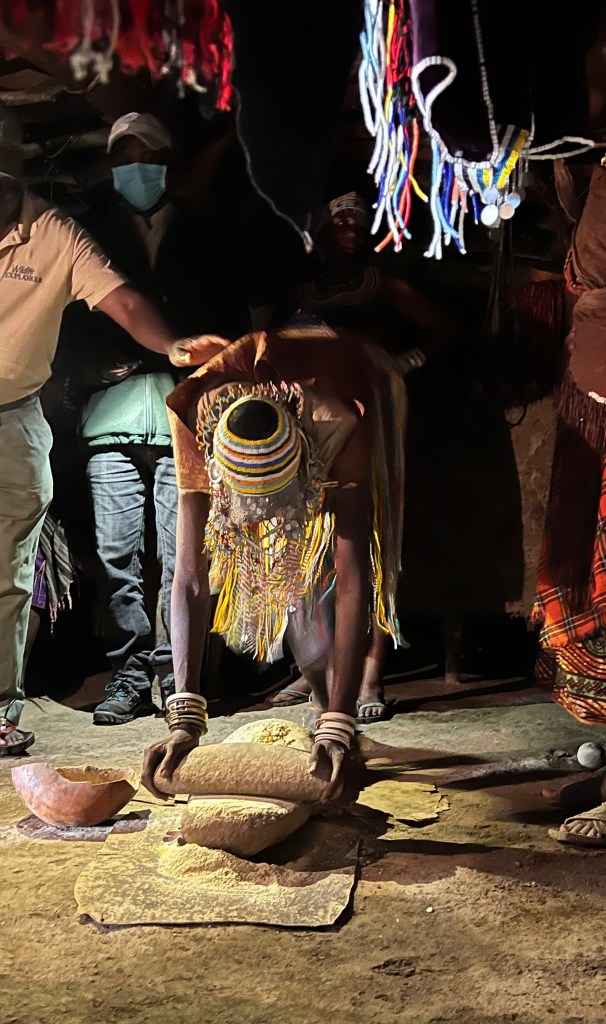
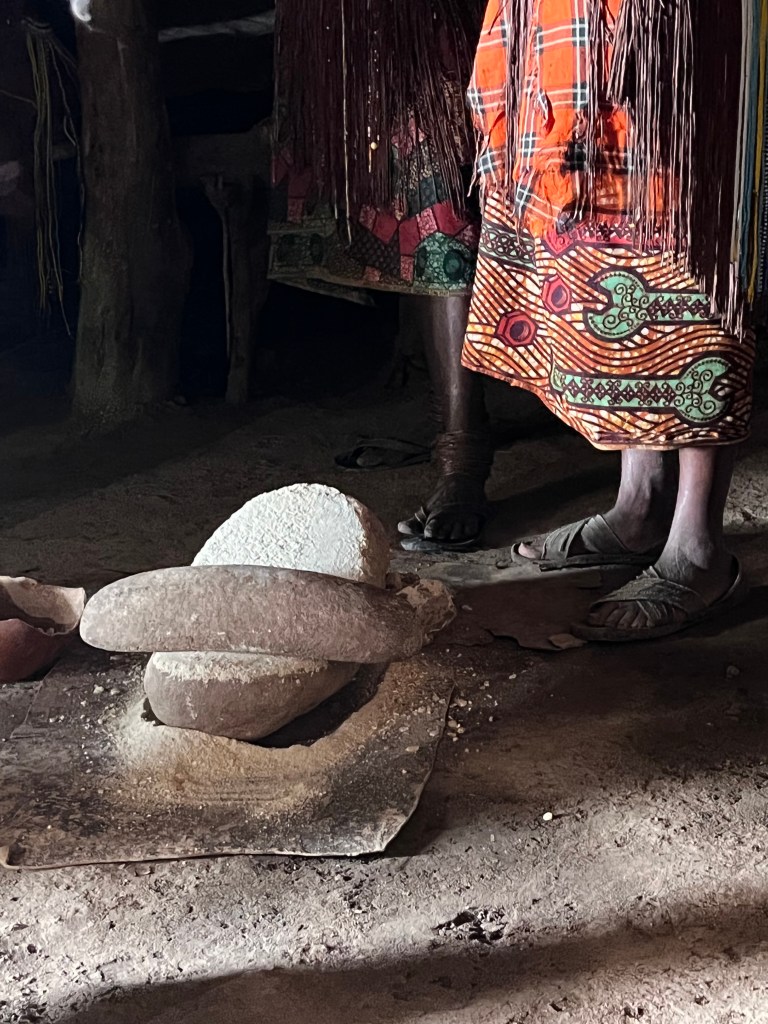
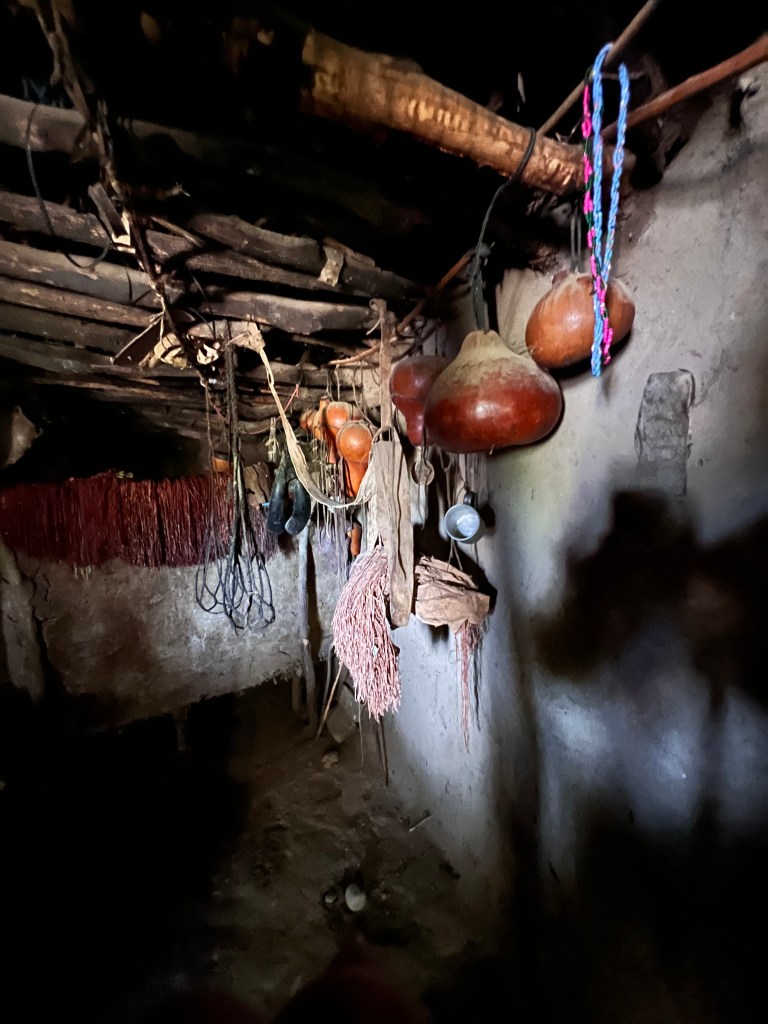
As we gathered, the women brought stools for us to sit on as they showed us their hut and how to grind corn. They spent time chasing goats away before we could enter. For some reason the goats always headed toward the door to get into the huts. The huts are dark with no windows. The first room was where they sang as Karen, Jess and Larkin helped grind the corn. The other room was where they slept. They uses white corn which they grind into flour using the stone. They then cook ugali which is basically white polenta – a diet of many east African cultures.
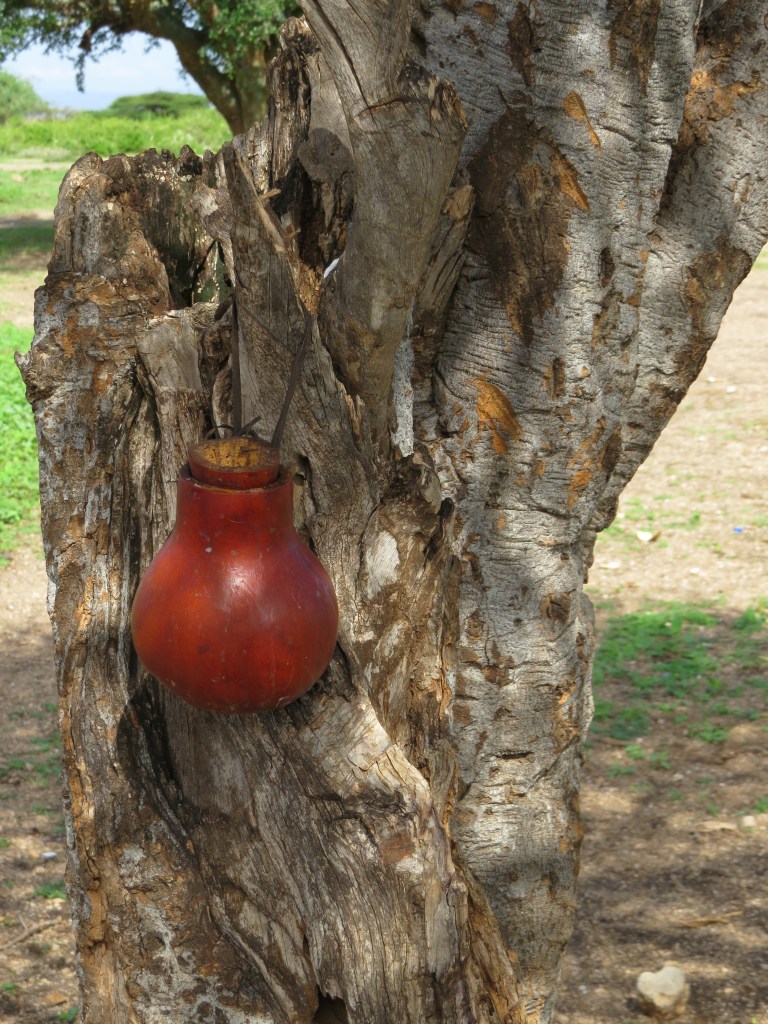
The pumpkin gourds are hung on the walls and are used to store and transport milk. The largest ones are used to collect water. I understand the largest are used to produce a local liqueur made from agave – it is used to celebrate weddings or funerals.
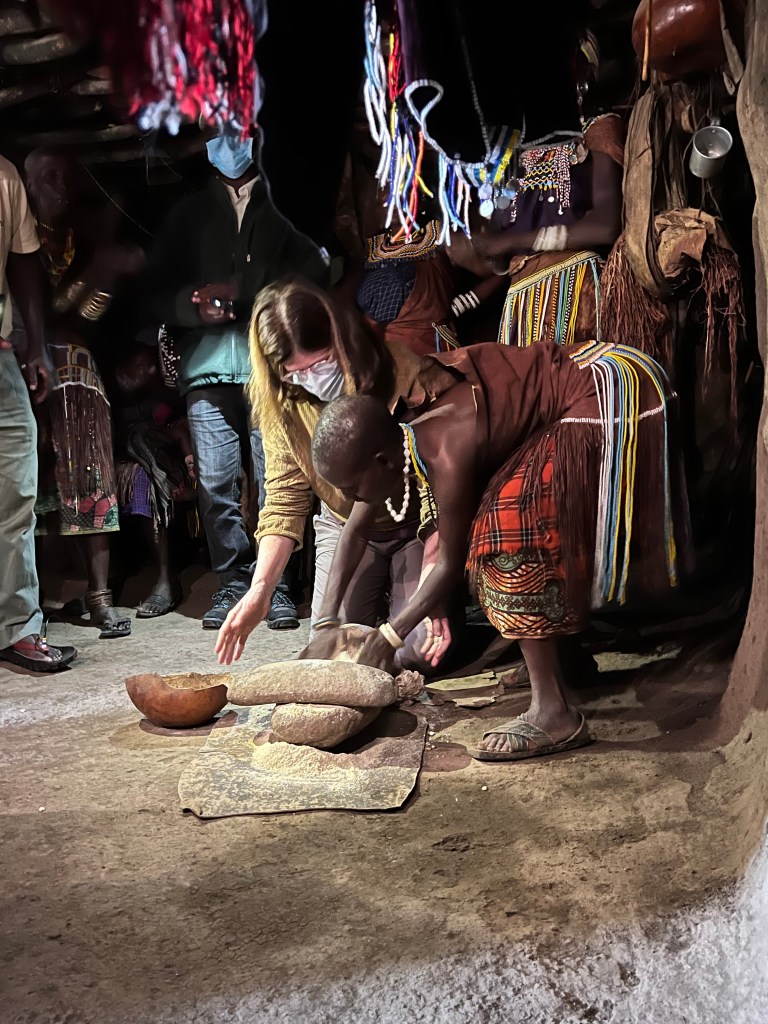
Karen started the grinding as the women sang 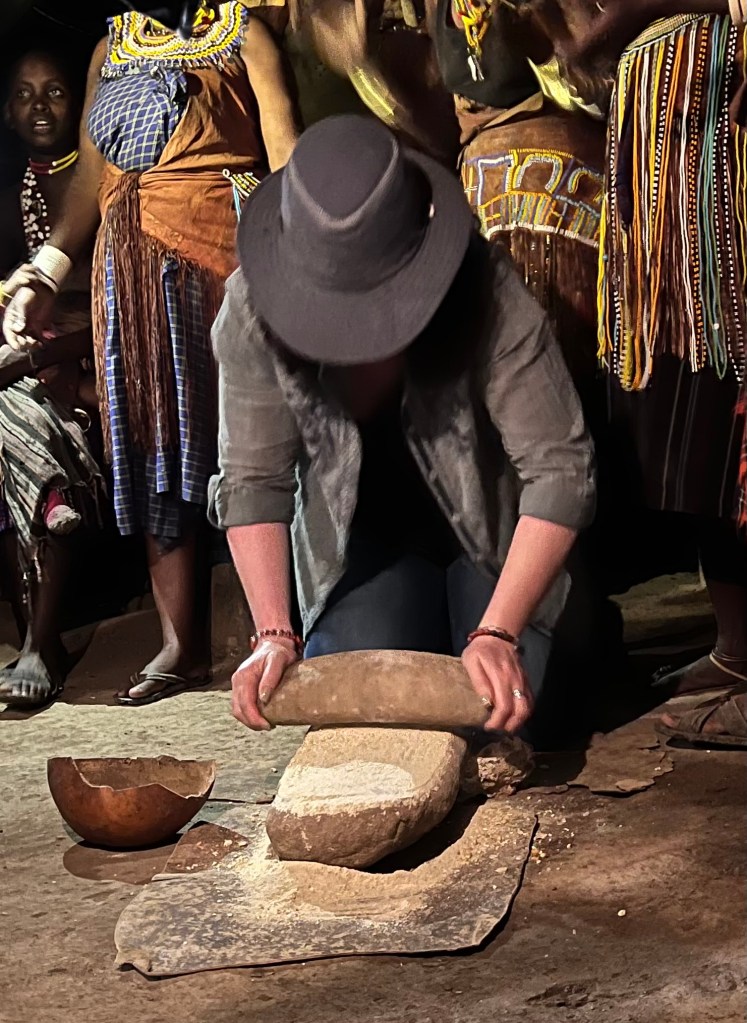
Jess grinding corn
A few kids were watching us and the beautiful faces of the women including what we believe was the matriarch. Jill in our group had been to visit these women last year with Gary on a safari. She graciously brought beads from America and handed them over to the matriarch. They all appreciated the gesture and will use the beads in their beautiful creations.
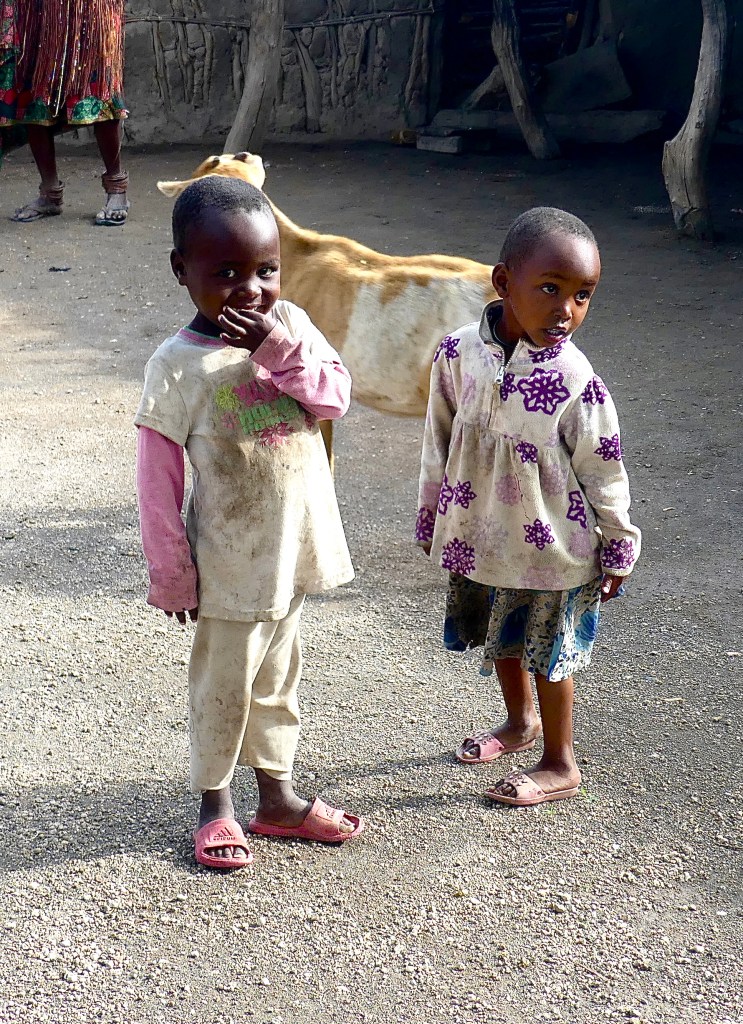
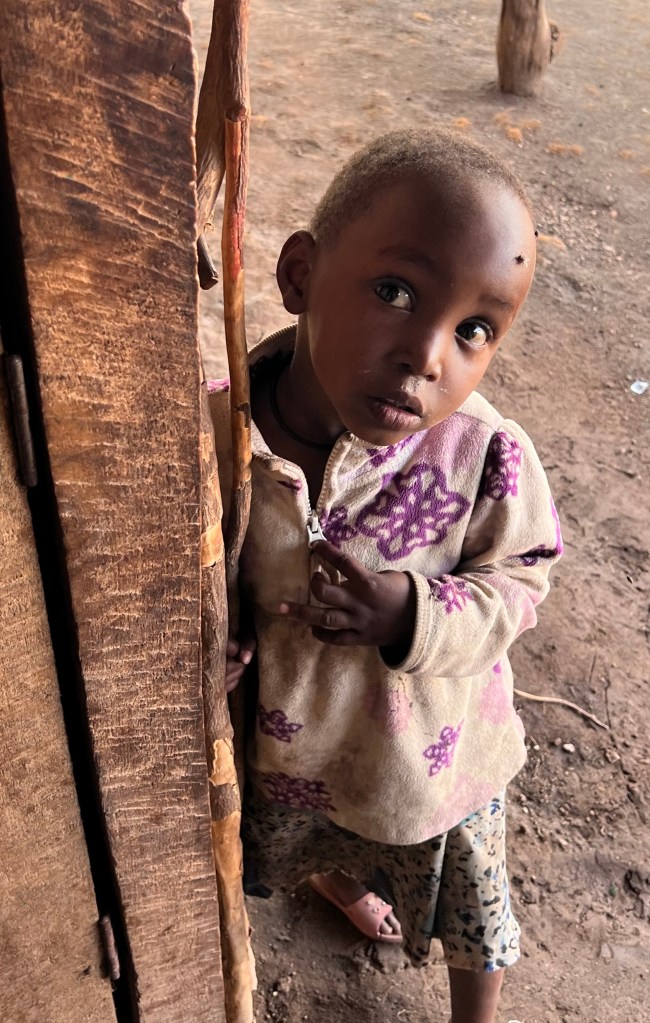
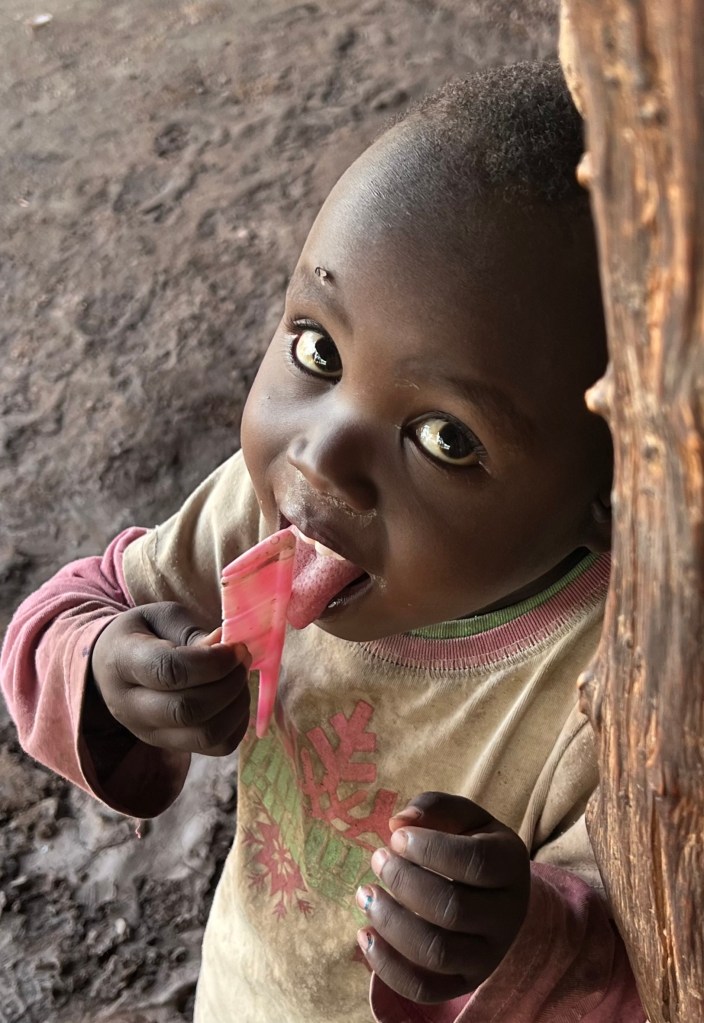
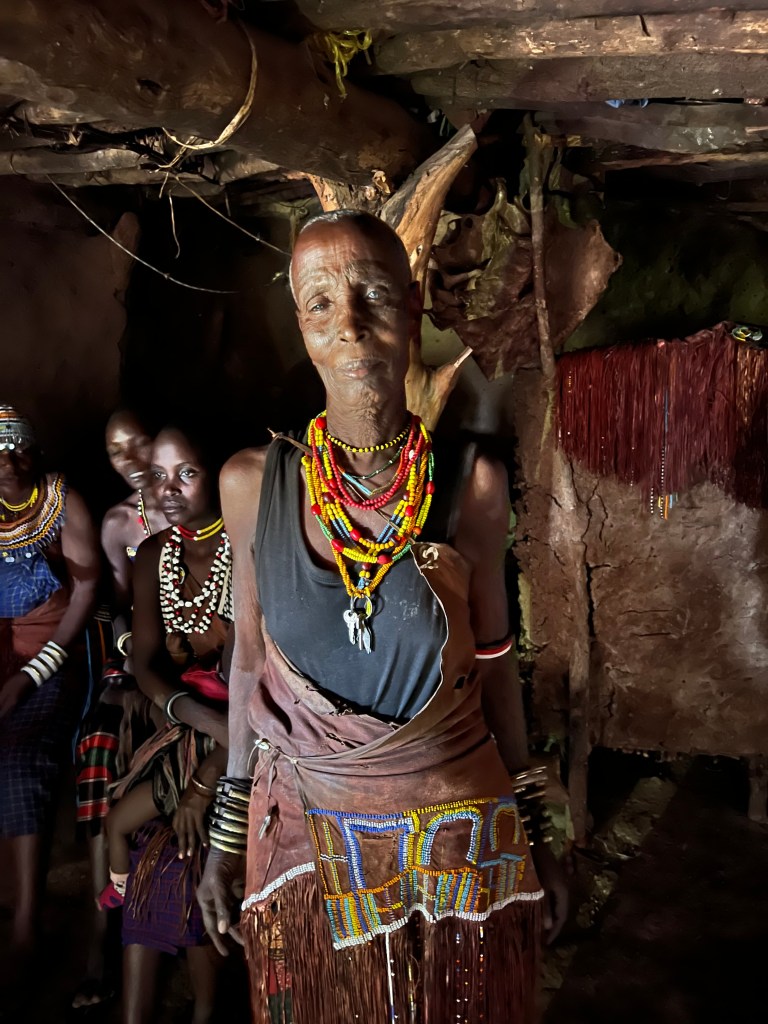
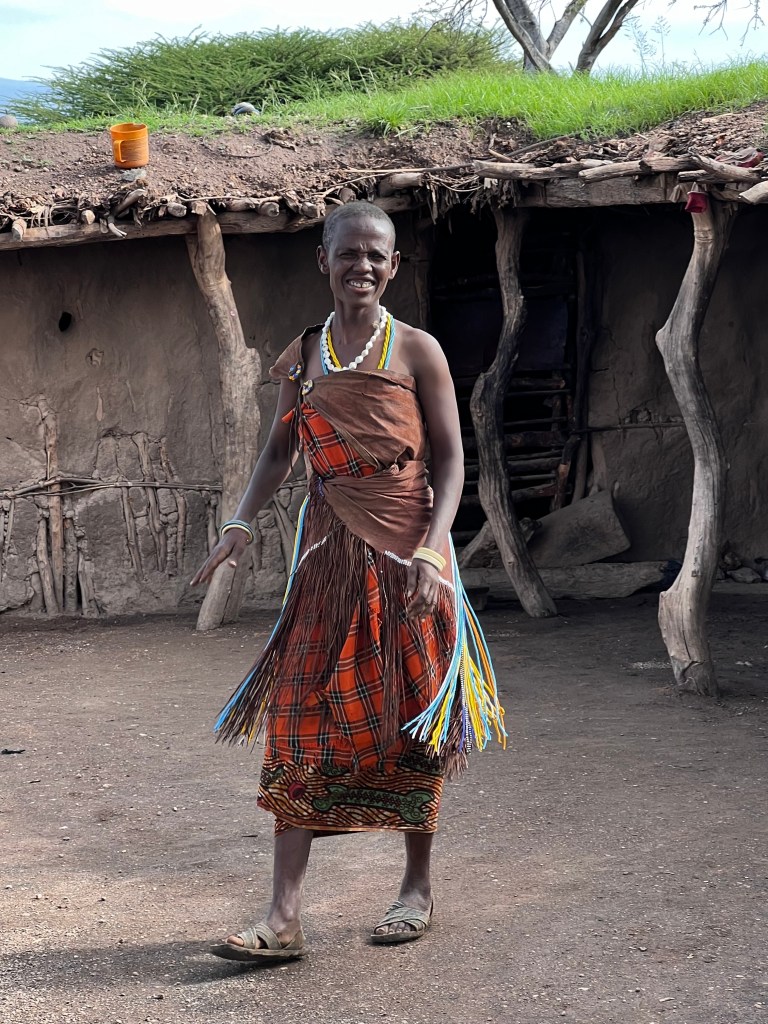

When the corn demonstration was over we worked our way over toward the goats and had a milking demonstration. It was fun to watch the kids released from where they stay and run to find their own mothers. When they start to suckle is when they can be milked. The moms all recognized the bleat of their own offspring.
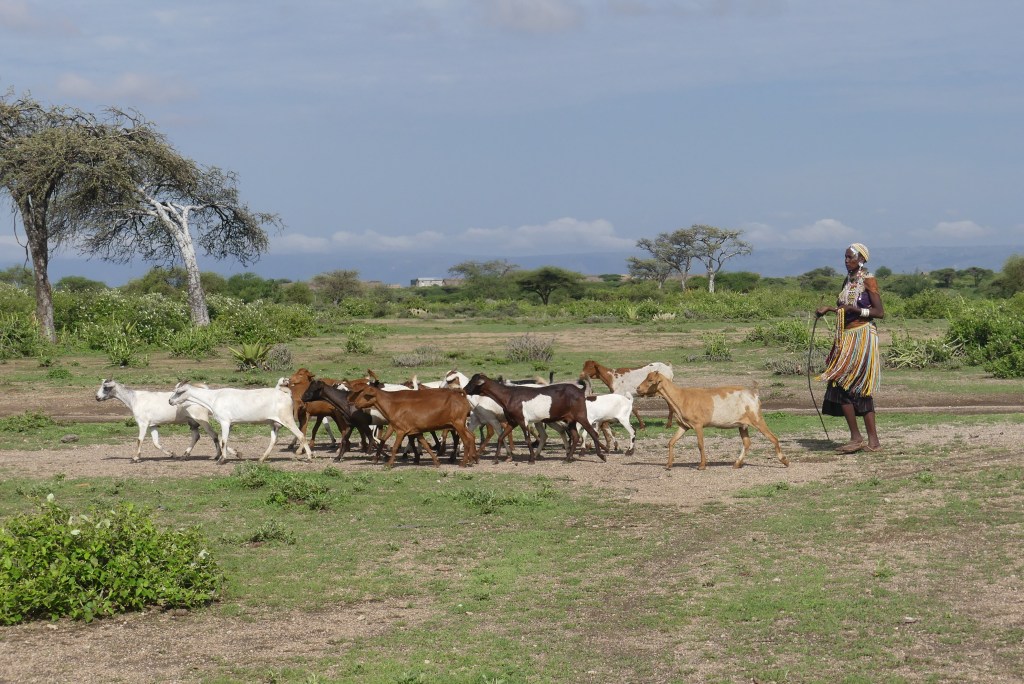
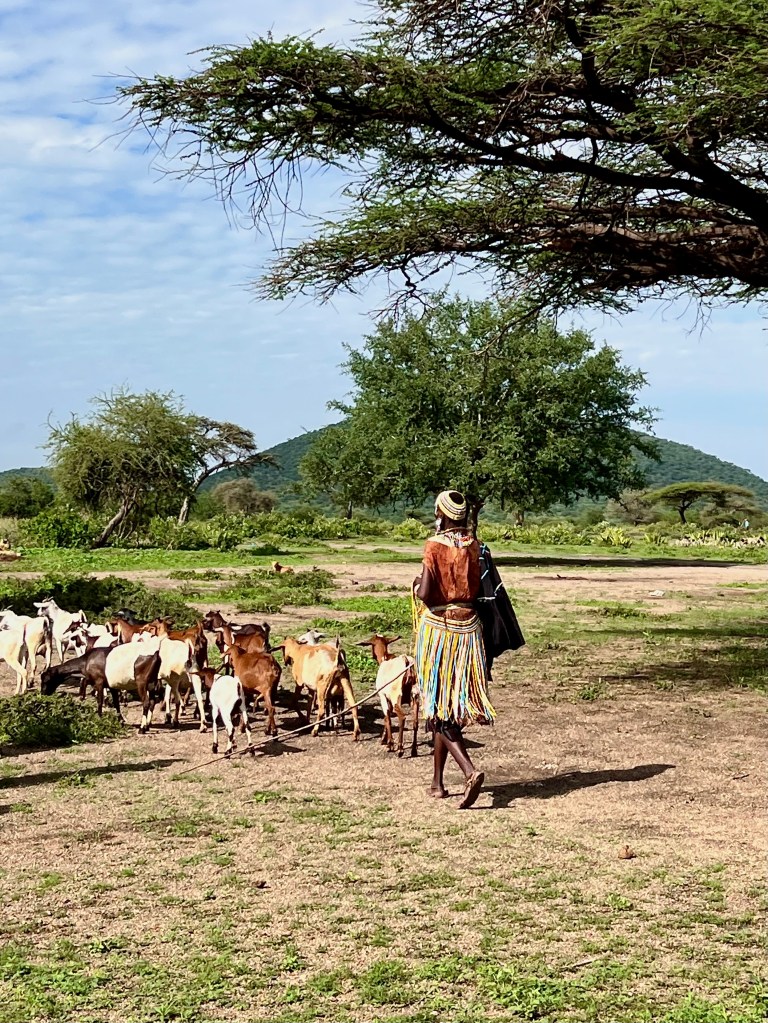

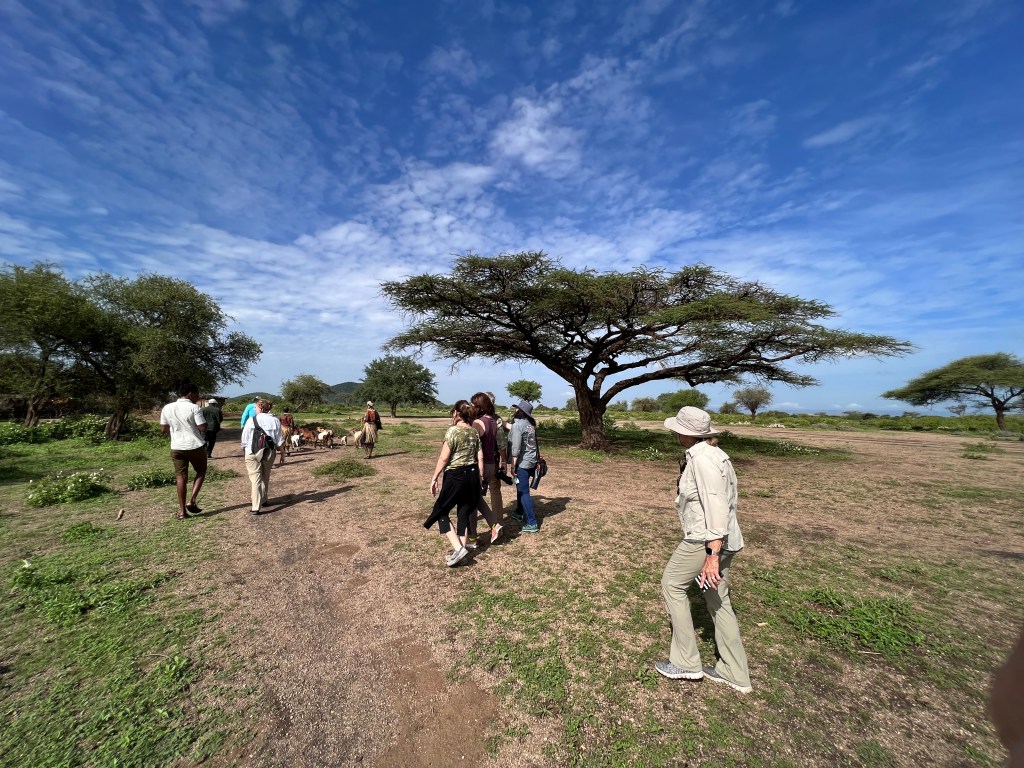
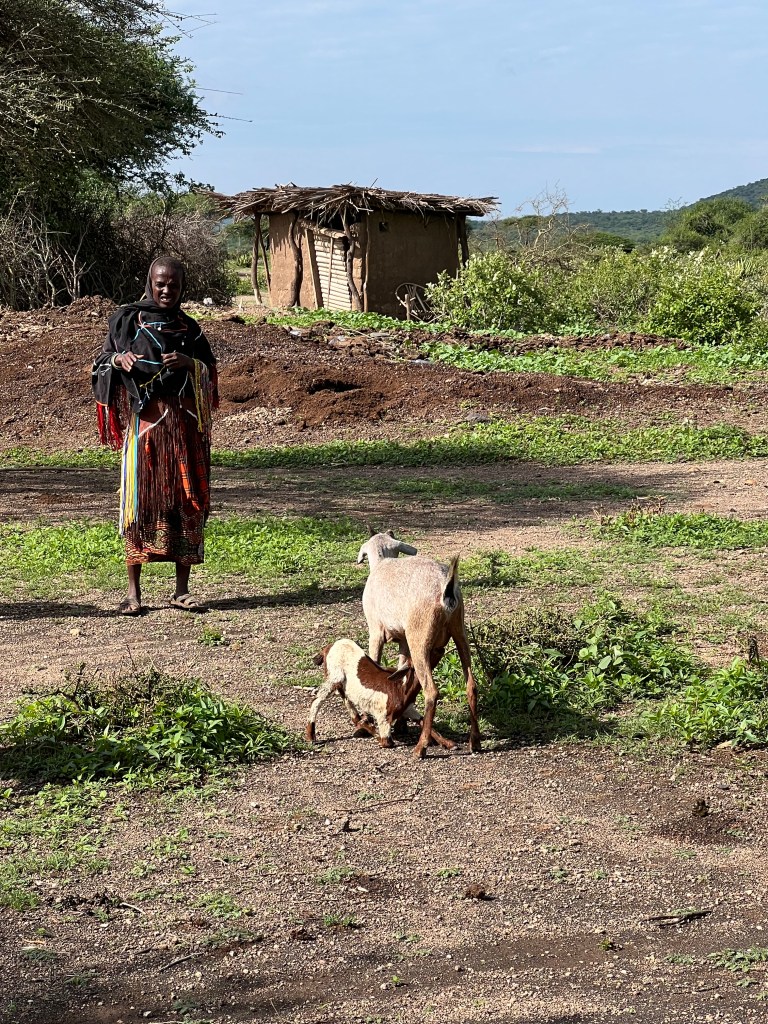
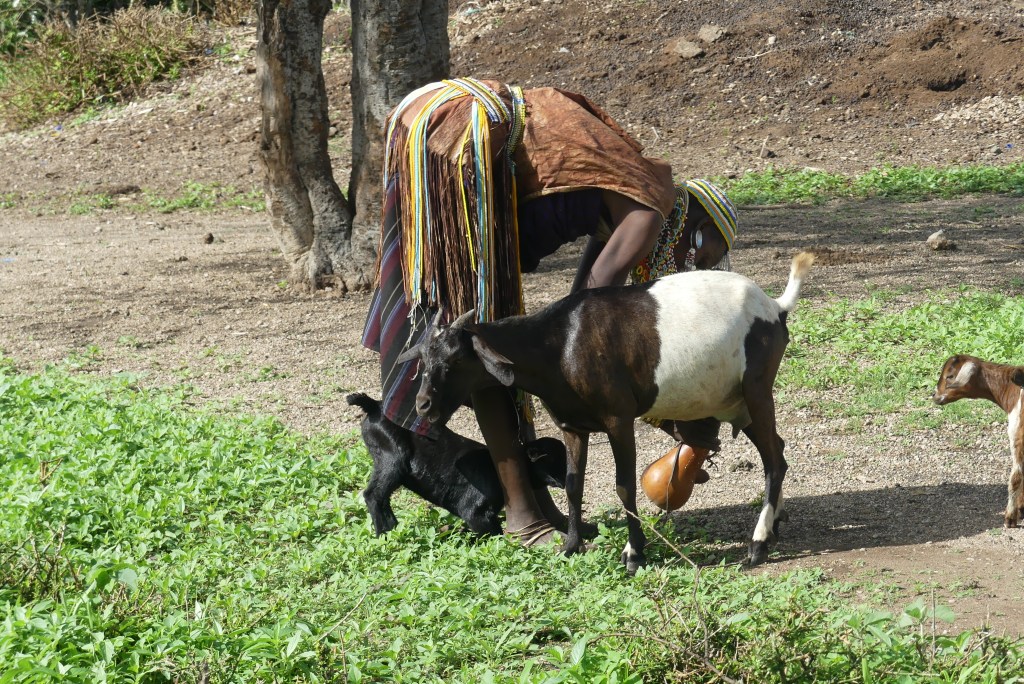
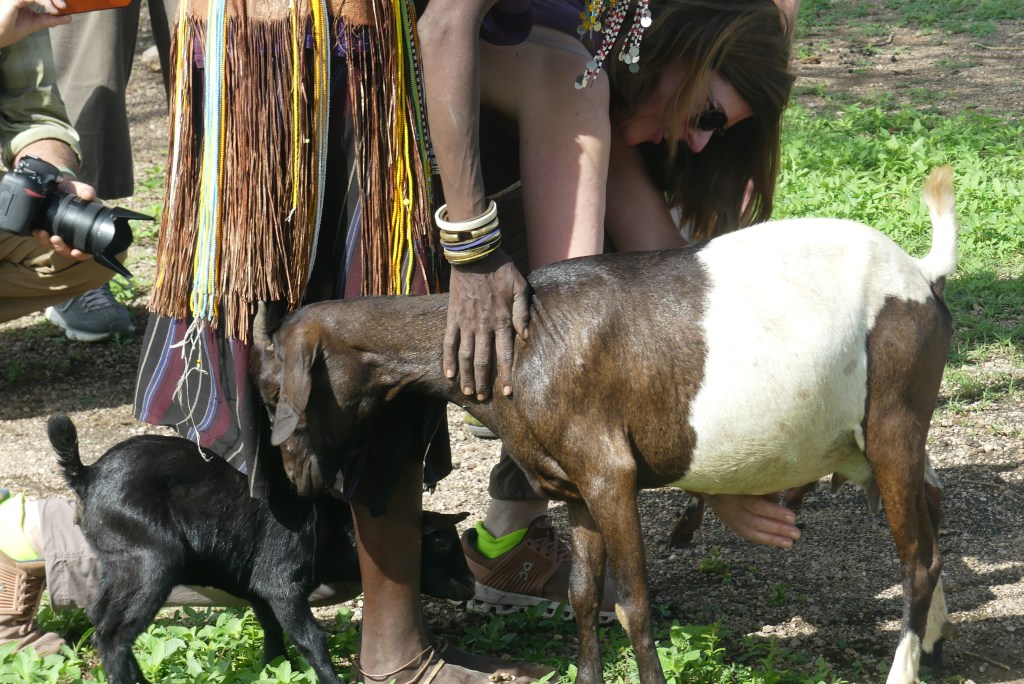
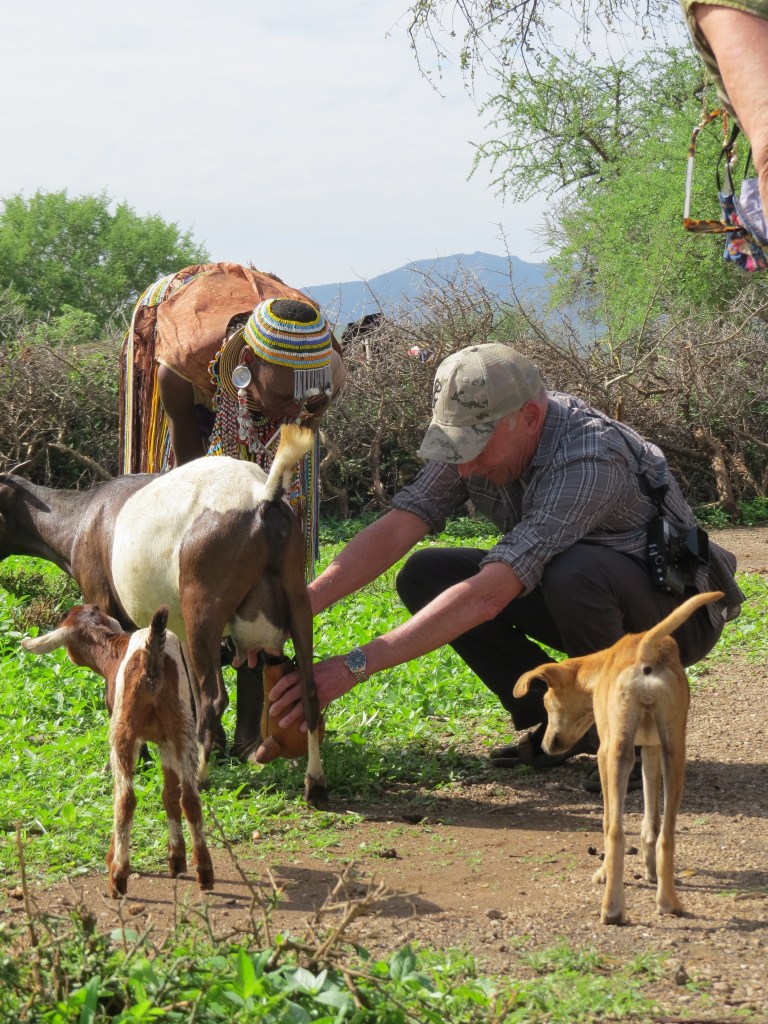
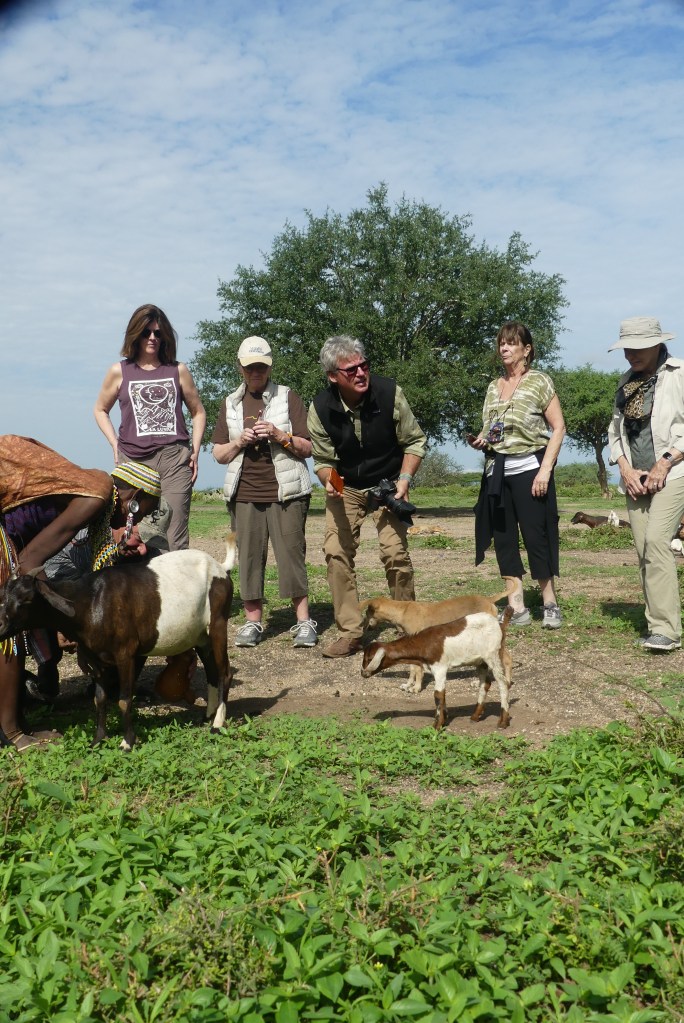
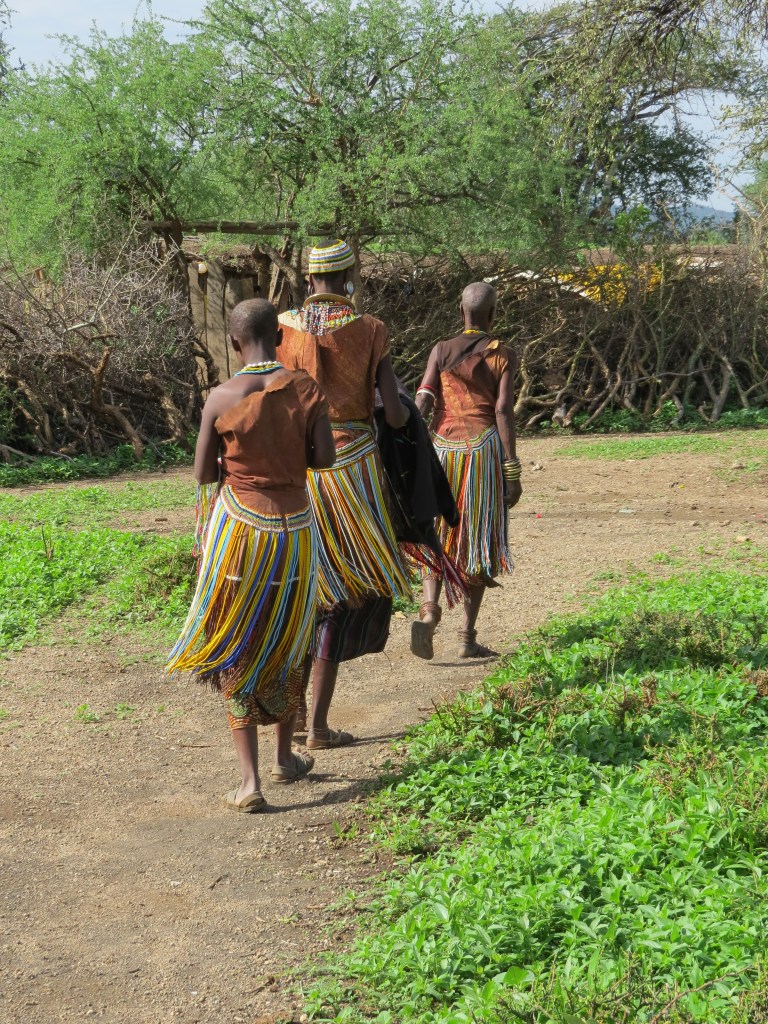
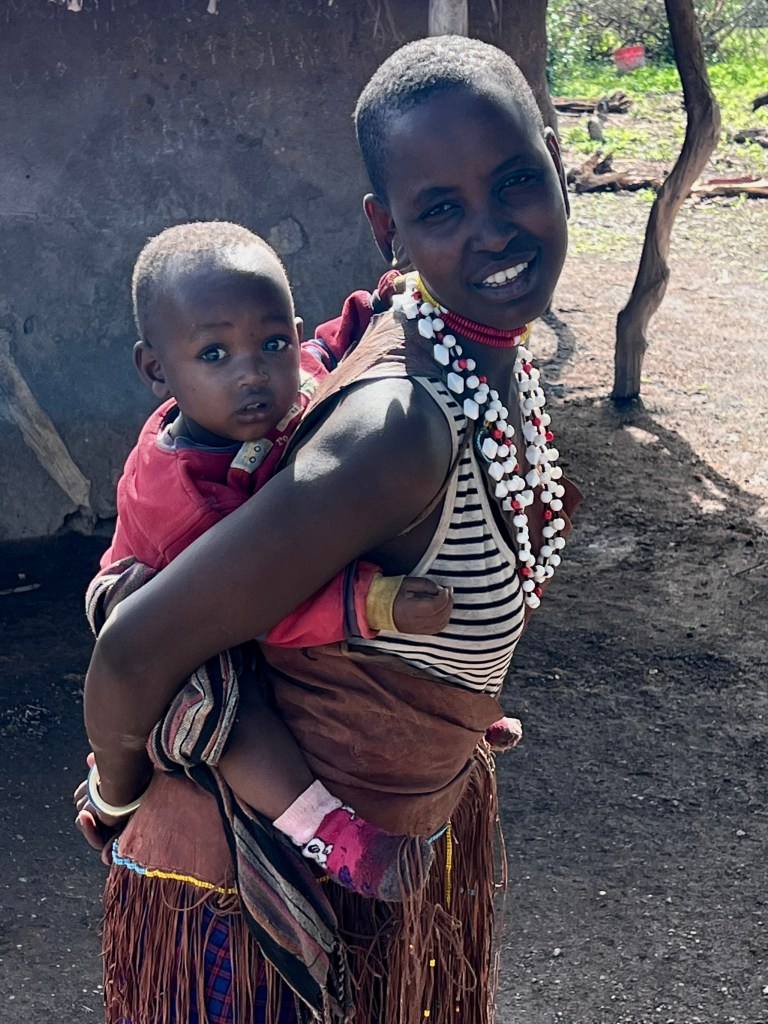
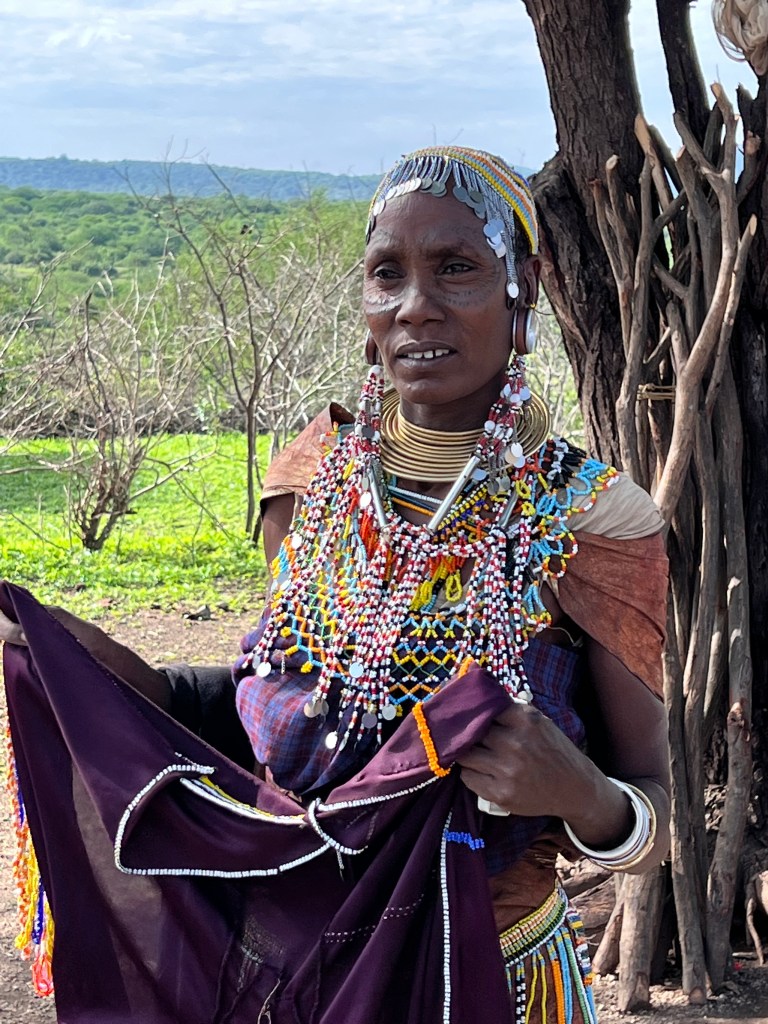
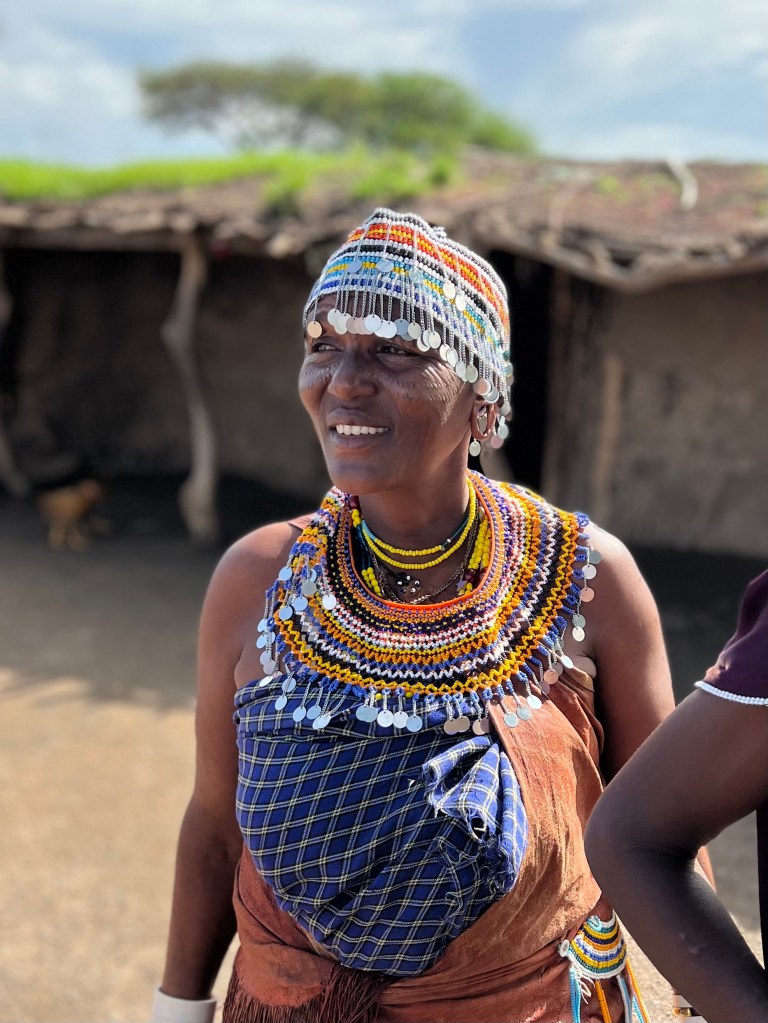


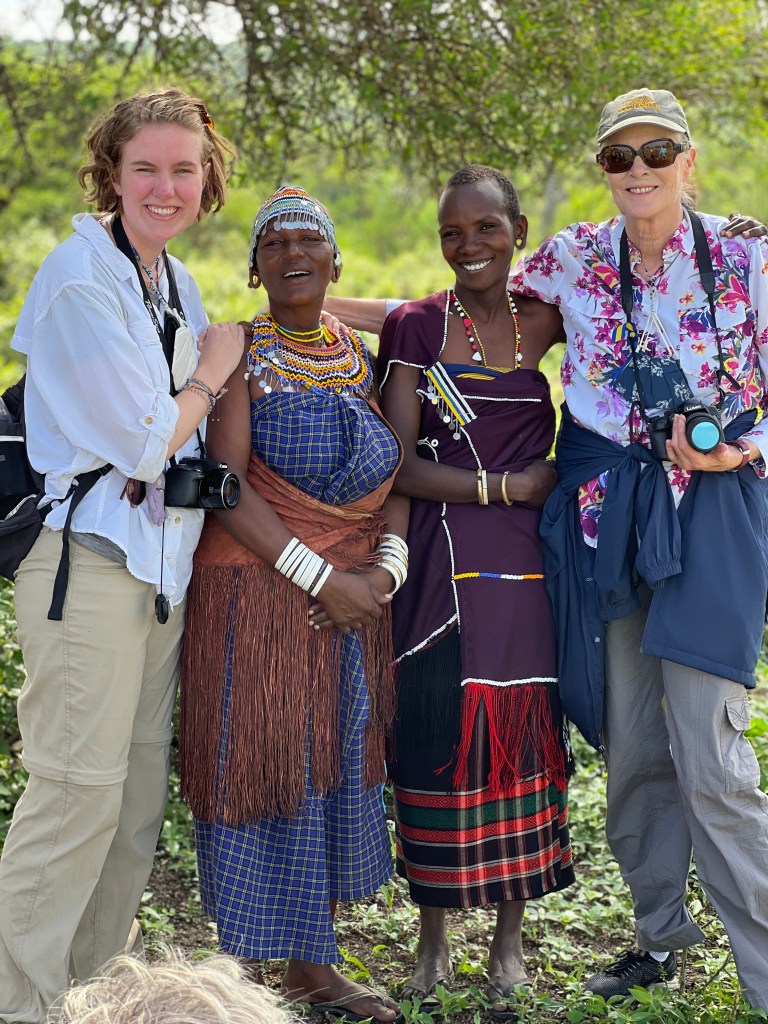
Mamas and daughters and portraits on our way to the mens metal working enclosure.

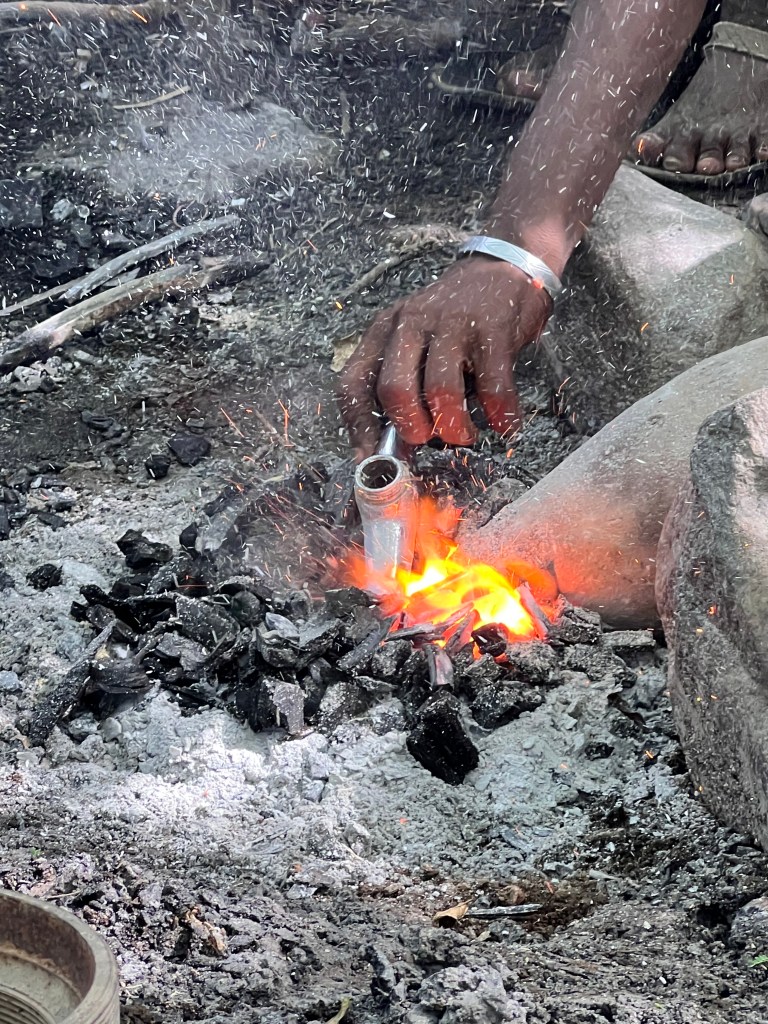
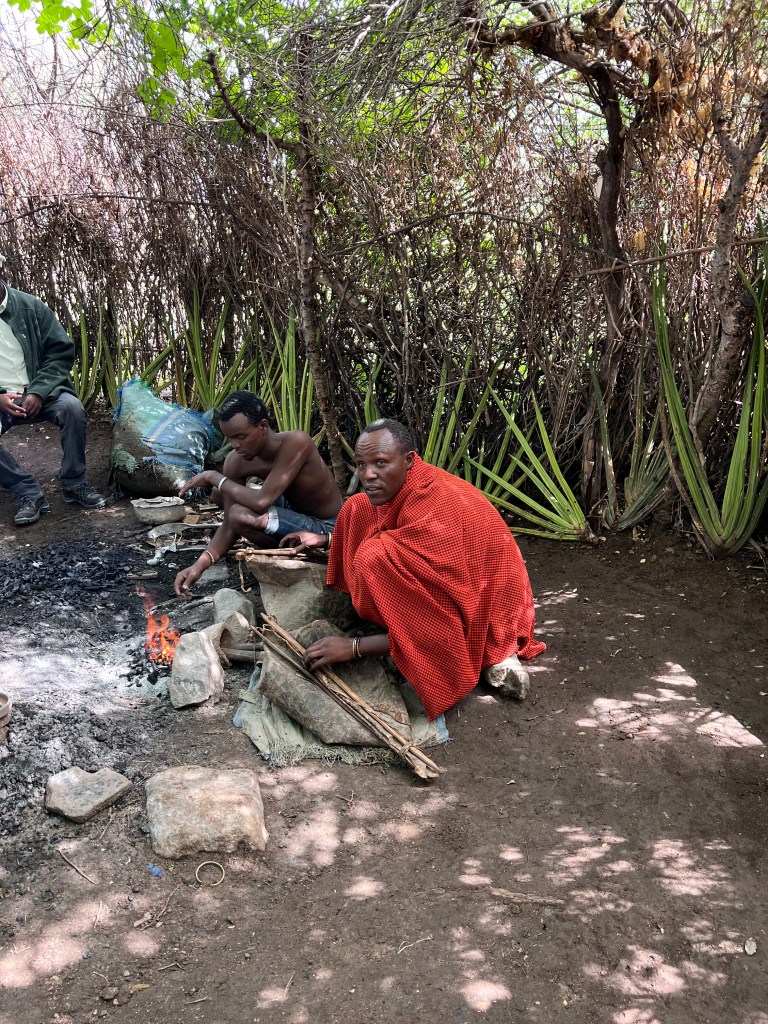

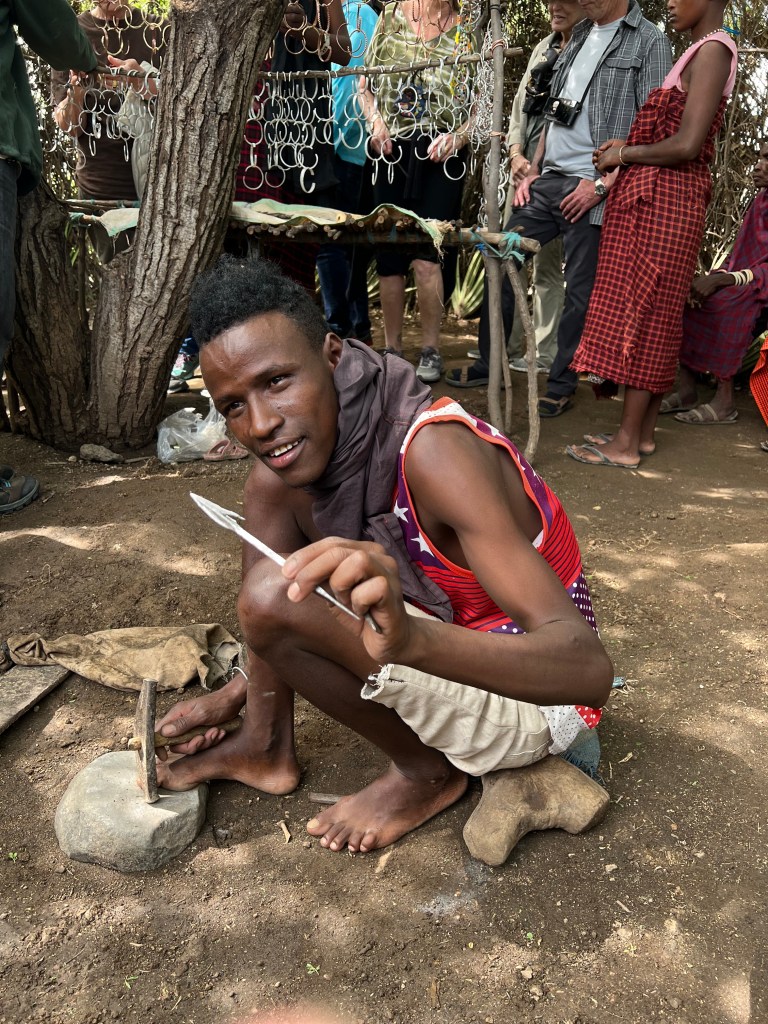
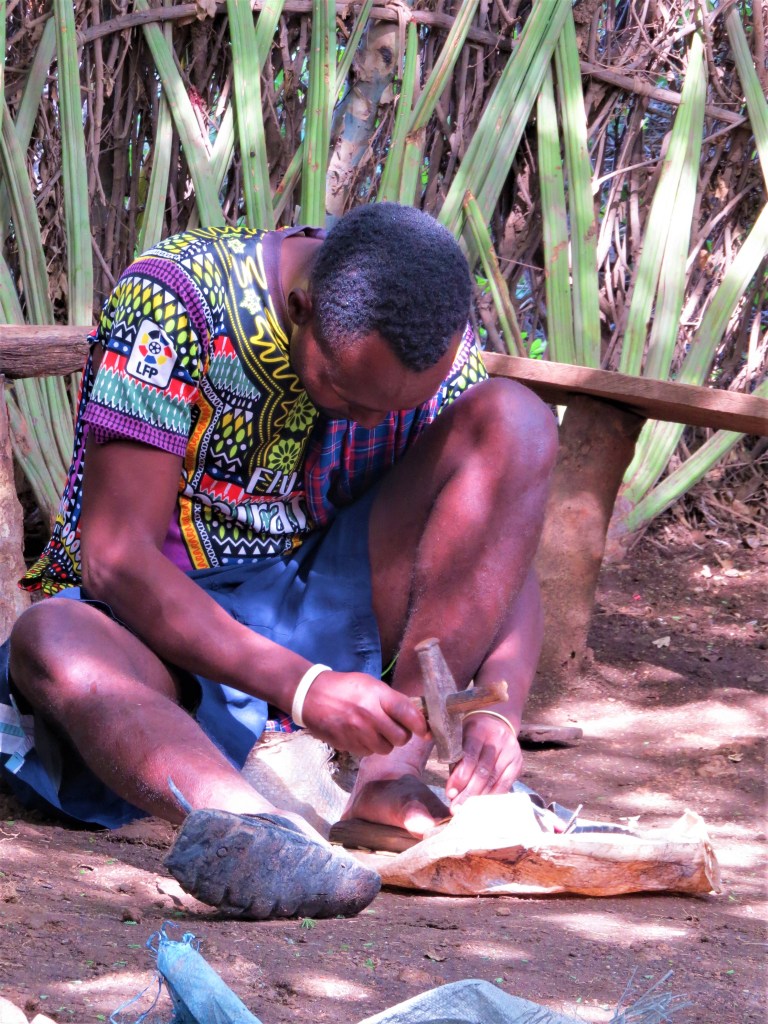
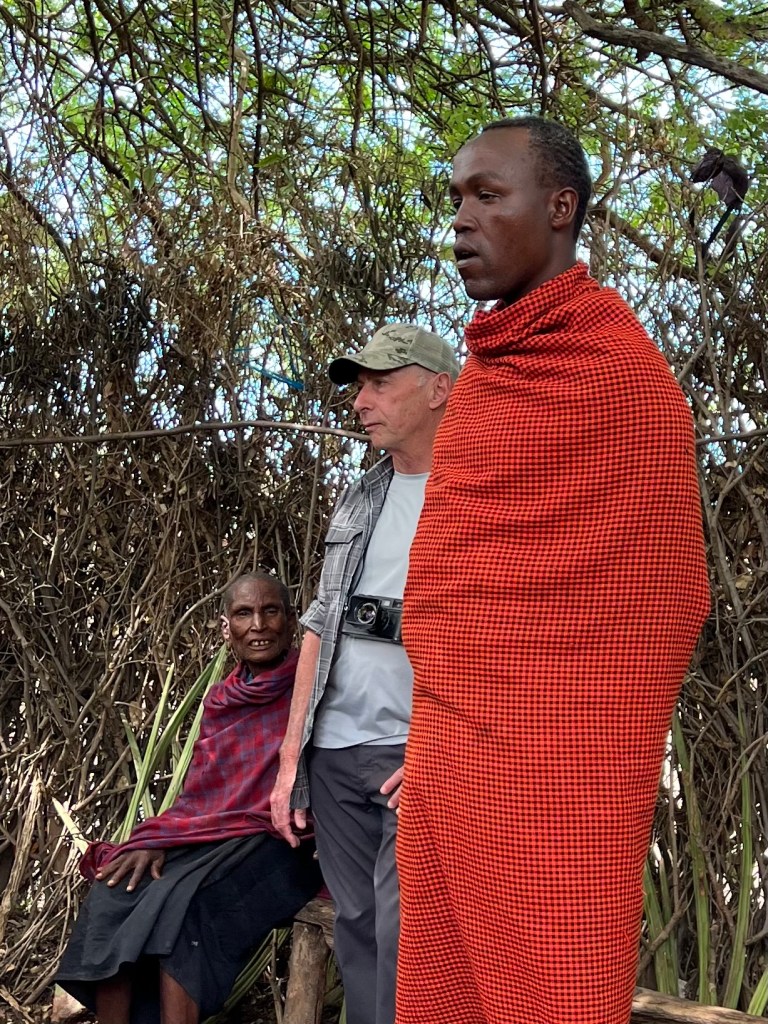
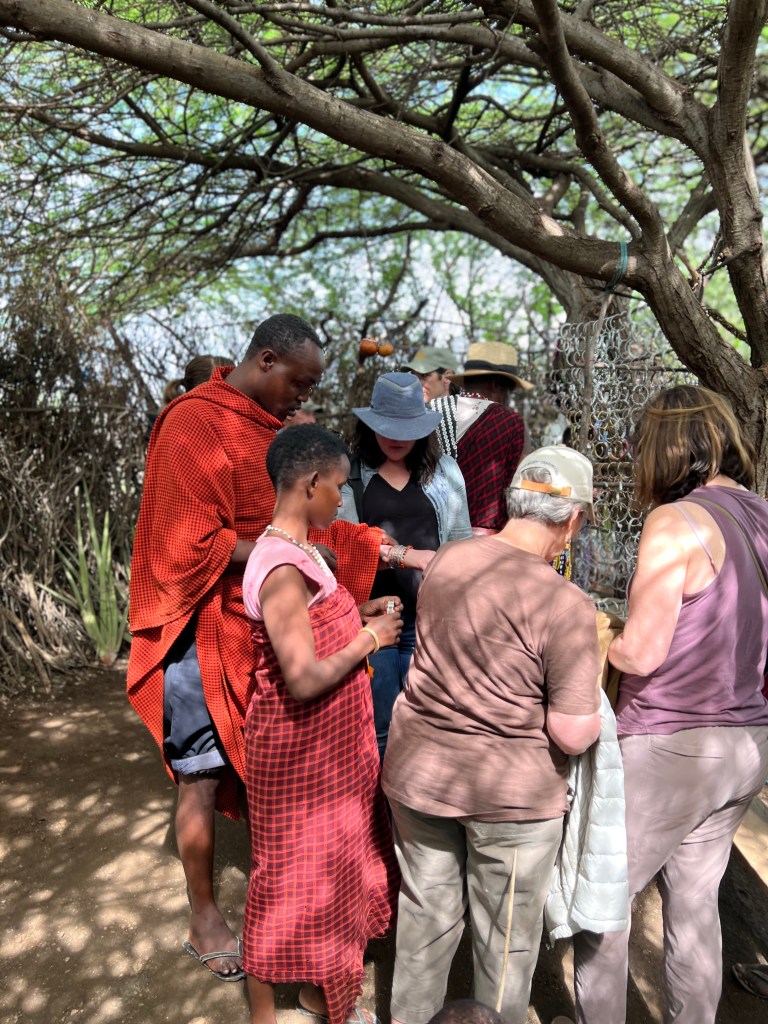
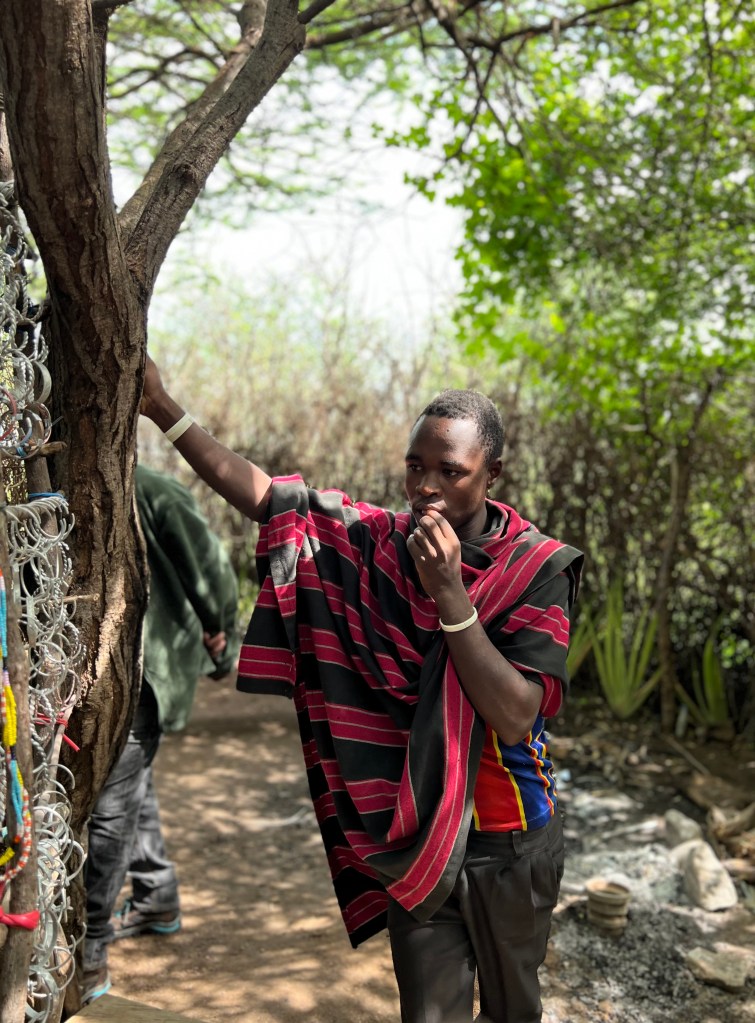
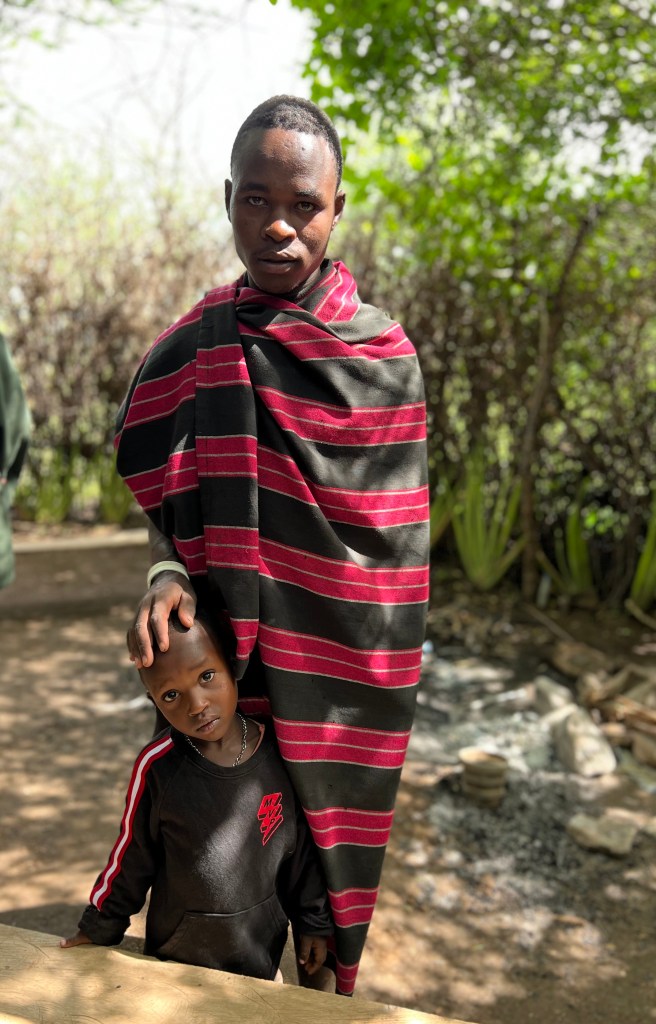
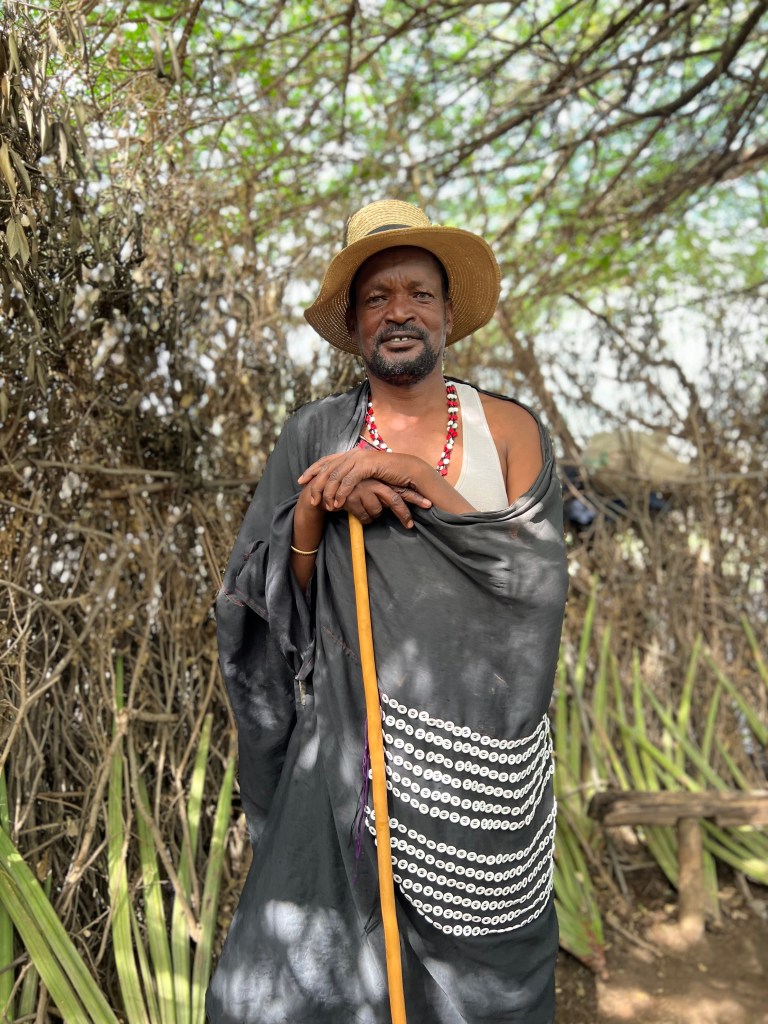
The Datoga men showed us how they used their bellows to heat up discarded plumbing faucets etc to melt and manipulate the metal. They use what they can to create jewelry or needed metal items like arrow tips and hooks to exchange for honey or money. I loved our orange adorned gentleman who looks like OJ Simpson and whose undergarments were jeans rolled up and our sober faced guy in red and black with his soccer shirt and also one standing with his son. Michael even bought himself a copper bracelet and wears it.

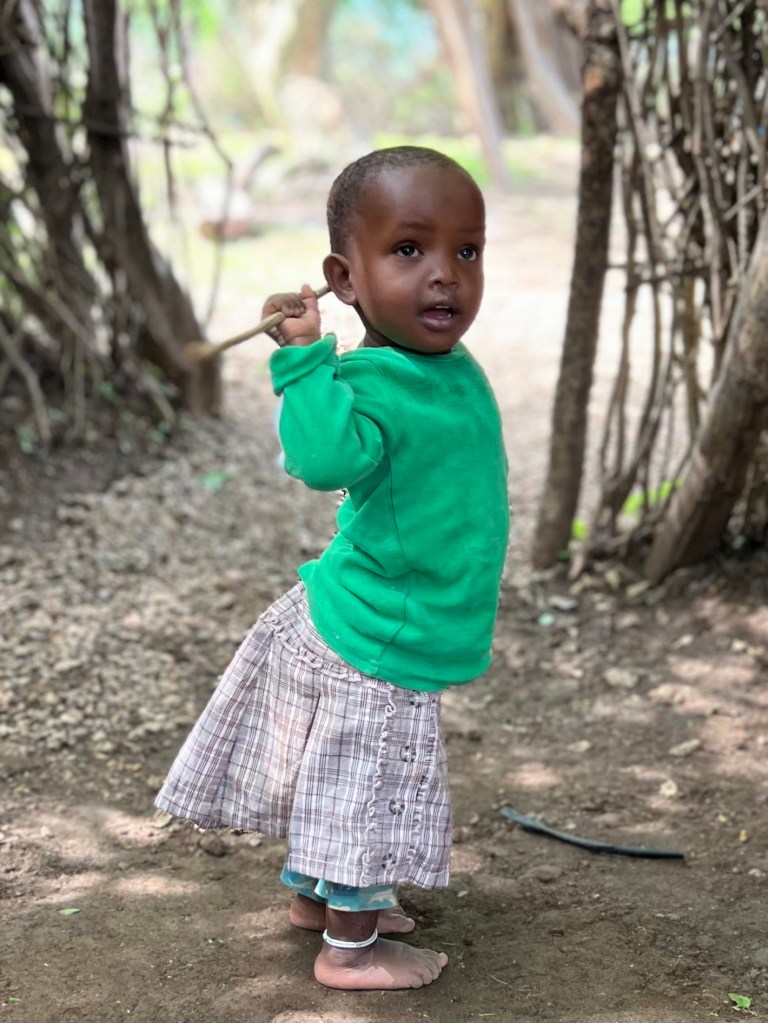
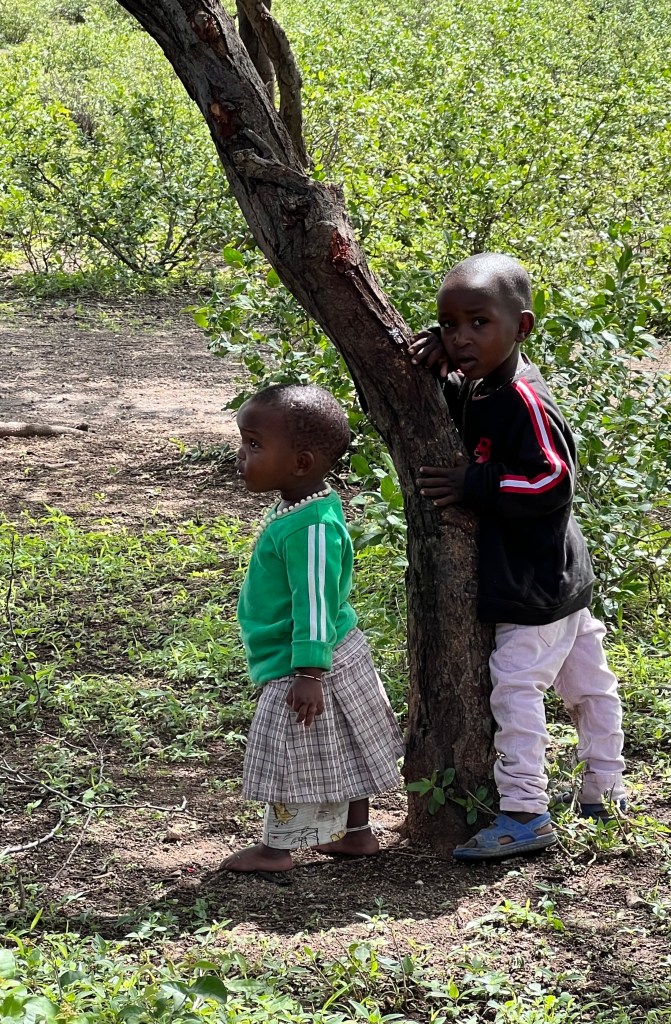
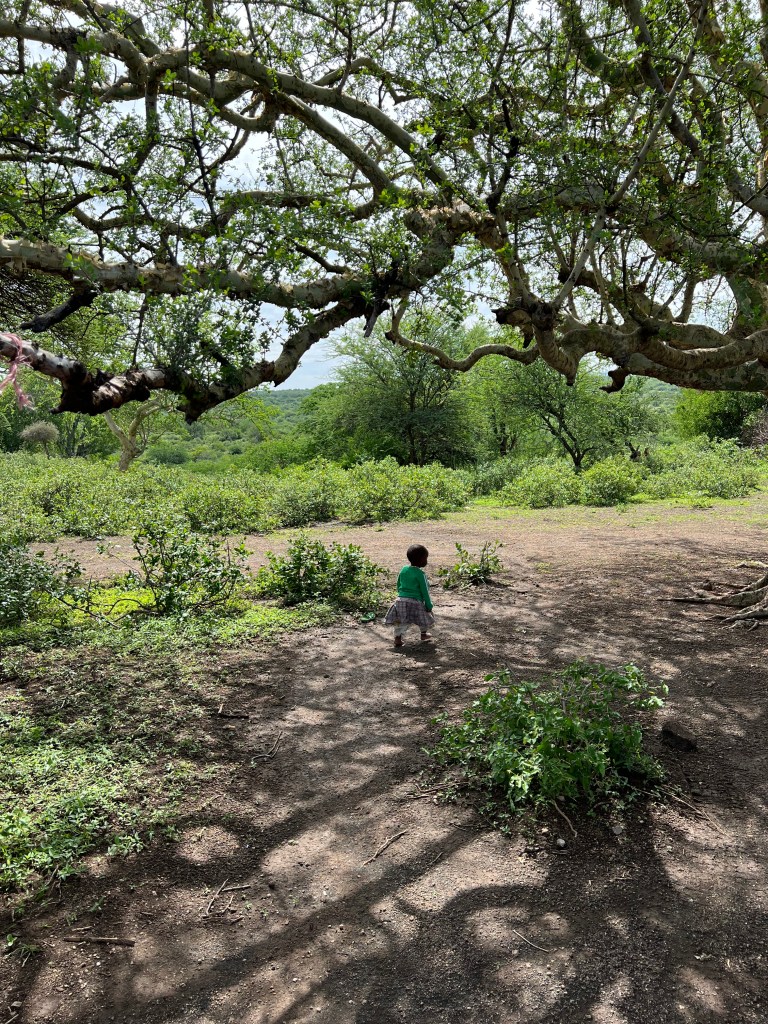
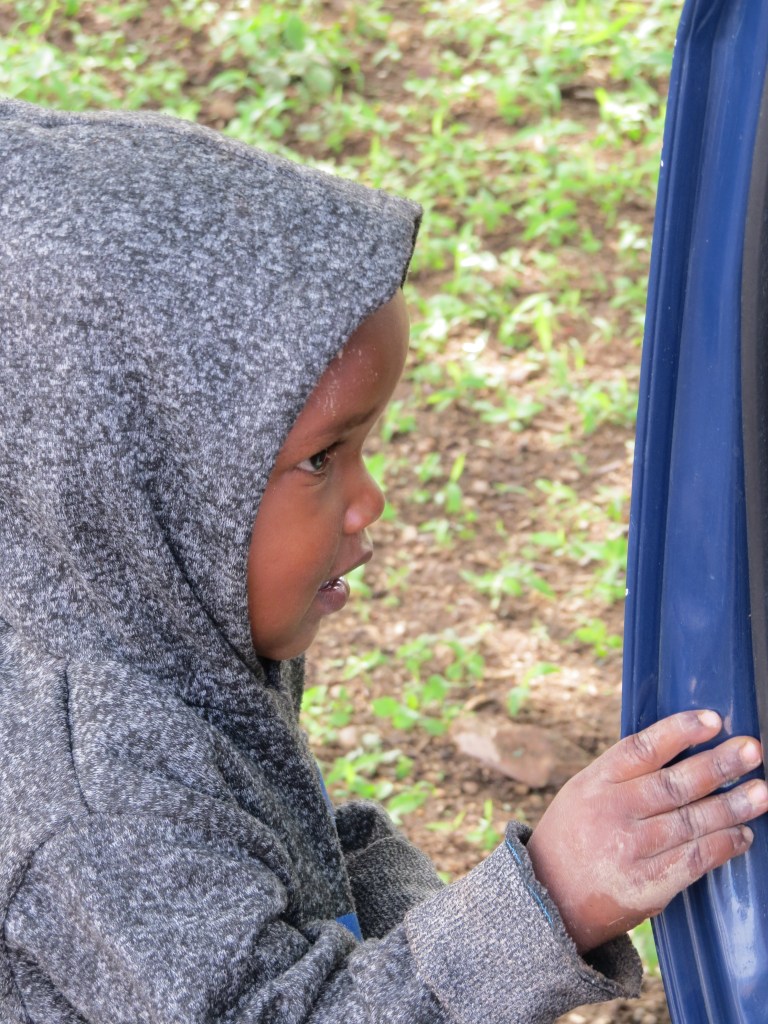
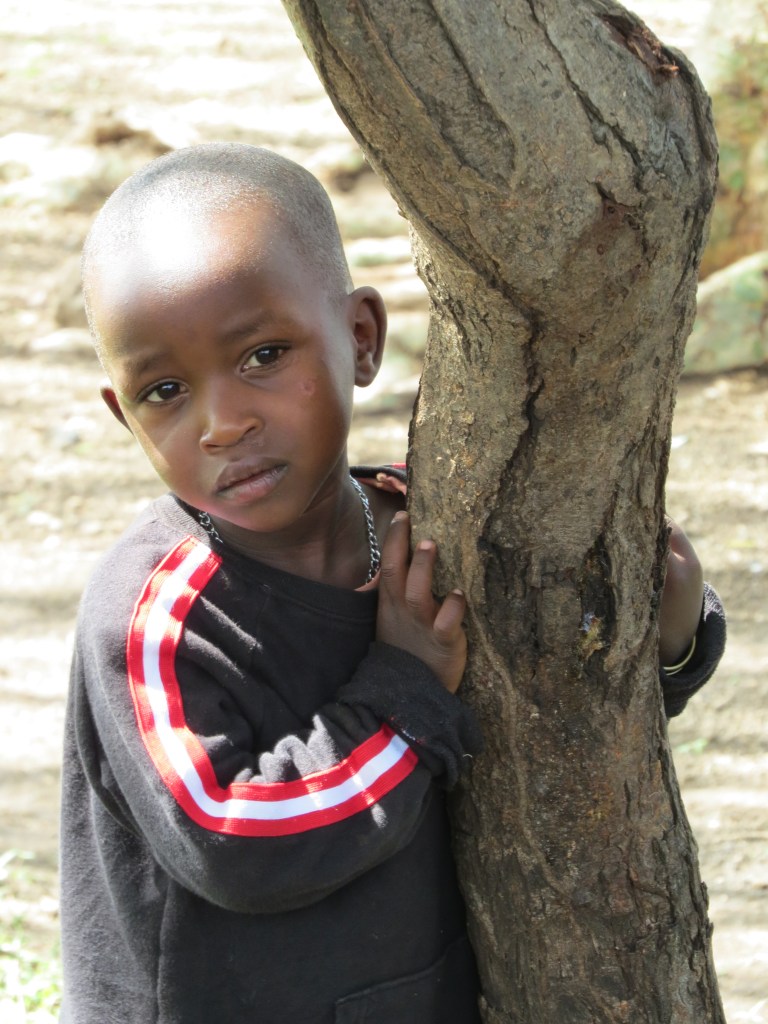
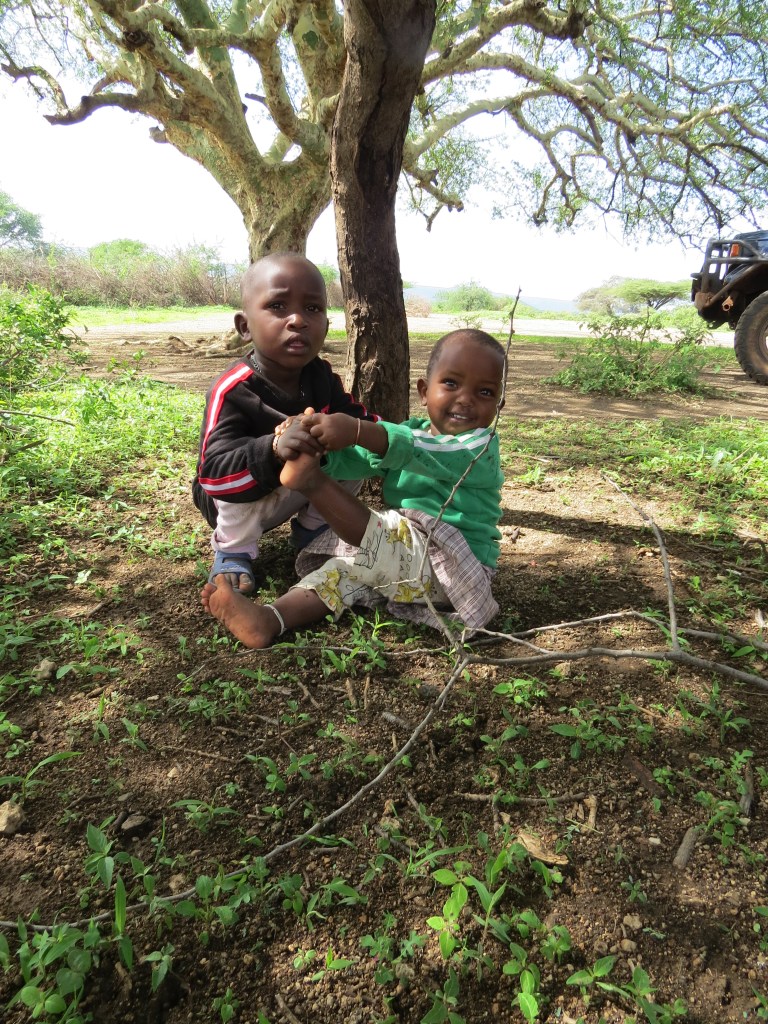
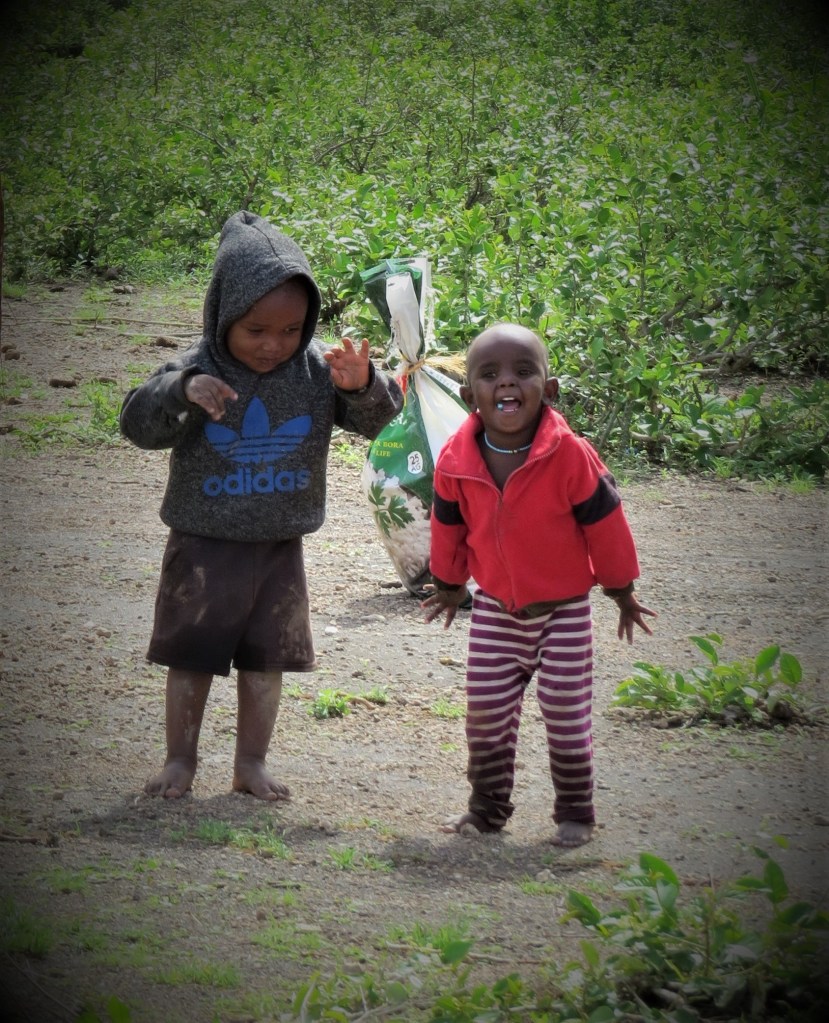
Loved portraits of the kids!
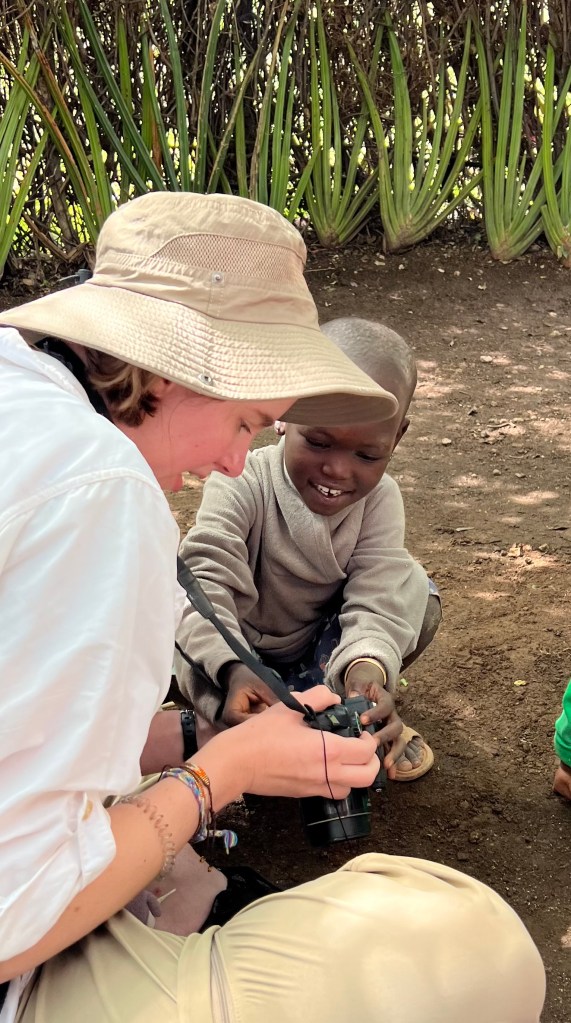
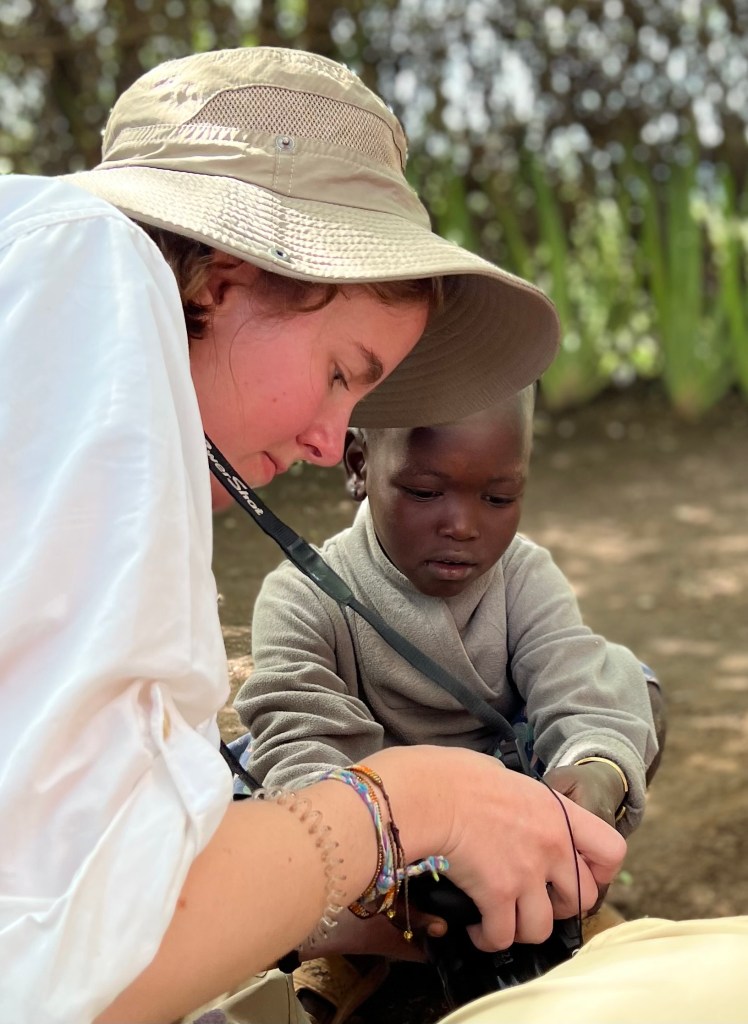
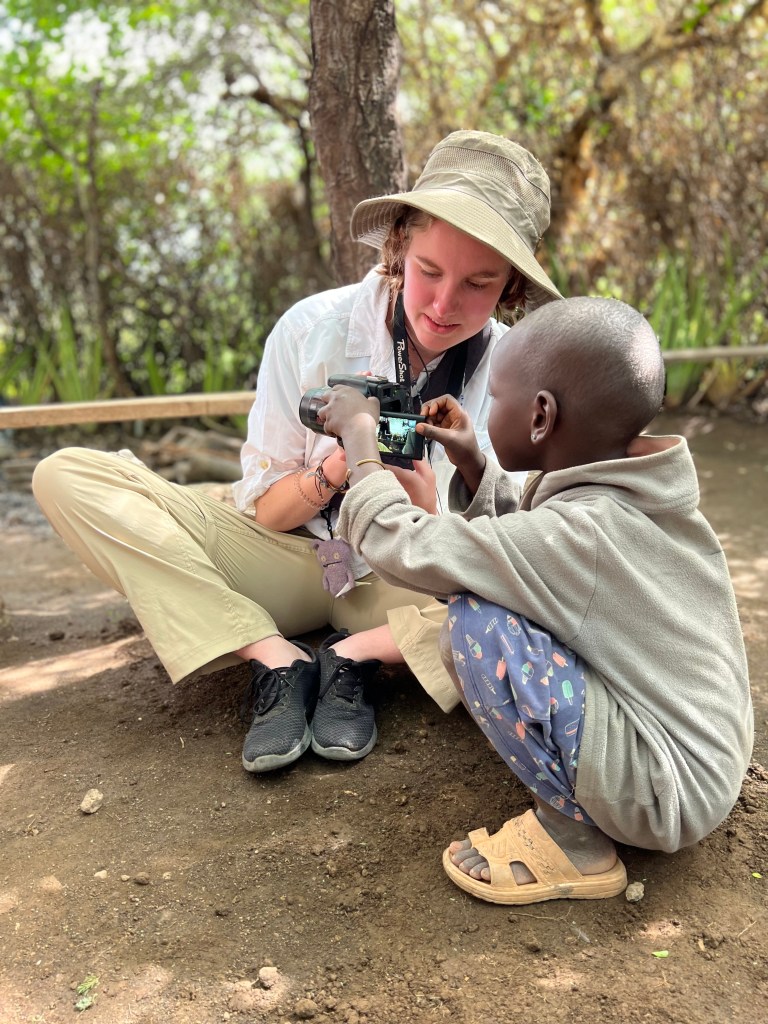
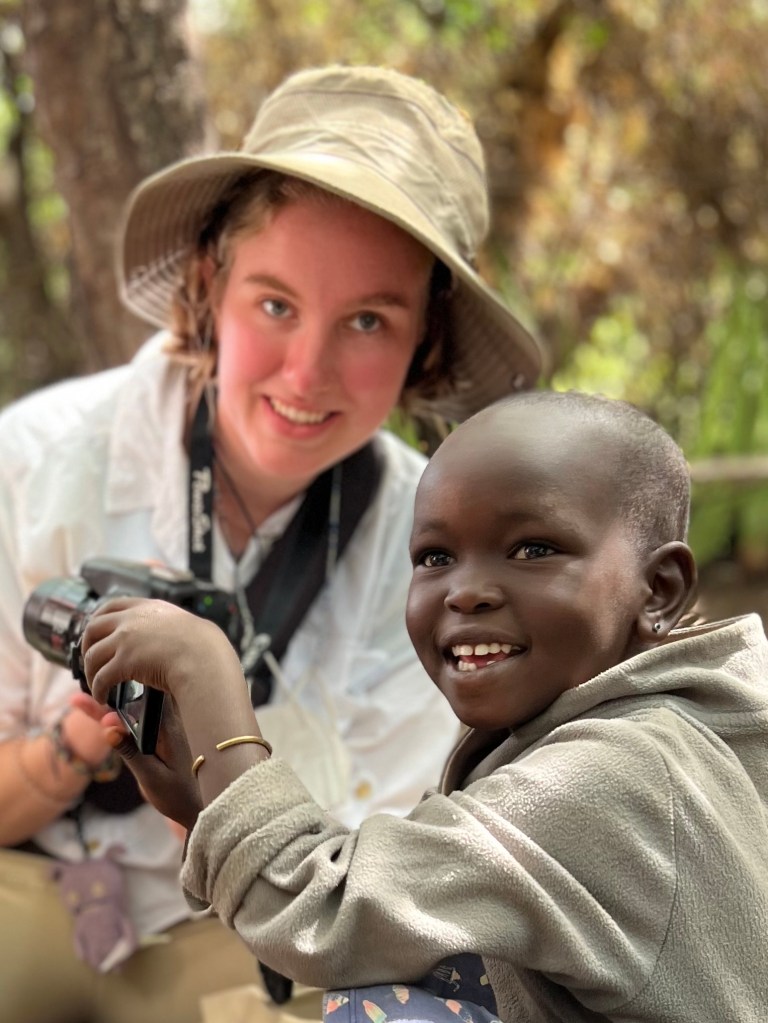
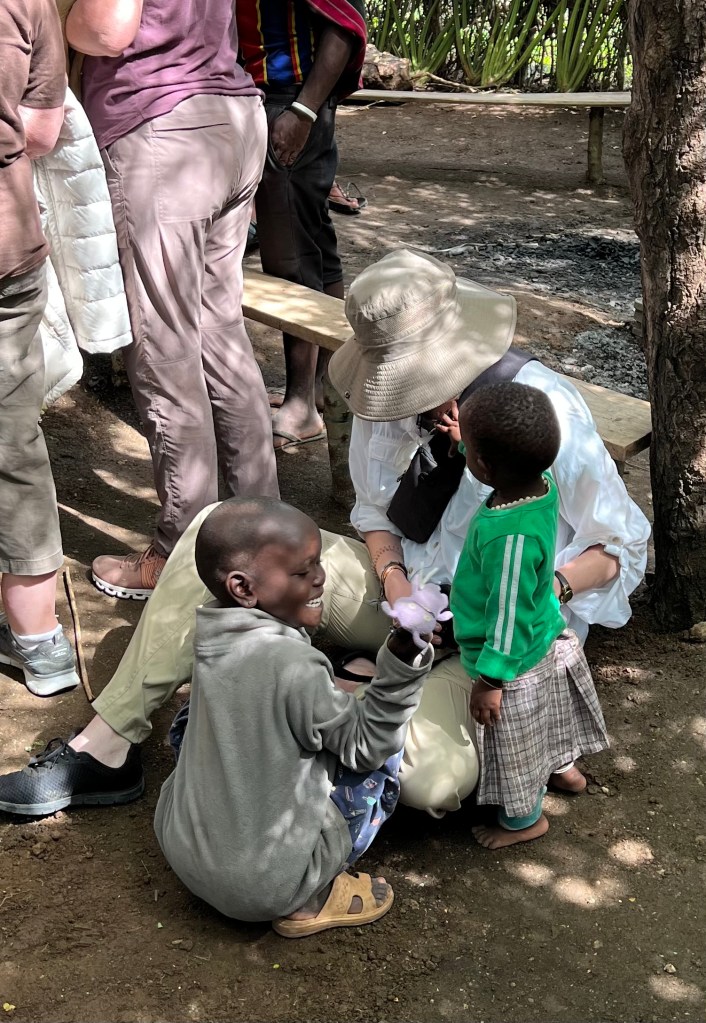
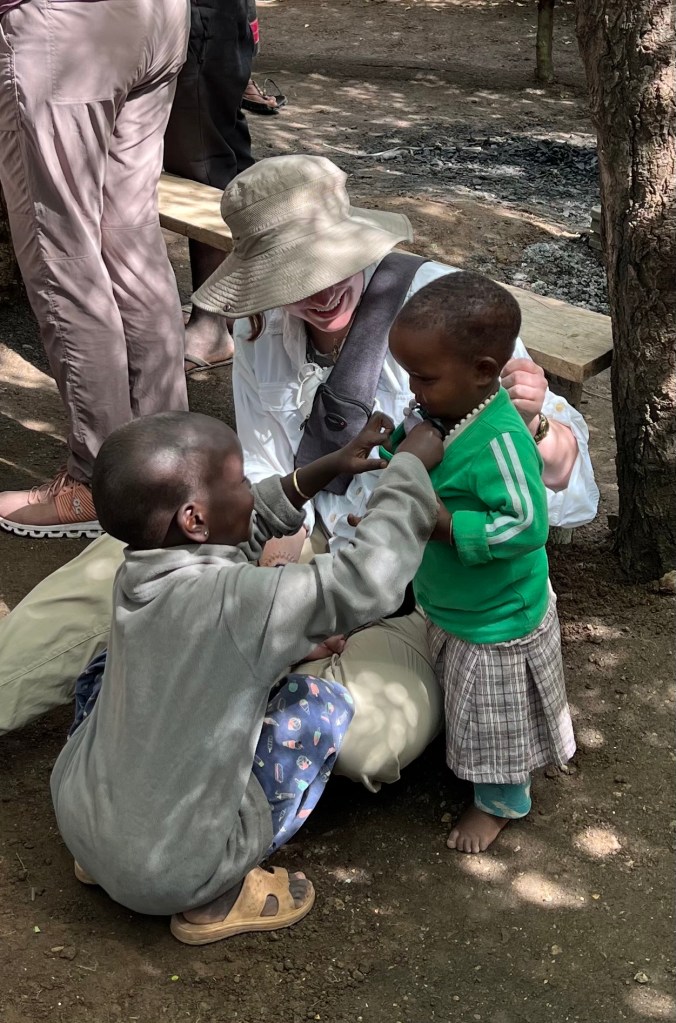
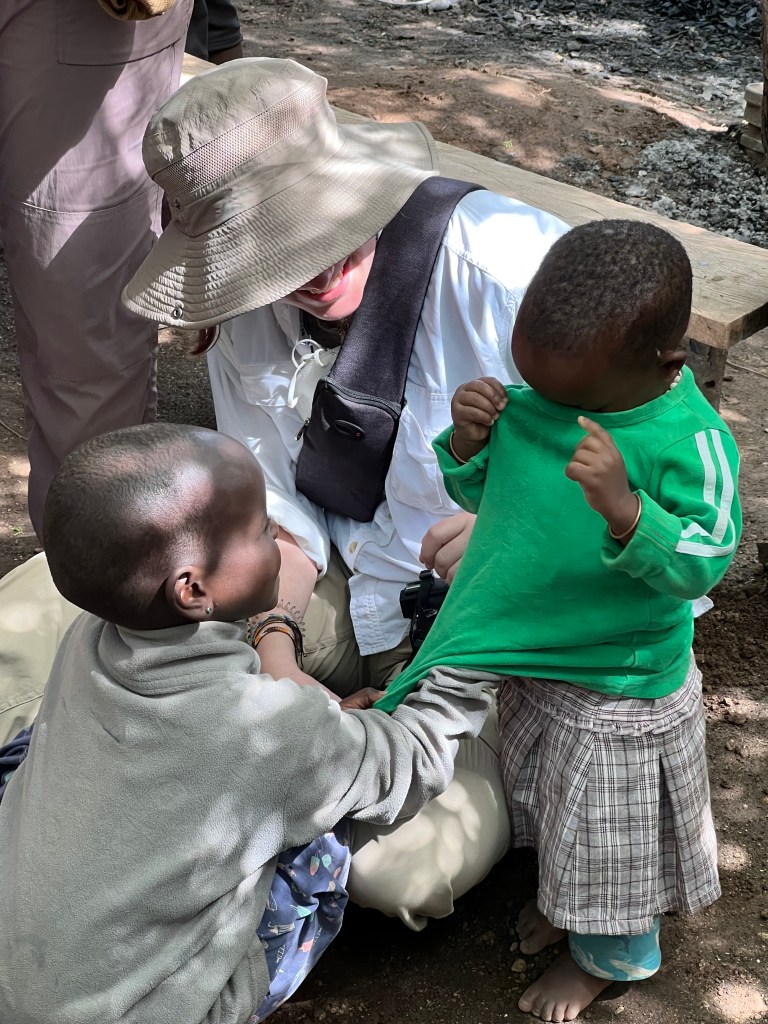
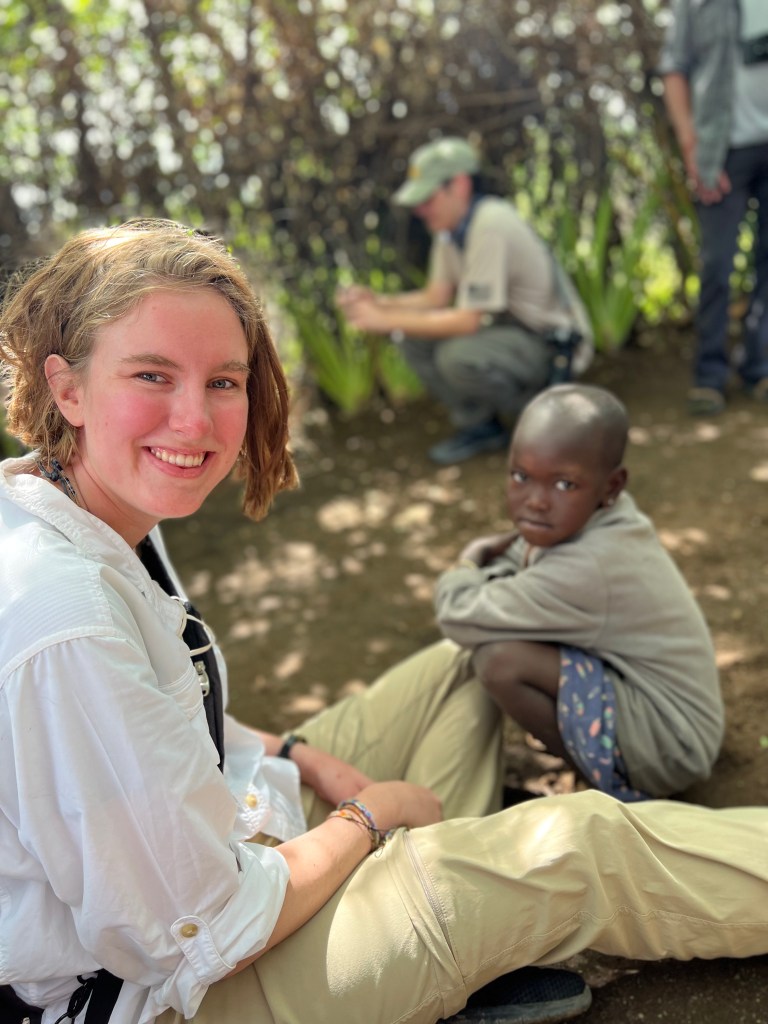

Larkin enjoyed sharing her camera with the girls. Her little purple uglydoll hooked to her backpack stayed behind. They were intrigued including a self portrait!


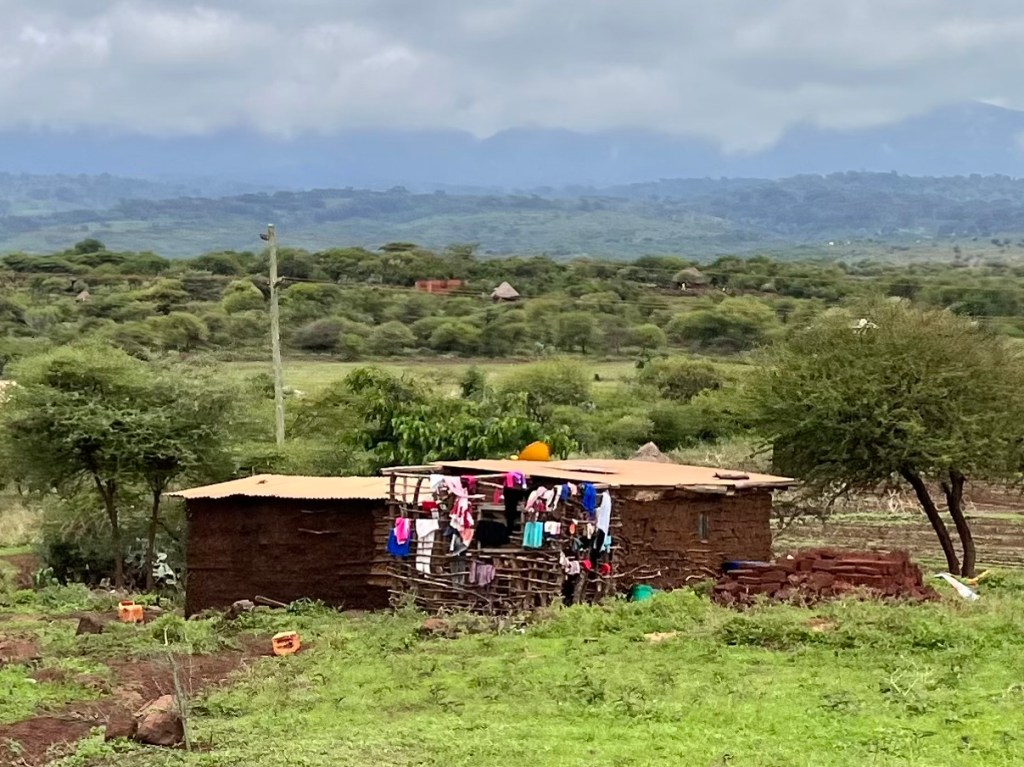


One of the things I’ve always enjoying photographing is laundry. Tanzania did not disappoint. Laundry with a view while driving down the road.

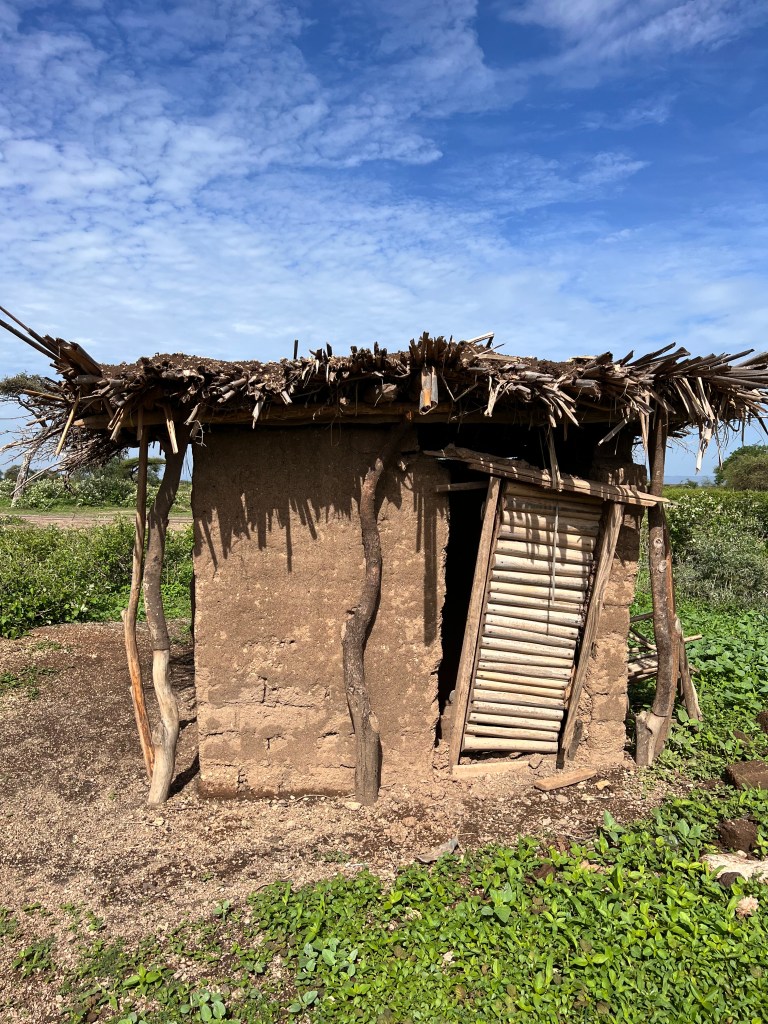
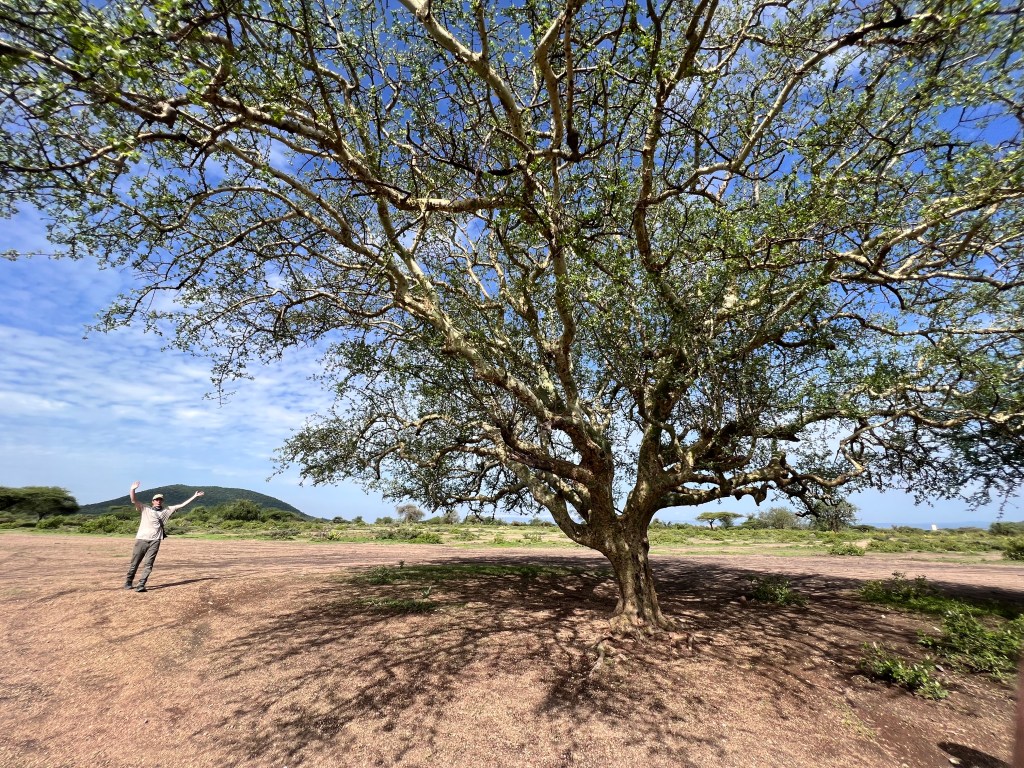
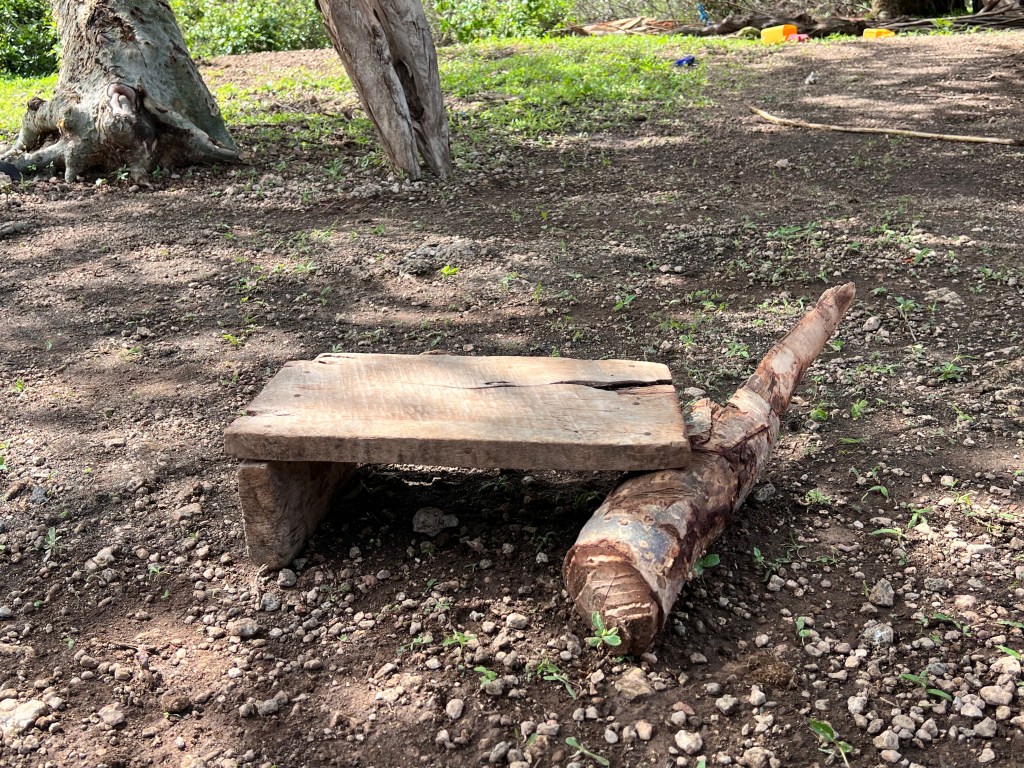
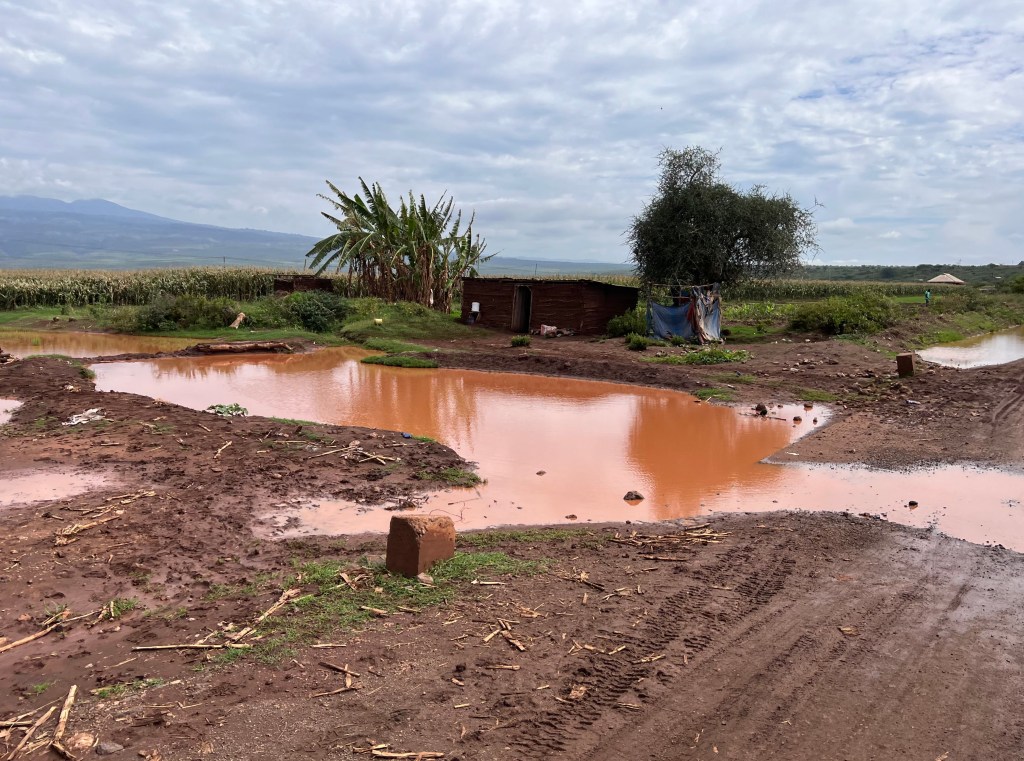
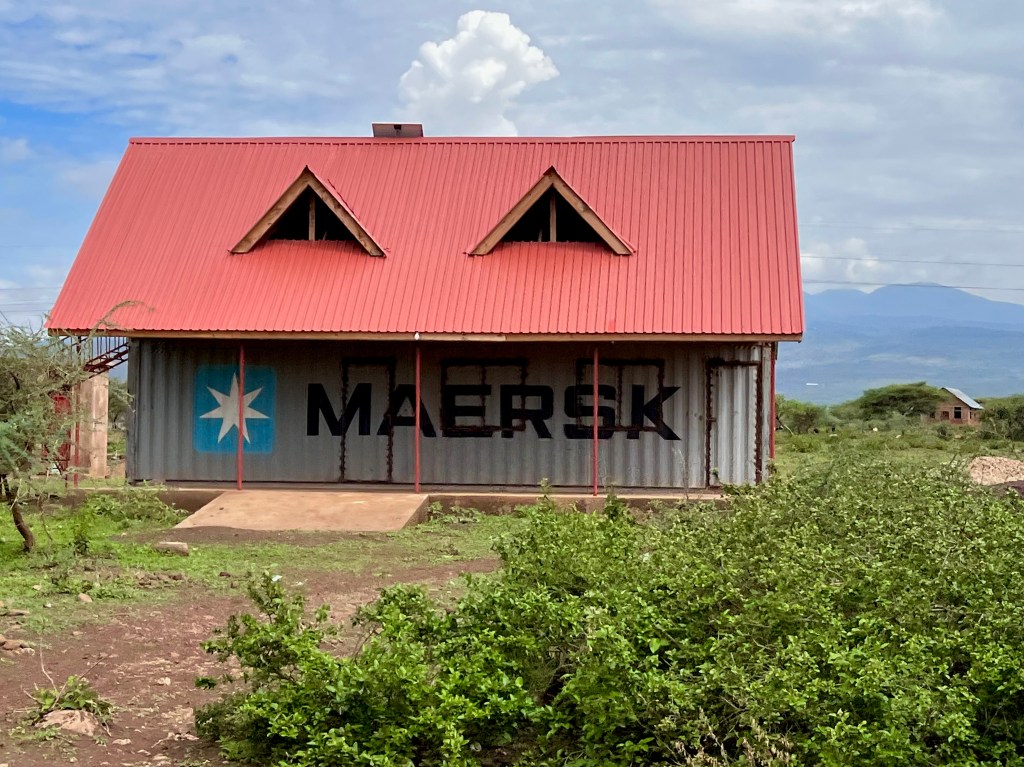
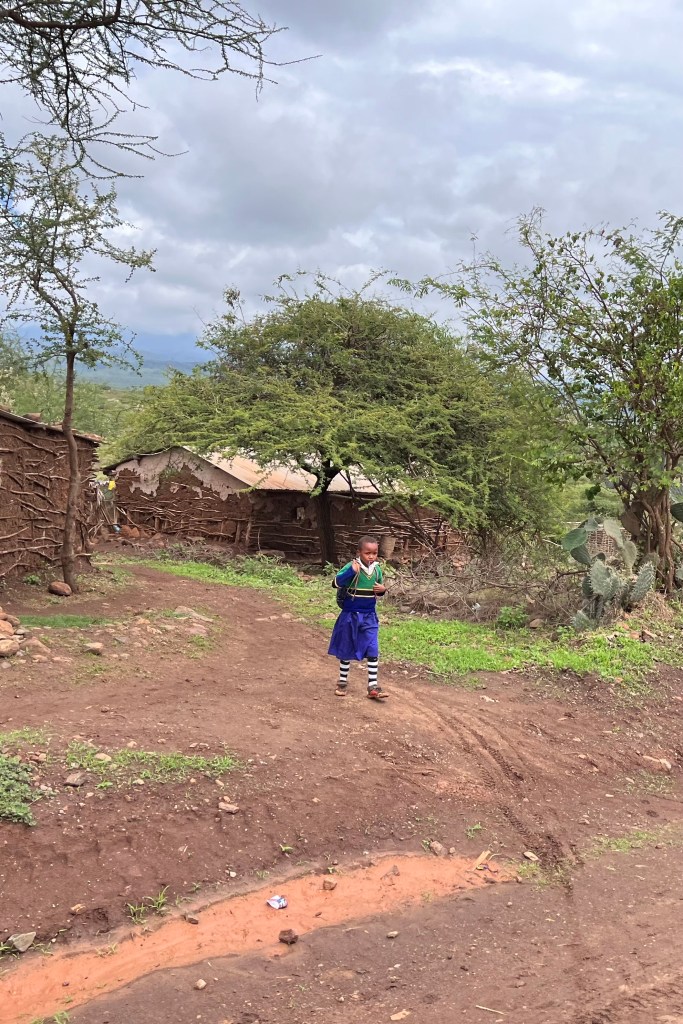

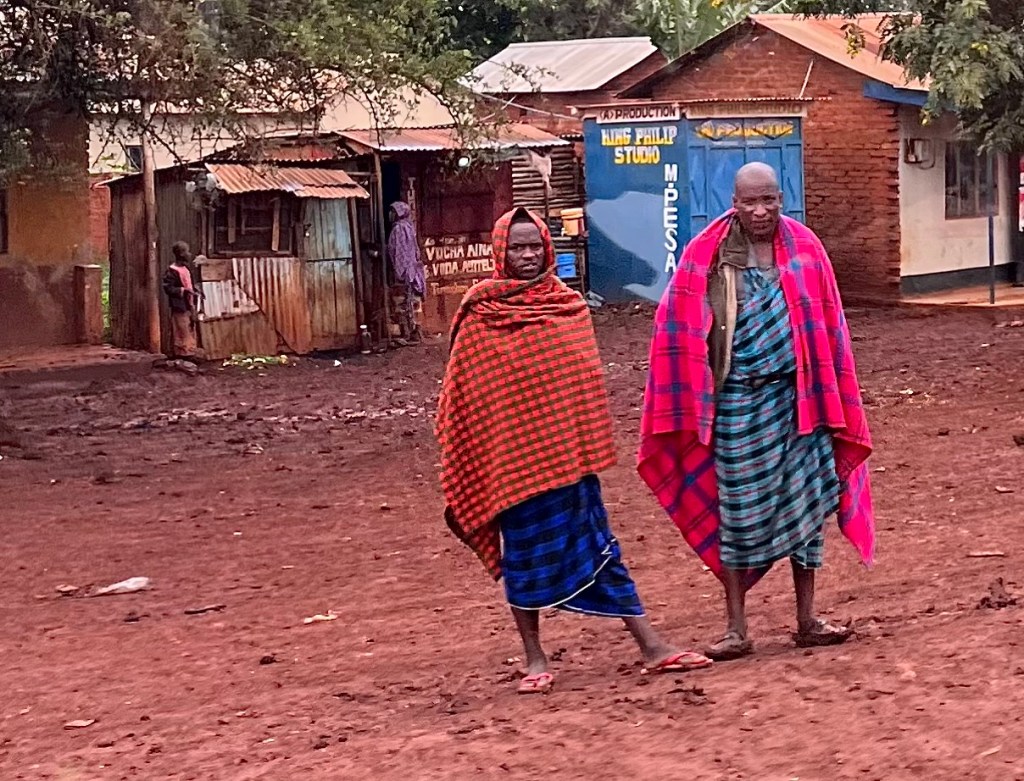
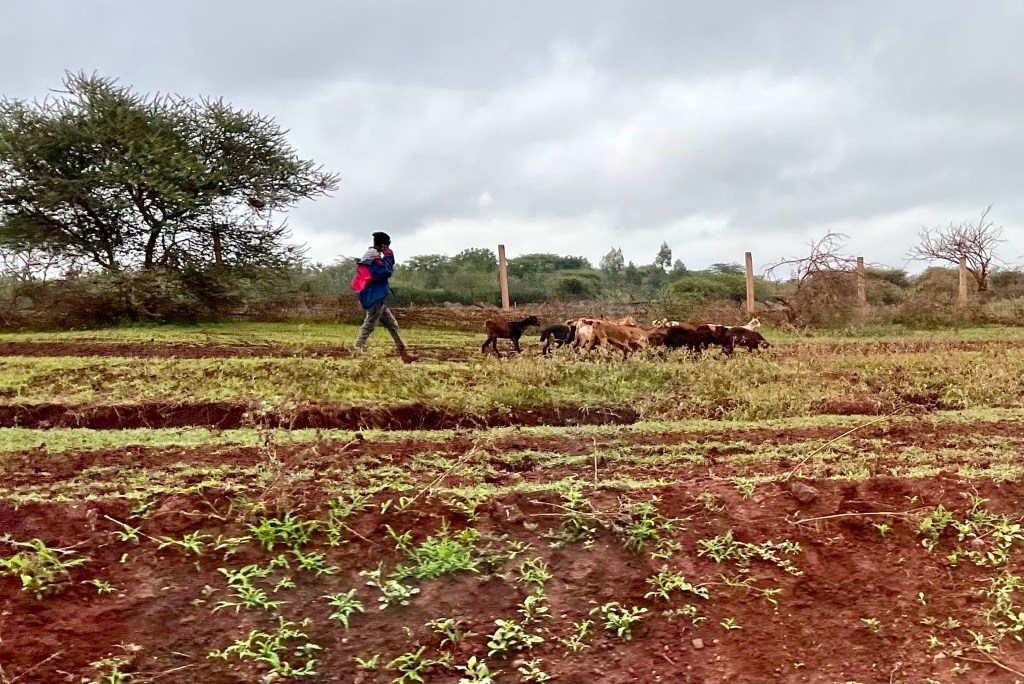
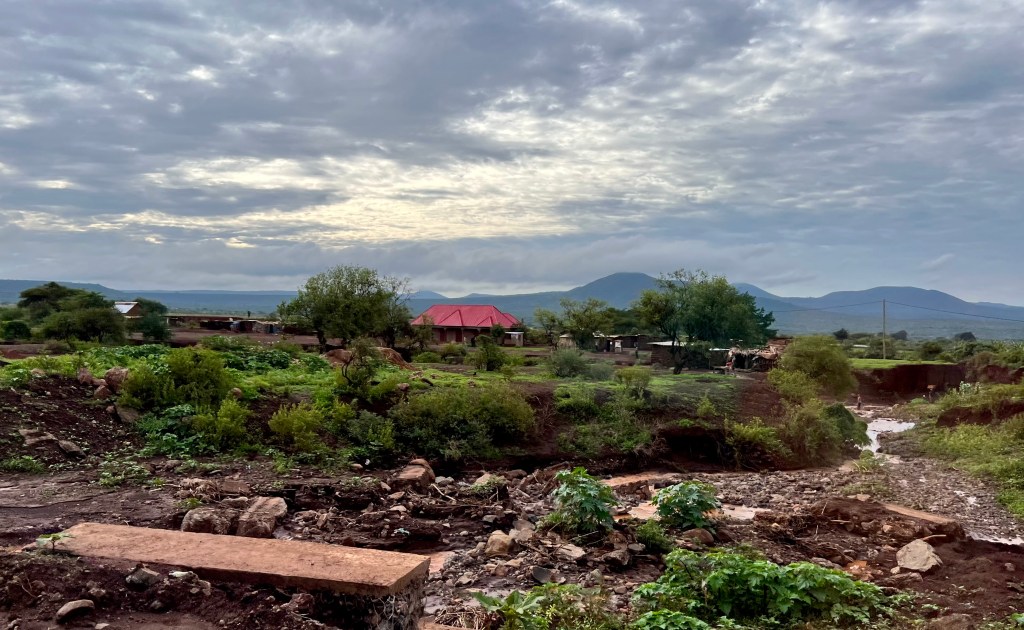
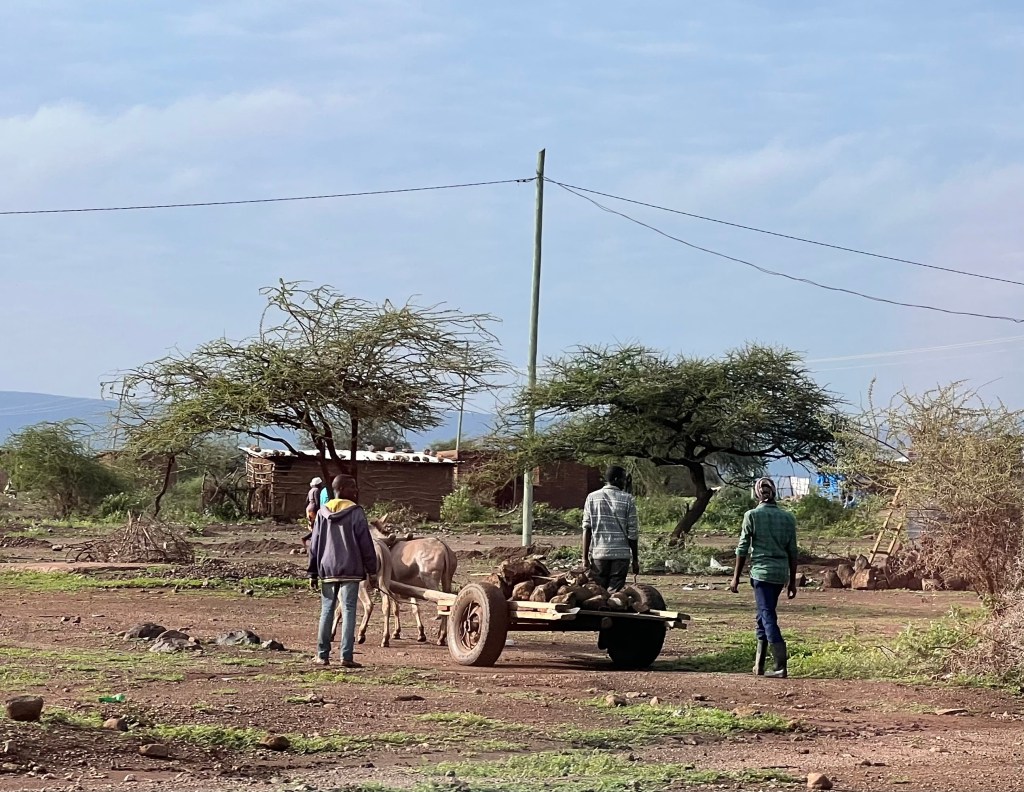
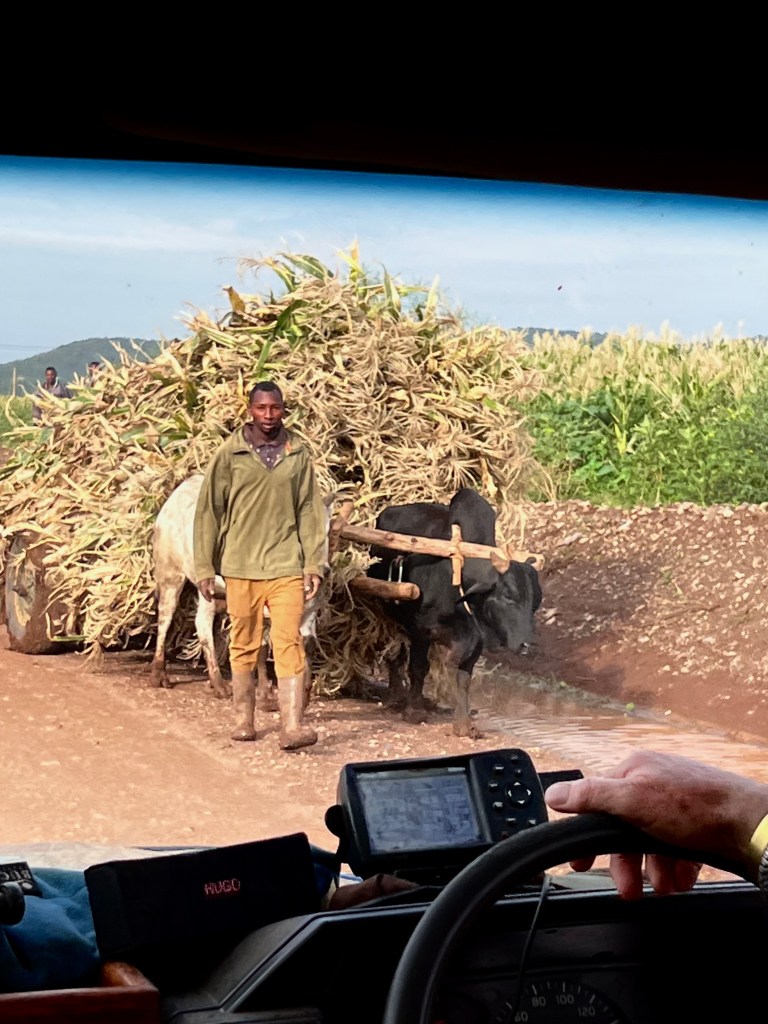
Miscellaneous photos on the drive back and forth to visit the Datoga tribe. Why a Mississippi butcher? Phil under a Datoga tree. When you don’t have a bench support use a log. The red volcanic mud is indigenous and ubiquitous. Shipping containers are often found and it seems they are used for all sorts of things. Mostly kids walk with groups of kids to school. This little girl is on her own walking in her school uniform. Phones are also ubiquitous. I thought seeing the Dakota tribe in their clothes might have just been for us but photos along the road show anything goes.
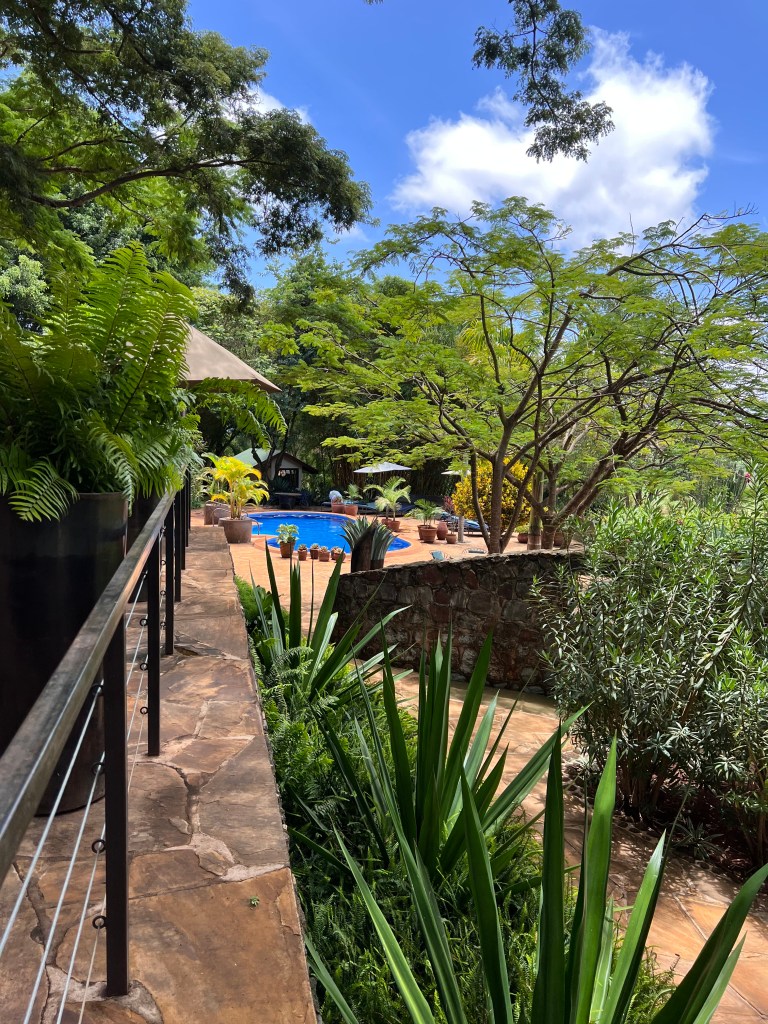
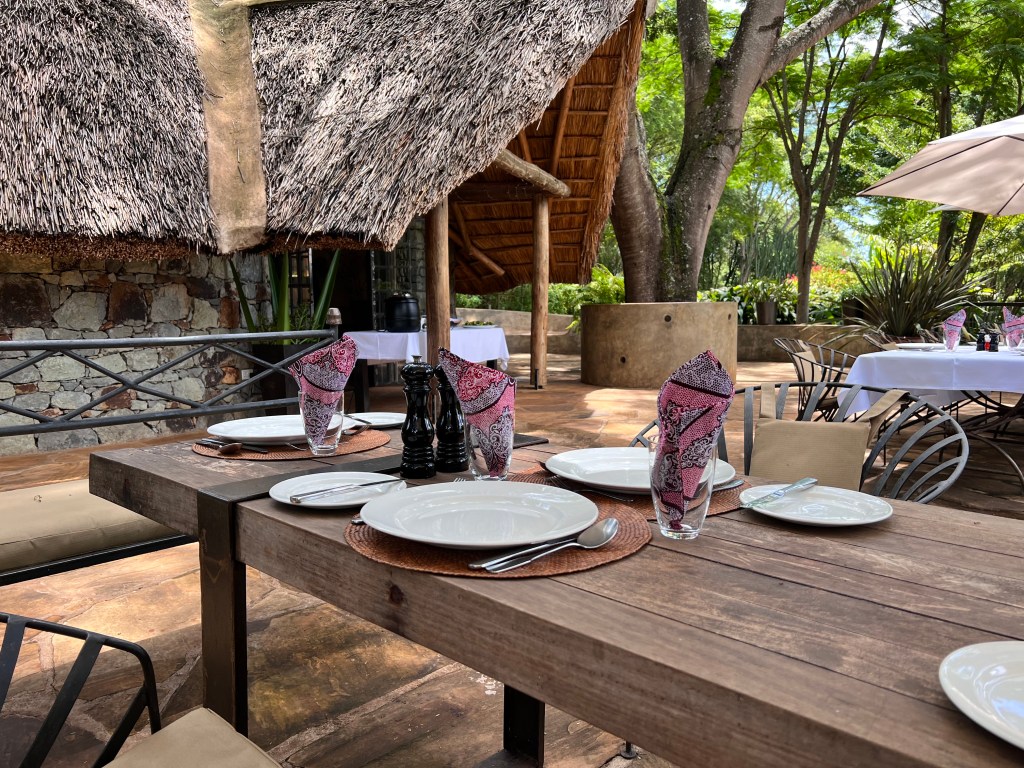
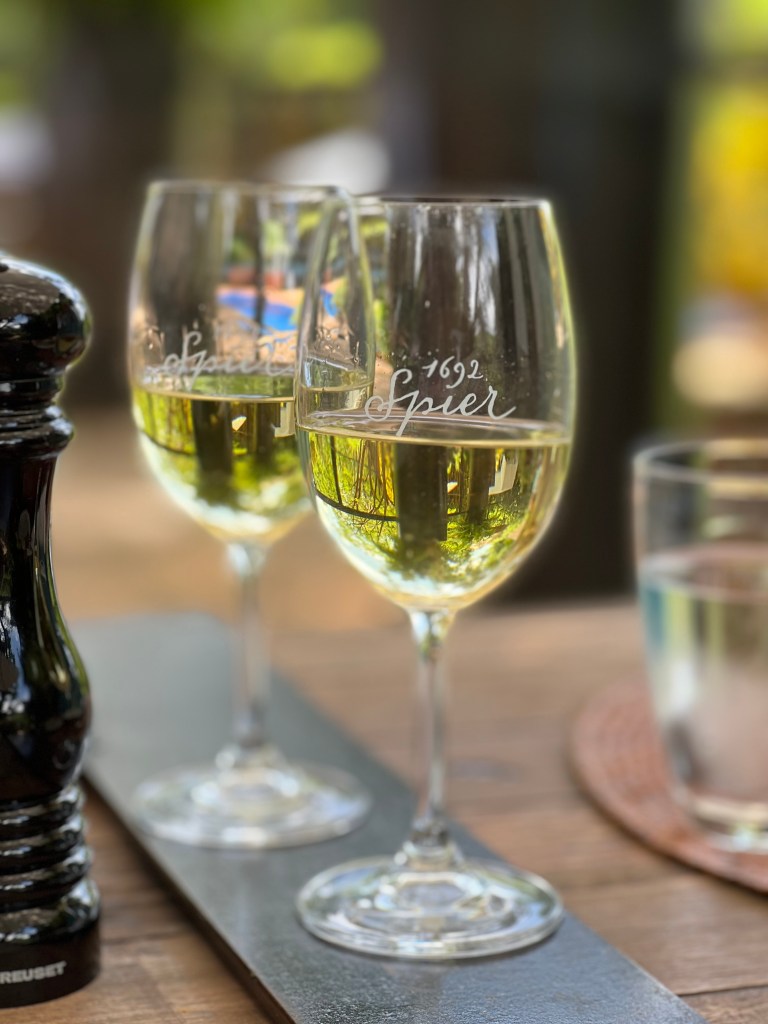
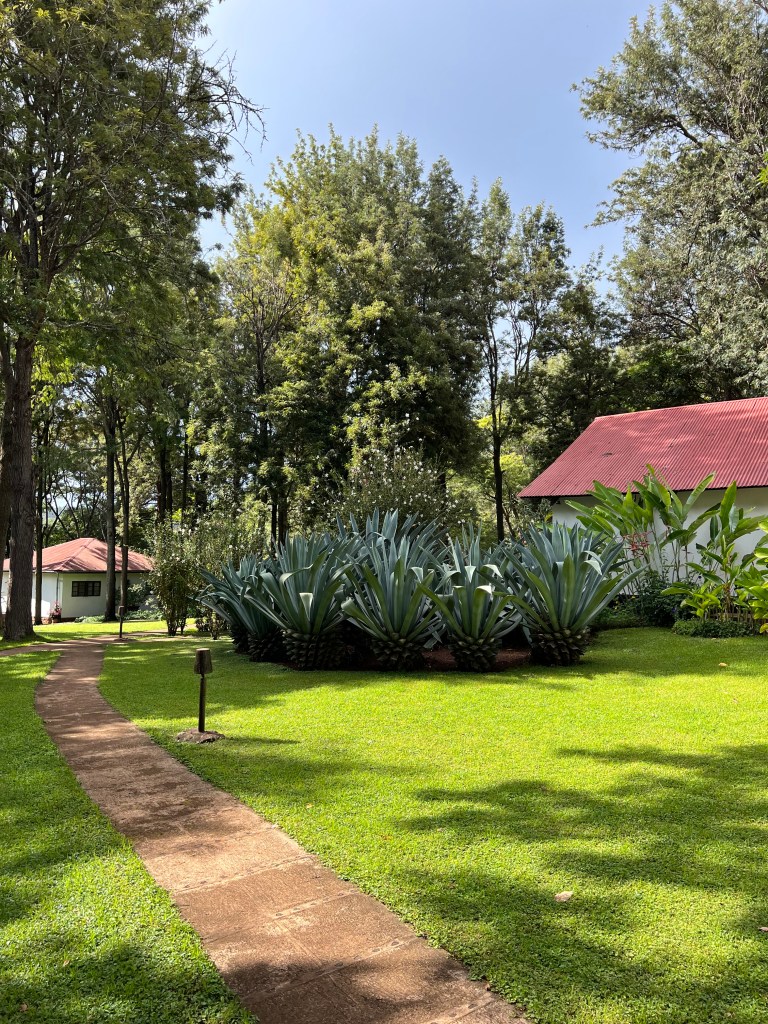
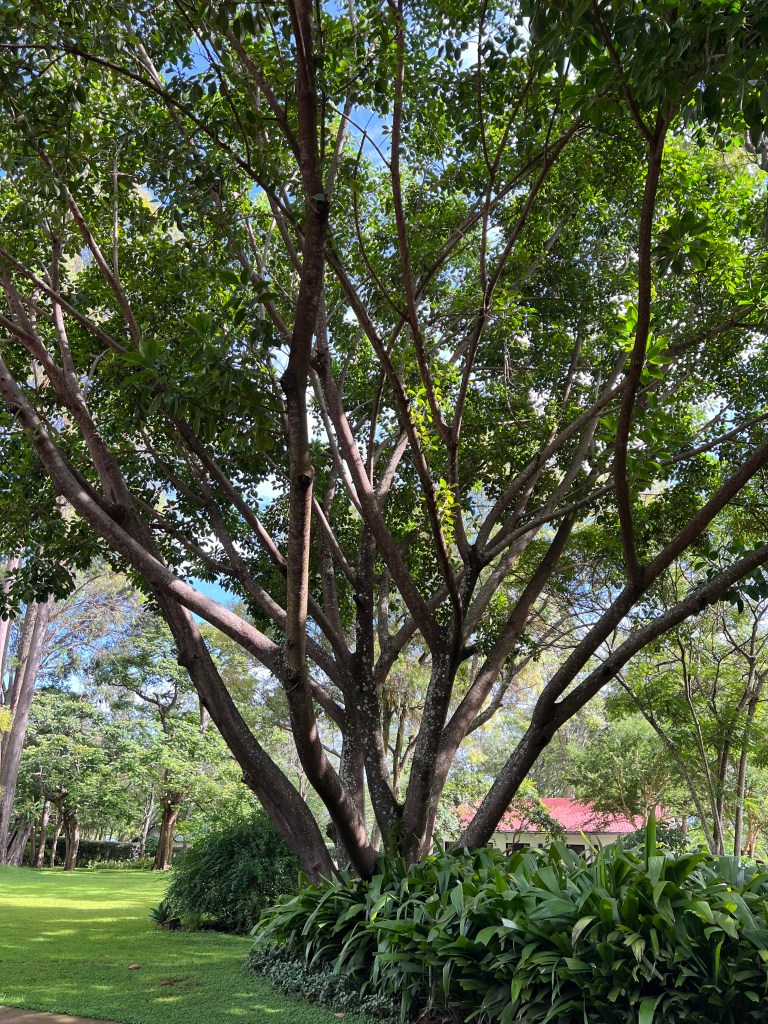

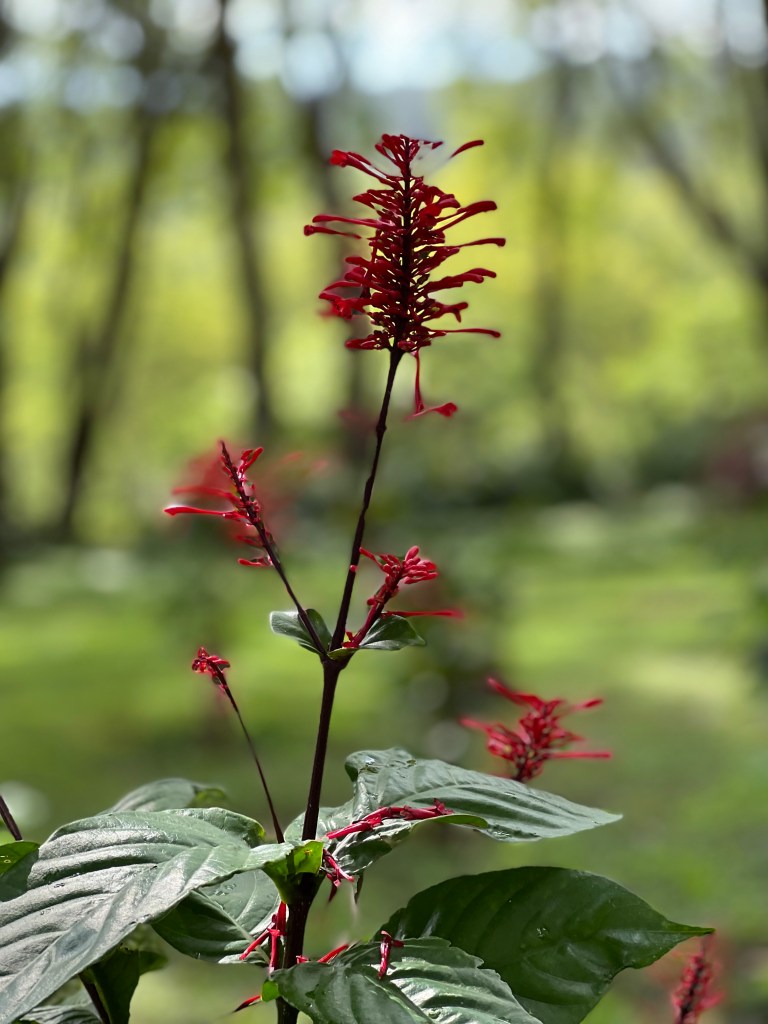
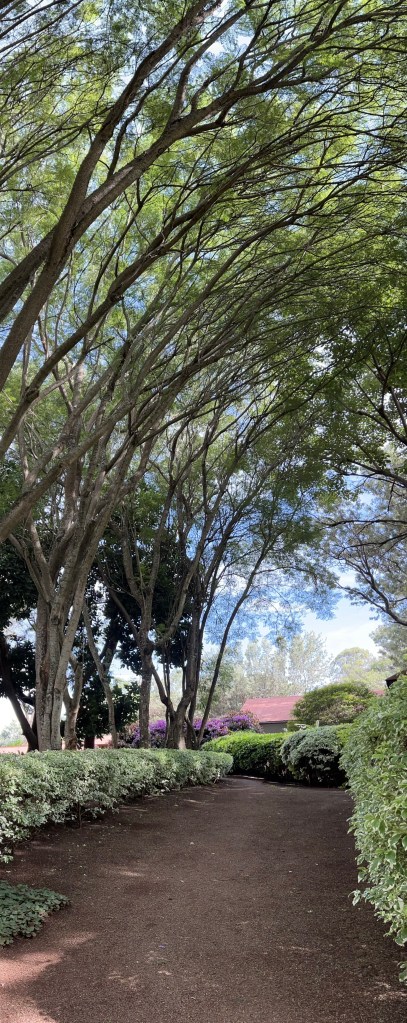
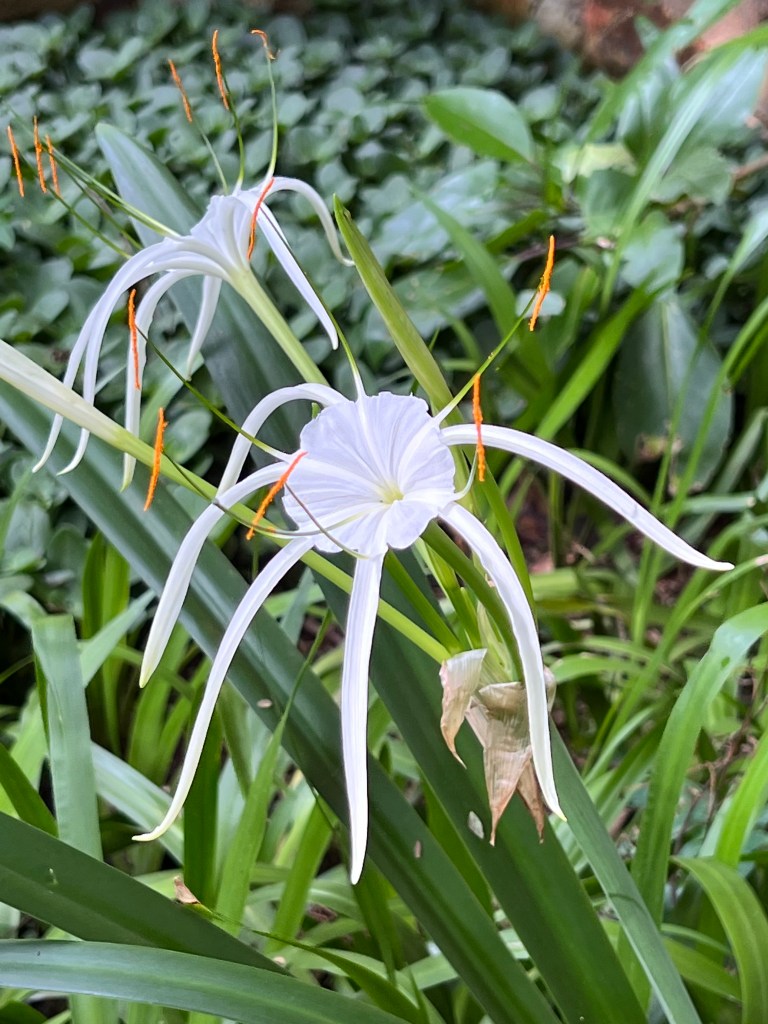
We came back for a beautiful outdoor lunch and an afternoon of down time. Tropical flowers grace all the pathways around the lodge. Walking around to soak up the tropical flowers and take photos was calming. We had the opportunity to get a massage on our down time. Mine was followed by a nice soak in the tub before dinner. Some folks had pool time as we went from a rainy entry day to a sunny midday at the lodge. We were all able to repack using our freshly laundered clothes. Late afternoon we could hear distant thunder and see the clouds build.
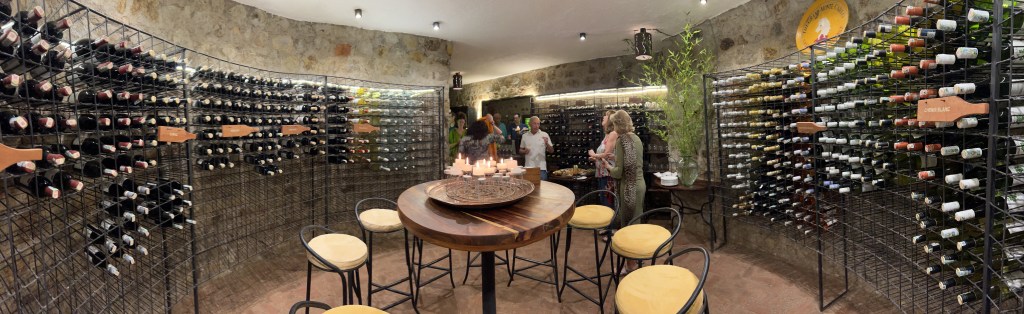
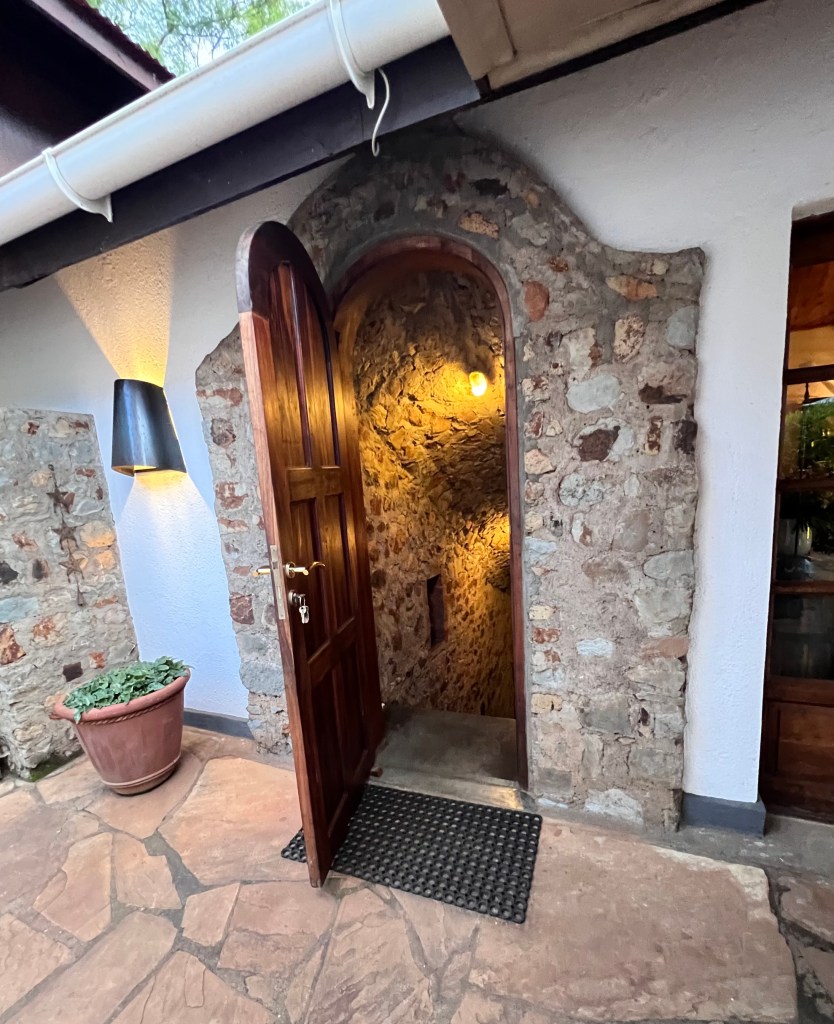
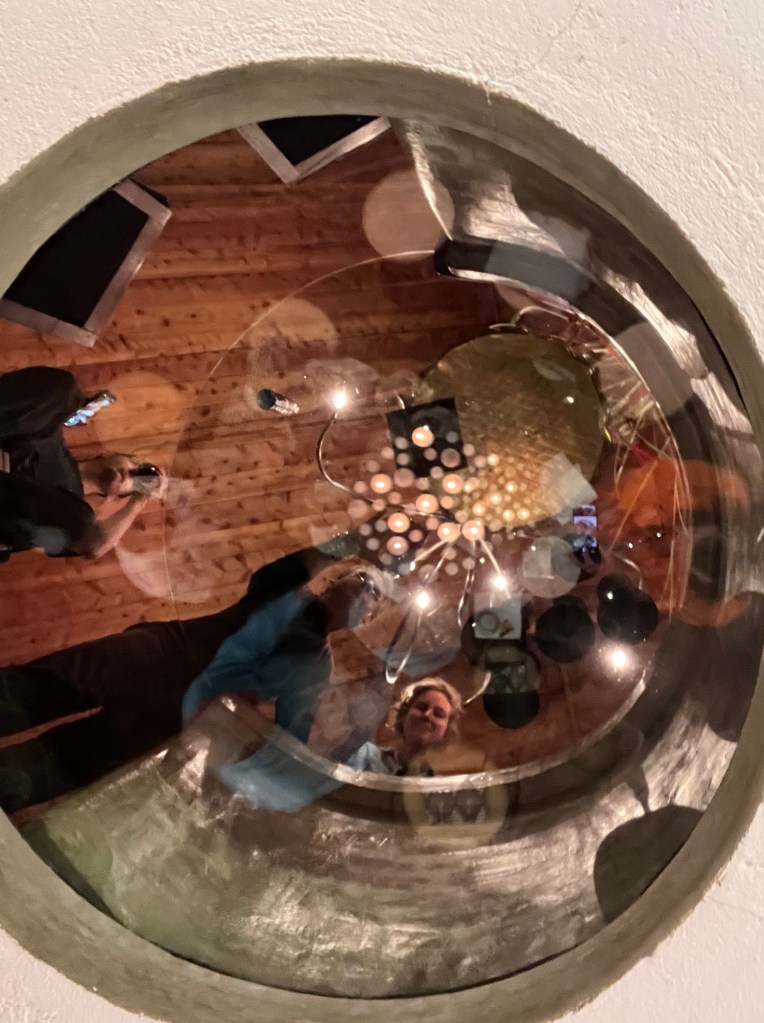
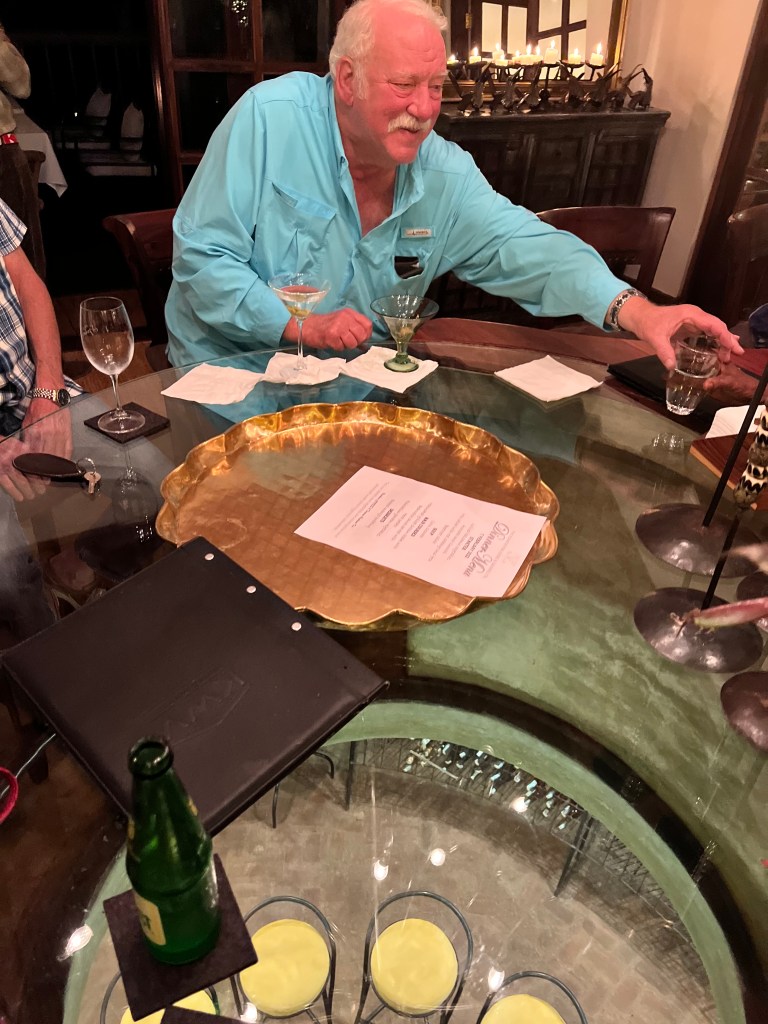
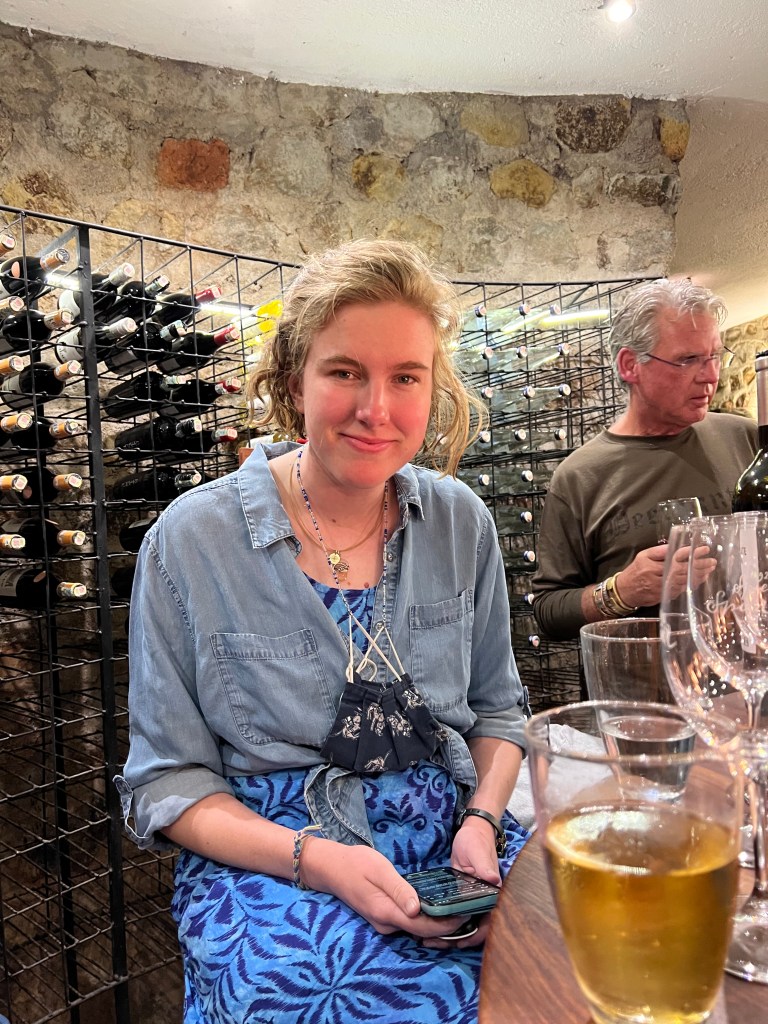

The door to the cellar, the bar above has a glass floor – you can see Larkin looking down before she joined us, Michael at the bar upstairs, Larkin in the cellar and Michael talking about how wine labels work with Gary and Jess.Most of the wines served are from South Africa and are very delicious.
Off to Tarangire National Park with fresh clothes. Tarangire has many elephant herds and plenty of monkeys and baboons gracing the trees.
 THE TRAVELING MARTINI'S
Outstanding Jacqui. Great memories w/ your daughter Larkin are piling up. Like the last one of Mike too! Dave
LikeLike