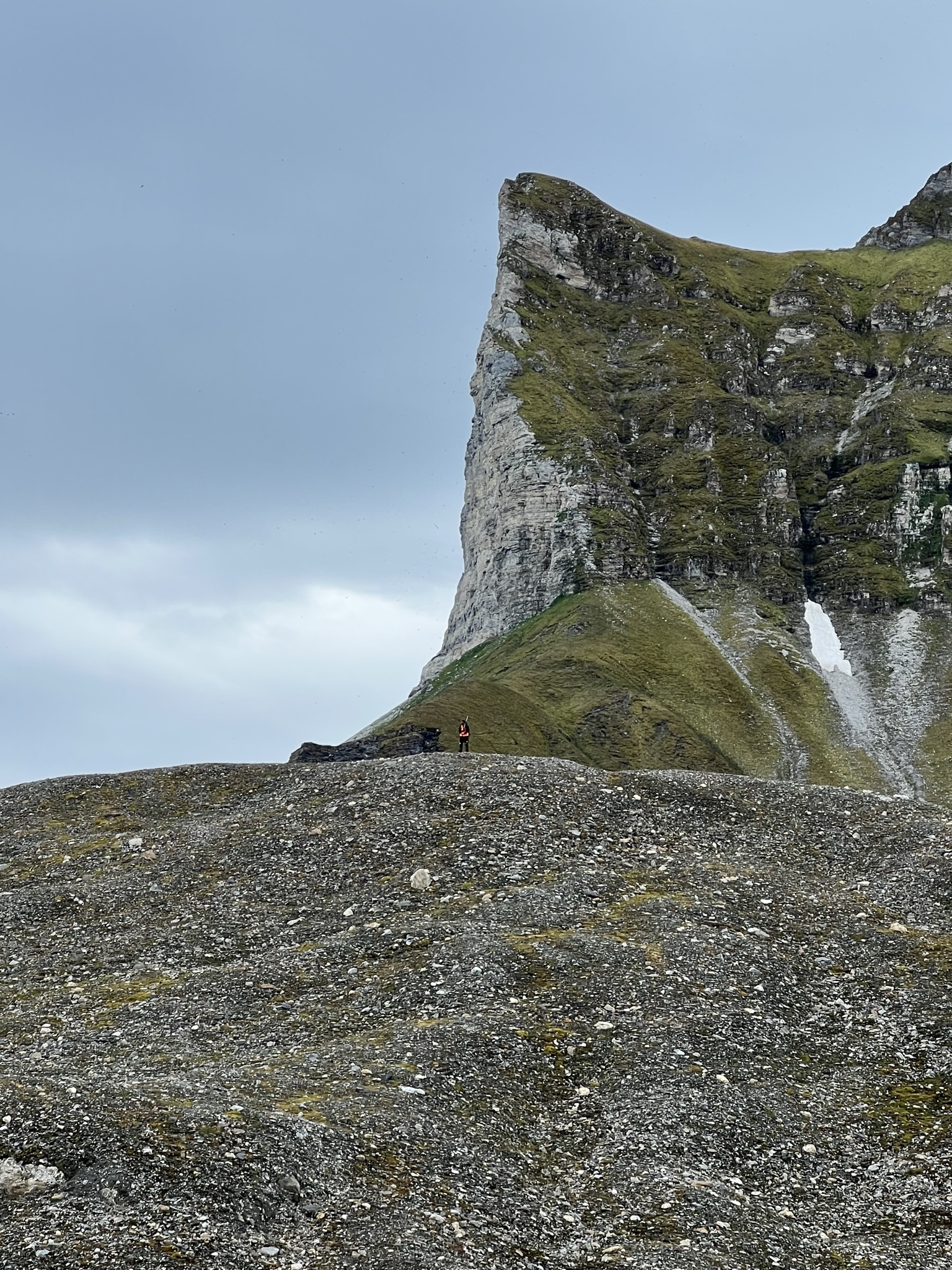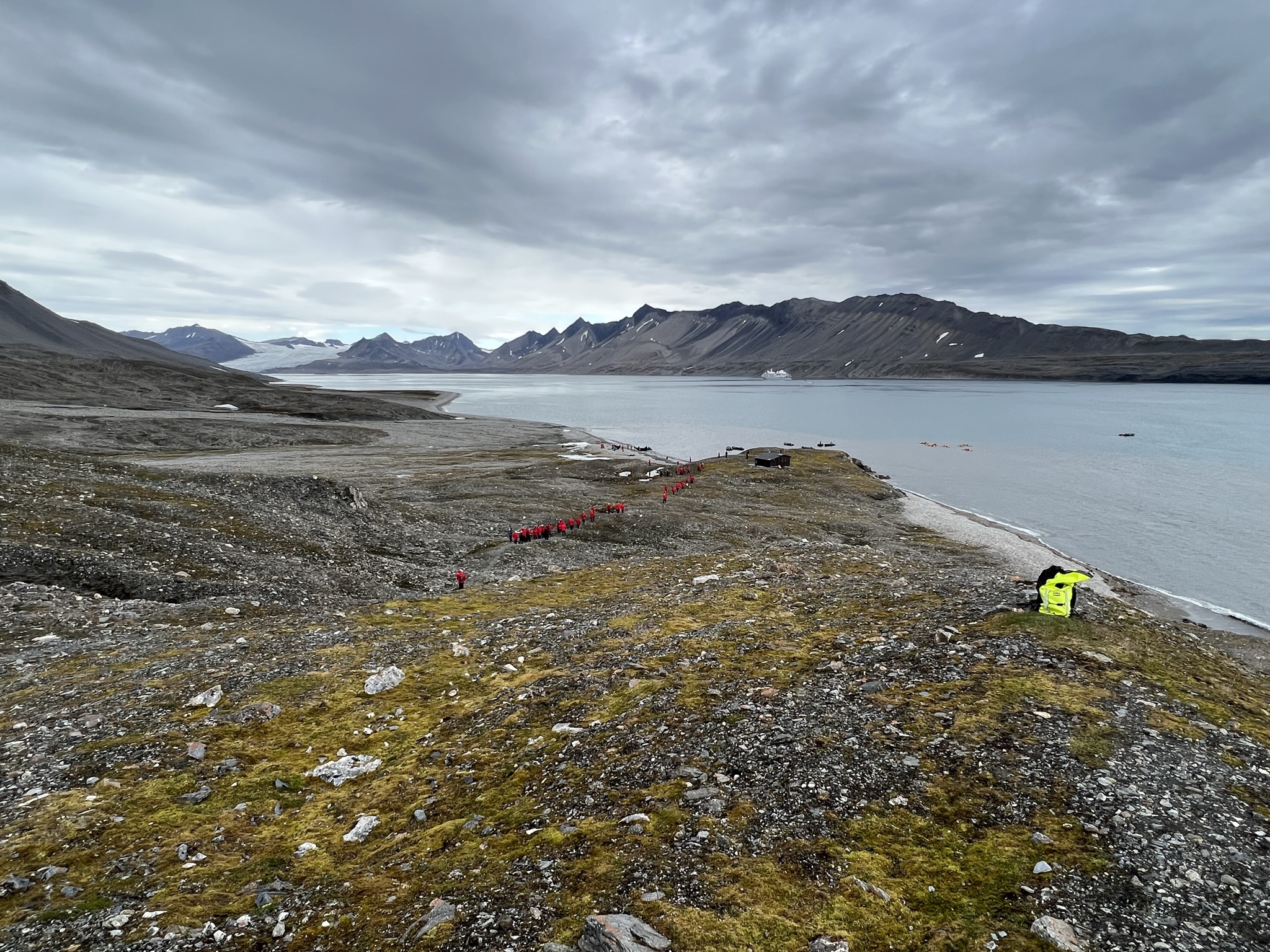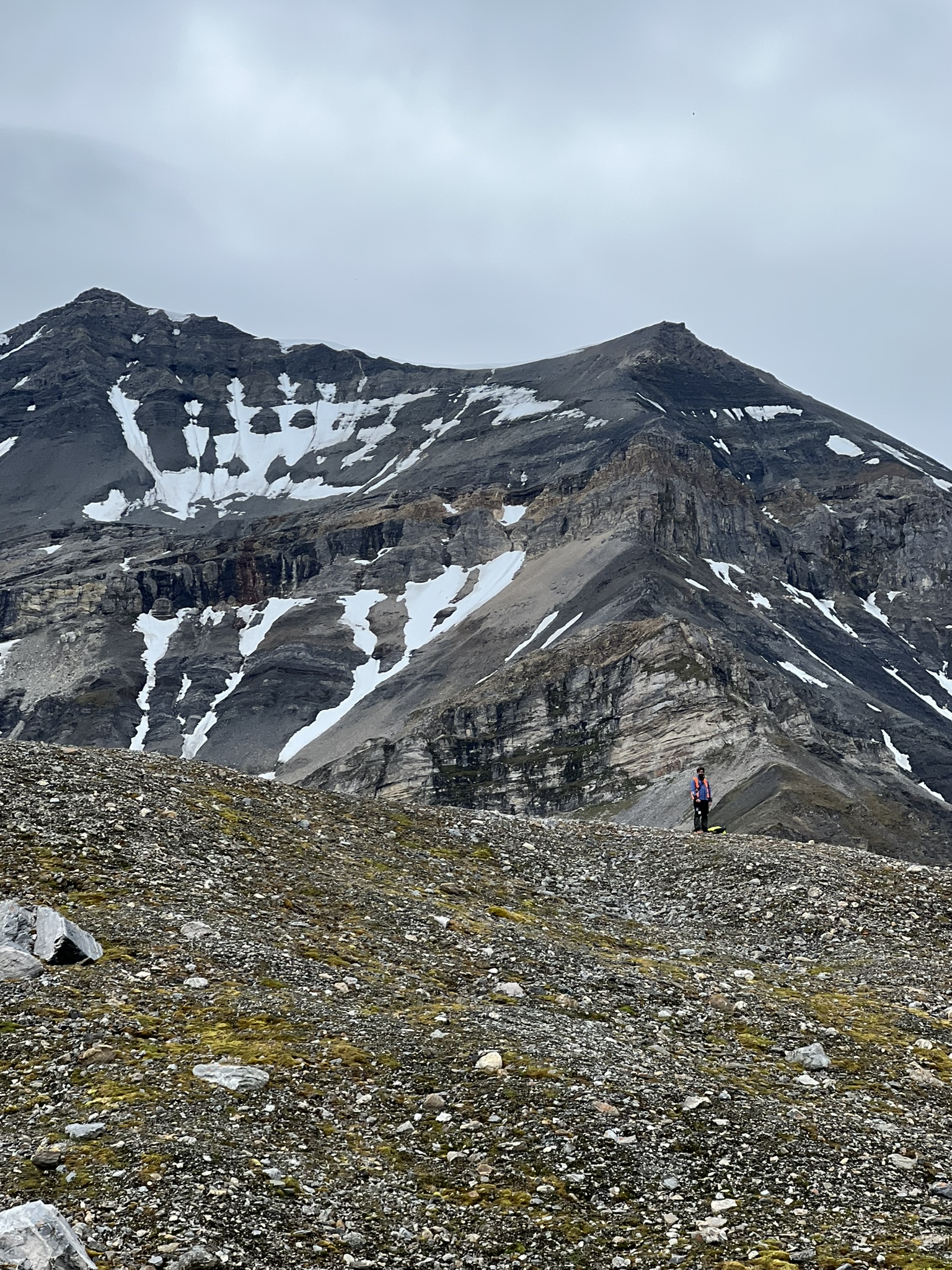
THE GOLDEN CIRCLE

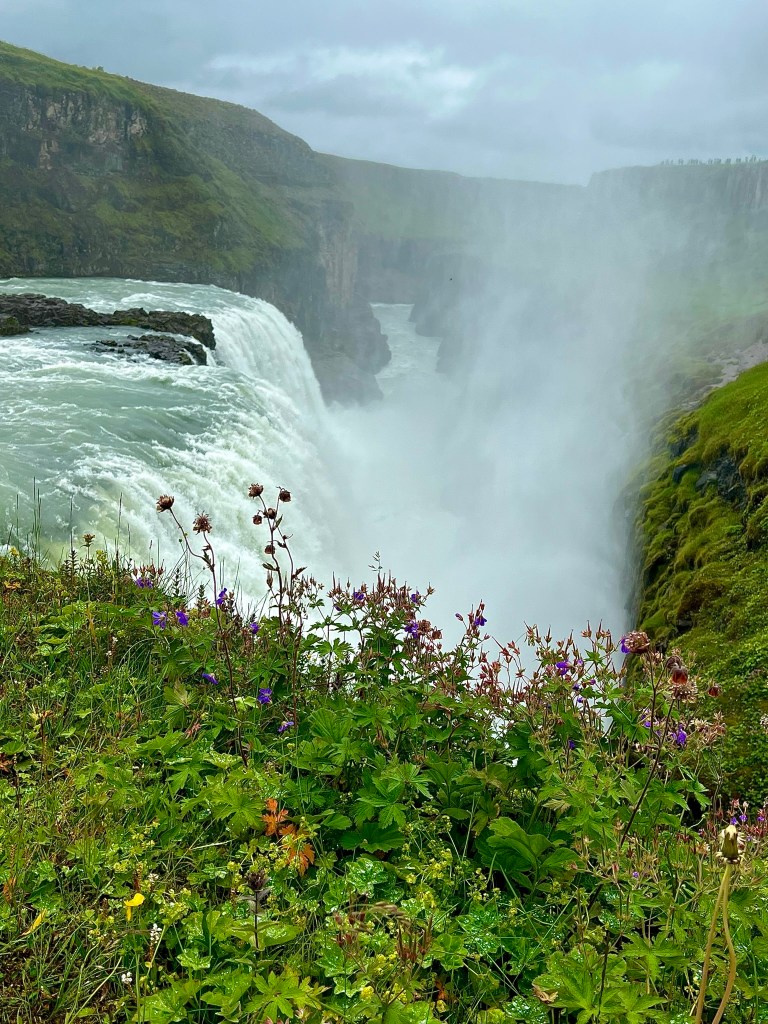
Gullfoss waterfall

We began our driving trip in Iceland with Valdimar traveling around the Golden Circle. He came to pick us up in new black Chevy suburban, plenty of room for us and the luggage and very comfortable. Valdimar is in his 60’s and has spent time in the USA in Los Angeles and in the Screen Actors Guild. It wasn’t what he expected and he came back home to Iceland to their television etc and spends time sharing his country with tourists. His off season without his family is the Dolomites for skiing in winter. He and Michael had such fun talking bands and bands they played in and just general rock in roll. Larkin and I enjoyed the view out the window and let them chat!

The Golden Circle is an Icelandic marketing term for the 190 mile round trip loop out of Reykjavik. The name Golden Circle is derived from the name of the Gullfoss waterfall which means “golden waterfall” in Icelandic. Gull – golden; foss – waterfall. The Golden Circle incorporates the Pingvellir National Park, the Gullfoss waterfall and the geothermal area in Haukadalur. However, we started our tour at Pingvellir National Park where Iceland truly started as a country.
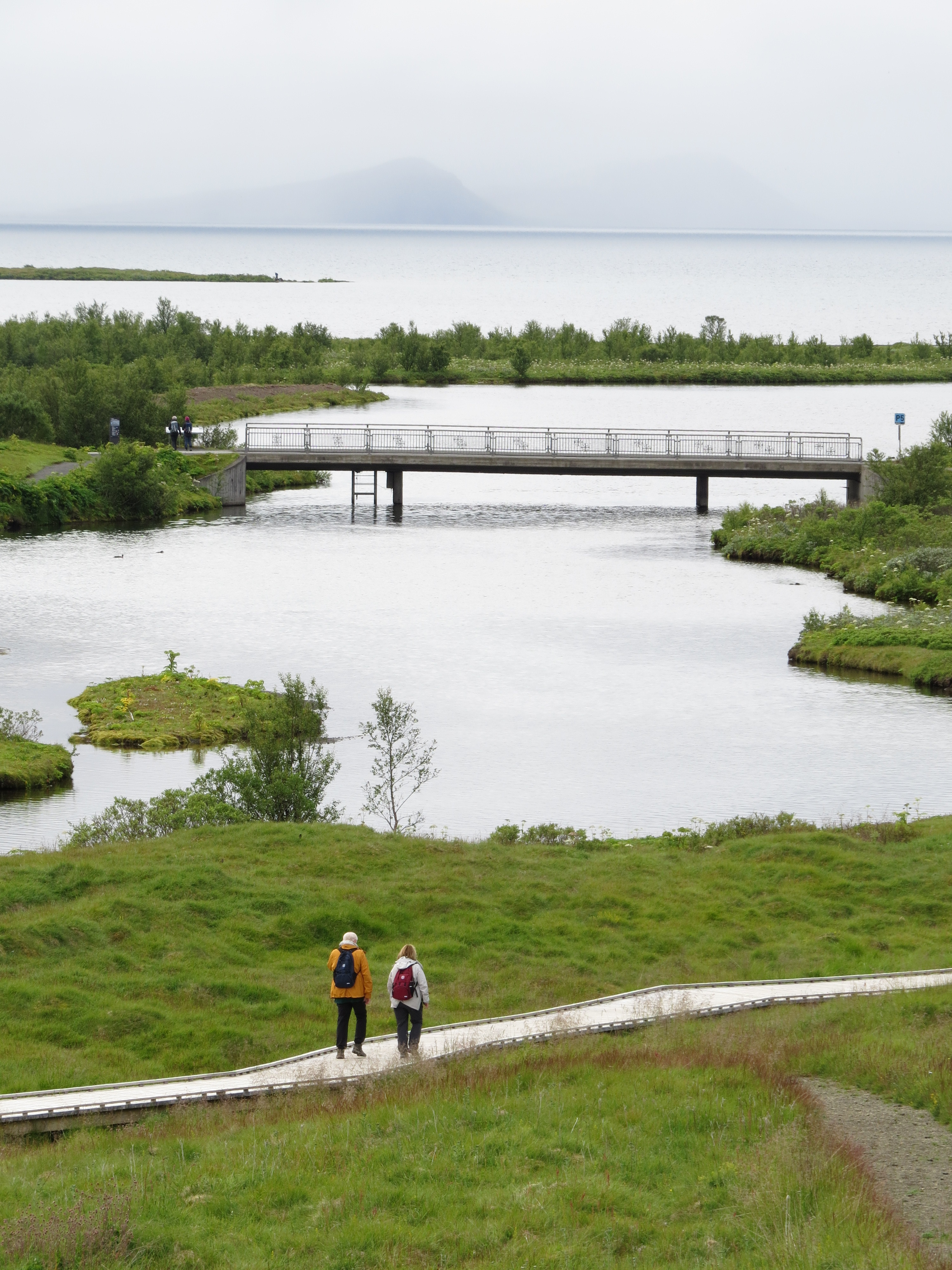
Iceland is on the front lines of the battle between two tectonic plates which float on our Earth’s crust. It is known as “the land of fire and ice.” This geologic hot spot includes earthquakes, volcanic eruptions and geysers which also provide Iceland with abundant geothermal energy. There are more than 200 volcanoes on the island. Iceland is not as harsh a place as it seems it could be due to it being at the tail end of the Gulf Stream Current which flows up through the Atlantic Ocean bringing relative heat from the tropics. Large portions of Iceland thaw each summer but only 20-25 percent of the island is habitable.

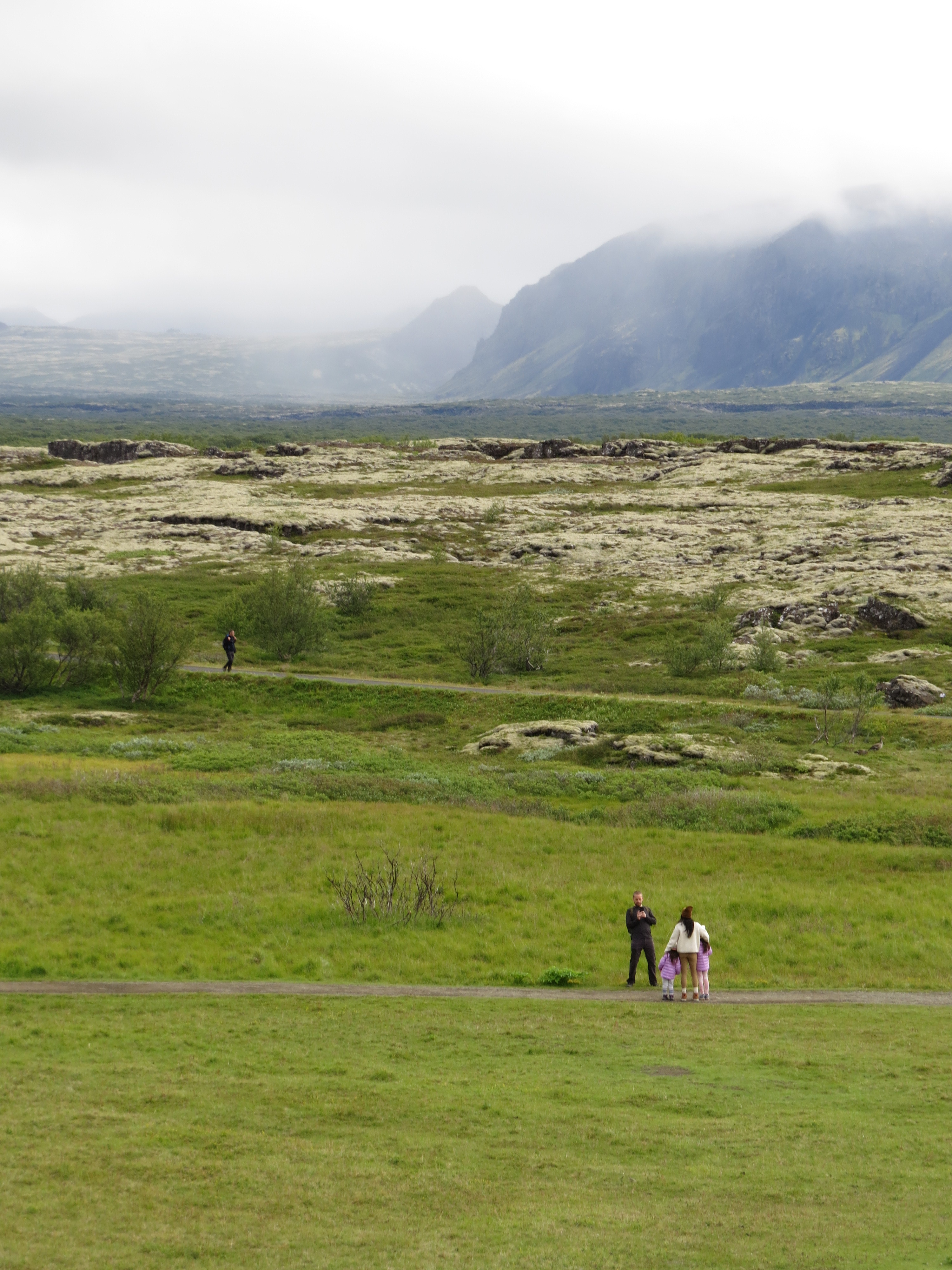
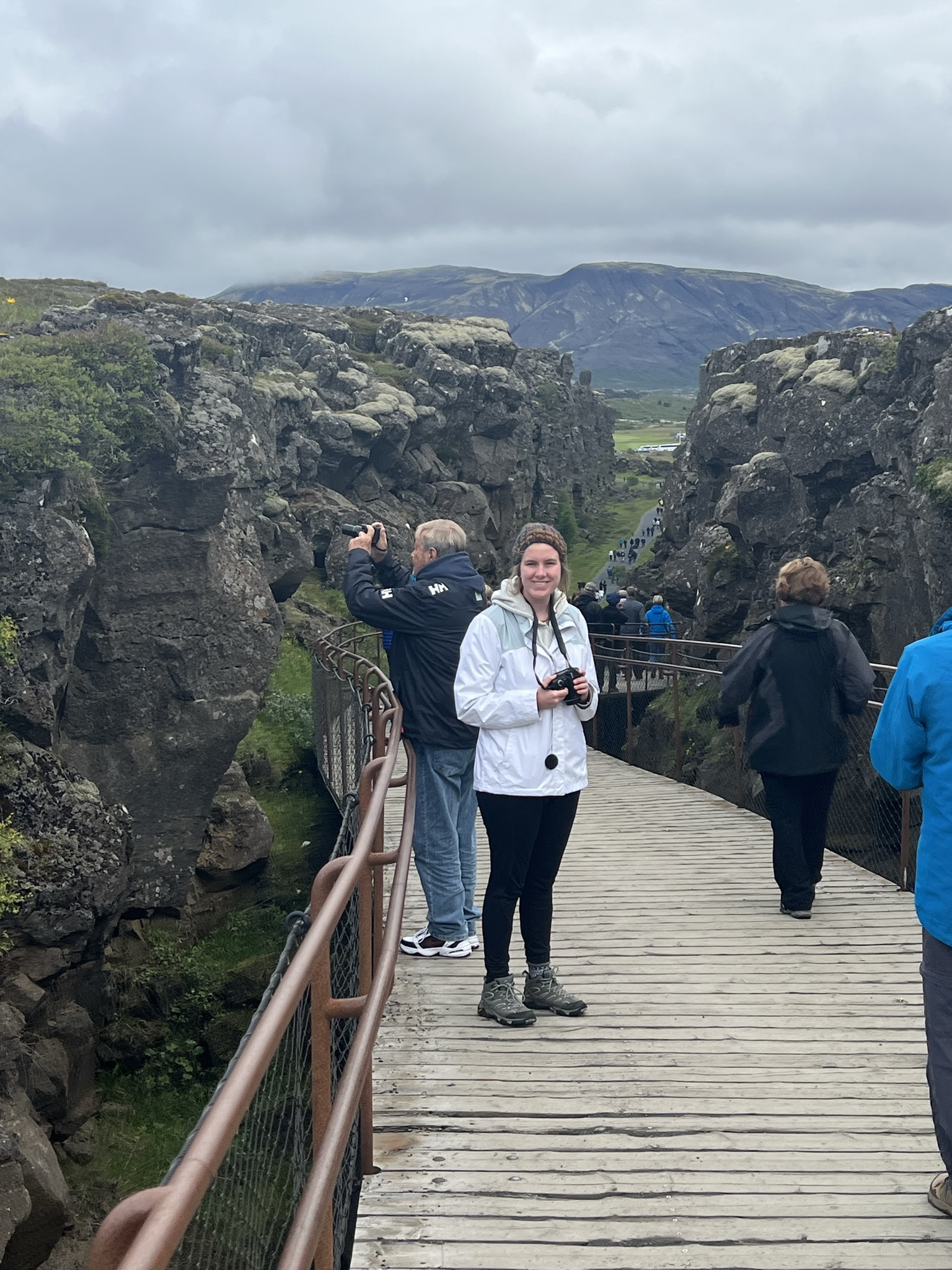
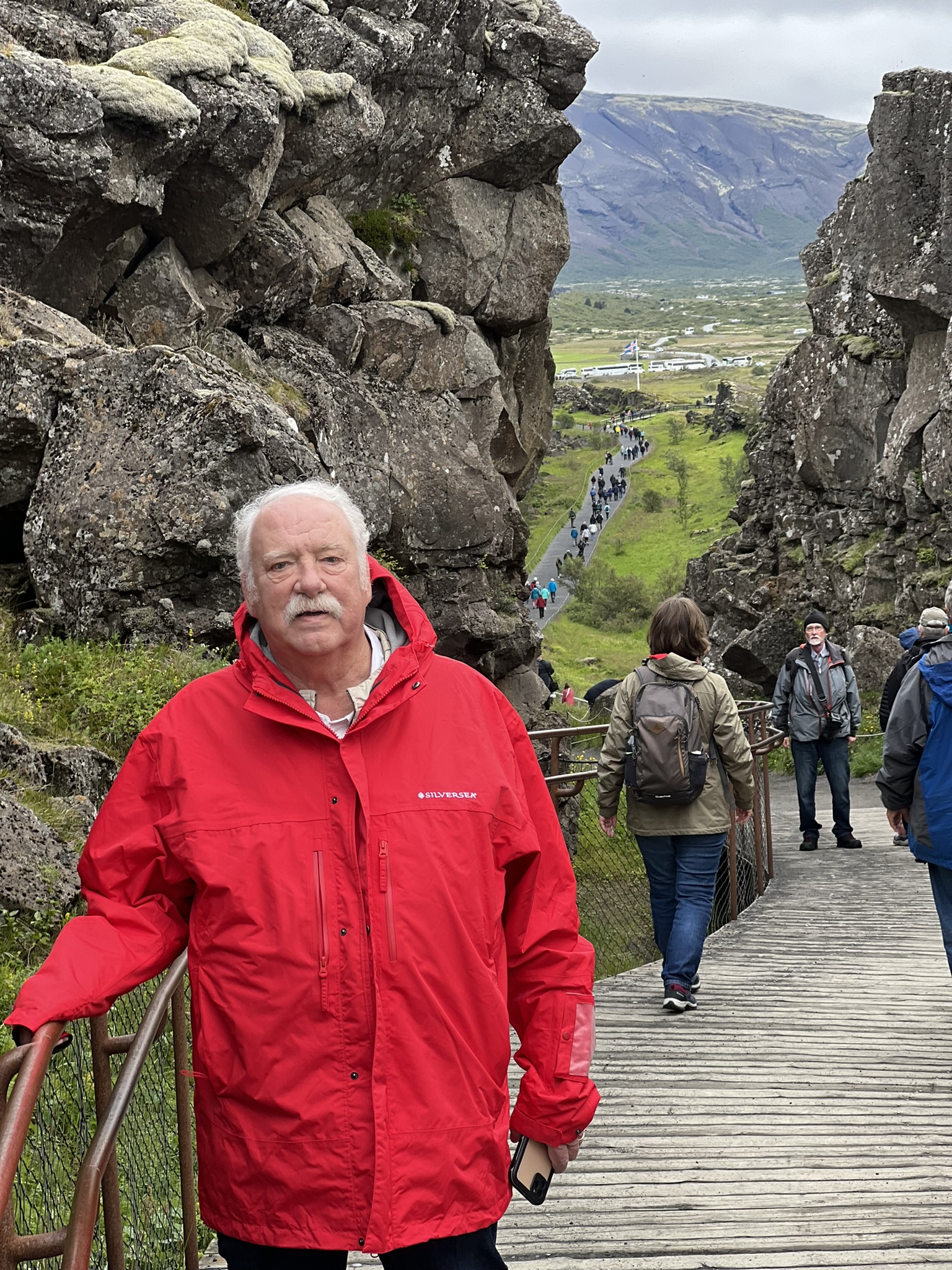
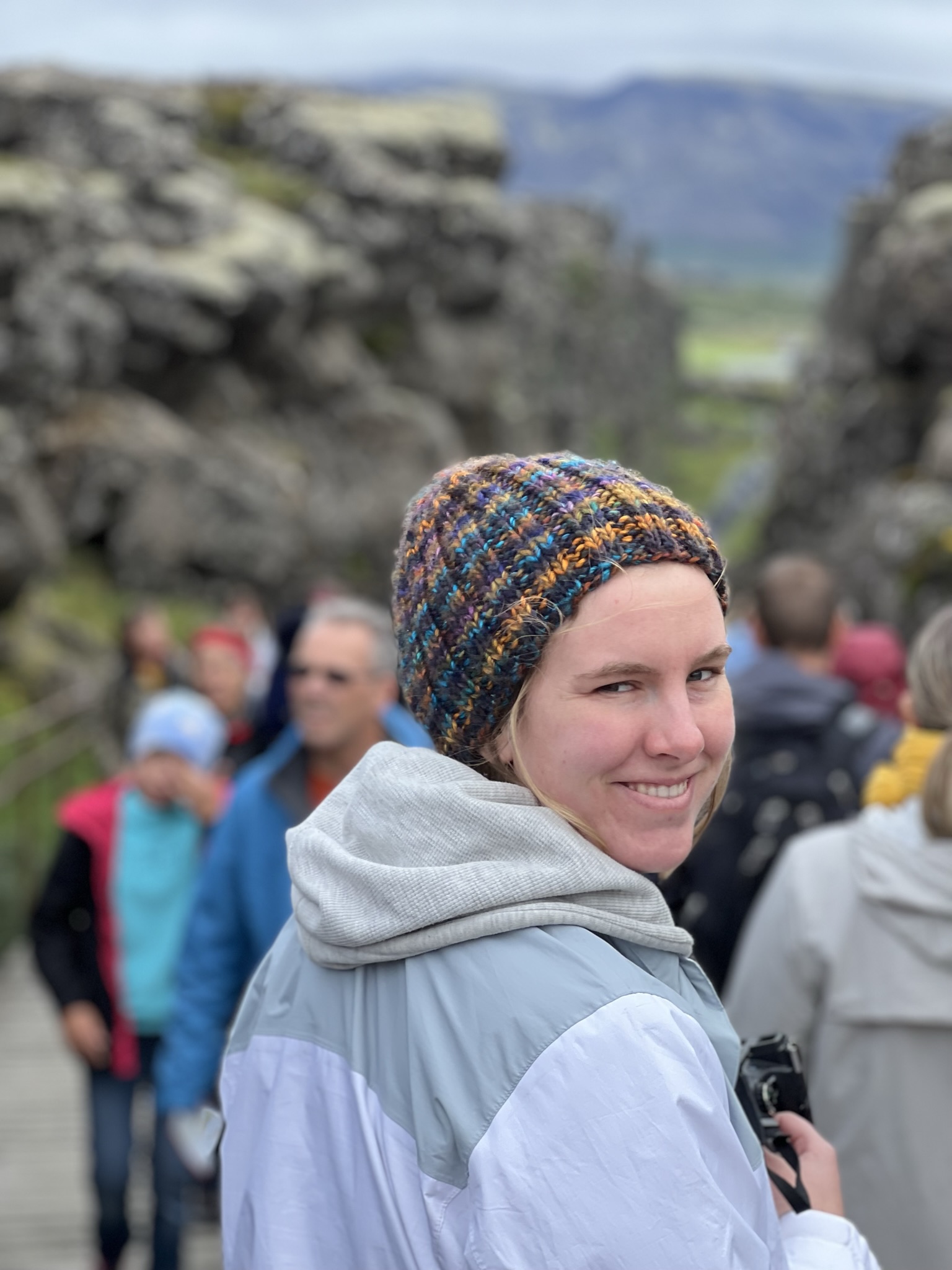
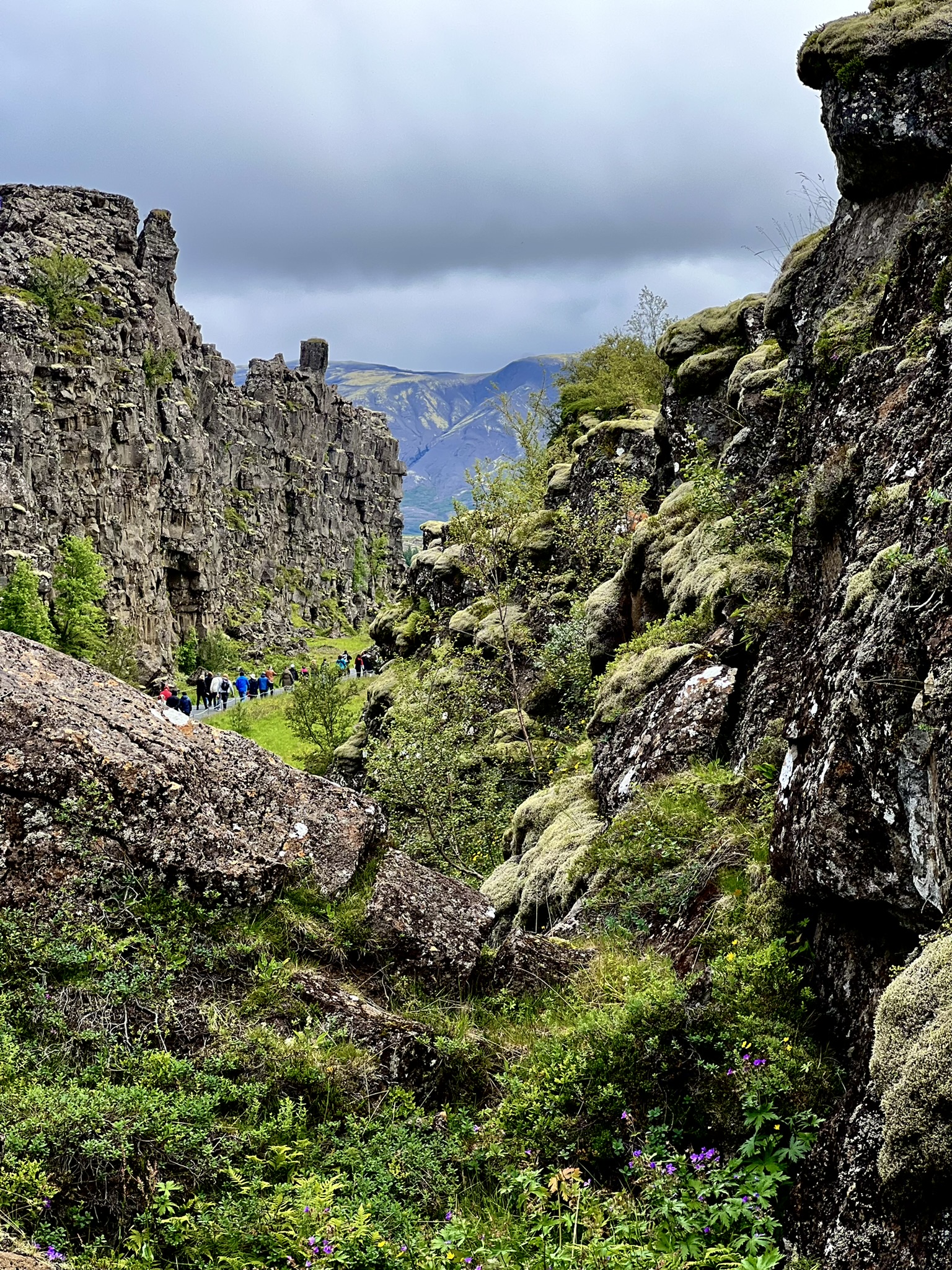
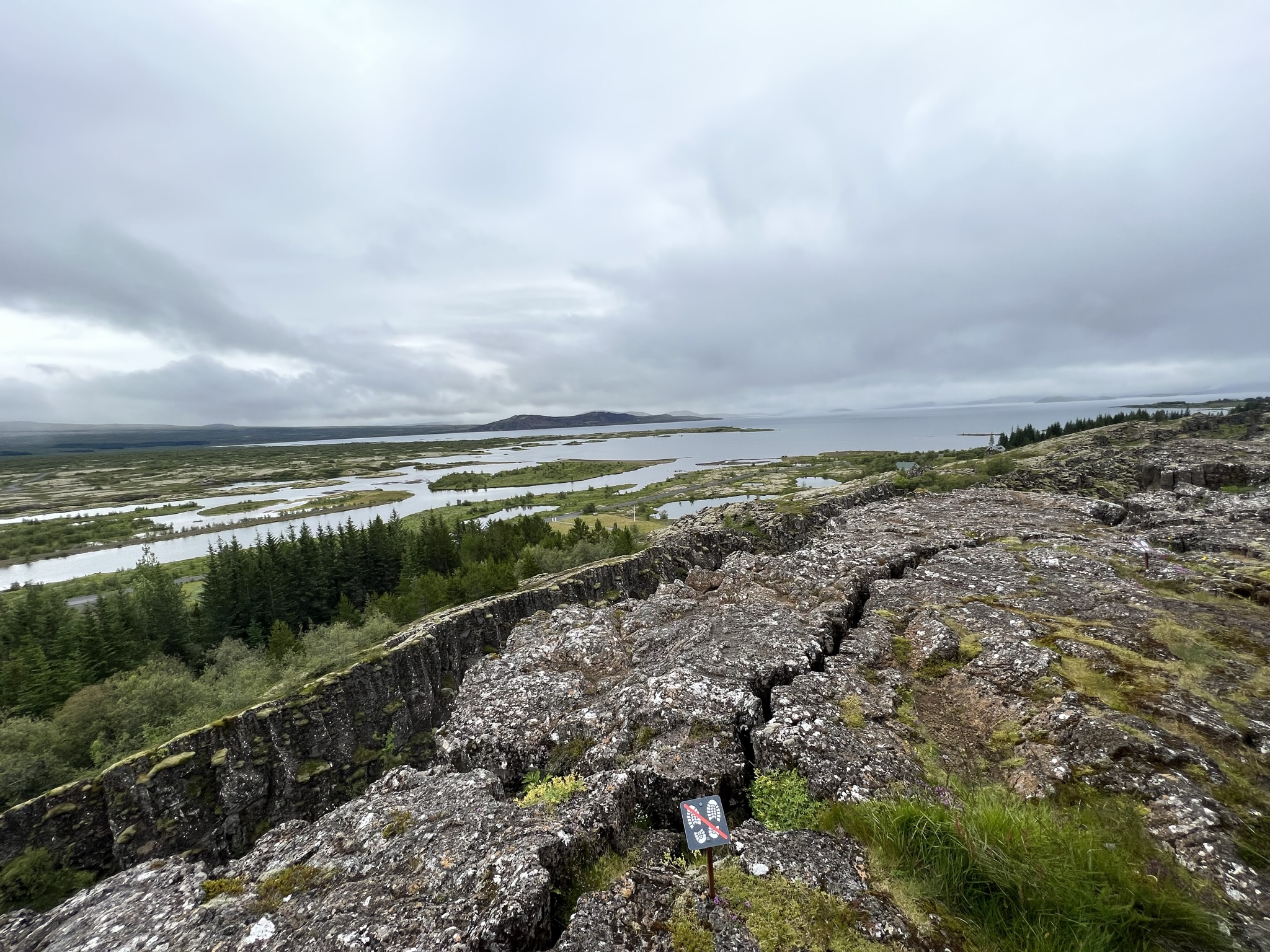
Pingvellir National Park, this incredible geologic feature, highlights the creation of Iceland’s rift valley on the mid Atlantic Ridge – an area where the Eurasian and North American plates are actually pulling apart. This portion of the mid-Atlantic ridge is the largest portion exposed above sea level. It is one of the few places where you can stand on the ridge on dry land. Volcanic eruptions along this ridge create new ocean floor and keep pushing these two tectonic plates apart at a rate of 1-20 cm a year. As these plates move apart rocks melt and well up from deep in the crust producing enormous volcanic eruptions of basalt which build long chains of volcanoes. The area we are walking along in the photo is called Almannagja which is a tectonic fissure. It was incredible to look across the rift valley knowing the other hills we saw were an entirely different continental plate, the Eurasian plate.

Although the first people in Iceland were most likely Celtic monks who built caves along the southern coast in the 8th century (more about that later), Norwegians led by Ingolfur Arnarson, supposedly drove them out when they arrived in the 9th century. Arnarson sailed with his family, slaves and animals. We heard many stories including he was a man who killed someone in Norway and had to flee. We were told he, and or others along the way stopped in Britain and captured women as slaves hence the celtic genes along with the Scandinavian genes in Icelanders. He gave Reykjavik its “smoky bay” name. Many other Vikings followed him to Iceland. Fishing was fabulous and sheep adapted well. According to sources there were 60,000 people in Iceland in 930 AD. In the 11th century the island was converted to Christianity.
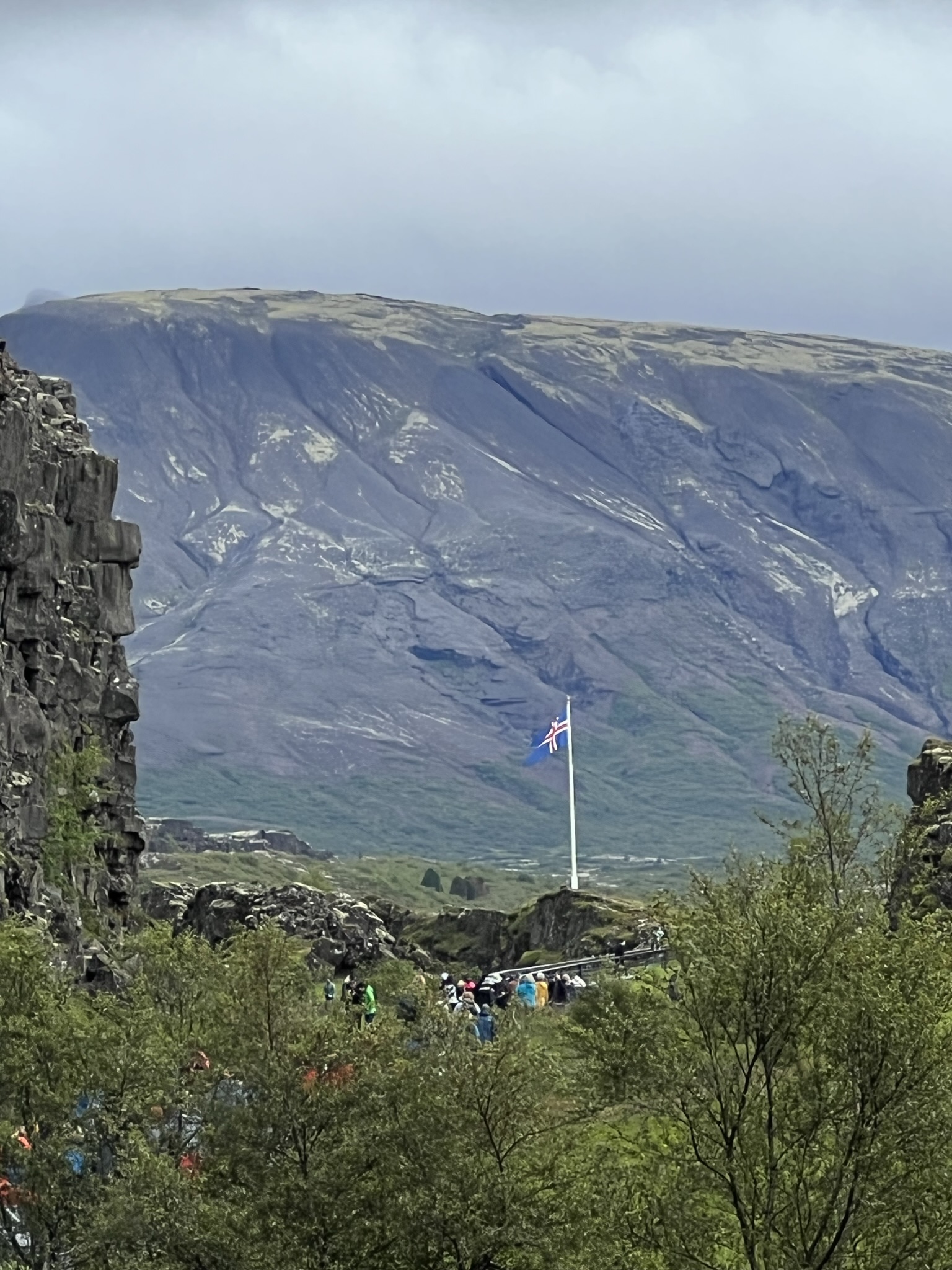
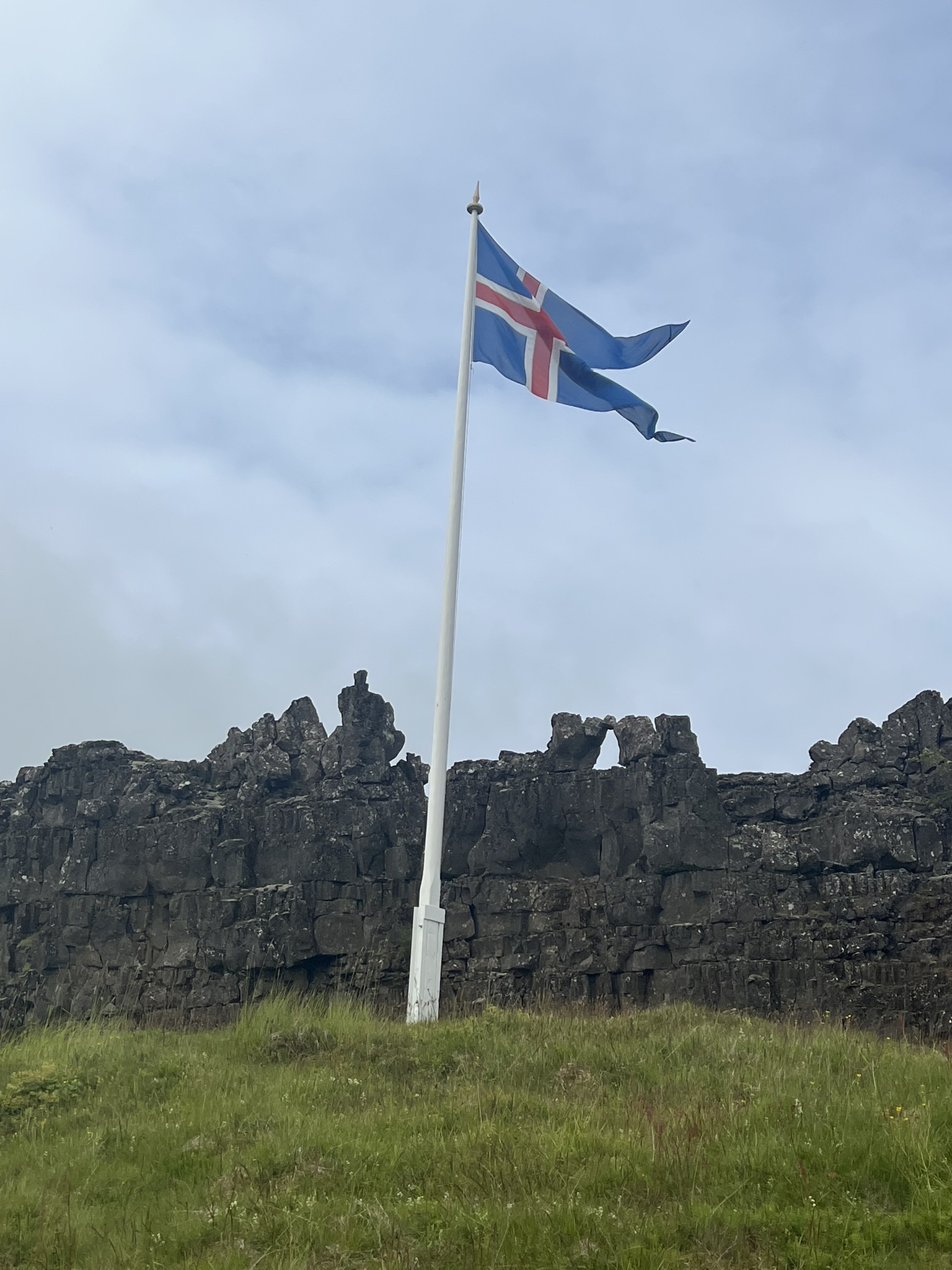
In 930 the powers that be gathered in the area of the flagpole in this rift valley of Pingvellir for the Althing, the annual parliament, and formed a government. During the Commonwealth period, pre Danish rule, this area was used as a gathering location from people all over the country – a pilgrimage destination and a site for the nation-states ritual ceremonies. Temporary dwellings were set up with walls of turf and rock and temporary roofs. Some of these remains can still be seen. People stayed two weeks for the assembly. Thousands of people flocked there – merchants, sword-sharpeners, and tanners sold goods and services. There were entertainers and ale-makers who brewed drinks for the guest. News was shared and games and feasts were held. Pingvellir was a meeting place for everyone in Iceland which laid the foundation for the language and literature. Unlike much of the European continent, Icelanders wrote their history down beginning with the Book of Settlements in 874 AD.

Just like any country, Iceland had their ups and downs which included disease, trade, monopolies, religion and foreign rulers. However, Iceland being the land of fire and ice, had an eruption in 1783 which caused widespread devastation and the population by 1786 was only 38,999. Althing closed and a new court of law replaced it in Reykjavik which at the time was a community of only 300 people.
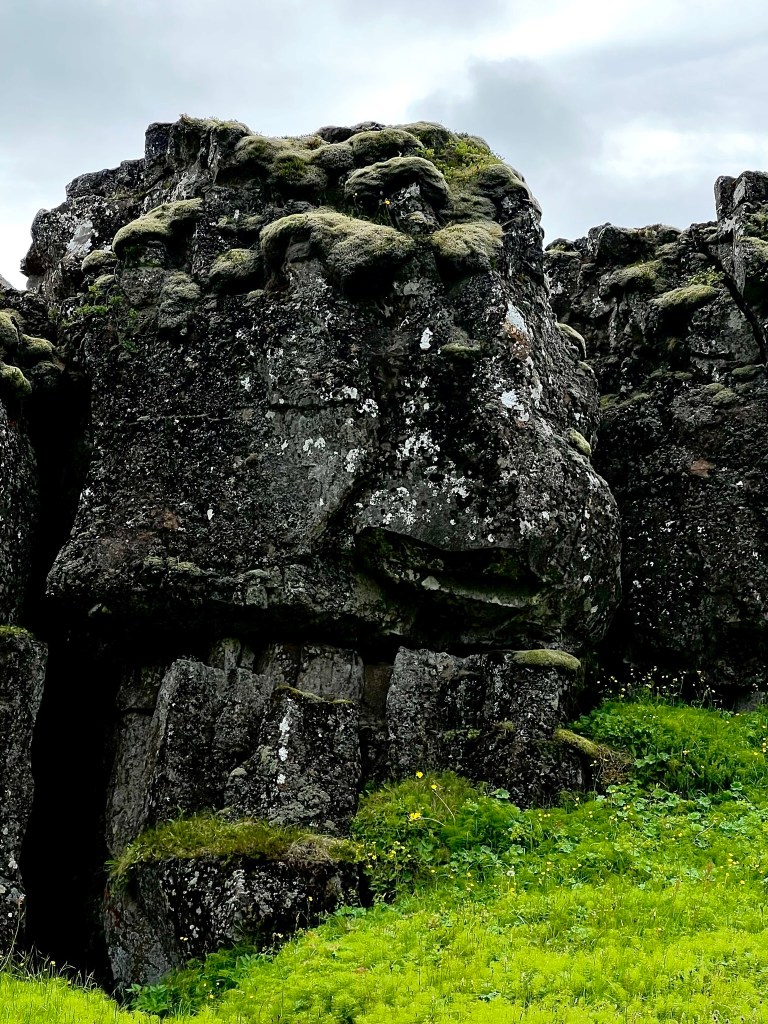
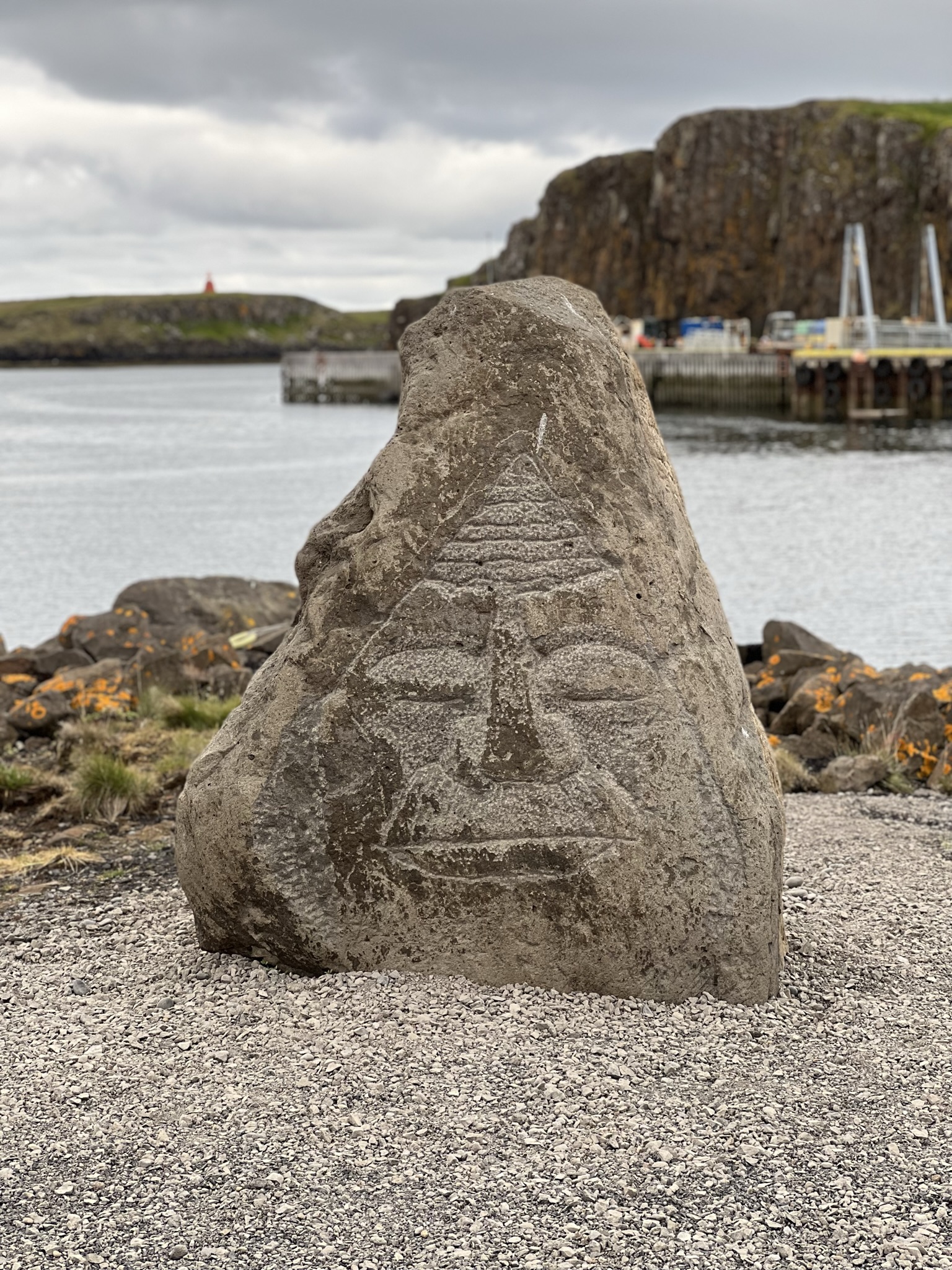
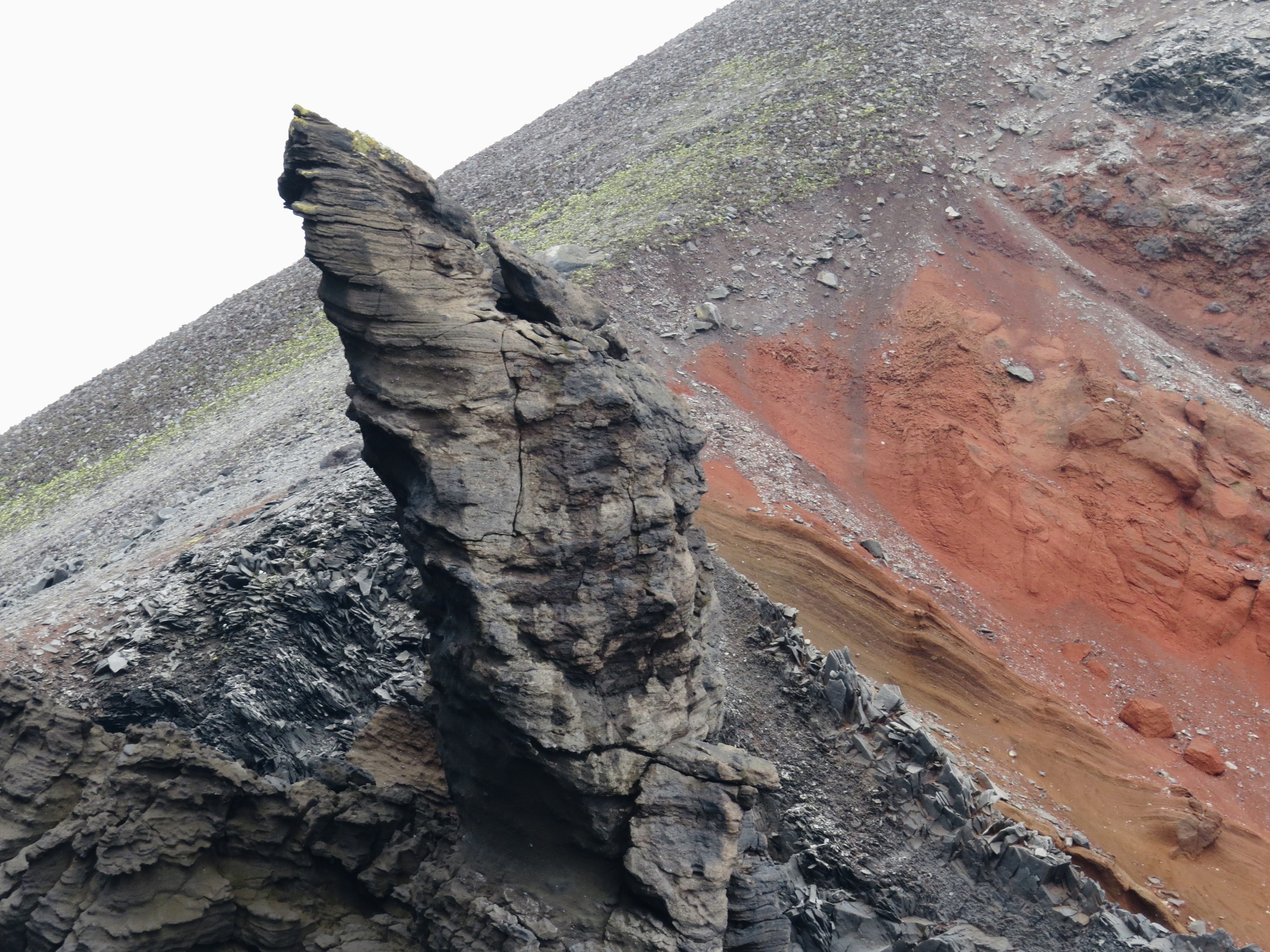
Anyone else see the face?

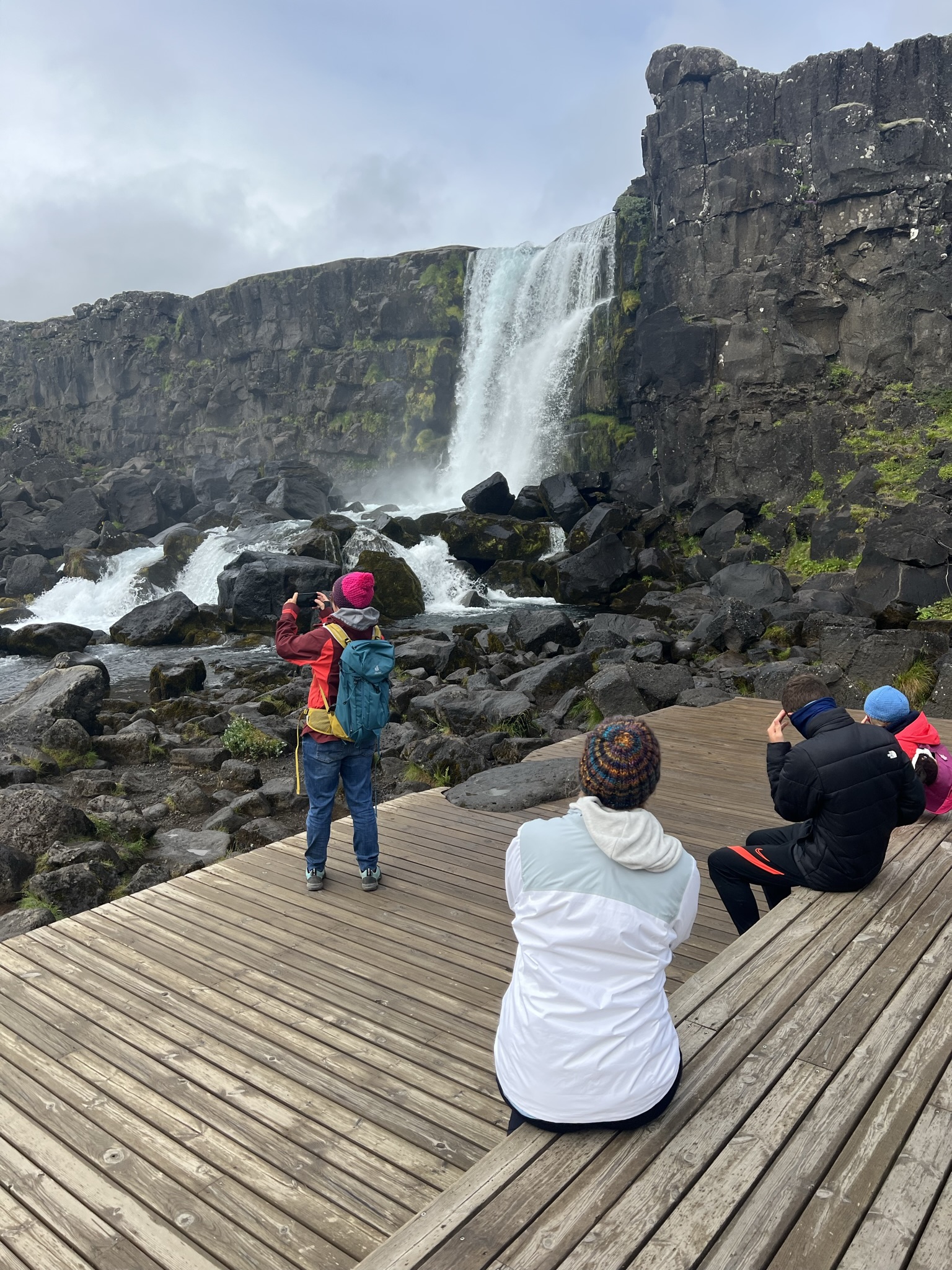
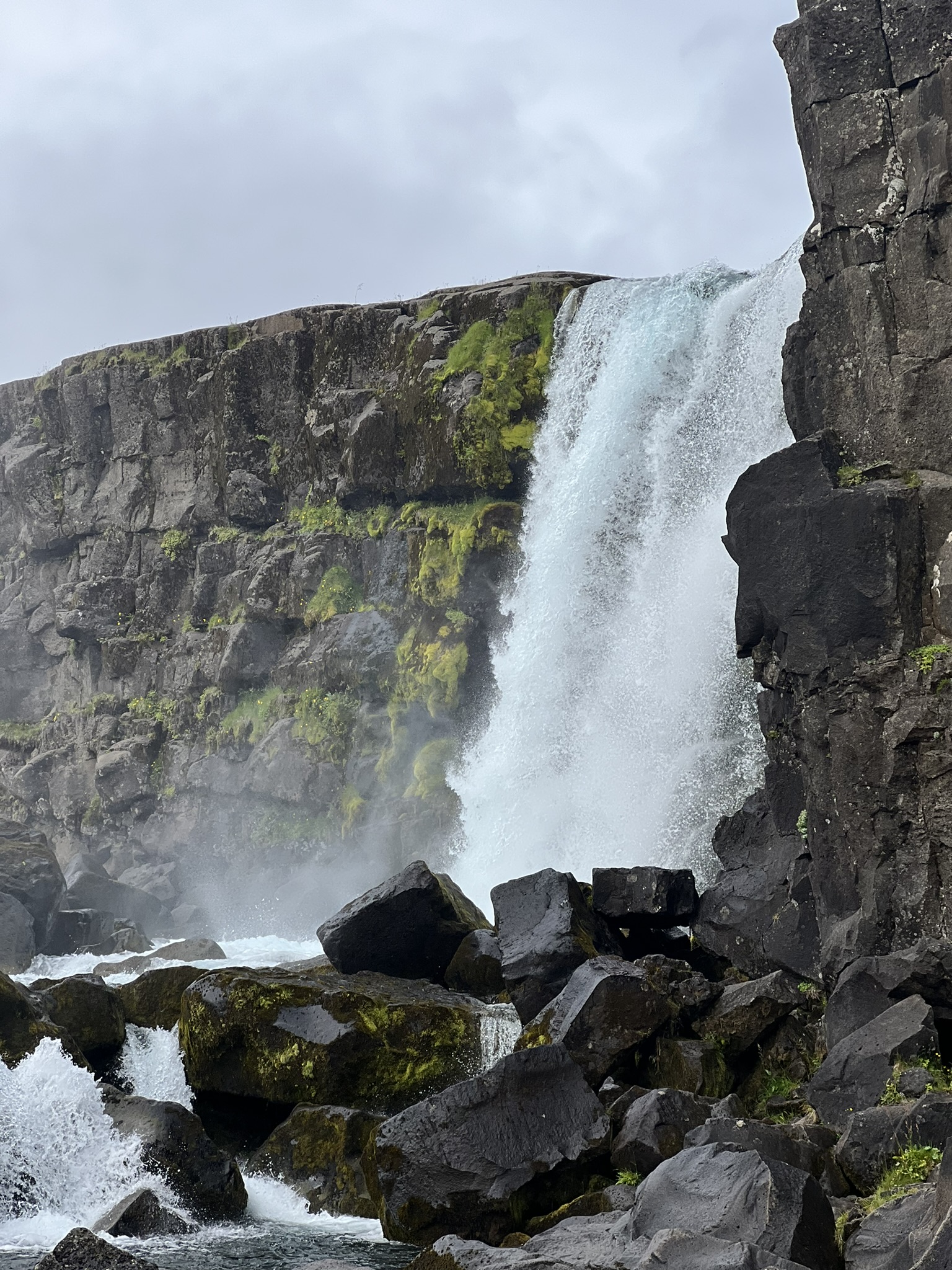
Norway has trolls, Iceland has elves and Ireland has fairies. I’m not sure which of those is seen in the above volcanic rock. After walking through Almannagja gorge area, Larkin and I were able to hike up to see the Oxararfoss waterfall. This waterfall is man-made – created to redirect water into a ravine and runs from the North American plate into the rift valley. It is famous for being a film location on the TV show Game of Thrones. Legend has it that Oxararfoss turns into wine at the stroke of midnight on New Year’s eve. Woo hoo if it is true!
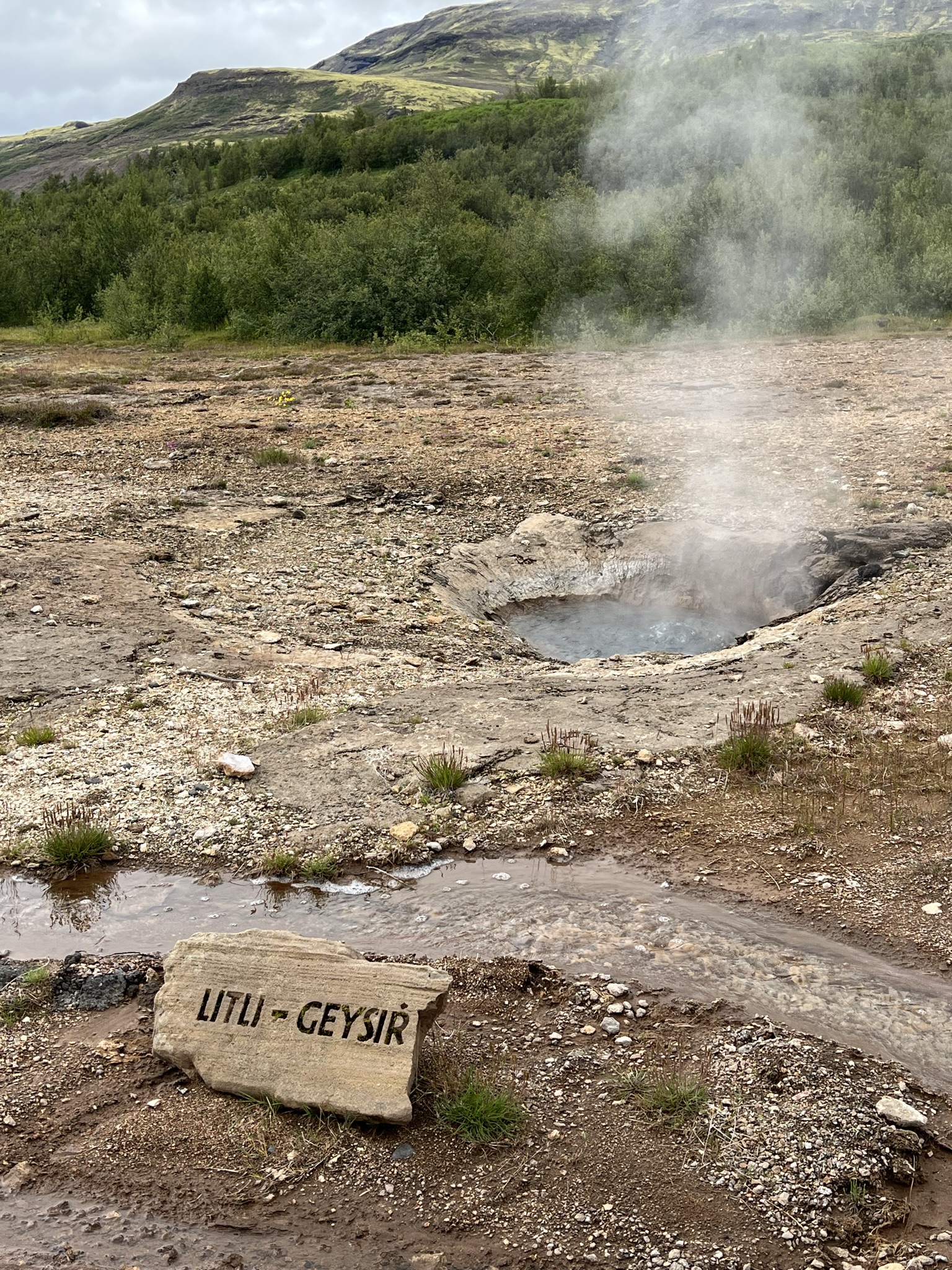
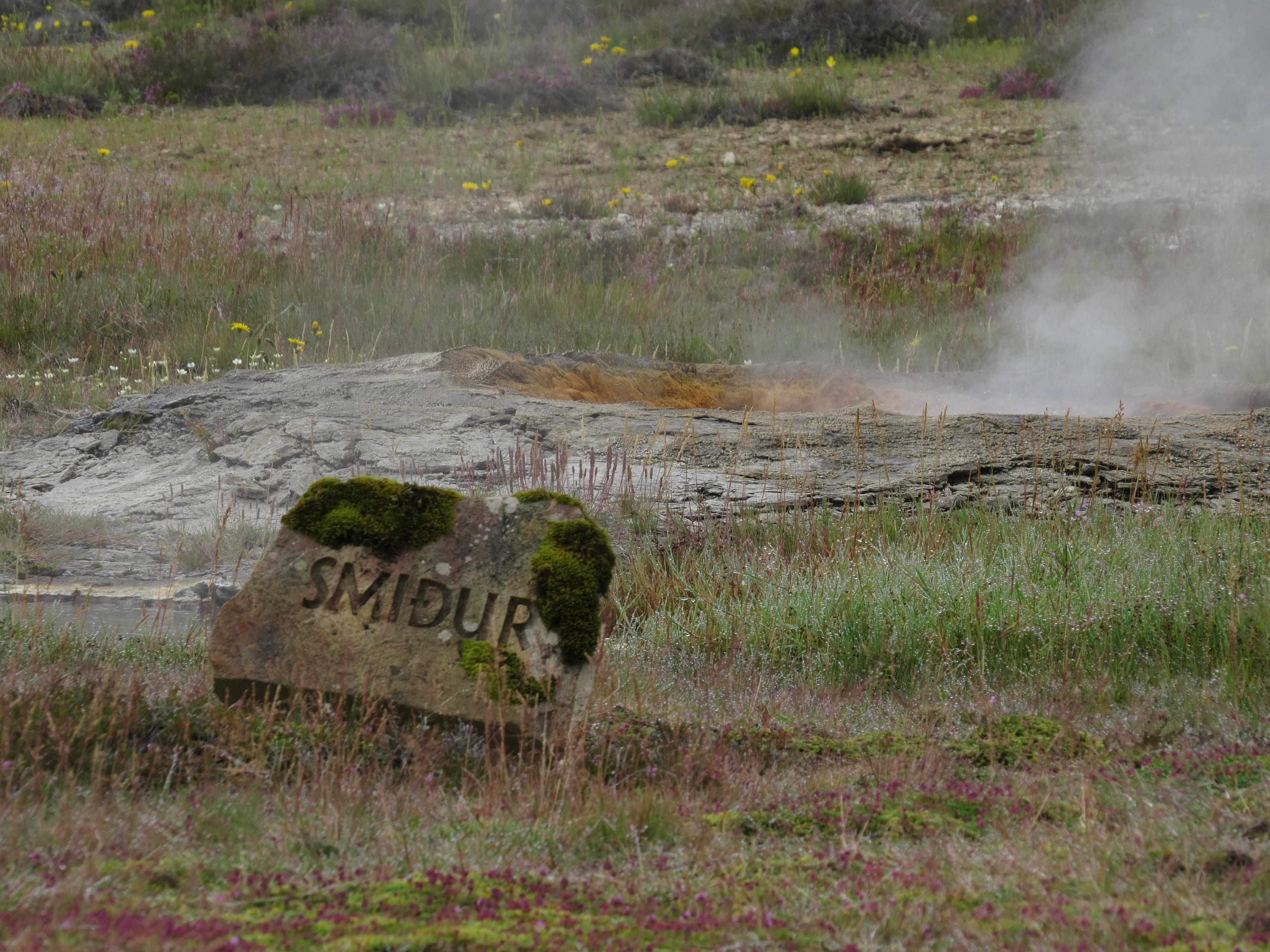
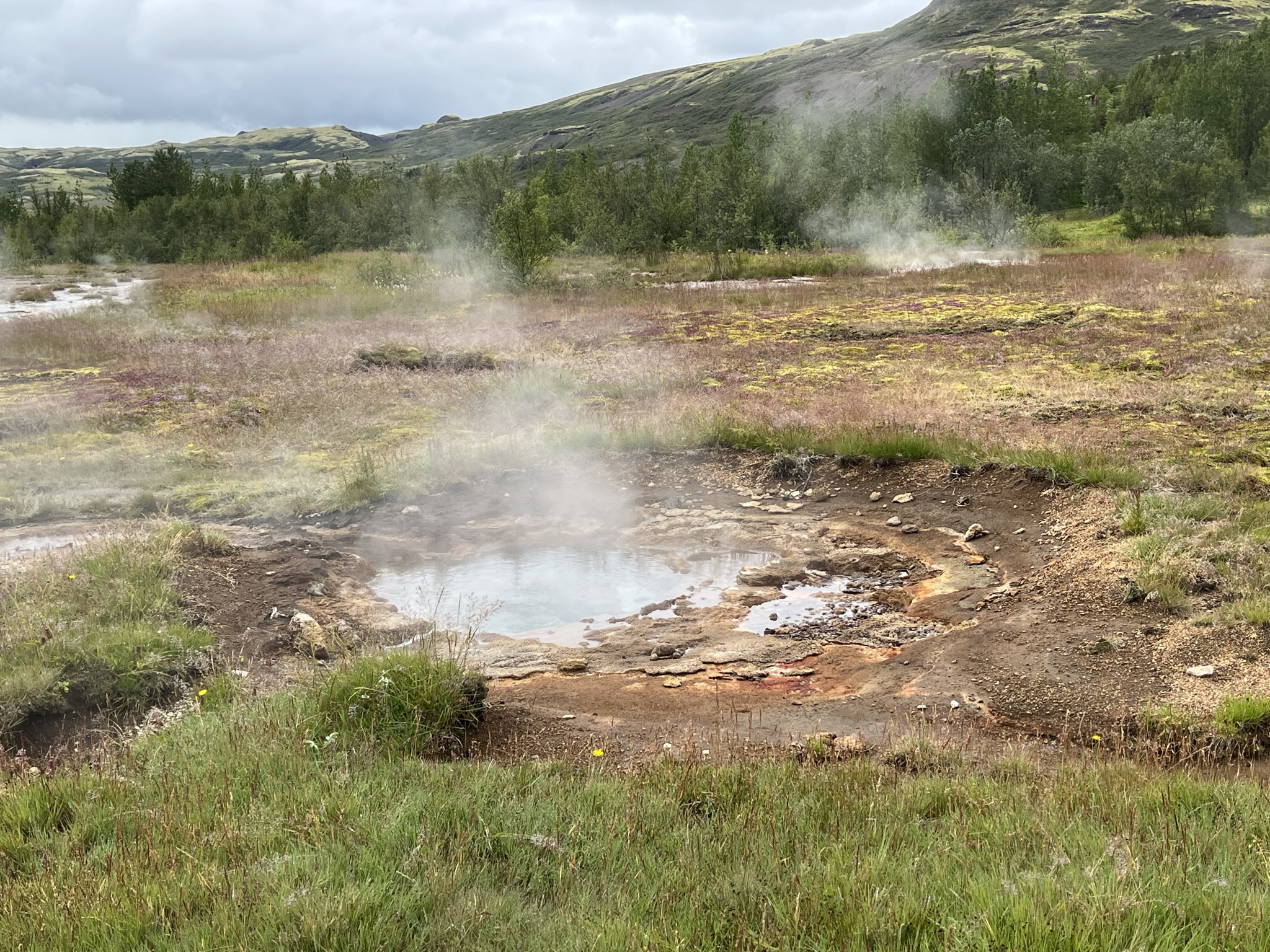
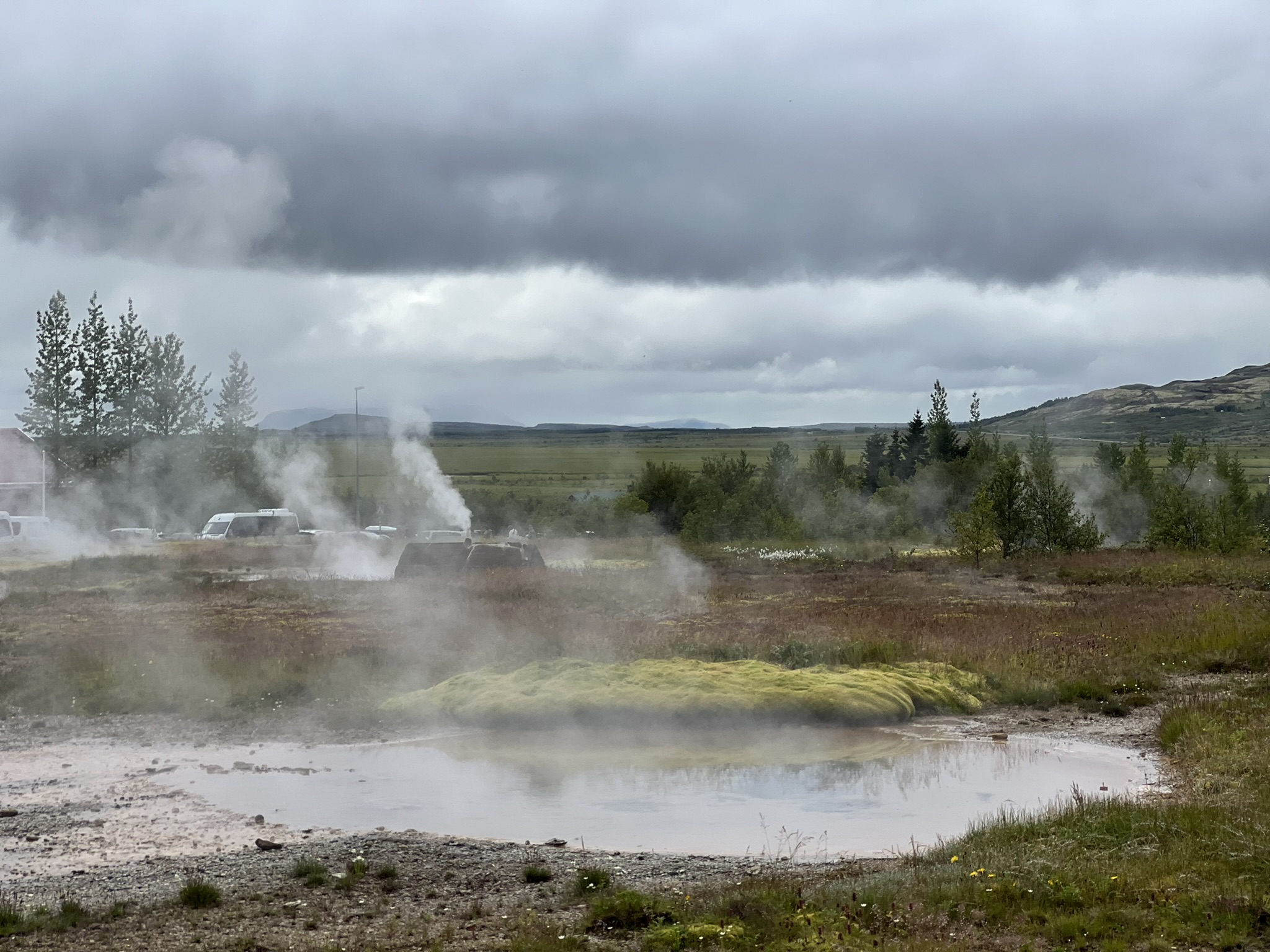
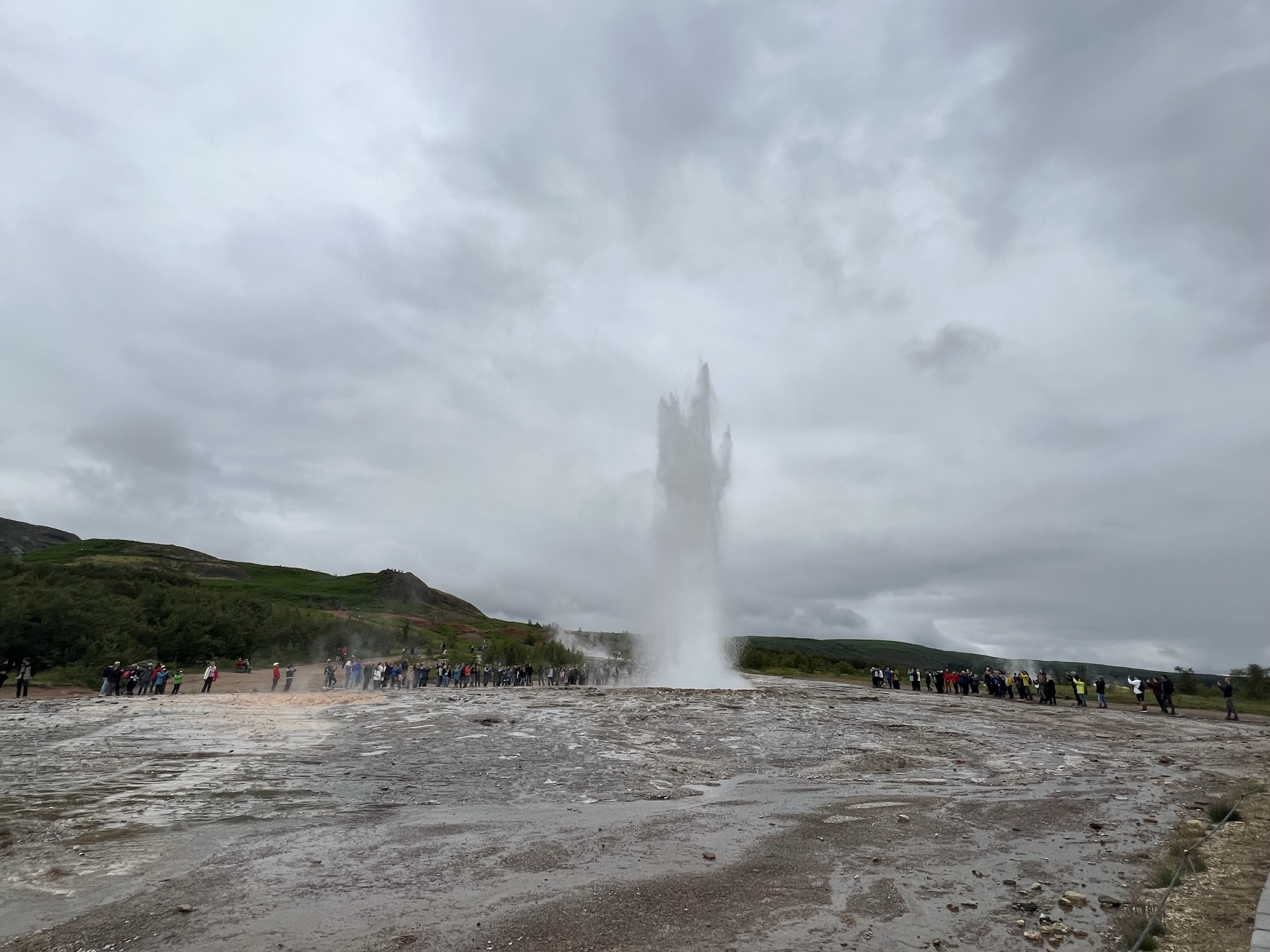
Next up along our drive was the thermal area called…Haukadalur which means valley of the hawks. It was first mentioned in written sources around 1294 when the local hot springs were activated by an earthquake. There are two major geysers, Strokkur, which goes up every 5-10 minutes and Geysir, which now only goes up rarely. Forty or more hot springs, mud pots and fumaroles grace just this area. It doesn’t quite look like the yellowstone but hot spots never cease to amaze. As we know after our trip, even what we saw has changed as the landscape continues to transform this island.
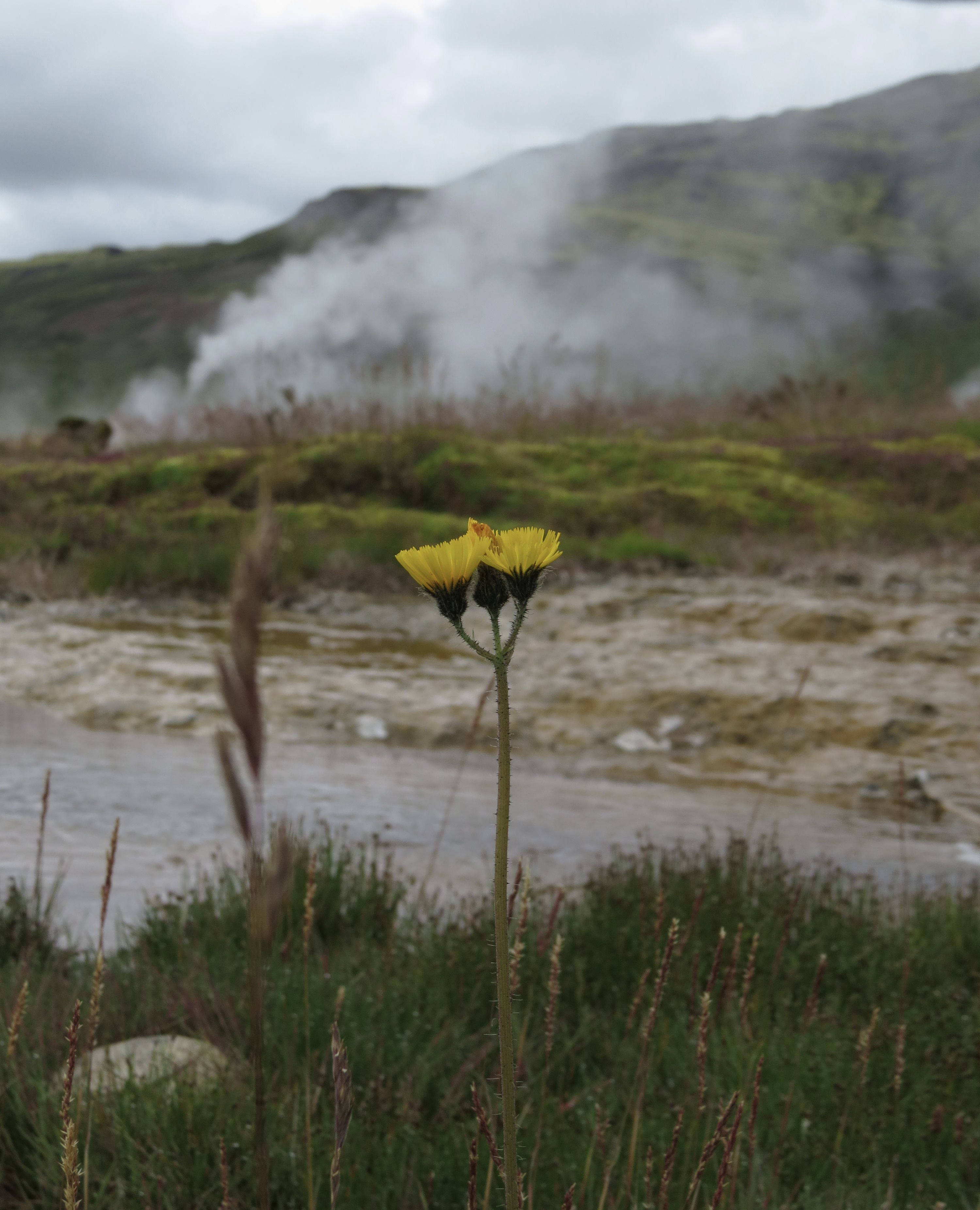
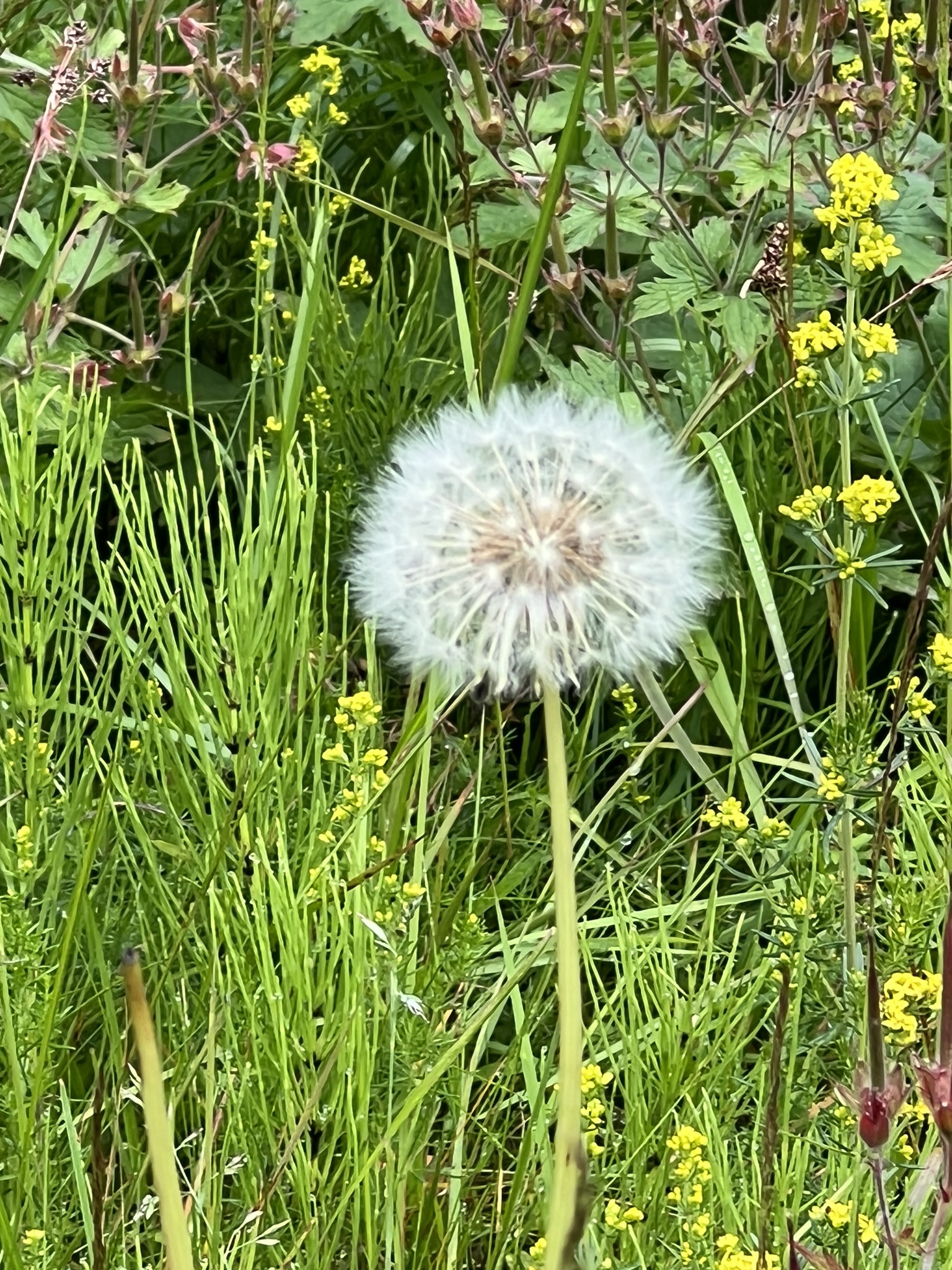
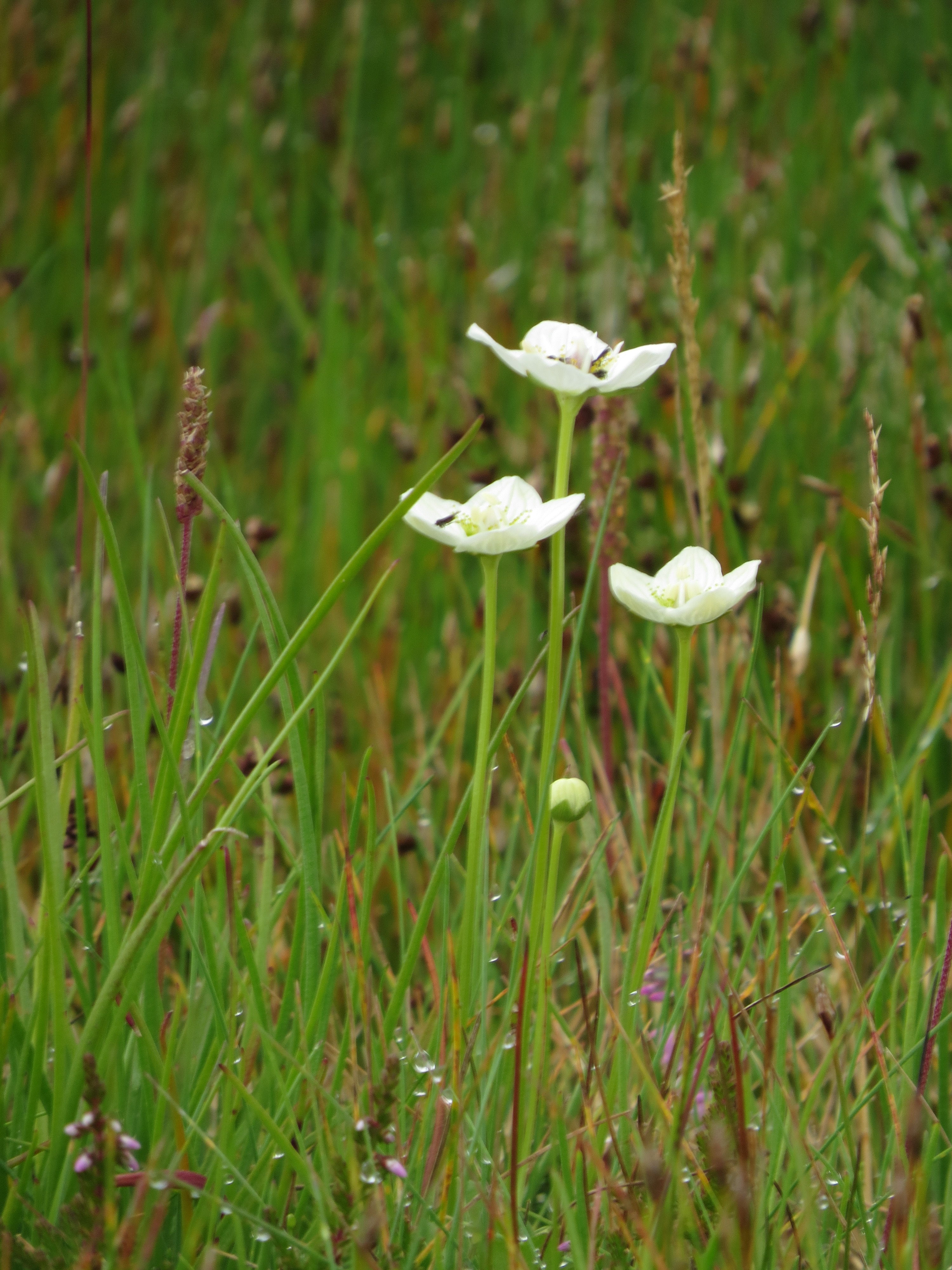
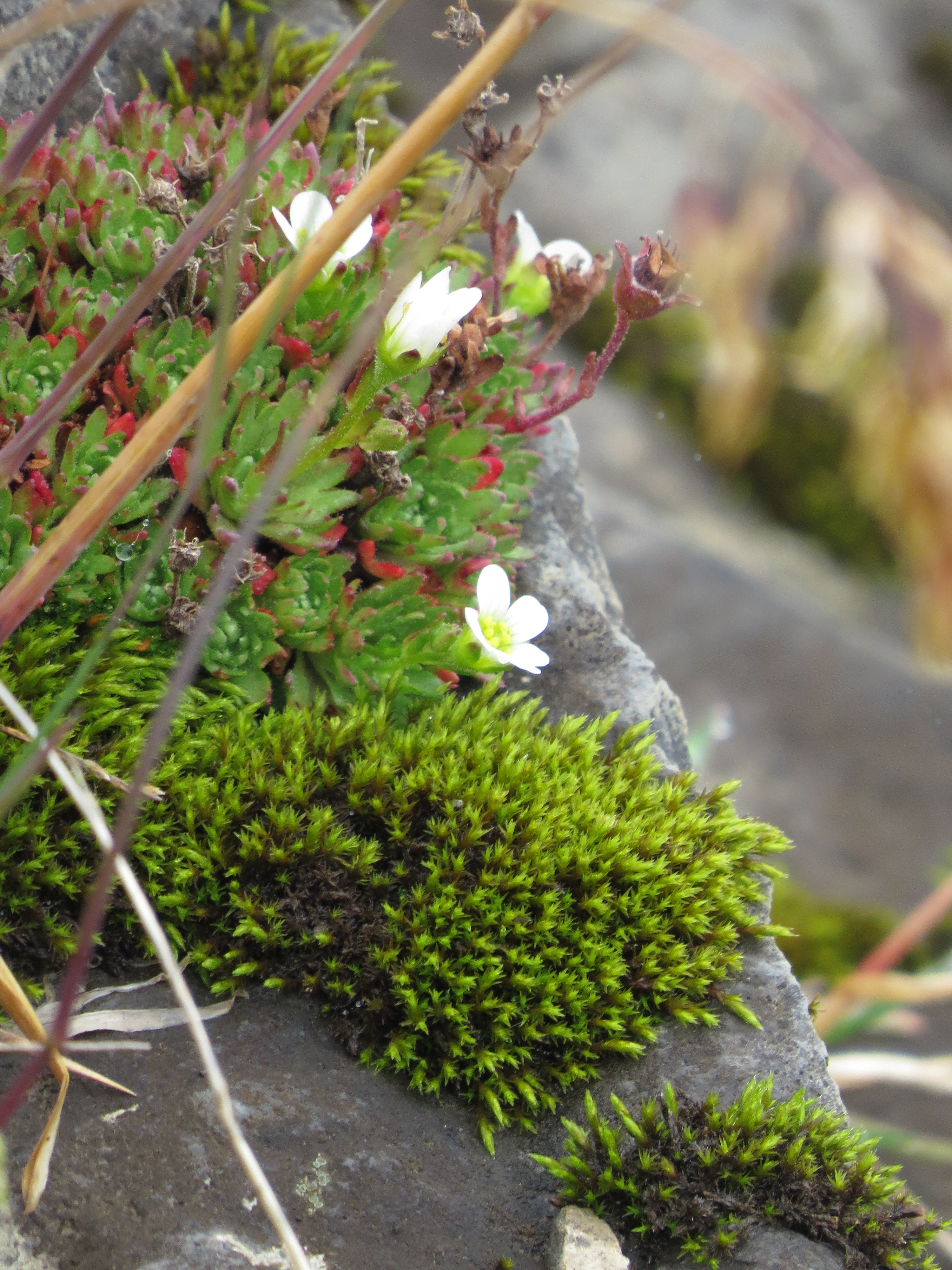
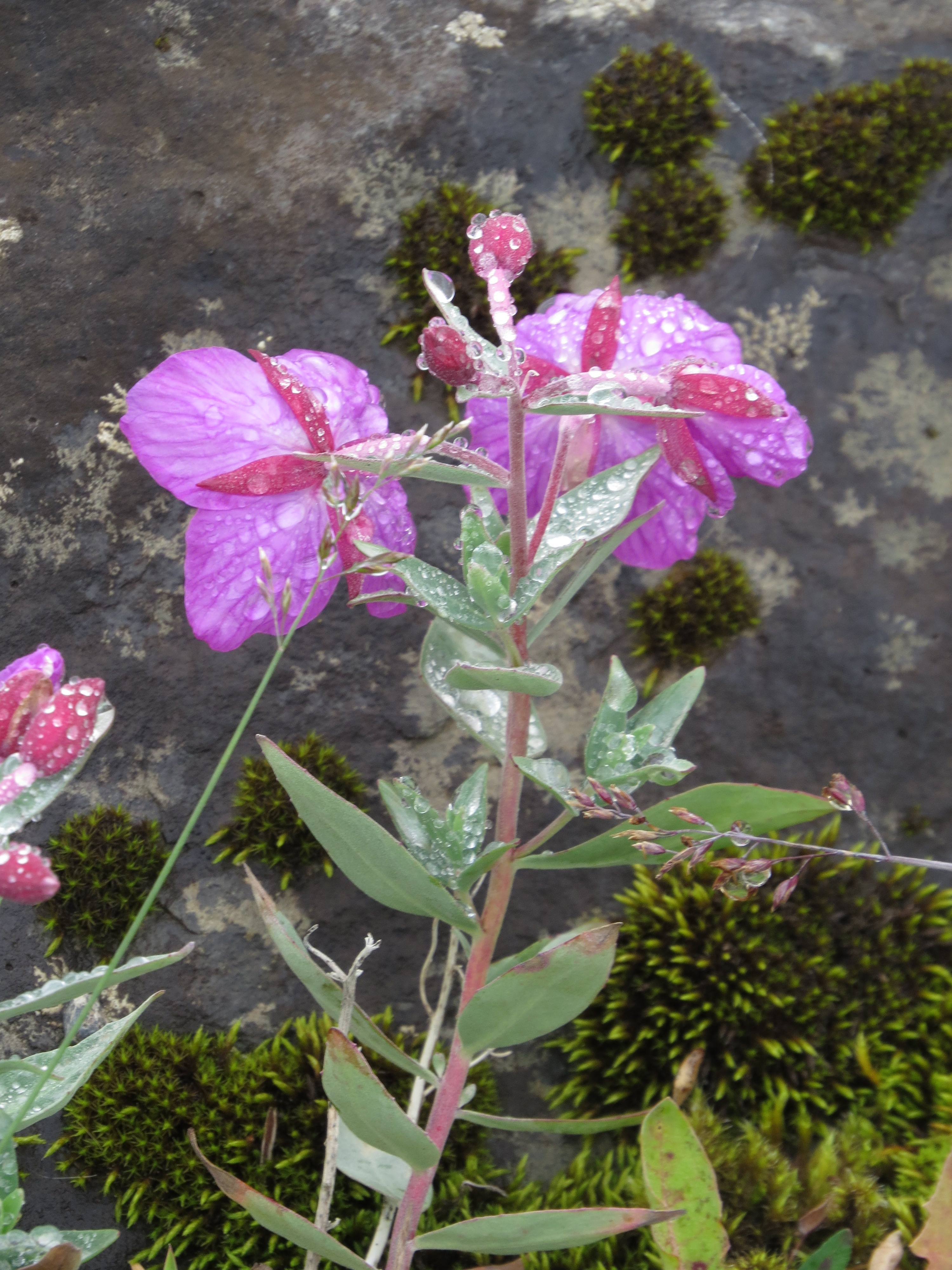
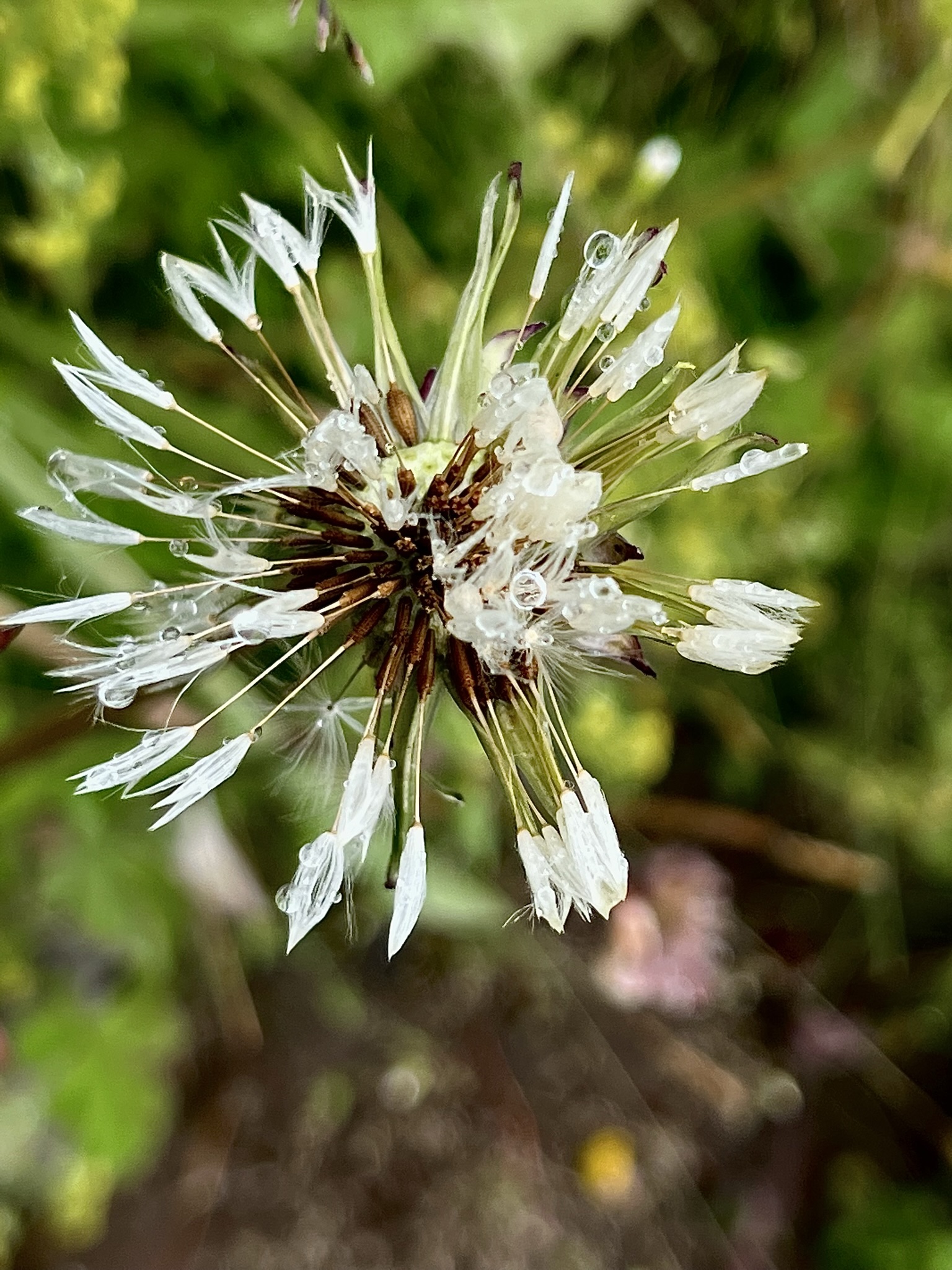
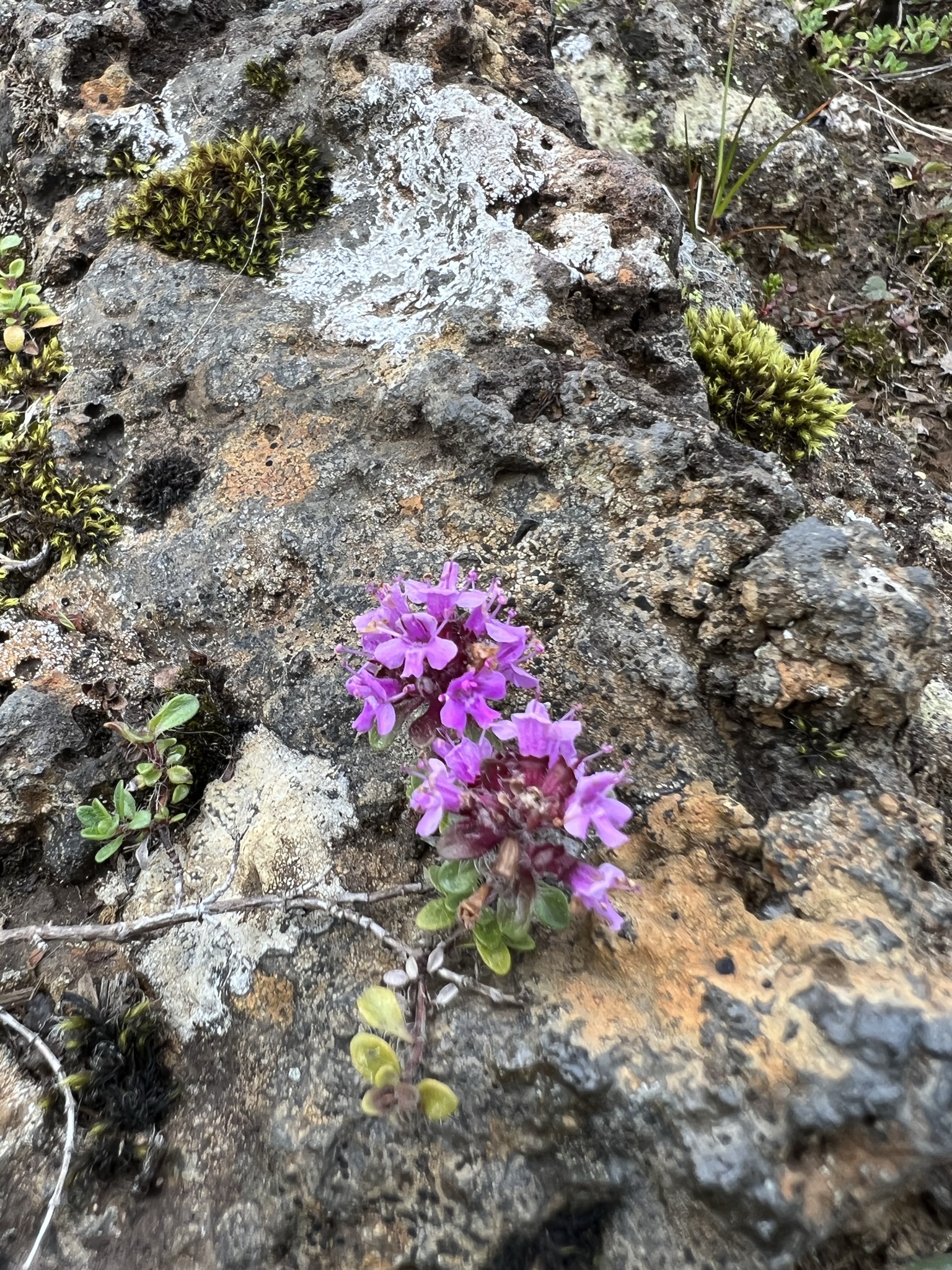
Larkin and I both enjoying capturing flowers, even the ubiquitous dandelion.
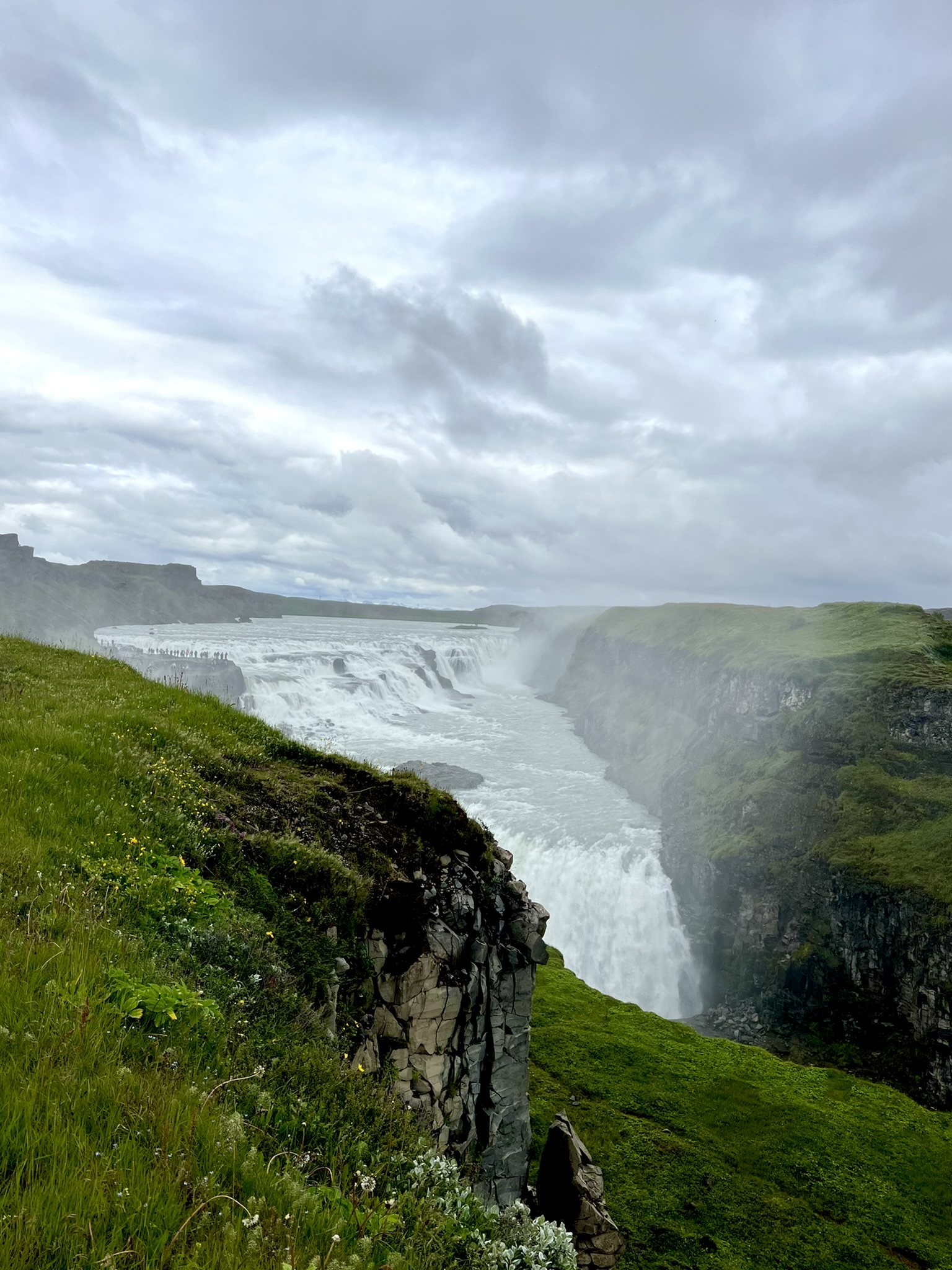
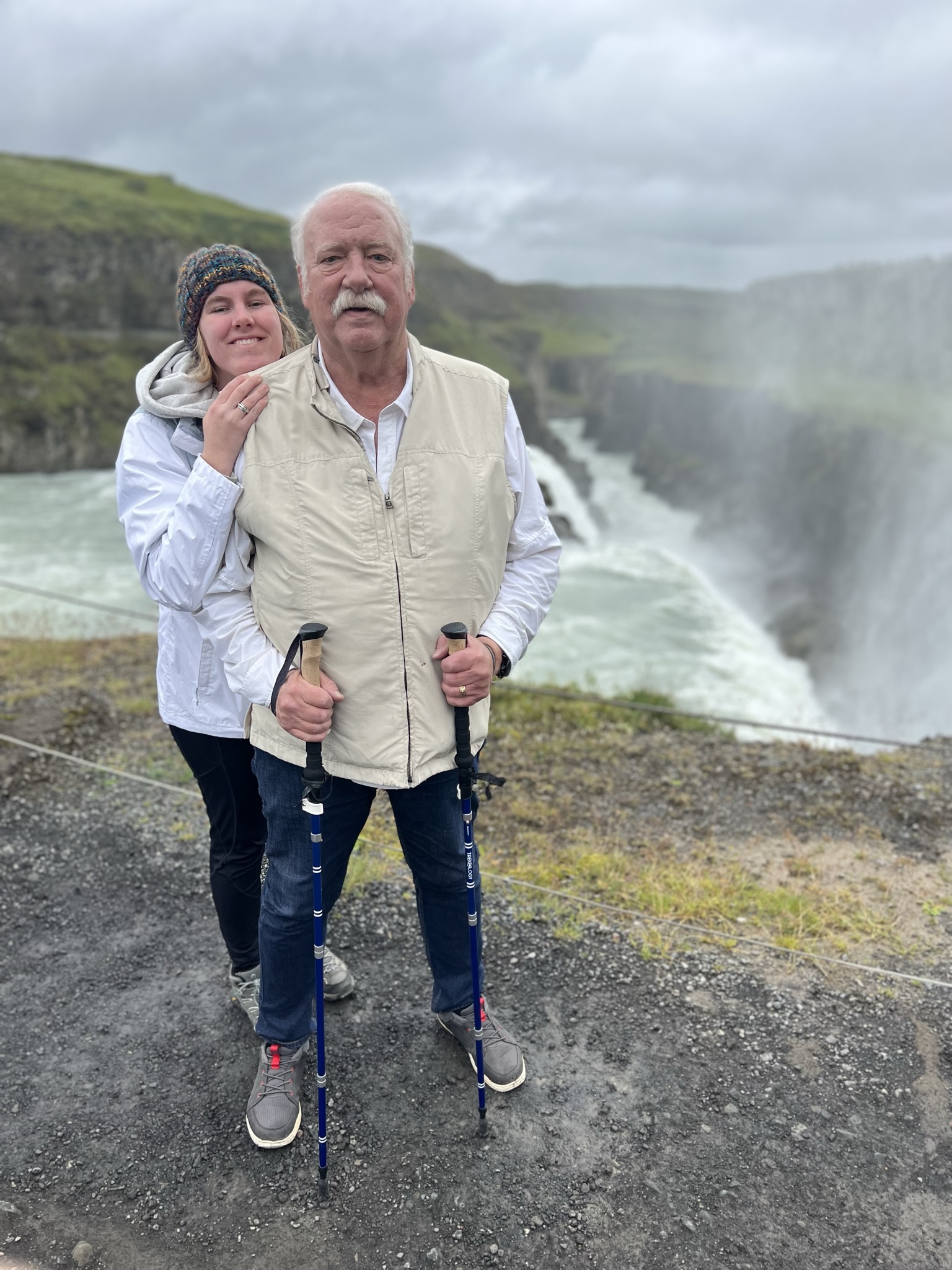
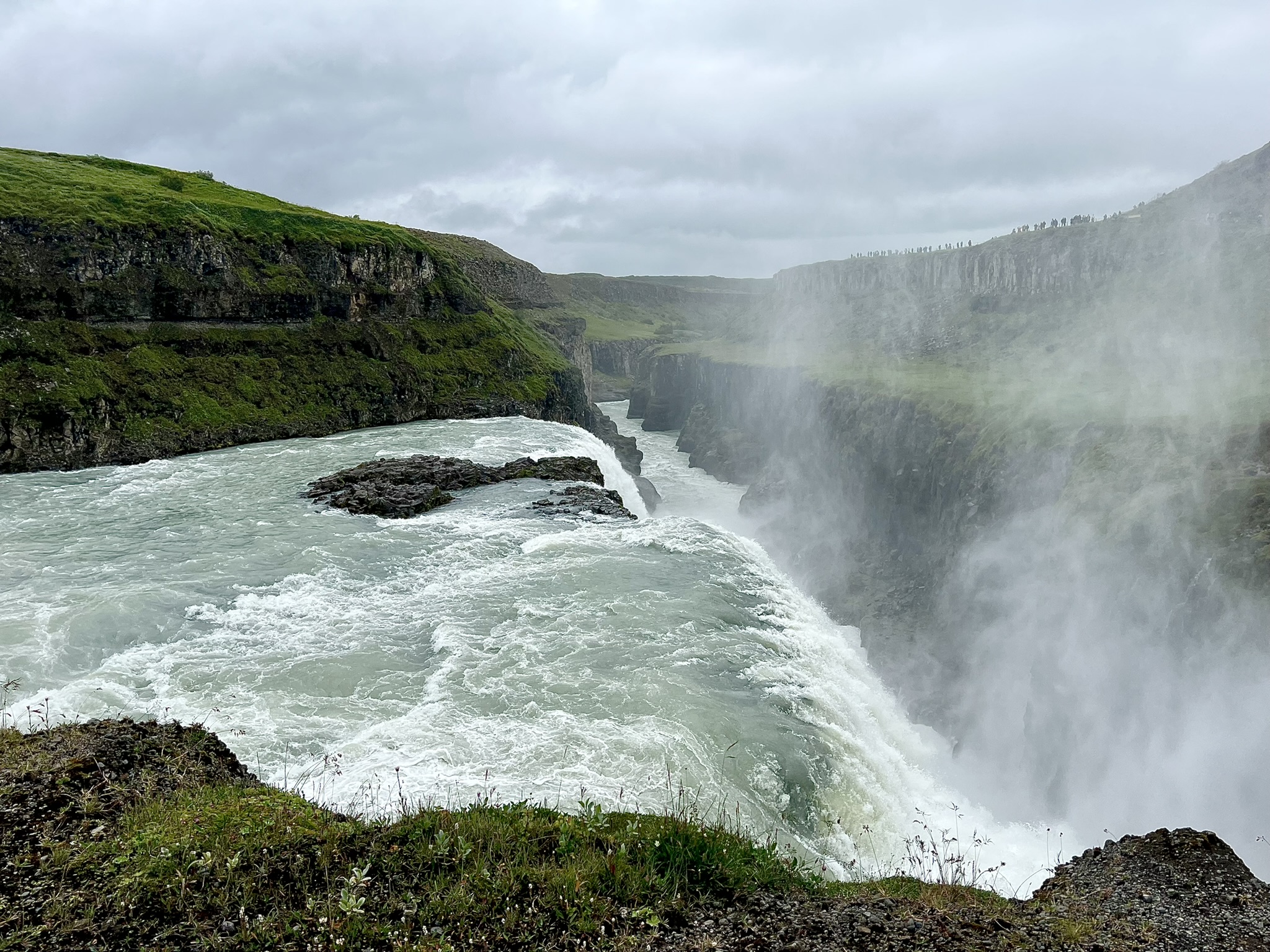
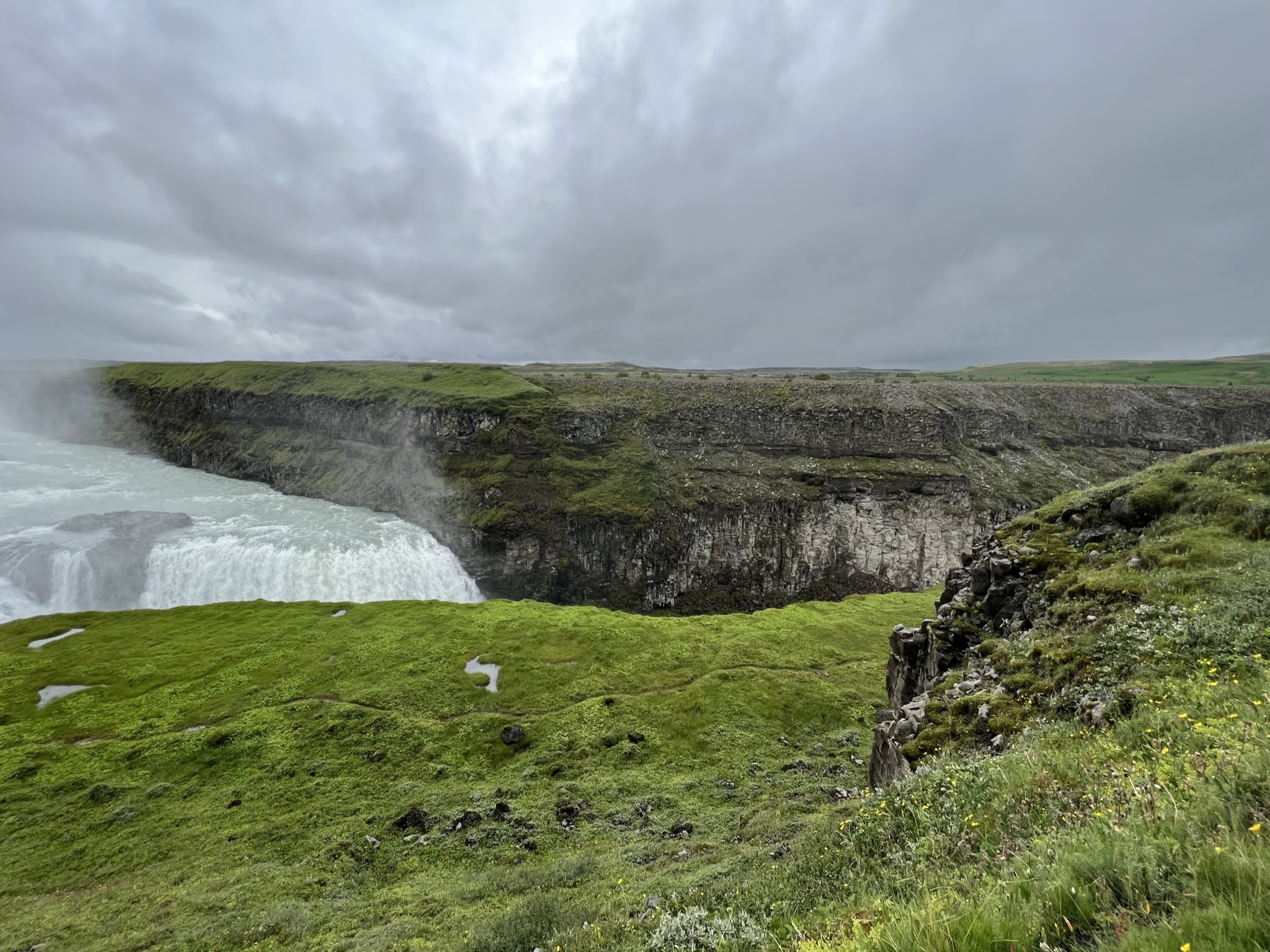
The Gullfoss waterfall in the canyon of the Hvita River is stunning in both its beauty and its power with its two tiers rising a total of 105′. By volume it is the largest waterfall in Europe. The water often reflects the sunlight and can give the waterfall a golden hue. Rainbows are often captured on film in the clouds of the mist that Gullfoss creates, but our day was too overcast. At one point in time, private owners wanted to turn this into a hydroelectric plant and thank goodness a lack of money and the first Icelandic environmentalist, daughter of the original owner, was able to find various ways to help protect this national treasure and donate it to the government.
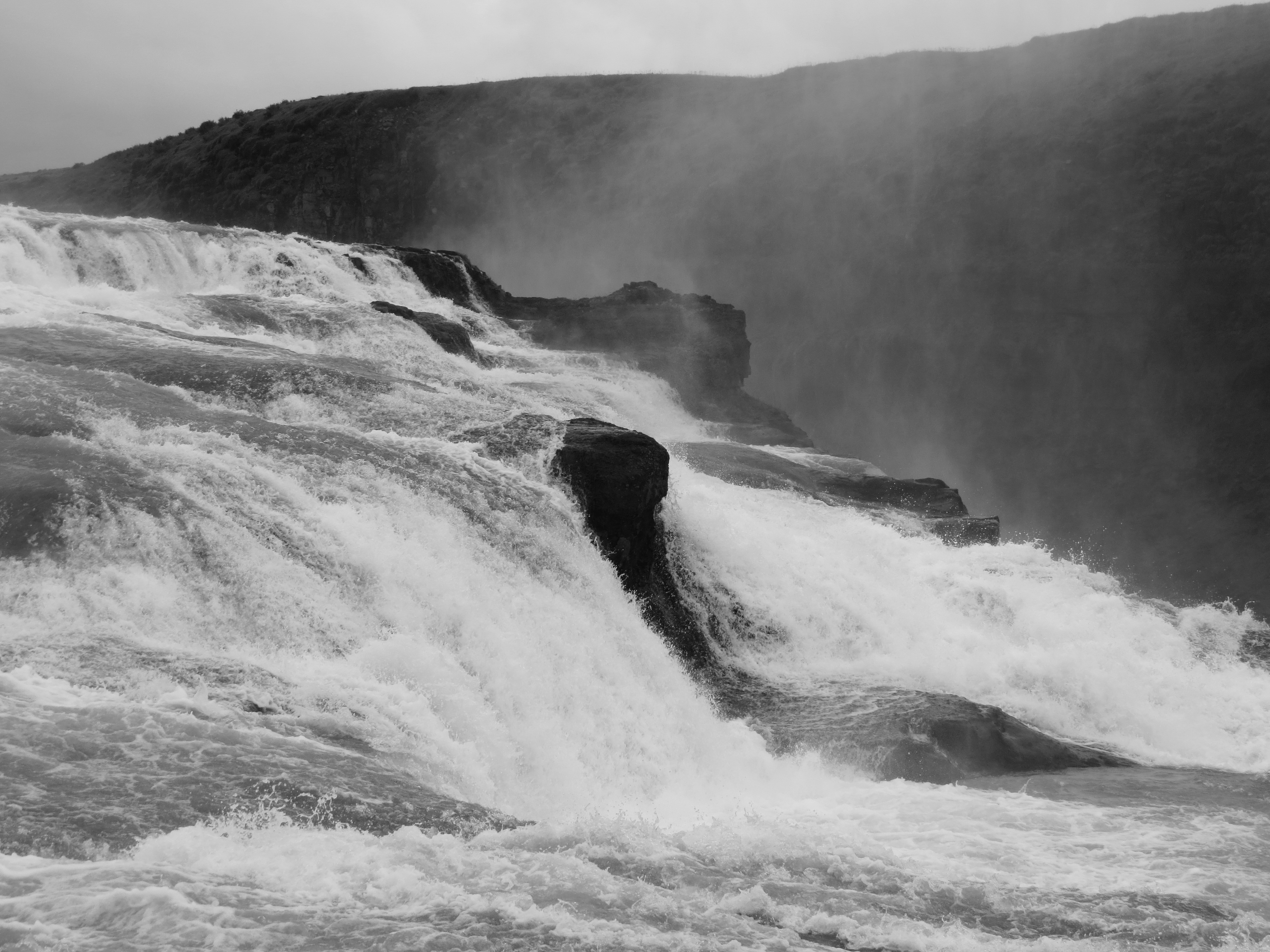
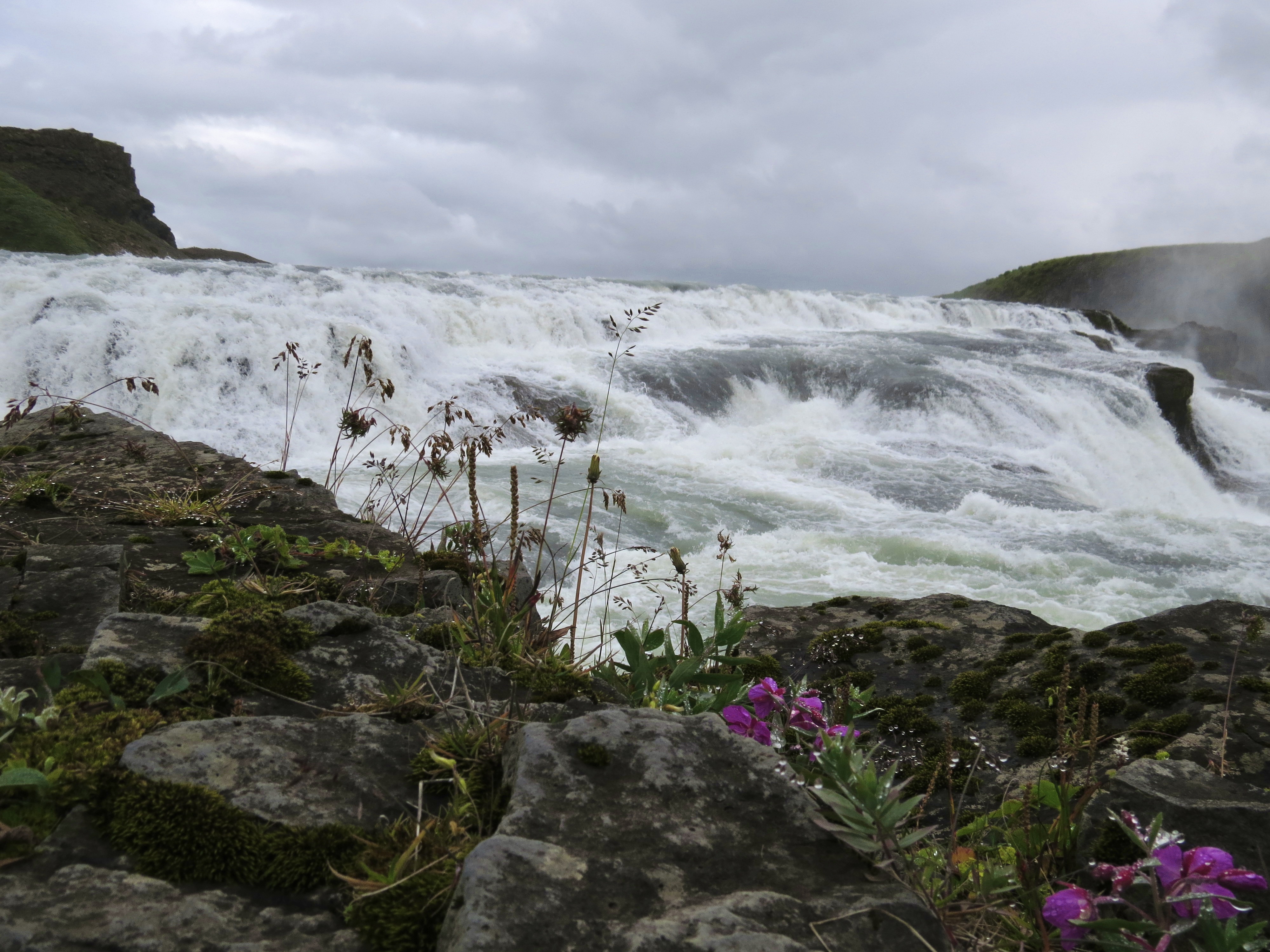
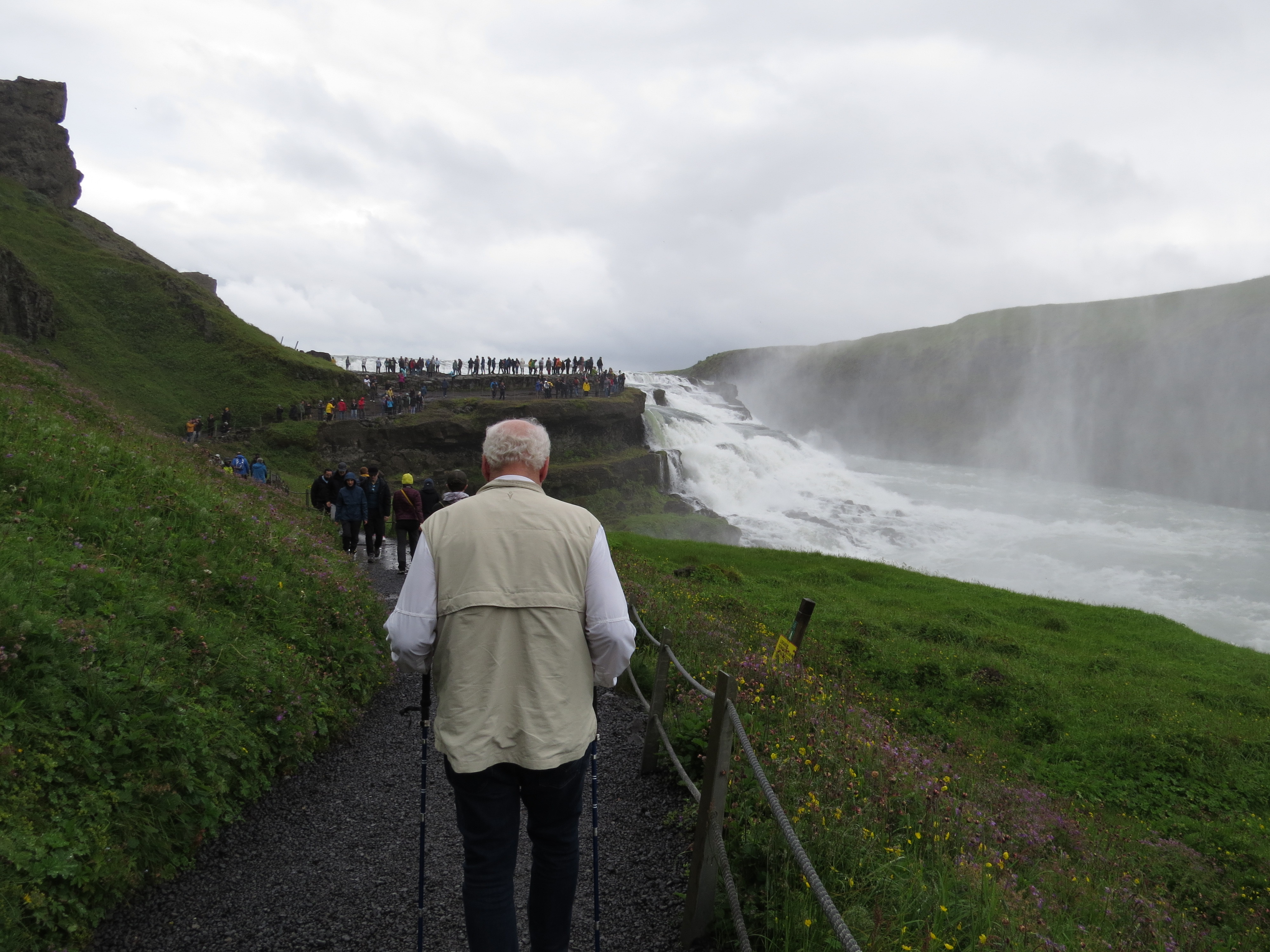
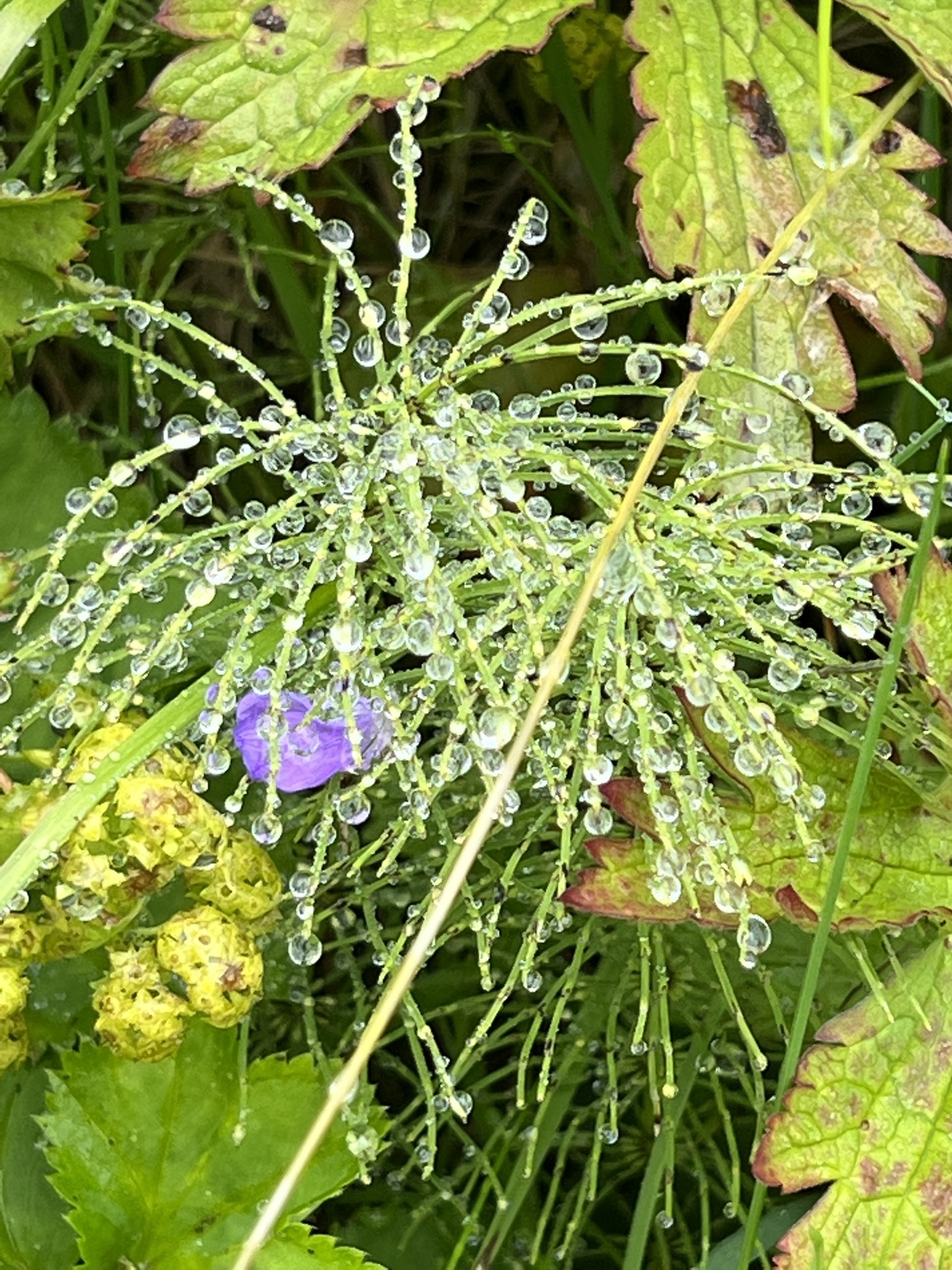
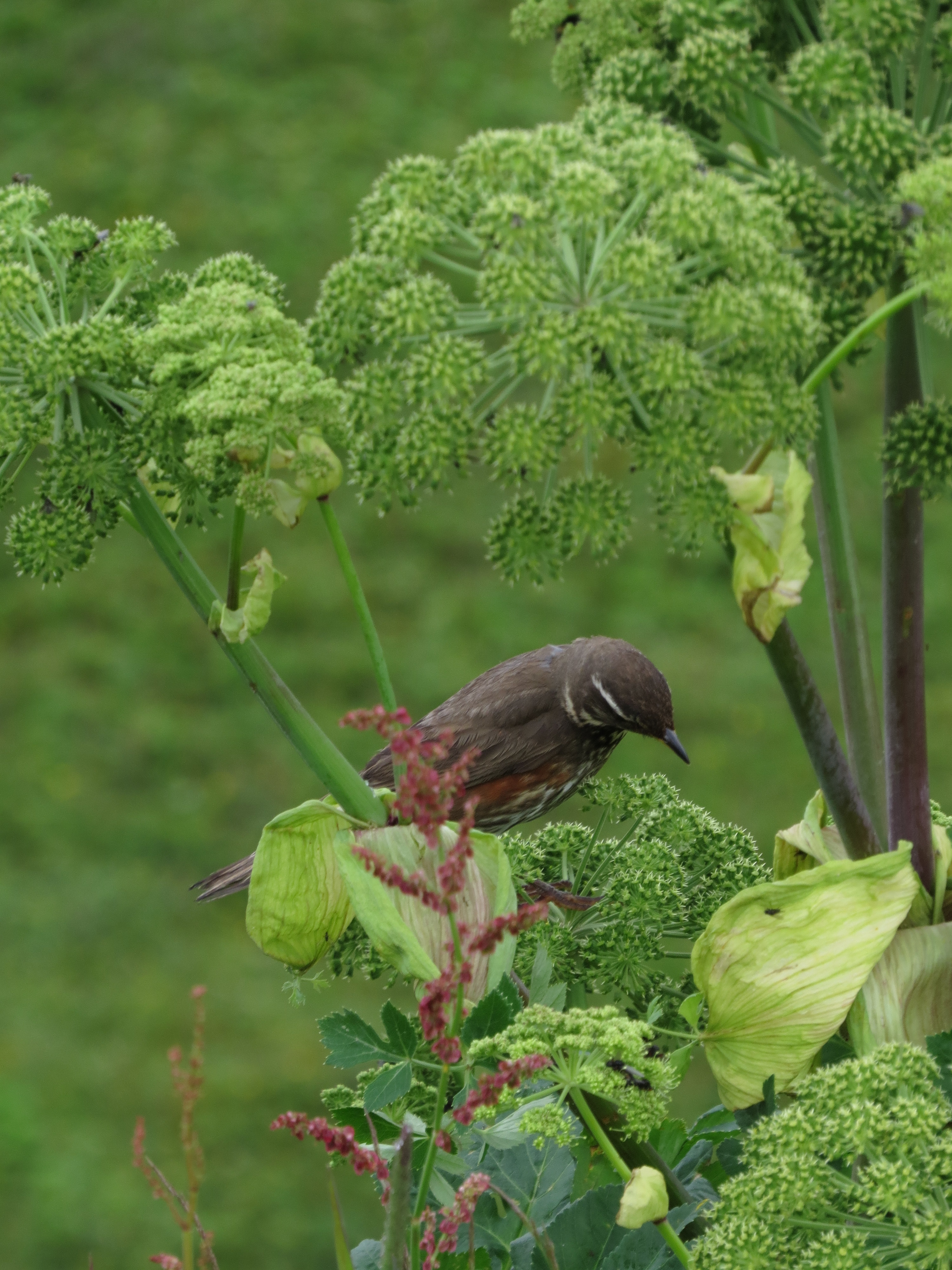
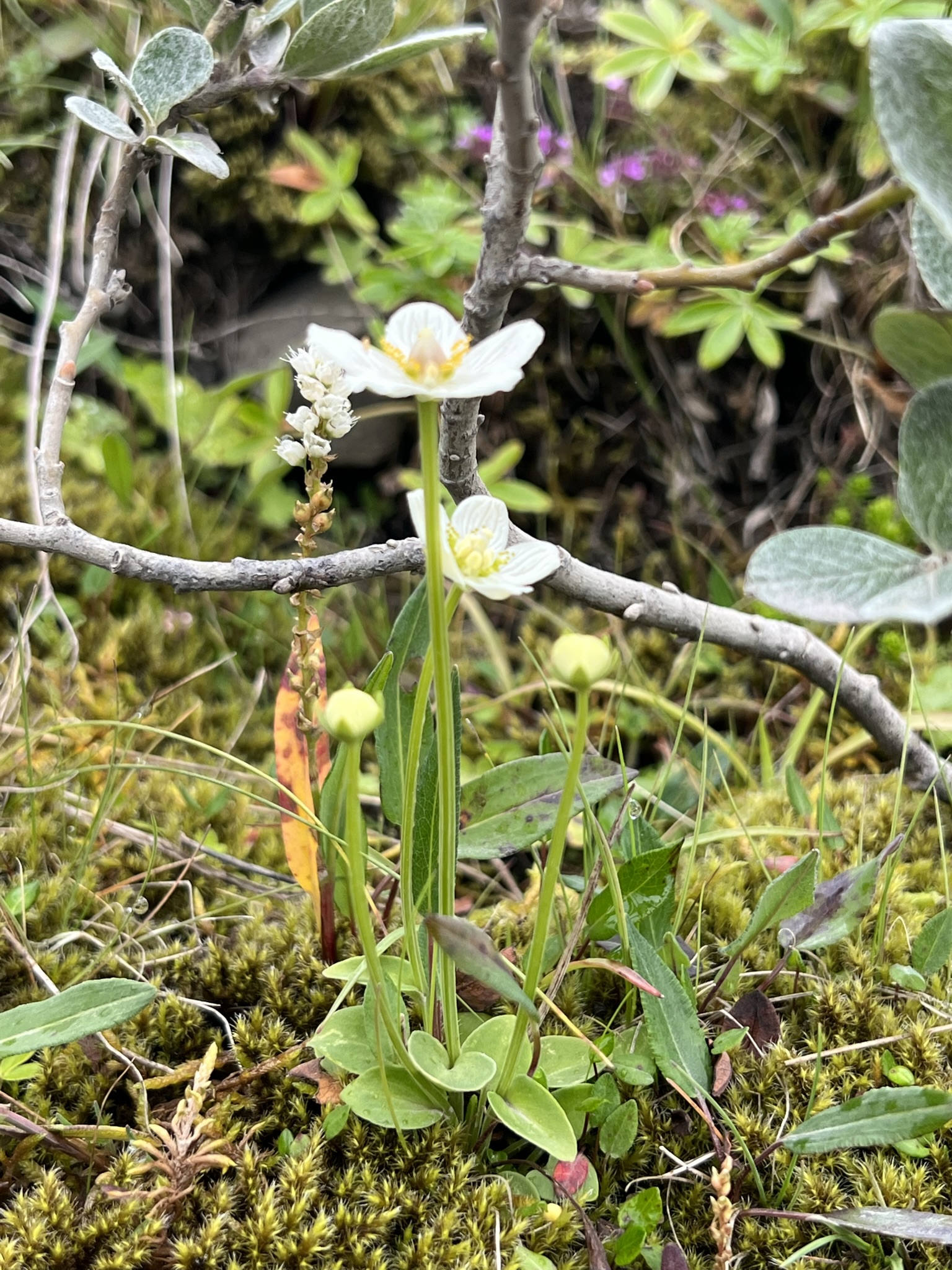
On our hike up to the look out, the mist covers everything including us and the plants and yet another dandelion. The water drops make for stunning photos. The bird Larkin captured was a bonus!
Biding our time before a late lunch by driving toward the Lanfjokull Glacier

Langfjokull is one of 13 glaciers on Iceland and it is the second largest next to Vatnjokull. Eruptions from under glaciers can cause major flooding called a jokulhlaup. There are many smaller outlet glaciers that are associated with the major glaciers.
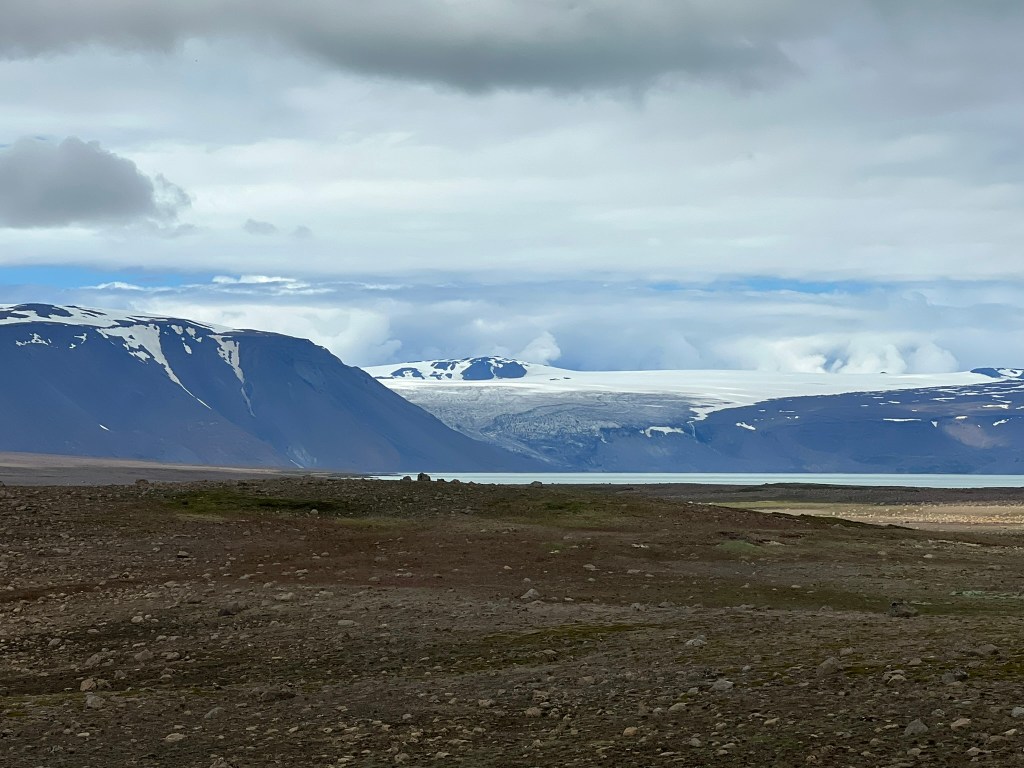
The Langjokull Glacier with Hvitarvatn Lake.

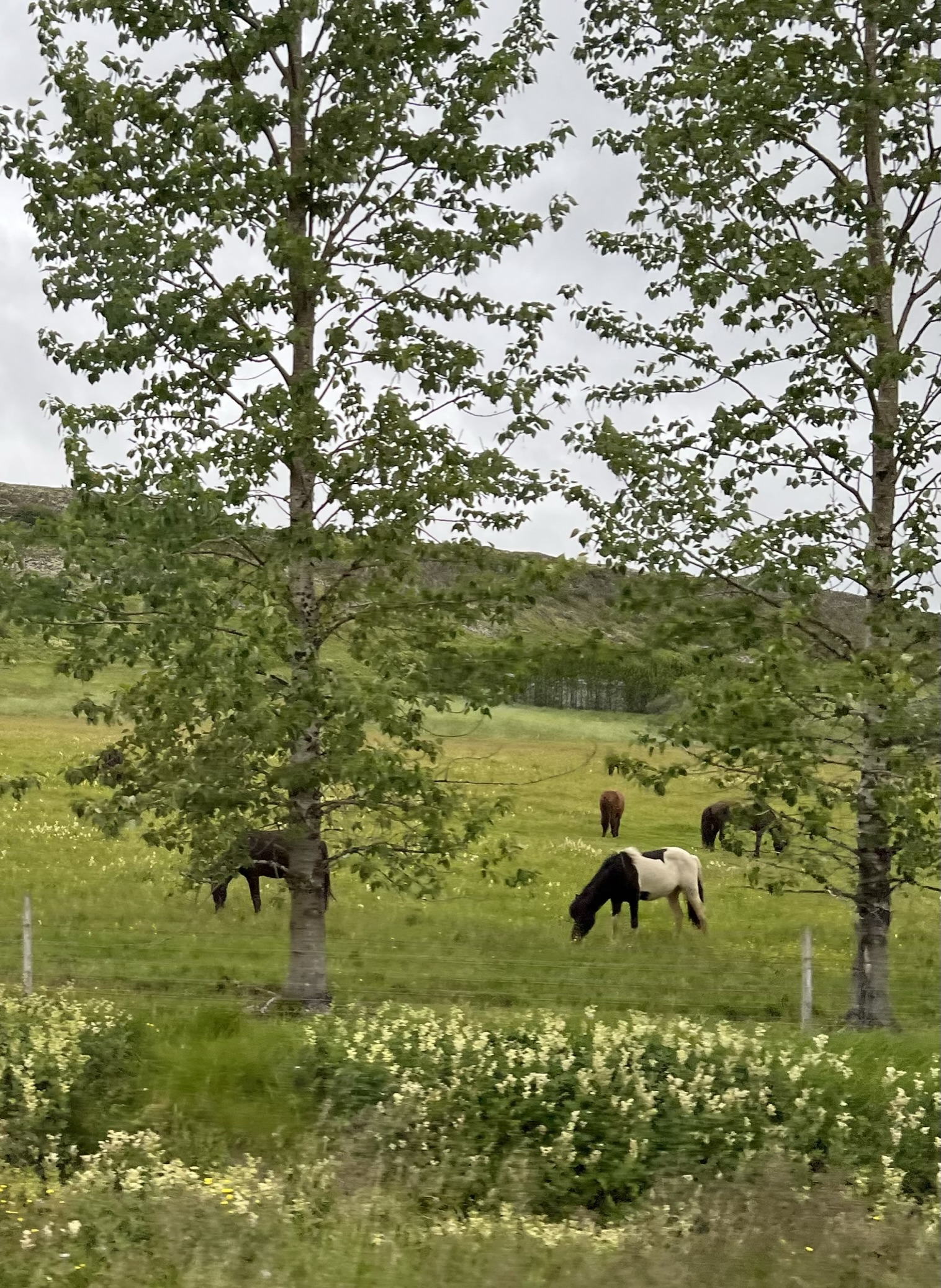
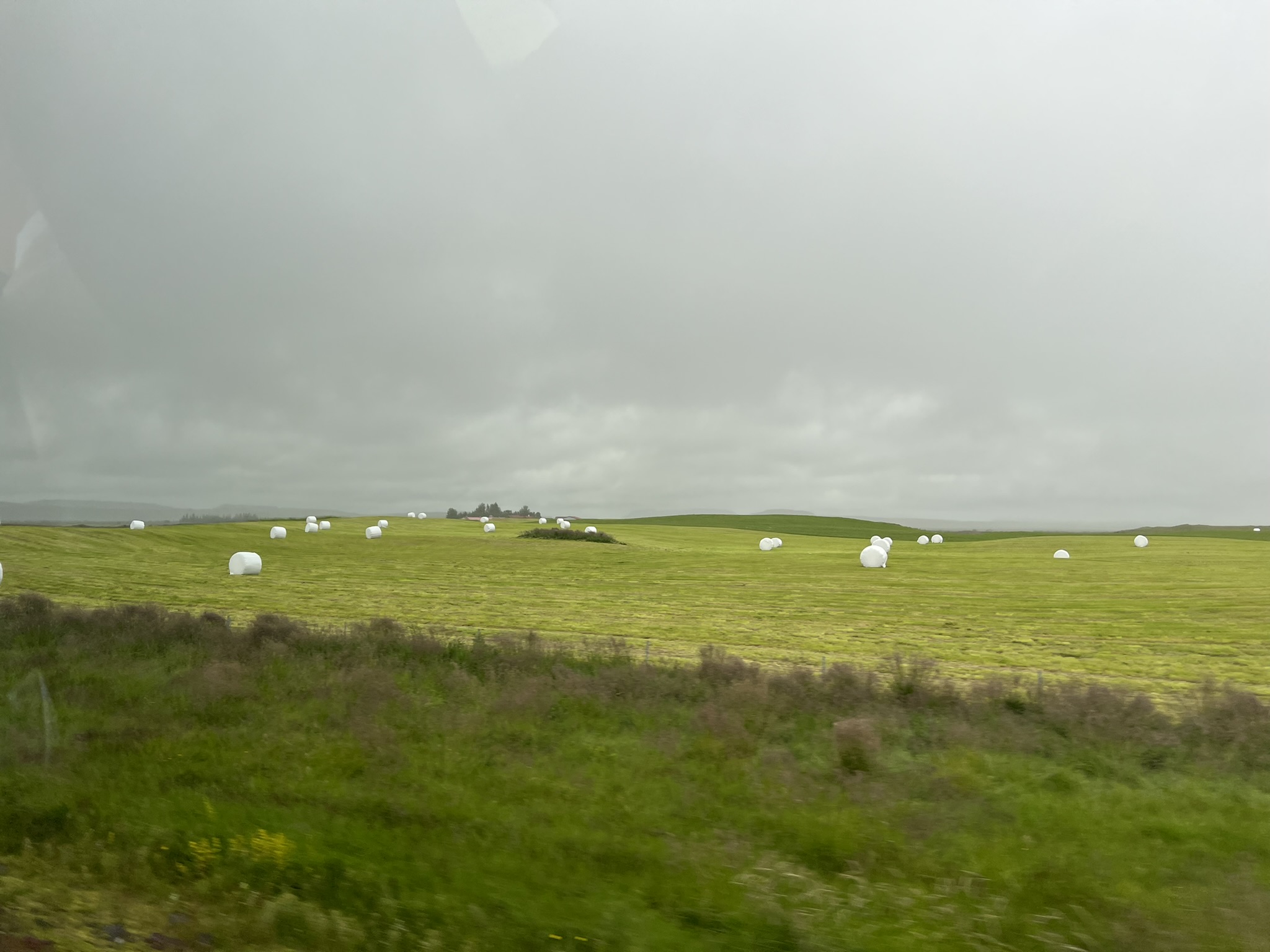
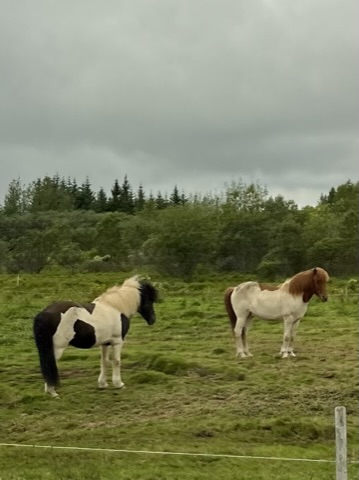
Michael always notices the hay marshmallows in the field. I noticed the beautiful Icelandic horses. These horses can be traced back to the 9th and 10th century and they are unique to Iceland. The Althing Parliament in 982 AD passed laws prohibiting the importation of horses so this breed has been purebred in Iceland for more than 1,000 years. If a person takes a horse out of the country, say for instance, to a competition, they are not allowed back in the country. They are small – pony sized, long-lived and hardy with few disease. They sport a double coat for extra insulation in the winter. They are a five gaited breed known for its surefootedness and their ability to cross difficult terrain. Horses were venerated in Norse mythology. Much of the breed was wiped out in the 1780’s in the aftermath of a volcanic eruption at Laki.
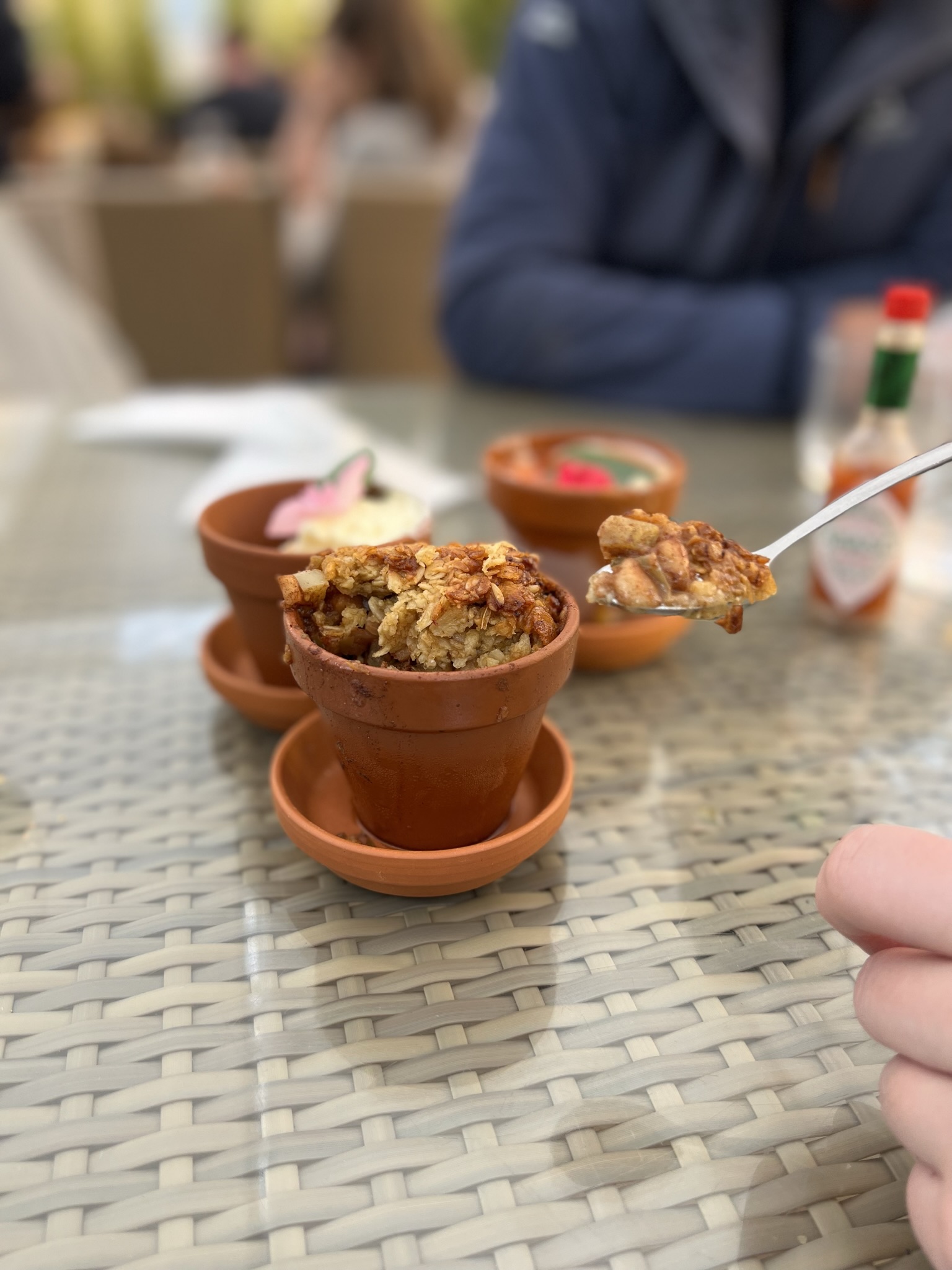
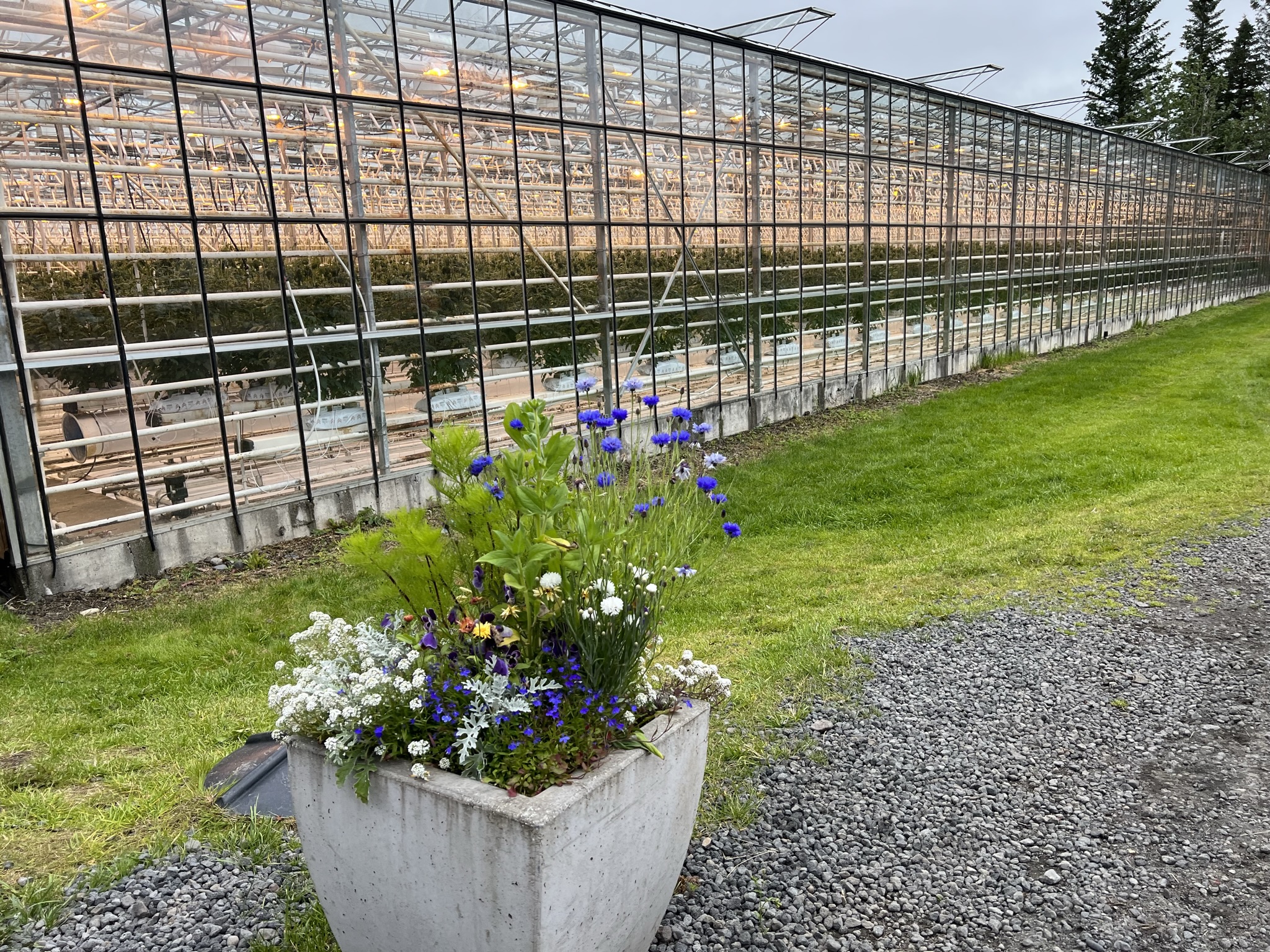
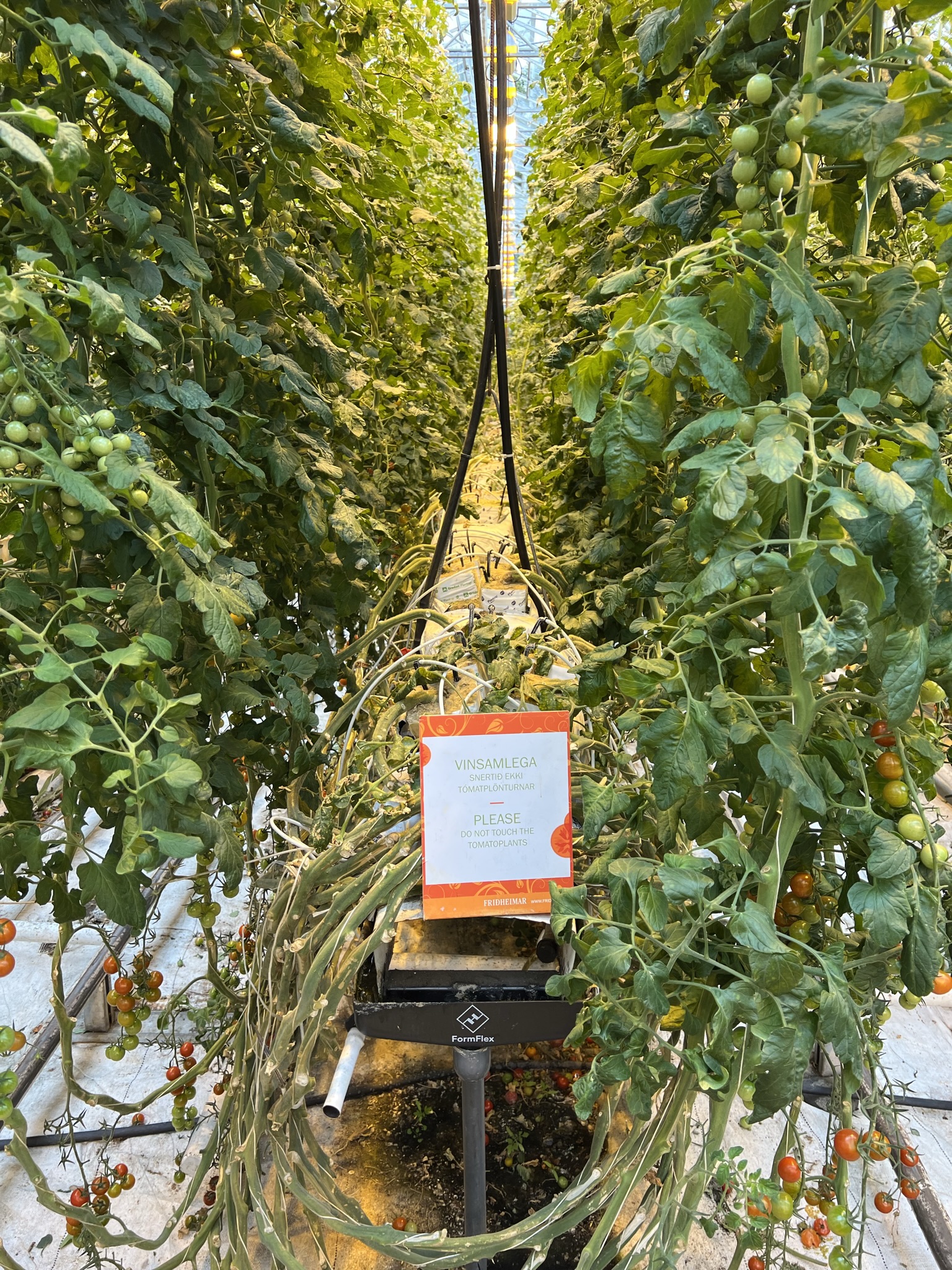
Fridheimar Restaurant for our late lunch was an incredible food experience. Four different varieties of tomato are cultivated in the greenhouse where lunch is served among the plants. We wandered through the rows of tomatoes and could see their bee hives. Their tomato soup is served buffet style with sour cream, a delicious home baked bread, a cucumber salsa along with butter and fresh herbs. A bowl of soup looks like a bowl of soup but our dessert was served in little clay growing pots. We had the trio of desserts…green tomato and apple pie a la fridheimar and whipped cream, home made tomato ice cream a la Fridheimar and a cheesecake with a green tomato jam with cinnamon and lime. Yummy.
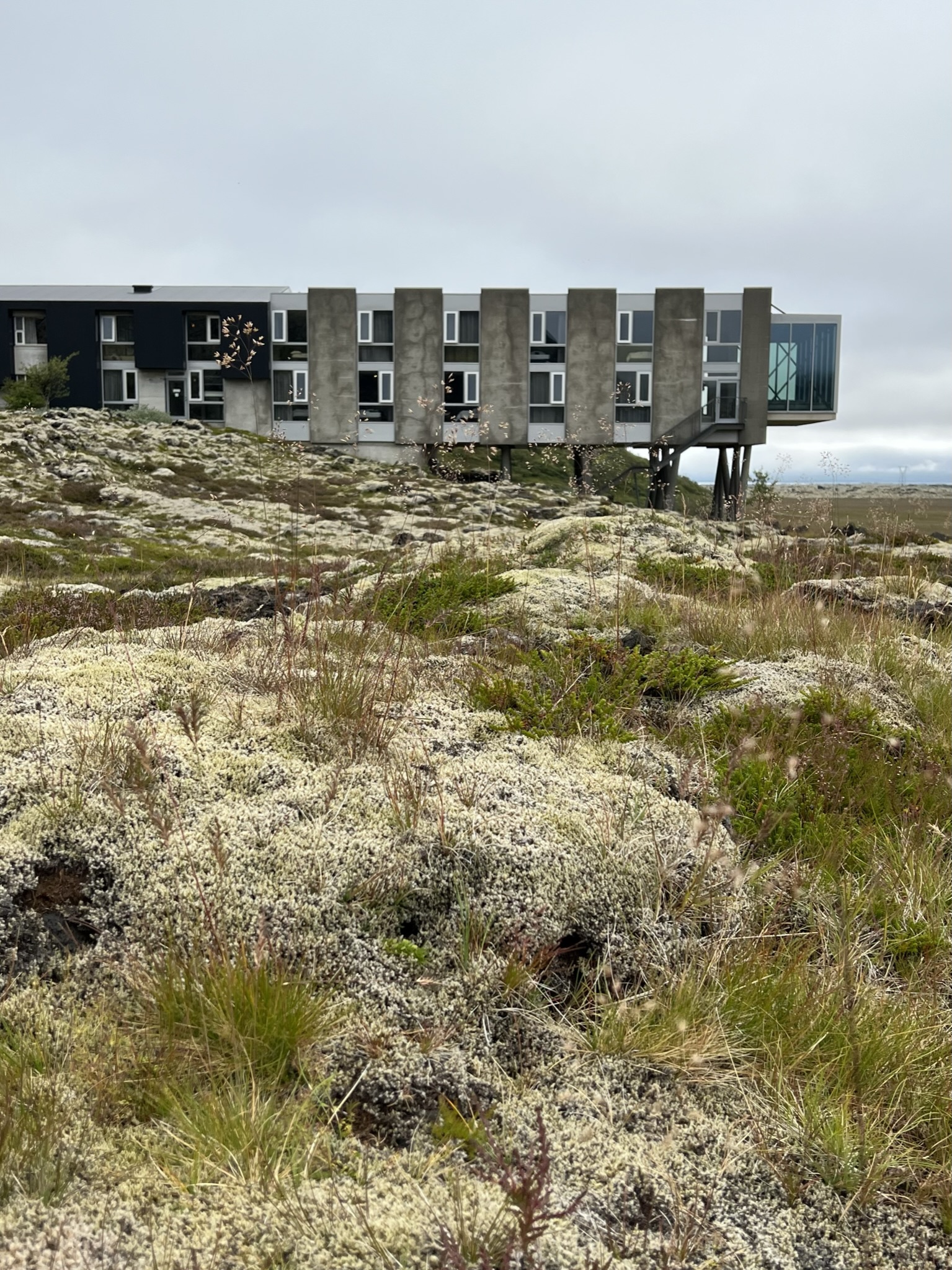
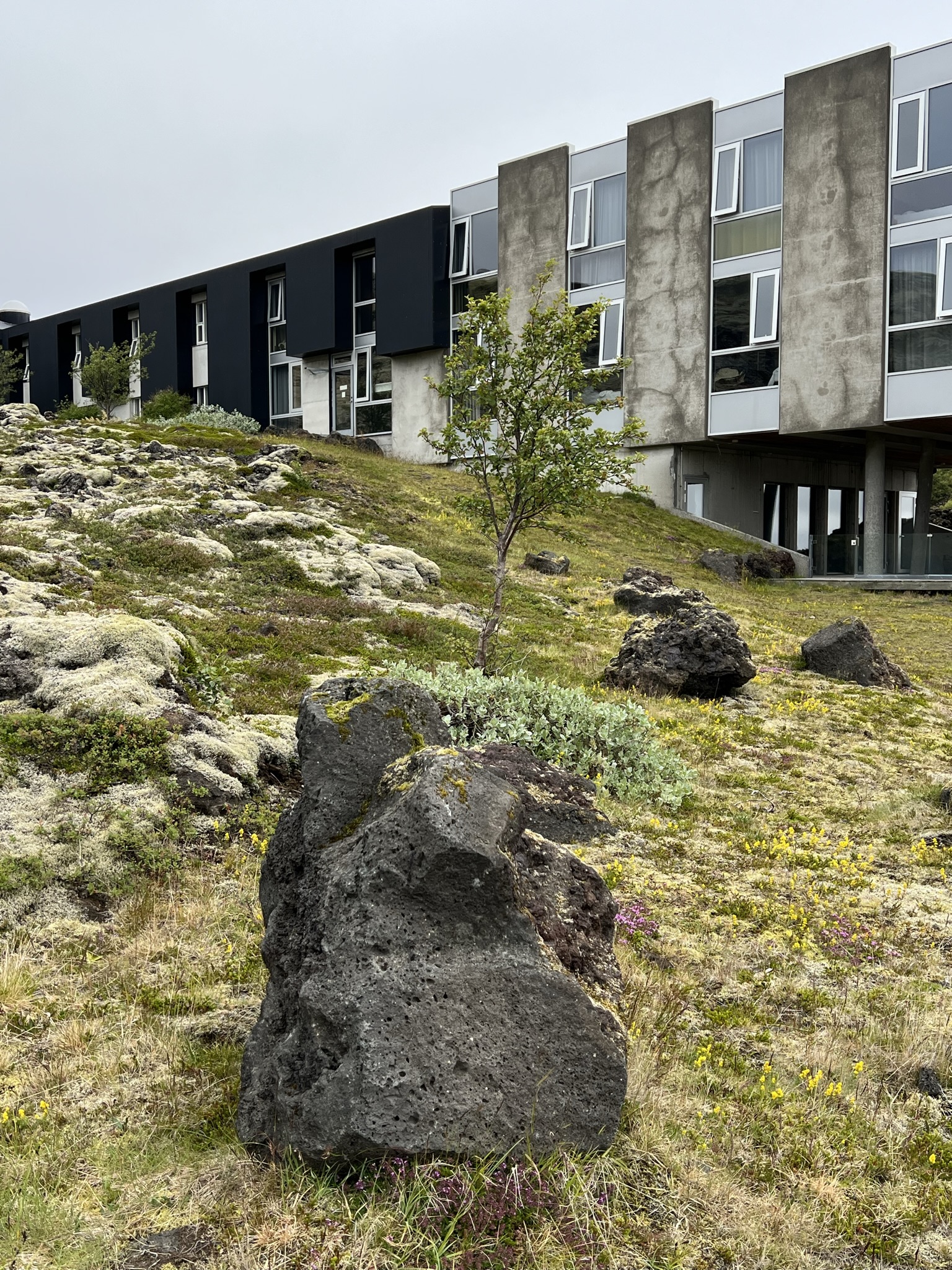
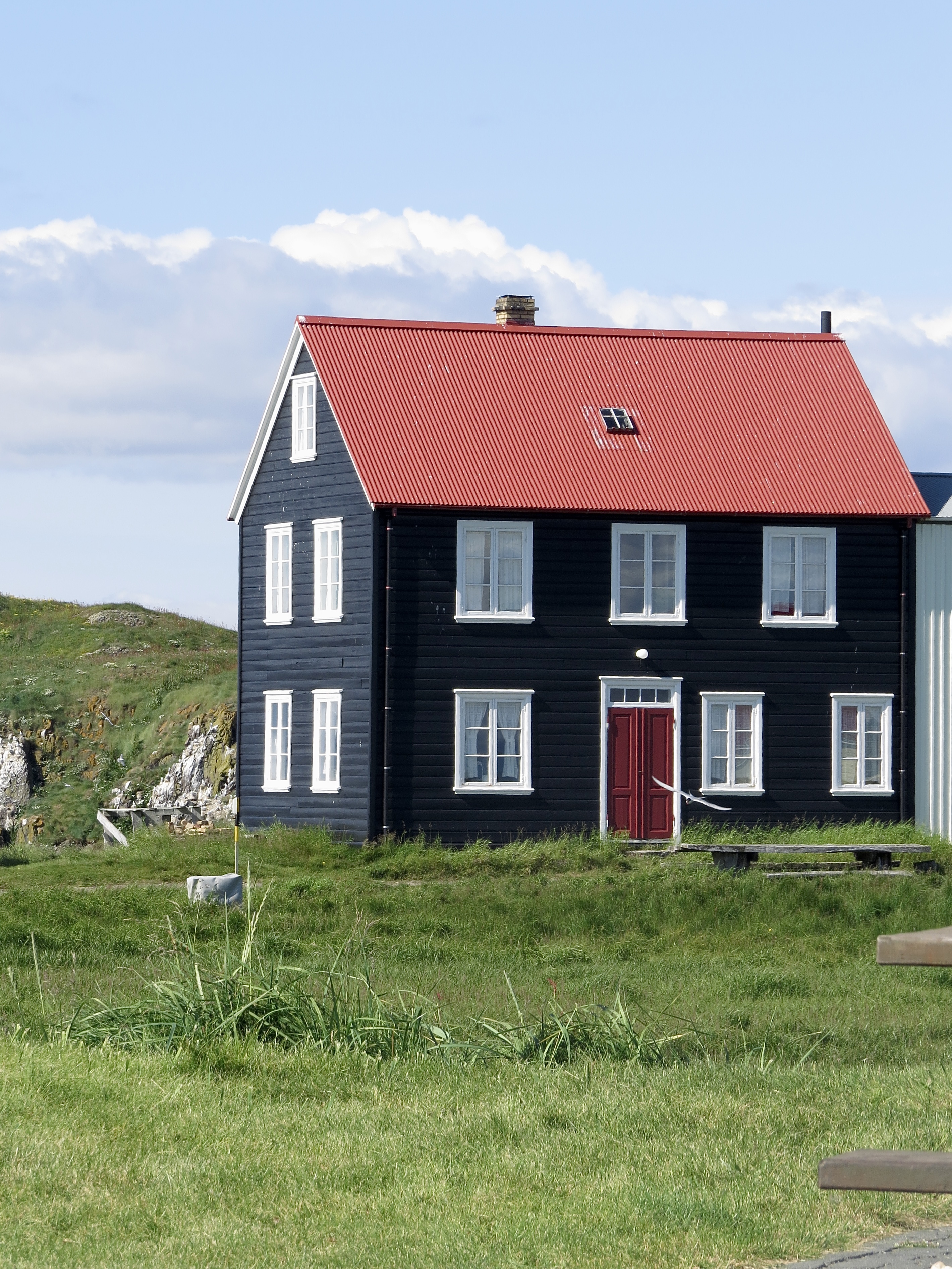
We drove from the “tomato restaurant” to our hotel, the Ion Adventure for our first of two nights. The hotel is up a little valley with the Nesjavalavirkjun power plant that generates electricity and water nearby. This drive took us back toward Pingvellir, its lake and past many different type of landscapes. Valdi showed us a home his family owned and showed us a photo of what it used to look like. That is when you start noticing homes surrounded by trees. The last 50 years have seen many homesteads go from bare to surrounded by trees for protection from the elements. Locals used to call something a forest if they saw four trees. The more or less native trees included birch, poplar, pine and rowan. When Norwegians first arrived there were 20-40% of the country covered in trees. Unfortunately the environment was not used to such a sudden influx of resource hungry organisms. Humans and livestock are not solely to blame as many volcanic disturbances caused deforestation. Importation of resources needed to tap geothermal energy today have weaned Iceland off its use of wood as fuel.

New trees that are currently being planted include larch, Sitka spruce, Alaska aspen and lodgepoles. The goal is 5% forested in the next 50 year. Regardless of the positive changes, the climate is still openly hostile for much of the year making for slow progress. The joke used to be due to the diminutive size of many of the trees, if you got lost in the woods what do you do? Stand Up!
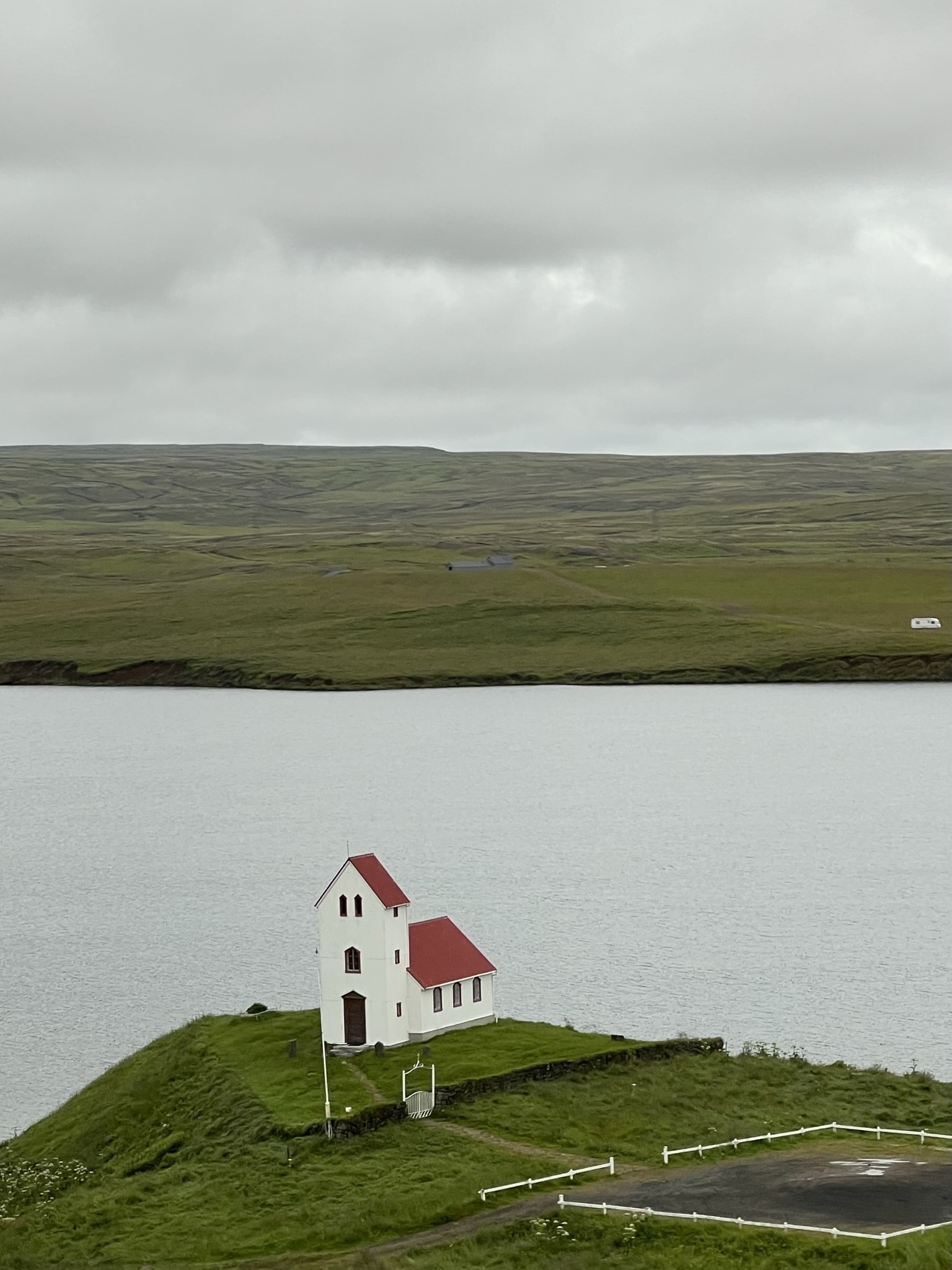
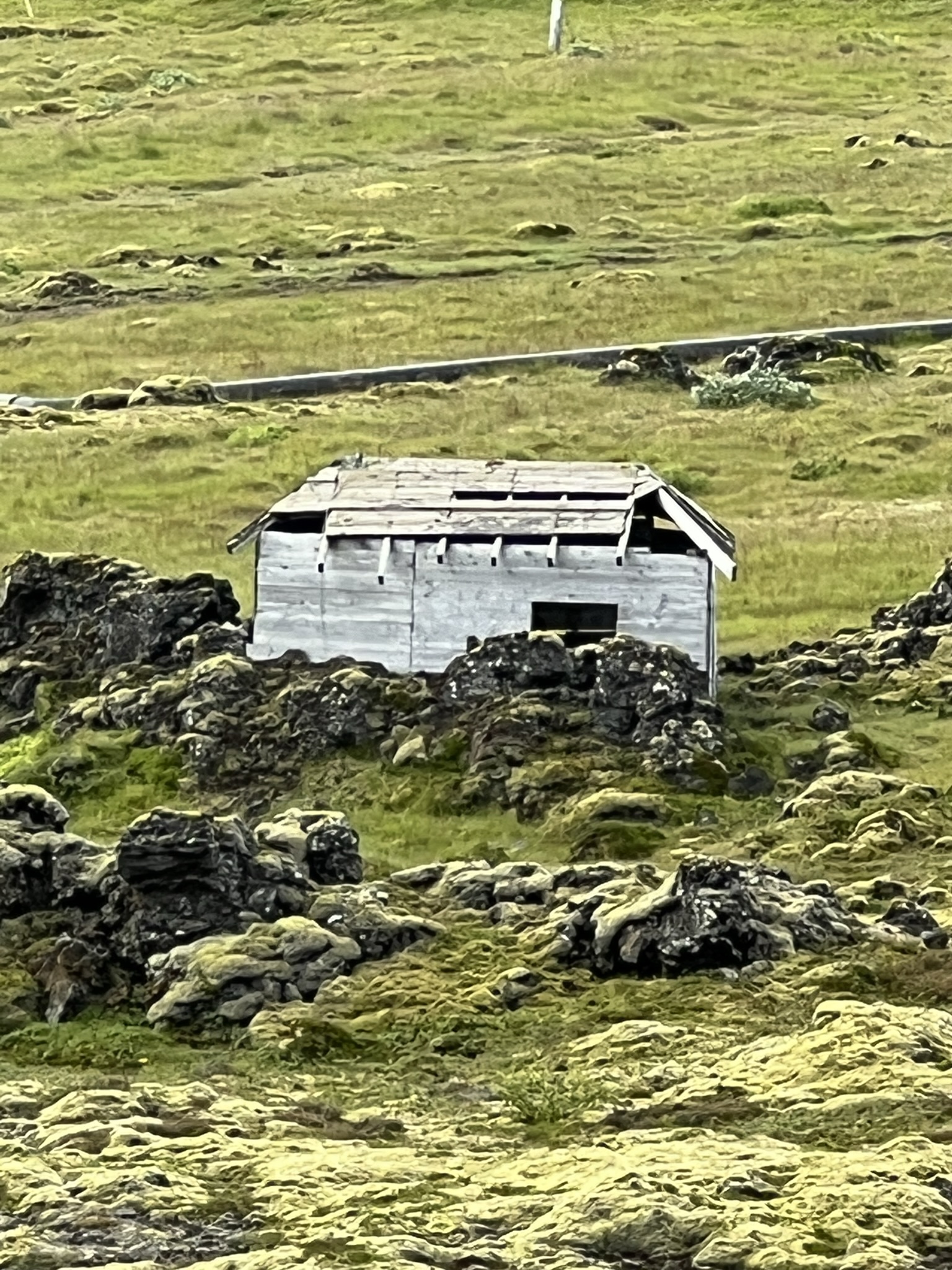
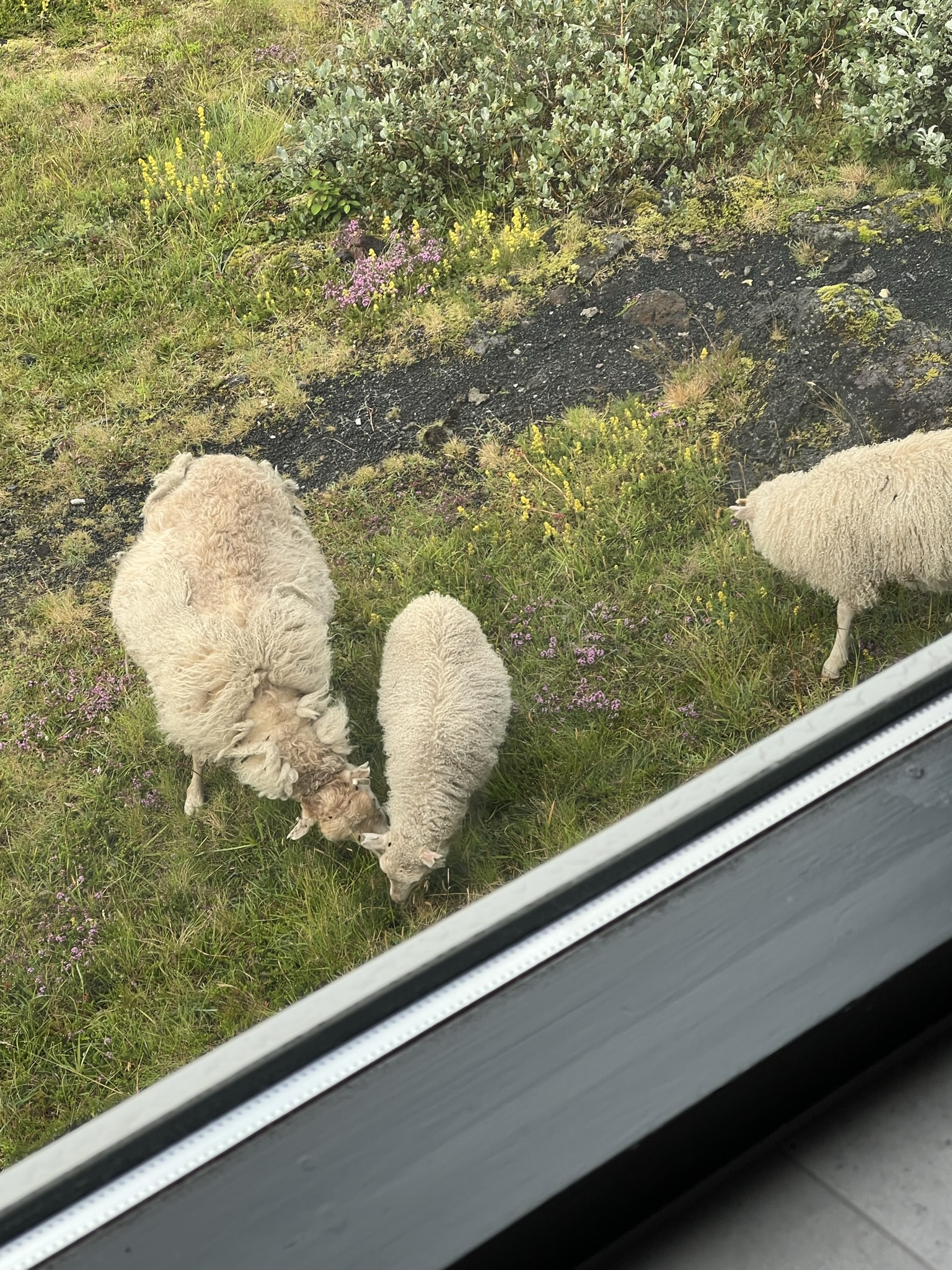
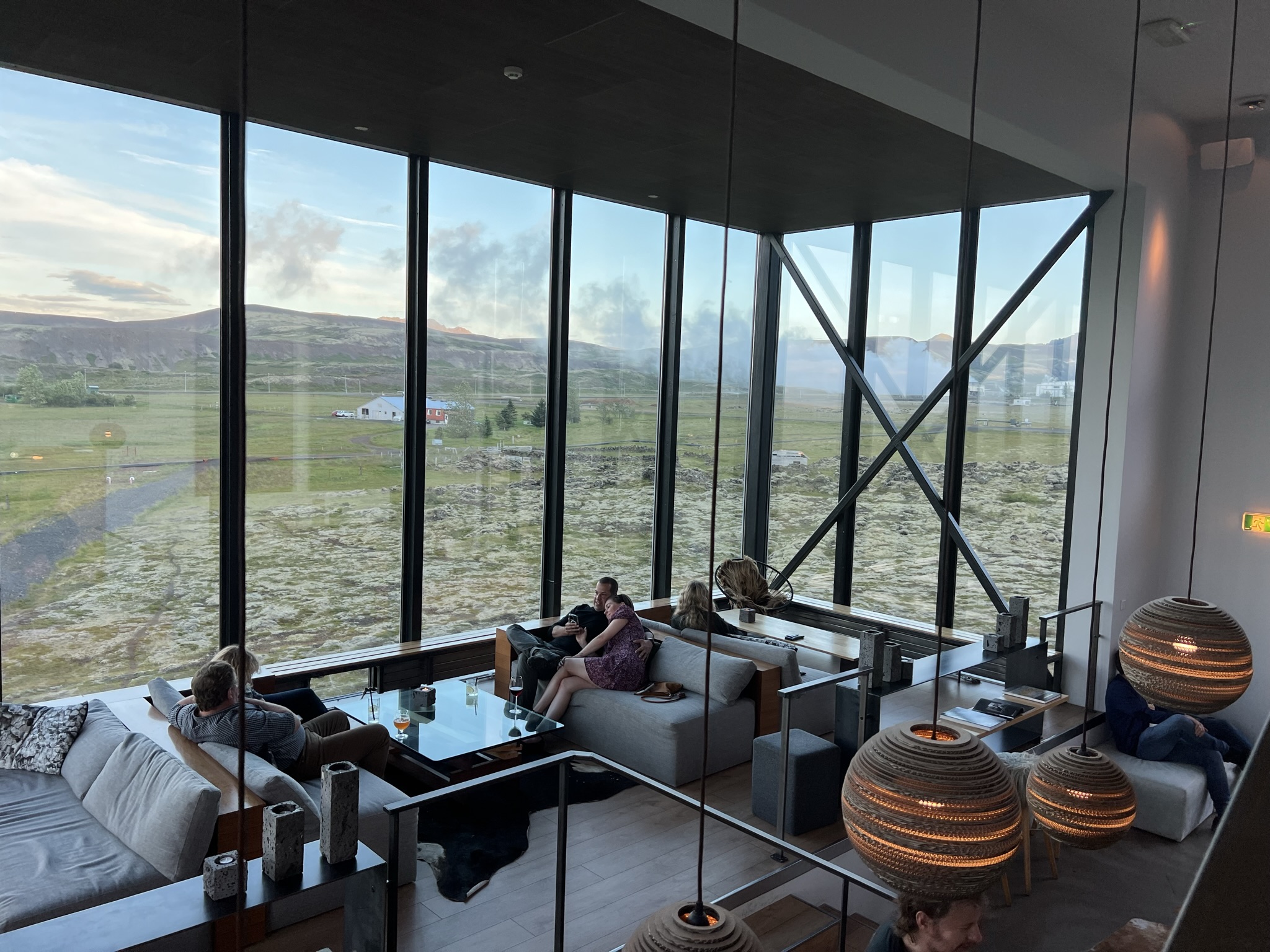
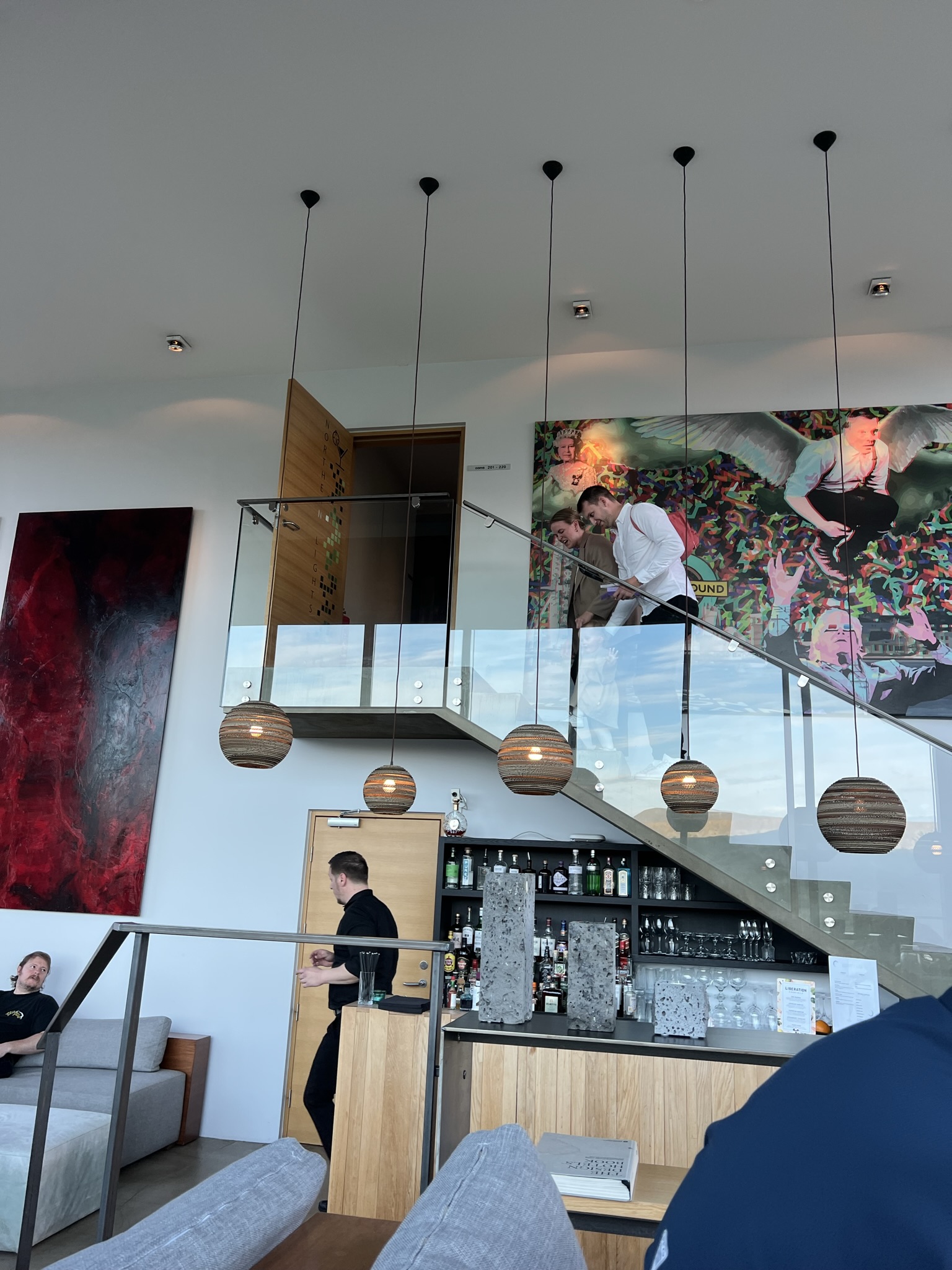
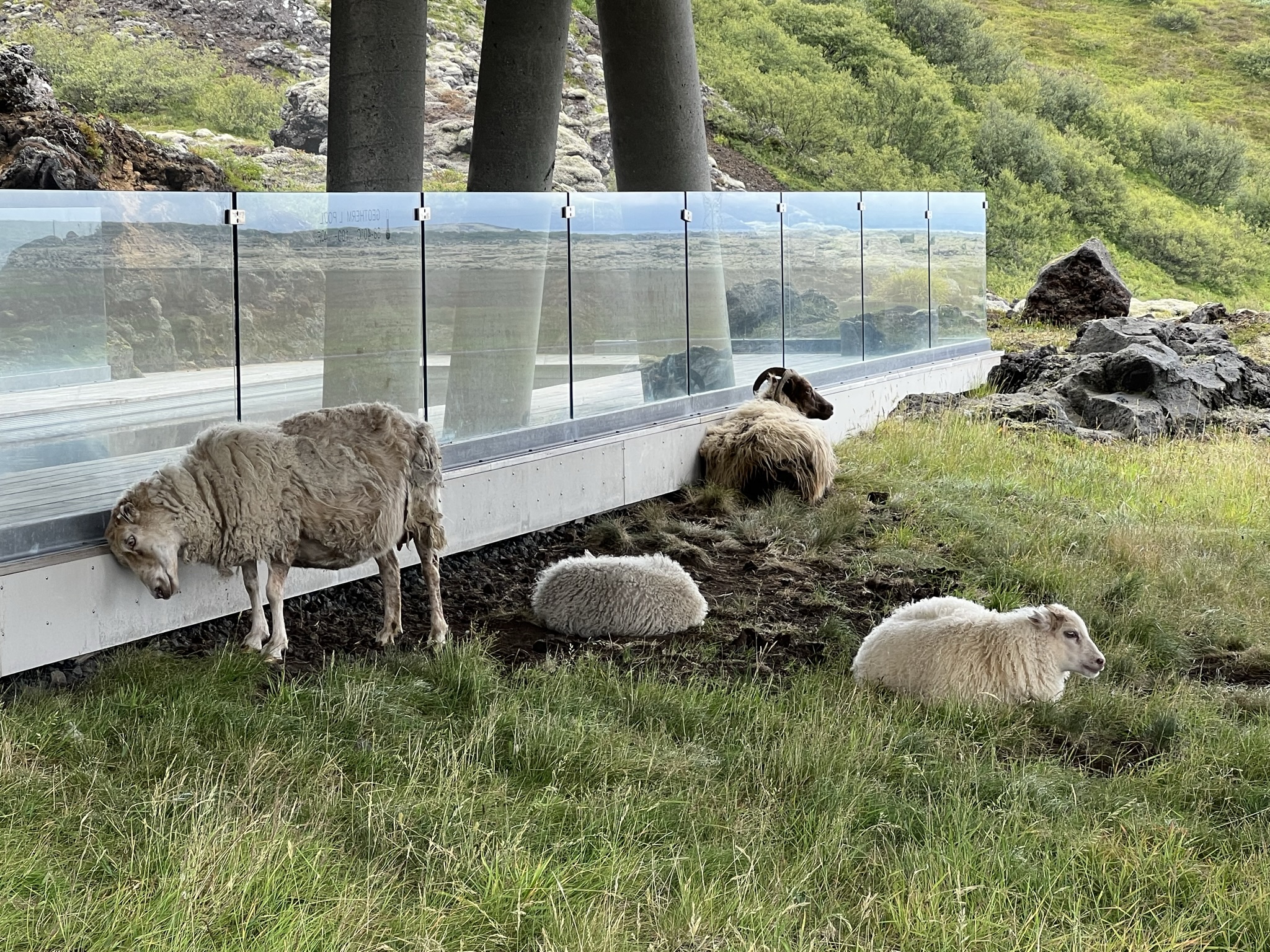
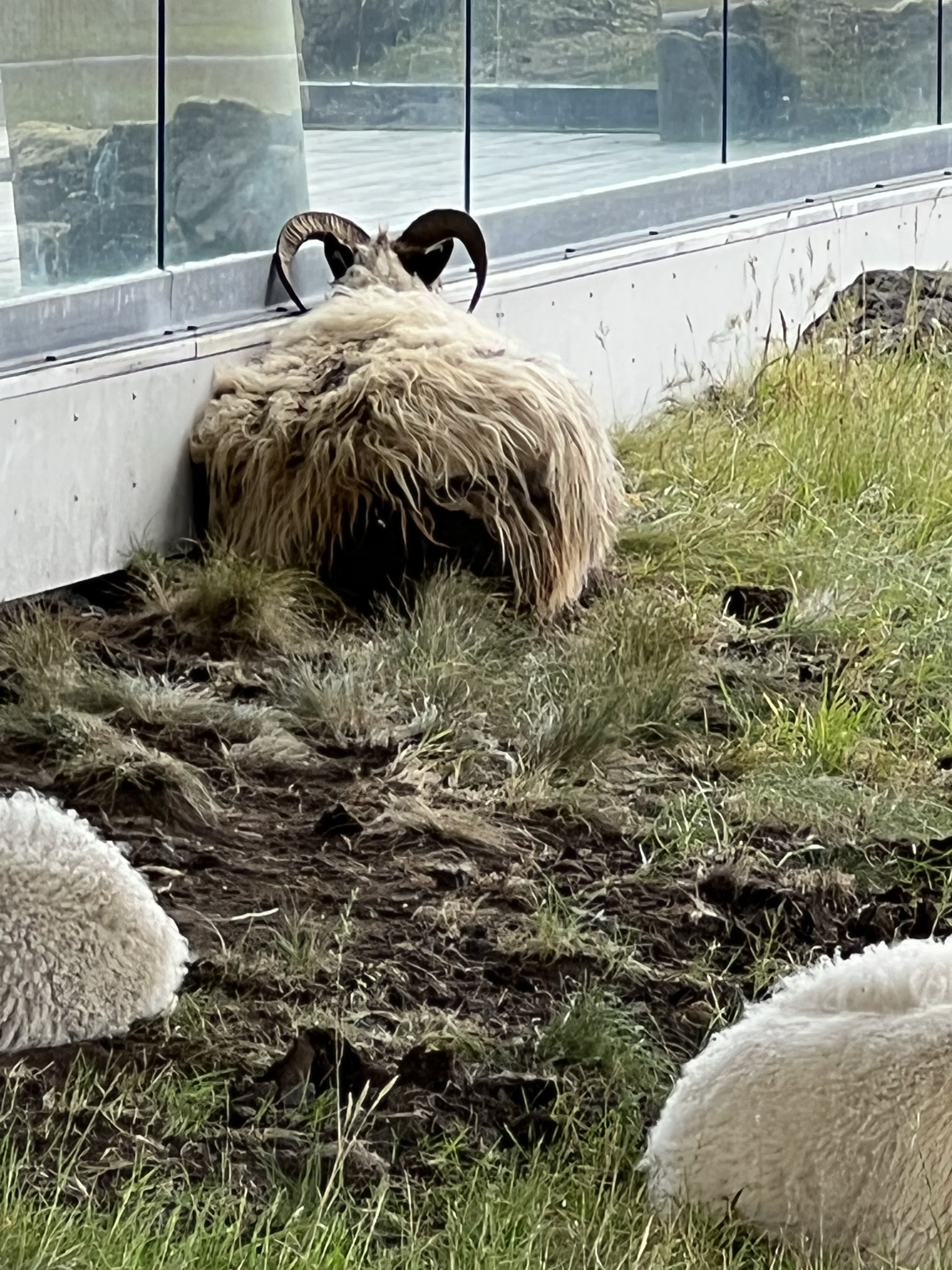
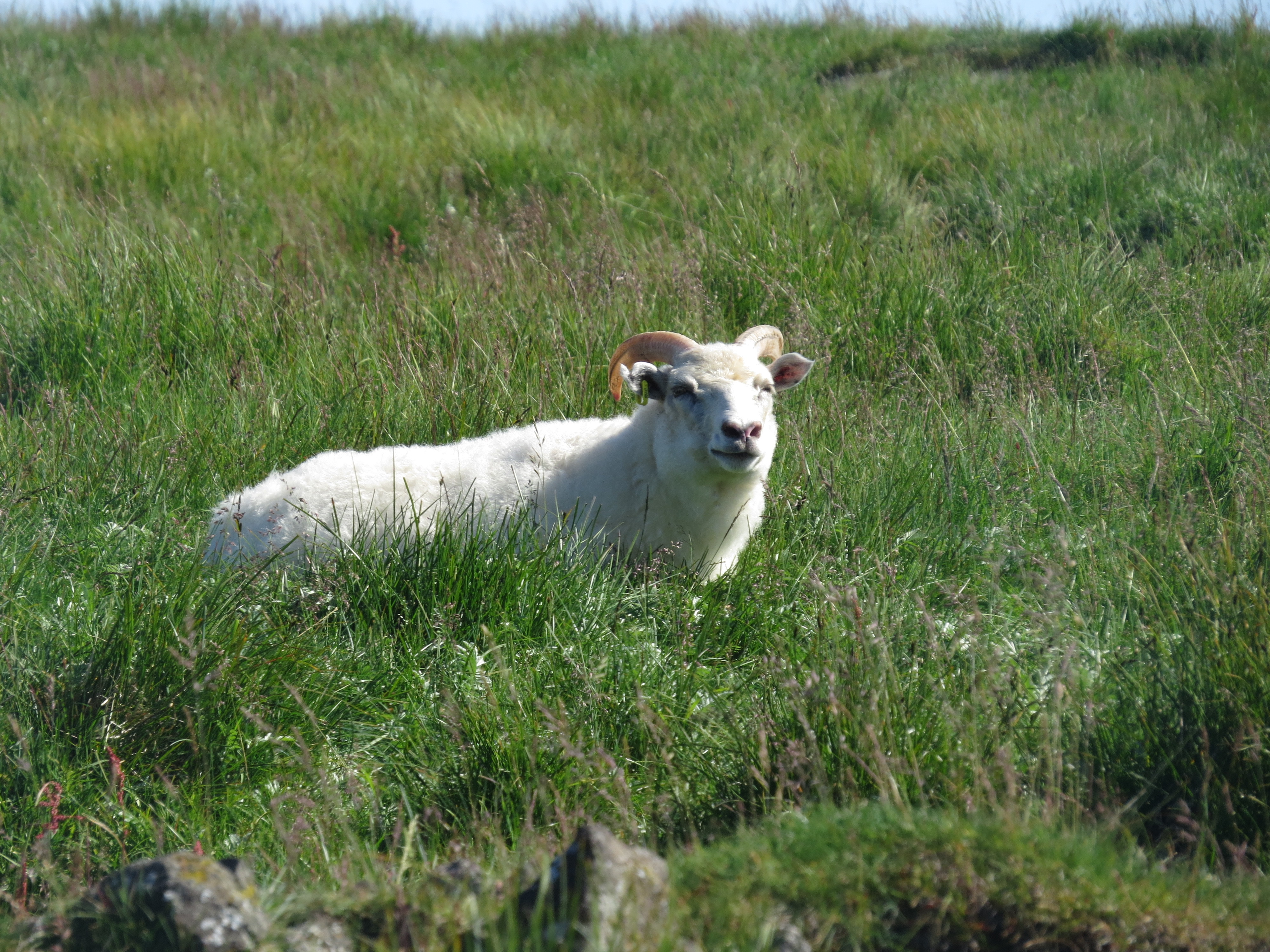
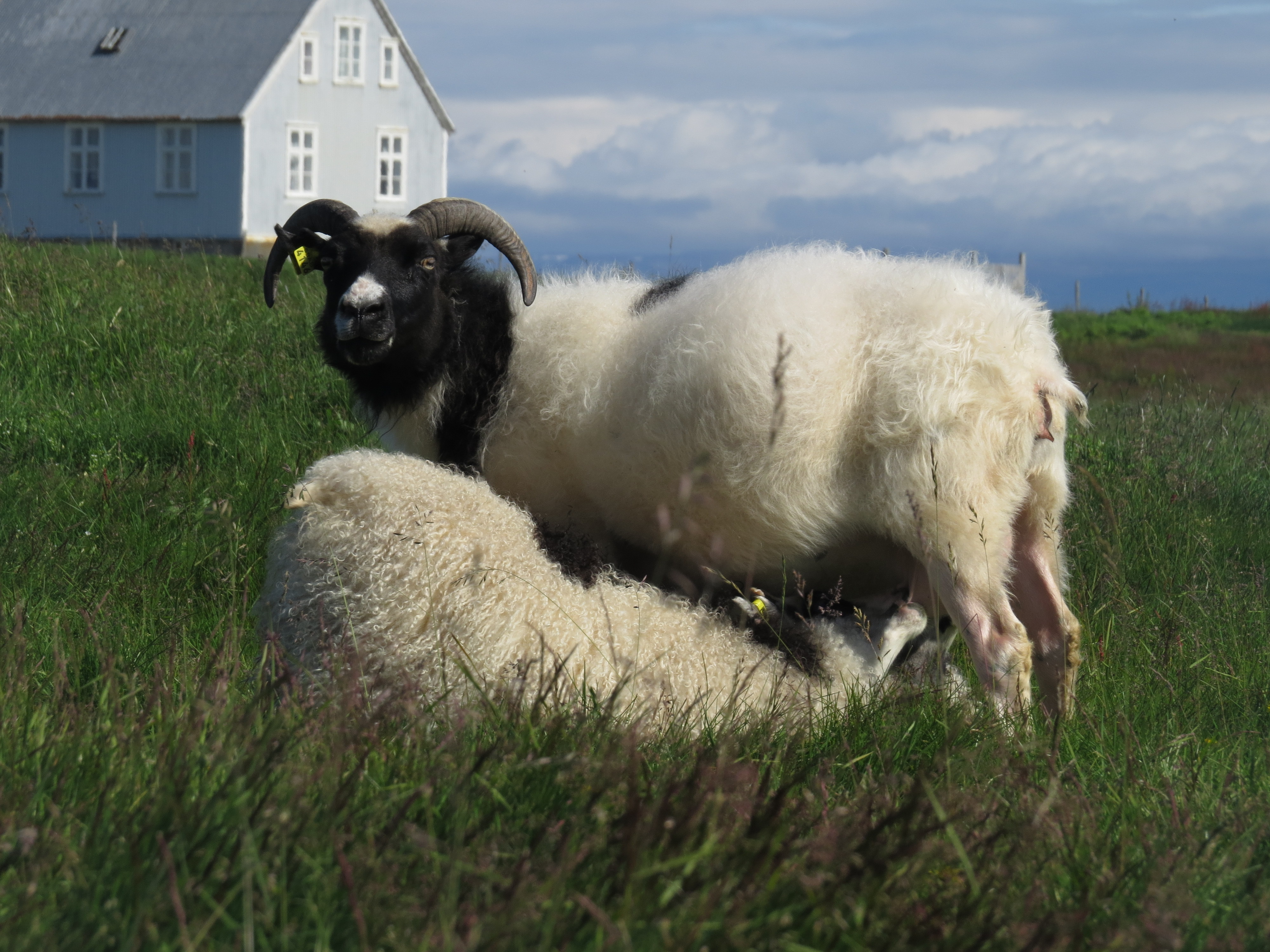
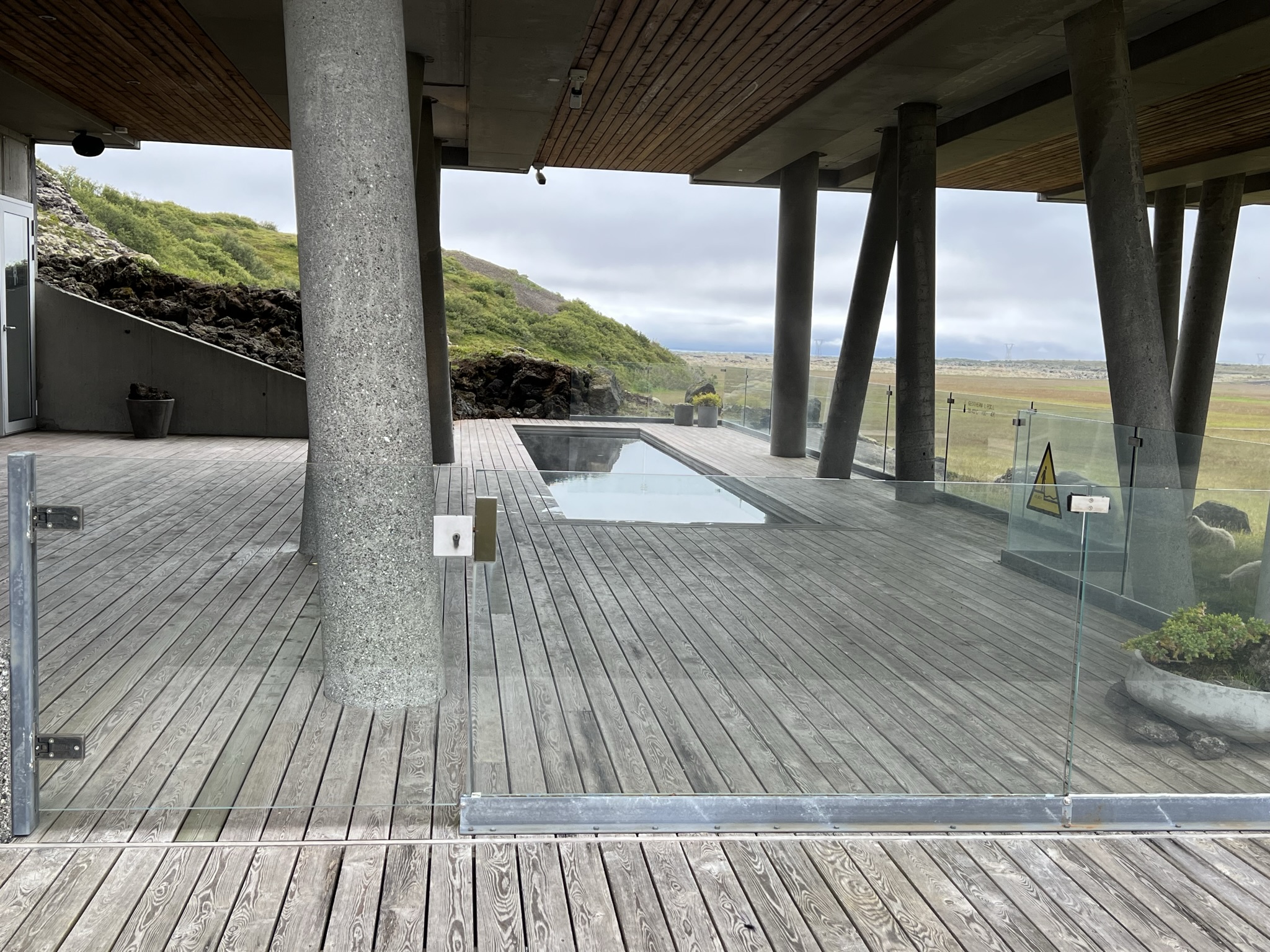
We arrived at our Ion Adventure hotel, checked in and had time to enjoy the hot pool and sauna and of course the bar with a view when we were sufficiently relaxed. Dinner was late after a very late lunch and we opened our window to cool the room down. …and of course the sun didn’t really set. The sheep wander everywhere over the Island. There are no predators and the owners just kind of know where their flocks are so at certain times of the year they are corralled and checked on. Much like the horses, the Icelandic sheep have been on the island for 1,000 years. They are highly resistant to cold and are left unshorn for the winter. Many ewes carry the Poka gene which means they can give birth to large litters. There are a little over 1 sheep per person on the island and they are used for food, milk and wool.
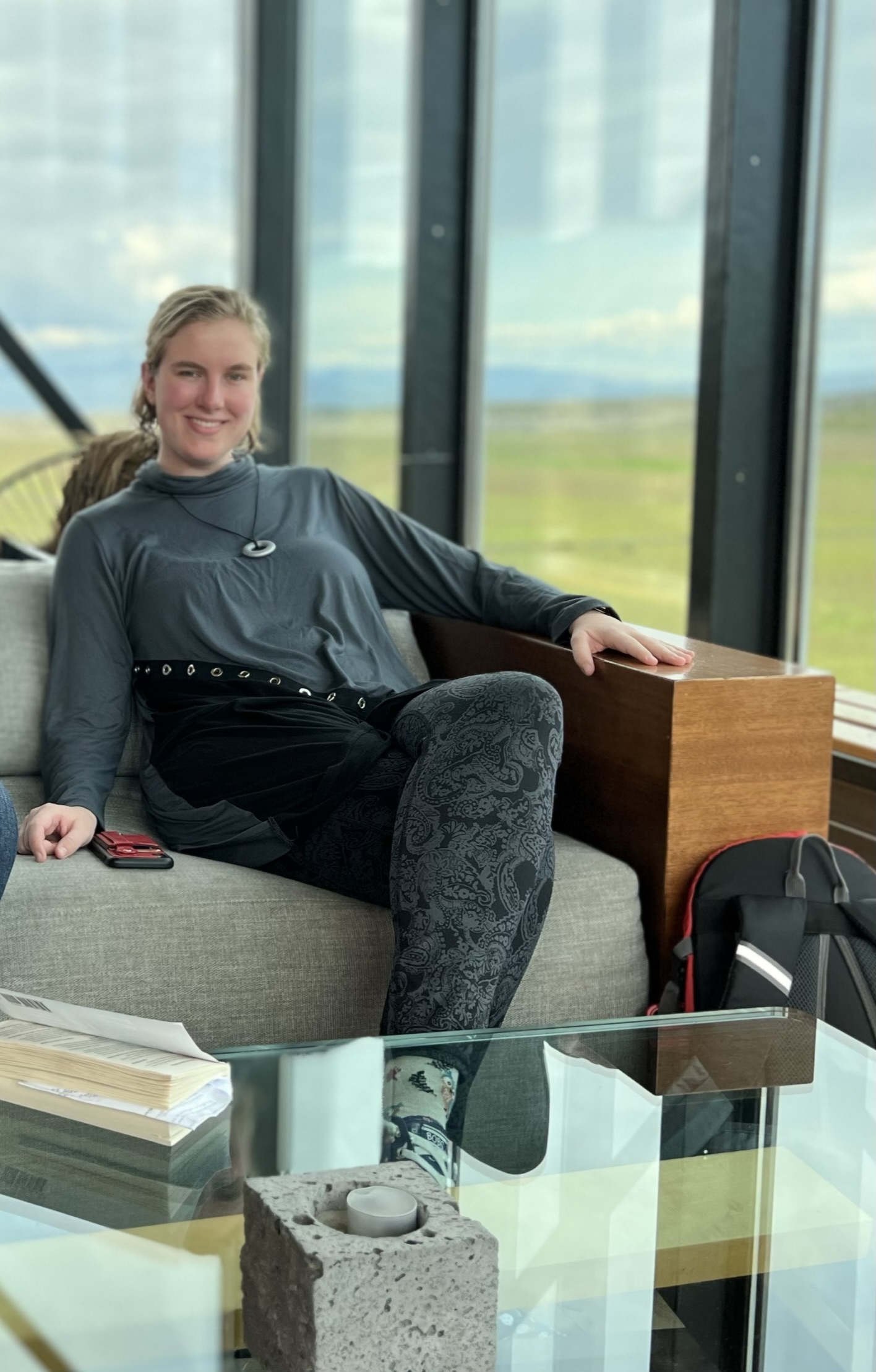
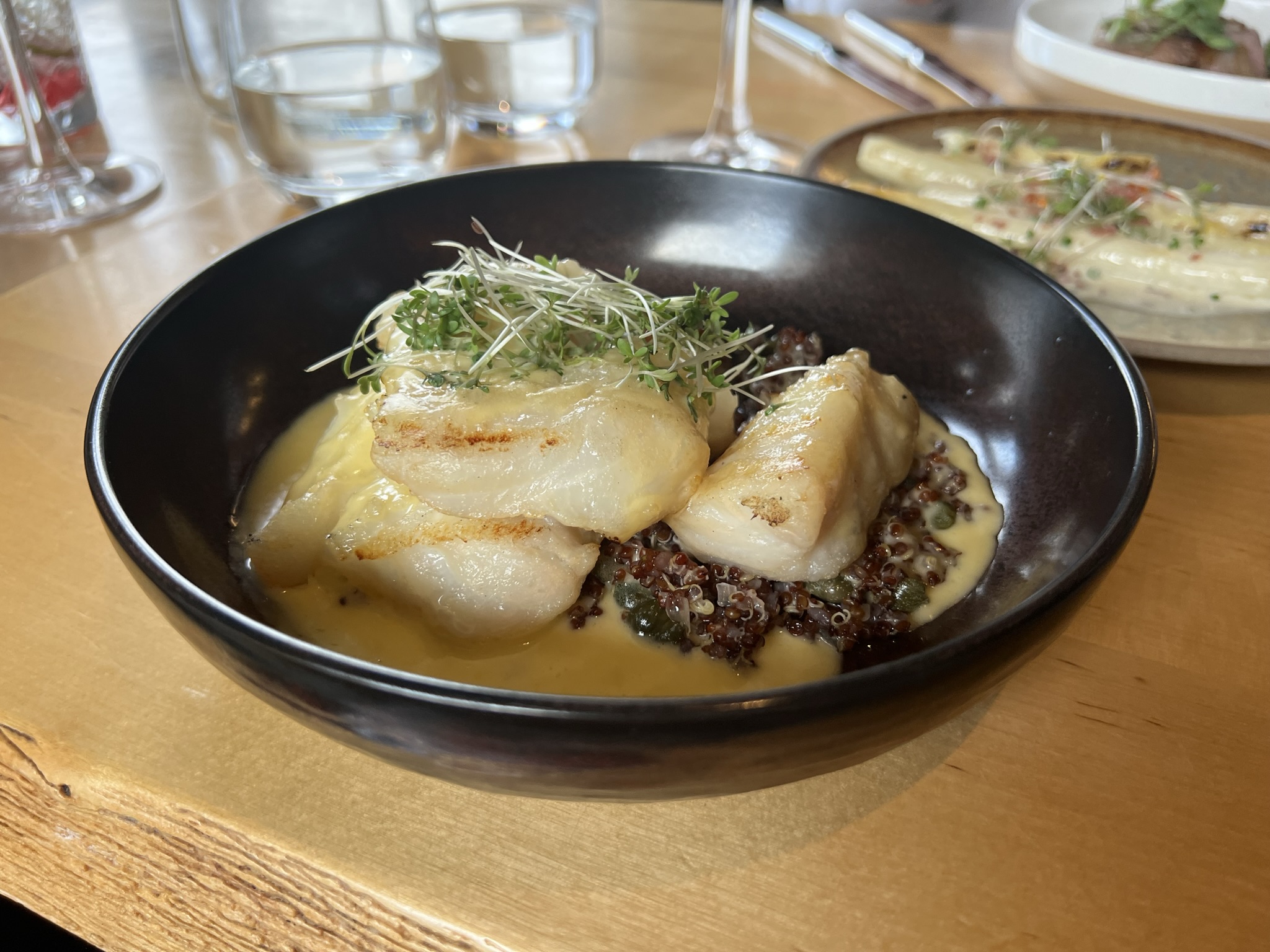
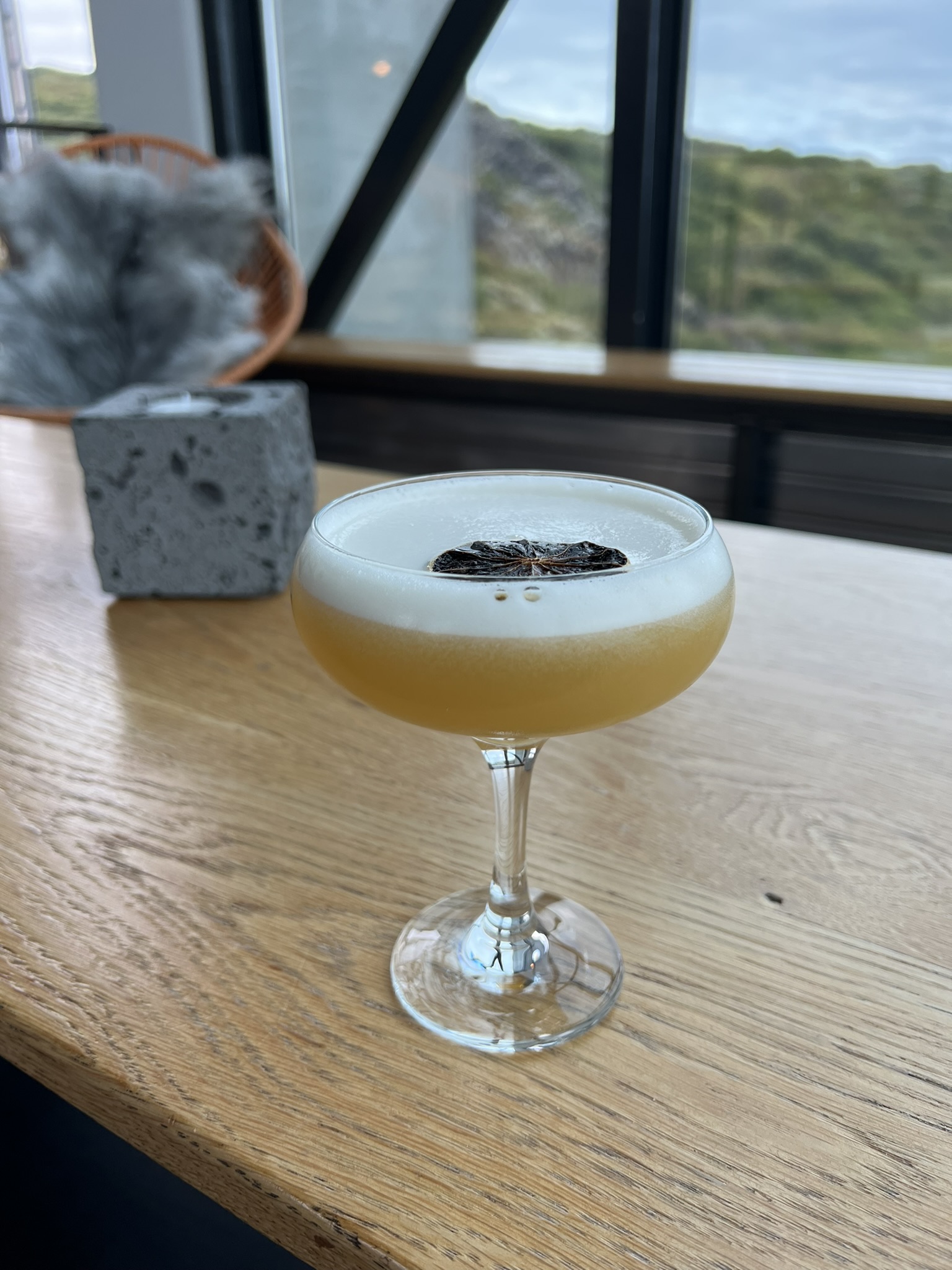
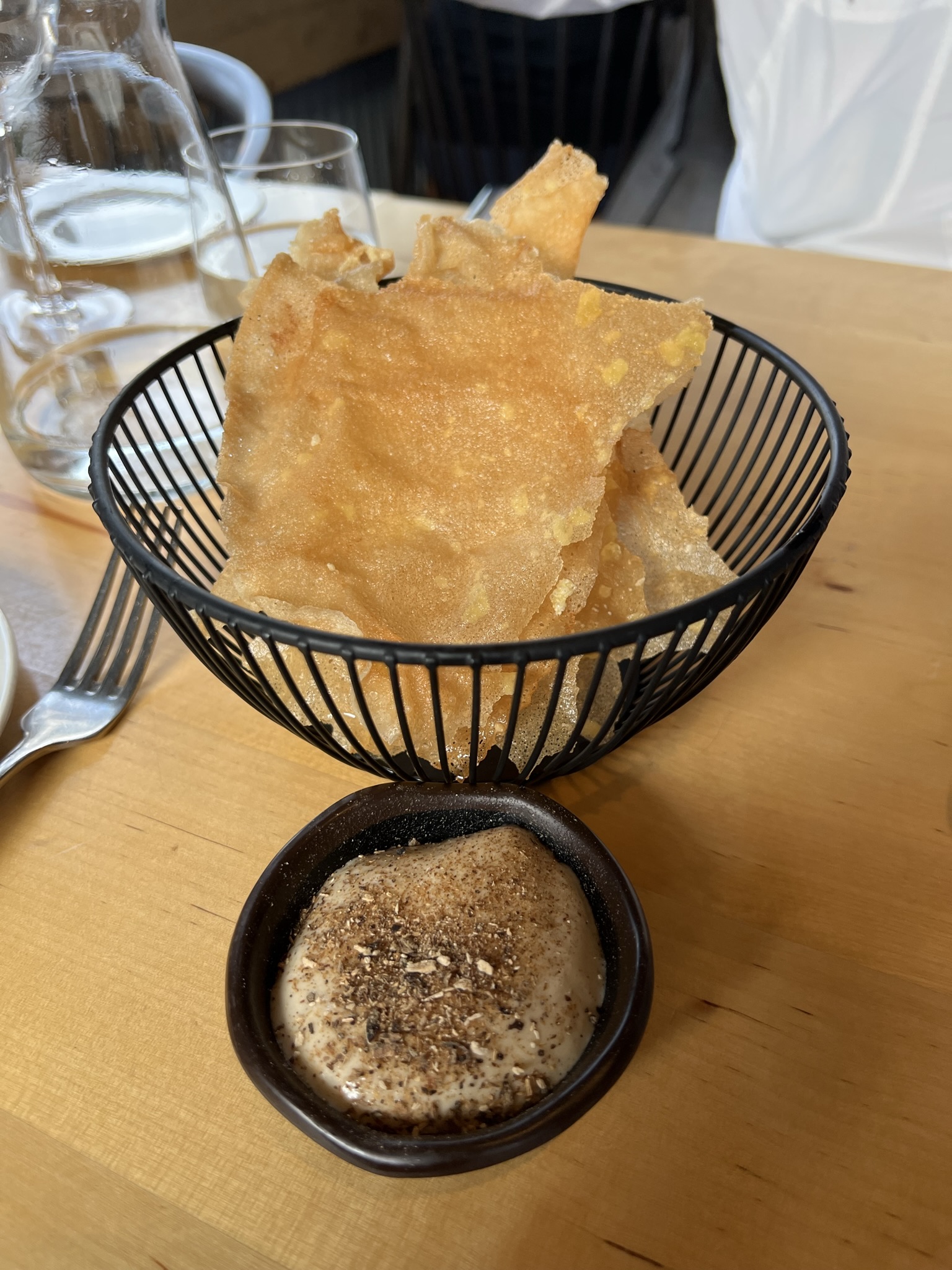
Silfra Restaurant named after the Silfra rift, a freshwater fissure between the continents near our hotel where you can both scuba dive and snorkel. Visibility exceeds 300′ making it some of the clearest water in the world. There are places where you can actually touch both continents at the same time. The restaurant’s cuisine is New Nordic using fresh local ingredients. Once again we couldn’t go wrong with the fresh fish offernings nor the lamb. Deserts are always creative as was the bread. I couldn’t resist another porn star martini at the bar.
Next up more waterfalls, more lava fields and the southern coast…

REYJKAVIK

A little girl enjoying the harbor!

Reykjavik – Reykr = smoke and Vik = bay so it means – “BAY OF SMOKES”

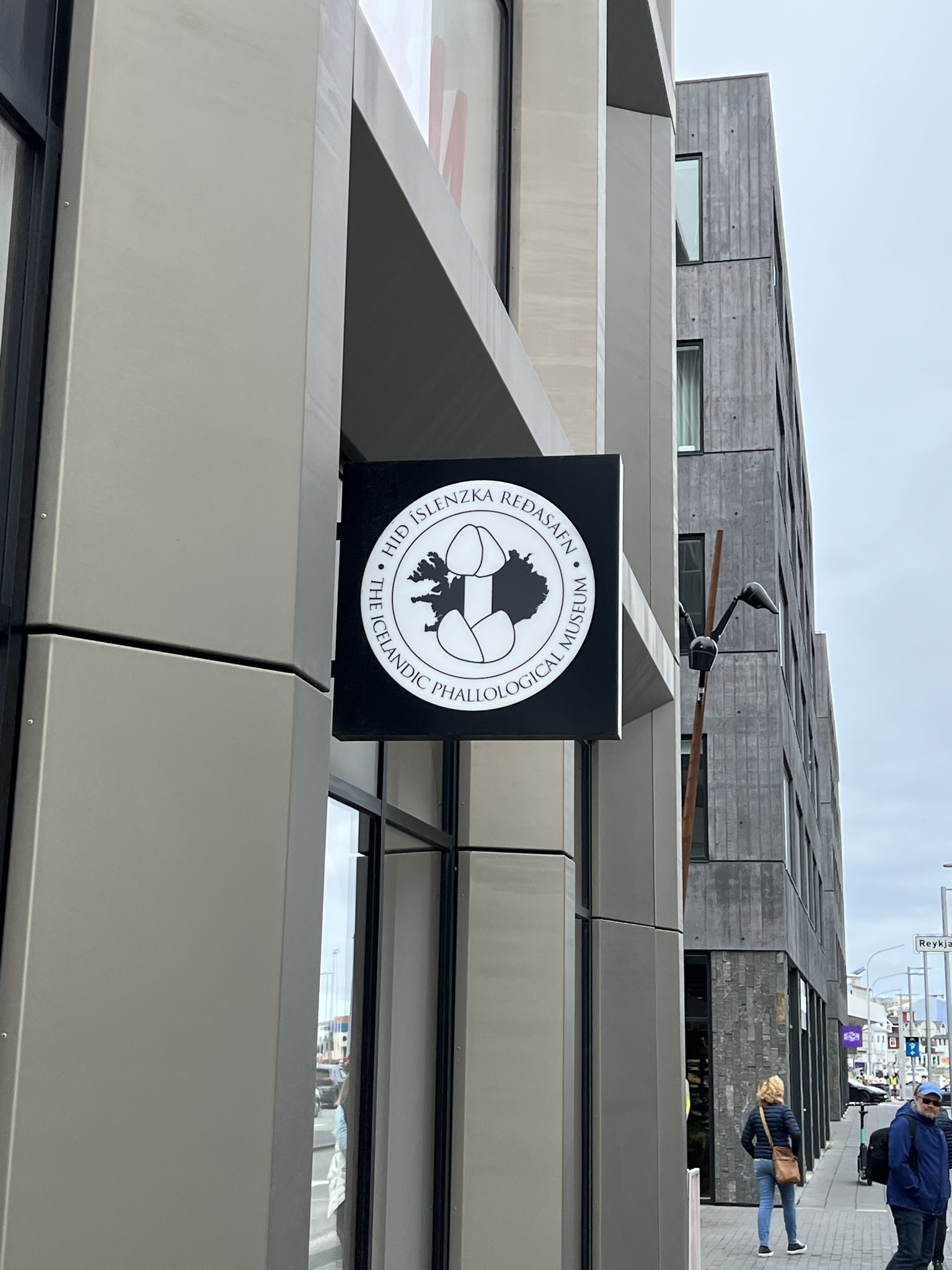
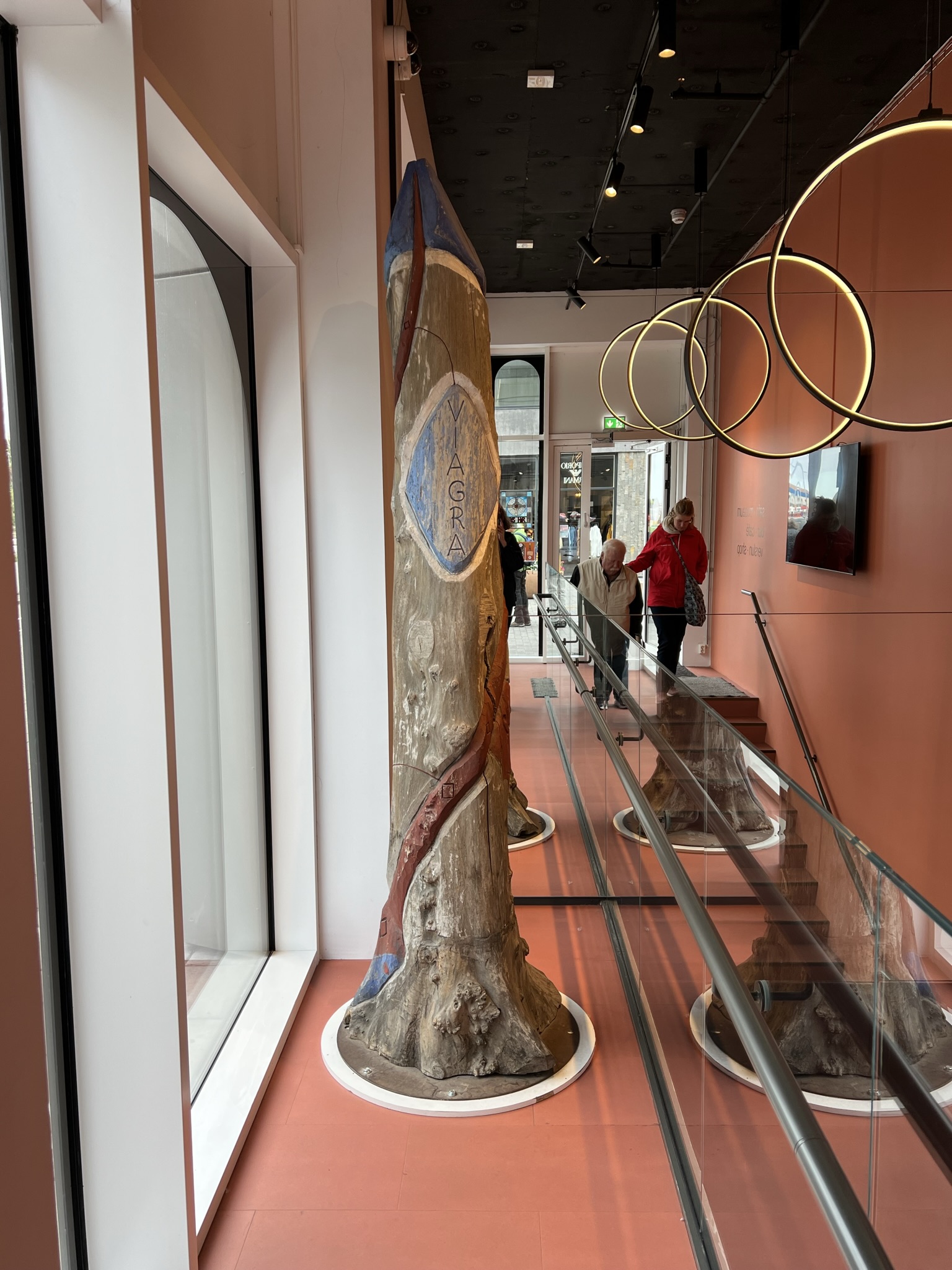
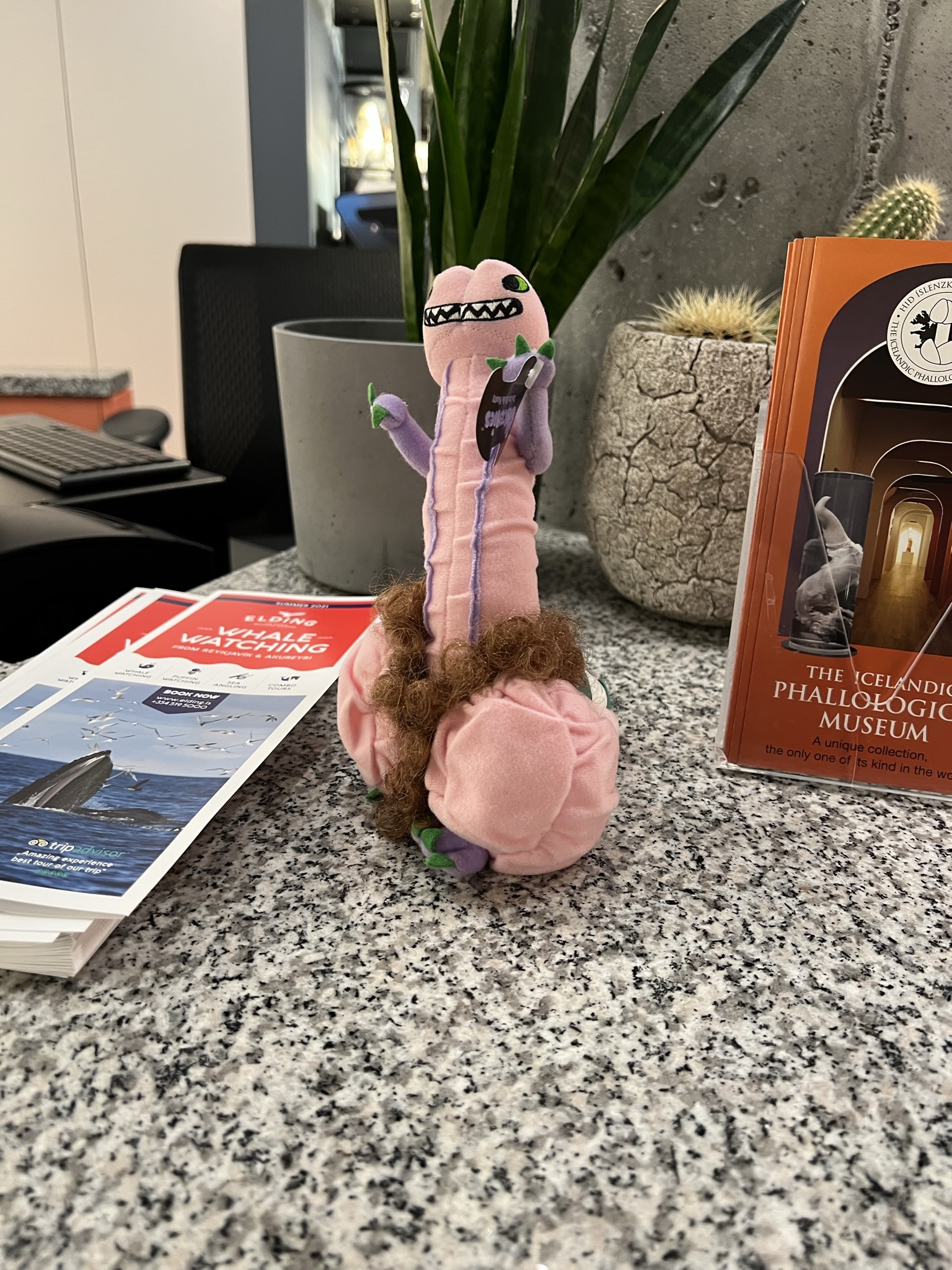
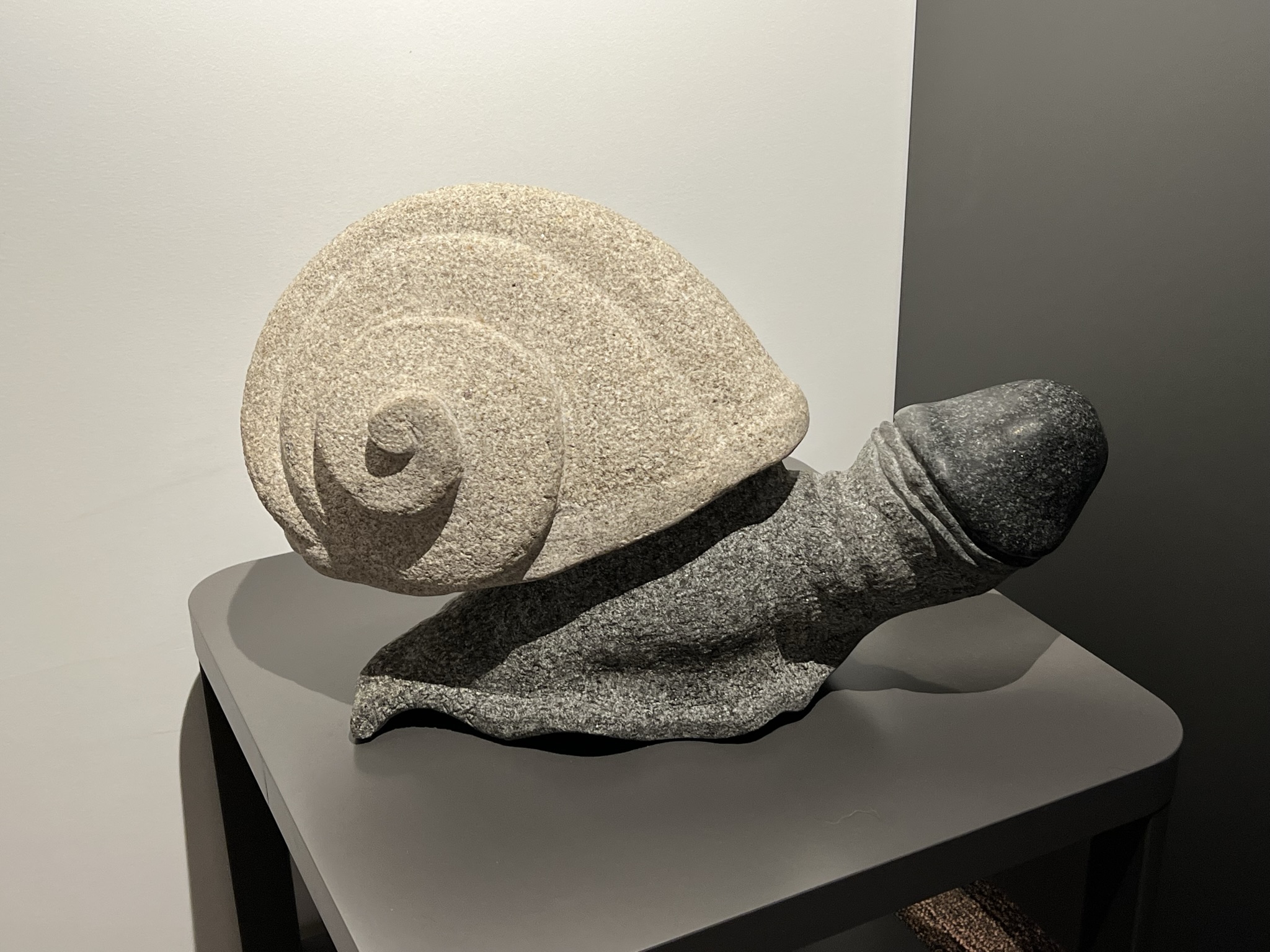
We sailed into Reykjavik in the early morning and were going to have to take a bus to a Hilton Hotel. Of course we couldn’t check in at that time of the day so all of us trudged our belongs from the port to the bus to the hotel and stuffed them in a large room awaiting check in later in the afternoon. We then were able to take the Silversea bus to the convention center on the harbor to walk around while we awaited the beginning of our walking tour that had been set up in advance by our travel agent. We kept hearing about the Phallological Museum (affectionately known as the Penis Museum) and figured it was a must see – at least once!

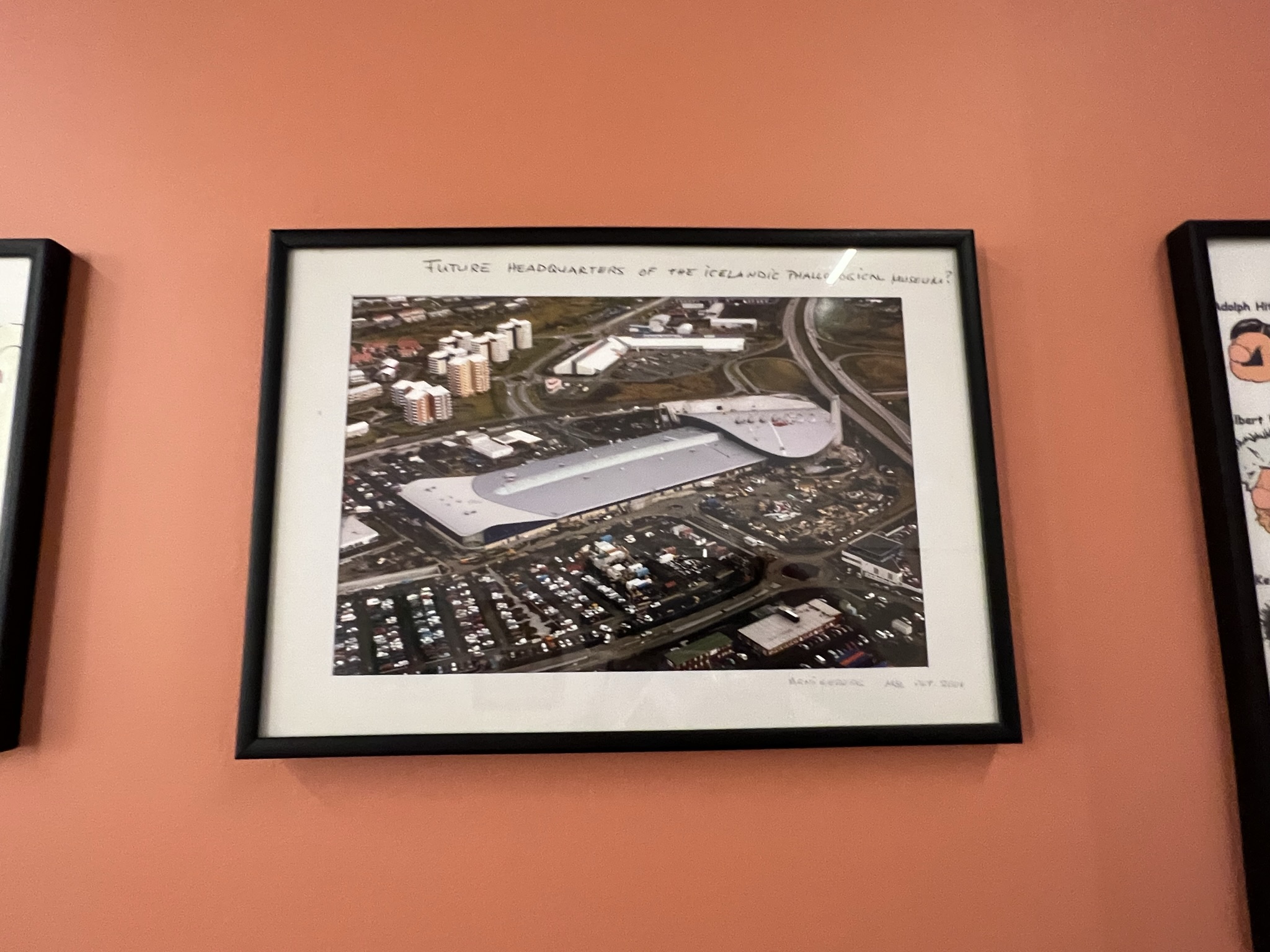
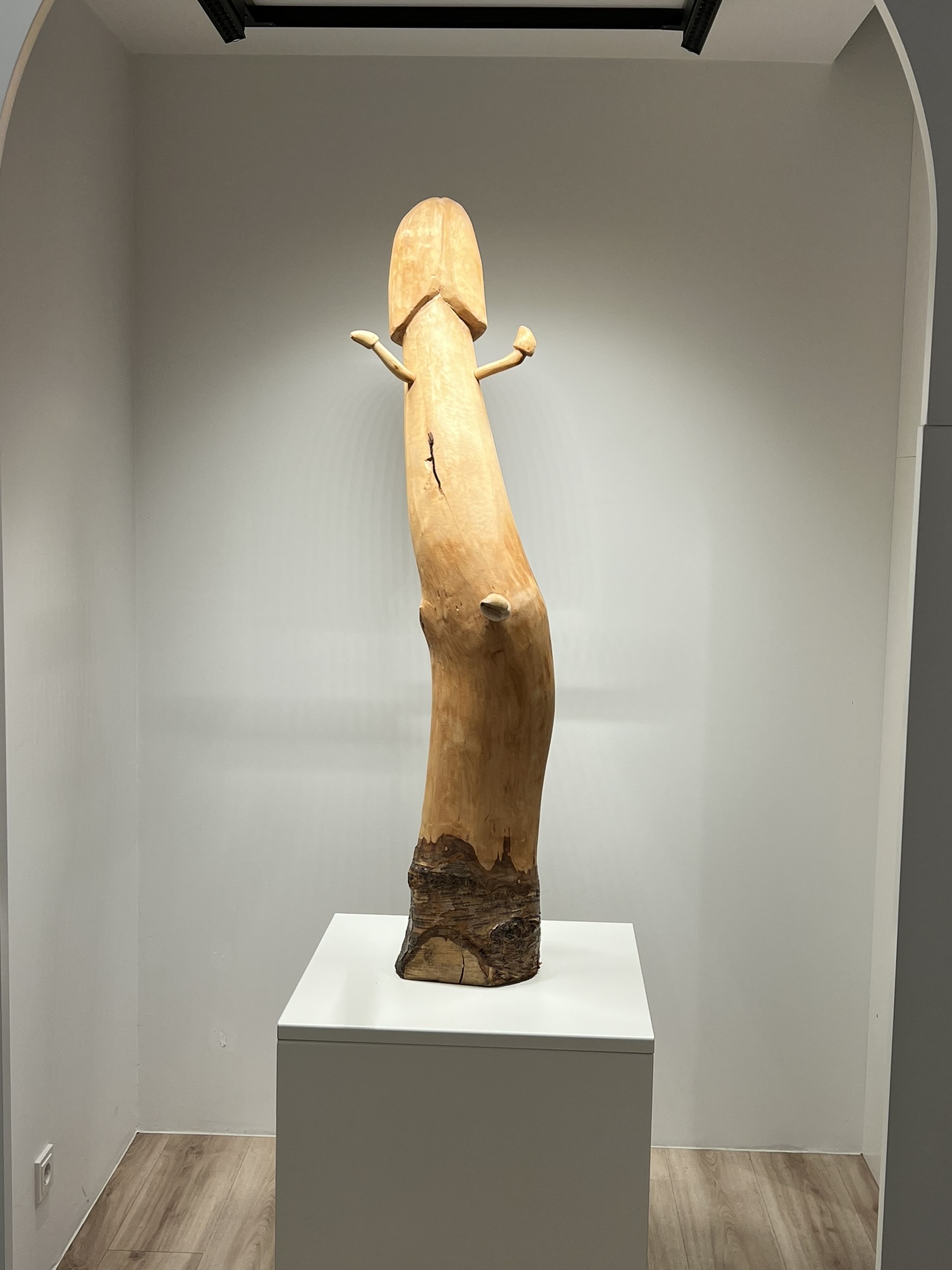
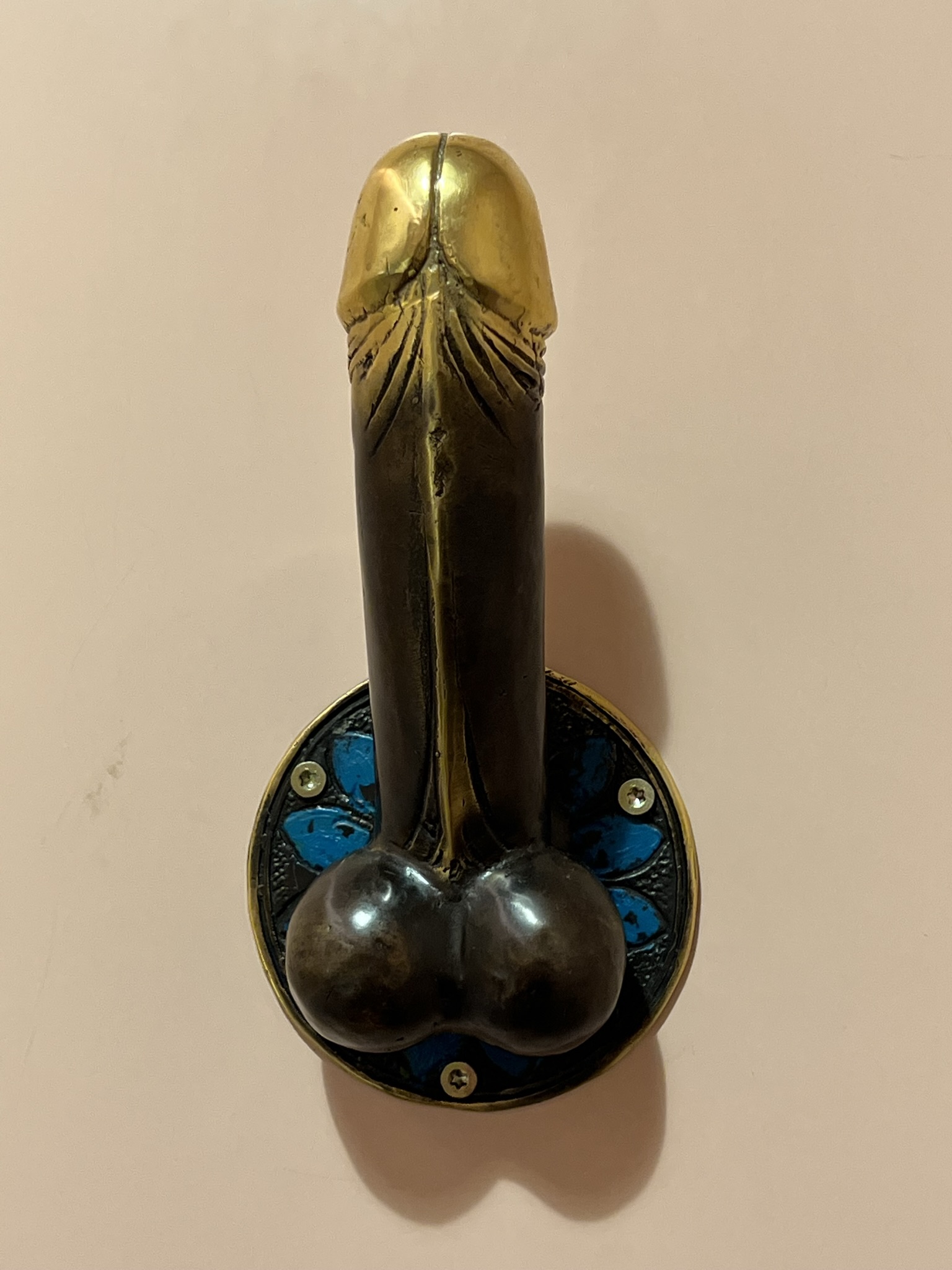
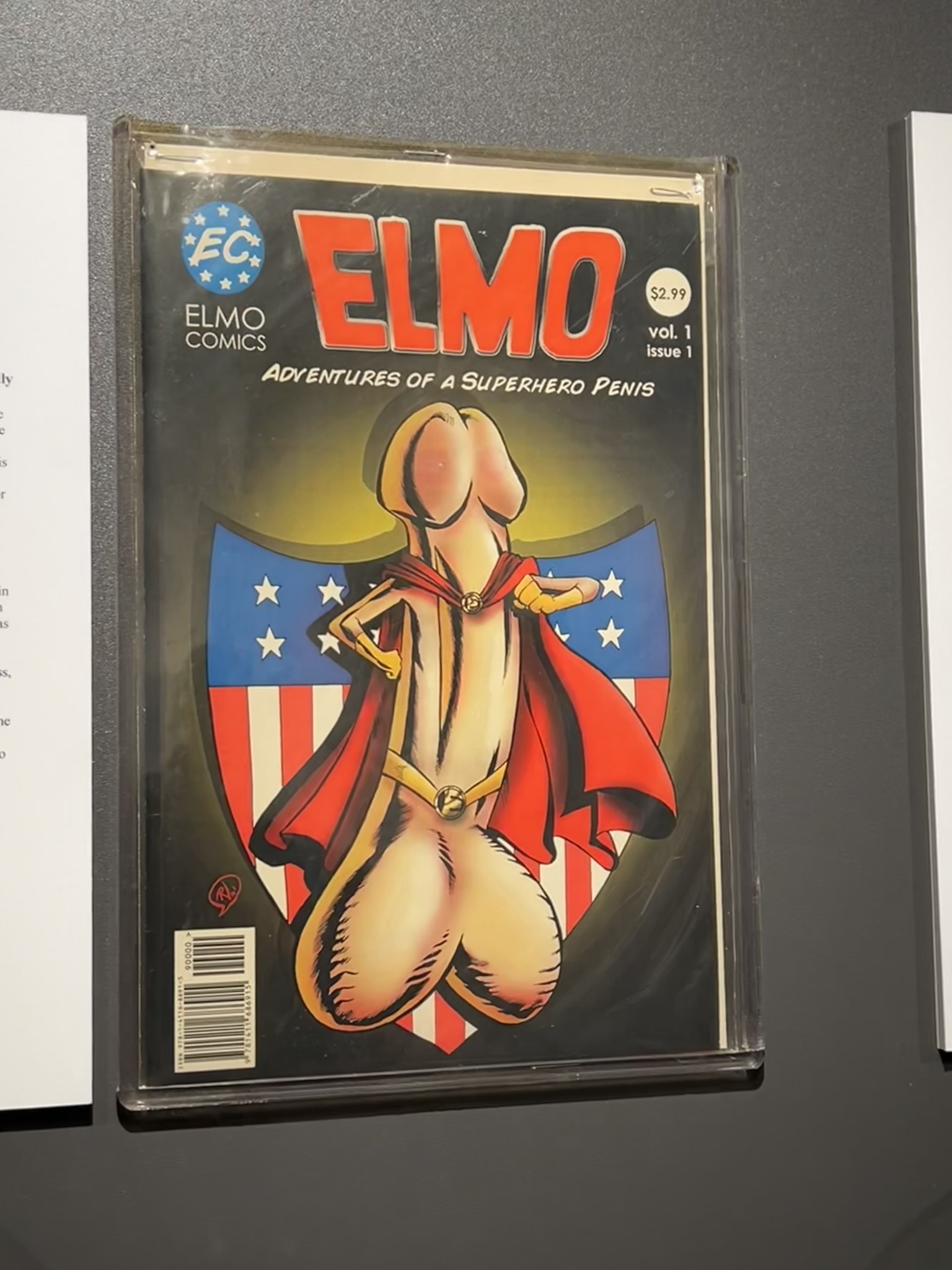
It was a hoot albeit a little overwhelming by the end. This museum houses the world’s largest collection of penises and penile parts. The collection has over 300 penises from more than 100 species of mammals. It was established by an Icelandic college teacher in 1997, Sigurour Hjartarson and is now run by his son. When Sigurour was a child he was given a bull’s pizzle ((penis of a bull) which is used a a cattle whip – this item started his collection. He stated that “collecting penises is like collecting anything. You can never stop, you can never catch up, you can always get a new one, a better one.” Smirk – a new one – a better one??? What do the guys think?

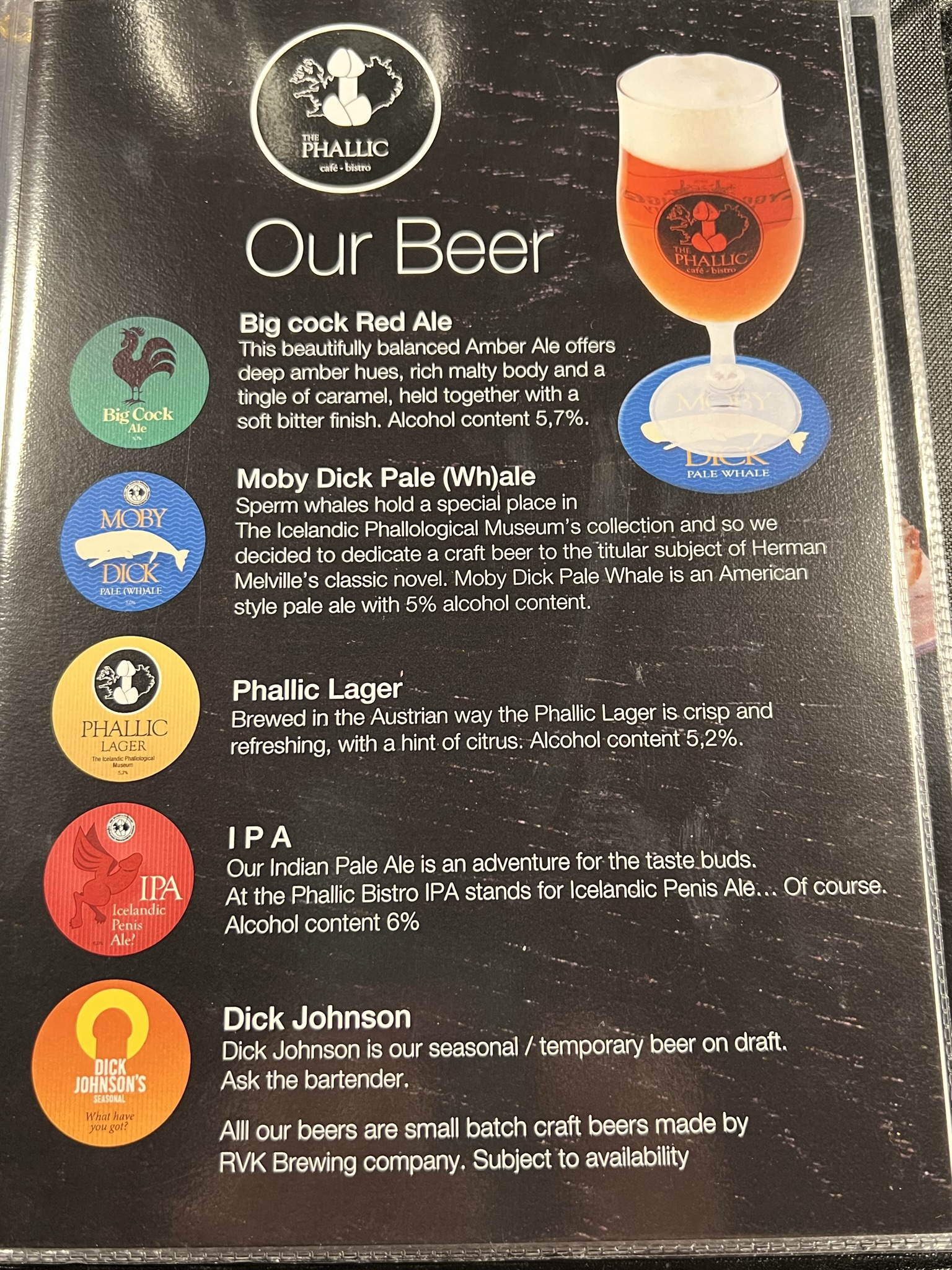
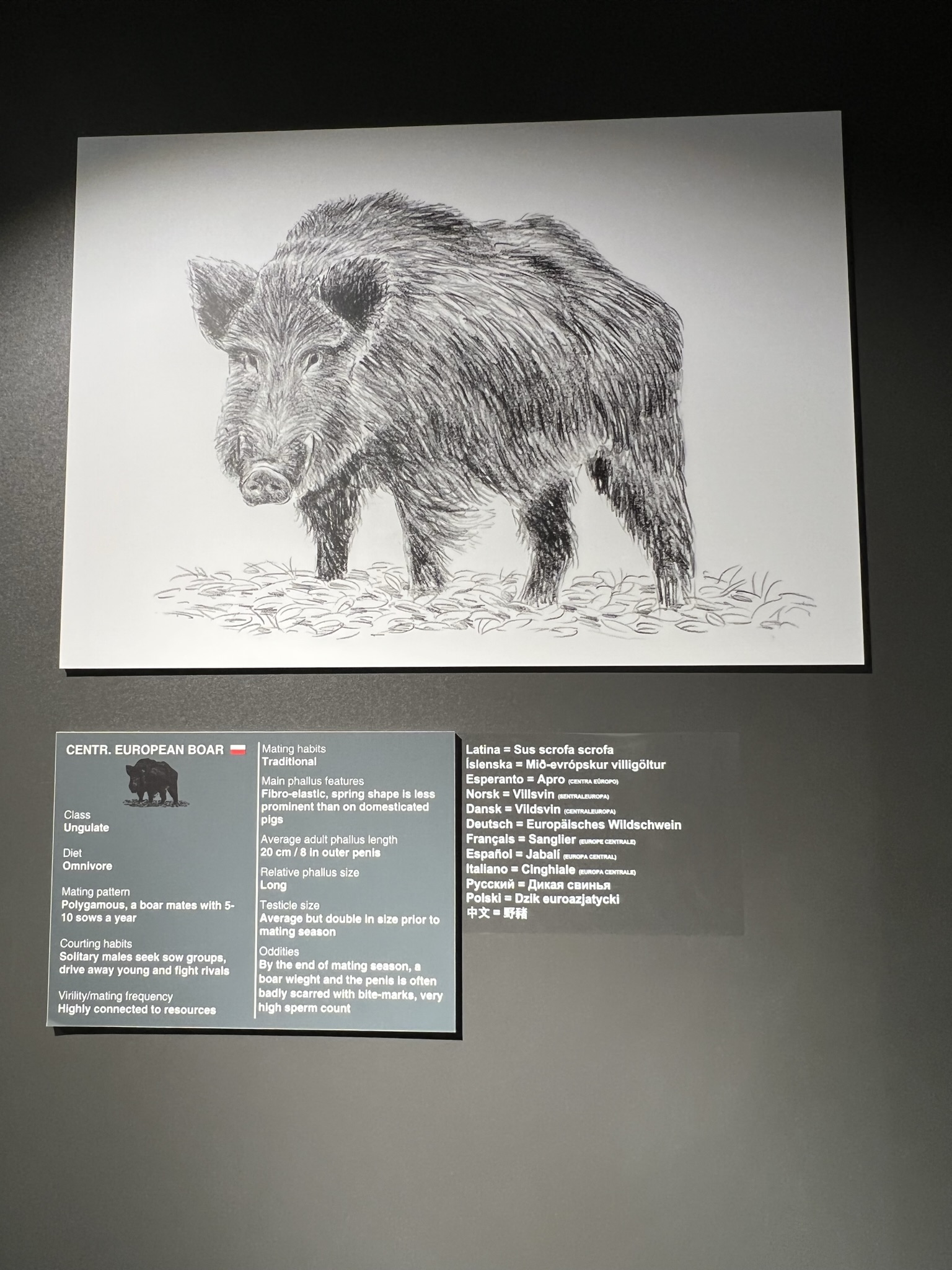
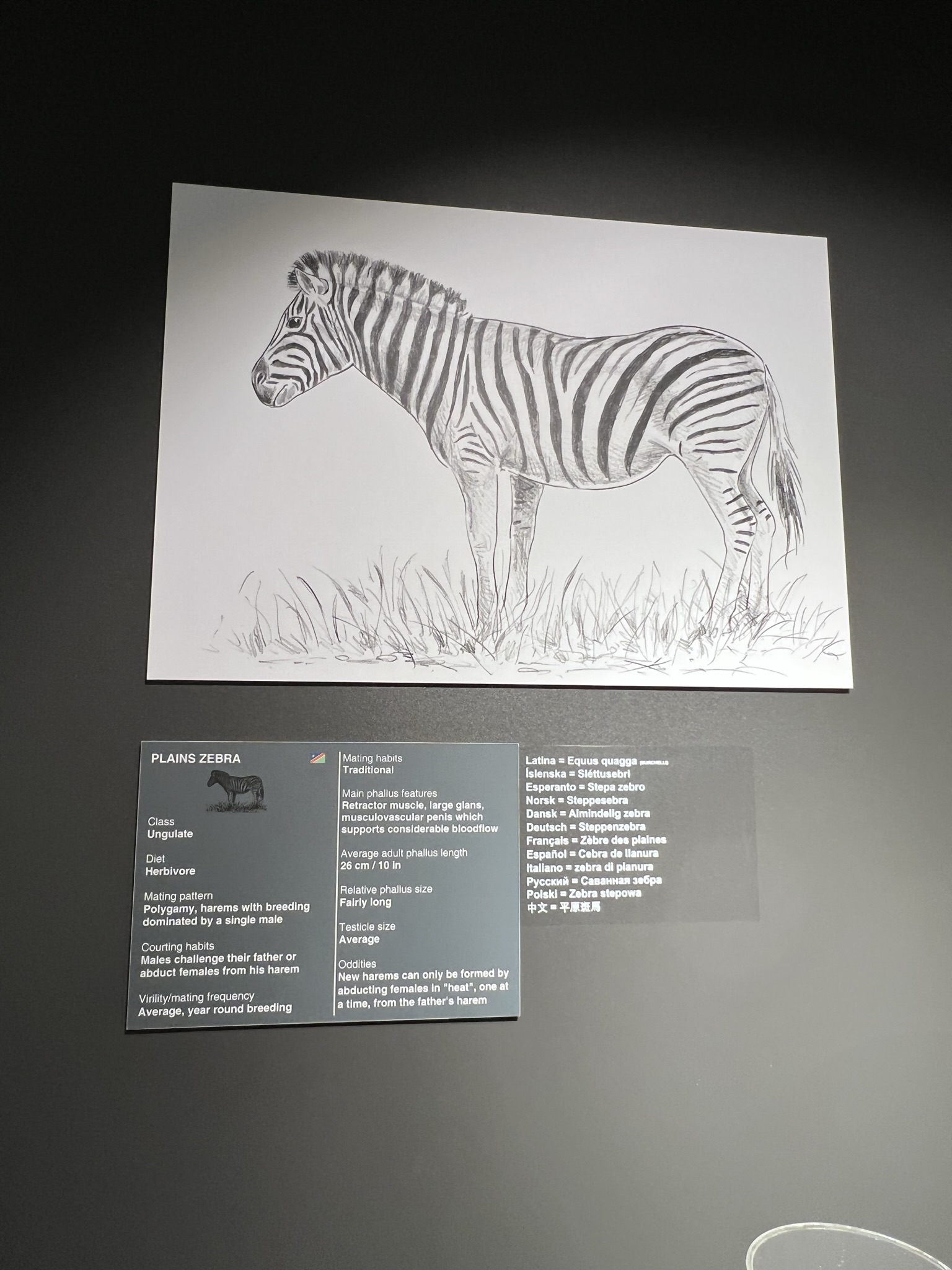
The museum moved to their current downtown location in 2020. Their mission statement states they aim to enable “individuals to undertake serious study into the field of phallology in an organized, scientific fashion.” We had to have a sense of humor as we saw the artwork and the cafe’s offerings. We mostly heard English spoken and lots of American children. Better to be exposed to these as a natural human part that can be viewed and studied than to be told we don’t talk about those things! Of course I had to take a photo of the boar (think razorback) and a zebra. Great mascots!

We learned important facts (LOL) which included – the largest penis of all is the blue whale. One blue whale penis allegedly was just under 12 feet long. This measurement might have only covered 1/3 of the penis which exits the body during erections. Two thirds are always hidden within a slit. Despite having a large penis, they do not have the largest testicles as theirs weigh in at about 150 pounds per testicle. Right whales, a baleen whale which are now extinct in Icelandic water have the largest testicles with an average weight of 2200 pounds per testicle. I guess they were two ton testes whales.

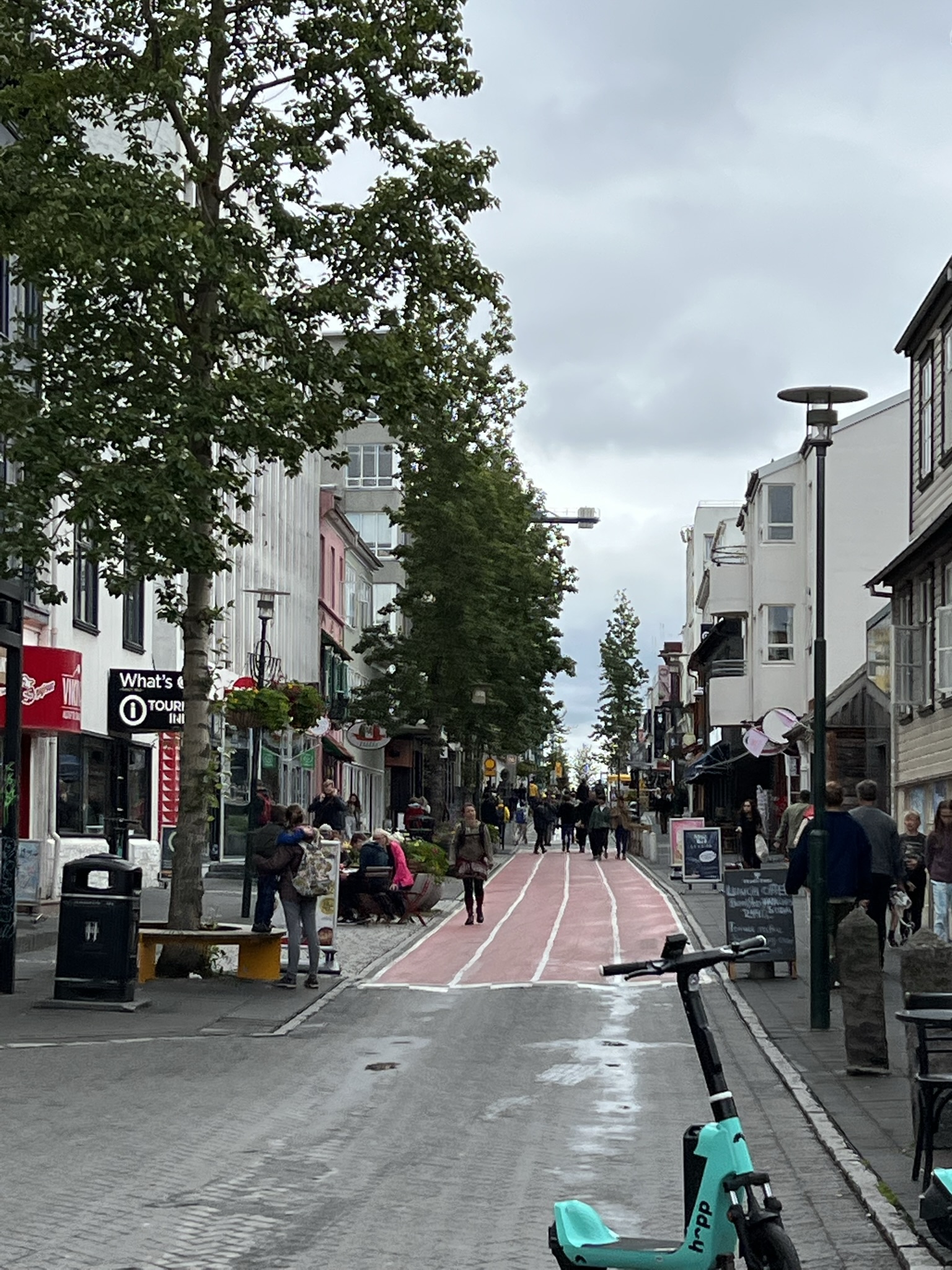
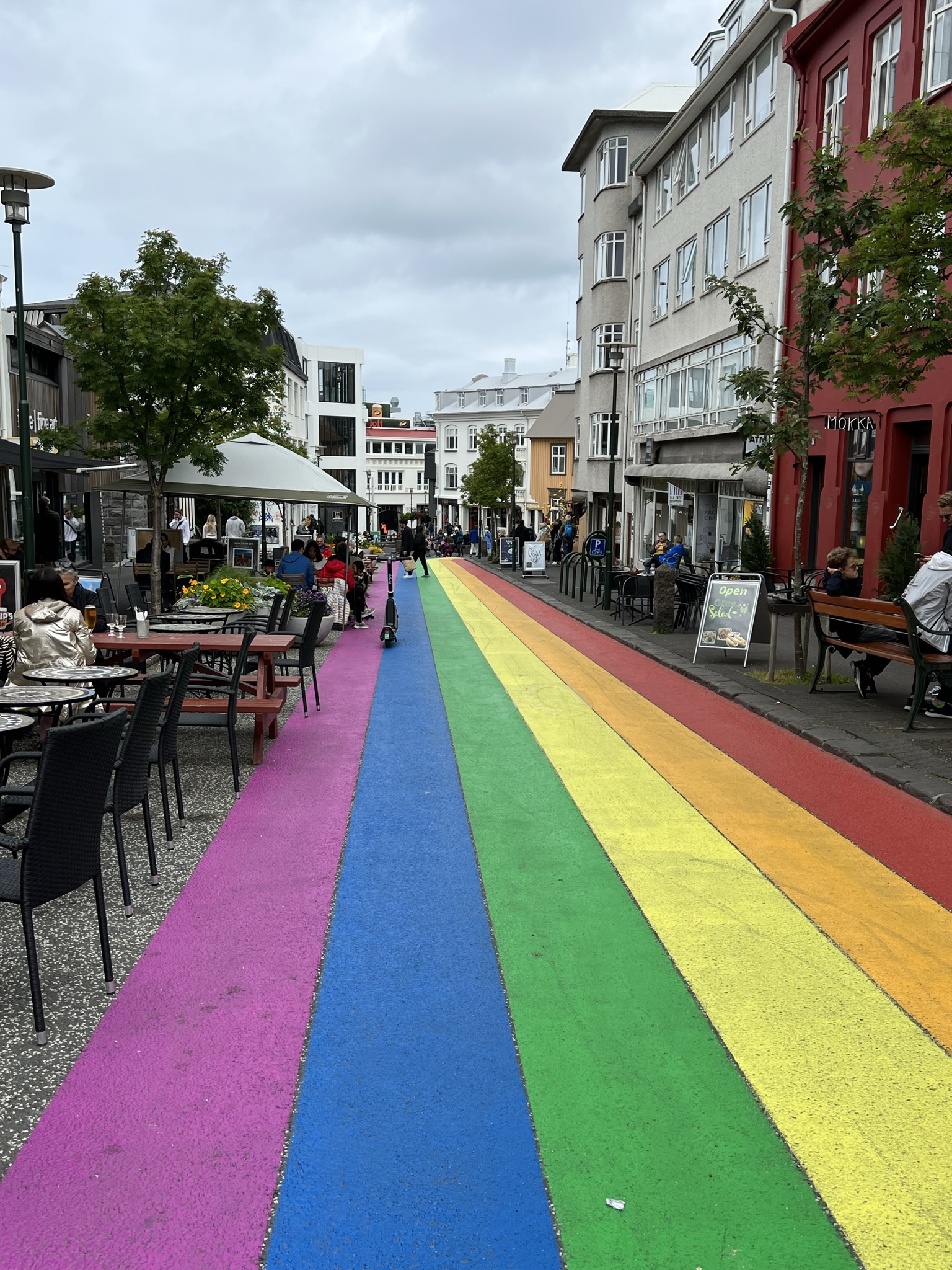
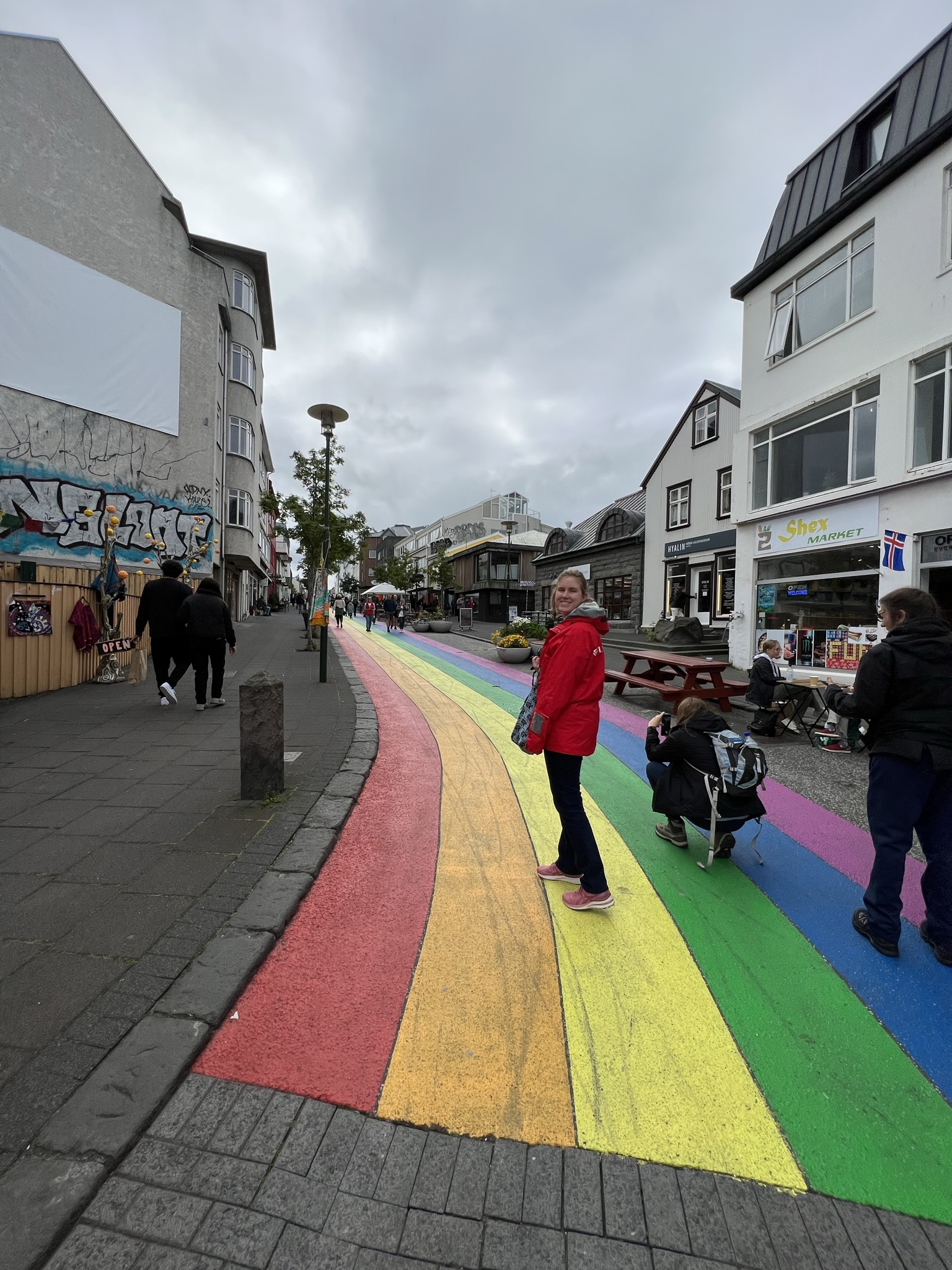
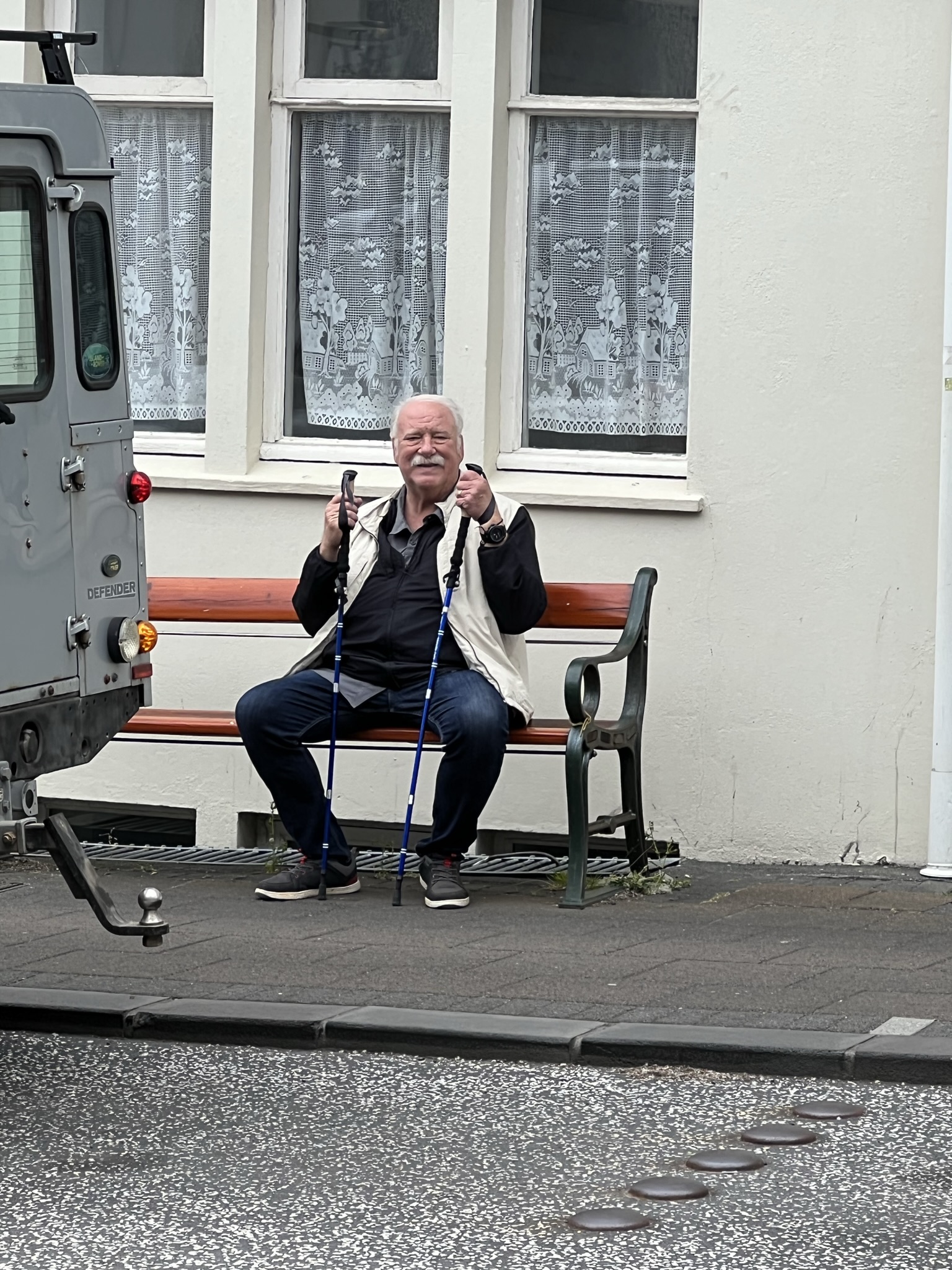
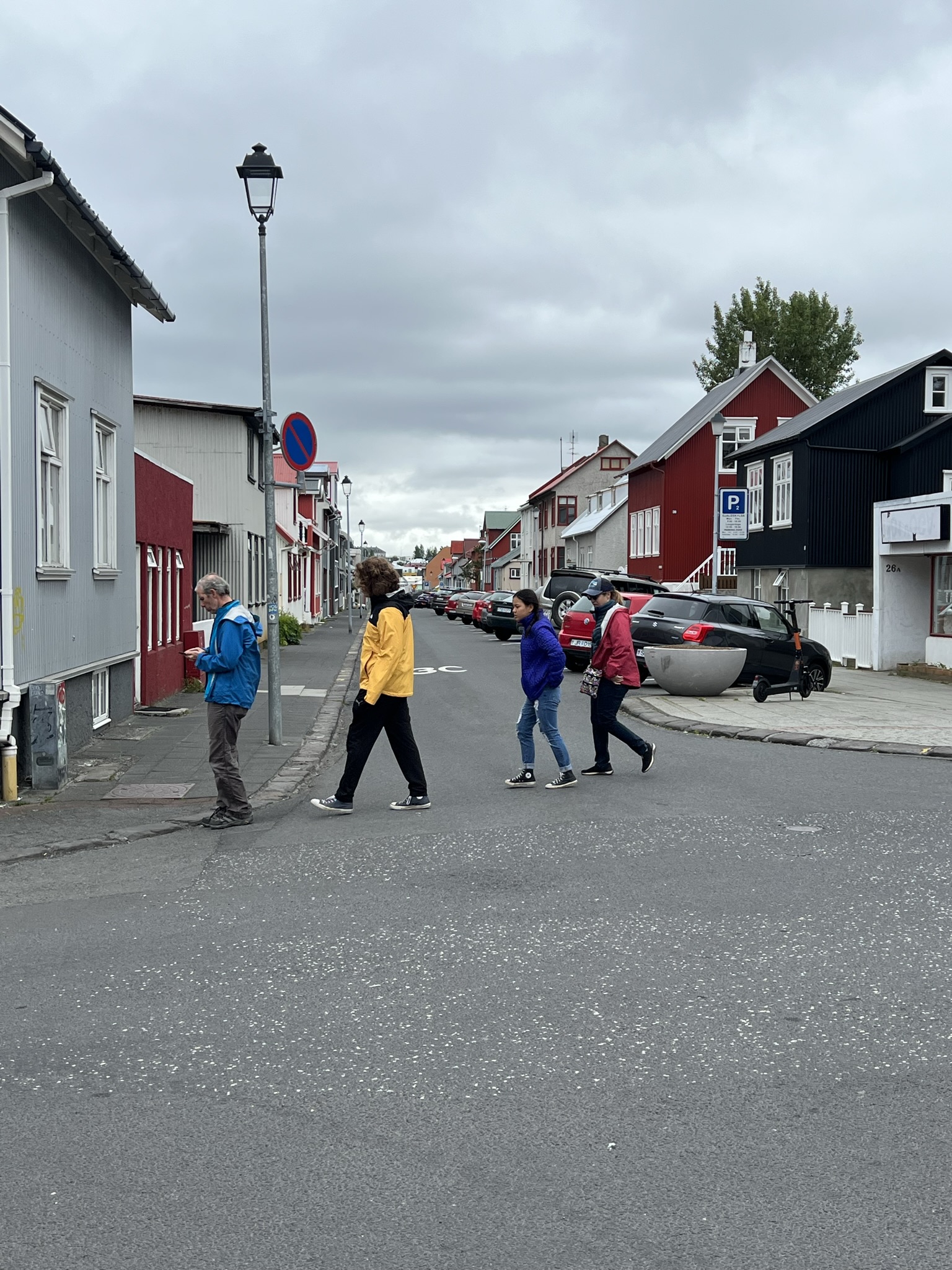
Michael’s back was getting better using his poles and walking around so we were bound for the church walking uphill to meet our guide. Along the walk up, various colorful streets greeted us, Michael found a few benches along the way, and Larkin and I found a knitting shop. Iceland is known for their wool but after being in Peru with the softest Alpacas we didn’t find any yarn or sweaters soft enough to purchase. Both Larkin and I are allergic to scratchy wool.

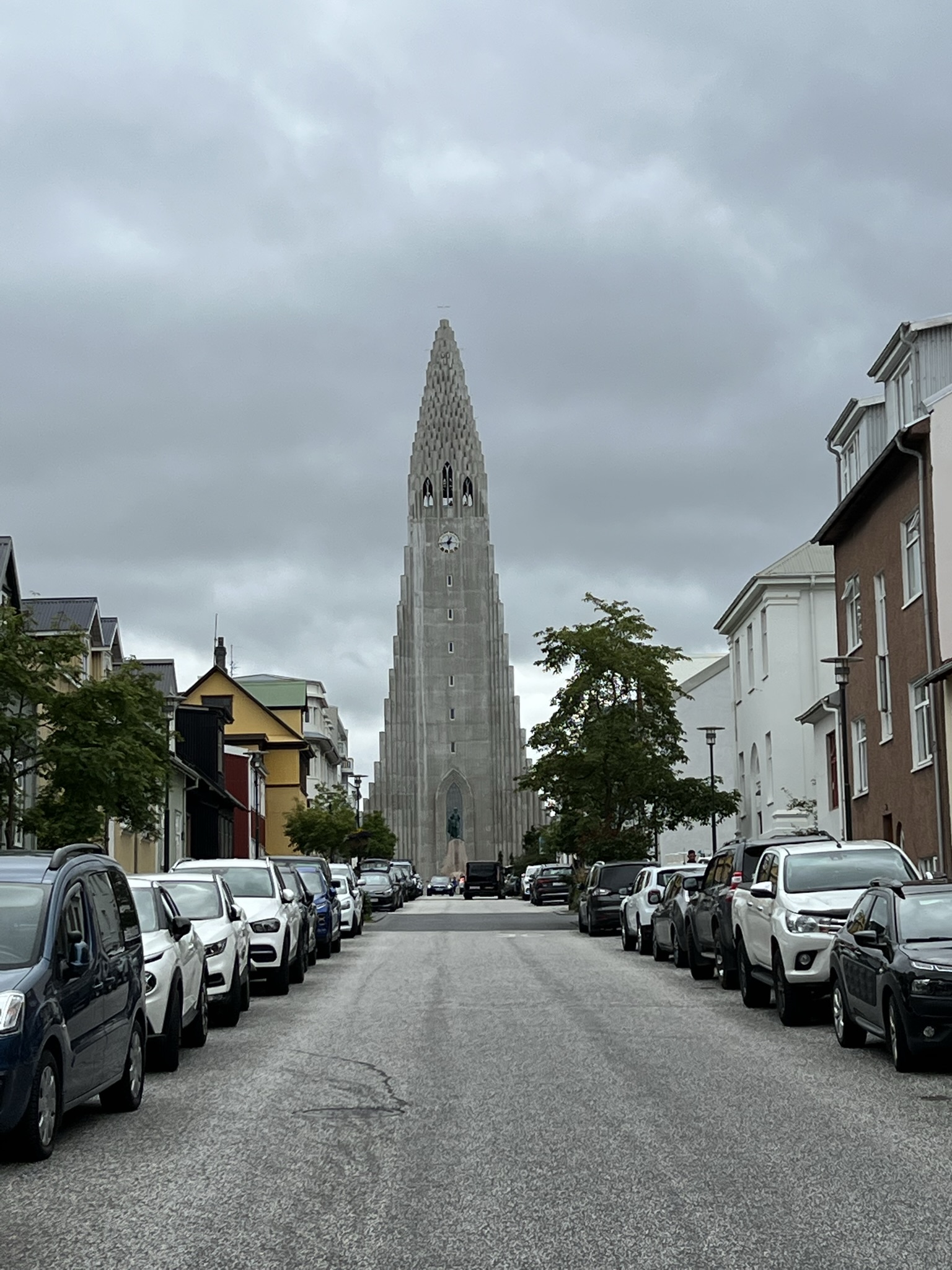
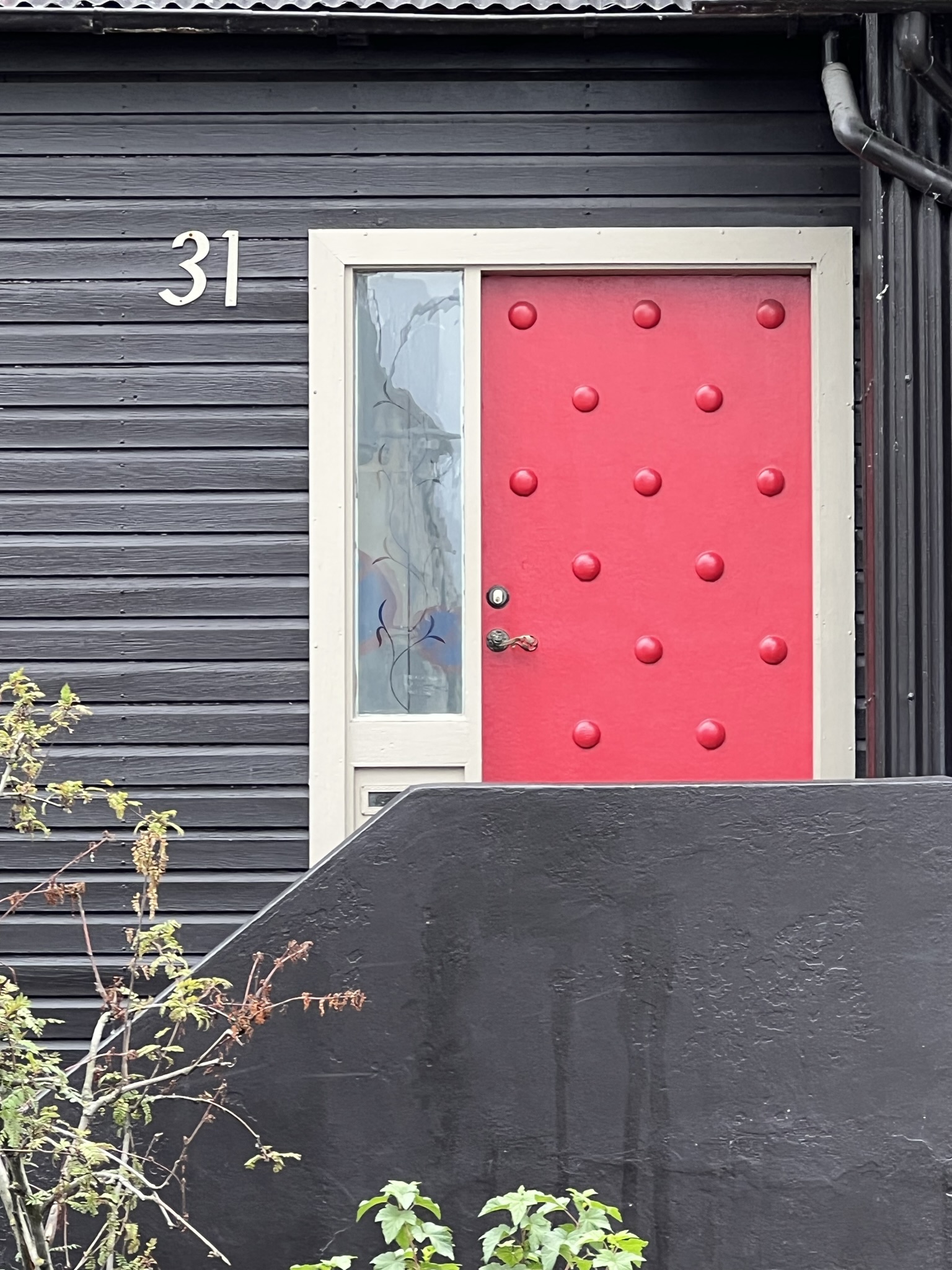
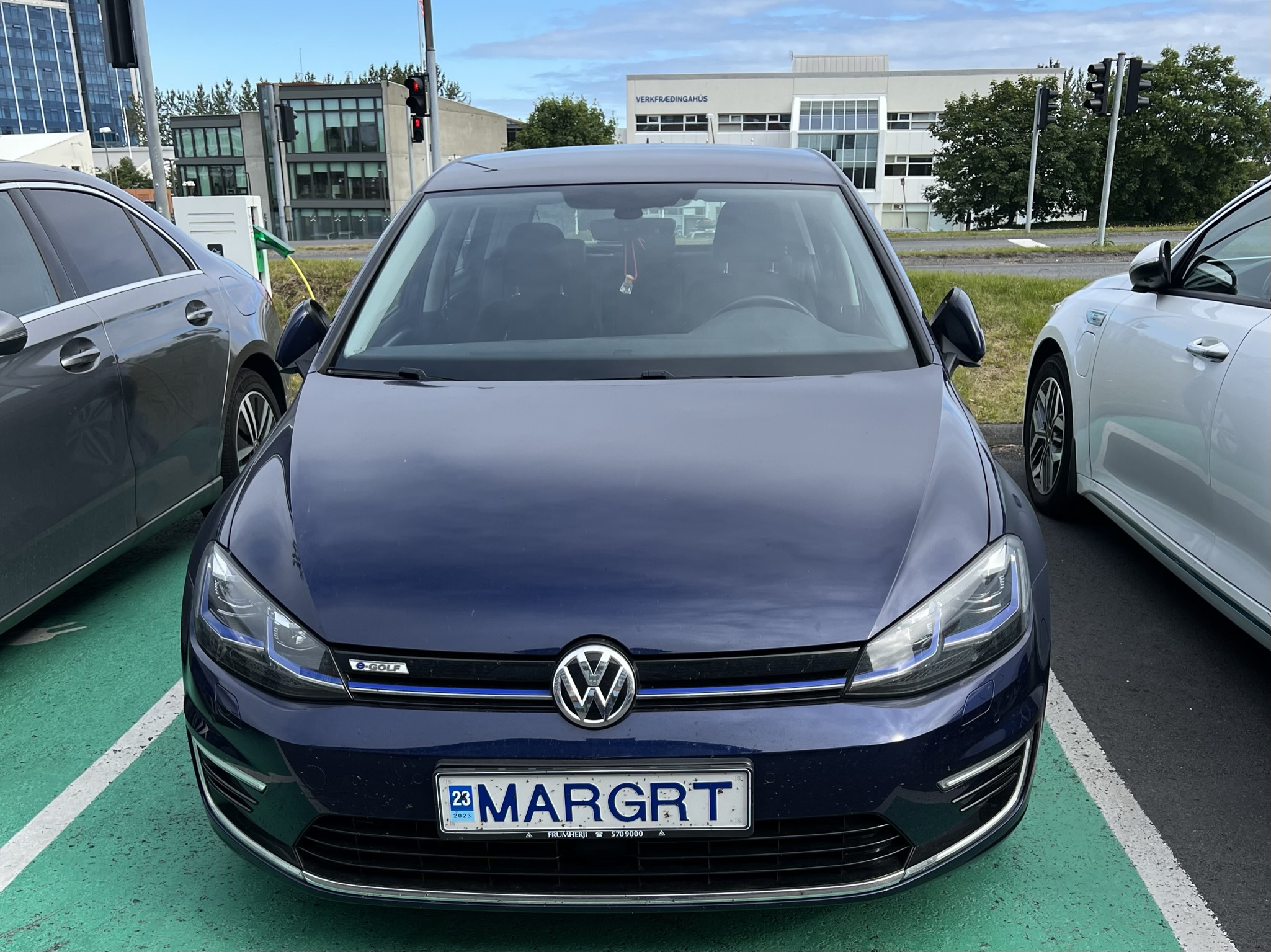
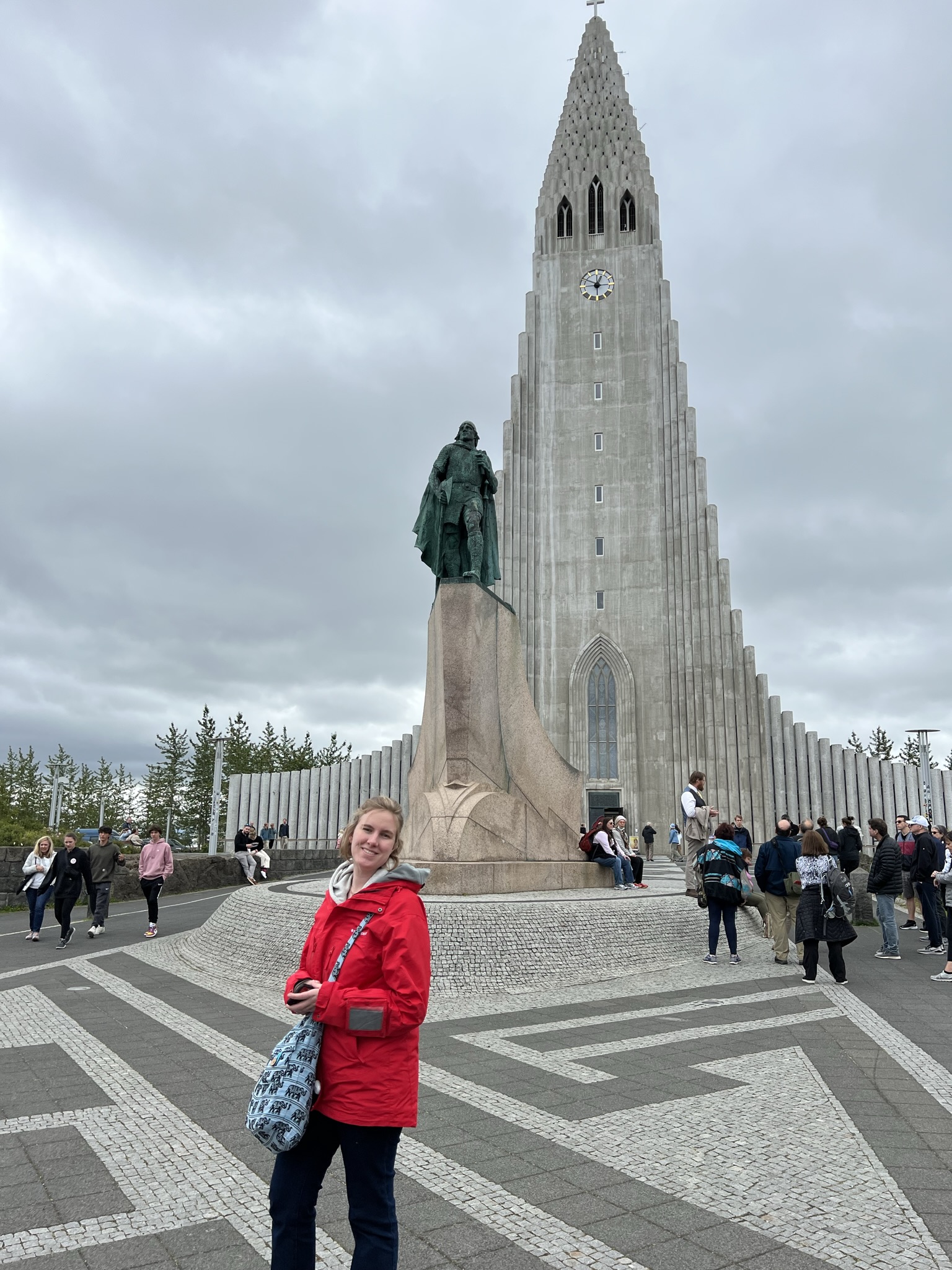
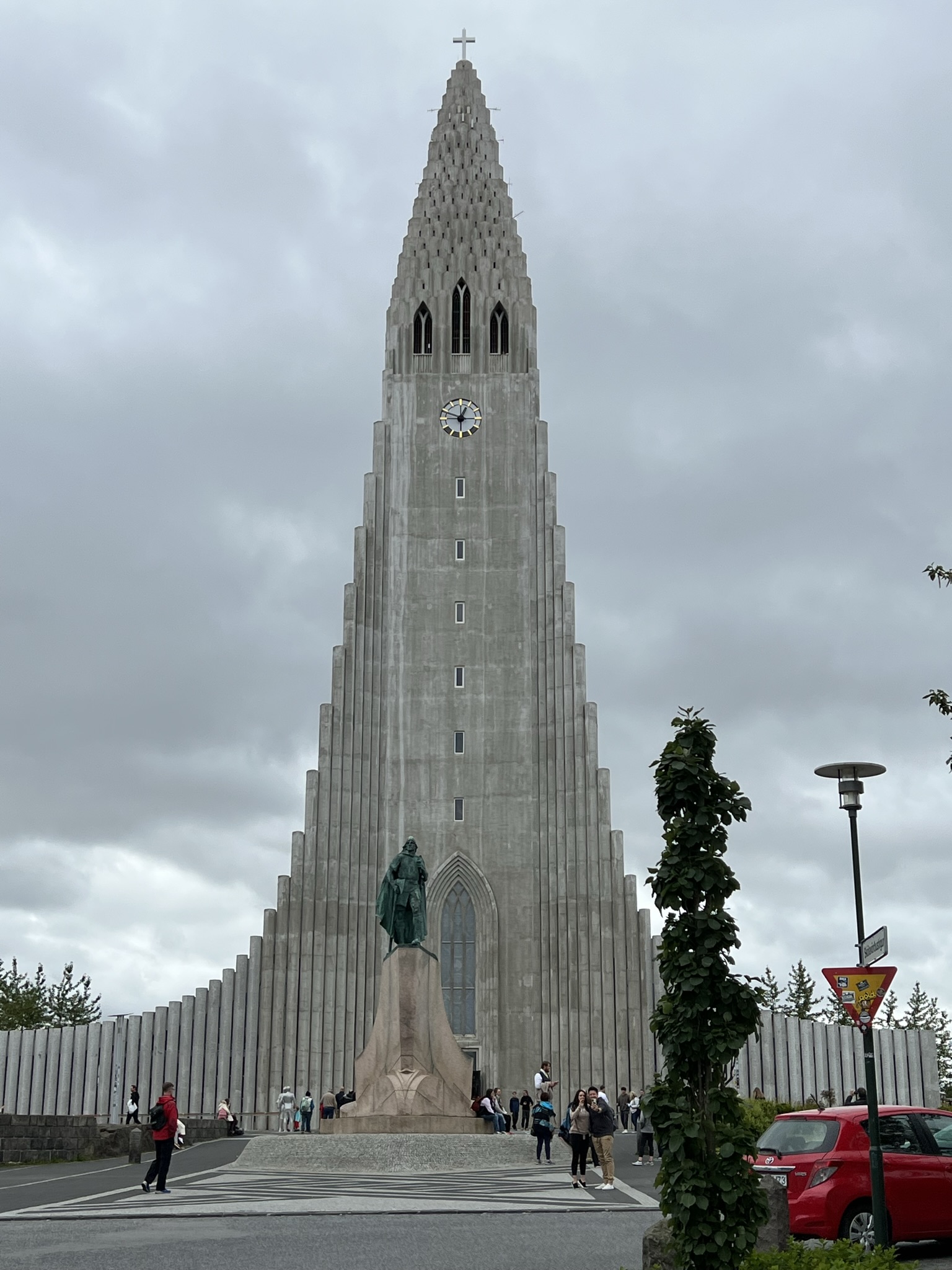
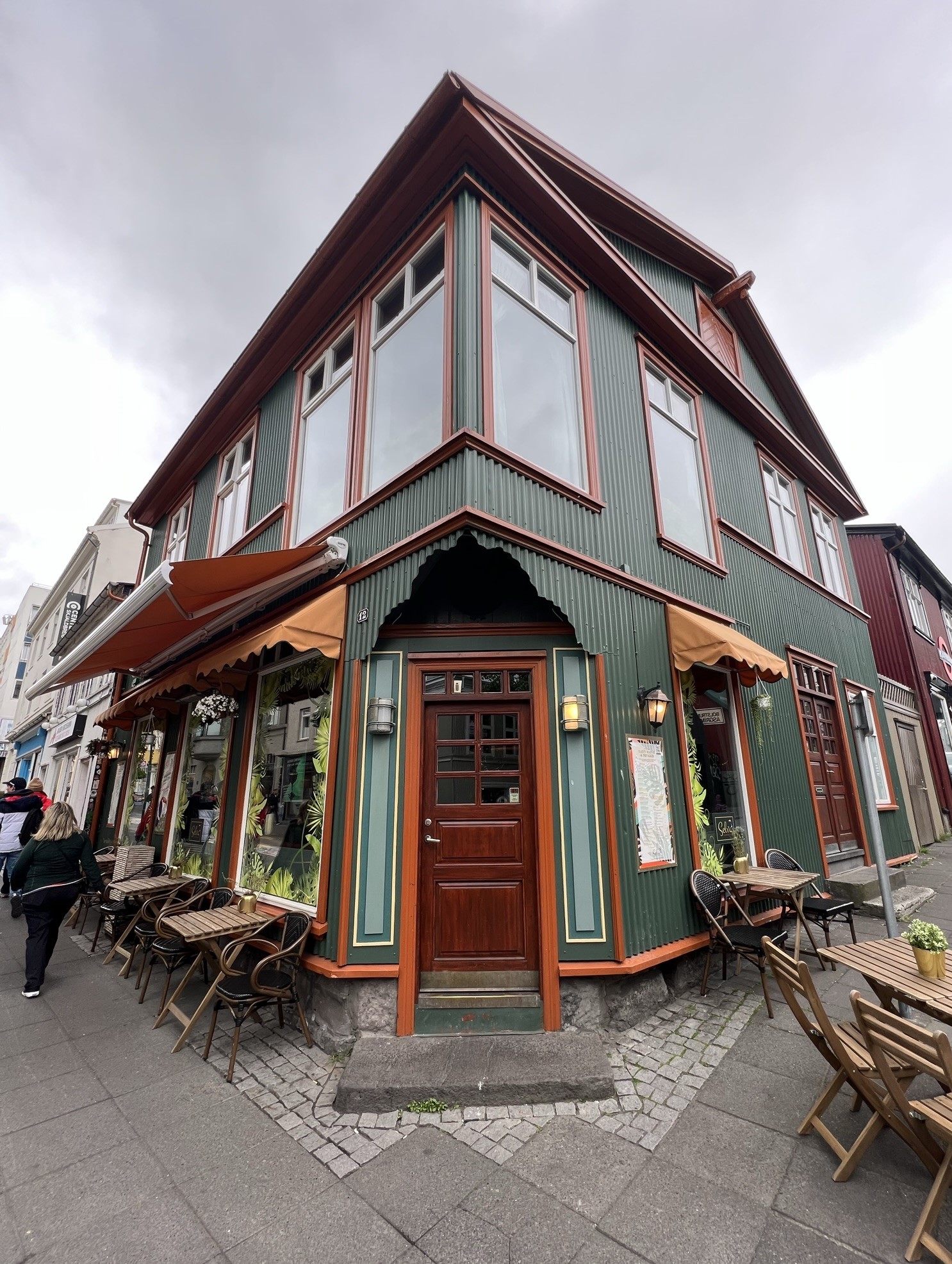
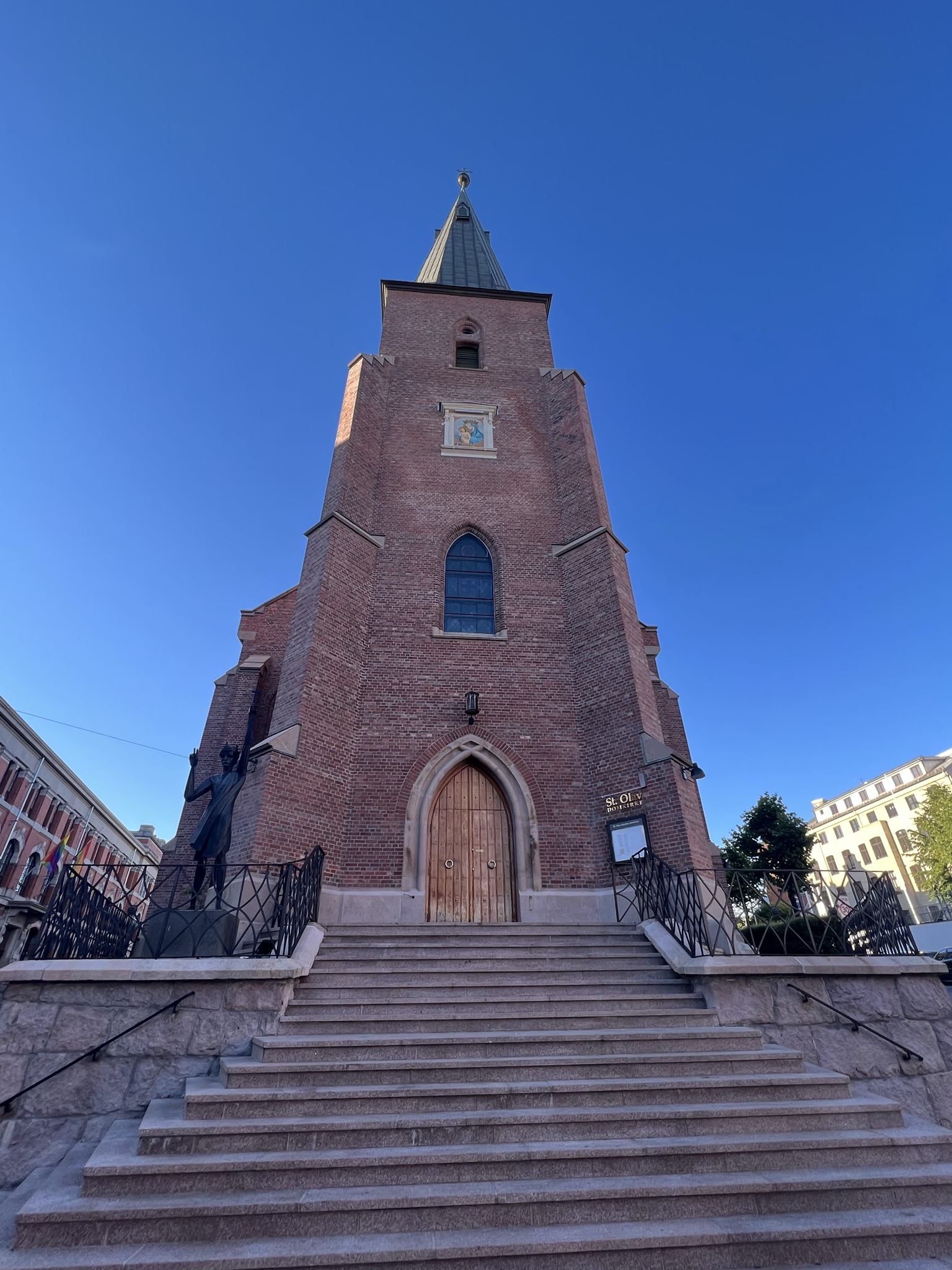
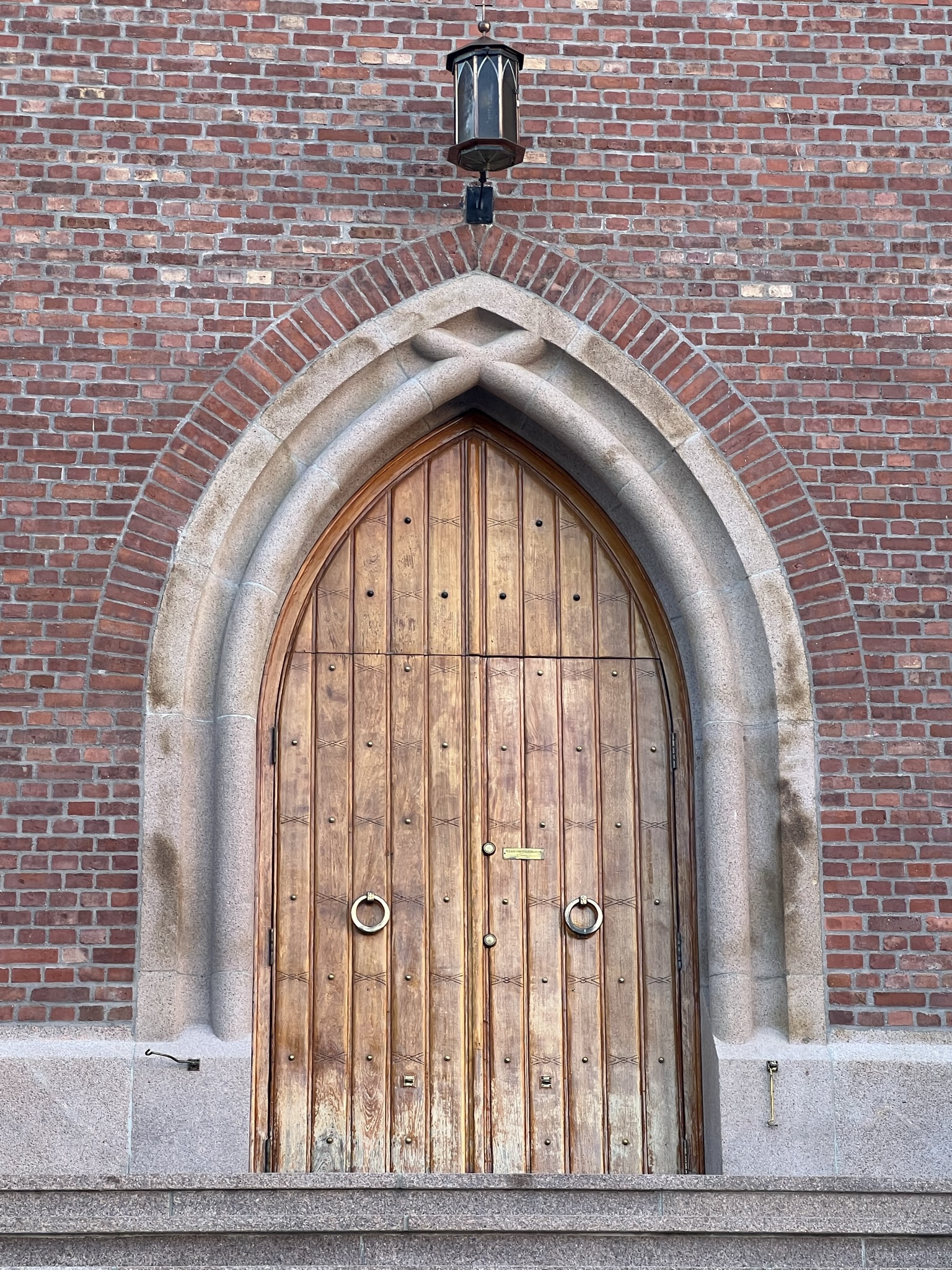
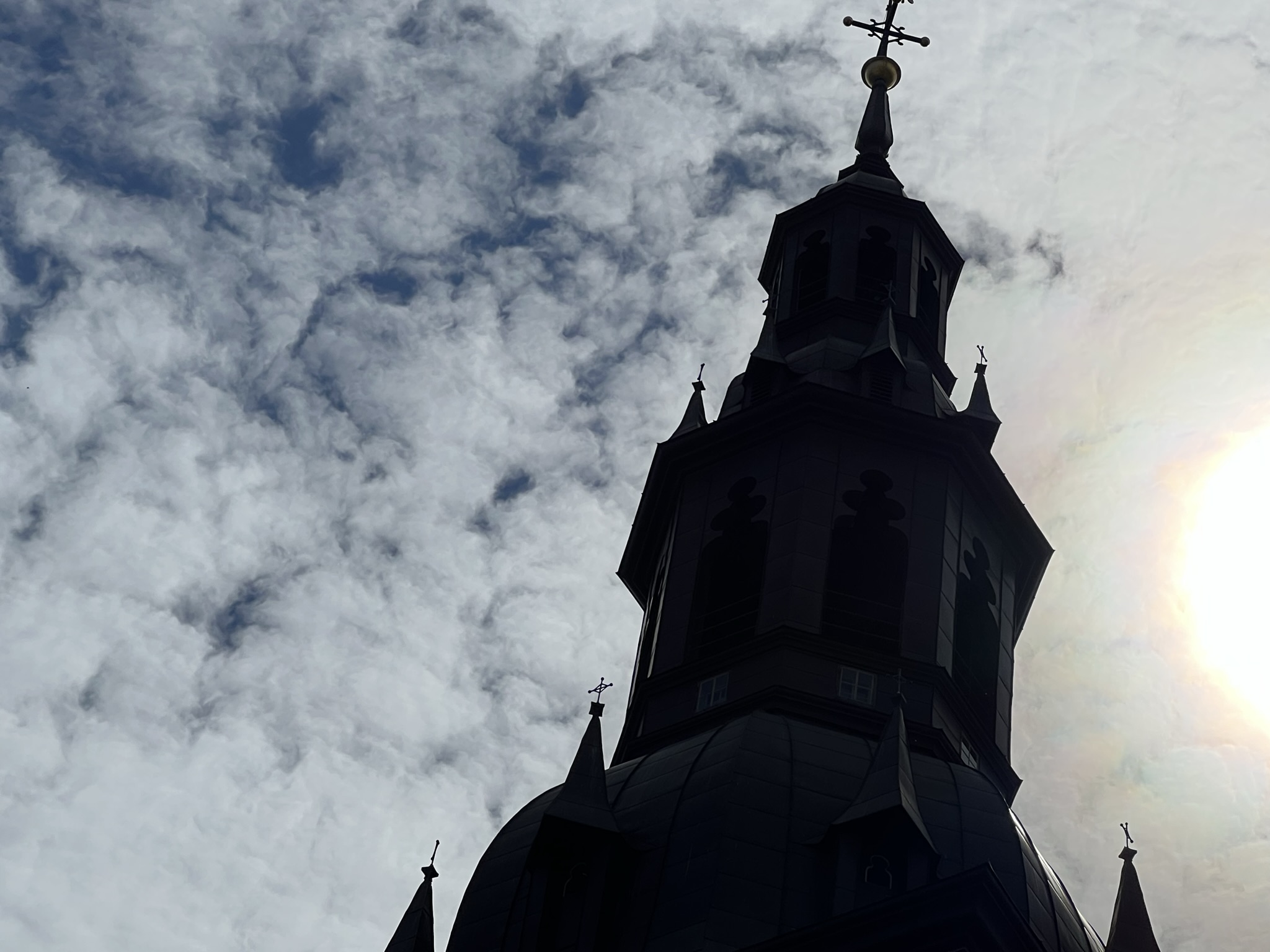
More doors, colorful homes and vanity plates on cars, yes even in Iceland. I assume the owner of this one car is Margaret. The Hallgrimskirkja church is at the top of Skolavorouholt hill. It is the largest church in Iceland and among the tallest structure in the country. It is known for is curved spire and side wings It was named after the Icelandic Poet and cleric Hallgrimur Petursson. The building was started after World War II and was completed in the 1986. The state architect, Samuelsson designed the building in 1937. He is said to have designed it to resemble the rocks, mountains and glaciers of Iceland’s landscape which of course includes the columnar basalt formations.

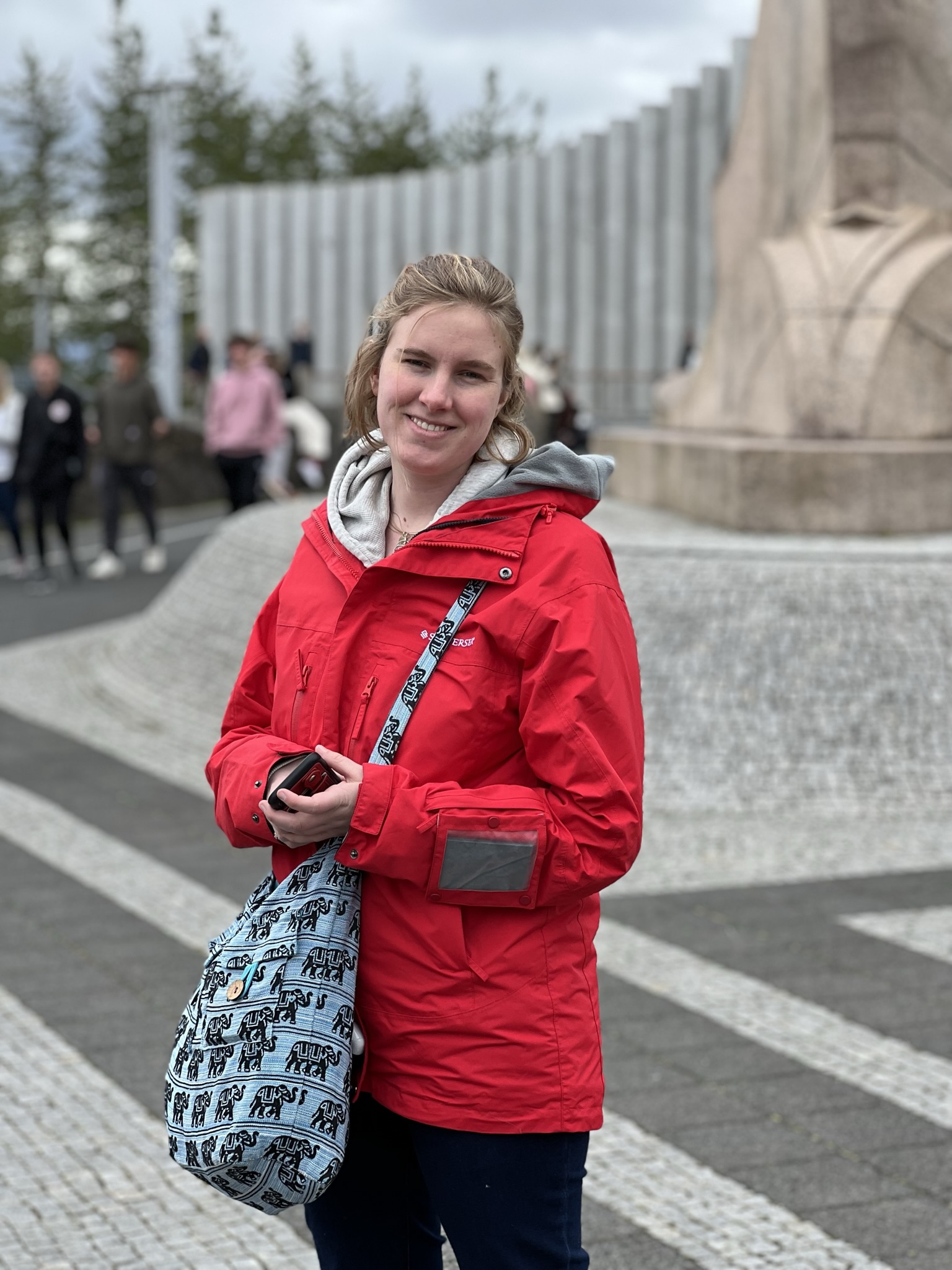
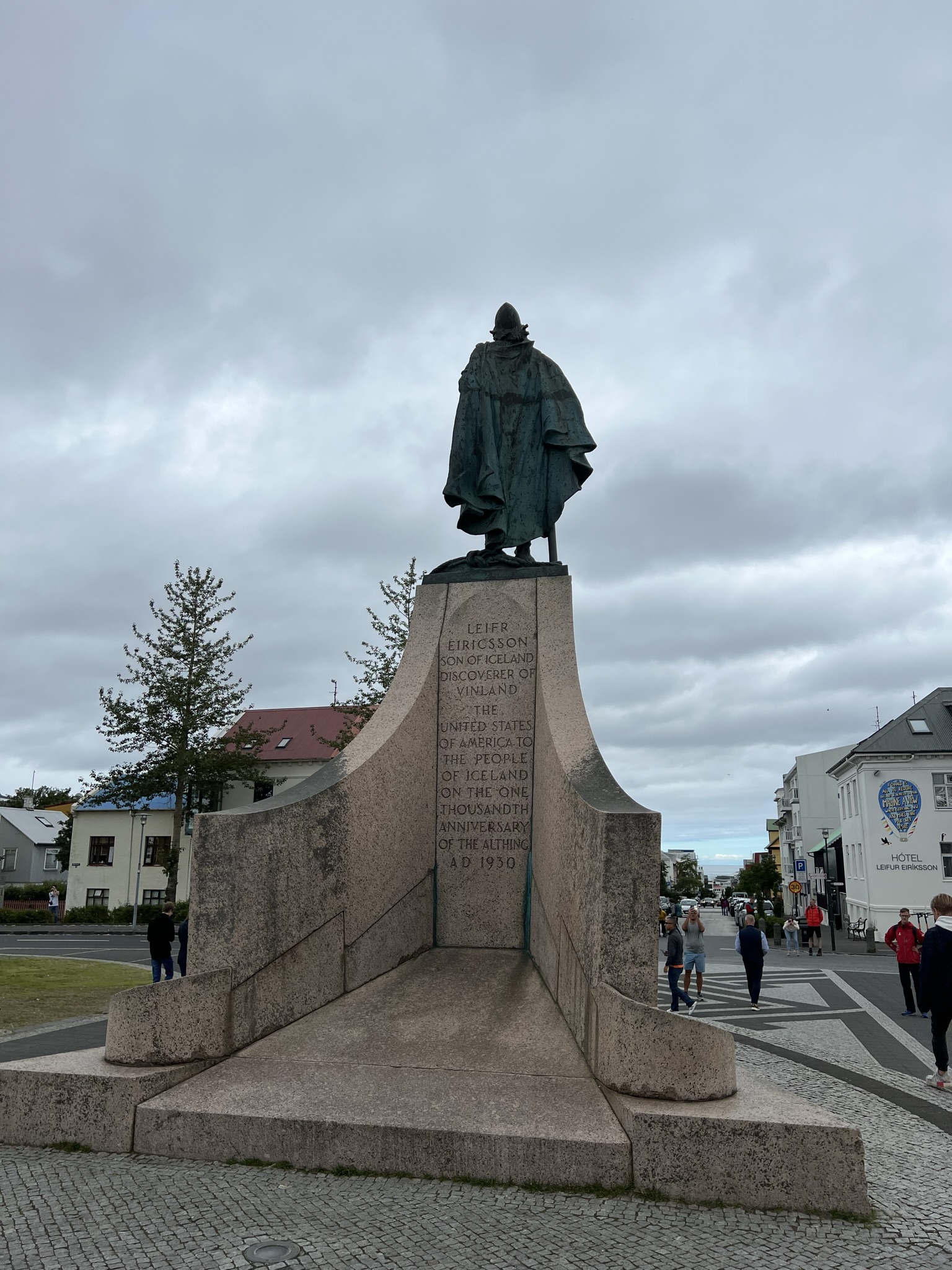
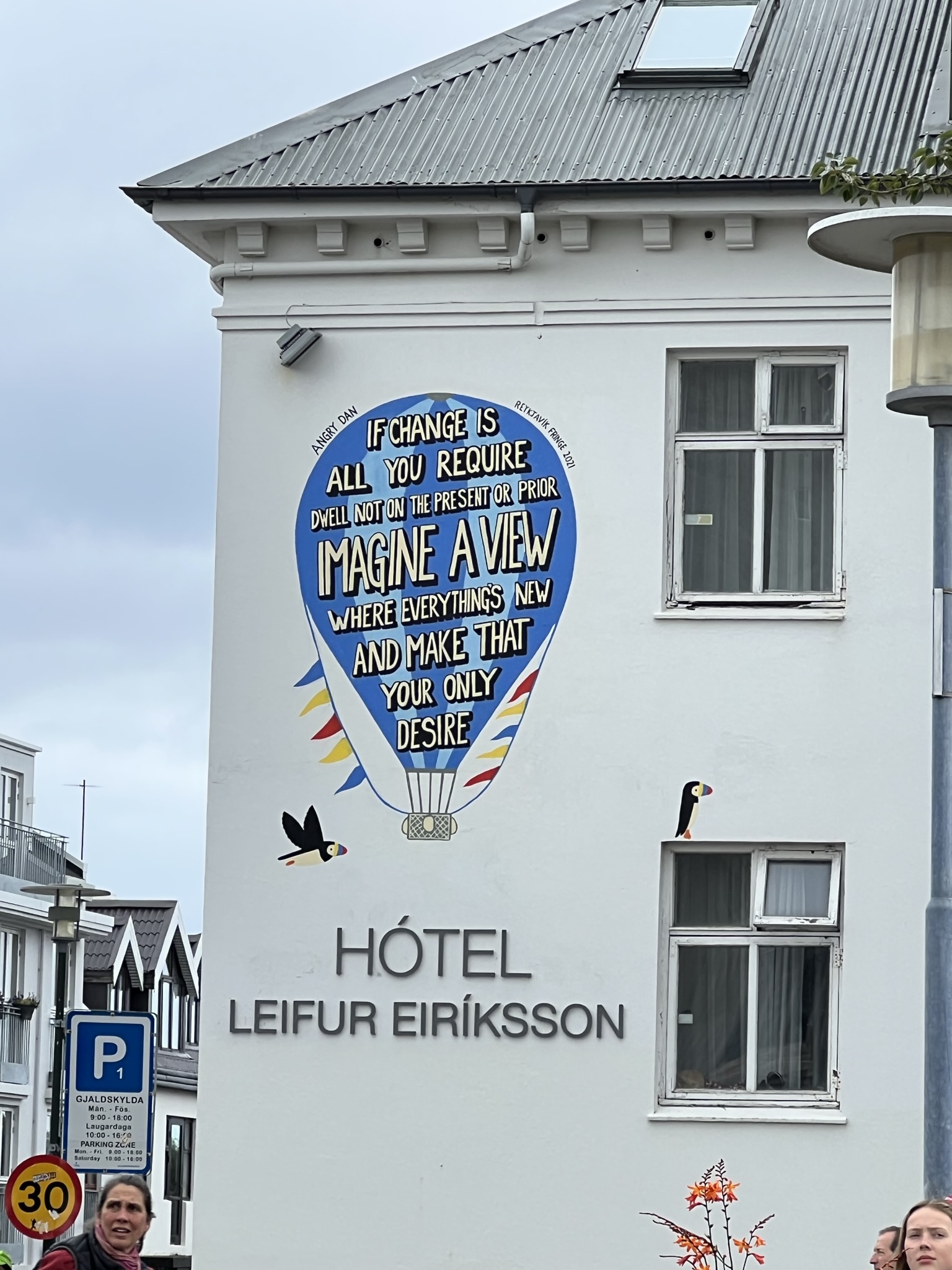
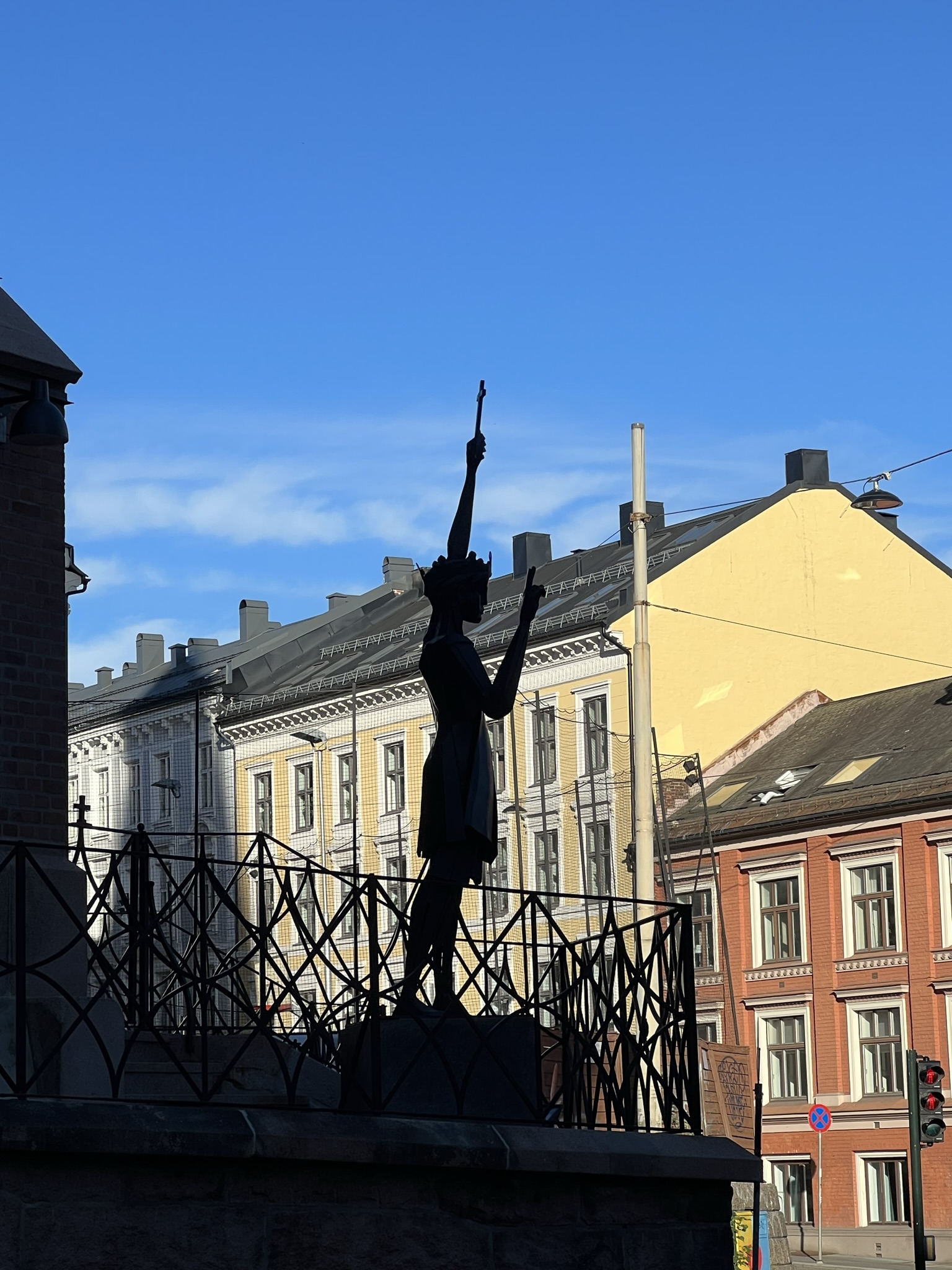
We met our city guide, Guðmundur or Gui as he said they called him by the statue of Leifur Eiríksson in front of this very famous church of Hallgrímskirkja. We were told that Guðmundur would have a sign that says “Citywalk” so we couldn’t miss him.” HA HA HA – its a very busy tourist spot, we arrived a few minutes early, grabbed a bench and watched for the sign and see if anyone looked to be searching for a random group of three adults. He had no sign but we figured out who he was. Icelanders are a very tall population!

The statue of Leif erikson was a gift from the United States in honor of the 1930 Althing Millennial Festival commemorating the 1000 th anniversary of convening Iceland’s parliament at Pingvellir in 930 AD. Iceland has a long written history but until the US came along during World War II they were considered just a poor European country. The Marshall plan gave many countries money to build and rebuild after the war and Iceland was blessed to be able to build an infrastructure and create a solid financial base. Iceland only has 375,000 and 65% of those inhabitants live in and around Reykjavik currently.

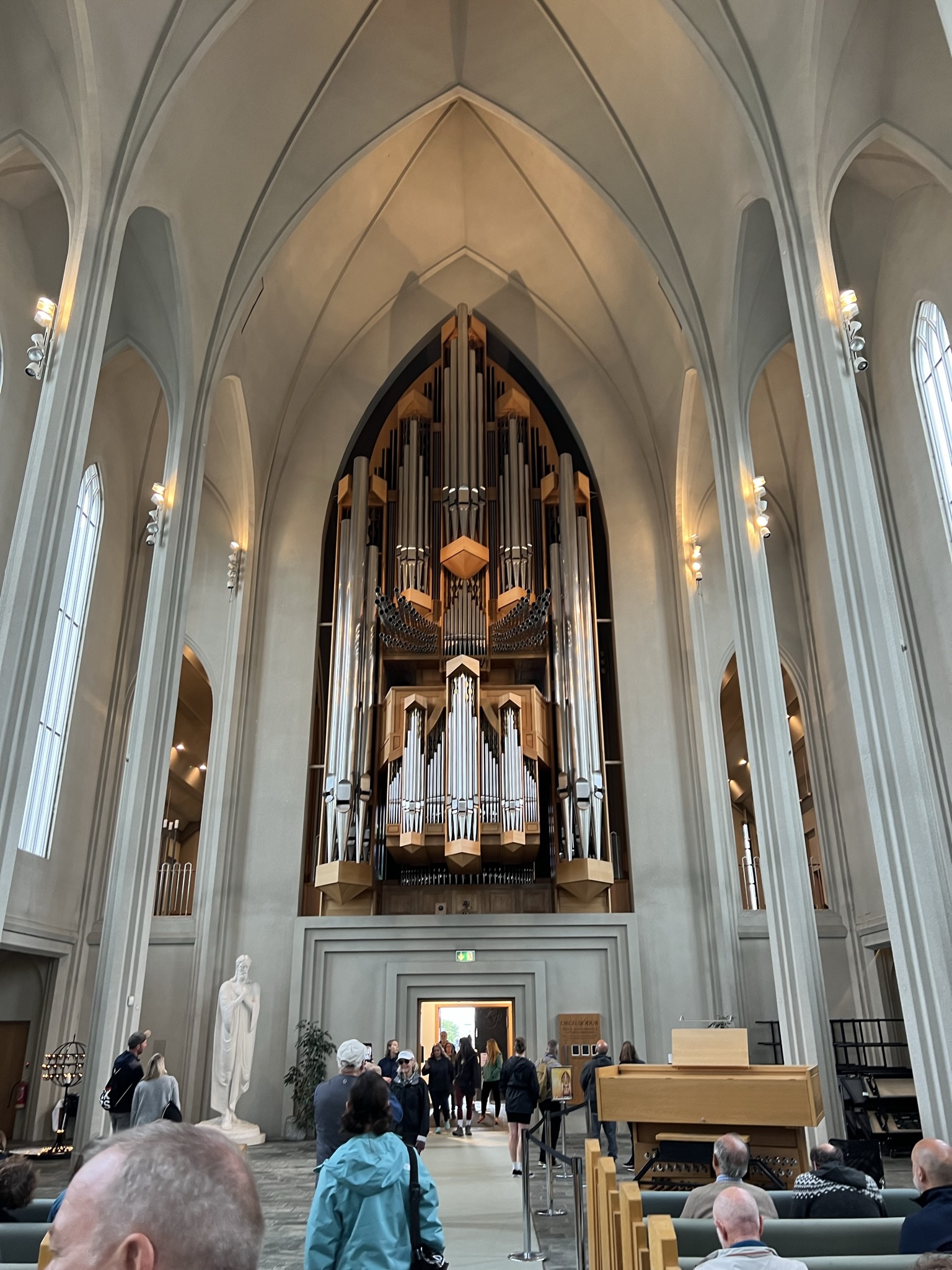
The Hallgrim church has a huge pipe organ which was finished in 1991. It has 102 ranks, 72 stops and 5275 pipes. We didn’t get to hear it but Gui mentioned he’s been in with visitors a few times when it was being played. – magnificent. Visitors can pay to go up a lift to see the observation tower and view Reykjavik and the surrounding mountains.

Gui was showing us around Reykjavik on a walking foodie tour. Our first stop was a restaurant right on the church square area called Cafe Loki. Cafe Loki specializes in Icelandic food. Between the three of us we had the fermented shark (imagine eating ammonia) with a Brennivin shot – something to wash the taste down, their Icelandic lamb soup which was delicious and Larkin had ordered the gratinated mashed fish which also has cheese in it. She remembered a dish like this in Scotland and wanted to try it. I had never had fish with cheese and it was delicious. Next up was the colorful building which houses the Braud & Co. bakery which is famous for their cinnamon rolls. My goodness for a woman who doesn’t want to eat sweets, those were delicious and I kept going back for more bites.

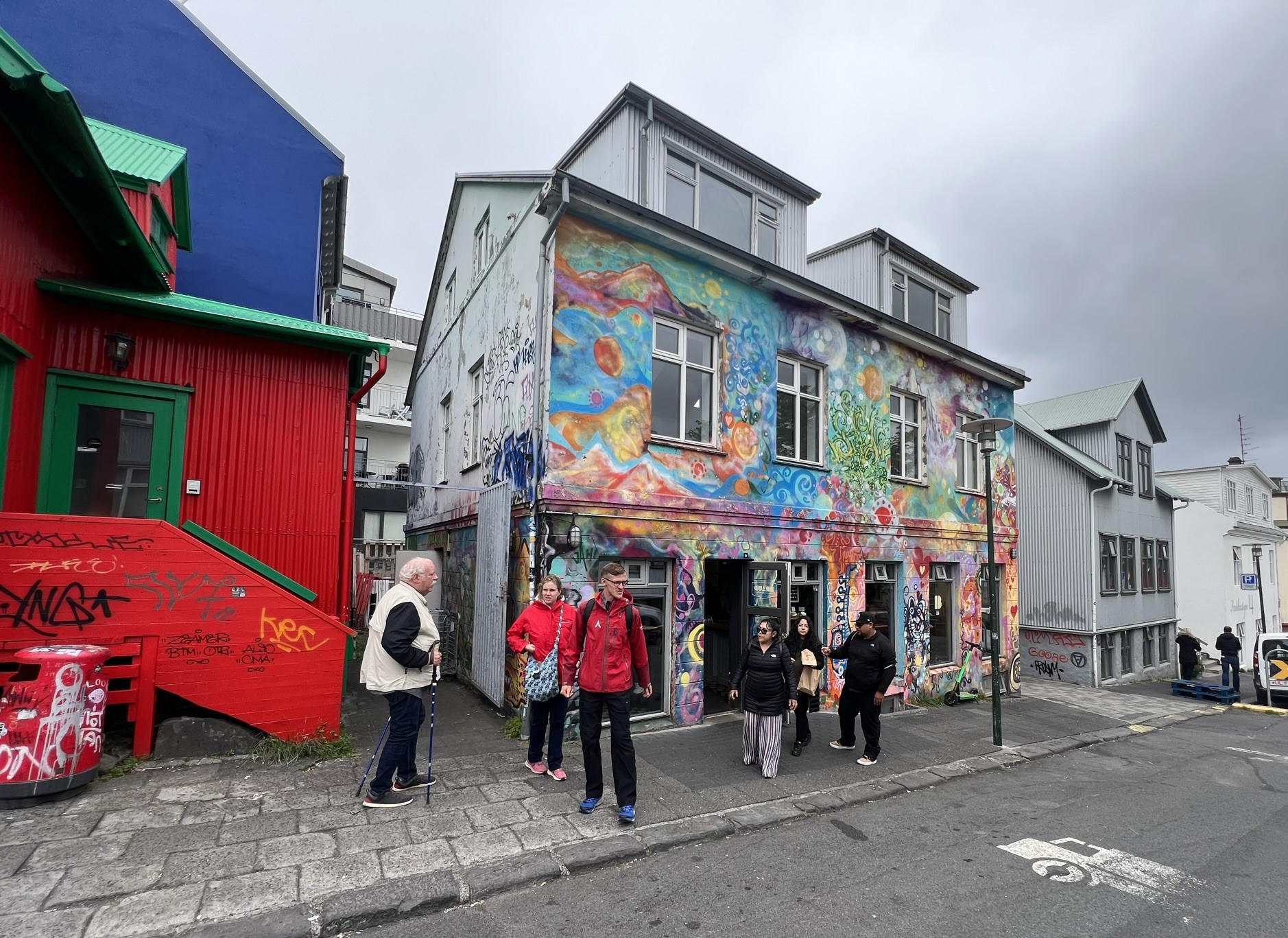
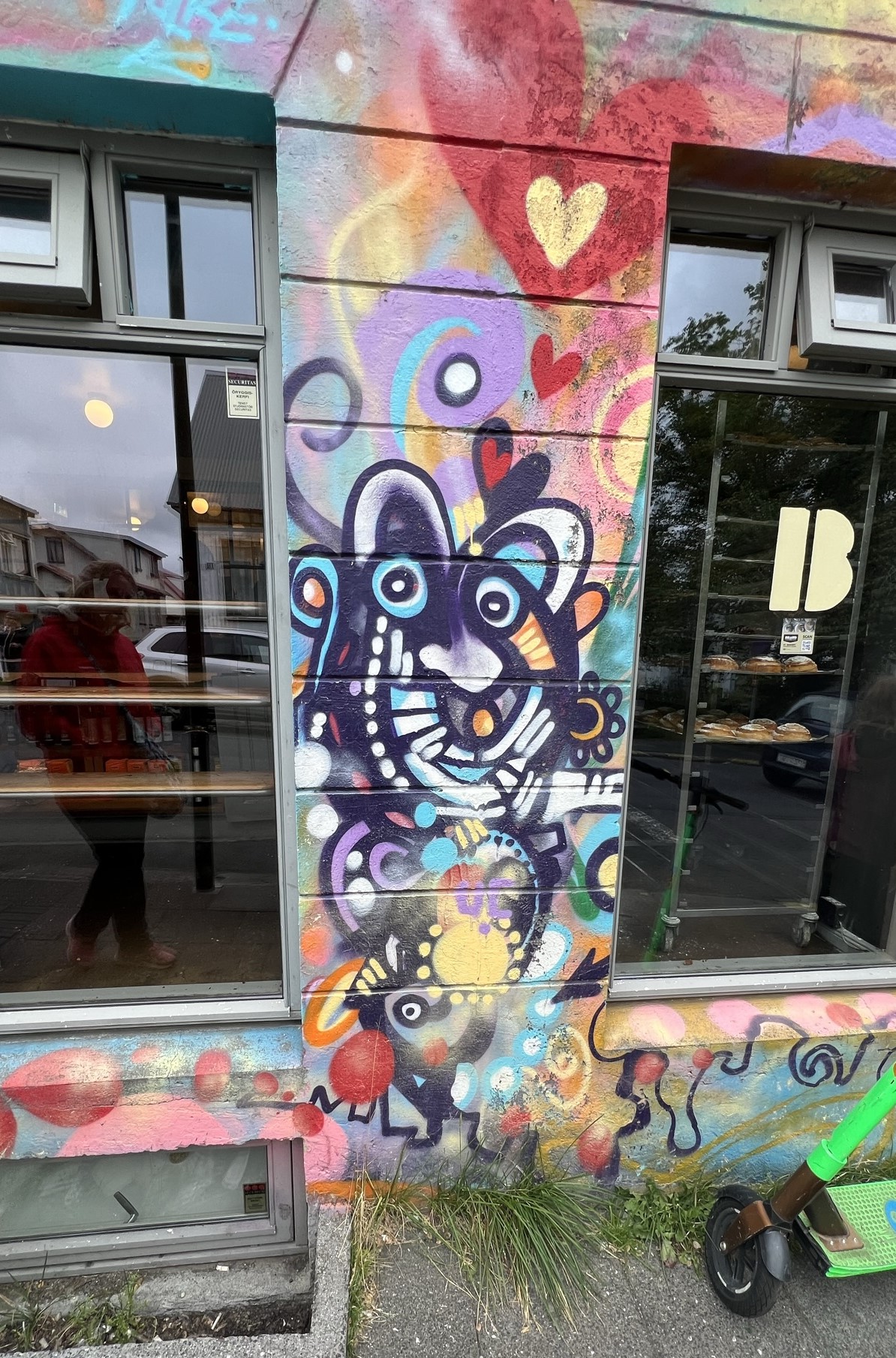
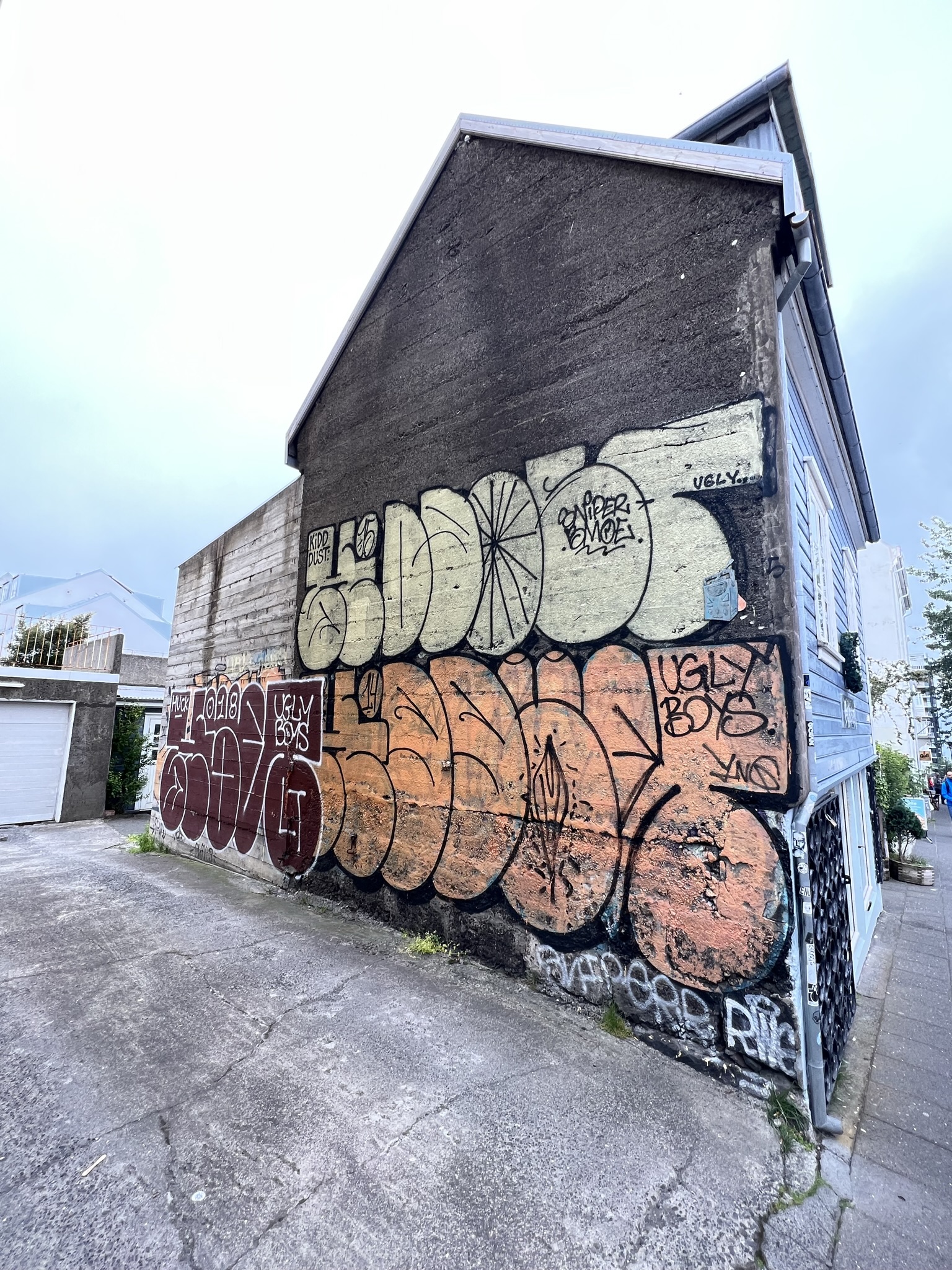
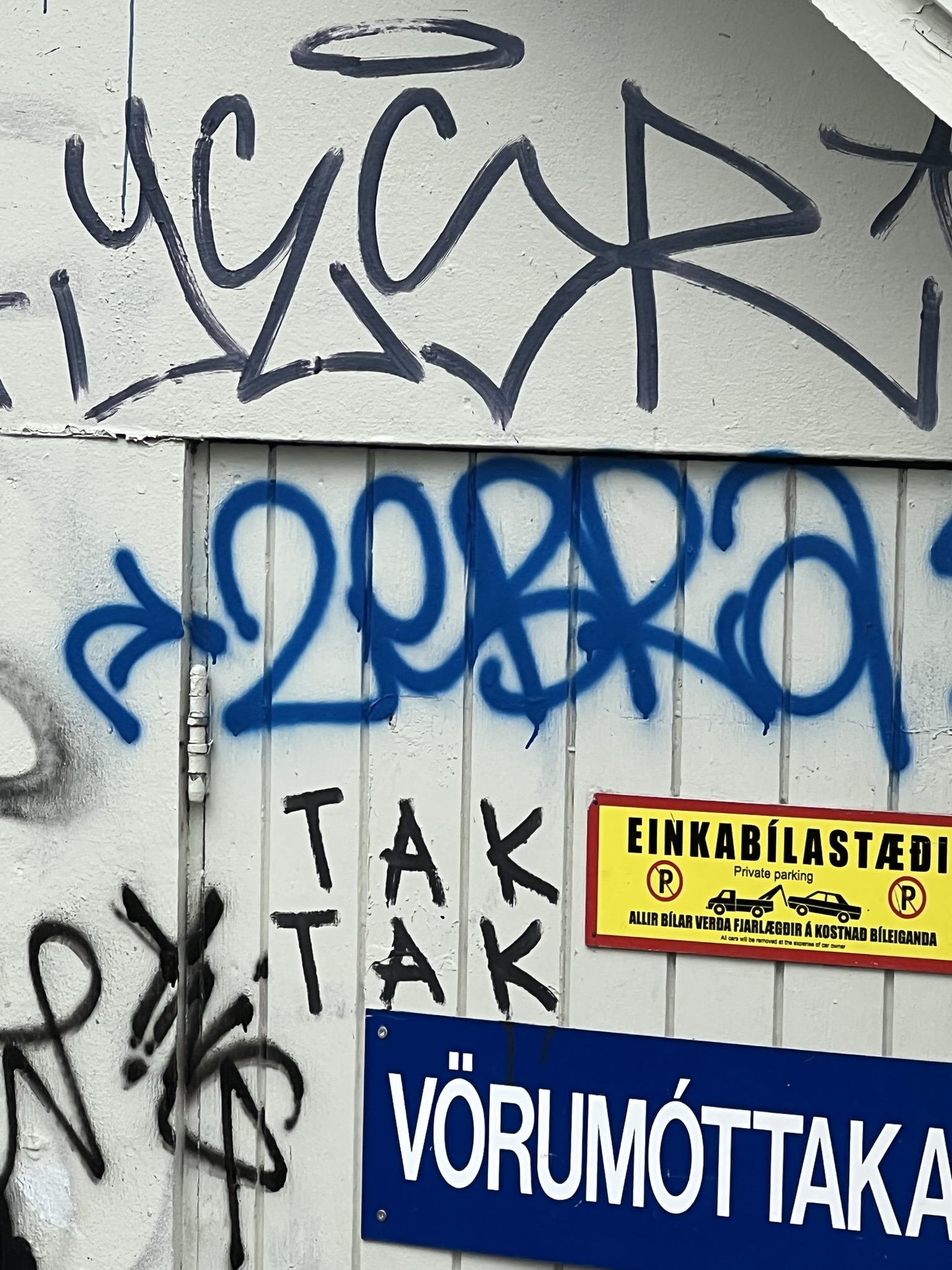
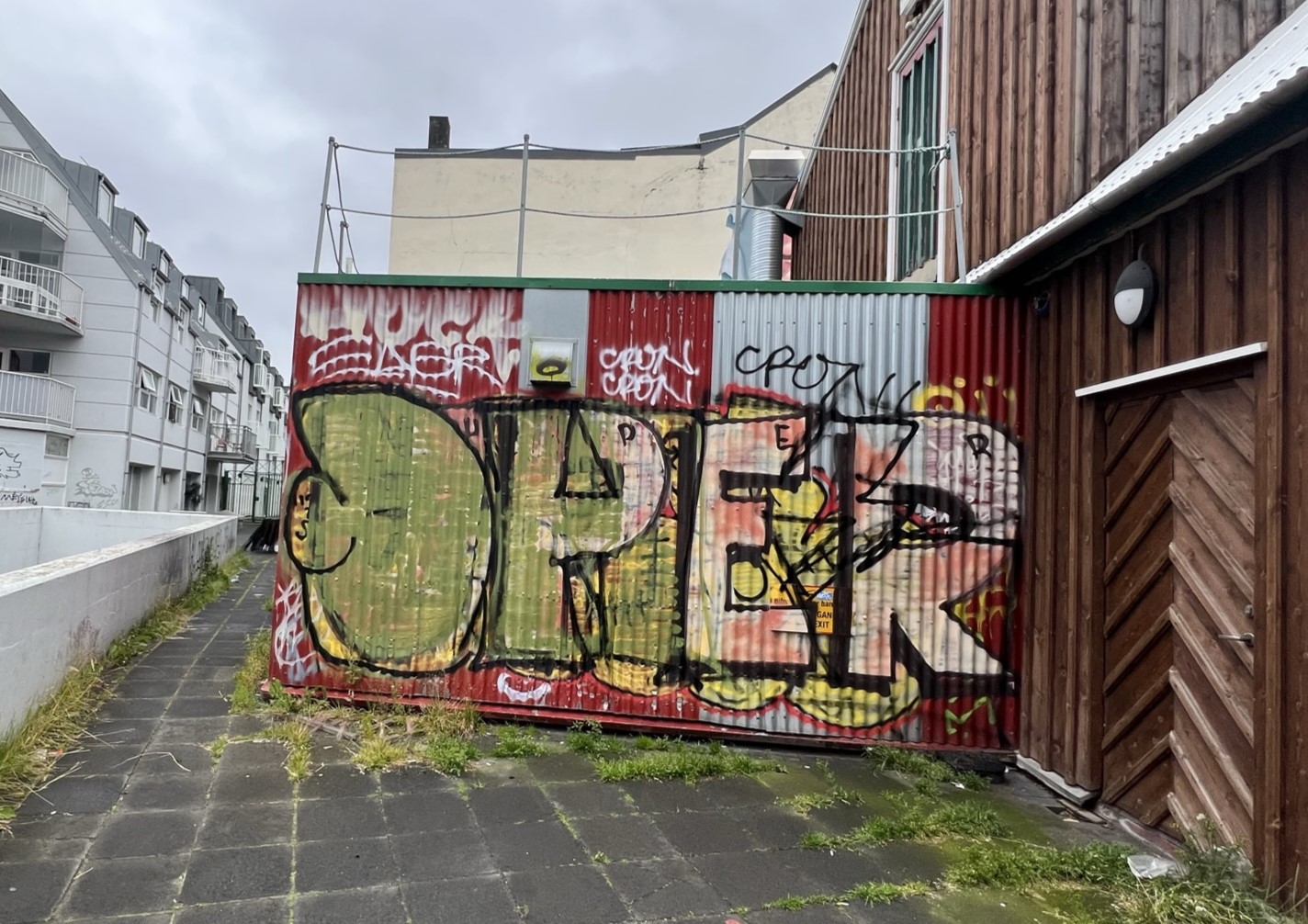
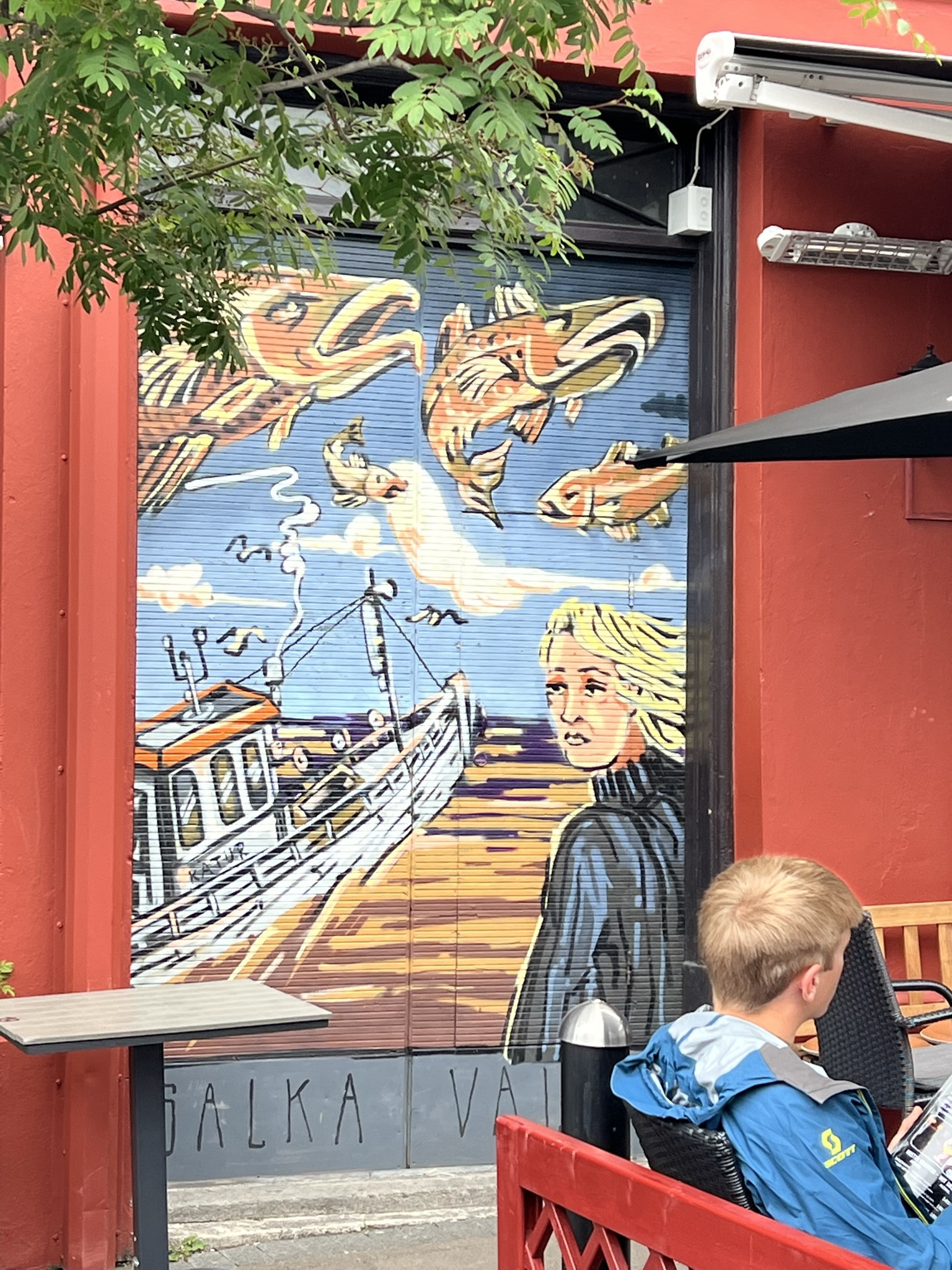
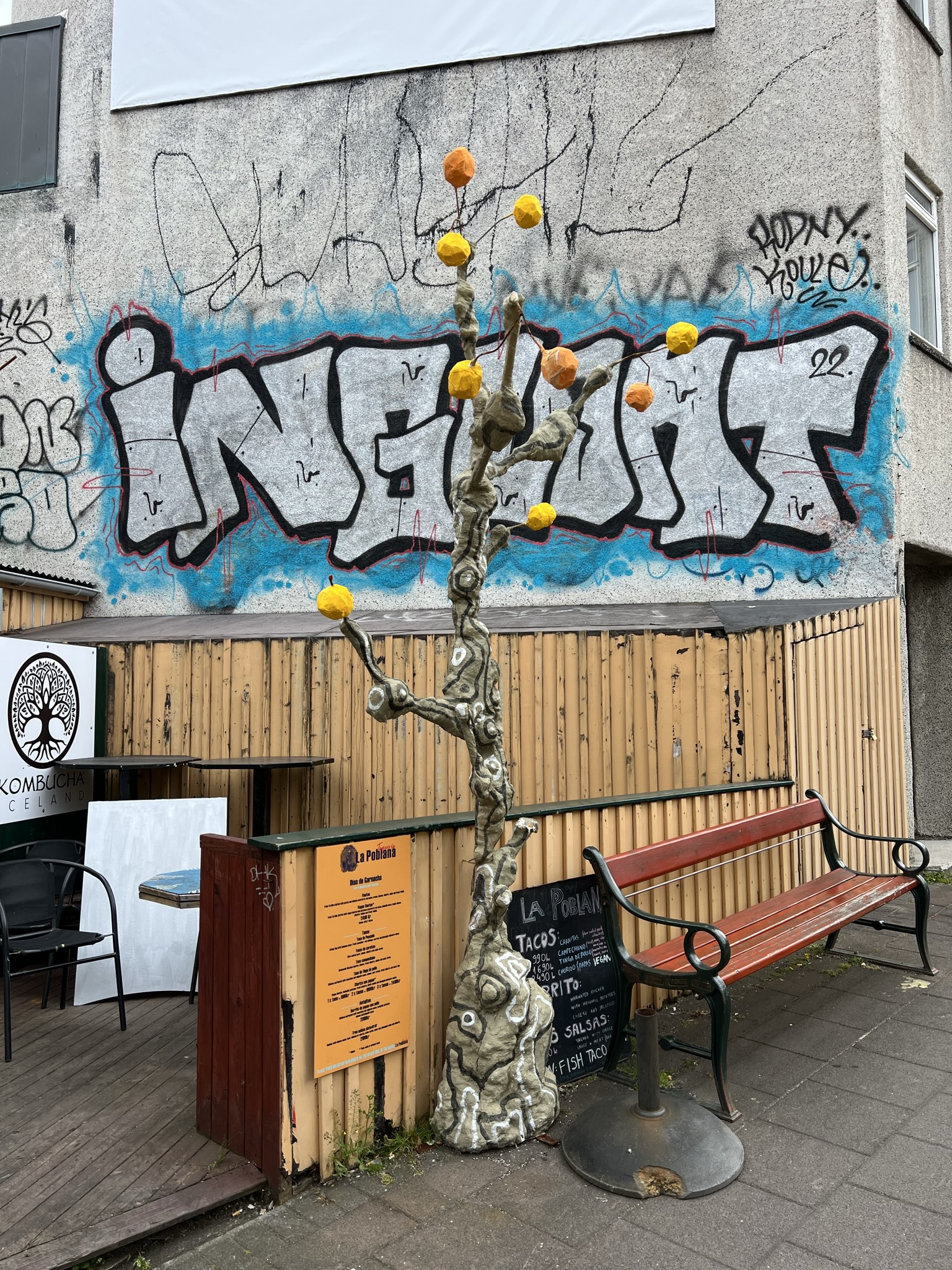
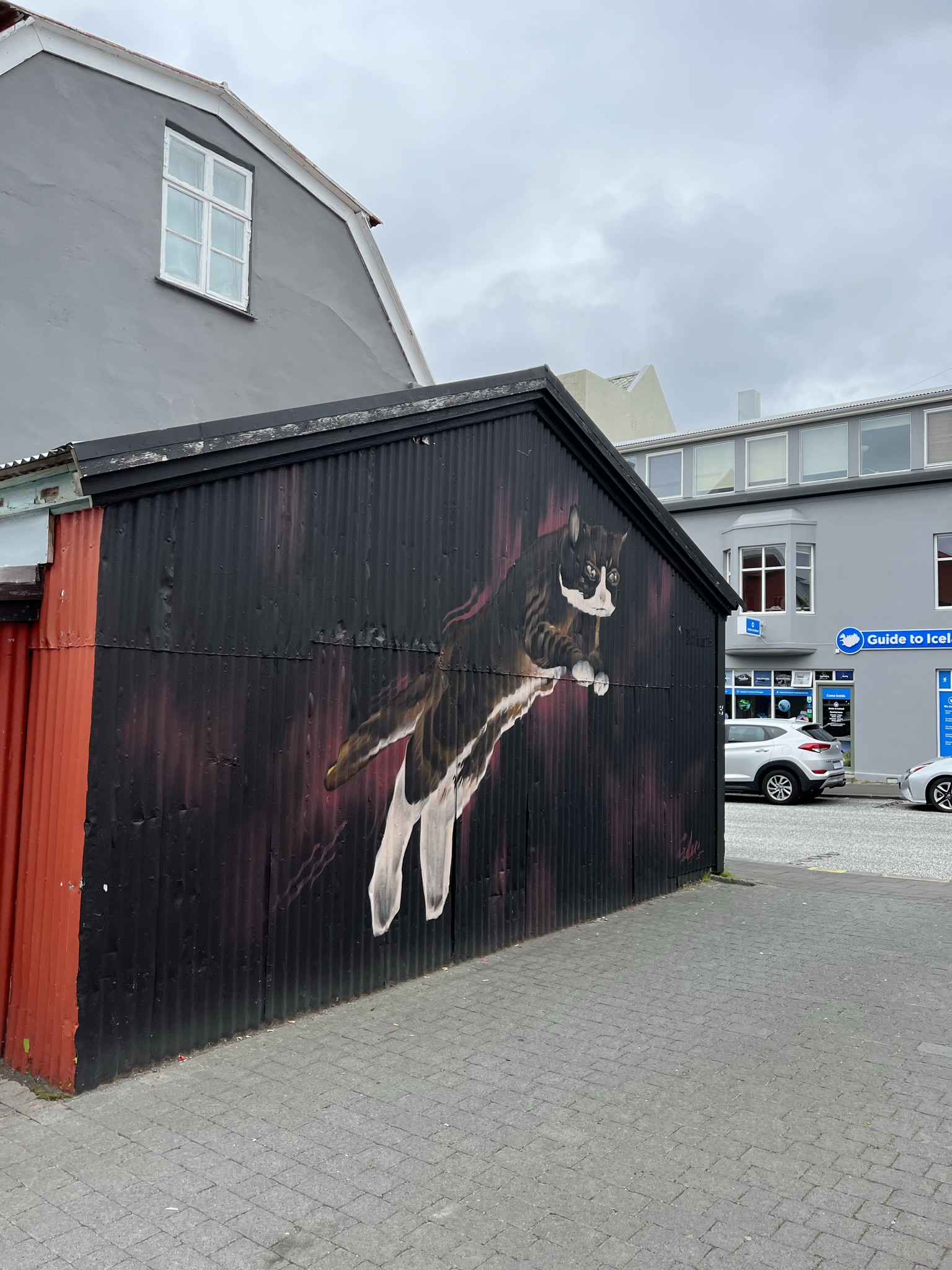
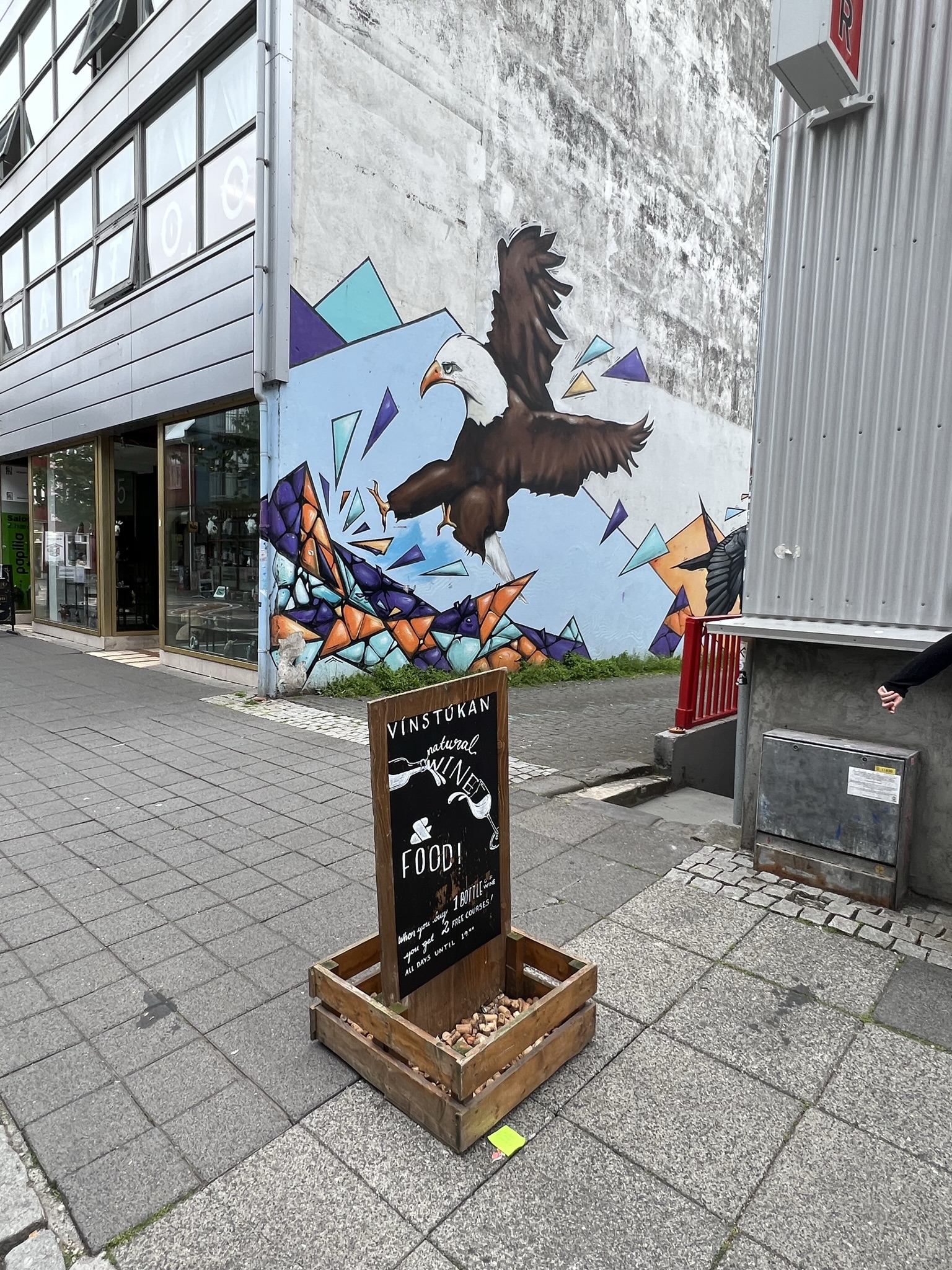
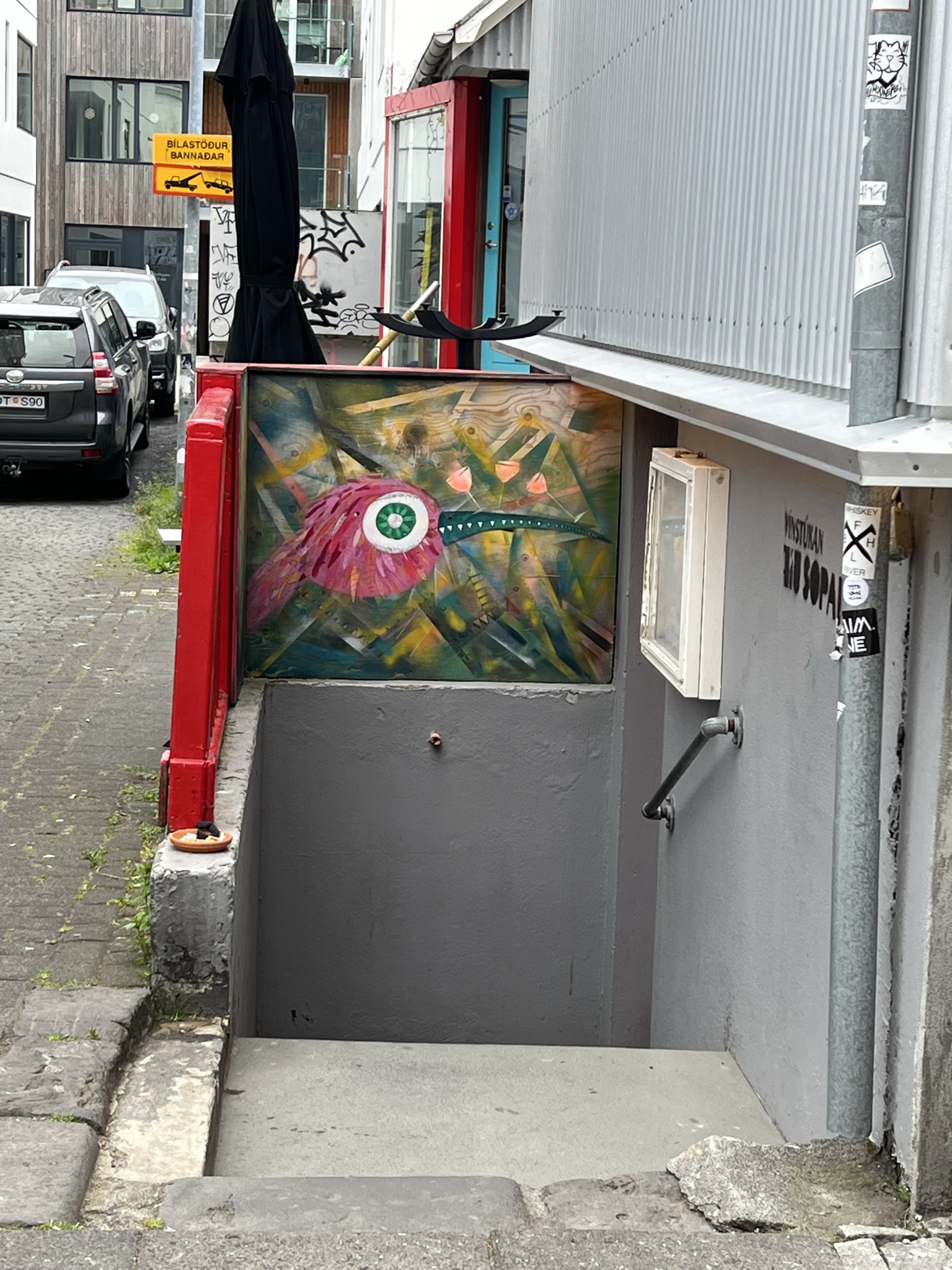
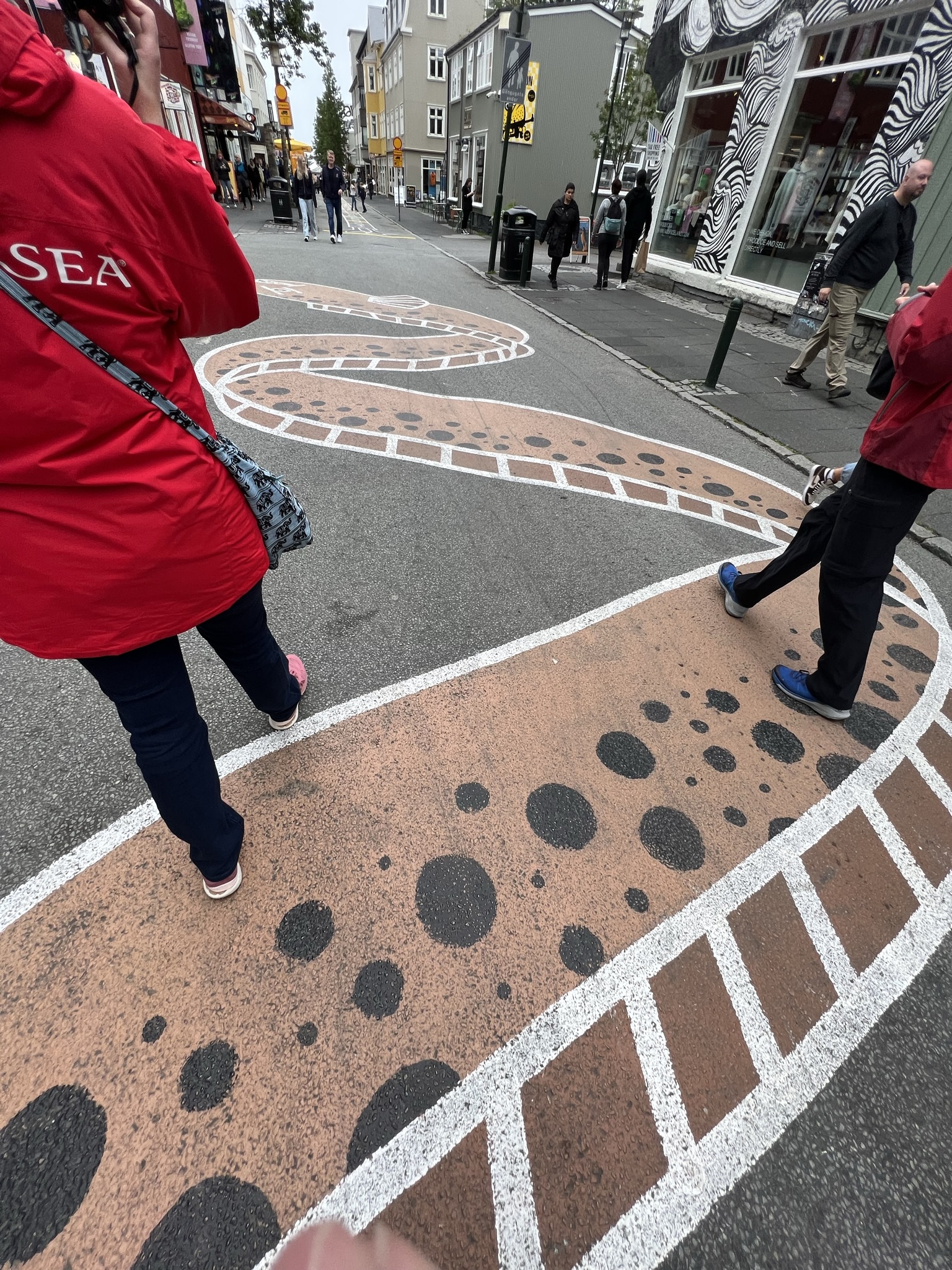
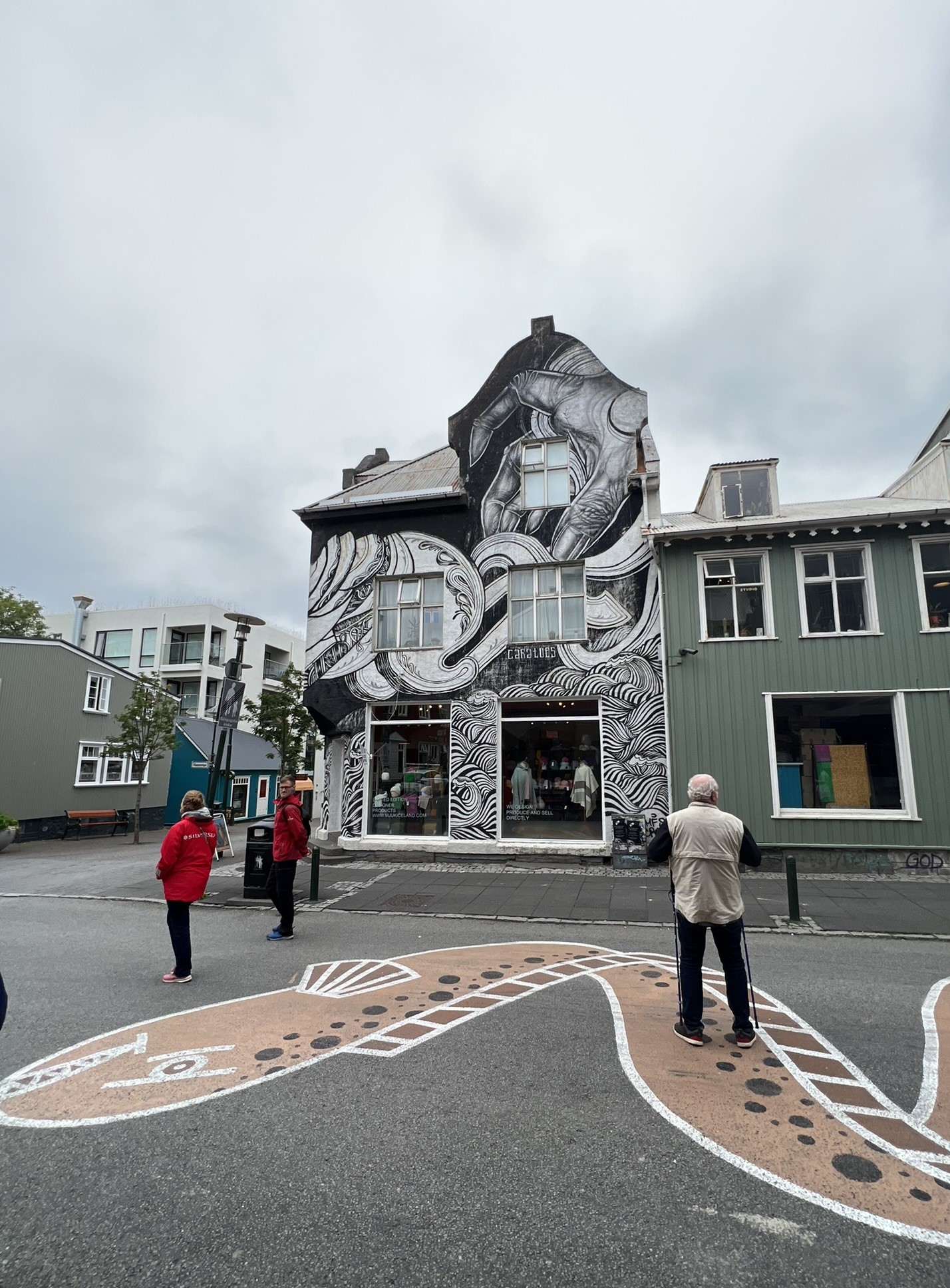
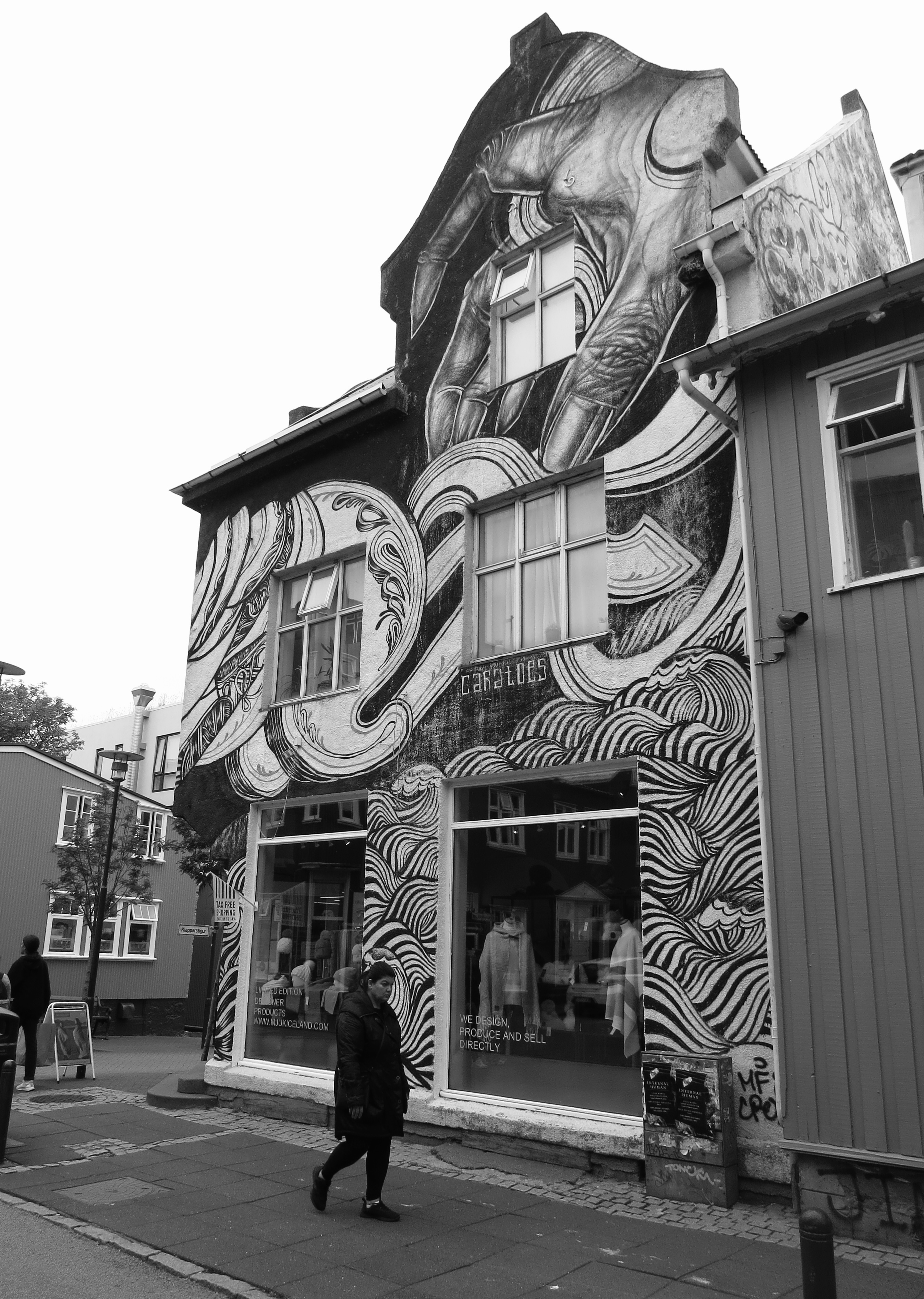
There is a lot of graffiti on many of Reykjavik’s buildings. Gui mentioned the government now has artists let the government know what they want to do and if it is approved, they can create art legally. Many buildings were actually incredible art, but otherwise we’re not sure how much of what we saw was actually legal. I found another “zebra”graffitied on a wall which means something in Iceland but I’m not sure what it is…I like a meaning I heard which means a woman who is free spirited and can not be tamed but I doubt that is what it means in Iceland.

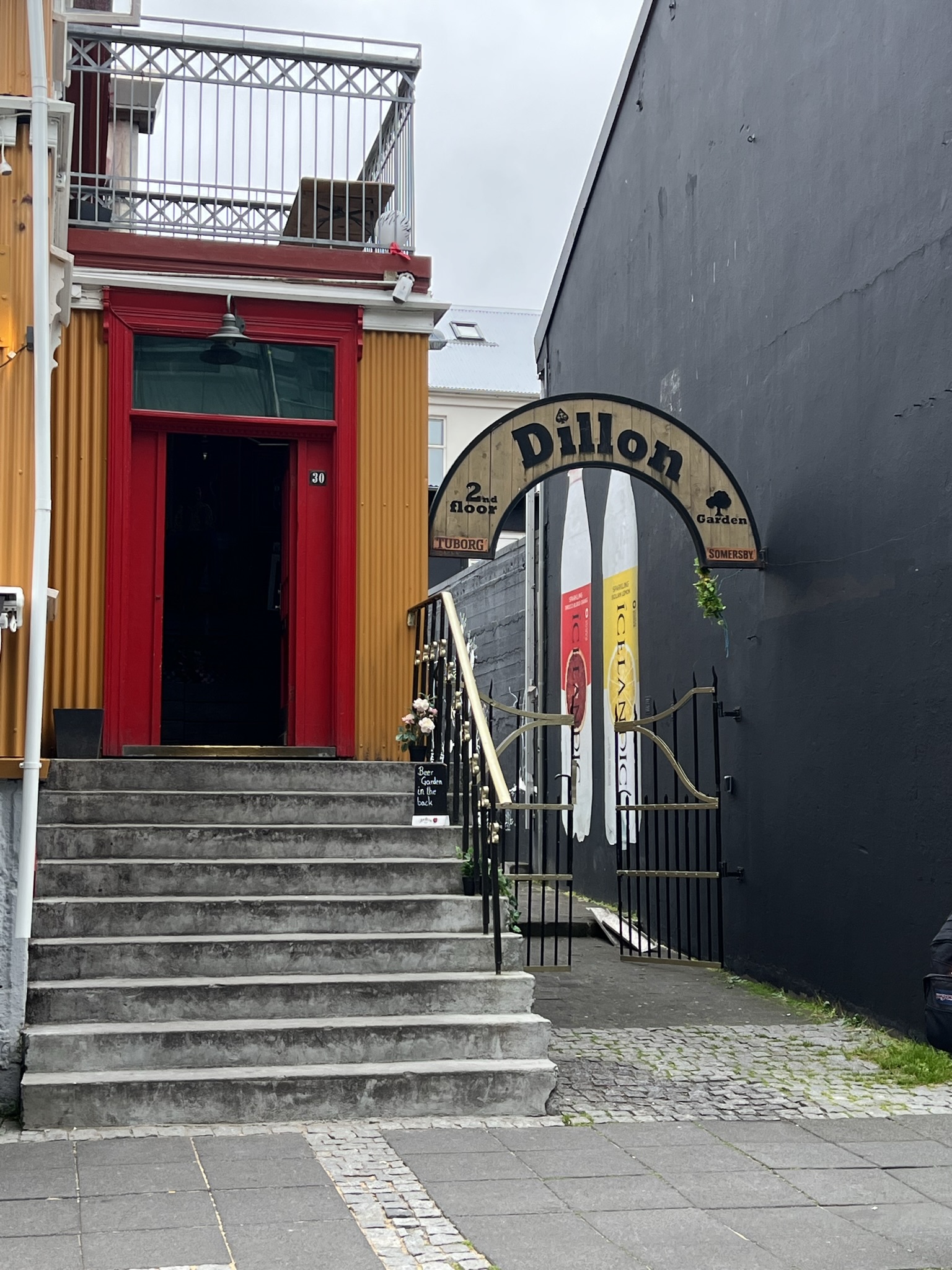
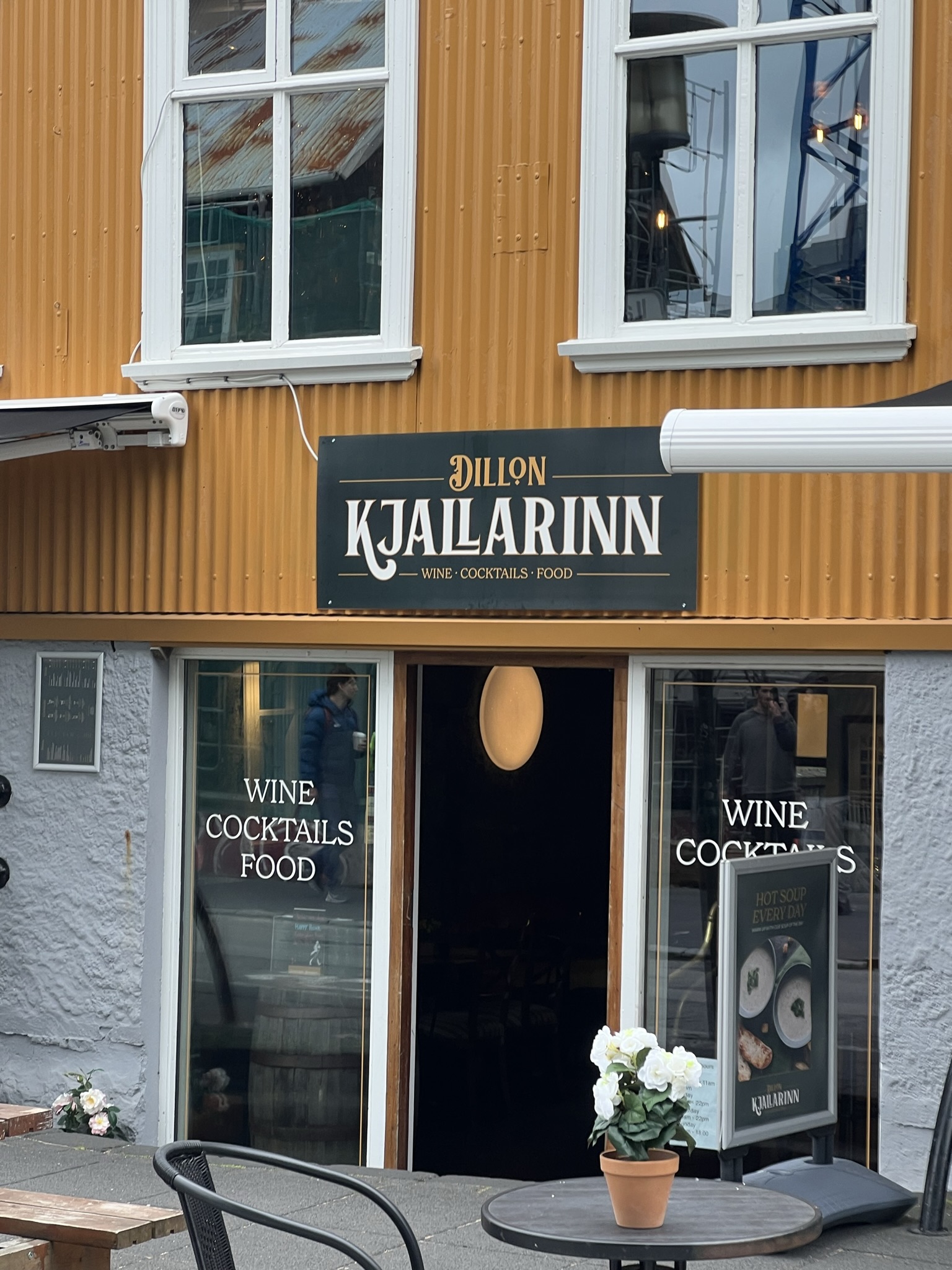
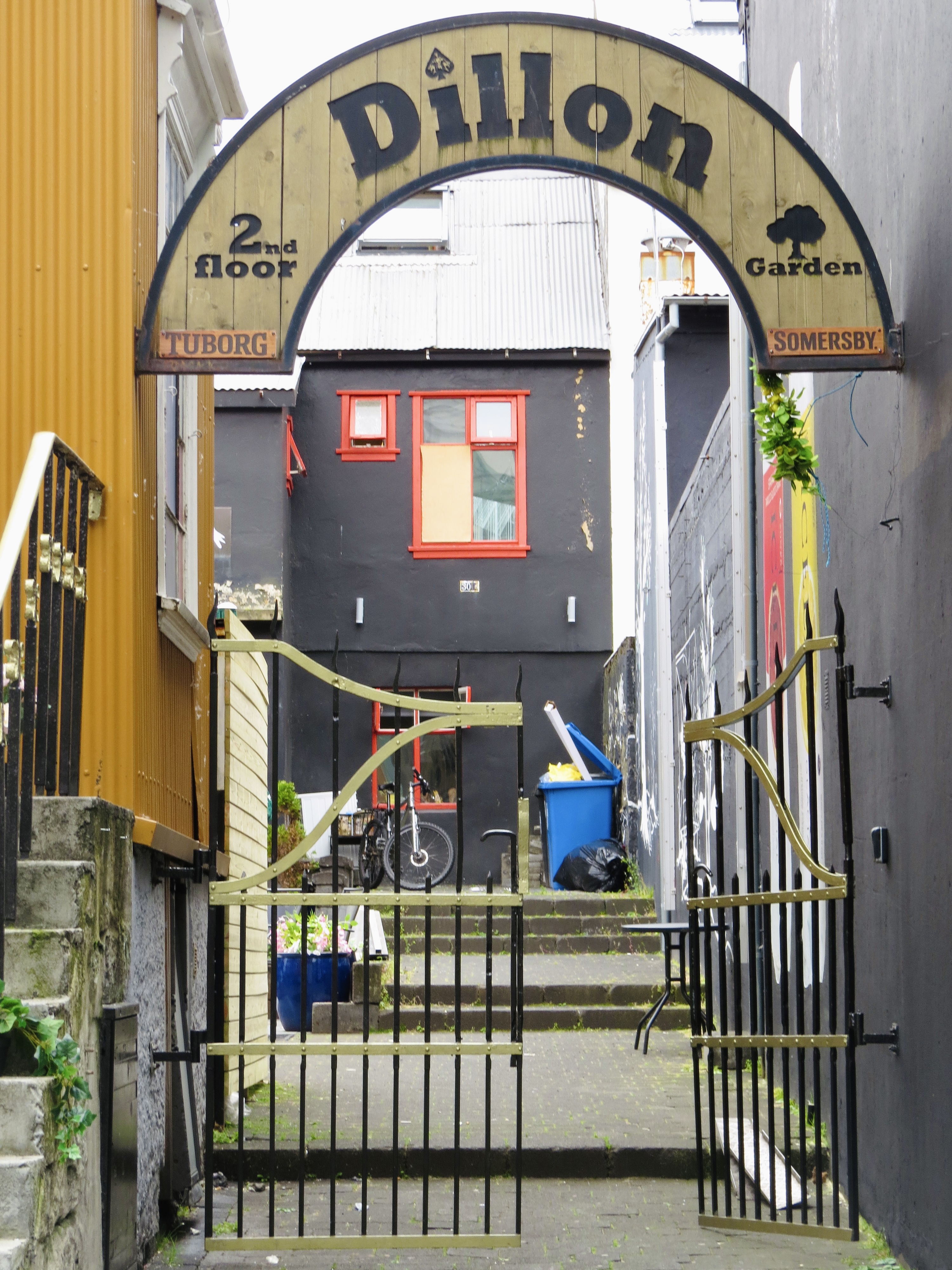
Larkin and I both noticed Dillon…not a beach but nevertheless a Dillon!

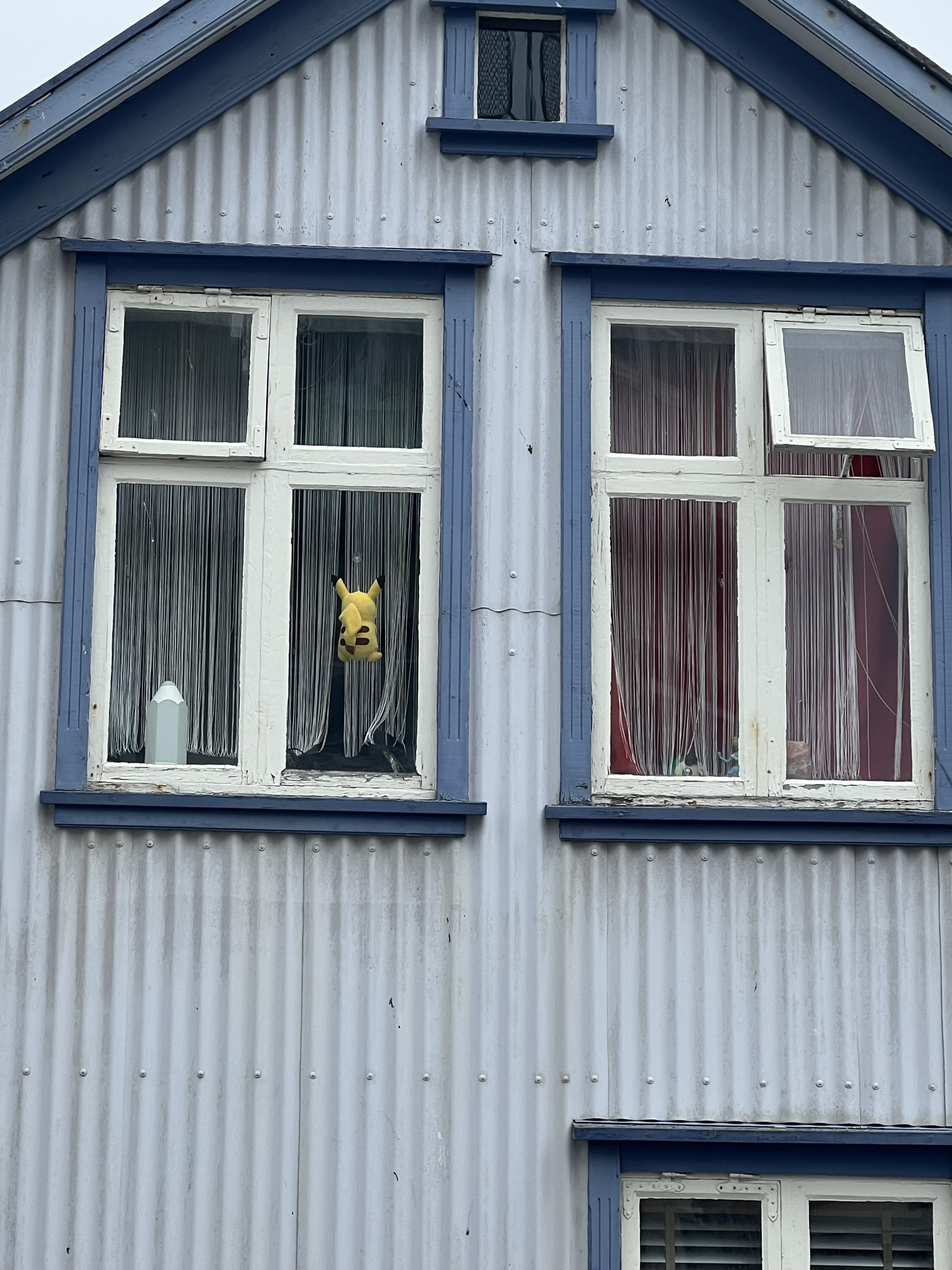
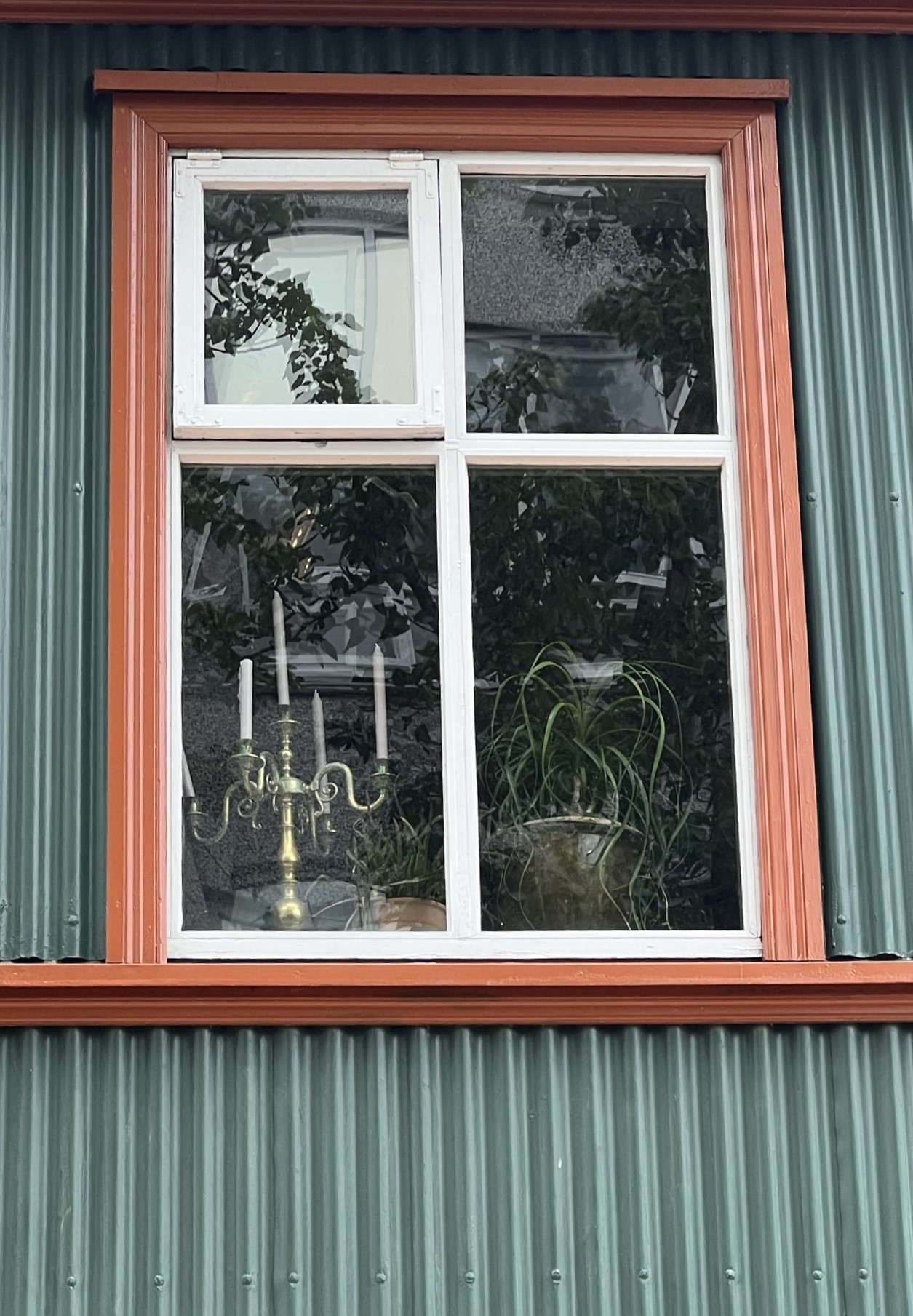
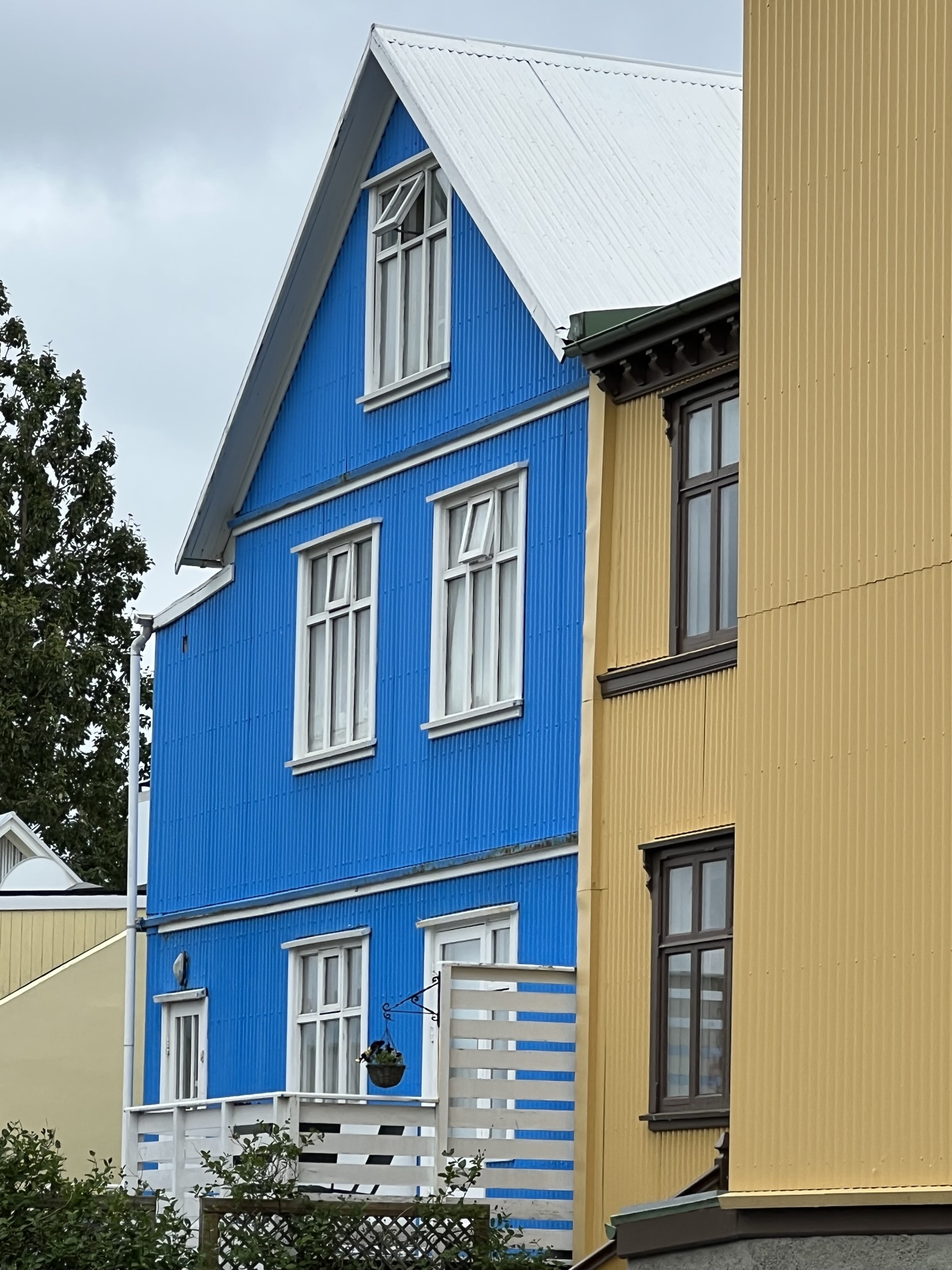
In Iceland, heating and hot water simply exist, supplied by the government. The heat is circulated in your home and the only way to regulate the temperature is to open the windows…year around. Most windows open at the top like the ones above.

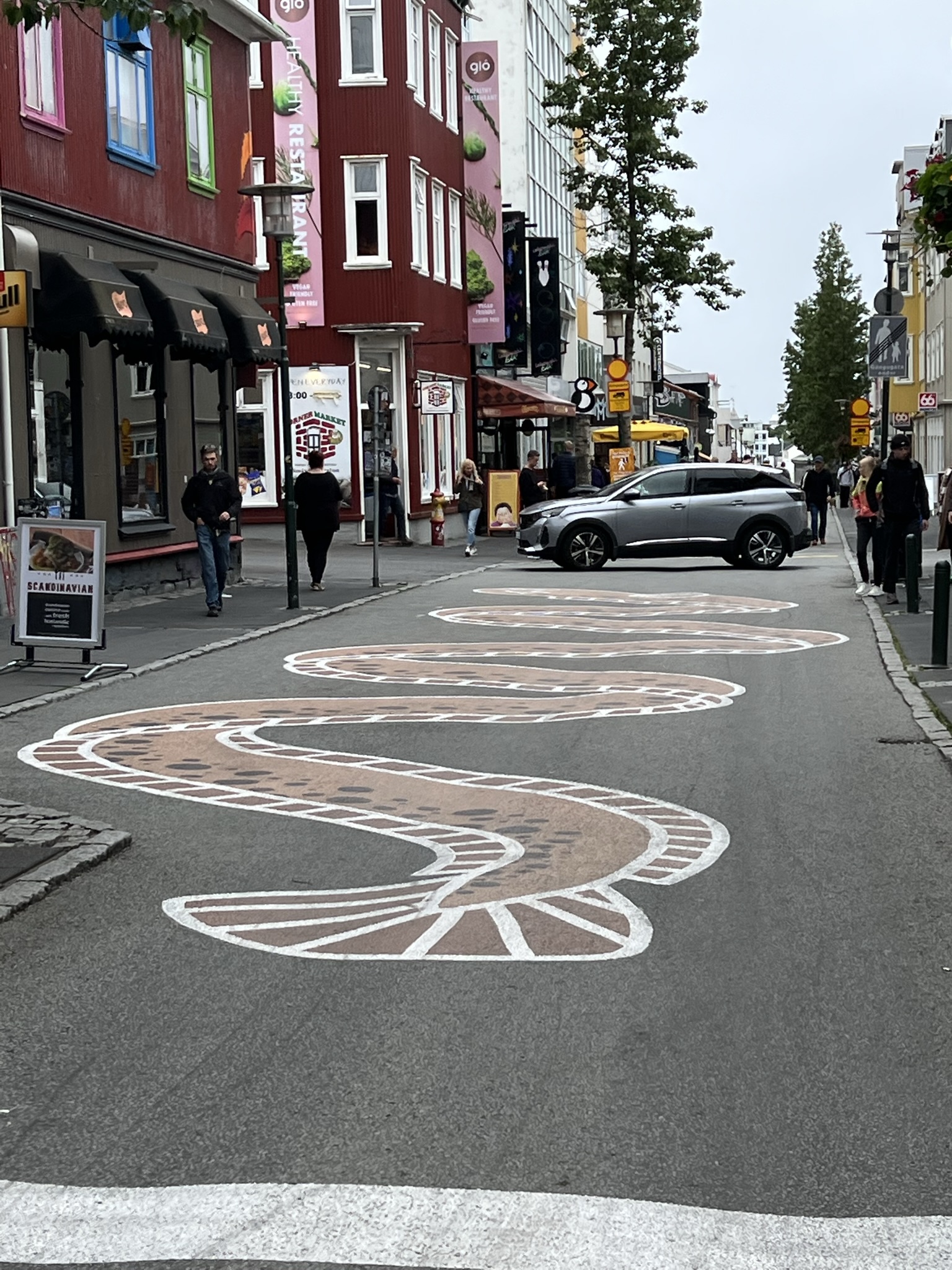
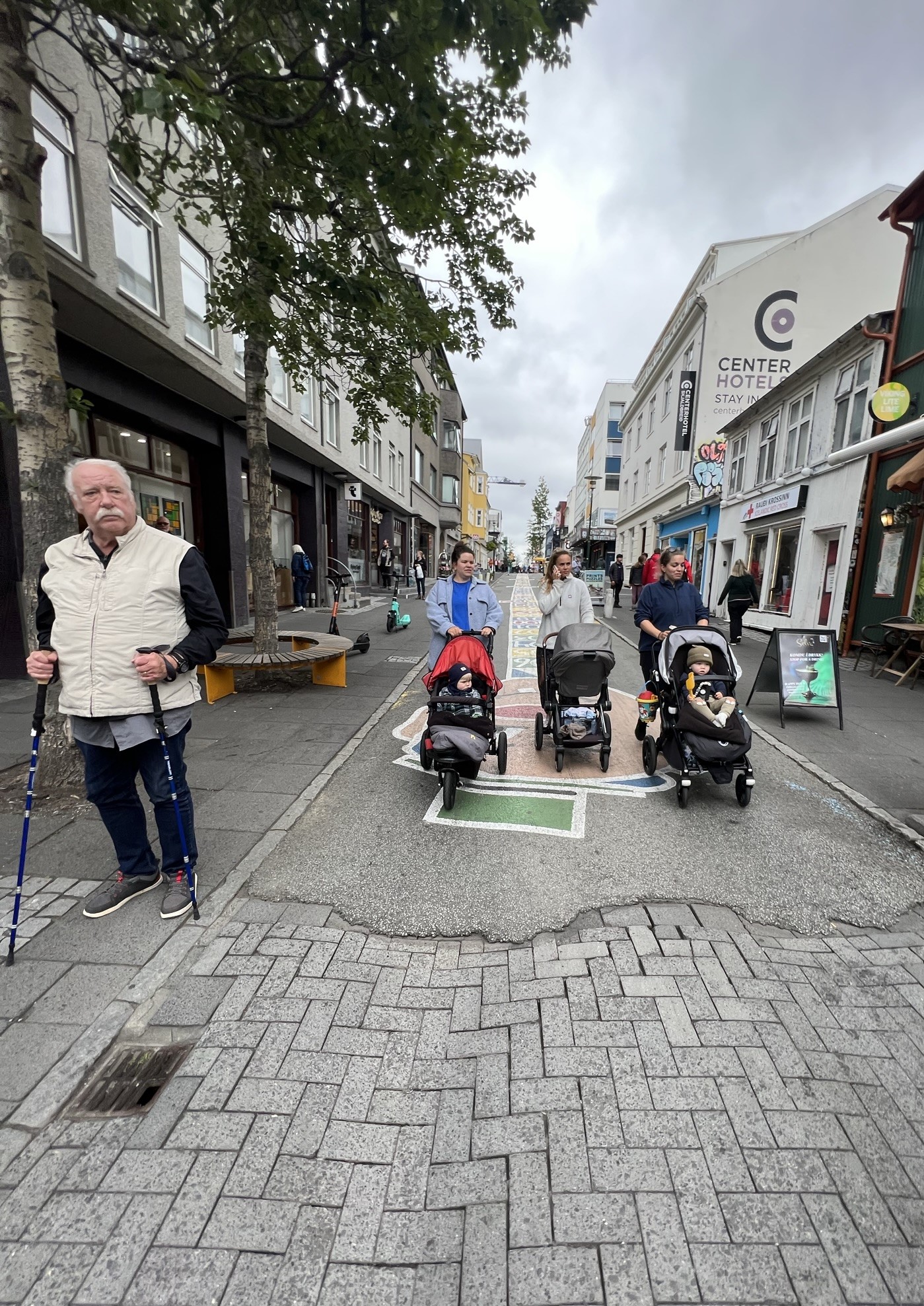
During the walk back down the hill we walked on more painted streets, noticed more graffiti, Larkin caught all the flowers and we enjoyed the architecture and its classic Icelandic windows.

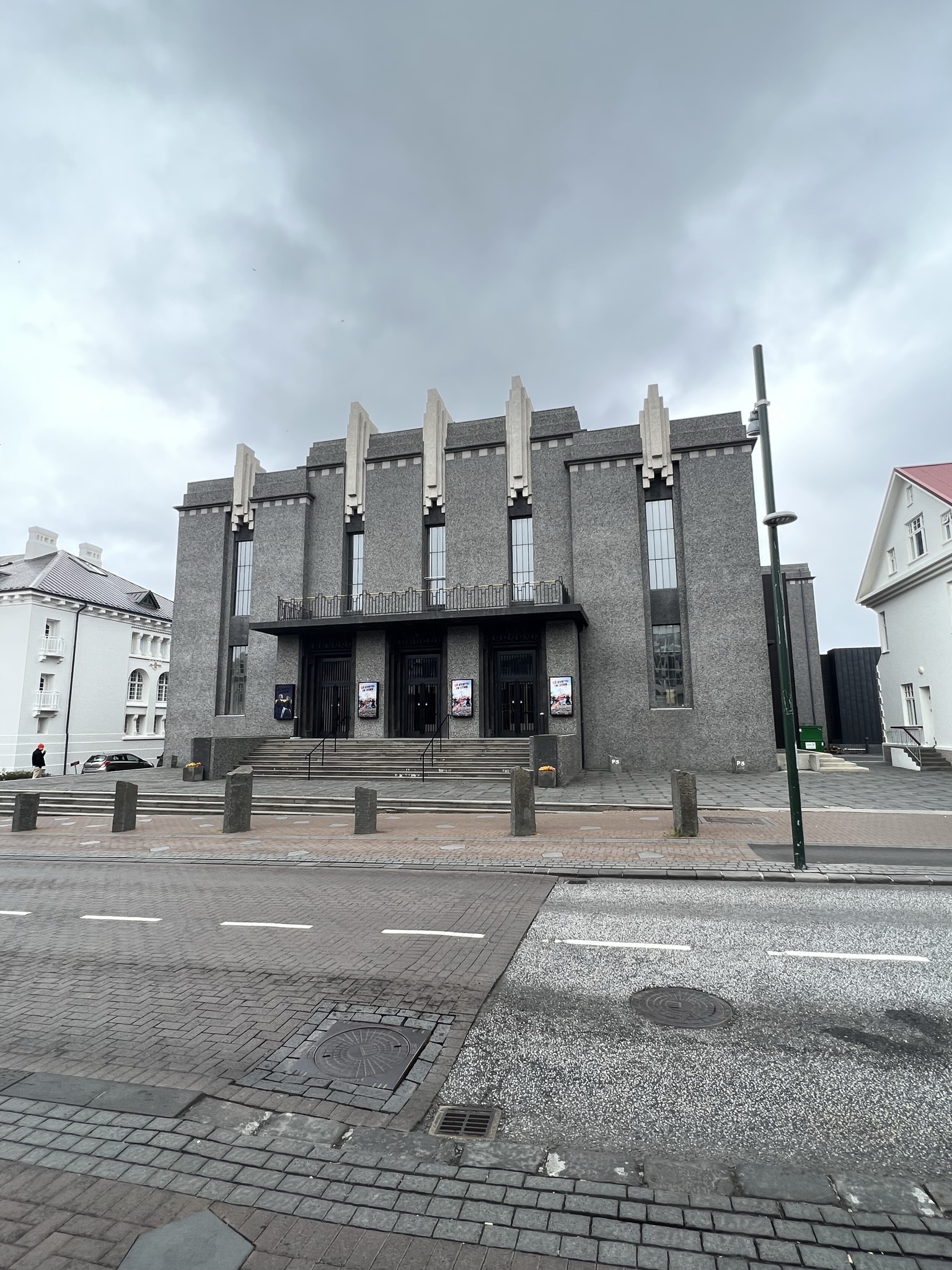
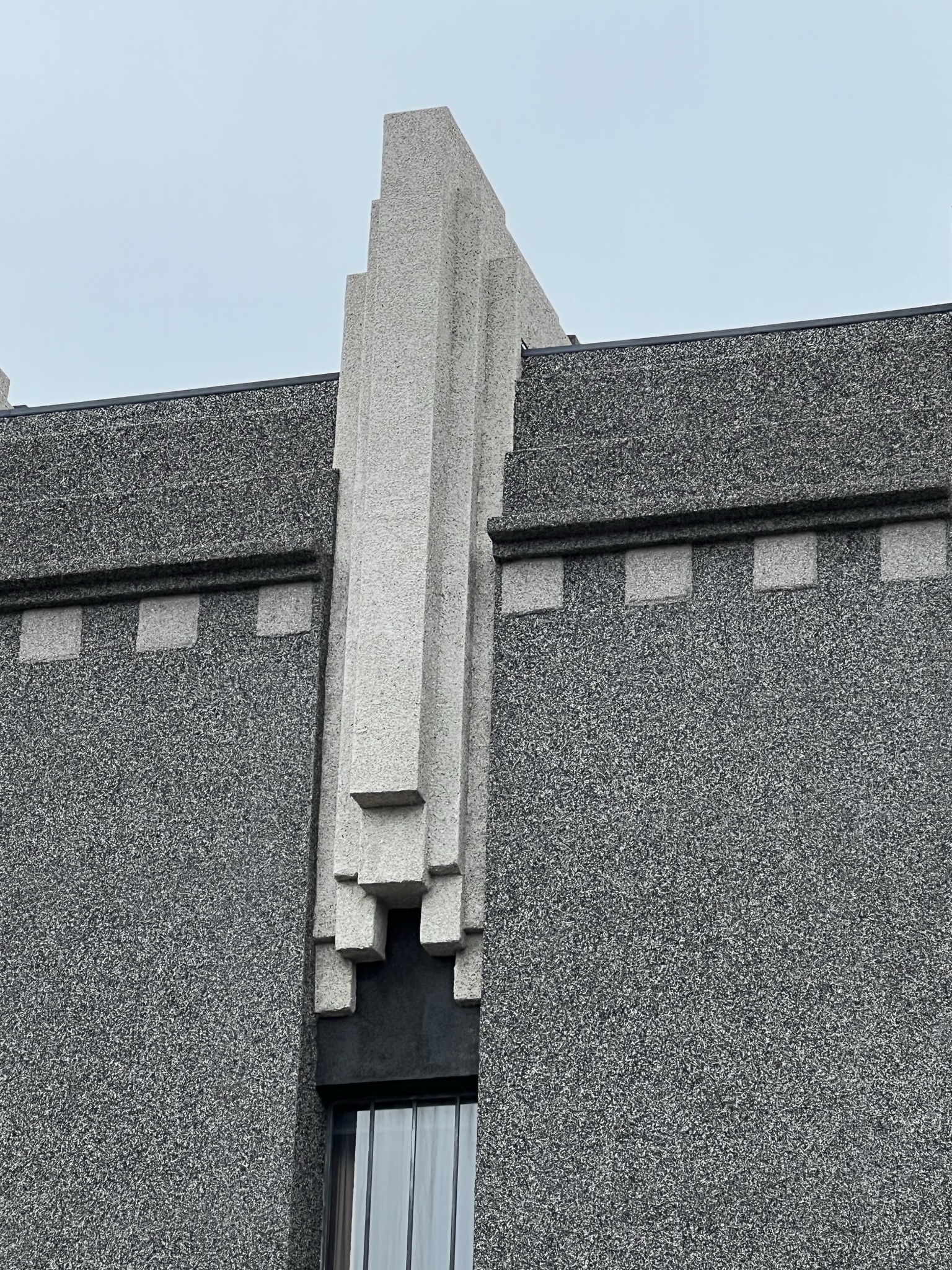
Whether it was an art deco theater or the restaurant across the street from the theater, the design is in the little details!

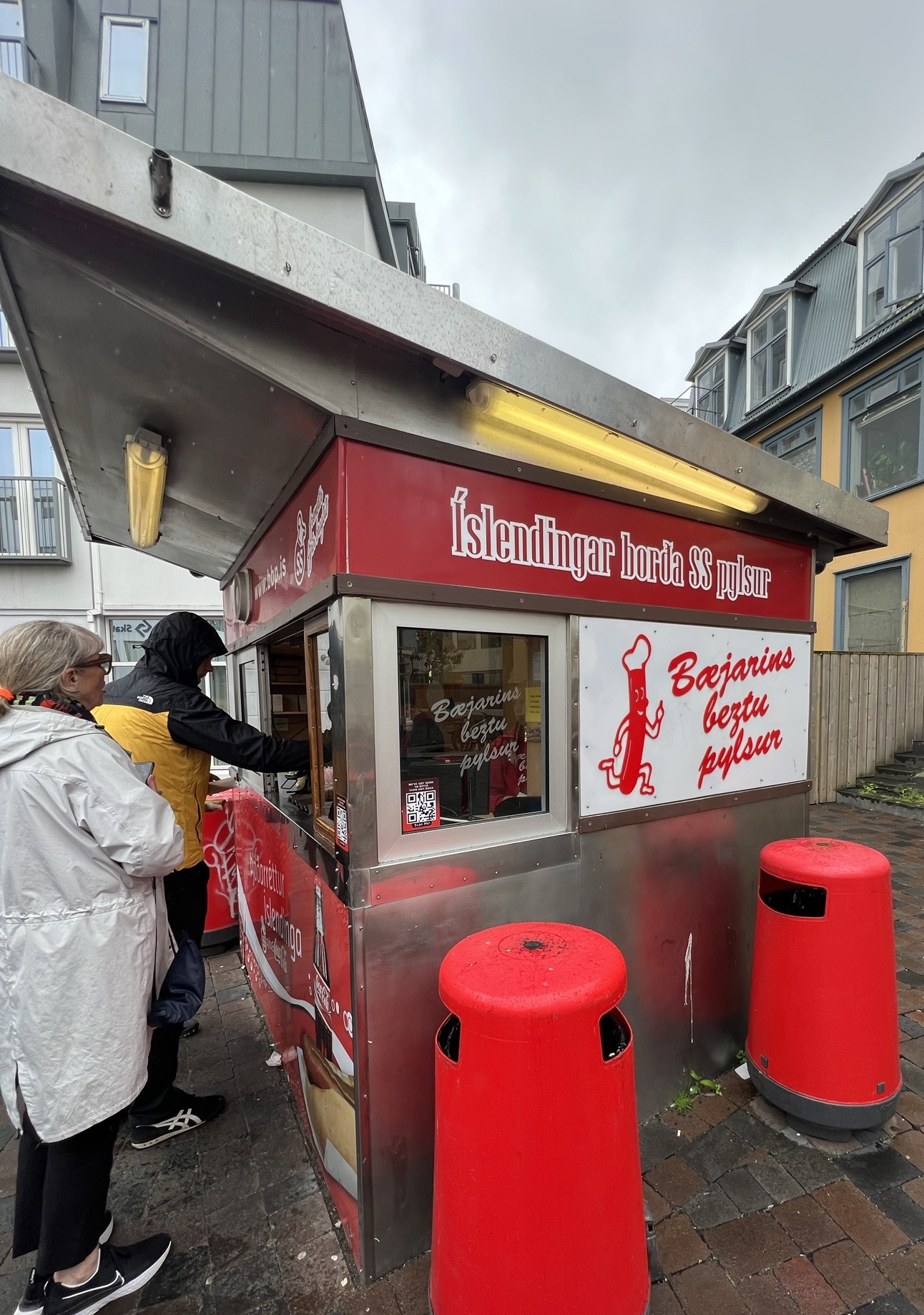
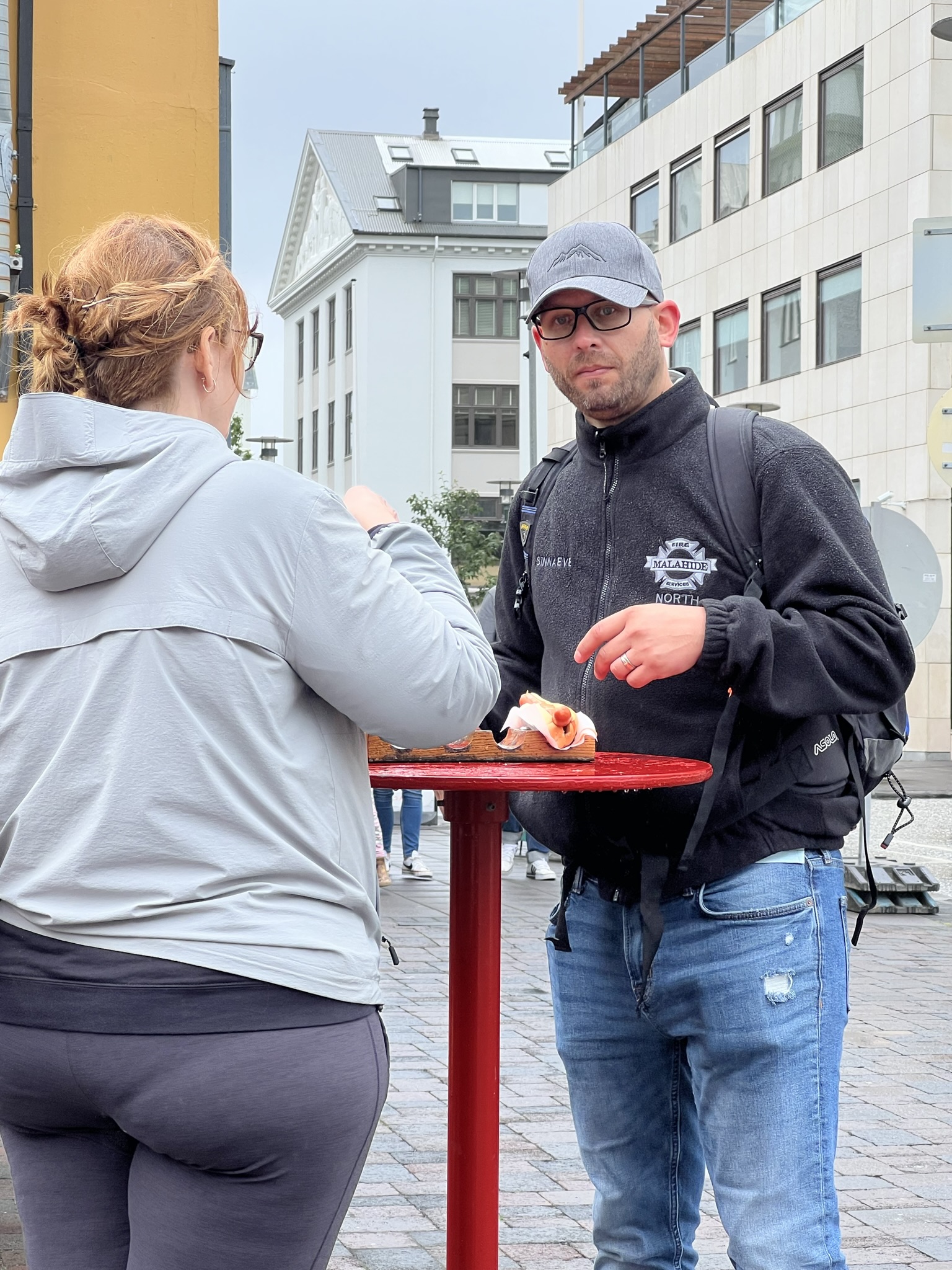
At the bottom of the hill, we crossed a main road and headed to a hot dog stand. Our guide told us this was the famous Baejarins Beztu hot dog stand originally opened in 1937. The name actually means the bezt in town. One of its famous visitors was Ex President Bill Clinton who was known to eat three of their hot dogs on his trip to Iceland. The three of us shared one in the rain and thank goodness the line wasn’t too long. Their dogs are made from ground lamb with your choice of toppings. Toppings can include crispy onions, fresh onions, mustard and ketchup remoulade. Their Ketchup is sweetened with apples not glucose which makes it delicious. Bill Clinton kept his simple – mustard only. Servers get paid by the dog so service is very quick.

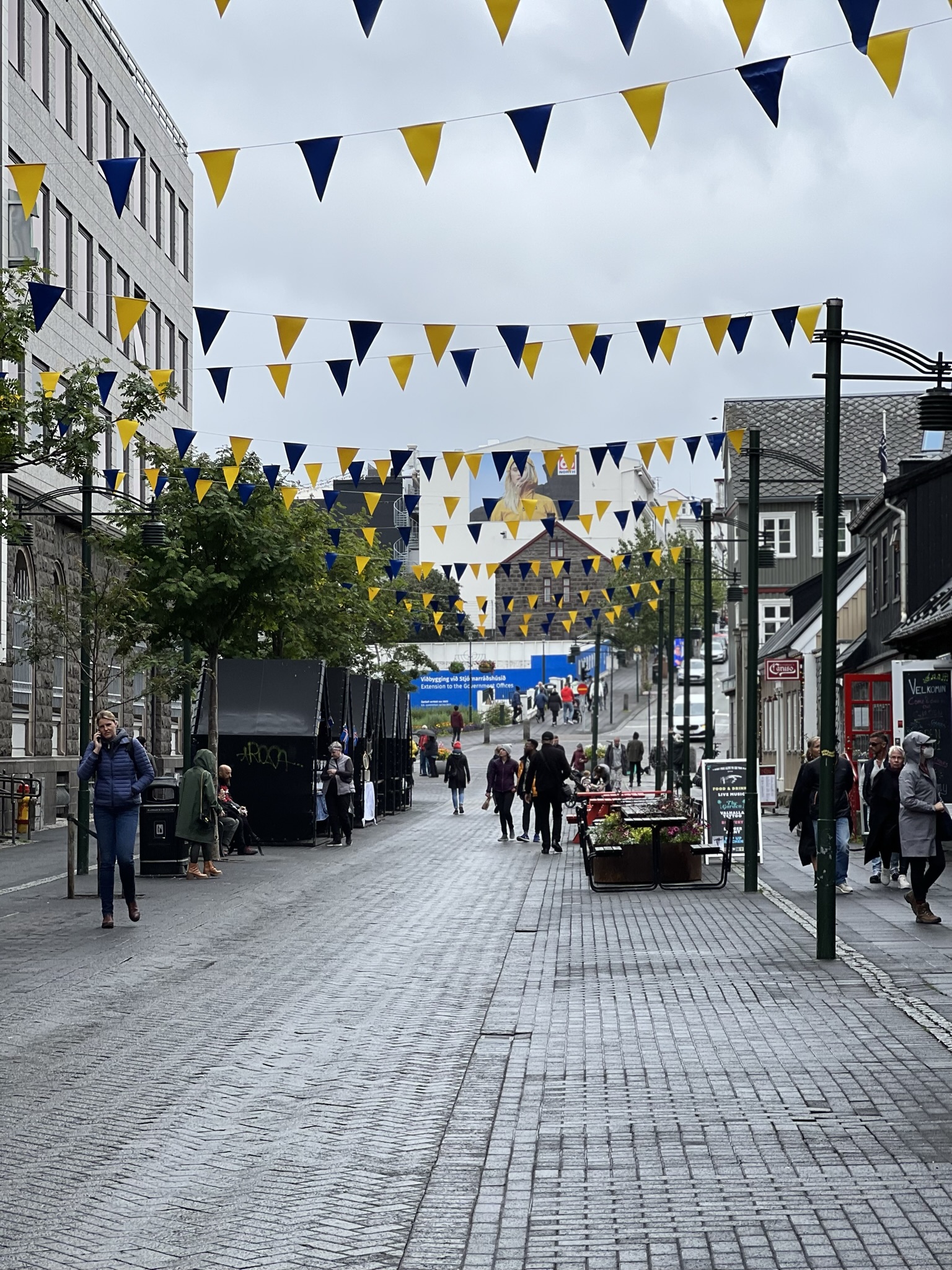
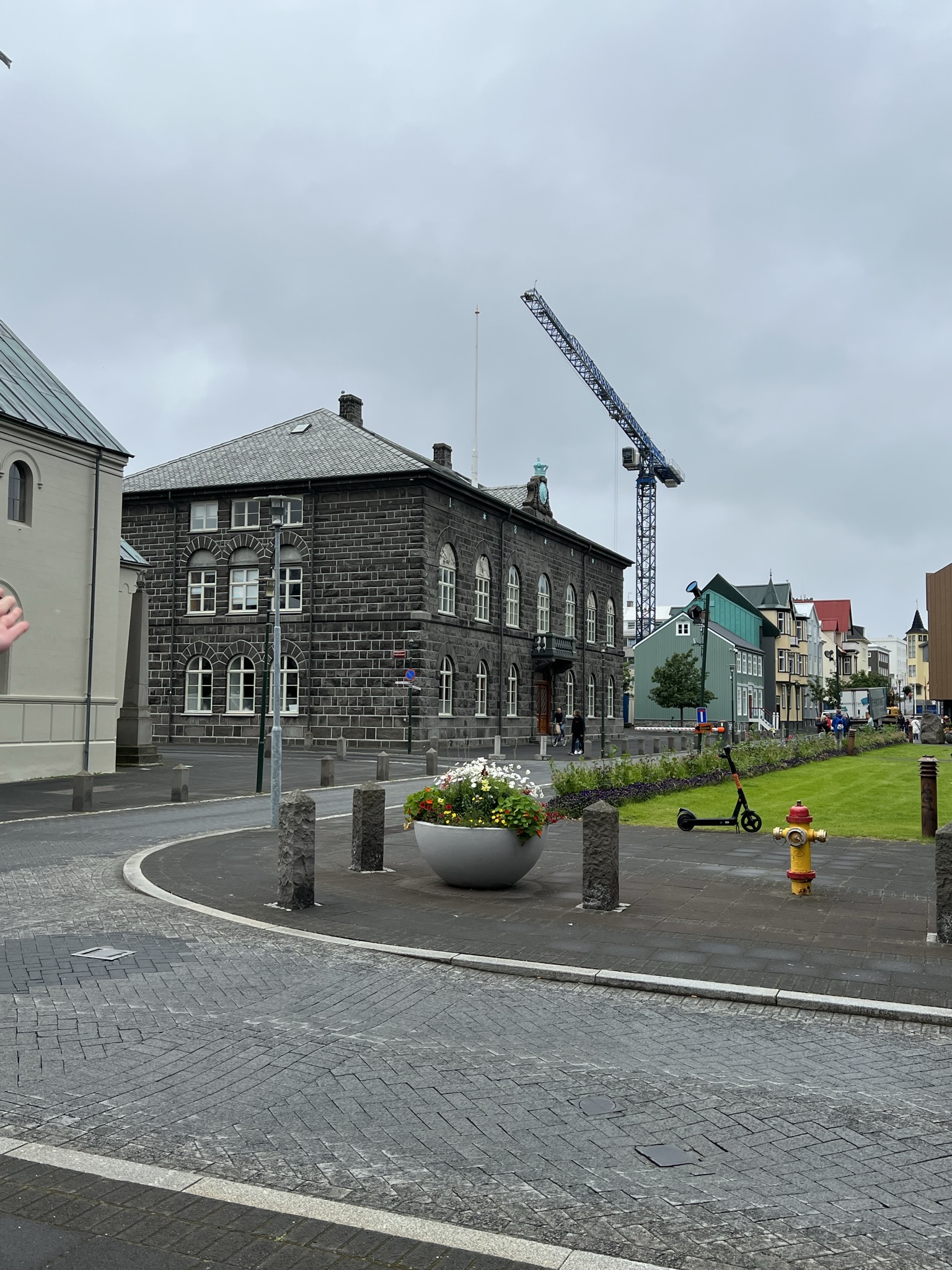
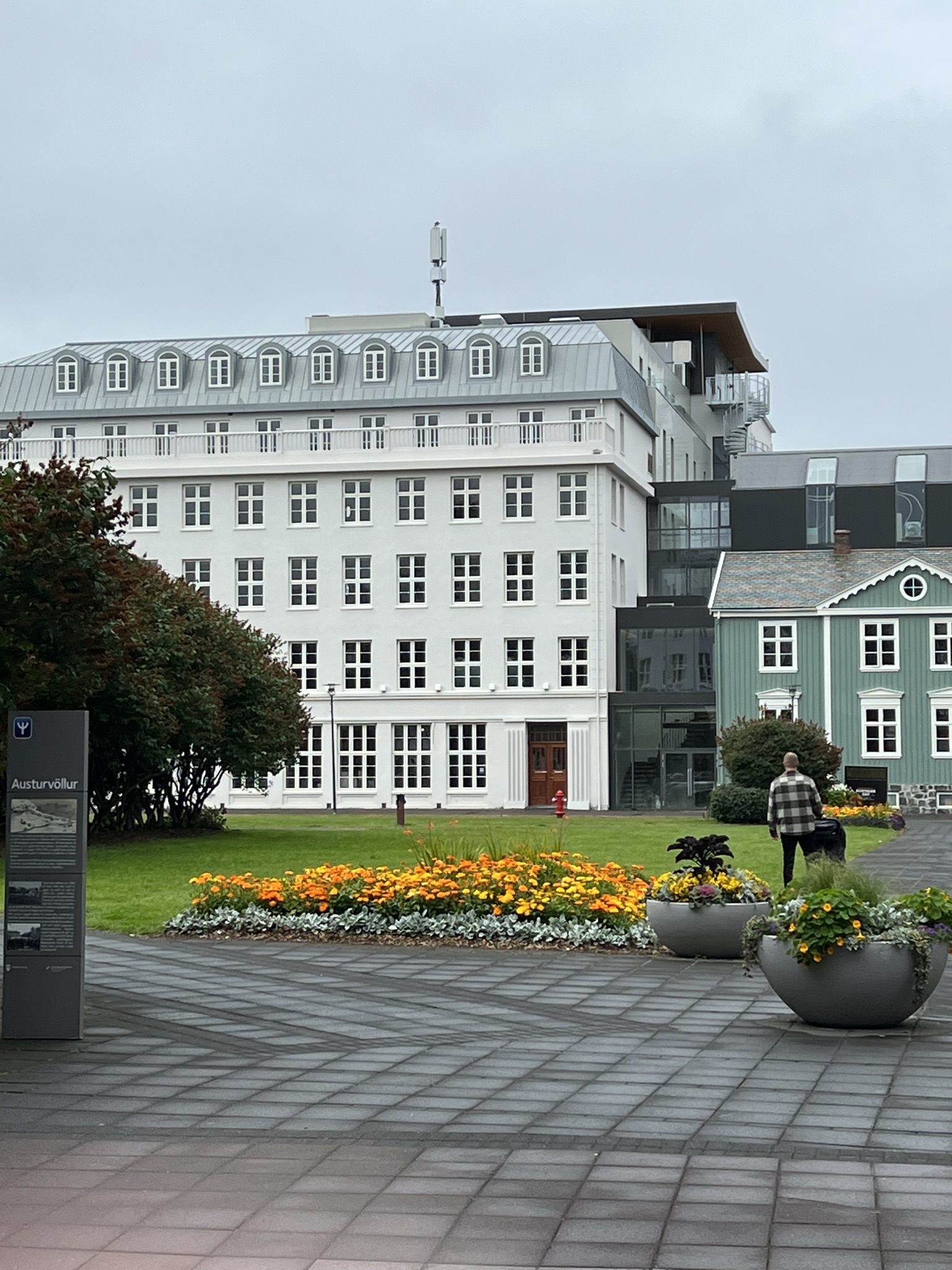
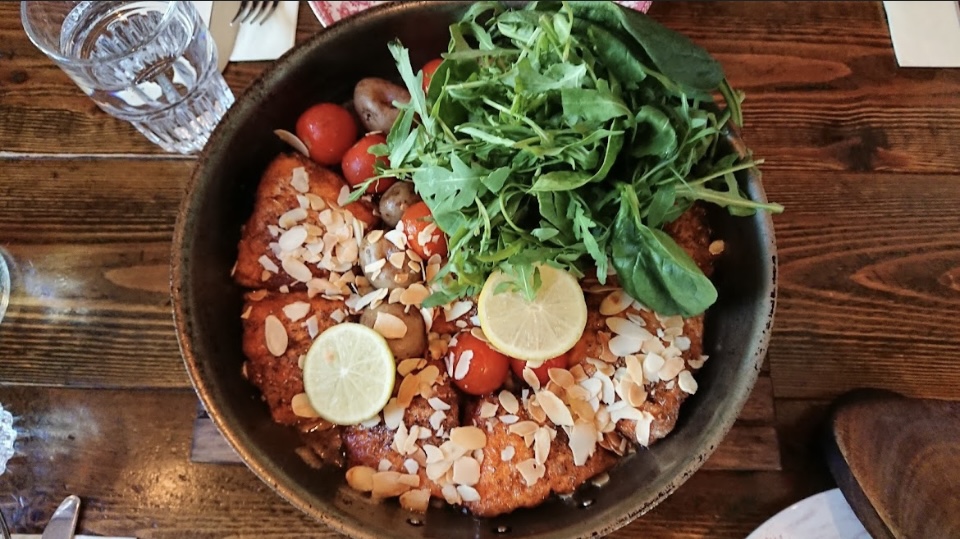
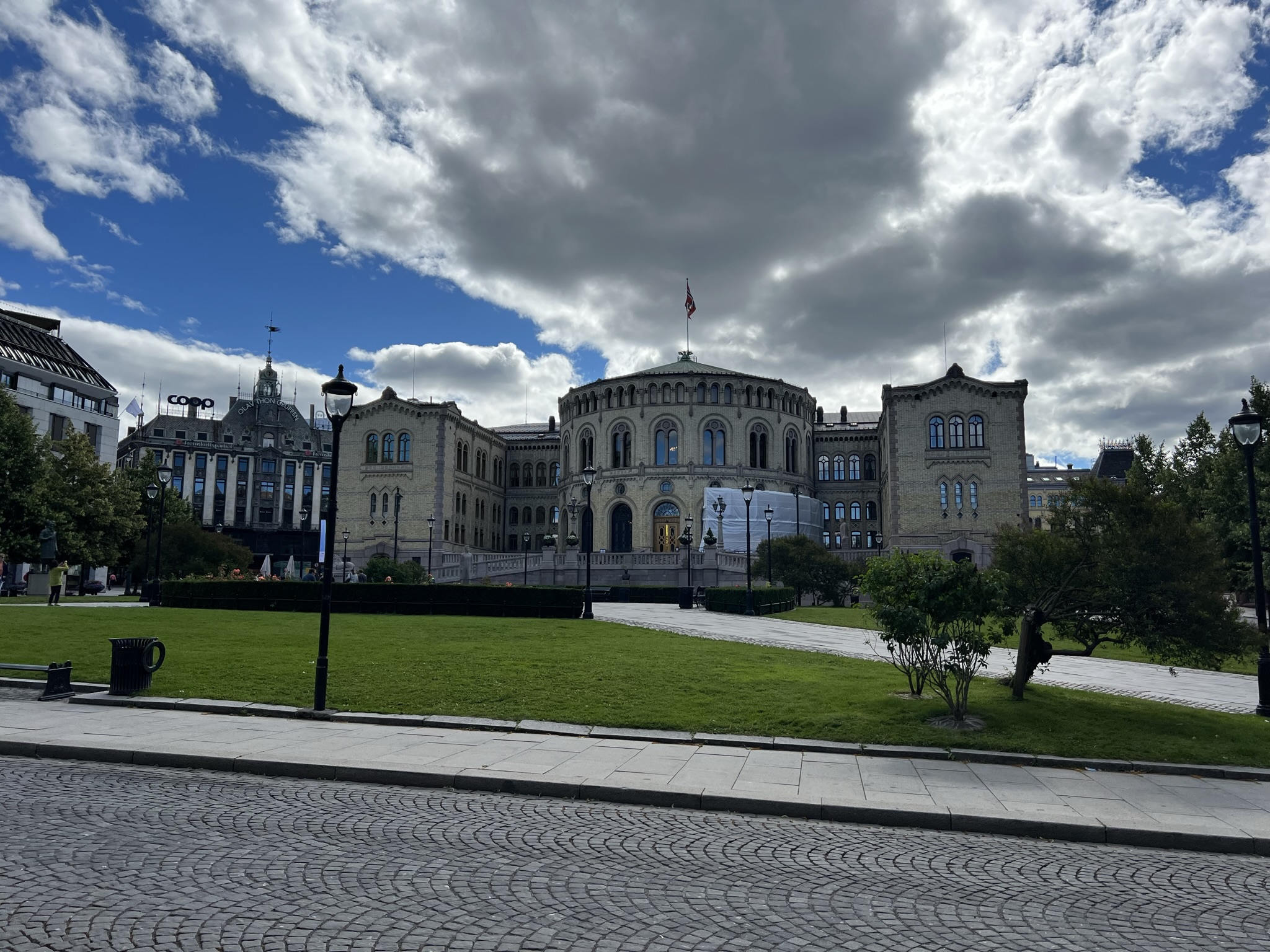
After the hot dog stand we walked toward the Parliament building on a square called Austurvollur. The Parliament building was under some sort of construction and one street we passed had yellow and blue flags flying in support of Ukraine. Our last foodie restaurant, Messinn was famous for its fish pans. We shared the arctic charr with cherry tomatoes, honey, almonds, lemon and plenty of butter. If I could have licked the pan, I would have, says a woman who can do with or without fish! After lunch it was still sprinkling and Gui took us to a taxi stand across the street. When we checked in at the hotel, our luggage was already in our room…and we needed to open the windows! Needless to say dinner was only drinks and appetizers at the Hilton. Next up…touring the Golden Circle and the southern part of Iceland.

STYKKISHHOLMUR AND FLATEY ISLAND, ICELAND

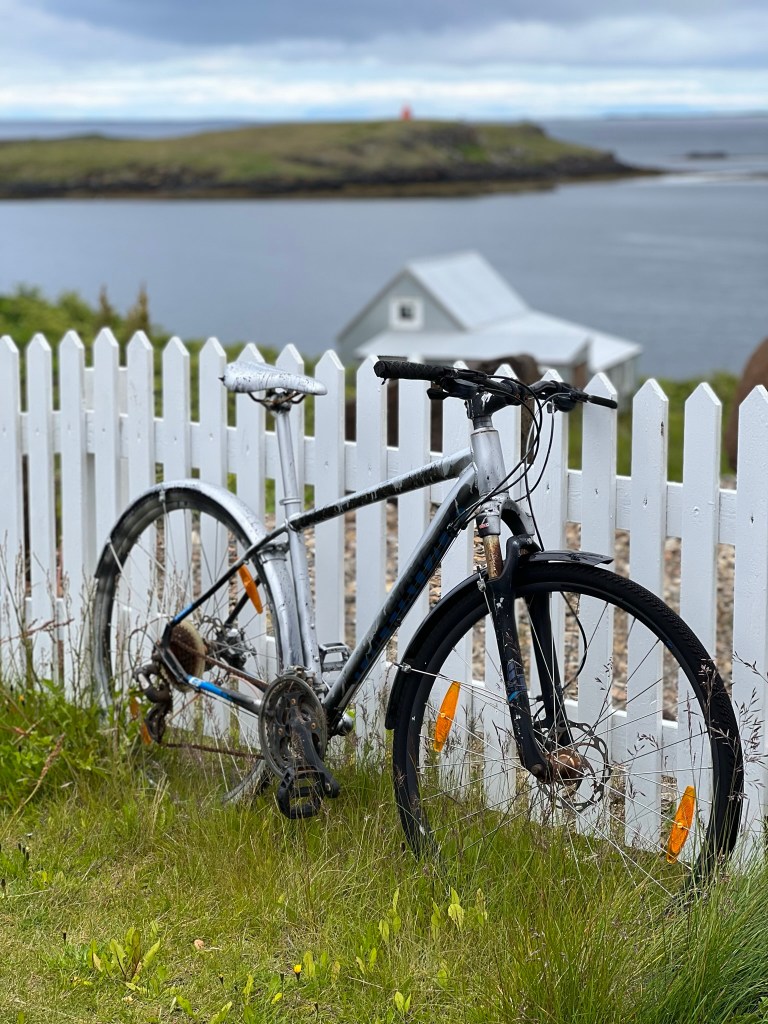
BICYCLE WITH A VIEW

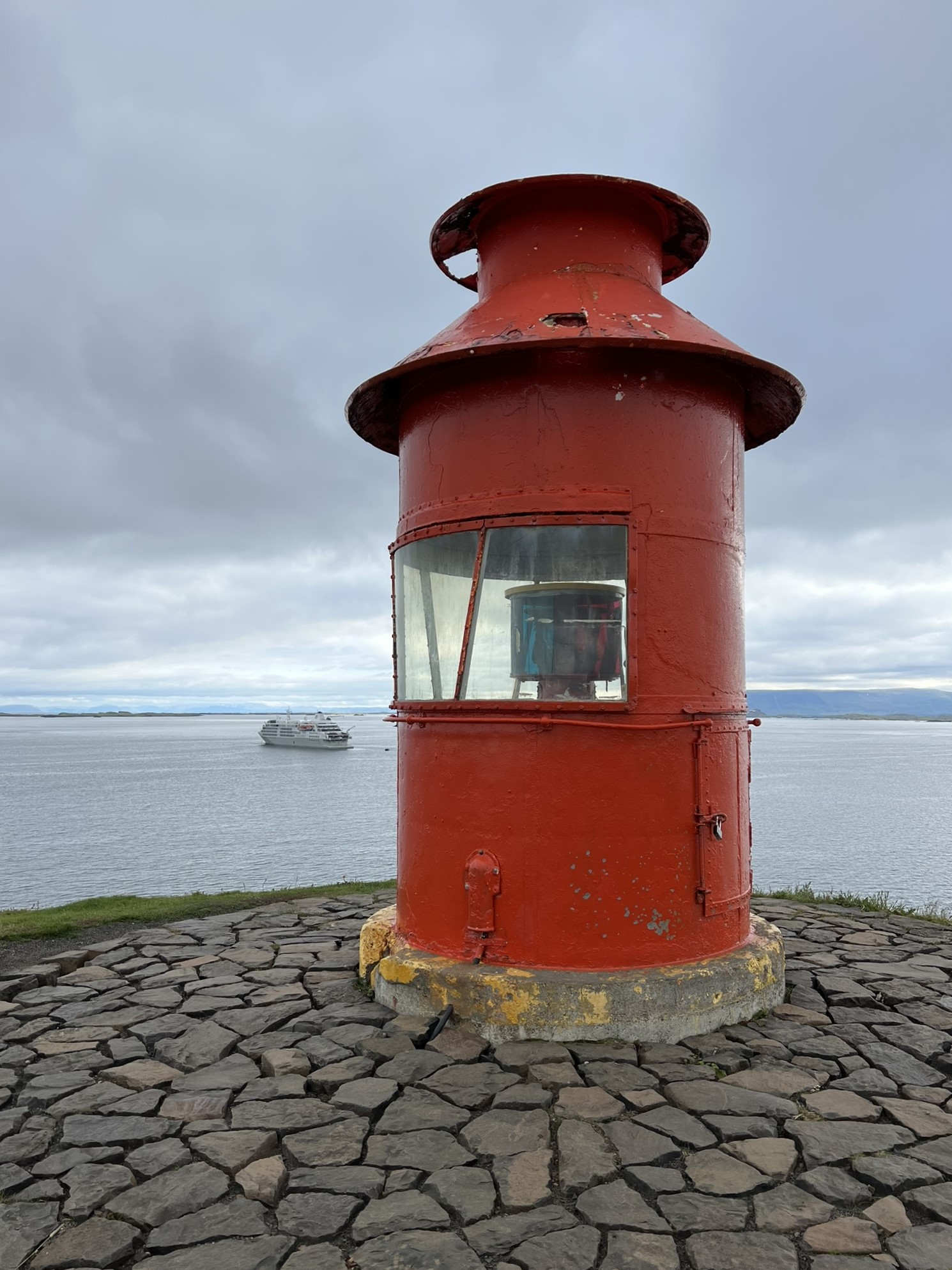
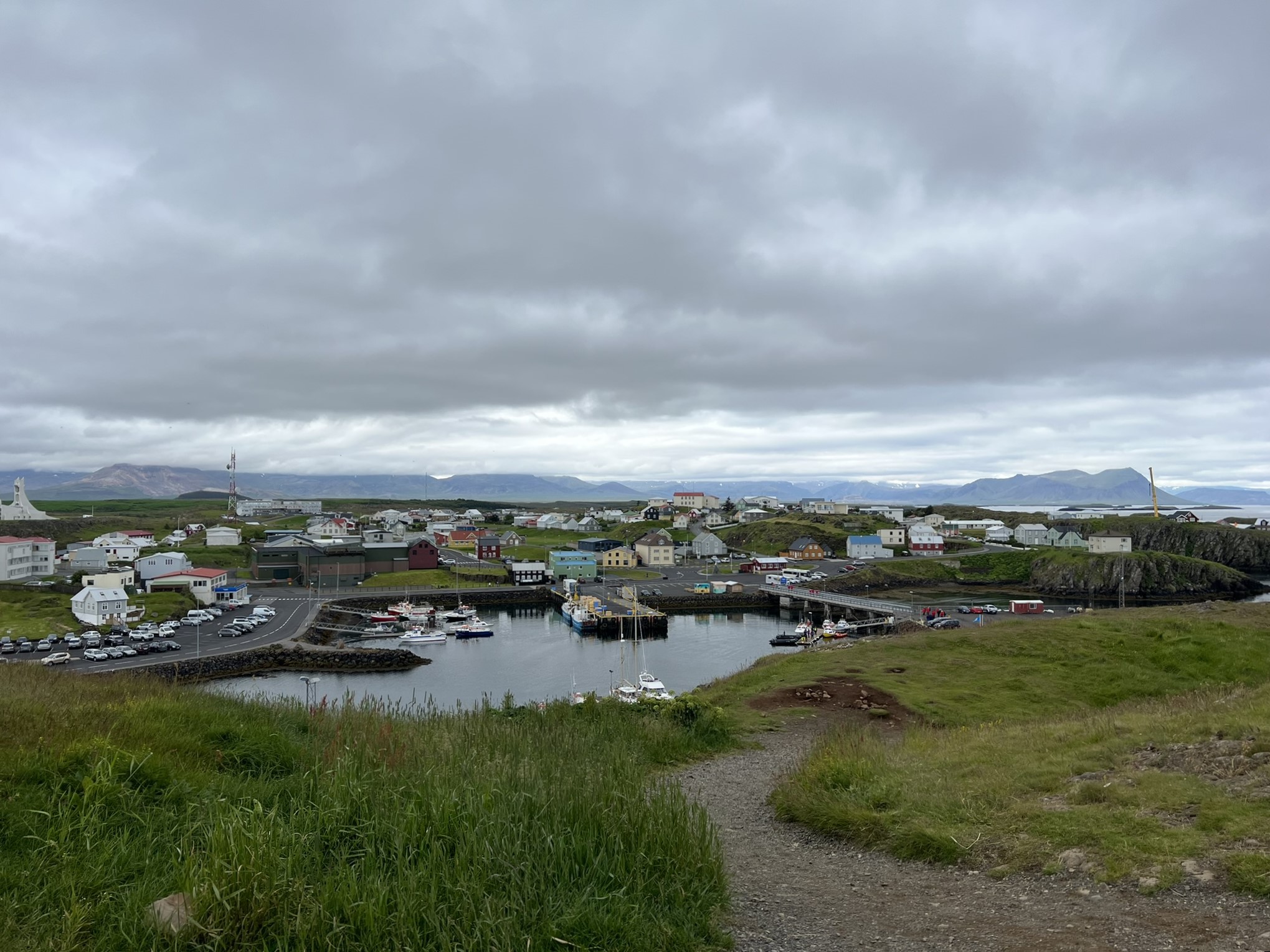
The Silversea Wind had one sailing day between Jan Mayen and Breidafjordur a bay that includes both Stykkisholmur and Flatey Island. Stykkisholmur is located at the northern end of the Snaefellsnes peninsula. (try pronouncing Icelandic place names…lol!) Stykkisholmur has a natural harbor that helped the town become an important trading center established in the 1550’s and it is still a major fishing port.

Do you know what it is like to wake up with a crick in your neck? Michael woke up with a crick in his back and was so sad to miss the boat ride to taste fresh sushi. He spent most of the day rubbing ointment on his back and hobbling around the ship with his hiking poles and seeing what the Doctor thought. Larkin went without him on the fishing boat and she also got lovely photos of puffins on their way around the bay. I decided to head in early on a zodiac and walk around town on my own and up to the lighthouse for a great view. A lovely morning …
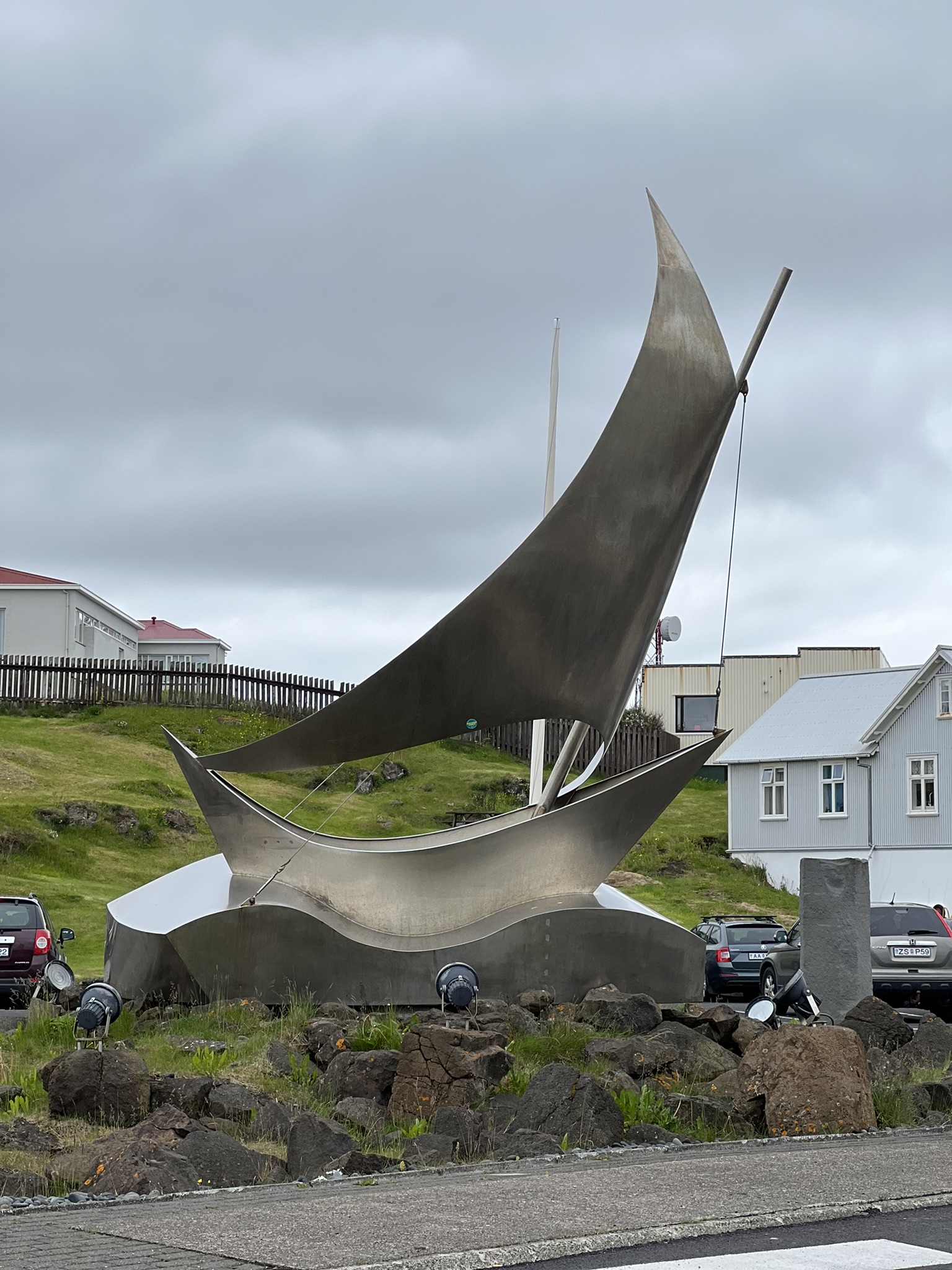
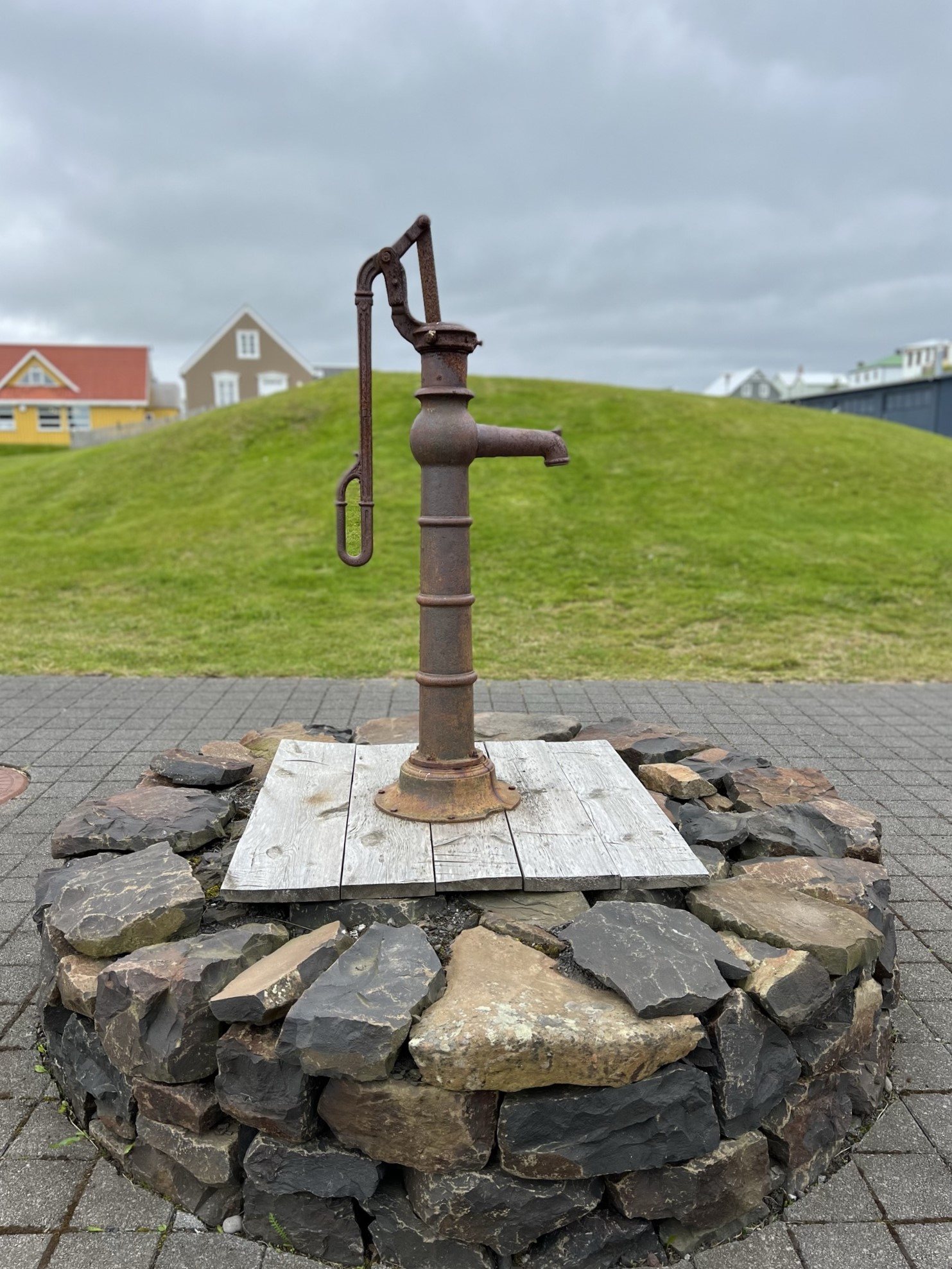
My walk up to the lighthouse and around the harbor…
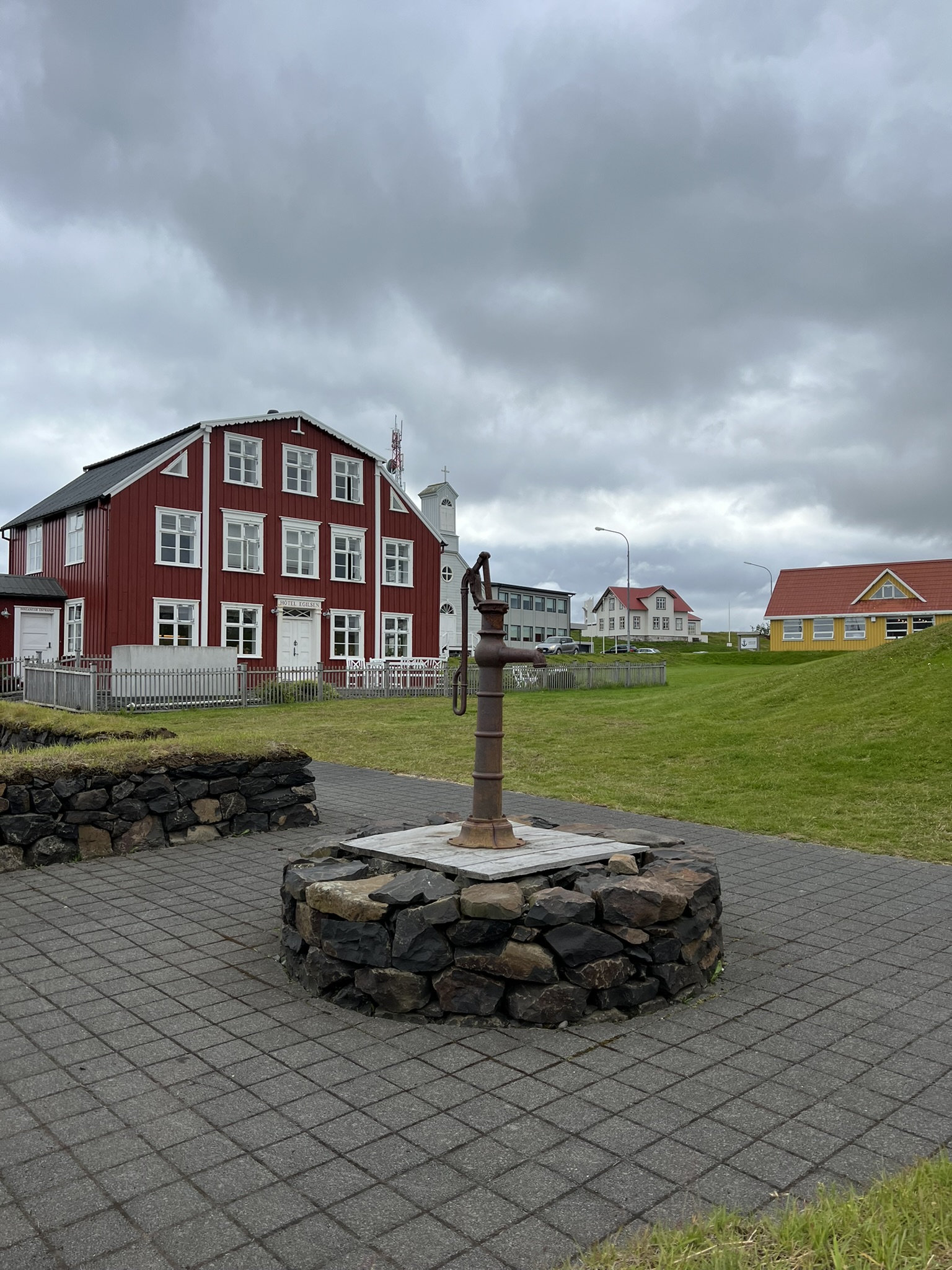
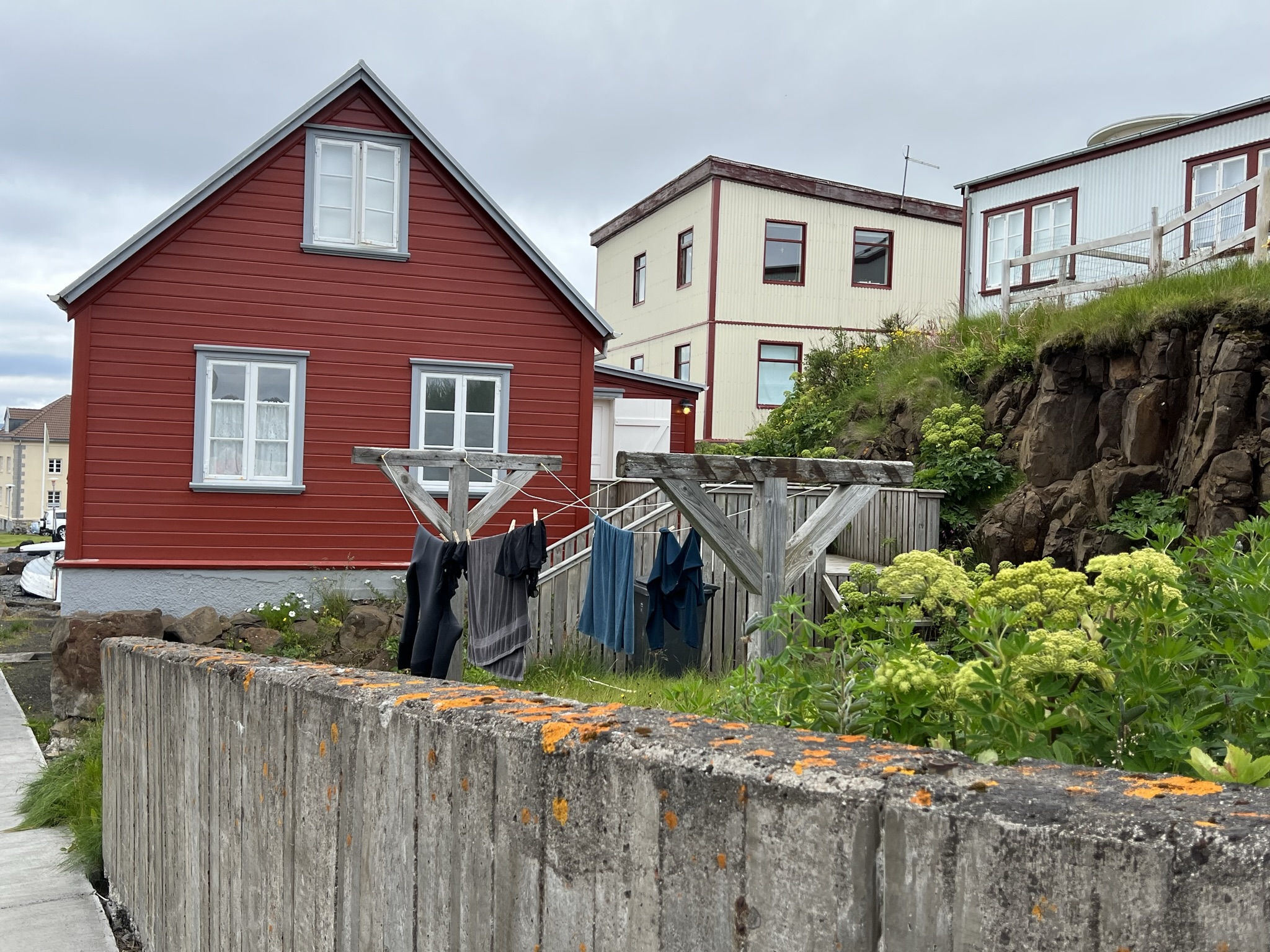
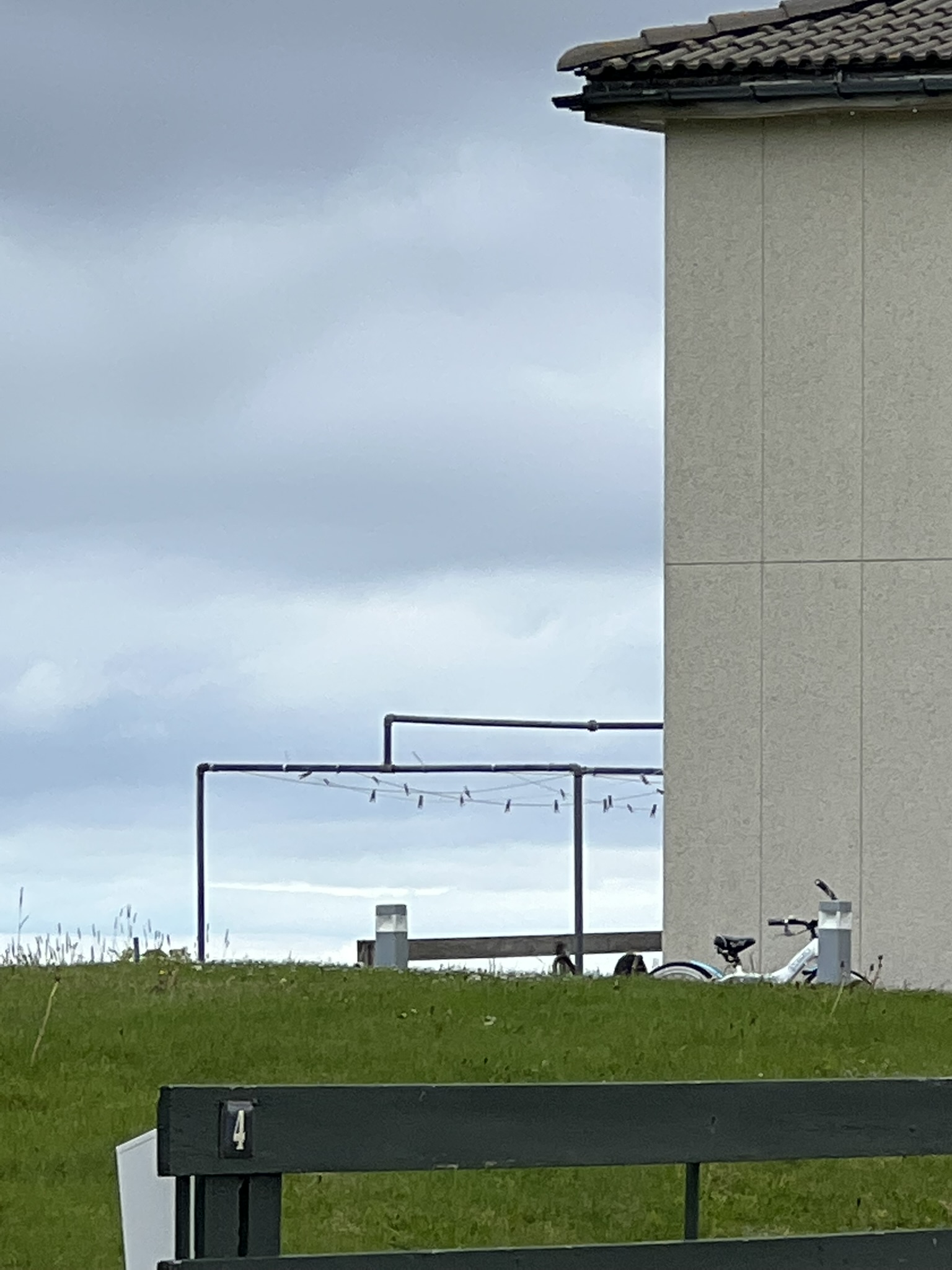
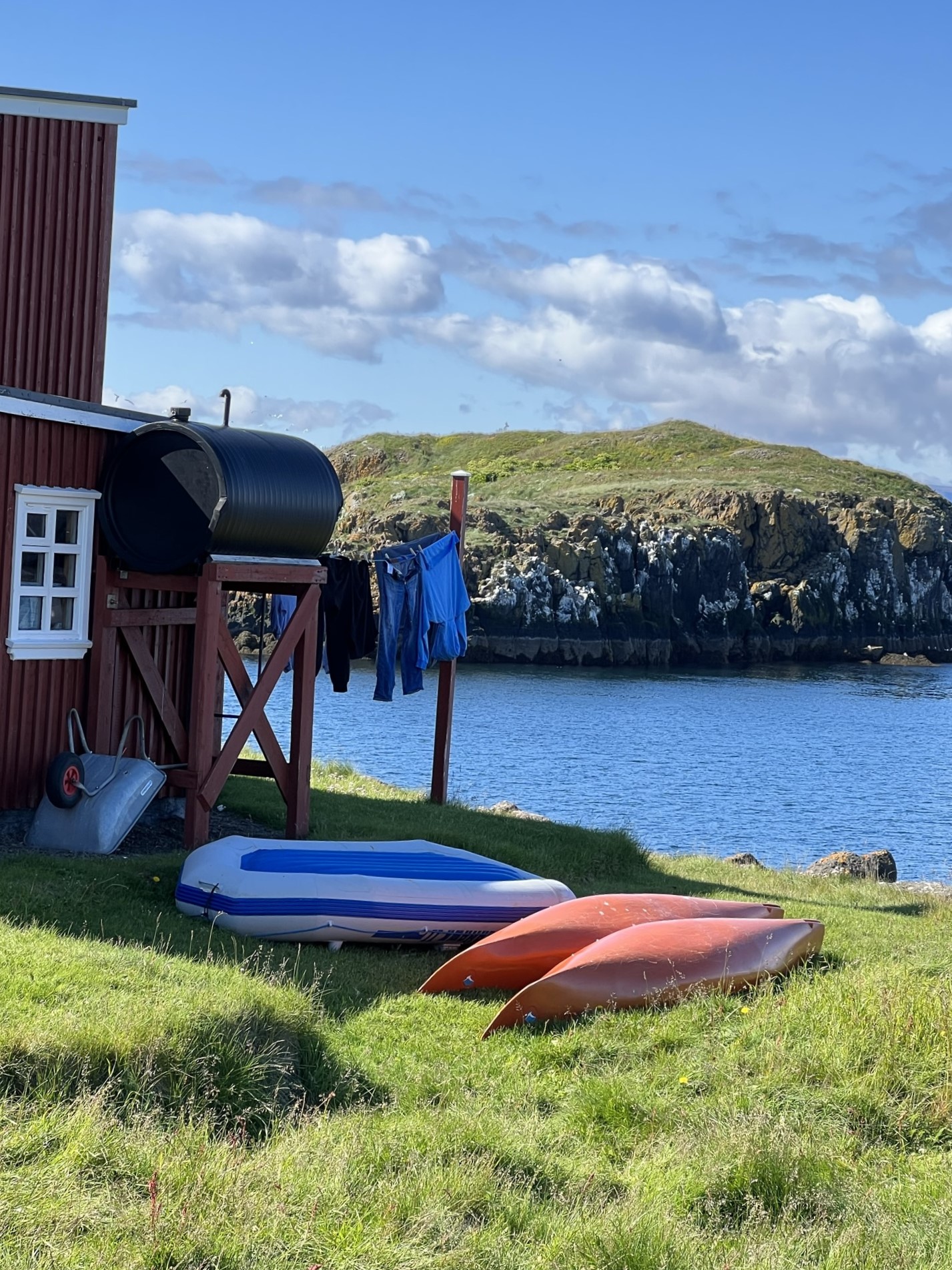
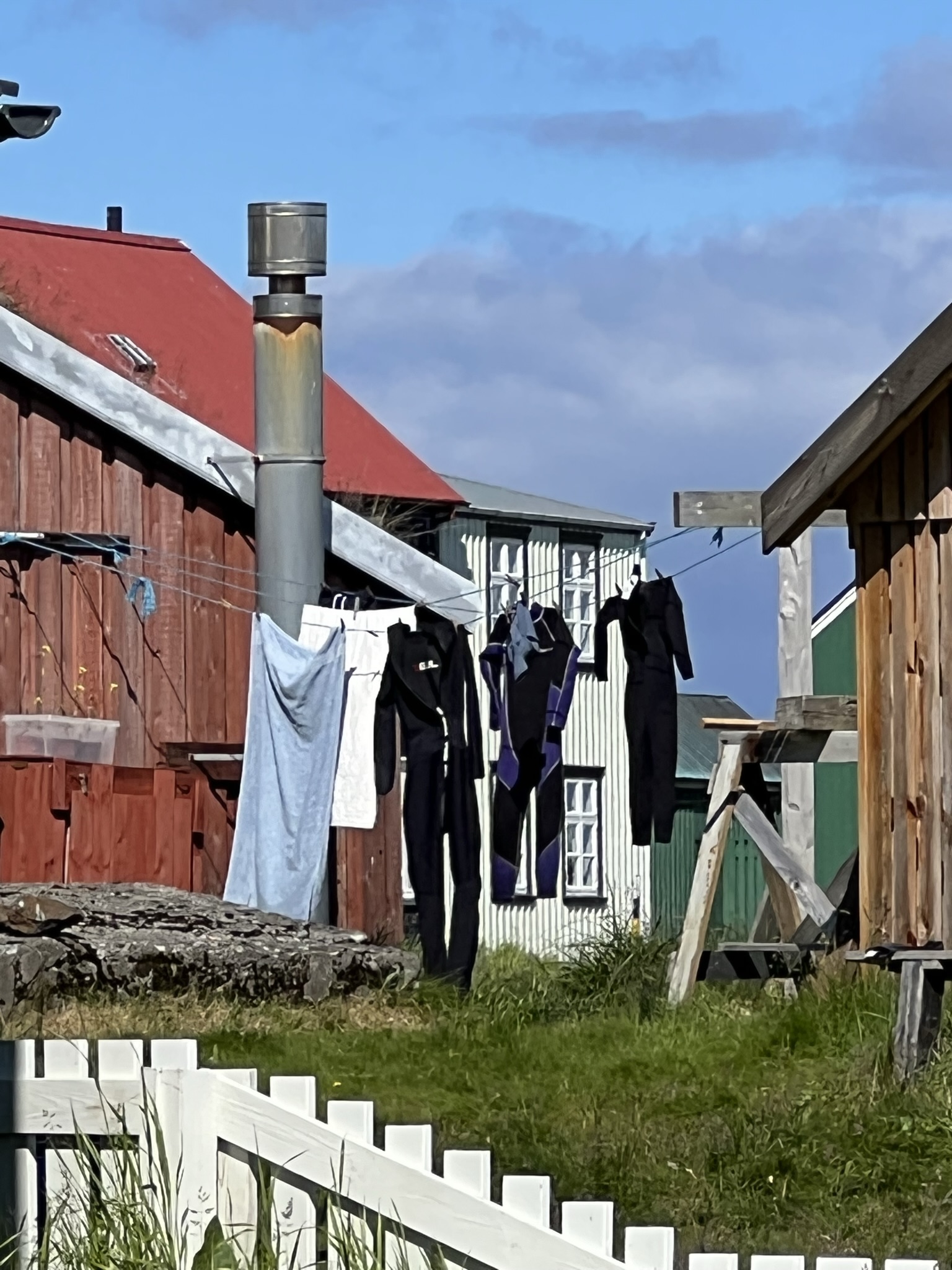
Same laundry – two views as well as homes with empty laundry lines. Amazing how the locals have enough warm or dry days to actually use these lines. I enjoyed the dog watching me intently as I walked around Stykkisholmur.

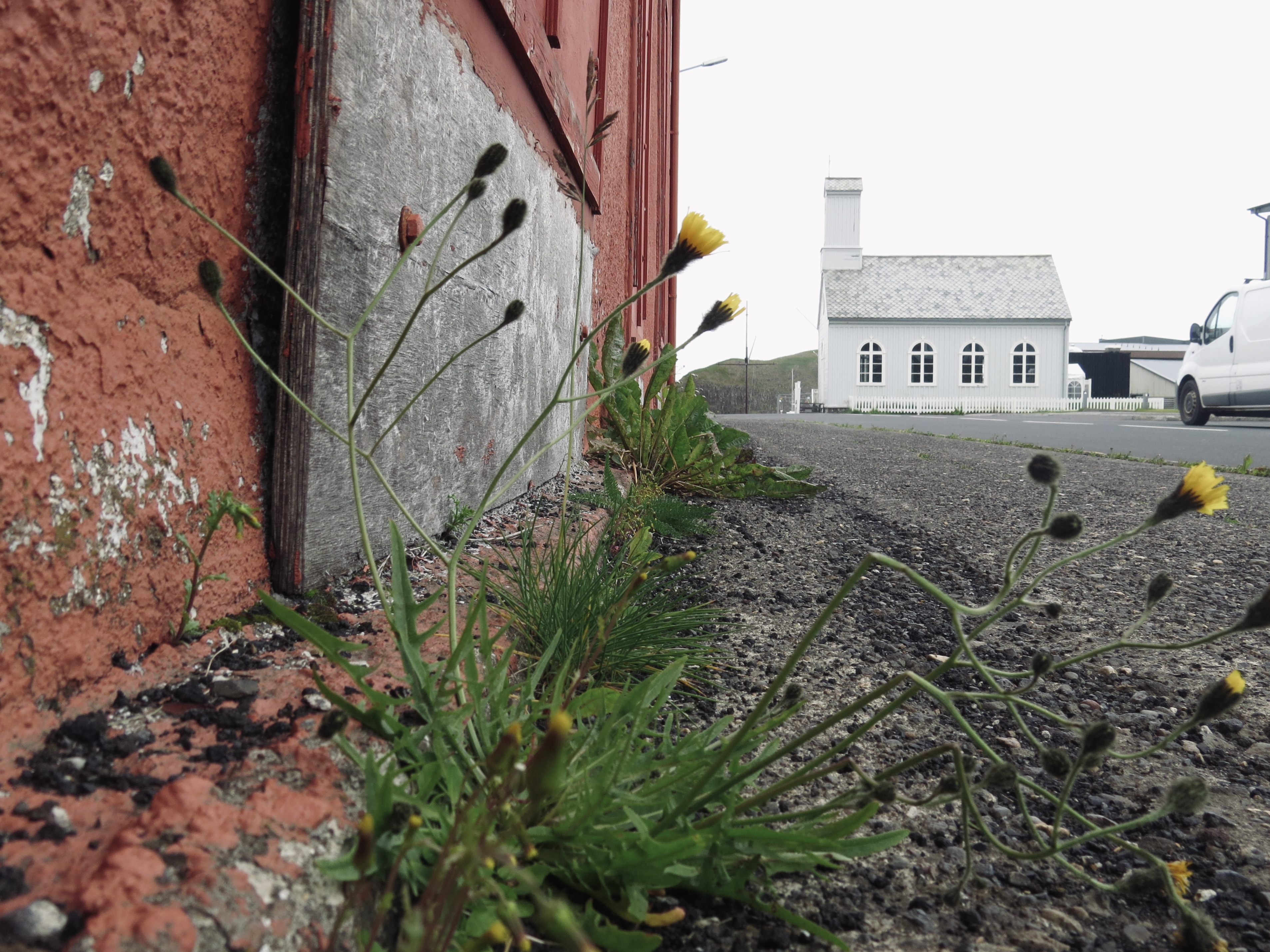
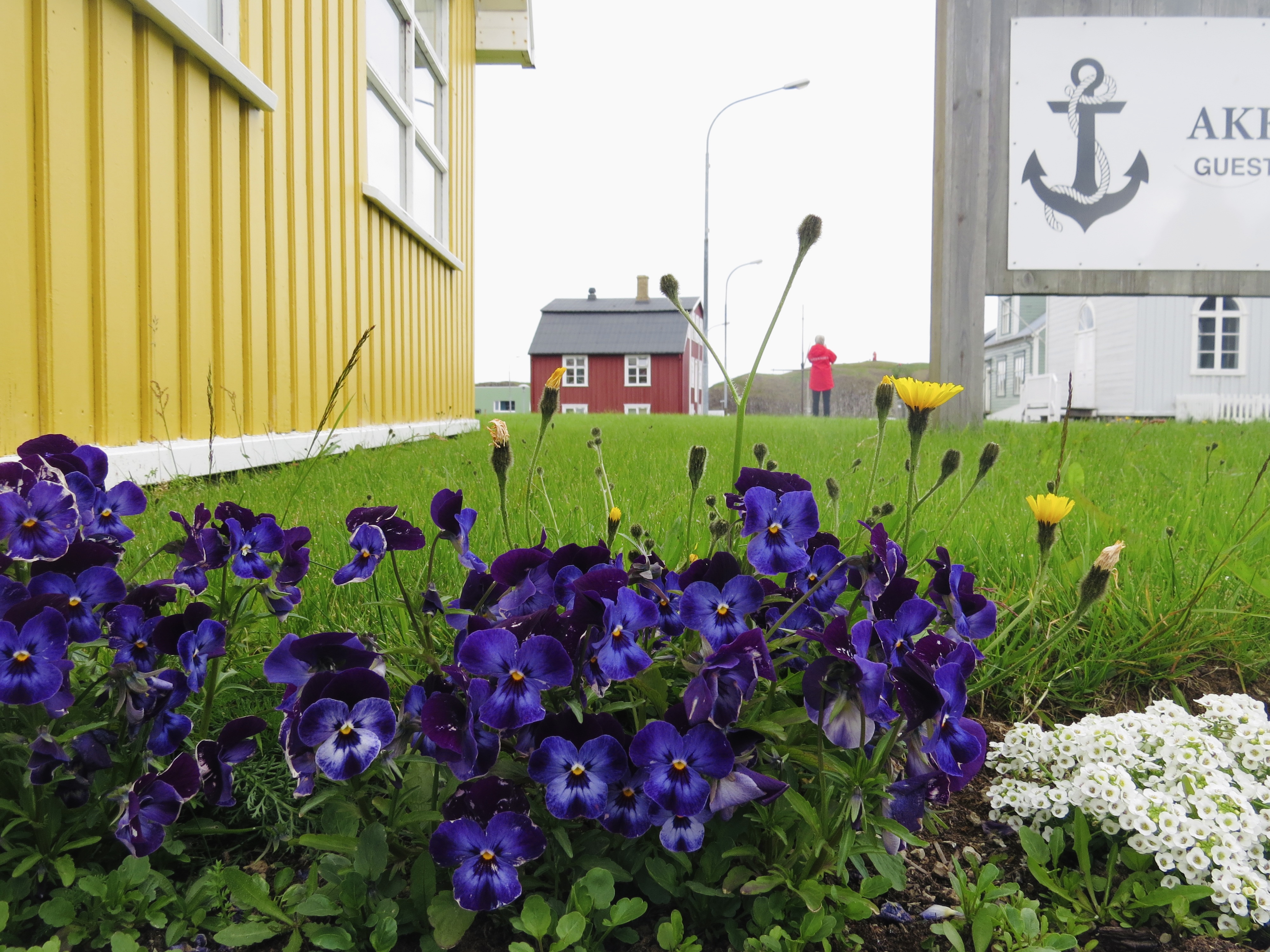
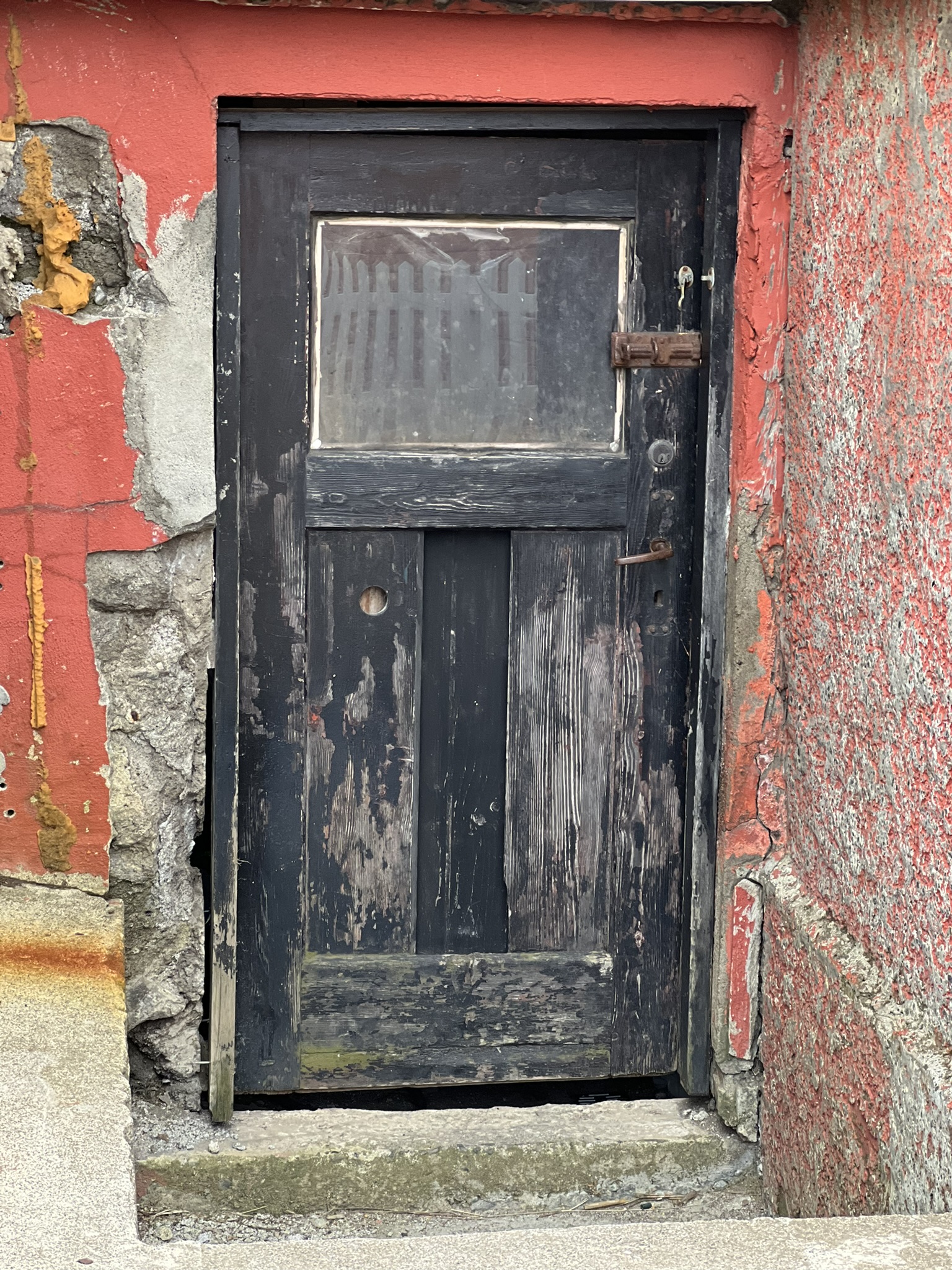
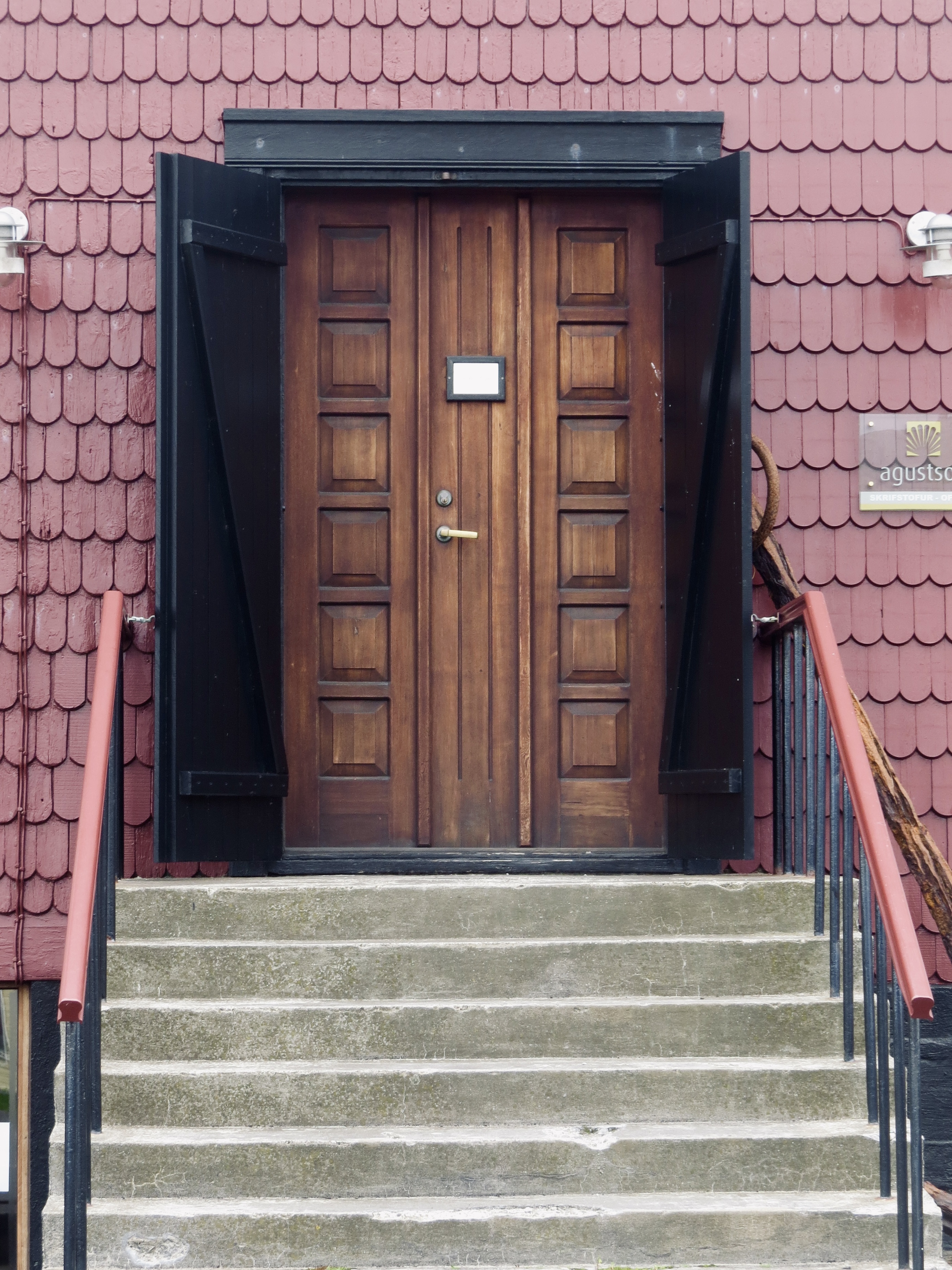
Most of the creative photos below were also around town and were Larkin’s when she came back to port from the boat outing. We both enjoy photographing doors.

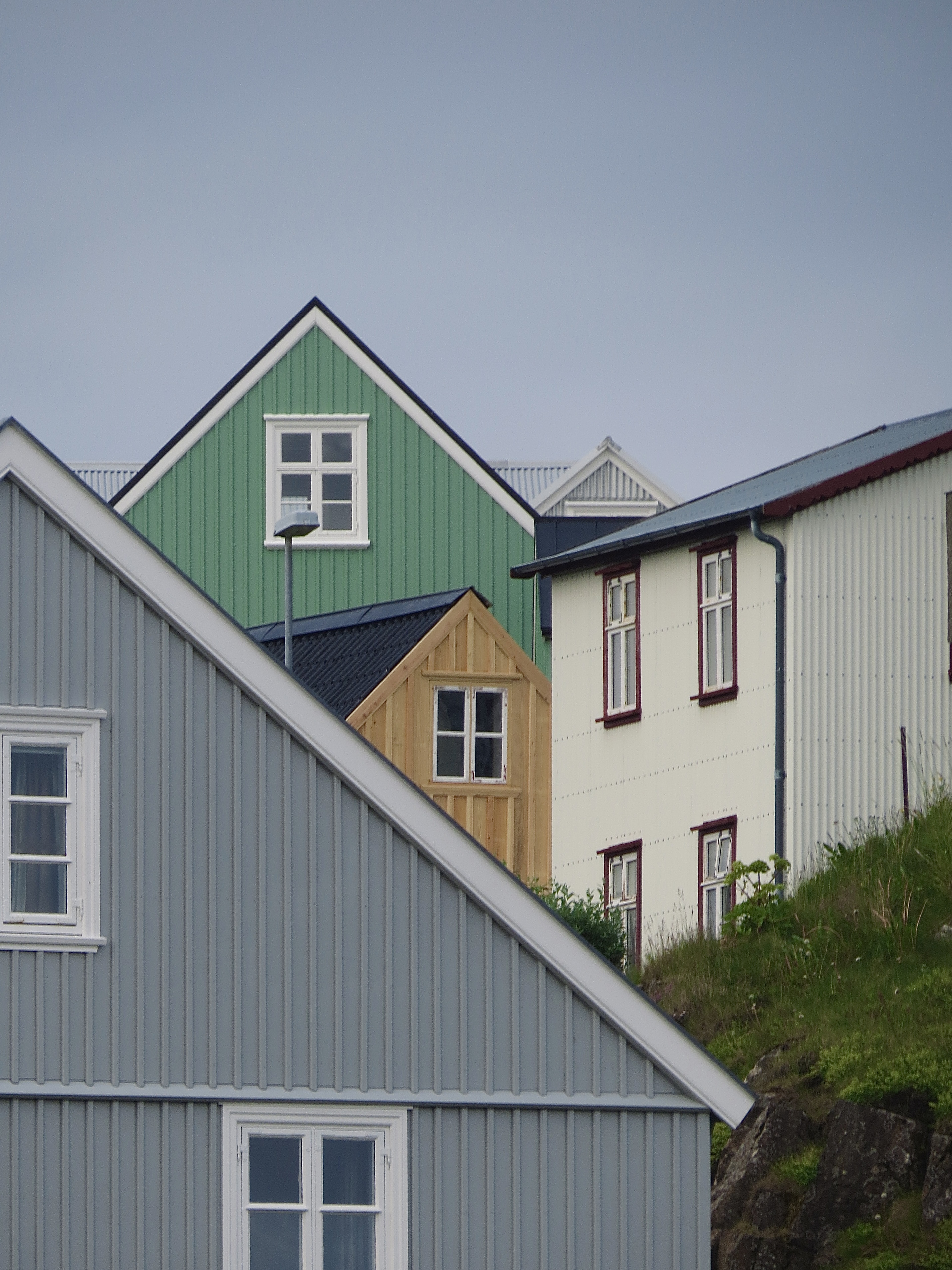
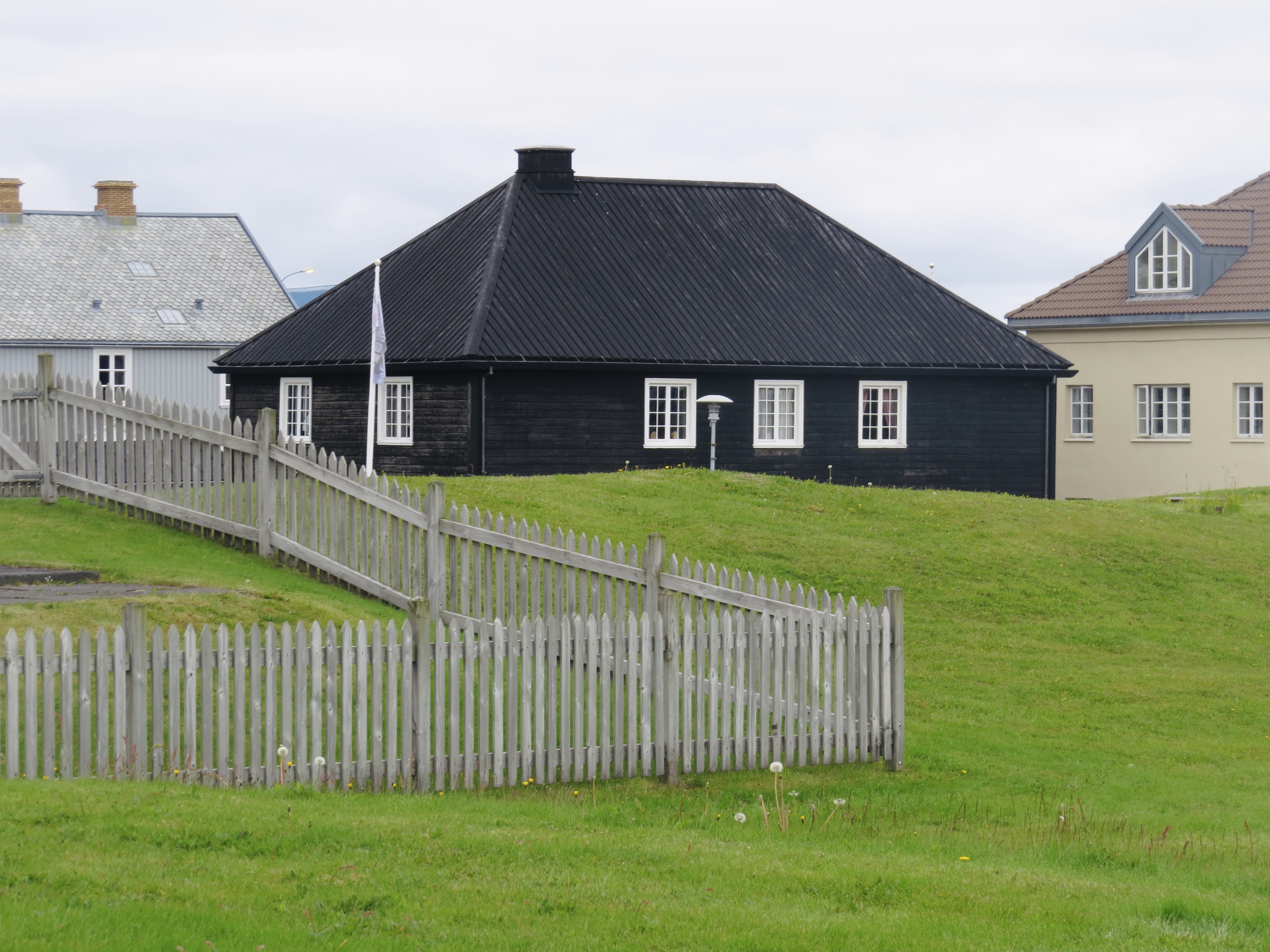
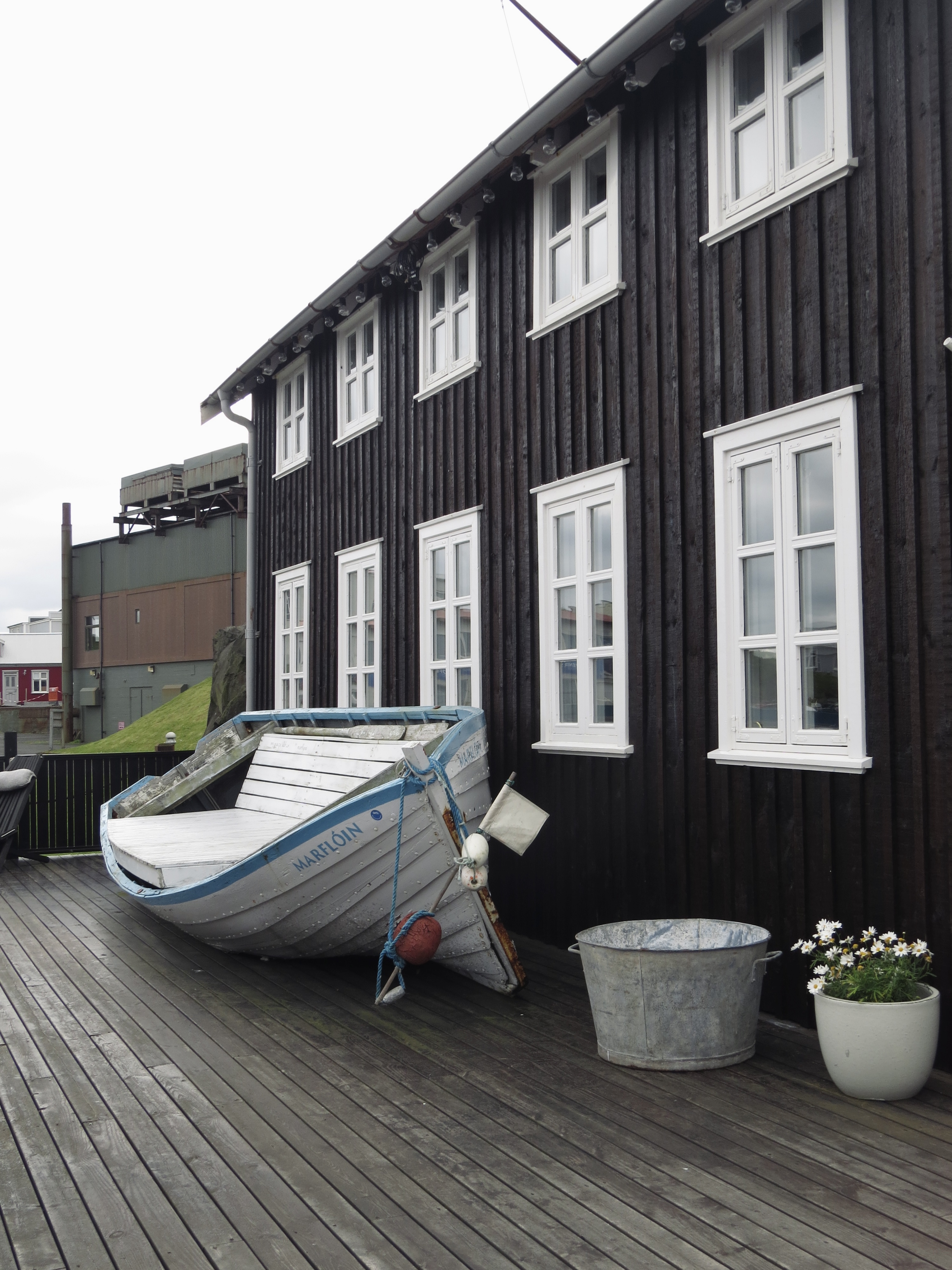
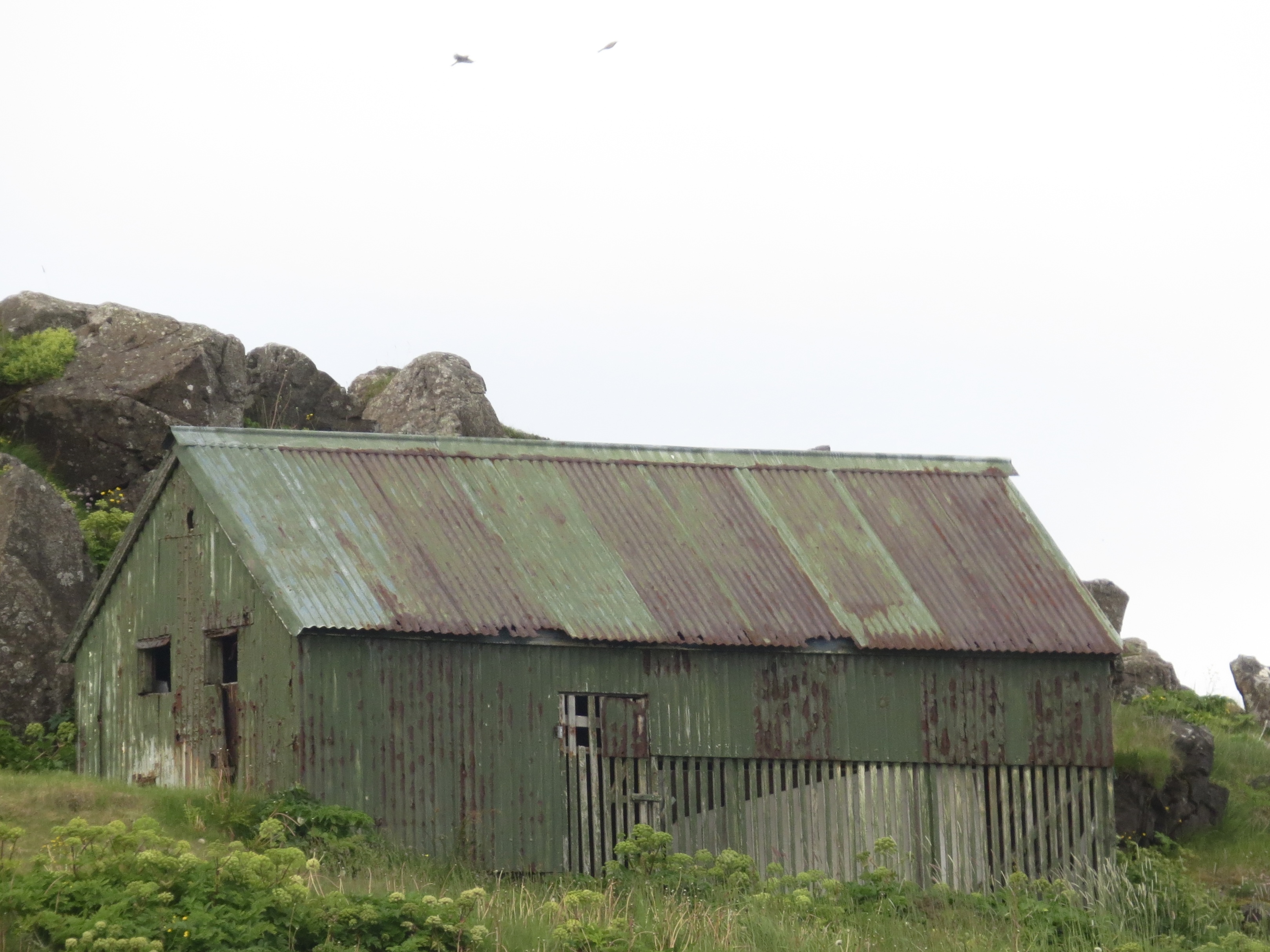
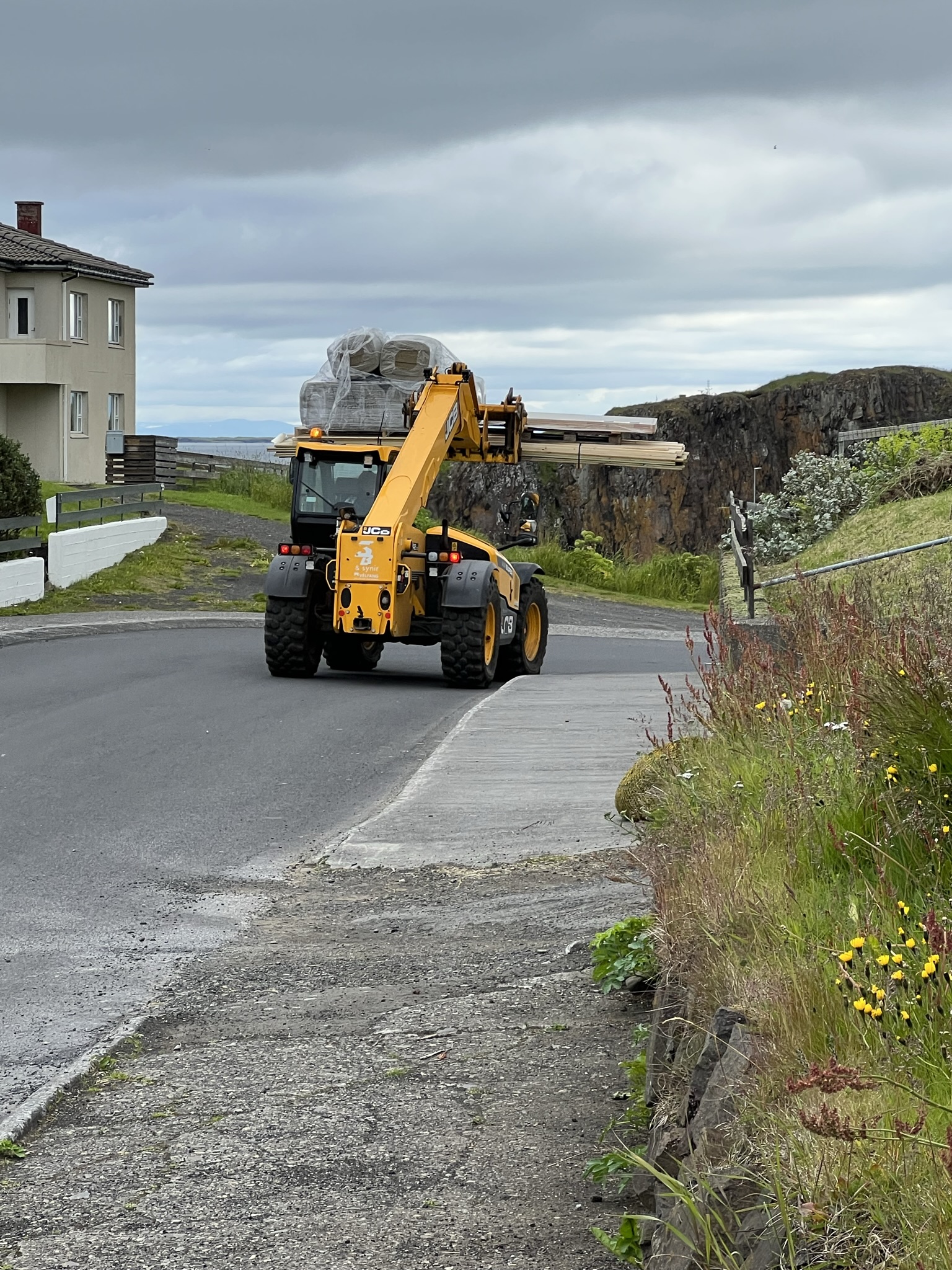
Amazing how many vehicles can be used to haul needed supplies around town. Almost all homes I saw had little outdoor patio areas with chairs and often bbqs. The home colors are muted but colorful and they definitely reside in a very difficult weather area.

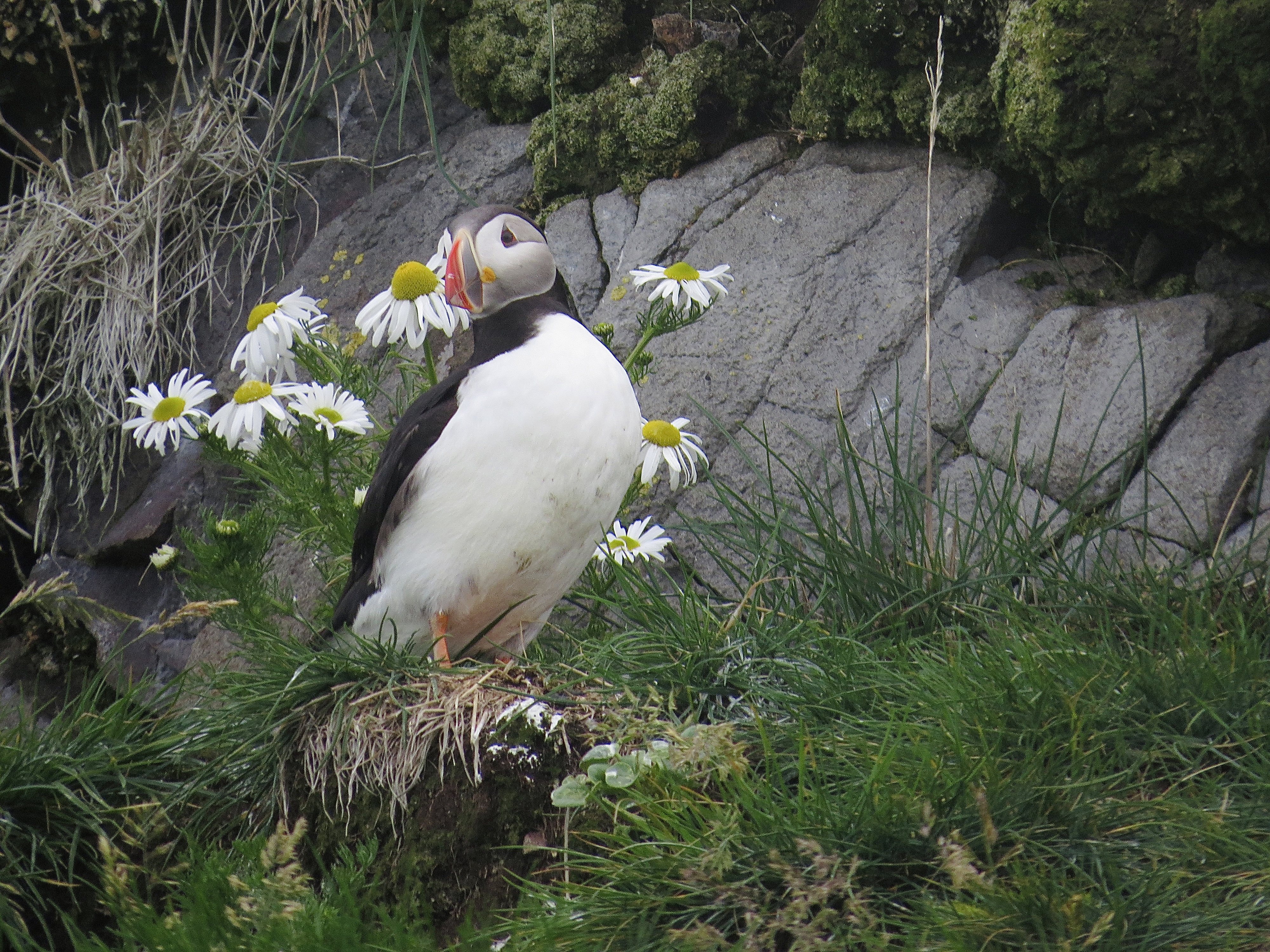
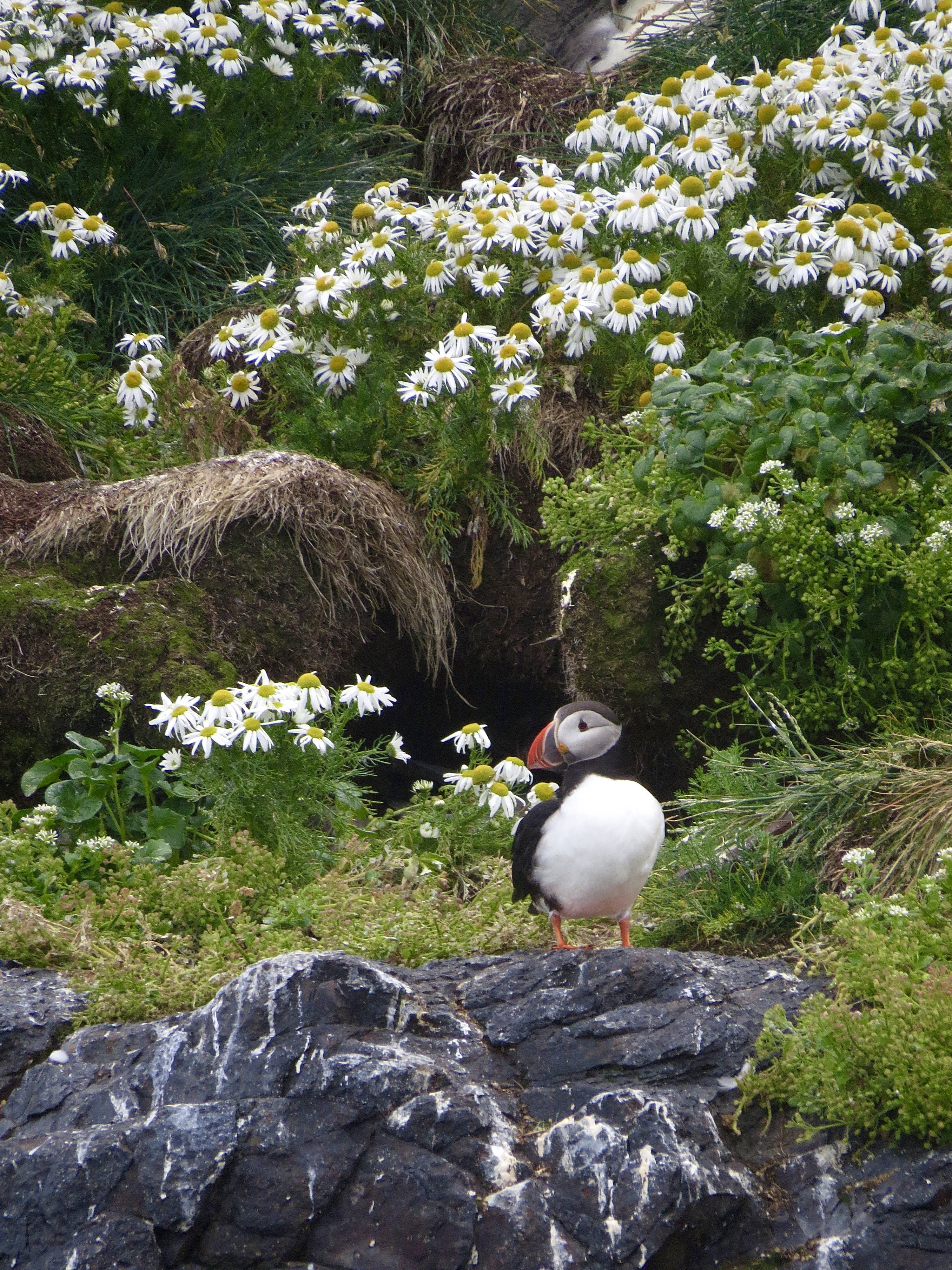
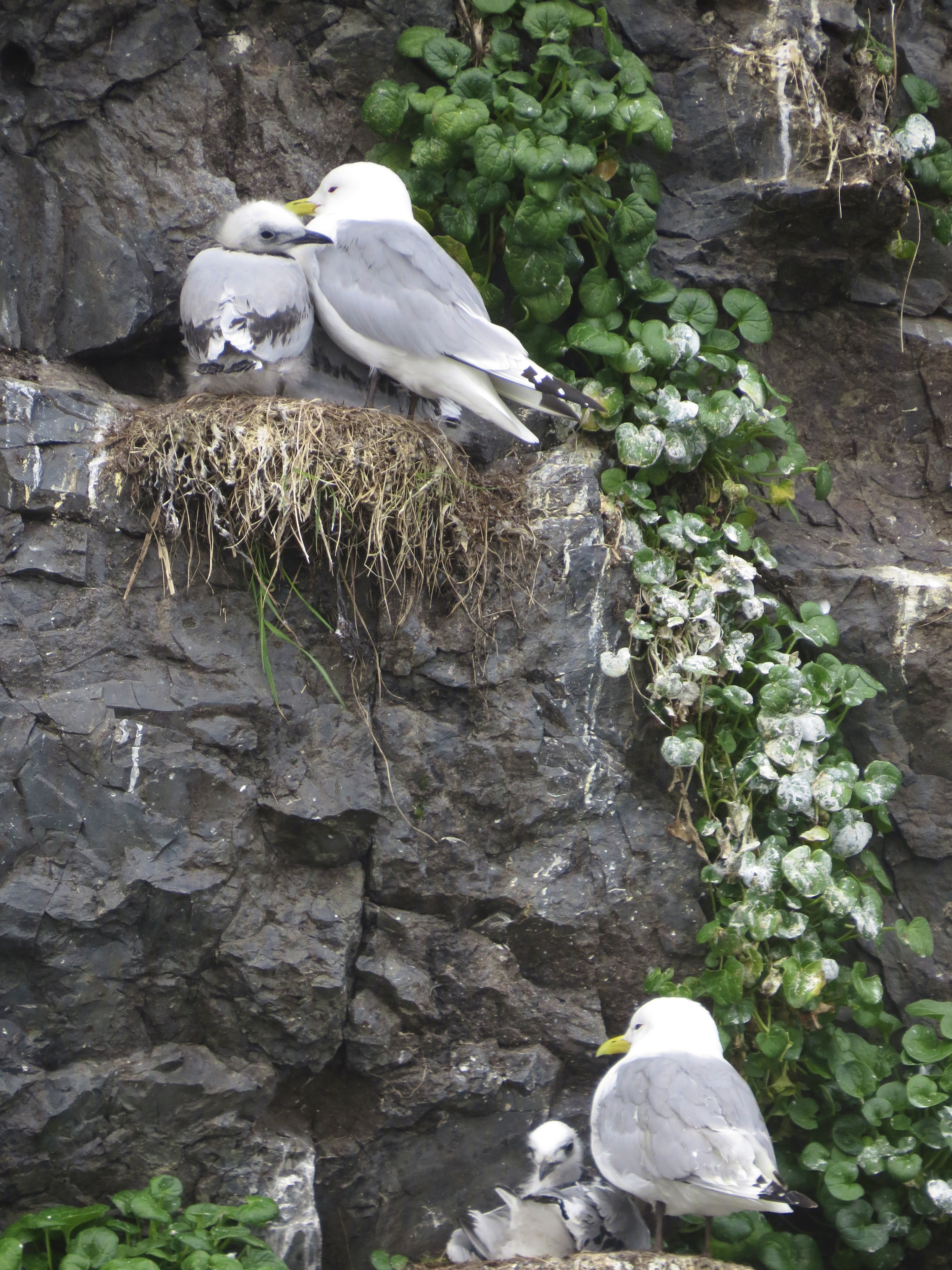
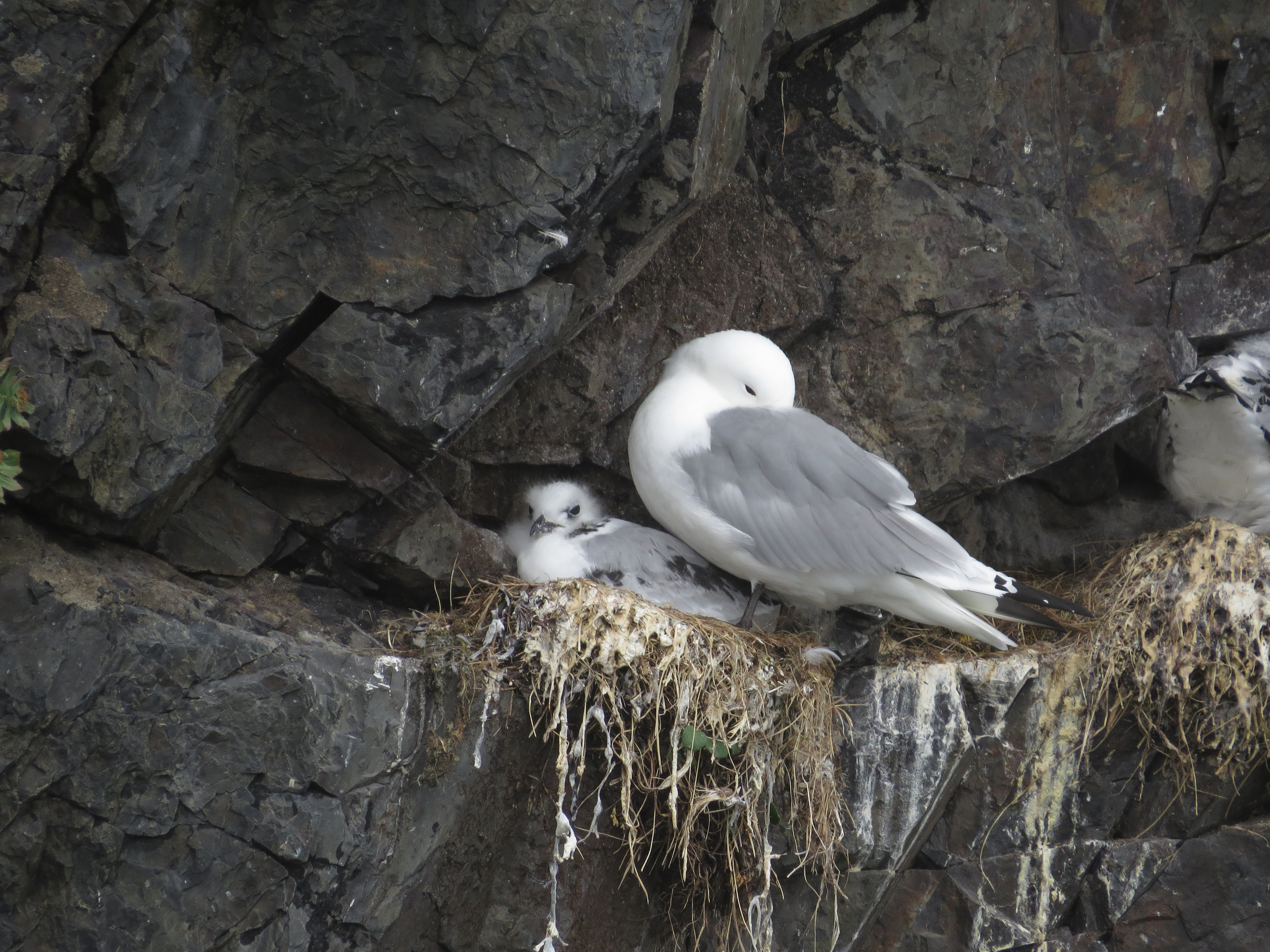
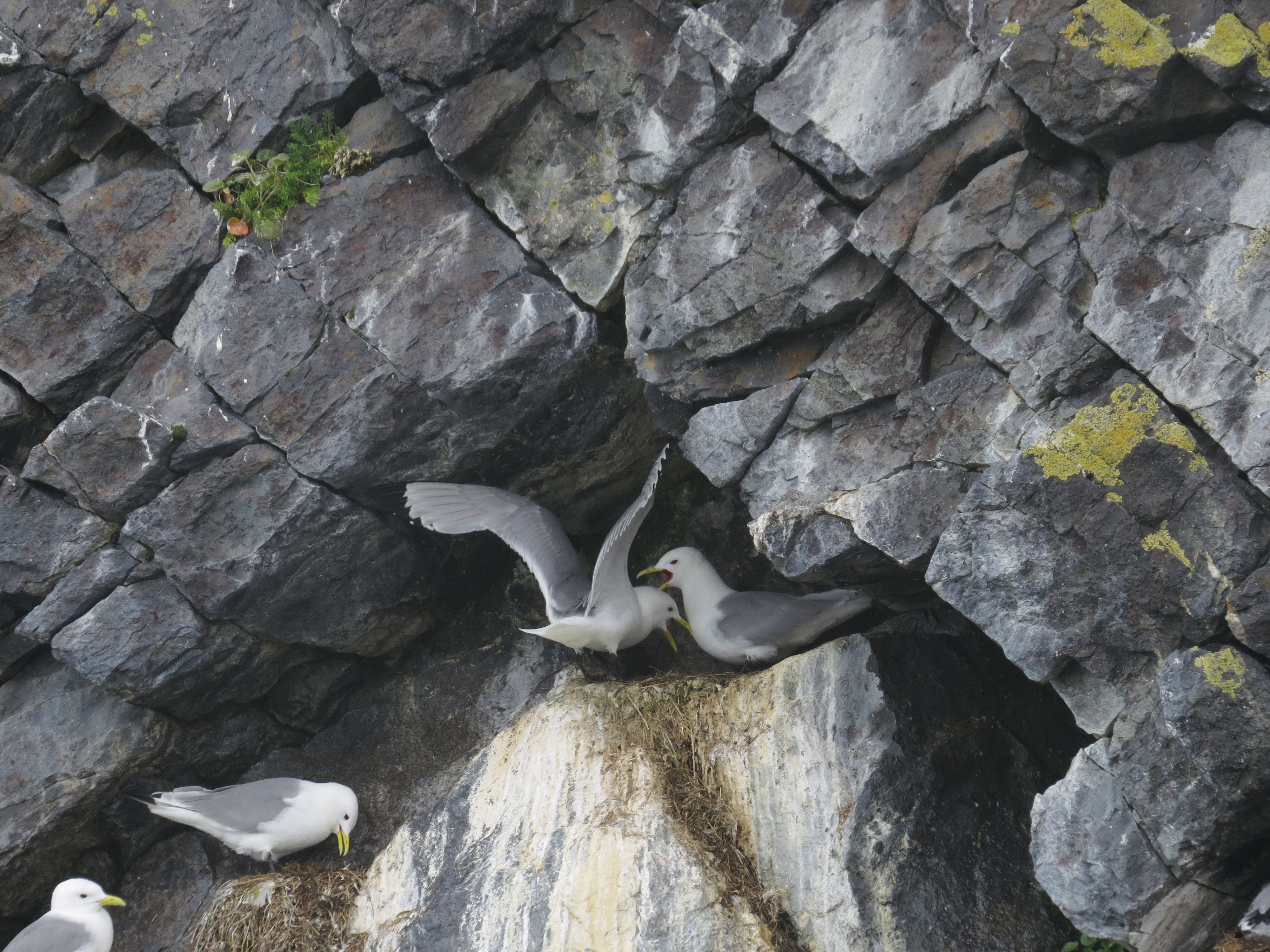
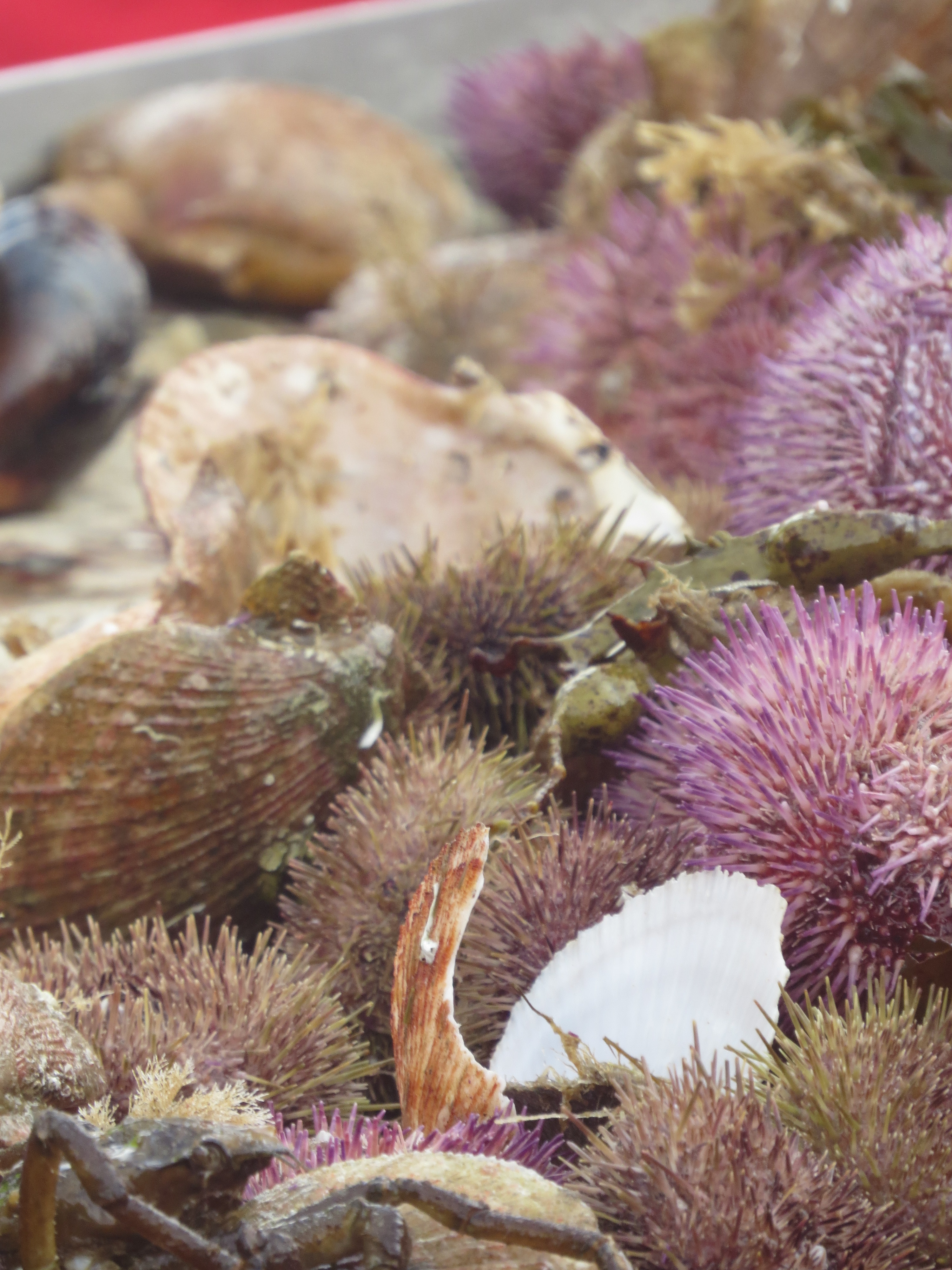
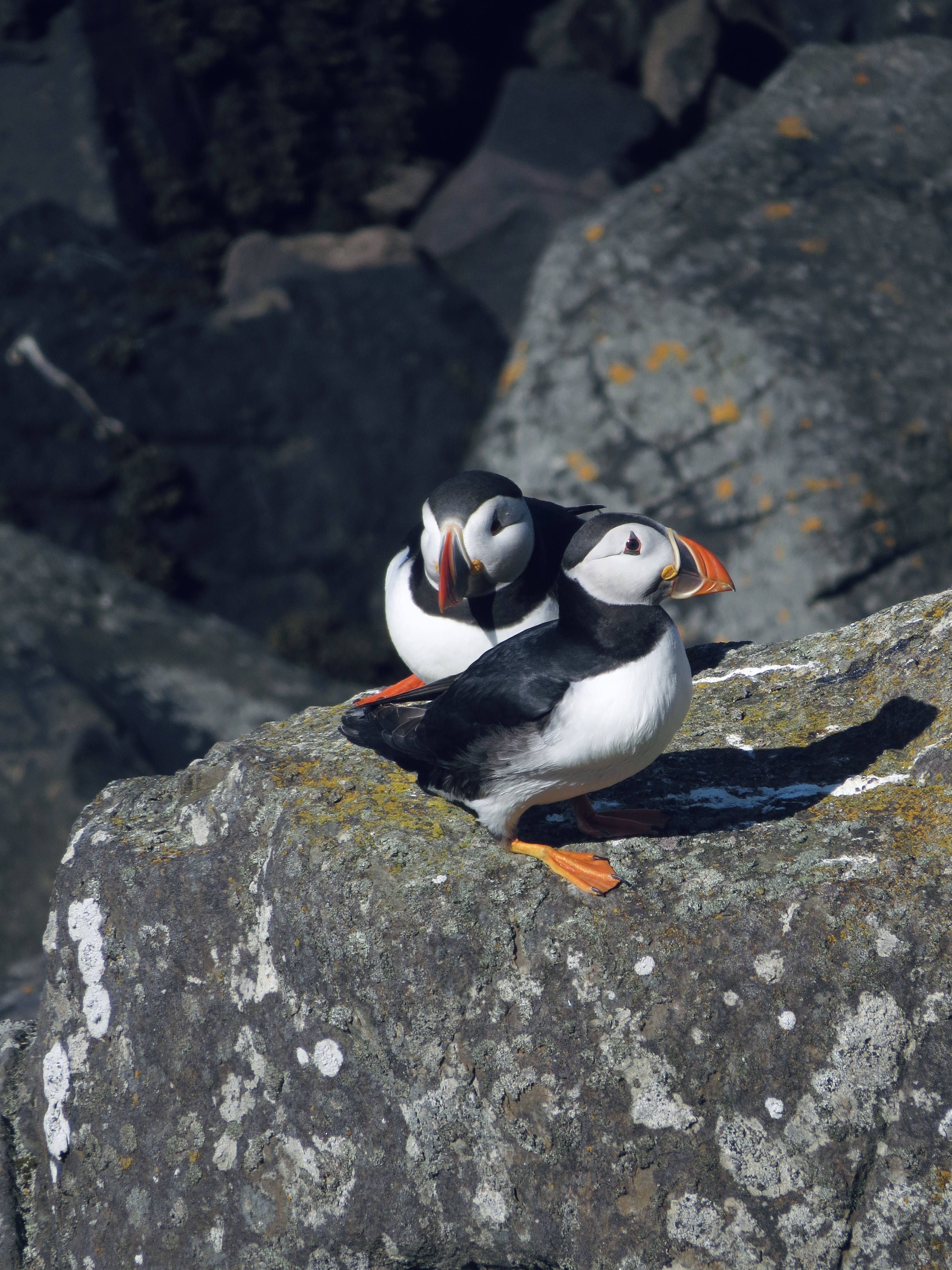
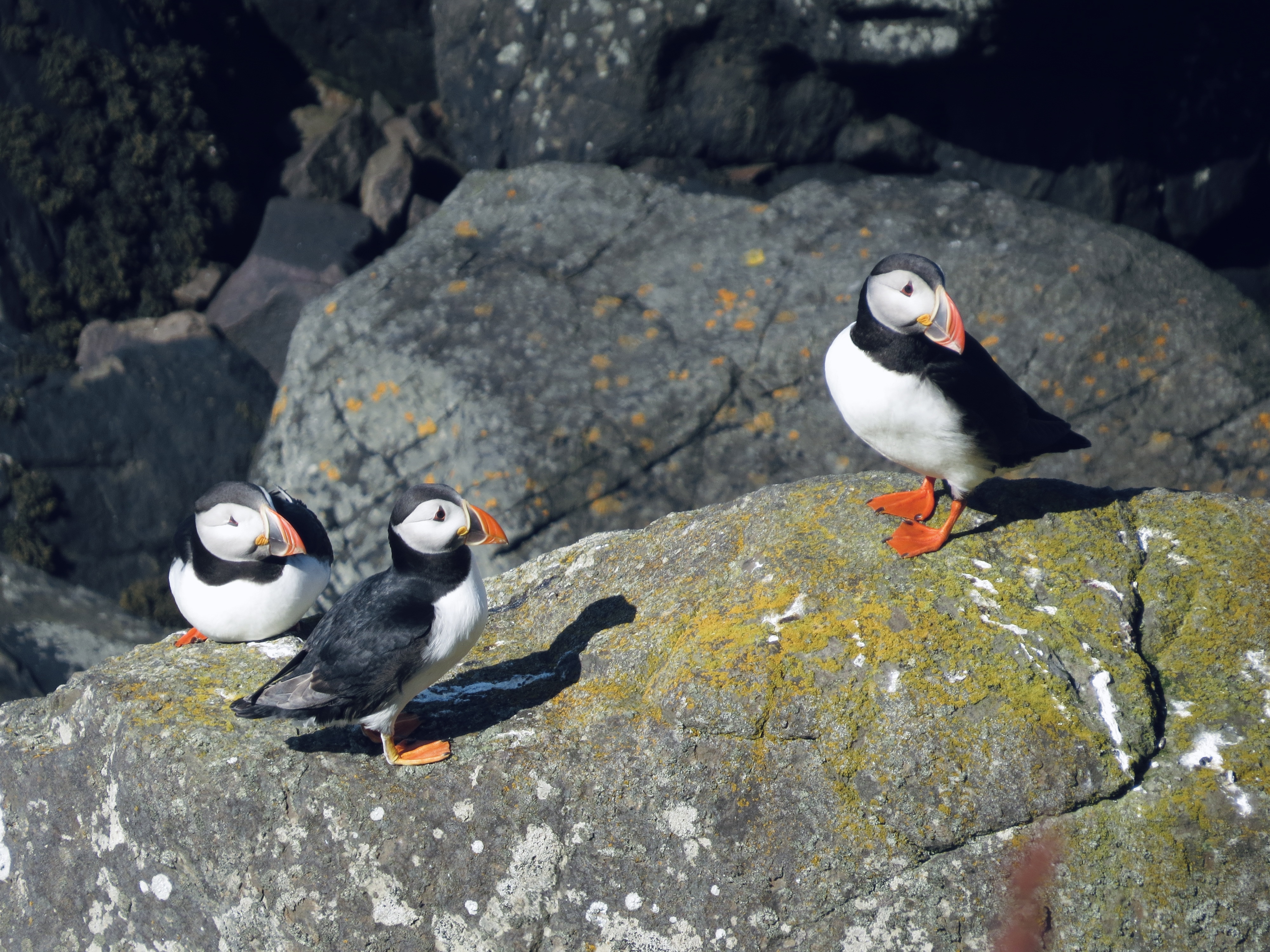
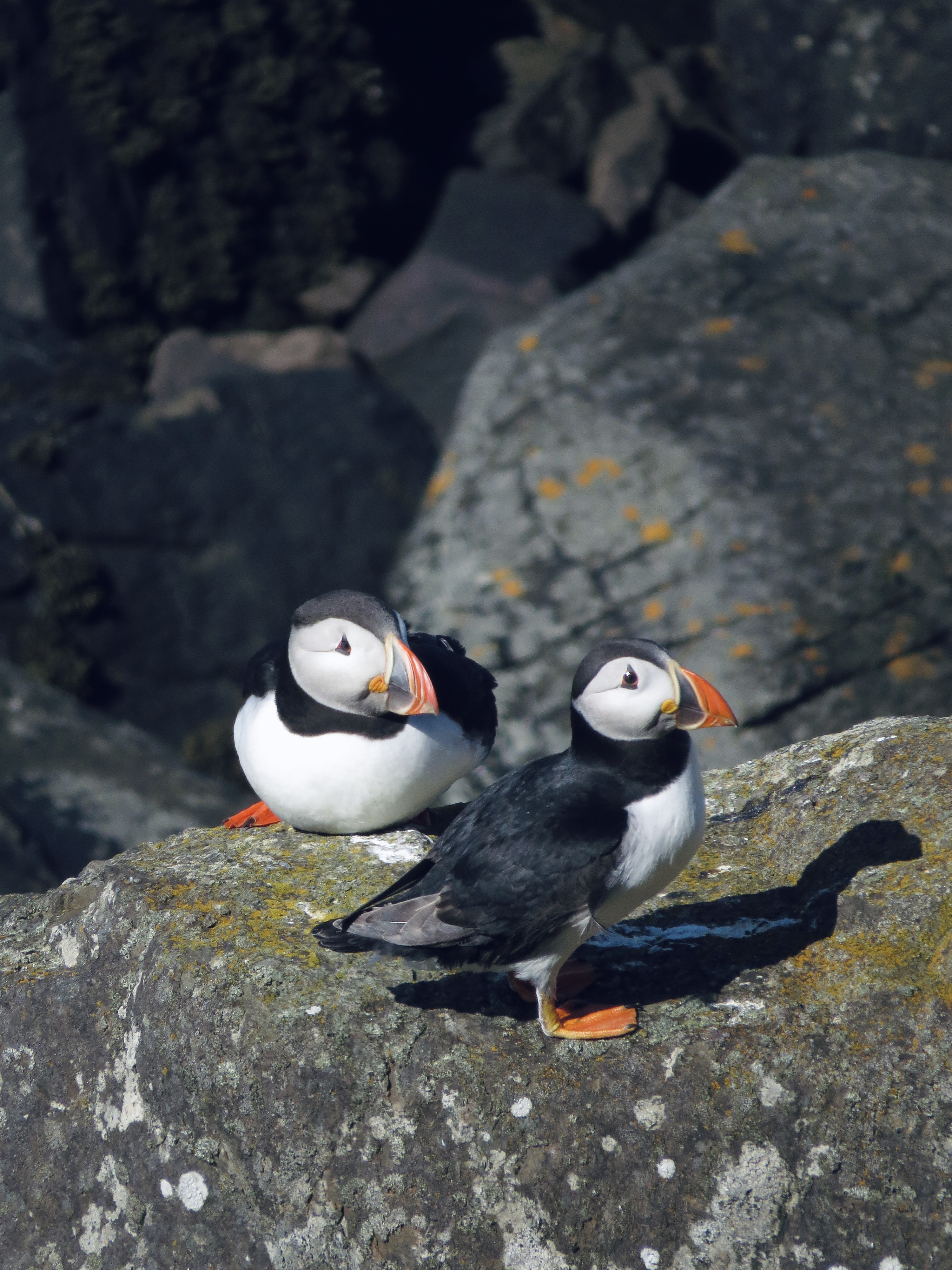
Larkin took photos of puffins on the cliff by the daisies, the white and grey kittiwakes and of course a photo on the boat of the sea urchins which she could try during their cruise. I understand the kittiwakes are like the twenty eights in Australia…both birds calls sound like their names. Kittiwake, kittiwake or twenty eight twenty eight. Cute names!

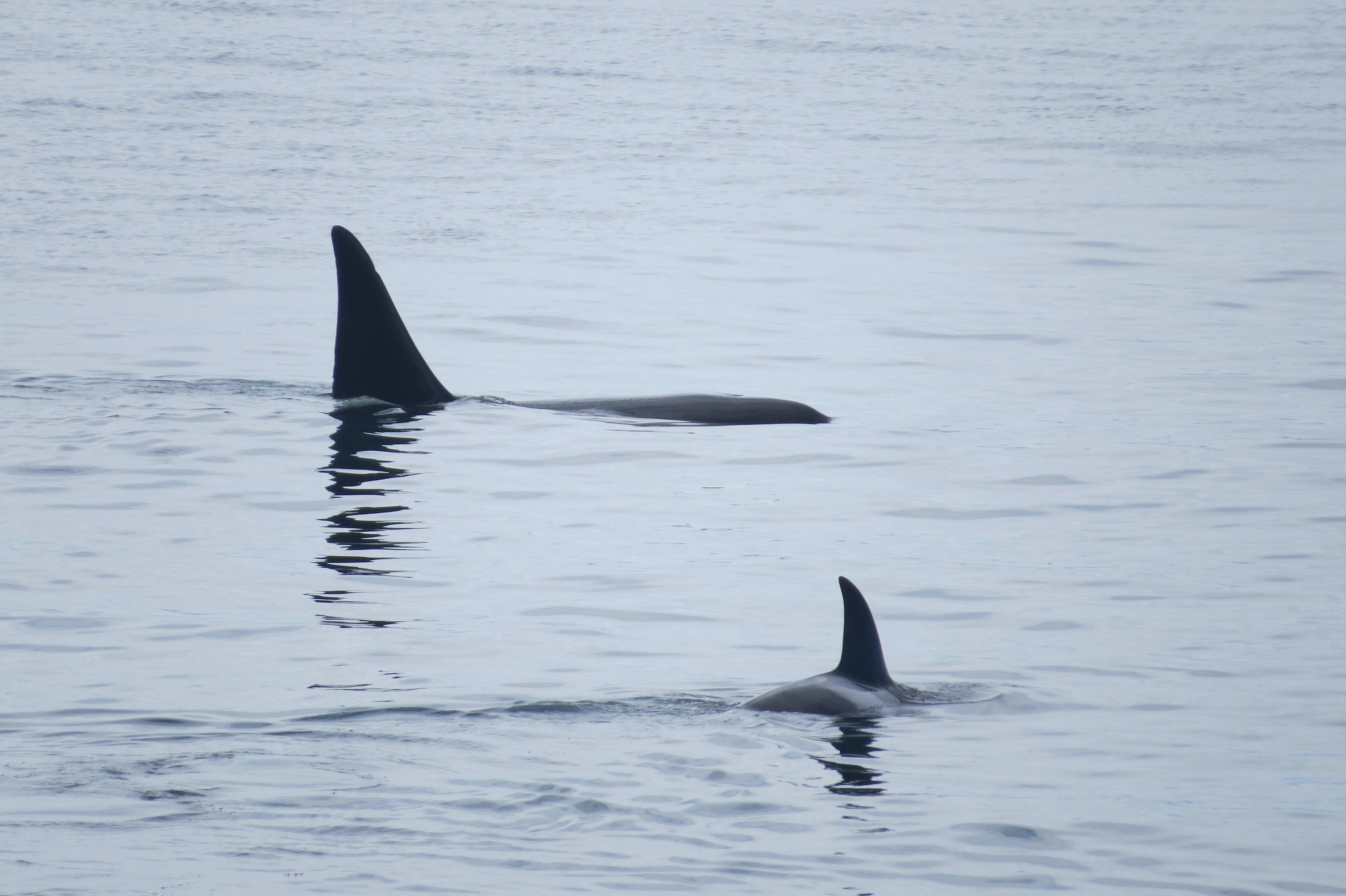
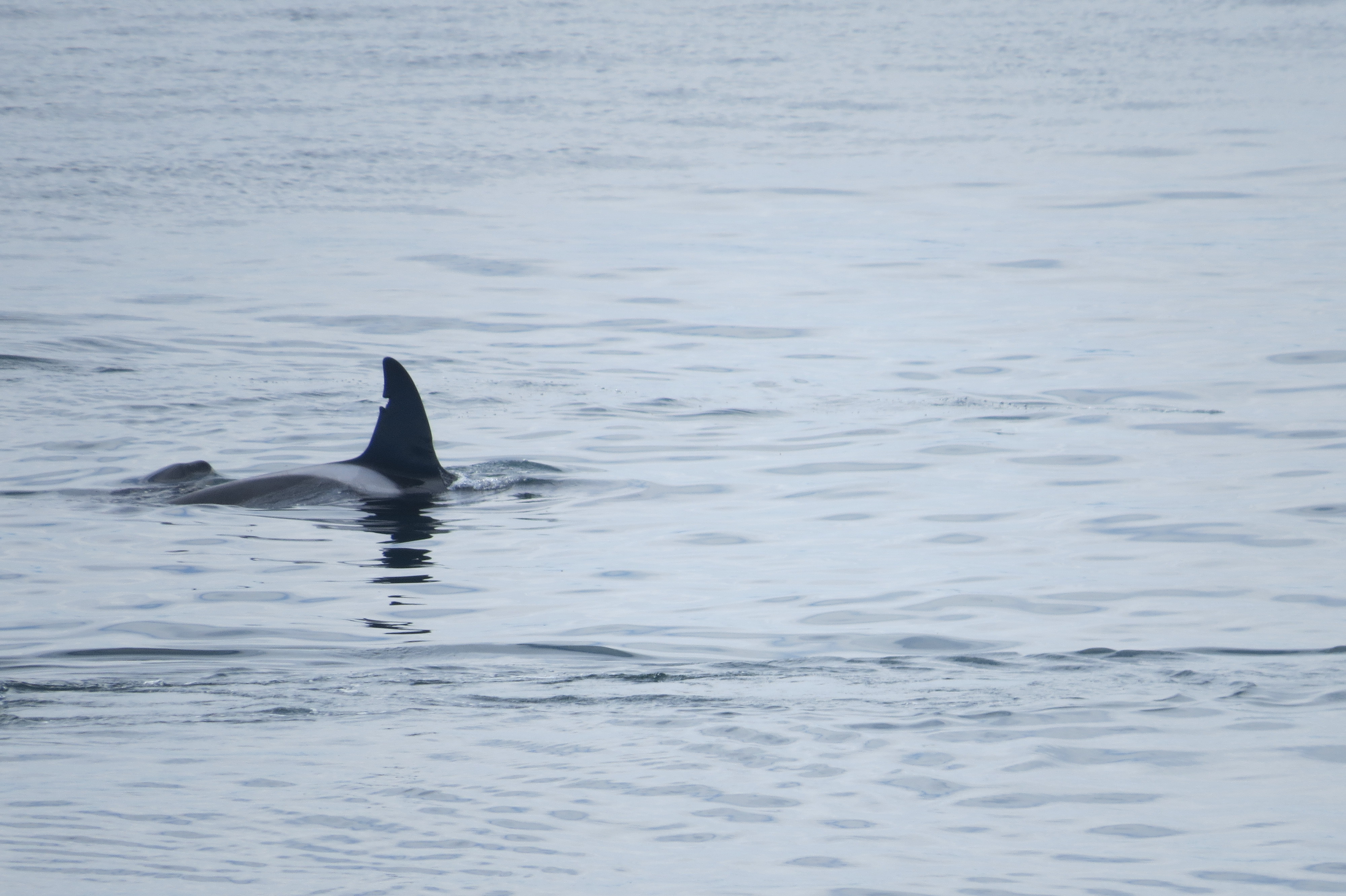
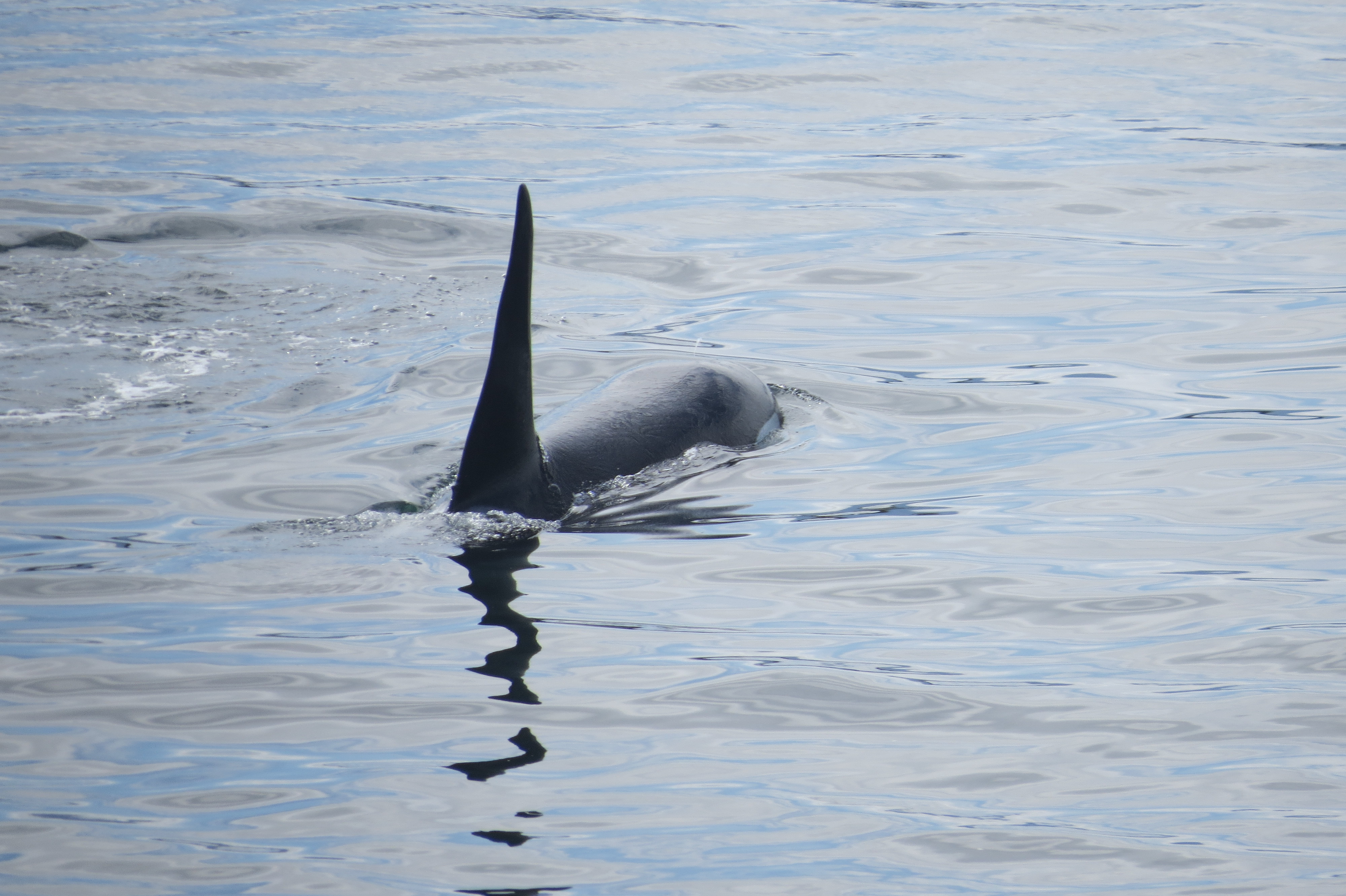
On our way to Flatey Island in the afternoon we were graced with a pod of Orca whales. About five or six of them in a family group. It was delightful to watch them surface and move about. Larkin got some decent photos.

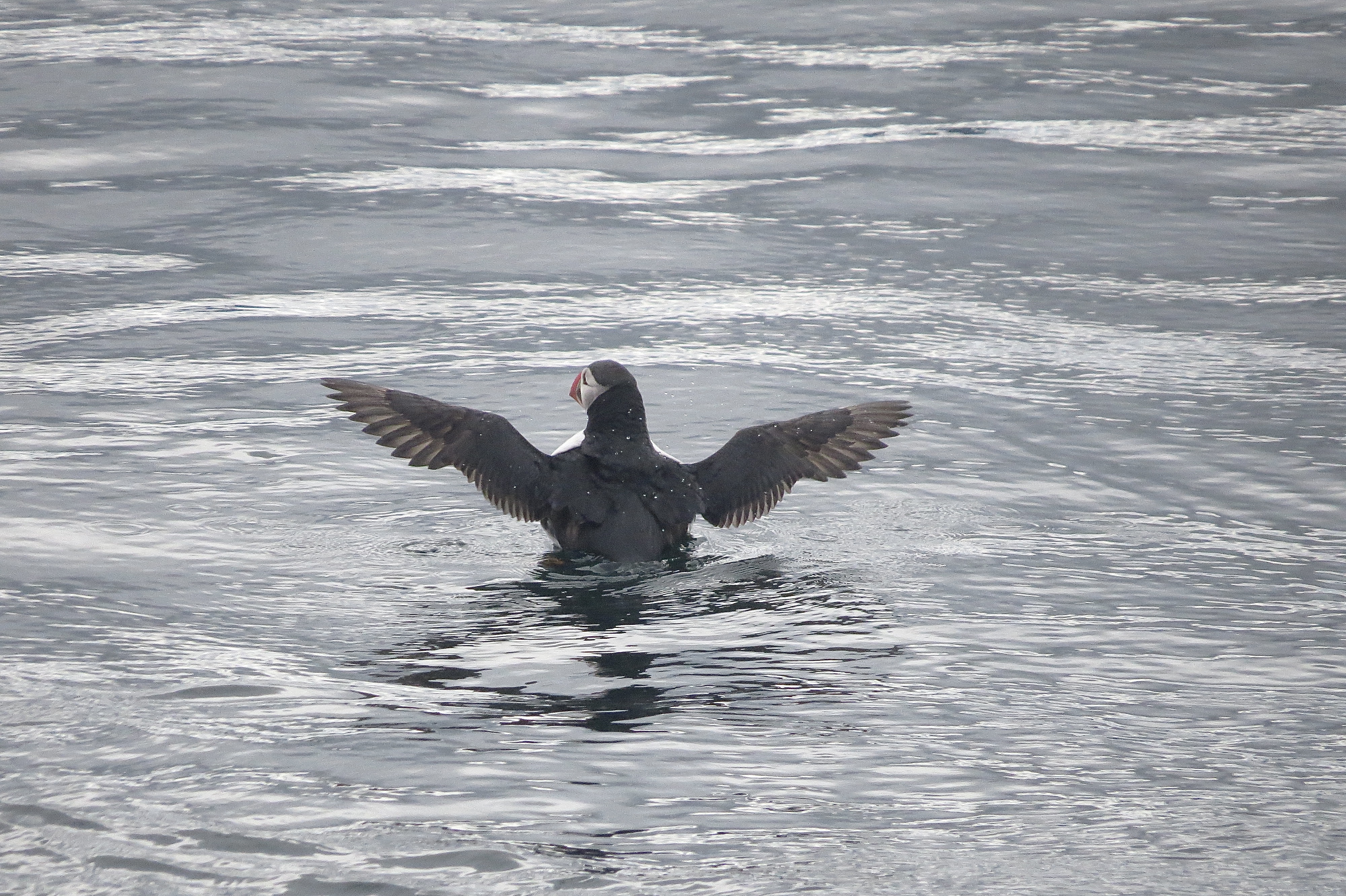
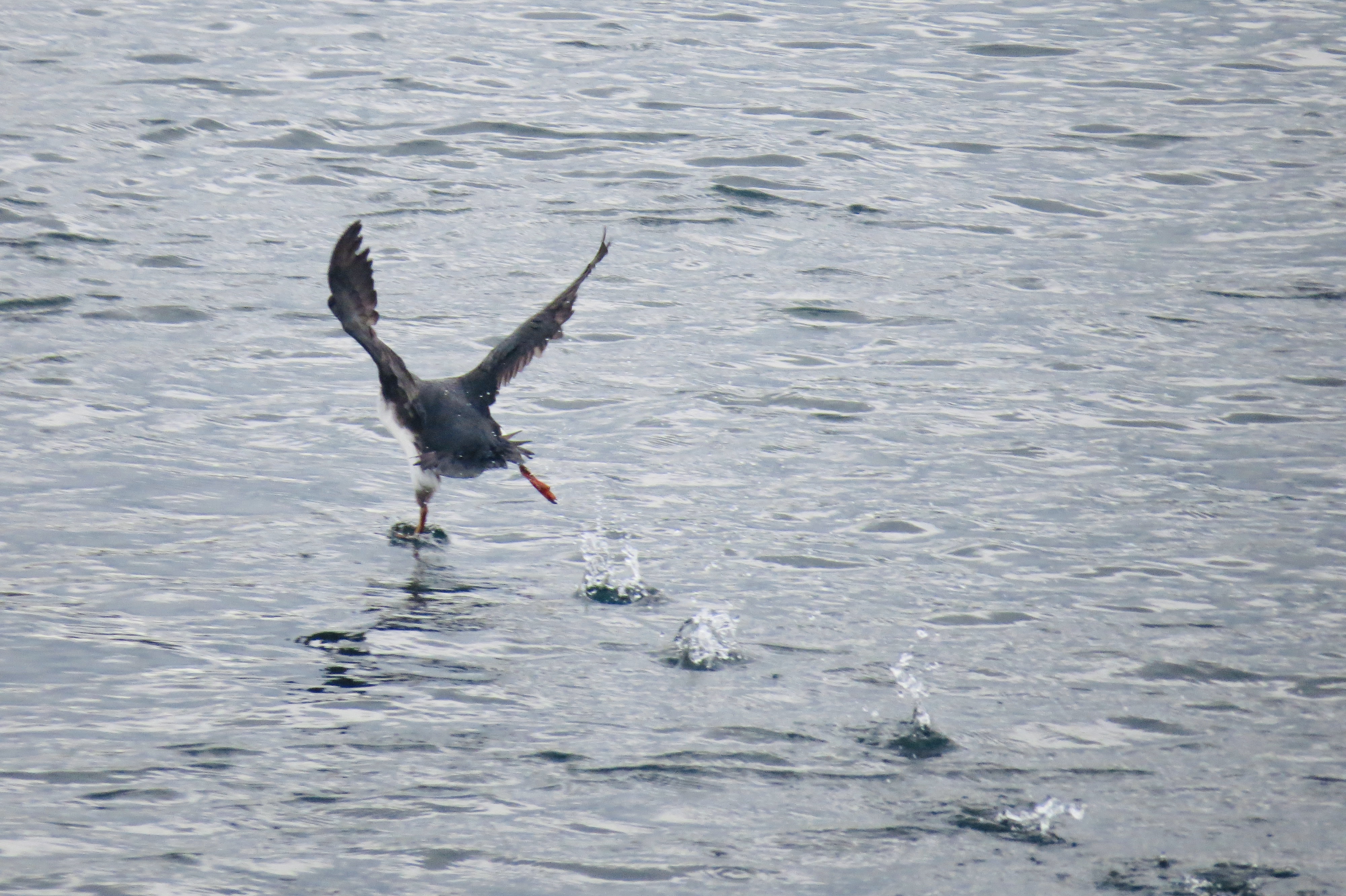
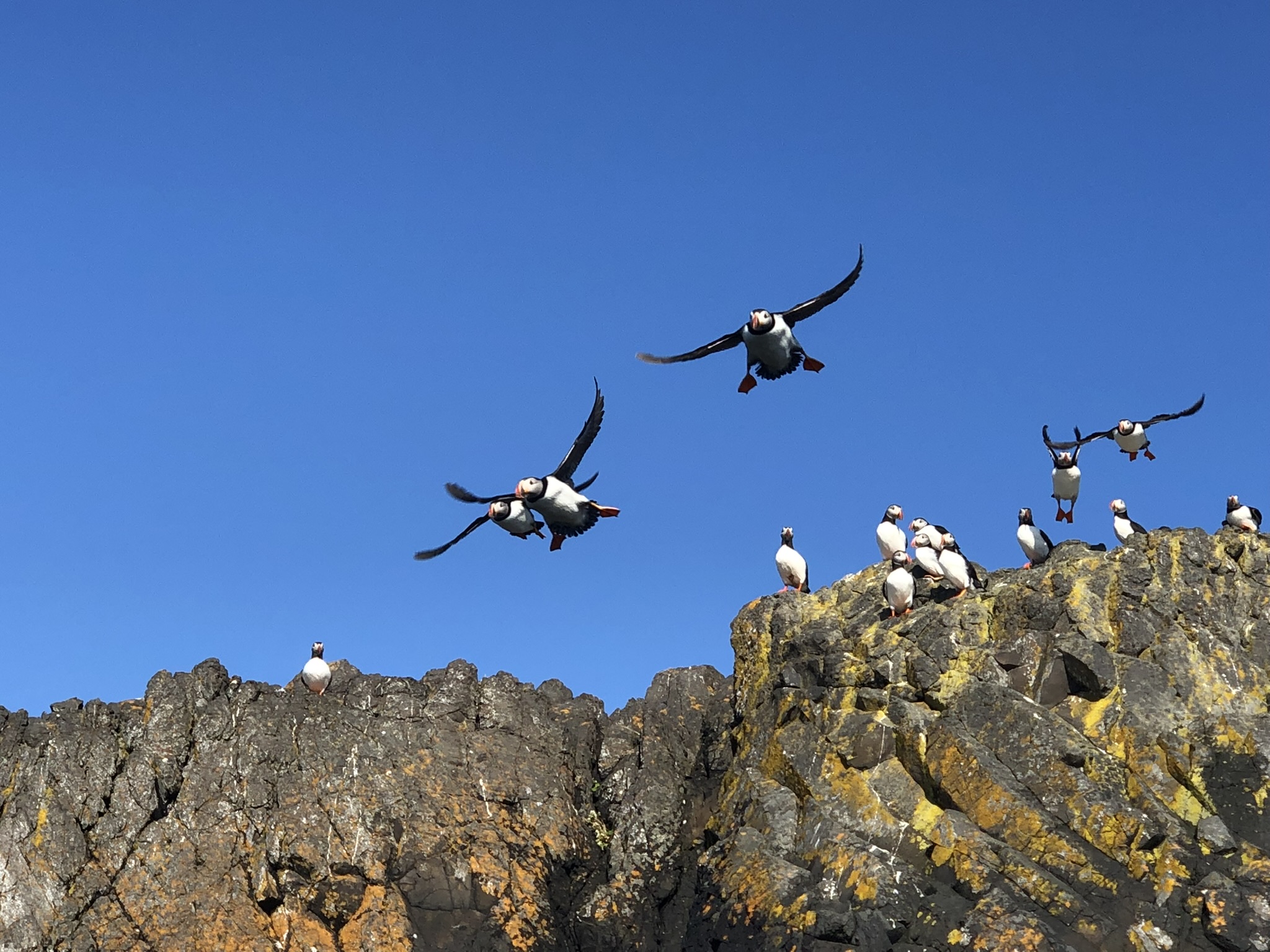
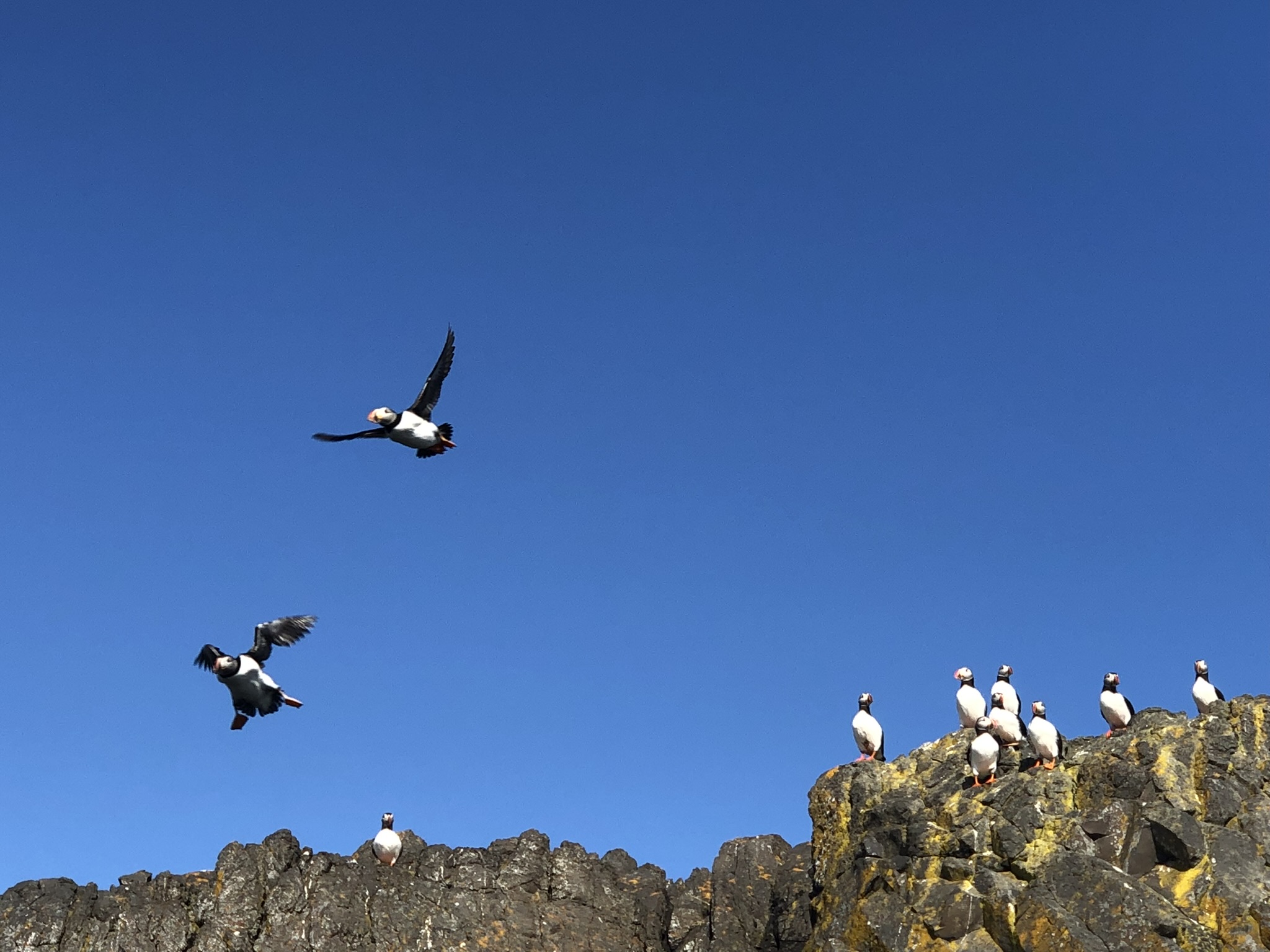
A friend on the ship, Janine gave us these lovely flying puffin photos. You’ll note how big their bodies seem to be. It must definitely be easier to start flying off a cliff instead of the water.

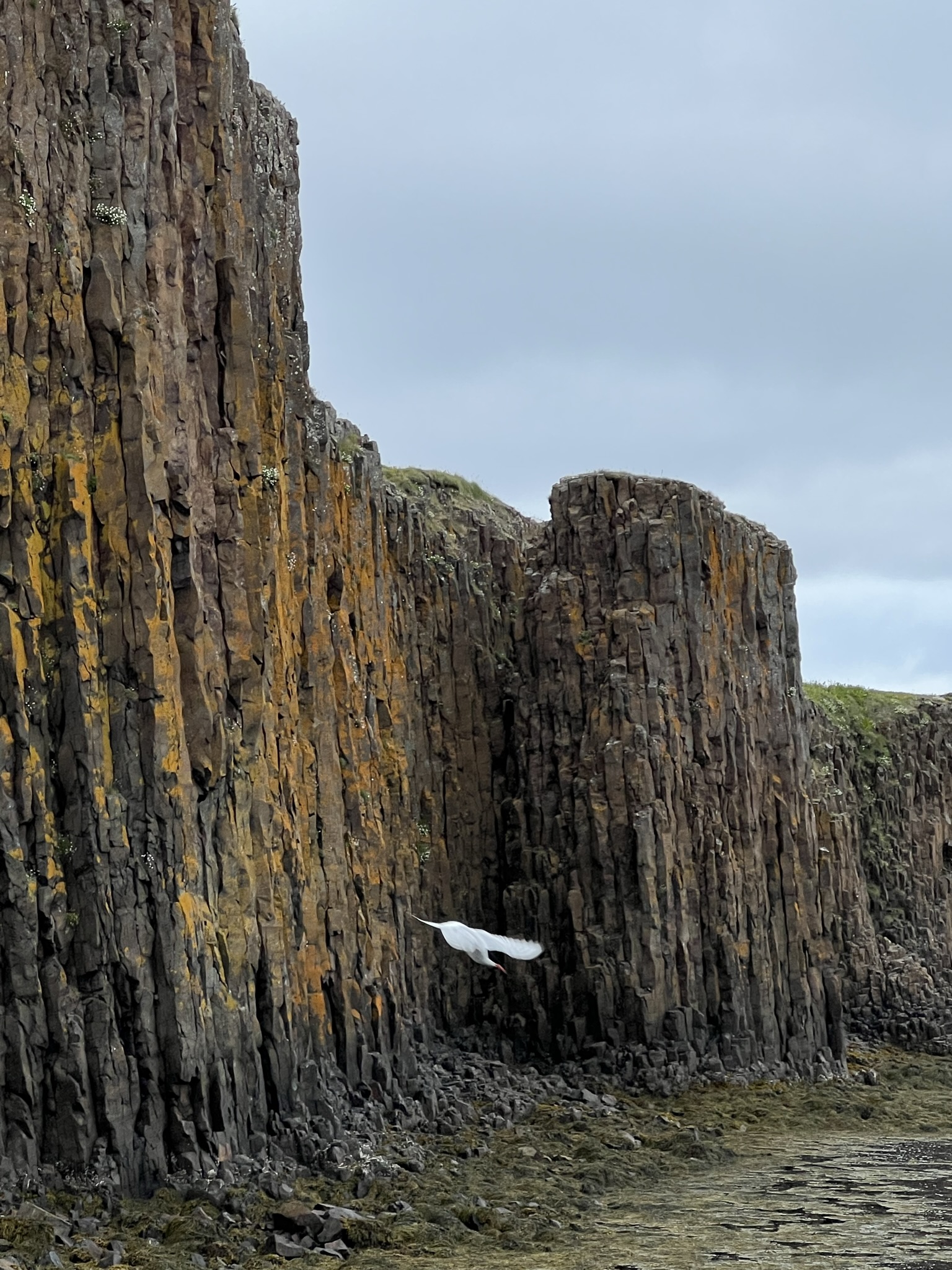
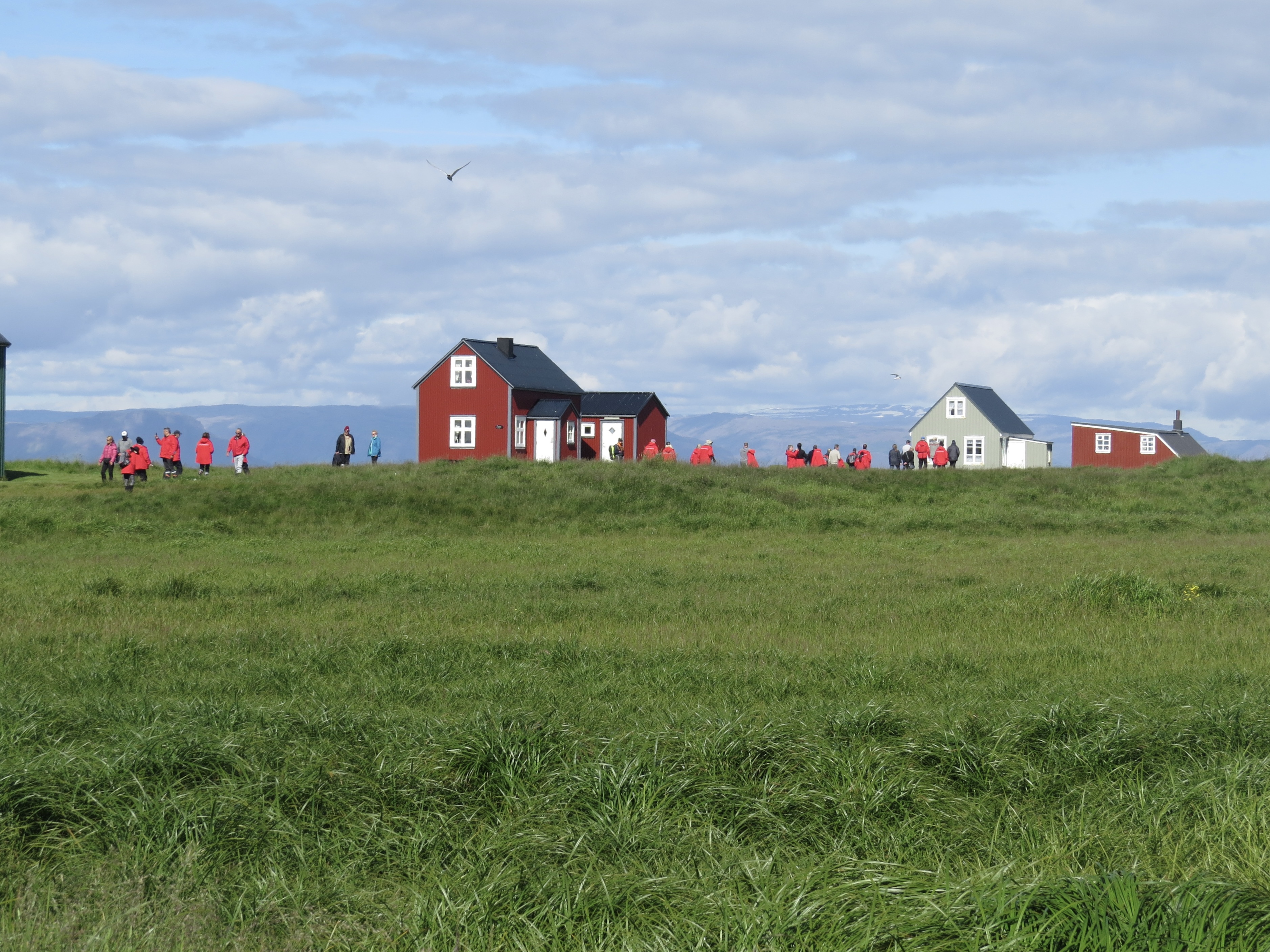
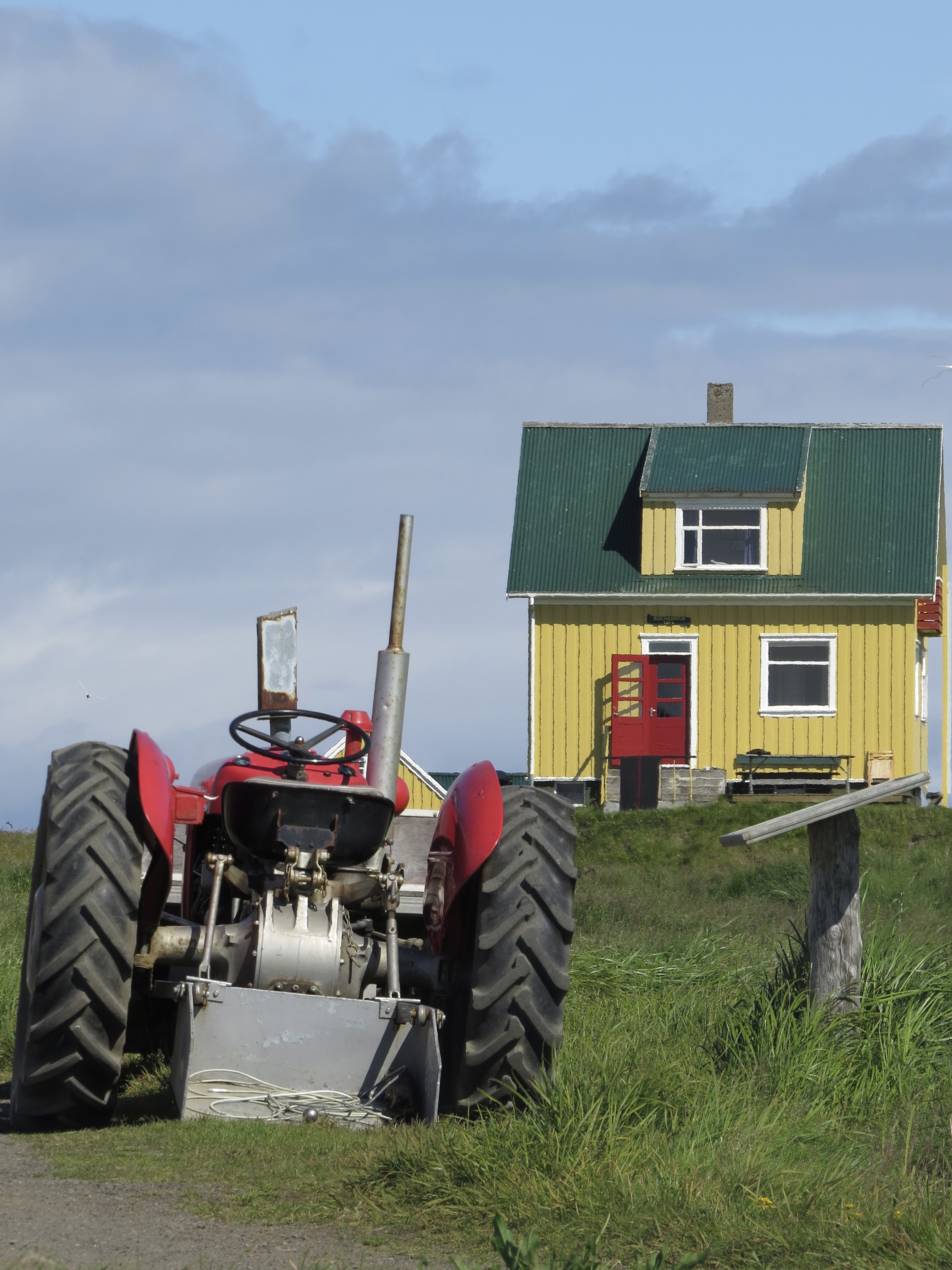
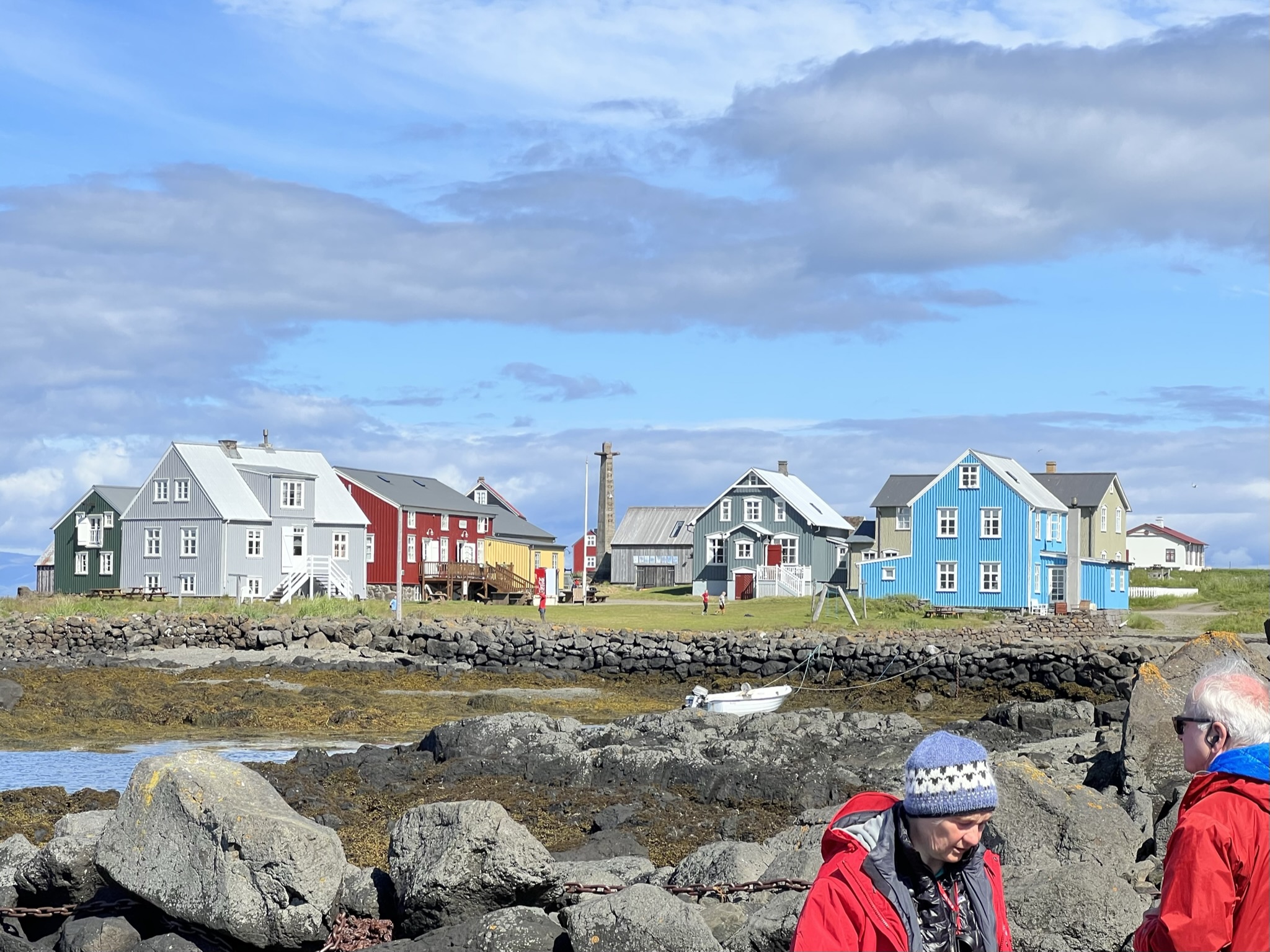
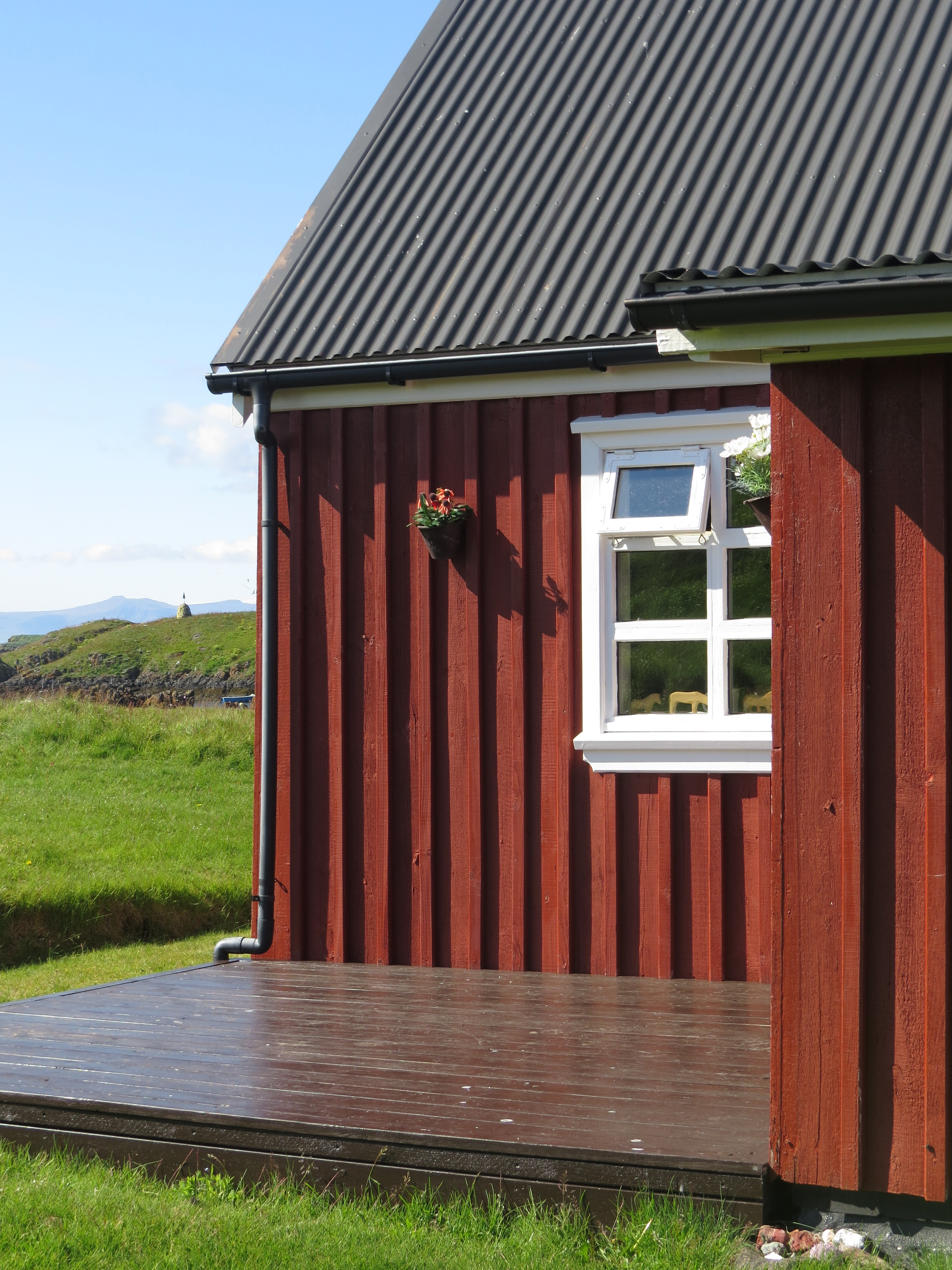
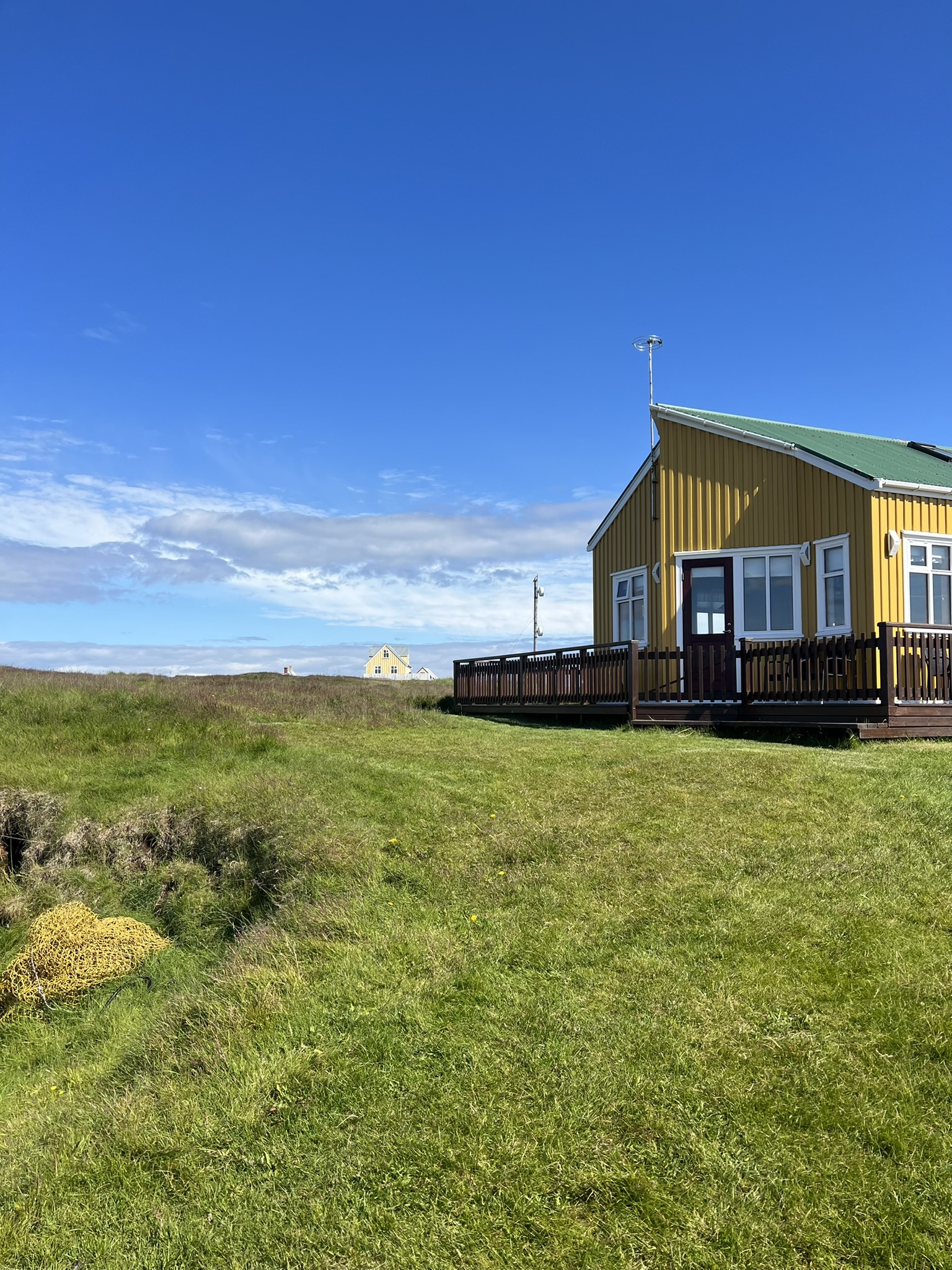
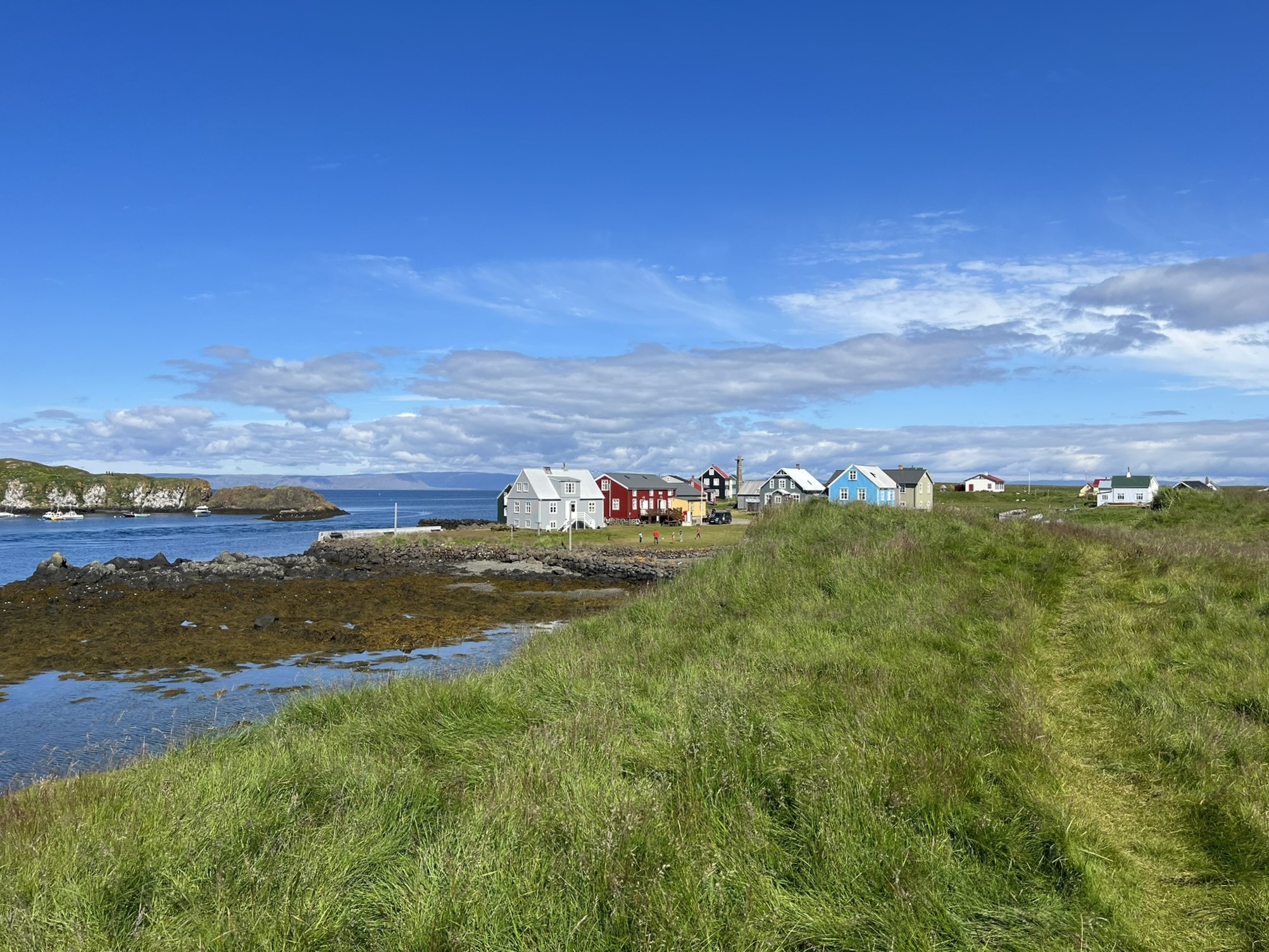
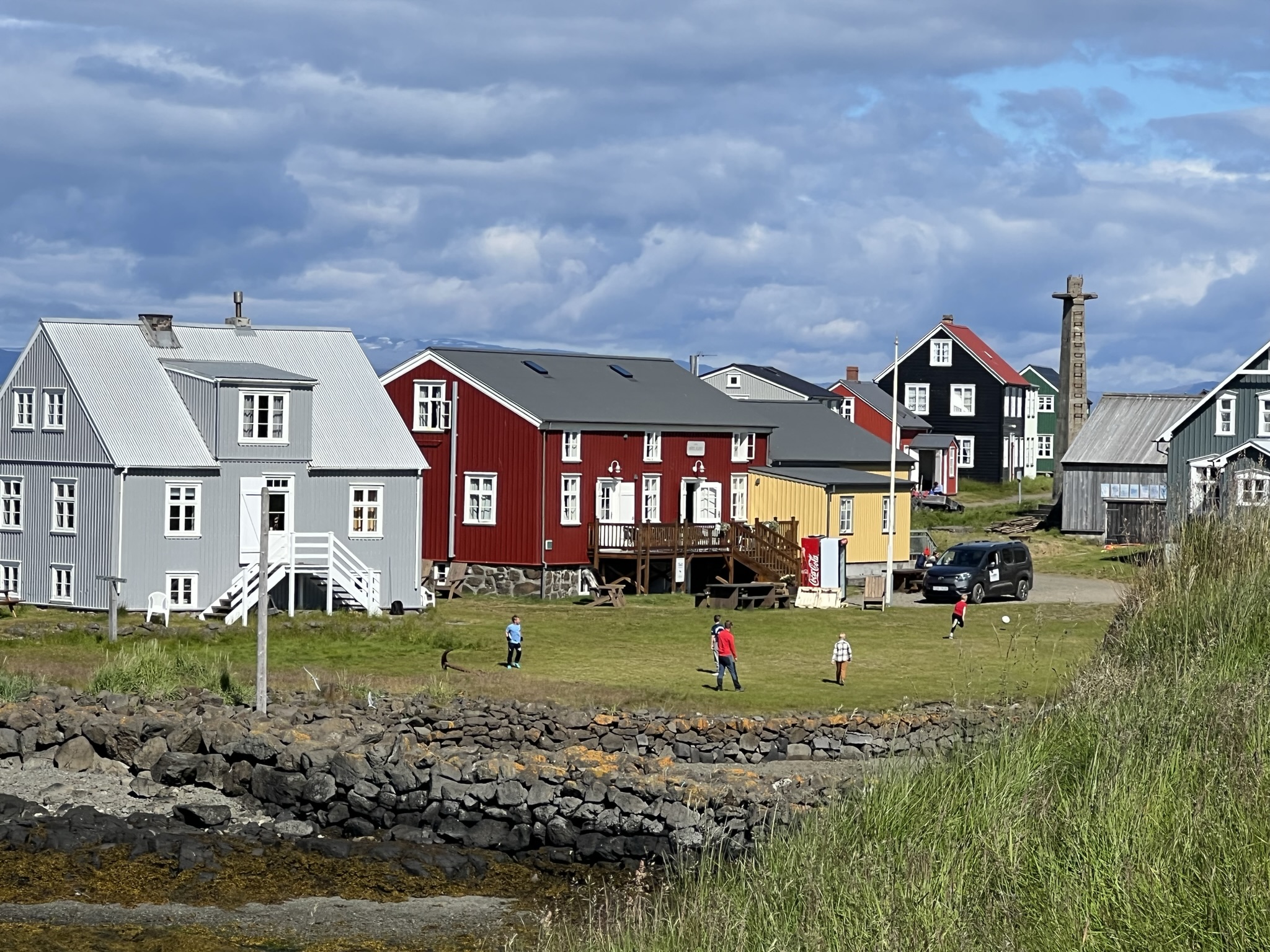
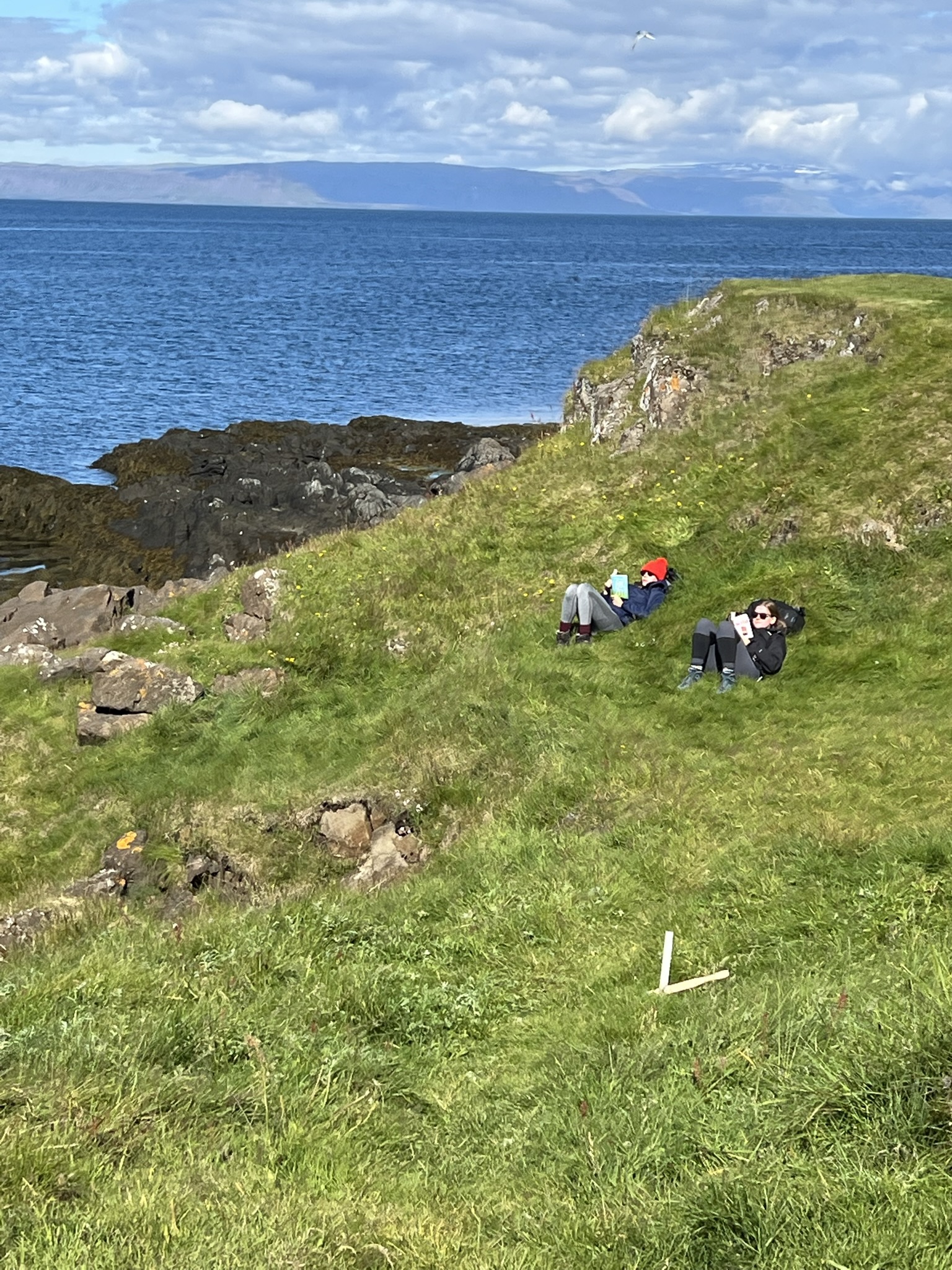
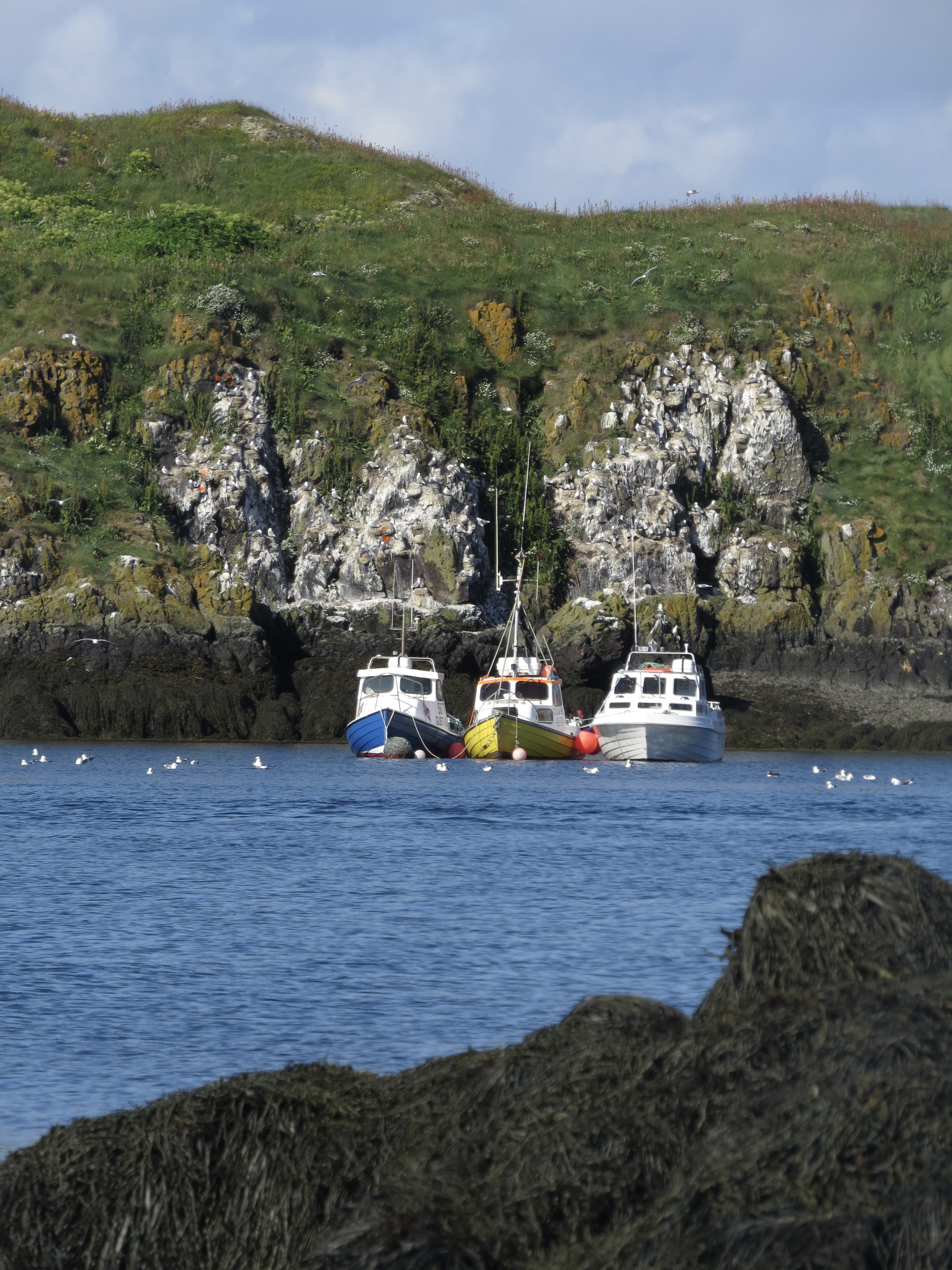
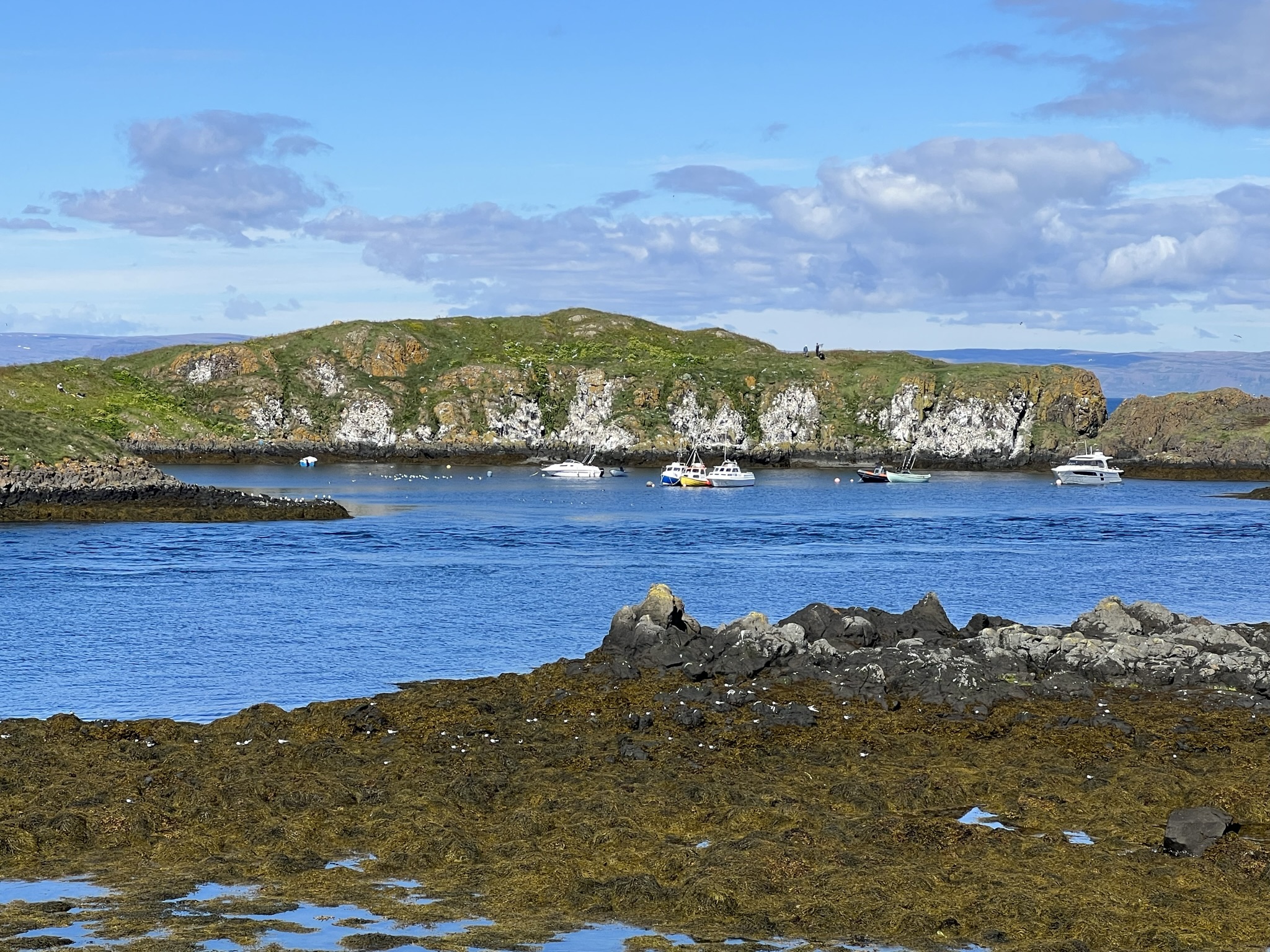
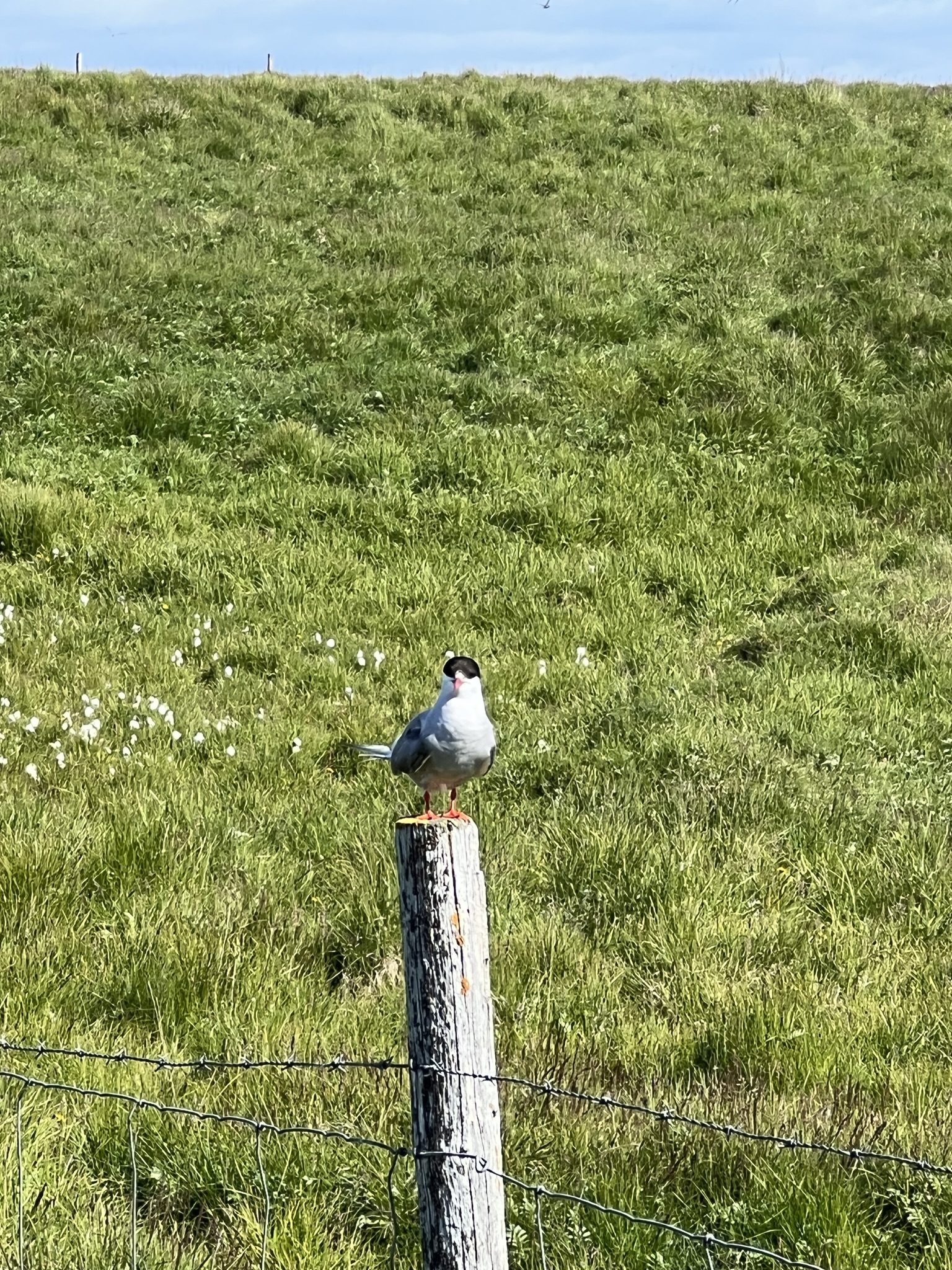
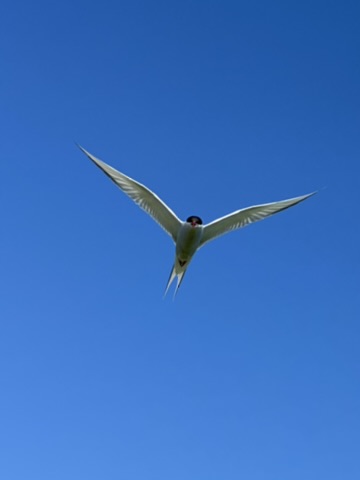
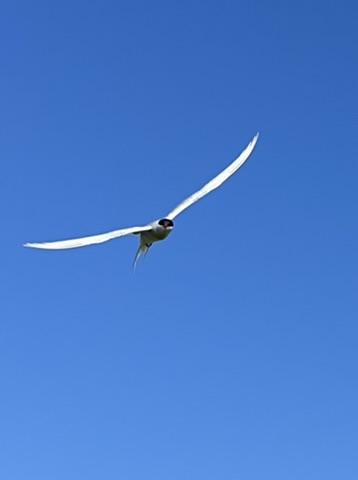
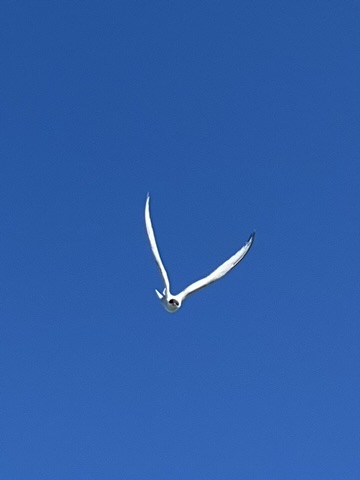
When we arrived at Flatey Island, we were divided into a few different groups led by proud locals who took us on a hike to see their little town. During the summer there are over a hundred people who inhabit the island and take care of their ancestral homes. During the winter there are only a handful of people. We saw kids playing, folks fixing their homes and girls reading on the cliffs. See if you can spot the arctic terns in a few of these photos! The last two photos of this group is the little island across from Flatey. People bring their boats and count the breeding birds for research.

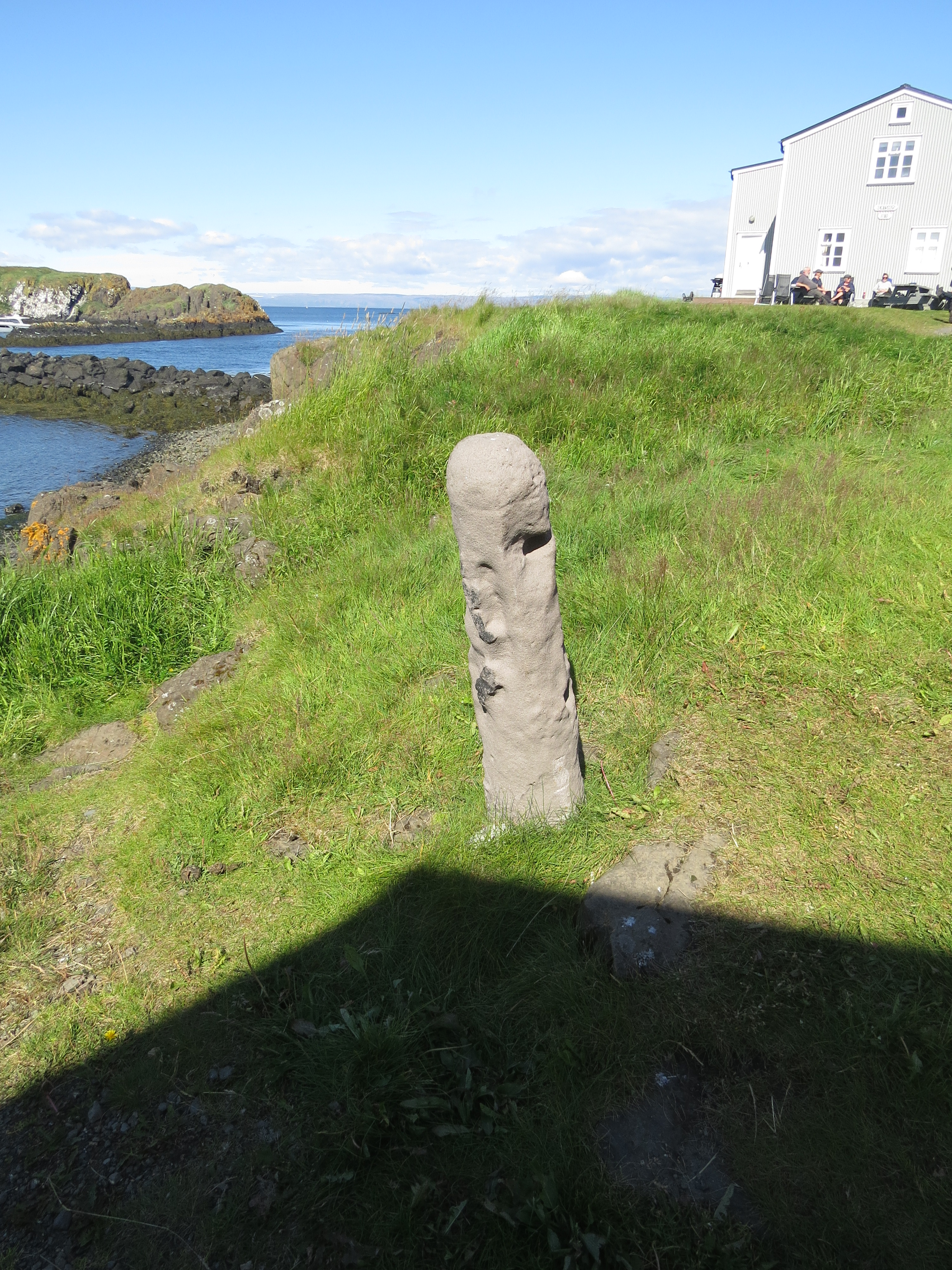
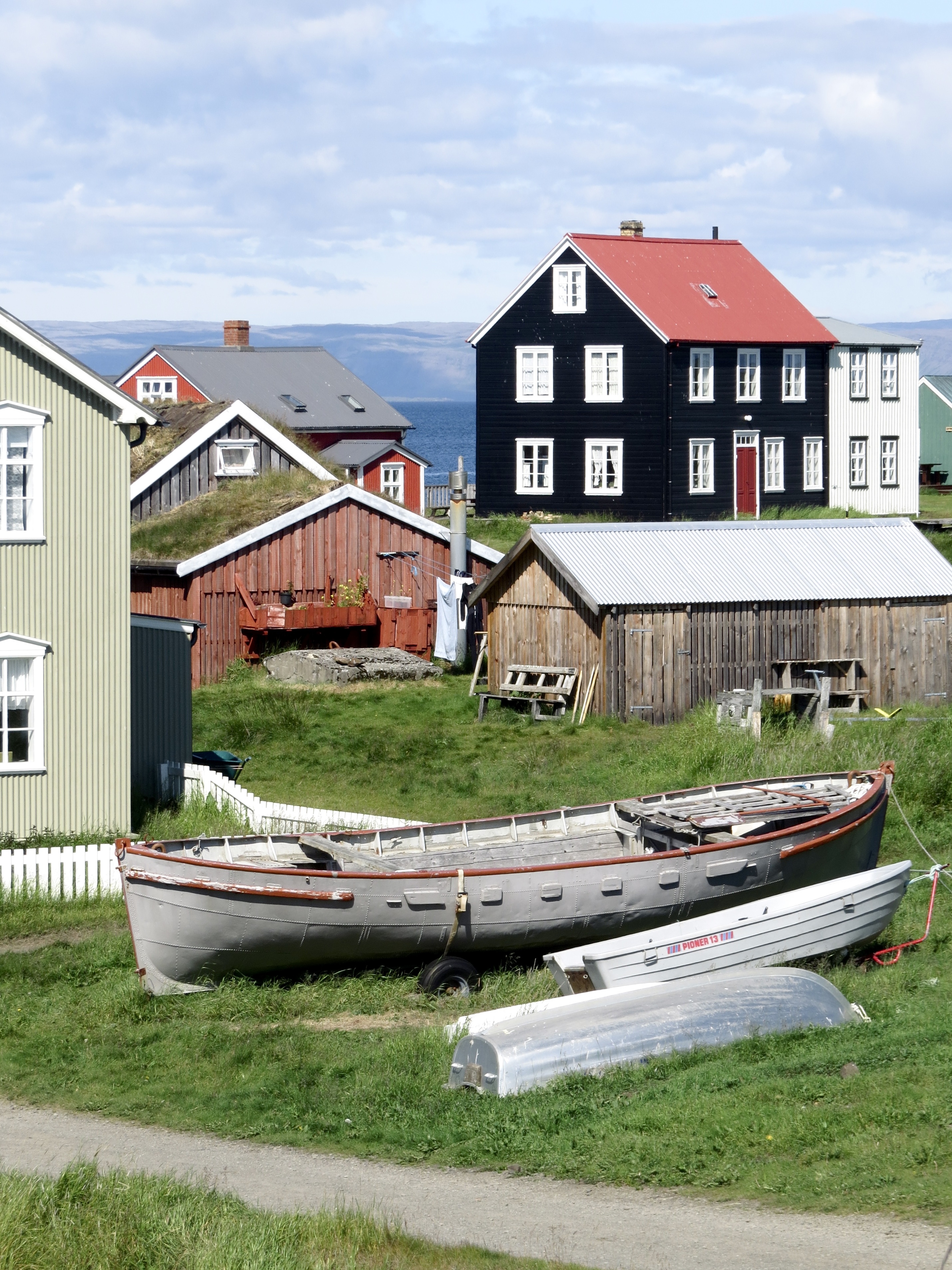
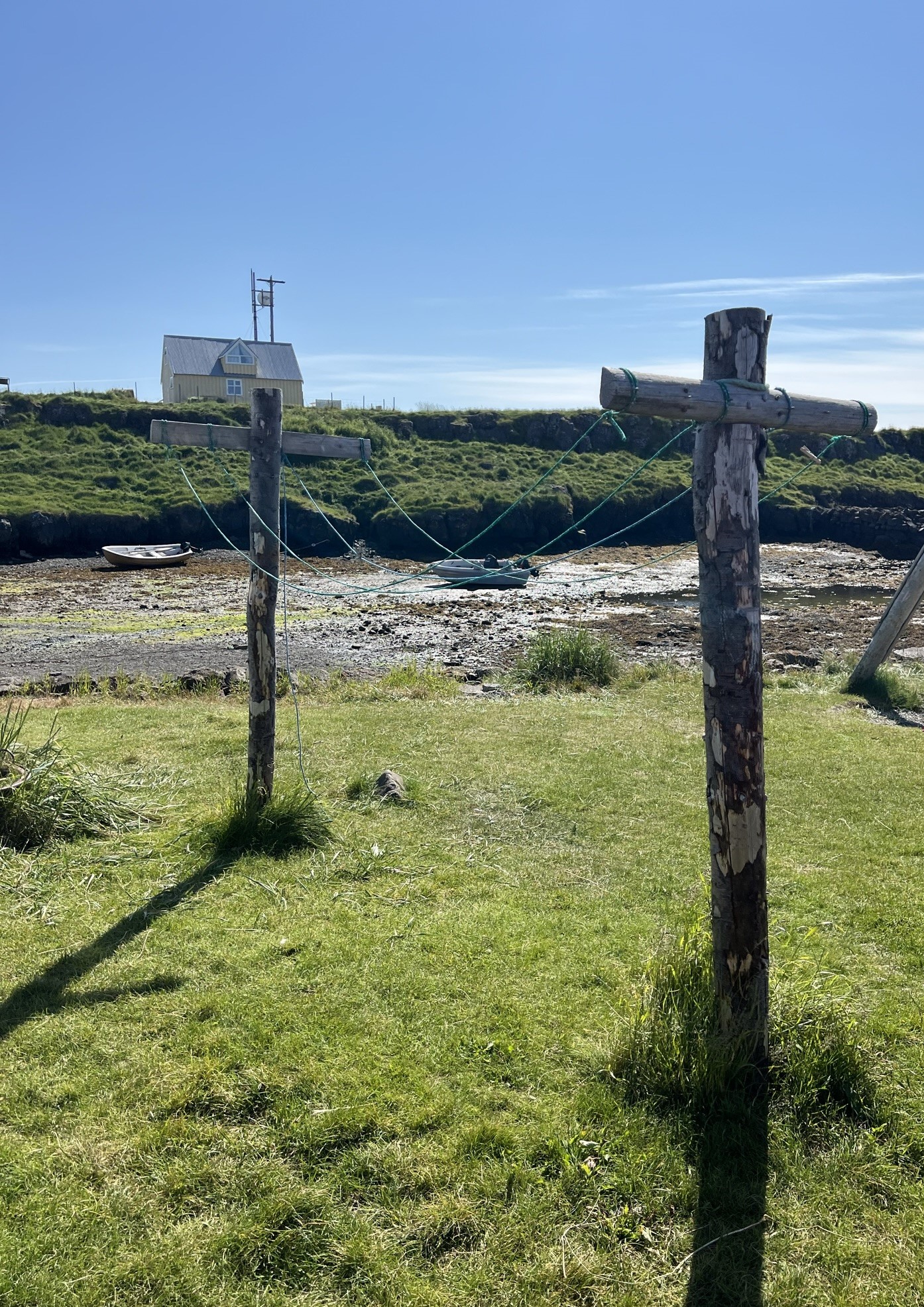
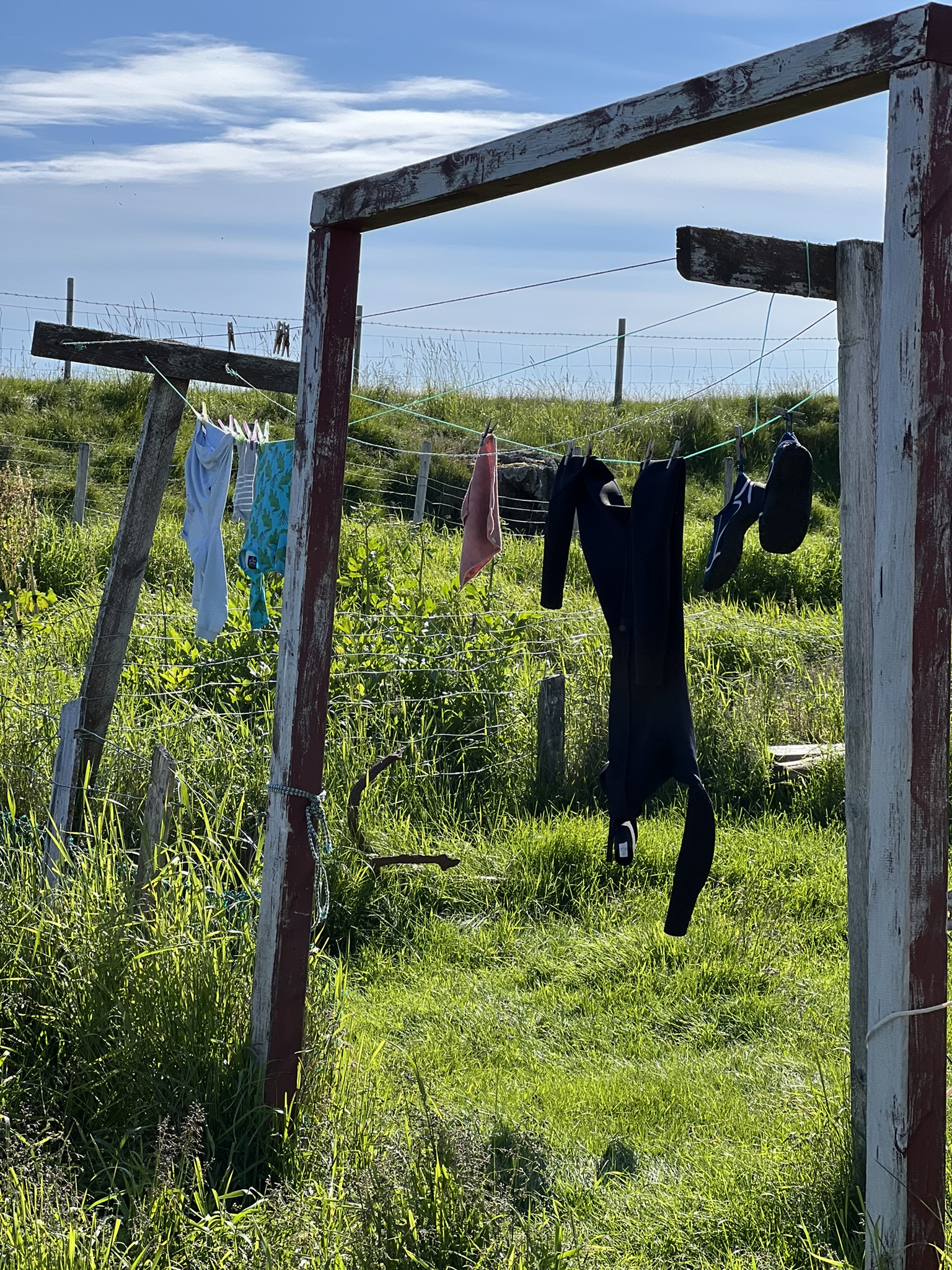
The phallic symbol of rock is of unknown origin and brought in from somewhere else and placed on the island.The colors of the homes here seemed to be a little more vivid than Stykkisholmur. They used wood poles for both a swing and a laundry line. We always find the laundry opportunities!

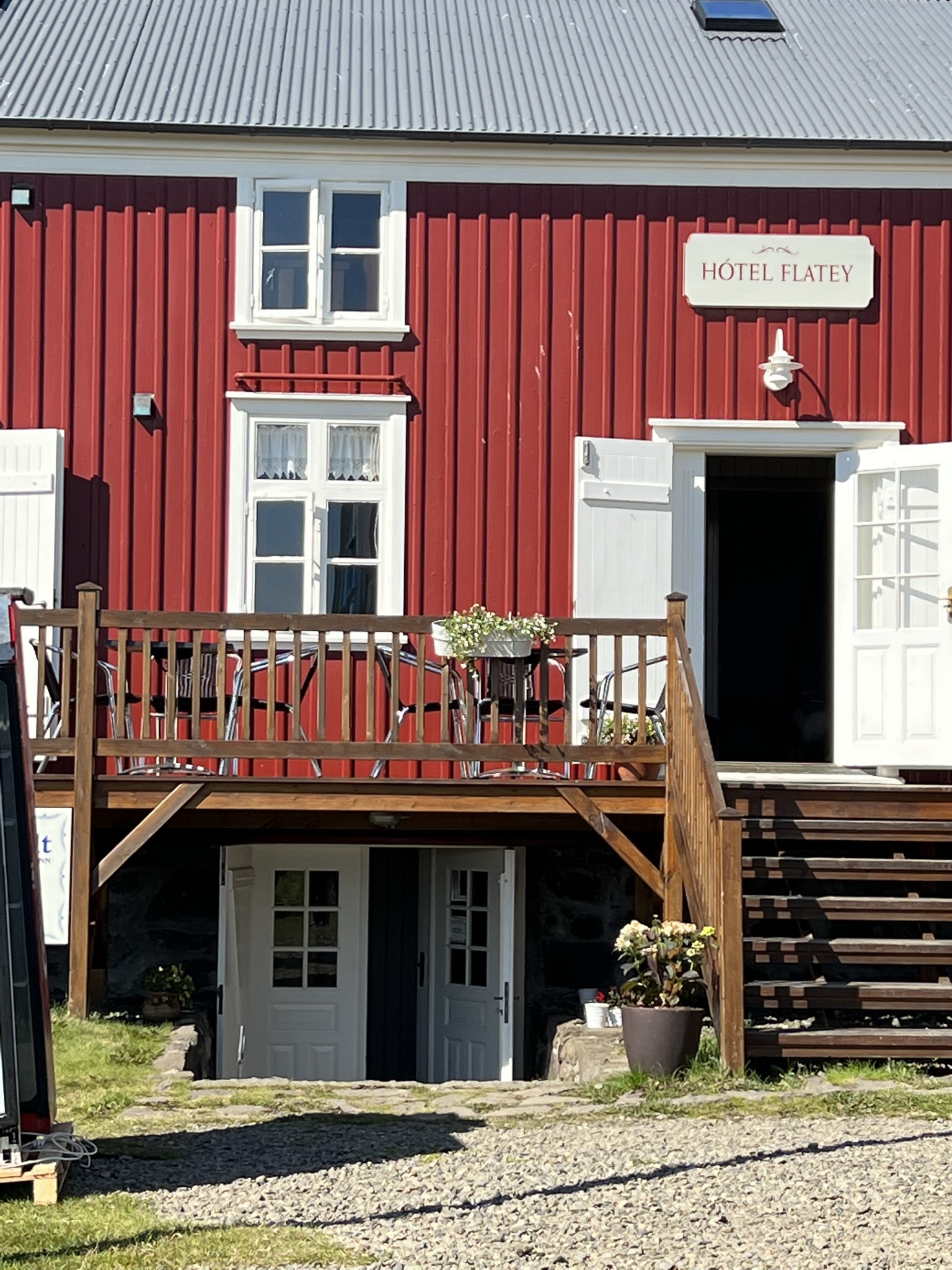
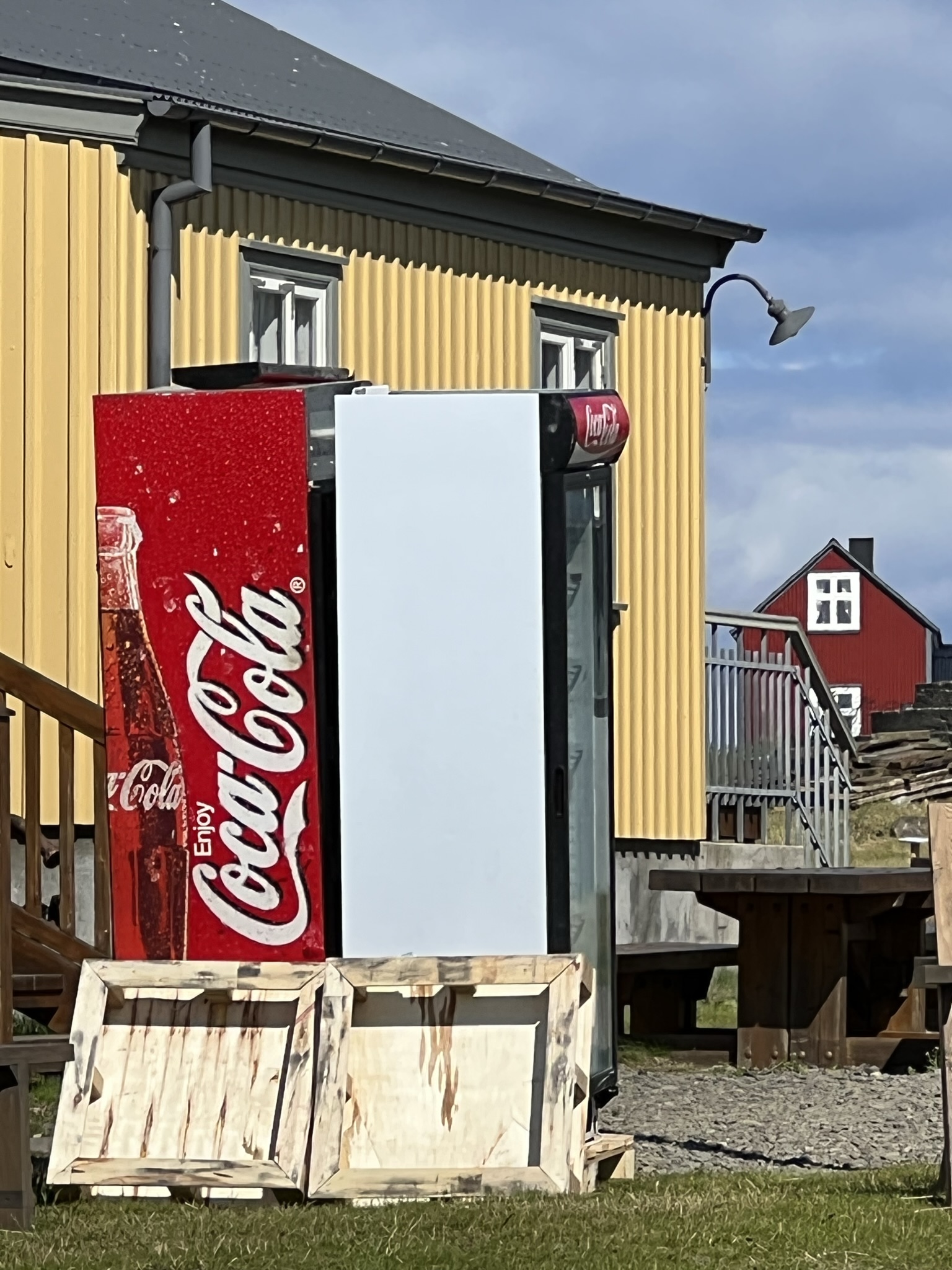
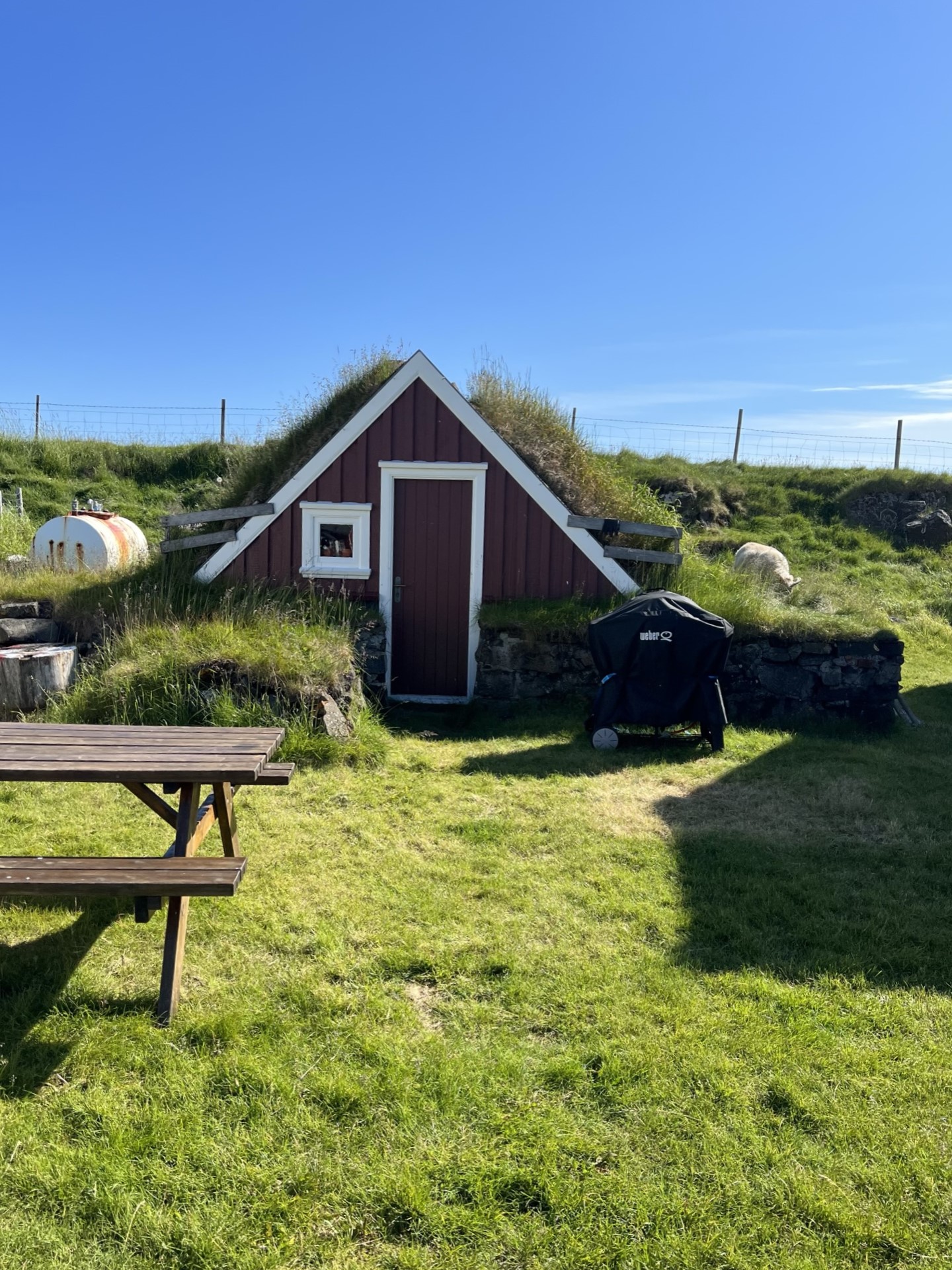
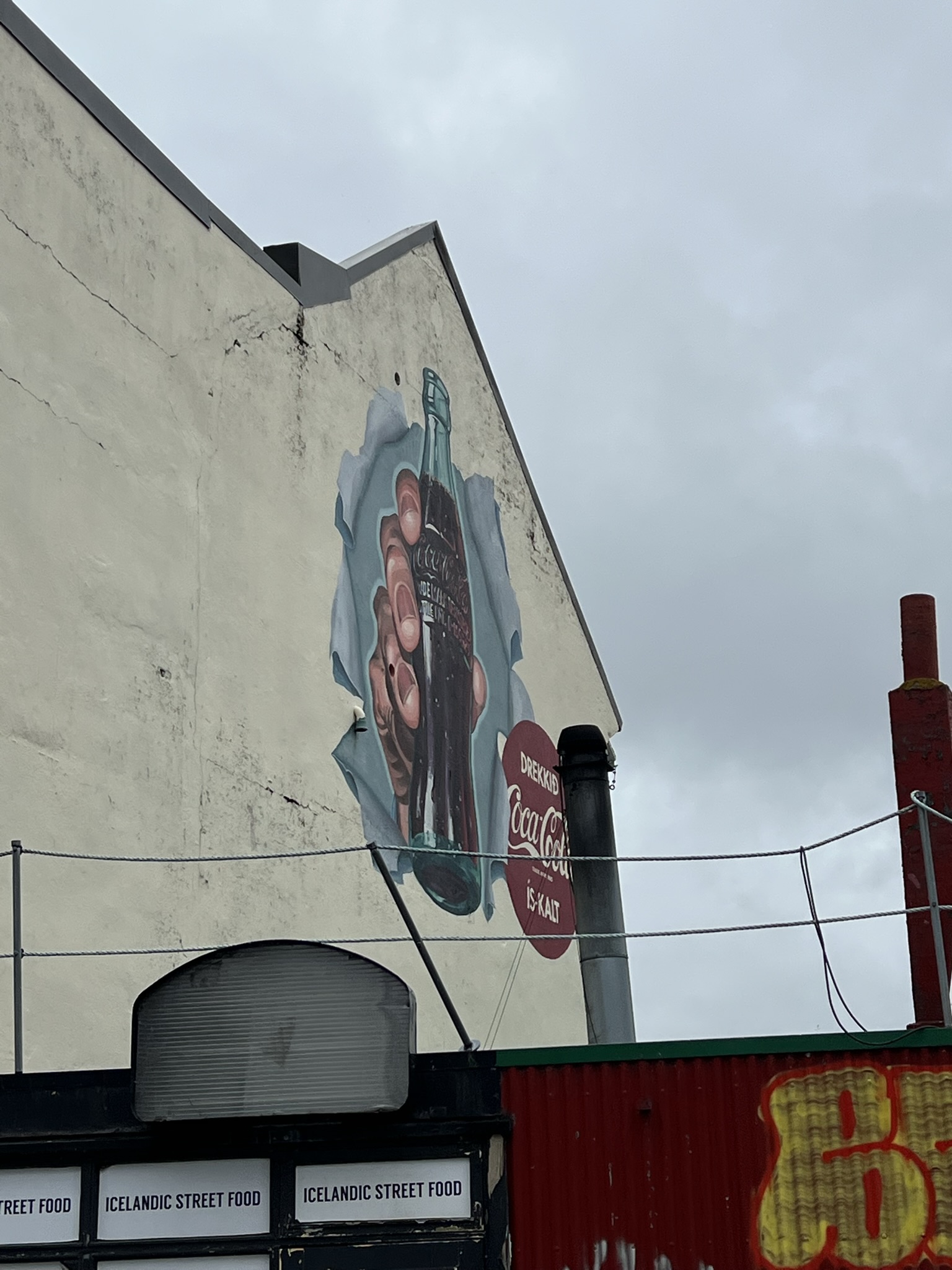
The island has Hotel Flatey in case you want to boat there and stay over night. …and of course the ubiquitous Coca Cola. Wheelbarrows can be used for a variety of things and of course a weber bbq!

There were puffins on the cliffs at Flatey Island as well as at Stykkisholmur. These little birds are so photogenic and similar to penguins that both truly make people smile! I am sure they are happy that they can fly albeit difficulty. Once again Larkin did a great job capturing these birds. We learned from one of our naturalist, Sara, that baby puffins are called pufflings…and they have a puffin rally every year around Iceland to go around and count the puffins. She was able to do it one year and thoroughly enjoyed it.

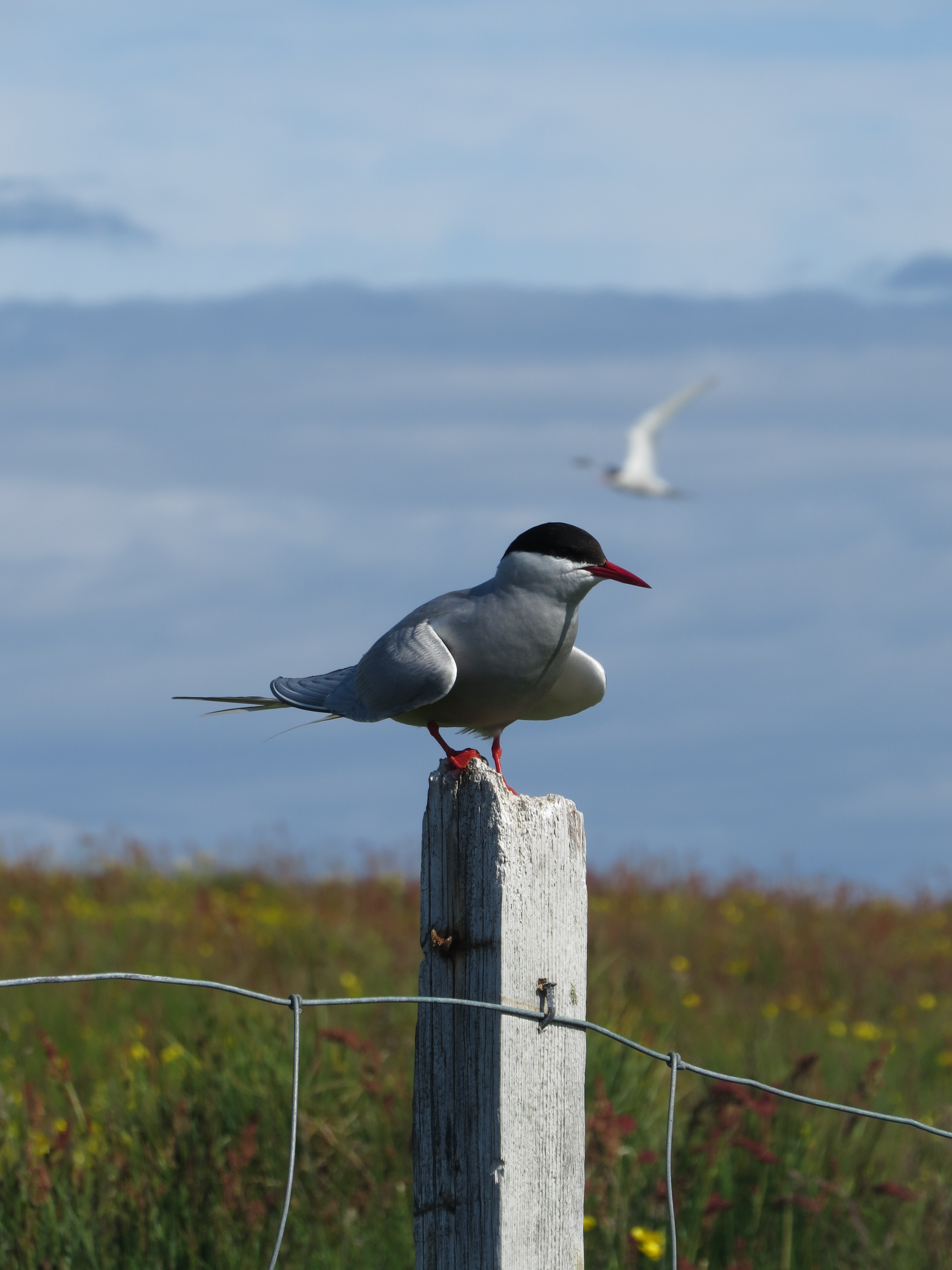
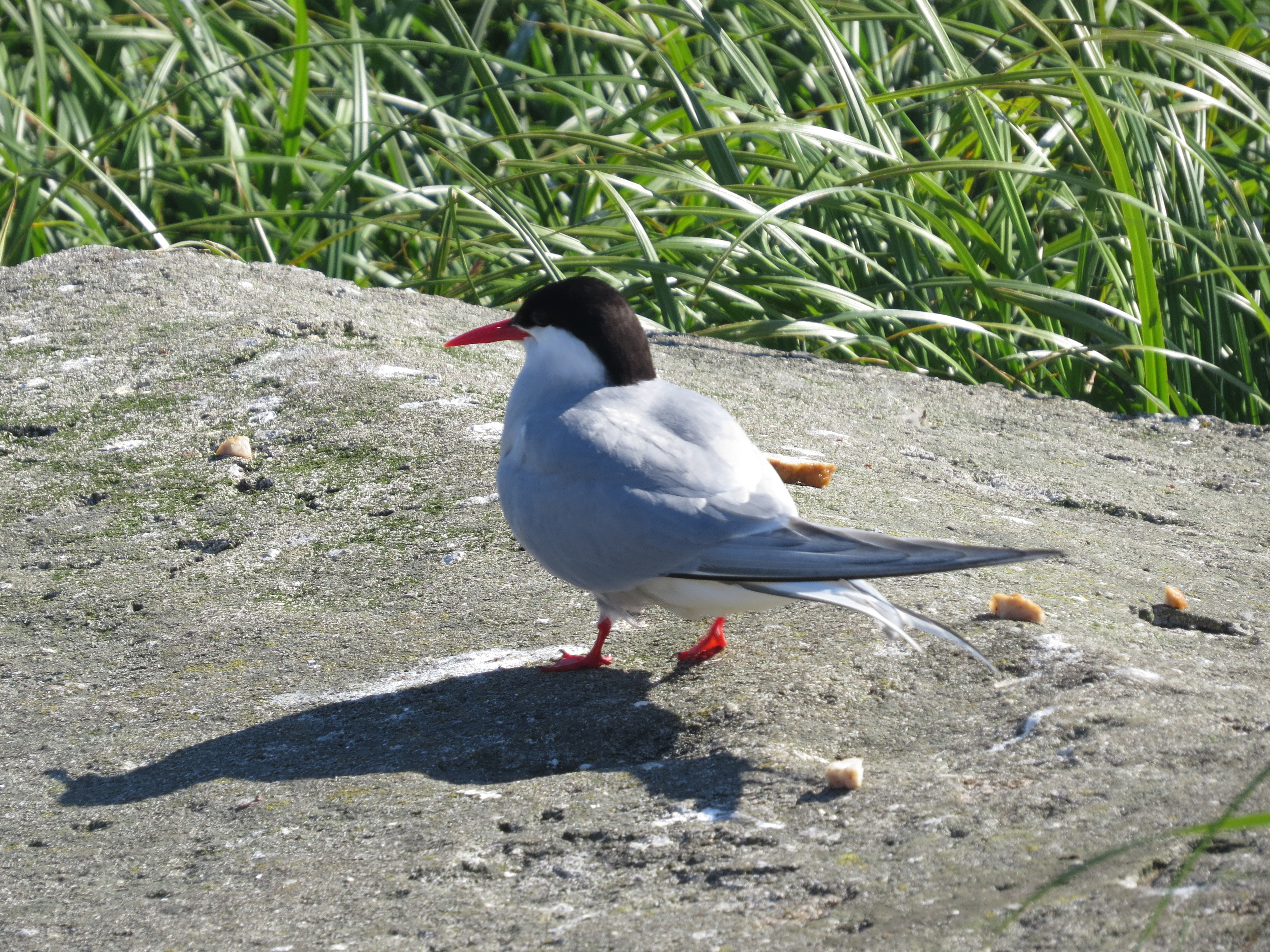
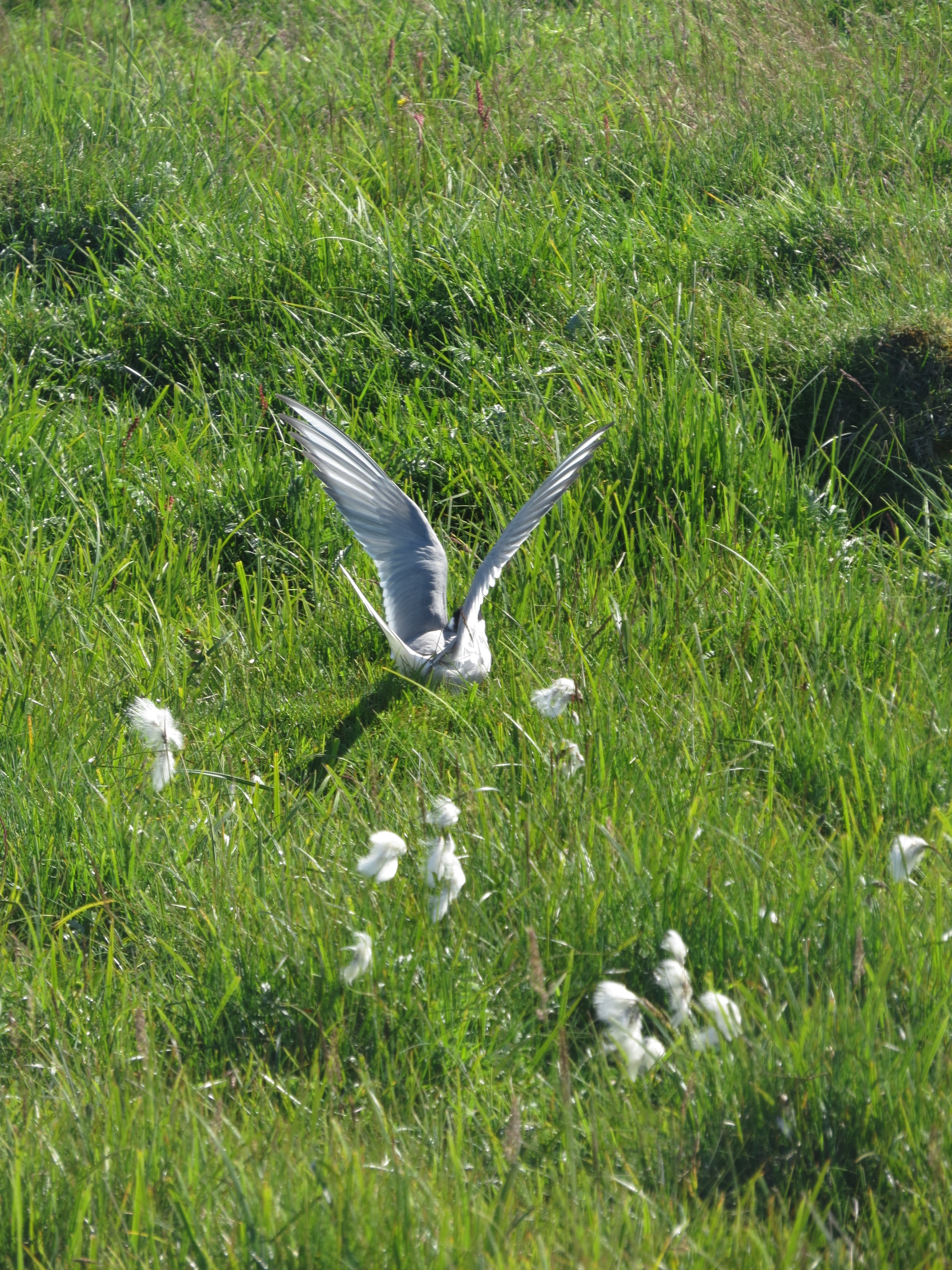
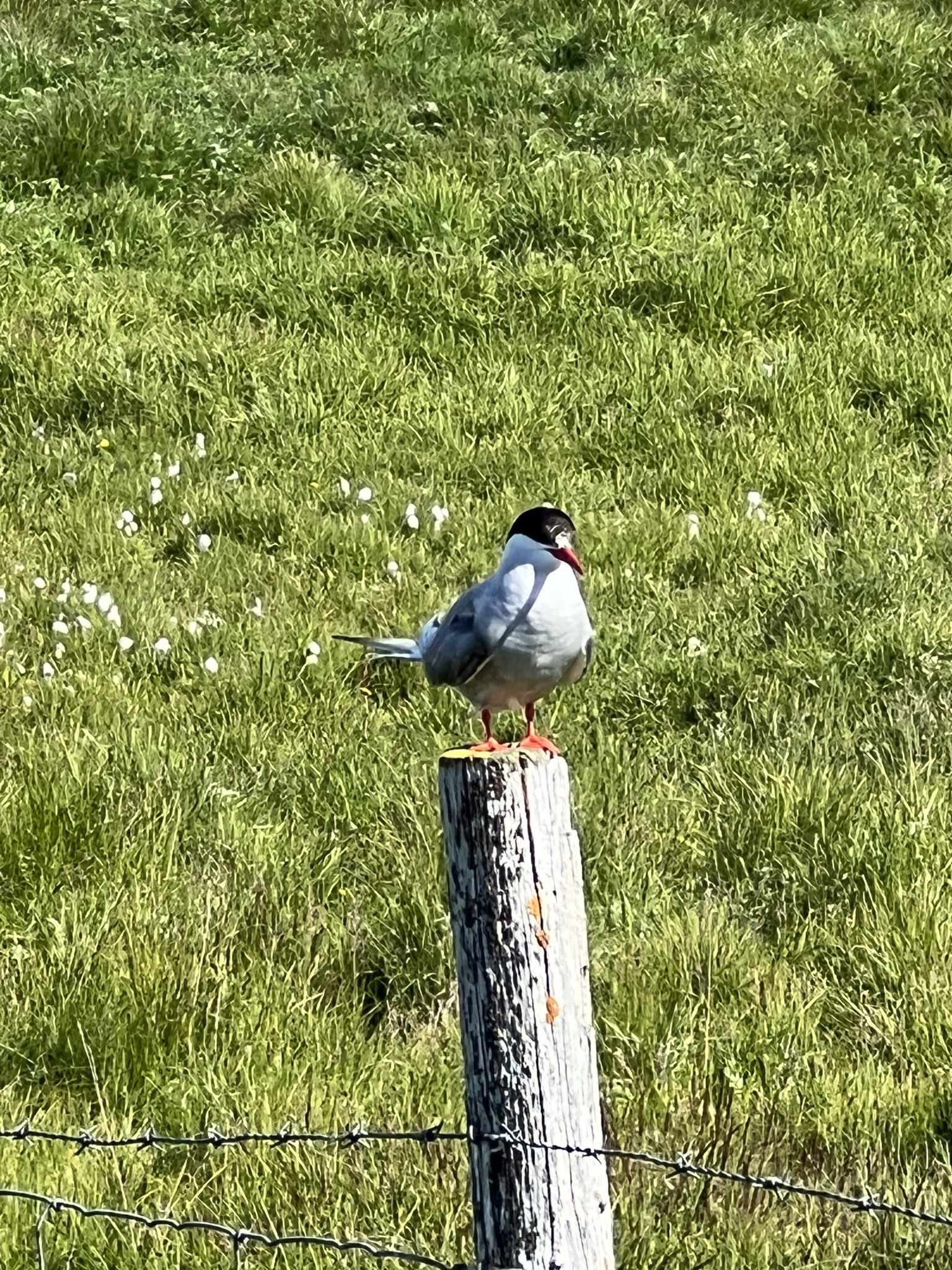
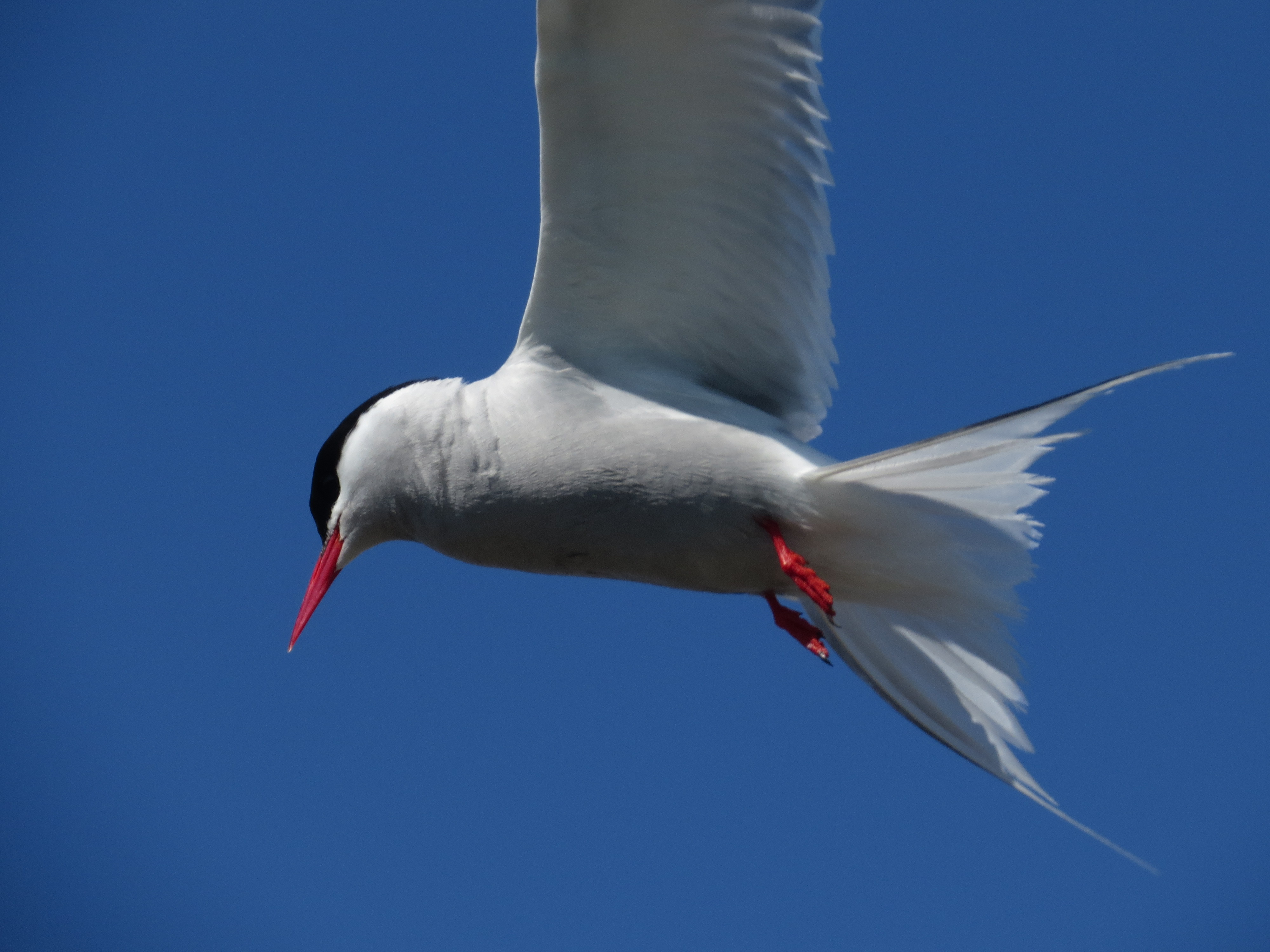
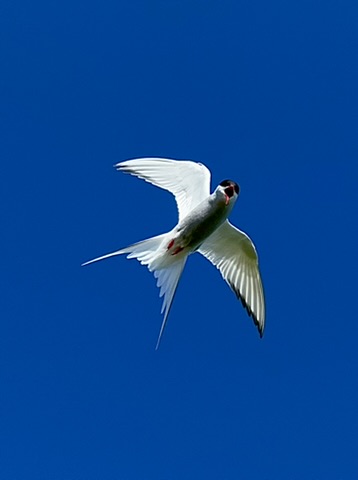
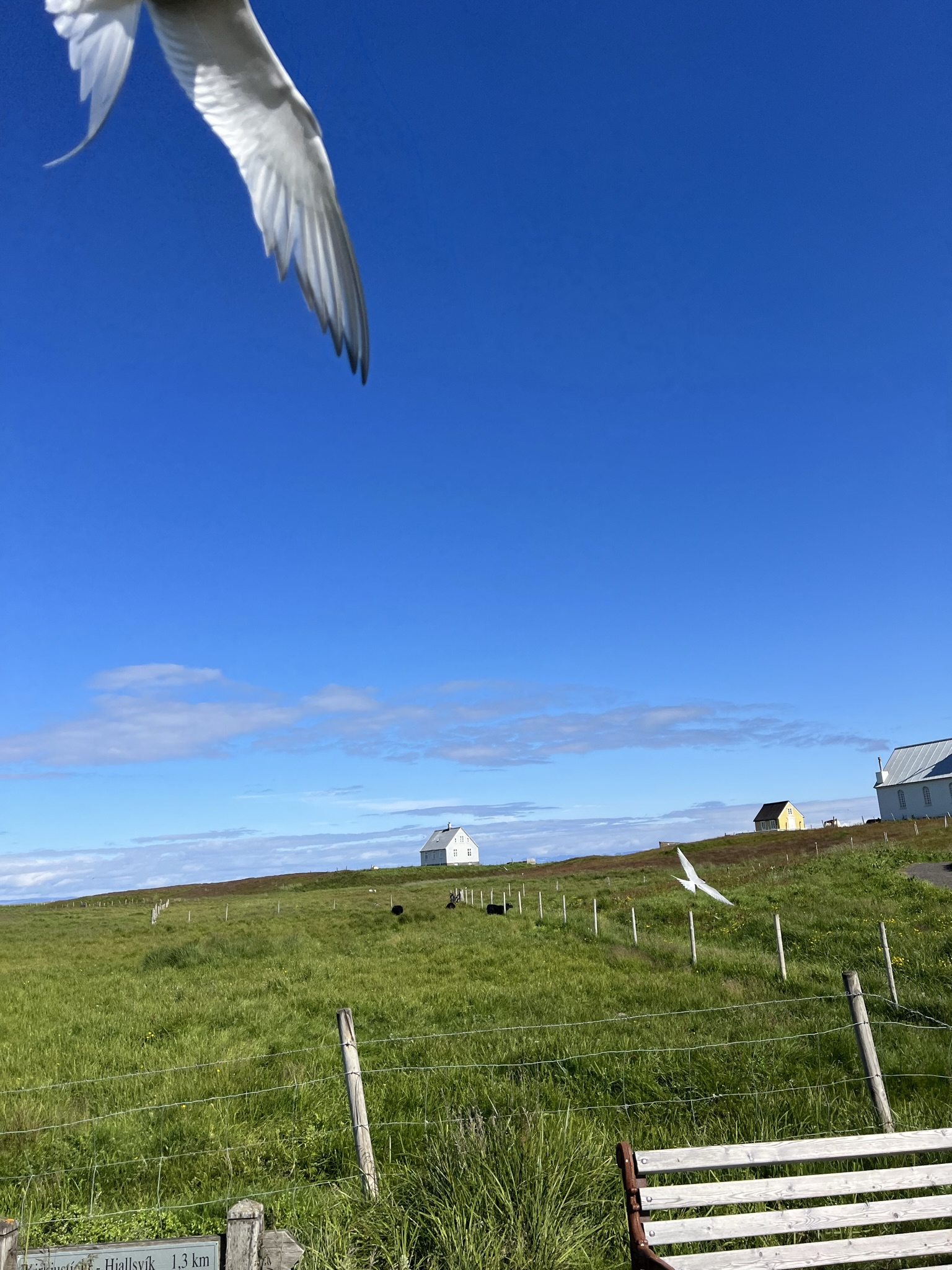
Arctic terns are known to have the longest migrations in the animal kingdom and they live 15-30 years Their longest known round-trip is about 44,100 miles for the birds that nest in Iceland and Greenland and they go to the Antarctic coast for their summer. This long journey ensures that these birds see more daylight than any other creature on the planet. They normally take a convoluted journey between the poles to take advantage of prevailing winds. As you can tell they are grey and white with a red/orange beak and feet with a black nape and a forked tail. While I walked back on my own from the church they tried to dive bomb me. We were told in advance that they might try to dive bomb our heads but I forgot as I walked back to the zodiac landing area. When I realized I had a target on my head I smiled, looked up and took photos. Larkin got some good photos of the terns as we walked around this part of their island.

Our next day was getting off the ship in Reykjavik and traveling around the southern coast with Valdimar.

JAN MAYEN ISLAND

Beerenberg Volcano

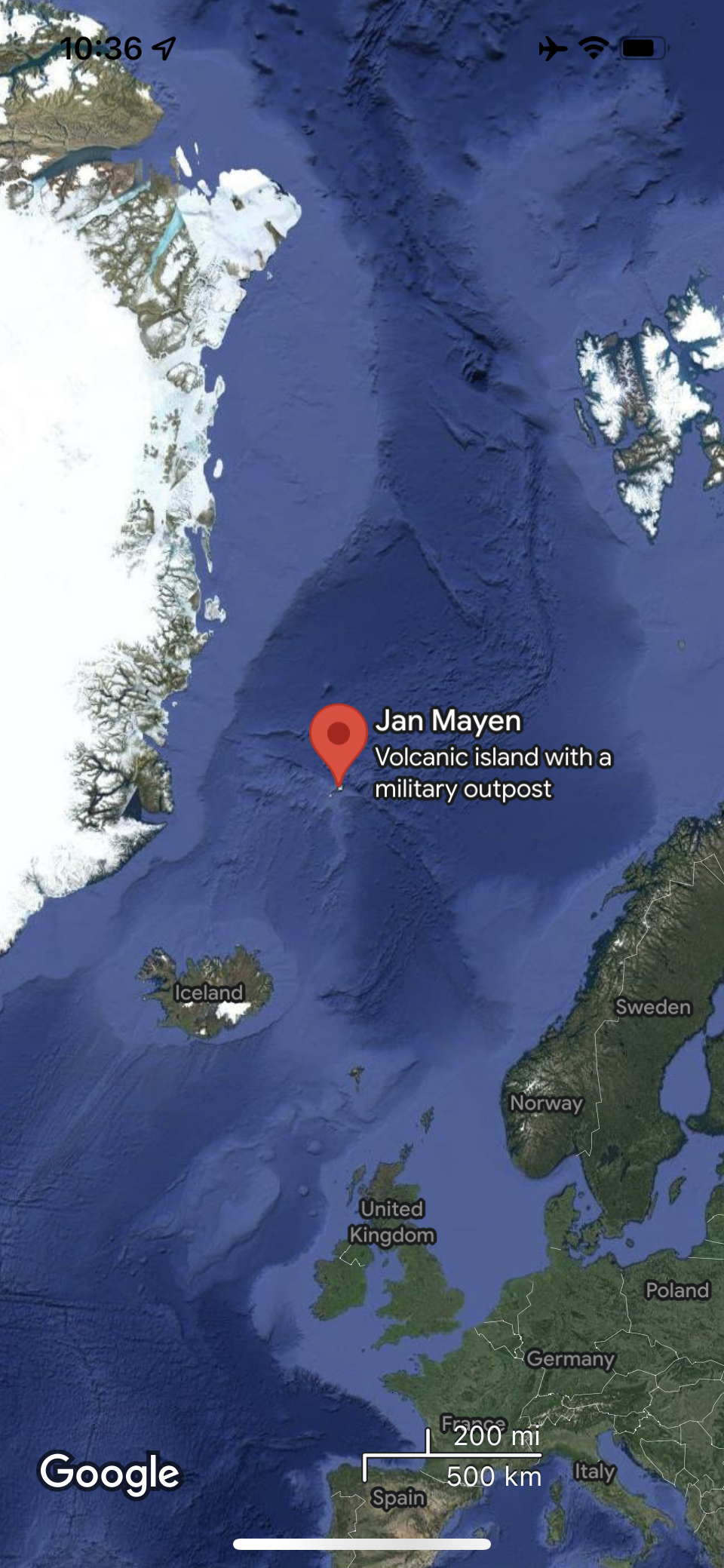
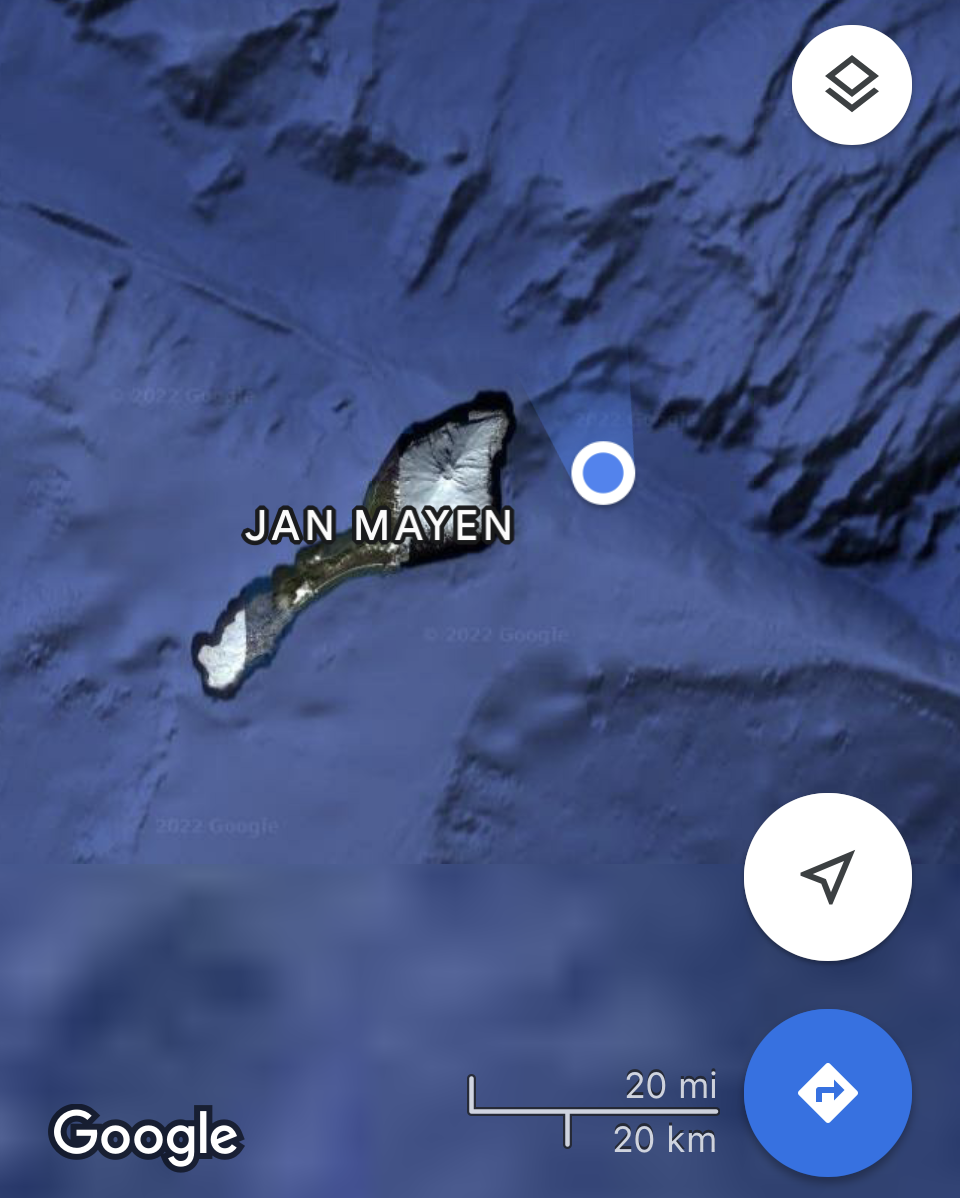
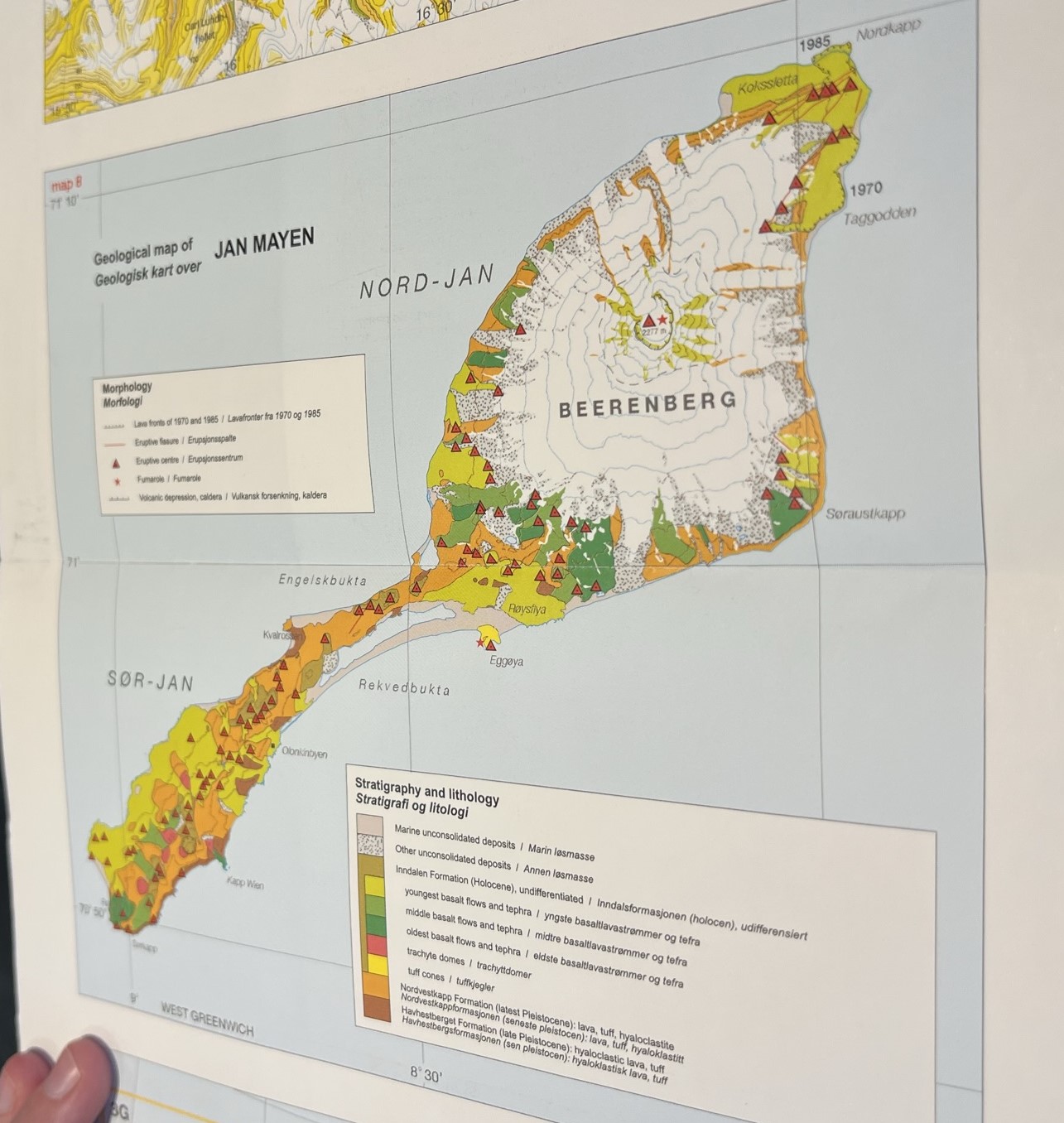
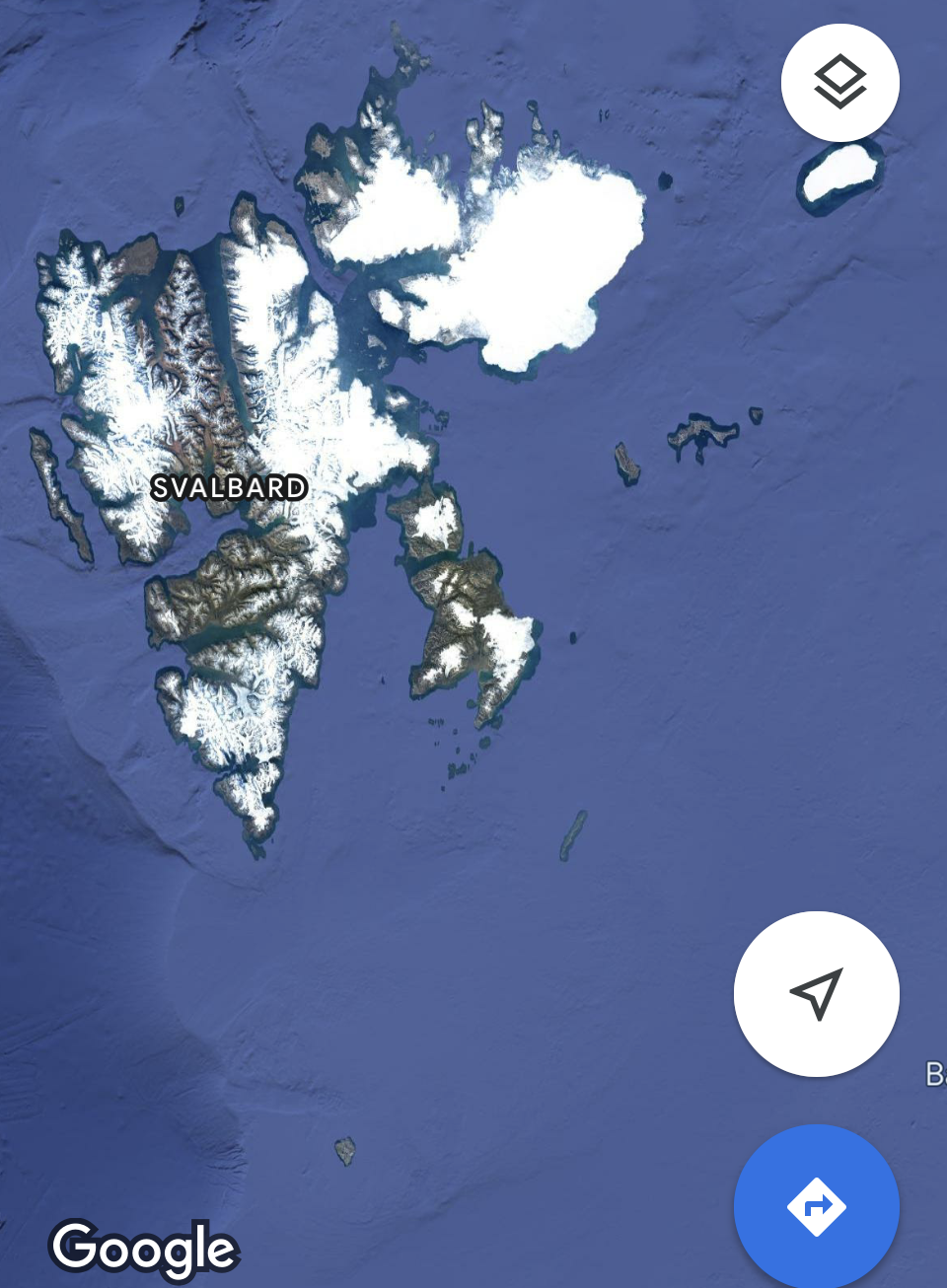
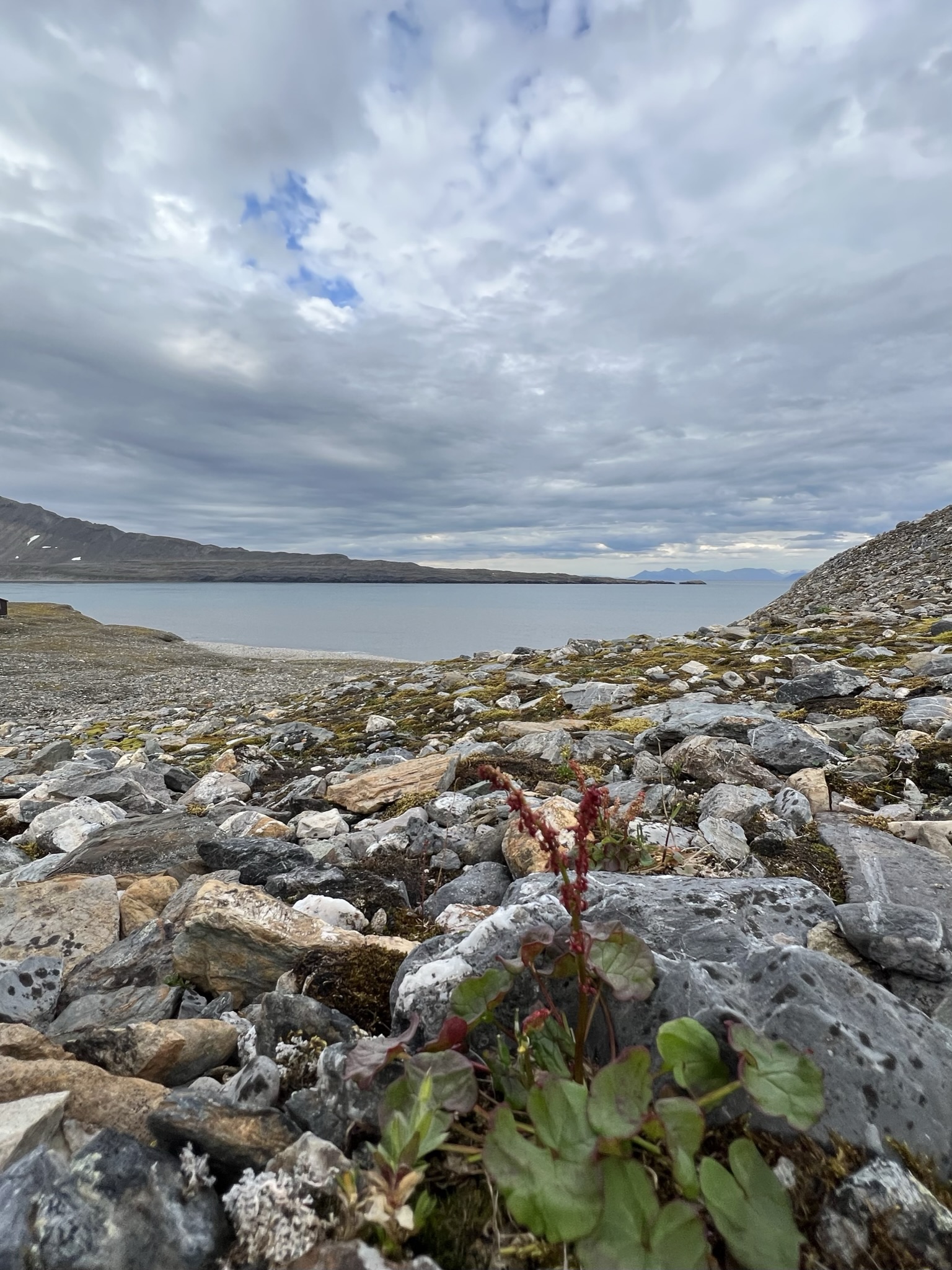
Jan Mayen Island is in a triangle between Svalbard, Greenland and Iceland. The entire island is a nature reserve. The Beerenberg Volcano is the most active volcano in the North Atlantic and tops out at 7,470′. We were unable to zodia to the meteorological station but were able to take photos of the volcano as we headed south down the east side of the island. This is what could be seen under the marine layer.

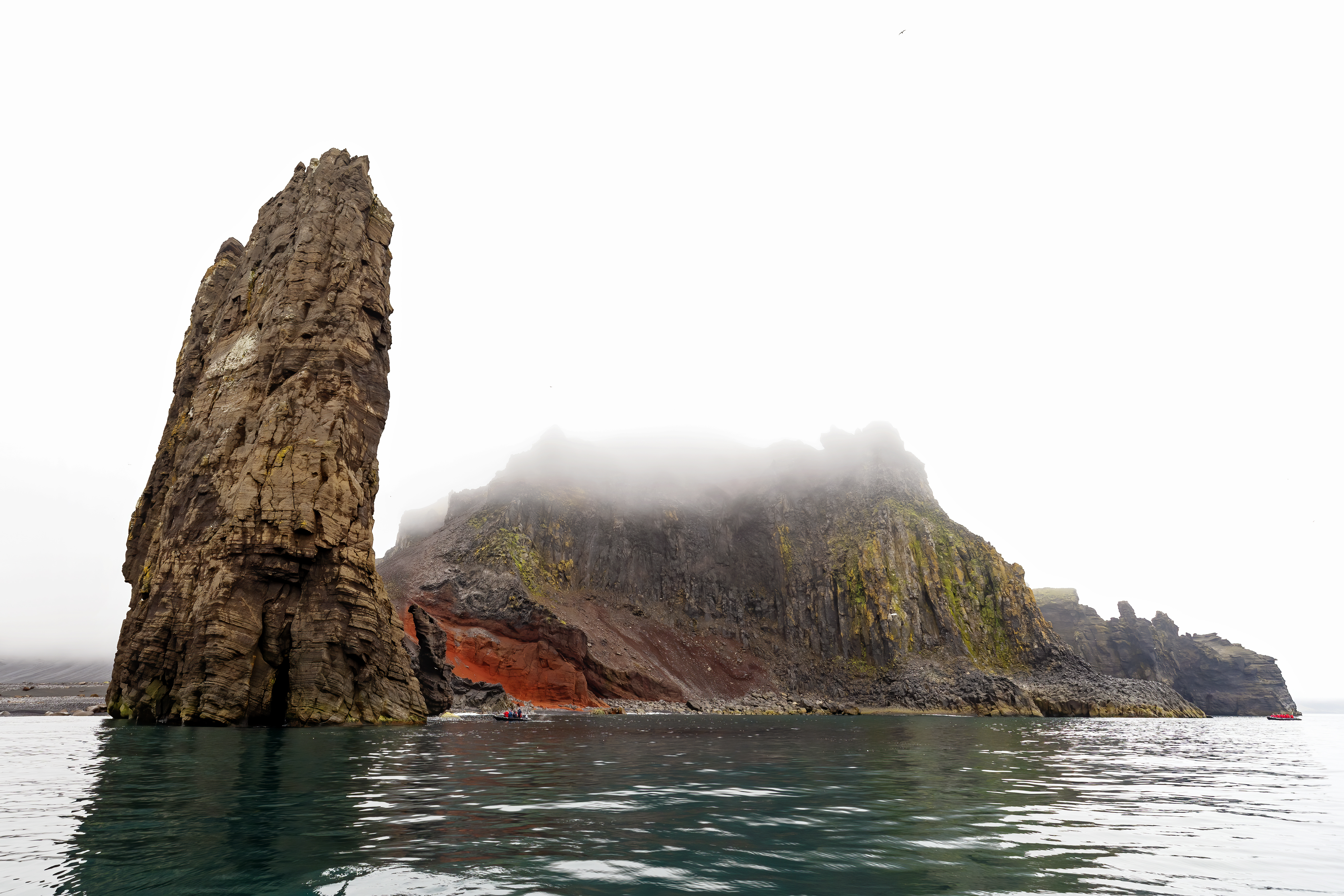
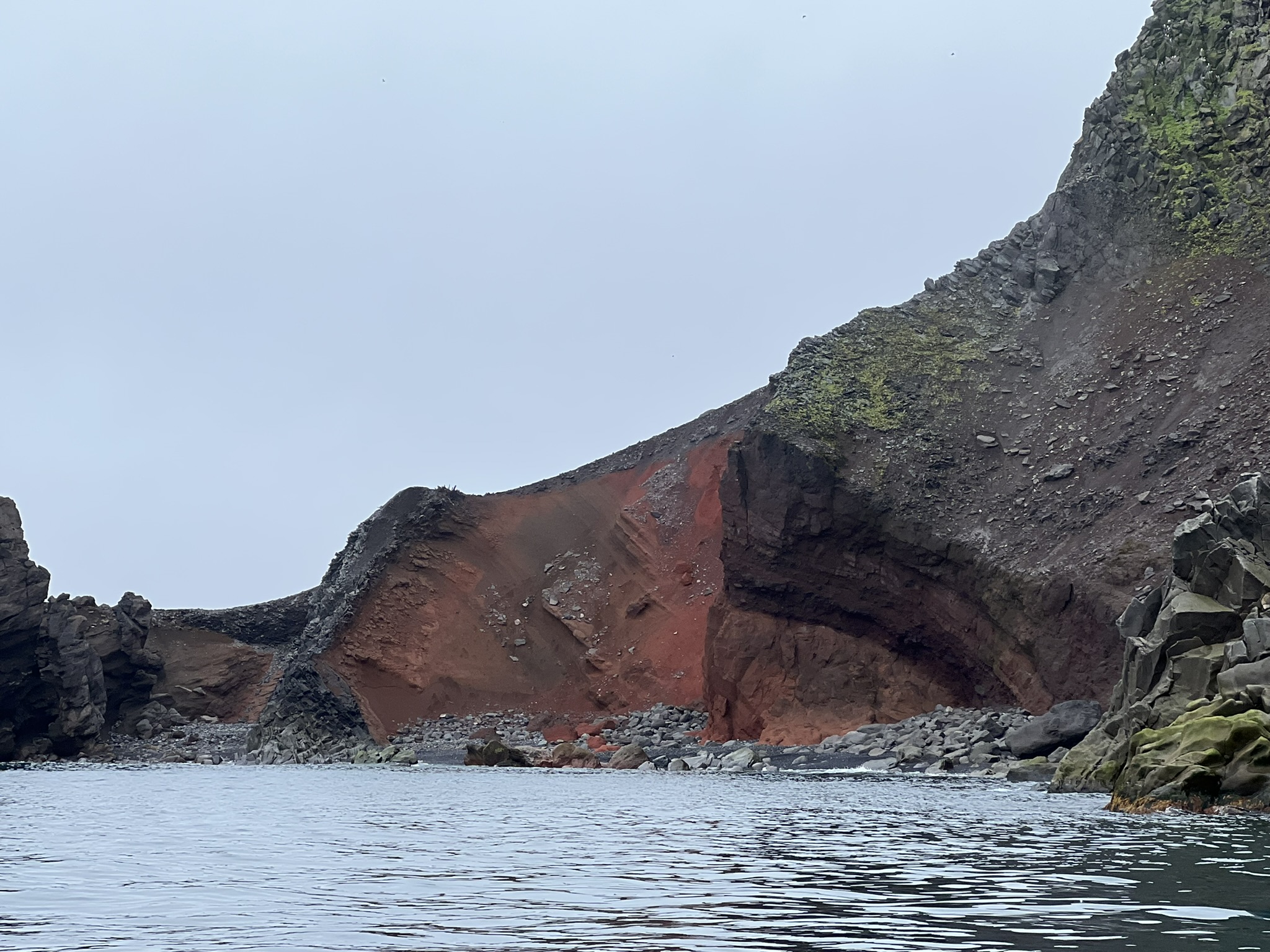
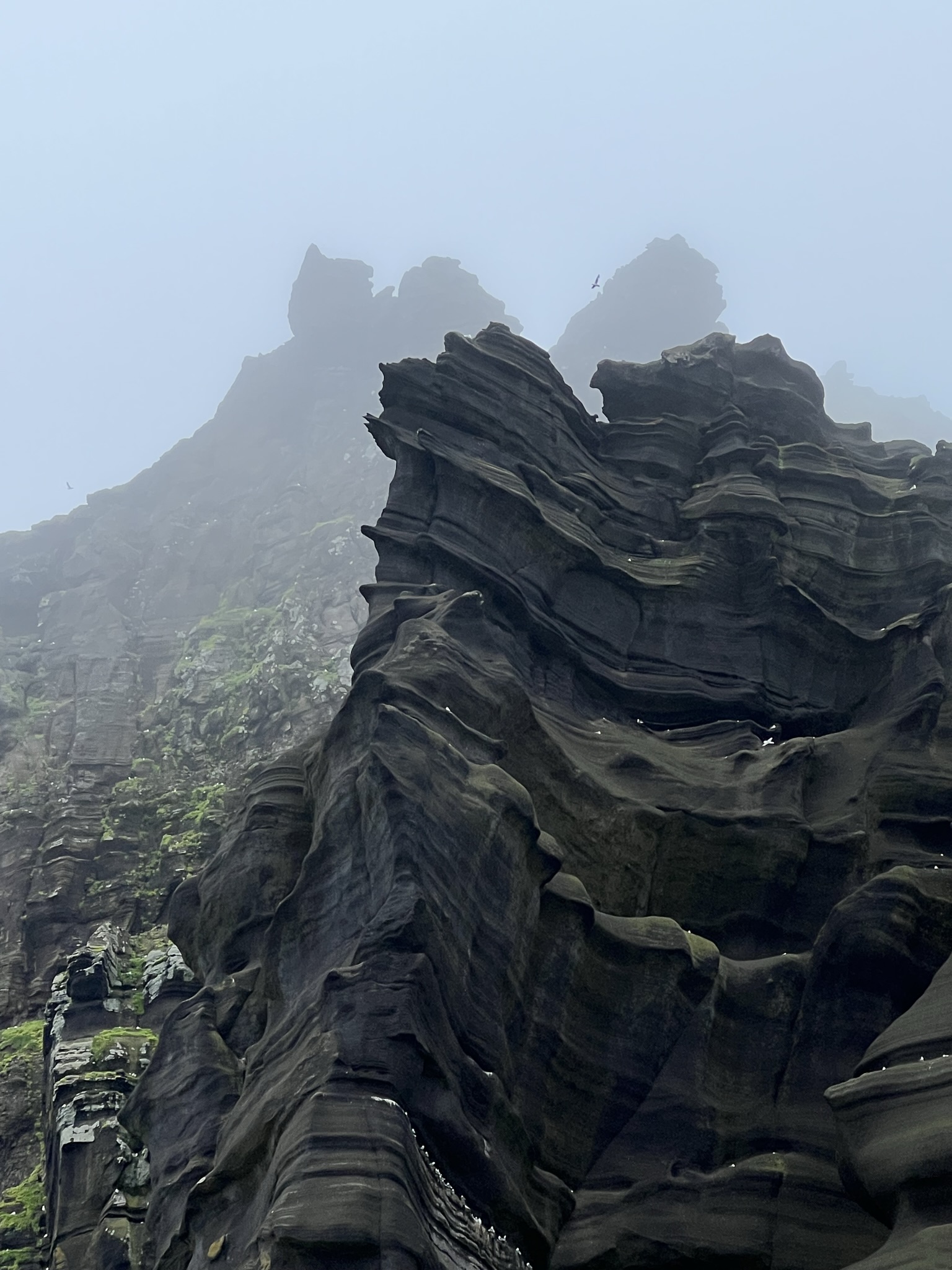
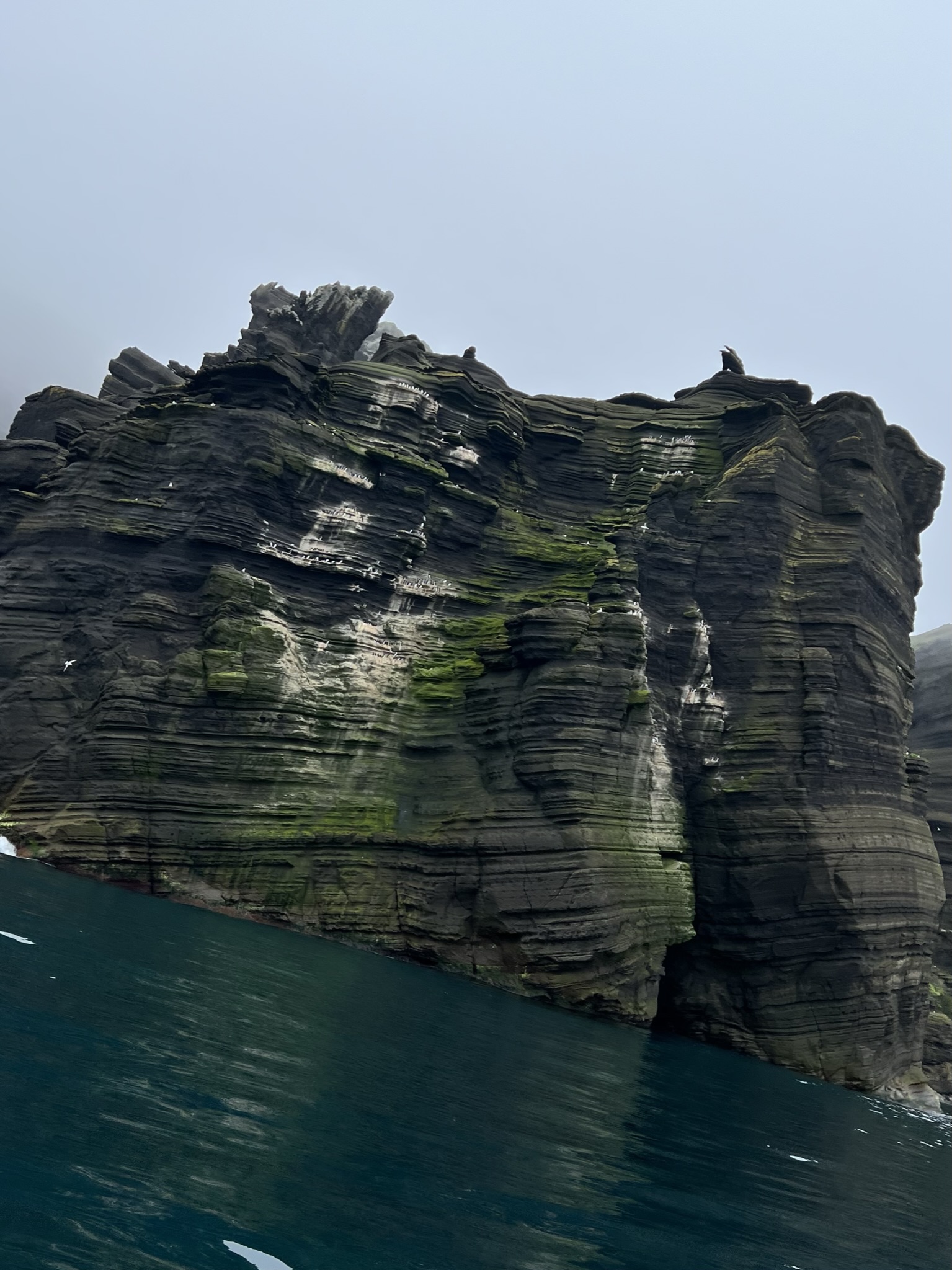
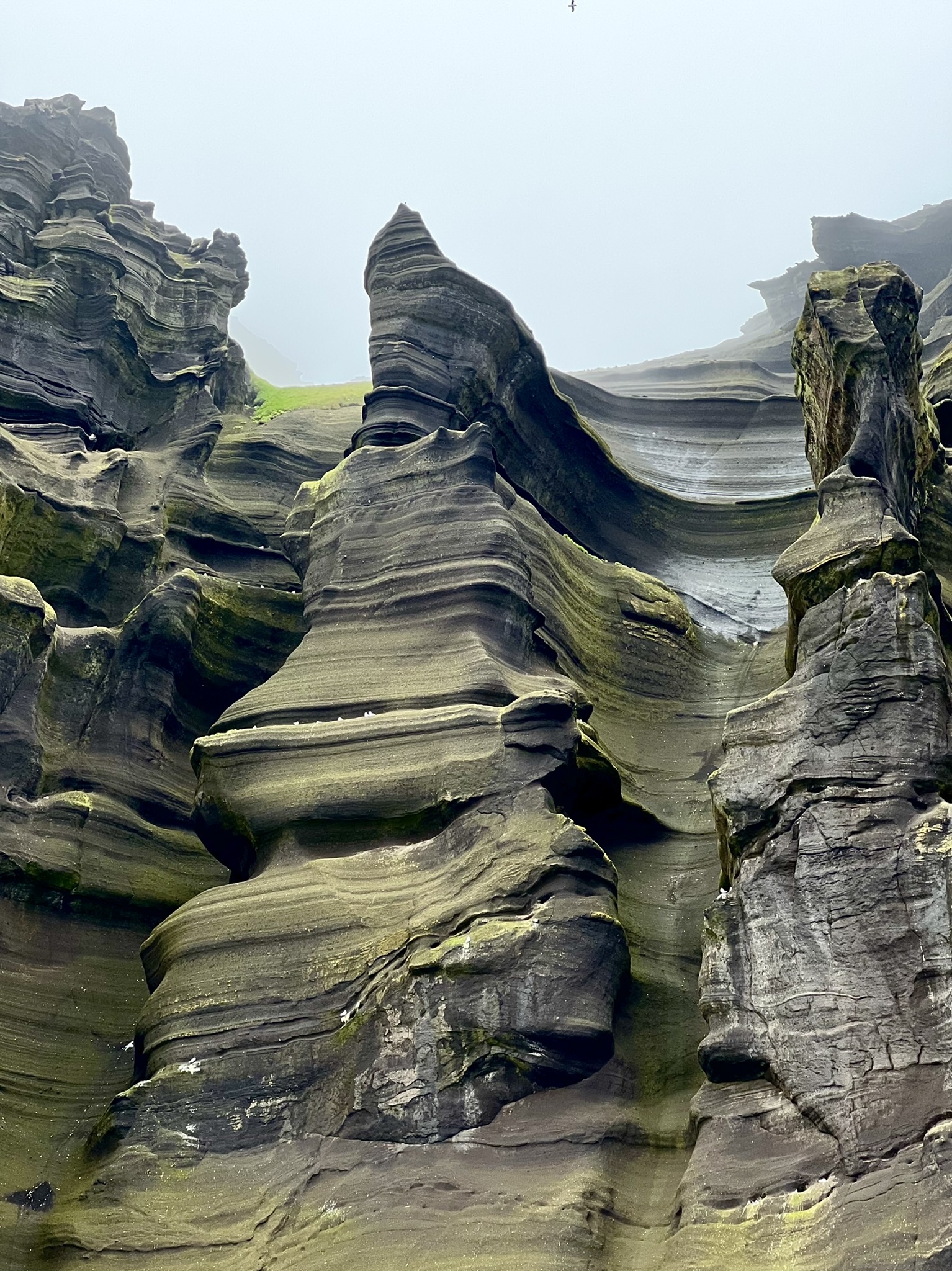
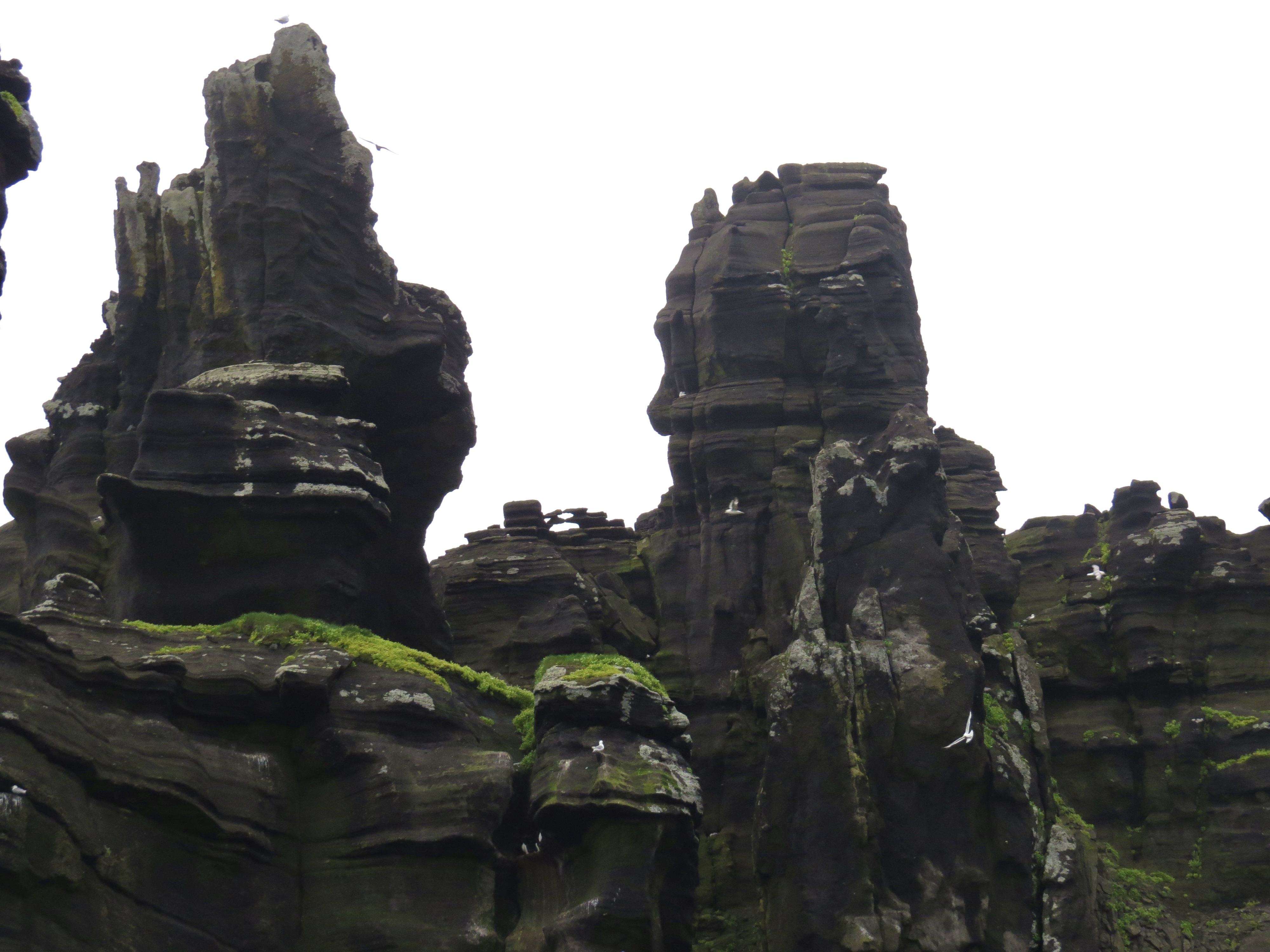
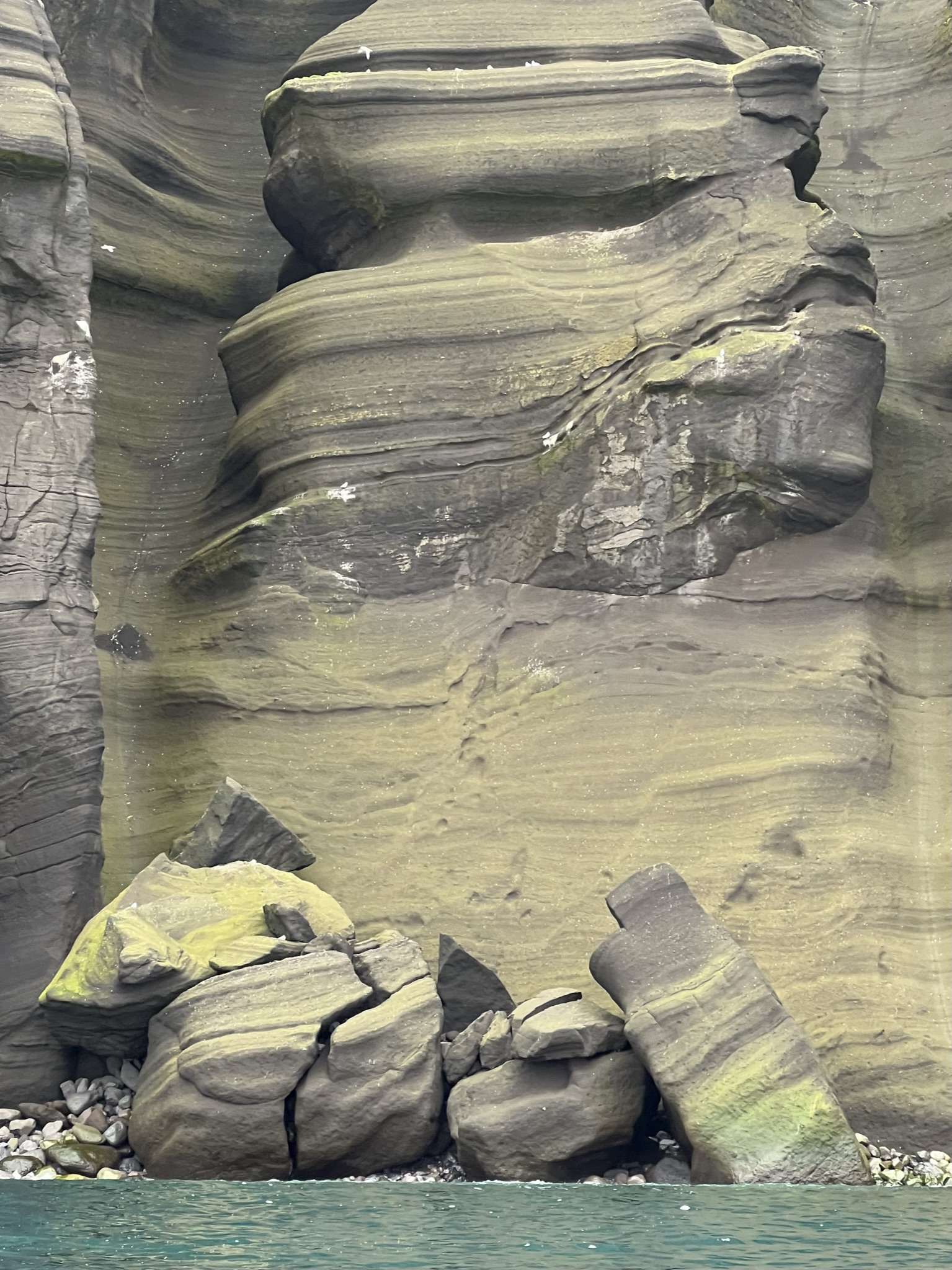
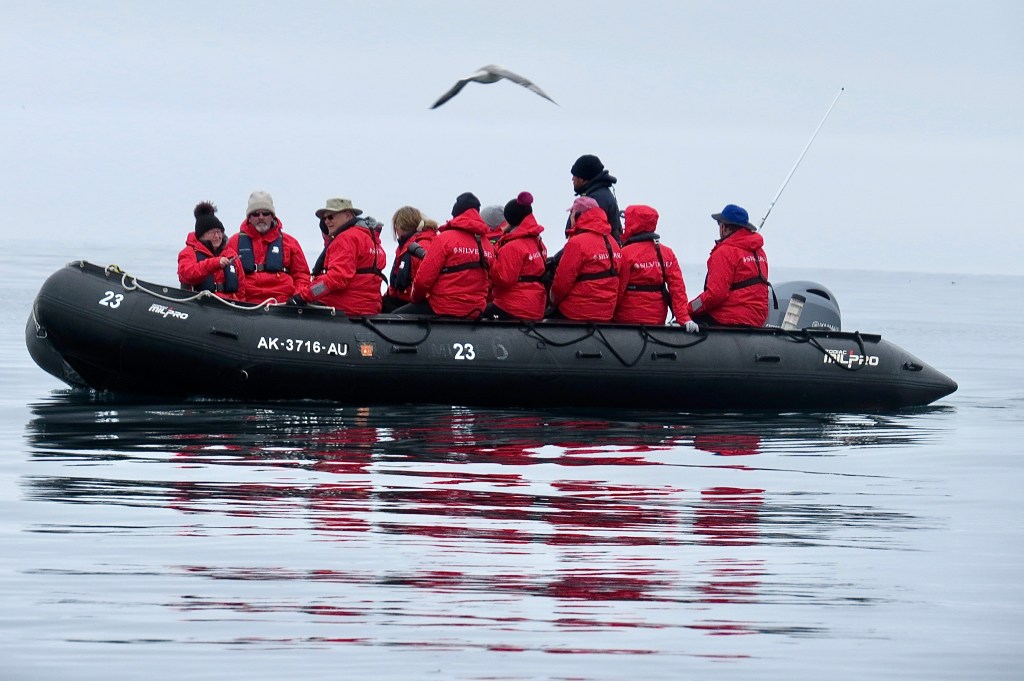
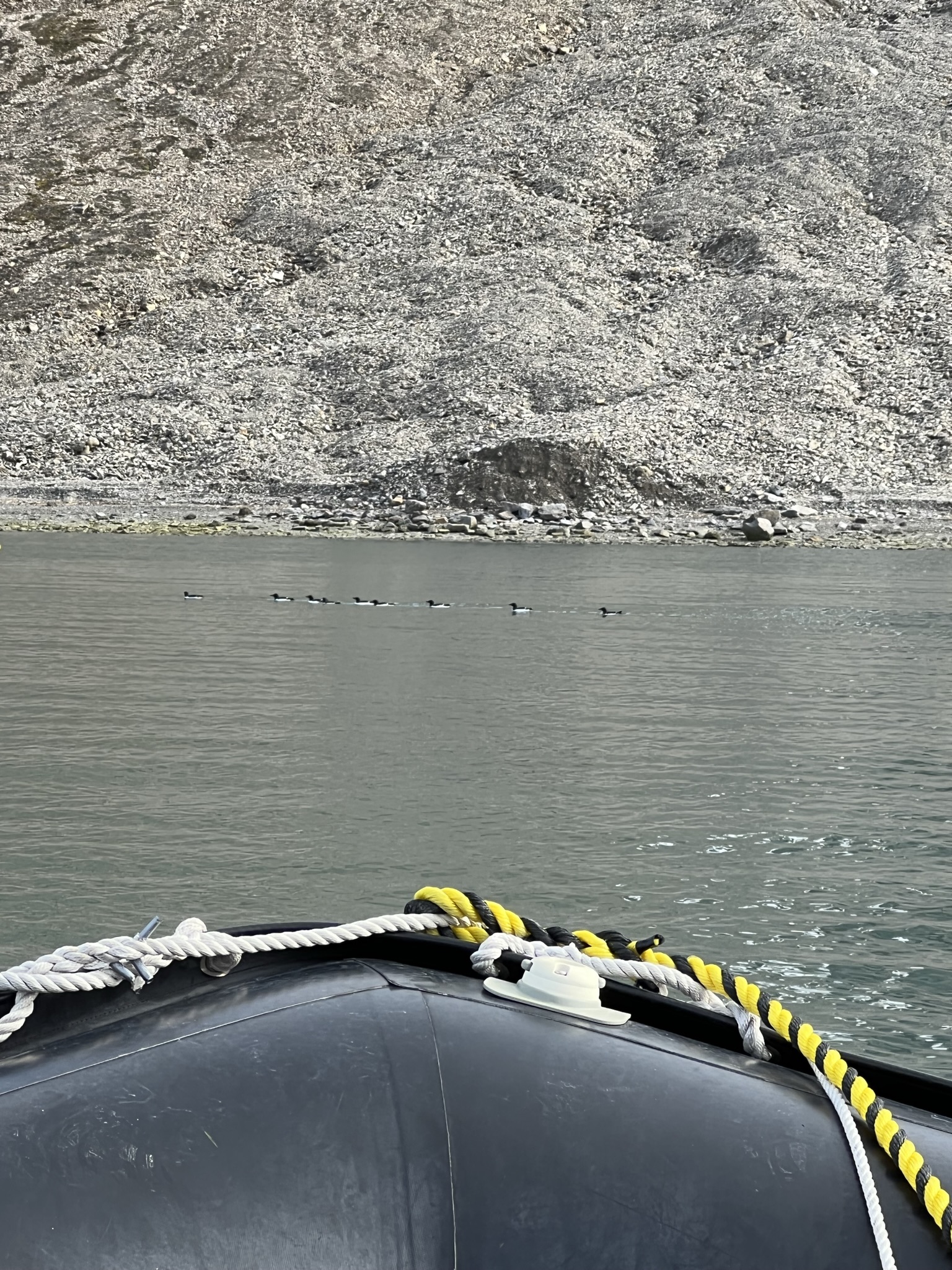
As we headed south, we curved around the island anchored and were able to enjoy the geology and birds of the island.

By Larkin Martini – Tooling around

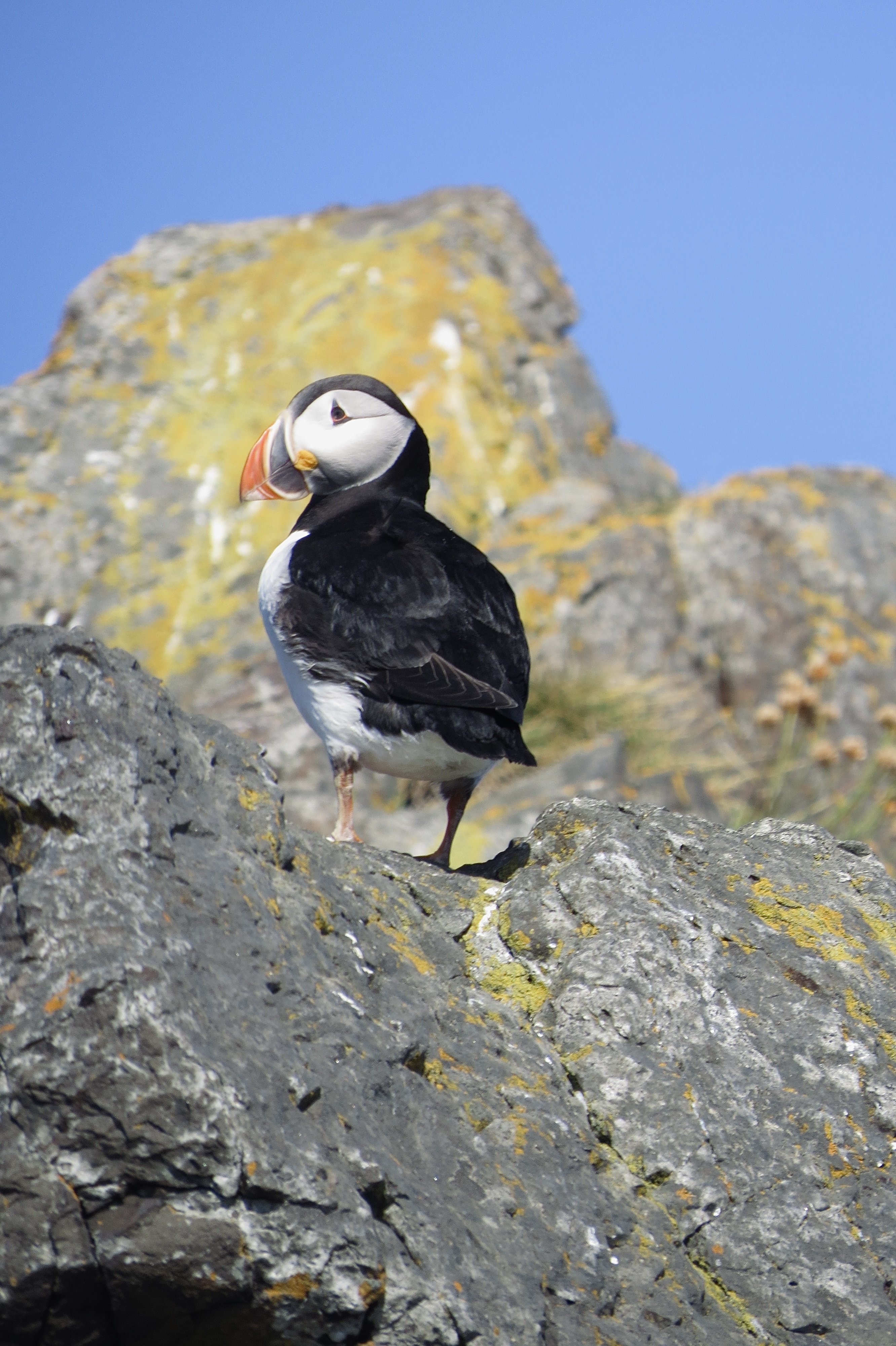
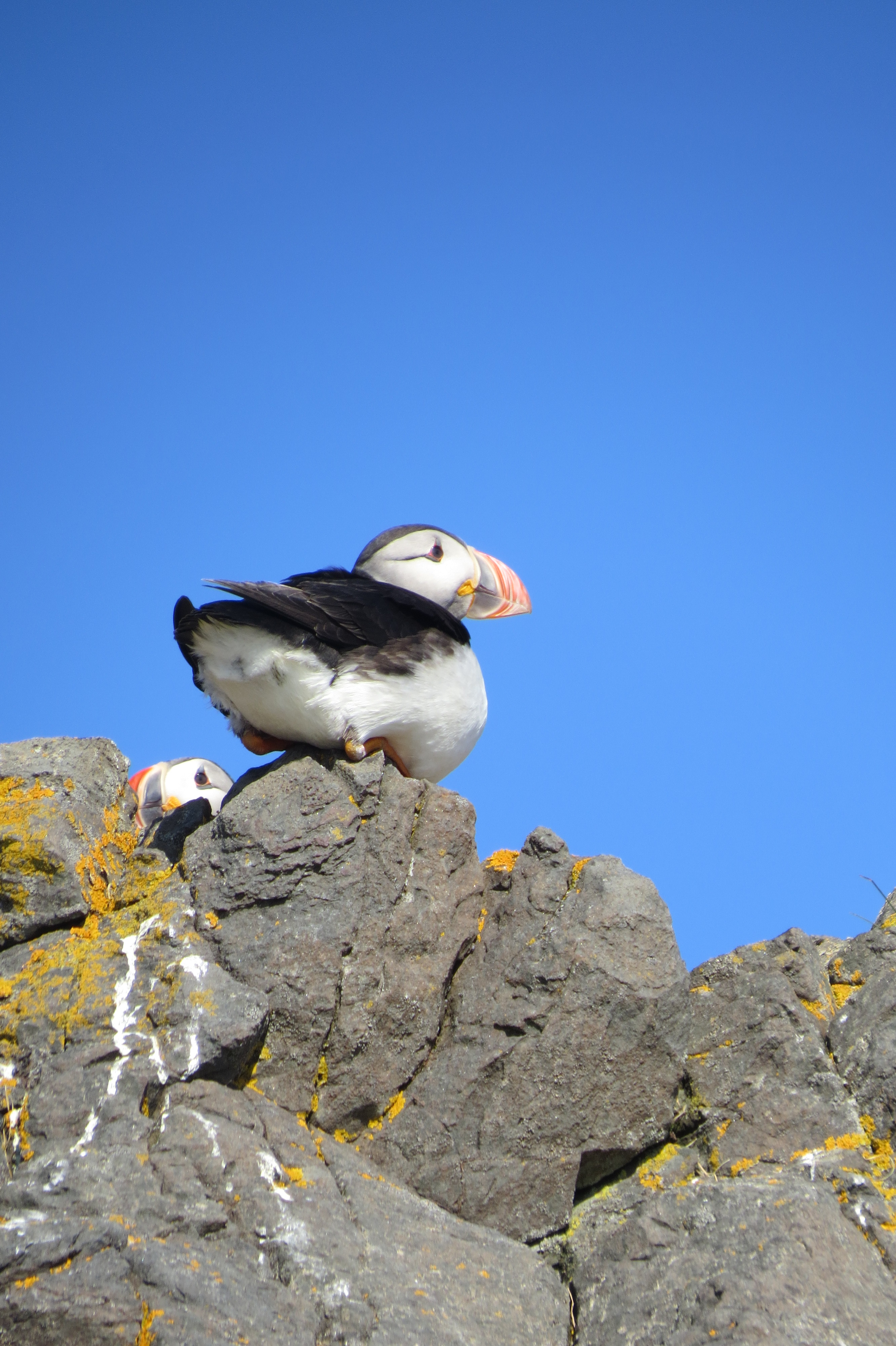
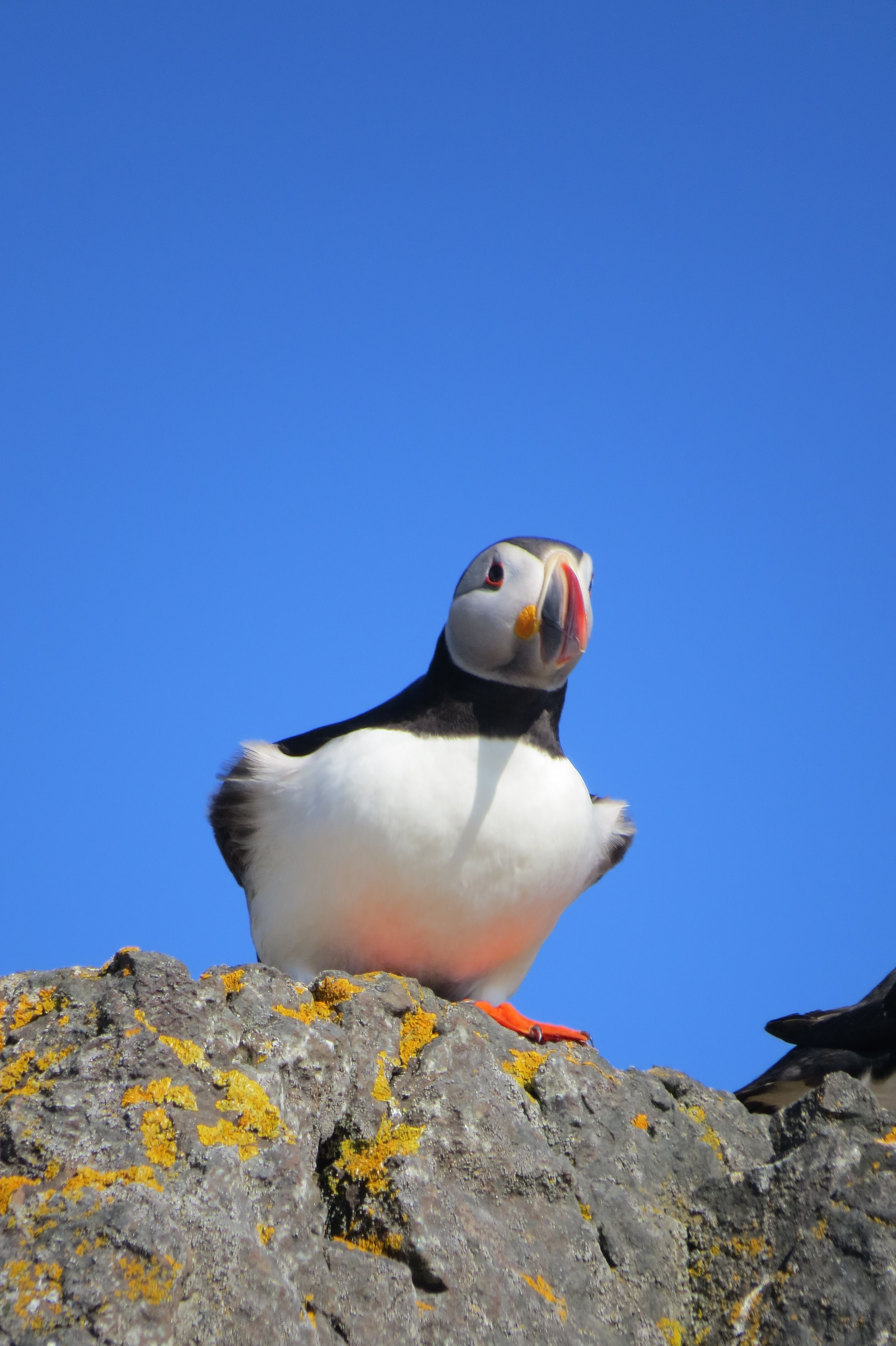
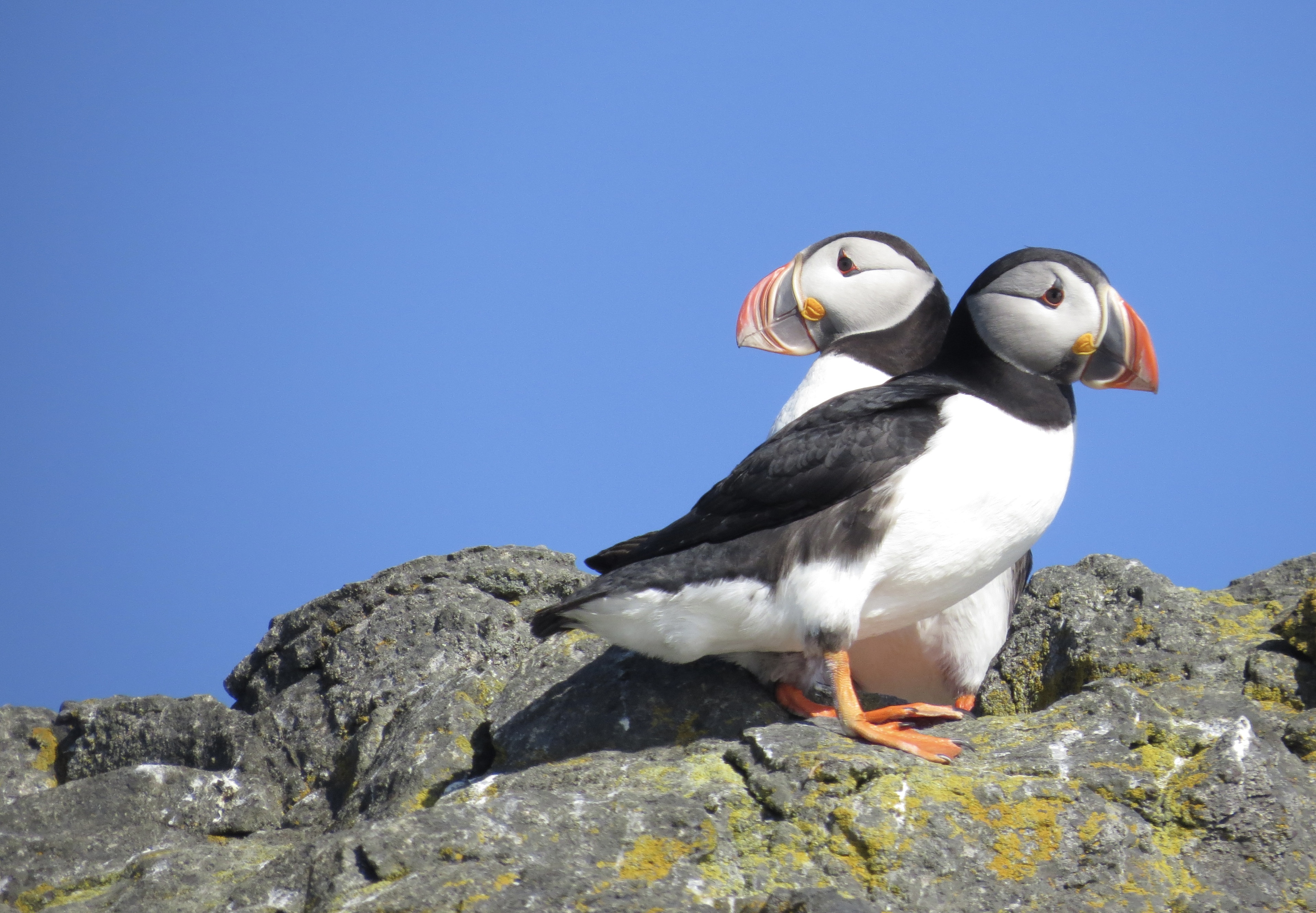
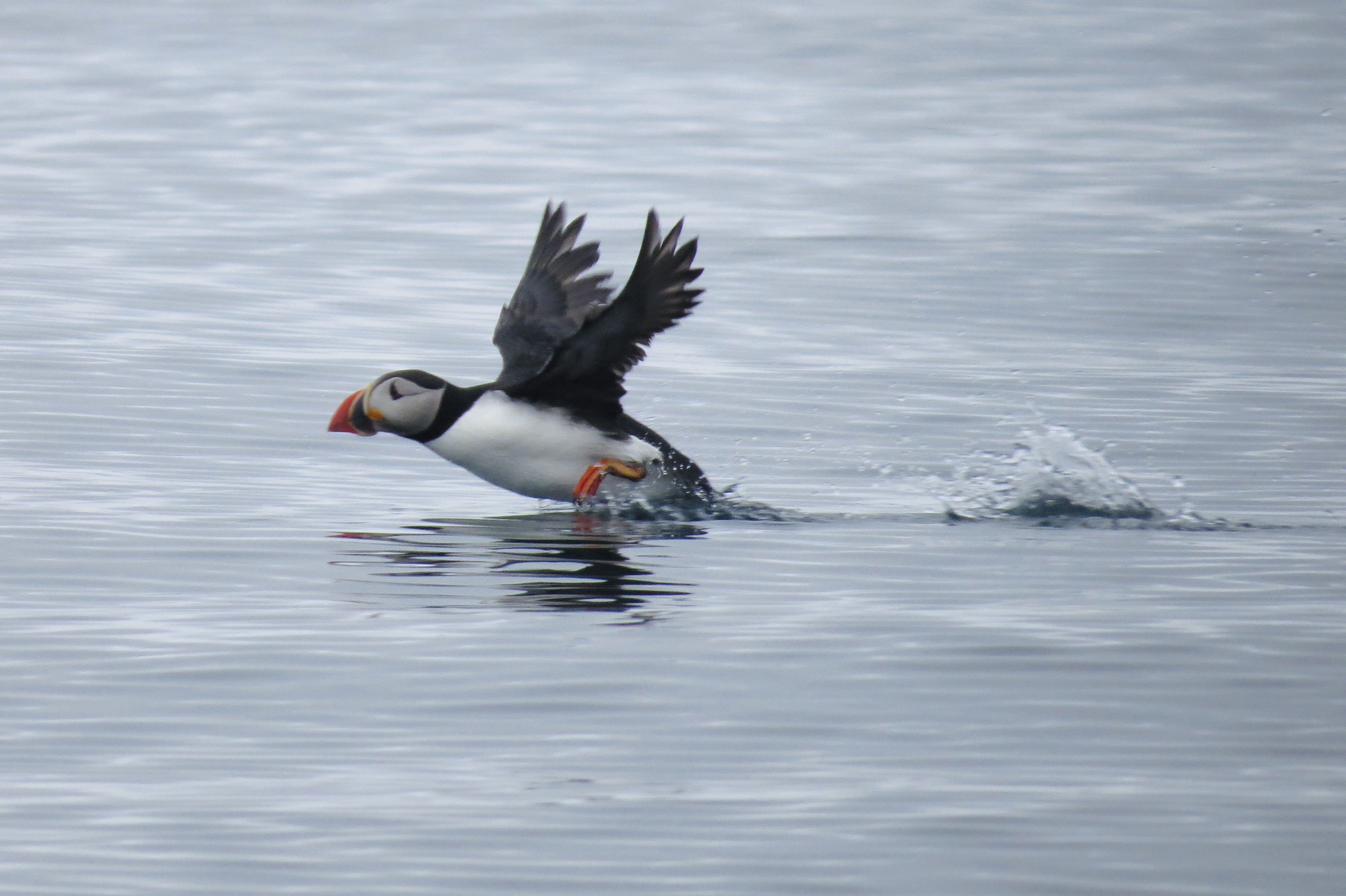
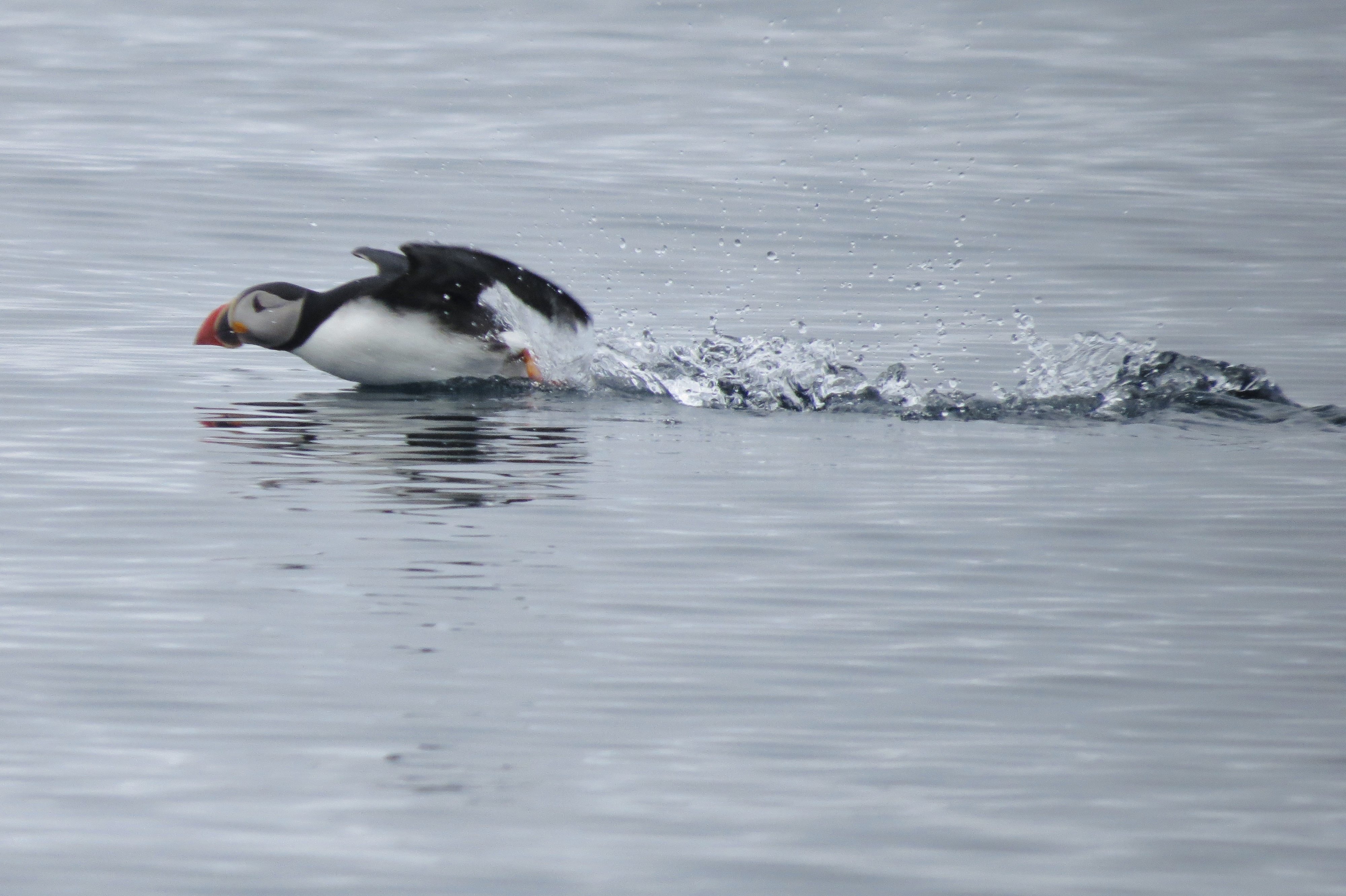
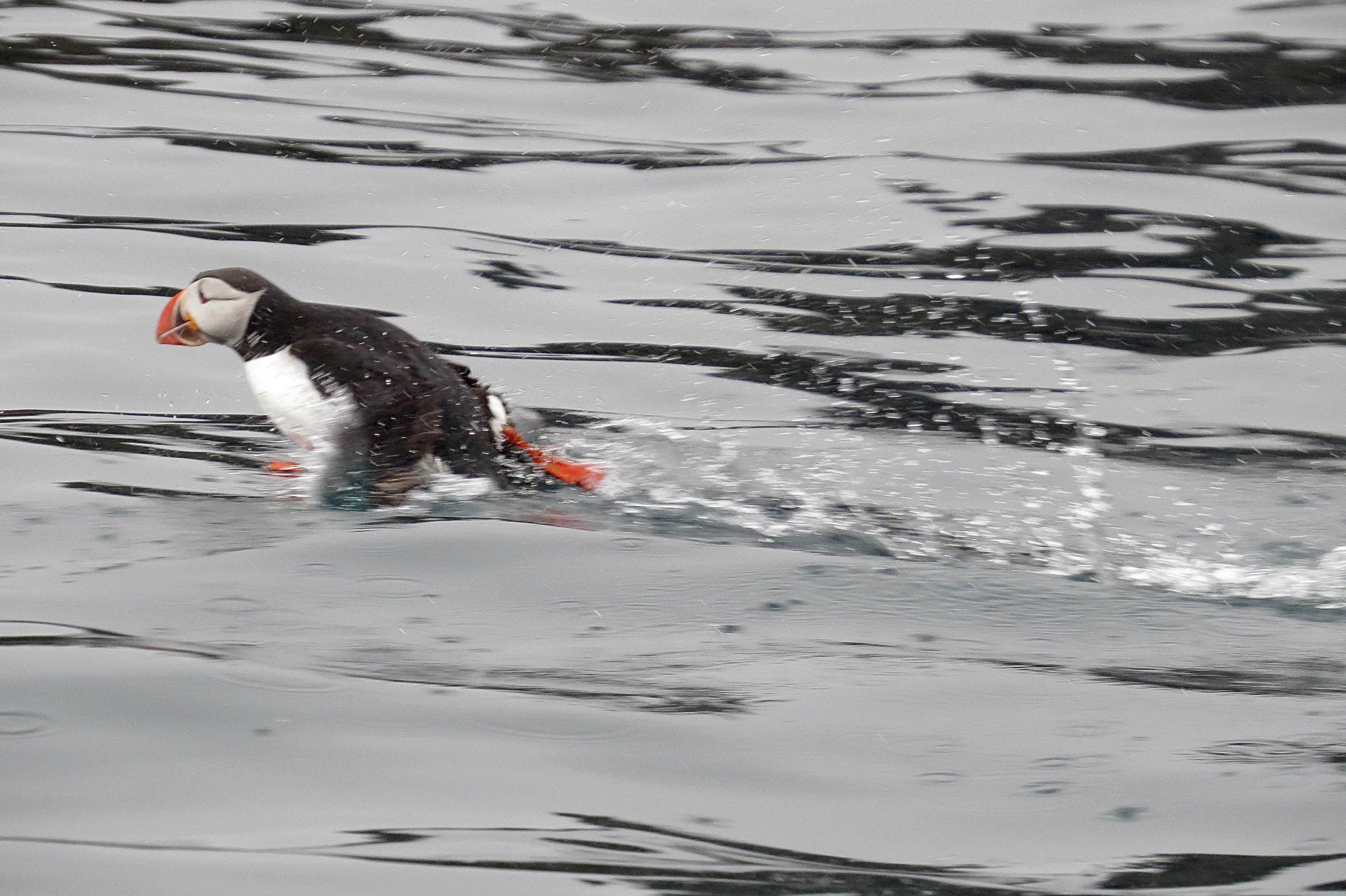
While we were out on the zodiacs, Larkin was able to catch the Atlantic puffin working his or her way to flying using the webbed feet to paddle and get lift. Both the males and females look the same – colorful heads and feet, short wings, pudgy body and those helpful webbed feet. They had a huge triangular bill and a black collar separates the white belly and face. They remind me of a bumblebee that has to work so hard to stay in flight. However, despite my thought on what they look like, their wicked fast wings can beat up to 400 times a minute and they can fly 50 miles an hour. They spend most of their lives in the ocean water except during breeding season. They can dive up to 300 feet but are usually underwater for 20-30 seconds at a time. Puffins mate for life. Over 60% of the breeding pairs are located on Iceland and we are heading there next! A colony of breeding pairs can sound like a herd of cattle lowing or a small chainsaw.

More puffins here we come…and more geology…and more volcanoes!

NY London quarry and walrus’ at Poolepynten across from Sankt Jonsfjorden

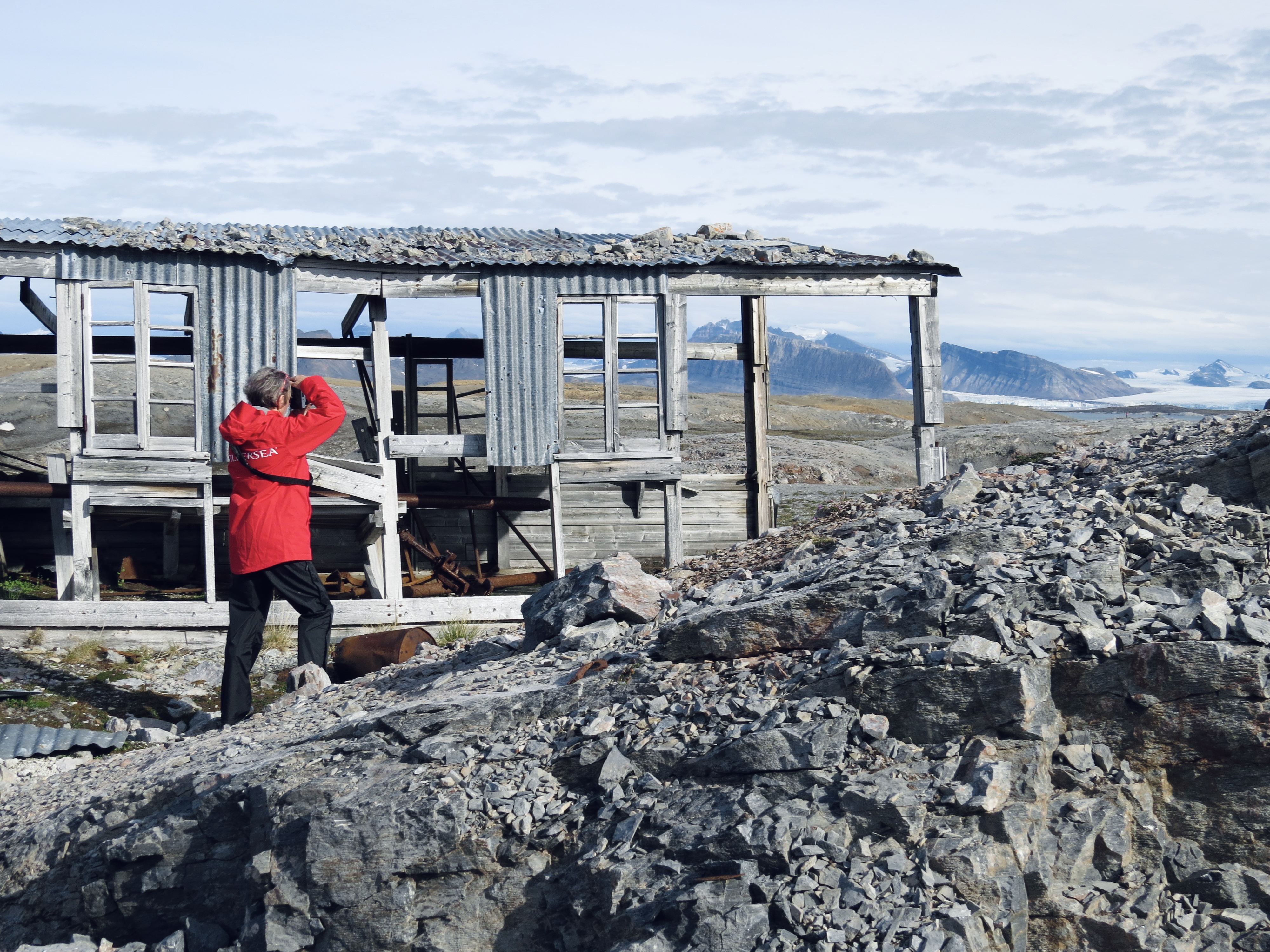
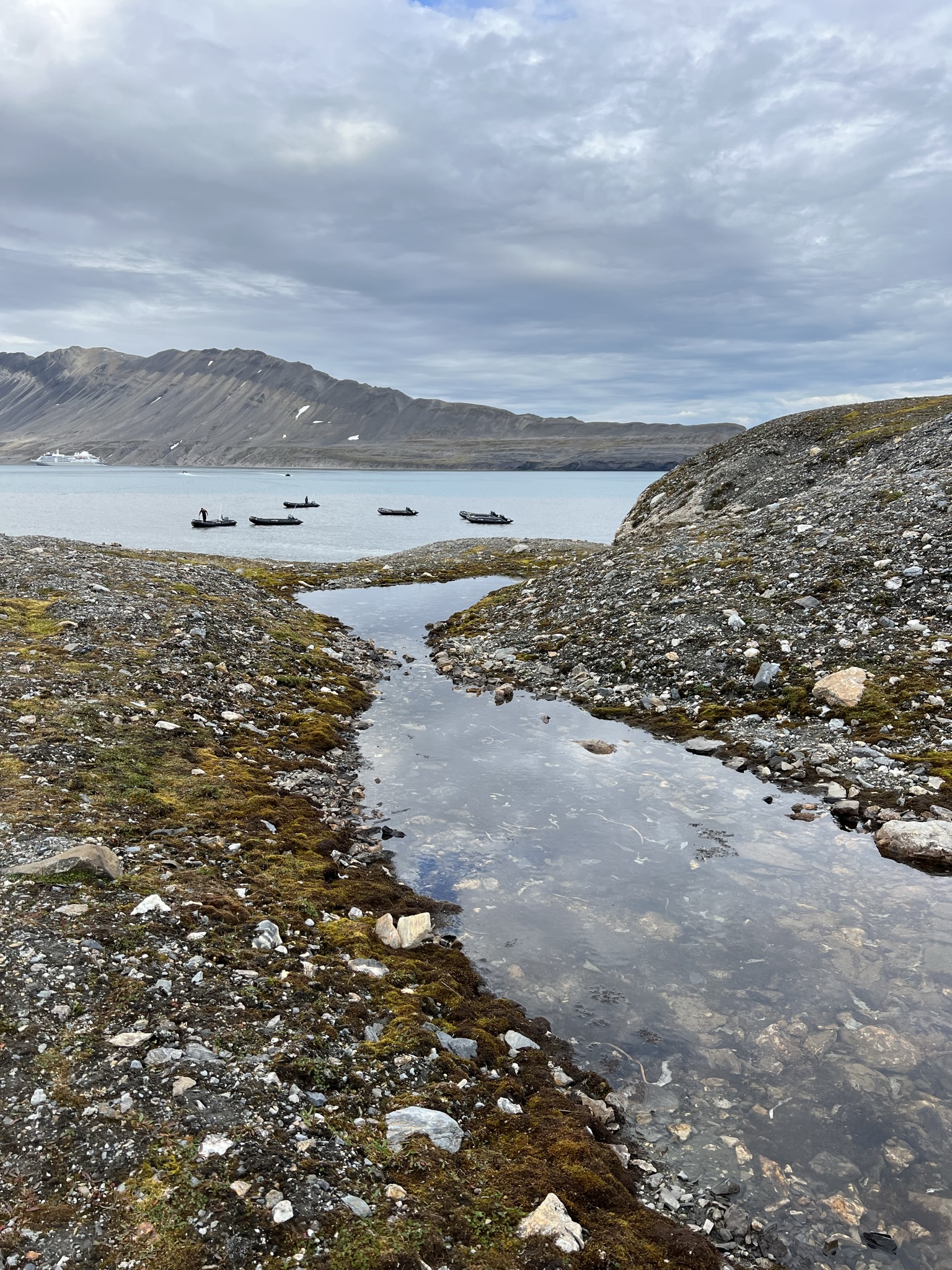
Buildings left with a view at the quarry NY London, Svalbard
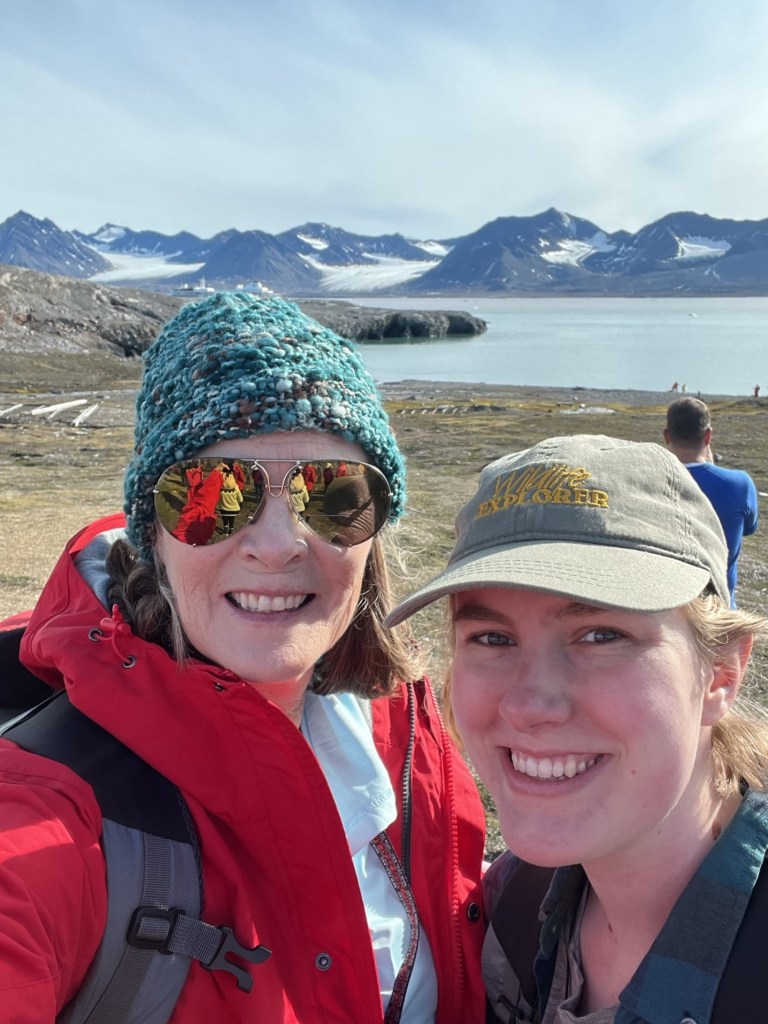
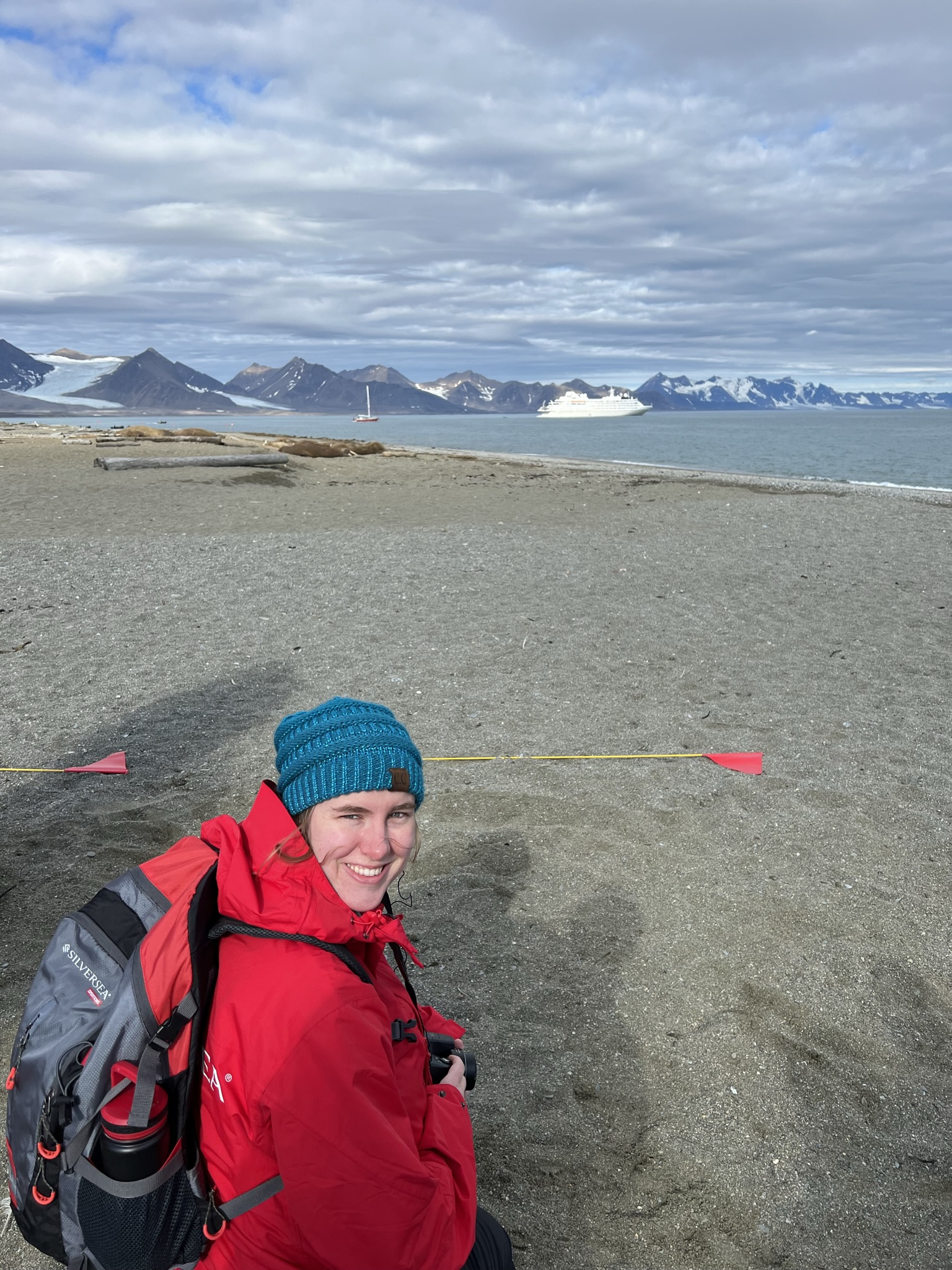
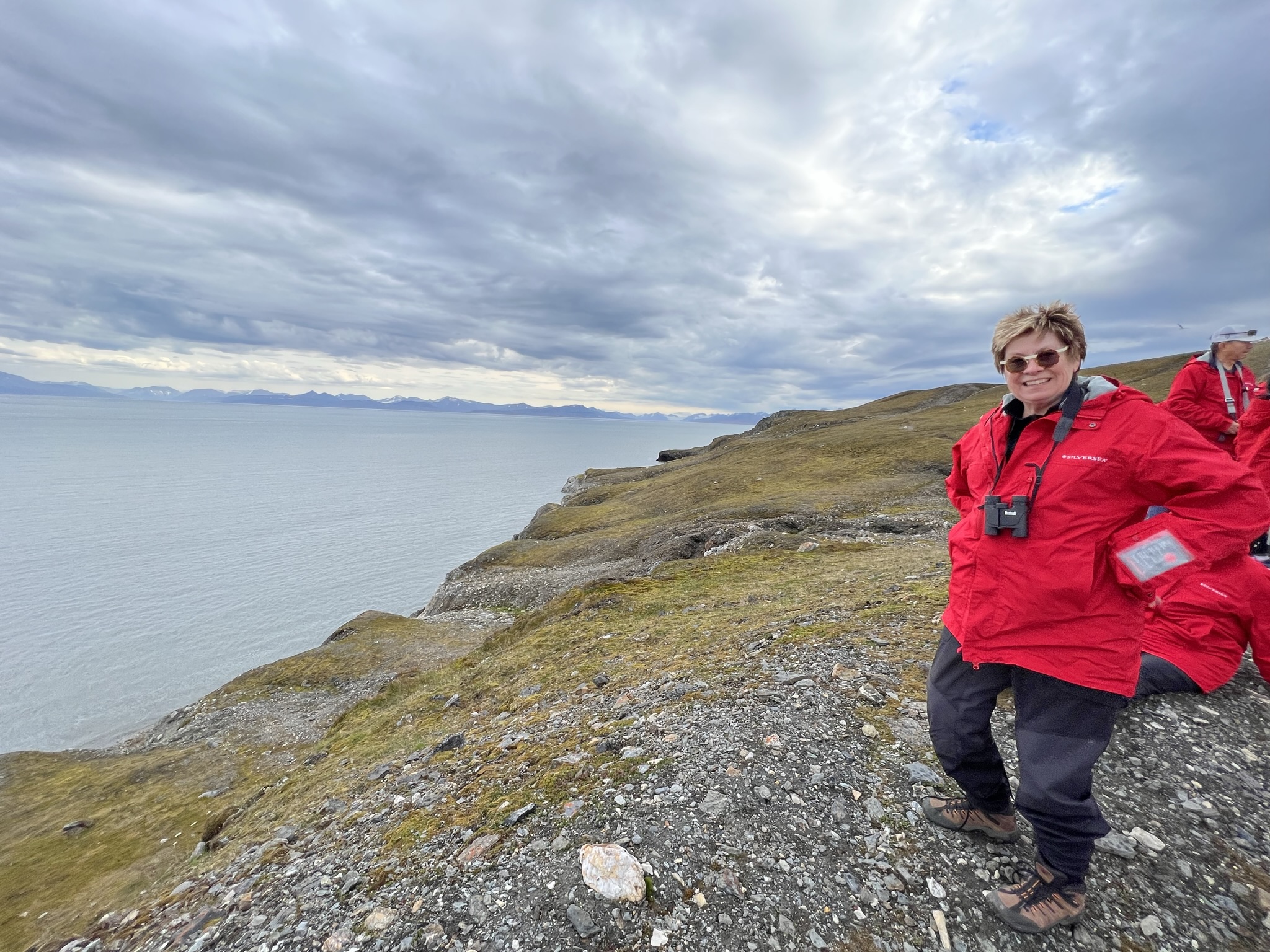
The girls doing the hike! Thanks for knitting the hat Larkin!

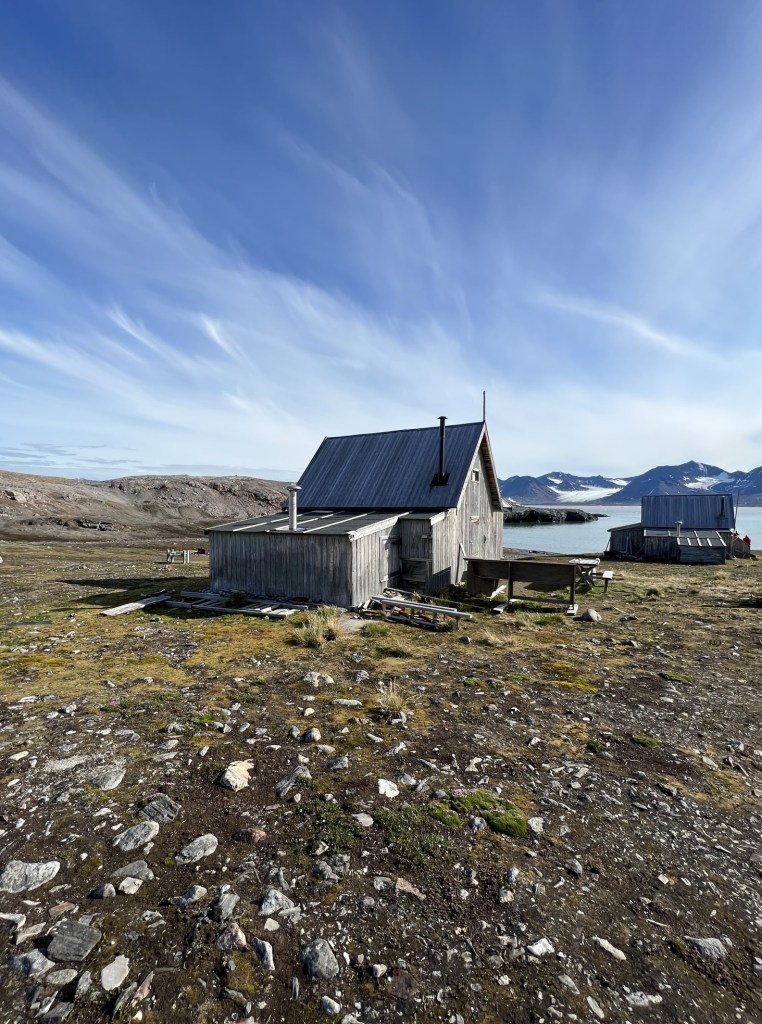
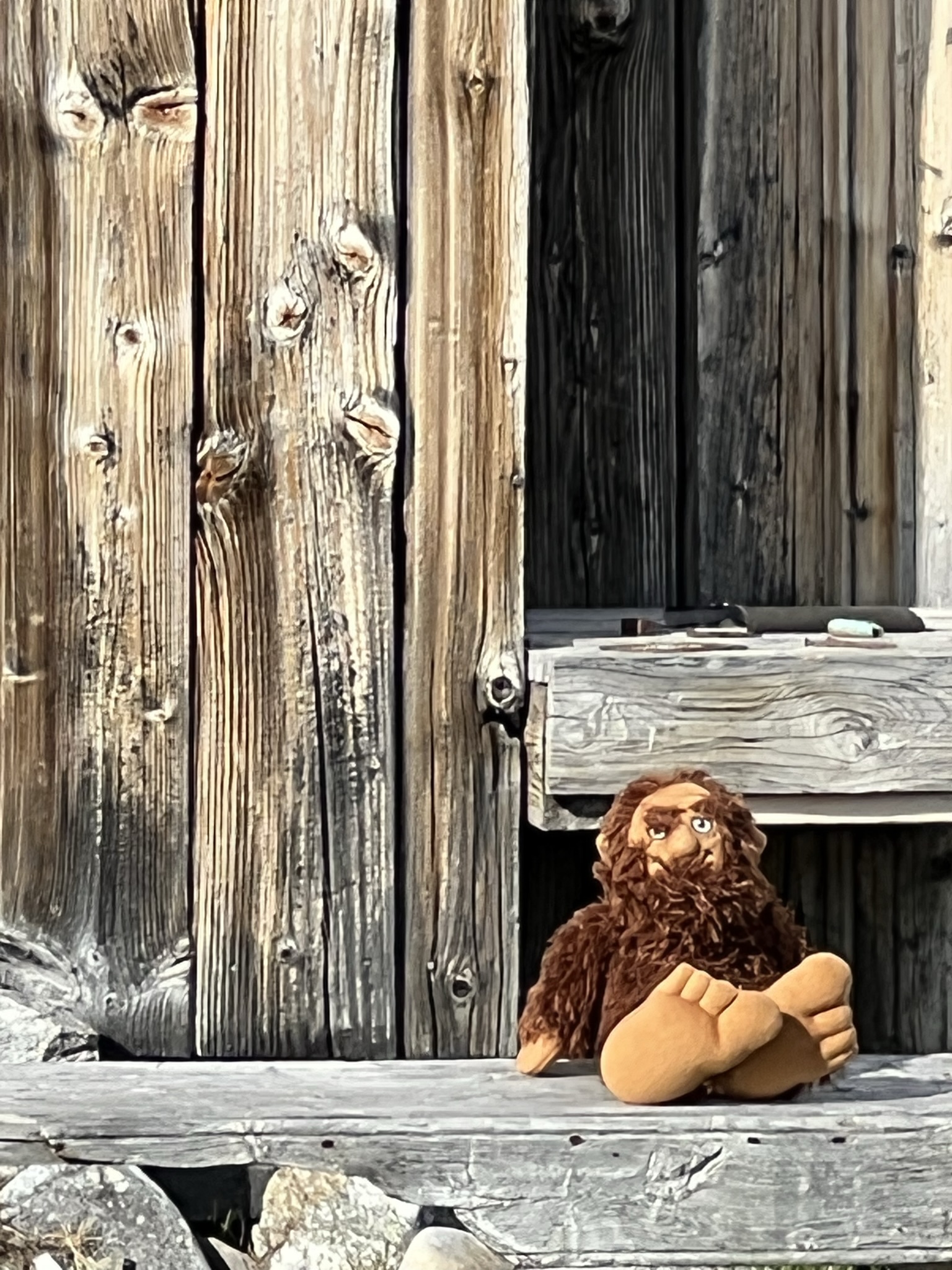
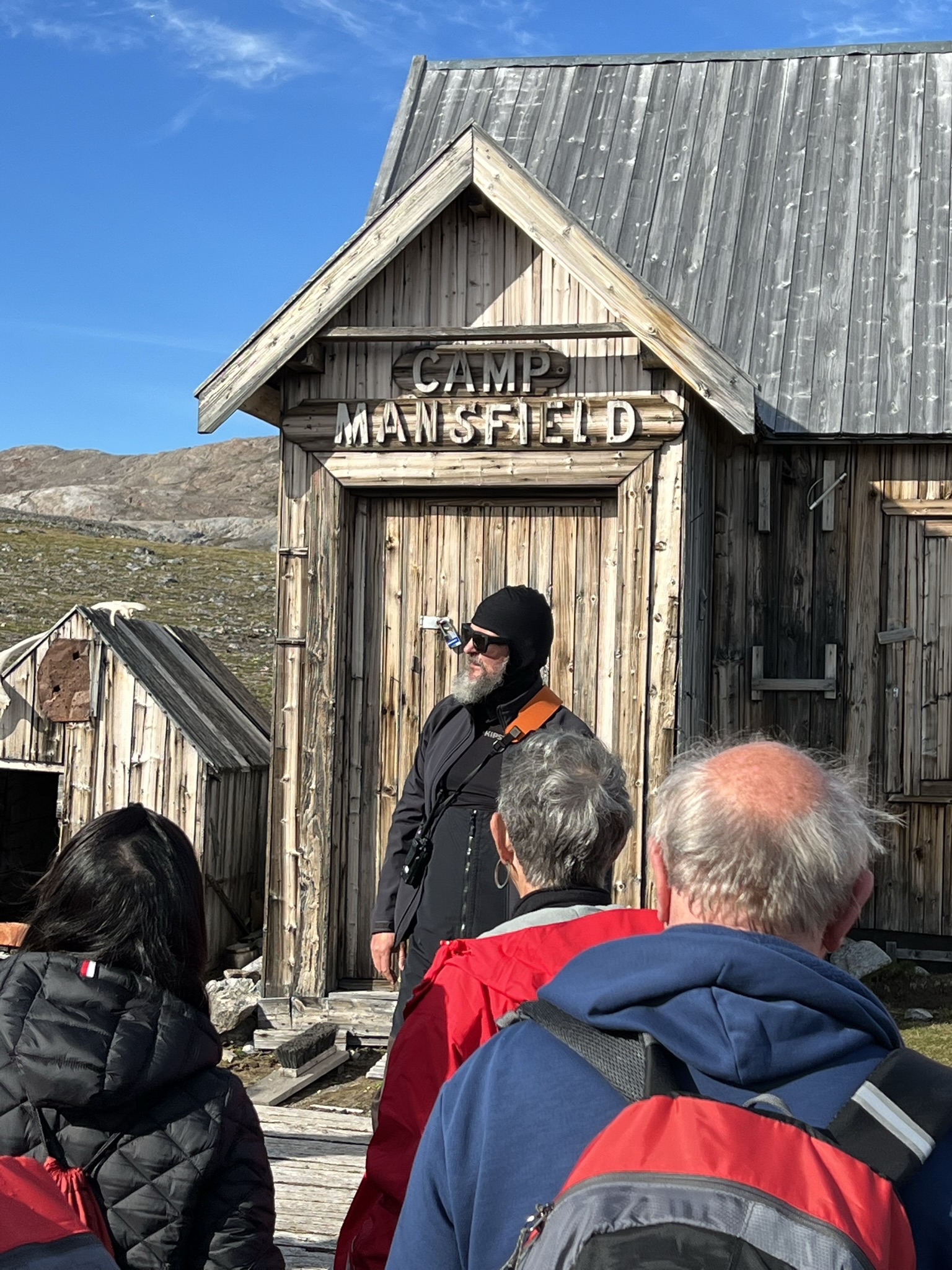
Our lecturer at the abandoned marble quarry…and his traveling troll…and abandoned buildings. This was the furthest North we sailed reaching 79 degrees North. In contrast I imagined we had gone further south in the Antarctic but found we had only gone to 65 degrees 15 minutes through pack ice on New Year’s Eve 2018.

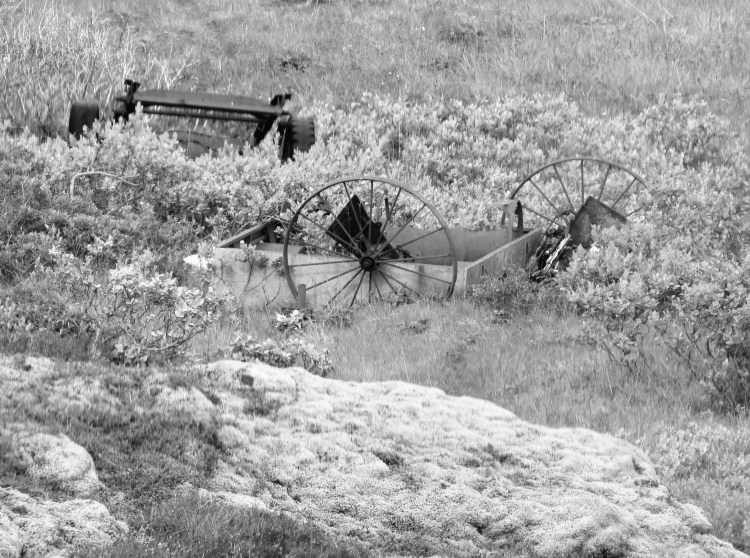
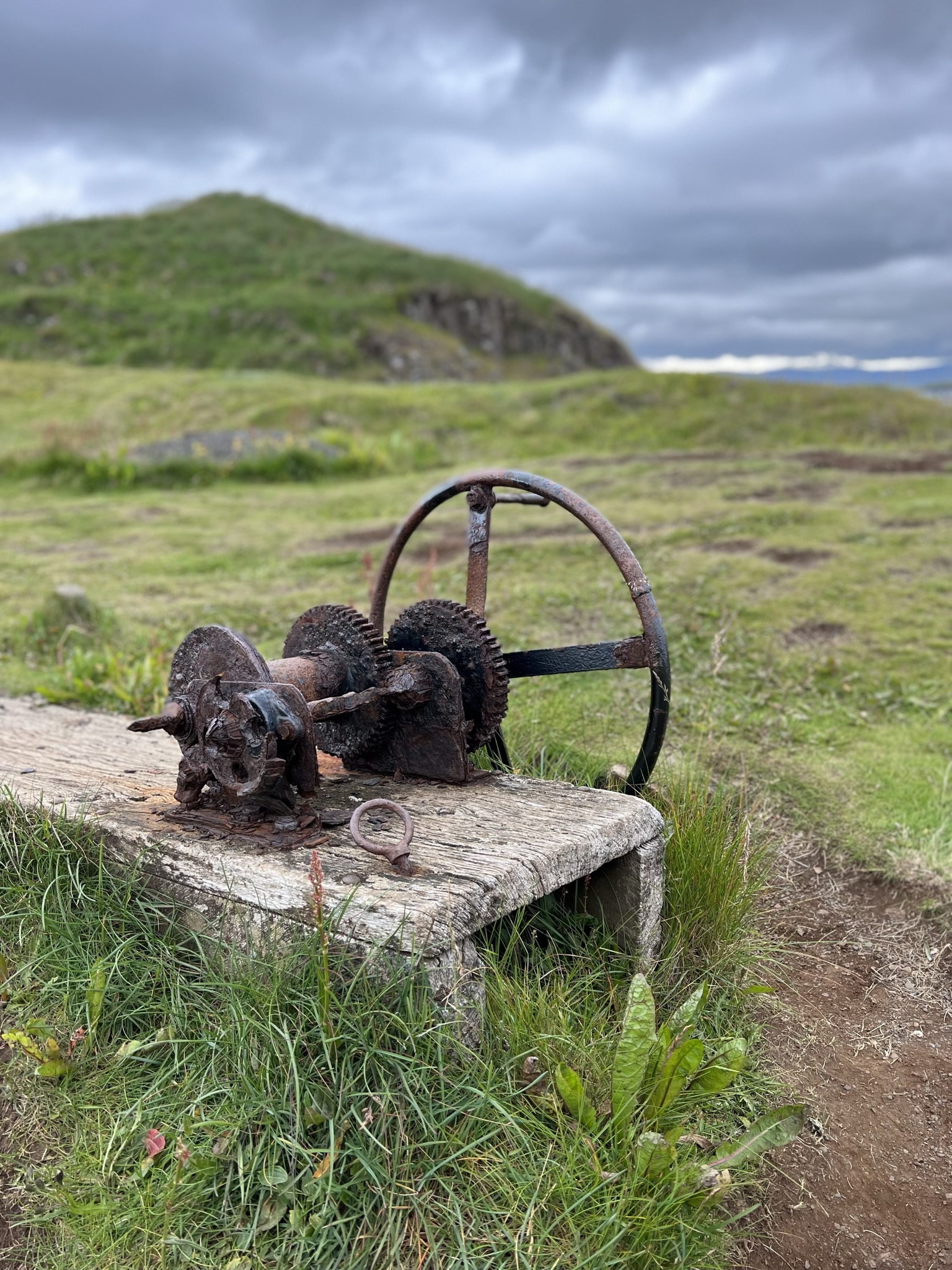
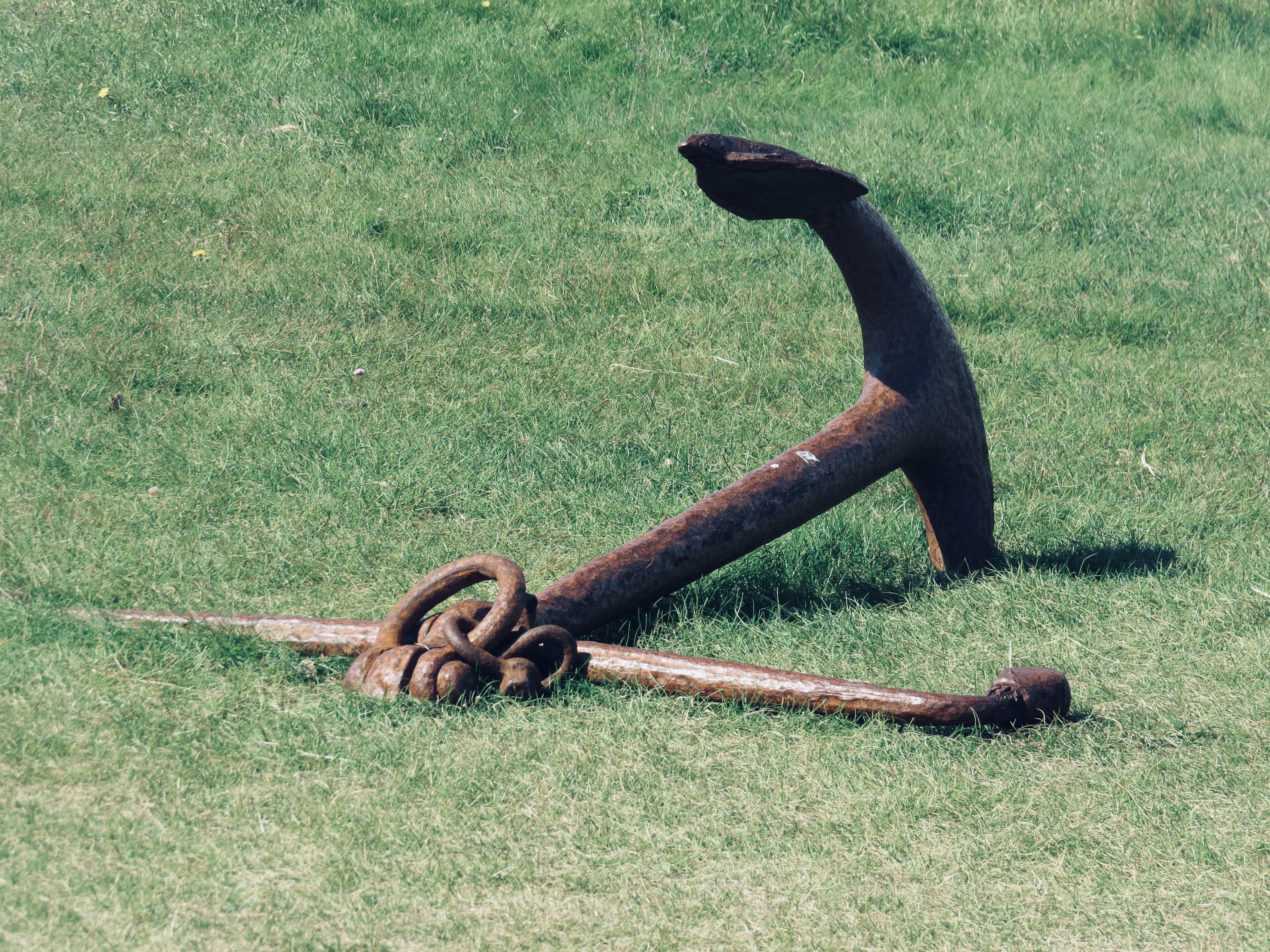
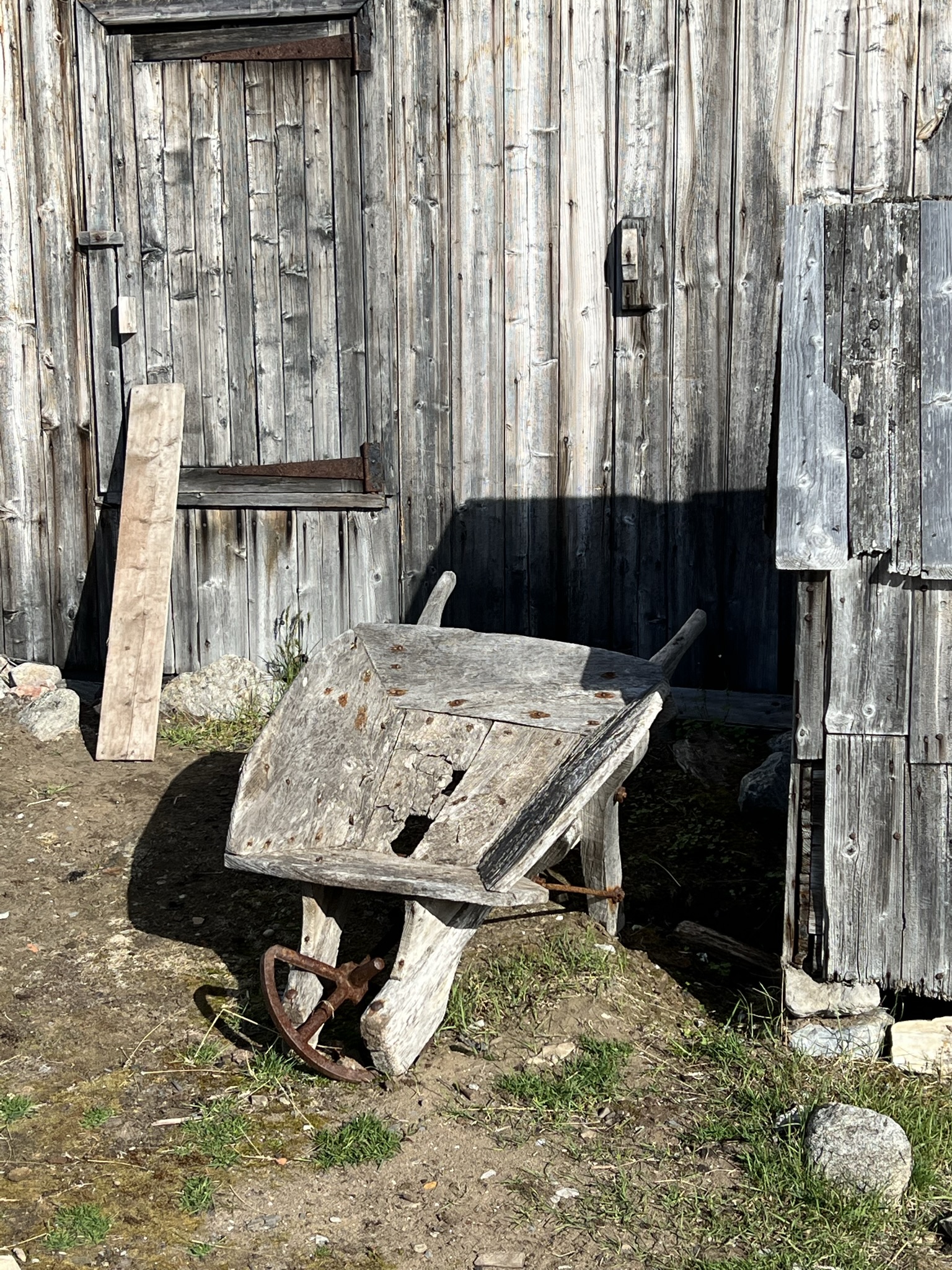
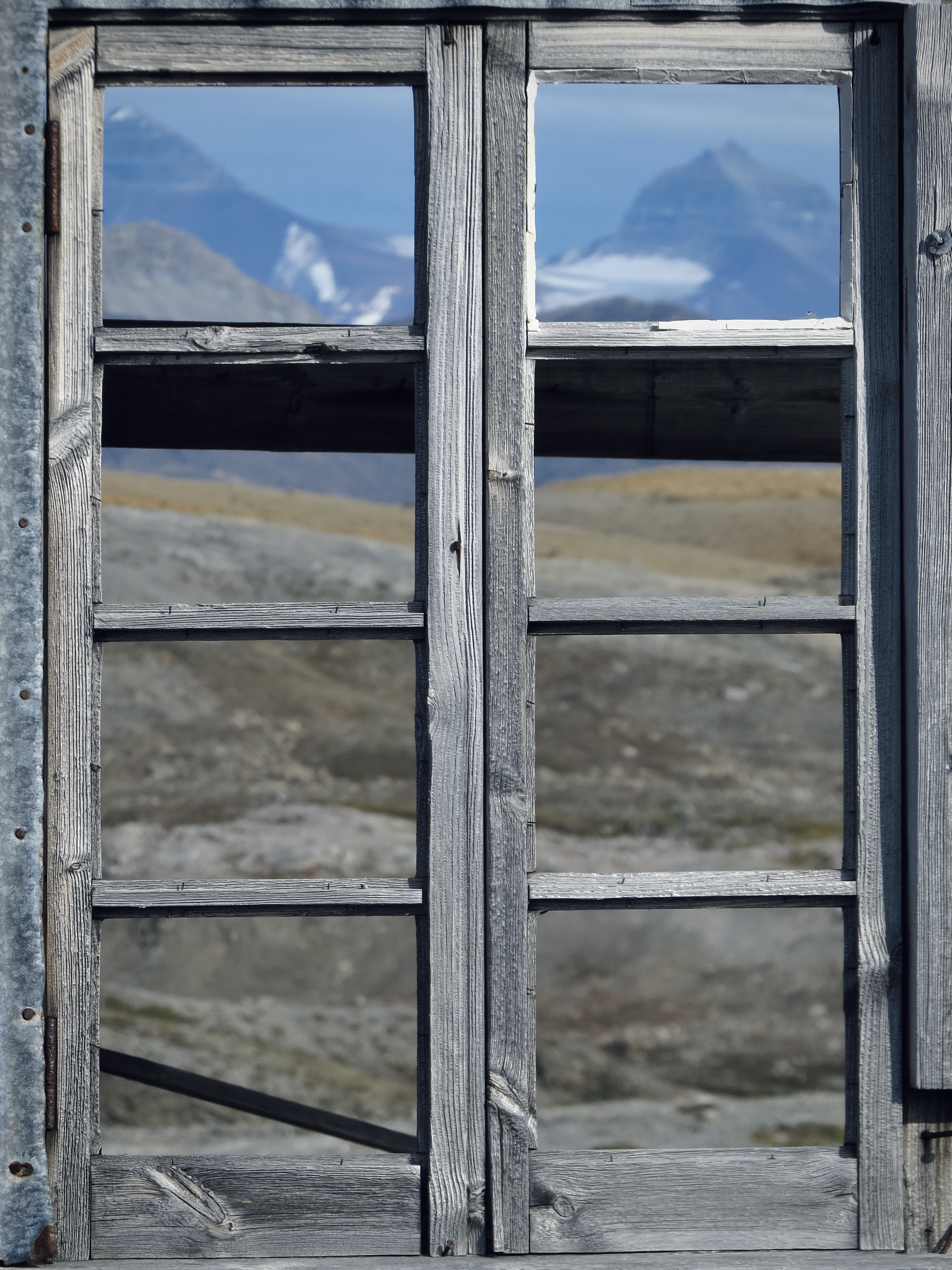
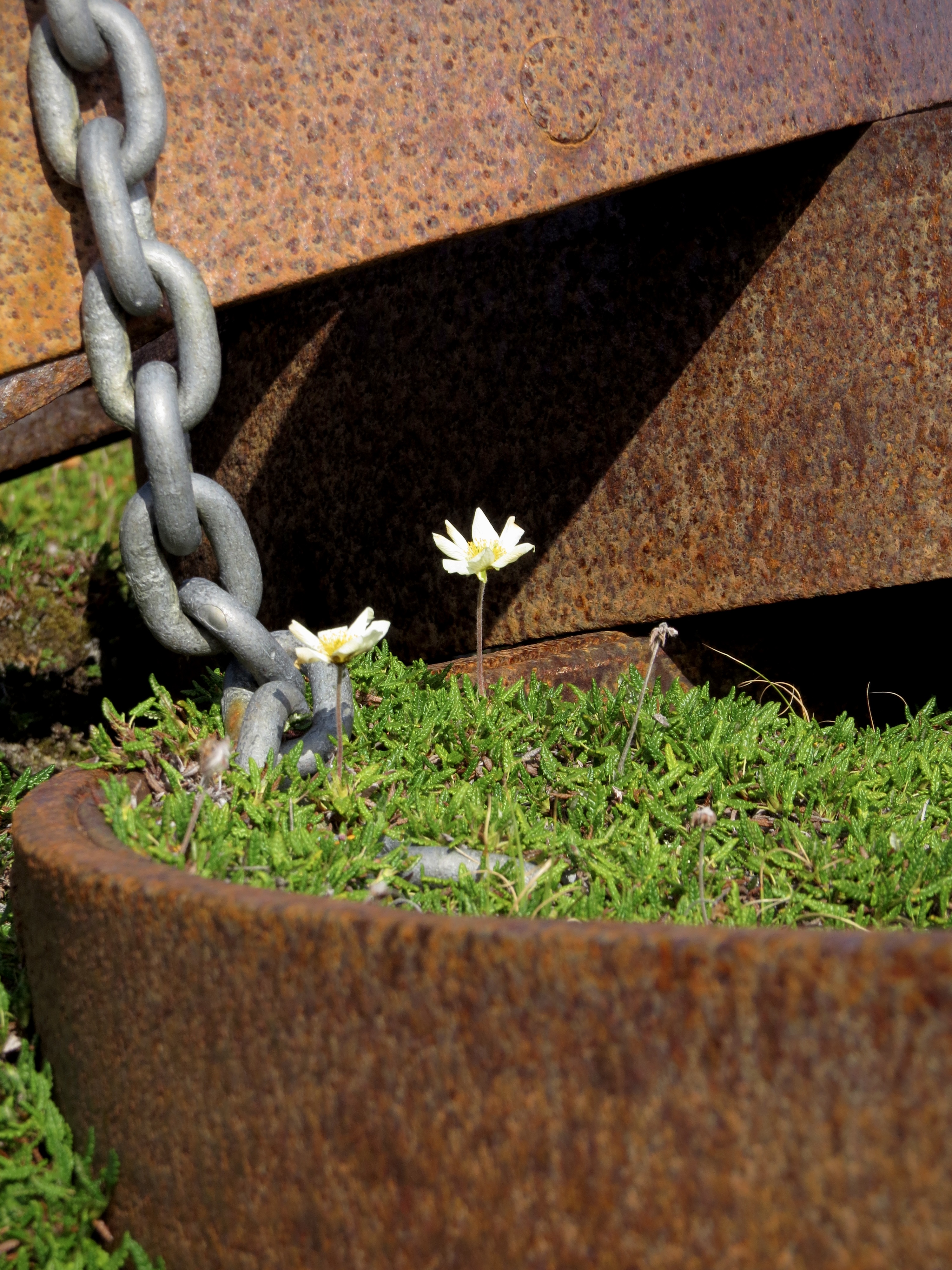
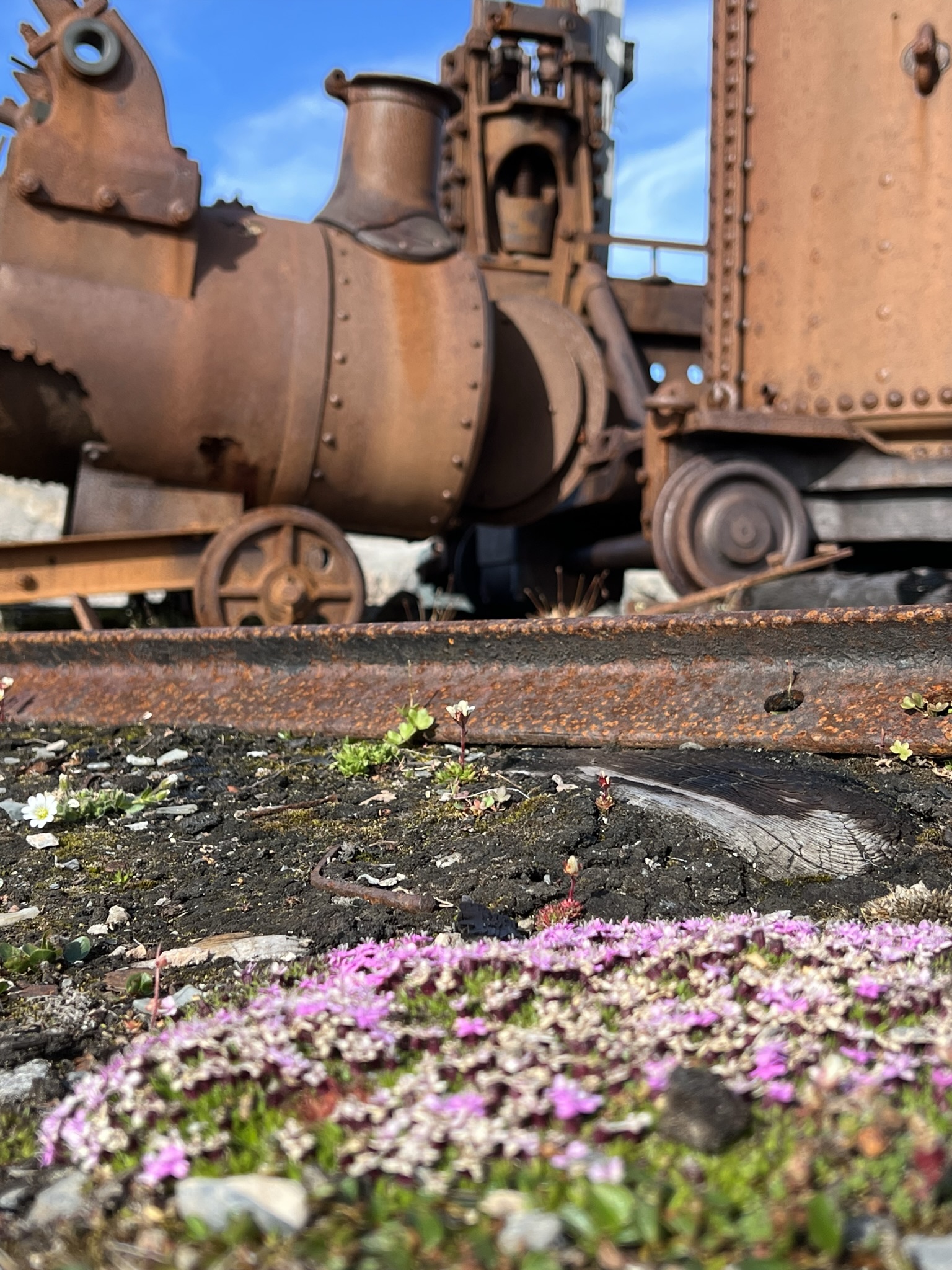
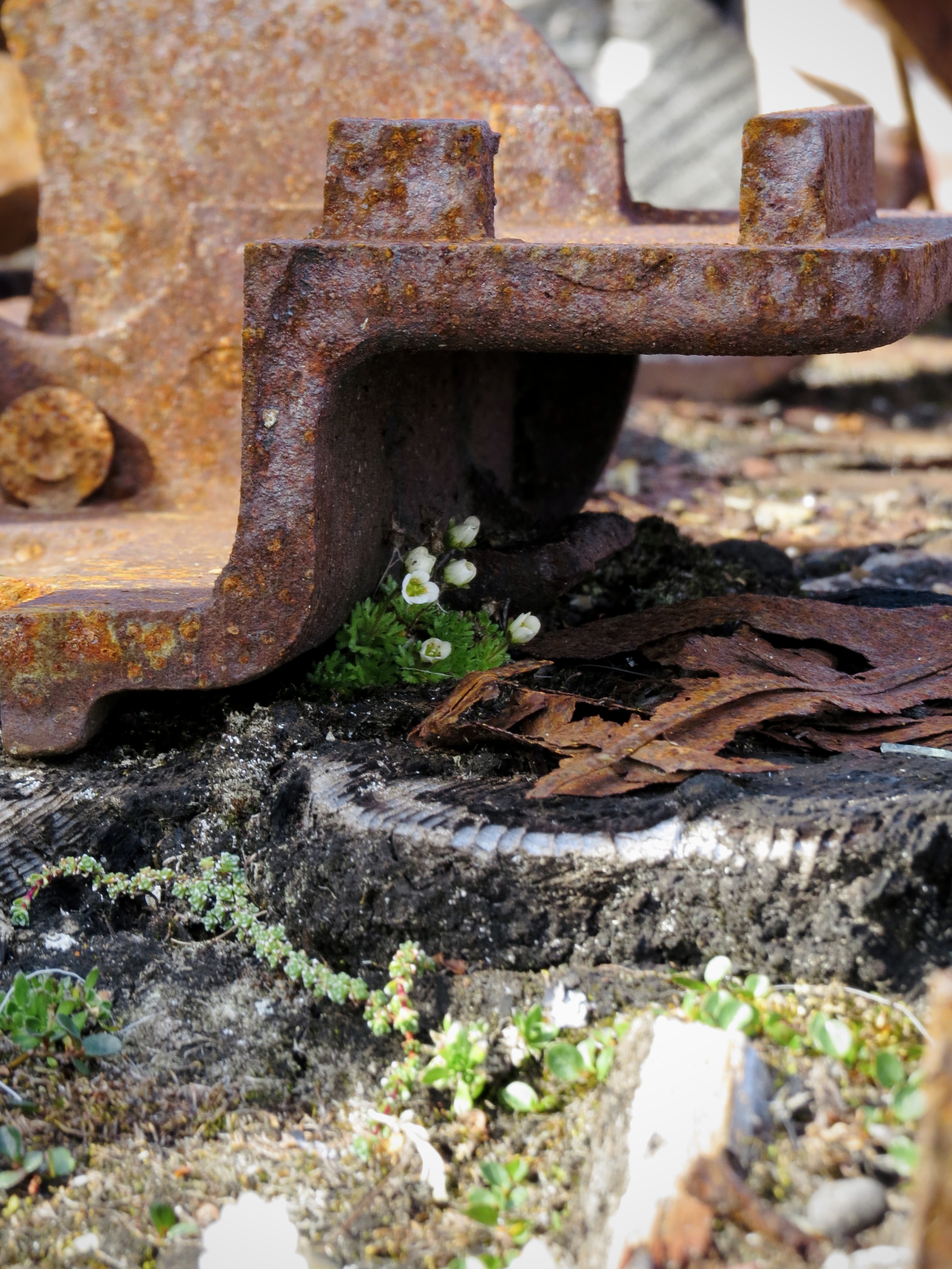
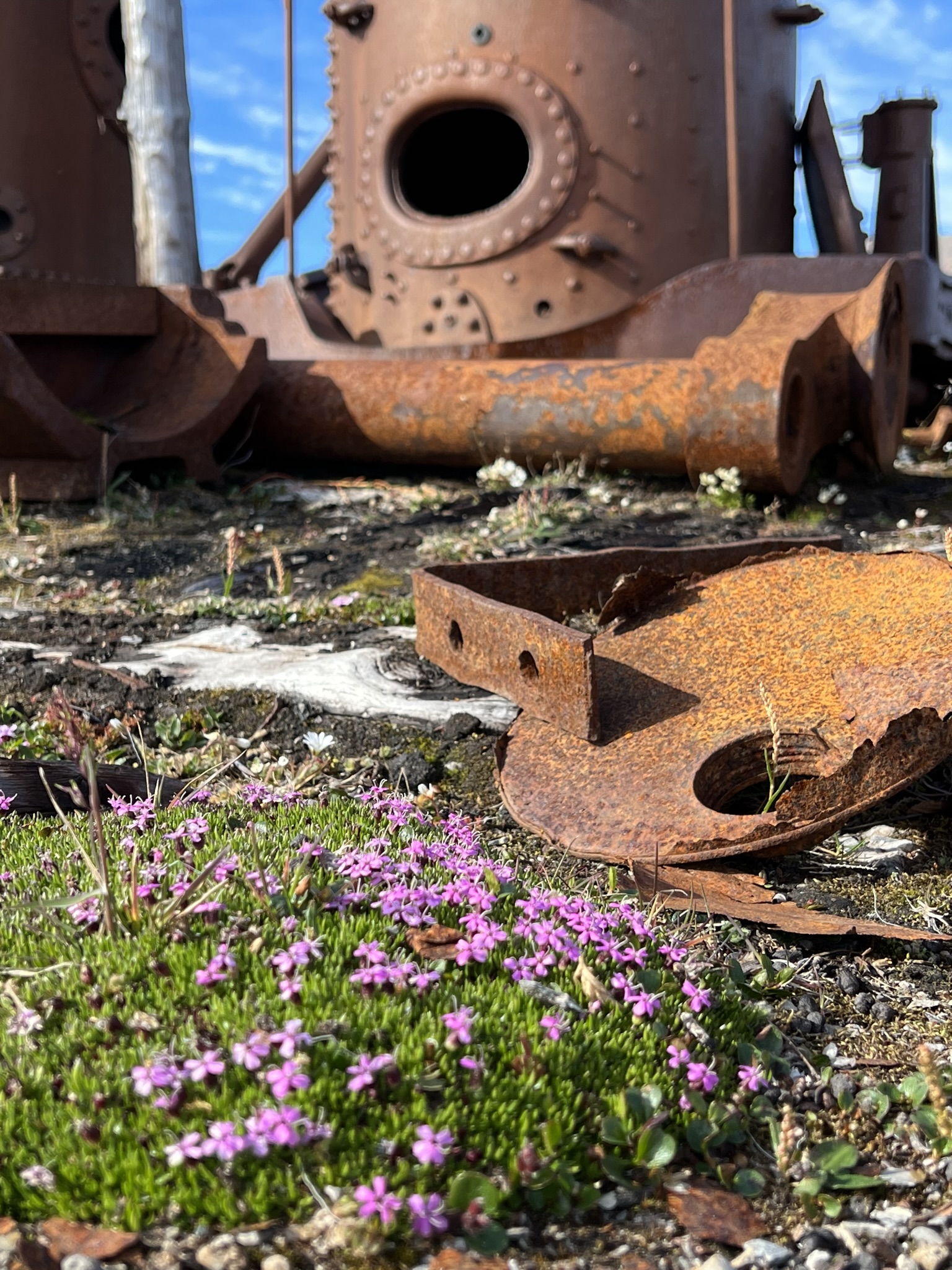
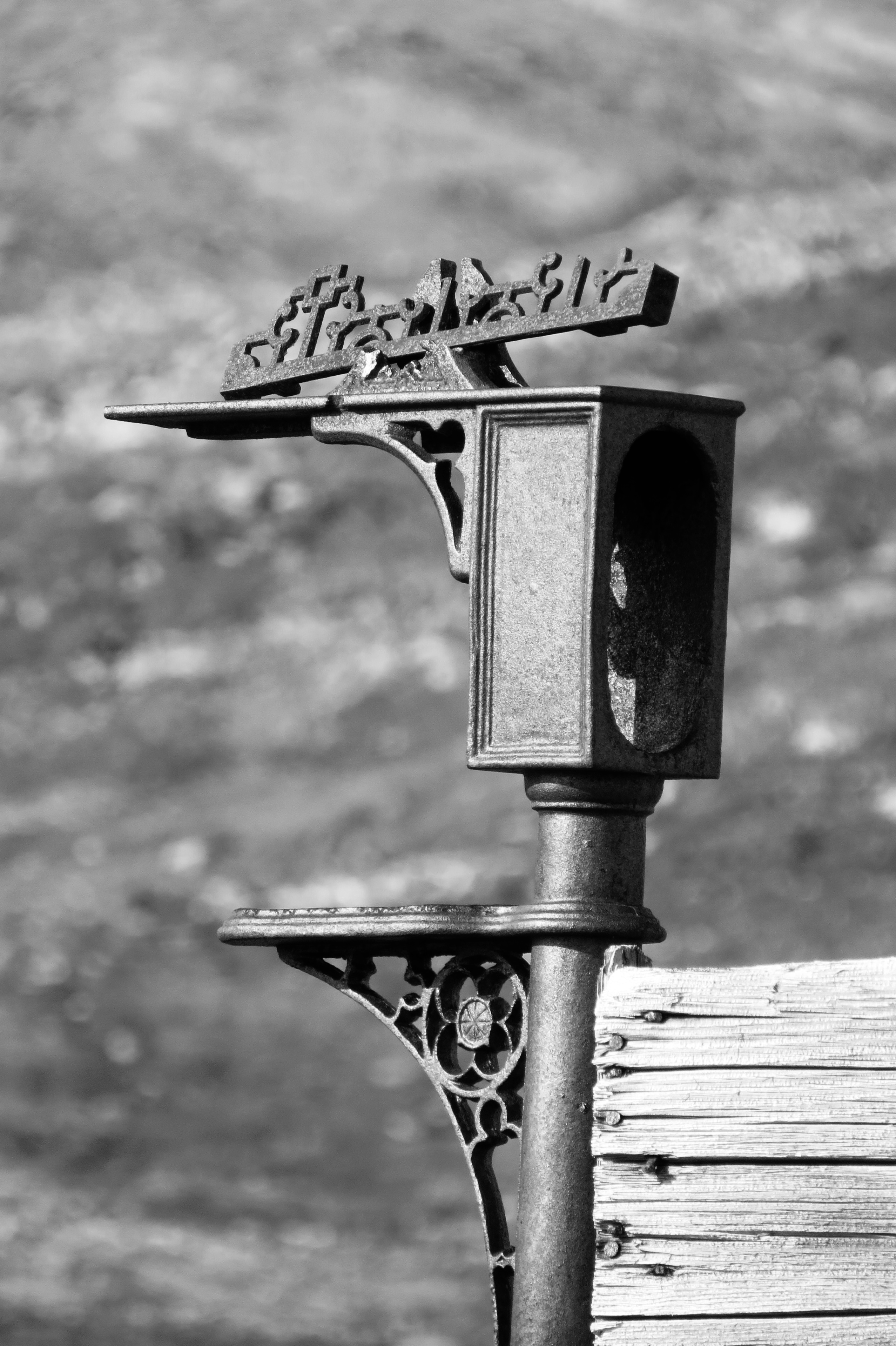
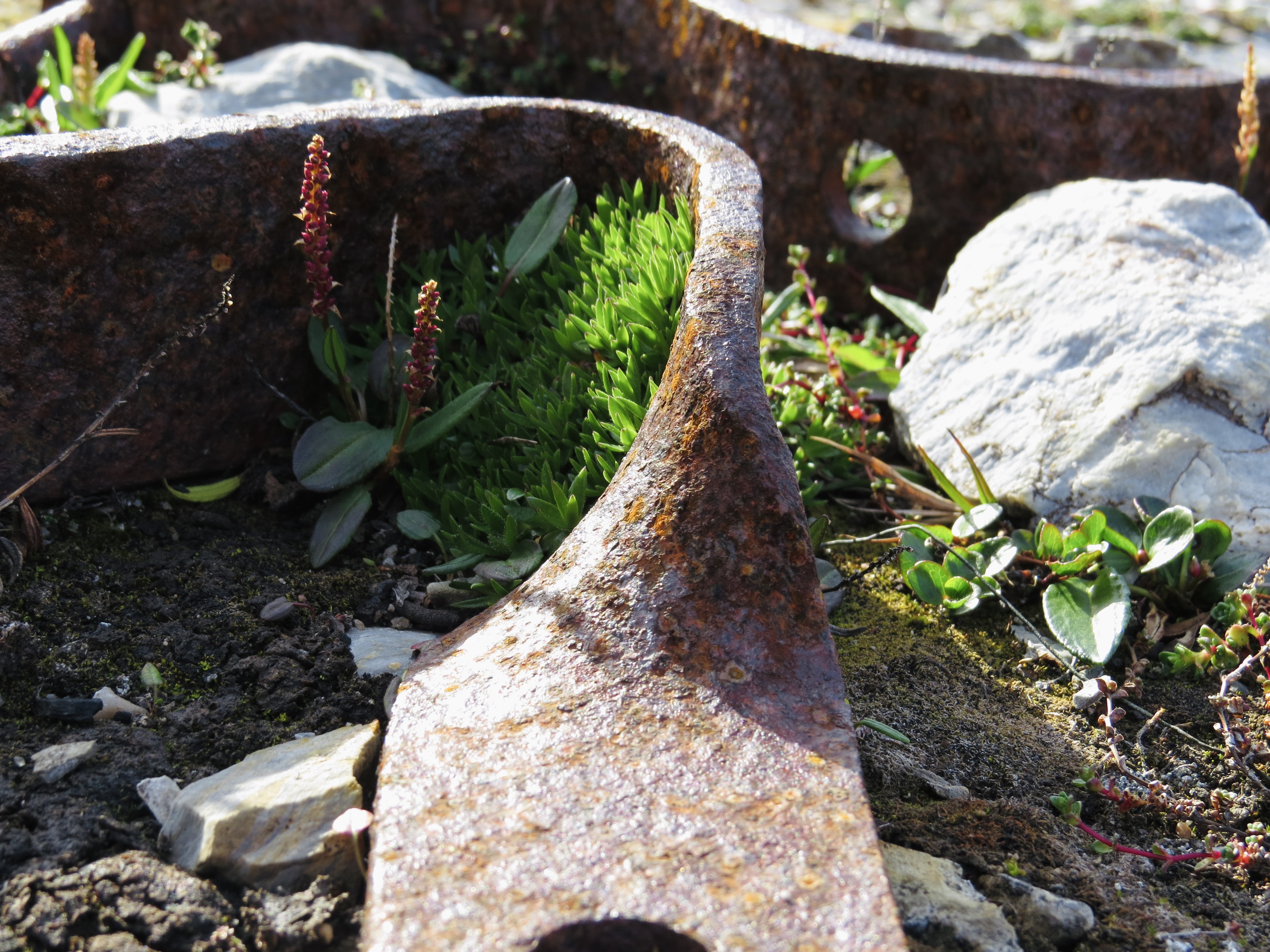
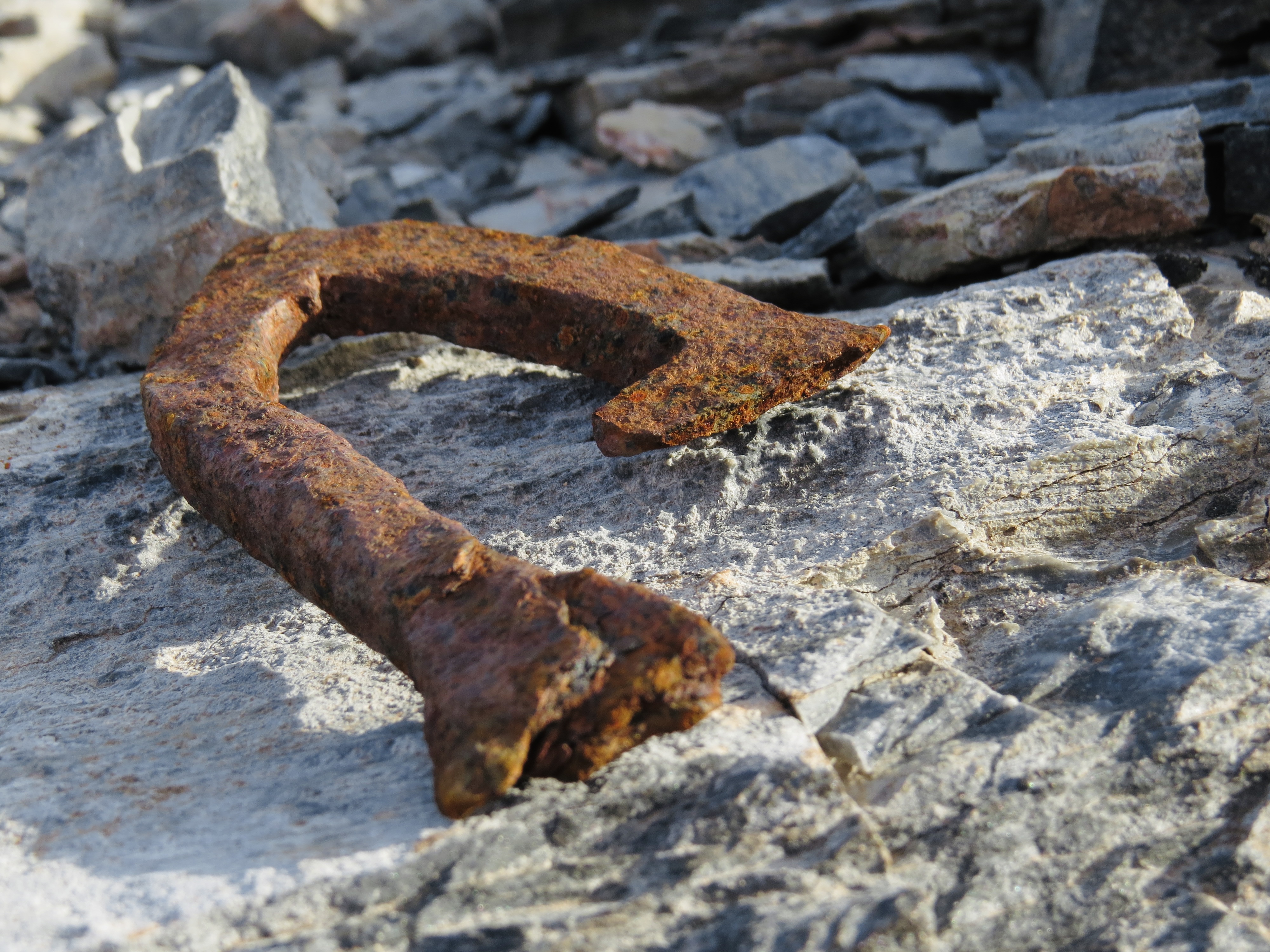
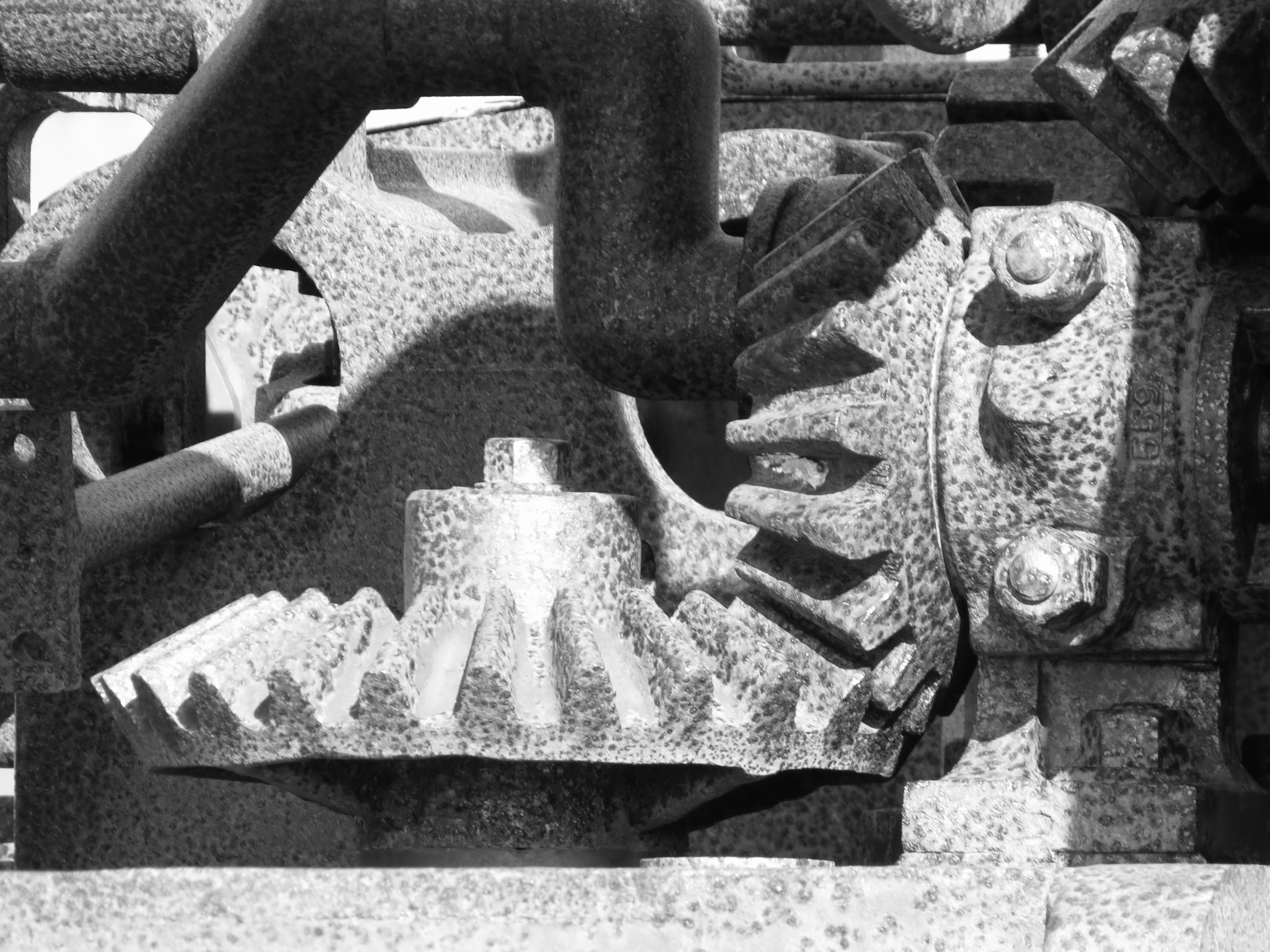
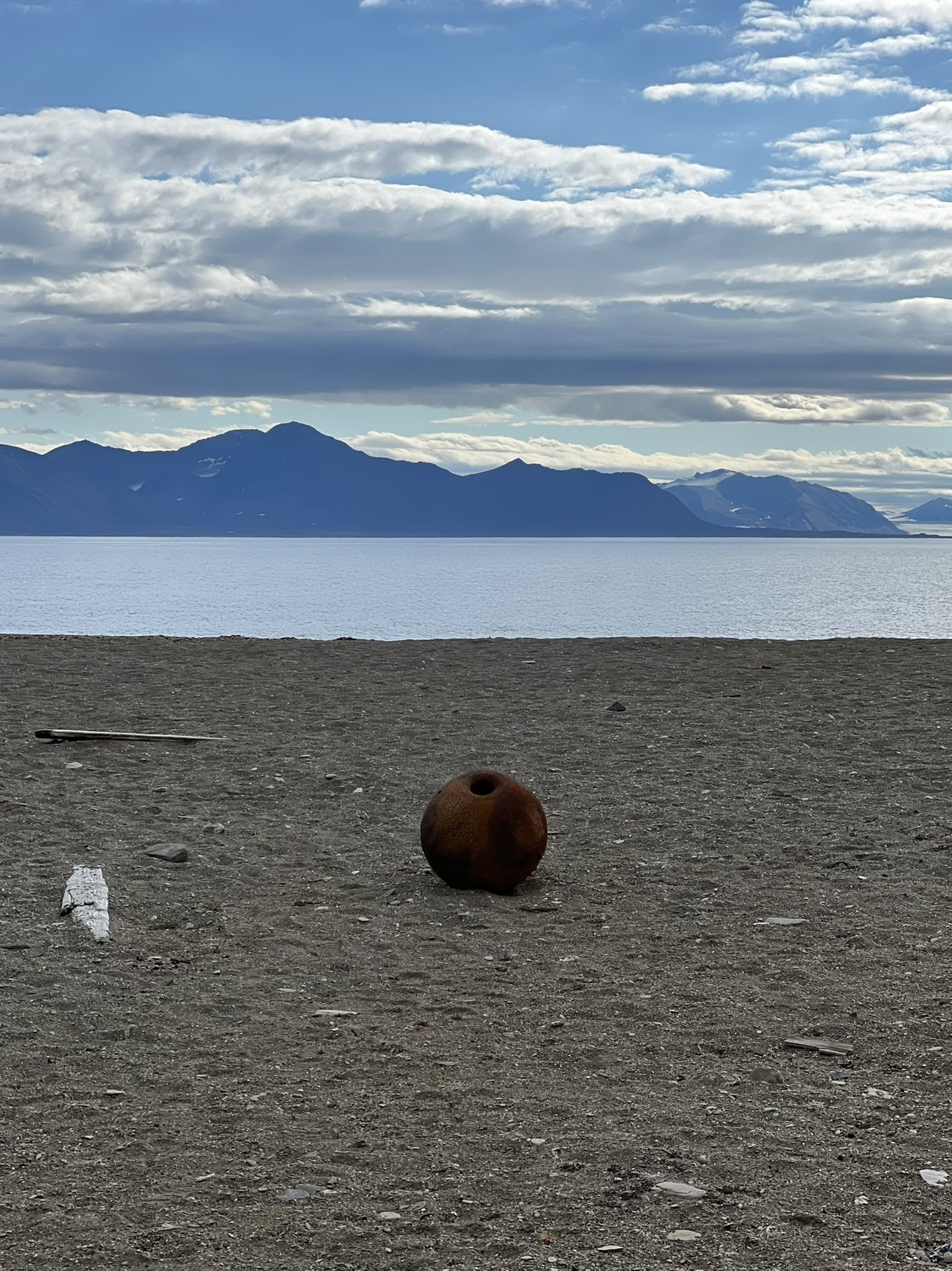
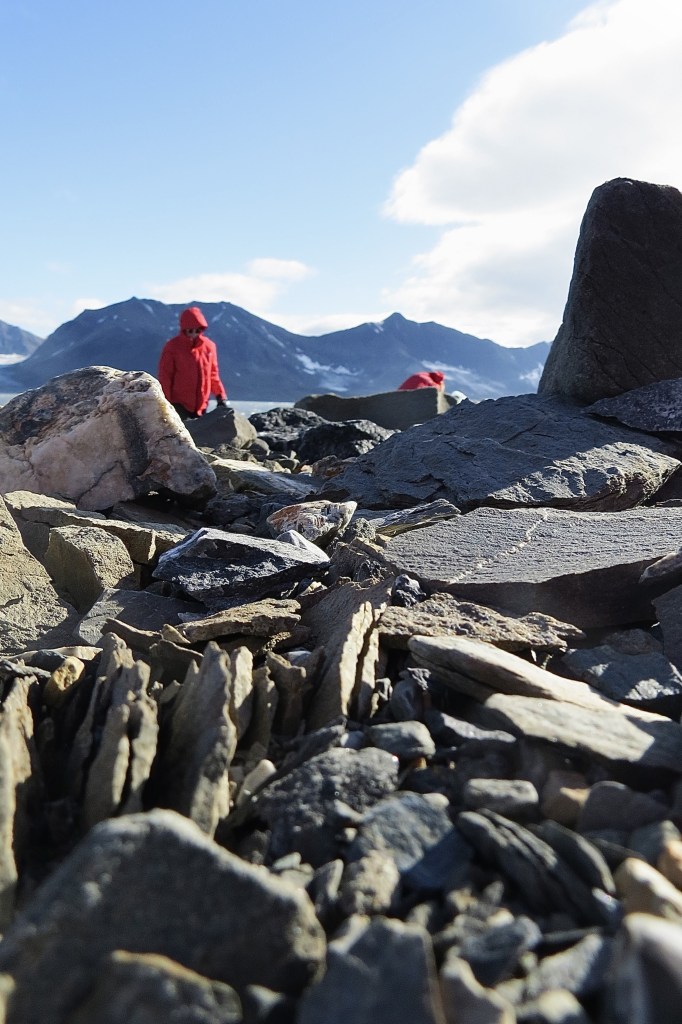
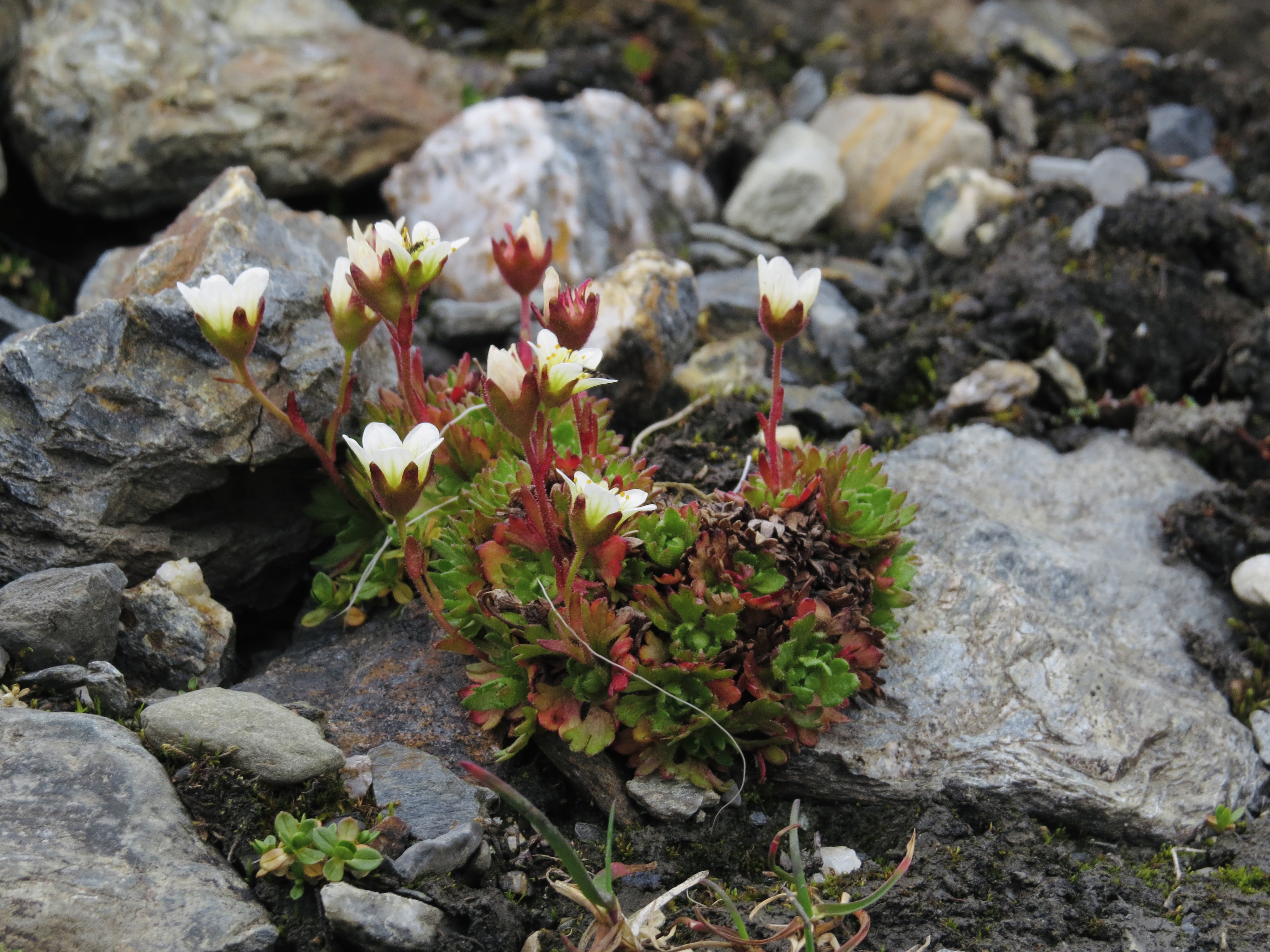
Lots of leftover rusty bits amidst the blooming flowers. Subjects both Larkin and I enjoy photographing. If its black and white, it is always a Larkin photo!

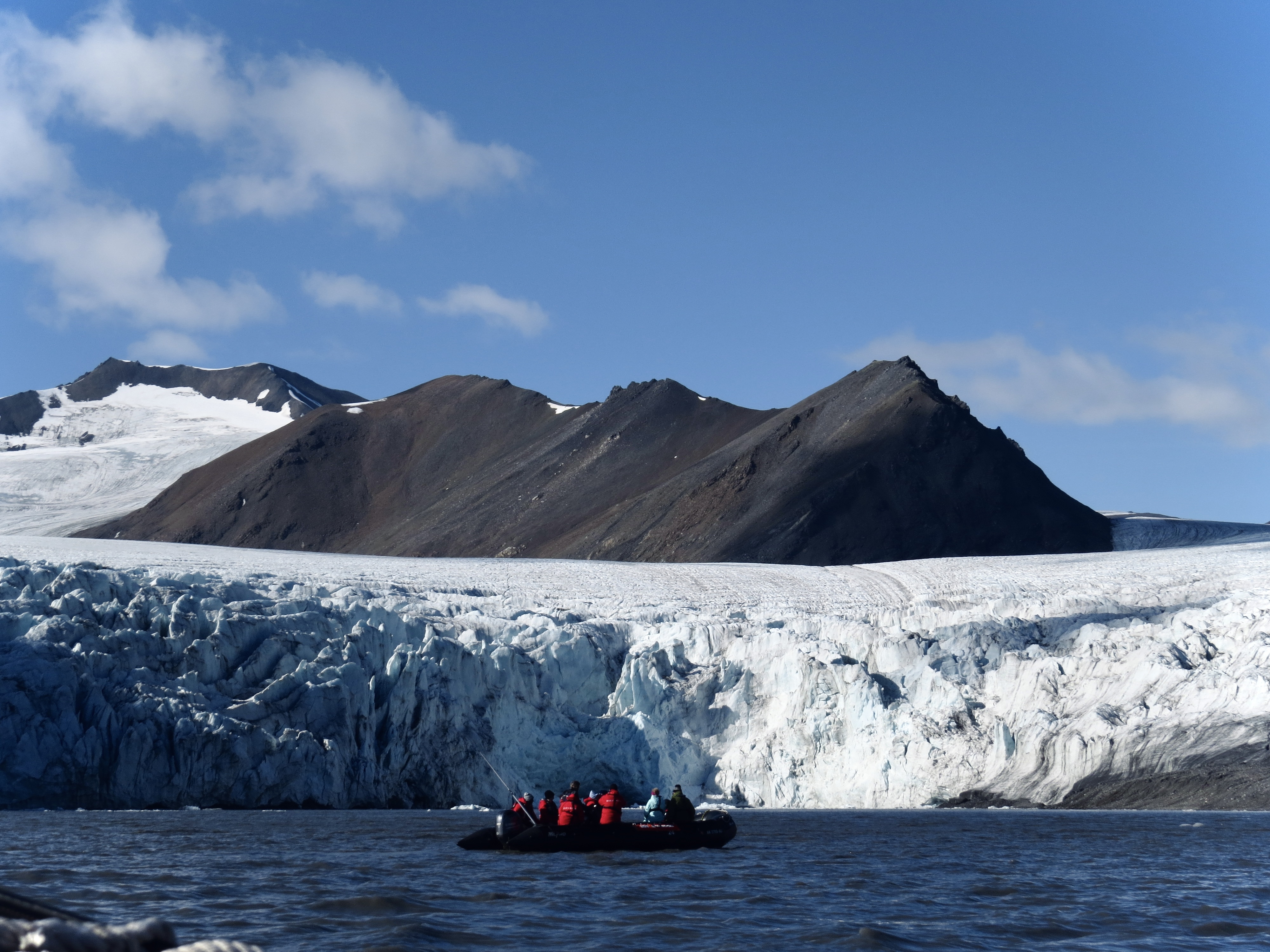
The next morning we were off to Forlandsundet Sound and Forlandet National Park for a hike to the Walrus’.

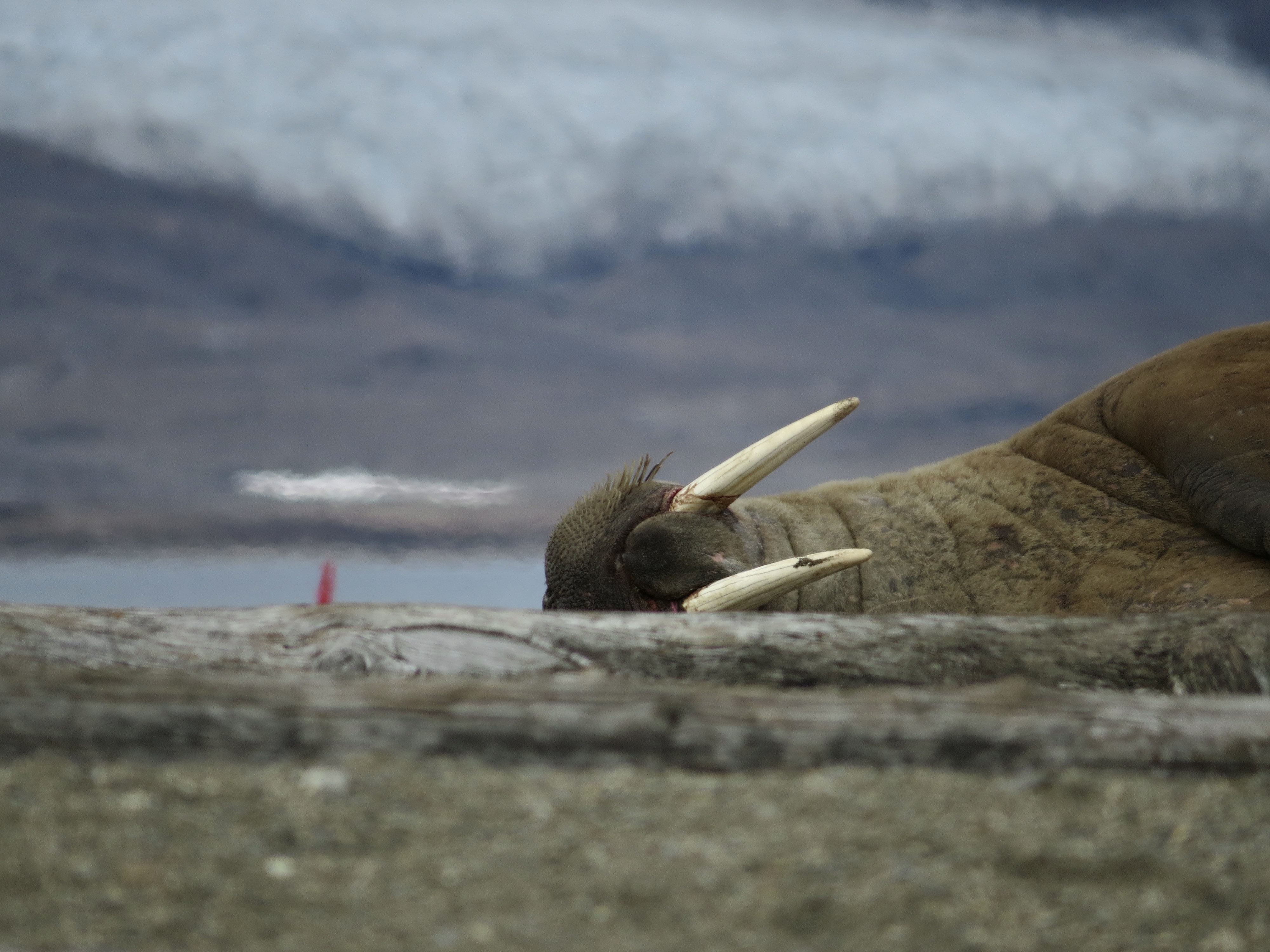
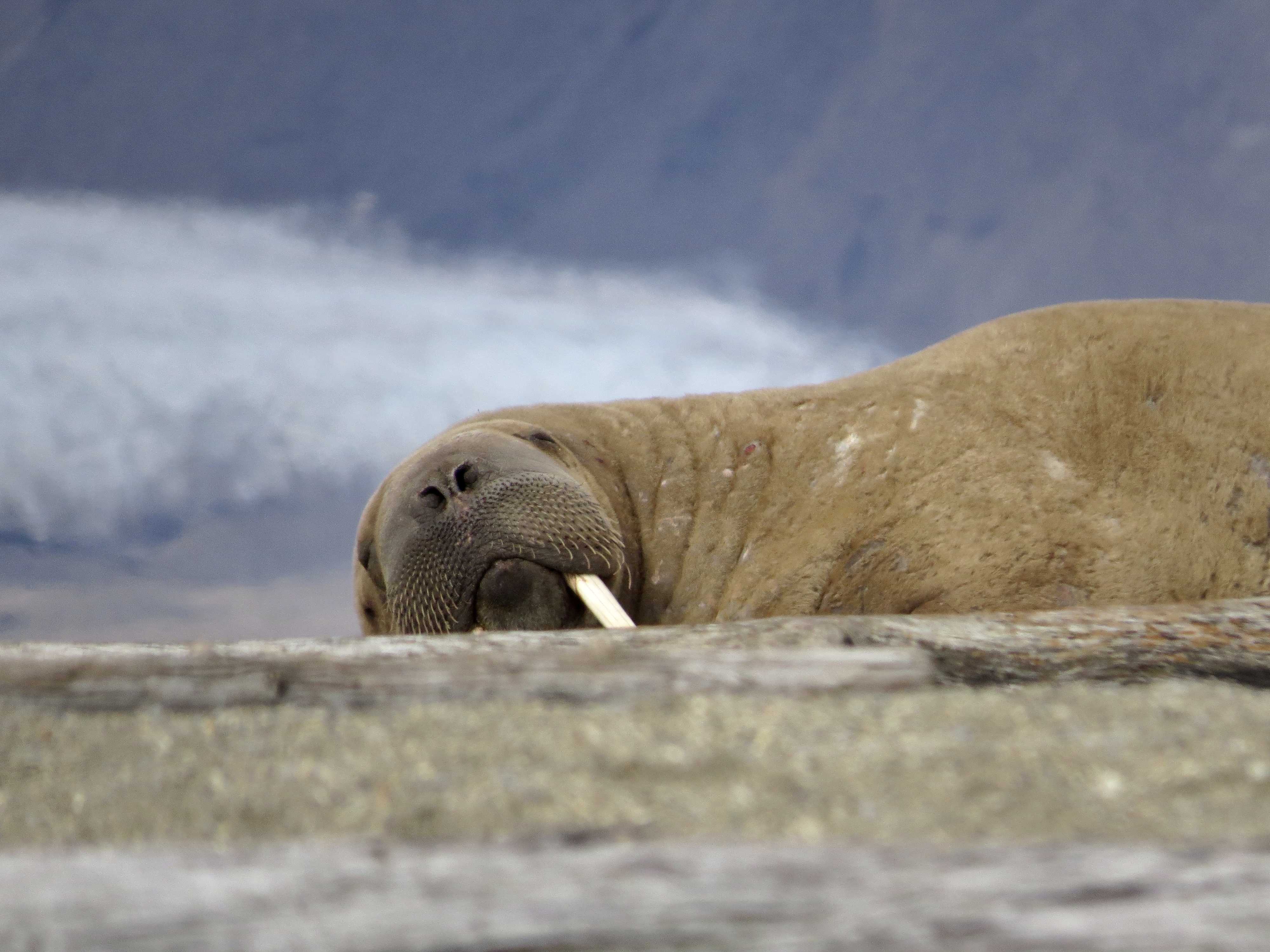
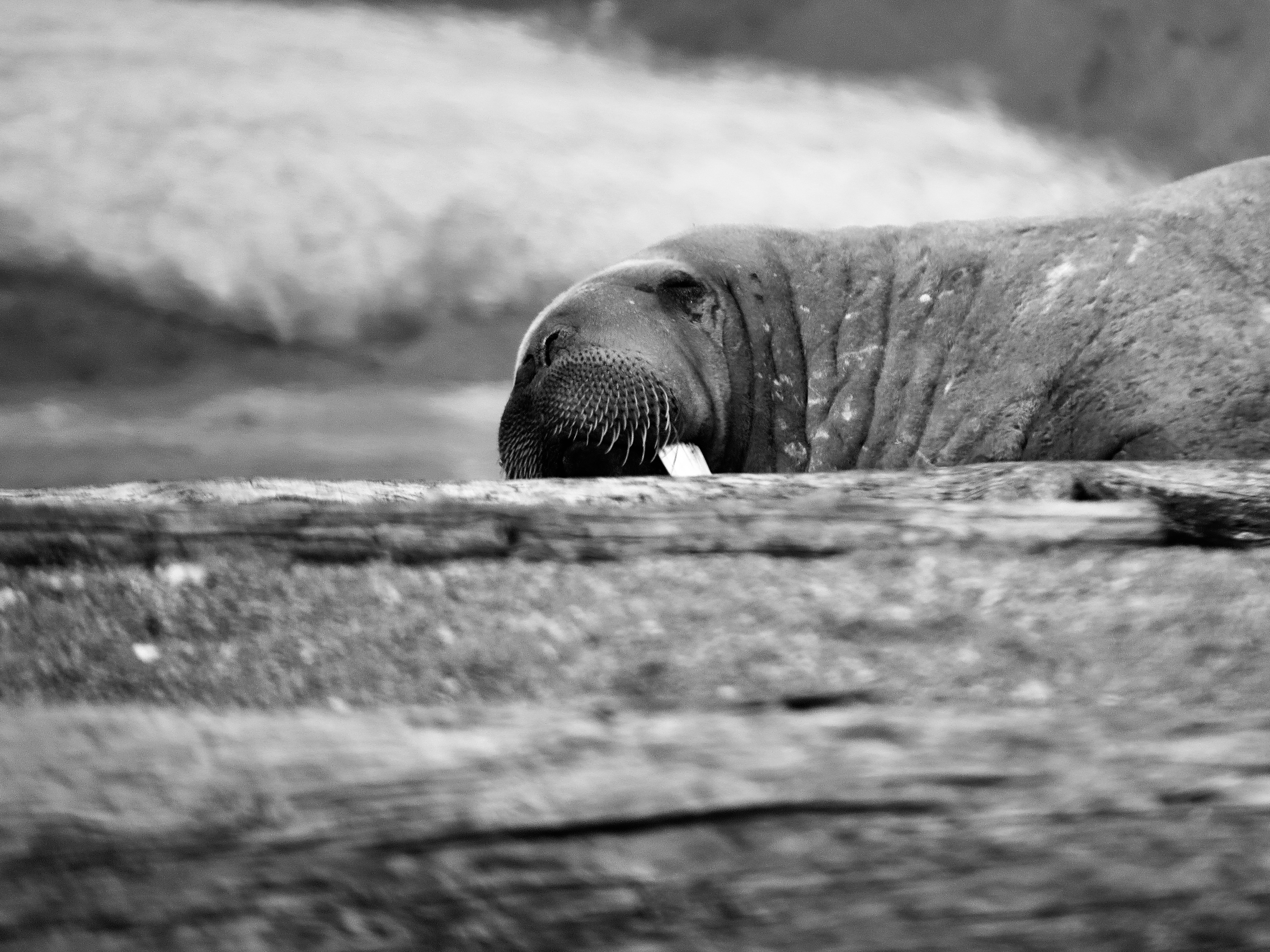
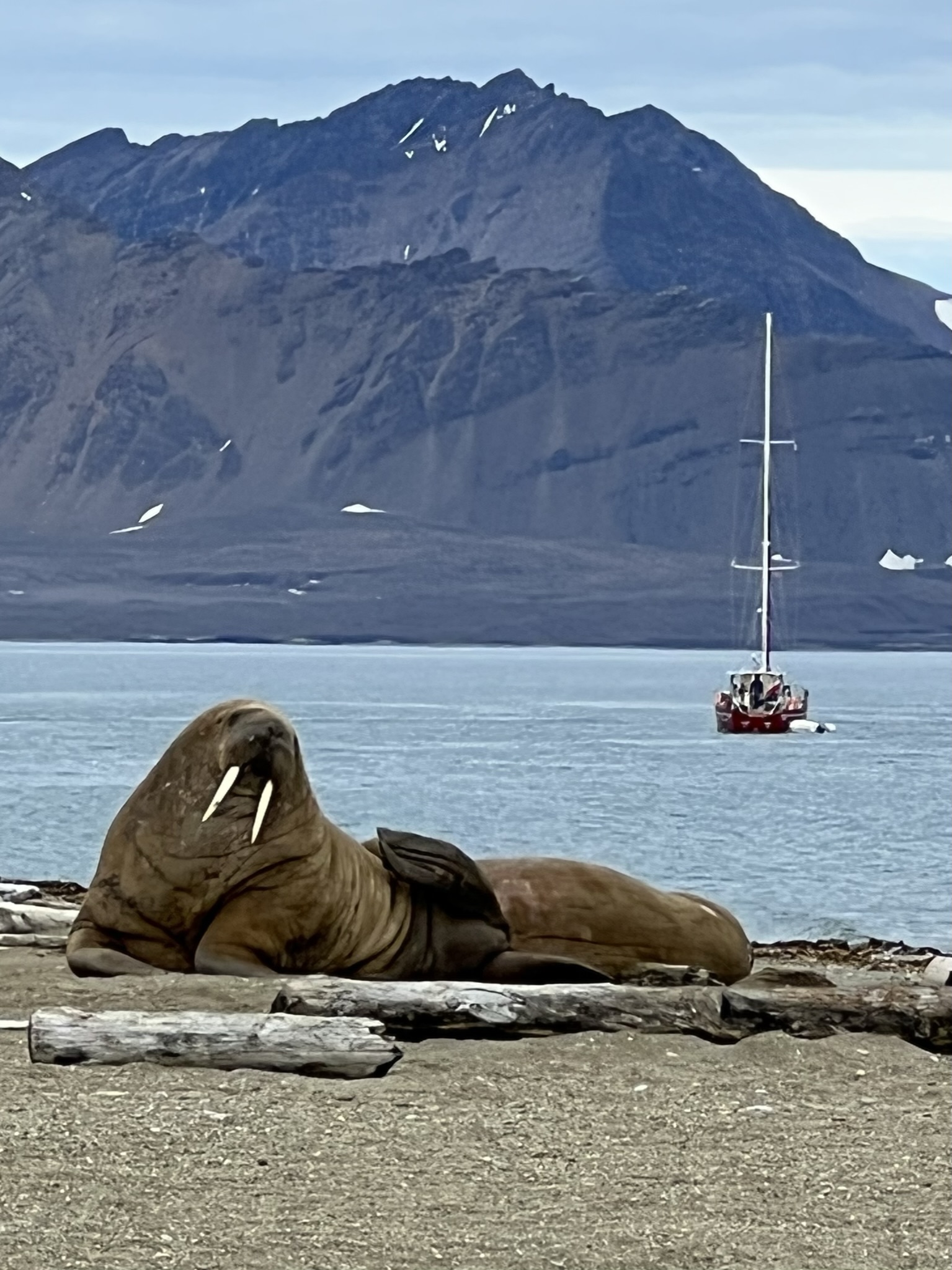
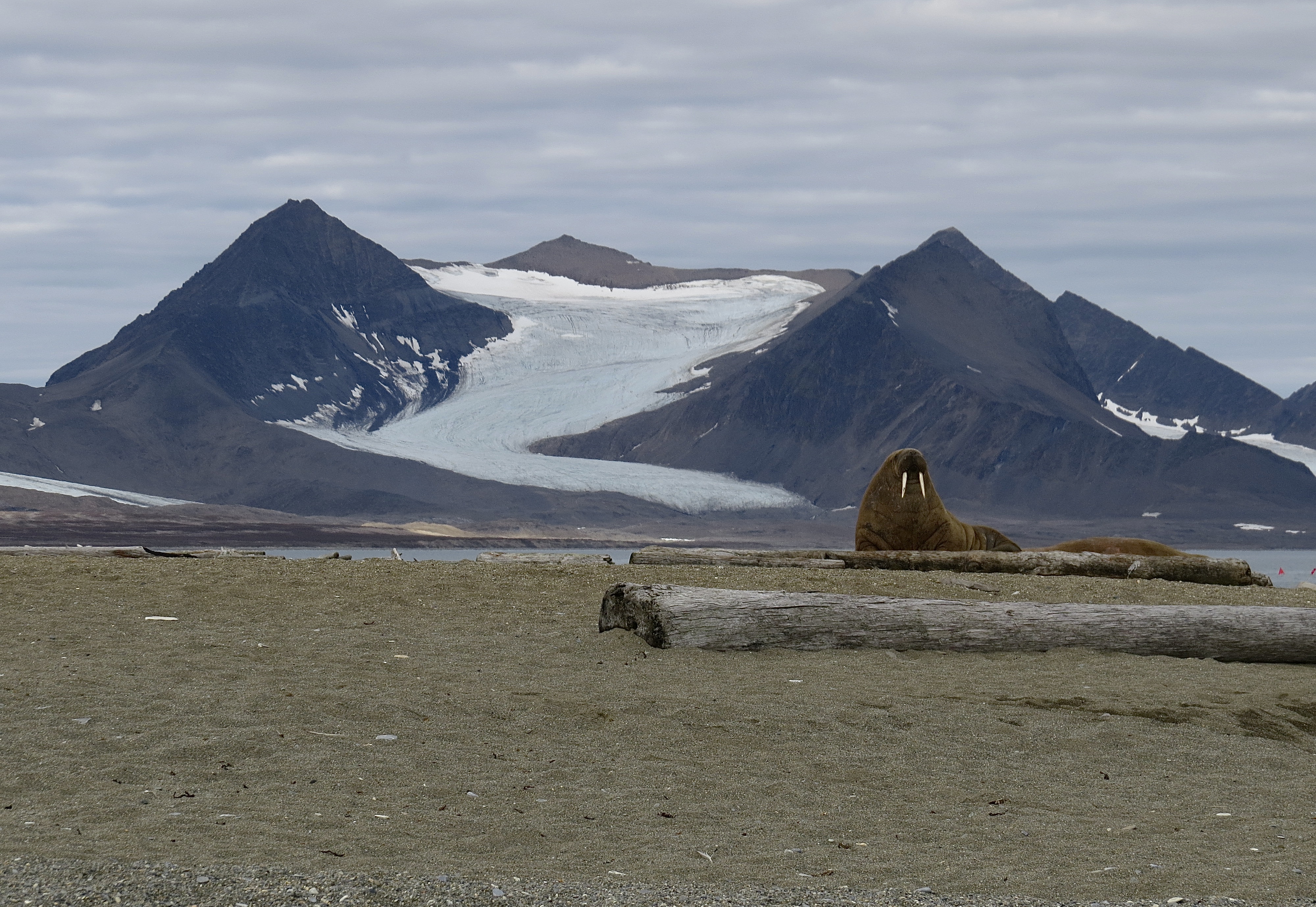
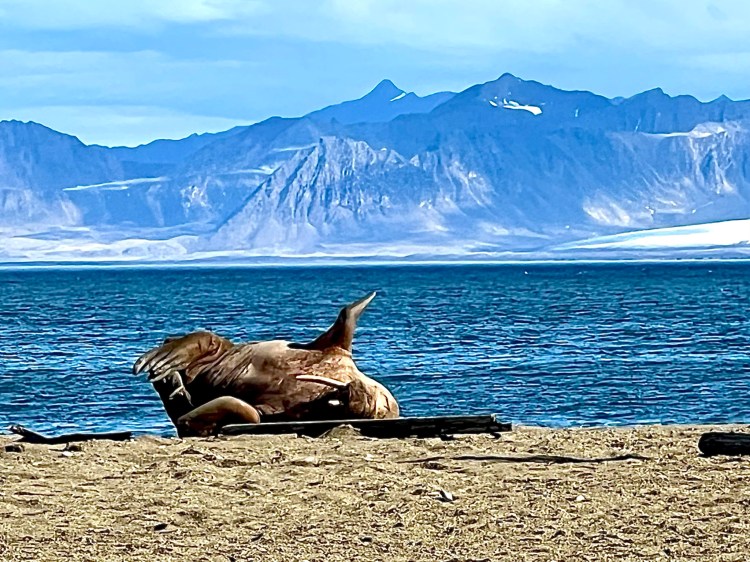
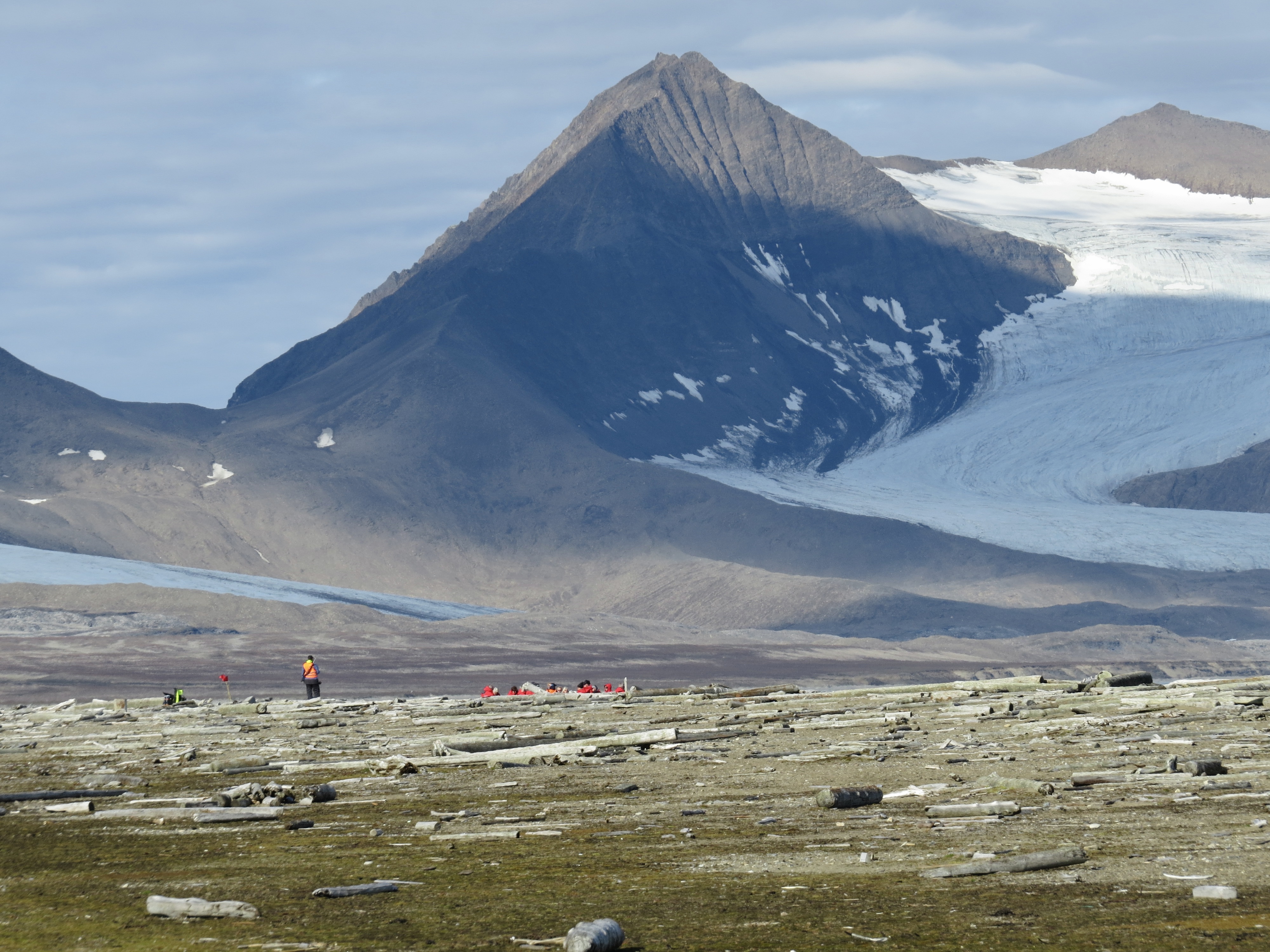
WALRUS, DRIFTWOOD and a BACKGROUND GLACIER IN THE DISTANCE

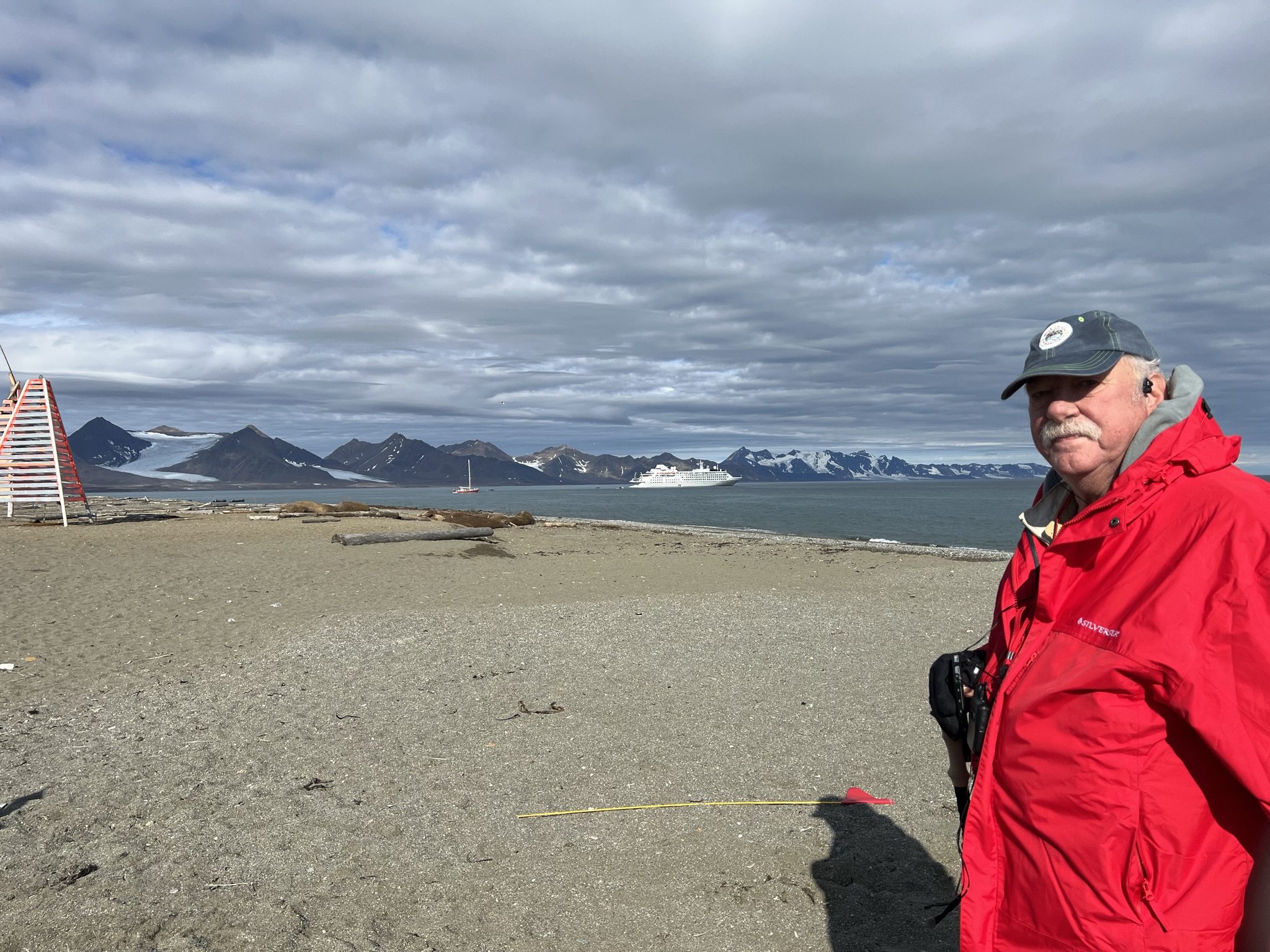
Larkin and Michael enjoying the views of these magnificently sized creatures with our ship in the background. We walked around the walrus’ to get a little closer. Downwind was the not the place to lollygag so we scooted through as quietly as we could since walrus’ smell as bad or worse than penguin poop in the Antarctic. However, in the Antarctic you can’t get away from the smell…you just get used to it.

WALRUS YOGA
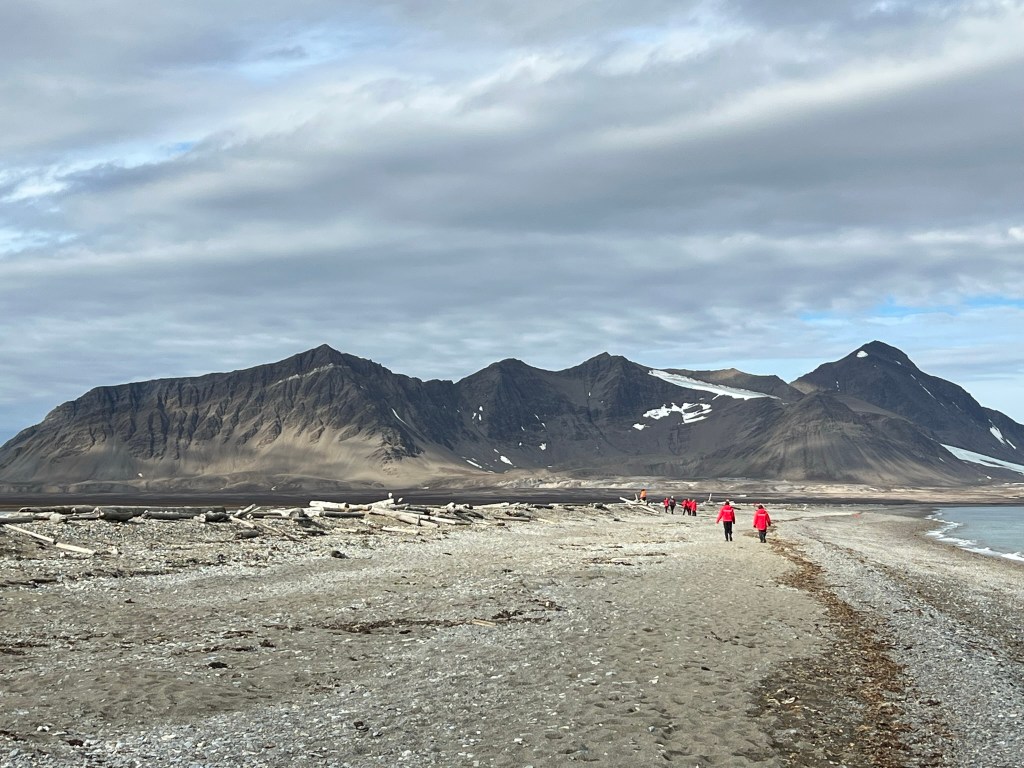
WALKING BACK ALONG THE BEACH…

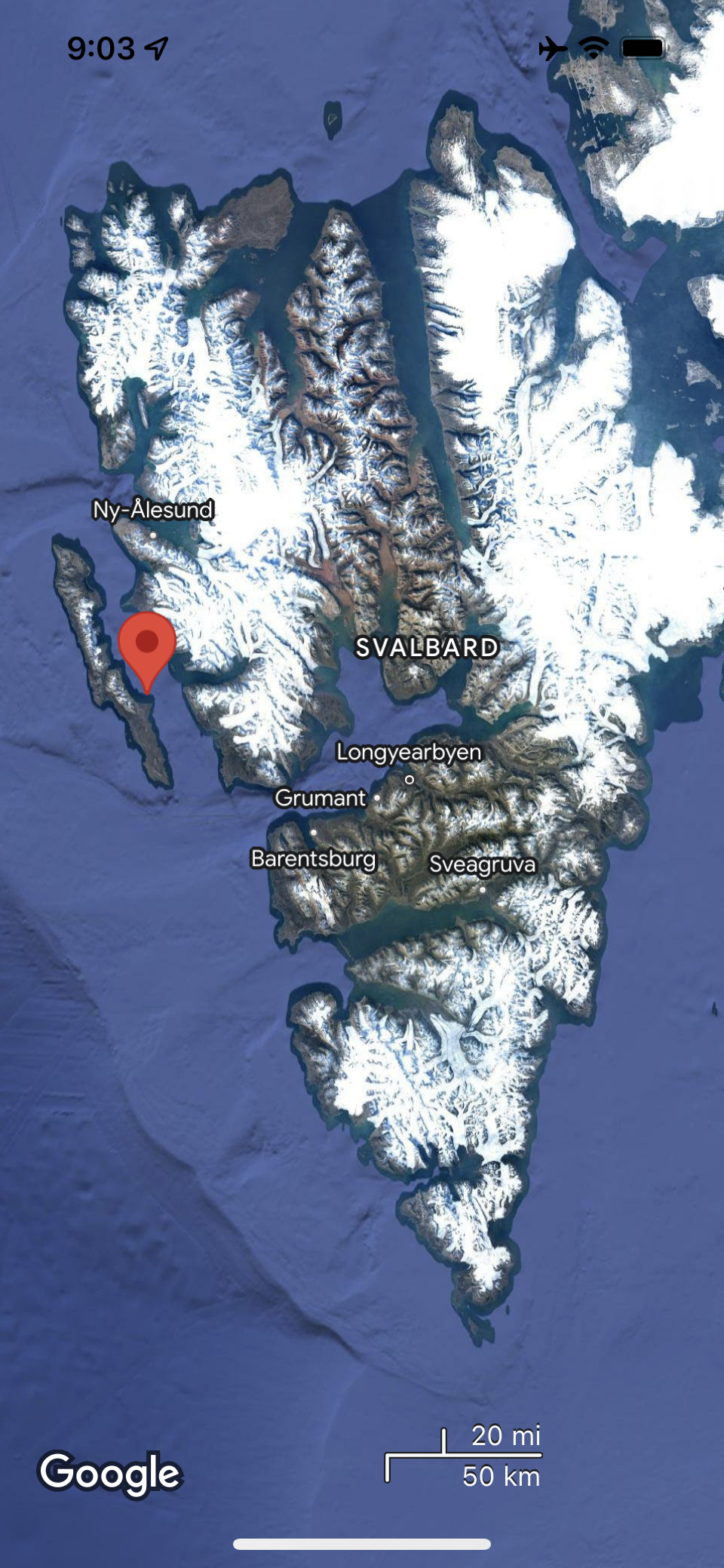
The location of the walrus’ on the map and a sailboat that was probably miffed we had entered their space with 150 people zooming around on zodiacs to see the walrus’. On our zodiac ride back I caught a sailor taking a selfie on the sailboat as they prepped to leave.

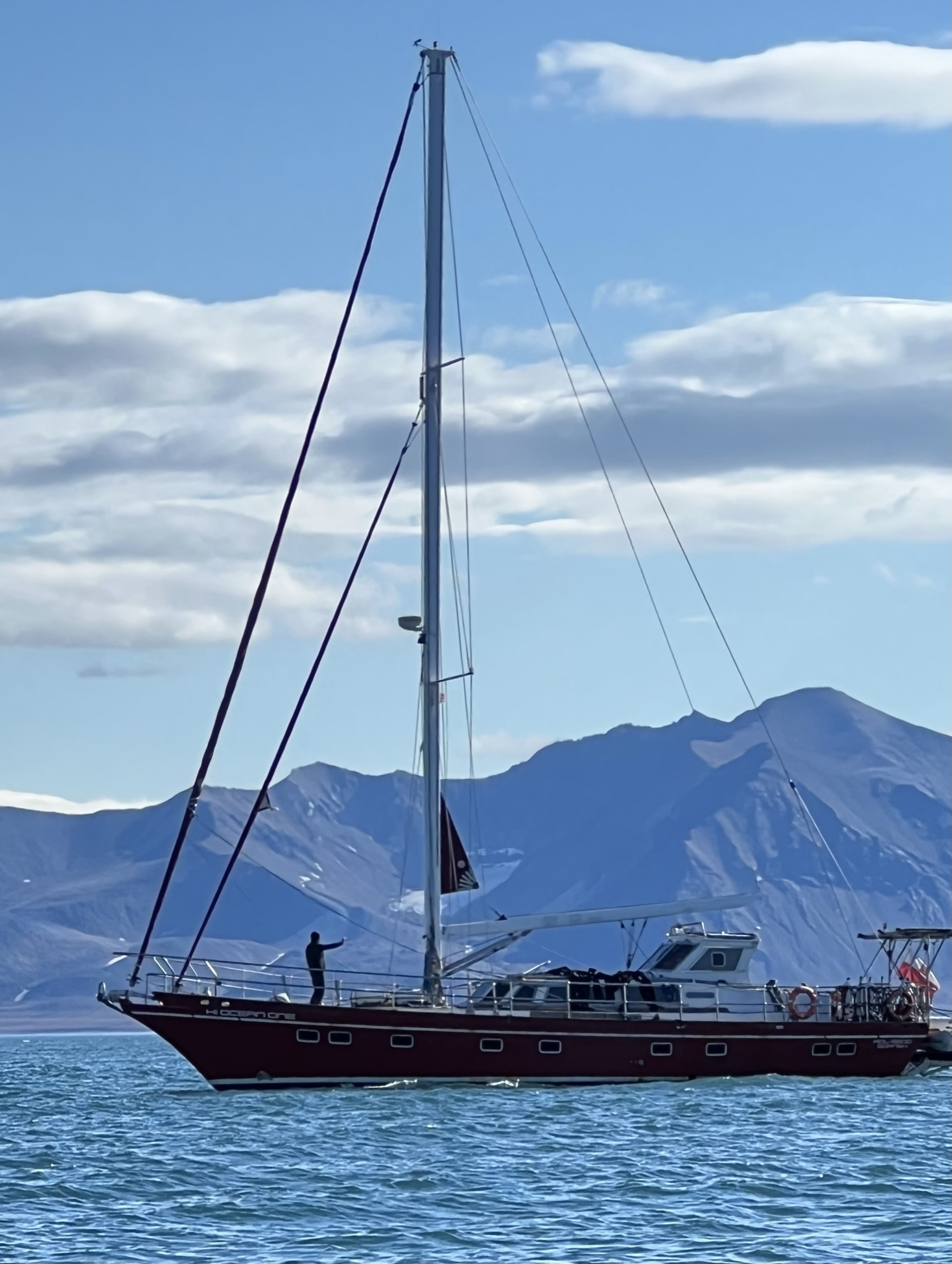
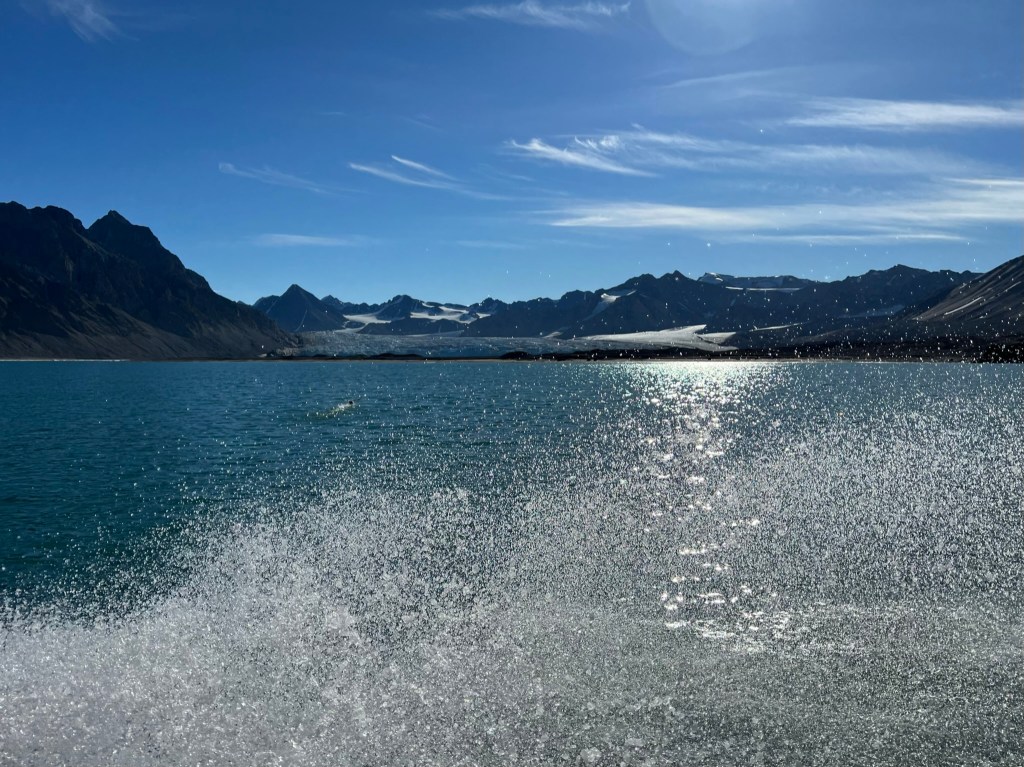
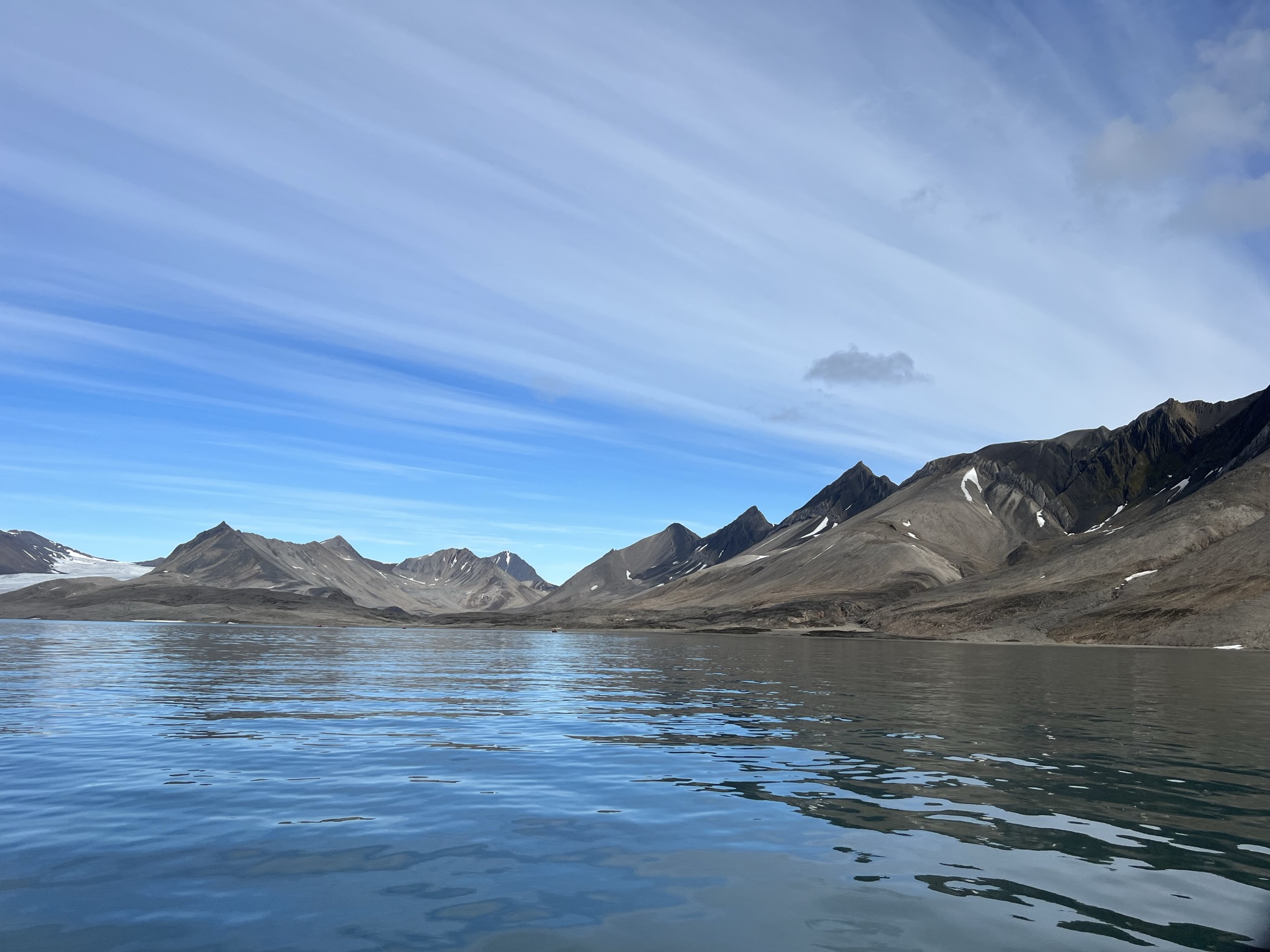
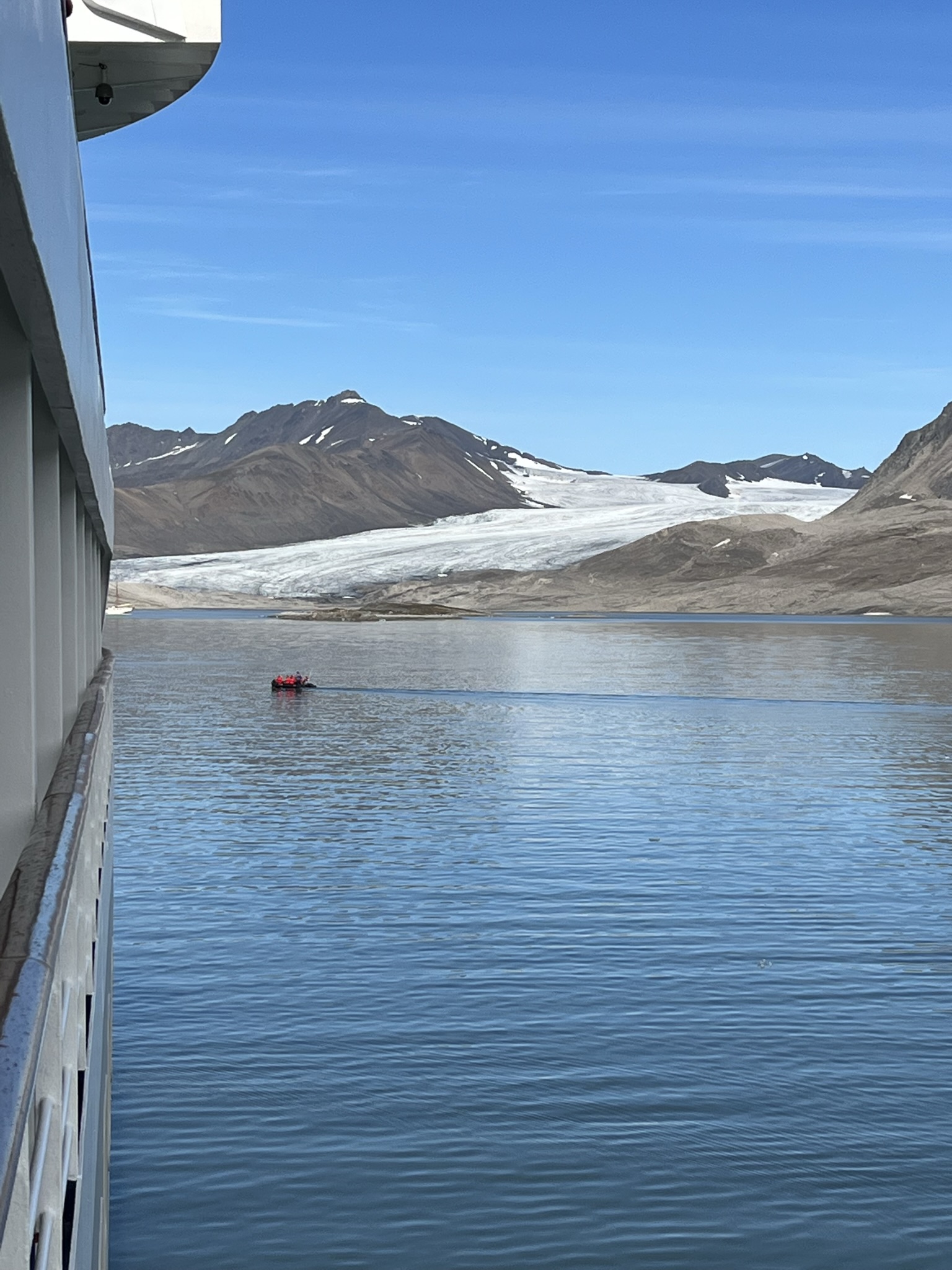
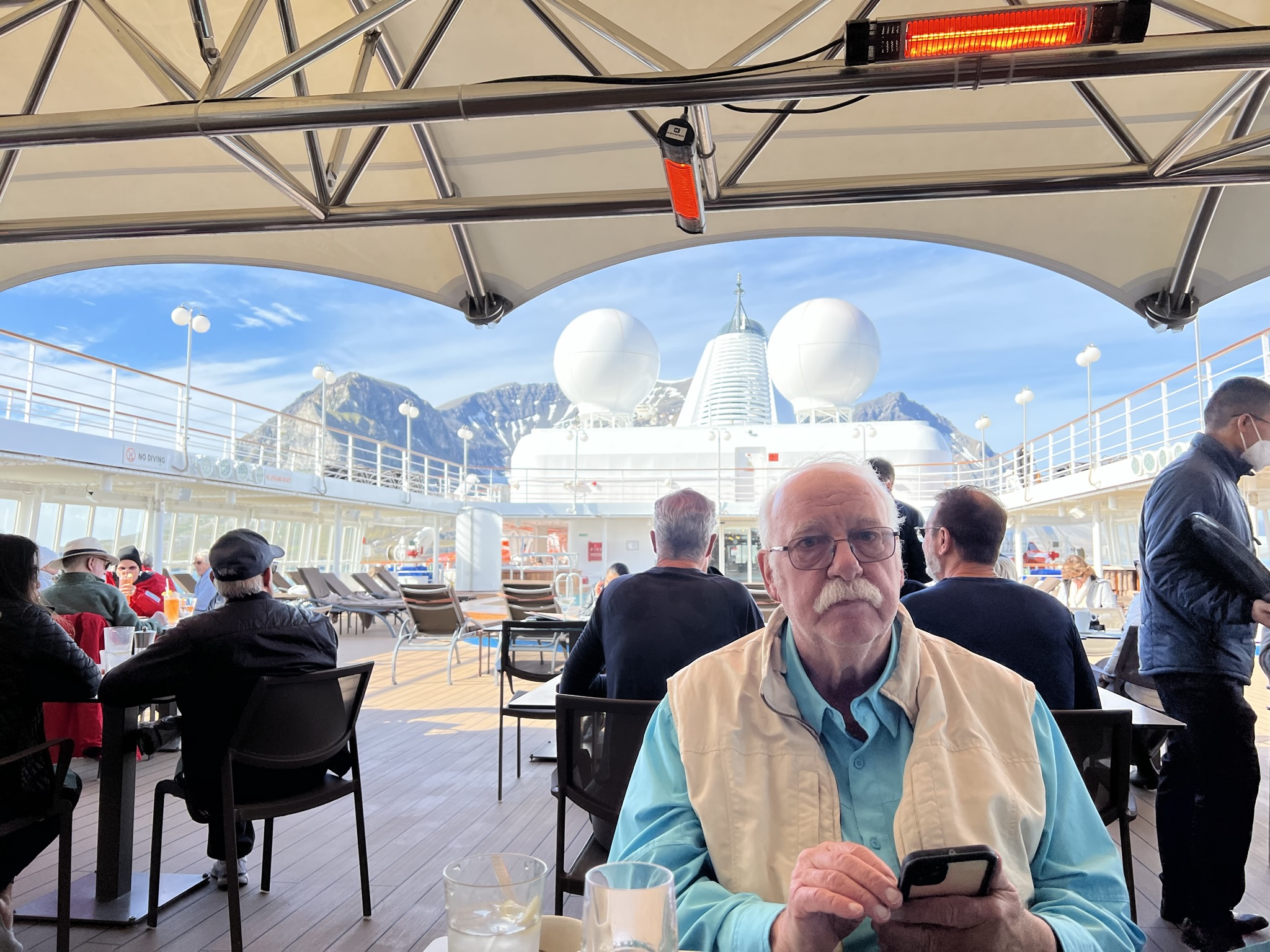
St Johns Fjord or Sankt Jonsfjorden is across from Poolepyten and Forlandsundet Sound where the walrus’ were hauling themselves out of the water. Our ship went up the Fjord and Michael and I just enjoyed the views and lunch while others hiked in the afternoon. Larkin went hiking…

By Larkin Martini

Off to Jan Mayen Island…

BEAR IS A BEAR

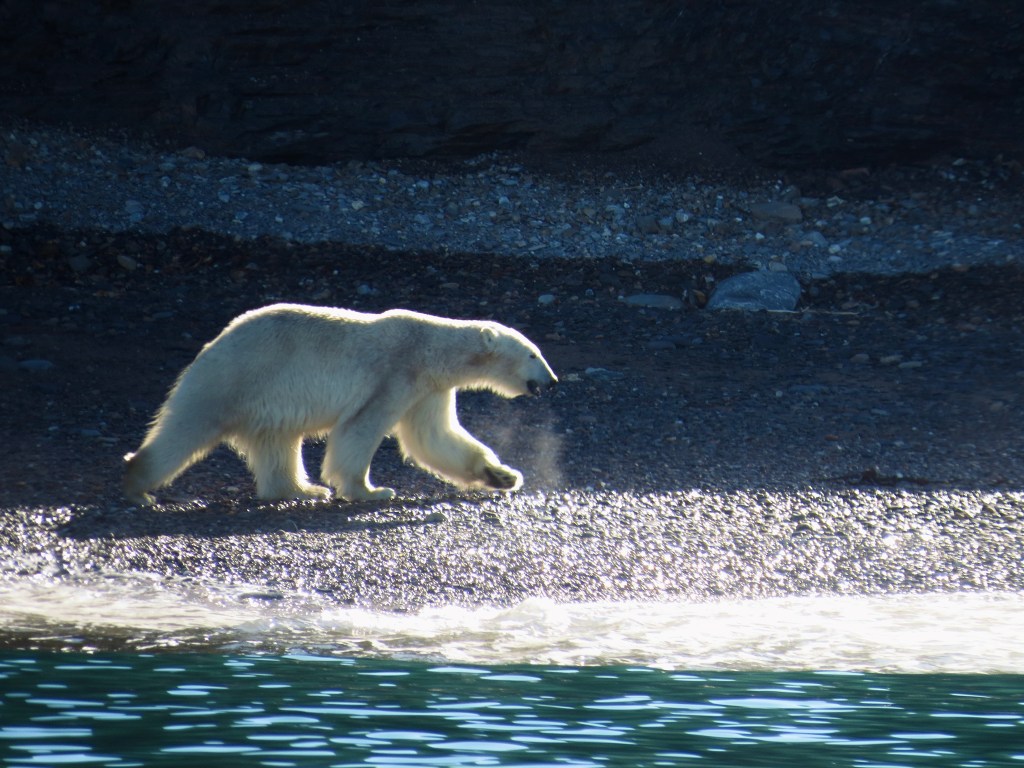
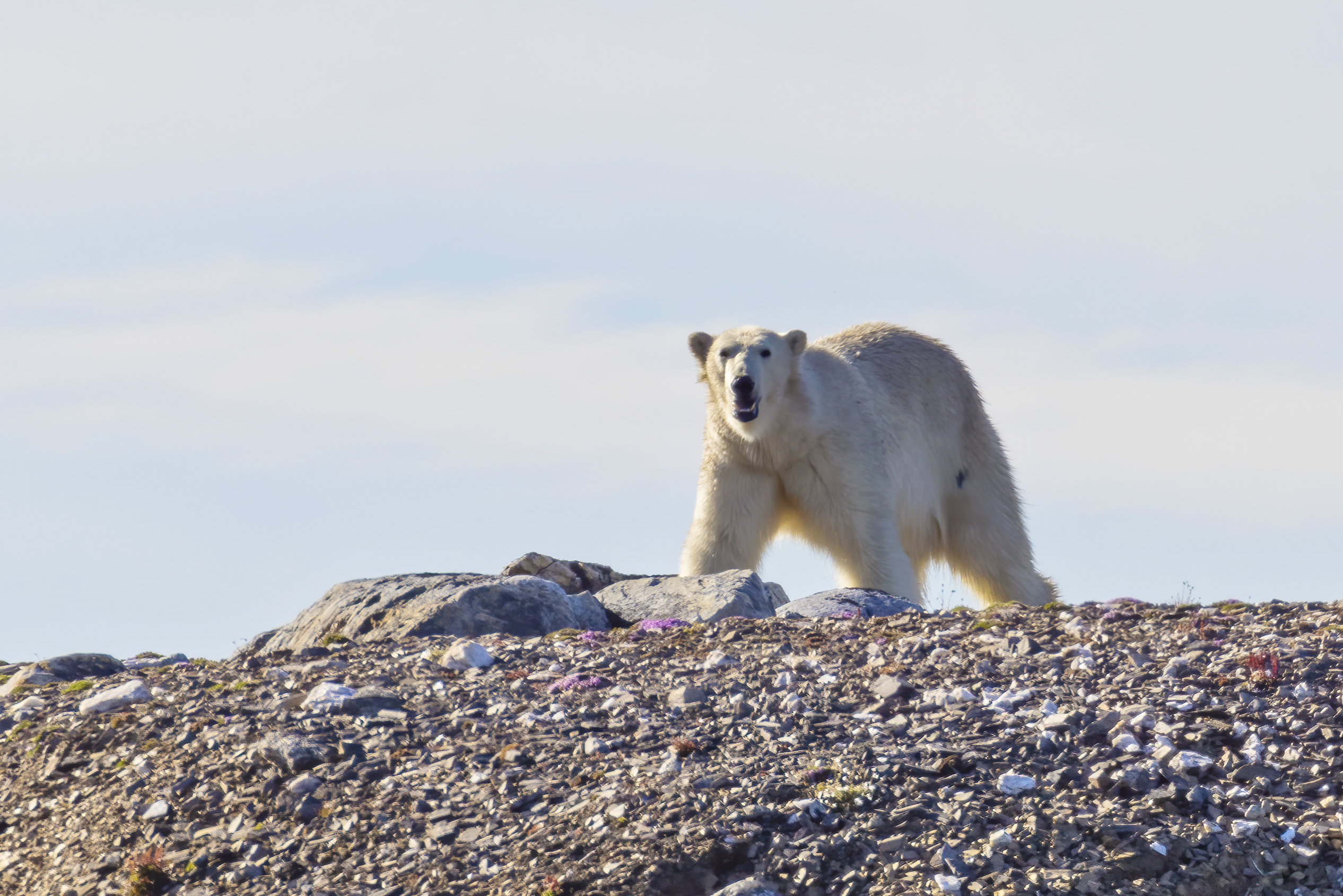
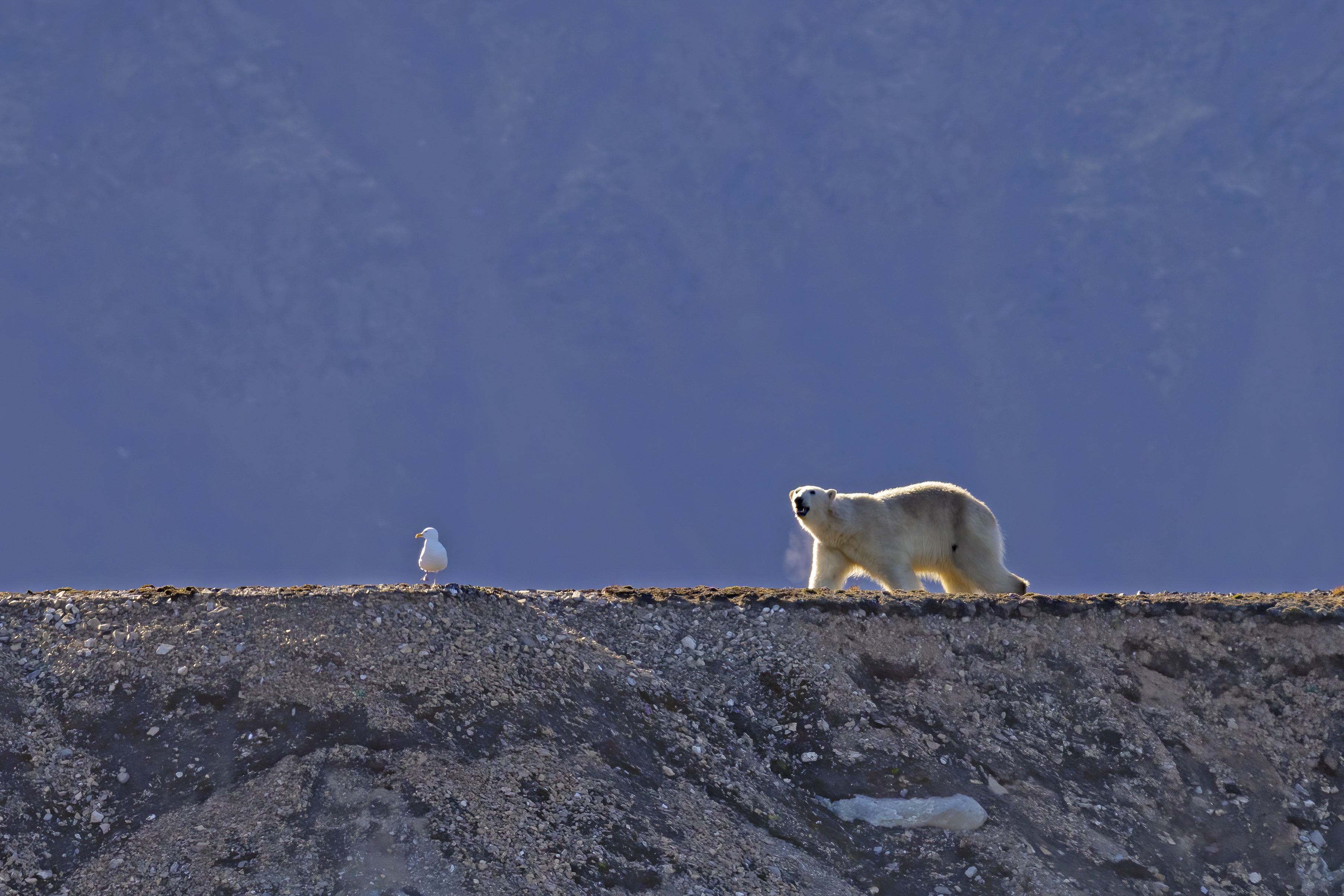
Larkin’s bear photo! Look at her breath!

Or is it? “People probably have revered bears for as long as we have interacted with them. And while bear worship is not a part of most modern religions, it is natural for us — even those of us who have never seen a bear– to be awed by such magnificent and formidable creatures.” Charles Fergus.

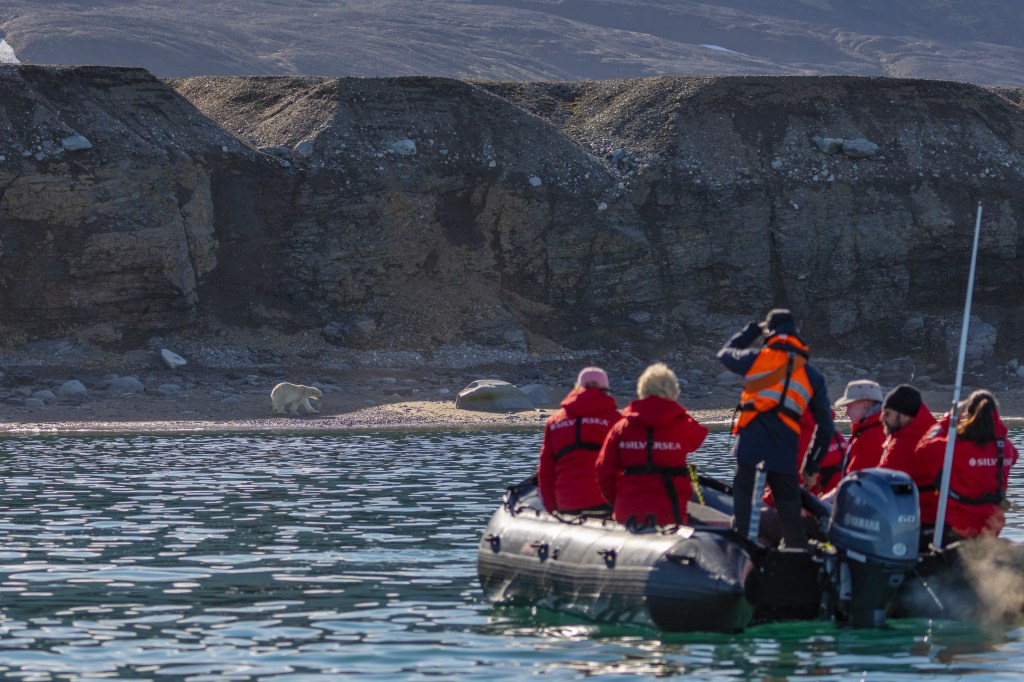
We pulled into the 14th of July Glacier on the 15th of July. The Wind on its last expedition didn’t see a bear and Michael’s brother Peter was in the Arctic in June and didn’t see a bear. We saw two in one day. I was wondering why we weren’t beginning to be called to the zodiacs for the hike we had signed up for. I was still deciding whether I wanted to hike it or not…then I noticed the zodiacs that were out with the crew and naturalists were tooling around more than usual. Soon the PA announced the female bear moving around to the right of the glacier. No hiking now!

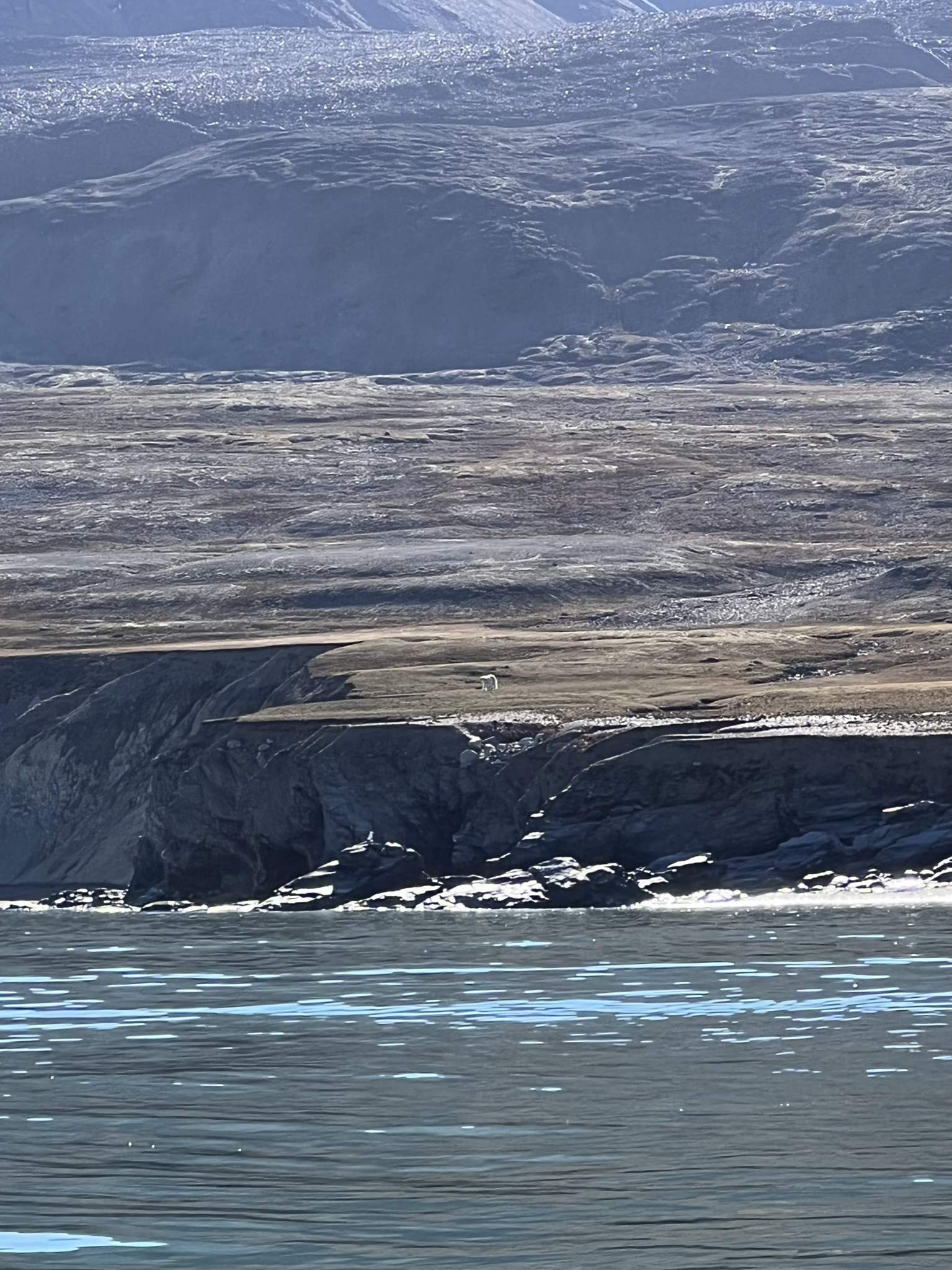
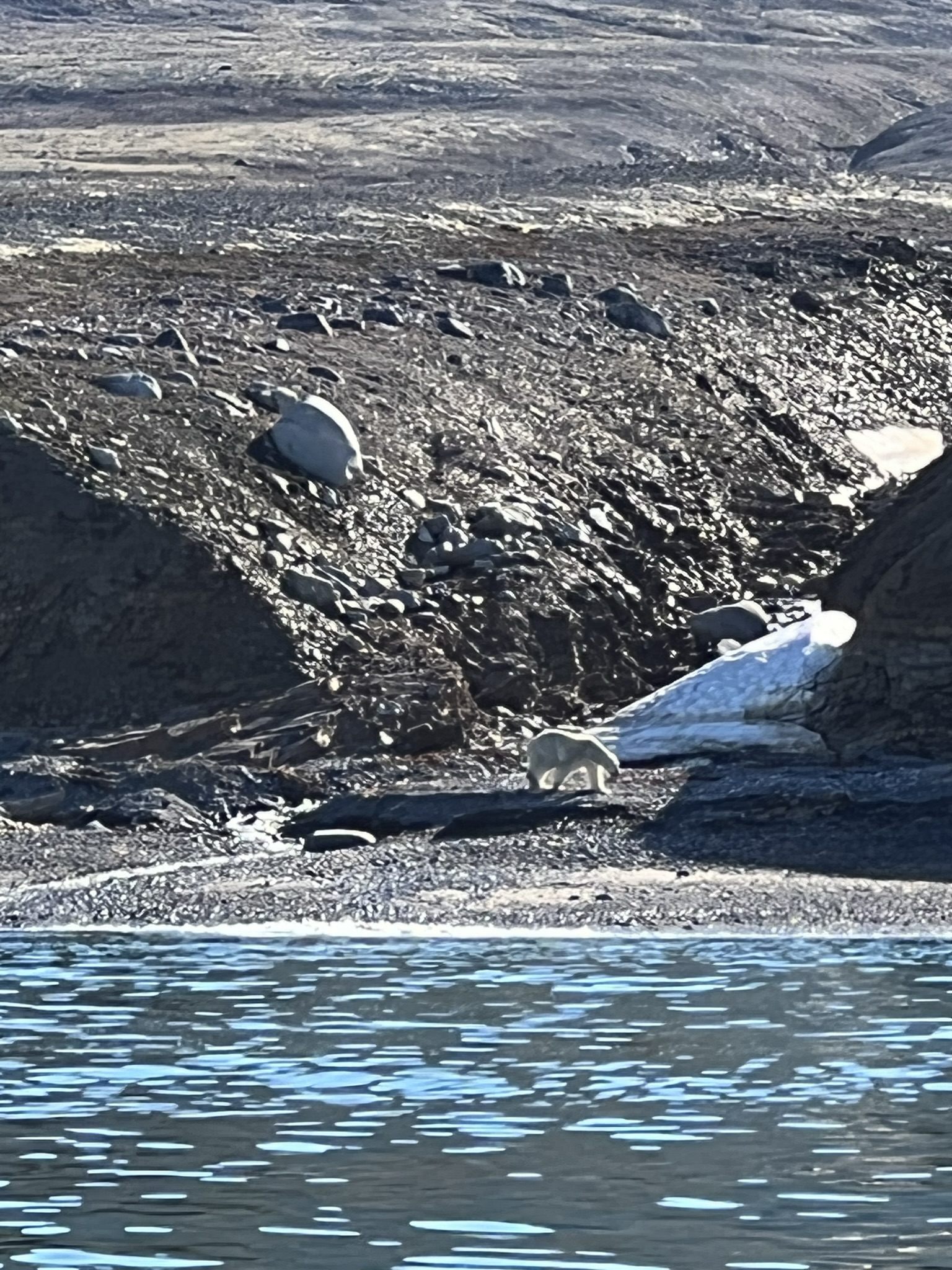
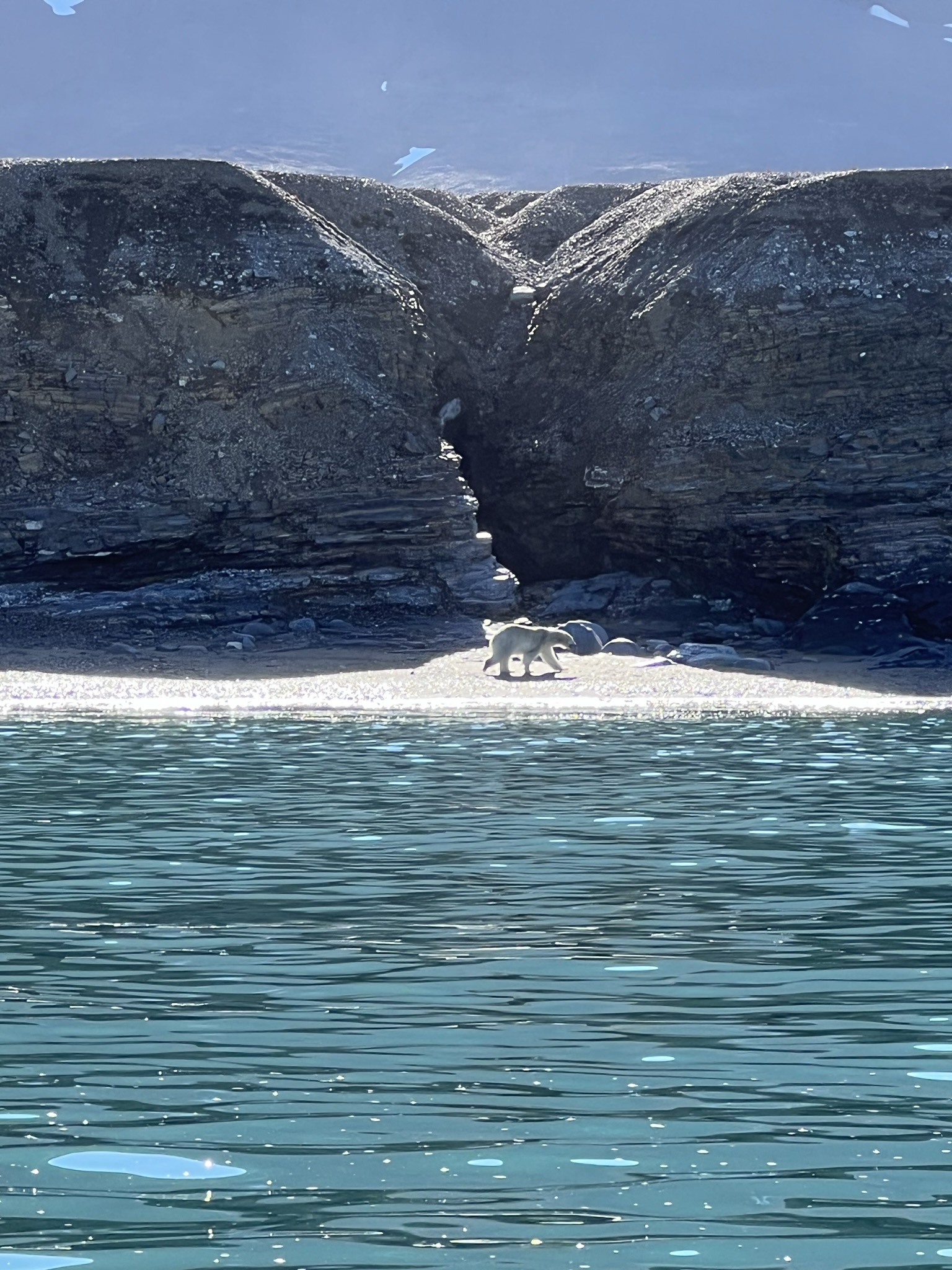
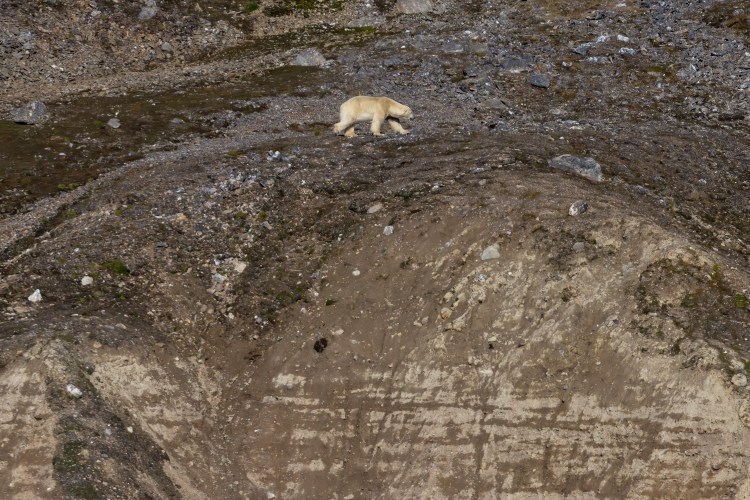
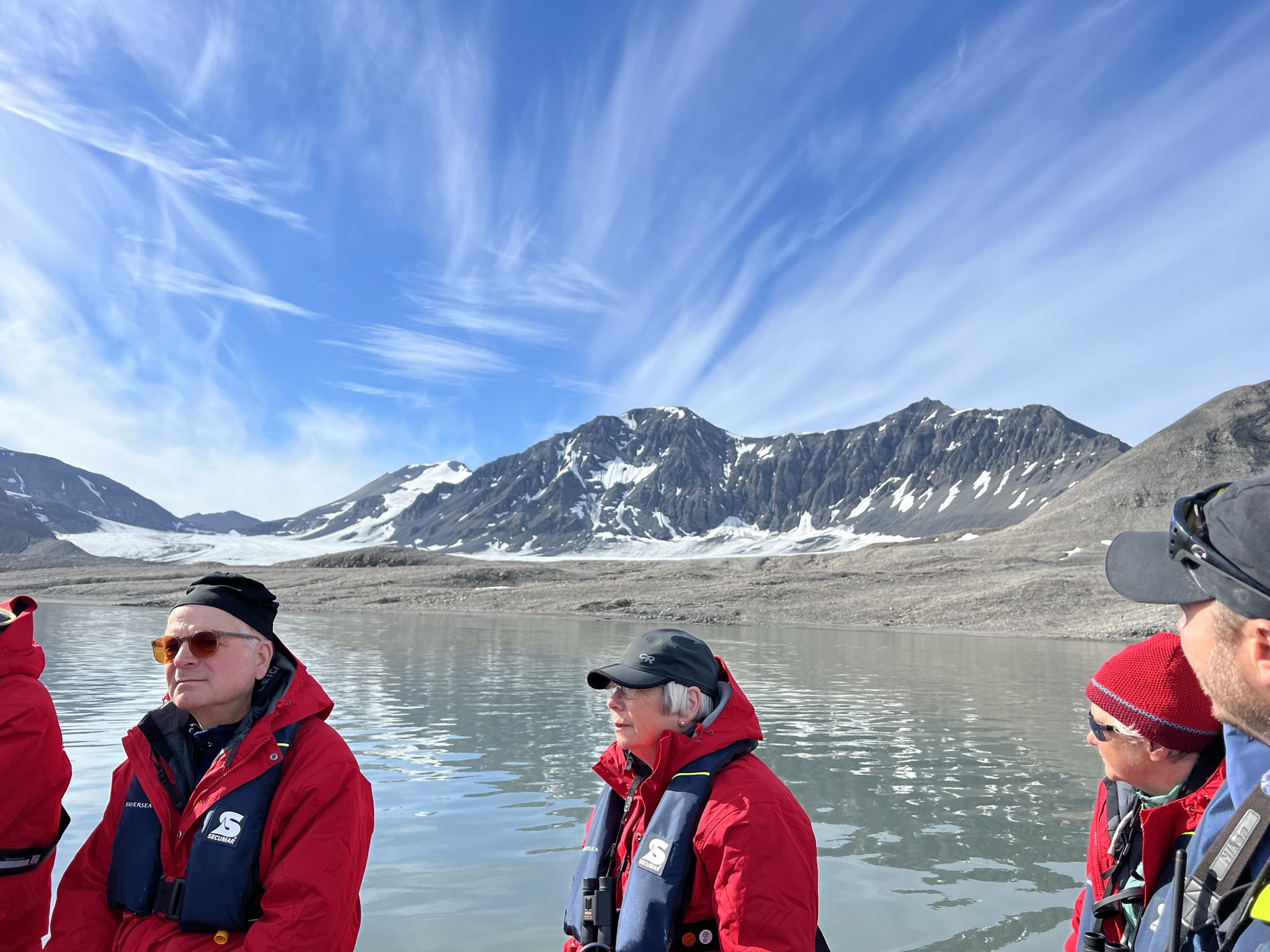
The first group of three colors went out on the zodiacs to enjoy the female bear tromping around near the water and taking a swim. Our second group of three colors (we were the red group) were hoping we’d even get to see her close up. Luckily she turned around and walked on the cliffs and our group also got some fabulous photos as we tooled around in the zodiac jockeying for a good position She needed food and seem to be struggling – but of course still amazing to see.

What it looked like from the boats!

A girl bear and her bird. It was just a magnificent gift to see both these polar bears. You can see when you zoom out how small she looks in “her” countryside. Our naturalists were as happy as the guests were to see these bears…everyone’s camera came out! Some of the photos are Larkins, some the ships photographer and some are mine! These photos still take my breath away. I was never so happy as to NOT be able to hike up a glacier.

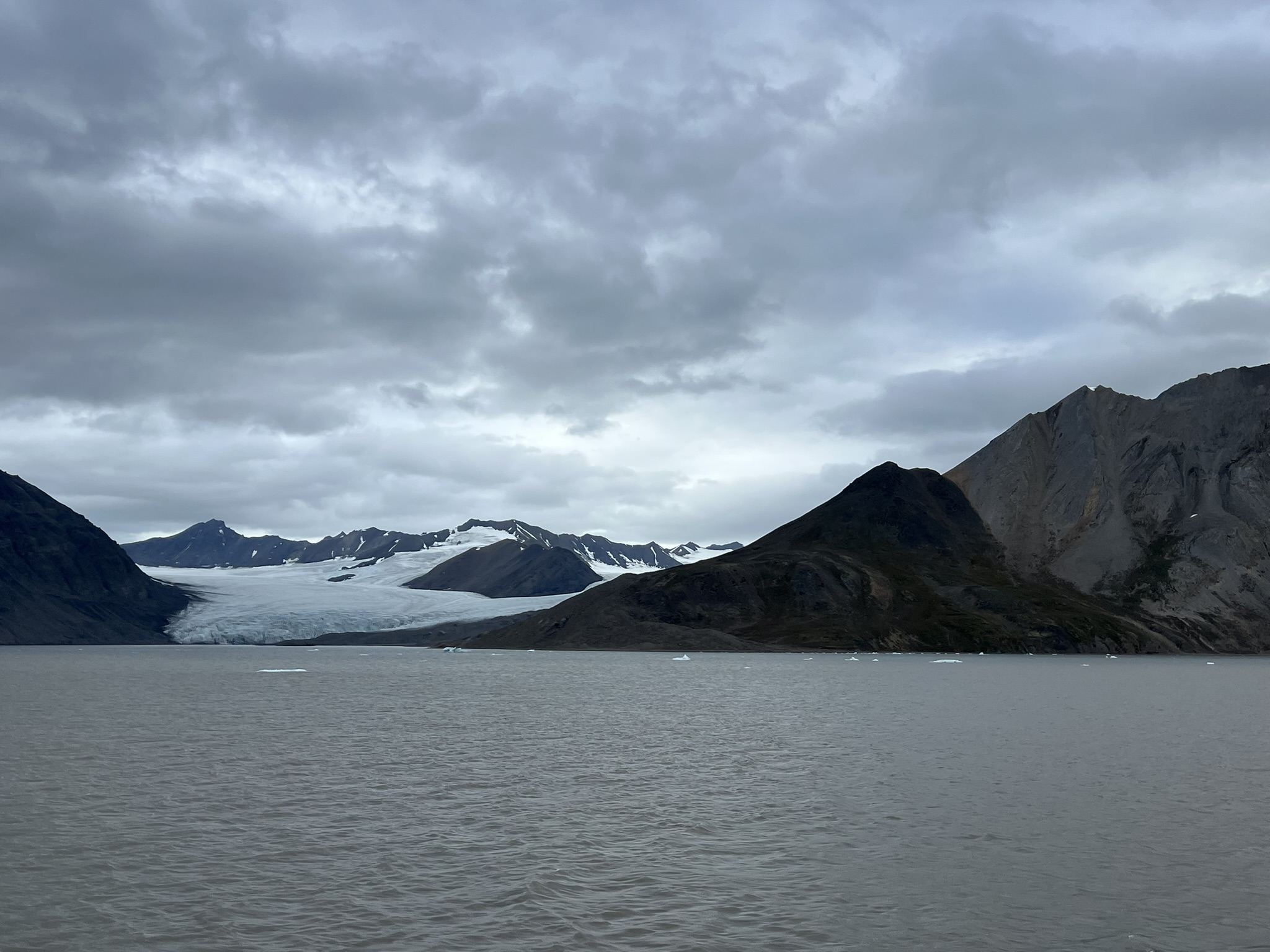
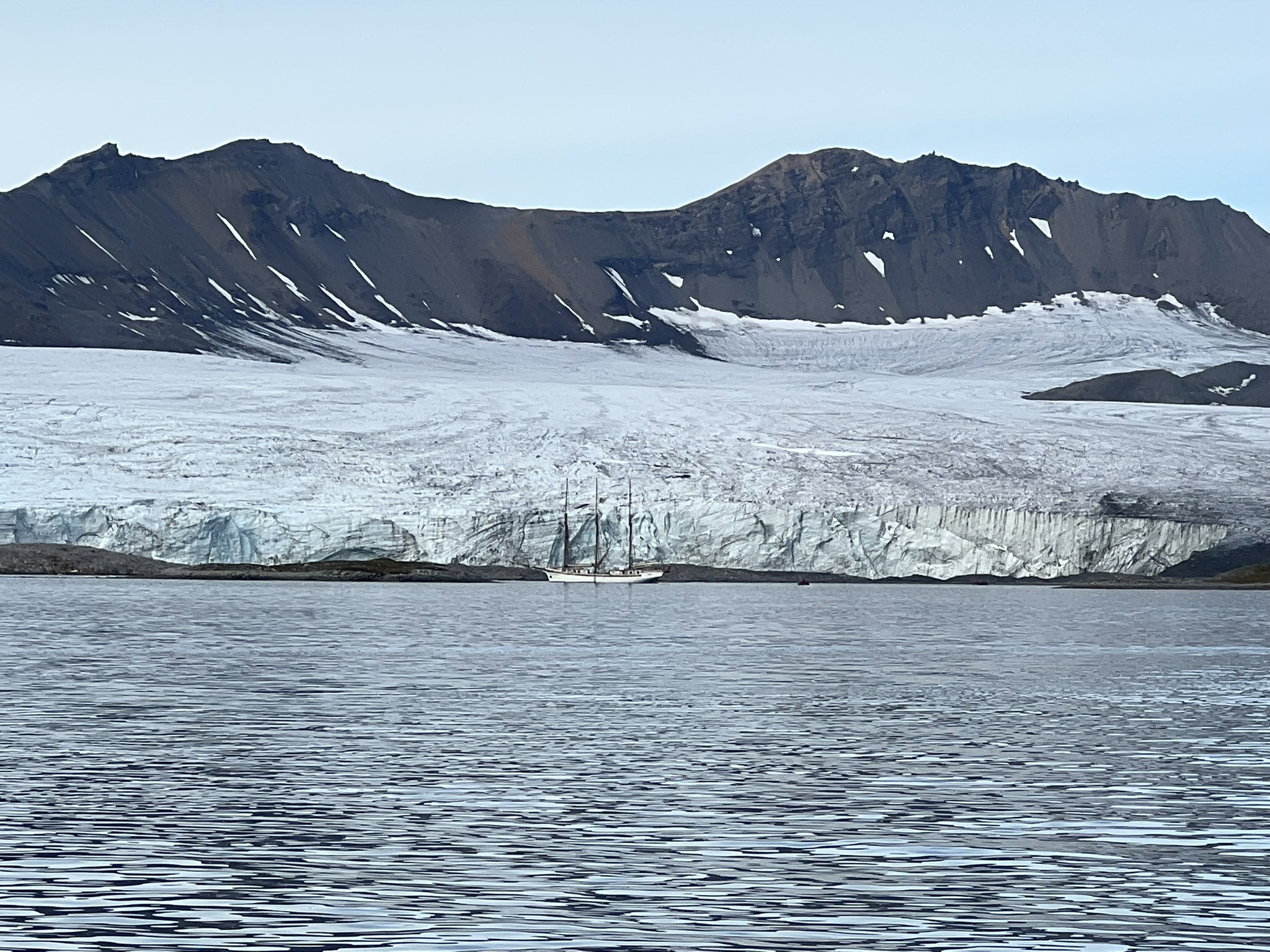
14th of July Glacier on the way back to the Wind
Thank you Ms Polar Bear!
OUR MALE POLAR BEAR ON THE MOVE

We enjoyed the male polar bear as we began to sail onto NY London for an afternoon hiking around an old marble quarry…

SILVERSEA WIND OUT OF TROMSO, NORWAY

Incredible view out the window of our Titan Airlines plane

We stood in an incredible line at the Oslo Airport as the Silversea Wind and Silversea Cloud had to check in and load in the Titan charter plane. The line snaked around on itself and we realized they wouldn’t leave until we all were checked in and through security which of course was also a challenge. European airports want every bit of solids, jells, lotions and liquids in a tiny plastic baggie. The lady in front of me had to throw away lipstick as it wouldn’t fit in her liquid bag. Really?

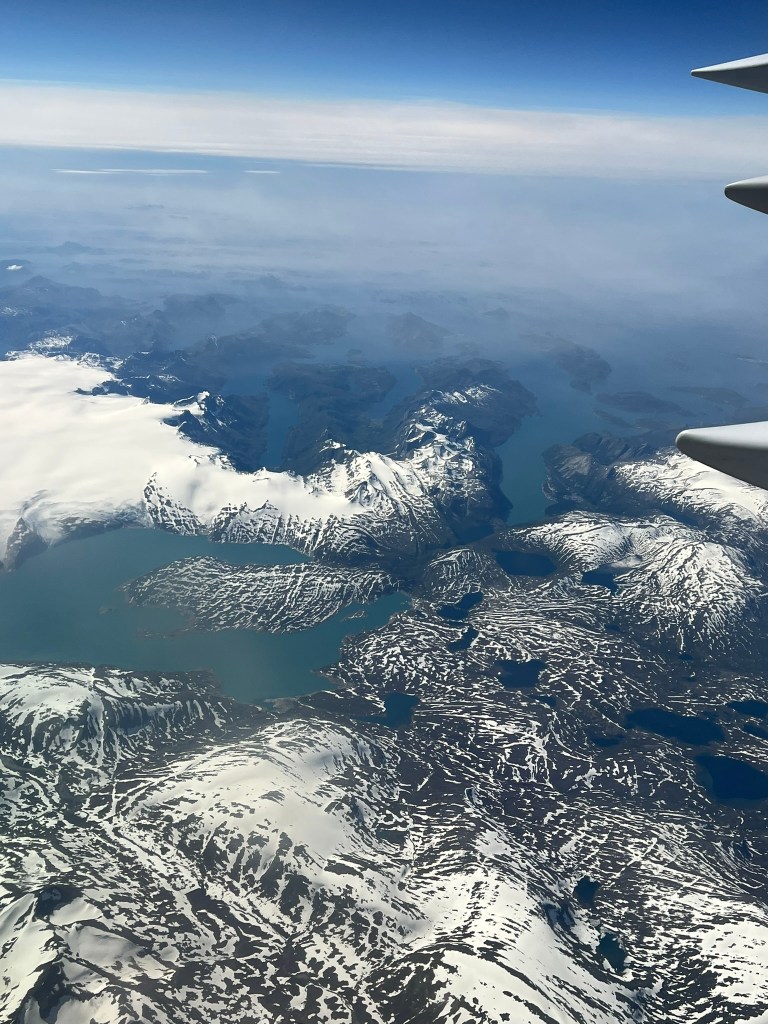
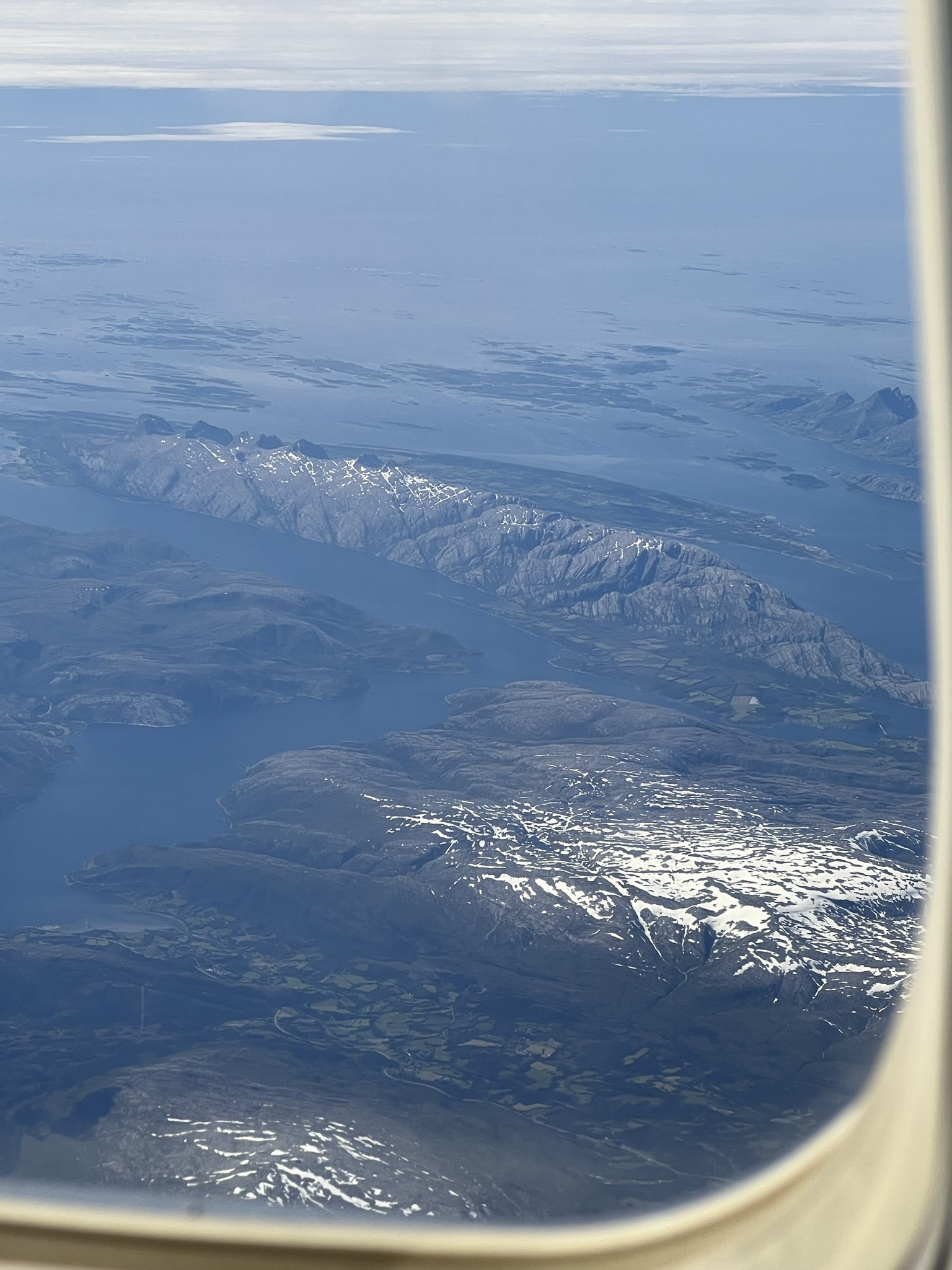
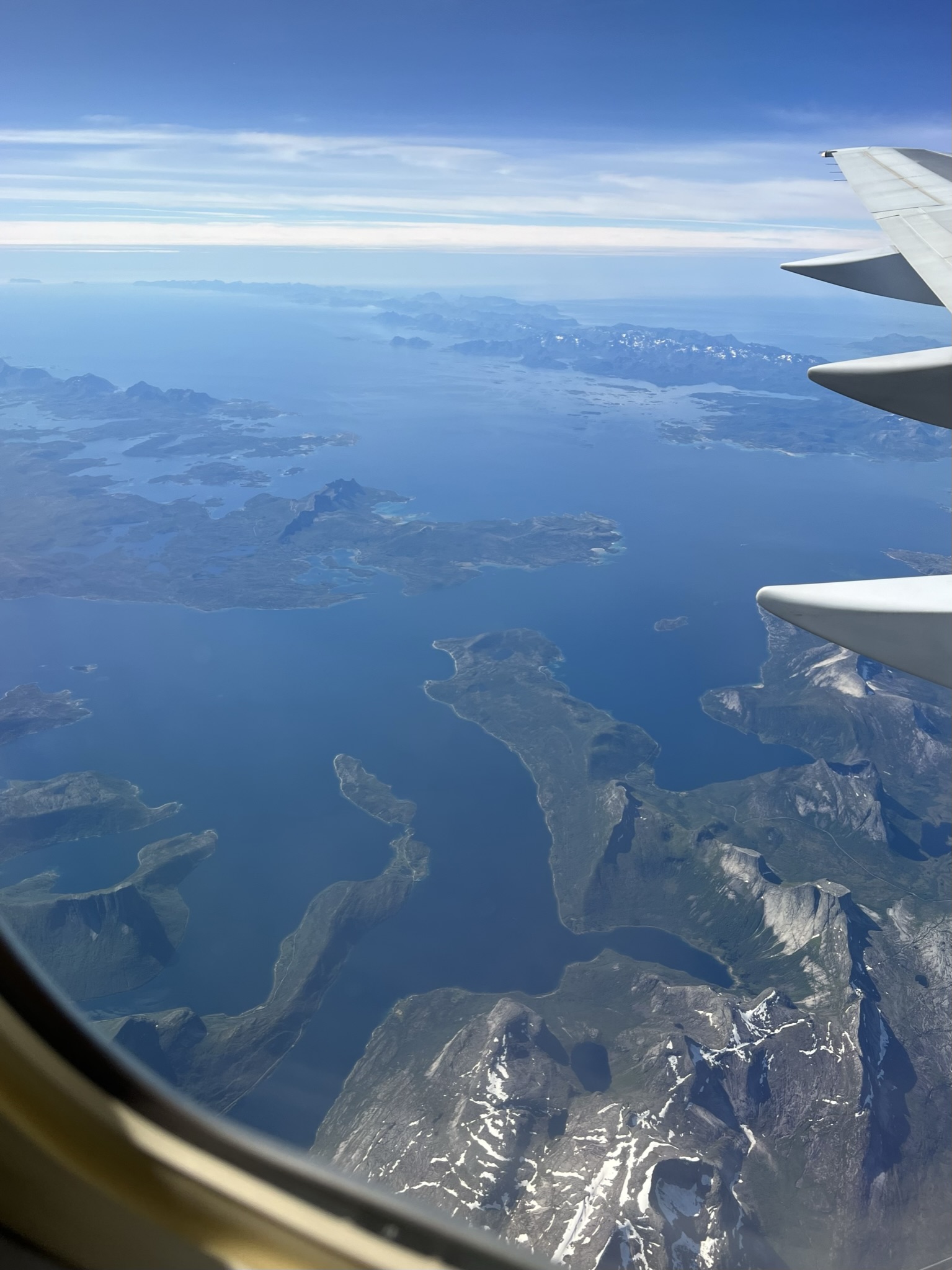
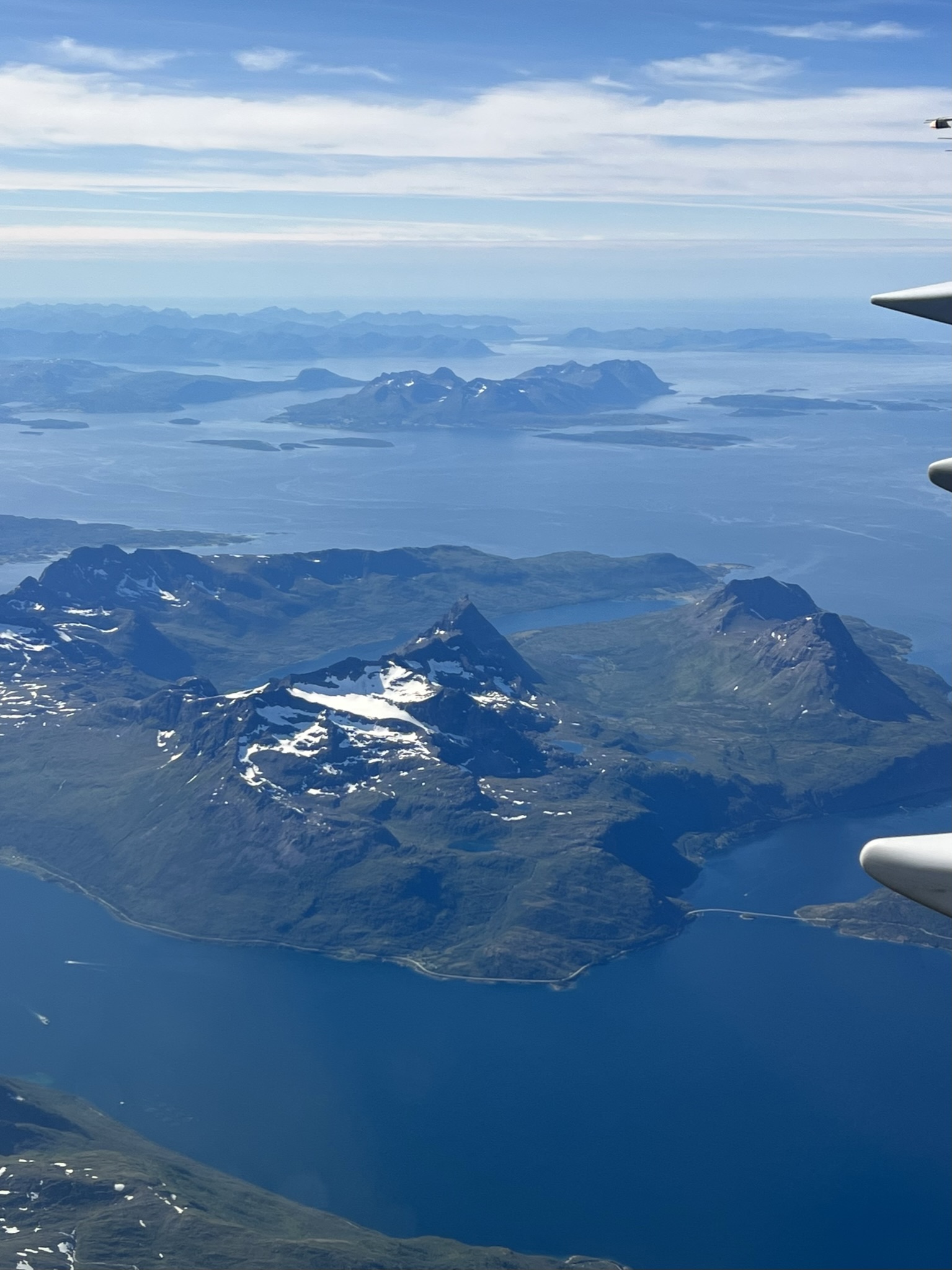
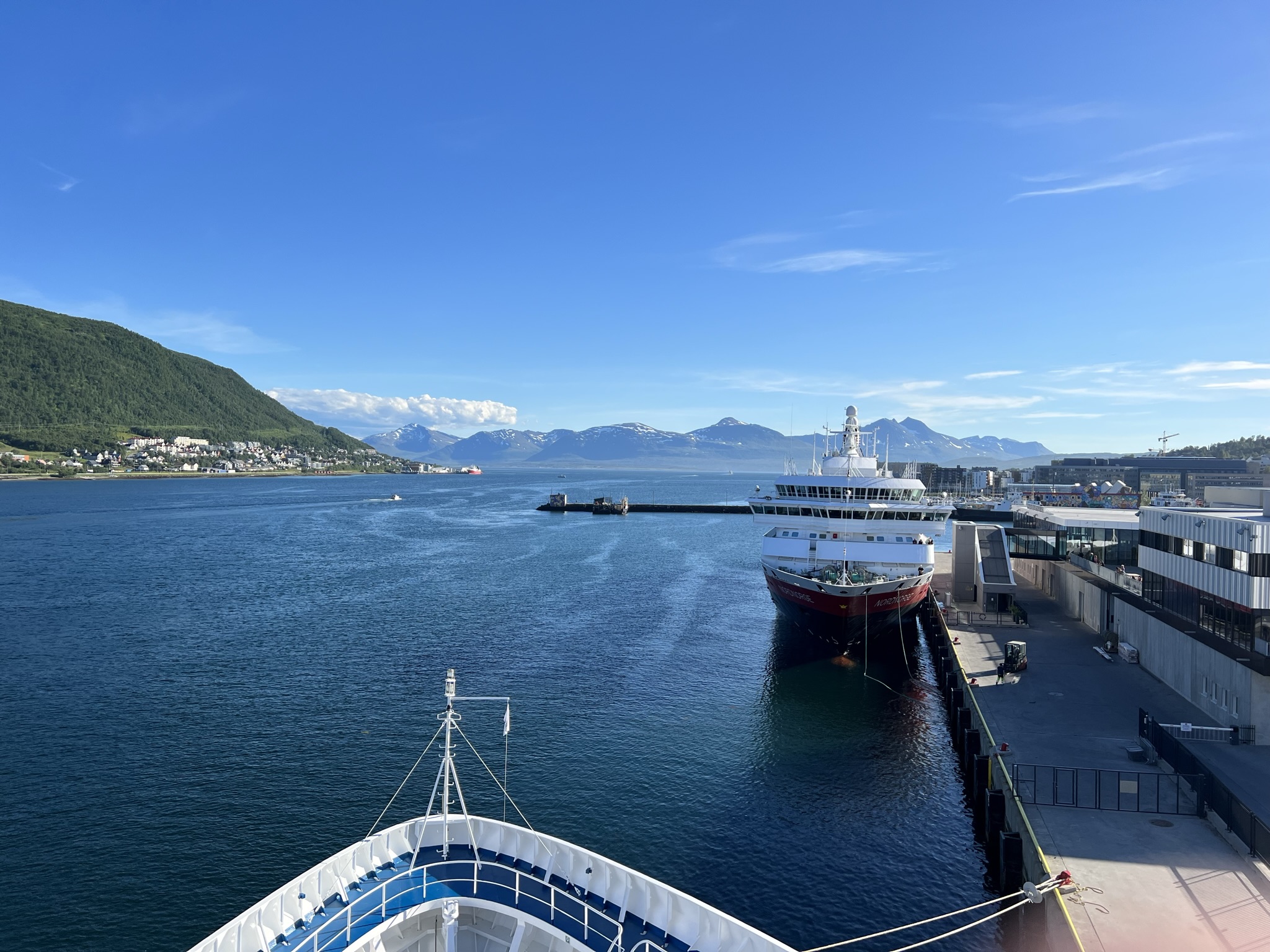
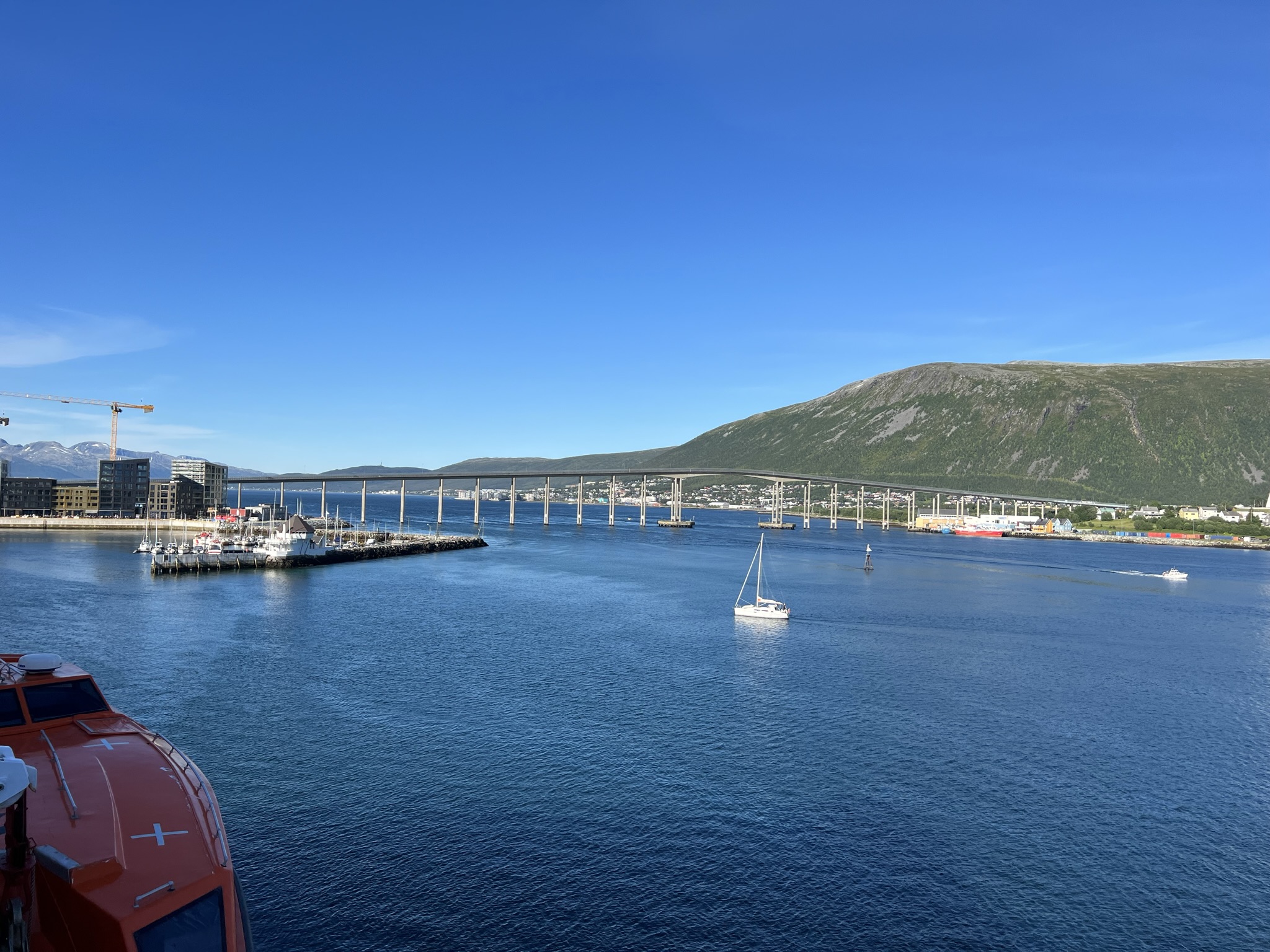
The views out Larkin’s window – she wasn’t happy I had to lean across her – were incredible. All those fjords etc – miles and miles of them. Our ship awaited us in Tromso.

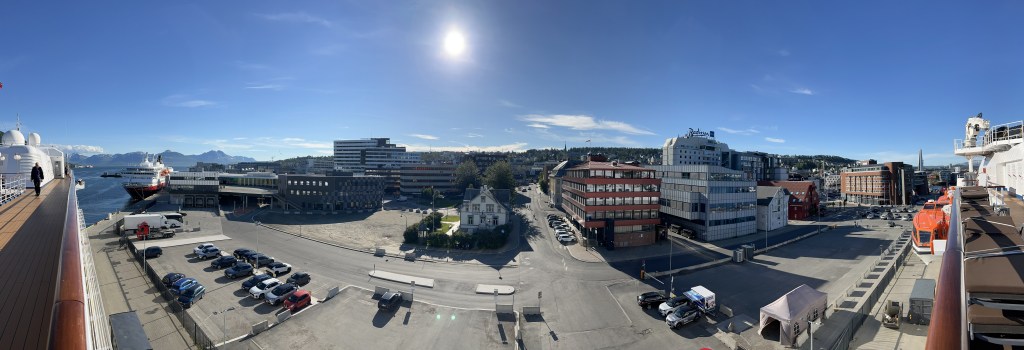
Panorama of the dock at Tromso

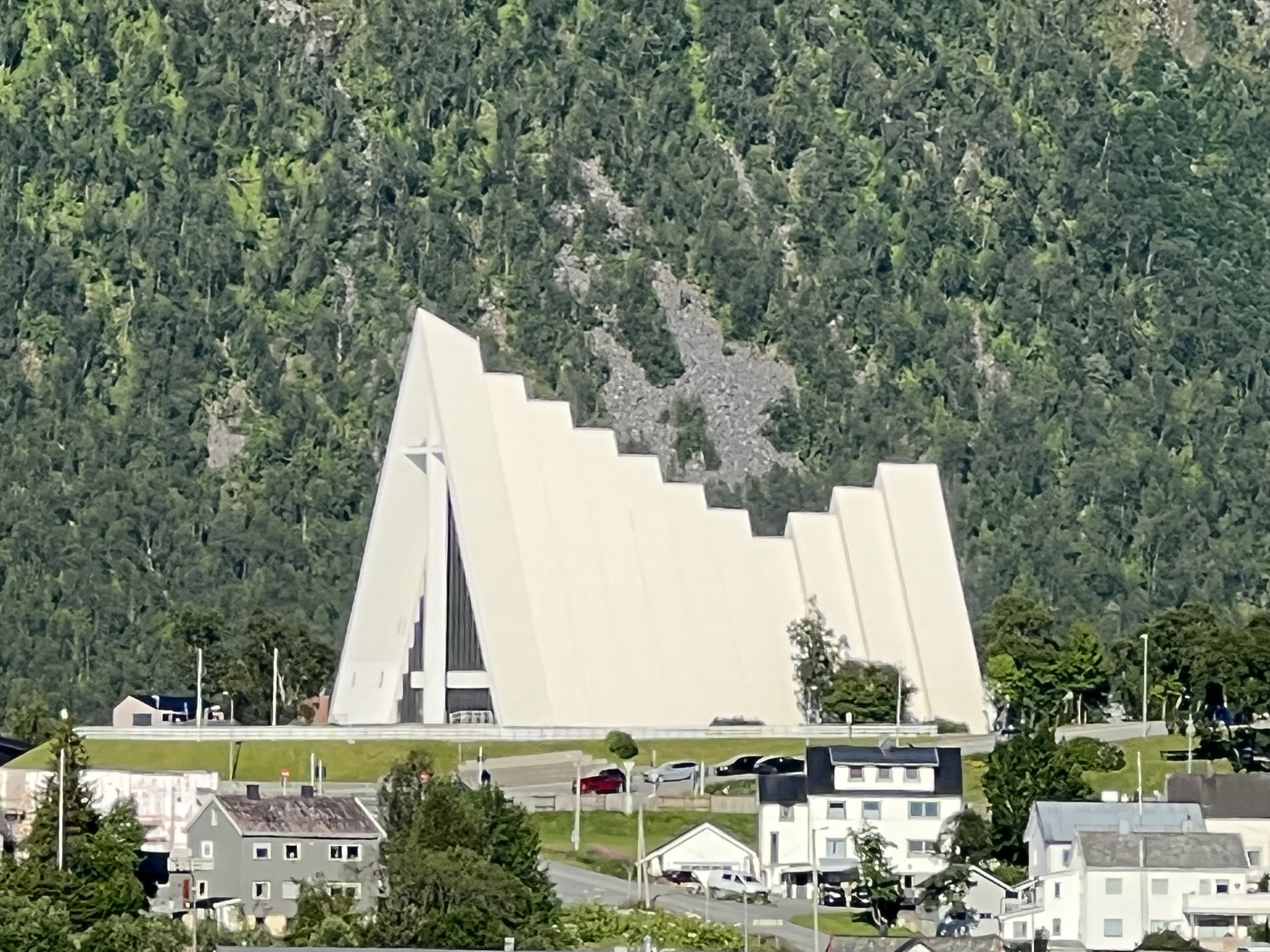
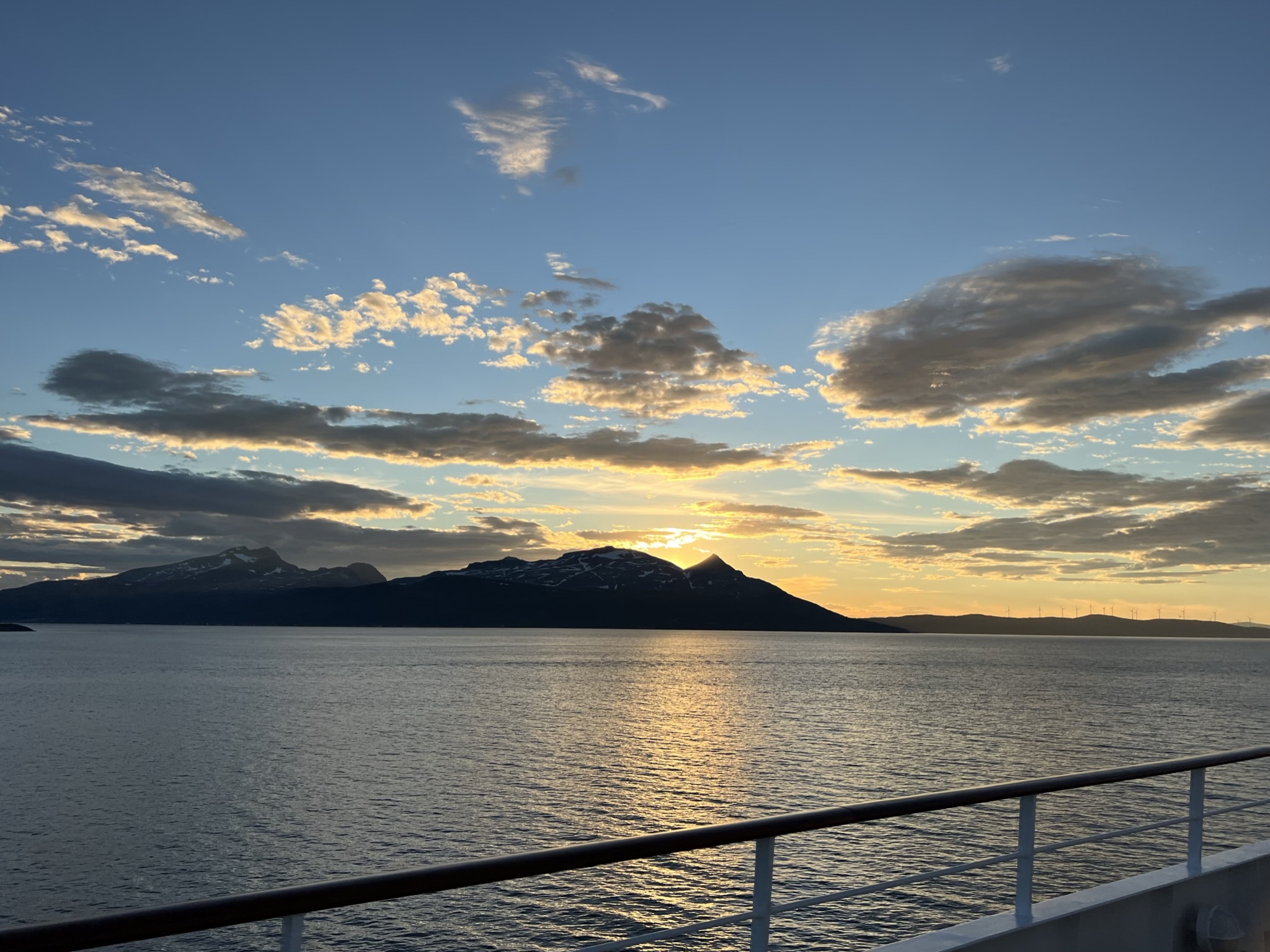
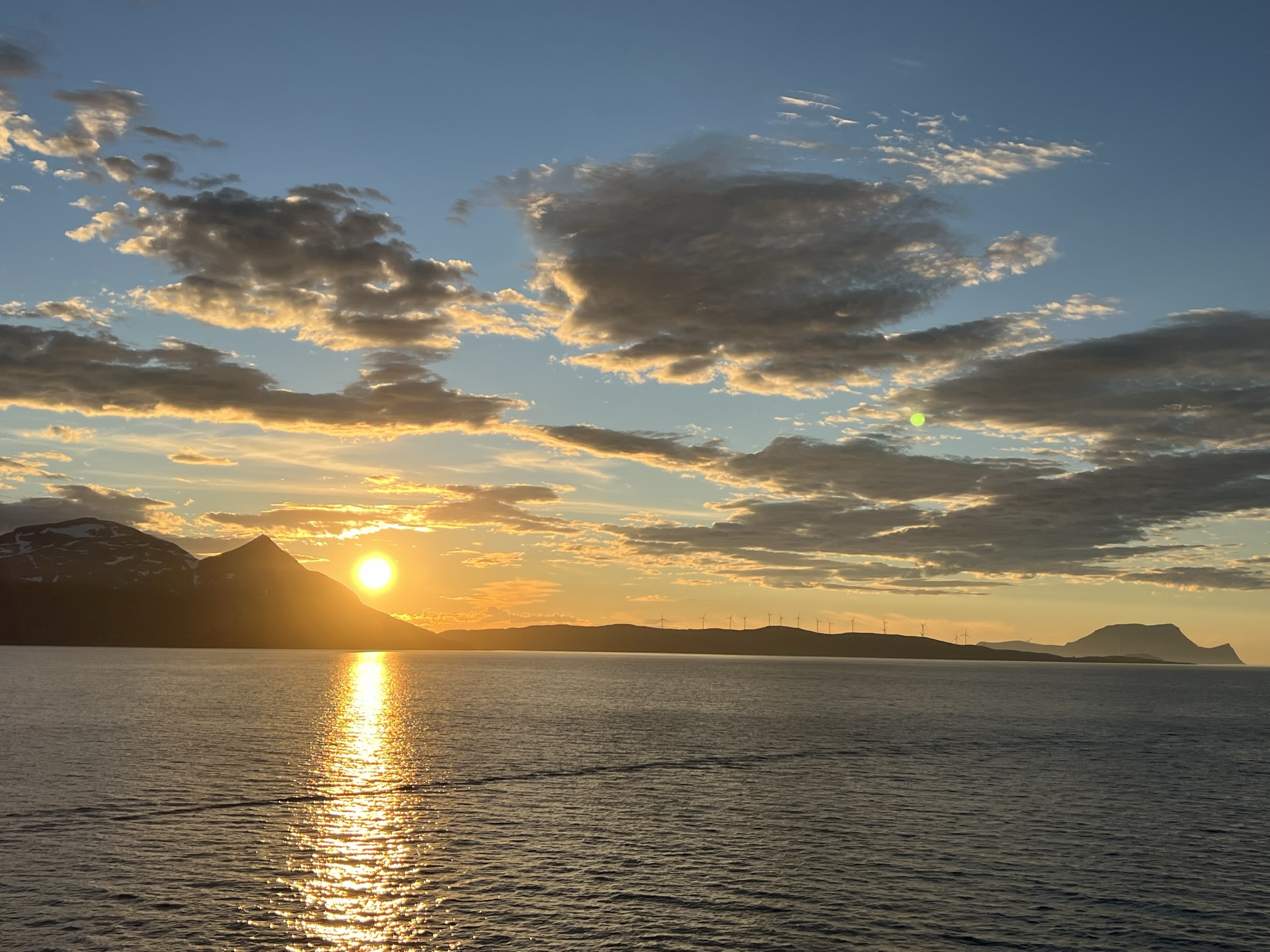
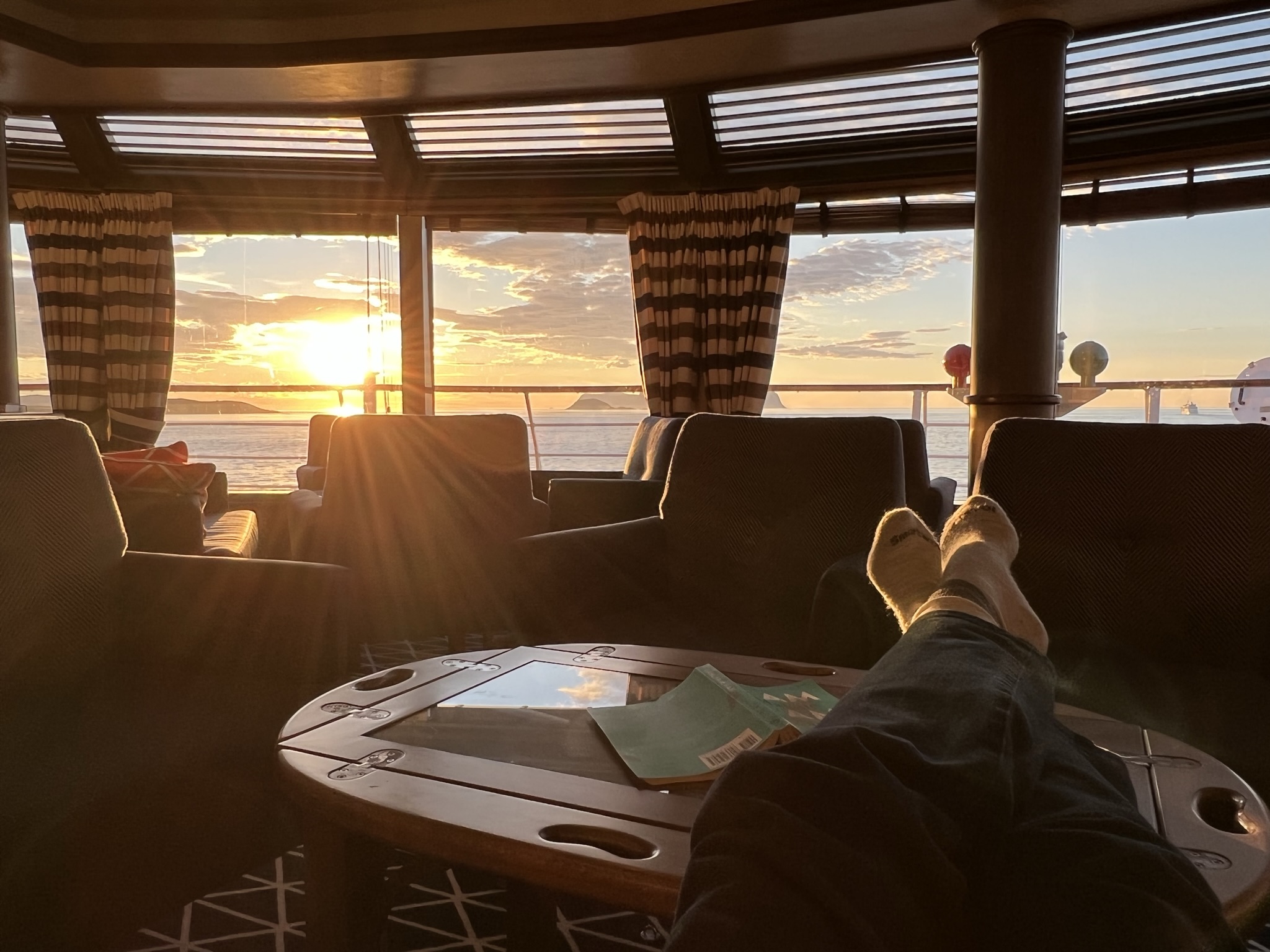
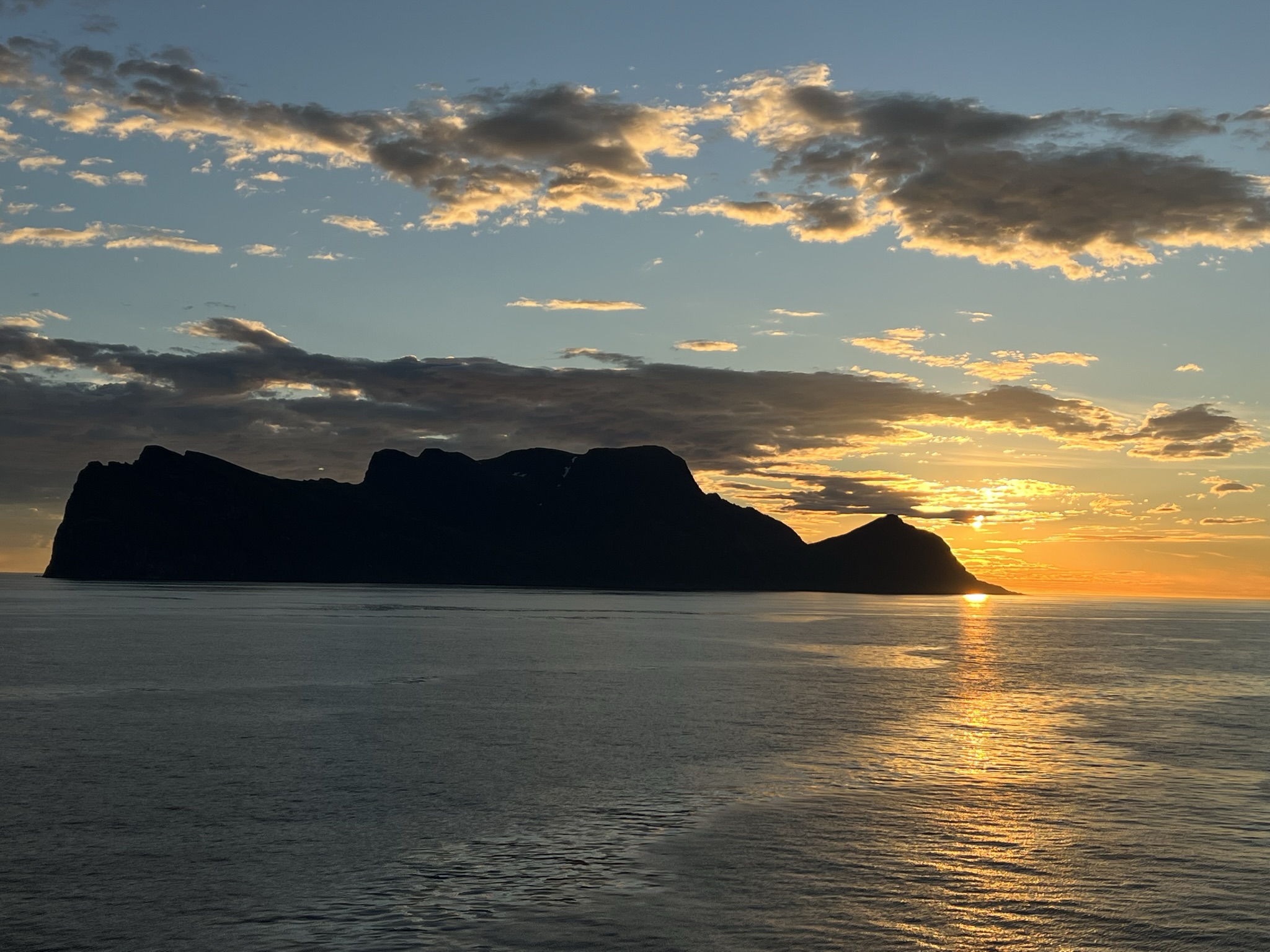
What a lovely day to stand in line and check into the Silversea Wind and our room. Our big bright red jackets were awaiting us to try on. Once again we looked like polar bears this time in red instead of orange (polar bears) in the Antarctic. Arctic kind of means bear and of course Antarctic means no bears except big orange people. Yep that works! As we sailed away the weather stayed lovely and of course throughout the night. On the top of our daily itinerary is said “sun is up 24 hours”. I went up to the library to read when I couldn’t sleep and alas, the sun never set. All my Norwegian relatives were from the land of the midnight sun. 99 days of full sun from April 20th to August 23rd. However only 84 days of polar nights from October 26 to February 15th. No clue why there is a difference. Must be the tilt of the earth. We were now on our sunny way to Svalbard.

Each evening we had recaps as to where we had been and a summary of what was expected the next day. Since we left a day late due to the SAS strike, we were doing one less expedition day in the Svalbard area. We missed the small print deep on the Silversea website that wanted us to “rent” waterproof boots but were able to snag one size up for both Larkin and I and Michael wthl his size 13’s had no issue with extra boots in that size. I did note a few folks never bothered with boots and simply figured out ways to make sure they never got their feet wet when departing the zodiacs. Biosecurity checks with all our potential shoes, pants etc were checked before our first landing. Our first day was just traversing toward Svalbard and a lecture on Svalbard which is midway between Norway and the North Pole at 74 to 81 degrees north.

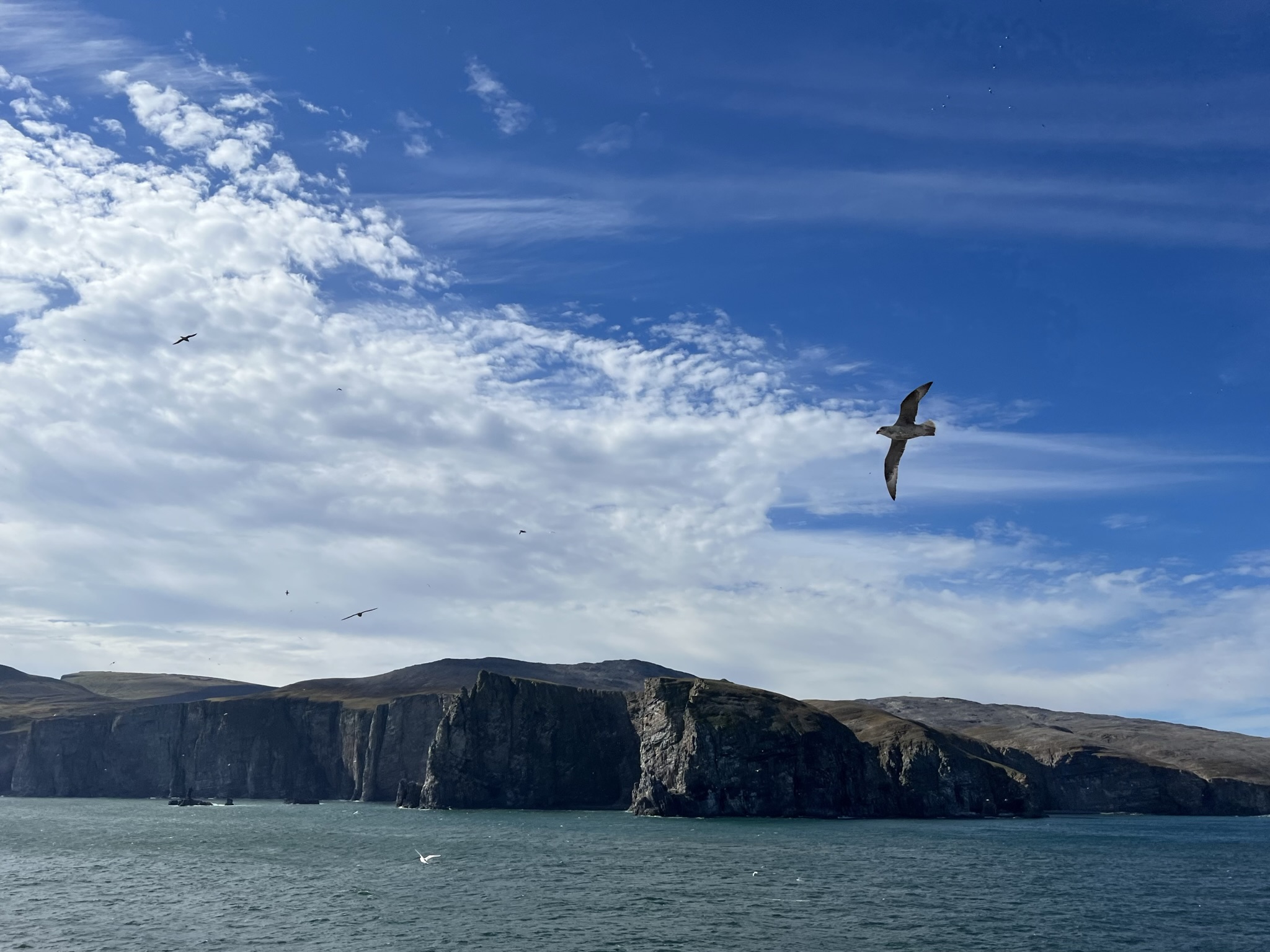
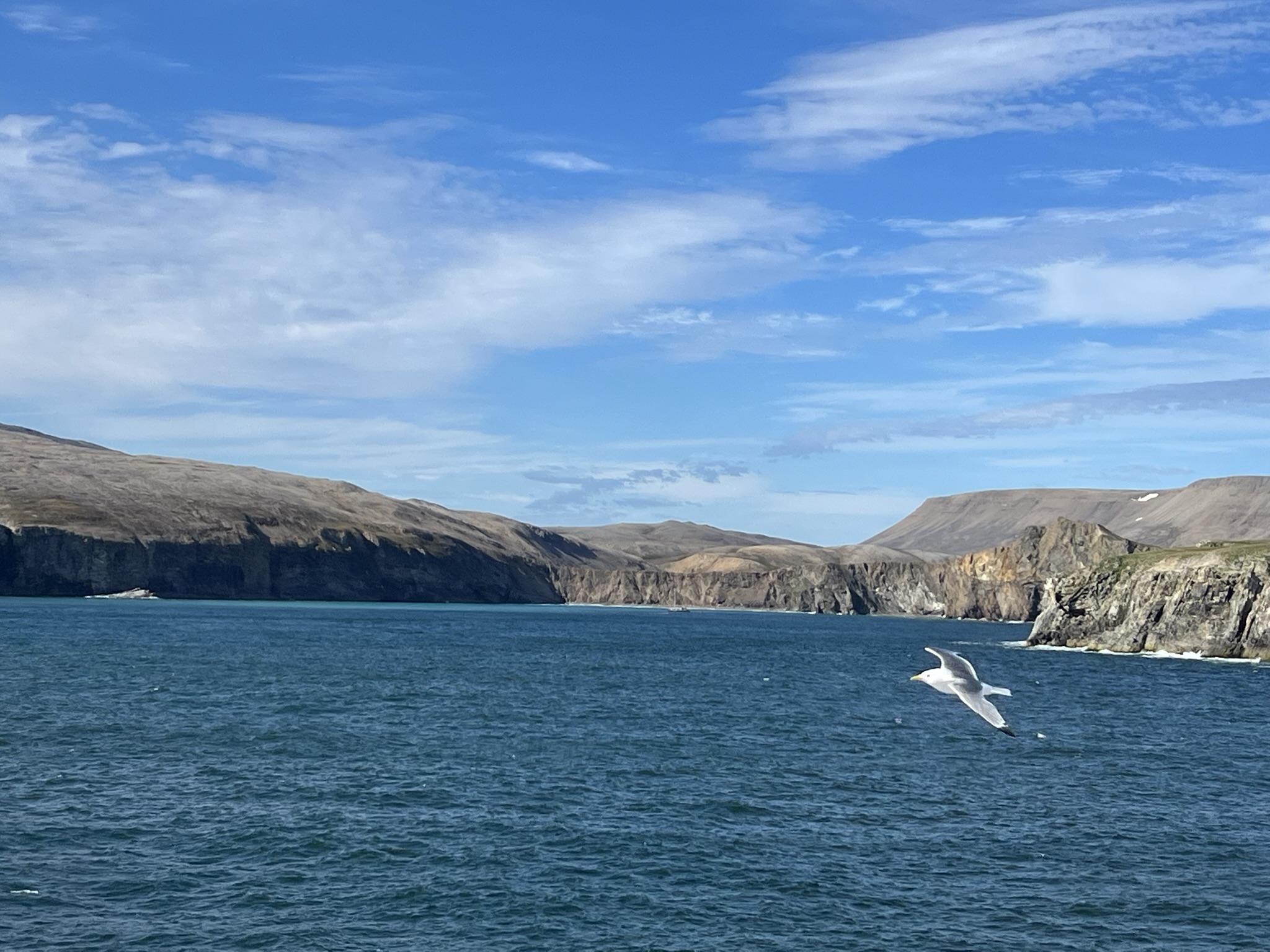
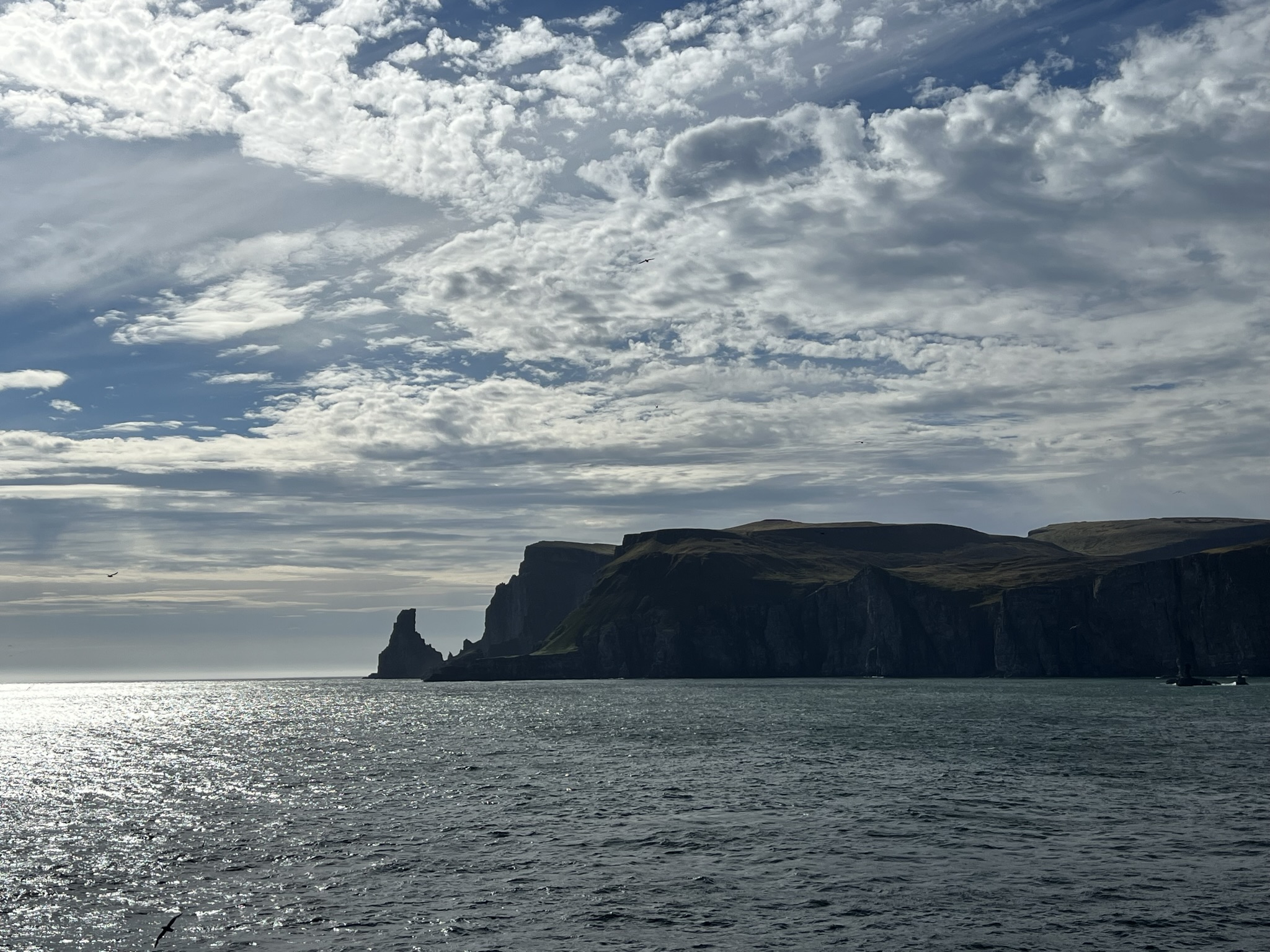
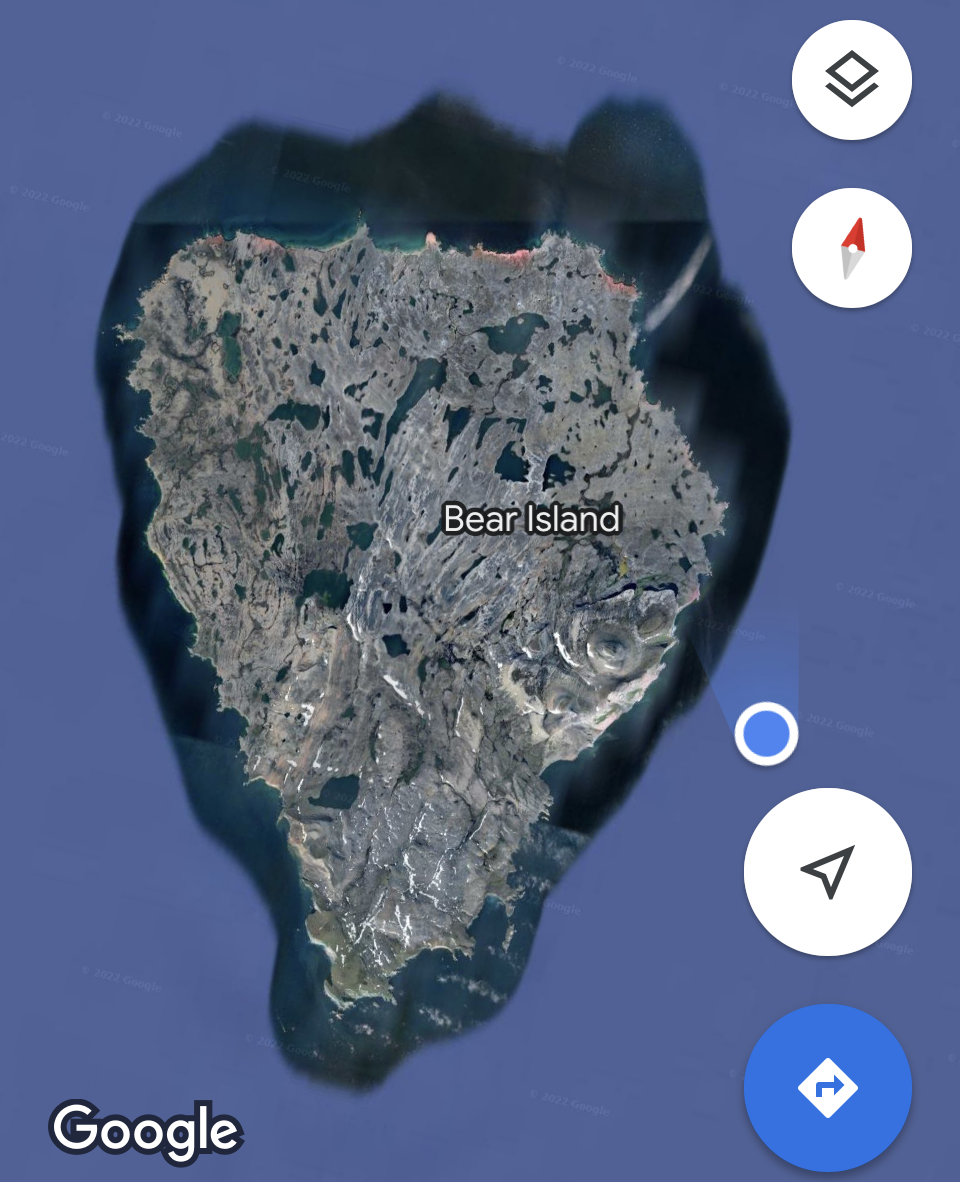
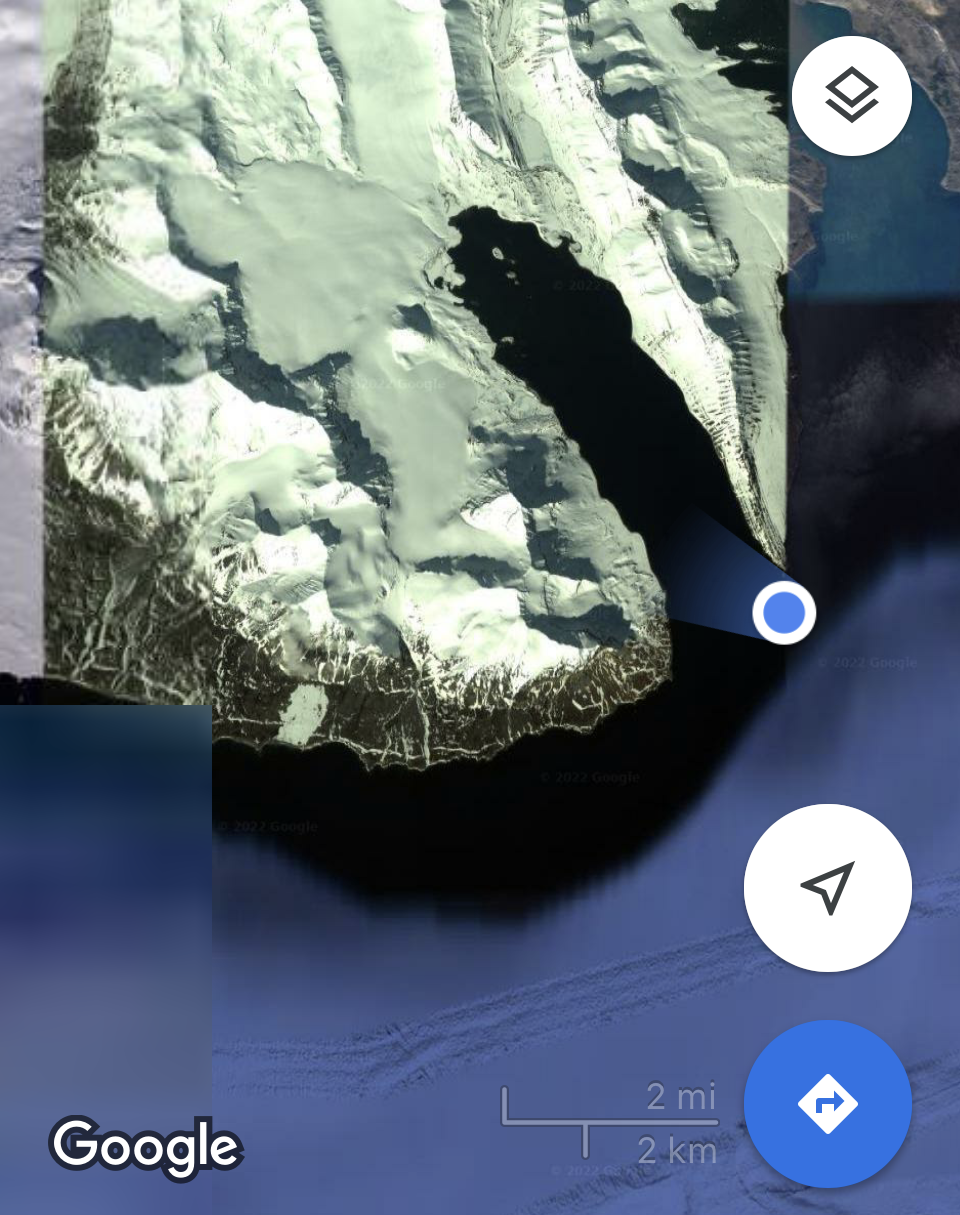
We slowly sailed by Bear Island as the conditions didn’t allow us to zodiac. We enjoyed both the view of geology and its high cliffs and the view of the bird colonies which are the largest in the Northern Hemisphere. The first map shows our position and the second you can note the small island above and to the right of the e in Google.

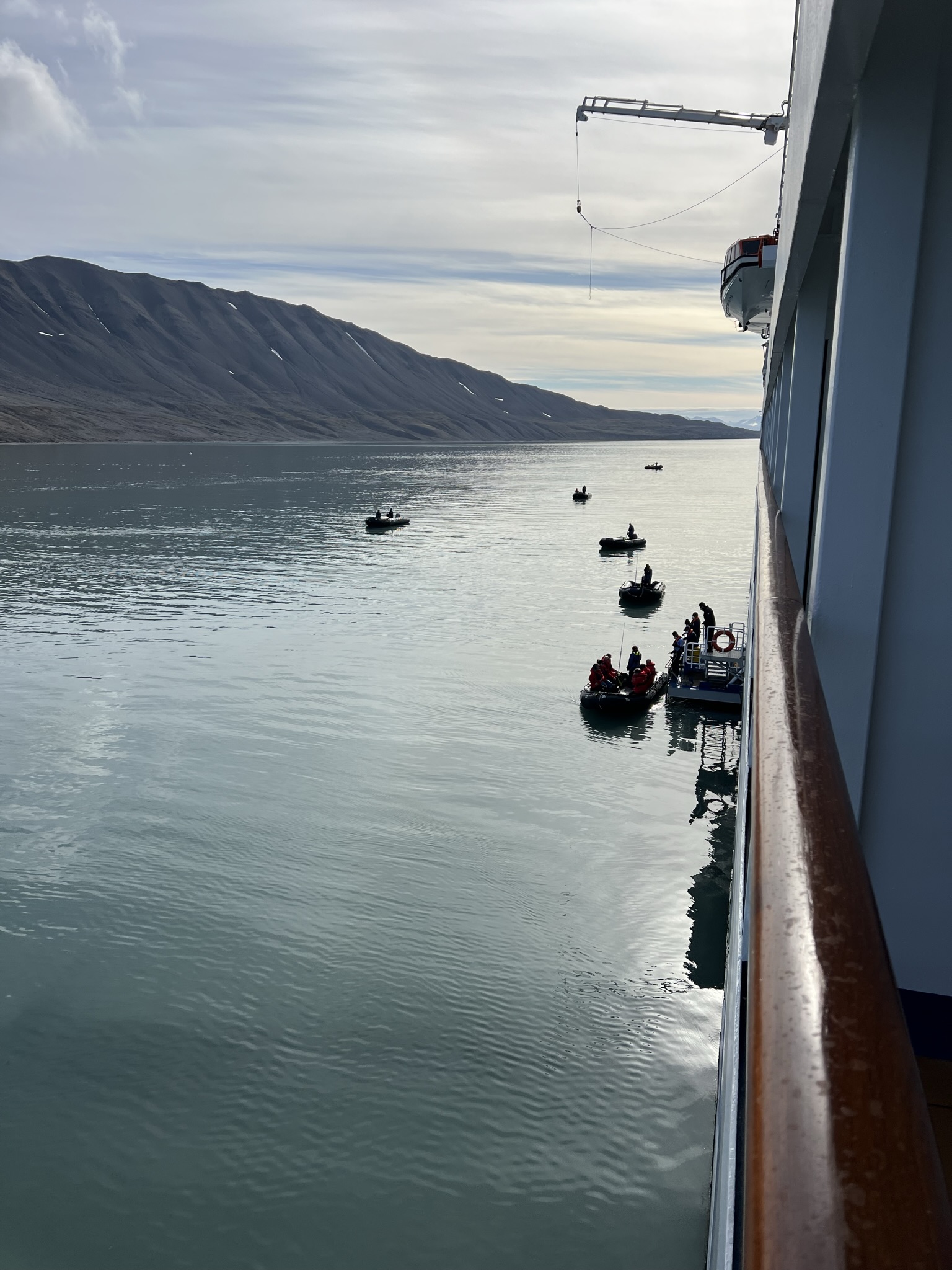
On our first day getting into the zodiacs, we went around Trygghamna on zodiacs, had lunch and sailed toward what we thought would be a different area called Alkhornet which happened to be in the same Fjord. Different anchor location, mostly the same views. My boots kept me from walking all the way up but Larkin had exchanged her boots for her hiking boots on land and joined the group to see reindeers in a bog.

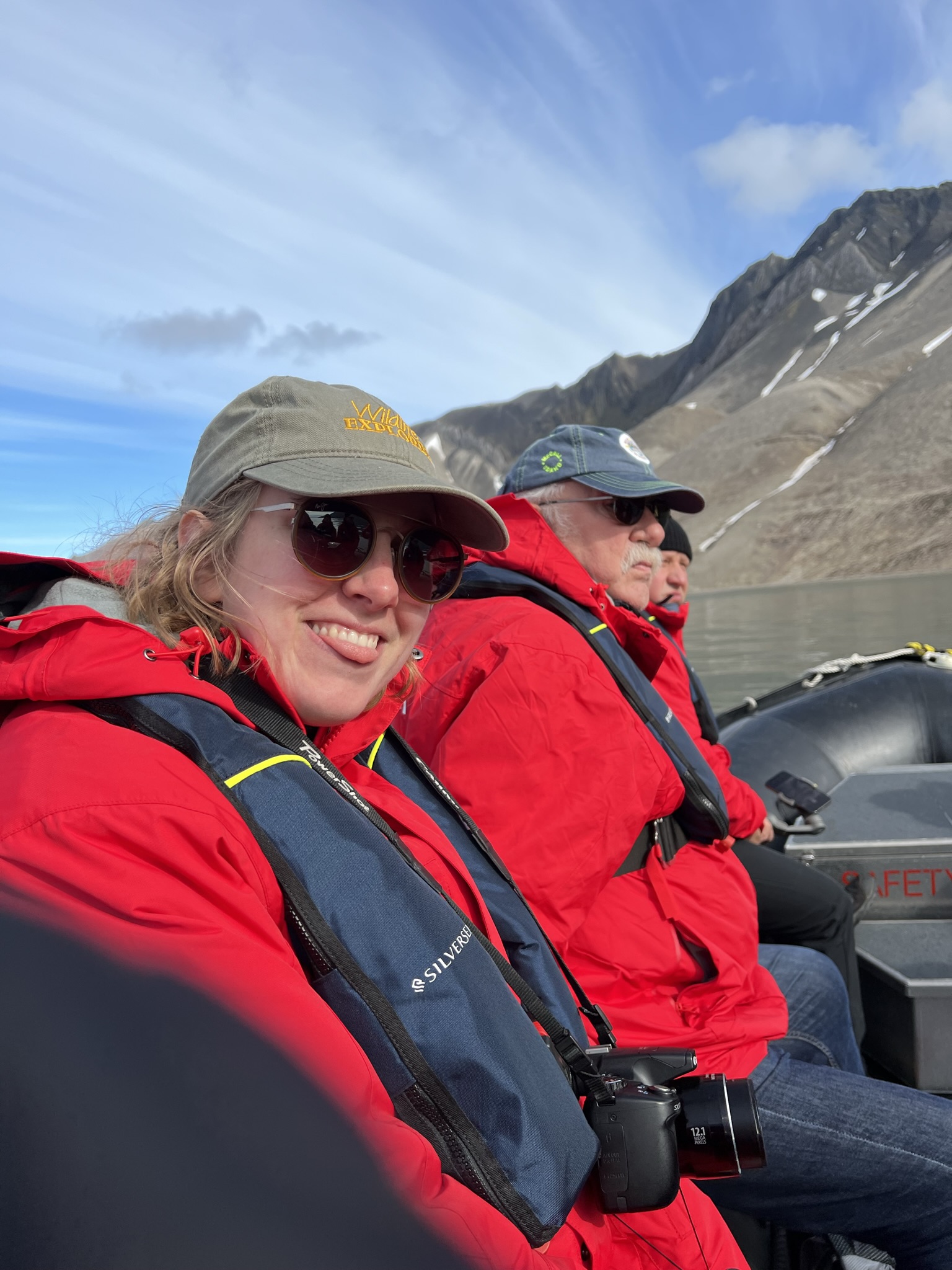
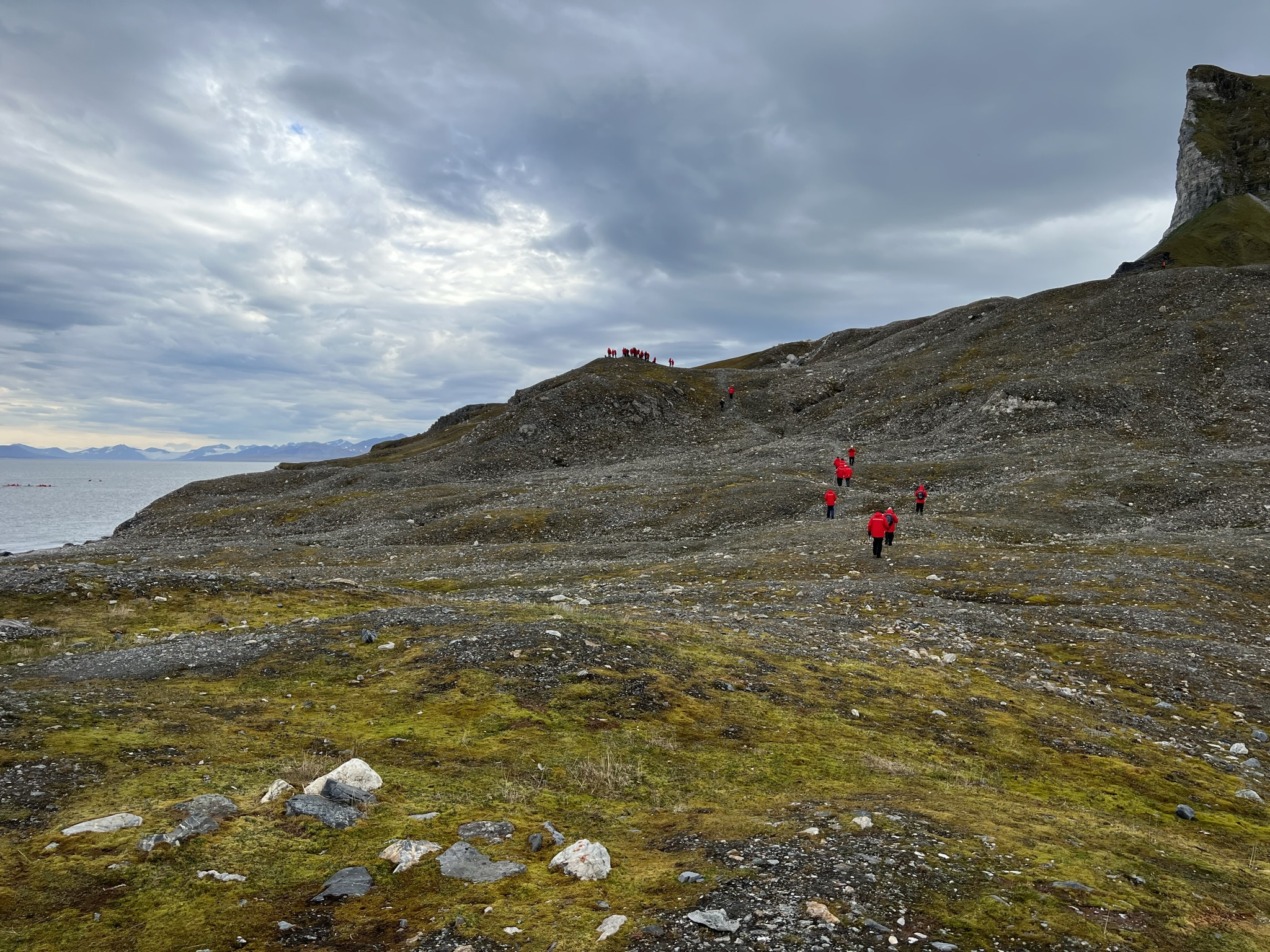
We always had our bear guards stationed all around where we would be hiking. We had to stay near our hiking groups for even more protection in larger numbers. Friends in our “red” group, Kip and Jeanine frequently went hiking with us. Often it was just the three of us women enjoying the outings! They were both great hiking and dinner companions!

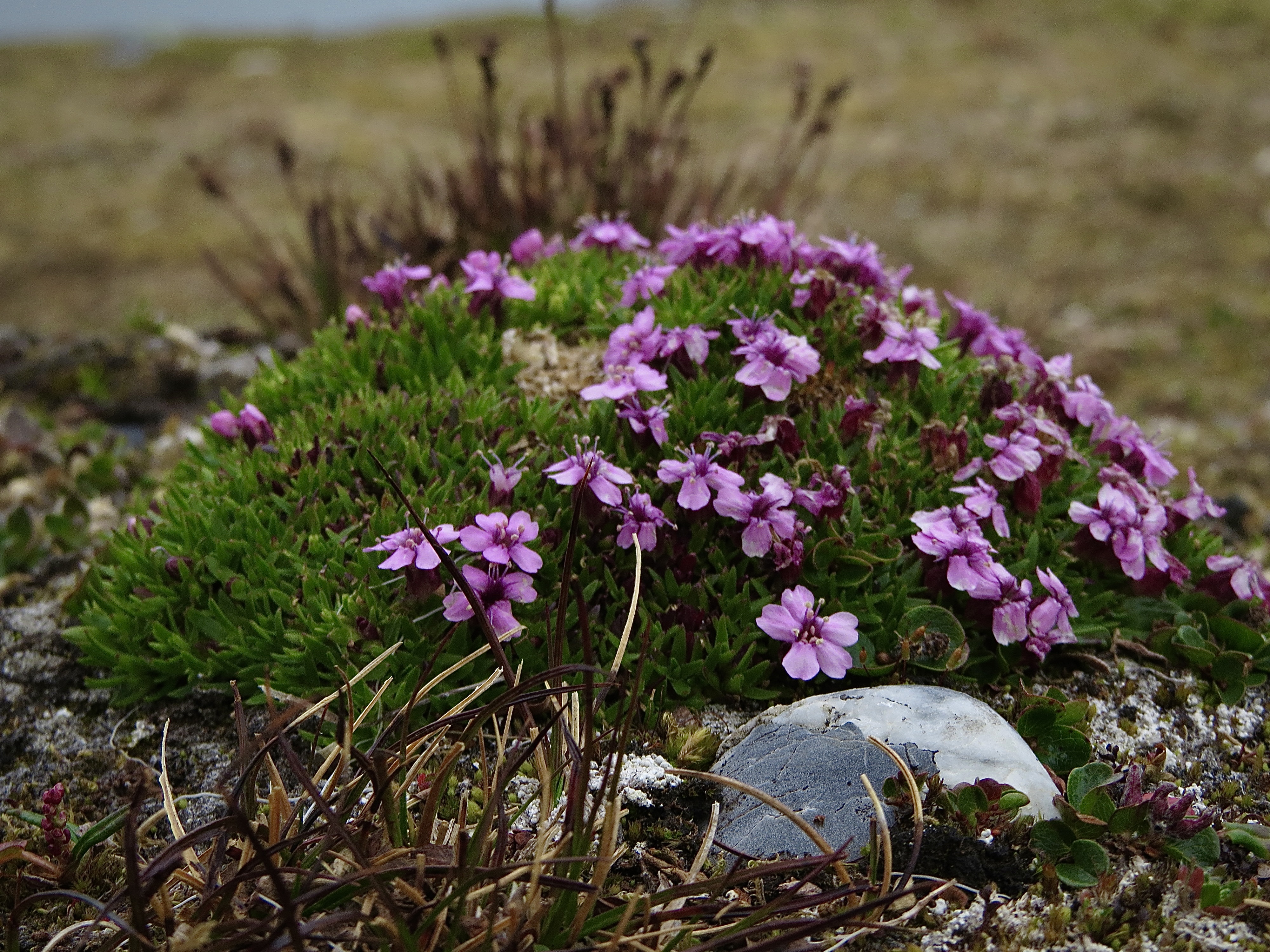
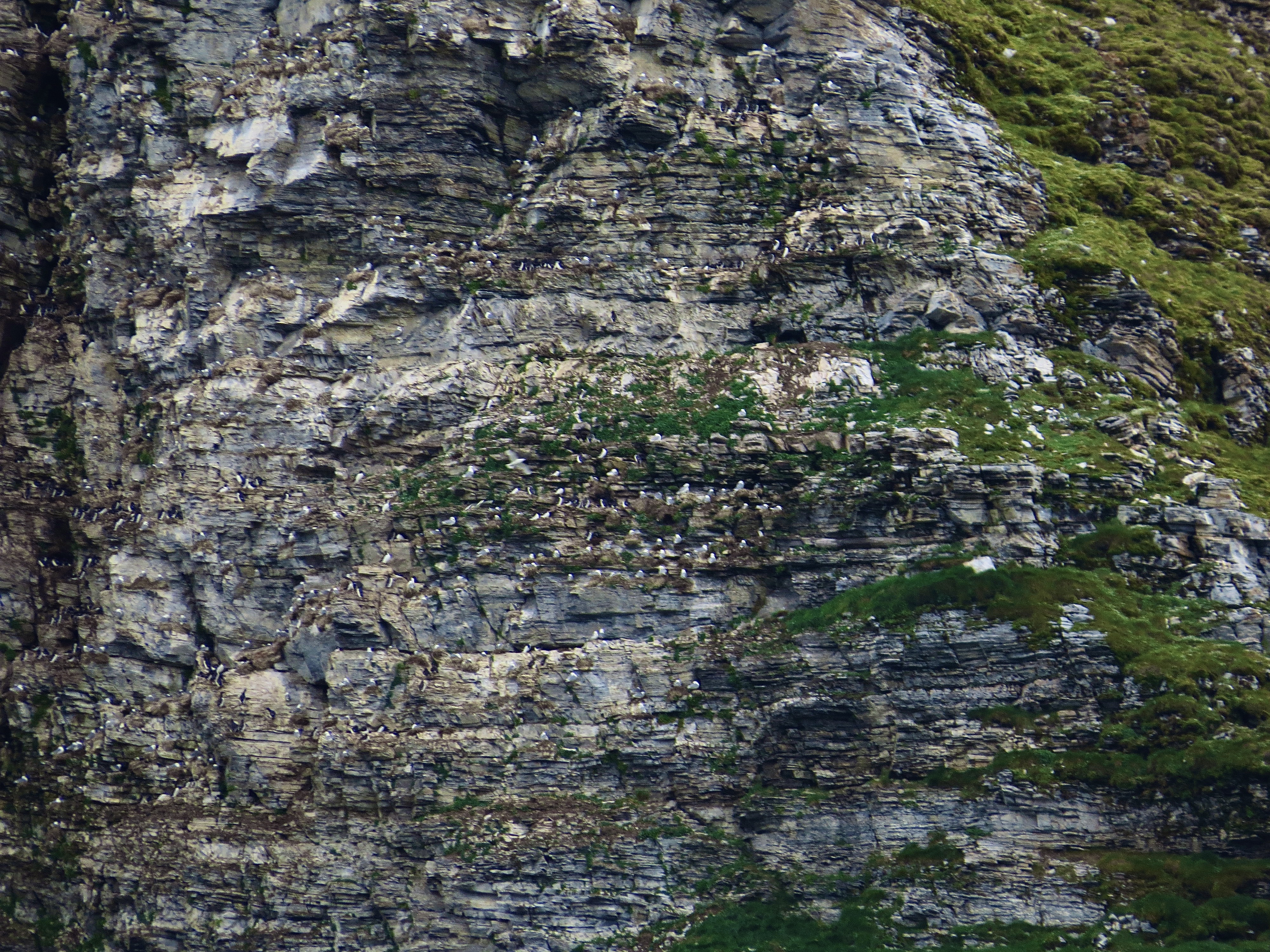
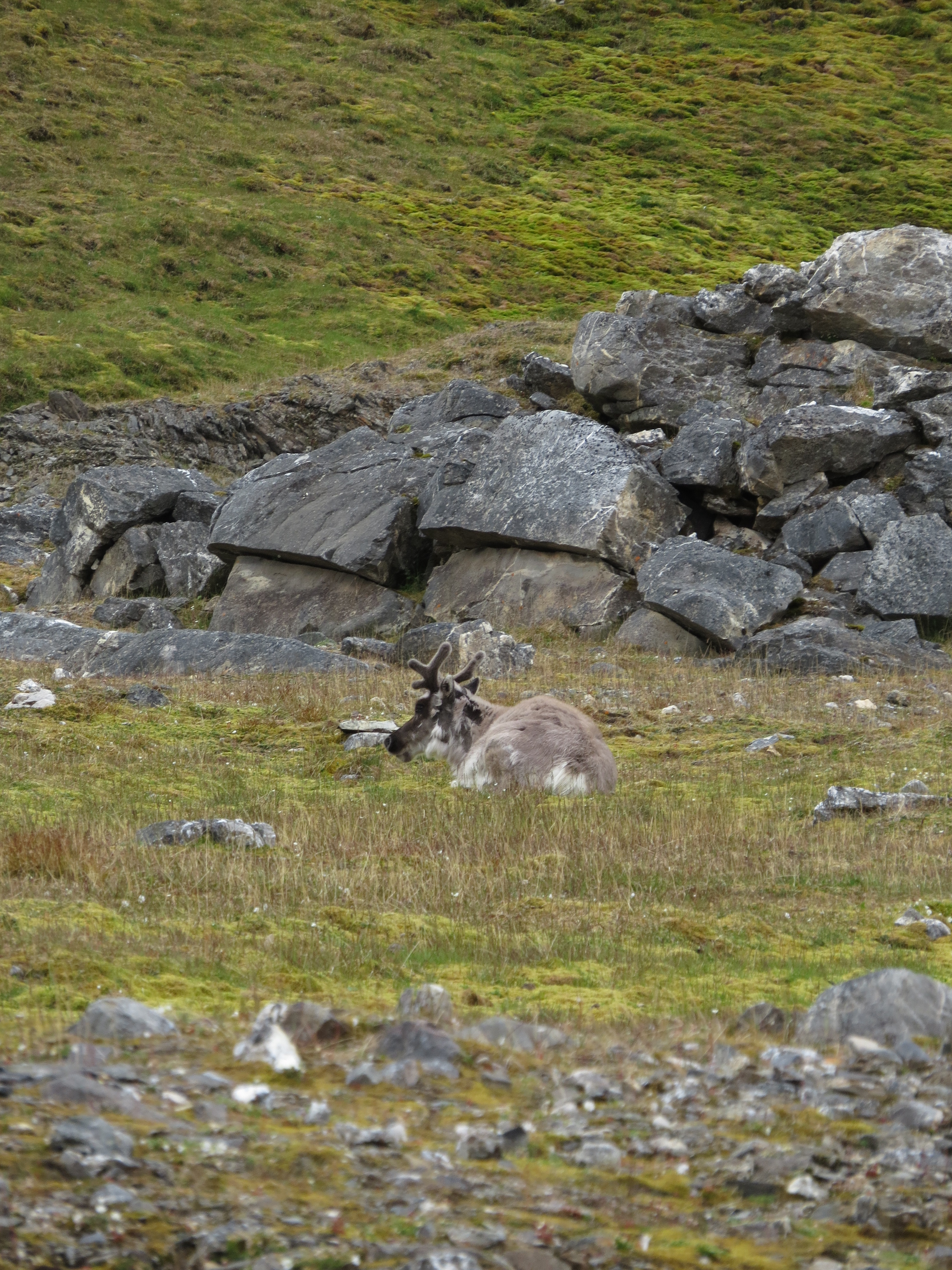
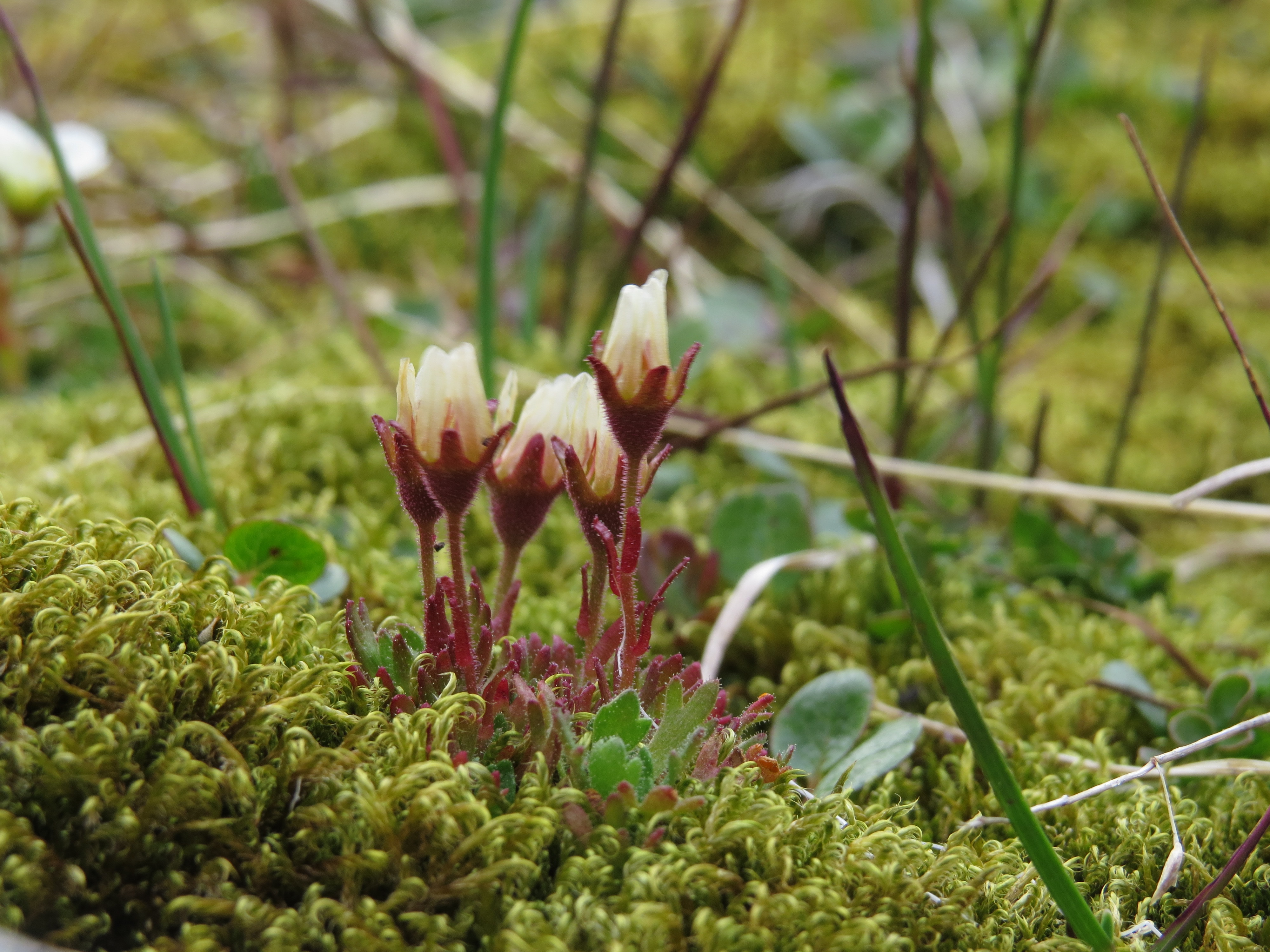
Larkin’s photos above show the molting reindeer, nesting cliffs of various birds, geology and local flowers in bloom. Her photos are always stunning.

Next up the missing glacier hike…

OUR ARCTIC CRUISE ADVENTURE BEGAN IN OSLO, NORWAY

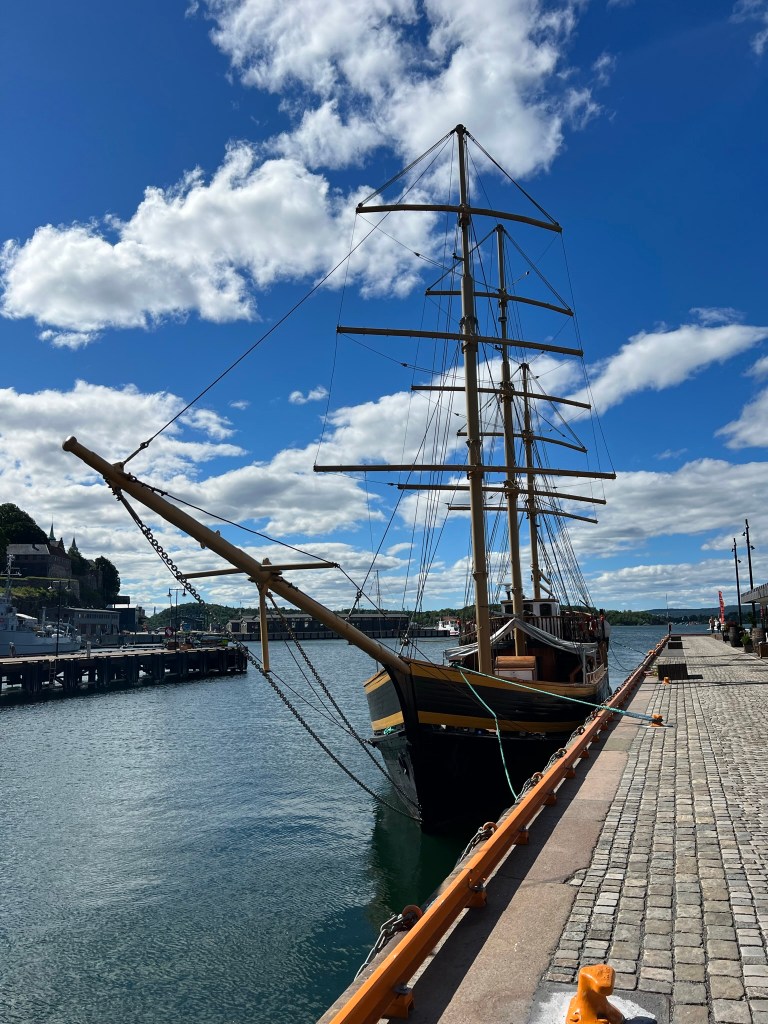
The Port in Oslo

In order to start our Arctic cruise we had to fly…oh the joys of summer flying after Covid! Michael and I travelled from SFO and Larkin from Dulles. We all transfered through Frankfurt, Germany. We were glad we were all on Lufthansa and not SAS. Covid hasn’t just hit American workers but airport workers across the world. Larkin’s flight arrived first and she ended up in Oslo before us and waited. In order to continue to any EU country you have to pass through passport control in Frankfurt. The issue? We went toward terminal A and found a line hundreds of people long. EU passport straight through…any other country an hour and a half wait while the Passport checkers had a very long lunch. People in line with us cancelled their flights and stayed an extra night. We squeezed through and rushed to our gate right as it could have been taking off – we would have made it on time, but alas it was late so that gave us time for a toilet break.

Larkin was happy she waited in the airport as Silversea made a mistake as to our hotel but our driver knew where we were suppose to go – a Thon hotel. We would have preferred The Thief on the water but an entire group of our Arctic expedition folks ended up with us in the Thon. The airport is about 45 minutes from downtown Oslo and the port and we arrived late afternoon.

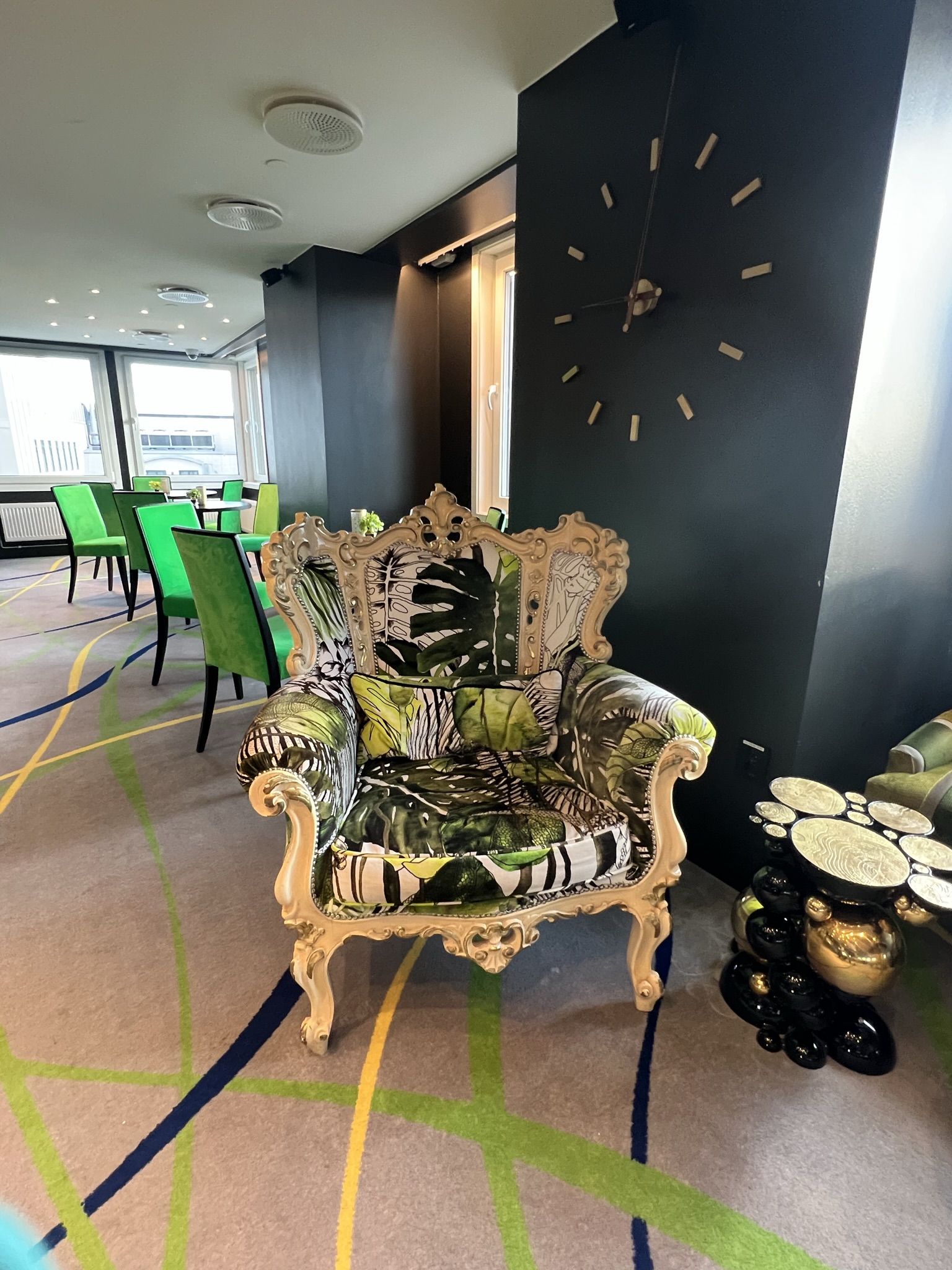
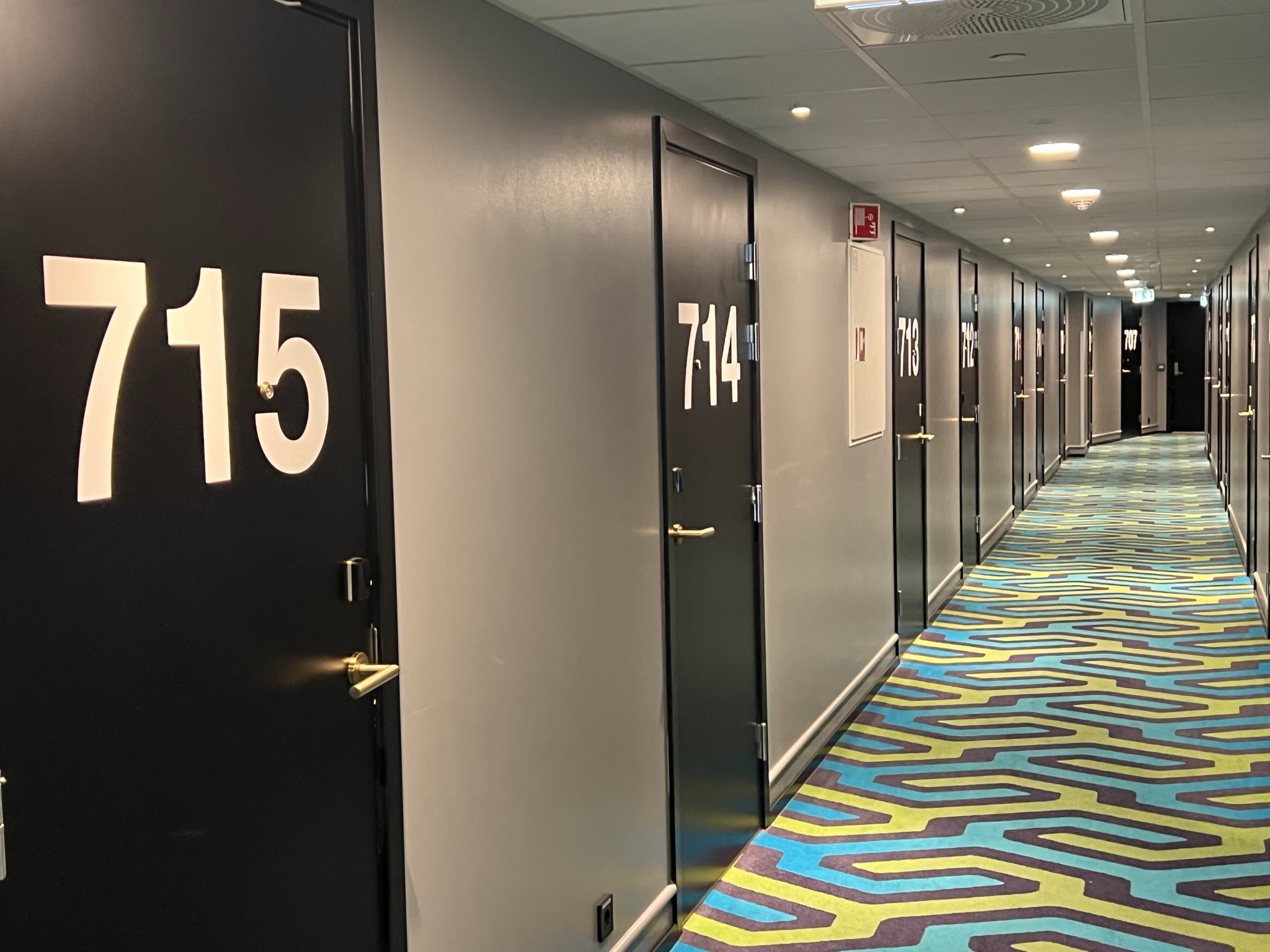
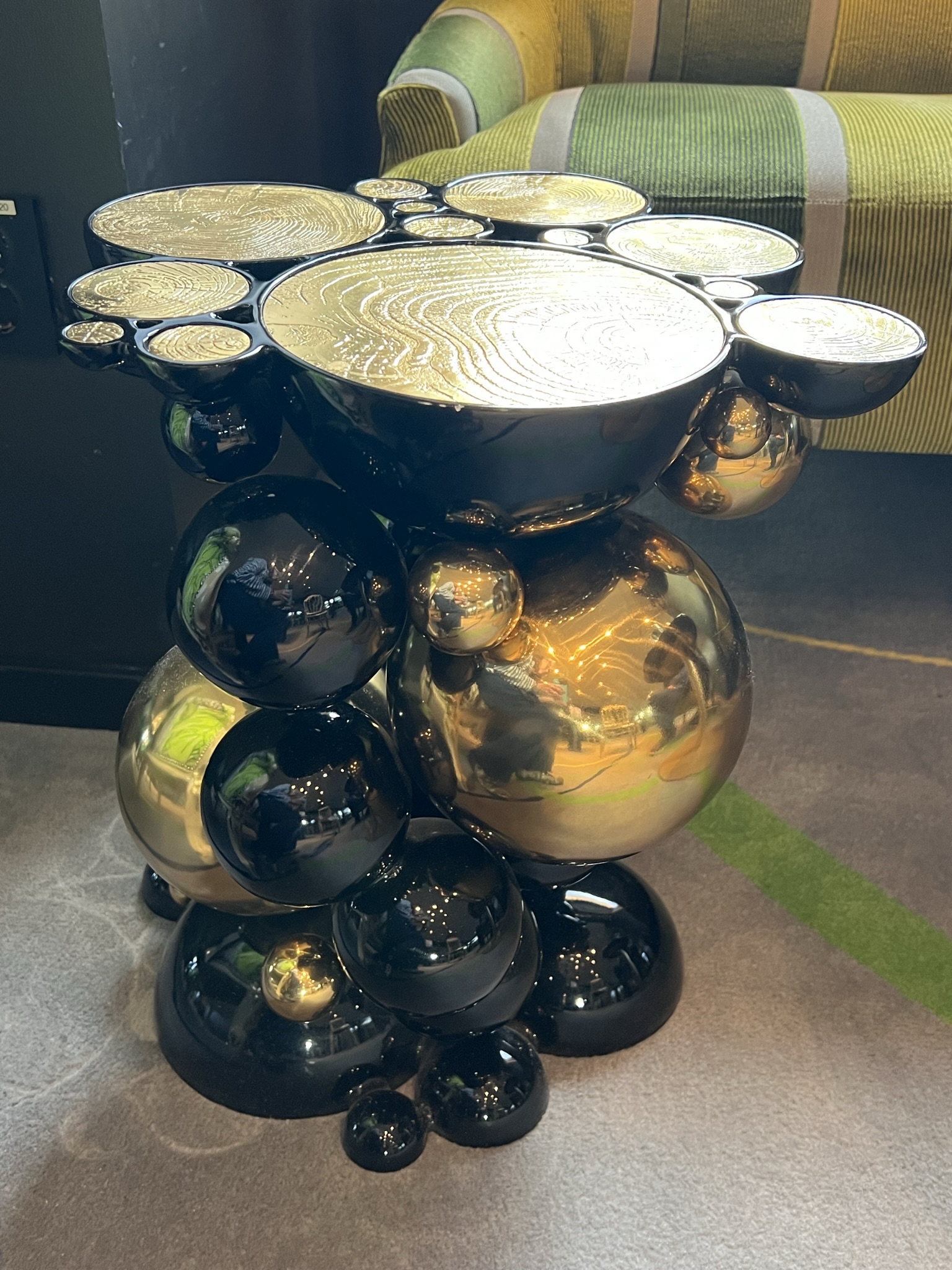
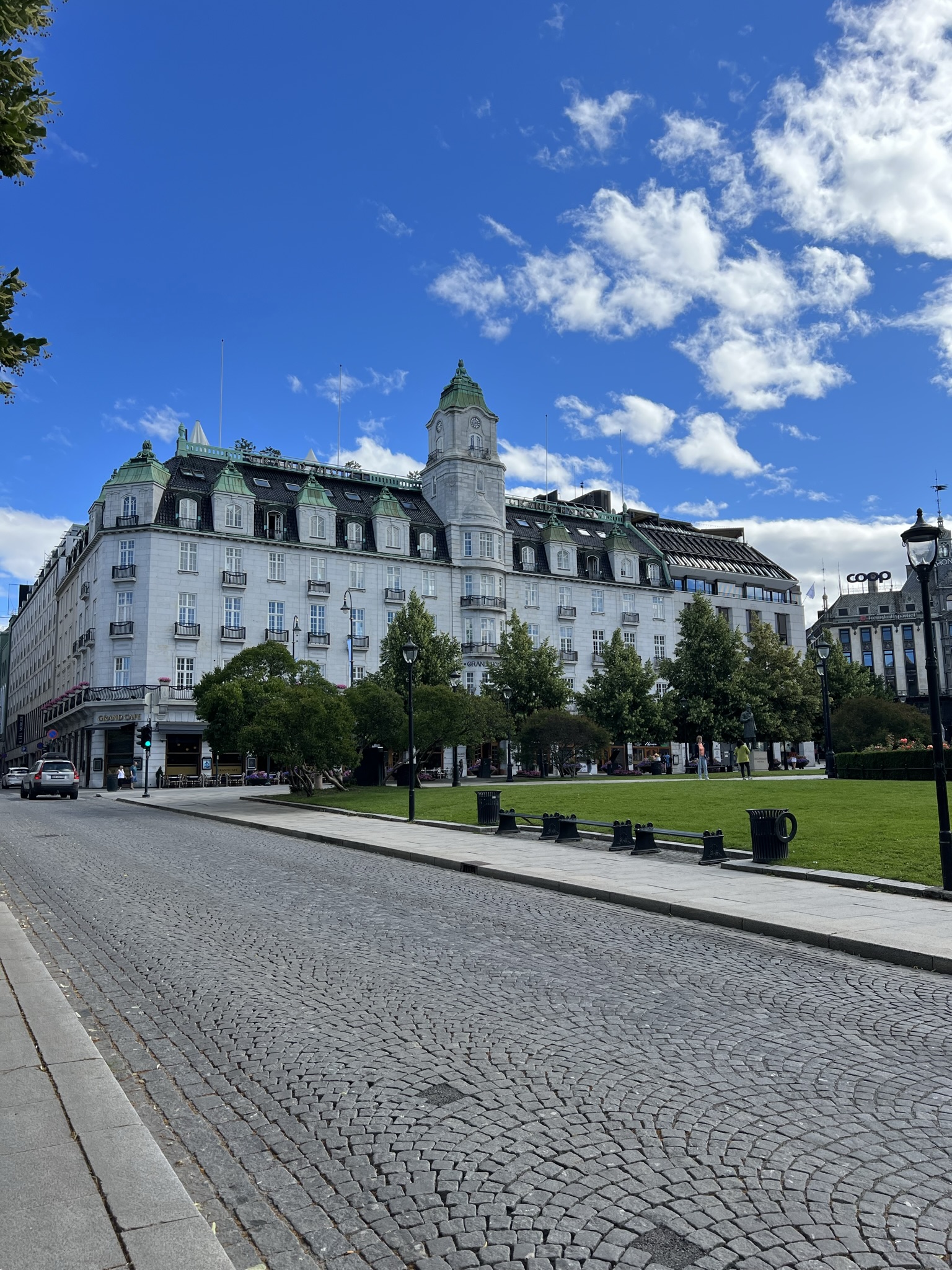
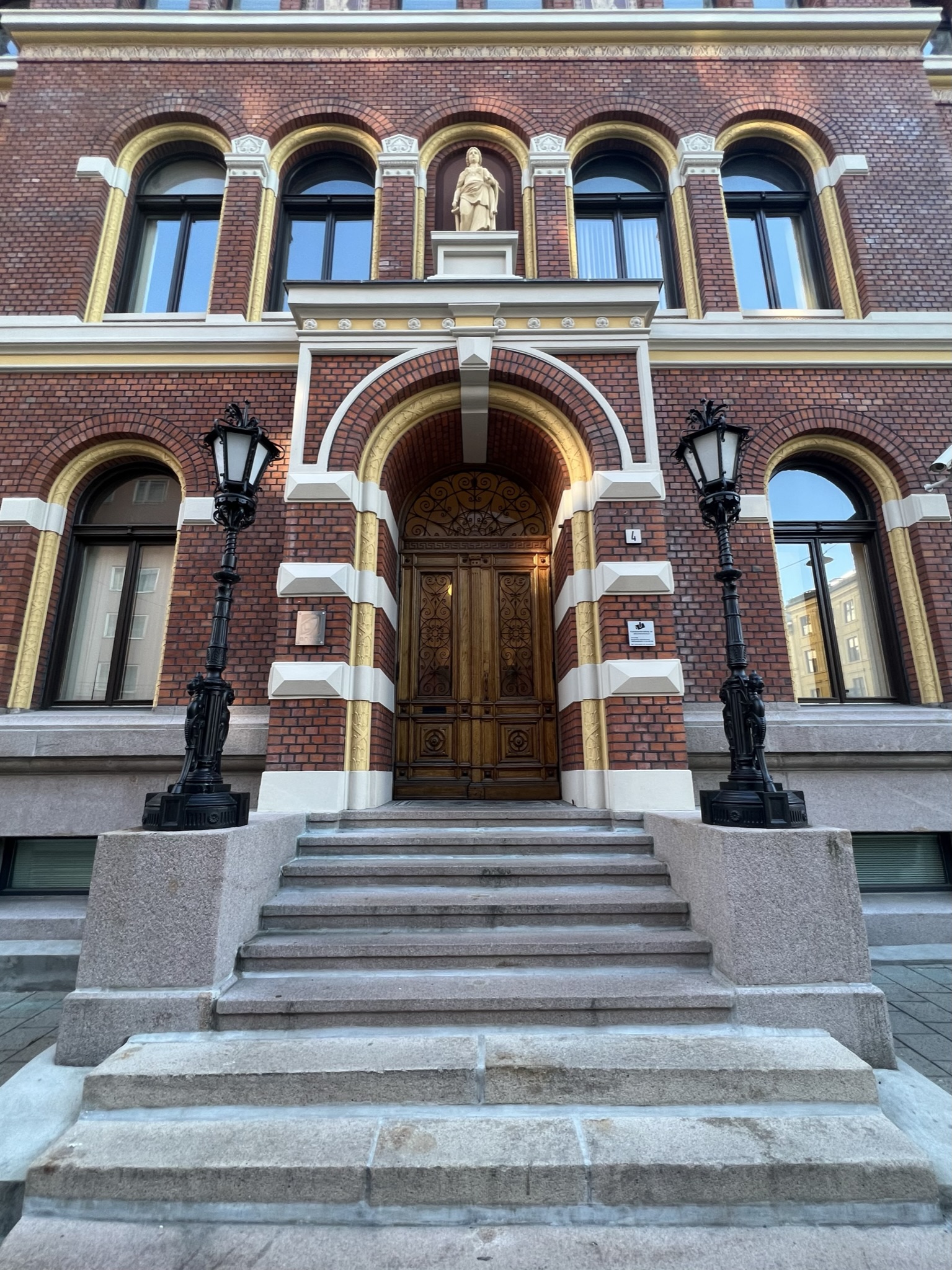
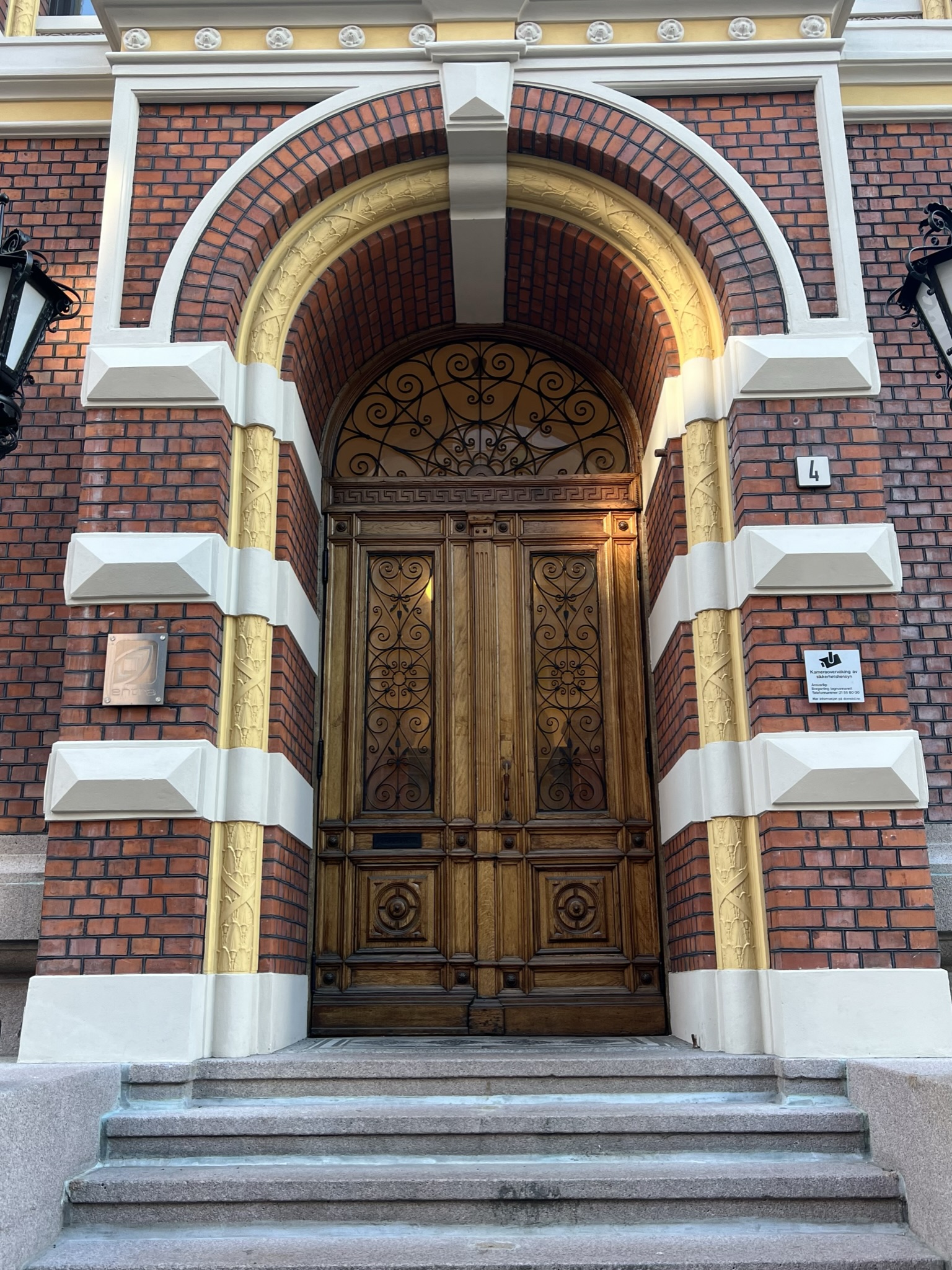
Our hotel Thon (a group of Norwegian based hotels) was on Rosenkrantz and was about a mile from the harbor. We figured they liked bold colors, carpet and unique furniture in the common areas and definitely did not want their guest to overlook their room numbers! All doors in Norwegian hotels seemed to open out. The carpet in the photo still makes me go – wow my eyes hurt! On our first evening after checking in we were very lucky to find a delicious Norwegian restaurant around the corner called Elias Mat and Sant. All other “upscale” Norwegian restaurants were booked out for a month so we went walking around the corner and “voila!”. If we ever head back I want to eat there again. I’d love to describe the food etc but I forgot to take photos of the food or the menu. I just remember the smile on my face and my happy stomach.

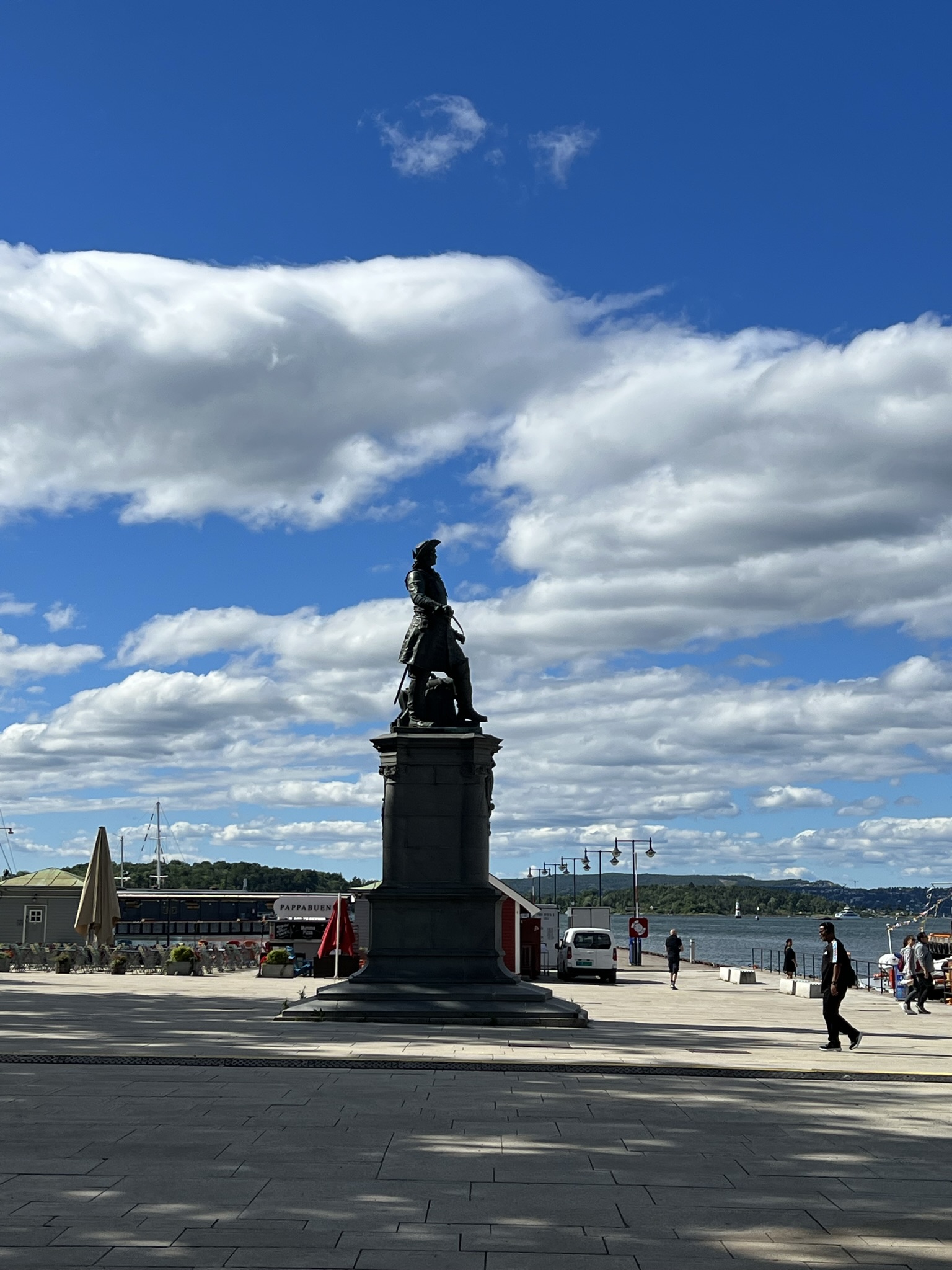
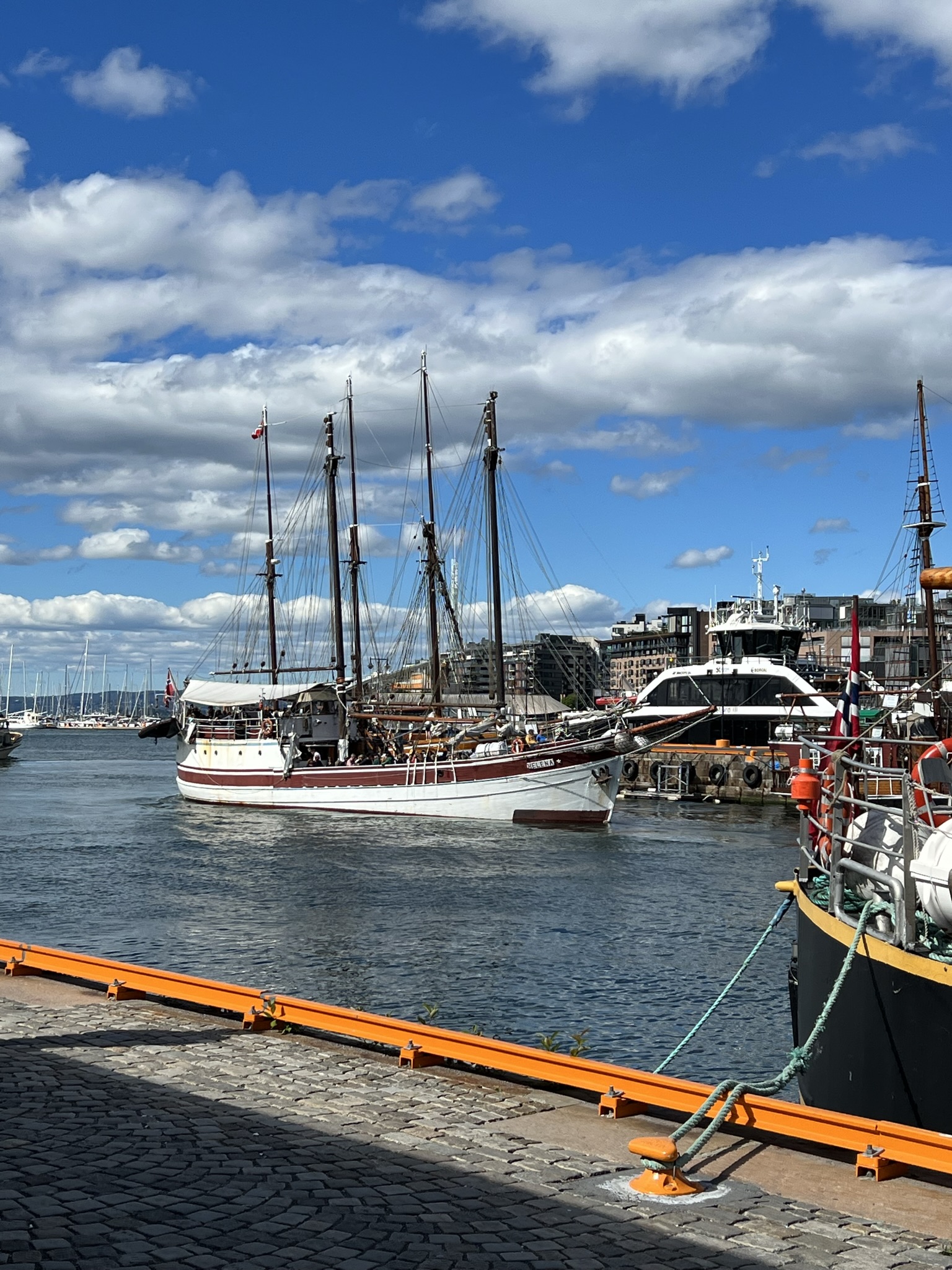
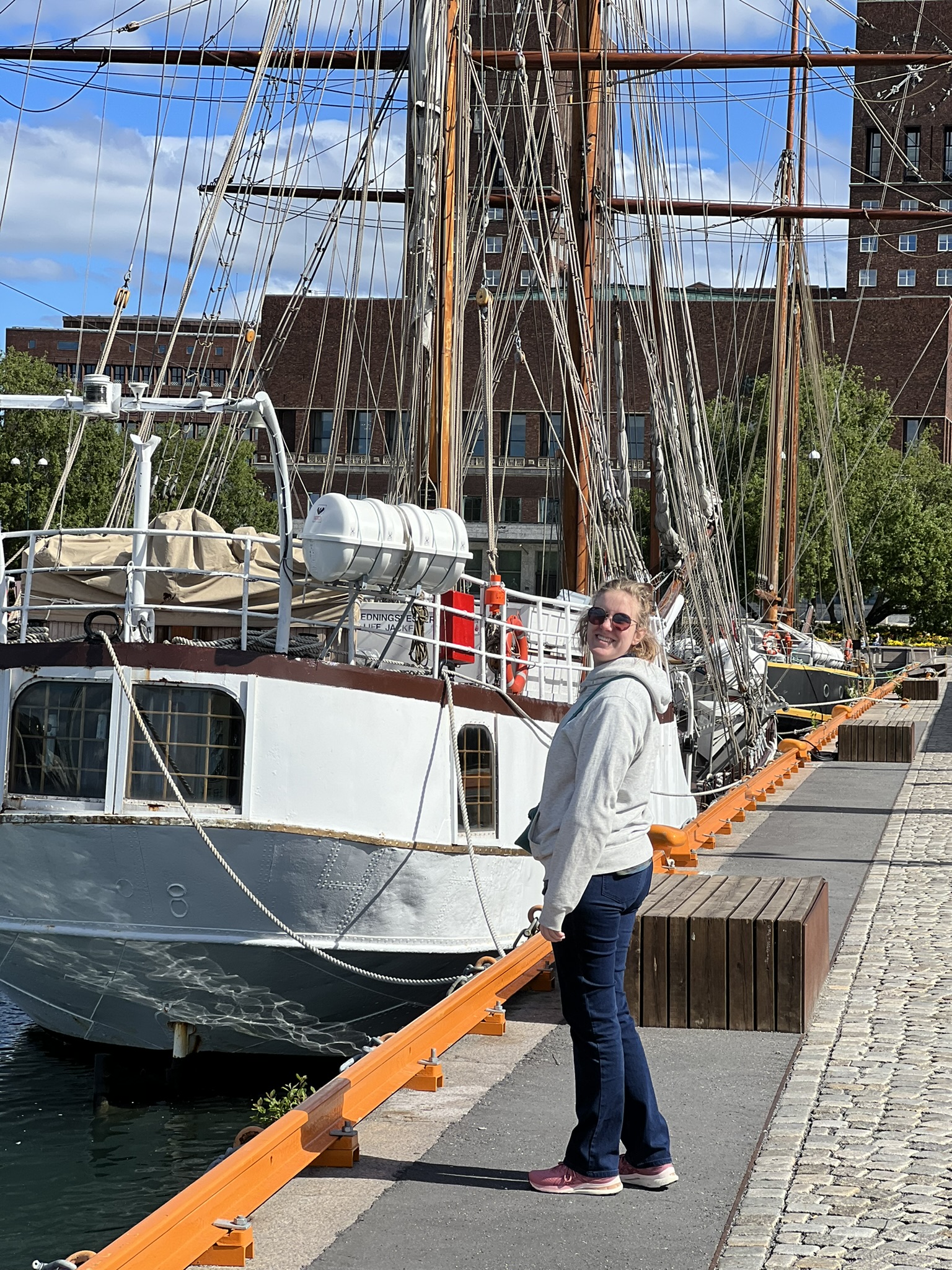
What was to be our only full day in Oslo we spent walking toward the port – downhill gradually toward the water. The weather was stunning.

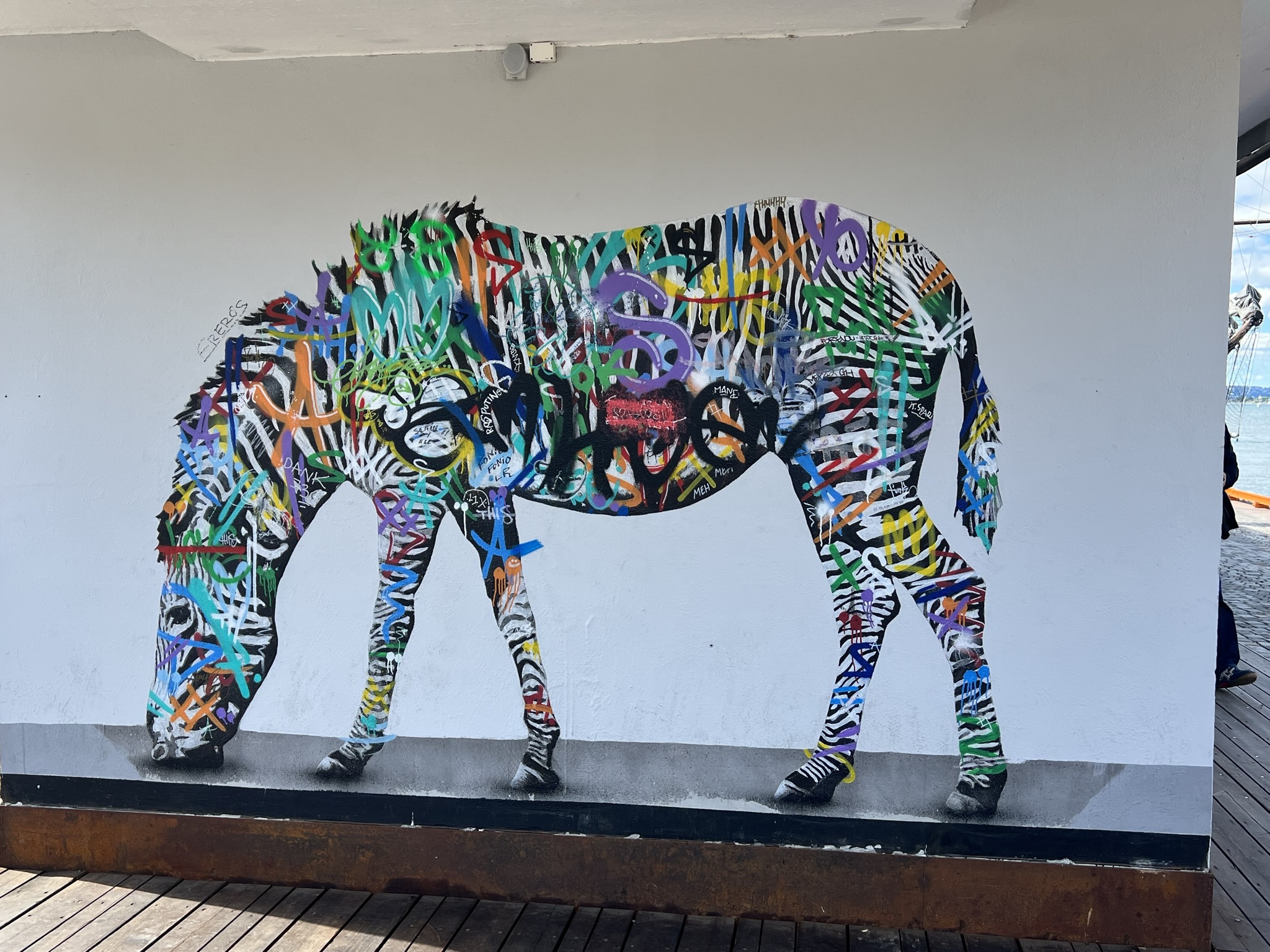
For my high school Zebra friends – voila – a graffitied graffiti zebra on a dock.

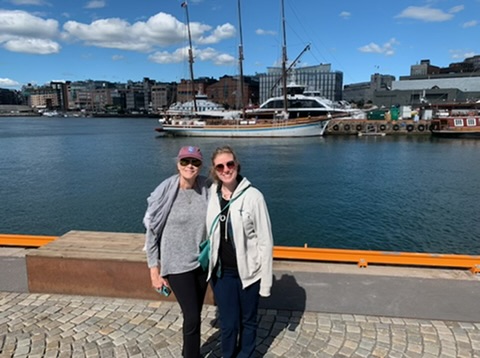
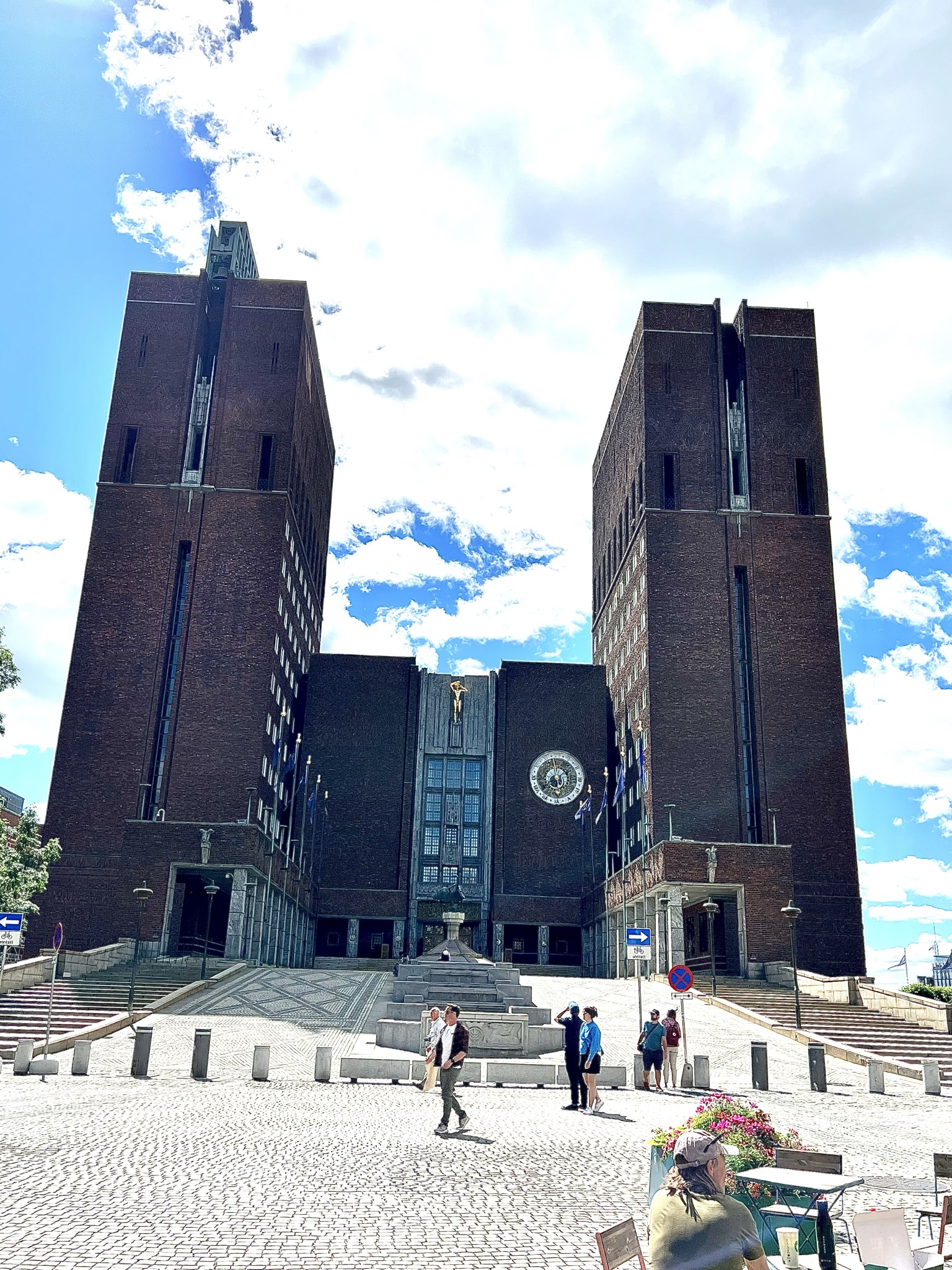
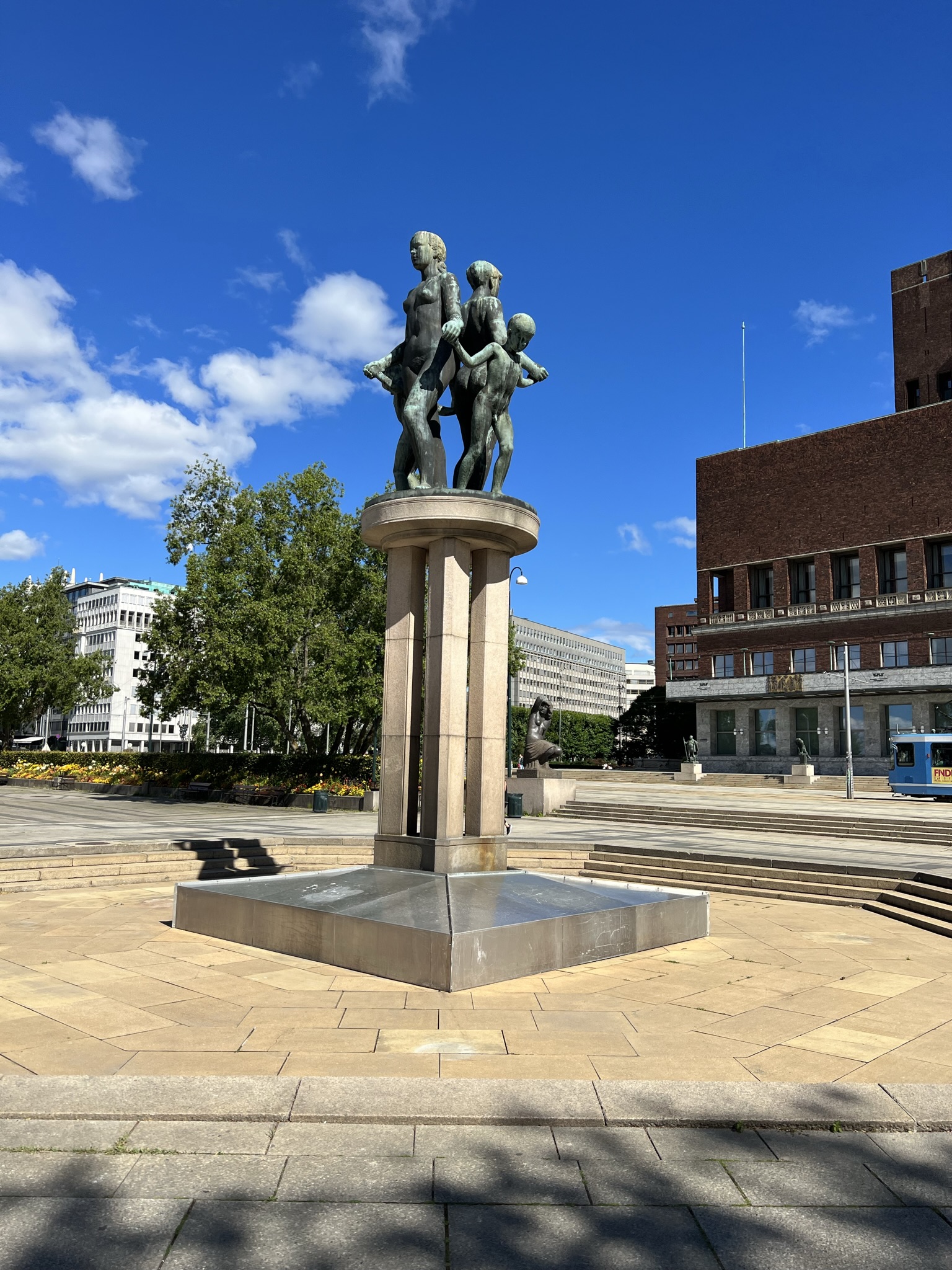
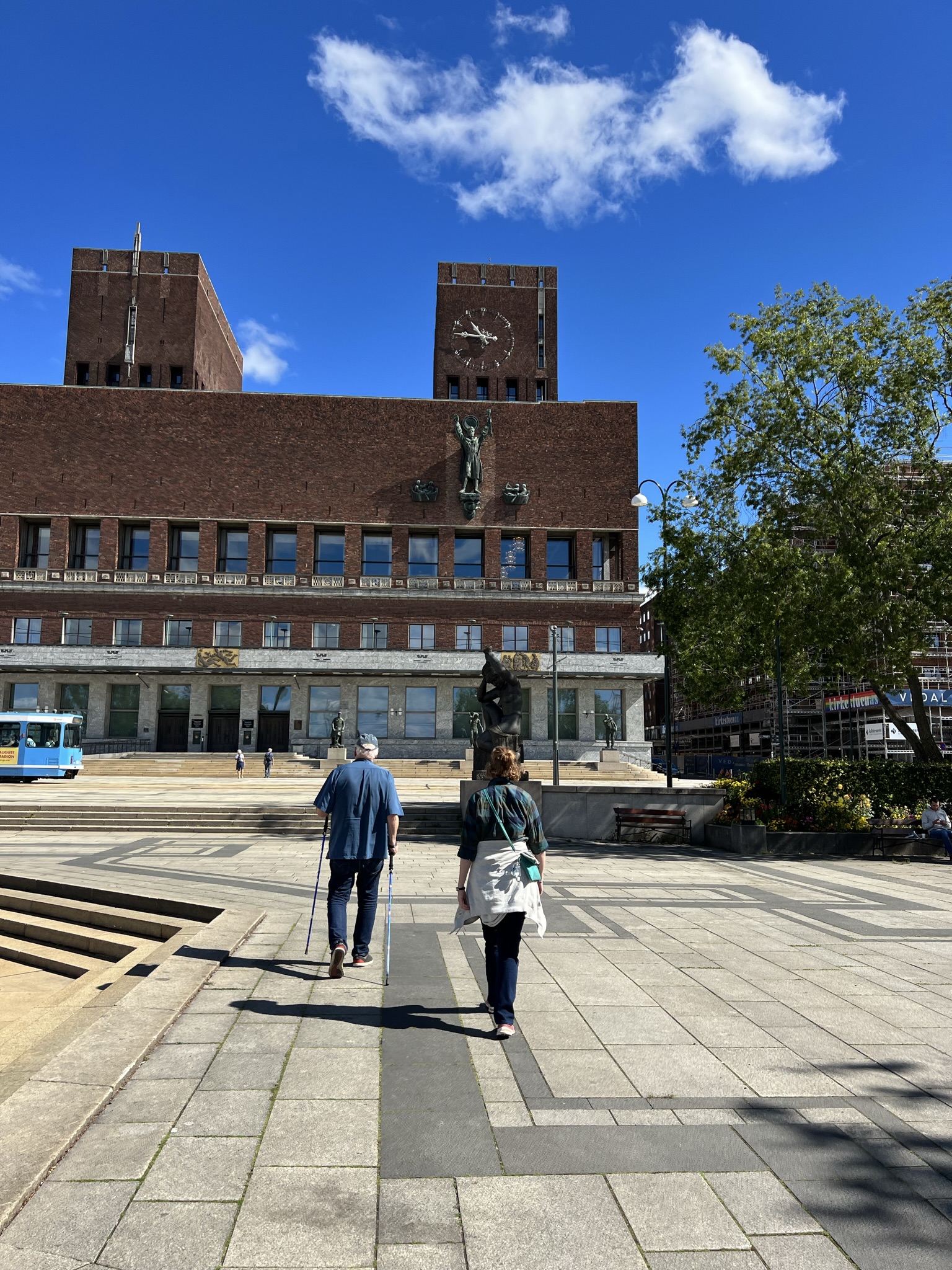
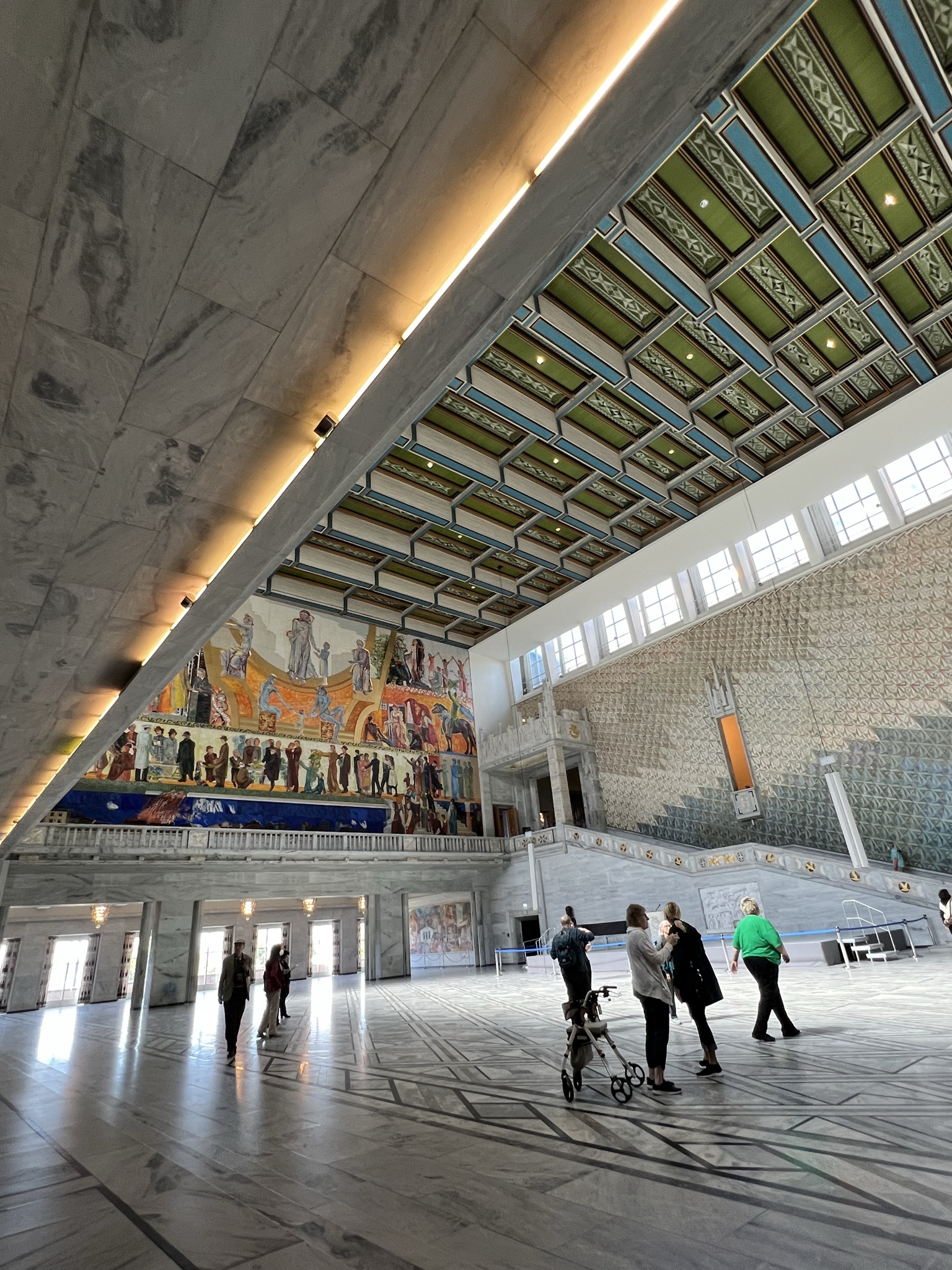
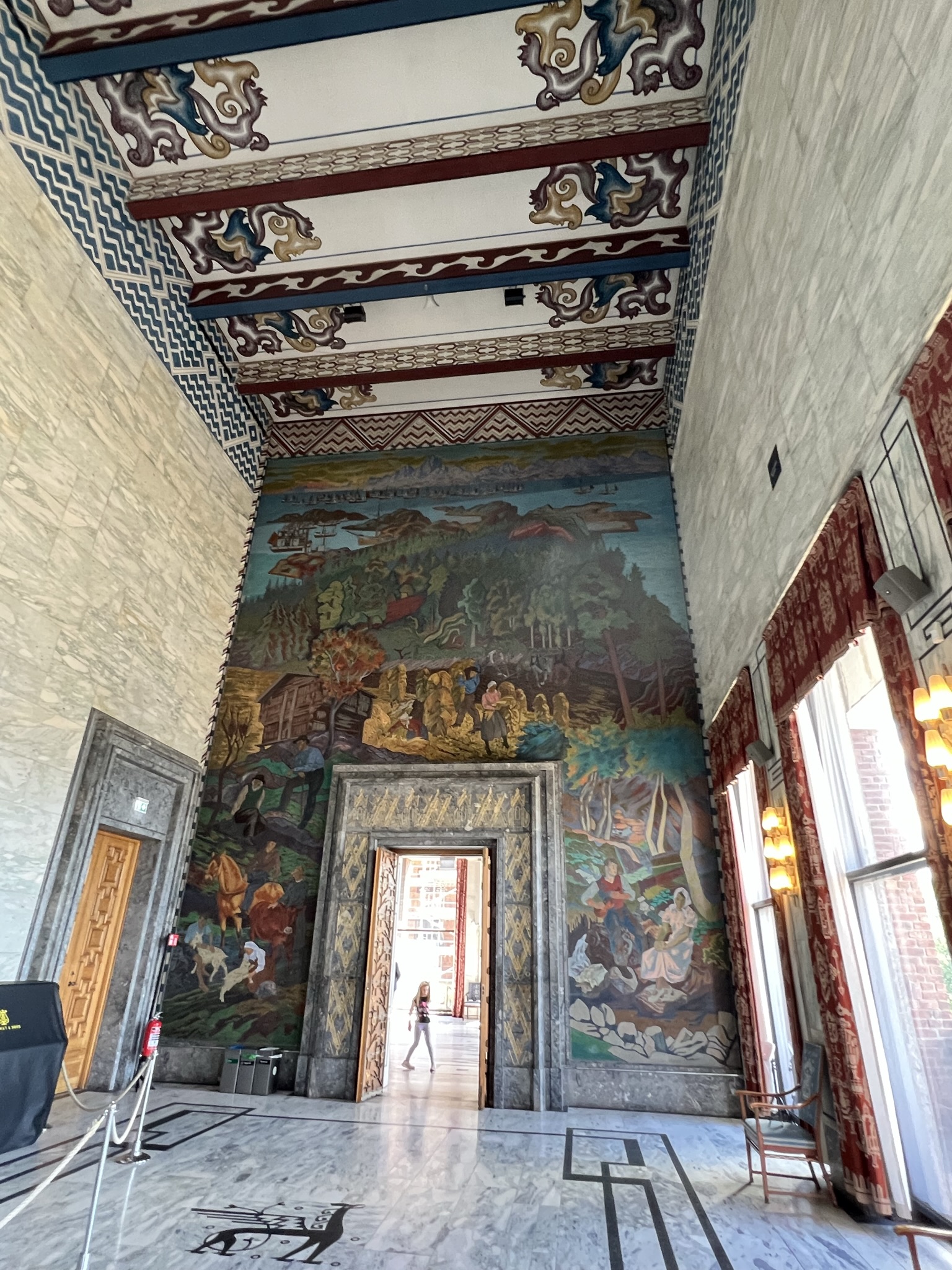
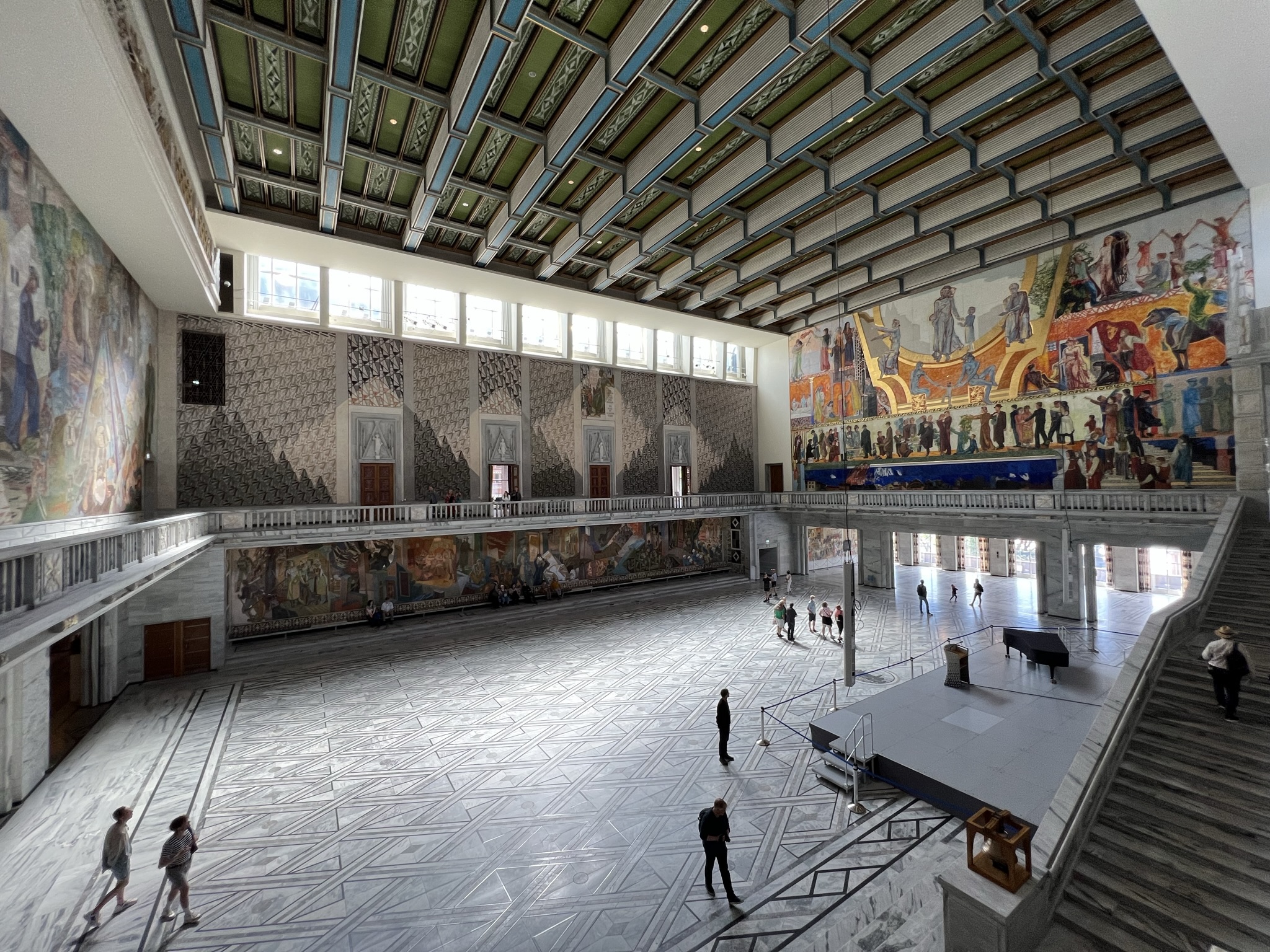
When Larkin and I were on the first dock, we met a couple who took our photo and told us about the wonderful city hall that we had passed and how we can go in side and visit free of charge. The city decided to build the hall in 1915 in this location which at the time was a slum district at the port. Two Norwegian architects won the competition to build it. However it changed design many times over the next decade or so as to what was currently in fashion. This design with red brick was from the 1930’s called “functionalism.” It was not completed until 1950 with a hiatus during World War II. The Nobel Peace prize, the only Nobel given in Norway, takes place in this building. I’ll take note at the next Nobel Peace prize ceremony!

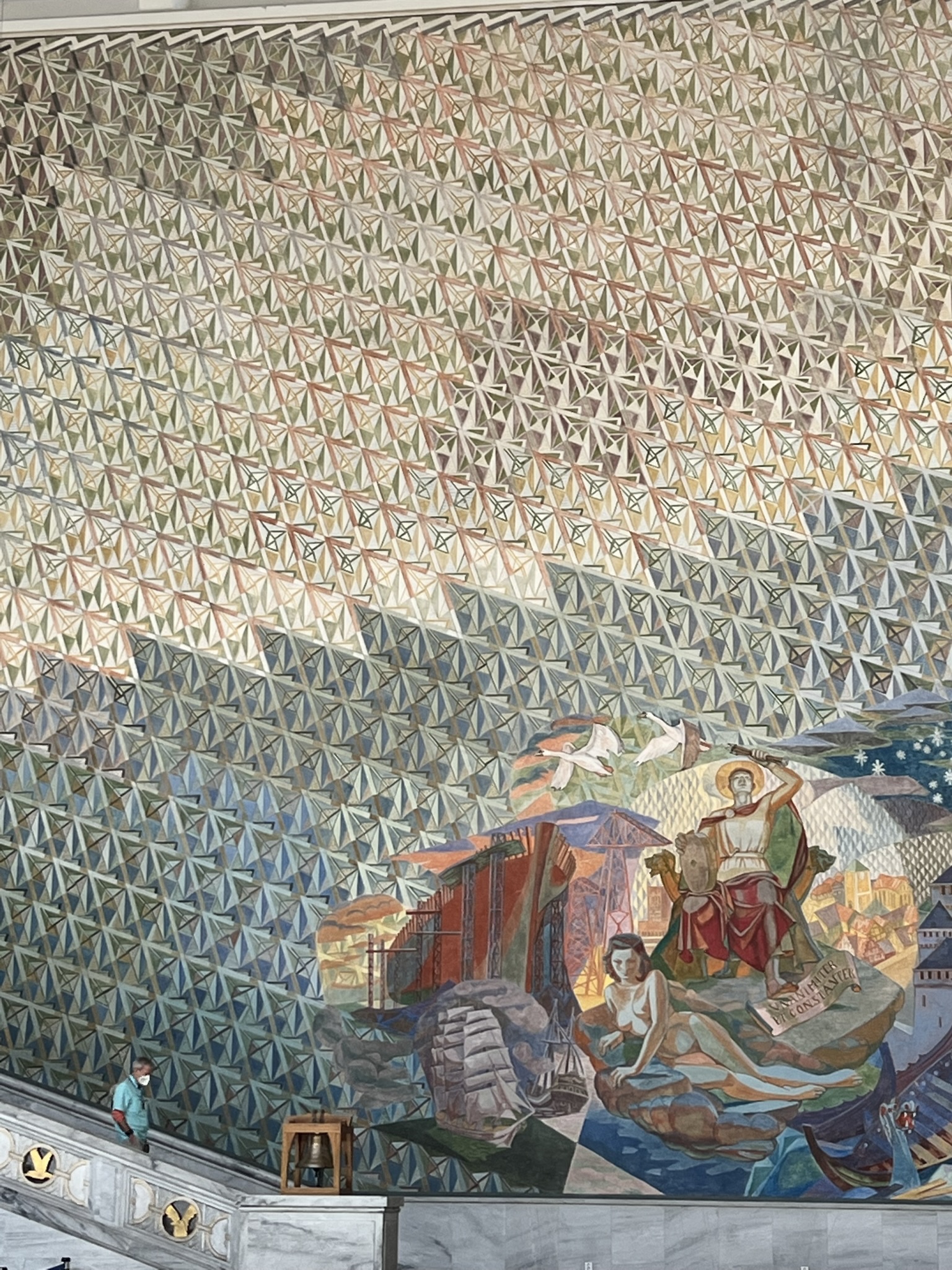
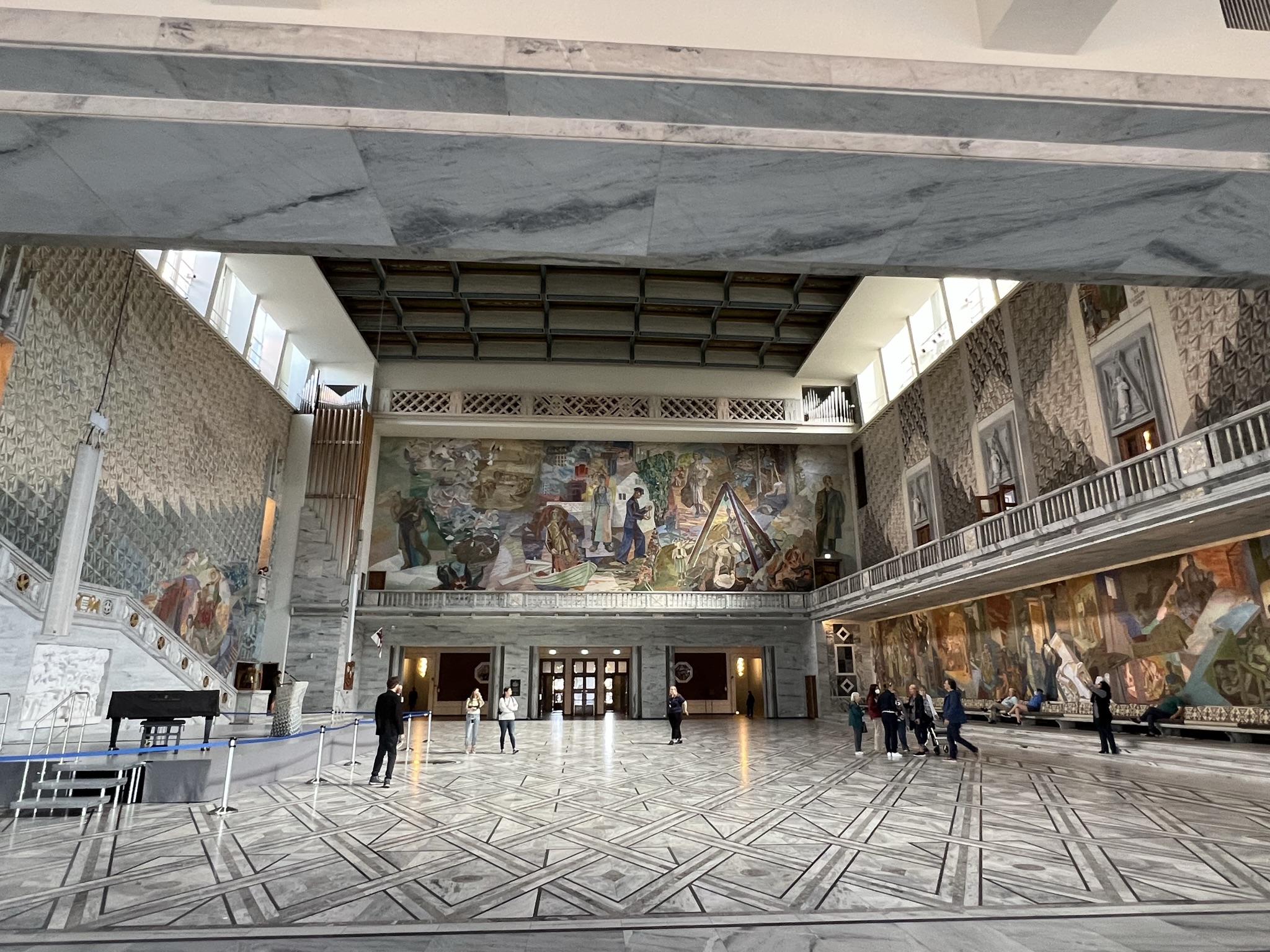
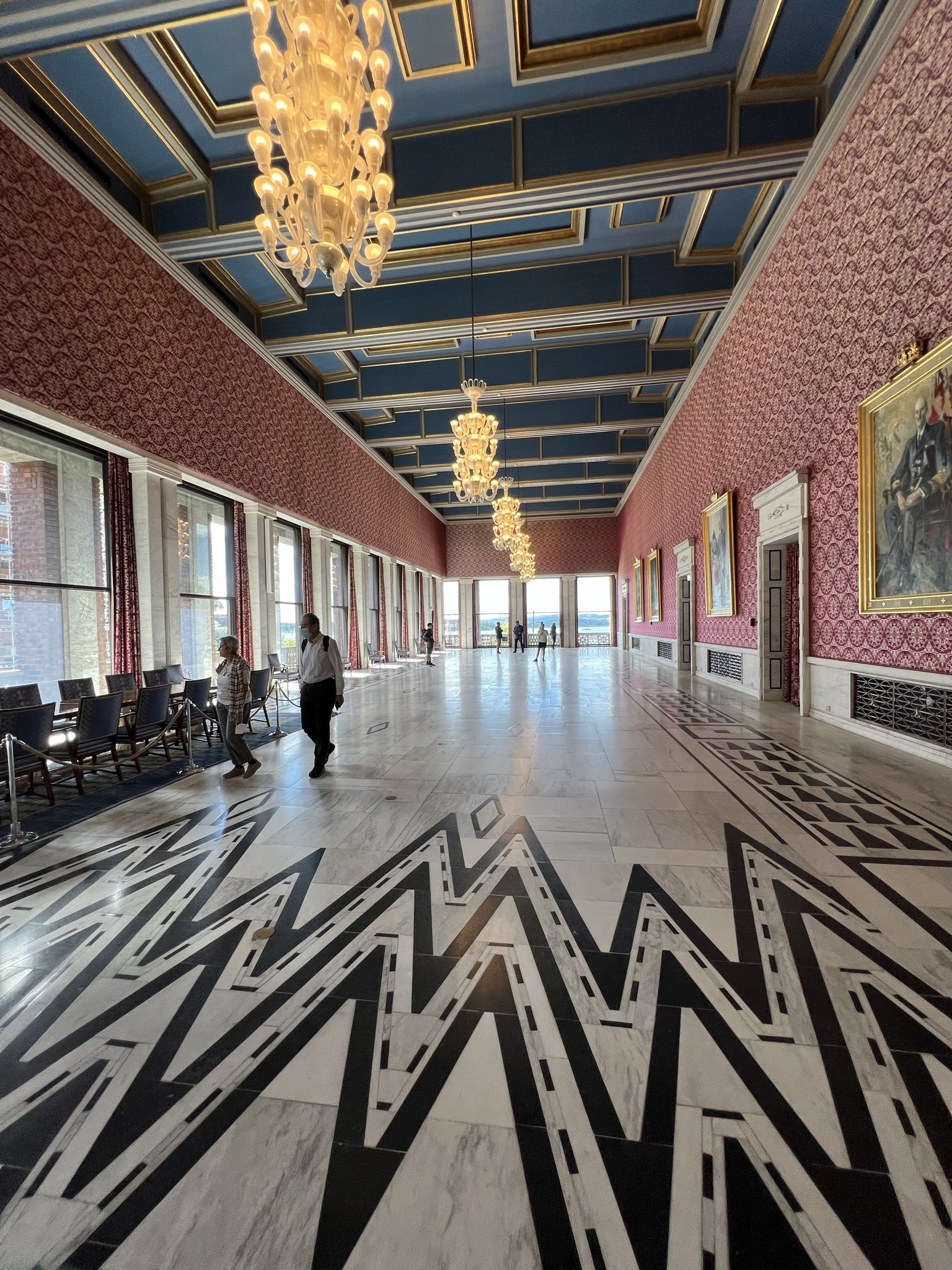
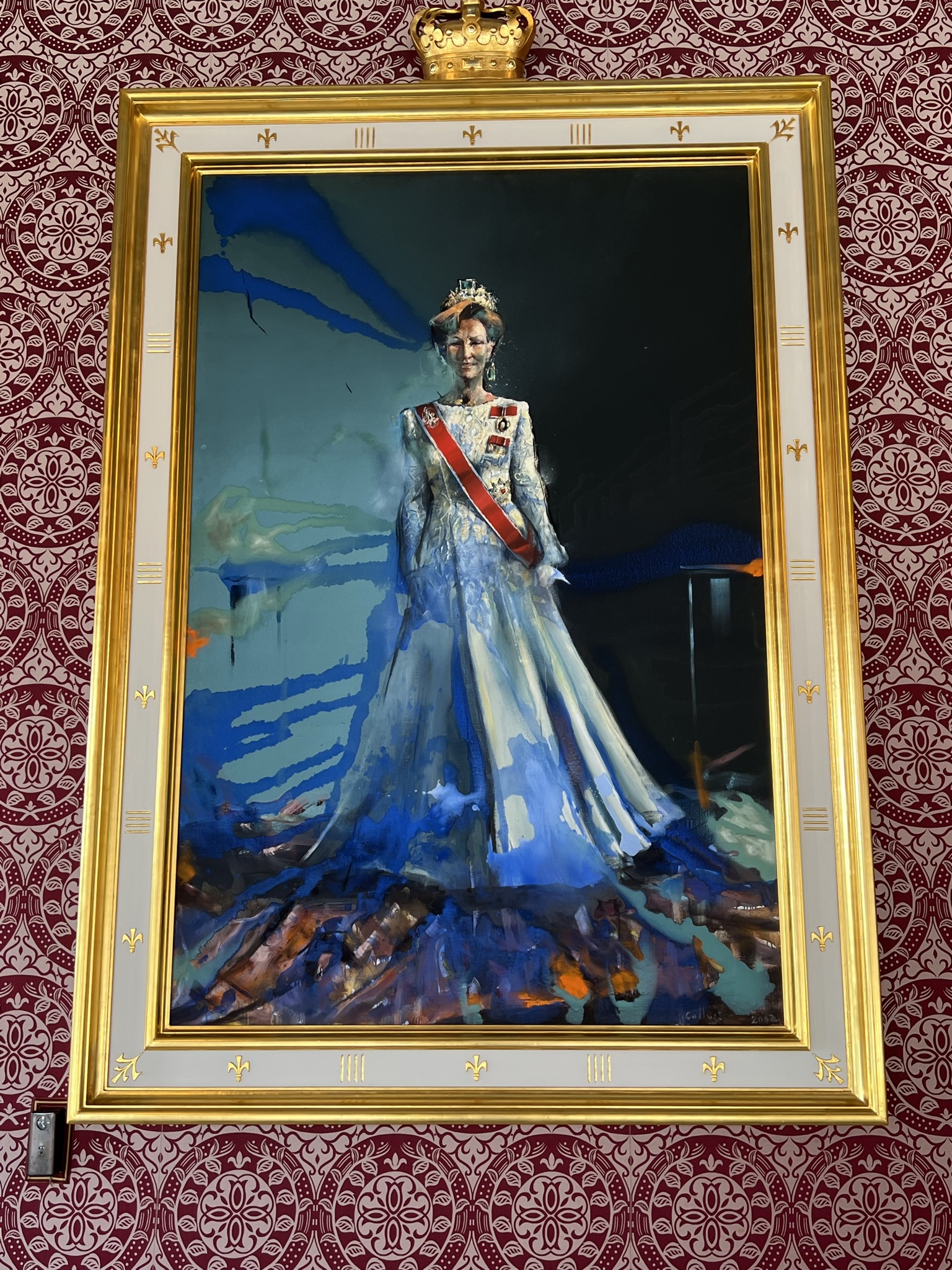
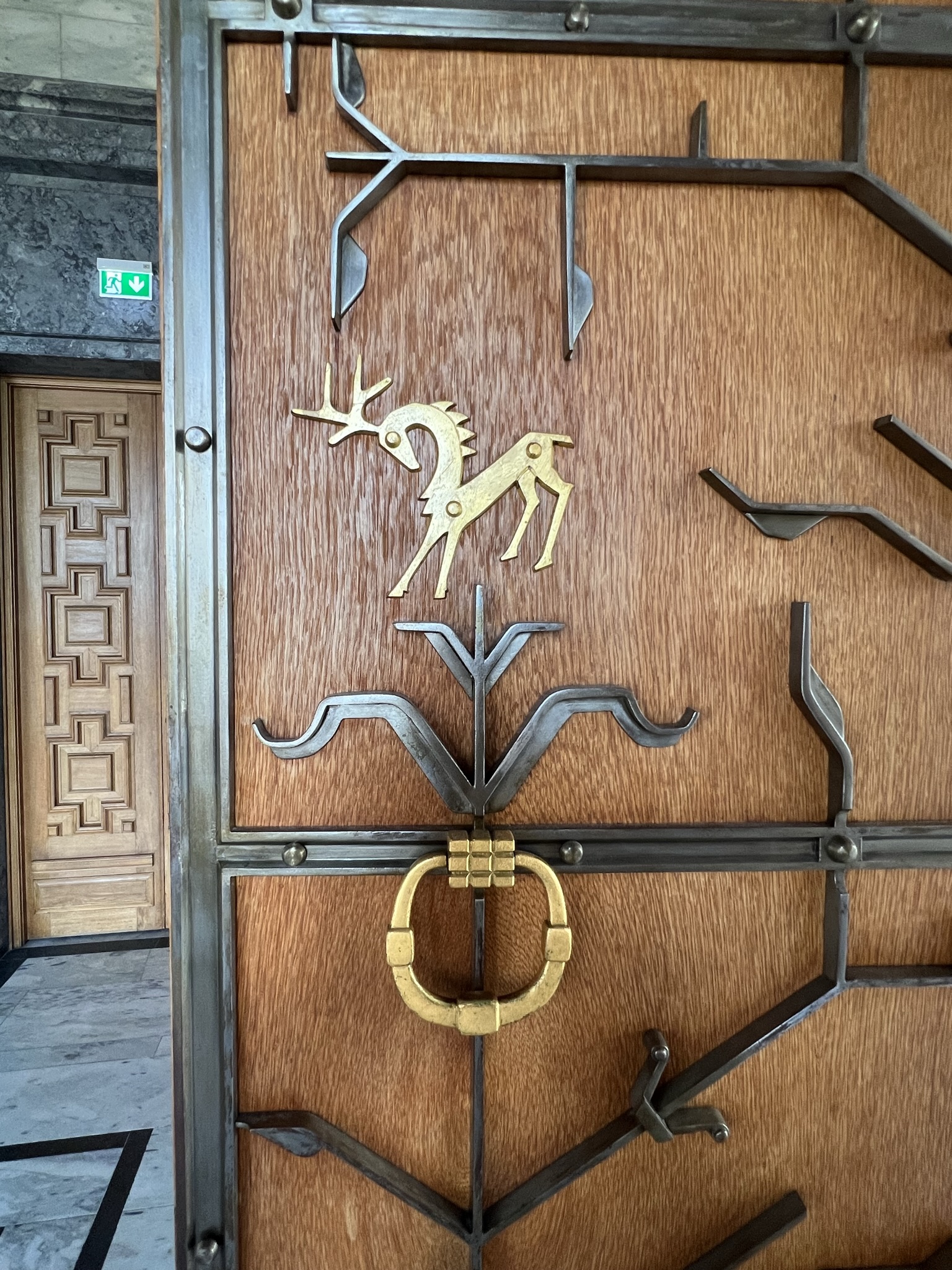
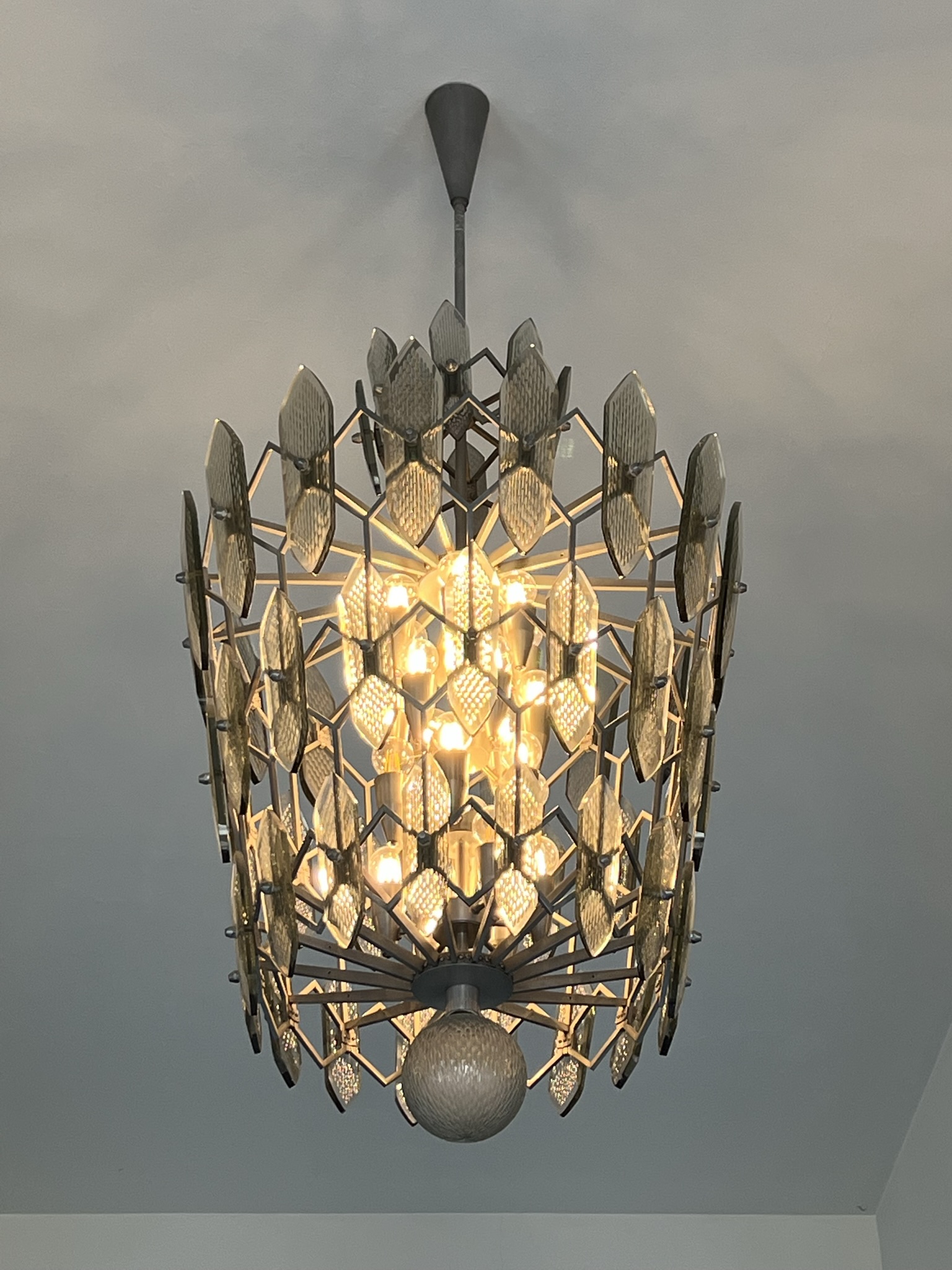
The main hall was impressive with its size and decor. Each room we saw after we walked up the stairs to the second floor was unique in its use, theme and design. The banquet hall has the black and white marble and portraits of the Norwegian Kings. My favorite was the current portrait of Queen Sonja. Queen Sonja is a commoner who King Harald the V wanted to marry. He told his dad, King Olav V that he would rather not marry than marry someone he didn’t love. Norwegians love Queen Sonja! All the little decorations like the doors and light fixtures were unique.

Norway dissolved its union with Sweden in 1905. It had tried to be an independent country in 1814 after the Napoleonic War but was required to stay joined to Sweden. The government of Sweden at the turn of the last century offered the Norwegian crown to Denmark’s Prince Carl, who  renamed himself Haakon VII. Our guide in the banquet hall mentioned a few other royals were offered to become King of Norway before Haakon but they chose not to be royalty in Norway, their loss!

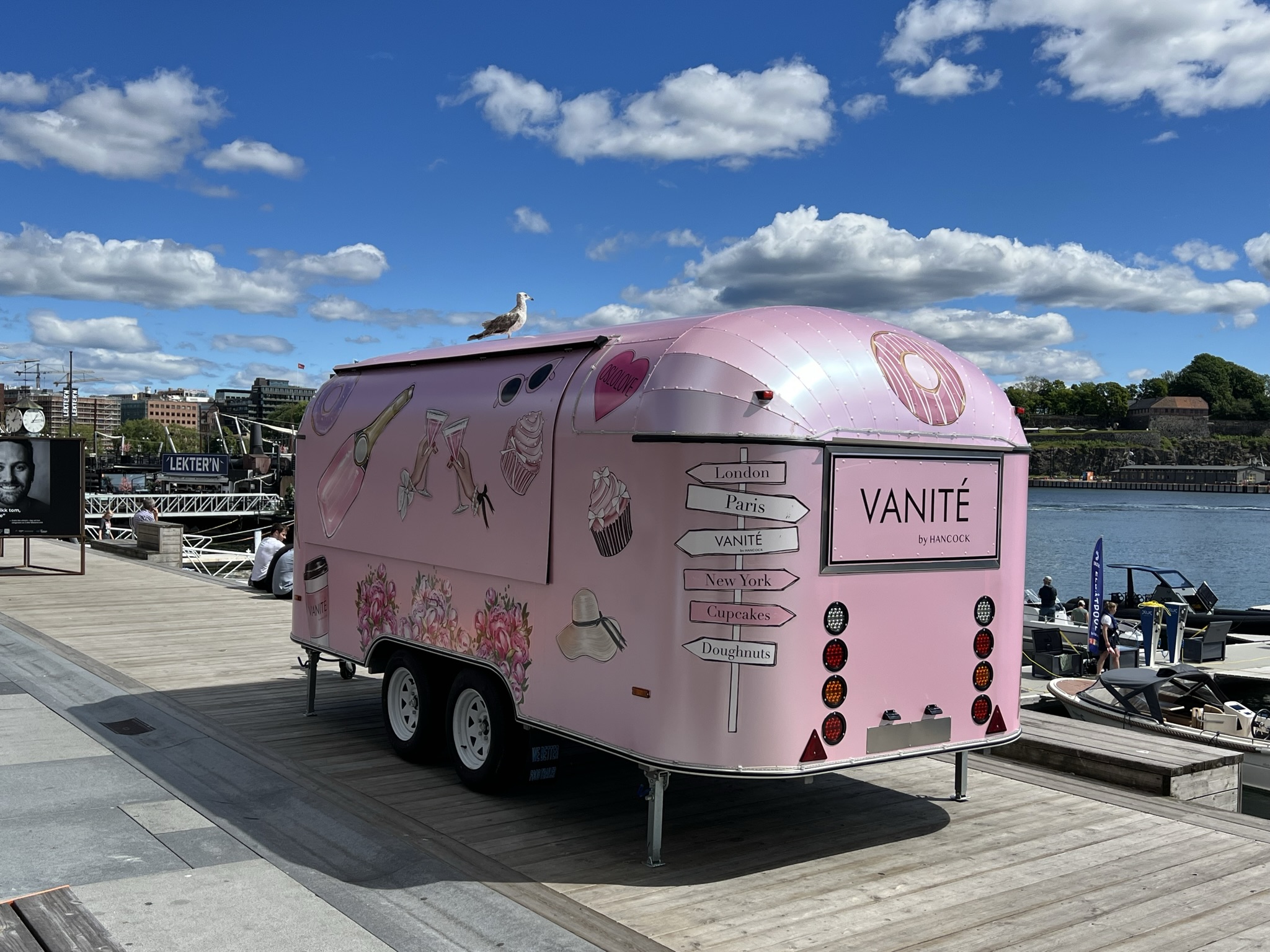
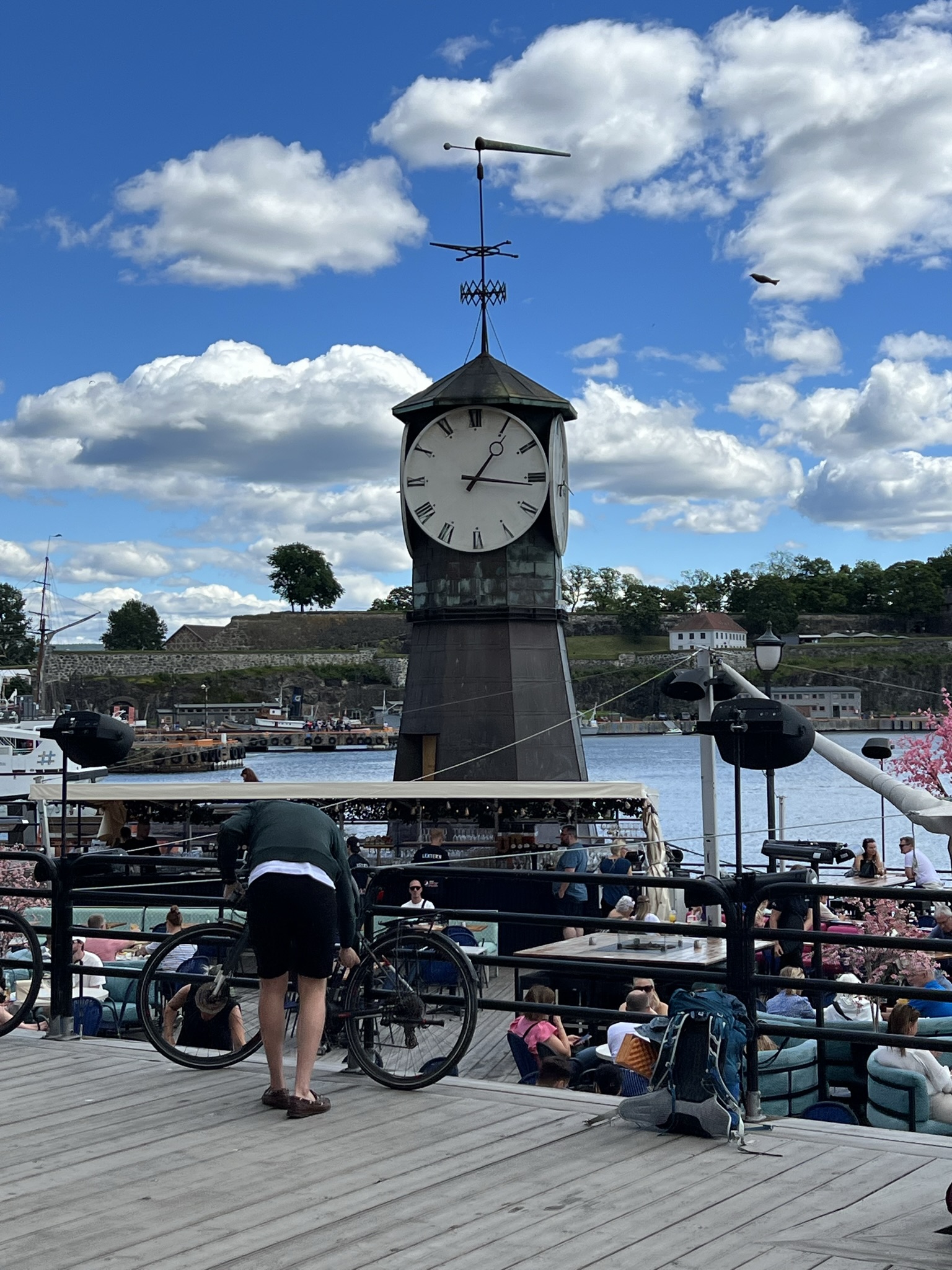
After Oslo’s city hall, we headed along the waterfront which was wonderfully crowded with locals and tourists alike on this Sunday. We were able to find a little outdoor cafe and enjoy everyone walking by as we ate. On Sundays most stores are closed and most restaurants are open.

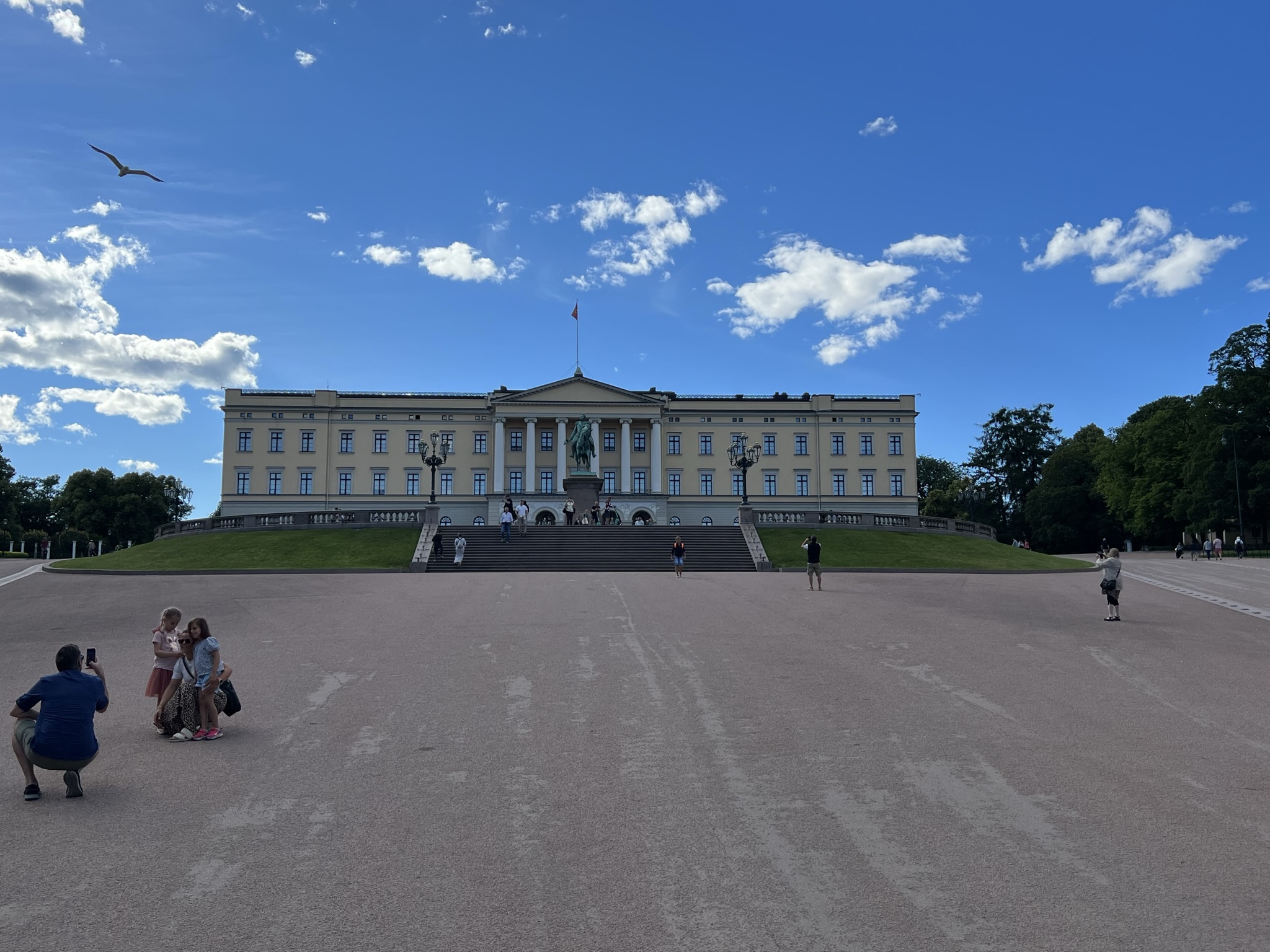
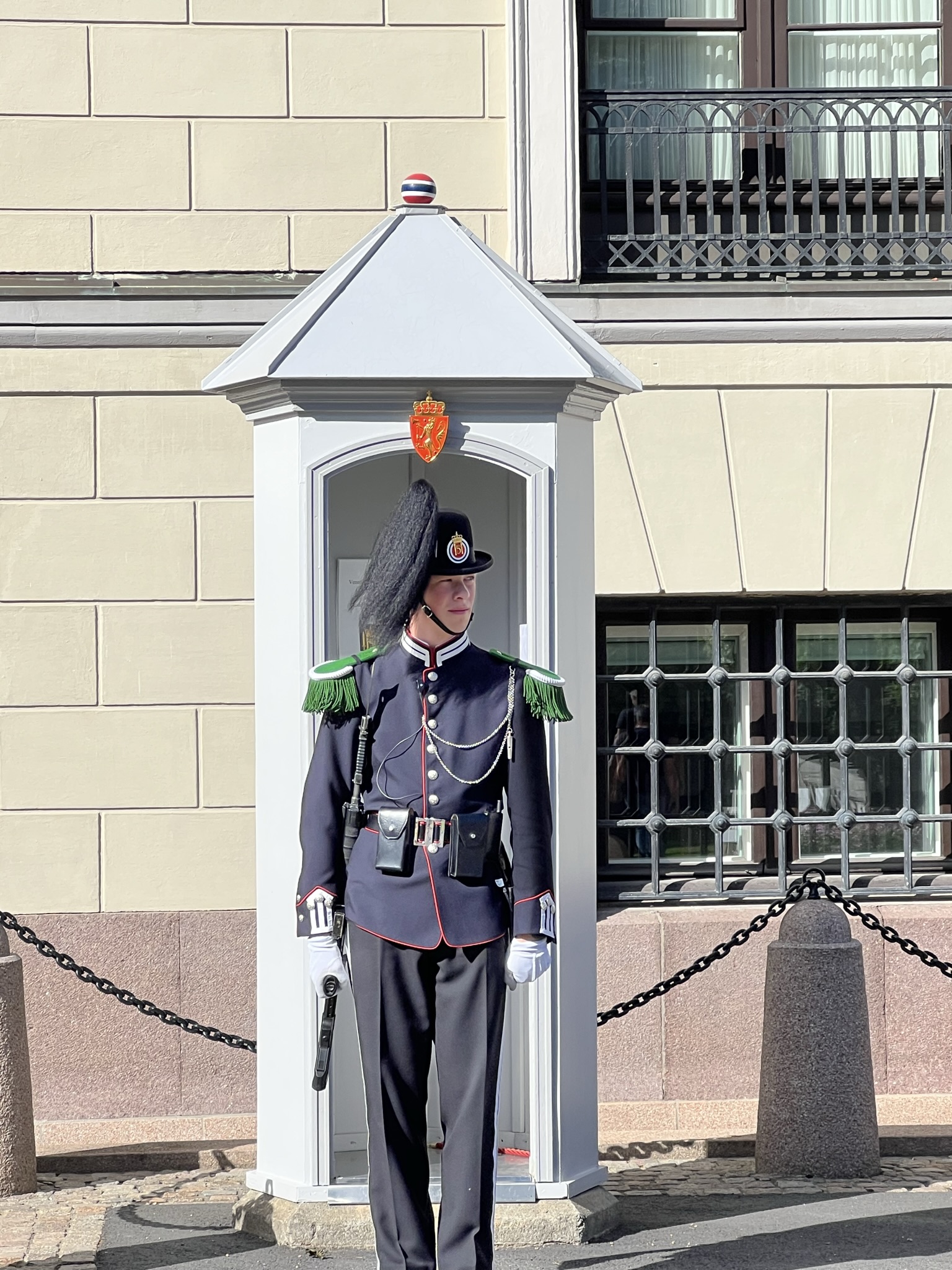
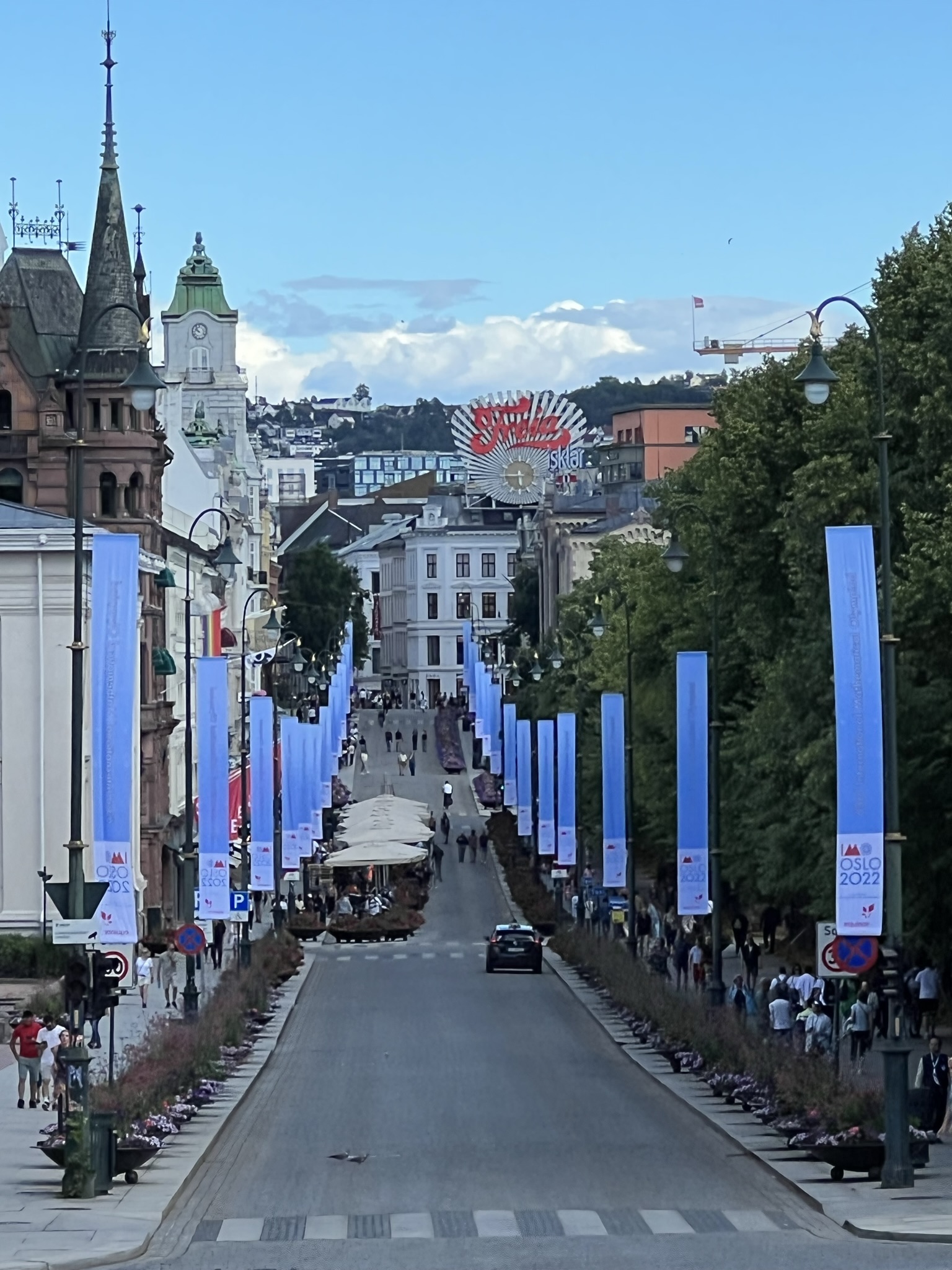
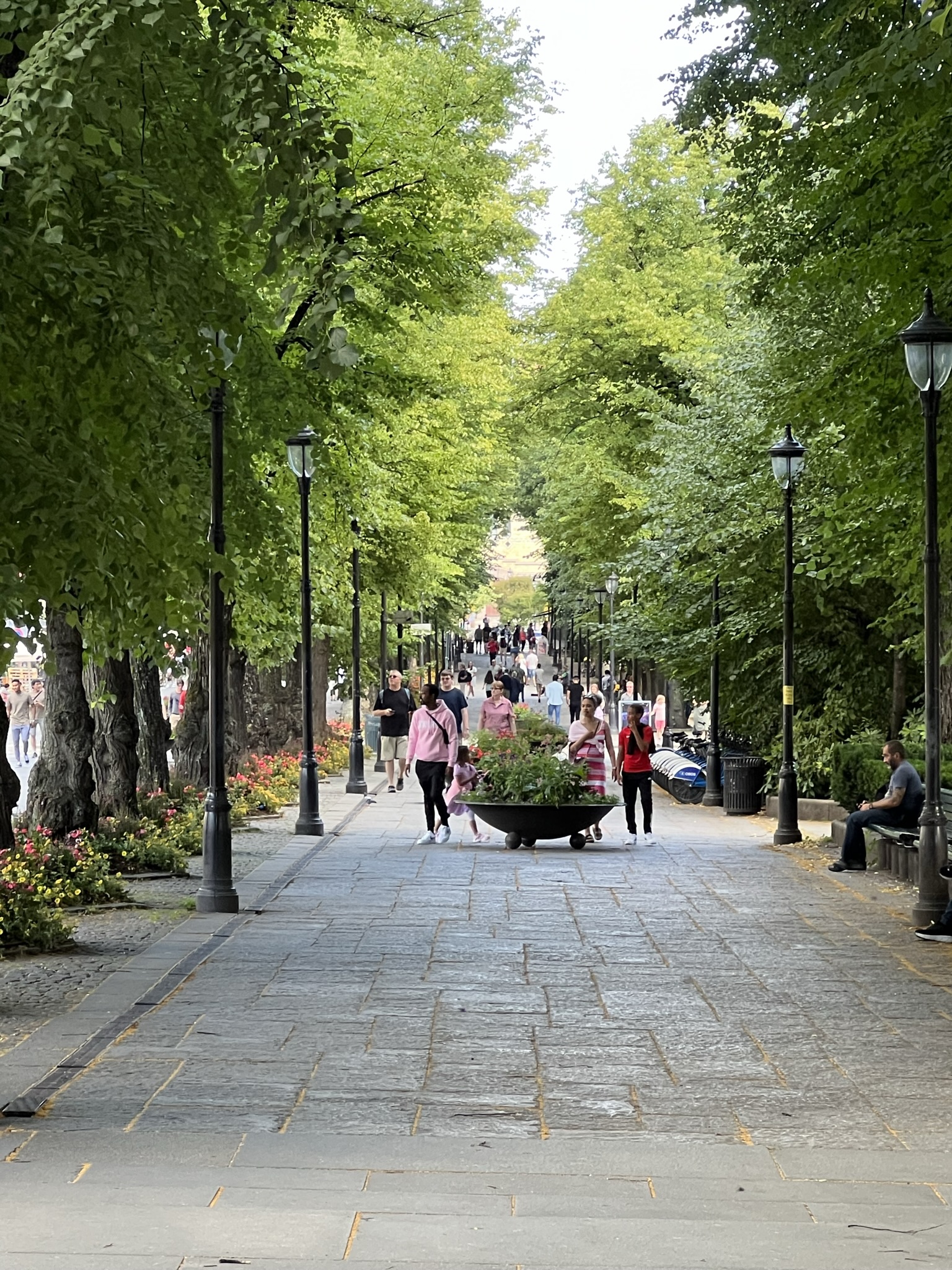
Later in the afternoon, Larkin and I wanted to take a walk so we left Michael napping and took a walk toward and around the Palace grounds which are open on weekends in summer. We travelled back down the street in front of the palace through the park to our hotel.

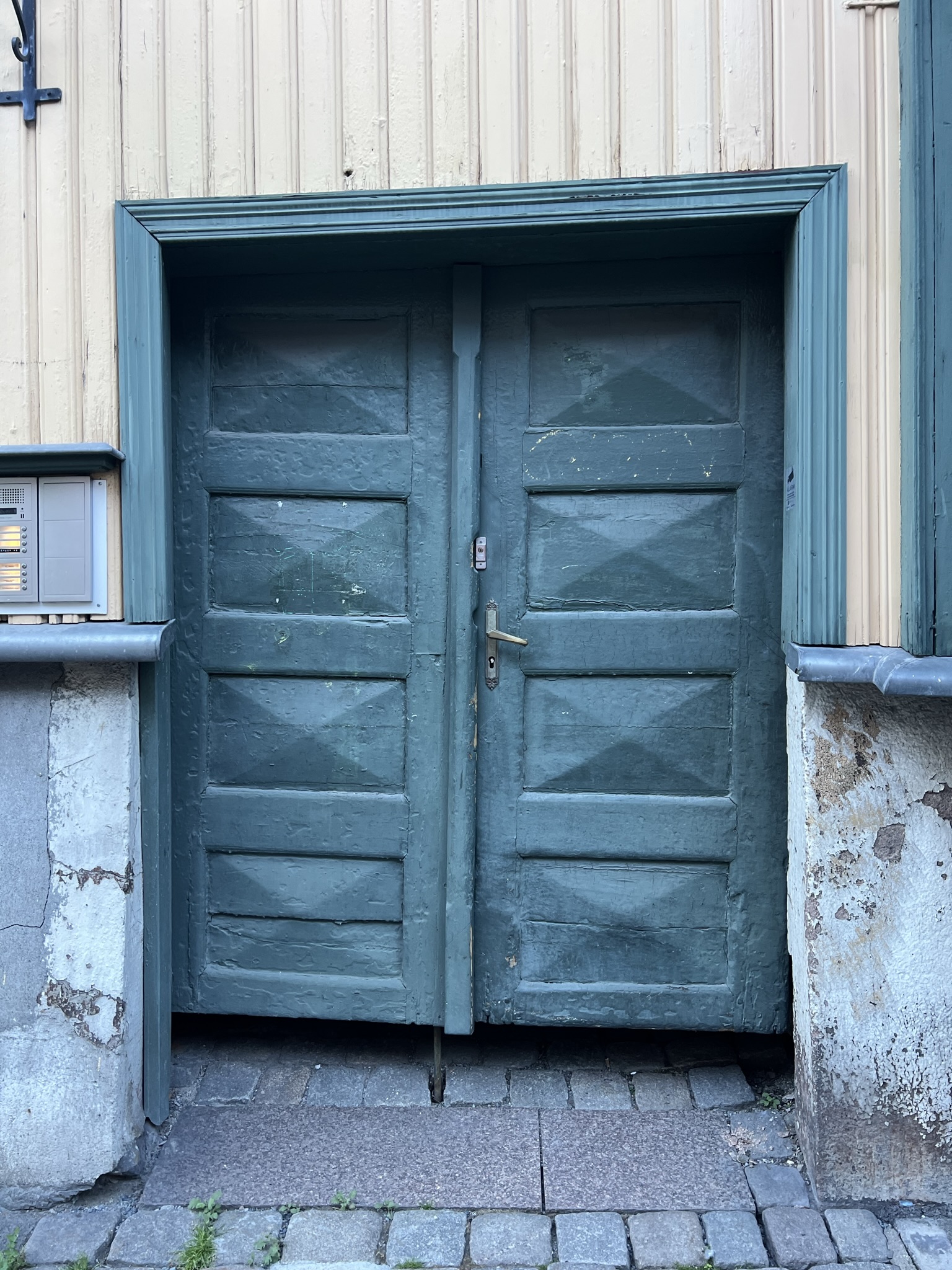
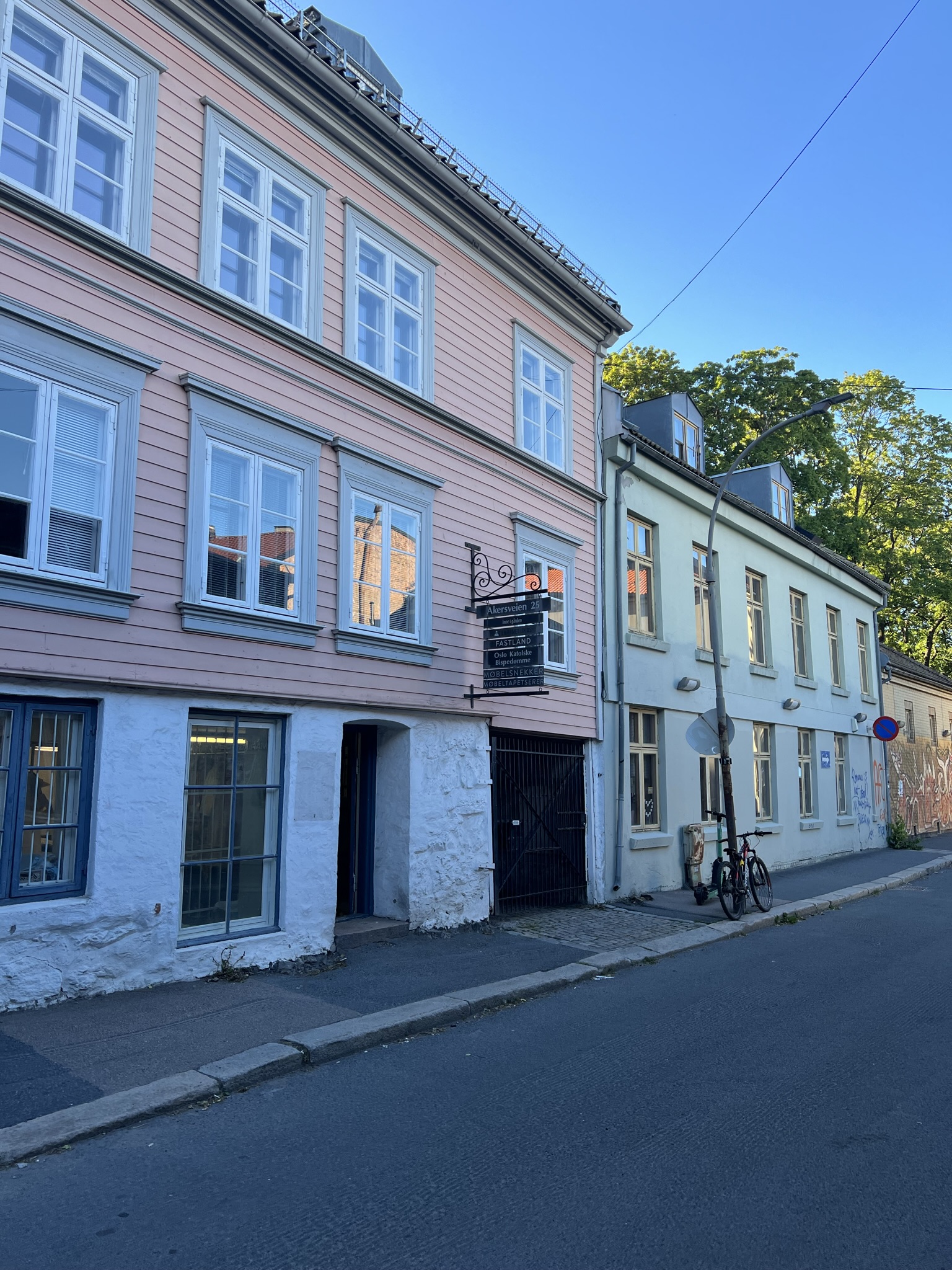
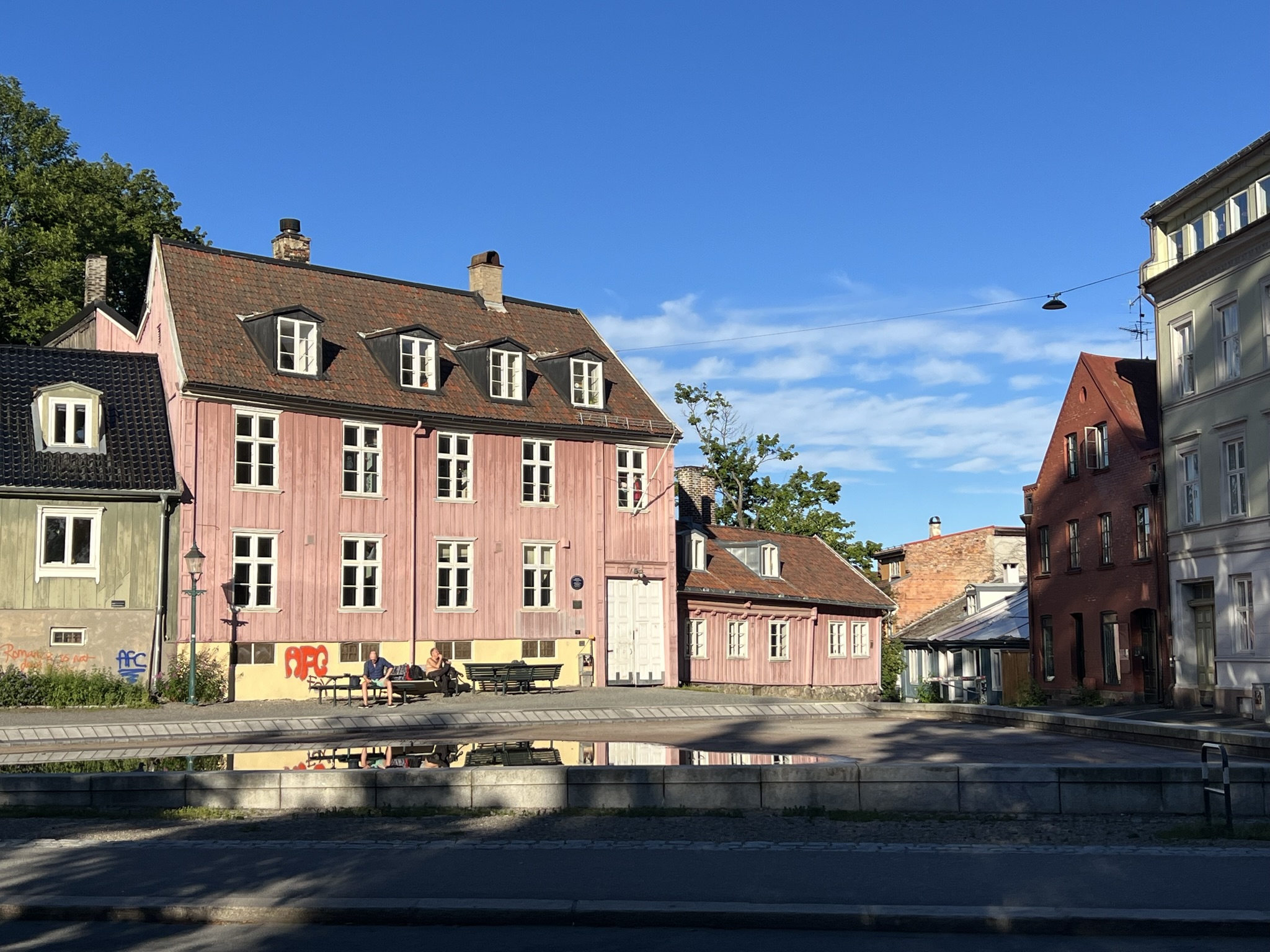
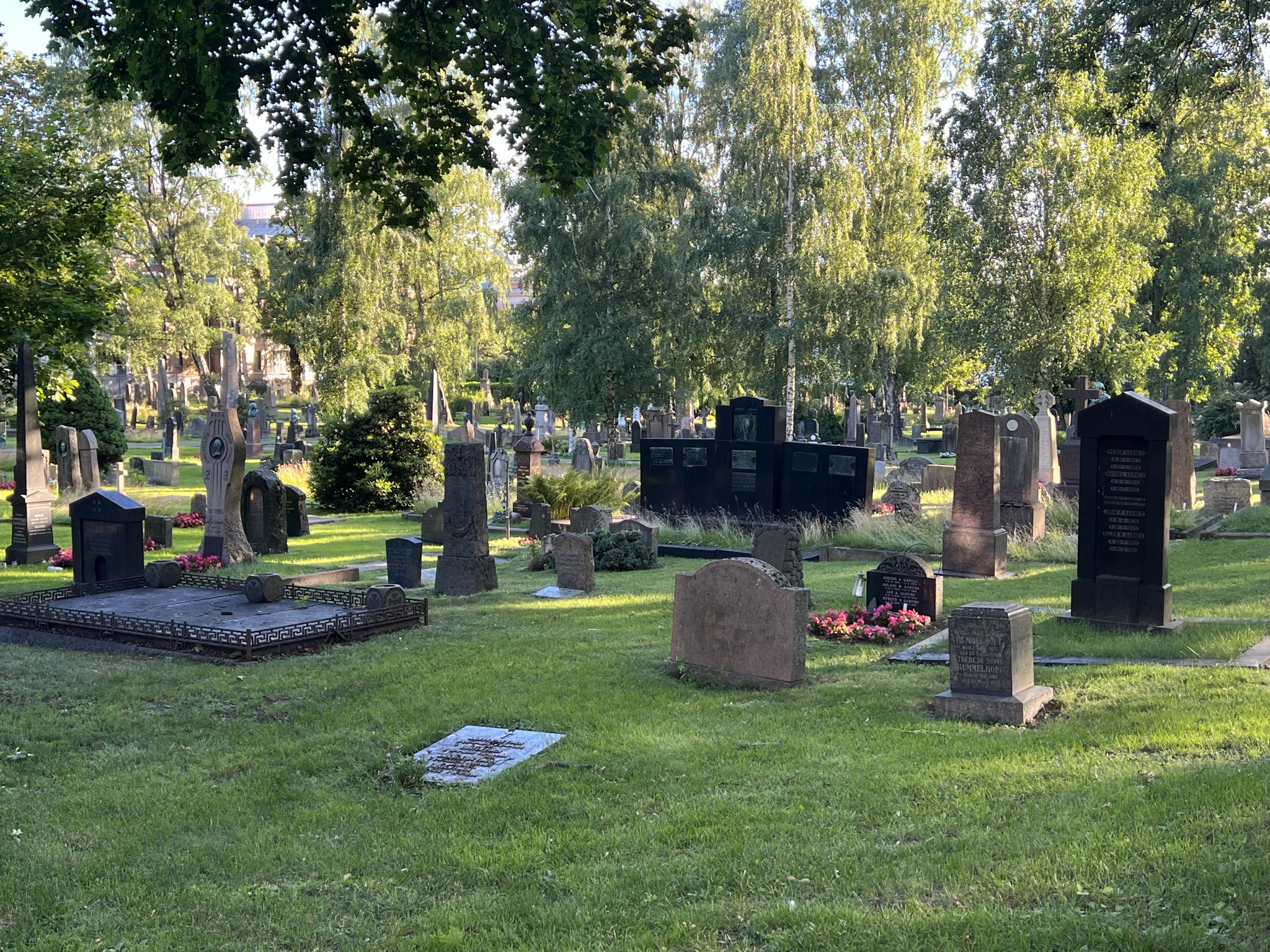
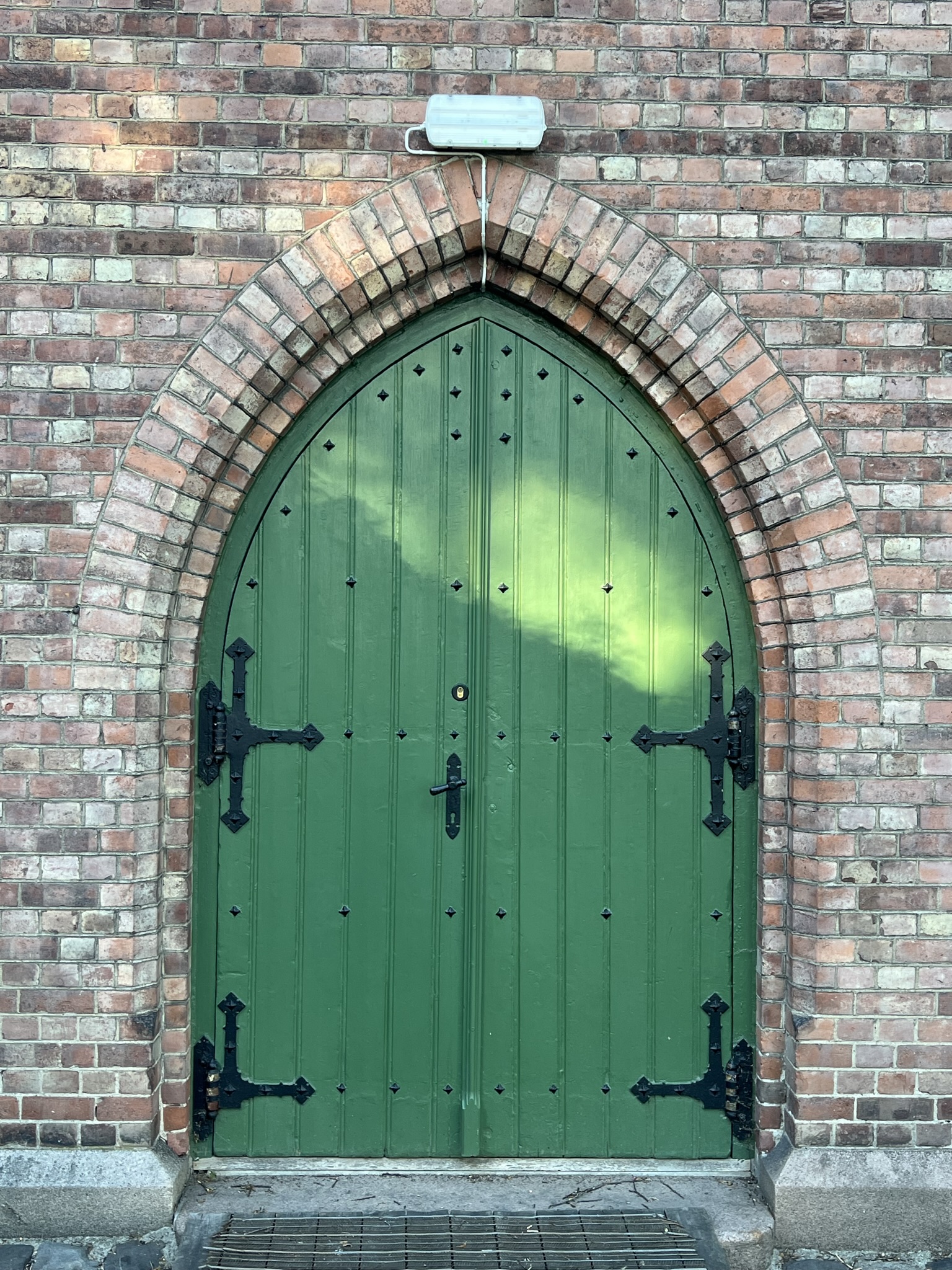
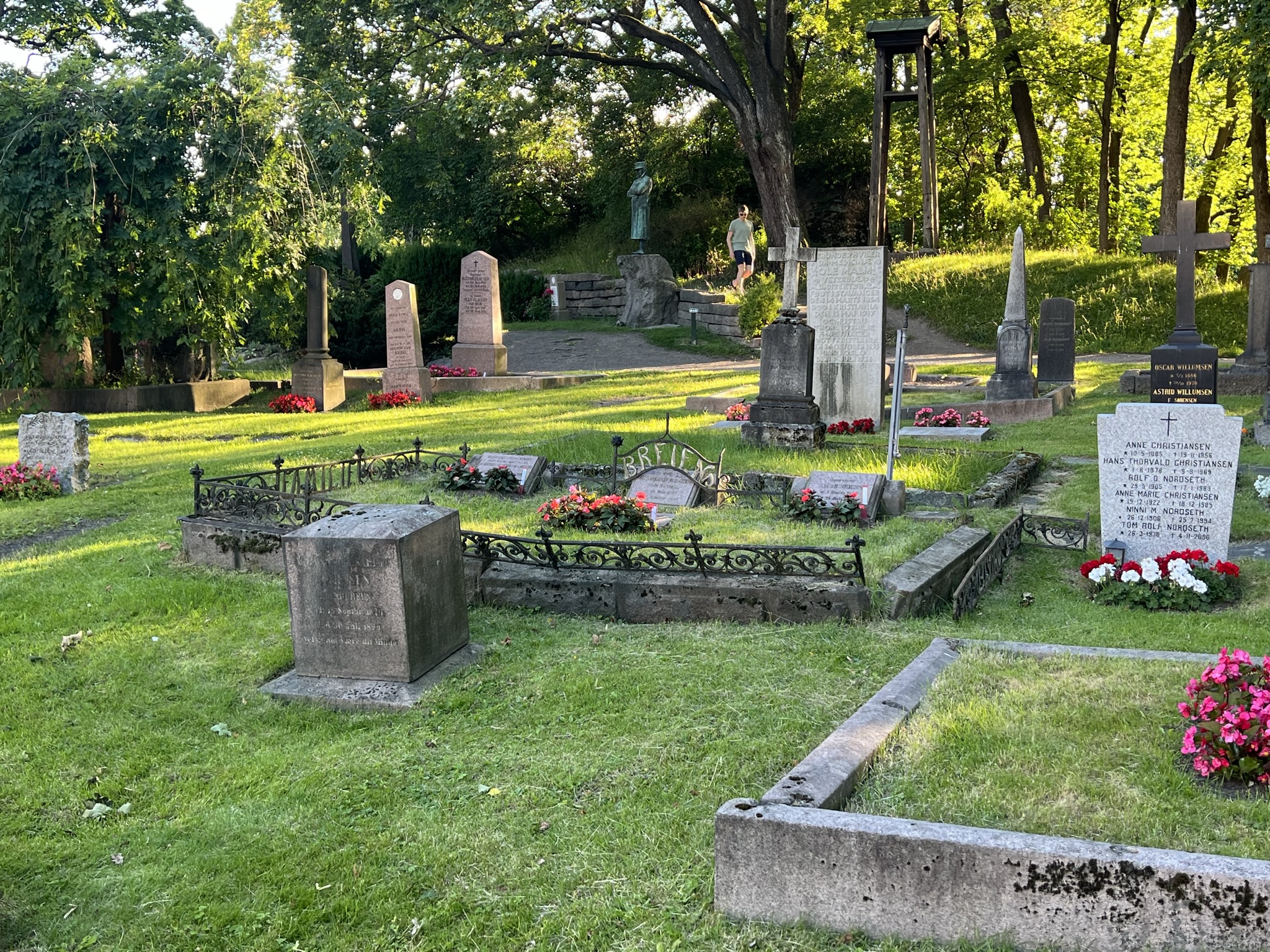
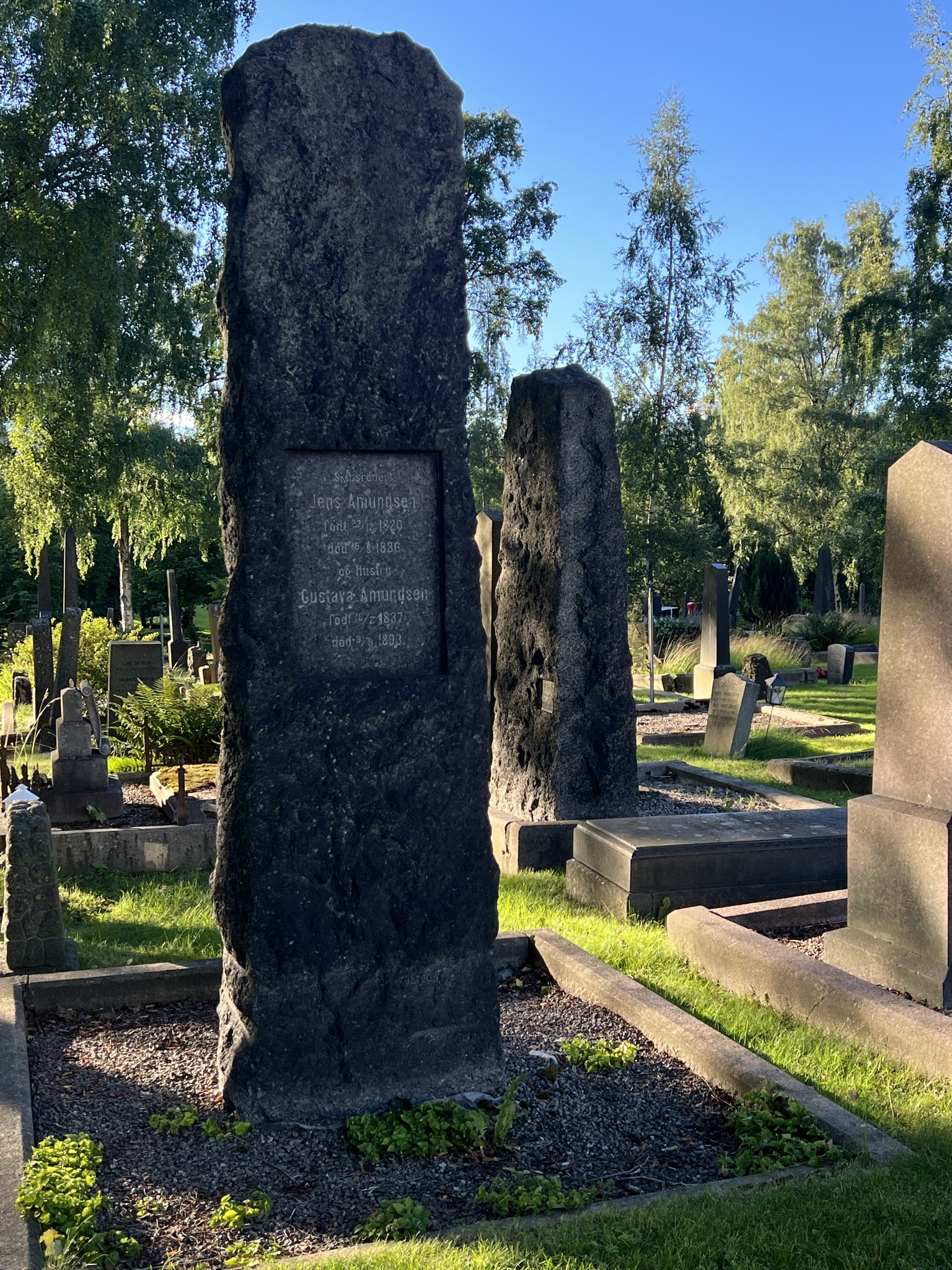
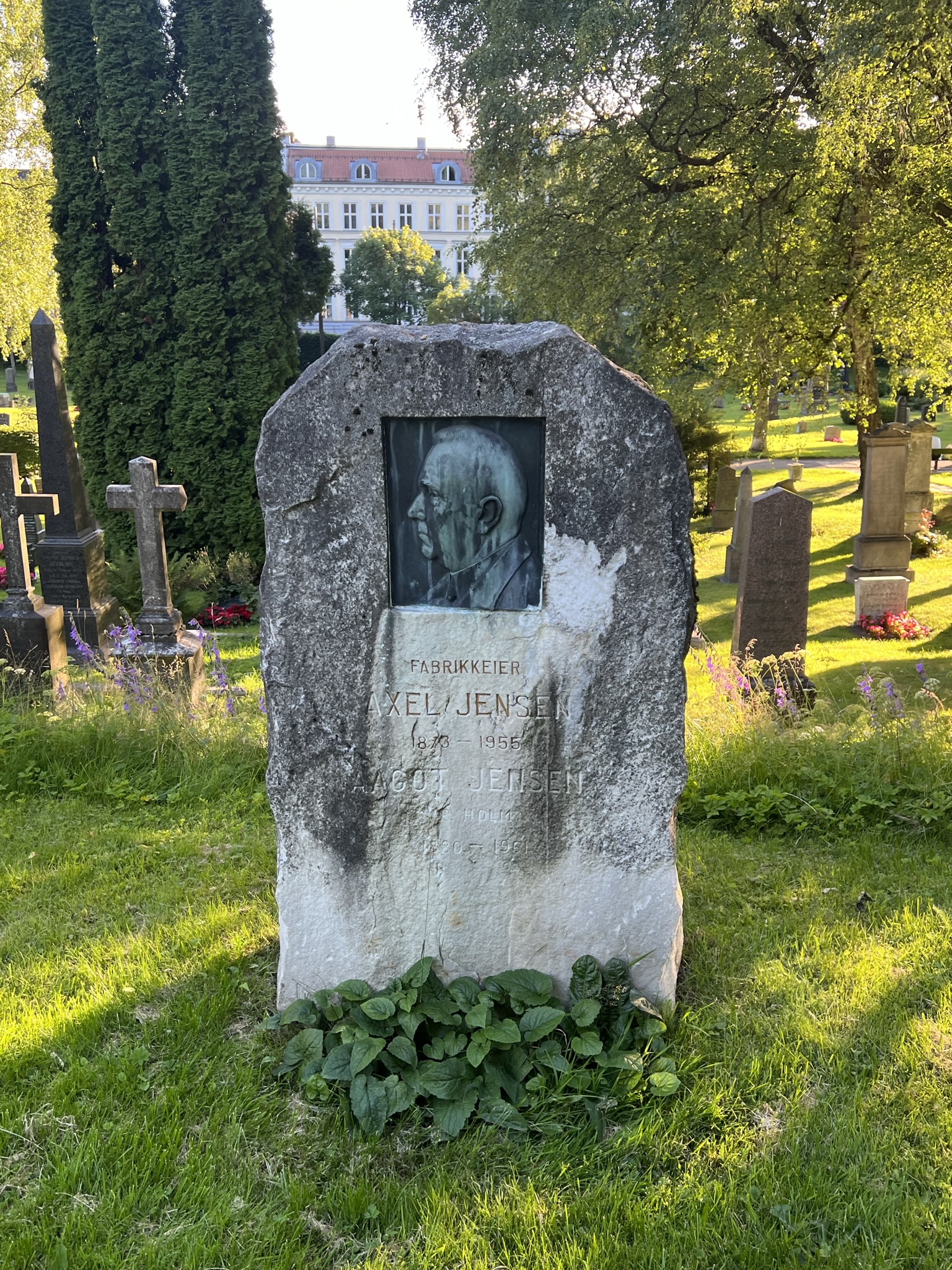
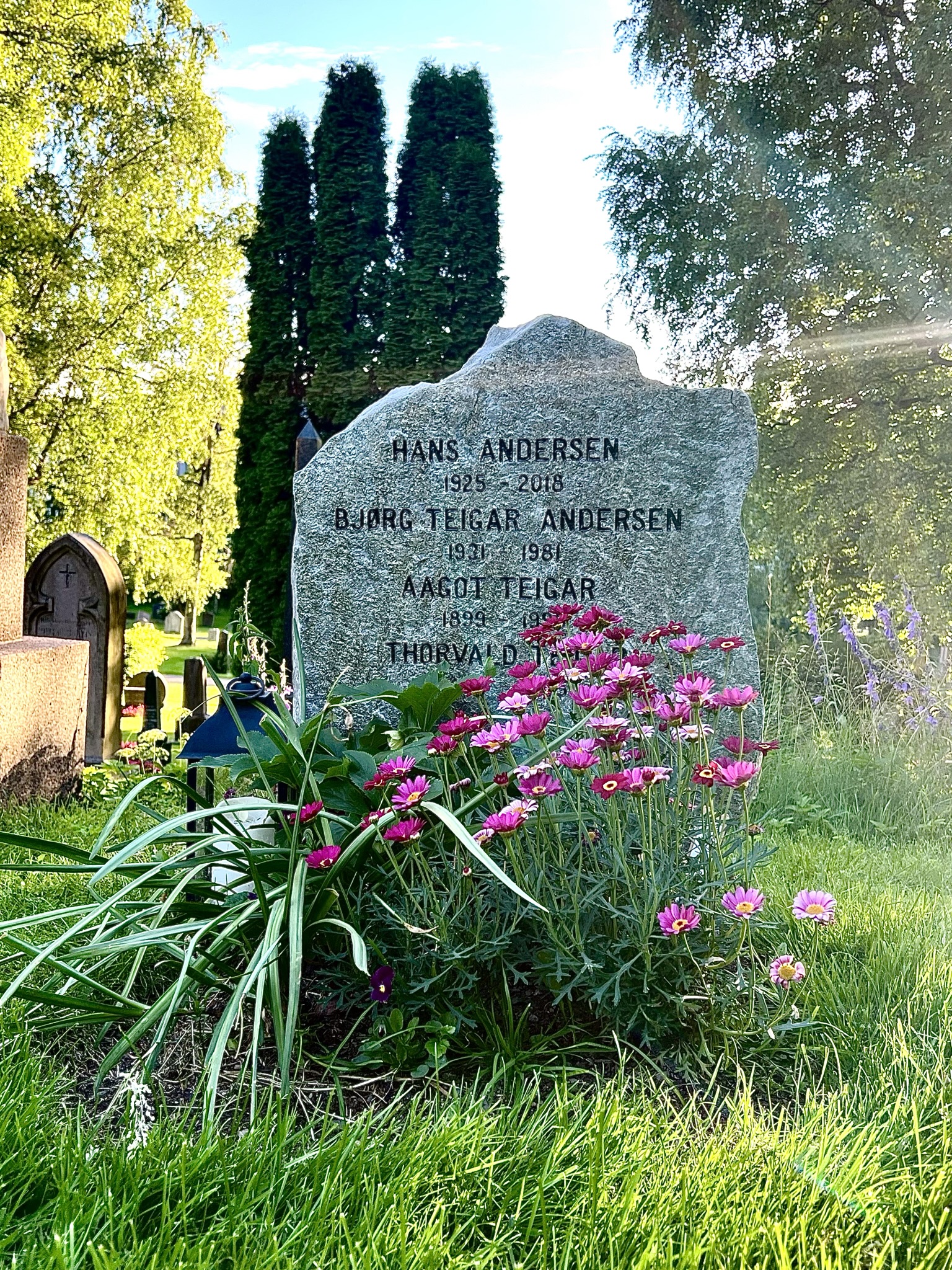
Dinner was pizza across the street from our hotel. I had my first porn star martini! Then it was too easy to order another one…at the next restaurant! After dinner Larkin and I took a walk up to what we thought was a park. It was Var Frelsers Gravlund – or a famous Oslo graveyard. The walk up the hill had doors, statues and just fun stuff that Larkin and I like to take photos of. Summer light – hours of light, enjoyable light, making up for winter darkness. At 2 am of course it was still light and folks were still walking around as we were trying to snuggle into our time warped existence attempting to get past 8 hours of time zone jet lag.

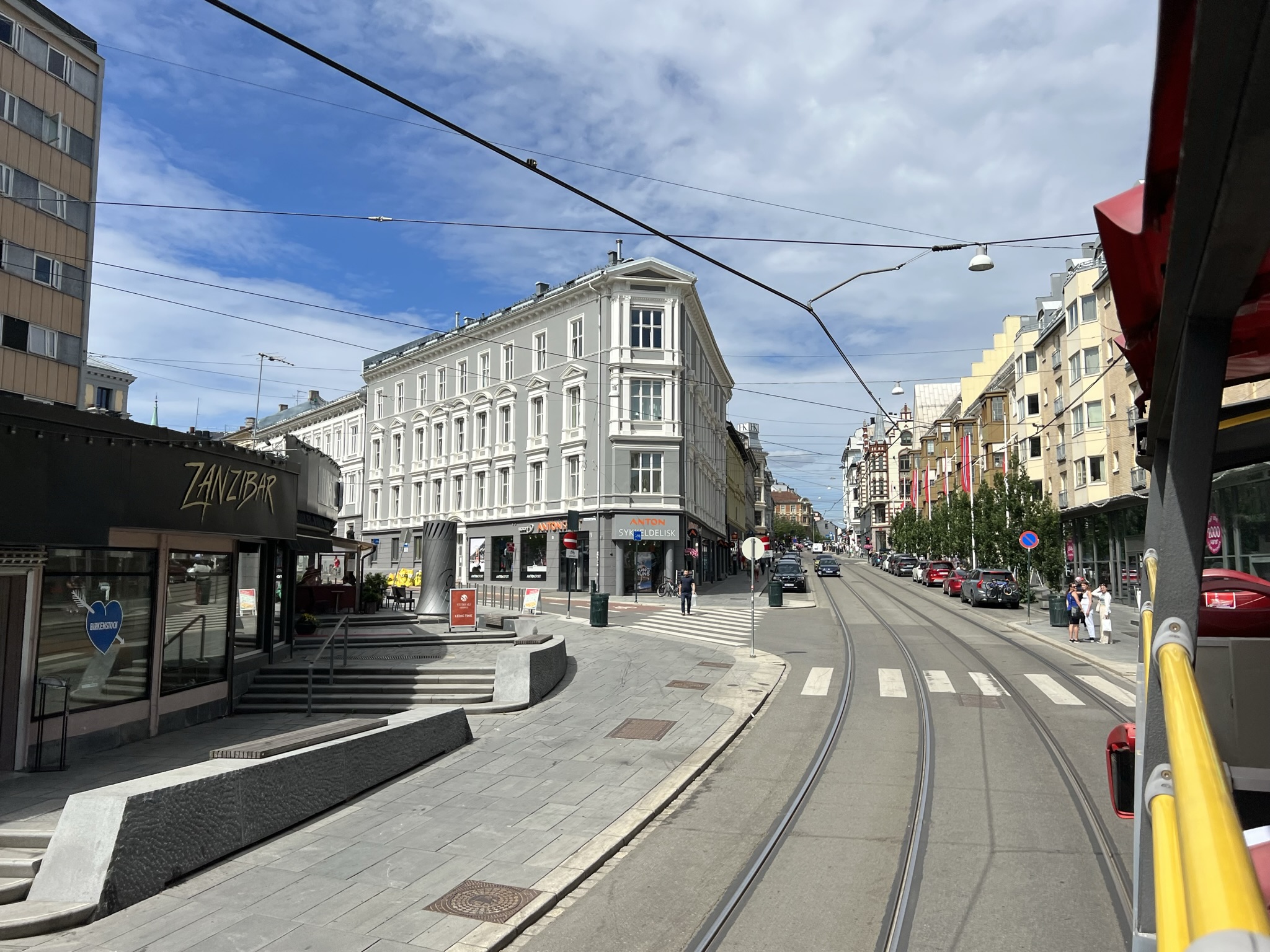
SAS decided to strike and leave Europe and traveling in the lurch. So, instead of flying SAS on Monday, Silverseas chartered a plane for the entire ship – actually two of their ships on Tuesday afternoon so we could meet the ships in Tromso. We had another day to enjoy Oslo but had to be ready to board a bus to an airport hotel later afternoon. I never thought we’d do a double decker bus around a city – any city – but alas it was enjoyable and helped us see the more of the city and use up the time we had after checkout. We had tried to meet up with a friend I’d met years ago in Marin but she became sick on her way up from London. Next time! We were amazed that Monday was even more crowded than Sunday. Where did all those people come from on a work day? Norway felt like home. I guess when you finally see the land of your ancestors you can feel at home!

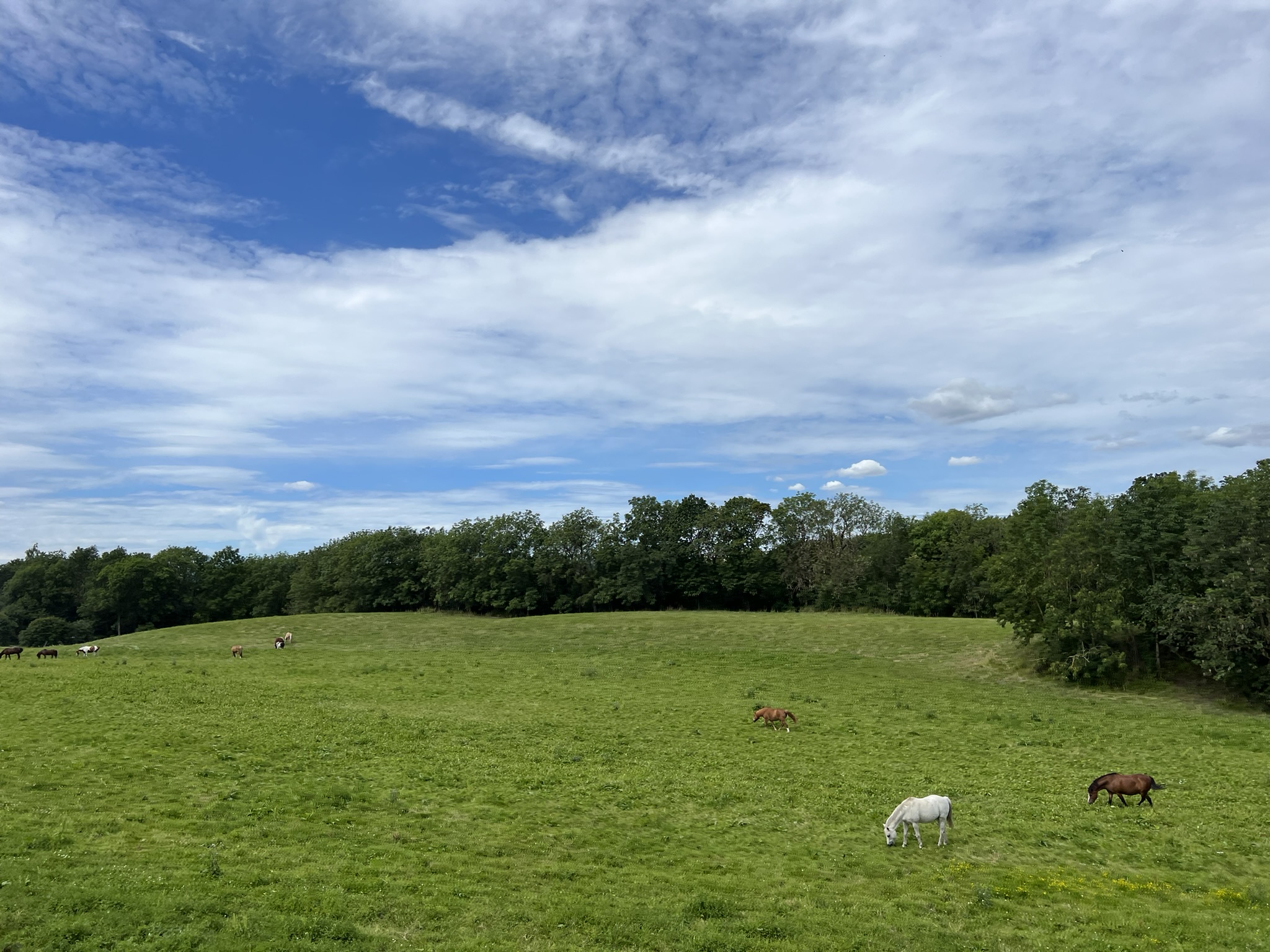
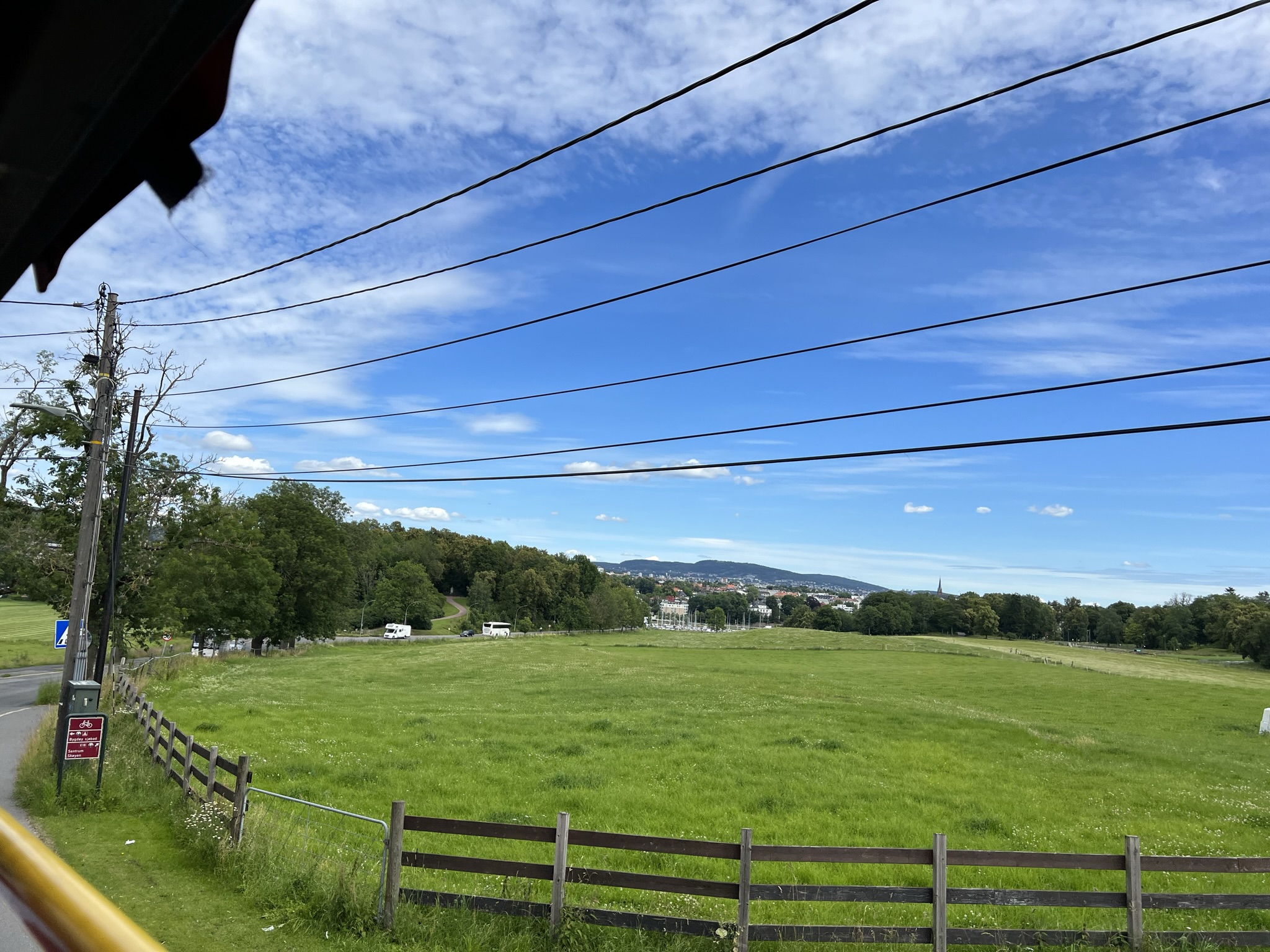
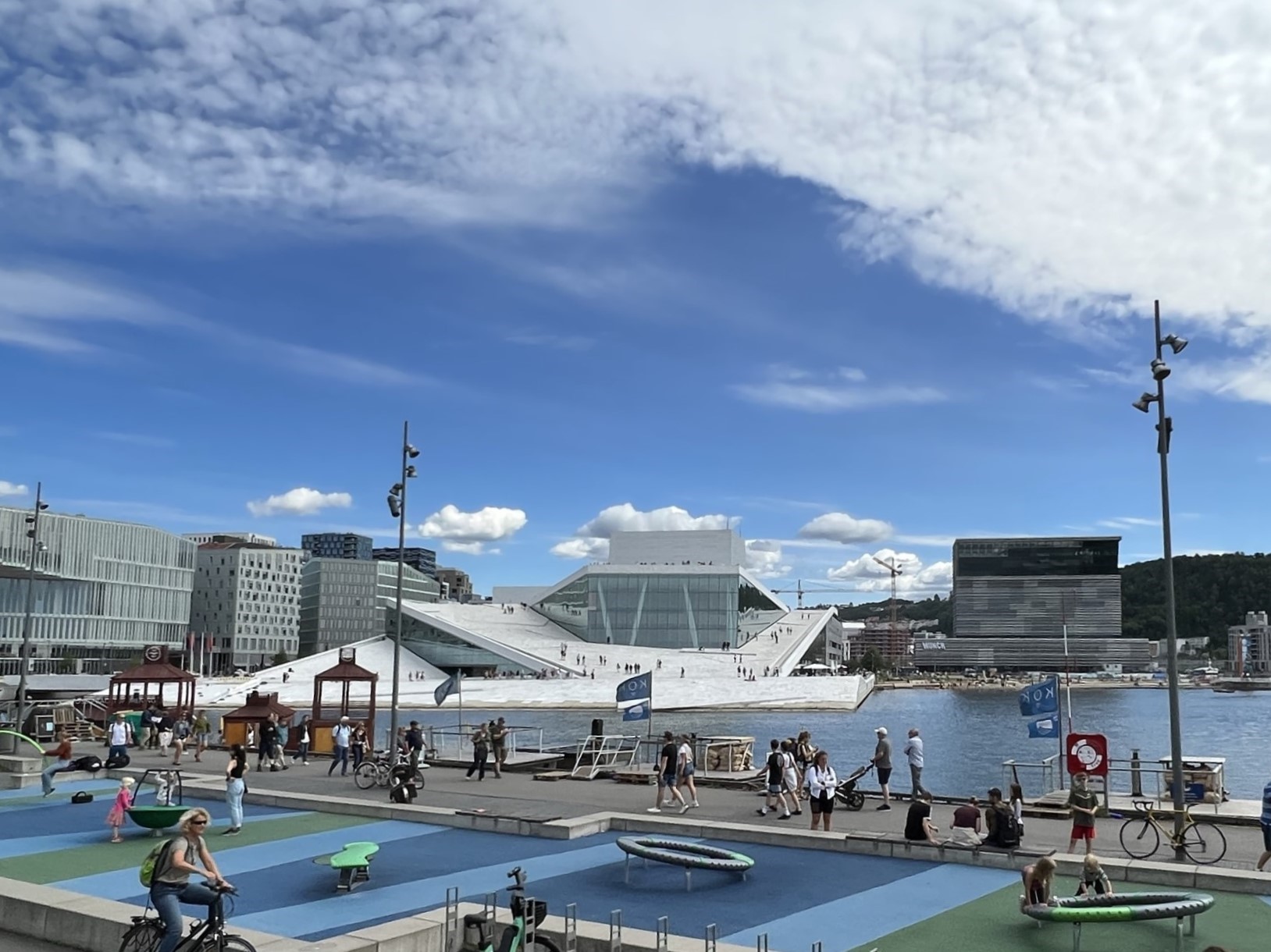
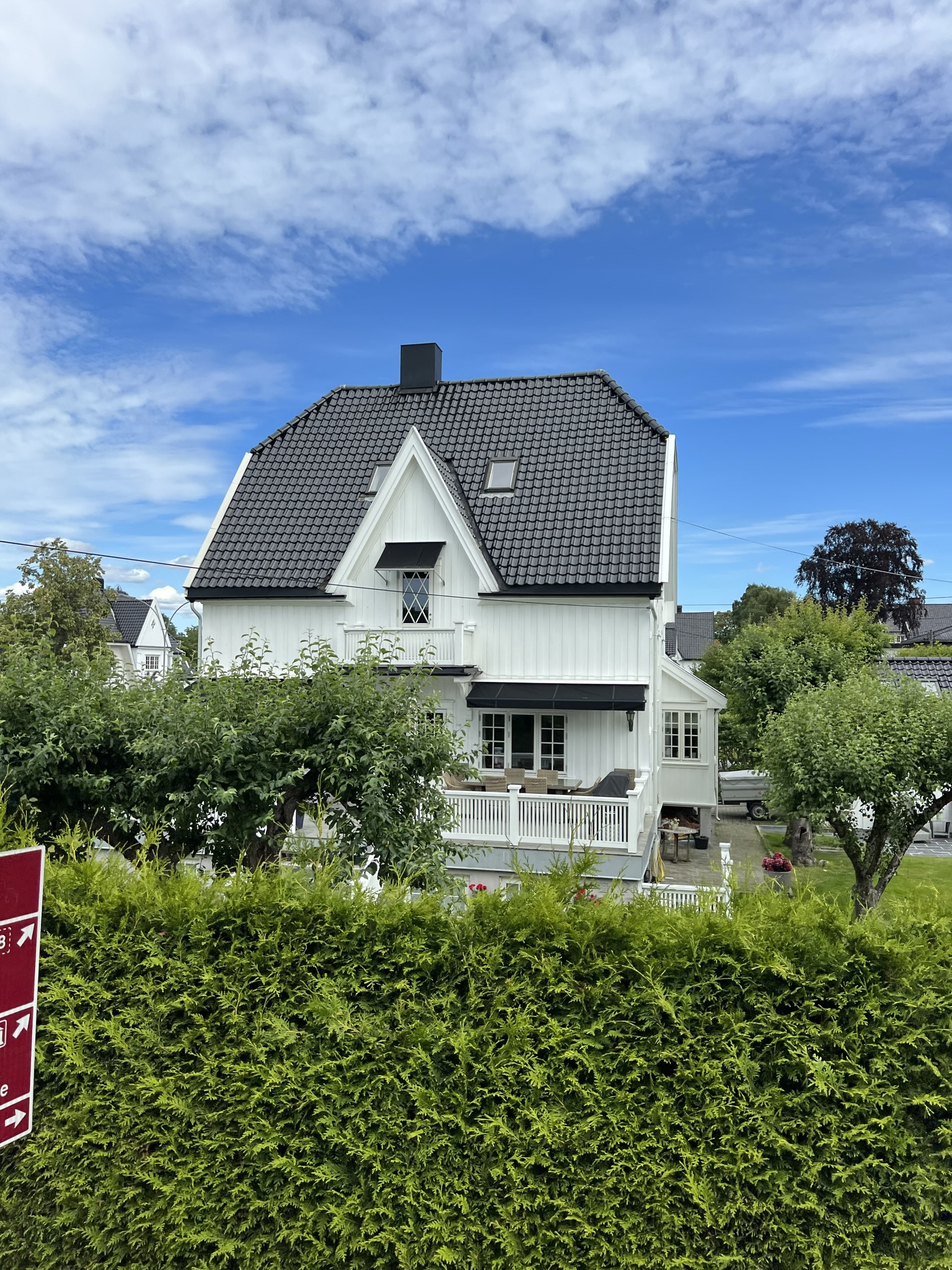
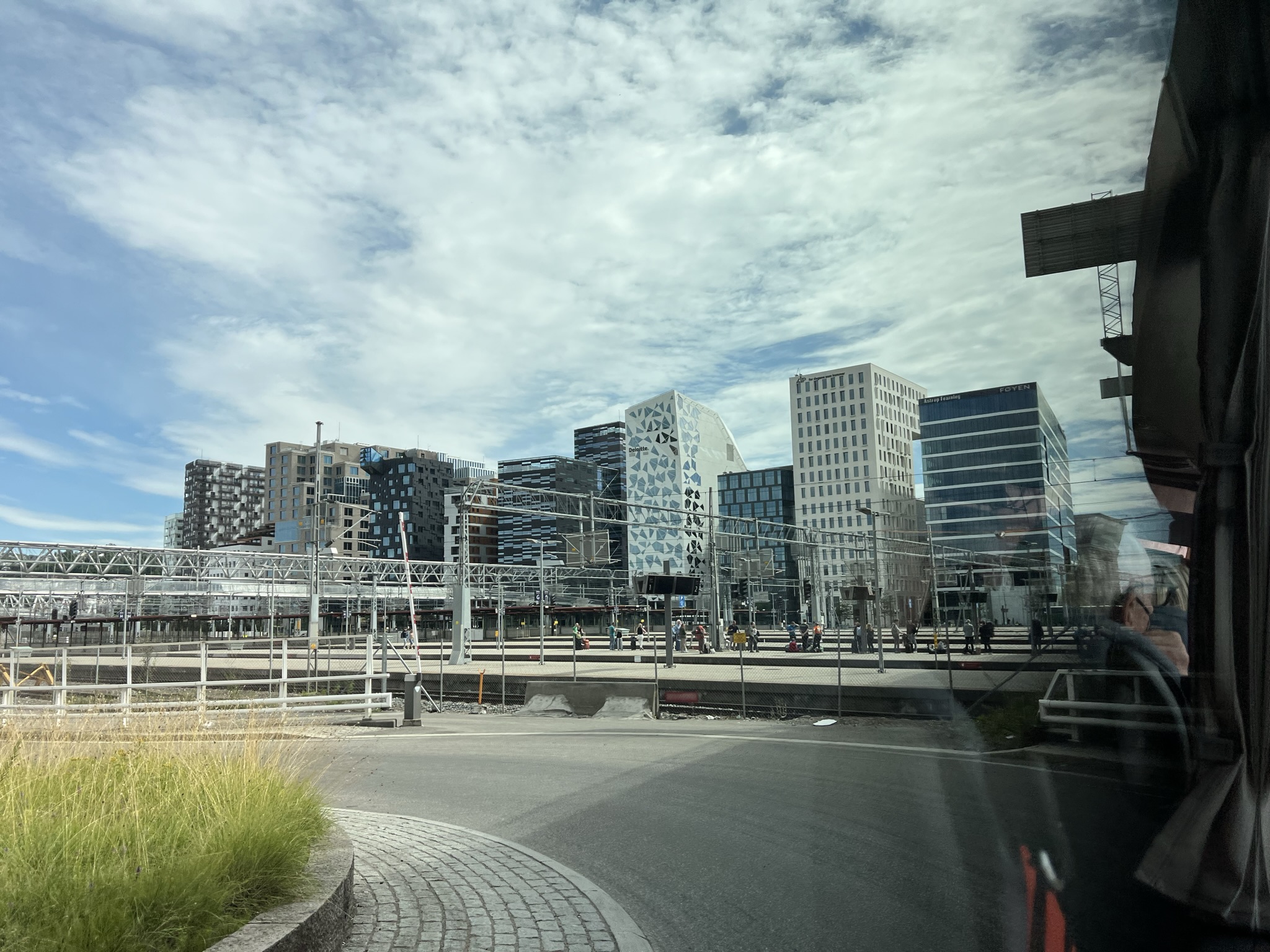
From beautiful green spaces with horses to building both modern and traditional it was eye opening to ride the bus. We saw the new opera house finished in 2007 which immediately reminded me of the Sydney Opera house. We finished our afternoon with a nice late lunch in a restaurant near the park that runs in front of the Palace.

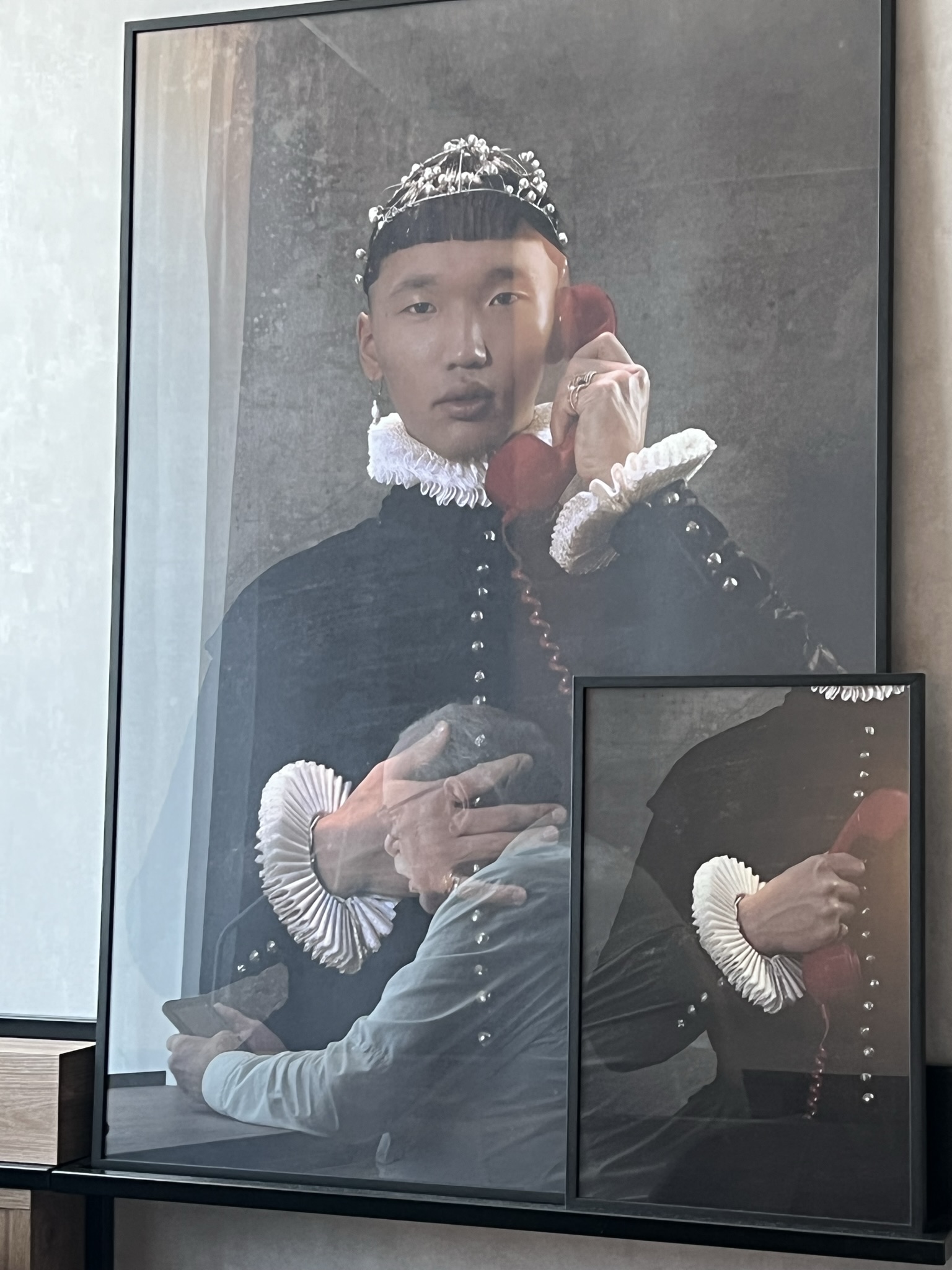
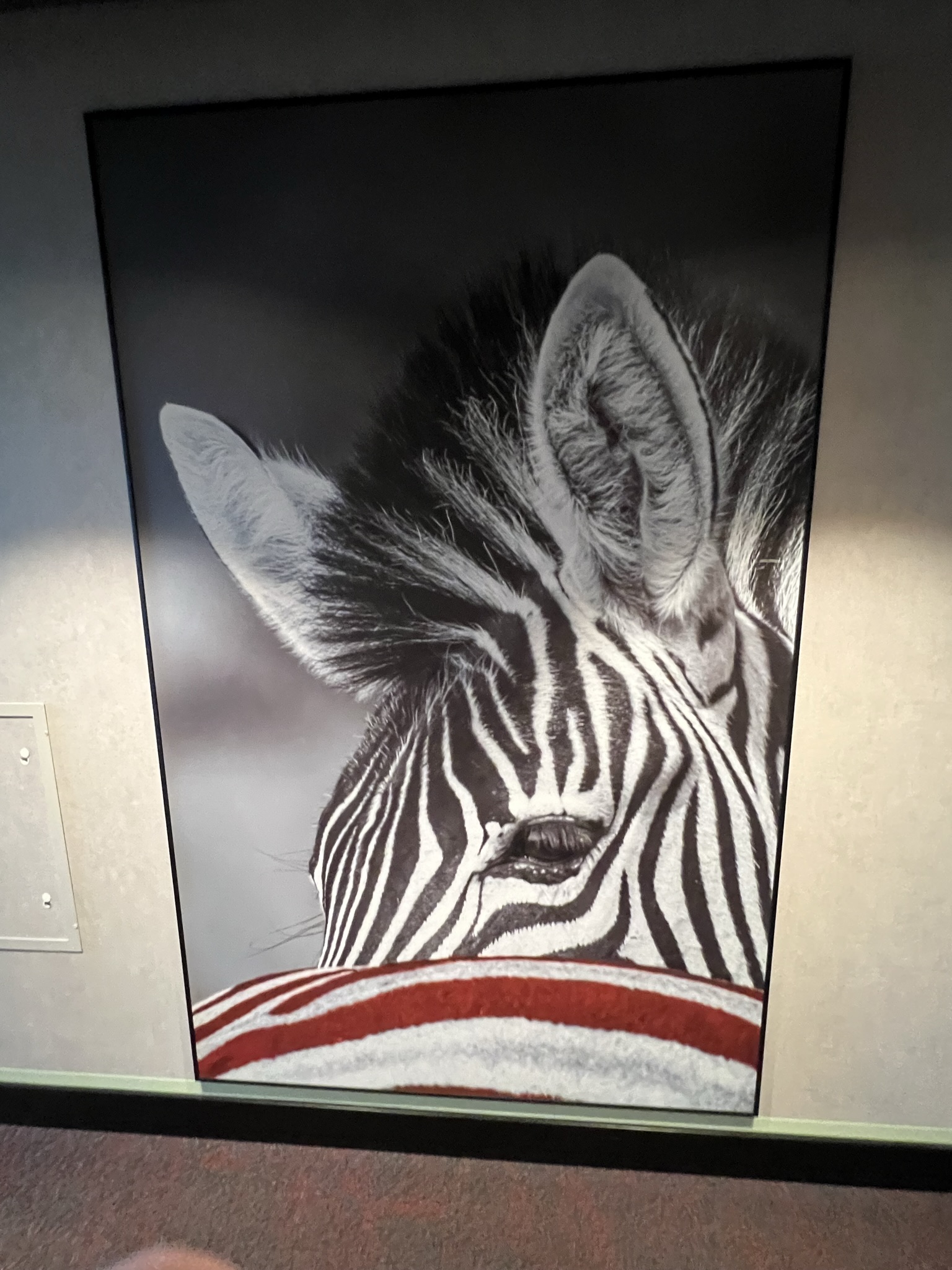
Radisson Red vs Radisson Blu at the airport. I have no clue what blu looked like but red had bizarre pictures. My favorite had to be the zebra with red stripe. Once again my zebras! Notice Michael’s reflection at the desk at our hotel in the first photo!

Next up is our journey to the ship and the beginning of our Arctic cruise.

CUSCO AND THE SACRED VALLEY

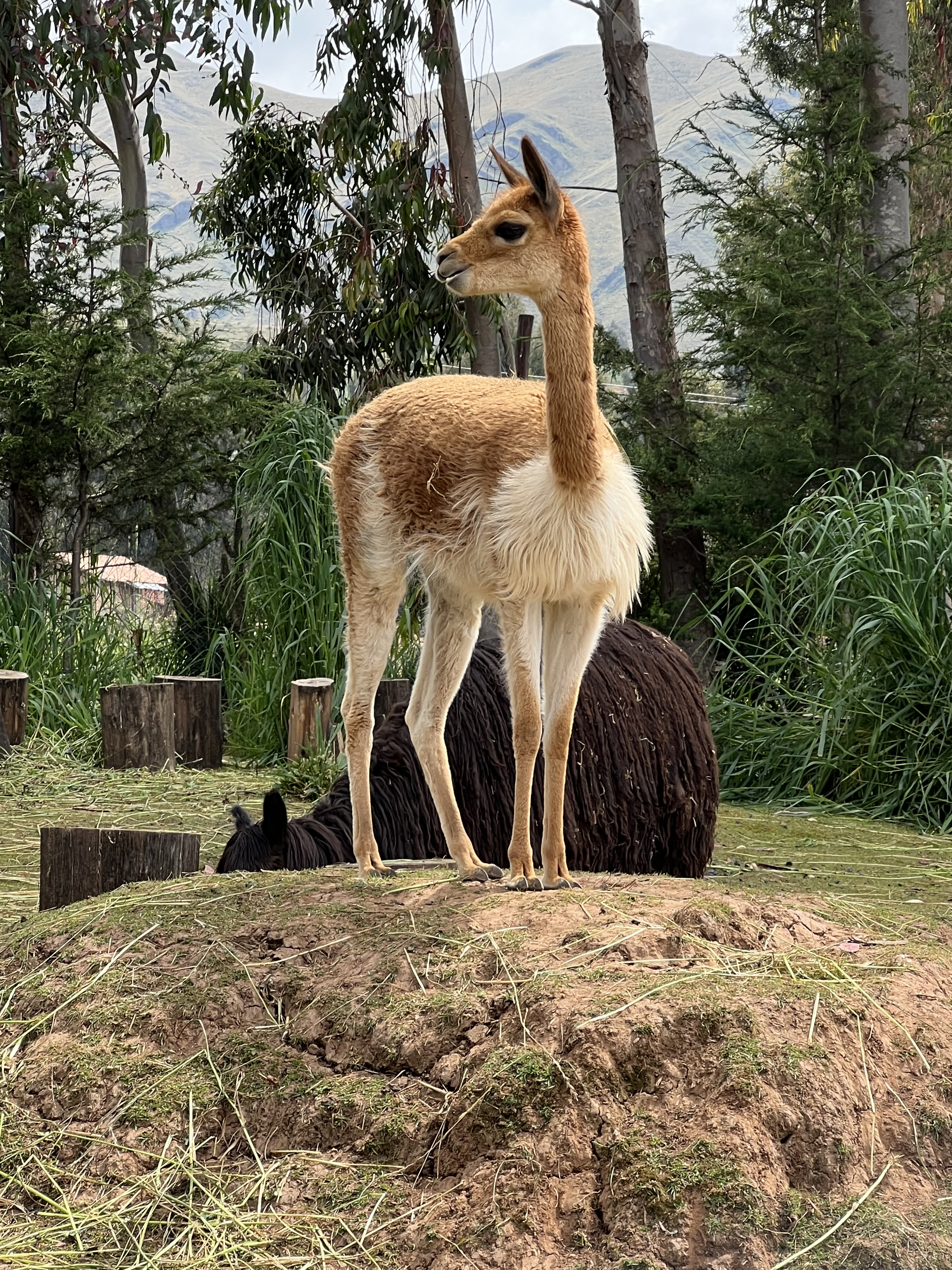
LOVE THIS FACE!

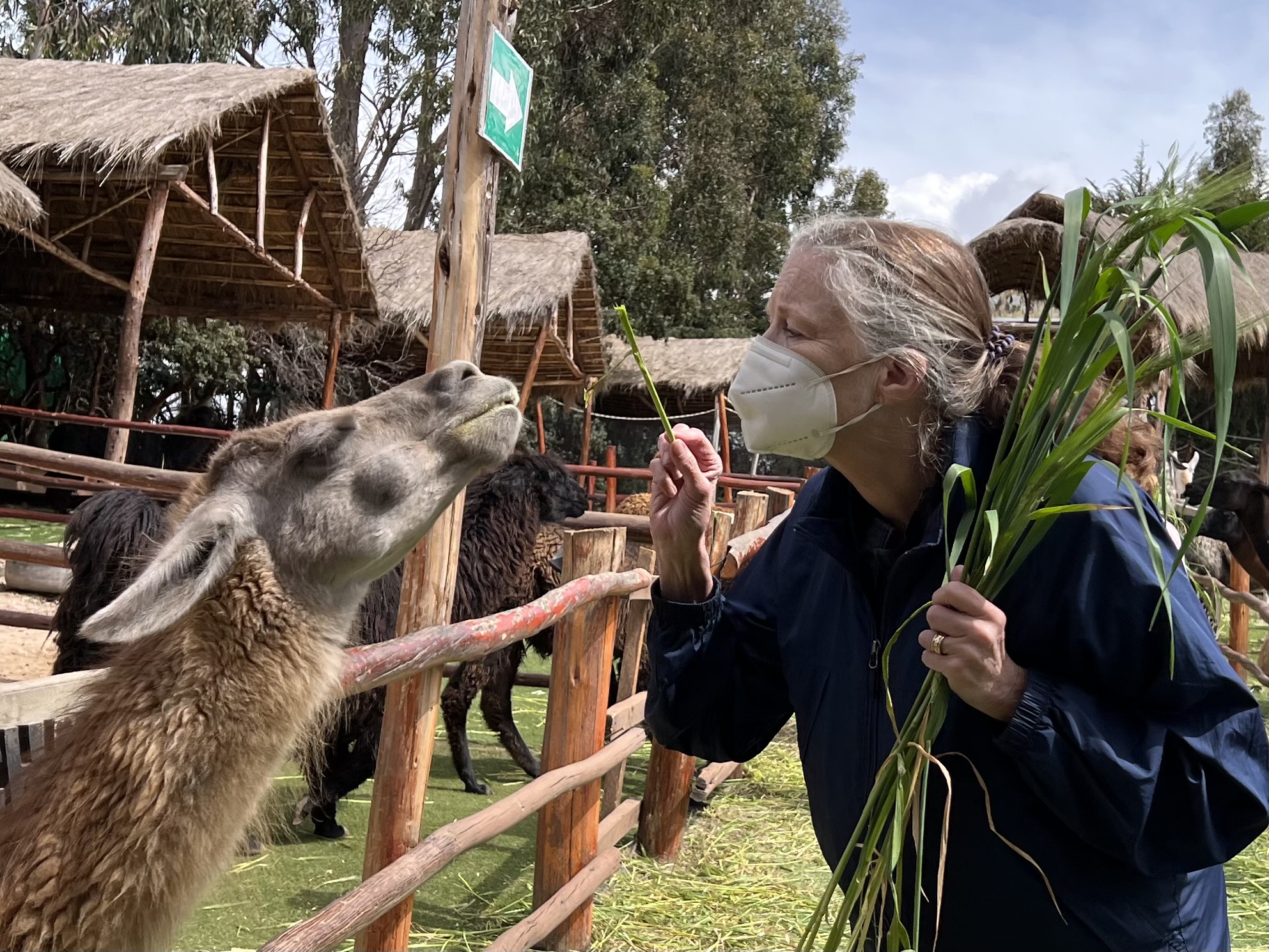
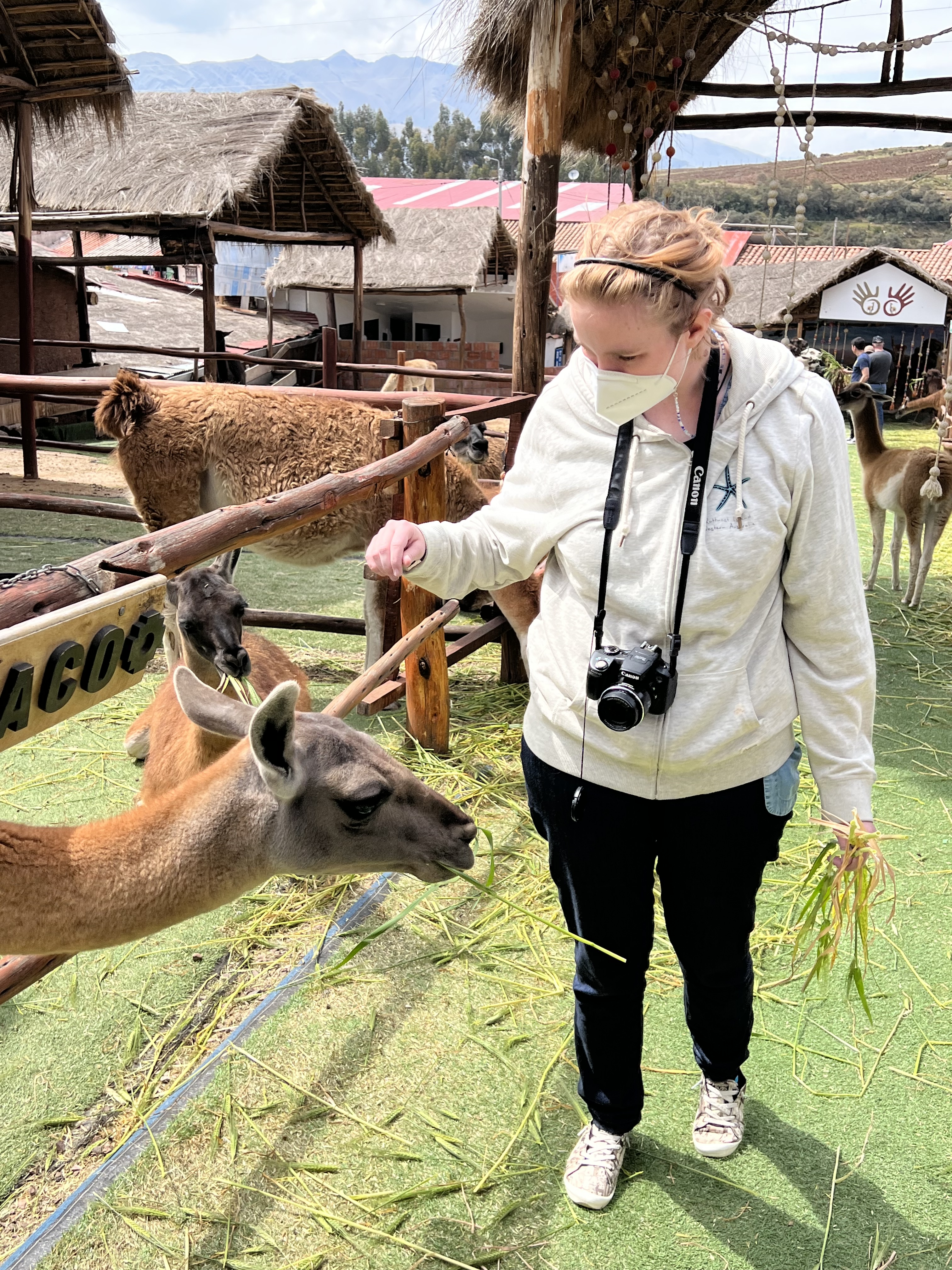
We flew out very early the next morning and Ron and Sergio met us at the airport without the issues of a strike! WOO HOO! Sergio took us up over the hills and into the Sacred Valley. We stopped at a location near the top that had various camelids and beautiful handmade items.

We were also able to feed the animals. They really enjoyed it!

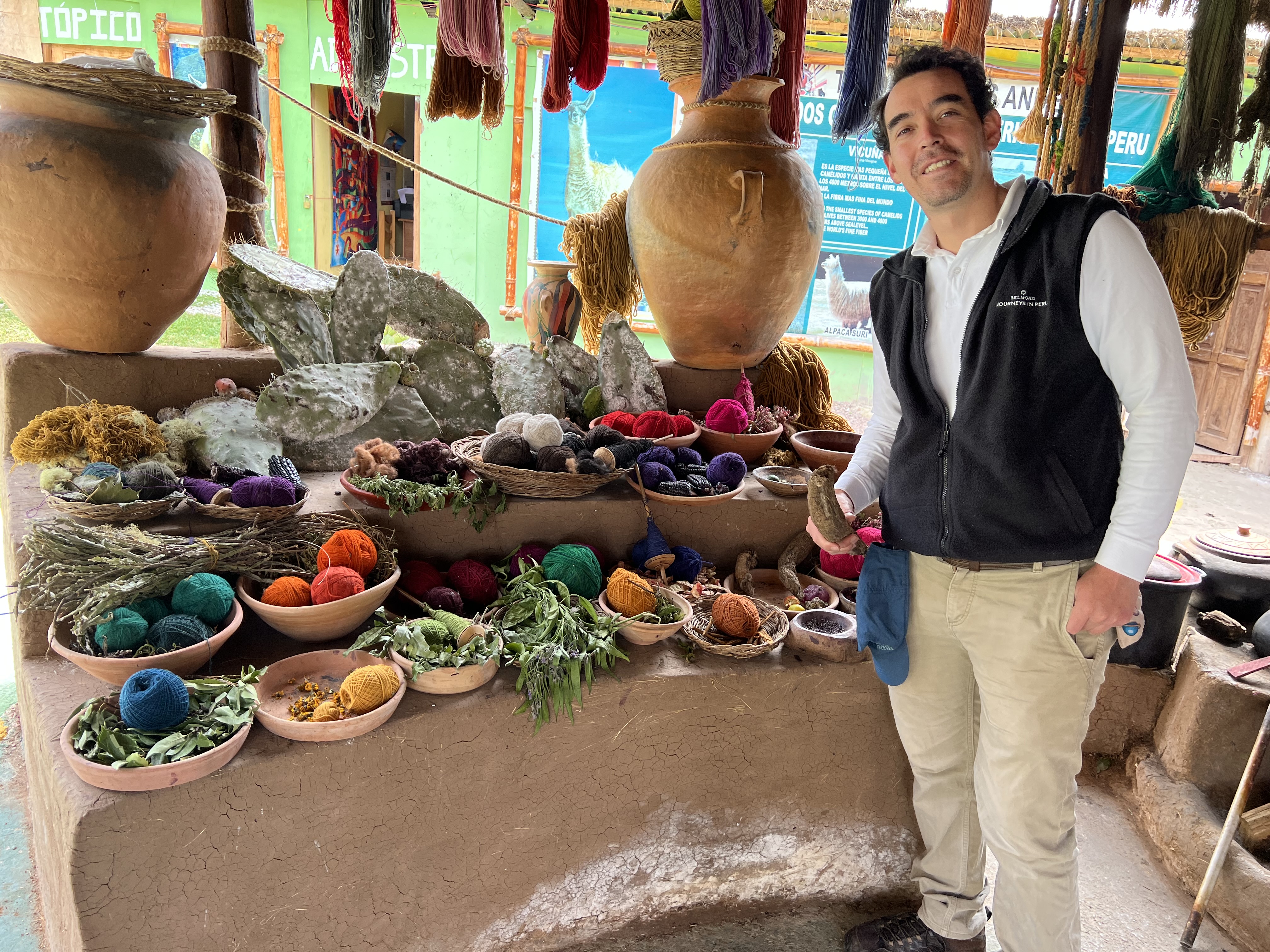
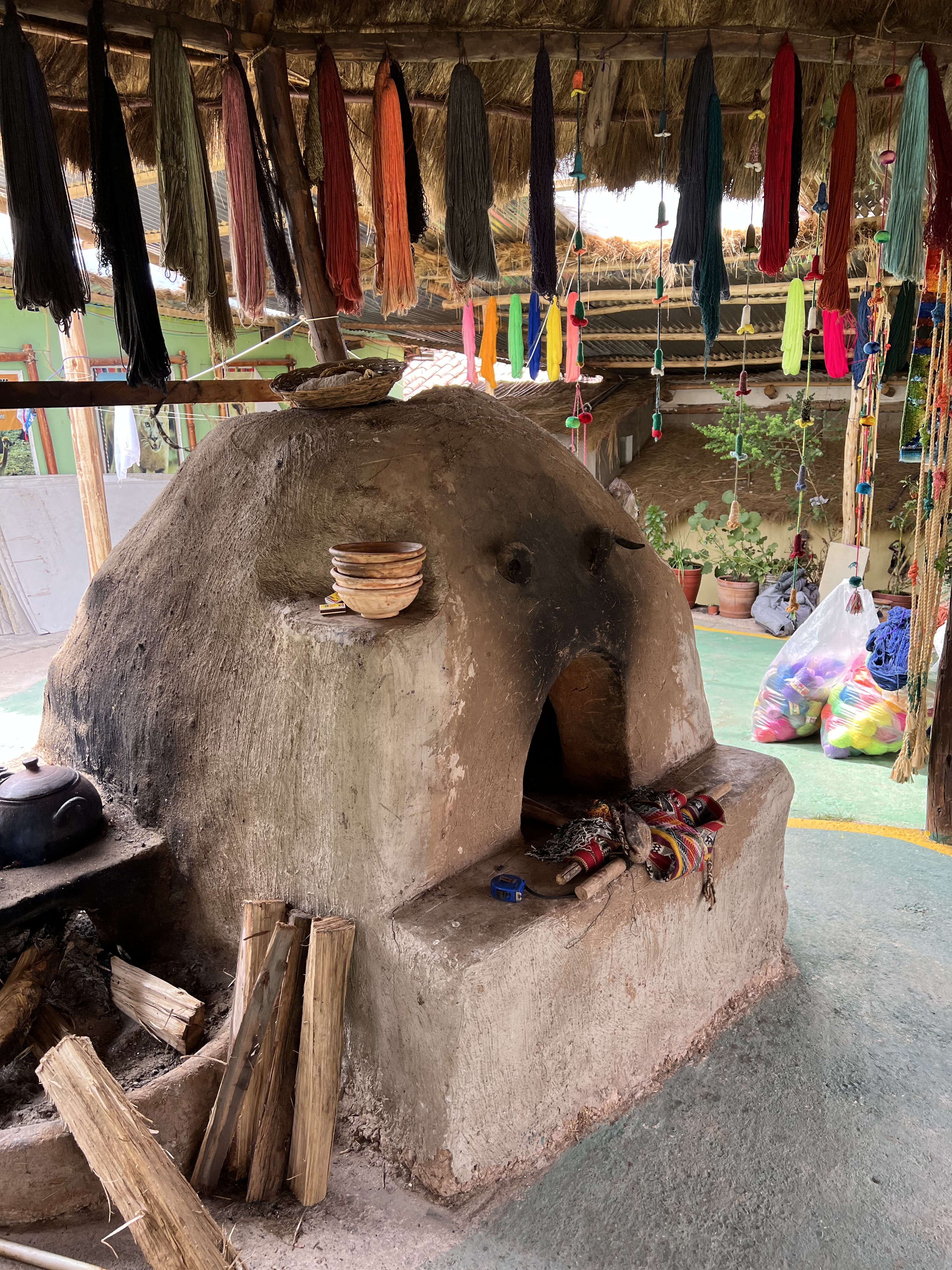
Sergio showed us the various fibers and what was used to dye them to the perfect color!

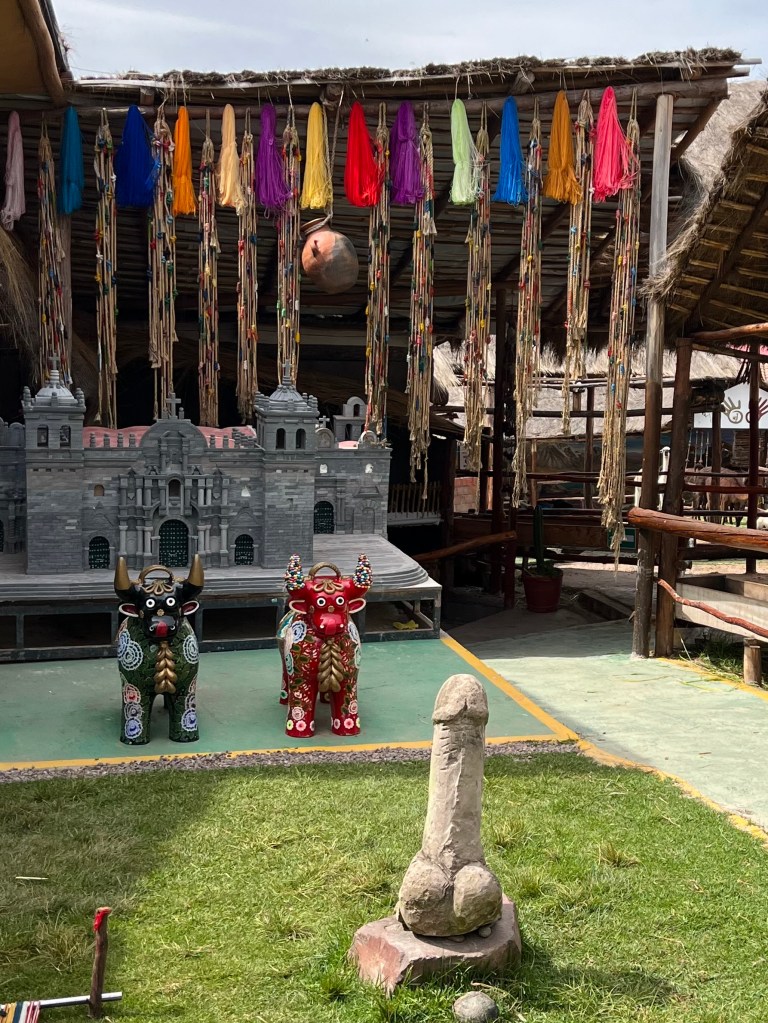
DON’T YOU LOVE THE PAINTED BULLS?

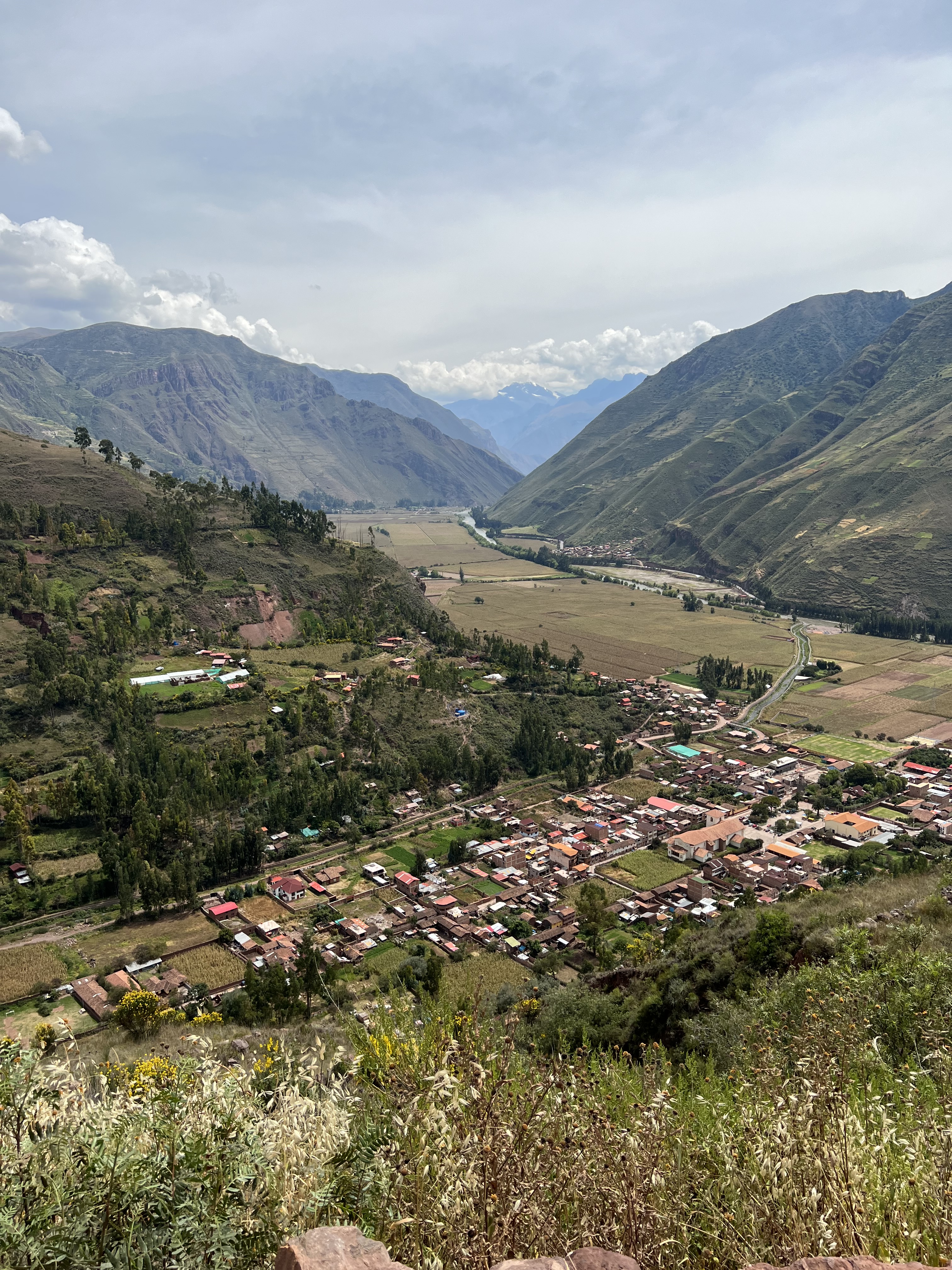
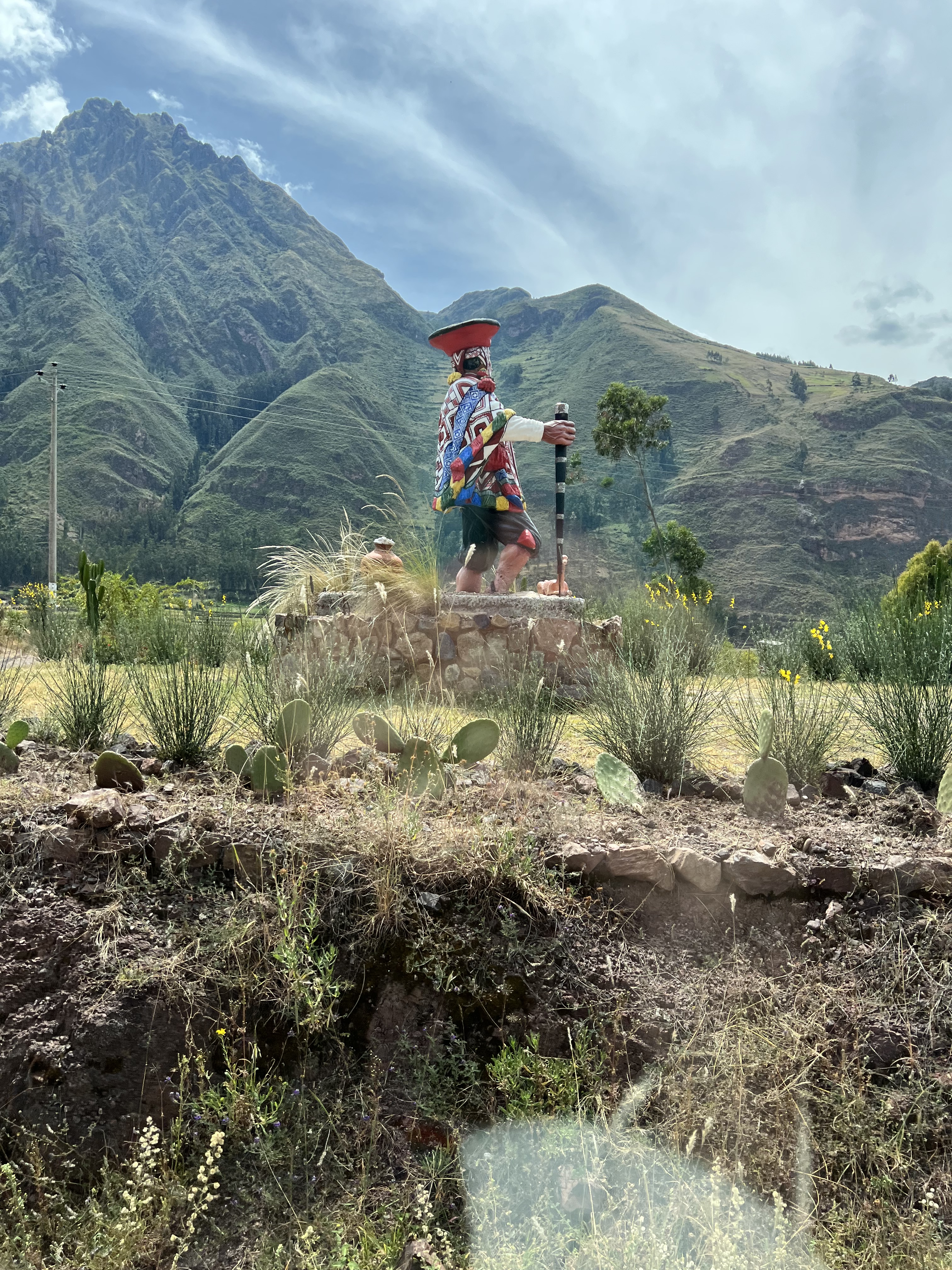
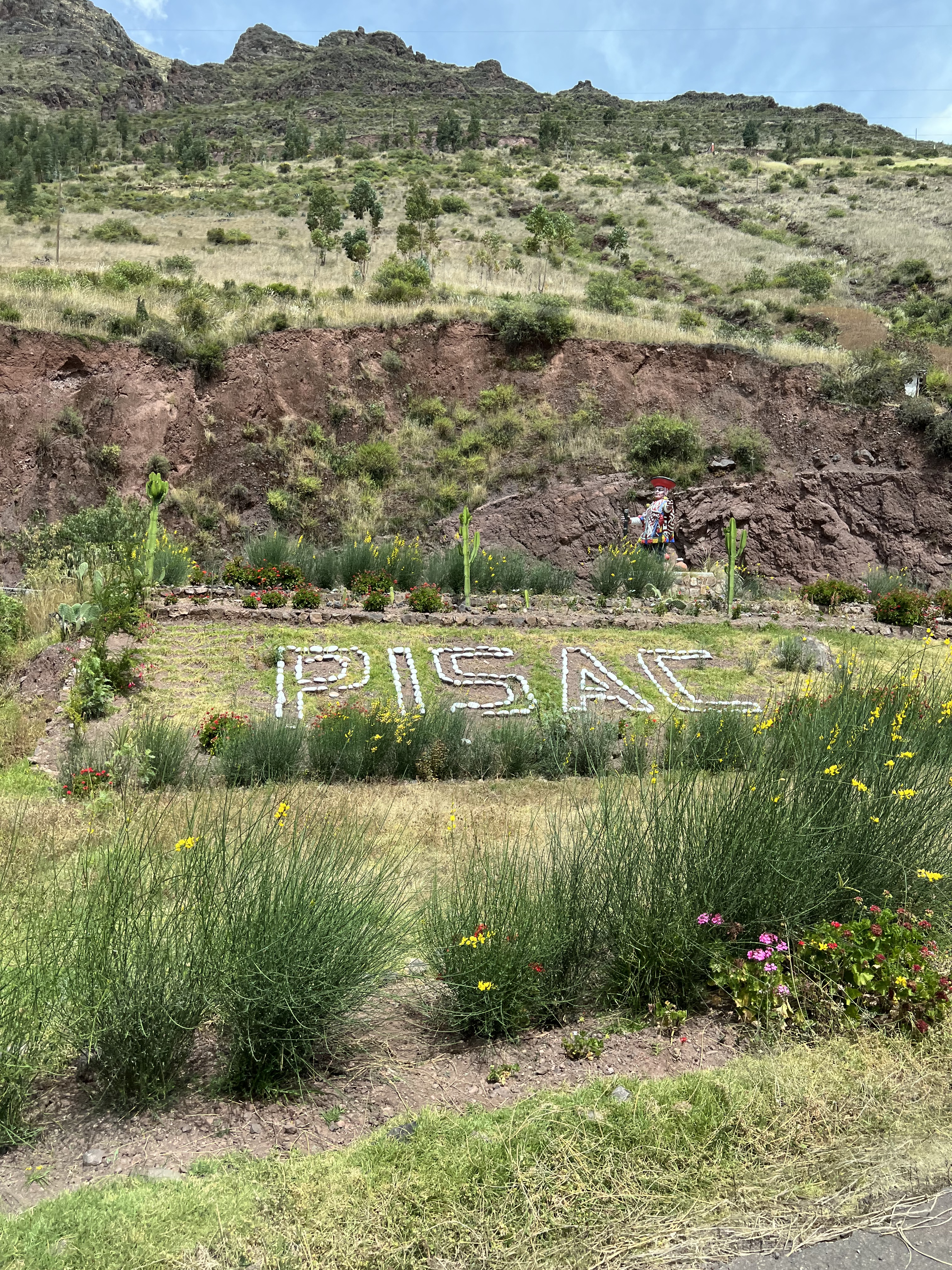
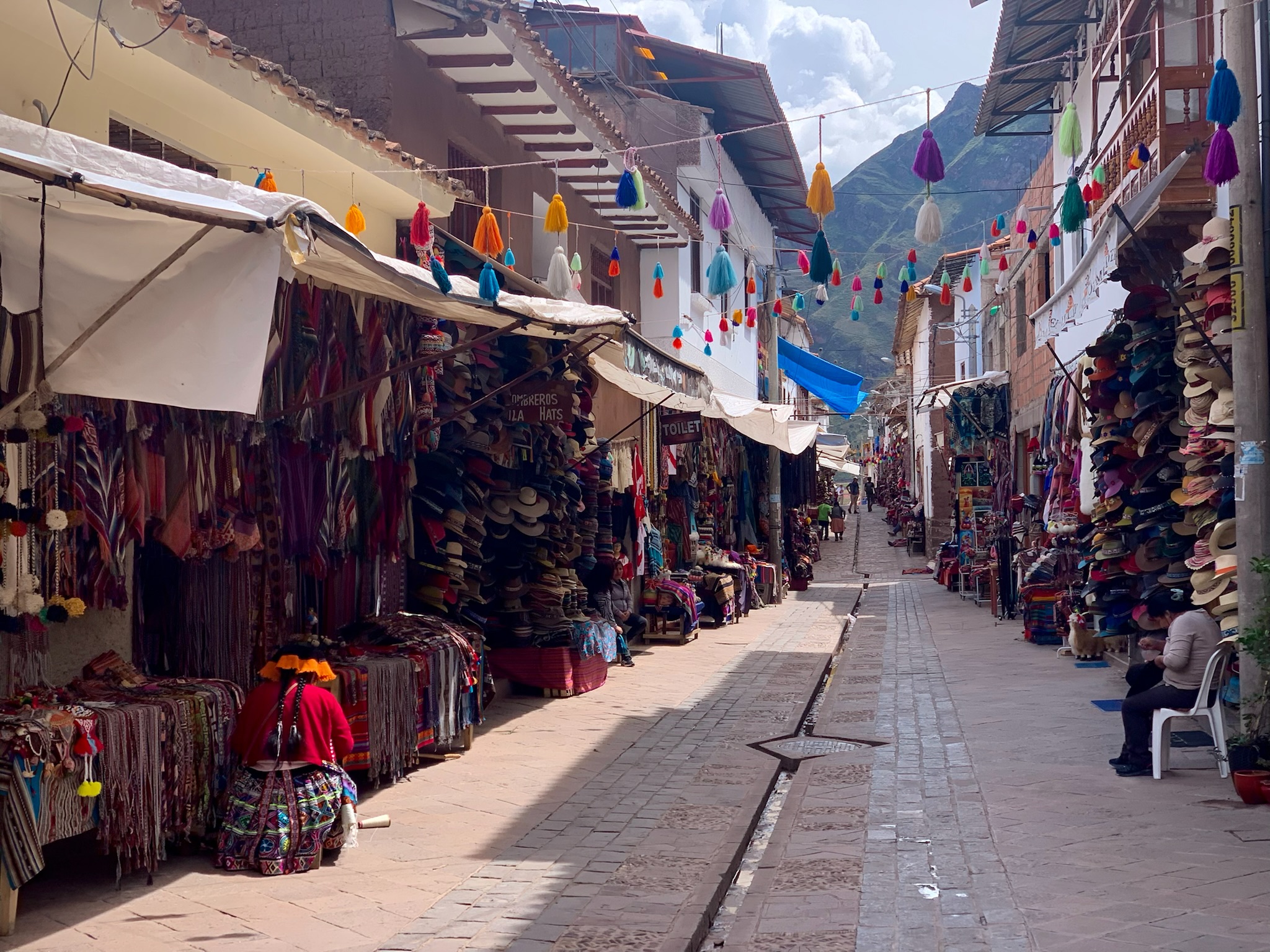
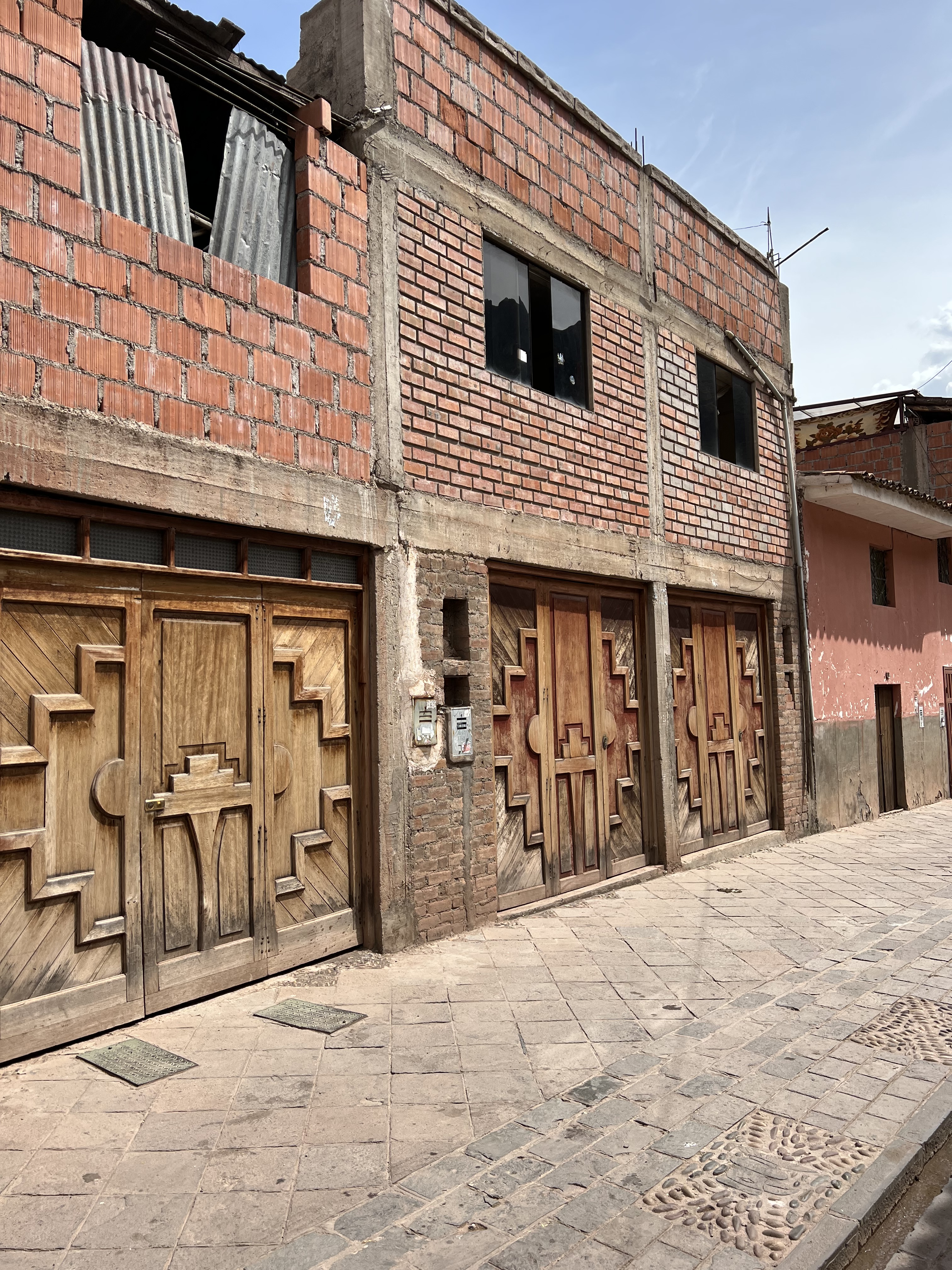
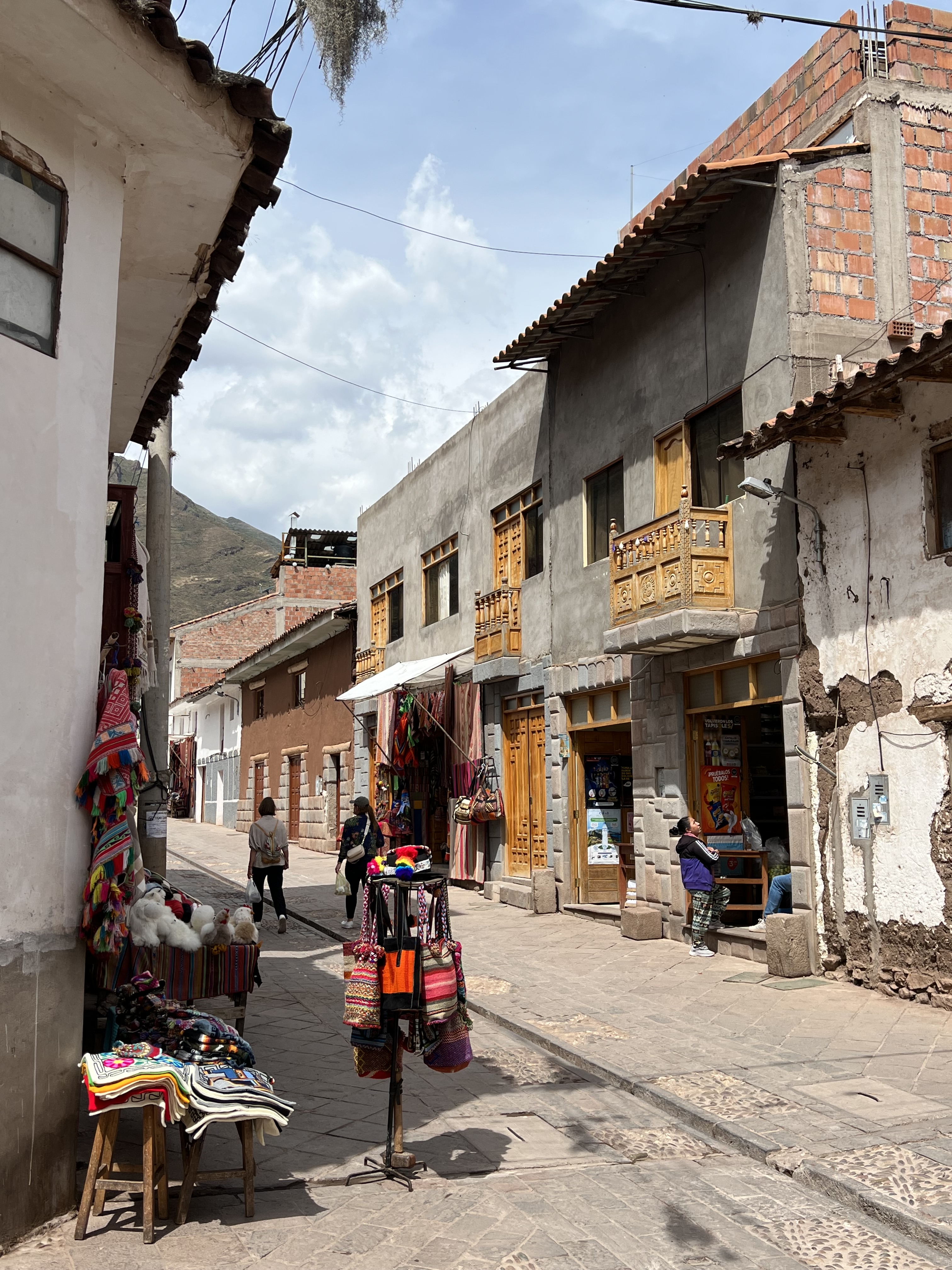
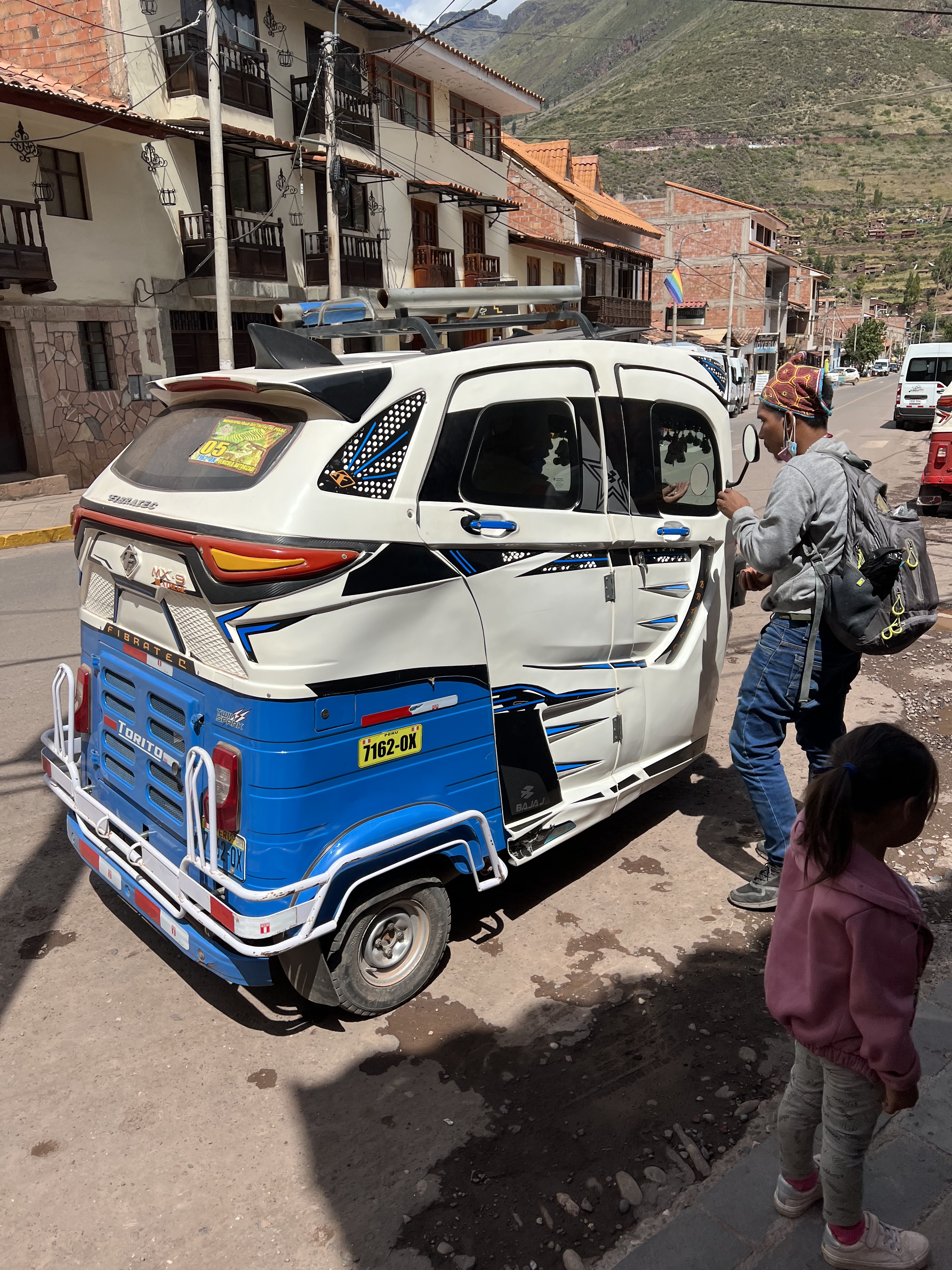
Walking around Pisac once again gave us a feel for the Andean/Incan/Peruvian people and their lifestyle.

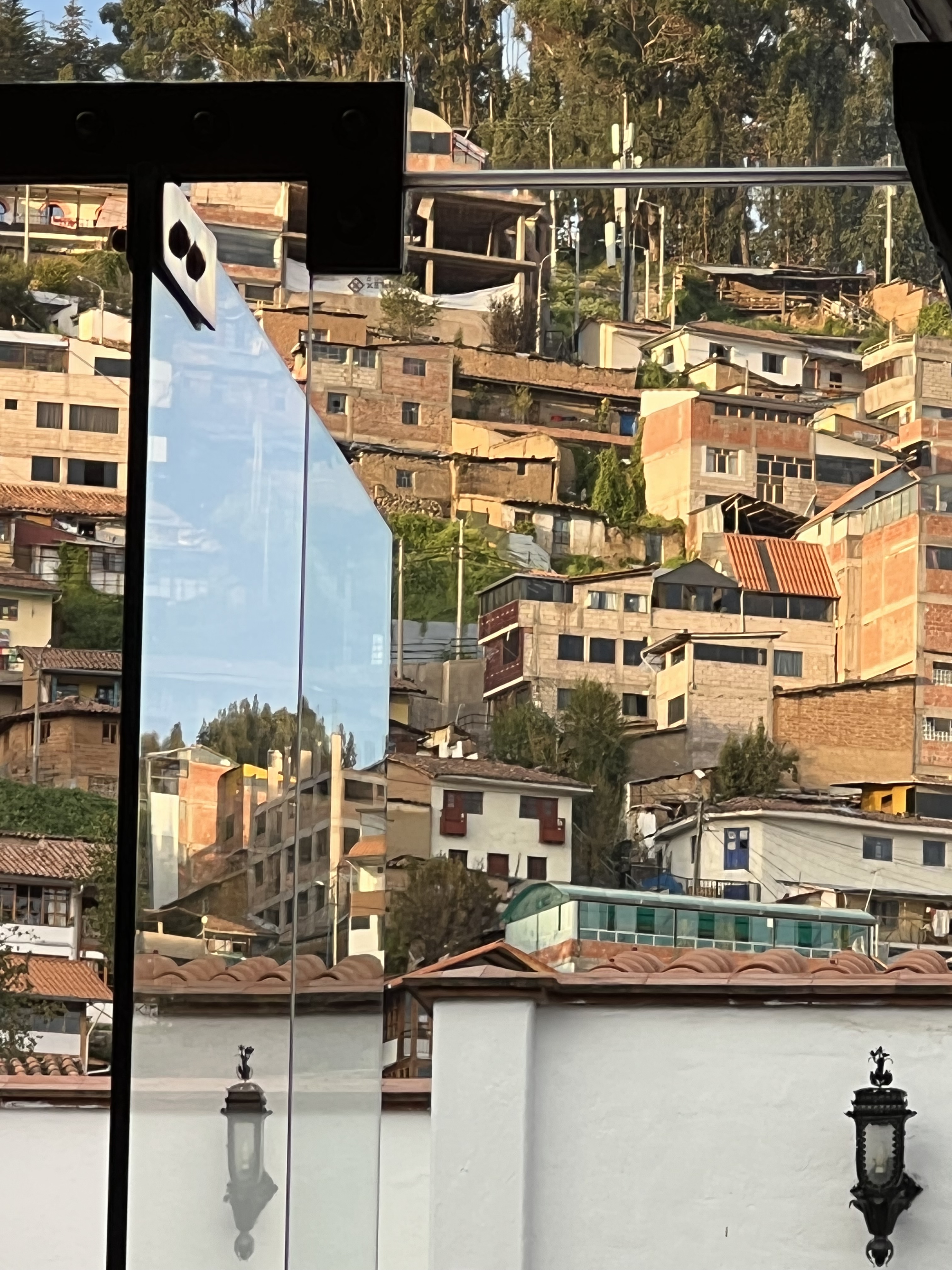
Reflection of our last evening at Palacios Nazarenas. I’m ready to go back!

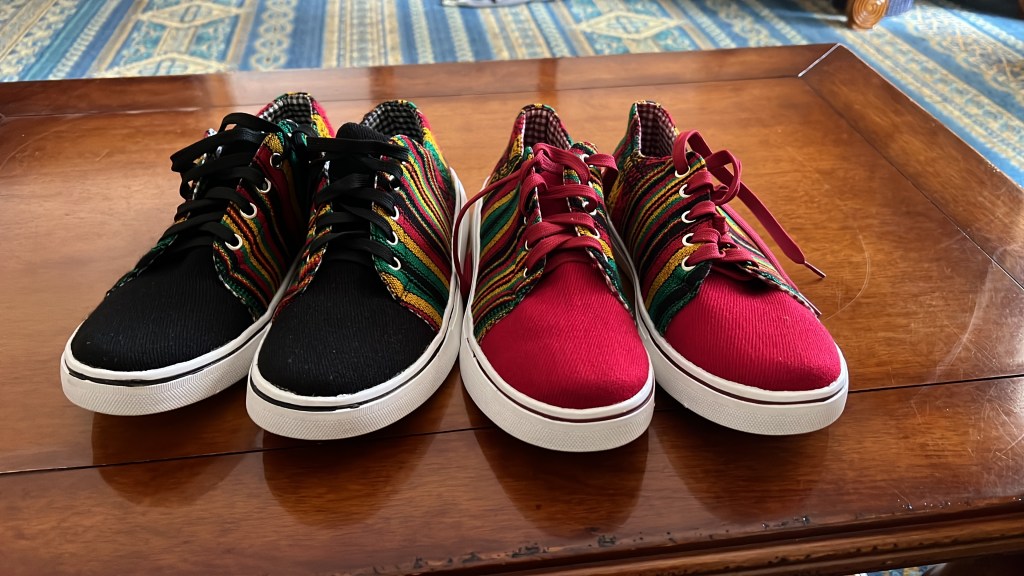
We found some Andean shoes

Larkin and I tried on shoes in Pisac and found some wonderful shoes but alas they did not accept credit cards and my supply of American cash was almost non- existent! When we arrived back at Palacios Nazarenas we were told where we might find Incan shoes – woo hoo! We did! Next time more cash!

AWAITING OUR LAST COVID TEST BEFORE FLYING HOME!

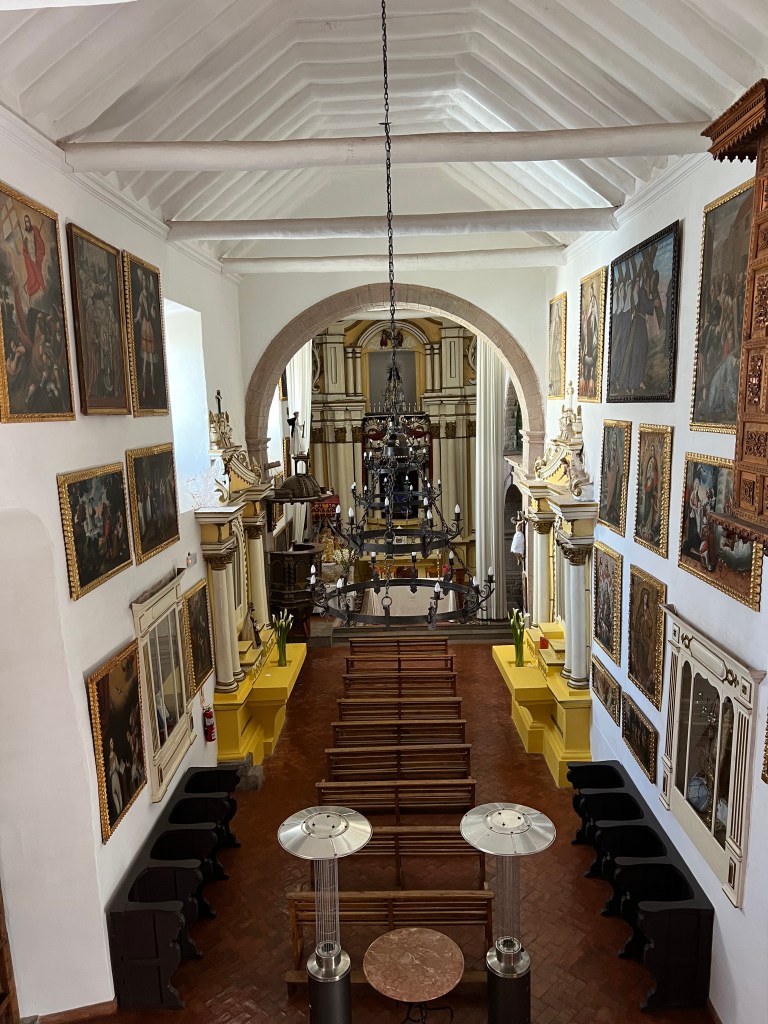
Home…we were ready to get home but first a negative covid test. We awaited the results overlooking what must have been a chapel! After two weeks in Peru with masks everywhere we went – we were NEGATIVE! Home awaited us! We were ready to get home, pack up and drive Larkin to her new home in Blacksburg, Virginia!

TO AREQUIPA

BEFORE AND AFTER!

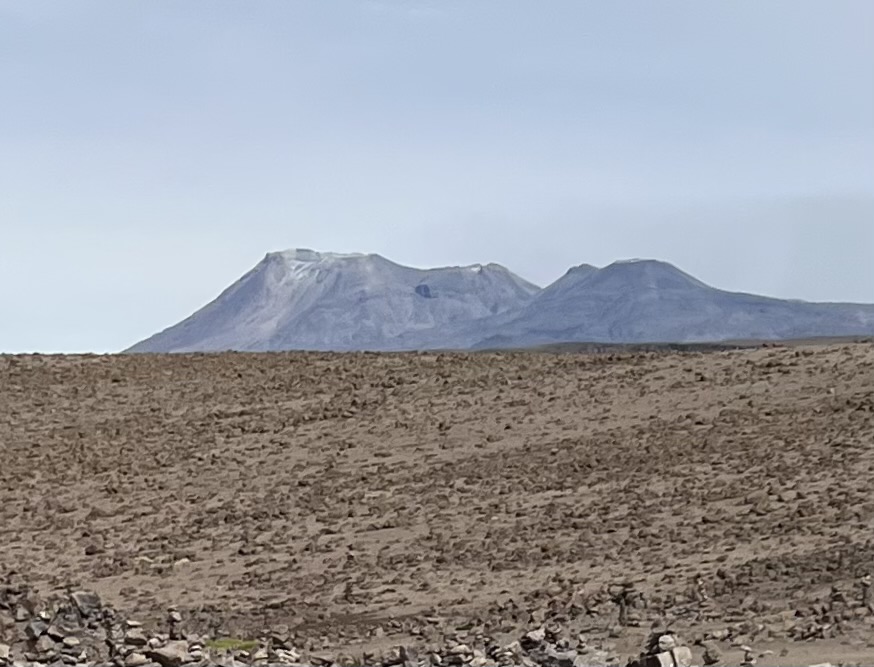
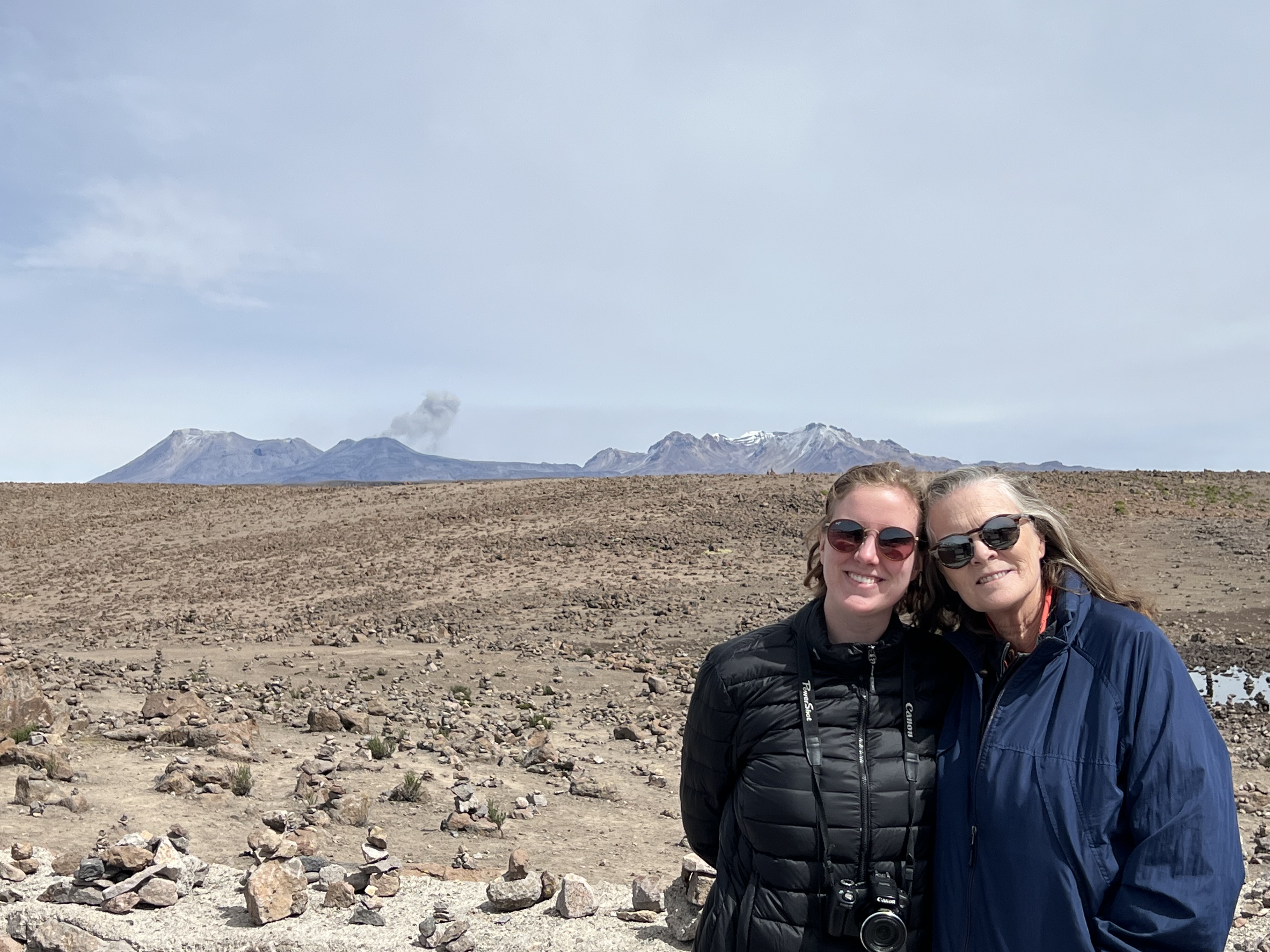
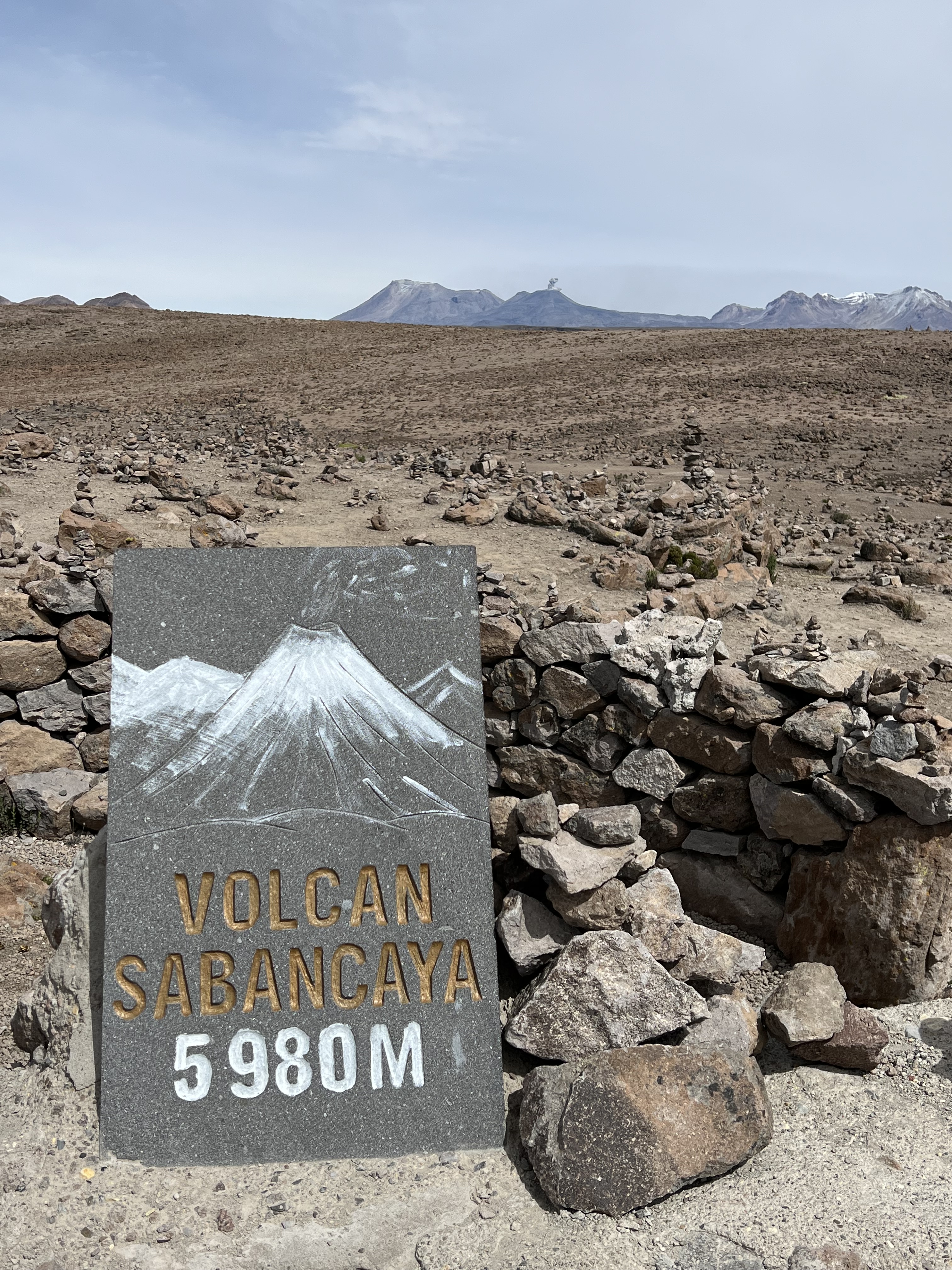
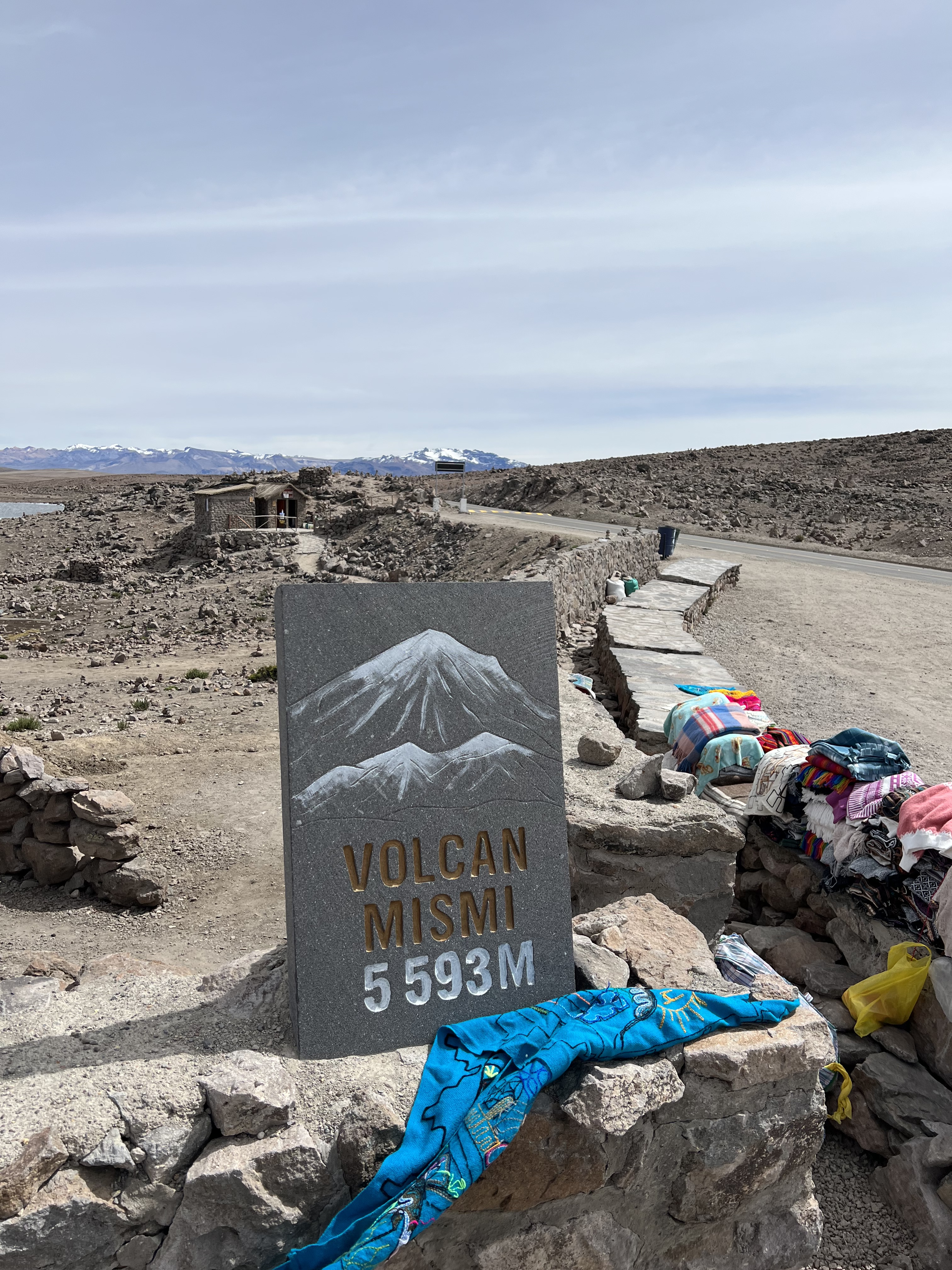
When we arrived in this high plateau area, viewing volcano after volcano, I took a photo of Sabancaya…within minutes Gaudy said, “look it’s going up!” So I guess Larkin keeps being lucky with volcanoes! Eventually I will post our Galapagos trip and the Wolf Volcano which started its eruptions the night we passed by! Maybe when we visit Iceland one will erupt!

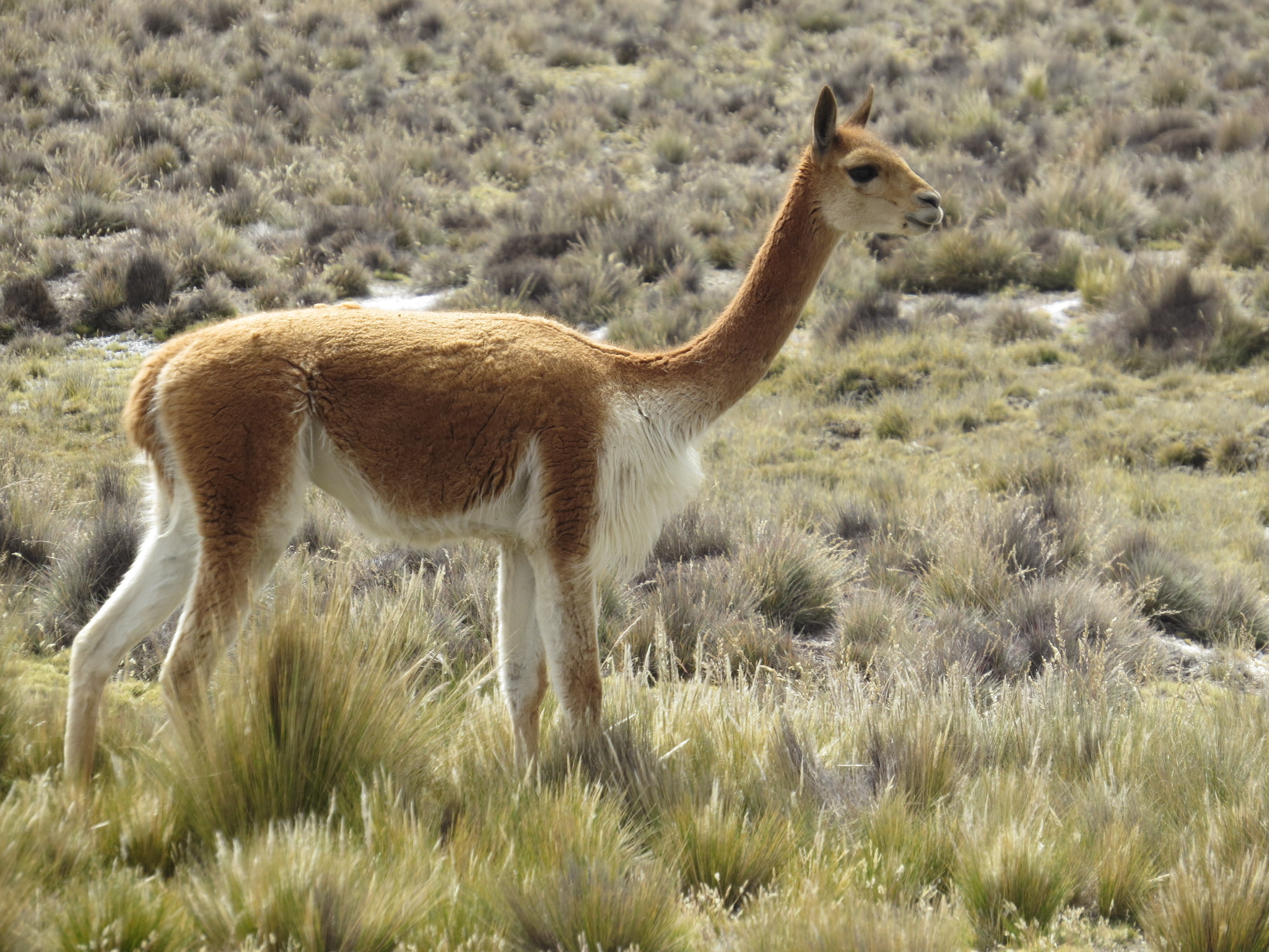
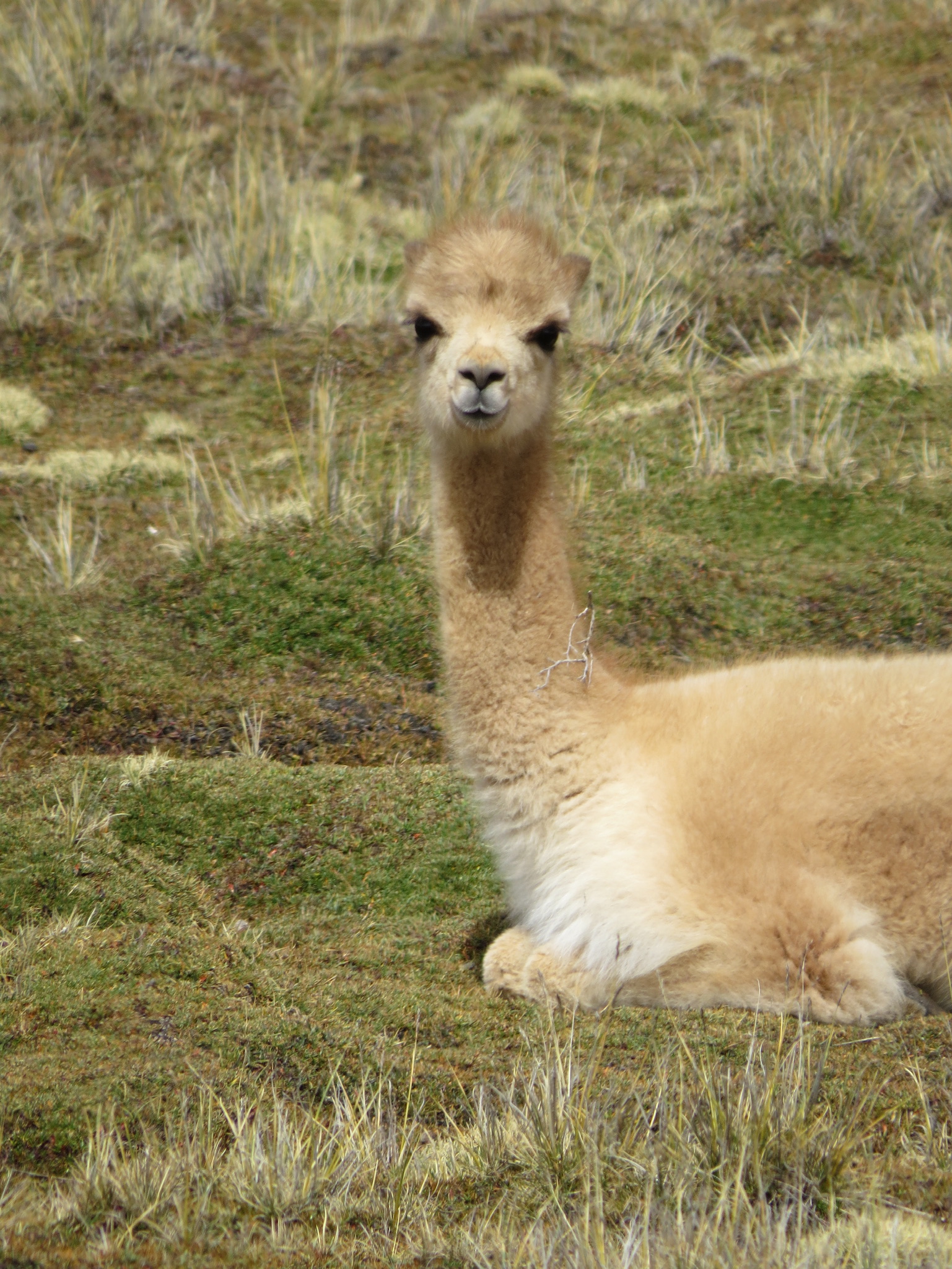
These are the wild illusive Vicuna which ran as soon as our van approached.

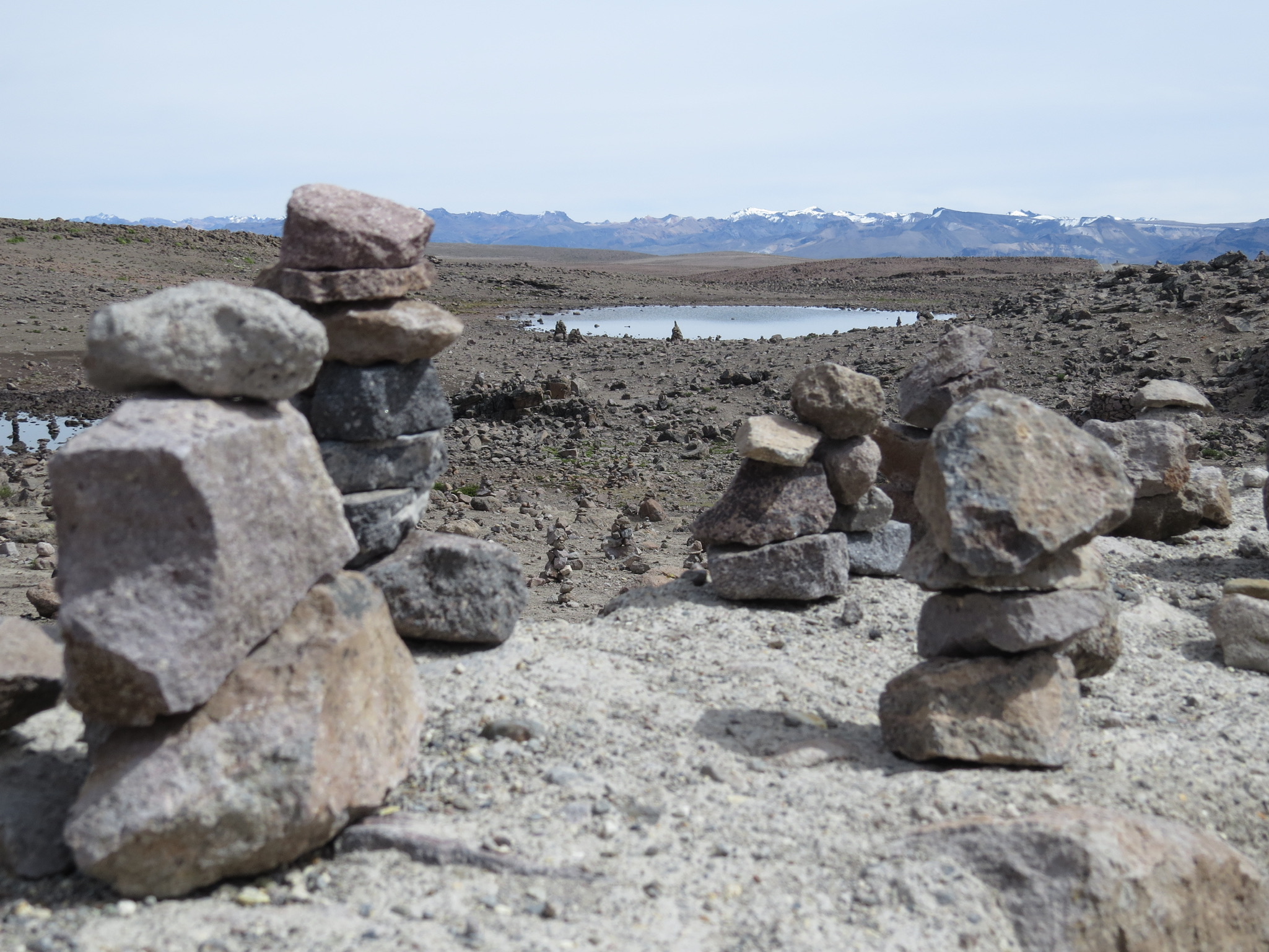
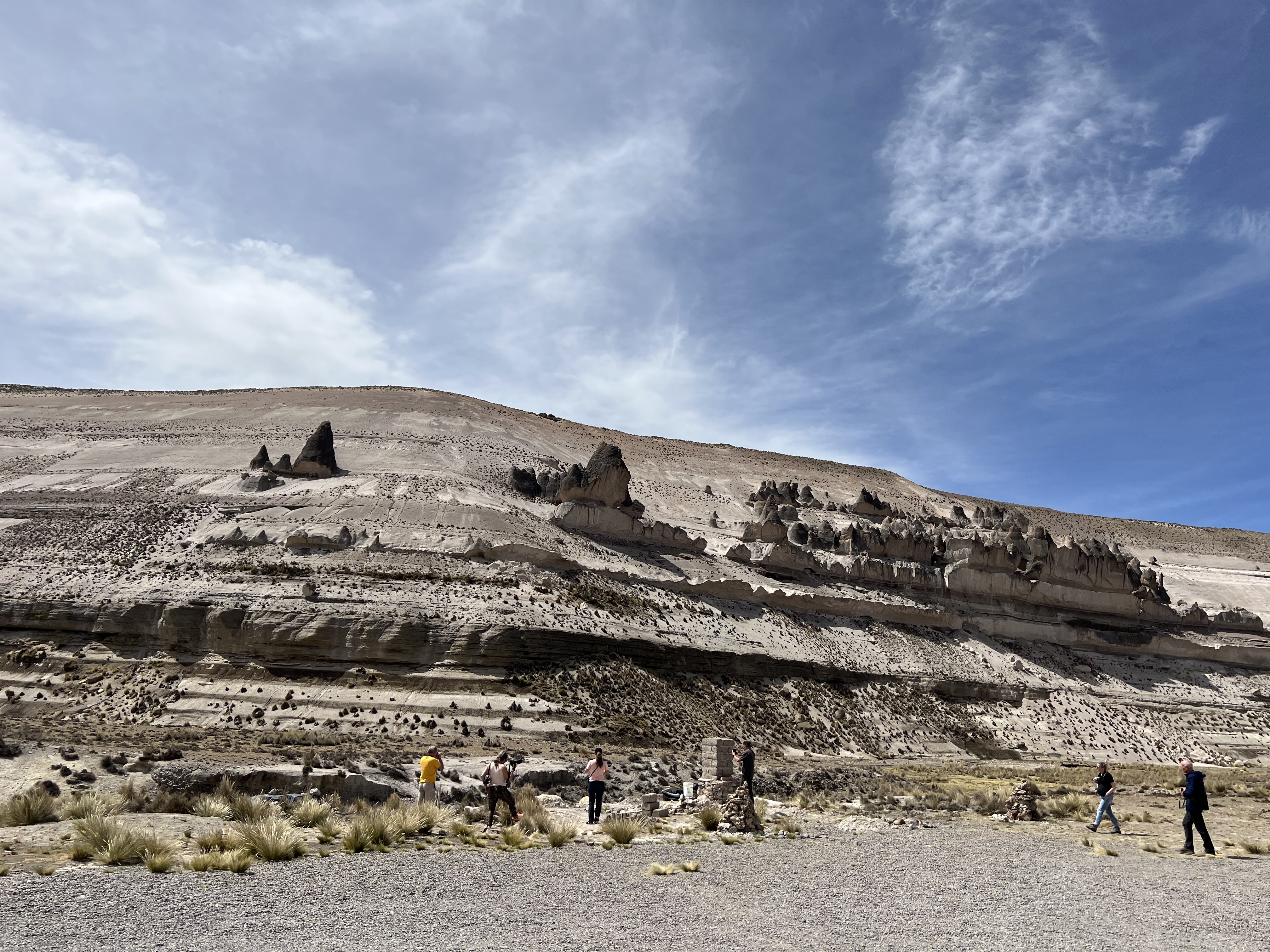
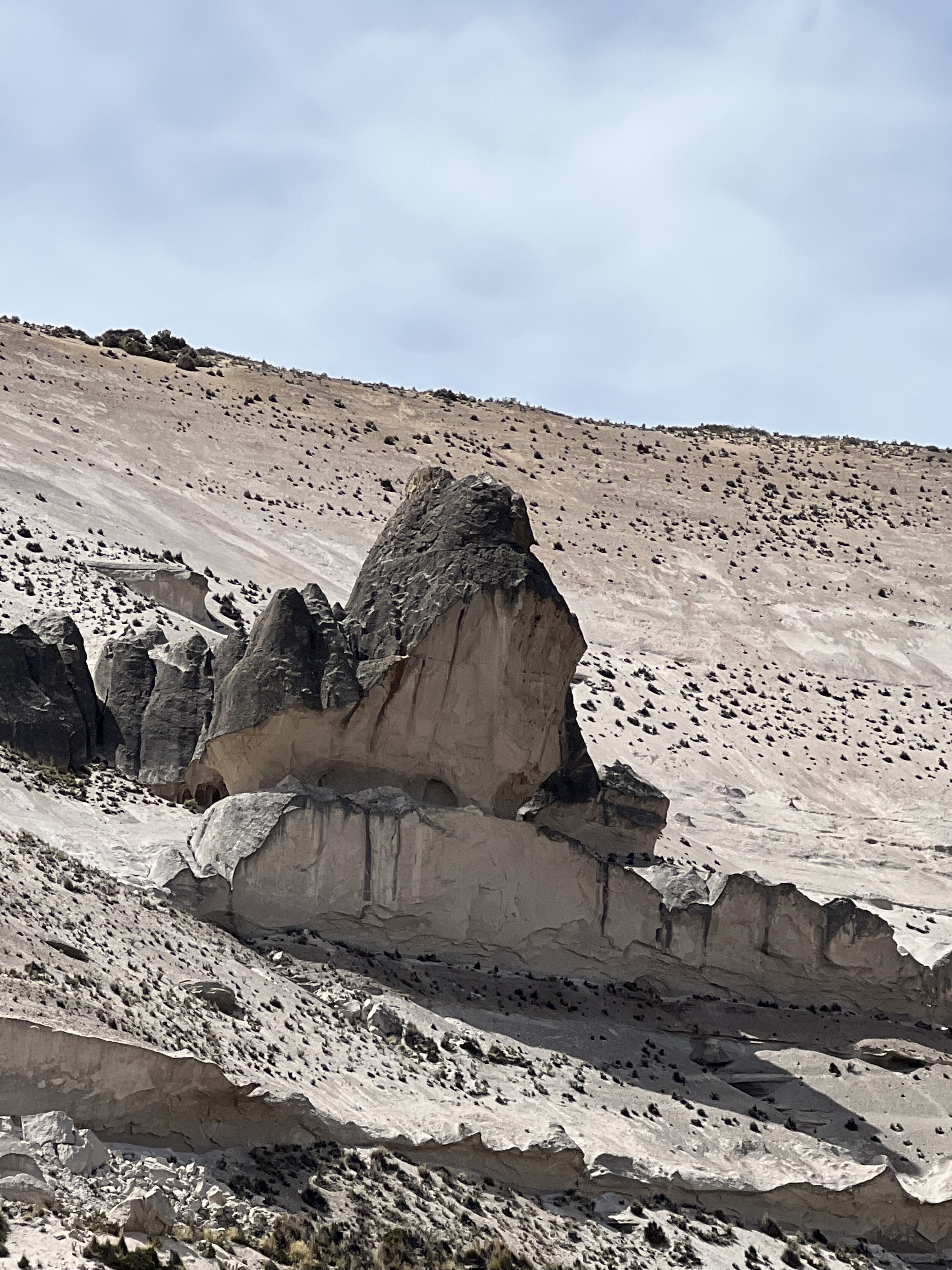
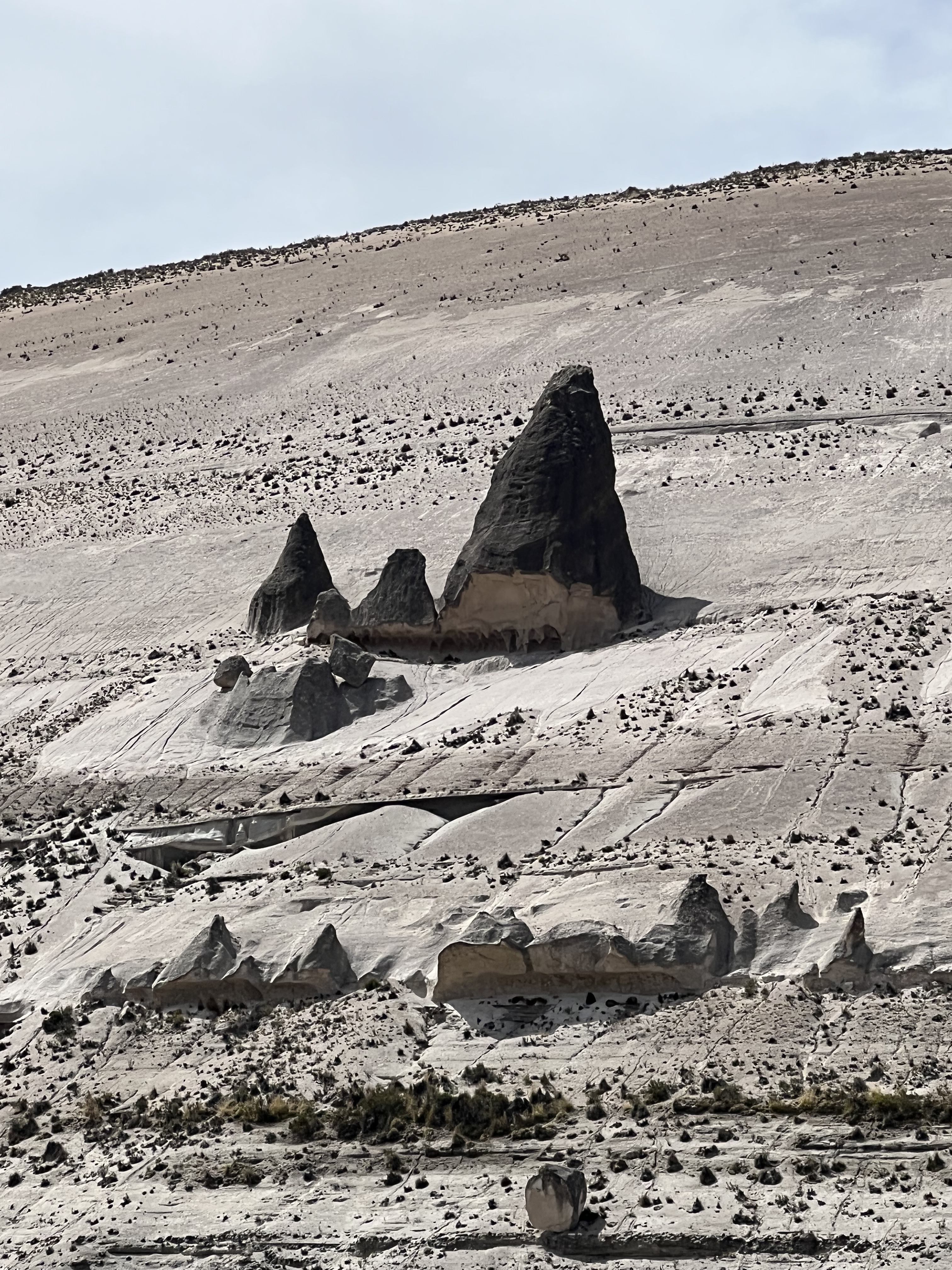
The road from Colca Canyon to Arequipa that we were on travels through the Salinas and Aguada Blanca National Reserve. We went back past the area near the Sumbay Caves which we had seen two days before and headed up the mountain pass until we started back down into Arequipa. This area is underrated yet spectacular destination providing vistas of volcanoes, lagoons, and unique flora and fauna that thrive in this extremely high elevation.


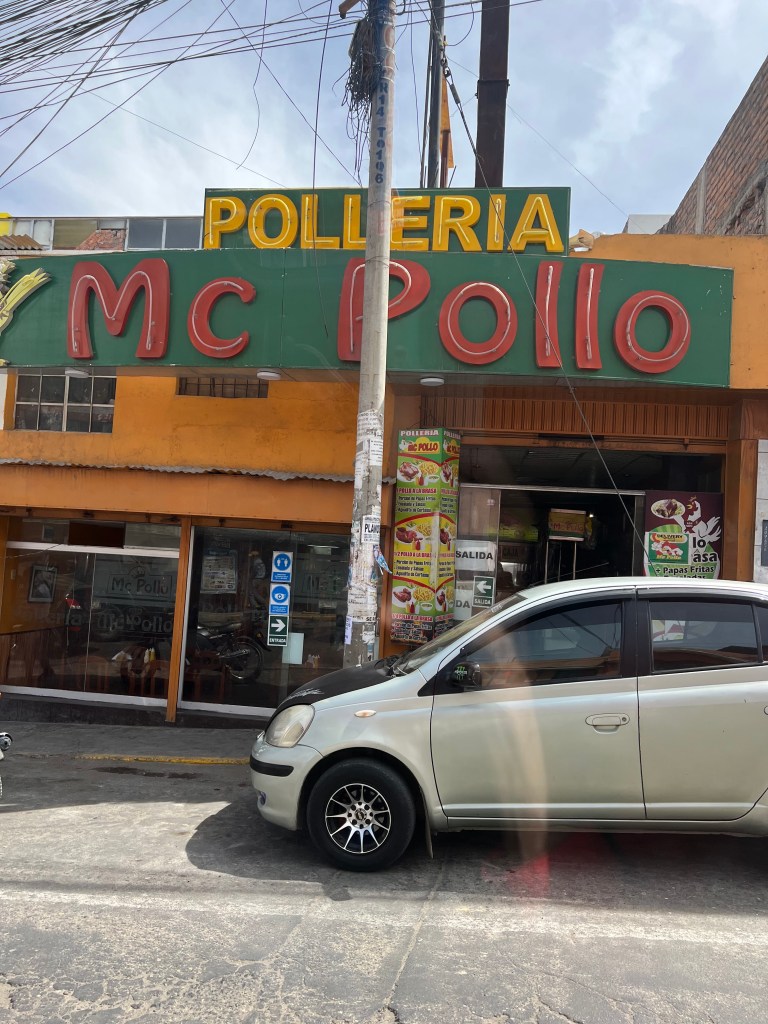
LOCAL MCDONALDS?

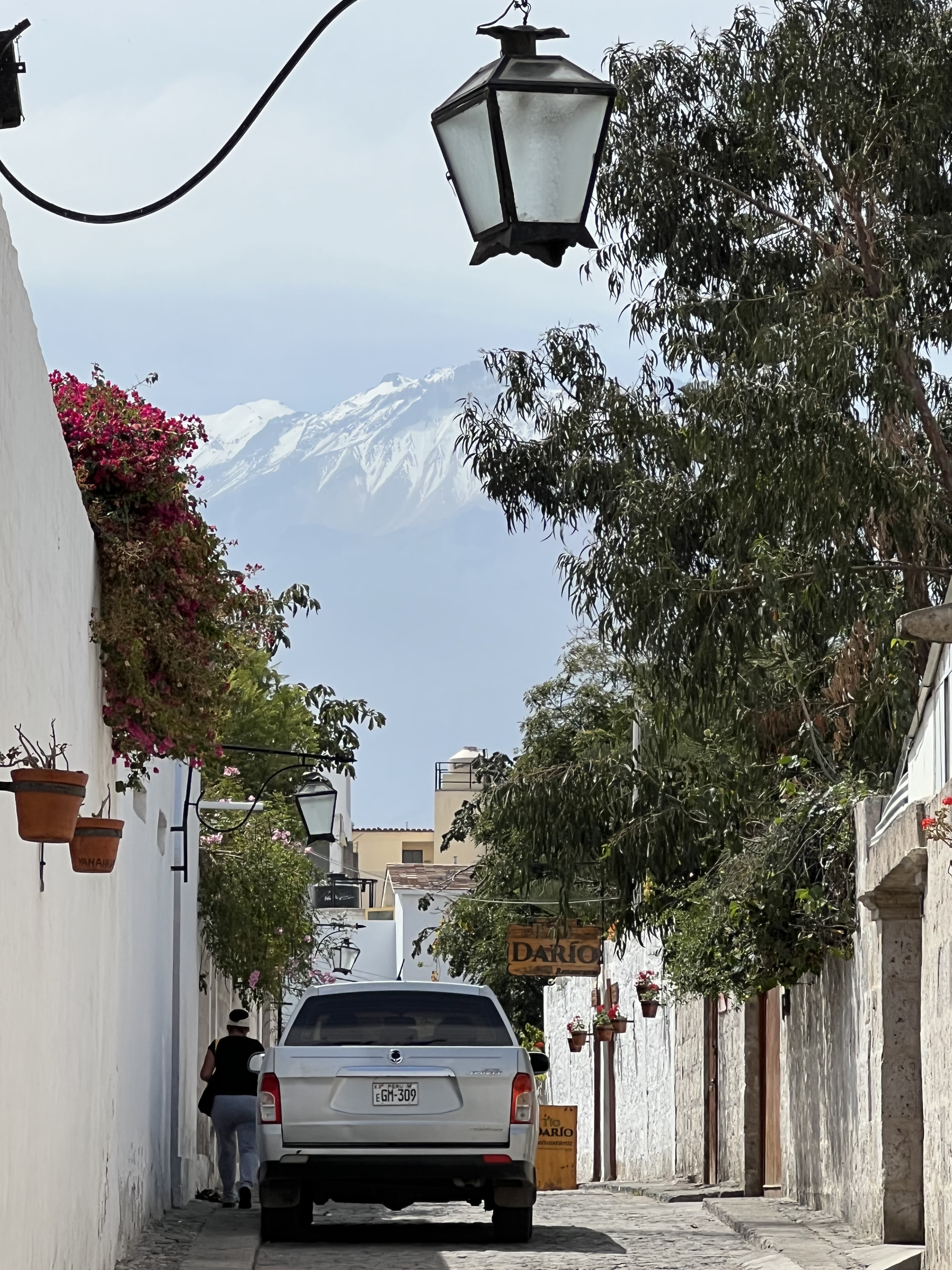
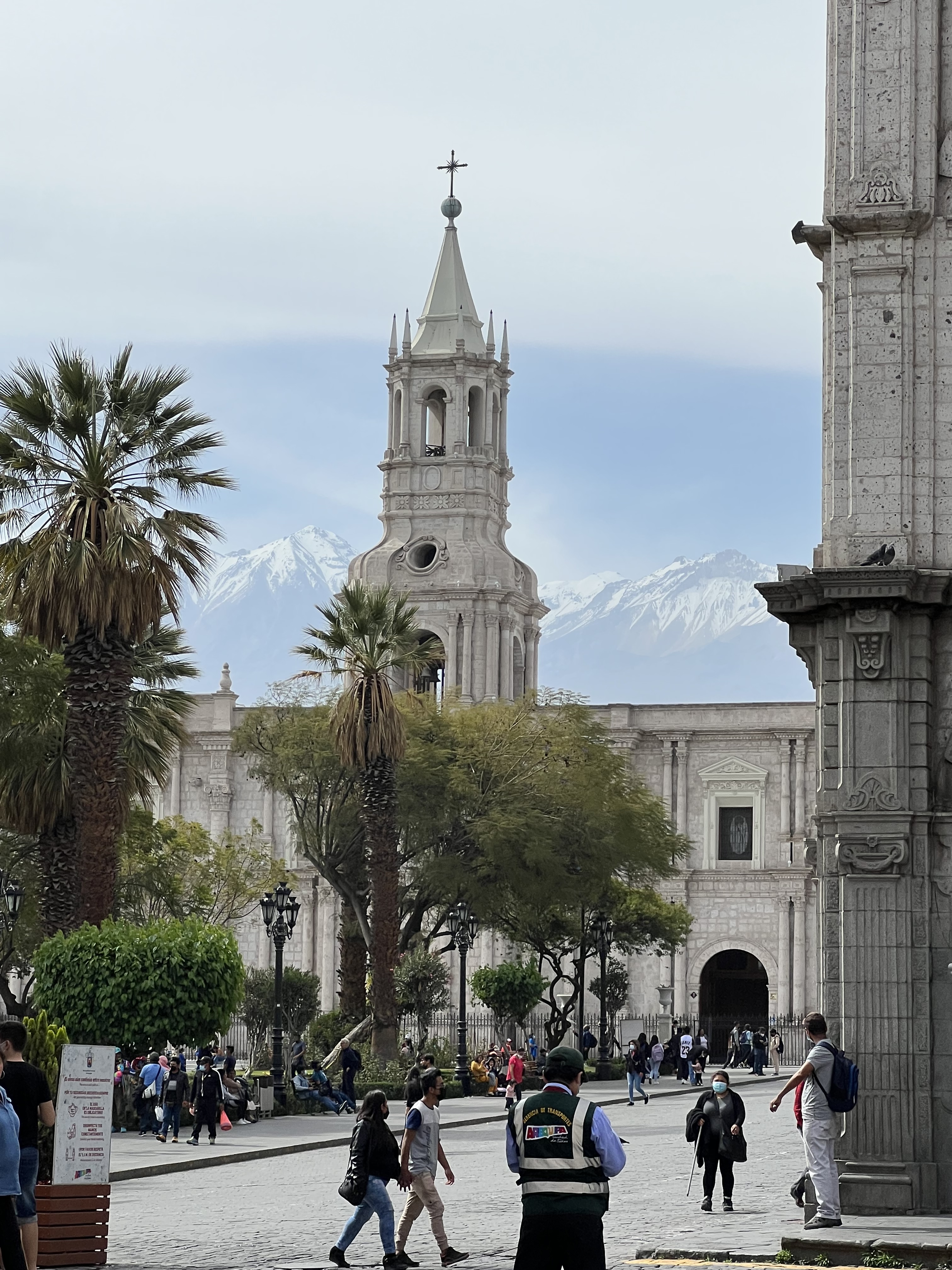
The beauty of Arequipa was the “white” city and the snow capped mountains in the distance!

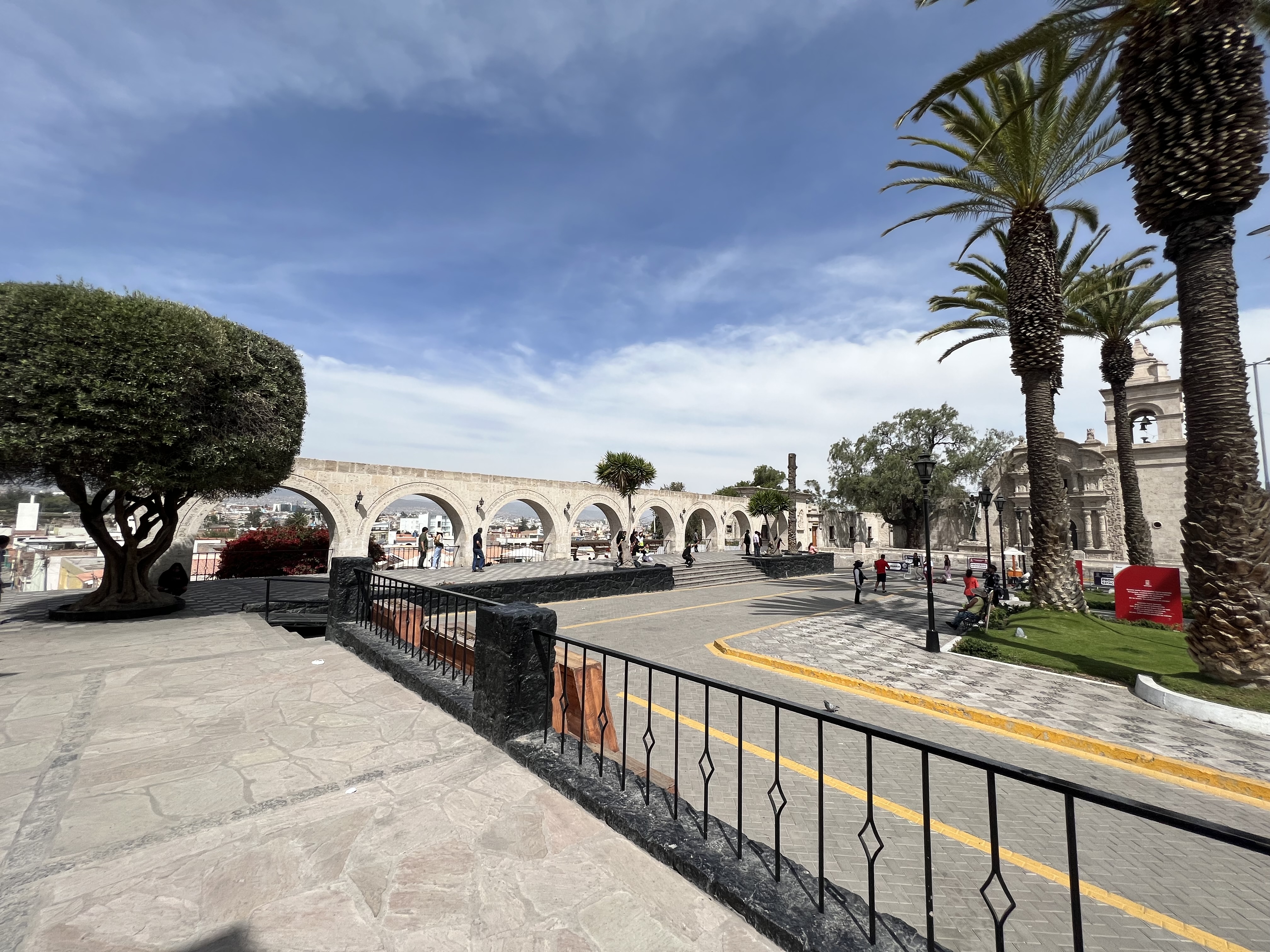
We stayed at Cirqa in what I believe was the Apostento room. We were only a few blocks off the main square. Walking was somewhat easier at this elevation of 7,550′ which seemed much more like walking around Aspen at their Food and Wine festival!

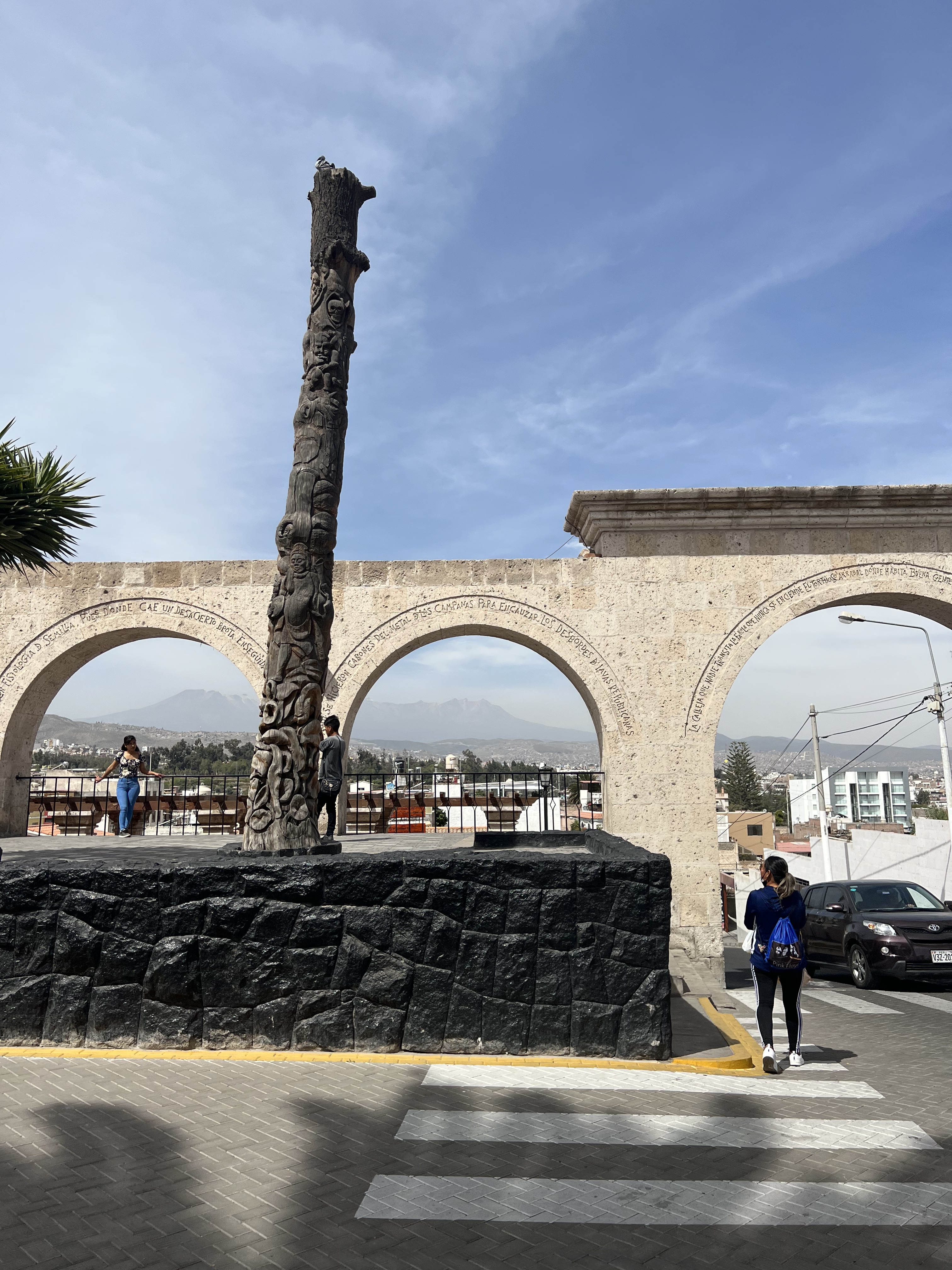
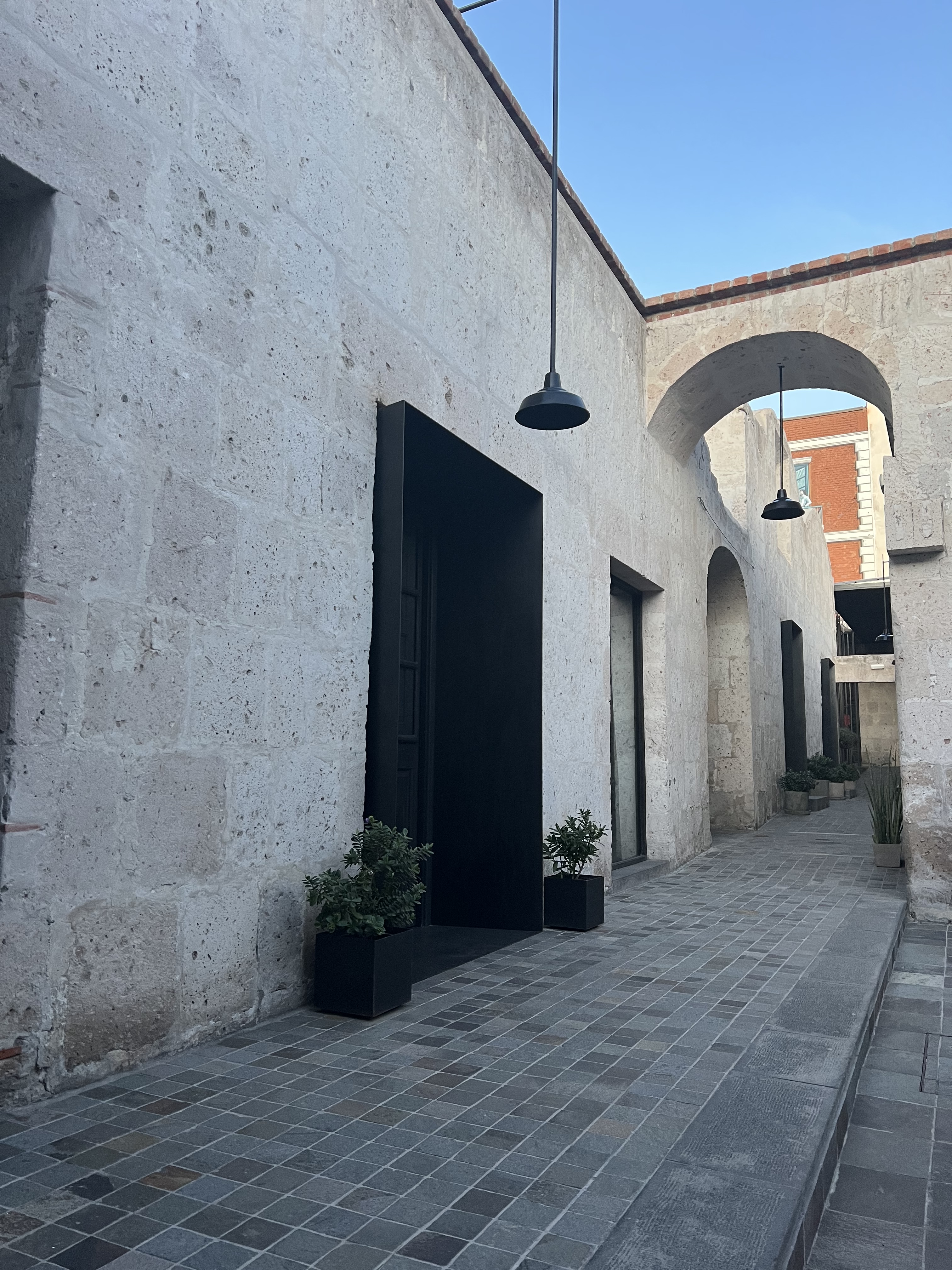
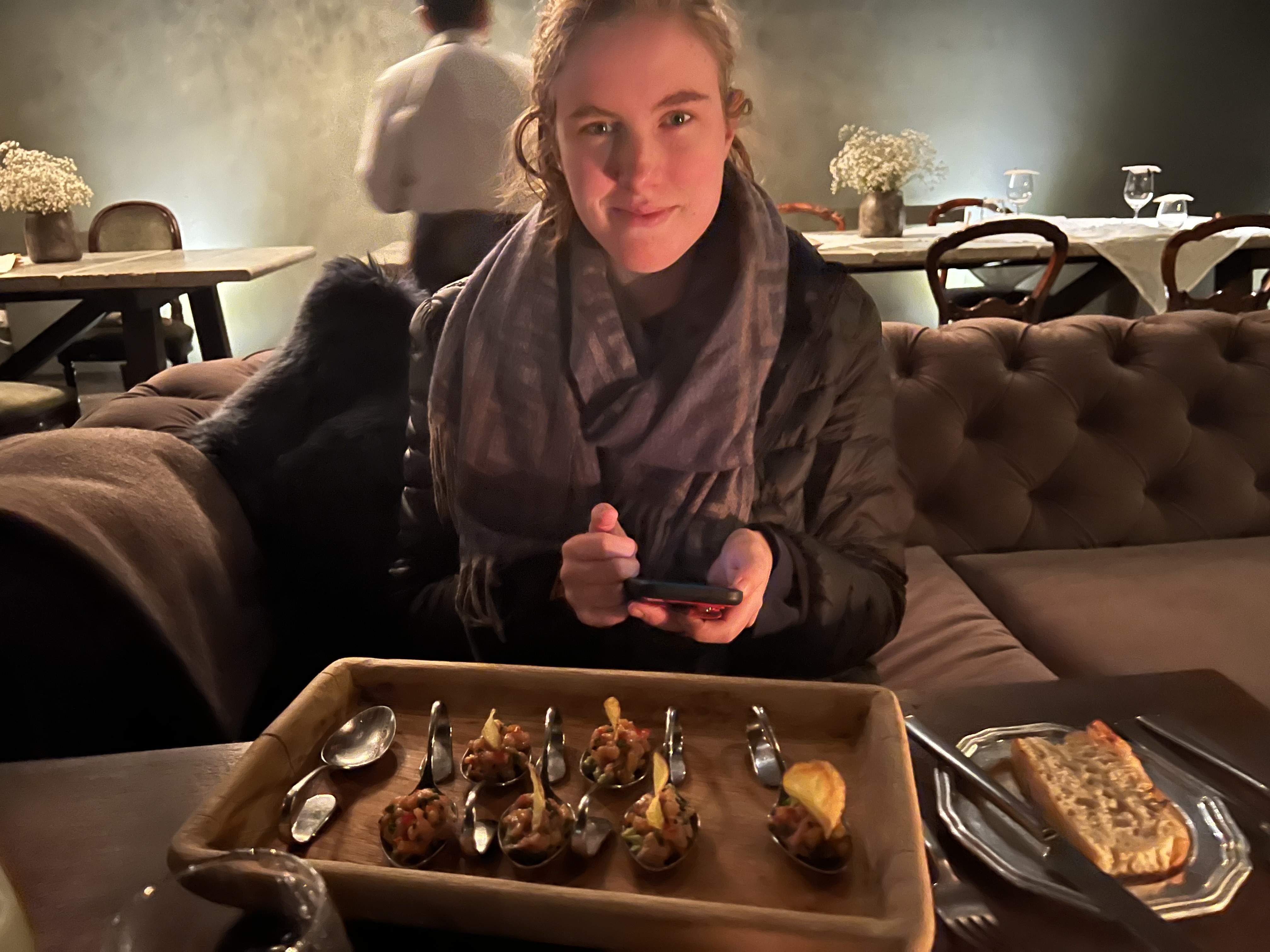
Circa like many buildings in the area were homes for the very wealthy. The hot tub was enjoyable after the four noisy Europeans left (they were with us on the train and in Colca). From pre sunset to dusk lighting the hot tub was magical. Our room was unbelievable and hard to express – like the domed ceiling. Dinner was delightful – a short walk across a seating area. We were ready to head back to Cusco. Not sure why, as in why not fly to Lima but another day seeing the Sacred Valley and walking around Cusco with Sergio awaited us.

Cusco …again!