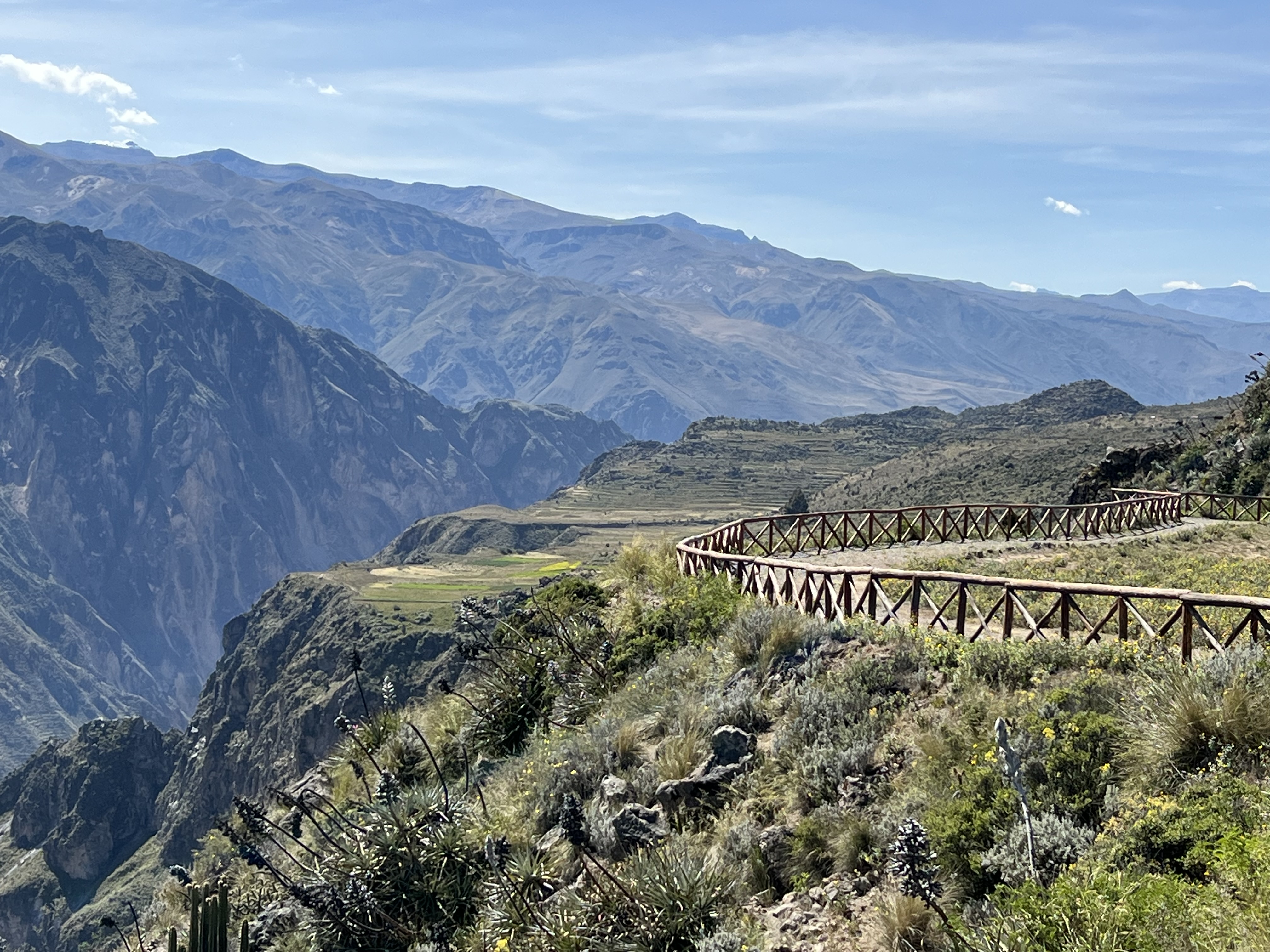
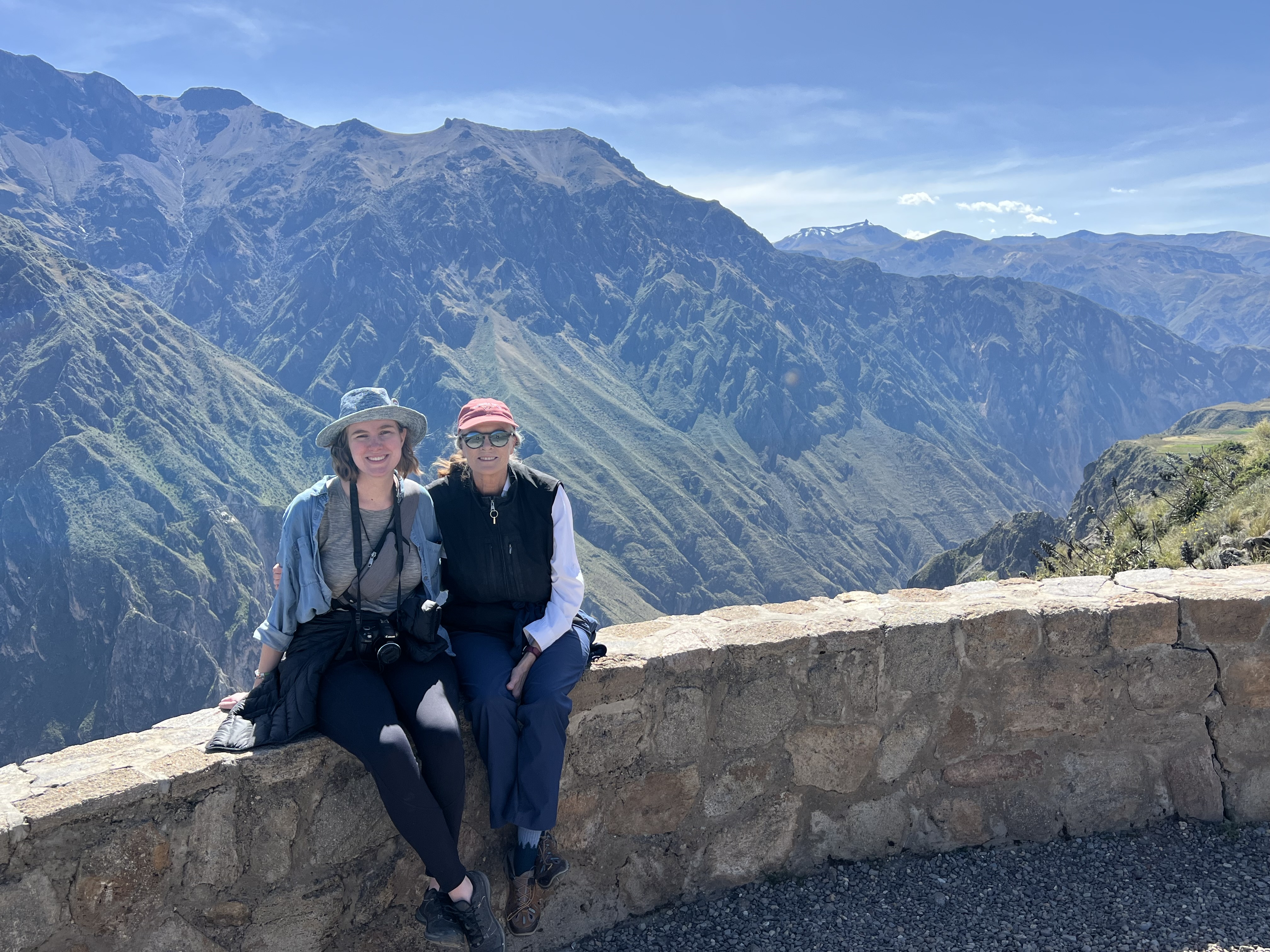
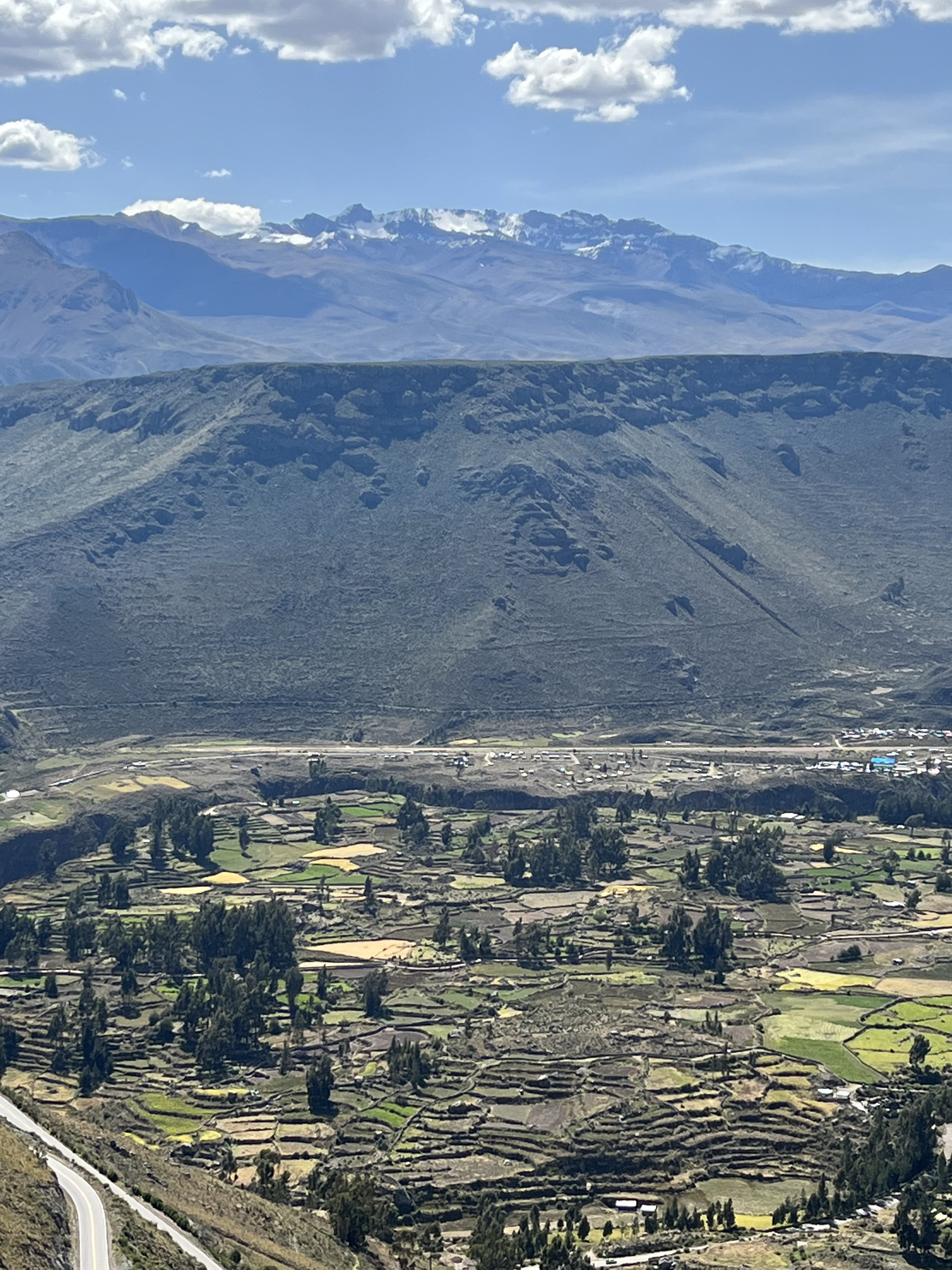
The Colca Canyon is one of the deepest canyons in the world along with Cotahuasi Canyon which is also in this area of Peru. Colca Canyon is only 43 miles long and one side is very steep and at an altitude of 13,640′ while the lower side is only 12,000′ and at a lesser slope reaching its height over a greater distance. The composition of the layers are mostly Cretaceous sedimentary rocks interspersed by much volcanic activity as they border the Valley of Volcanoes. But if you’ve been to our Grand Canyon you would never think it is smaller since ours takes your breath away. Its all about perspective.
Colca is said to be about 10,000′ deep while the Grand Canyon is 6,000′ deep and it seems the Grand Canyon’s viewing areas on both sides make it appear so much deeper. In contrast the Grand Canyon is 277 miles long which must be considered part of its grandness. It is also at a lower elevation than Colca as the North Rim is over 8,000′ while the south rim is at and the South Rim is at 7,000′ . The Colorado River has cut through mostly flat sedimentary layers over the past 70 million years.
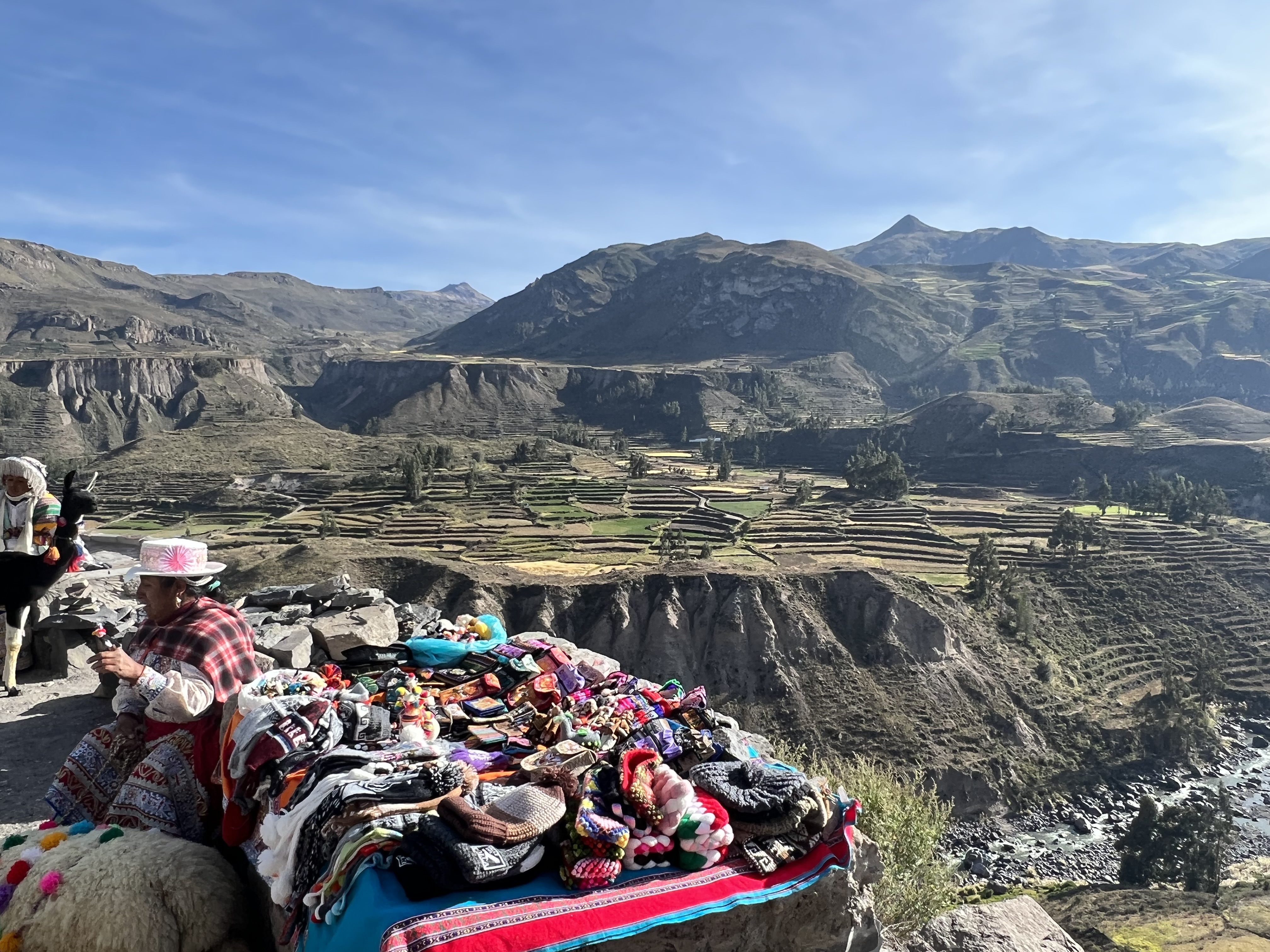
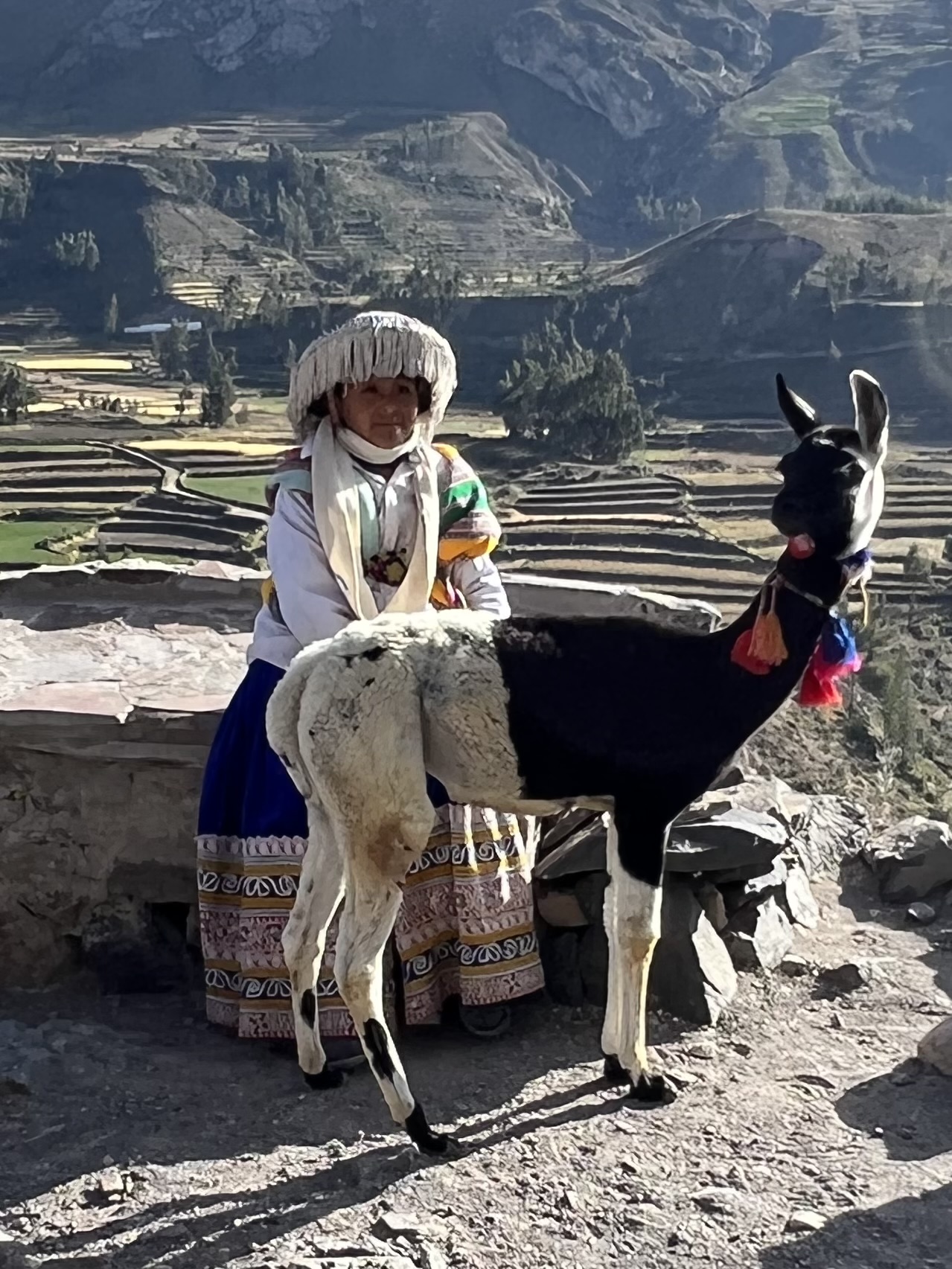
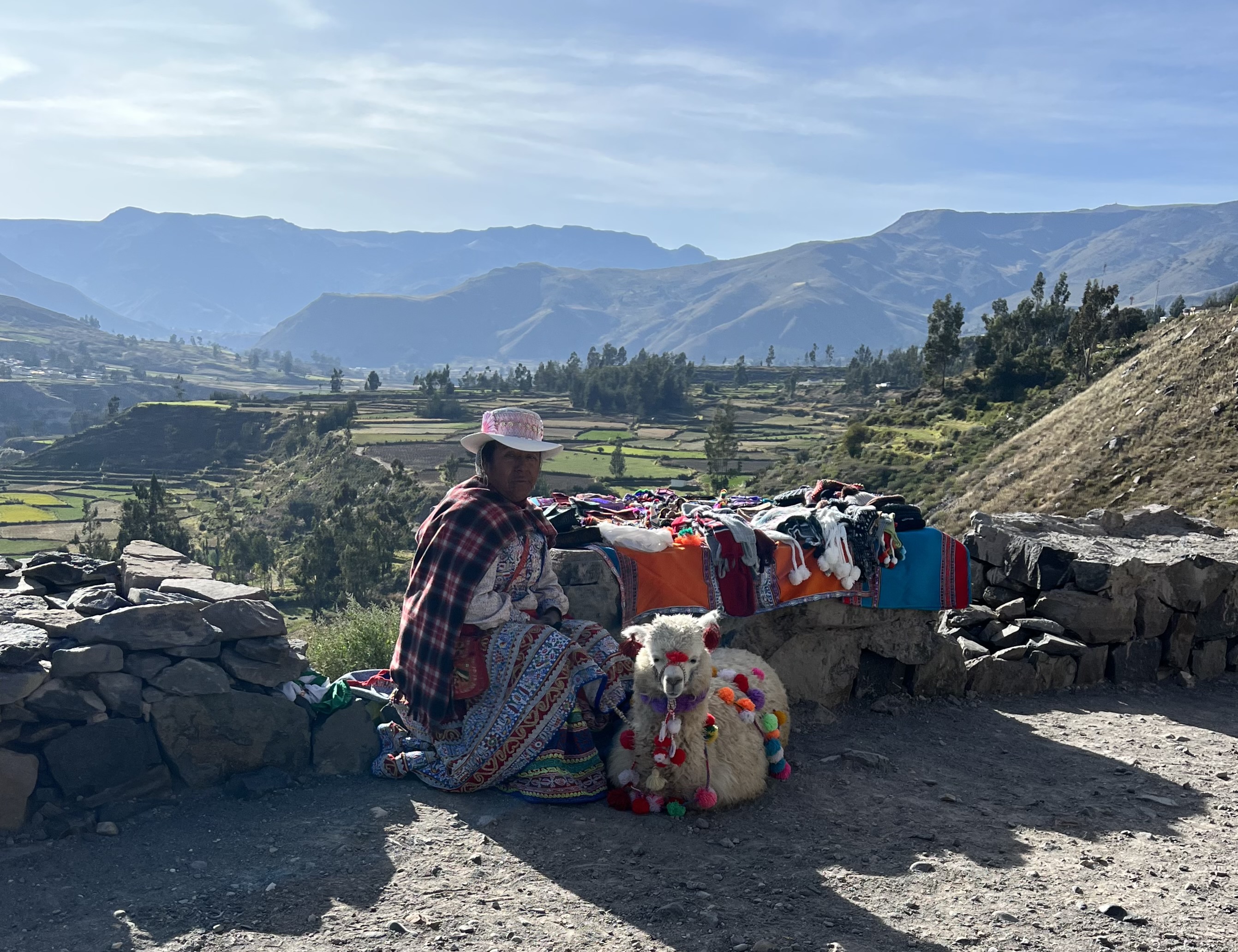
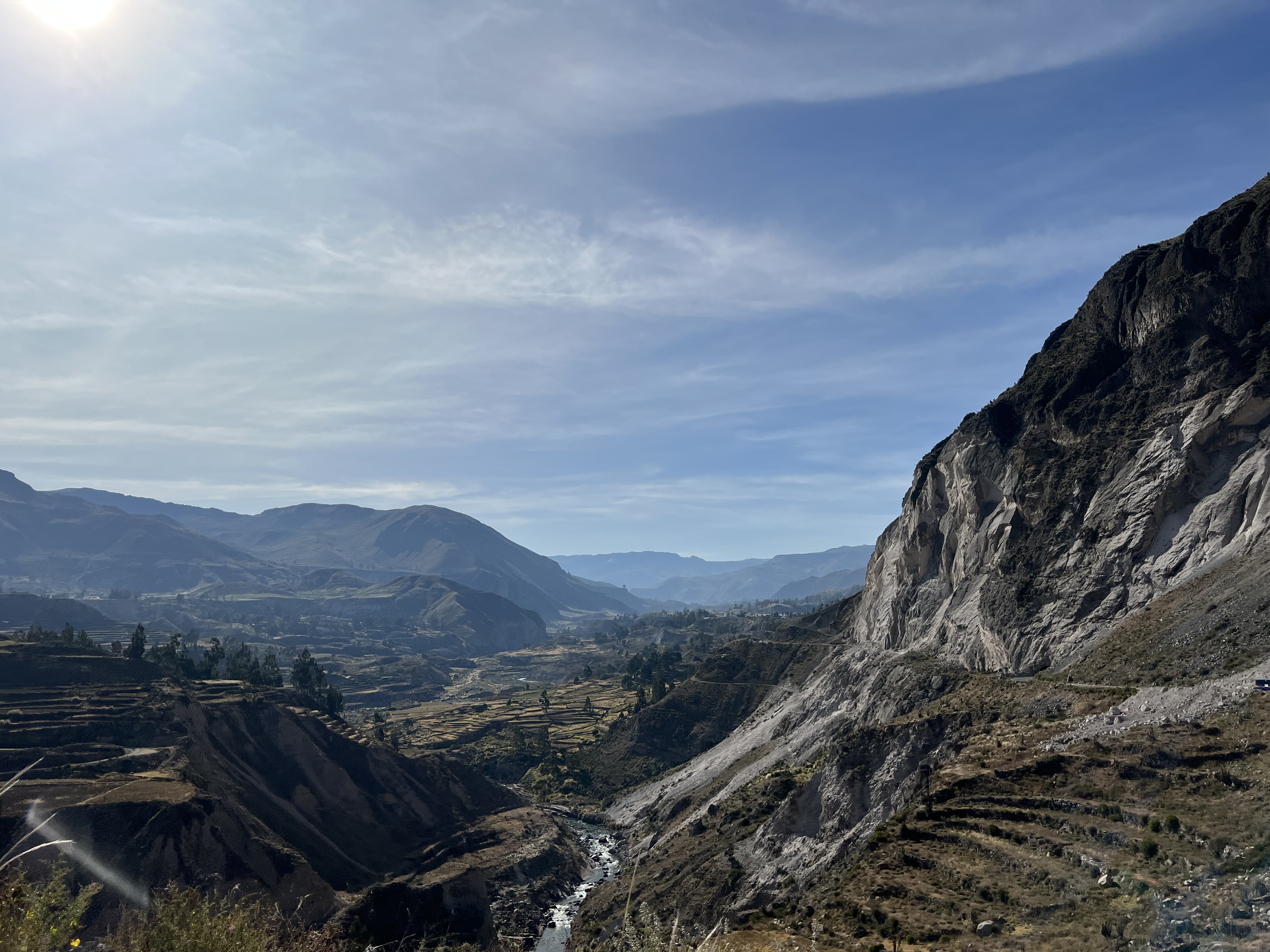
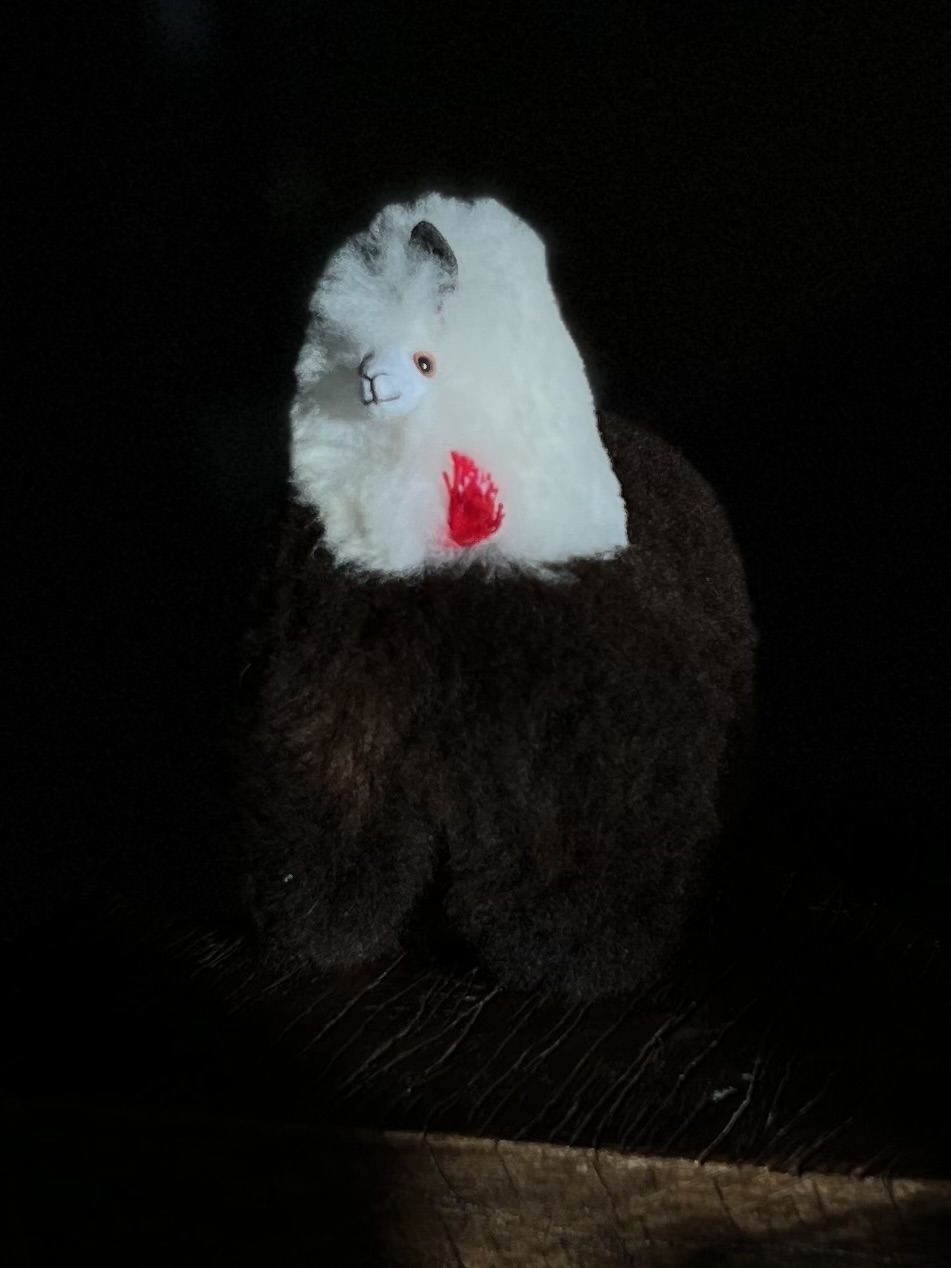
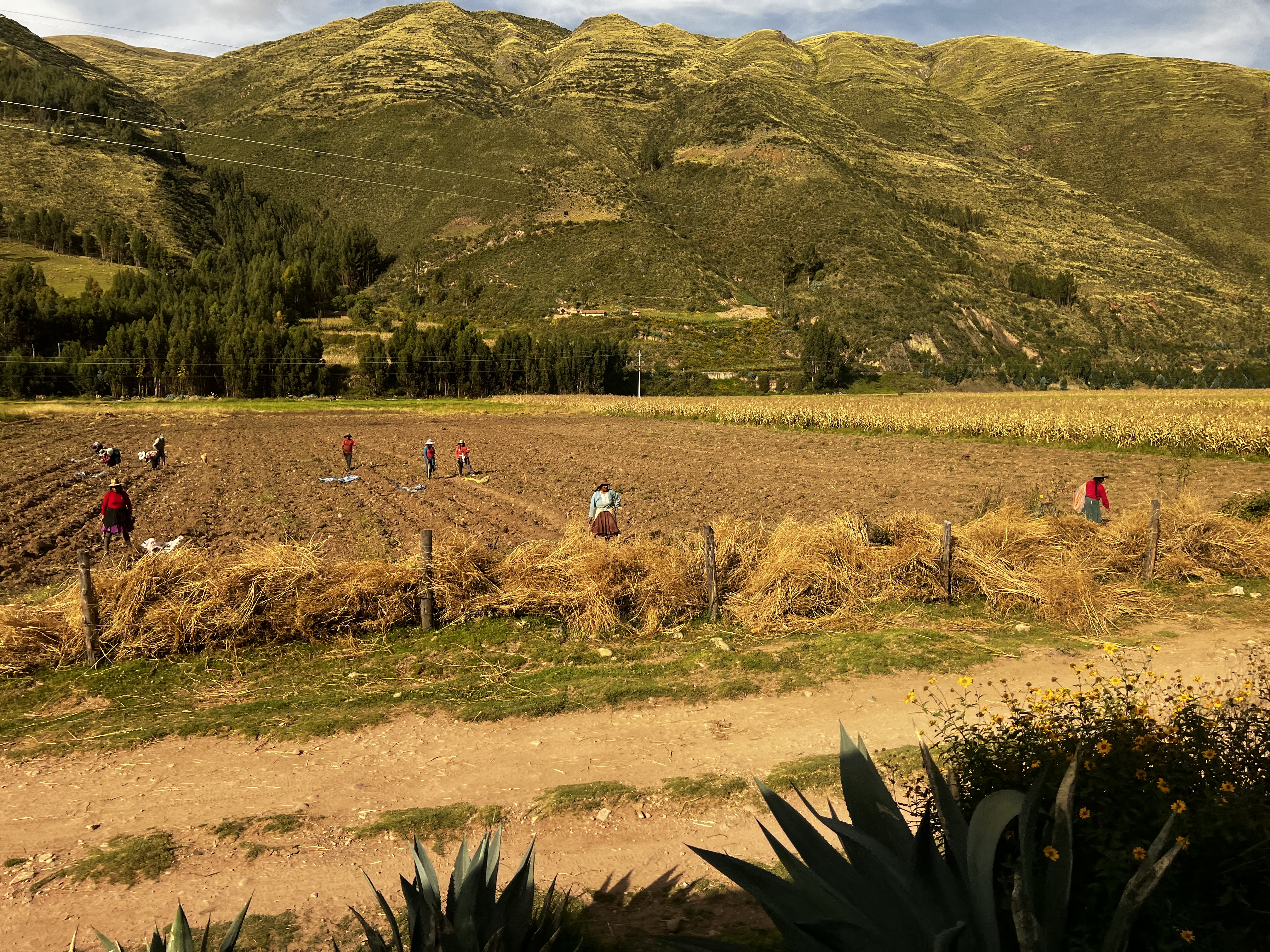
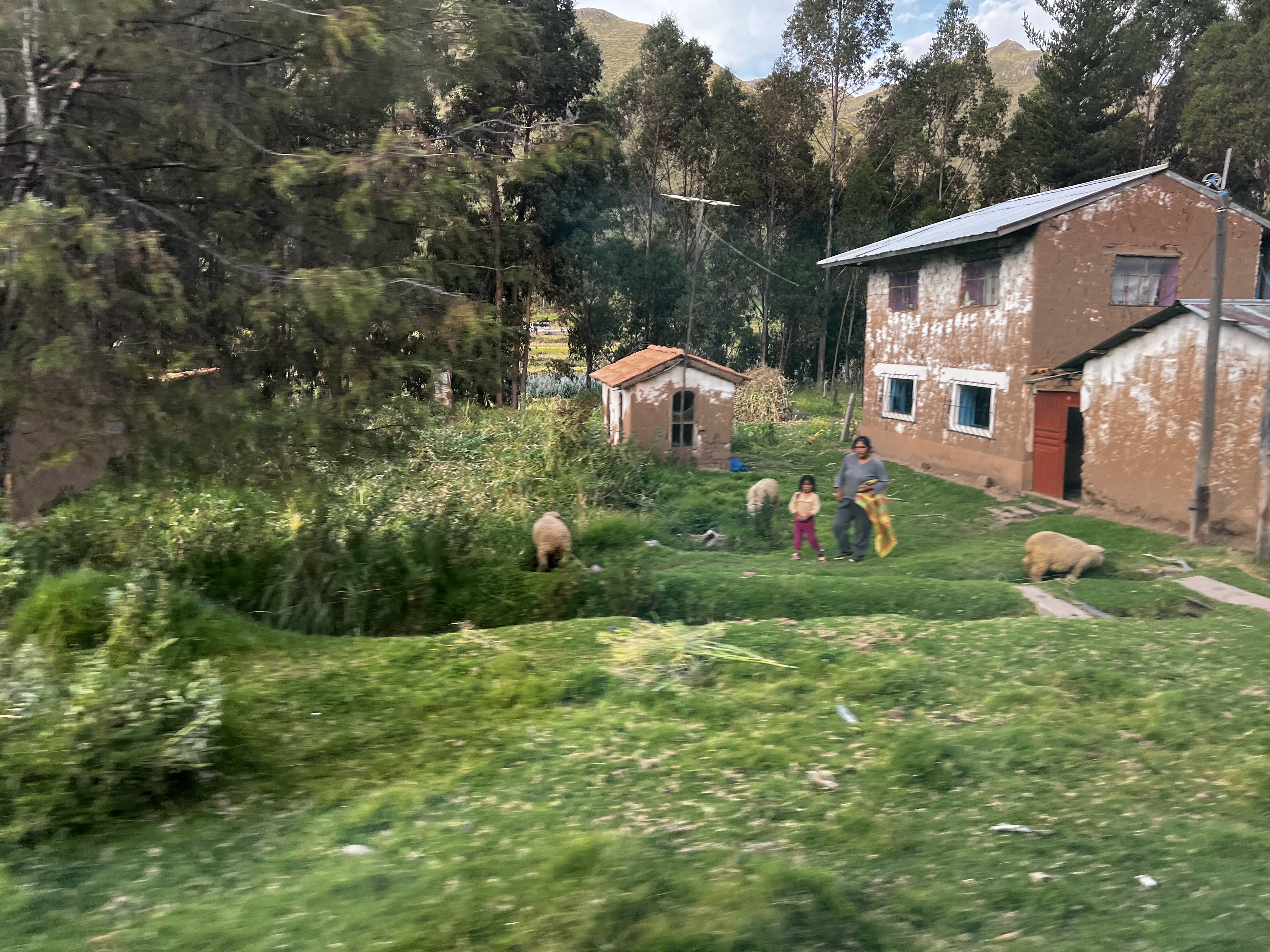
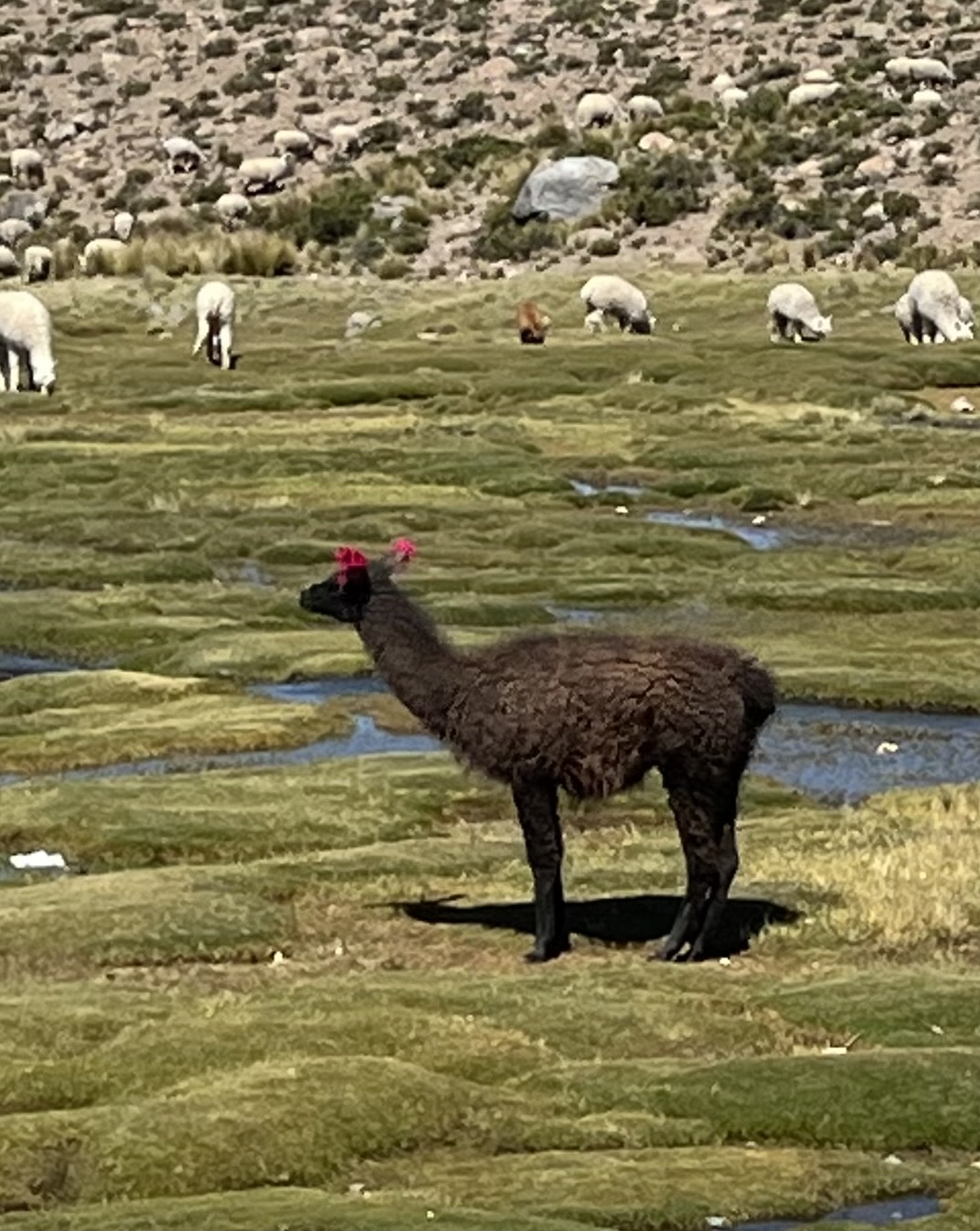
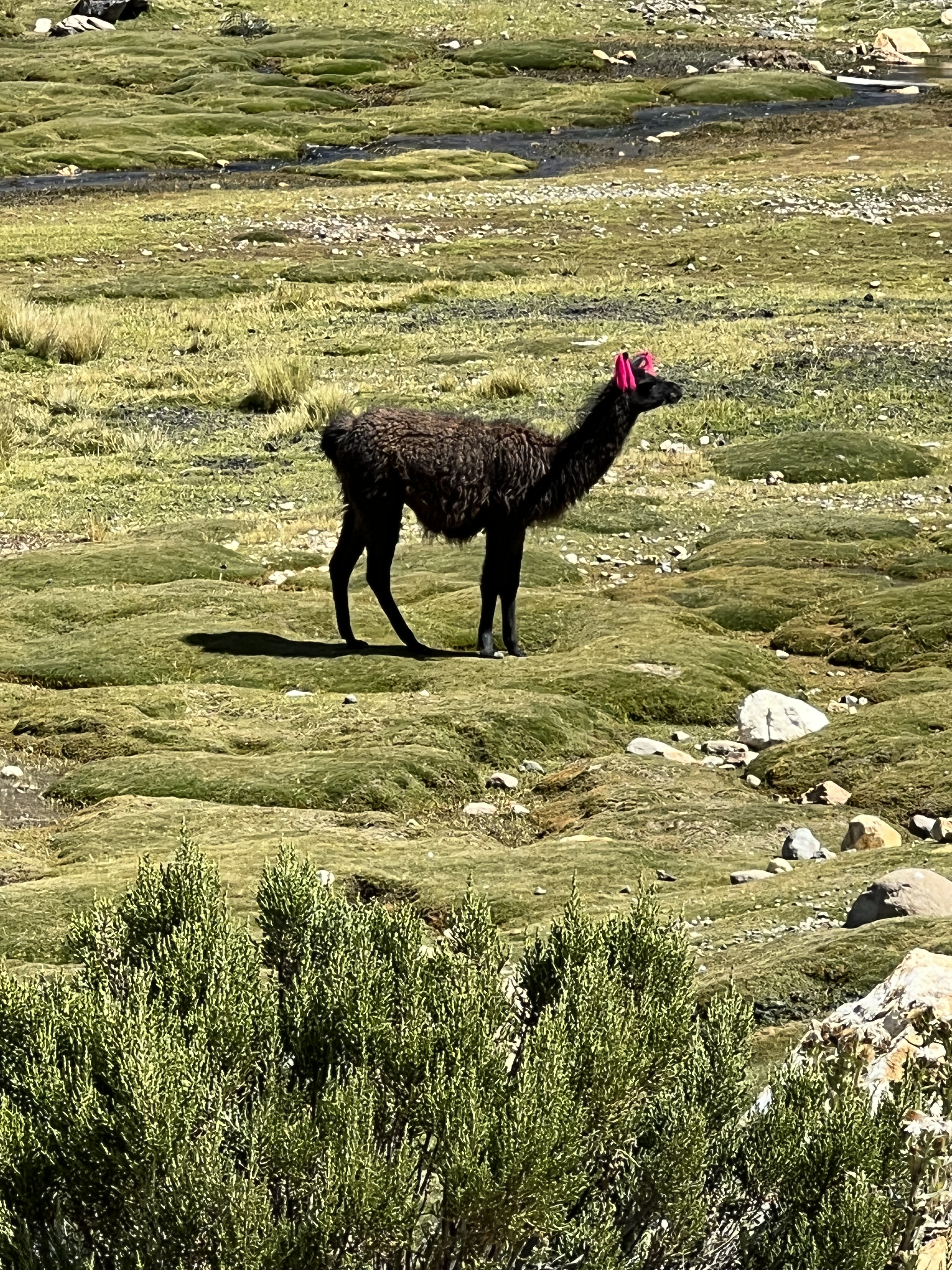
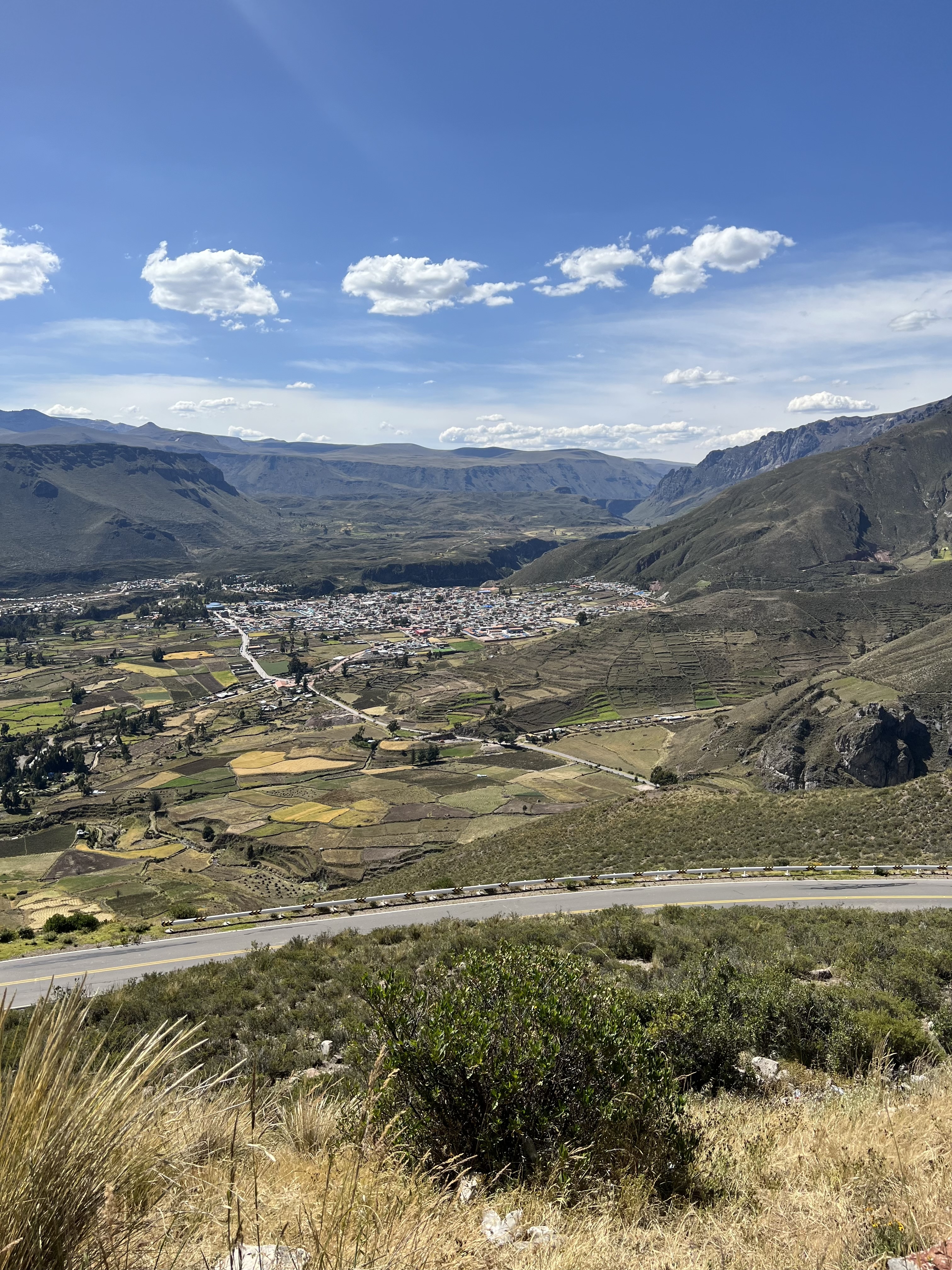
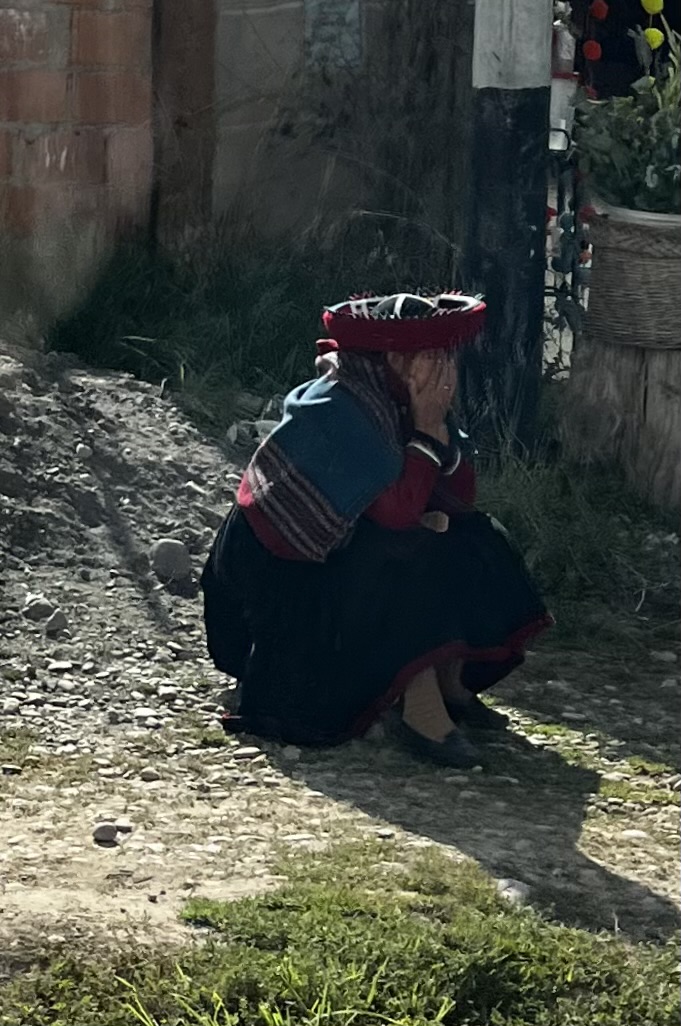
The drive up the canyon early in the morning took us past the incredible terraces that have been farmed before the Inca’s even arrived. The language here like the language in Cusco is Quechuan. There are of course many different dialects. I love the llama that seems to be half black and half white. There are always little things to look at and buy.
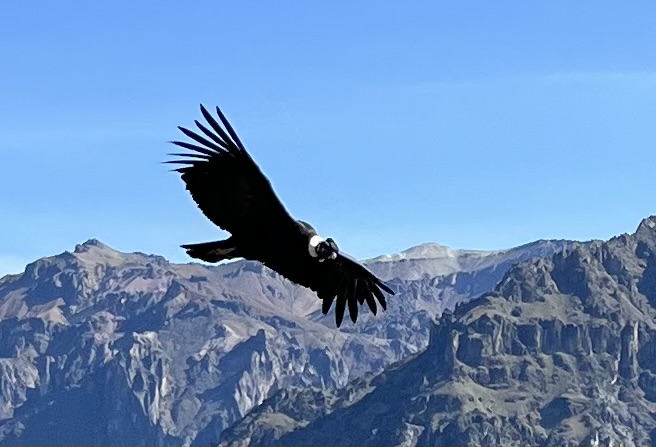
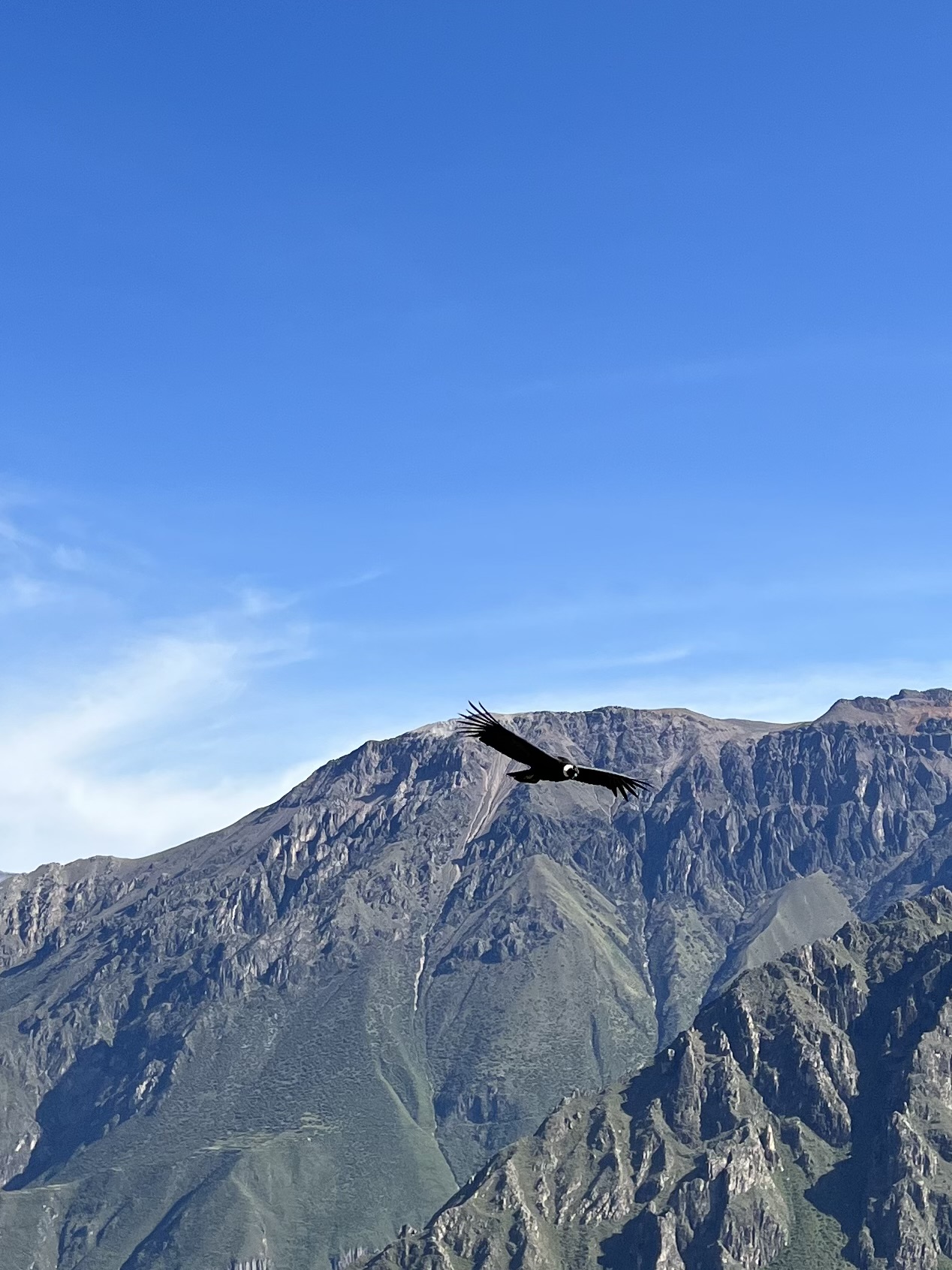
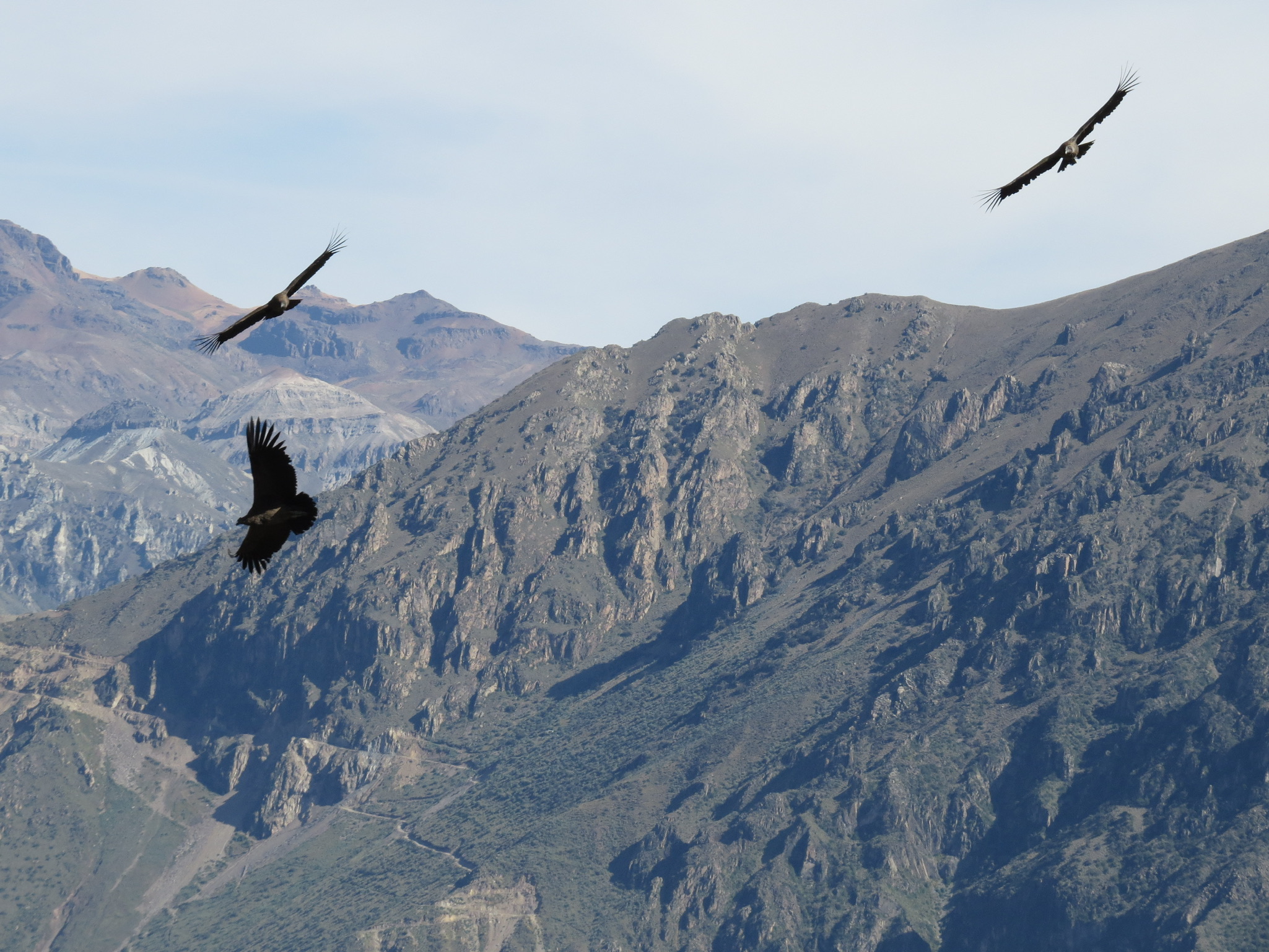
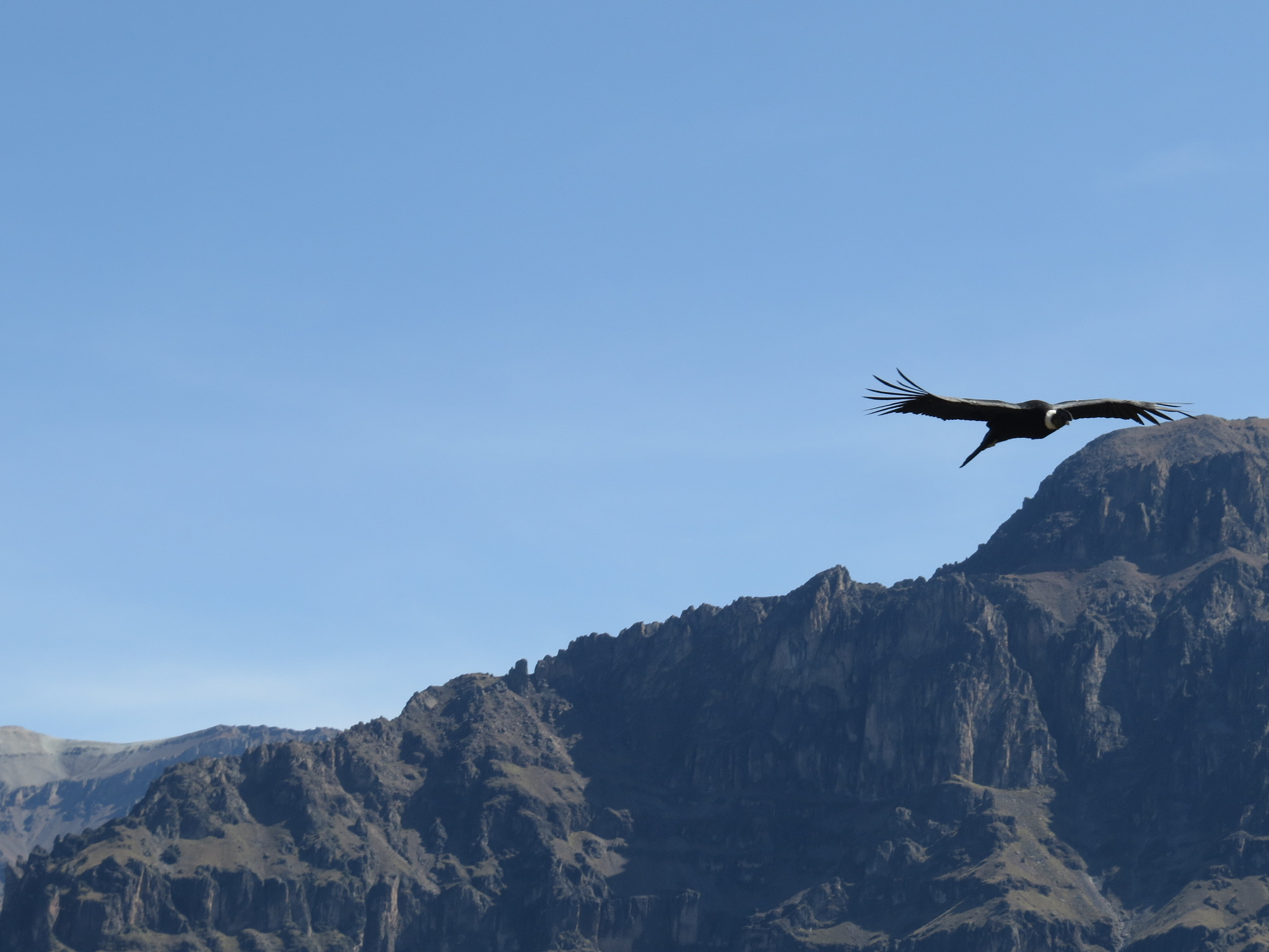
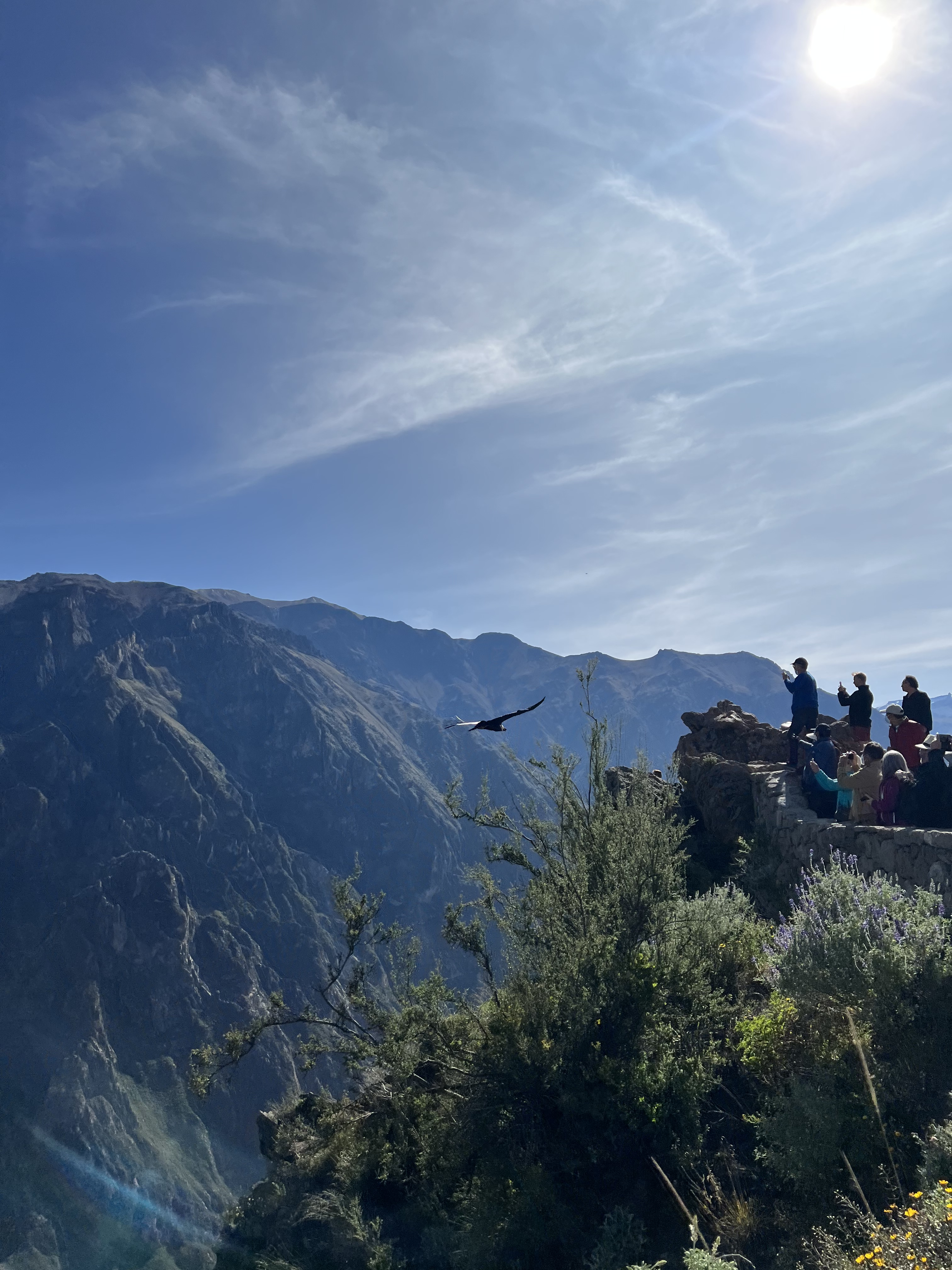
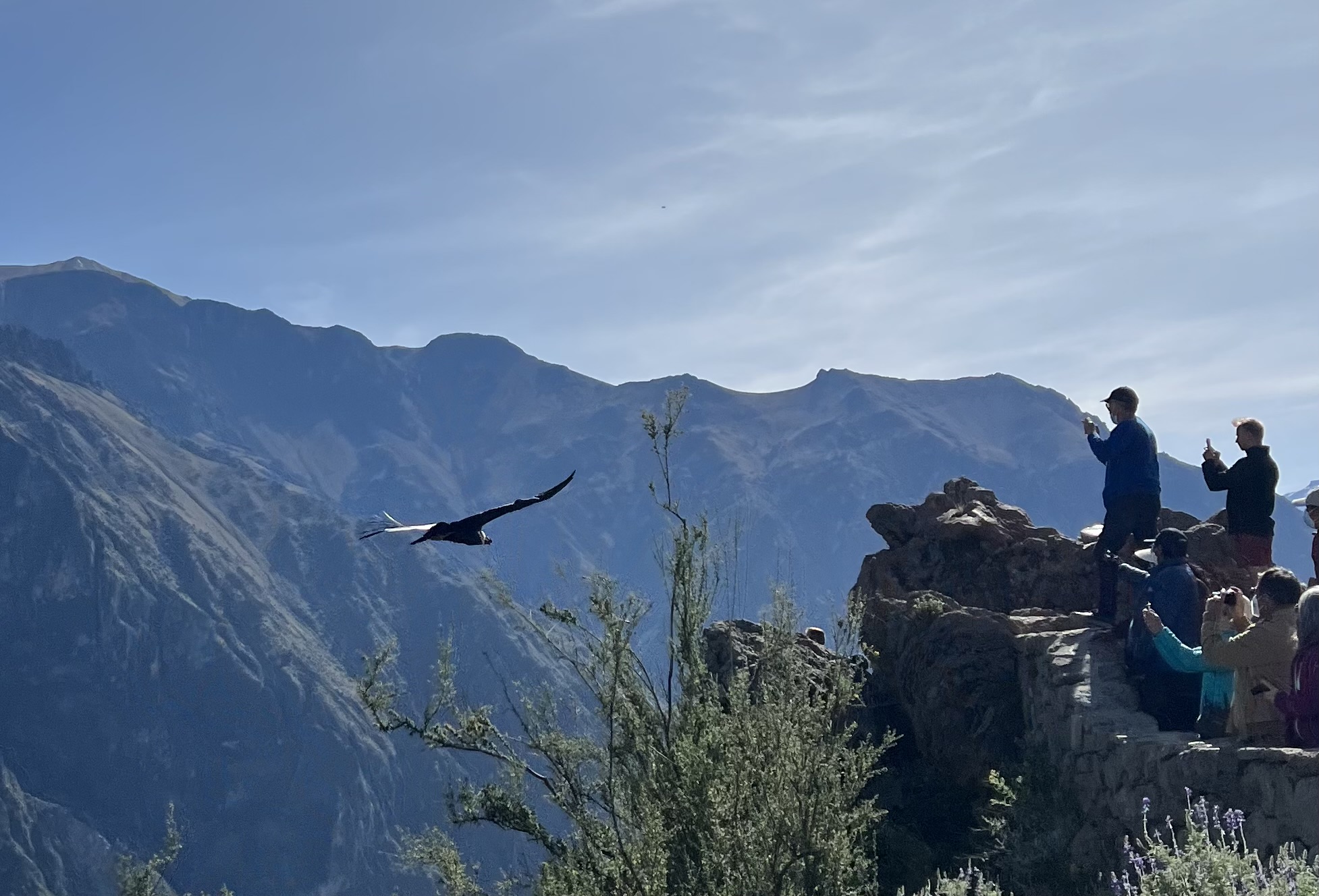
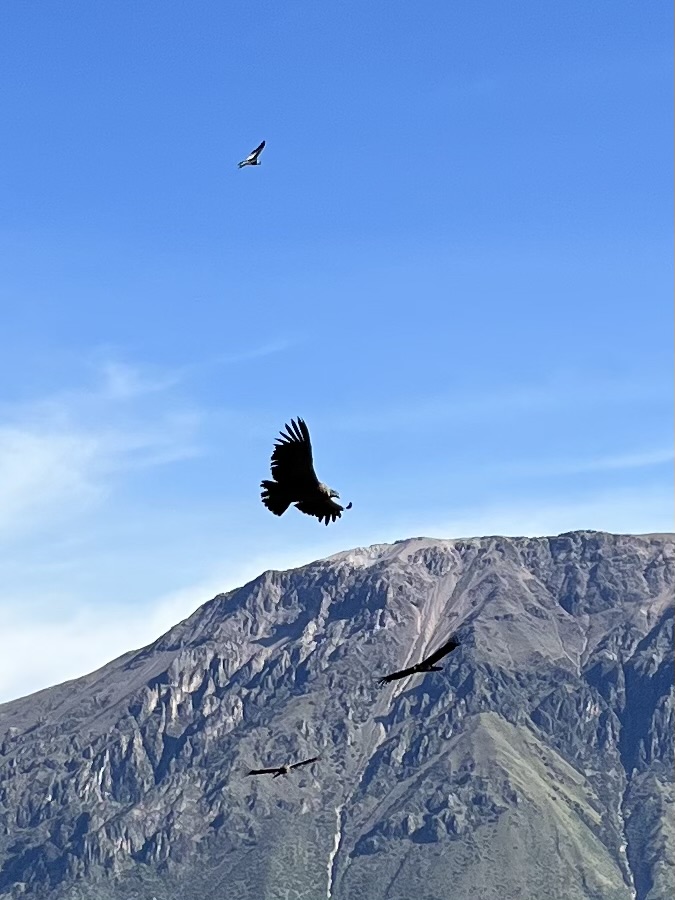
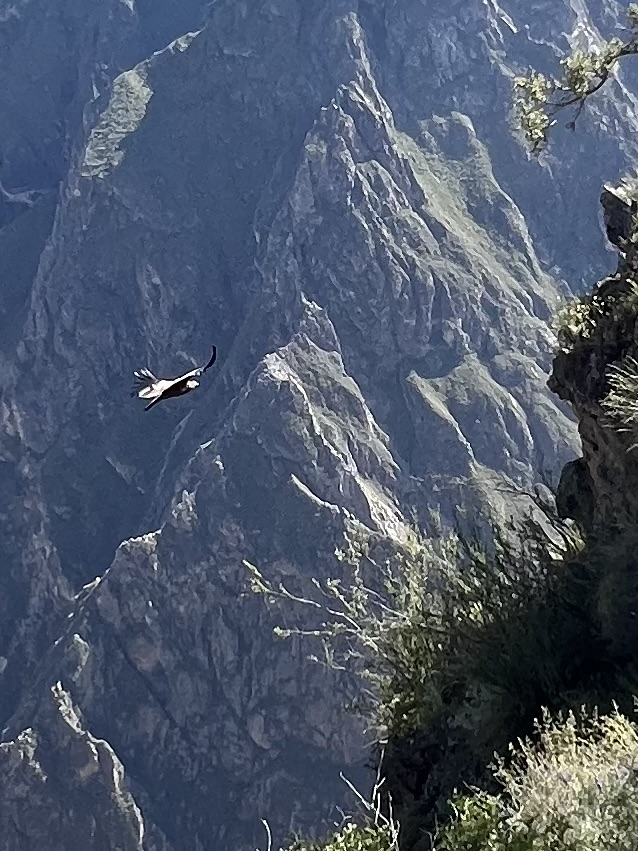
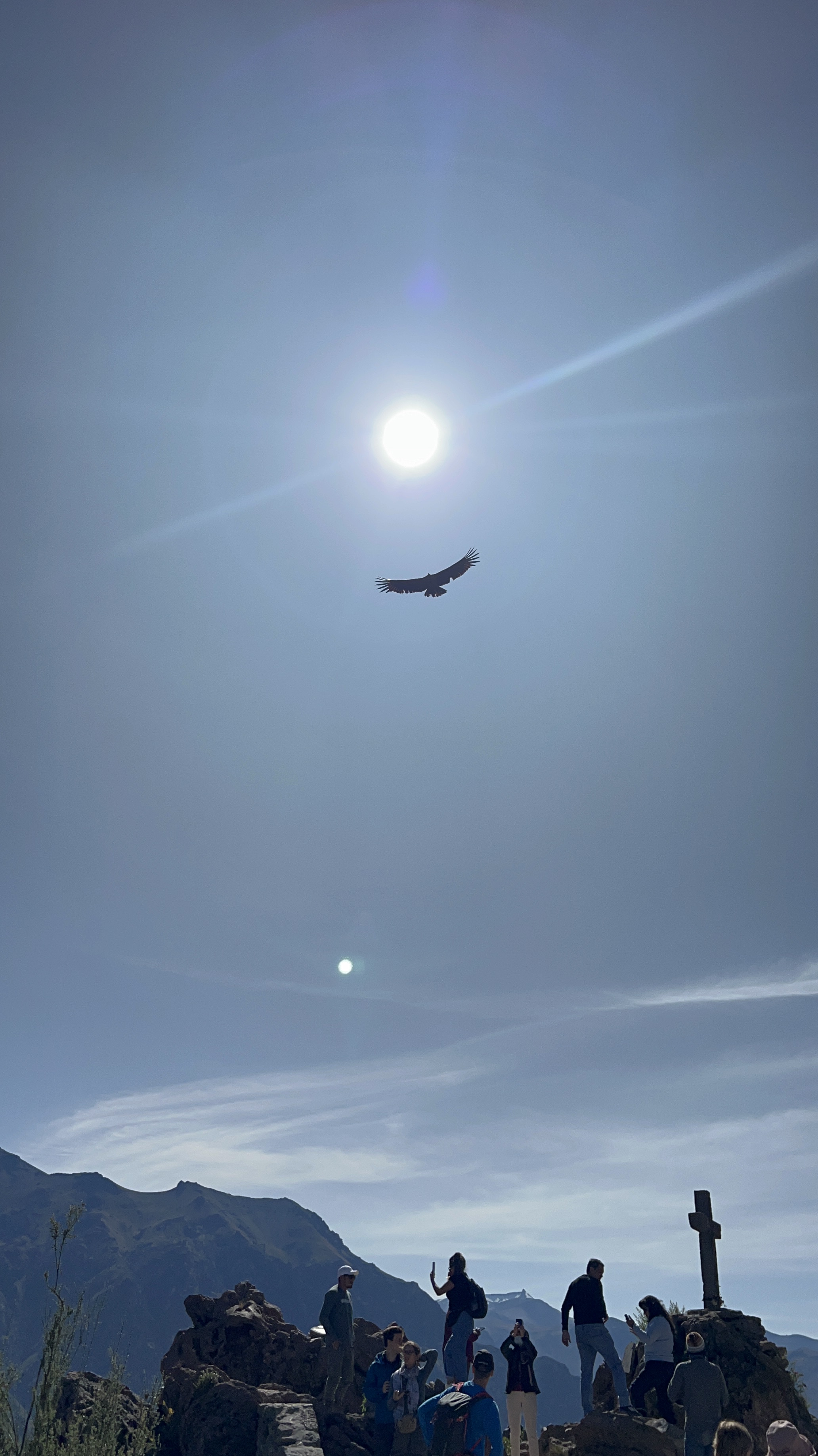
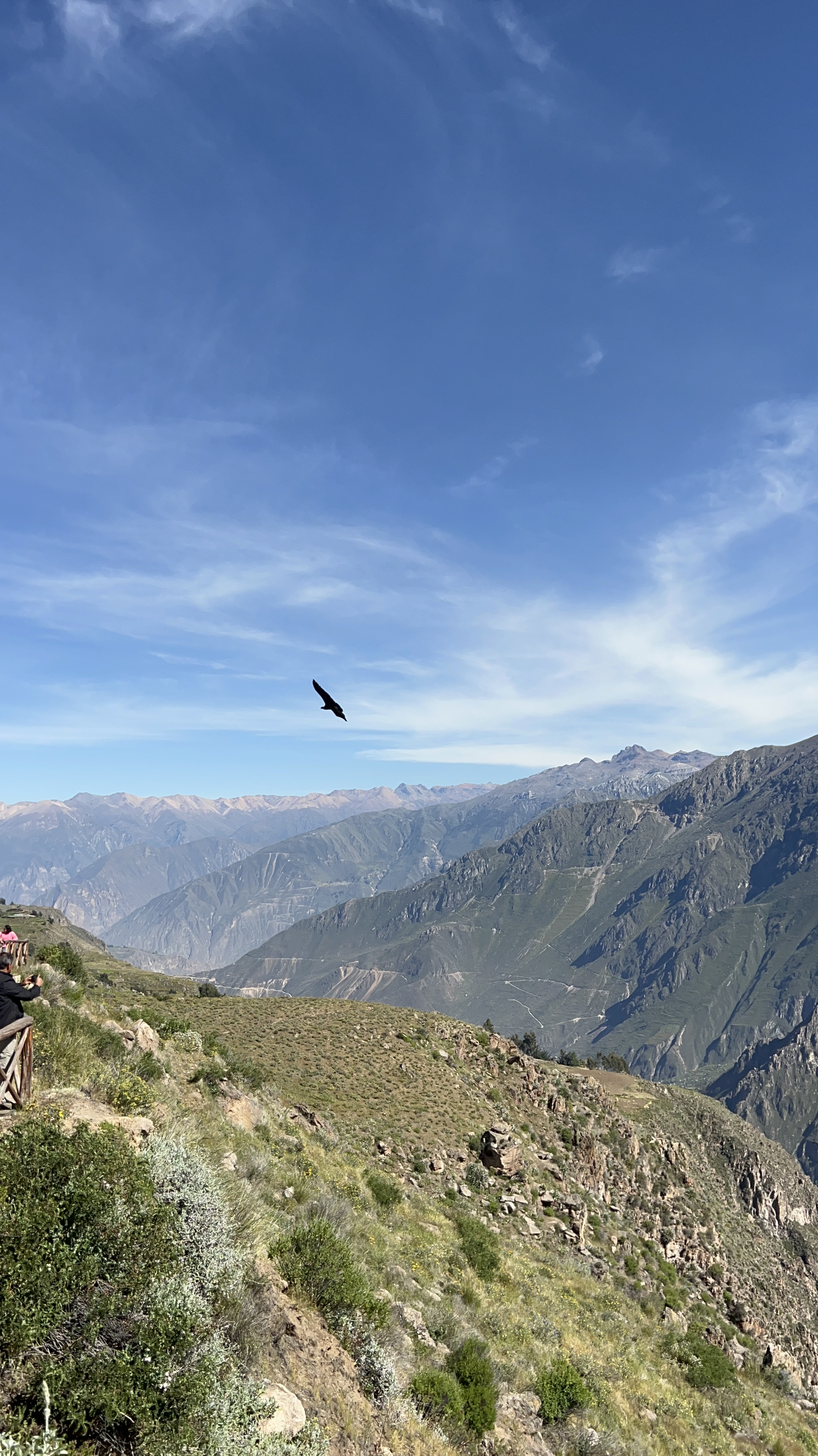
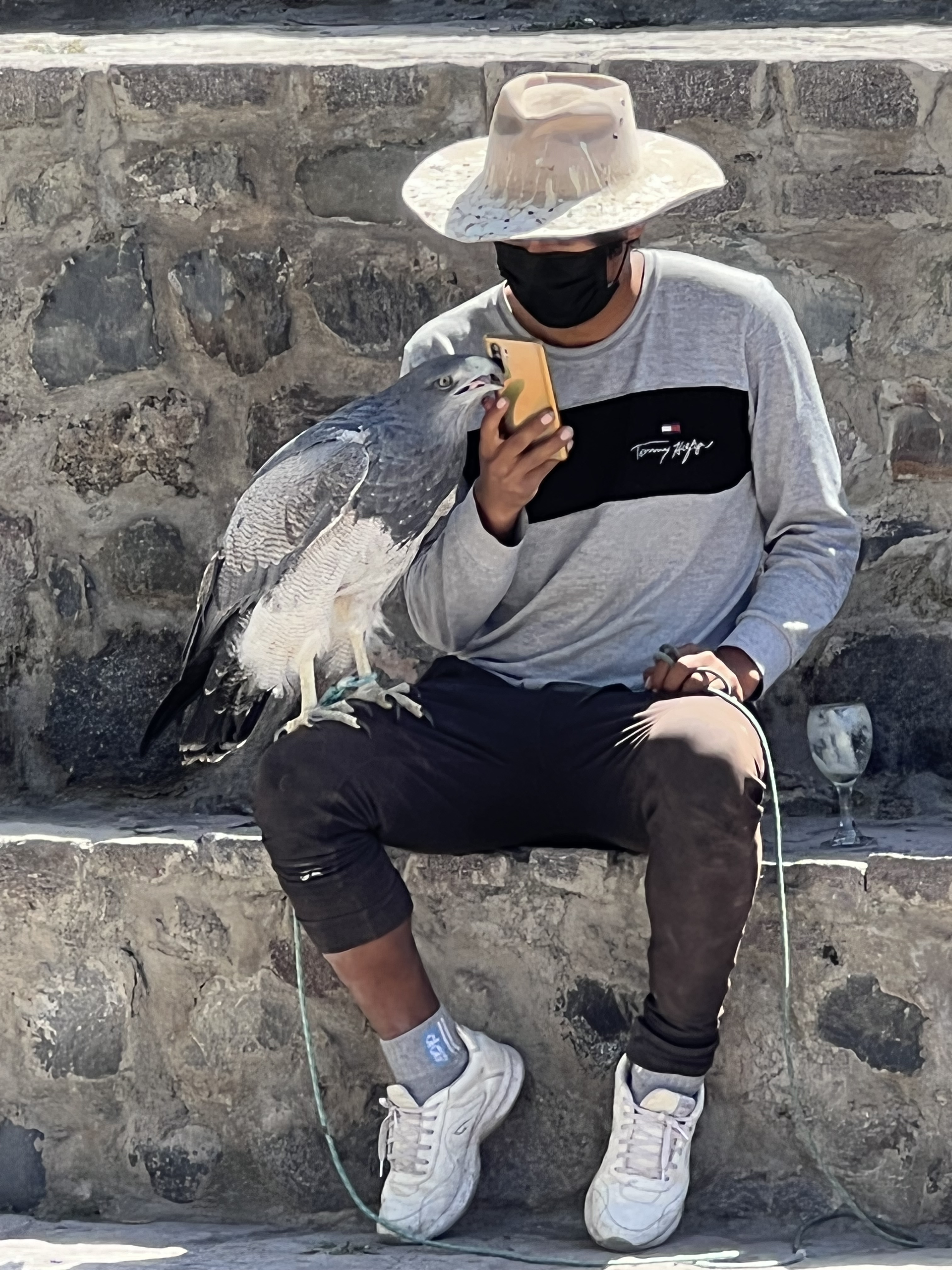
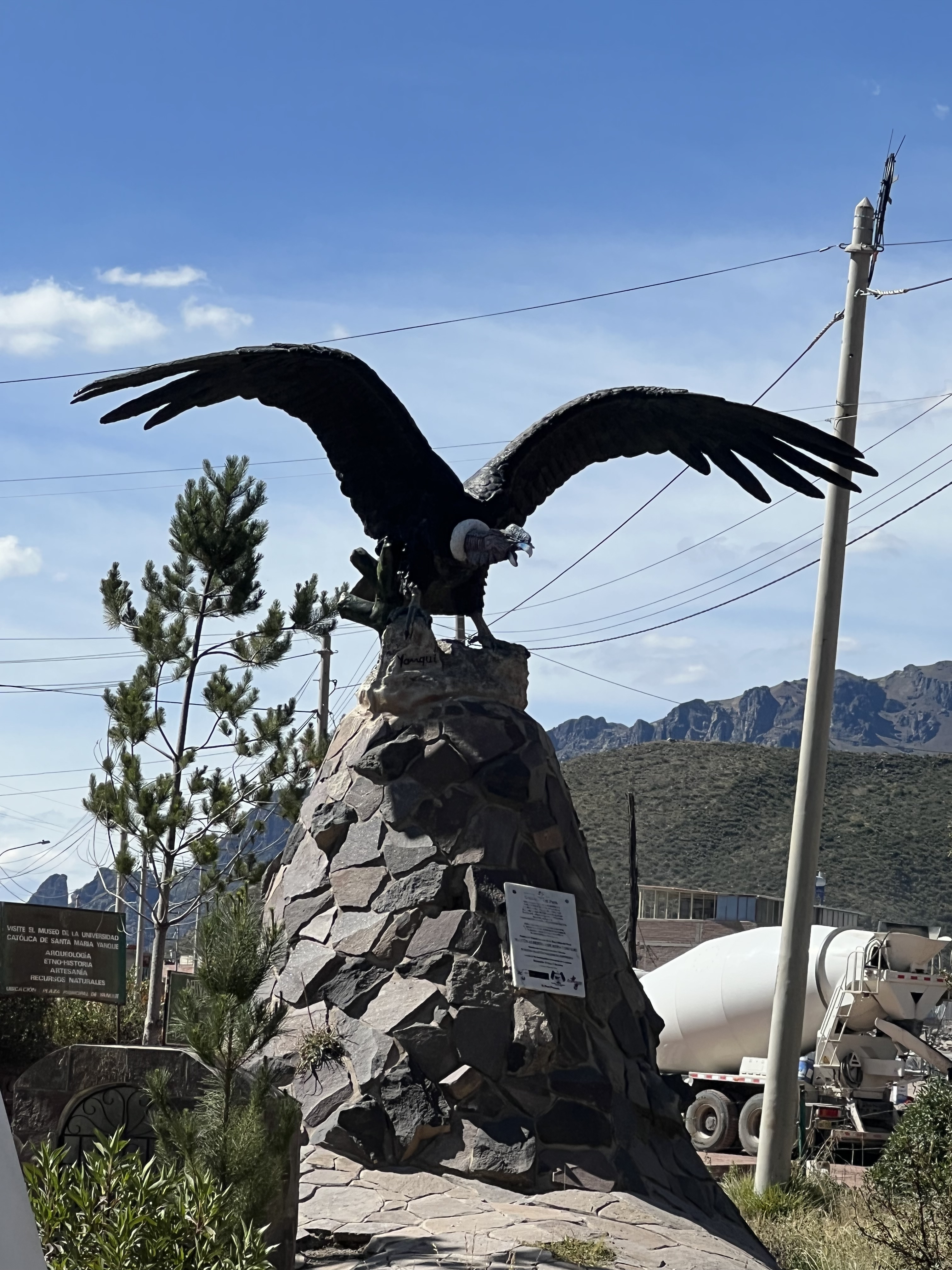
The generic term for these massive birds is vultur from the Latin but the word condor itself is derived from the Quechua word Kuntur. They can live in the wild for 50 years!
Condors fly mostly in the morning at sunrise and in evening around dusk to use the least amount of energy by utilizing the thermal air currents to help them keep their massive 30 plus pound bodies in gliding flight. Their wingspan is a whopping 10′ and the length of their body is around 4′. Males unlike most bird species is actually larger than the females and have different color irises, males brown and females are deep red. They are mostly black but have a white collar of feathers and a bald head – the better to eat you with and not have bacteria stick around. They reach maturity at 5-6 years. As the day progresses, we are told the birds that continued flying in our viewing area were juveniles practicing their flying.
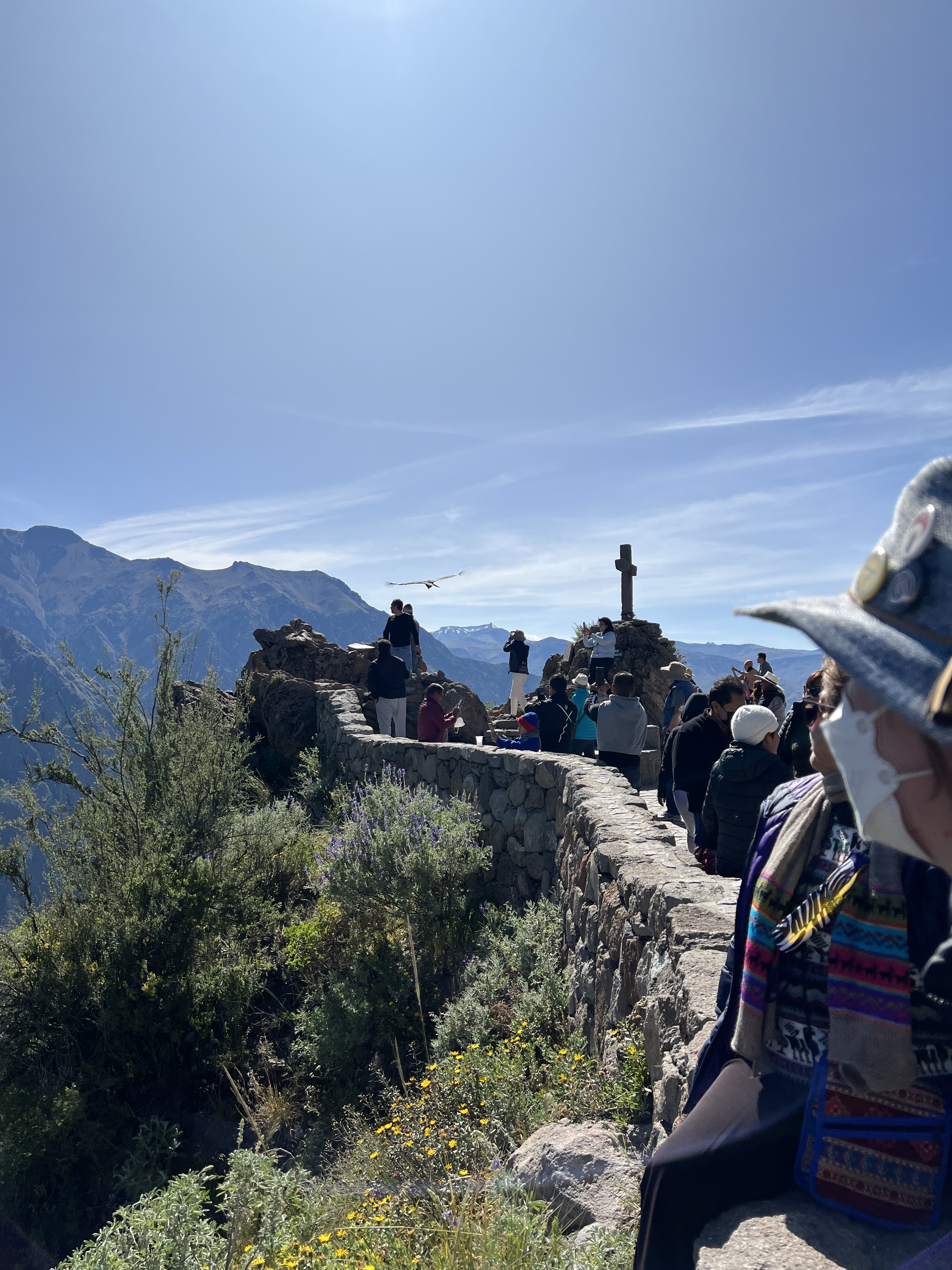
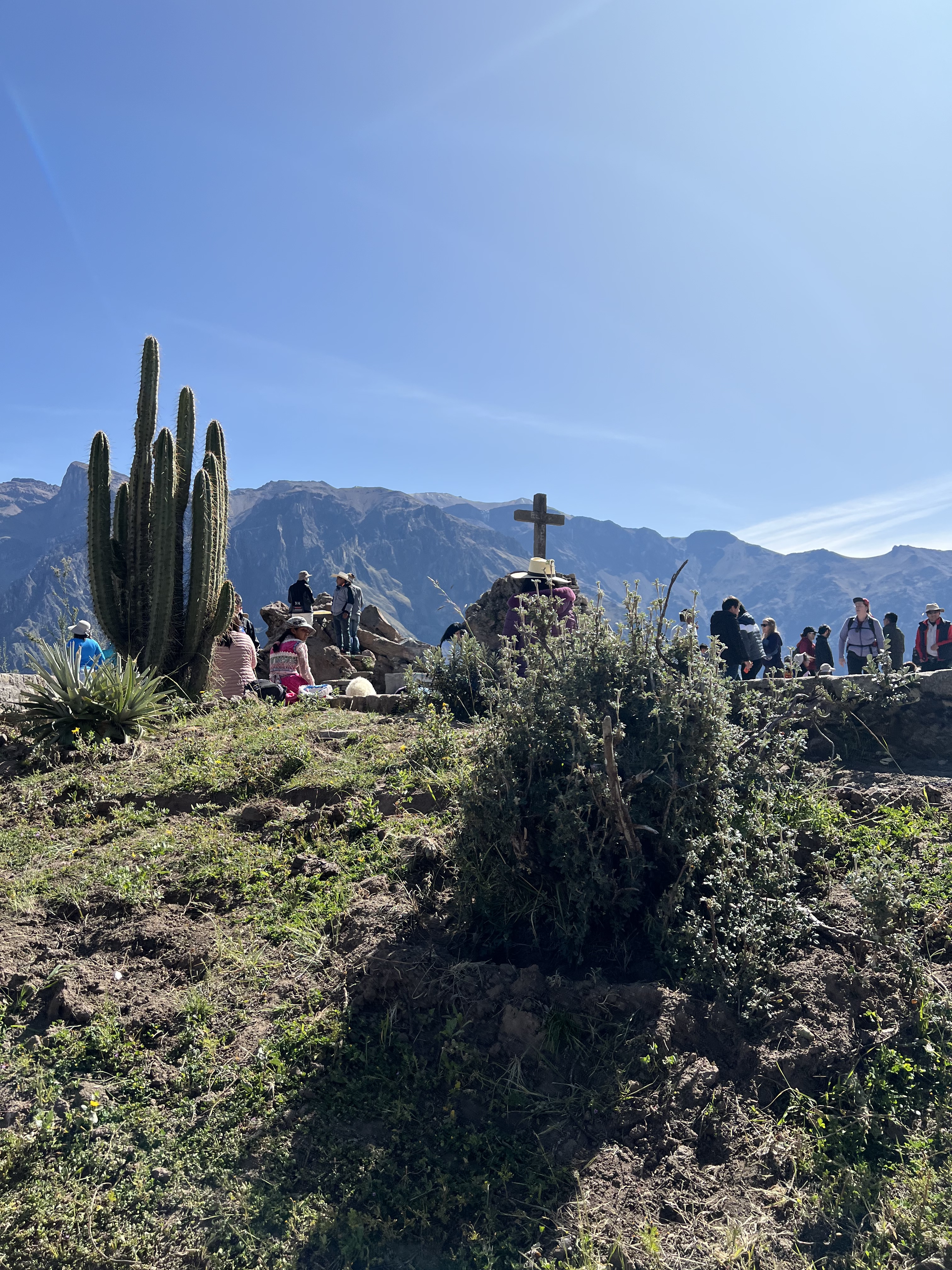
As you can imagine this is a place that attracts visitors from around the world. You can see the Condor Cross that is placed in the ground where folks gather. Catholics over the centuries have tried to put up crosses everywhere in South America and we were told in Cusco, many crosses were often removed by the locals indigenous people in the middle of the nights as they felt it was inappropriate since there were often place at Incan religious locations. This cross has remained and is a very notable tourist site. Amazing to see these massive Condors fly up and over those of us who were standing near the rock walls. I wish we had arrived a little earlier but at least the time we spent there was amazing.
THE LONE HAWK
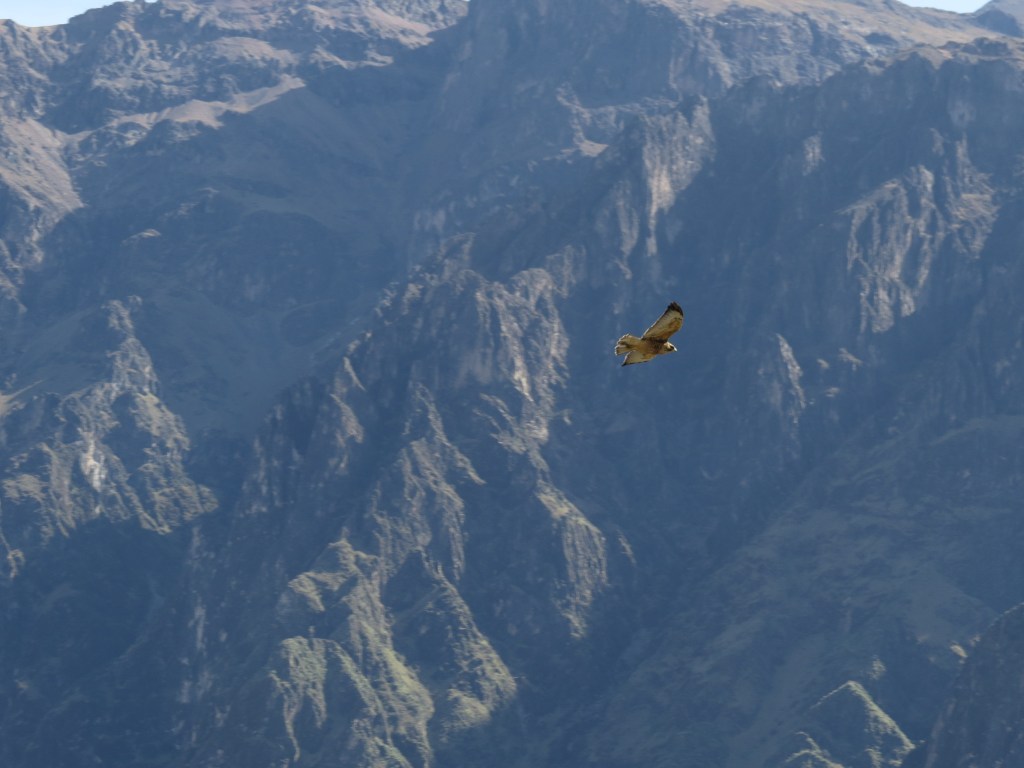
Larkin was able to photograph the lone hawk in flight. Like our home here in Dillon Beach, I heard the sound of the hawk and noticed it! We have half pint vultures (relative to the condors) flying all day around our home. The red-tailed hawks have returned and fly over the hills behind our home looking for potential food sources. Rabbits have been breeding like, well rabbits and have bloomed in population so the hawks are ready to feast!
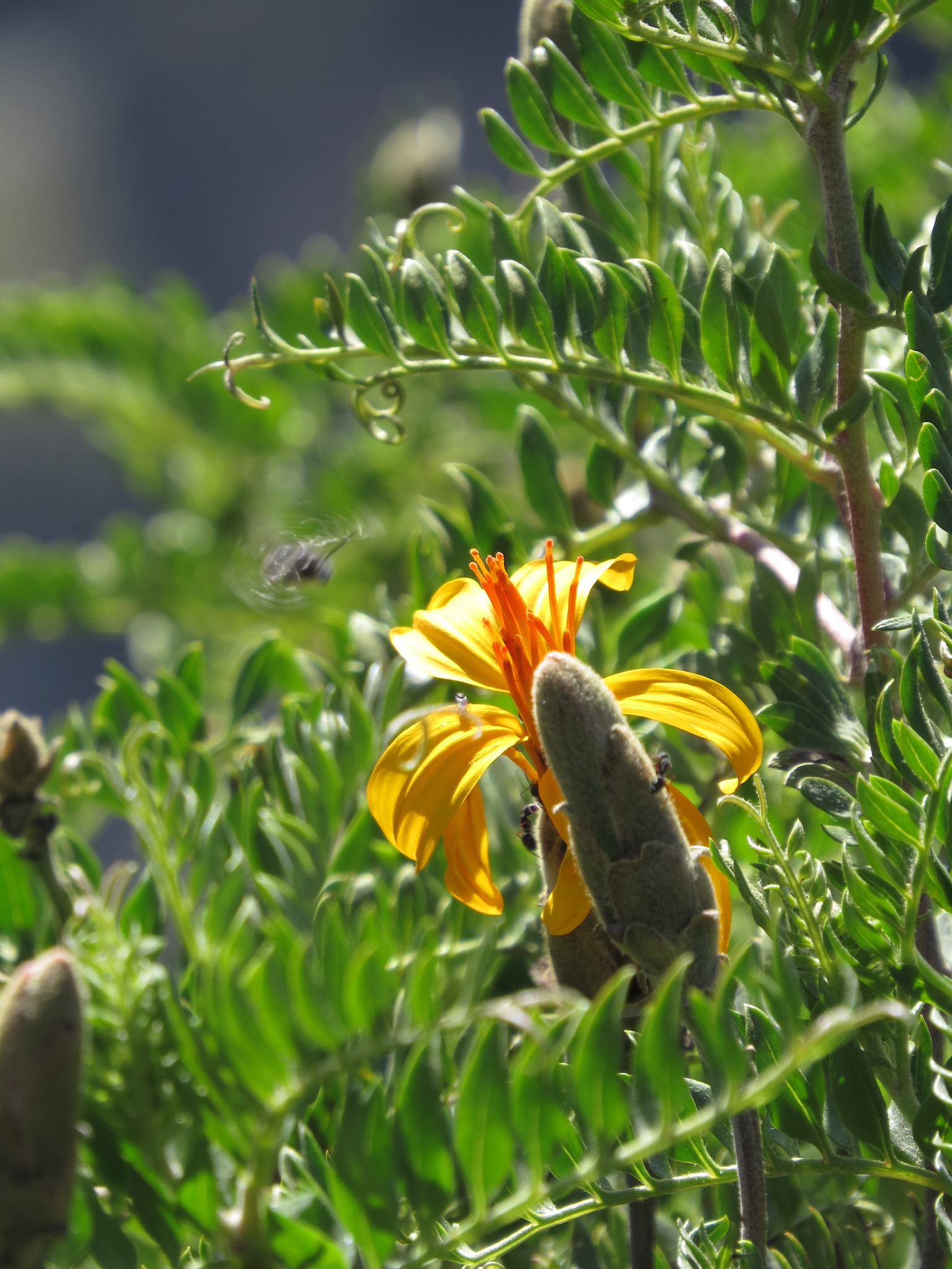
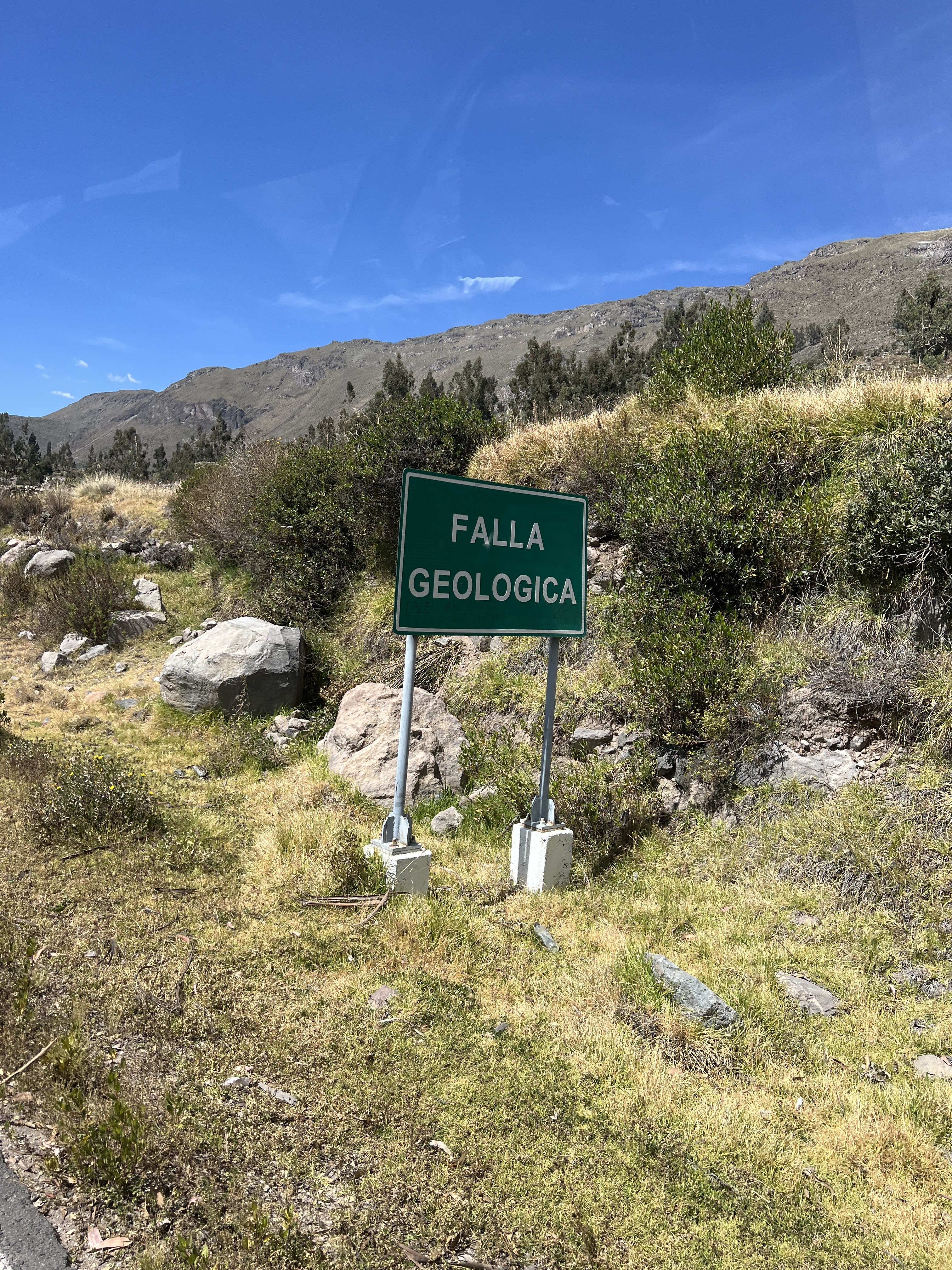
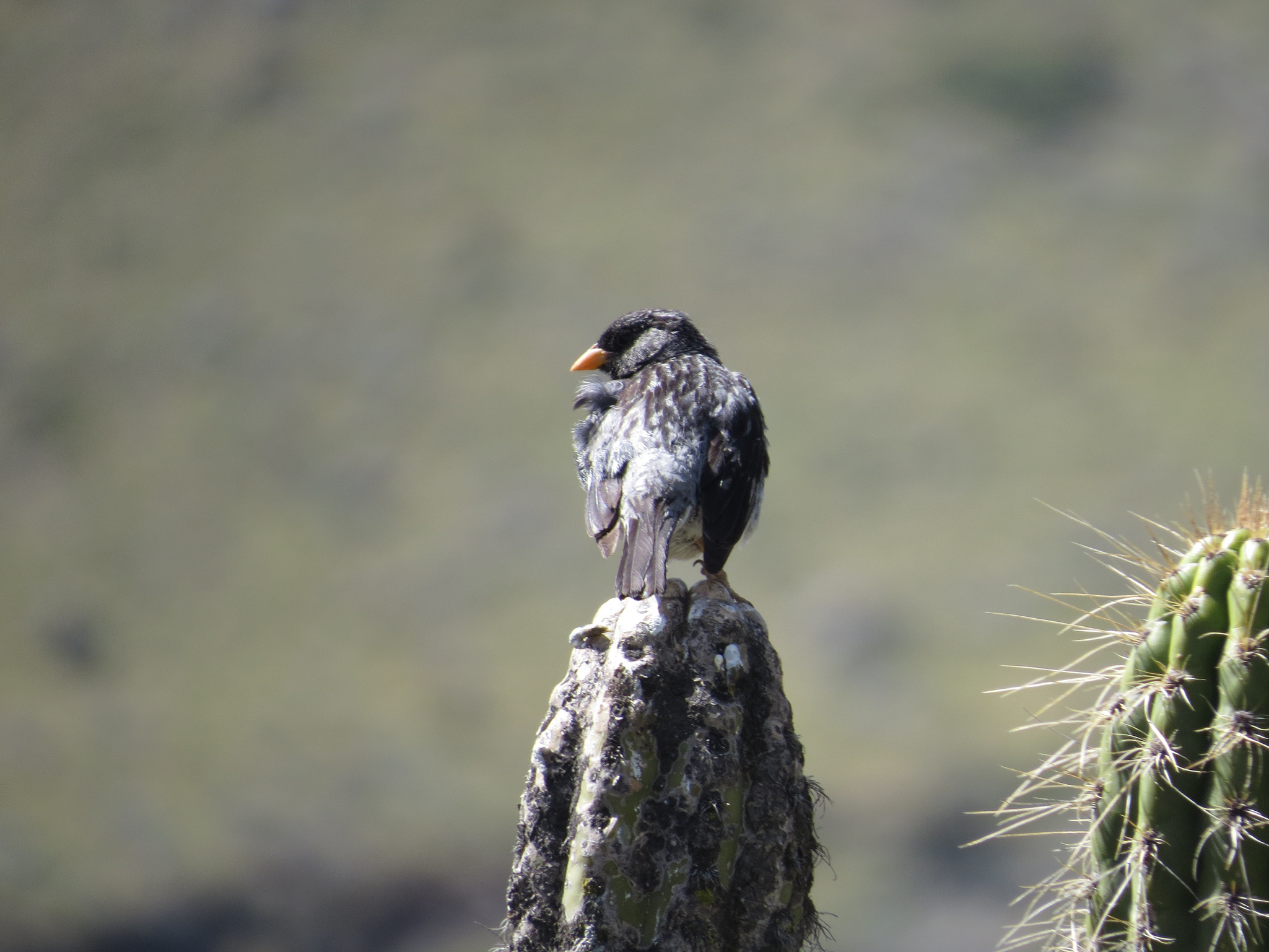
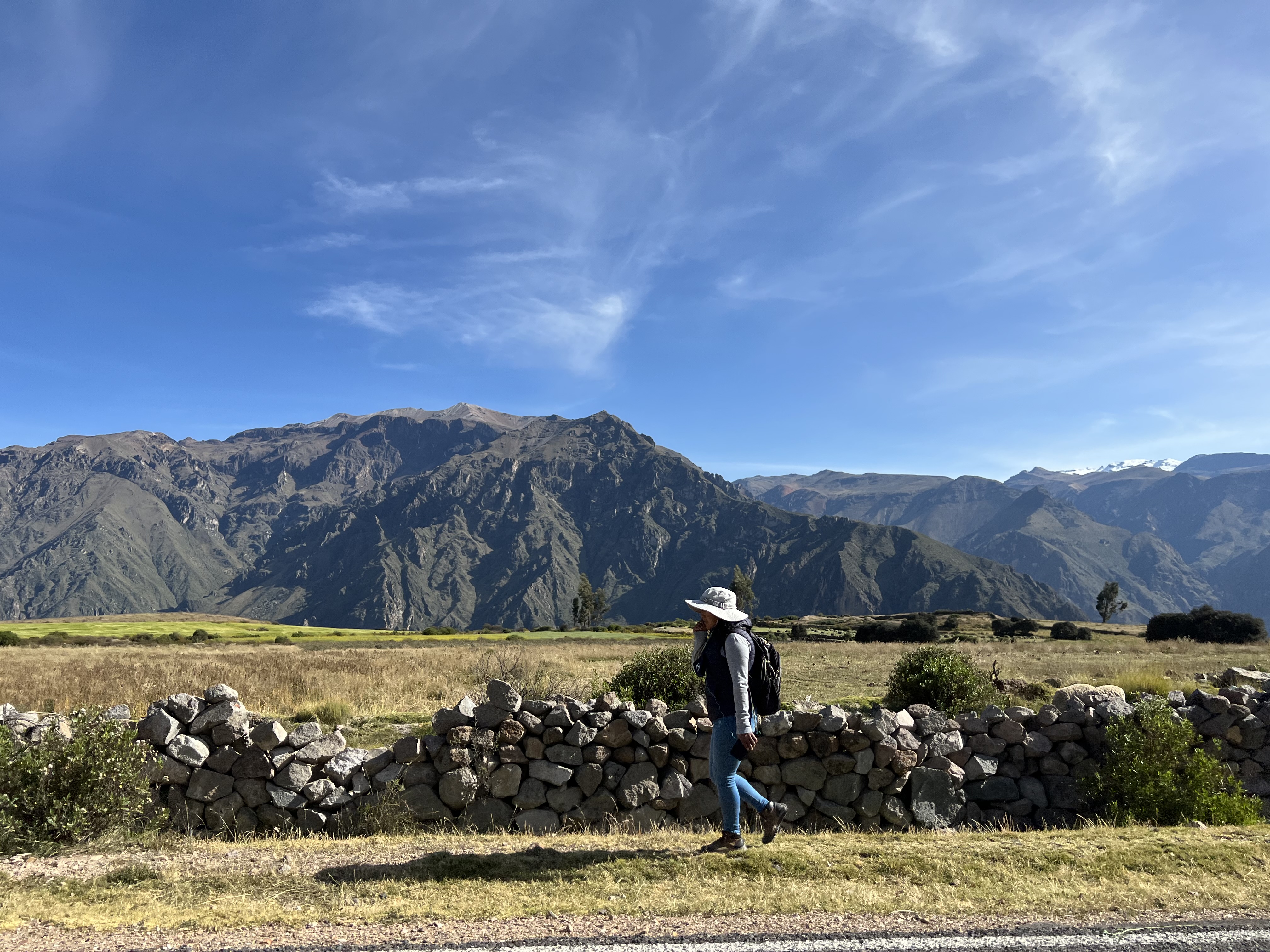
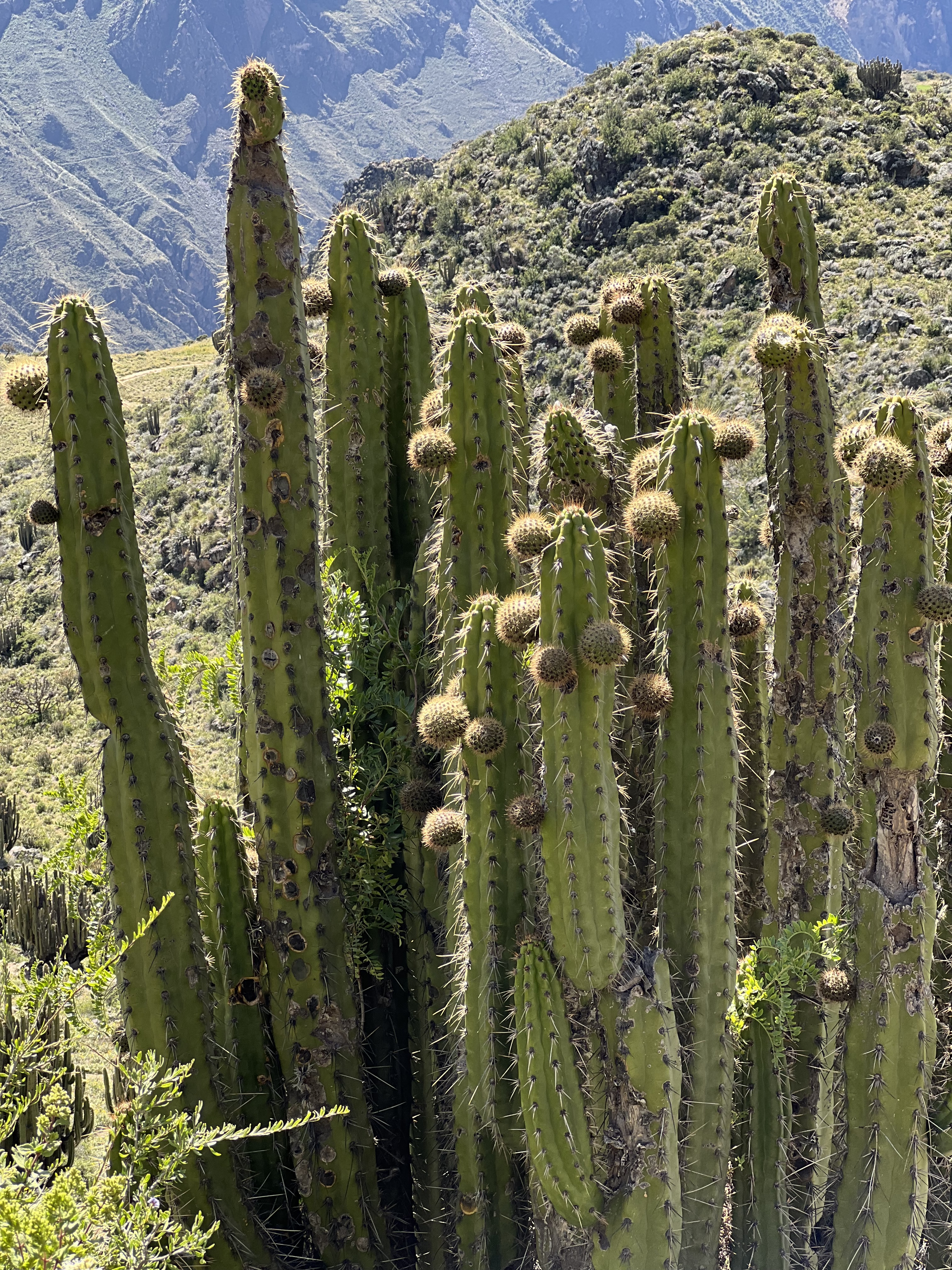
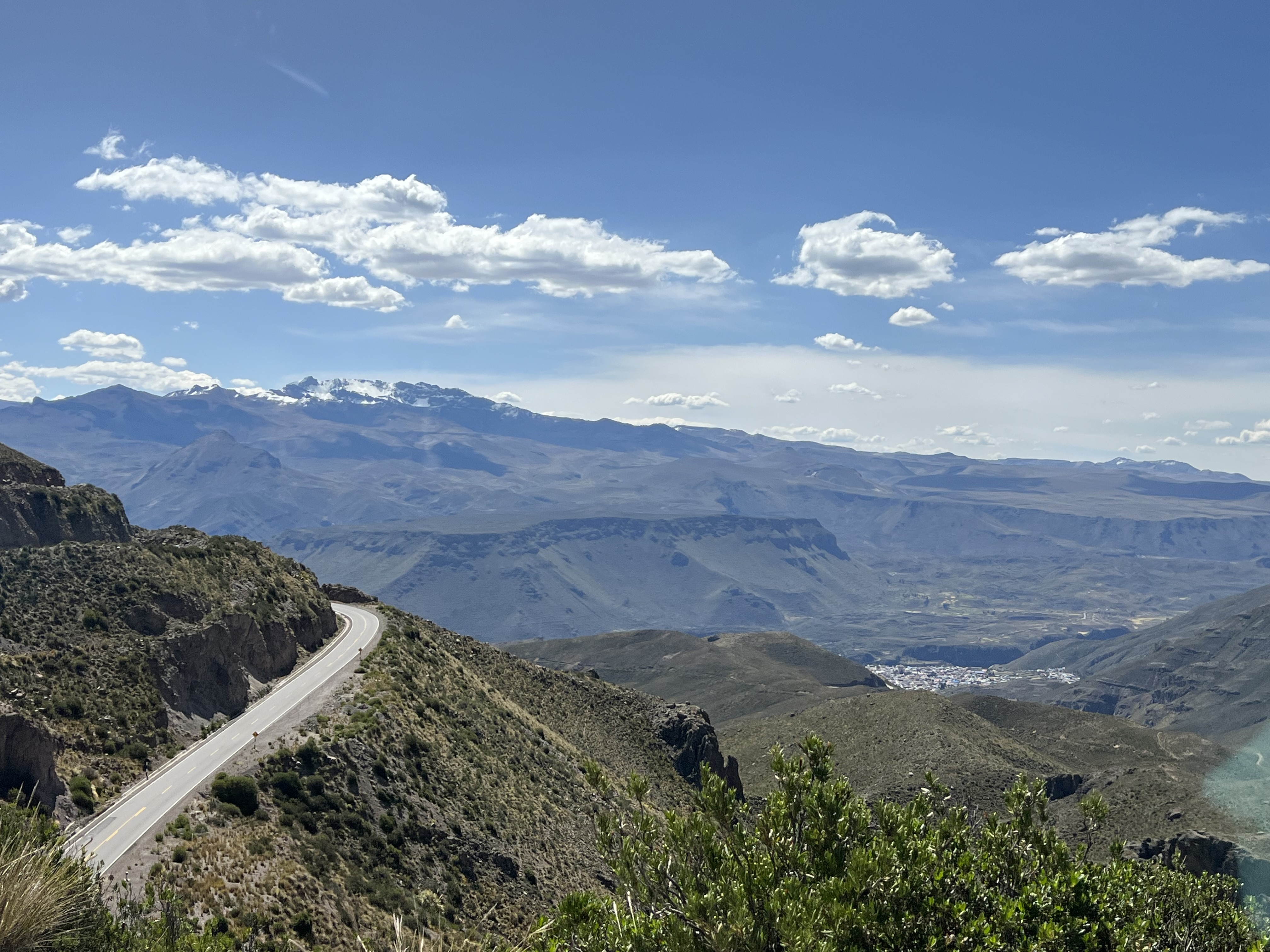
On the way back down the Colca Canyon to the valley, Gaudy took us to another area to walk out and see the canyon. For the most part we were the only people walking on the path. Not many birds but flowers, other birds and cactus’ that are used for food and beverages. I loved the Falla Geologica which meant watch out for falling rocks! We geologists love those signs!
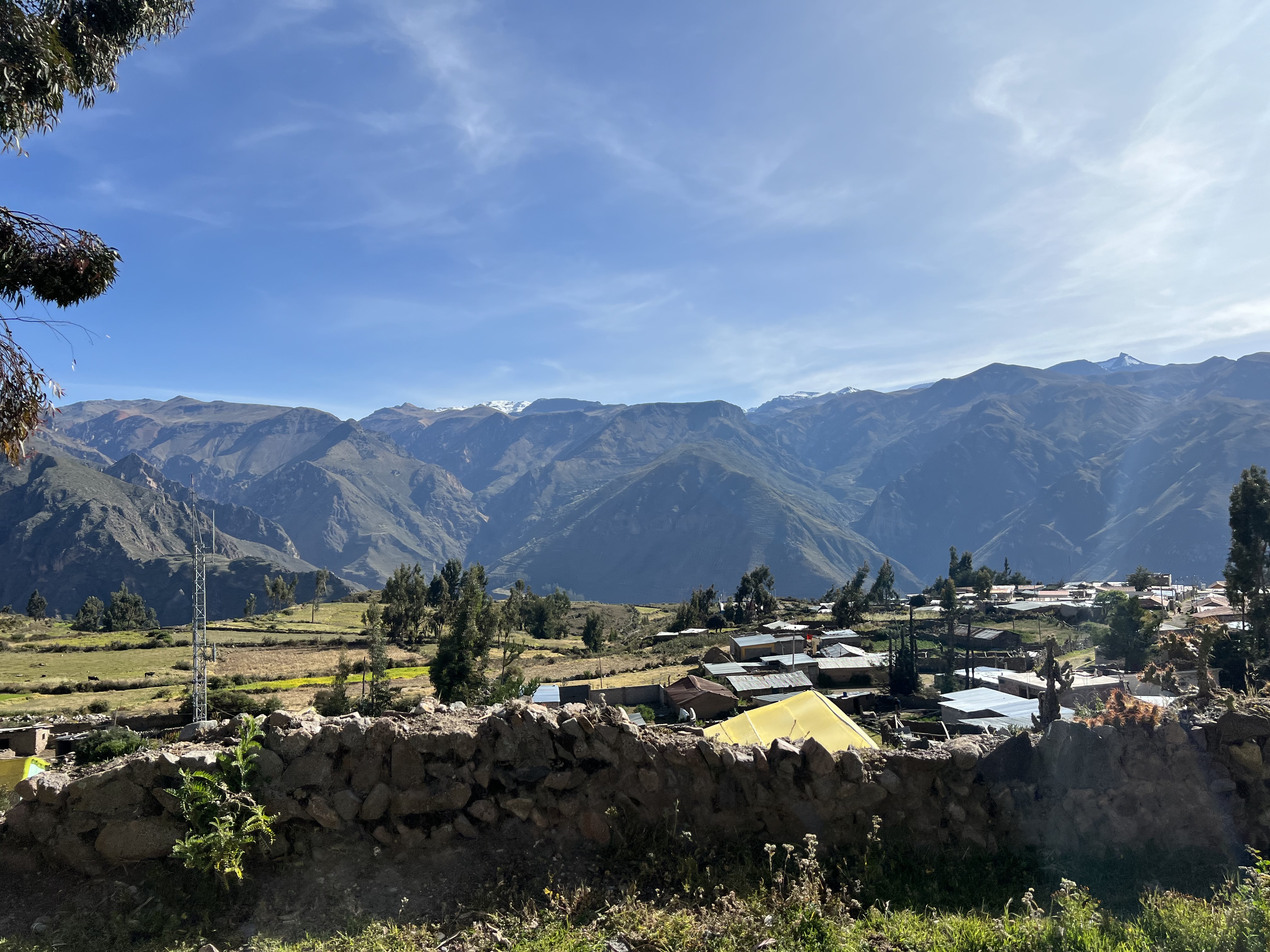
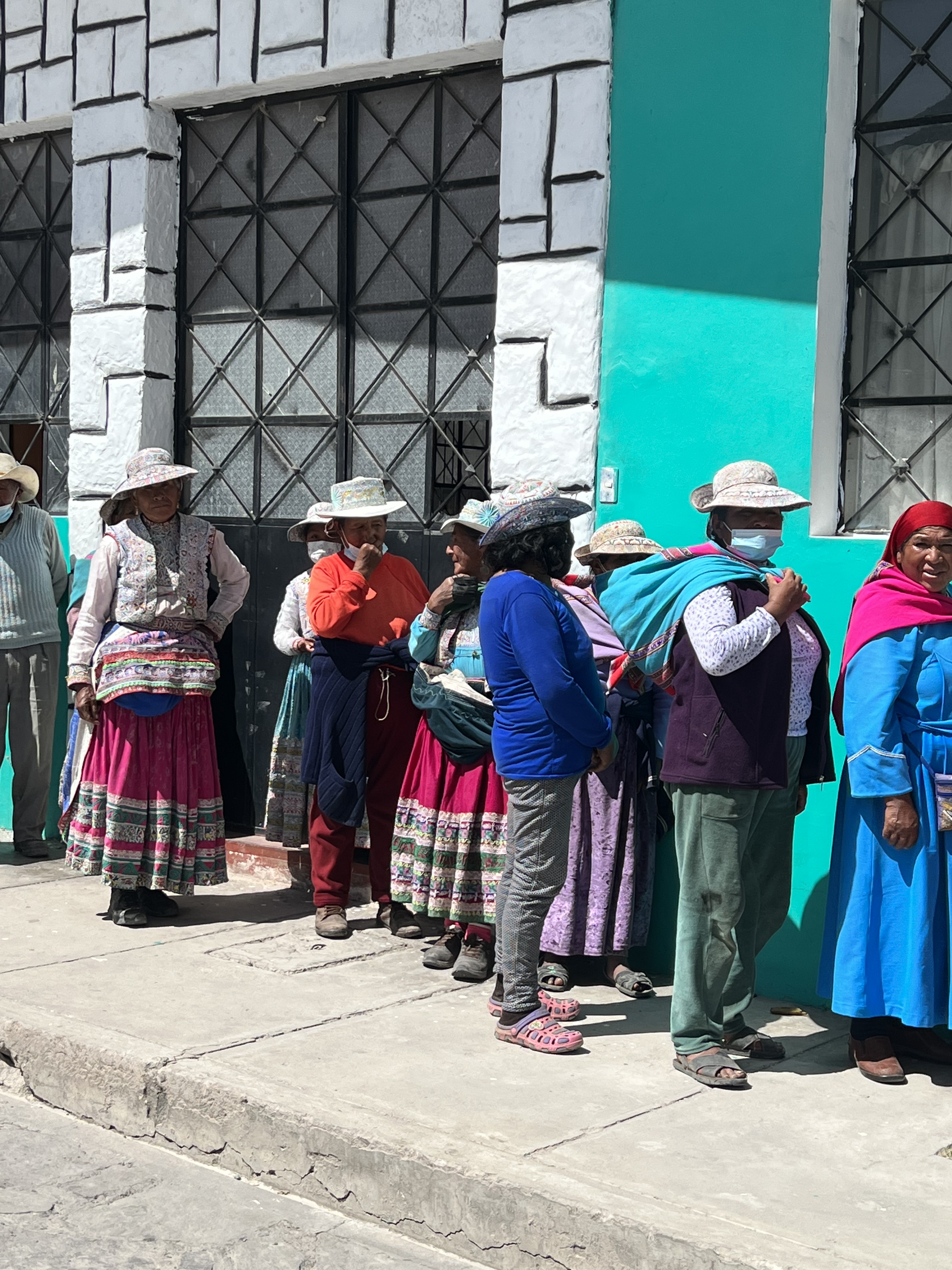
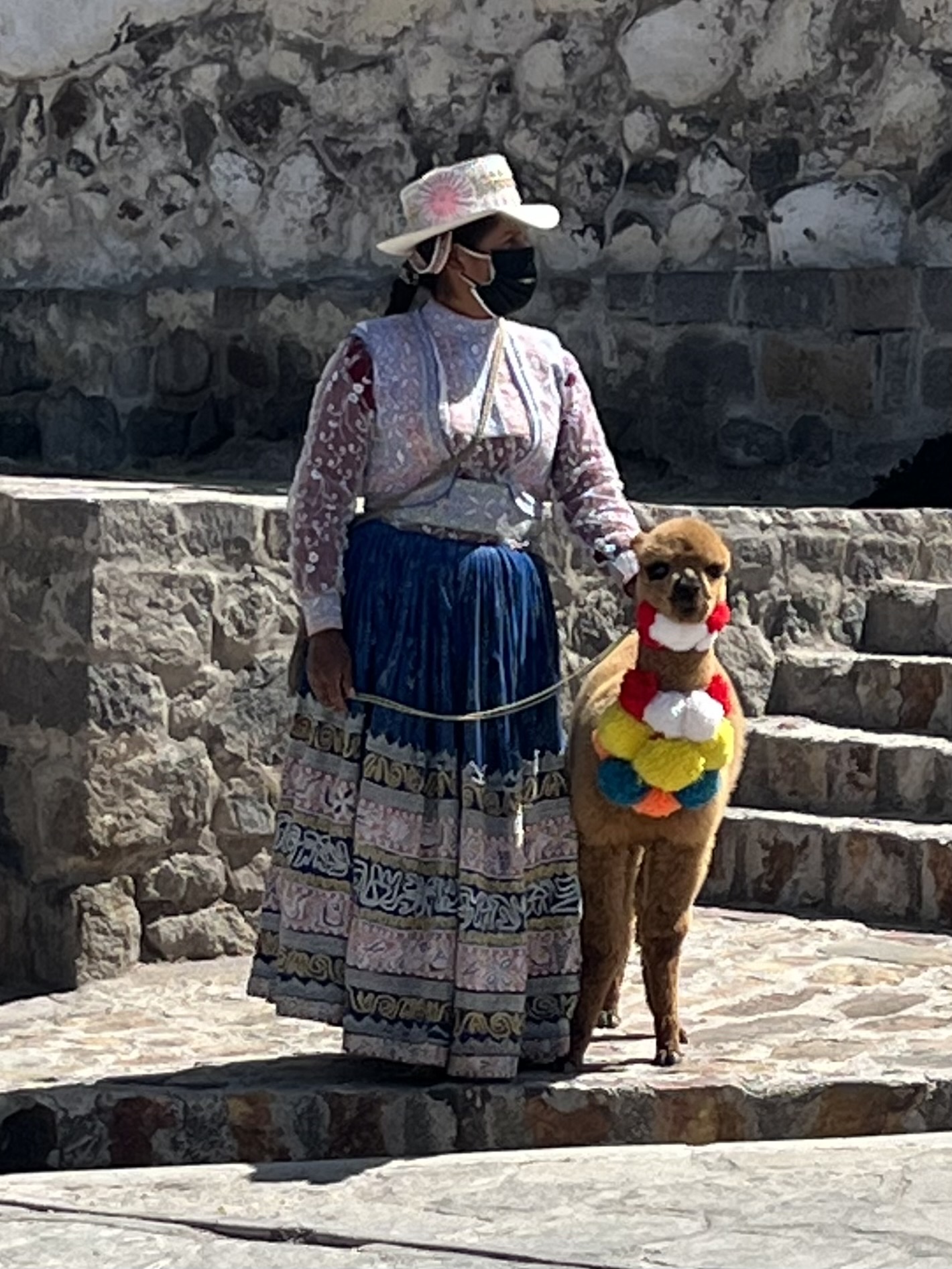
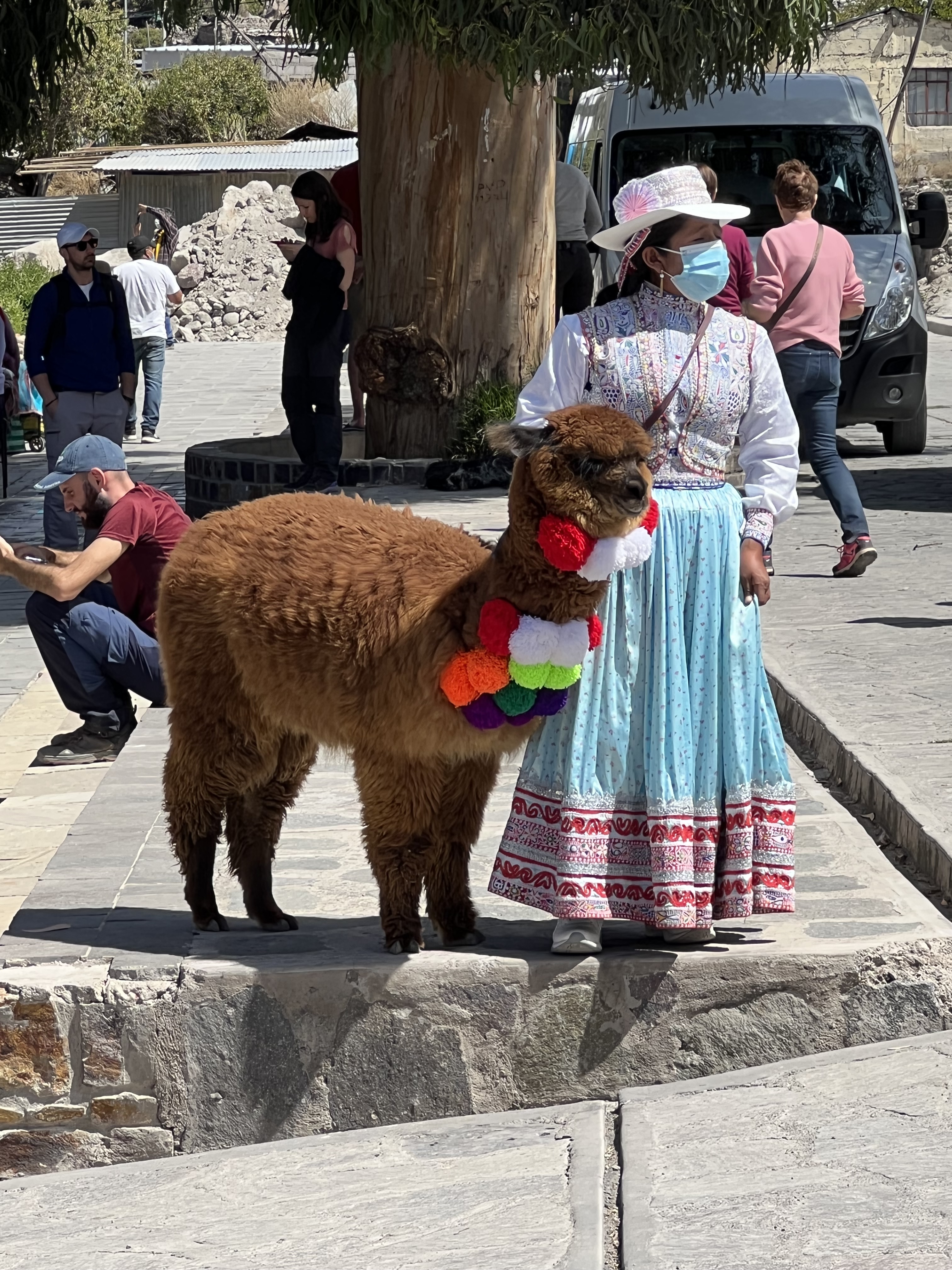
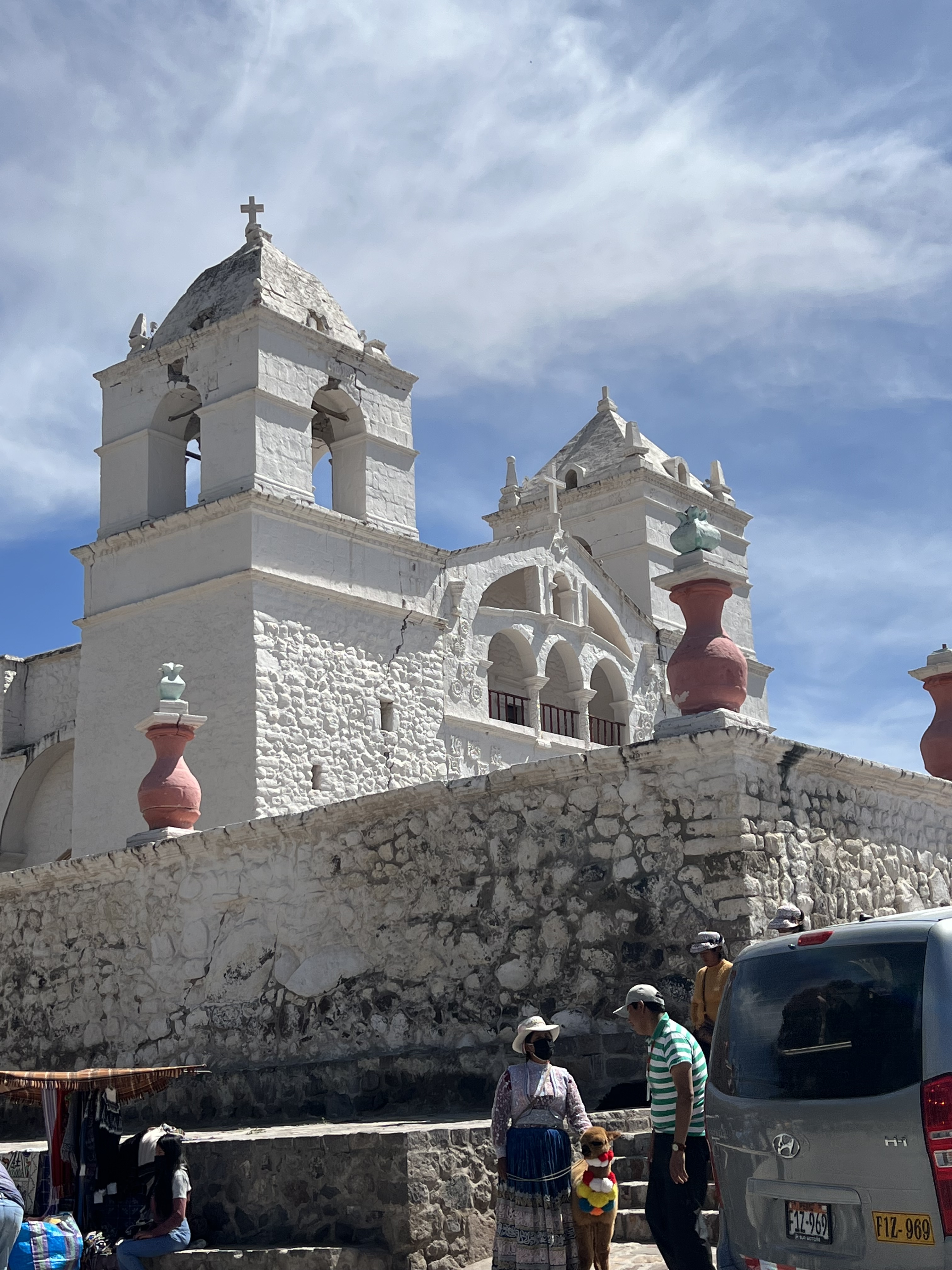
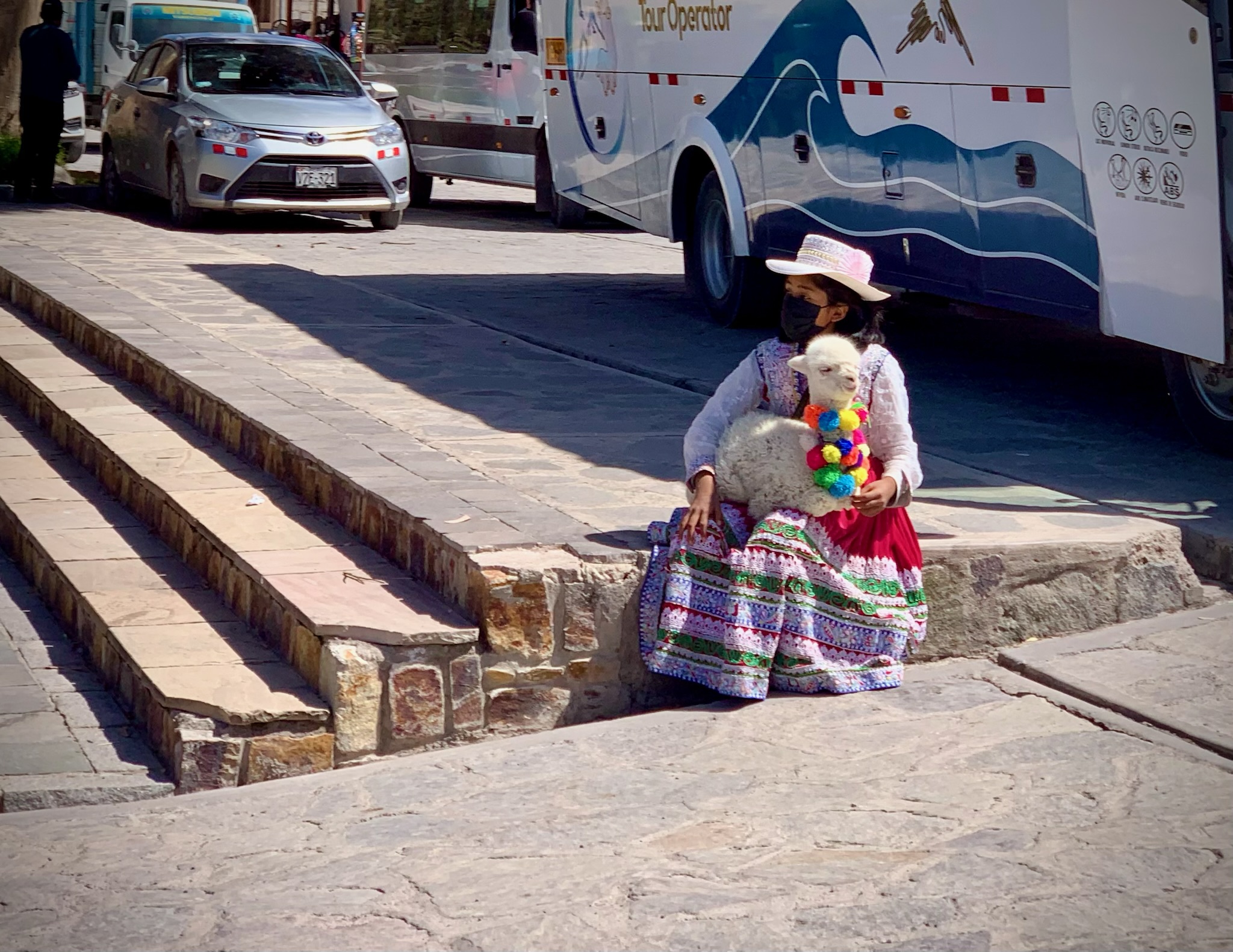
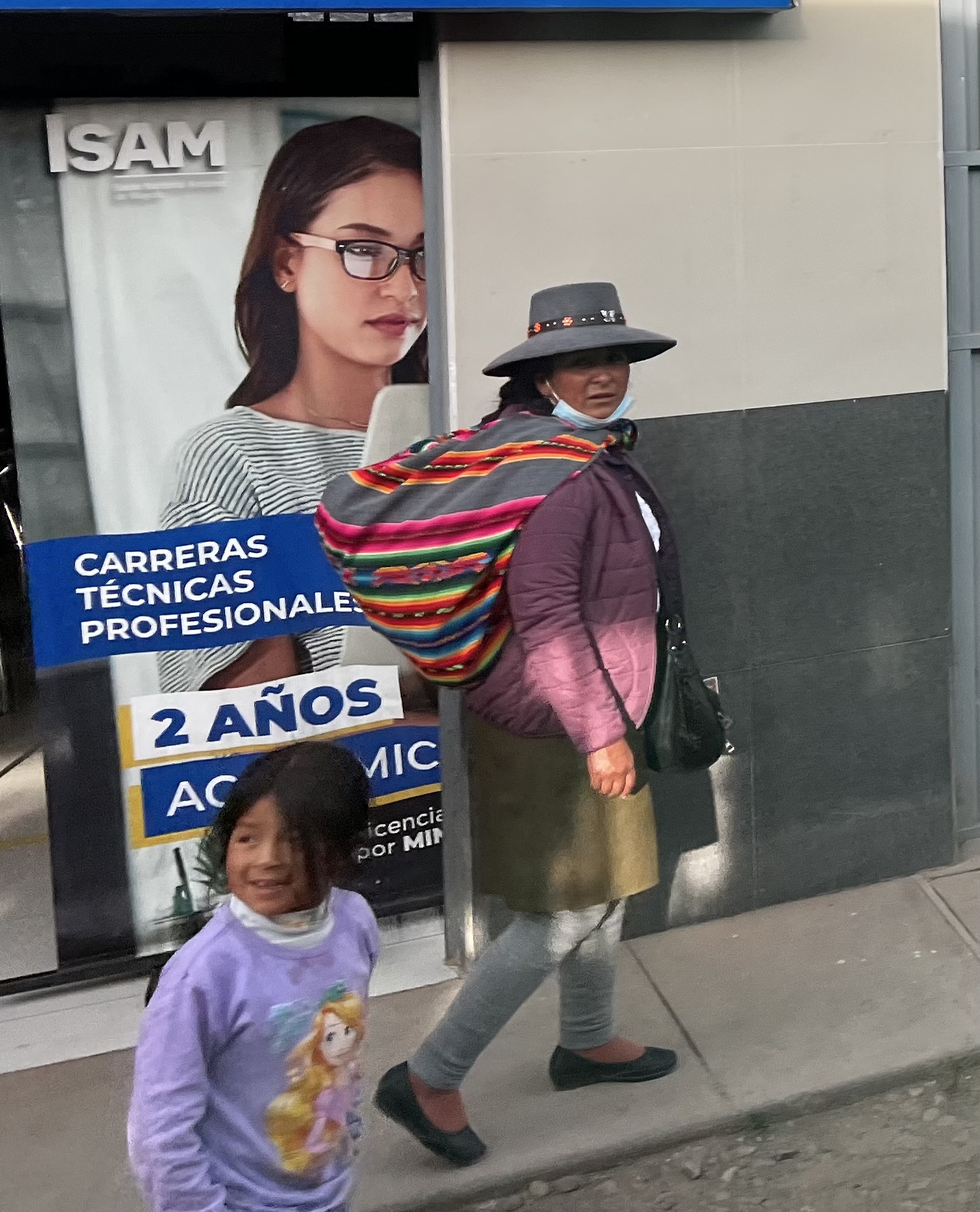
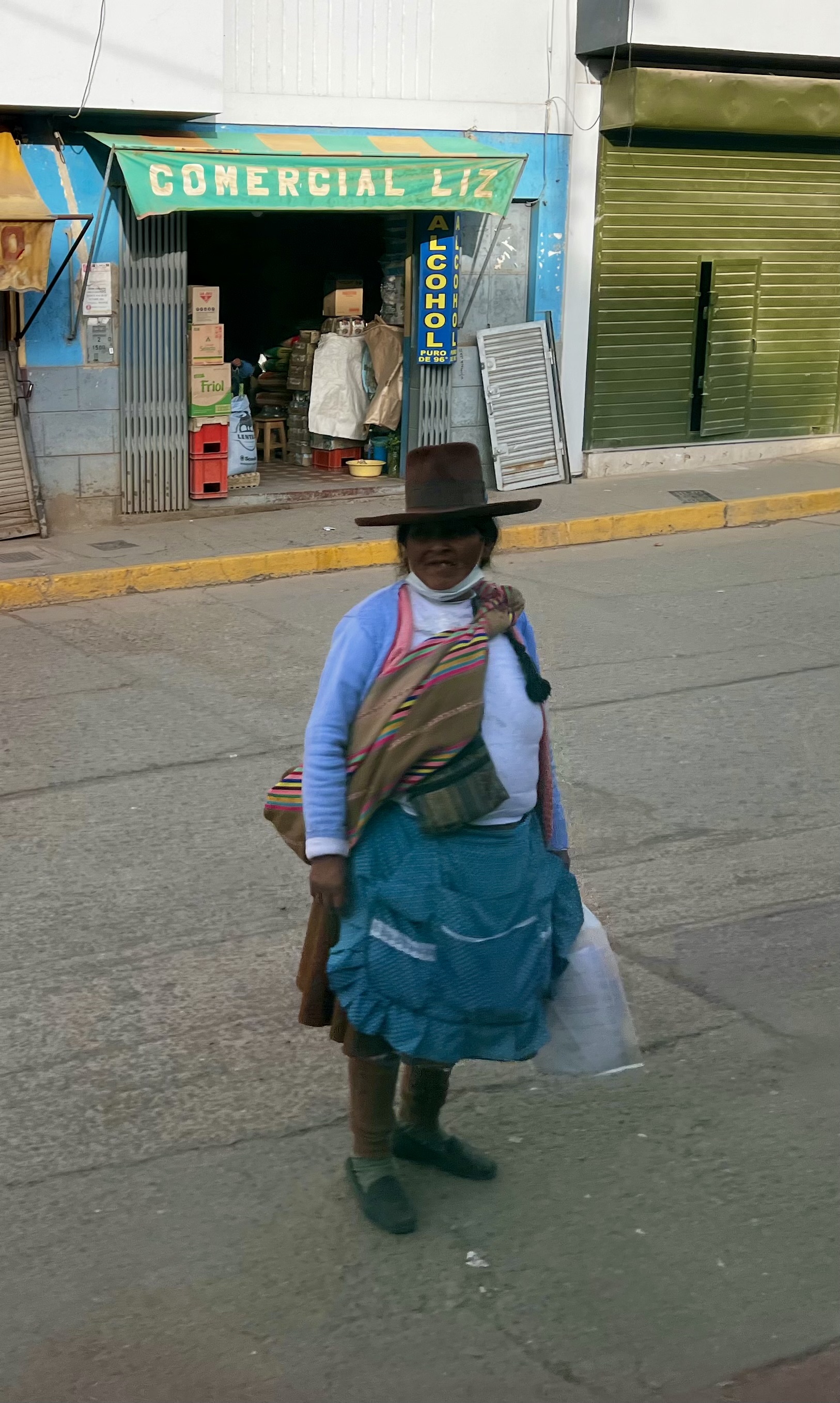
We stopped in Yanque on our way through and walked around the plaza. Color is everywhere! You can see why the Alpaca is so soft! Masks were required everywhere in Peru and everyone mostly wore them. We thought the colorful line of folks might have been for a Covid booster.
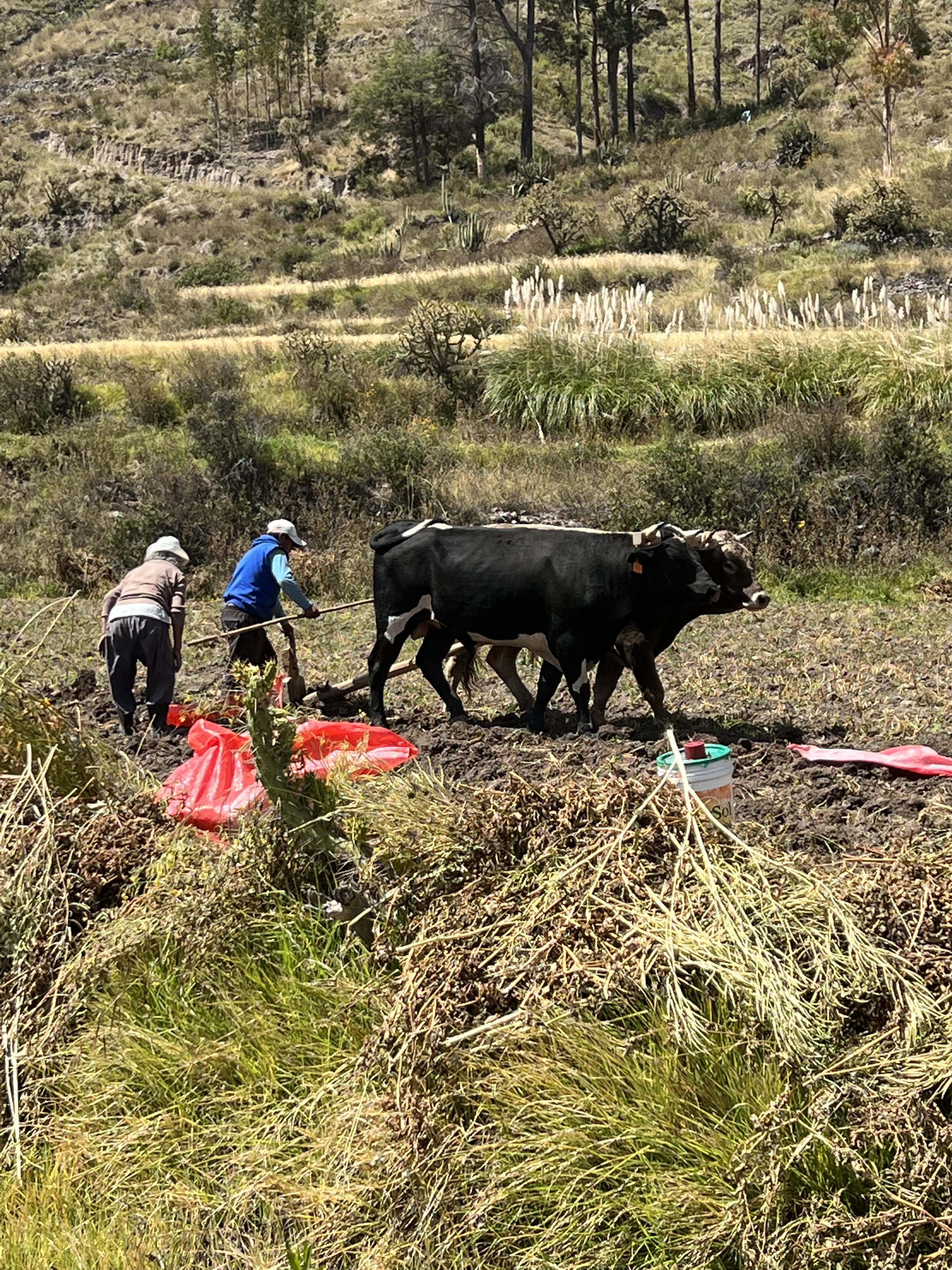
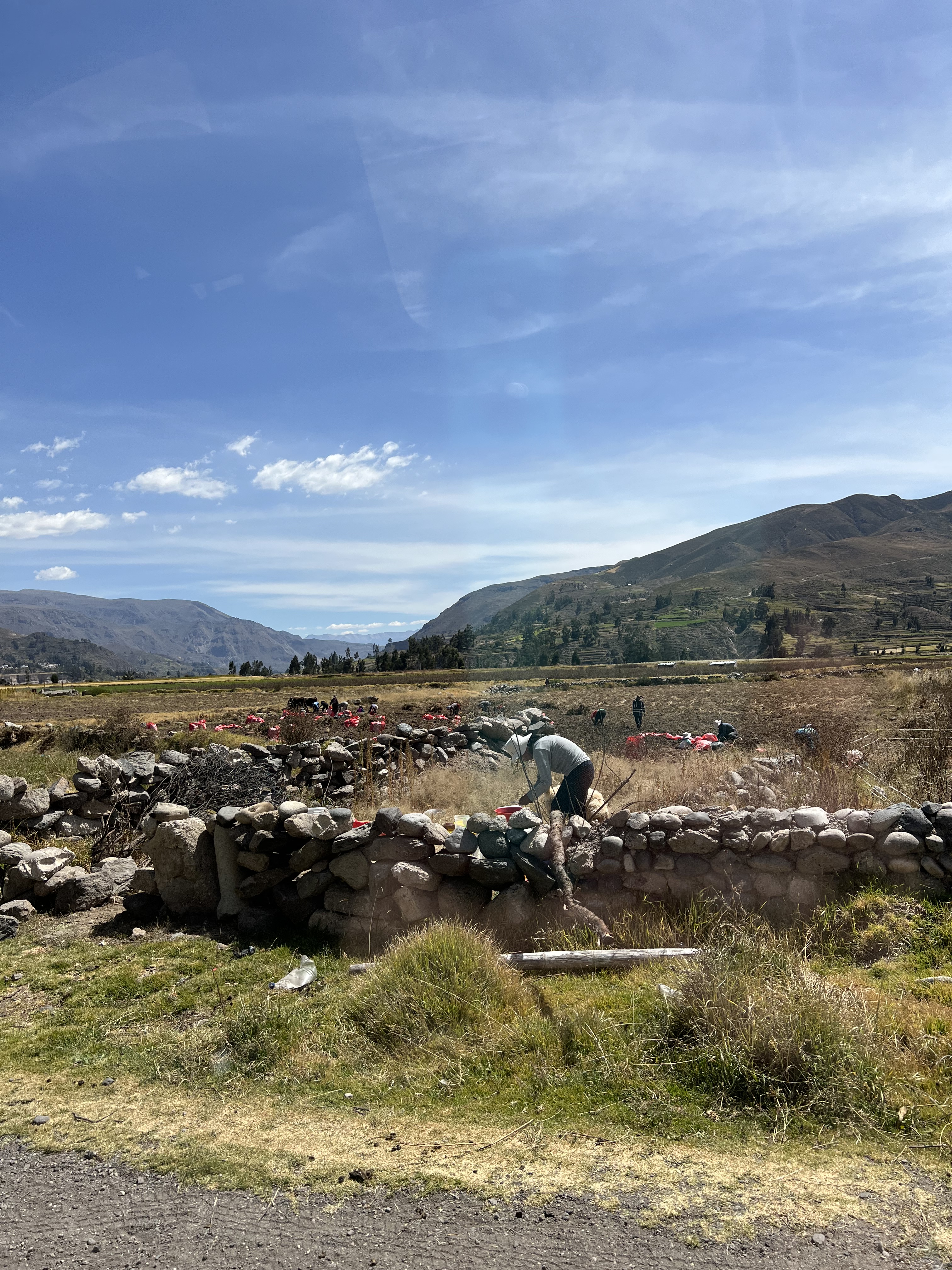
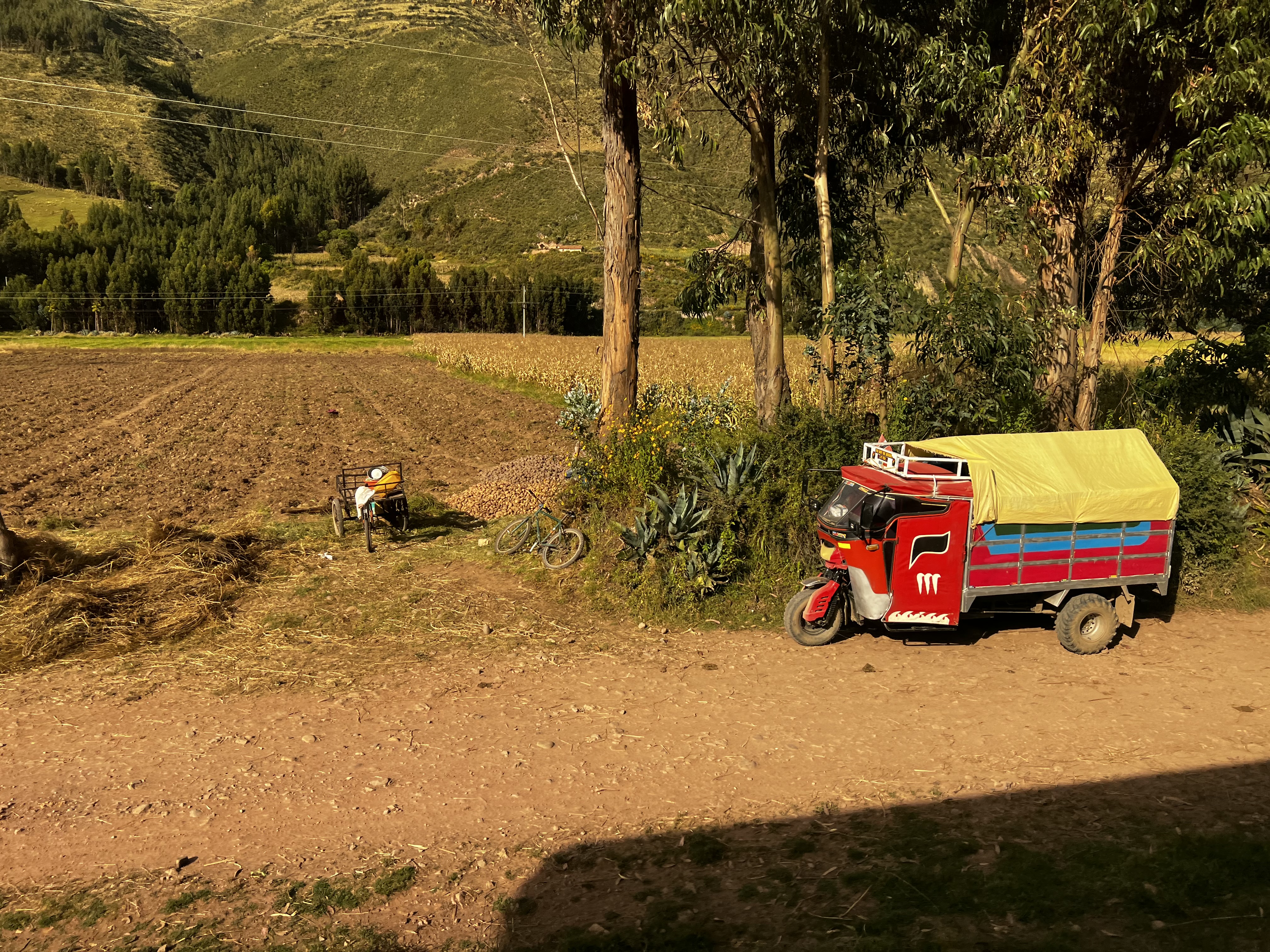
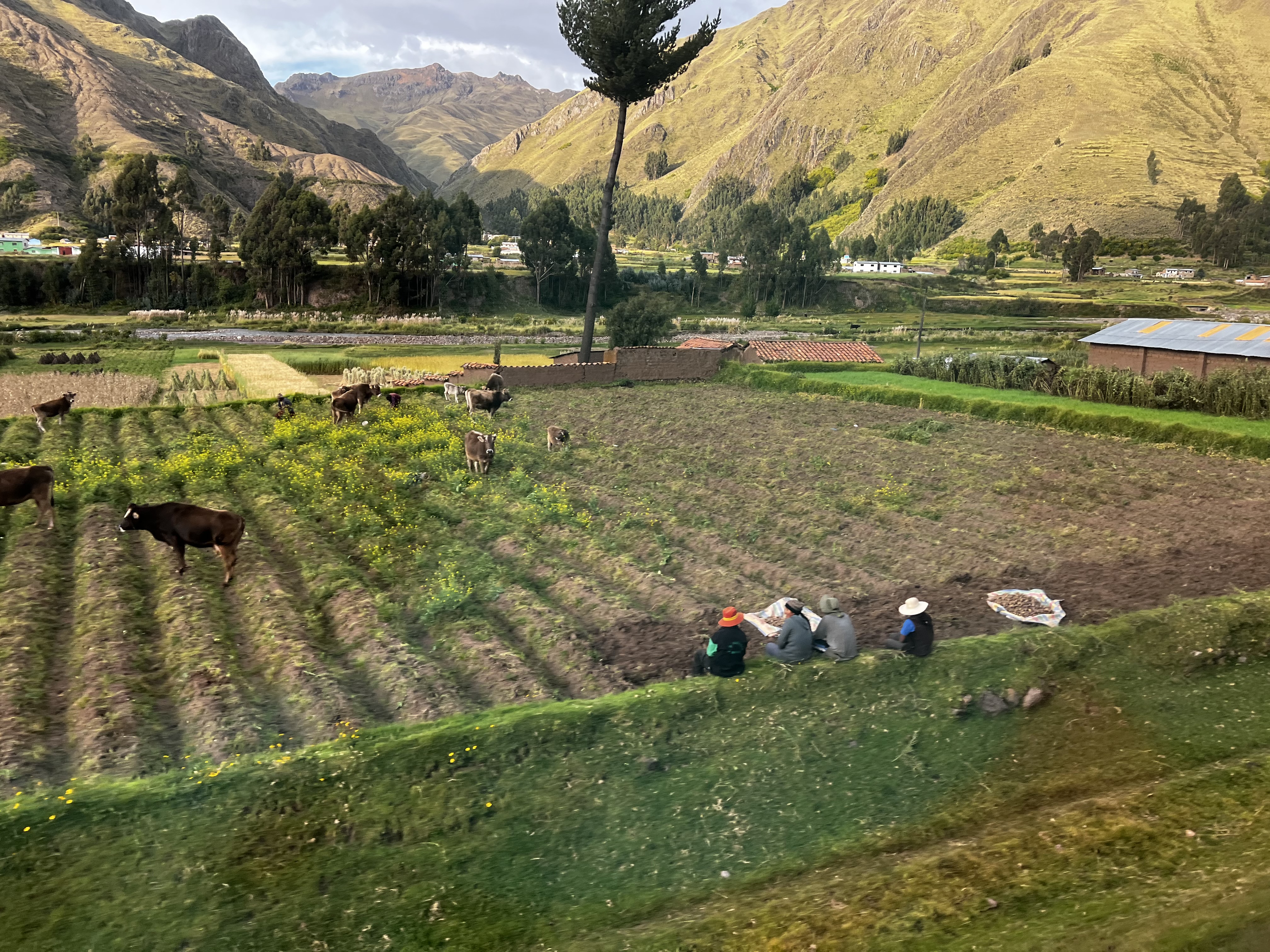
The cows help plow up the potatos and it must be back breaking work to load them in the red bags. We assumed it was potato harvest time! Lunch, while local food, was unmemorable as it seemed more like a linoleum cafe for masses of buses off a tourist ship. The toilet was a blessing though!
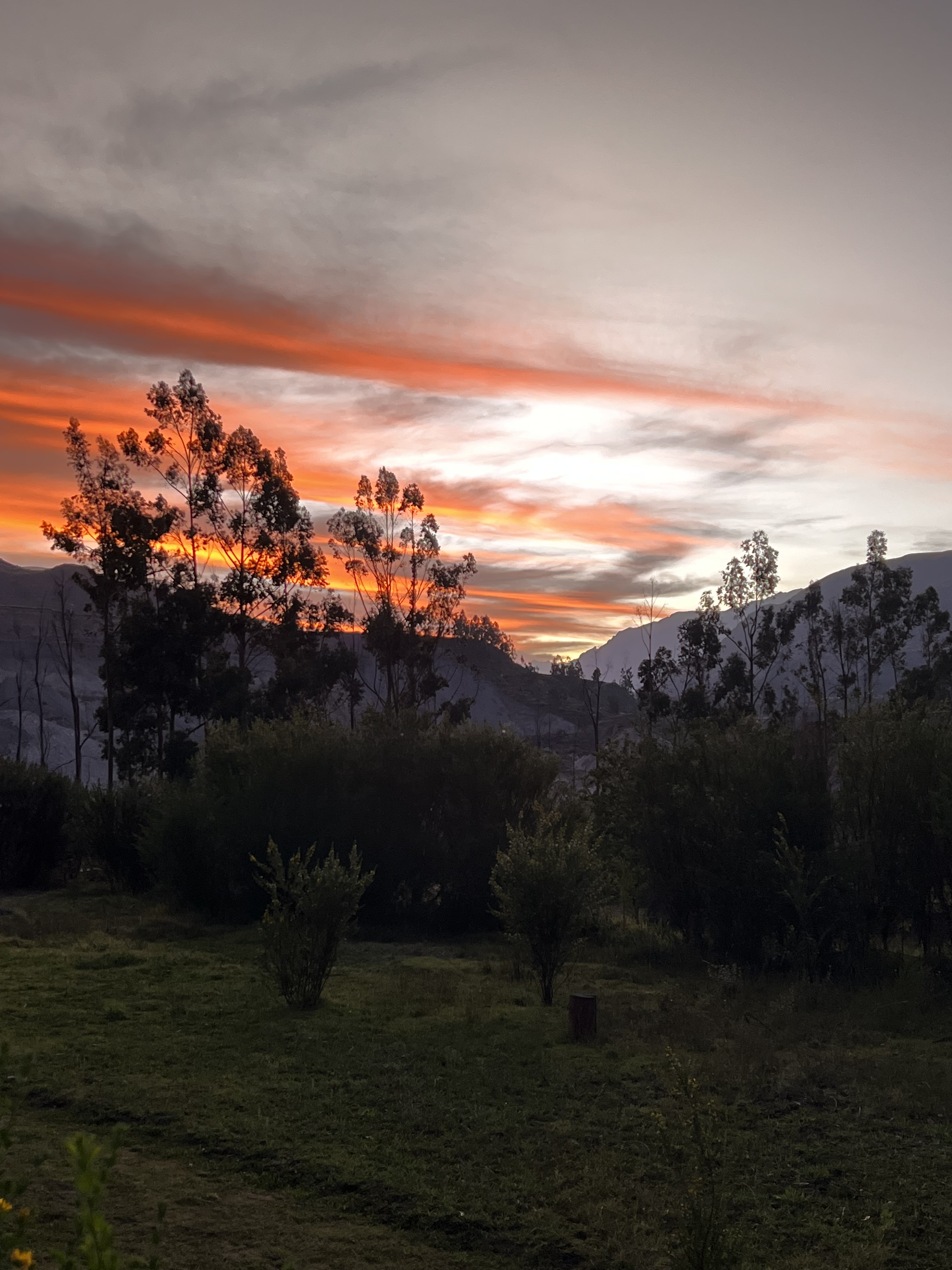
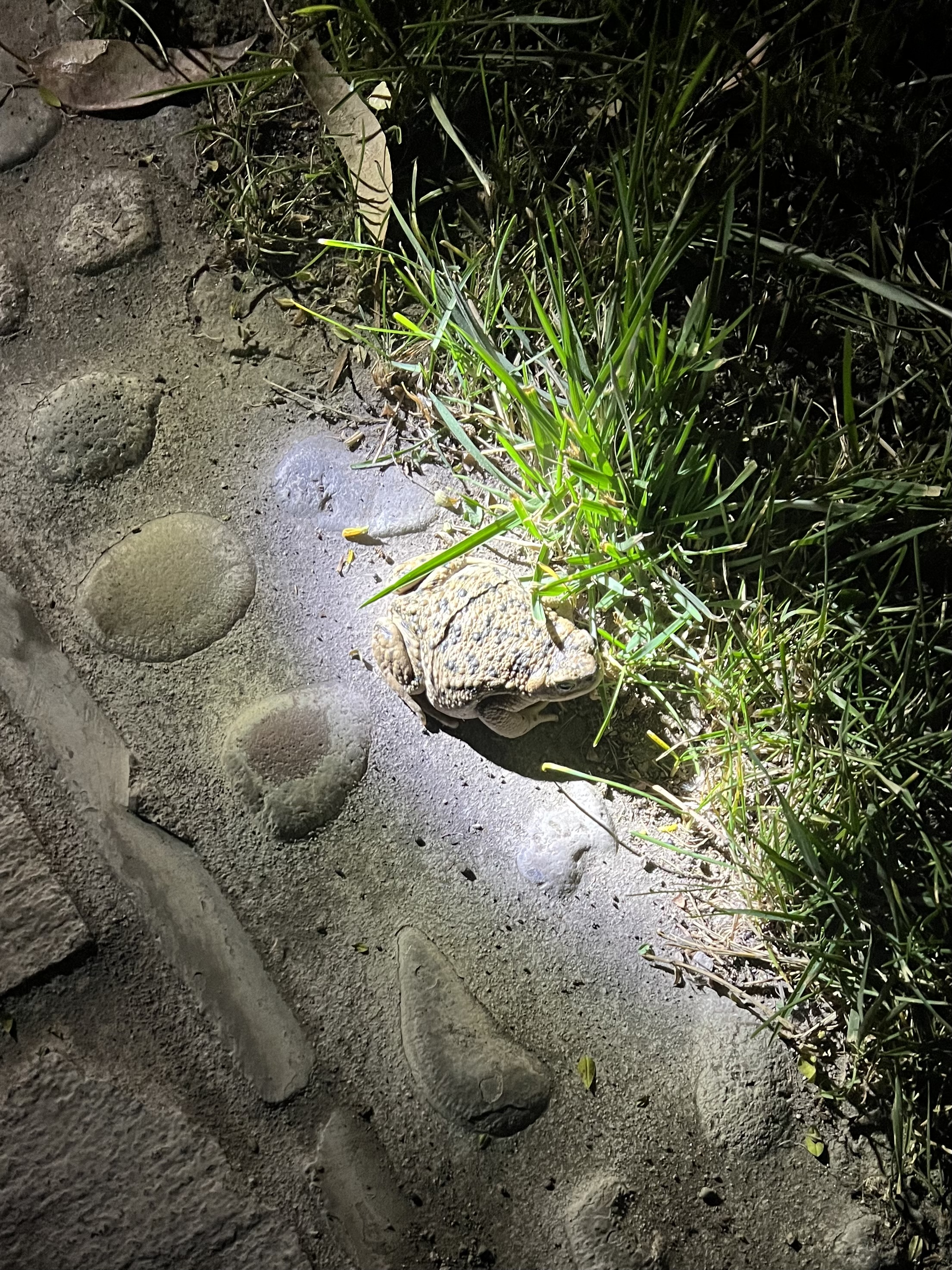
From portraits to our sunset to our local frog, we were ready for our last night at Las Casitas…and another luxurious bath and sunset near the Colca Canyon!
Next day..onto Arequipa and another volcanic eruption!
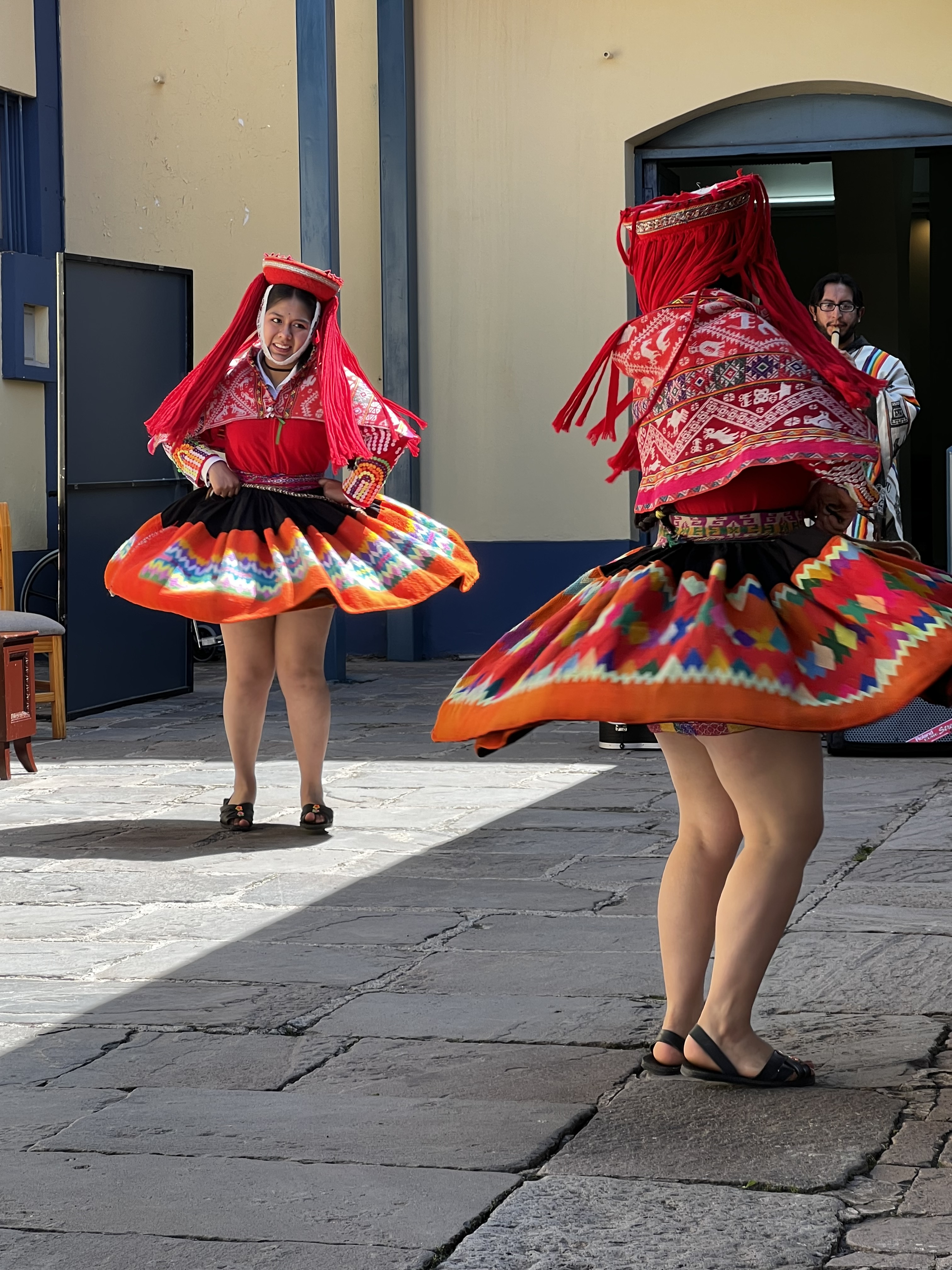
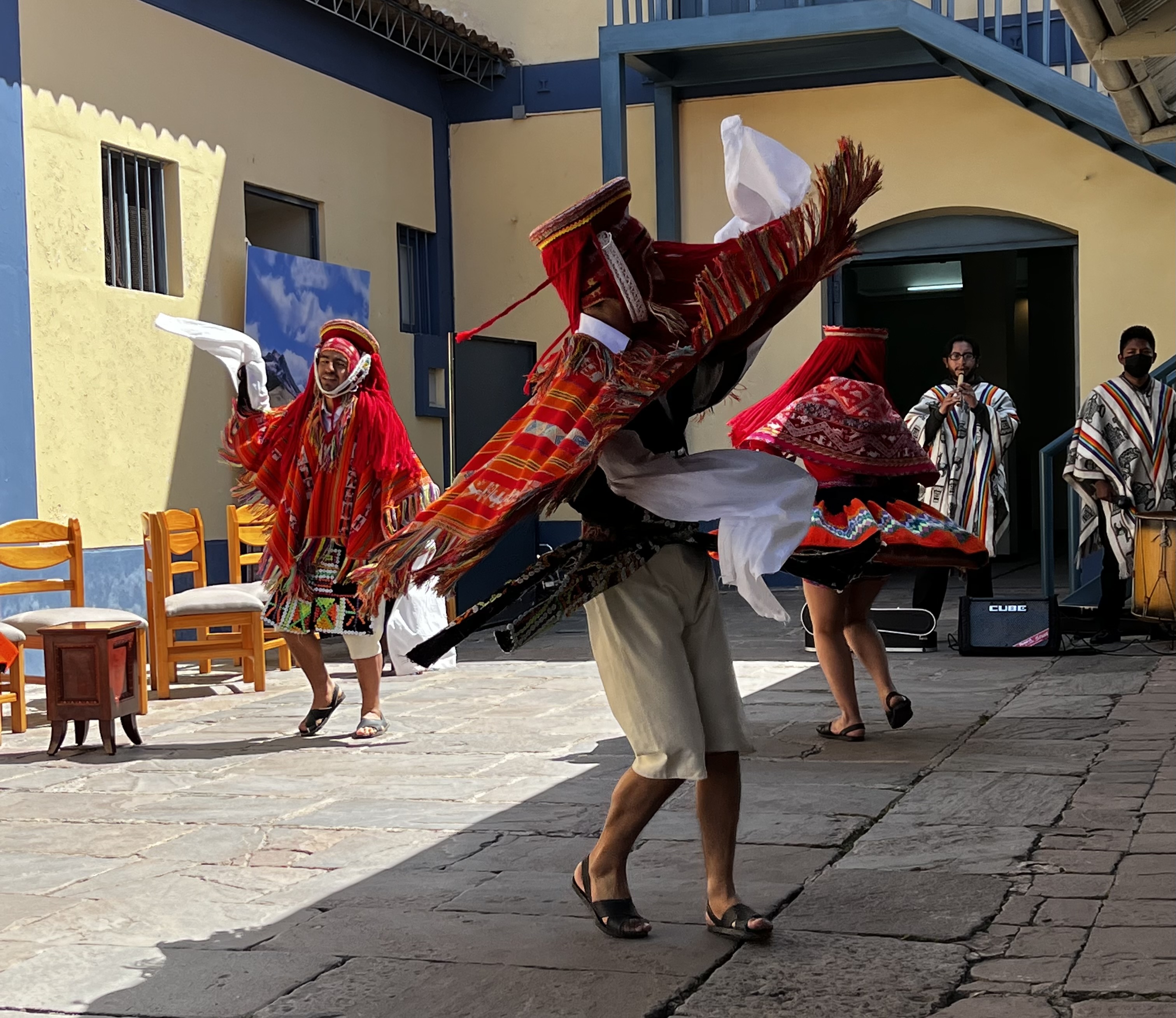
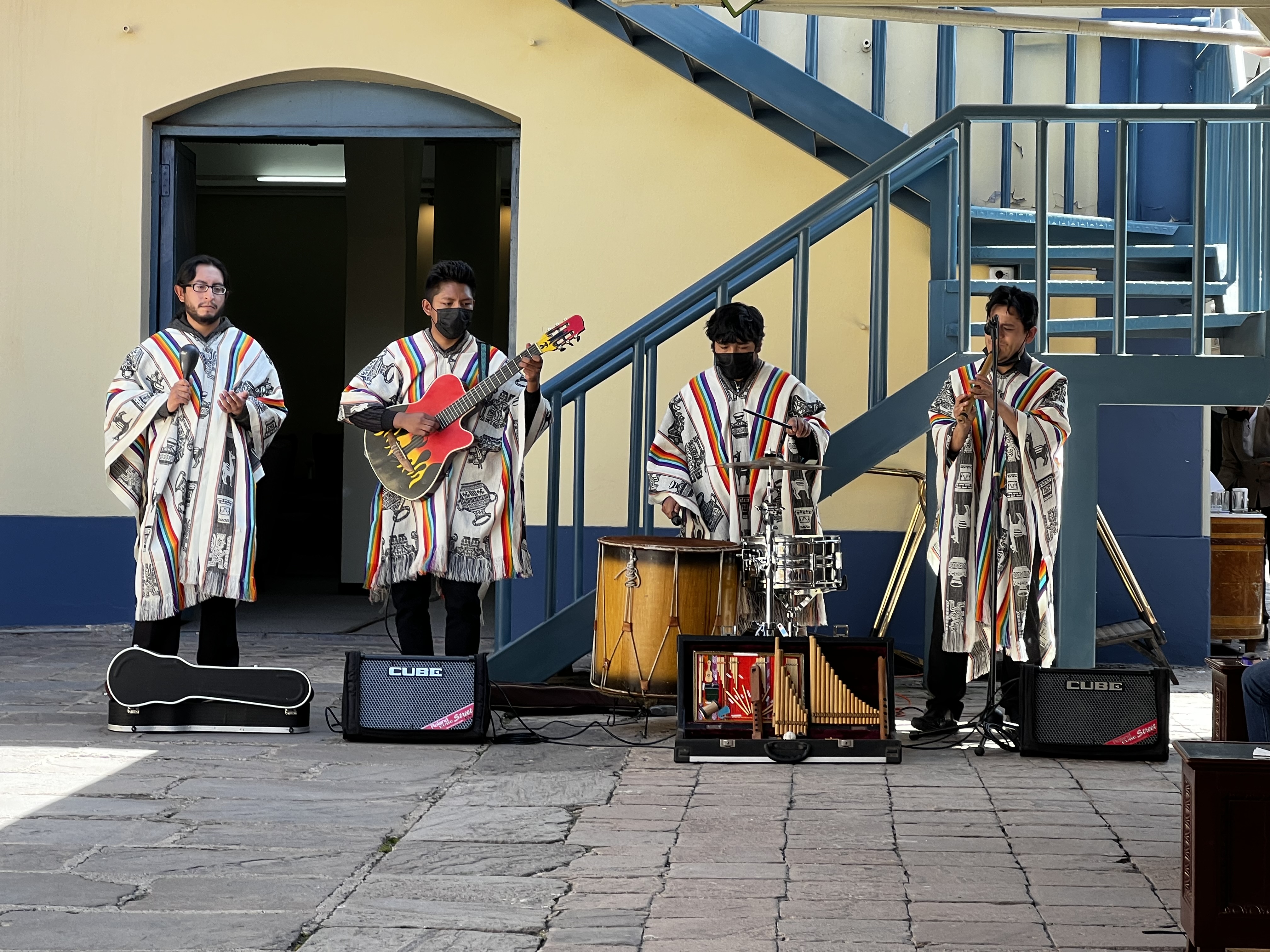
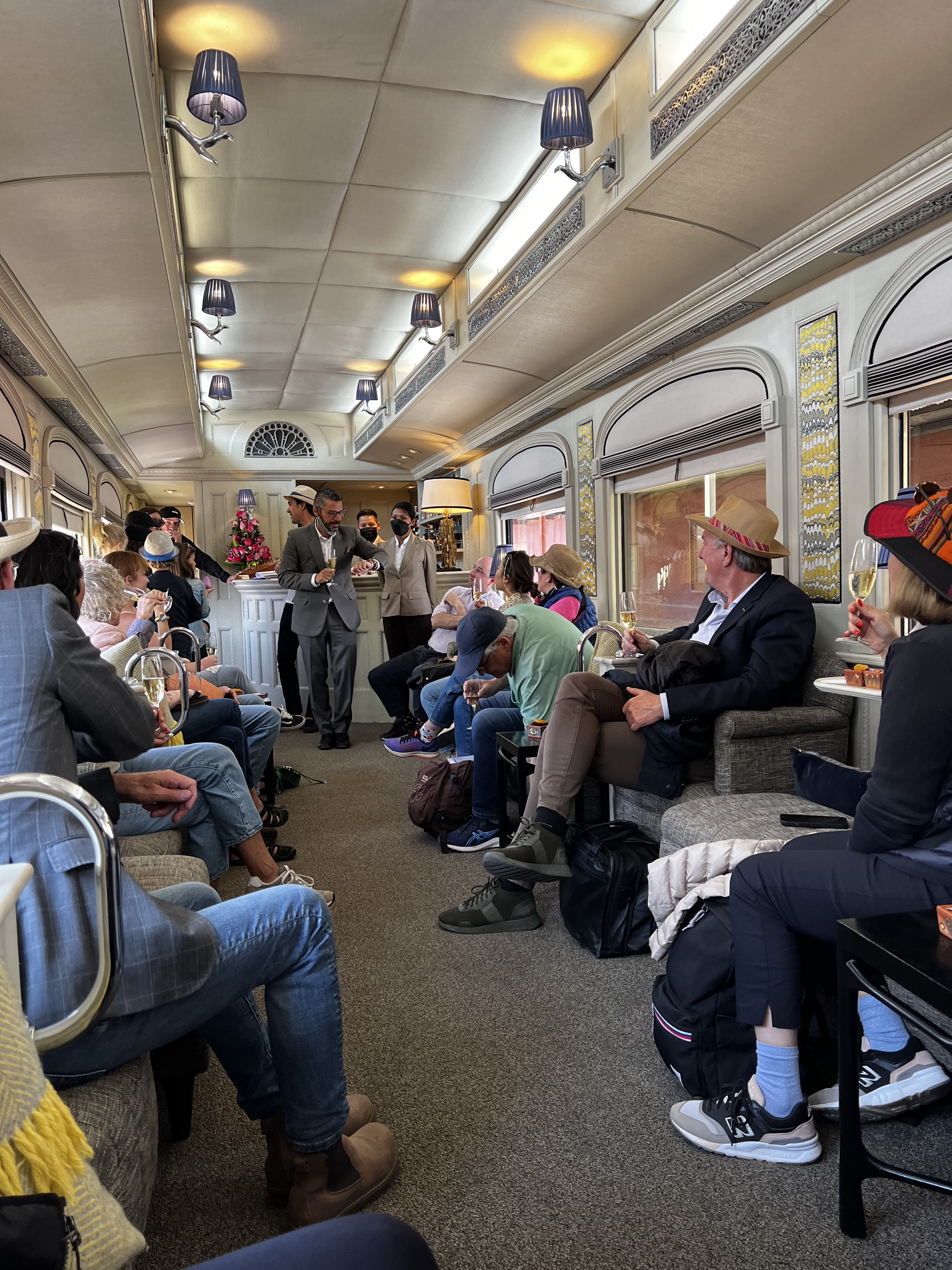
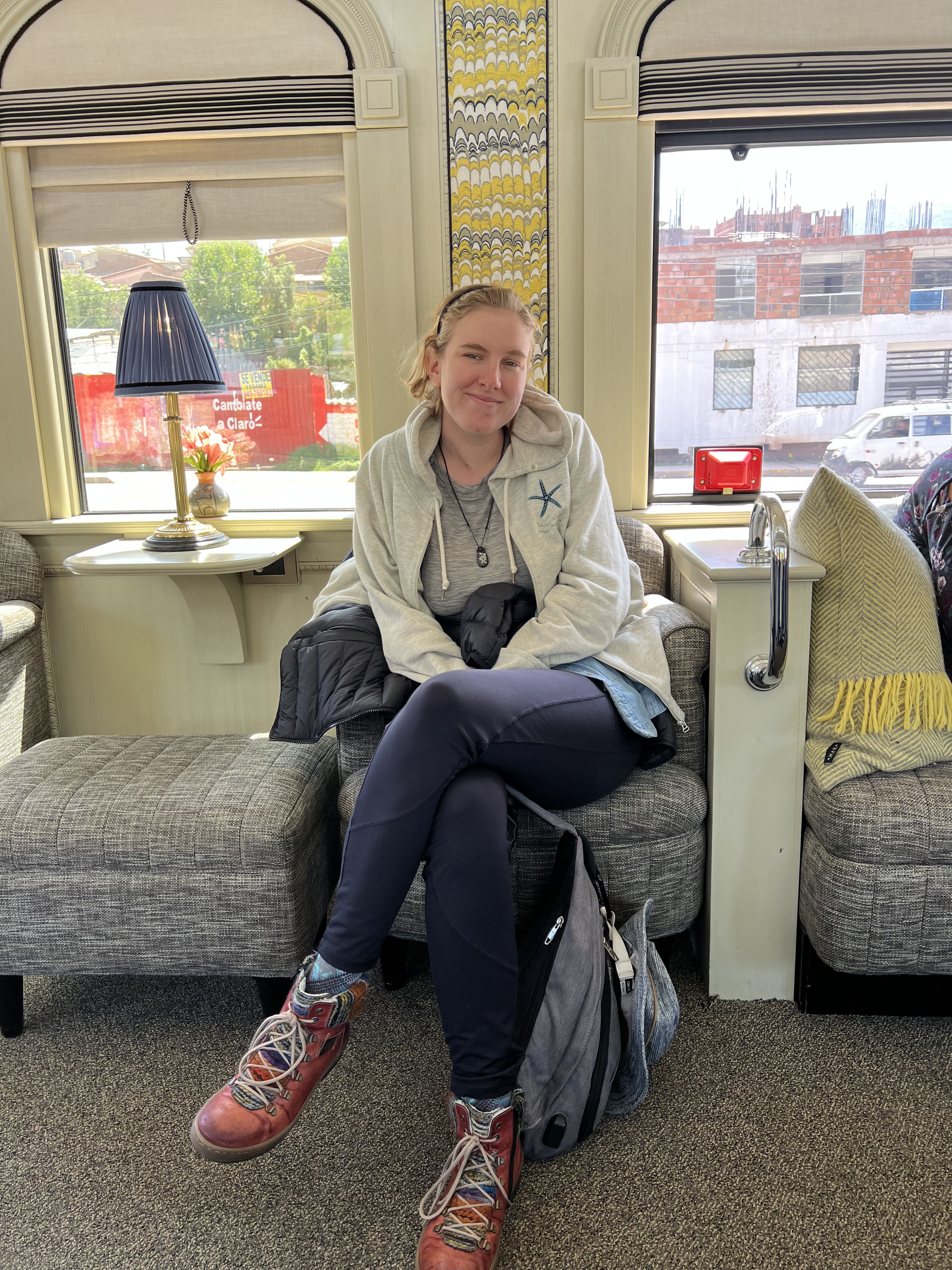
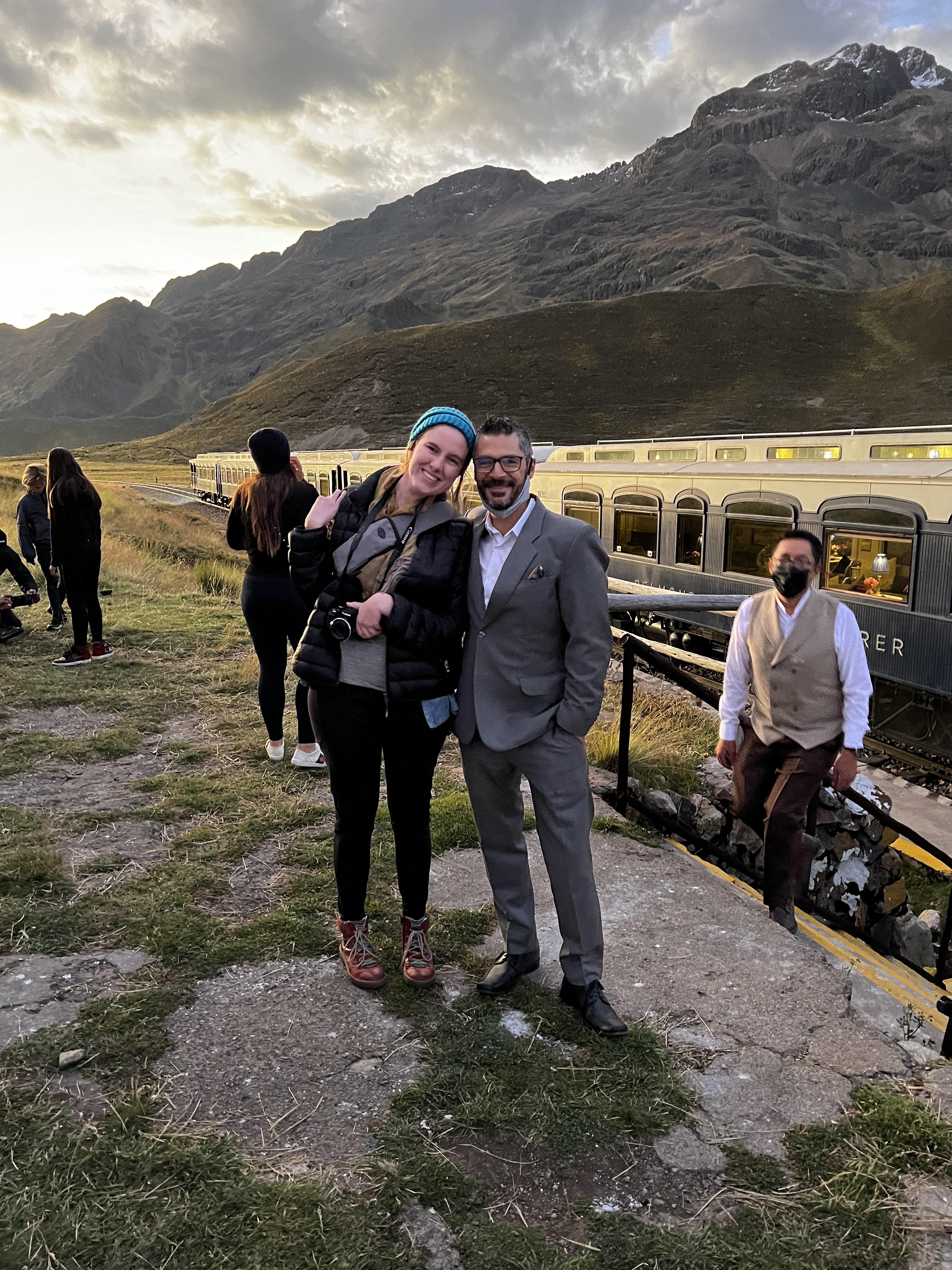
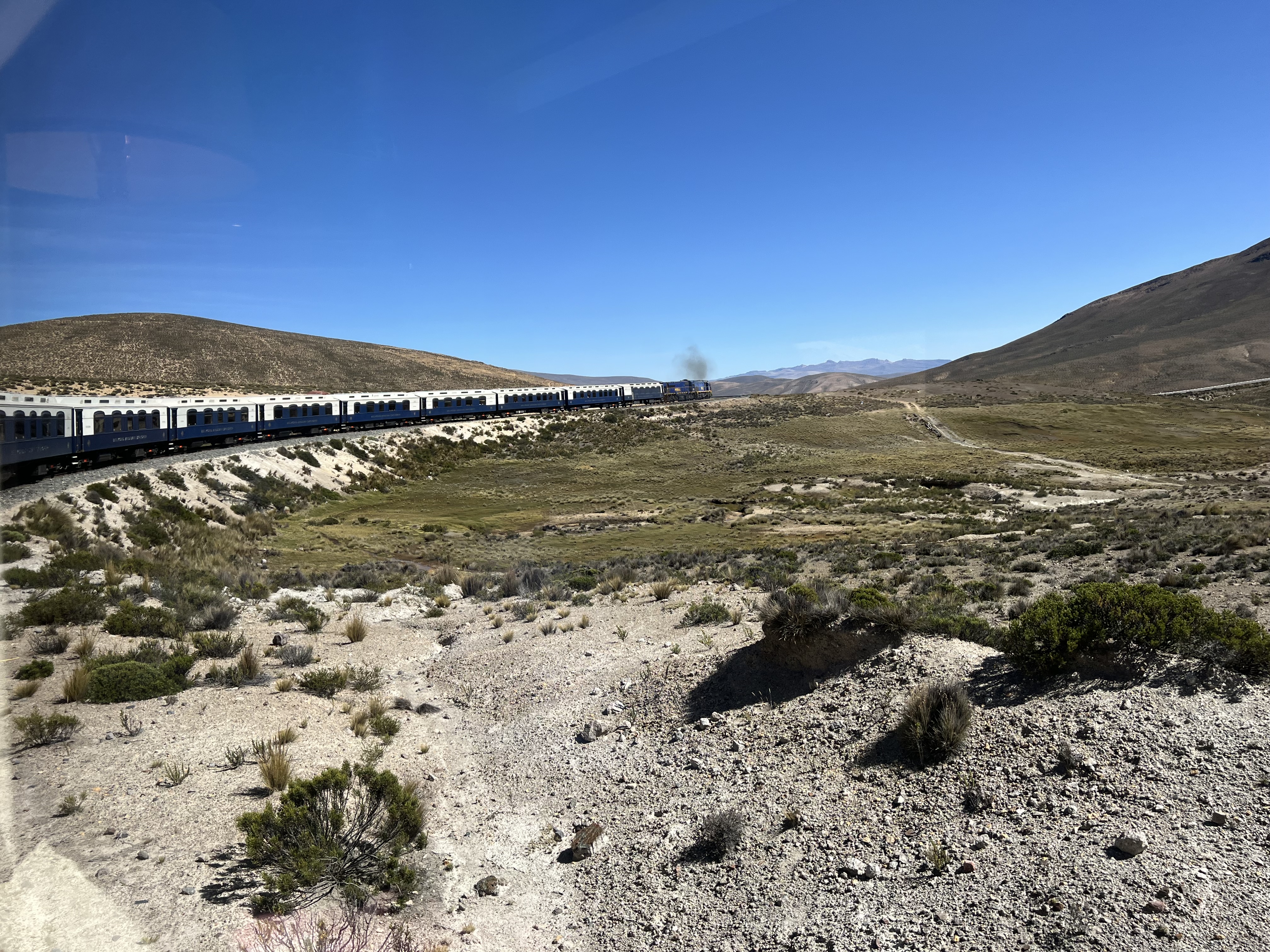
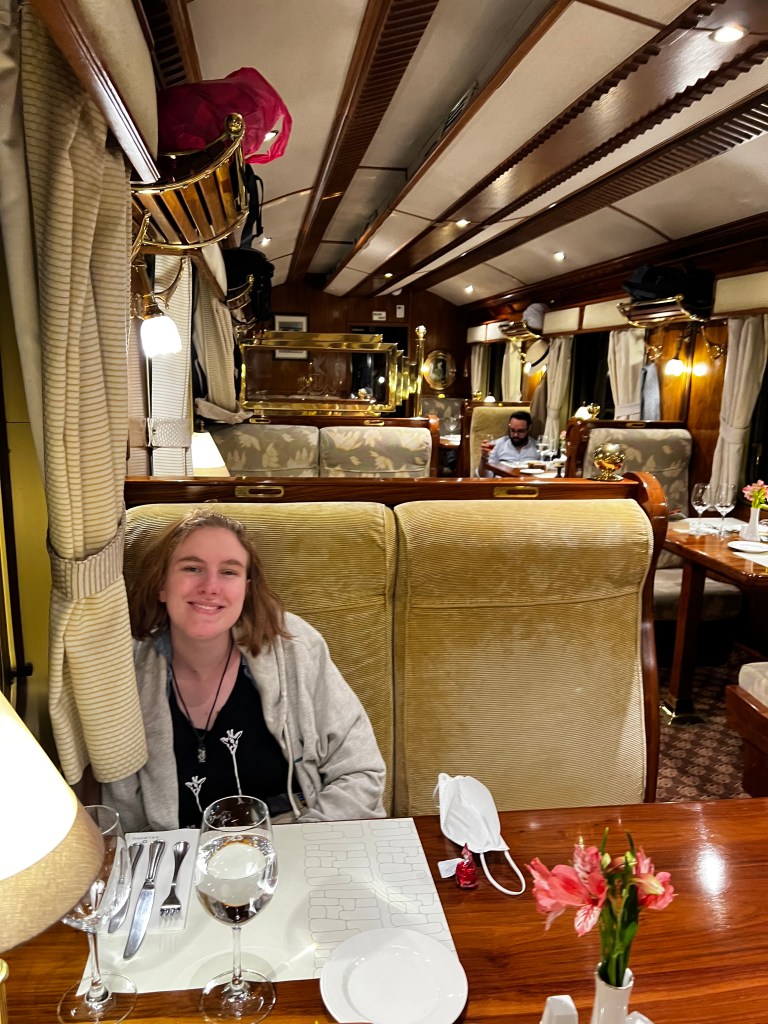
We all gathered by the train for a dance and music celebration and then squeezed into the bar area to be given our keys by Javier. Javier had been the head guy on our rail trip to Machu Picchu and we were happy to see his face as he gave us our keys. Of course we were in the next to the last car so walking to and from the bar and restaurant was quite the hike…narrow skinny long hike! The Andean Explorer is South America’s first luxury sleeping train. We would be spending two nights on the train. With two potential sunrises!
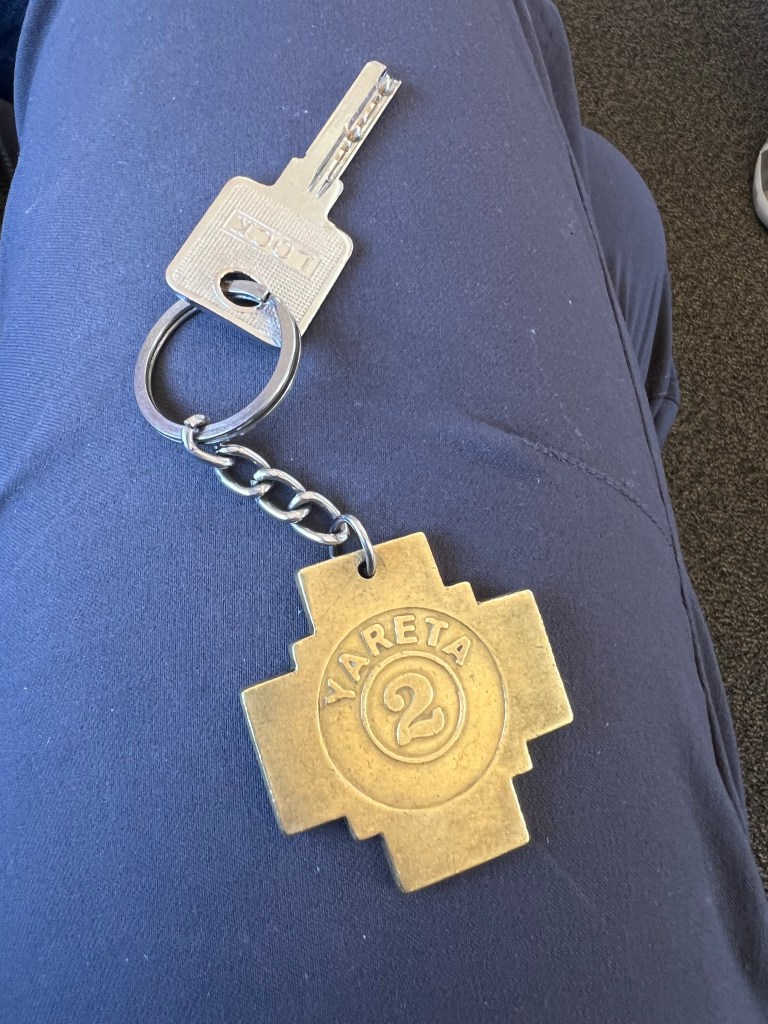
Our room key! Yareta 2 and car # 1859
A Yareta plant in a book I saw in the Colca Canyon
All the rail cars were named after plants. Yareta is a velvety chartreuse cushion plant which is native to South America and very slow growing. It grows in the Puna grasslands of Peru. Our room had two small twins and a bathroom you could almost turn around in. We also thought it was a hoot we could hear the room next door chatting in English through the vents…but with my hearing it was a mumble!
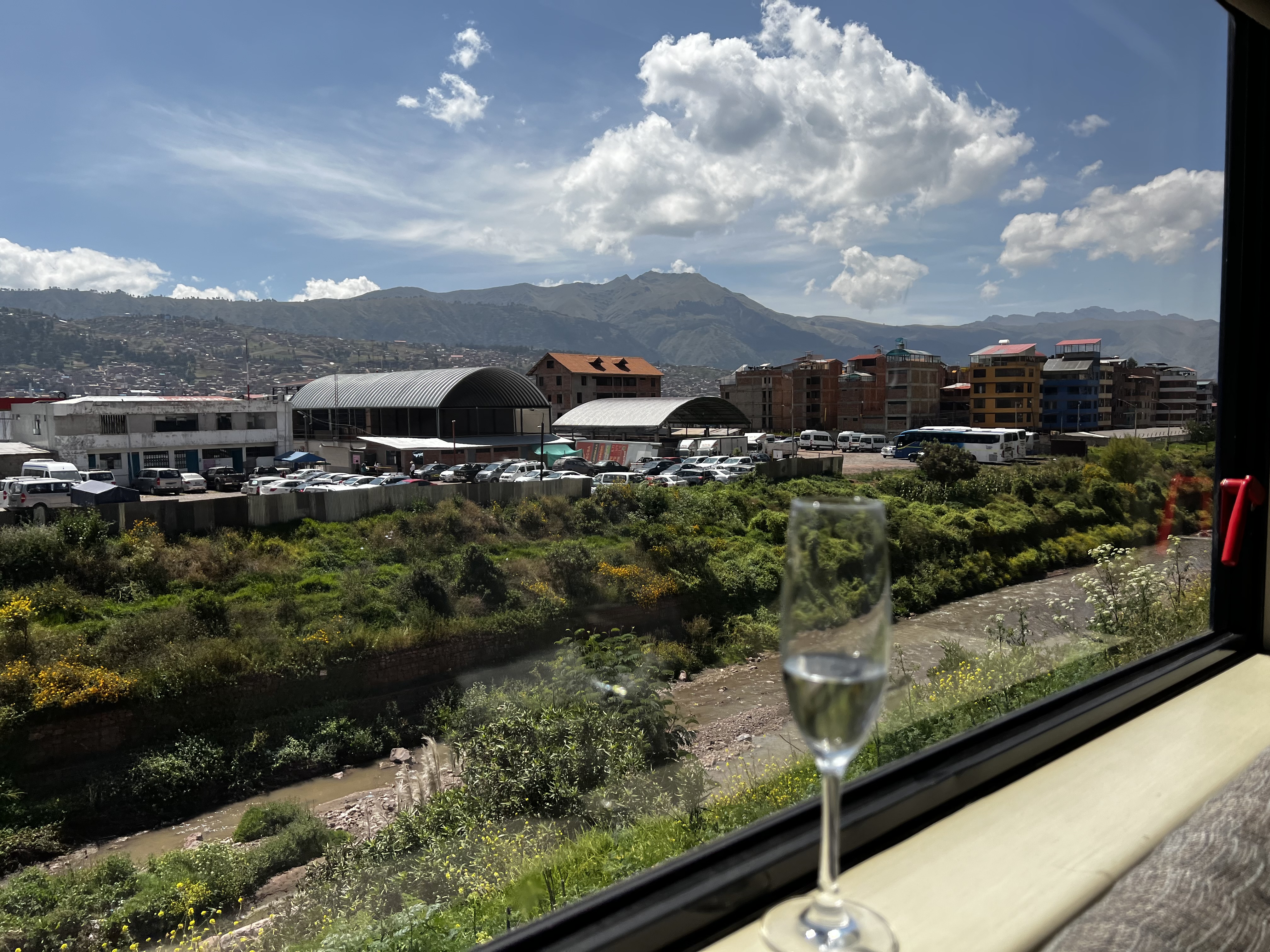
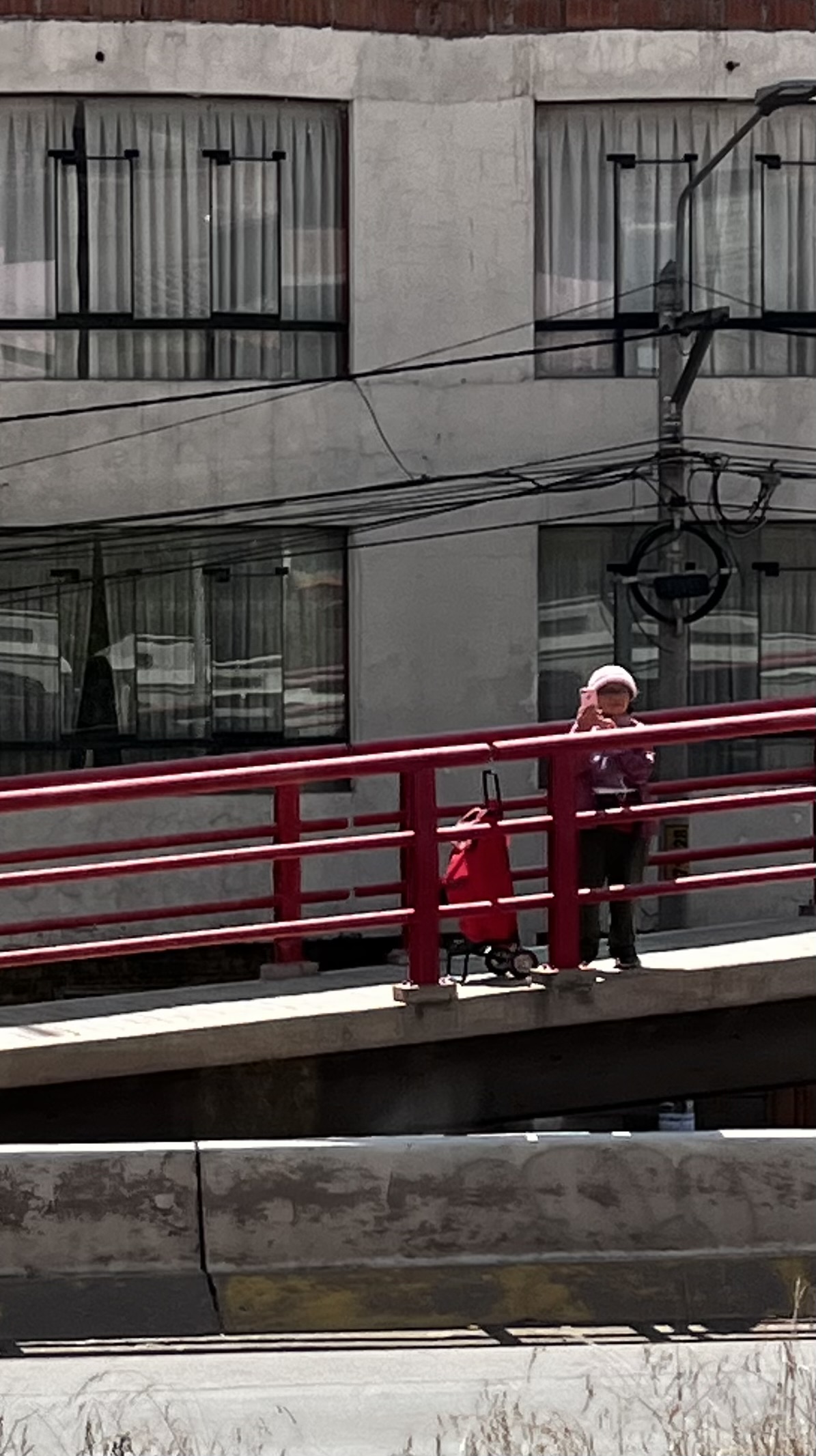
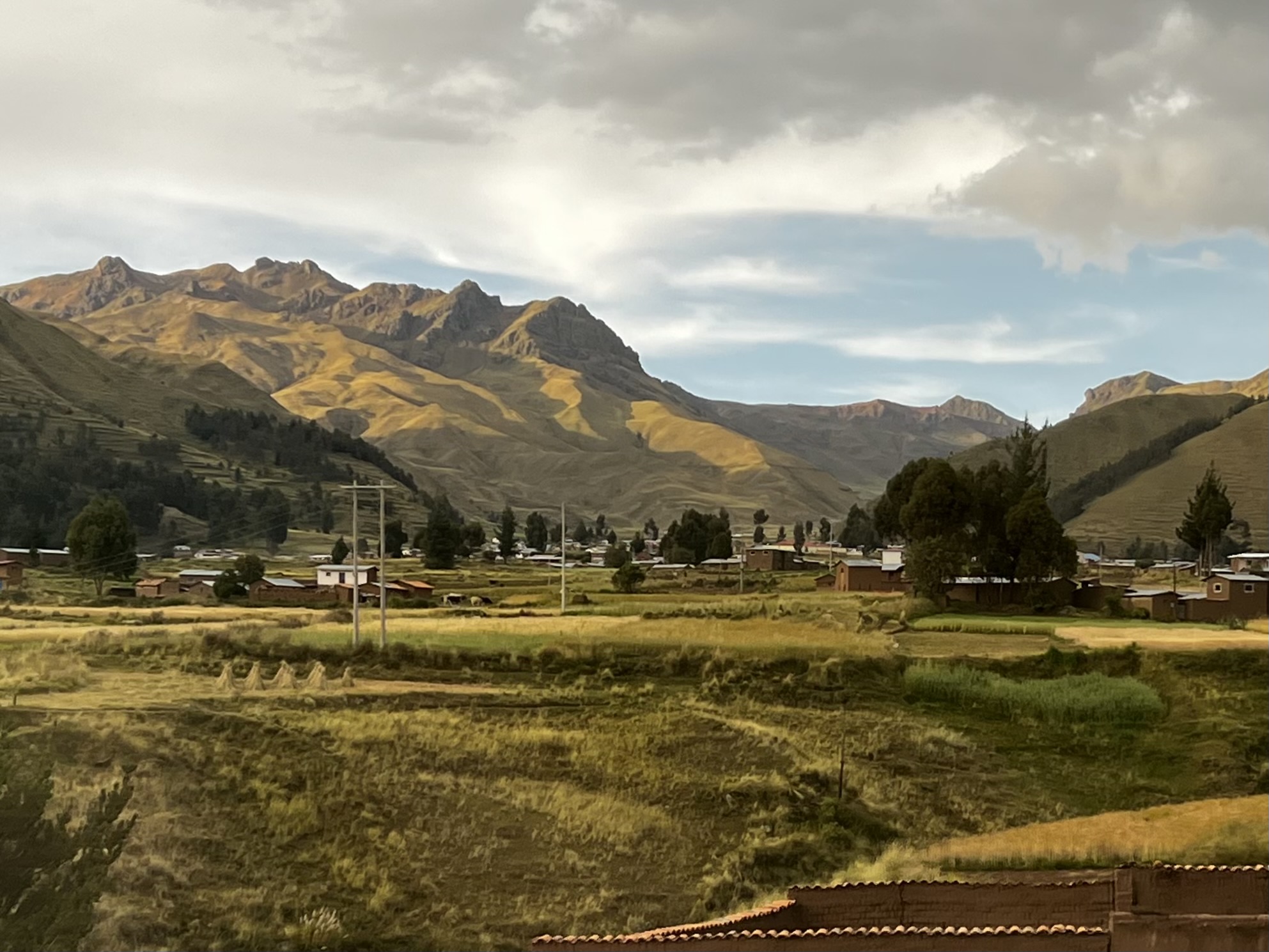
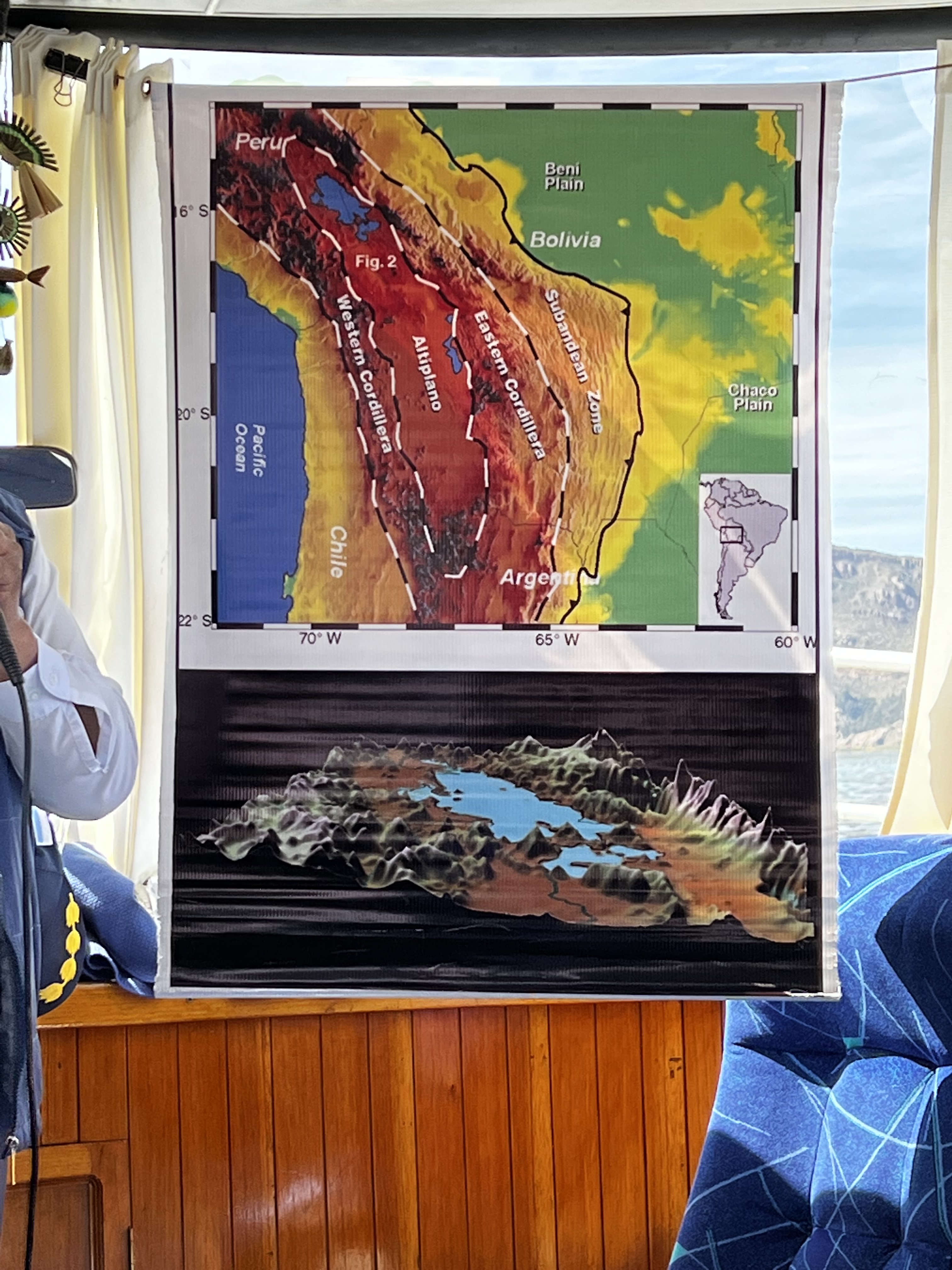
As we left Cusco, we notice how many people on the side of the rails were aware of the train coming through and were excited to see it. Some even took photos! This was basically the first running of the train for a few years and it runs across the Peruvian highlands into the Altiplano. It is the most extensive high plateau outside Tibet This is also where the Andes are the widest. The Altiplano area water goes to Lake Titicaca and never makes it to the Atlantic or the Pacific. The Andean Explorer runs all the way to Arequipa the white city and then you can do a return trip to Cusco if you so choose and of course pay for it! We however didn’t take the train to Arequipa but departed at an off the wall stop so we could enjoy the Colca Canyon with the Condors and then drove to Arequipa, overnight and then with a flight back to Cusco.
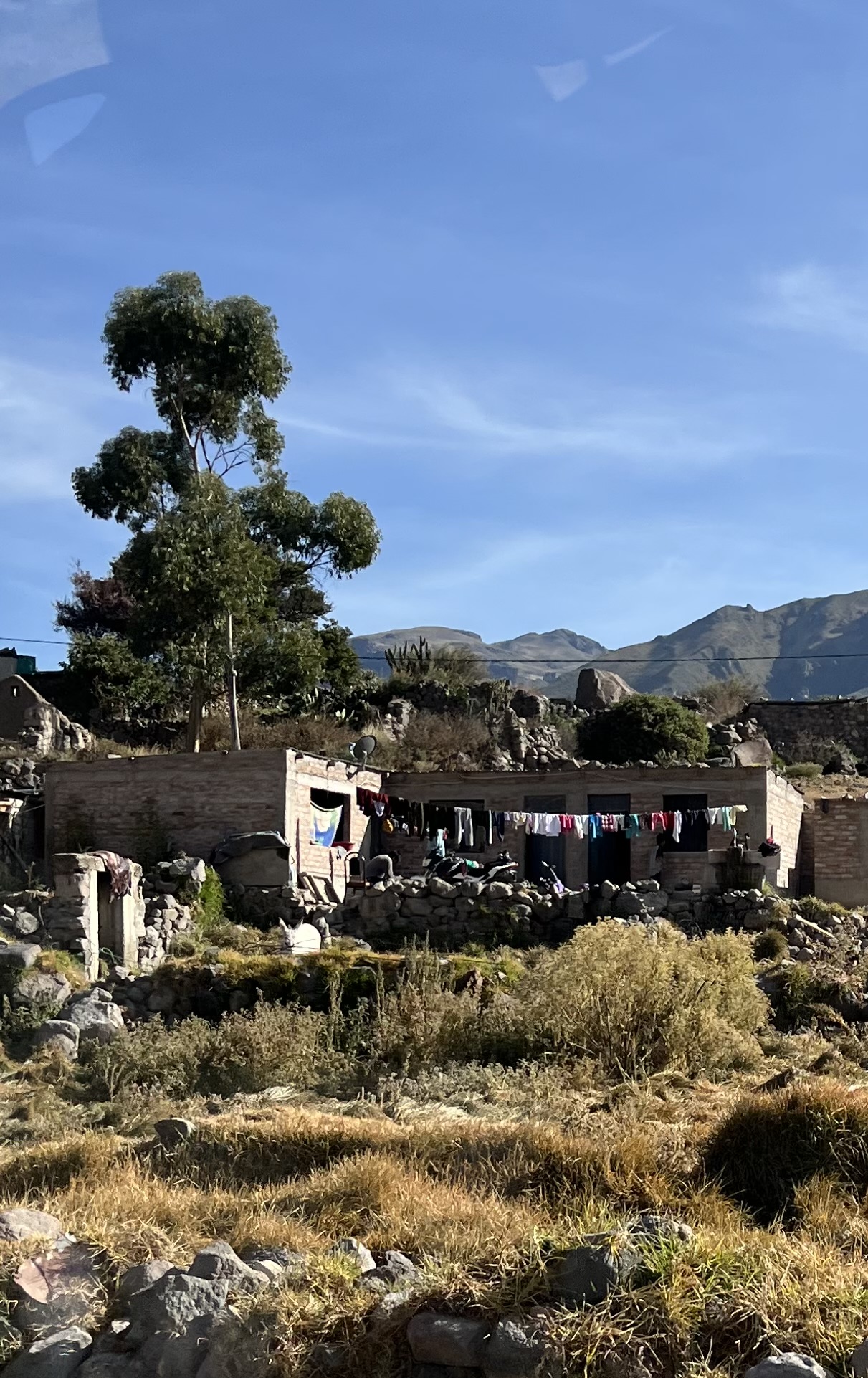
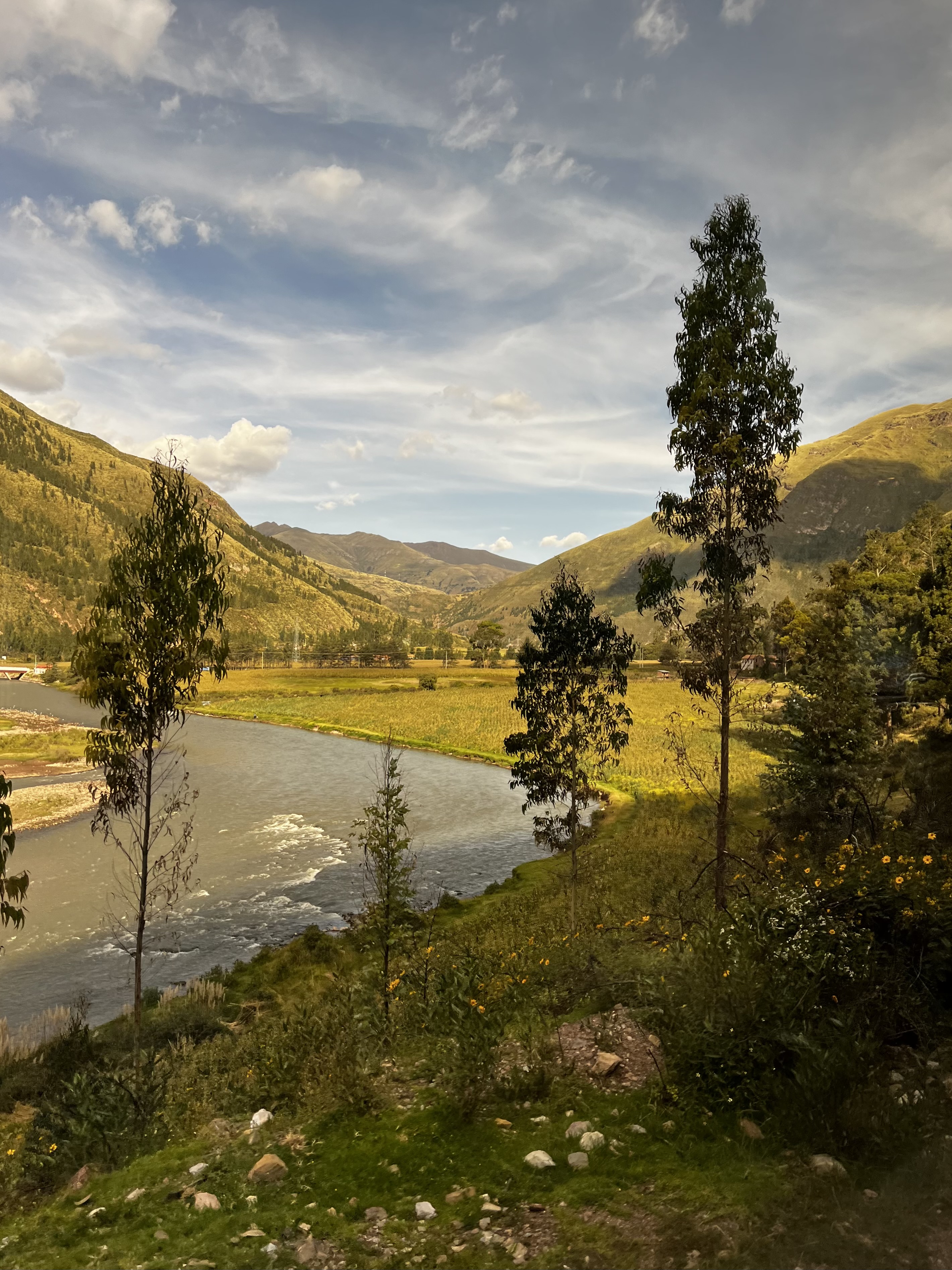
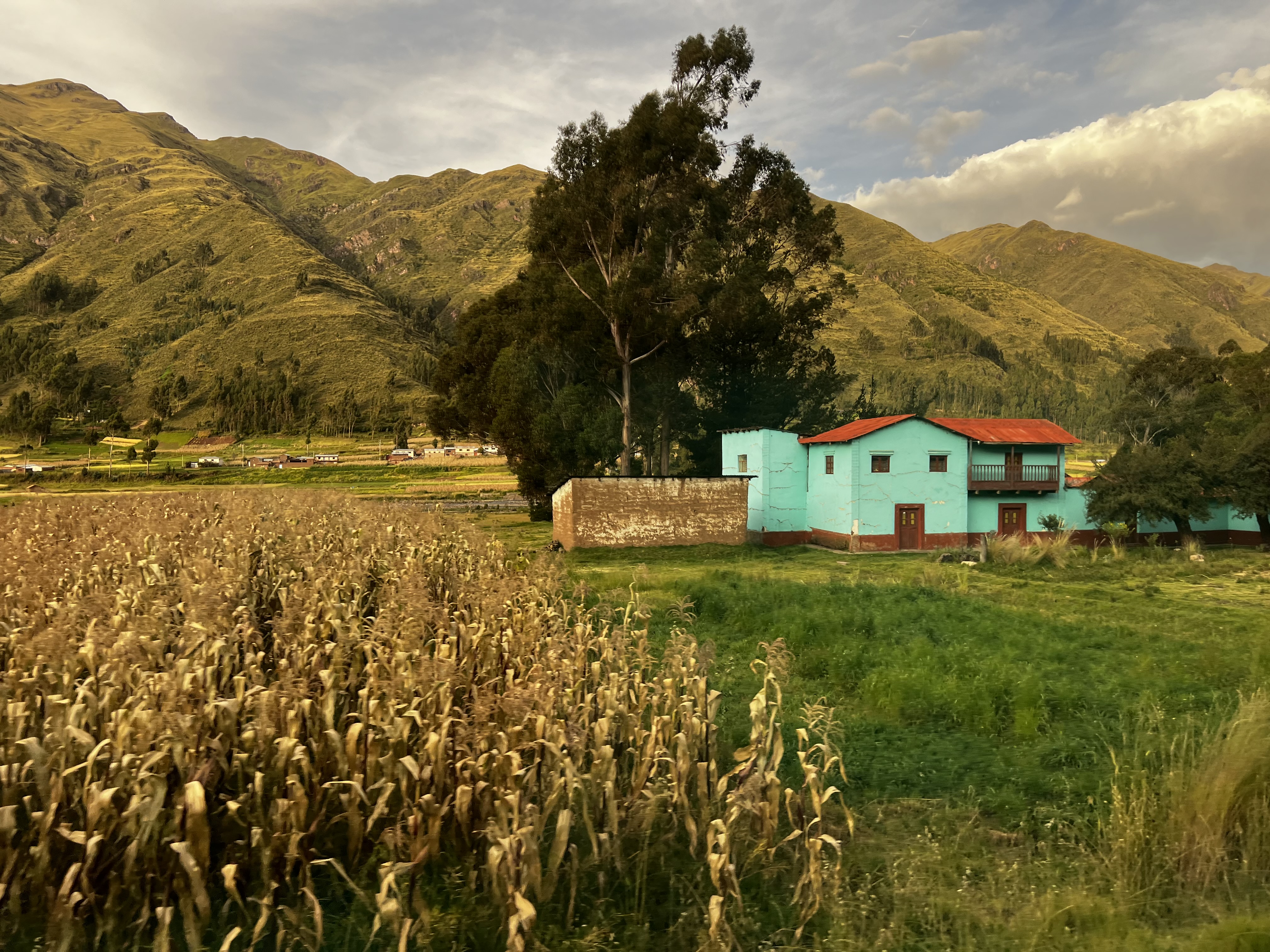
When you look close at the some of the trees you’ll note a few eucalyptus. Like the USA, they were imported but unlike the USA they utilize them in building and furniture. If you say America in Peru it means all the Americas as in South America so USA is probably a better description as we are all Americans!
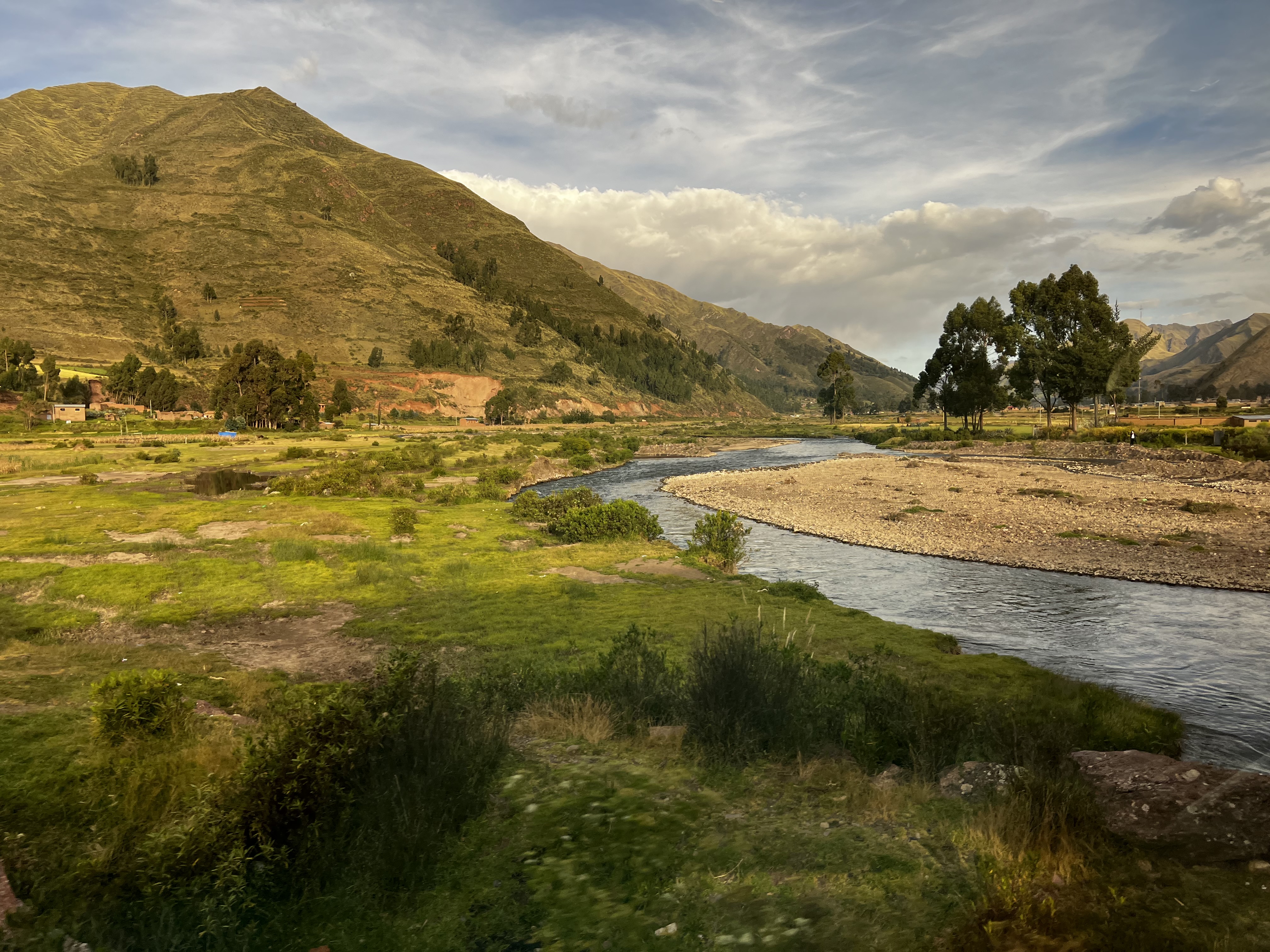
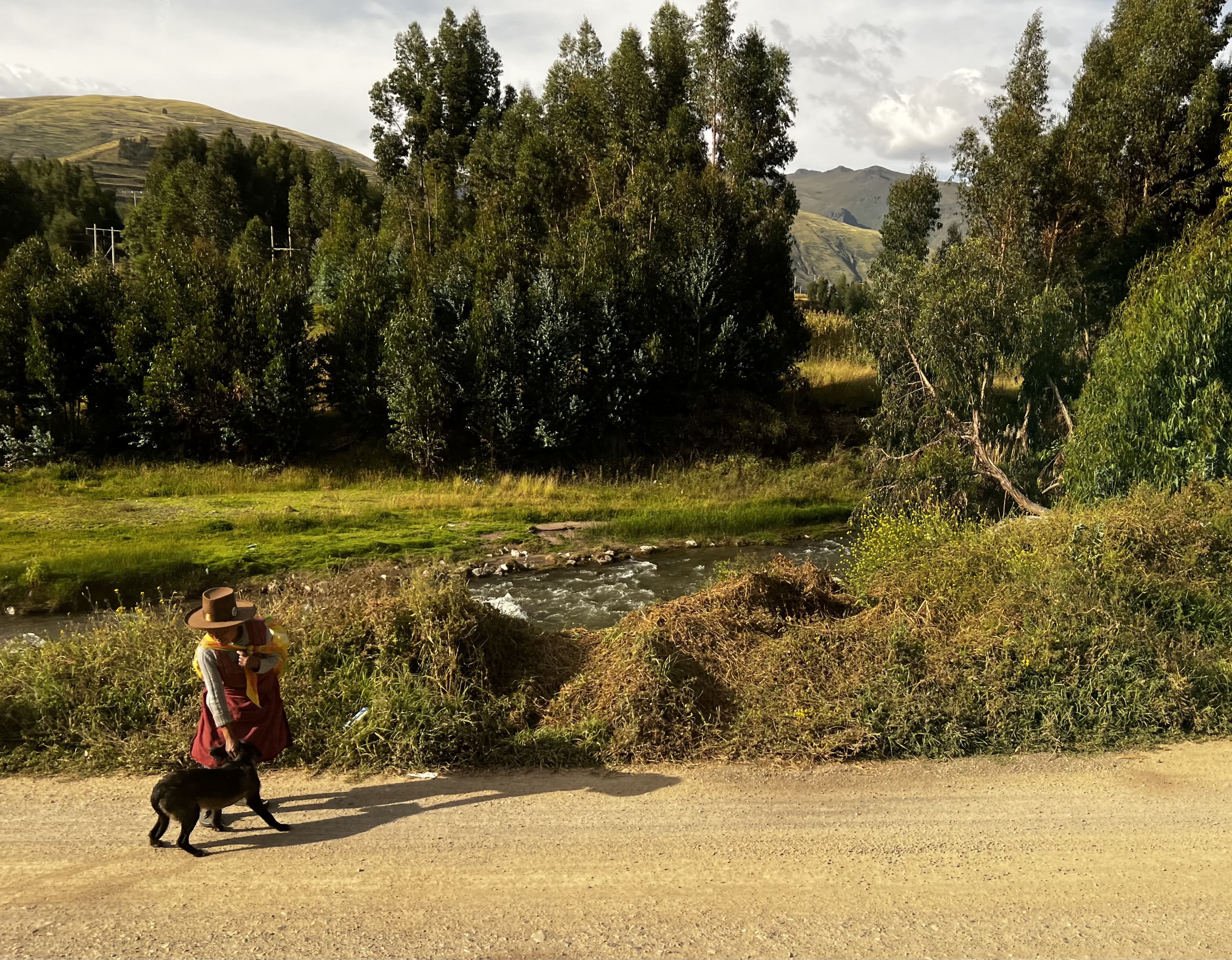
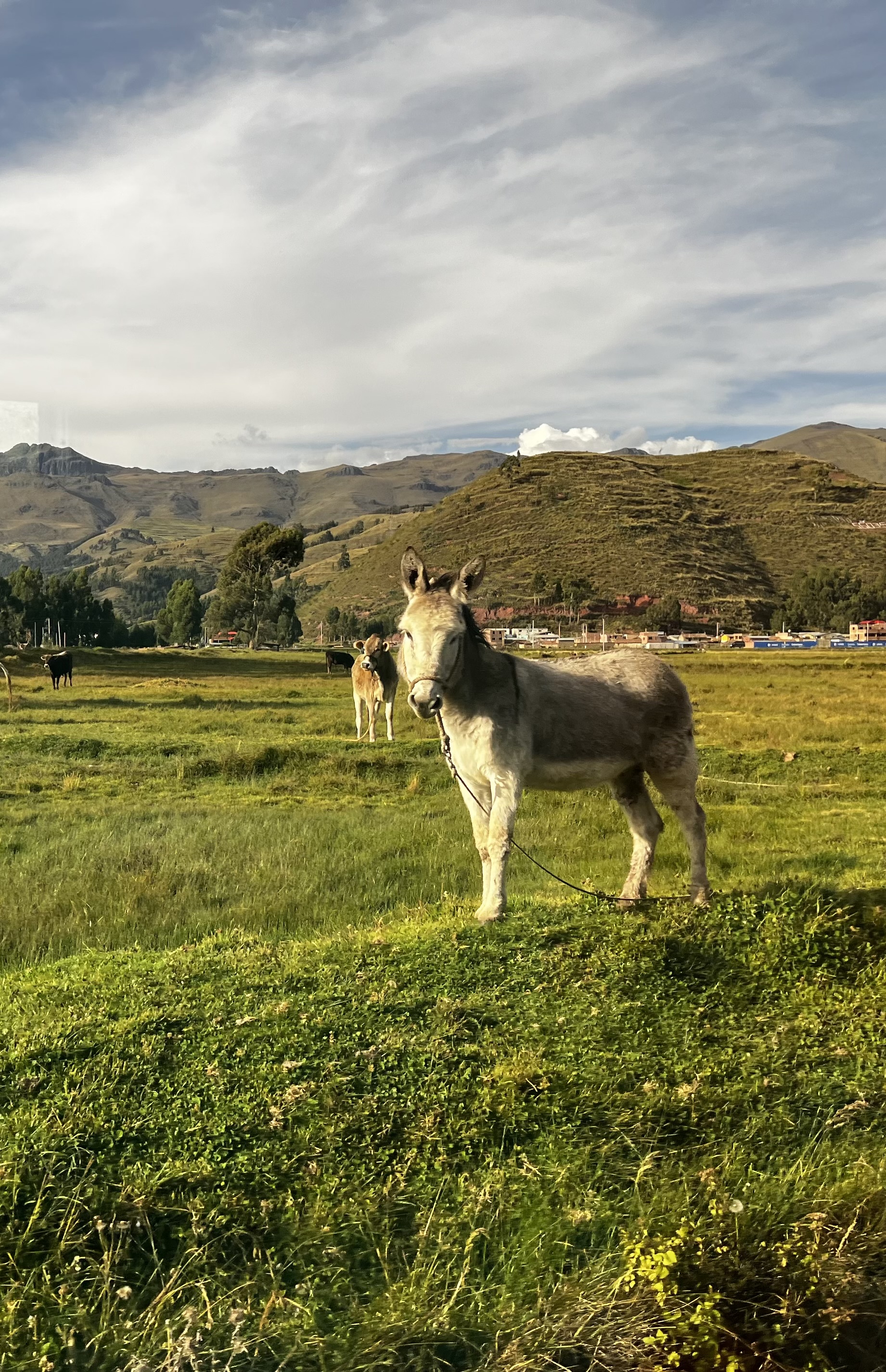
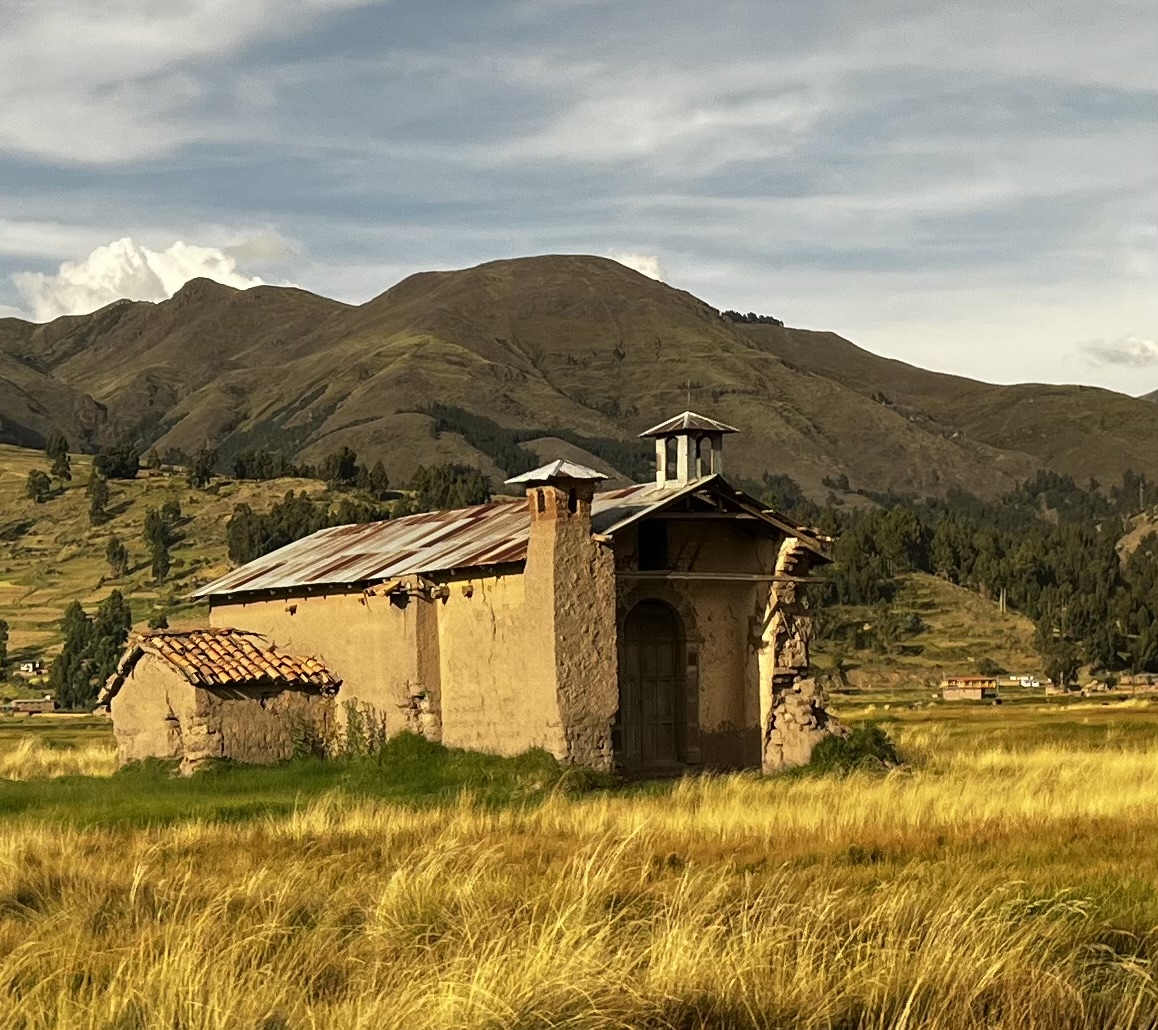
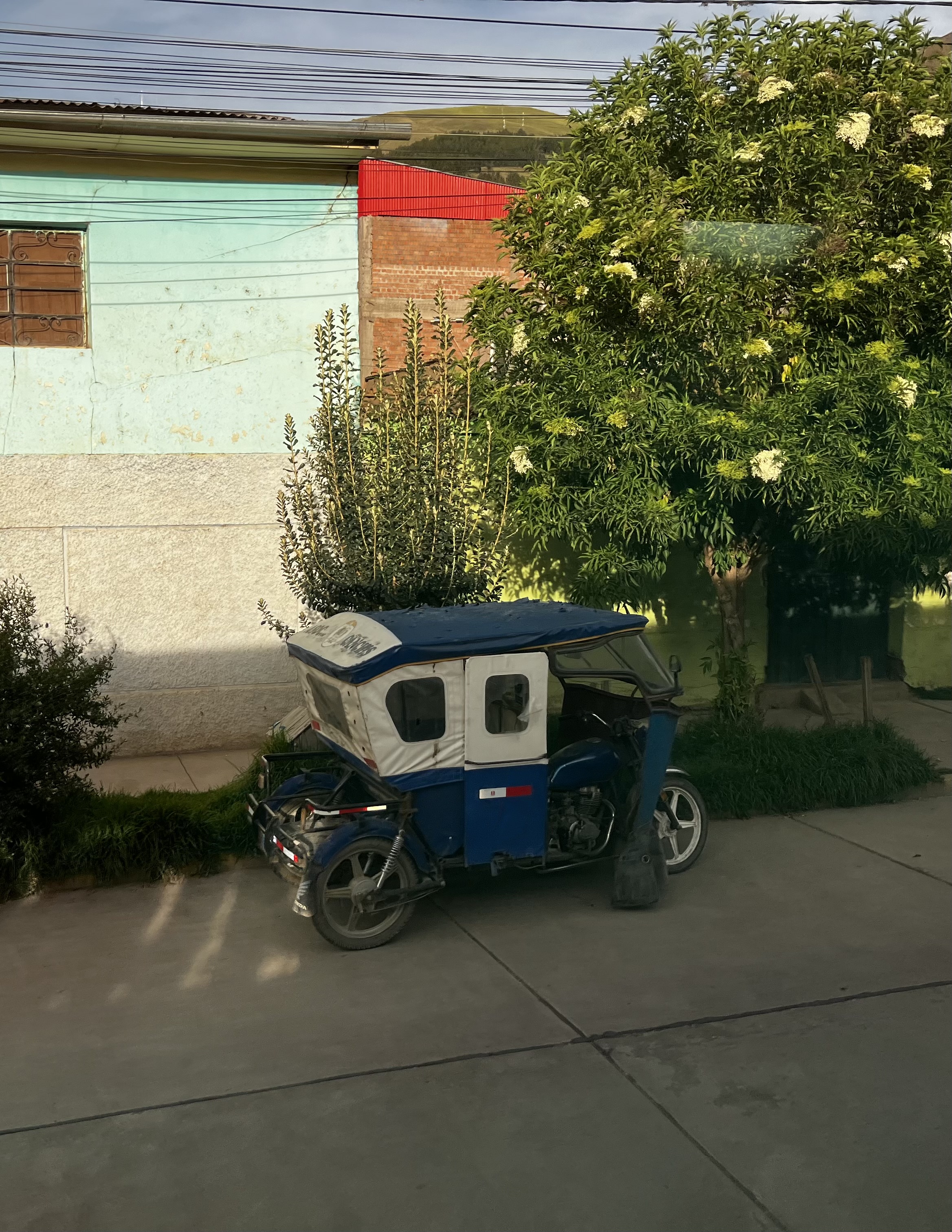
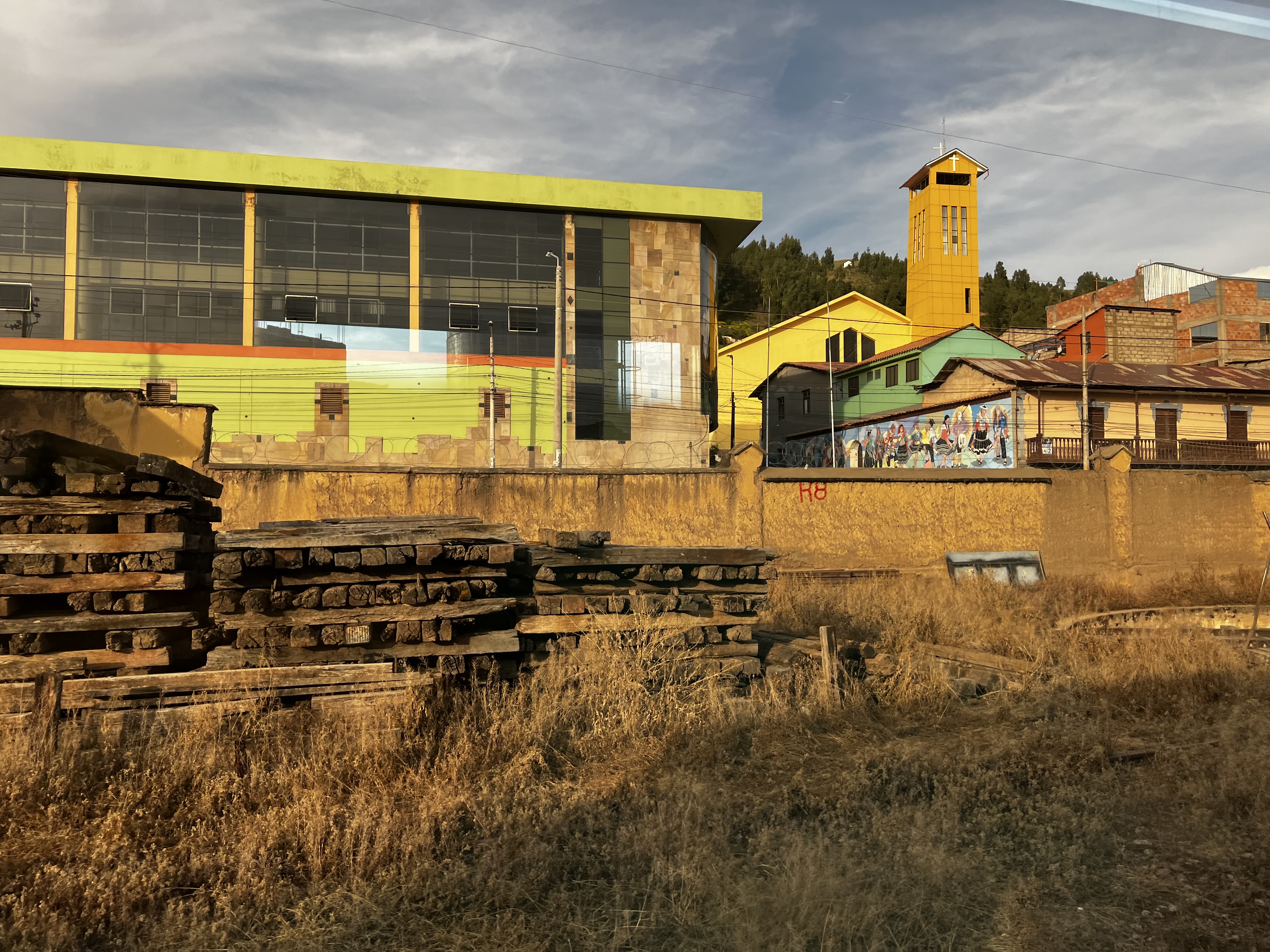
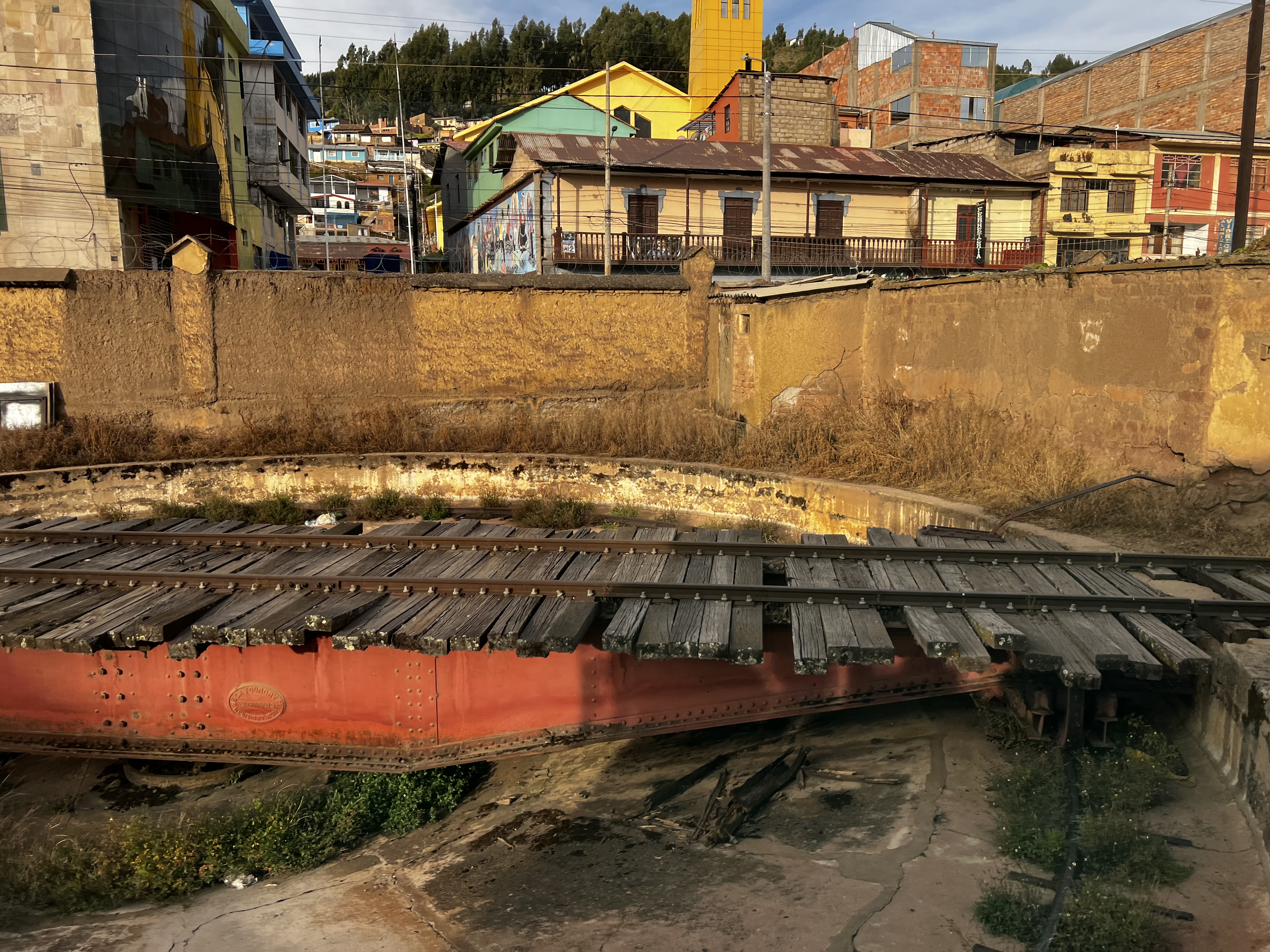
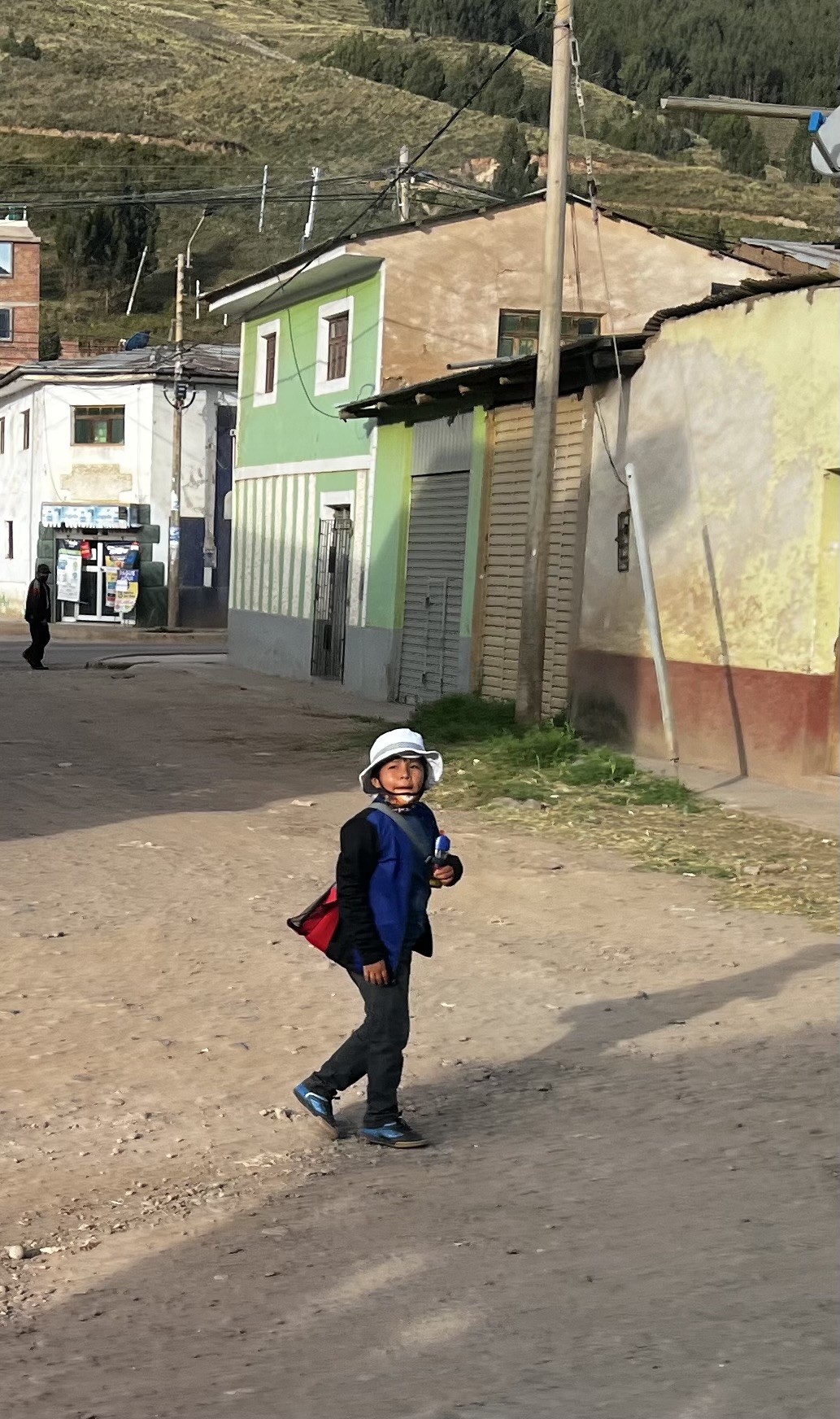
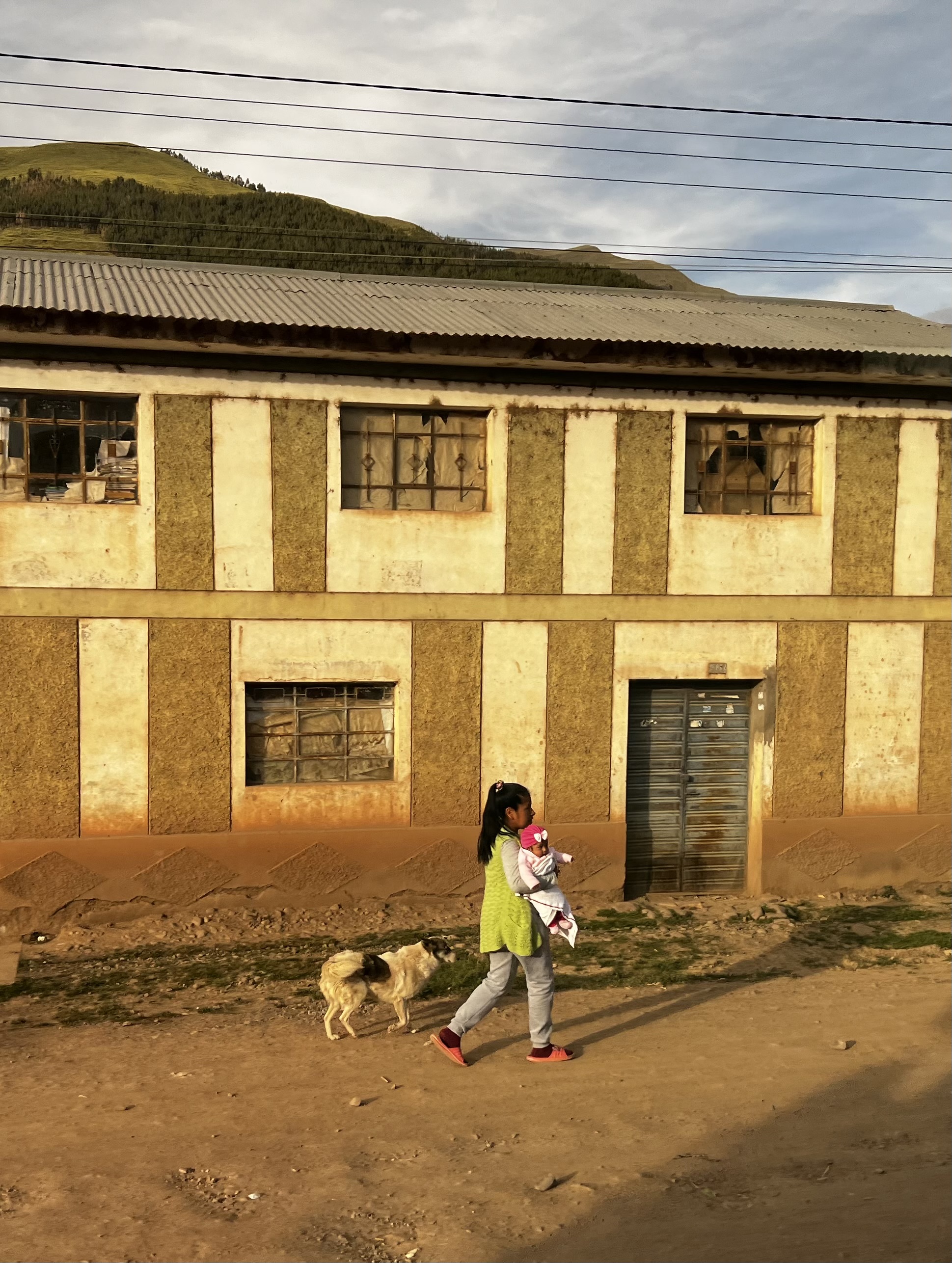
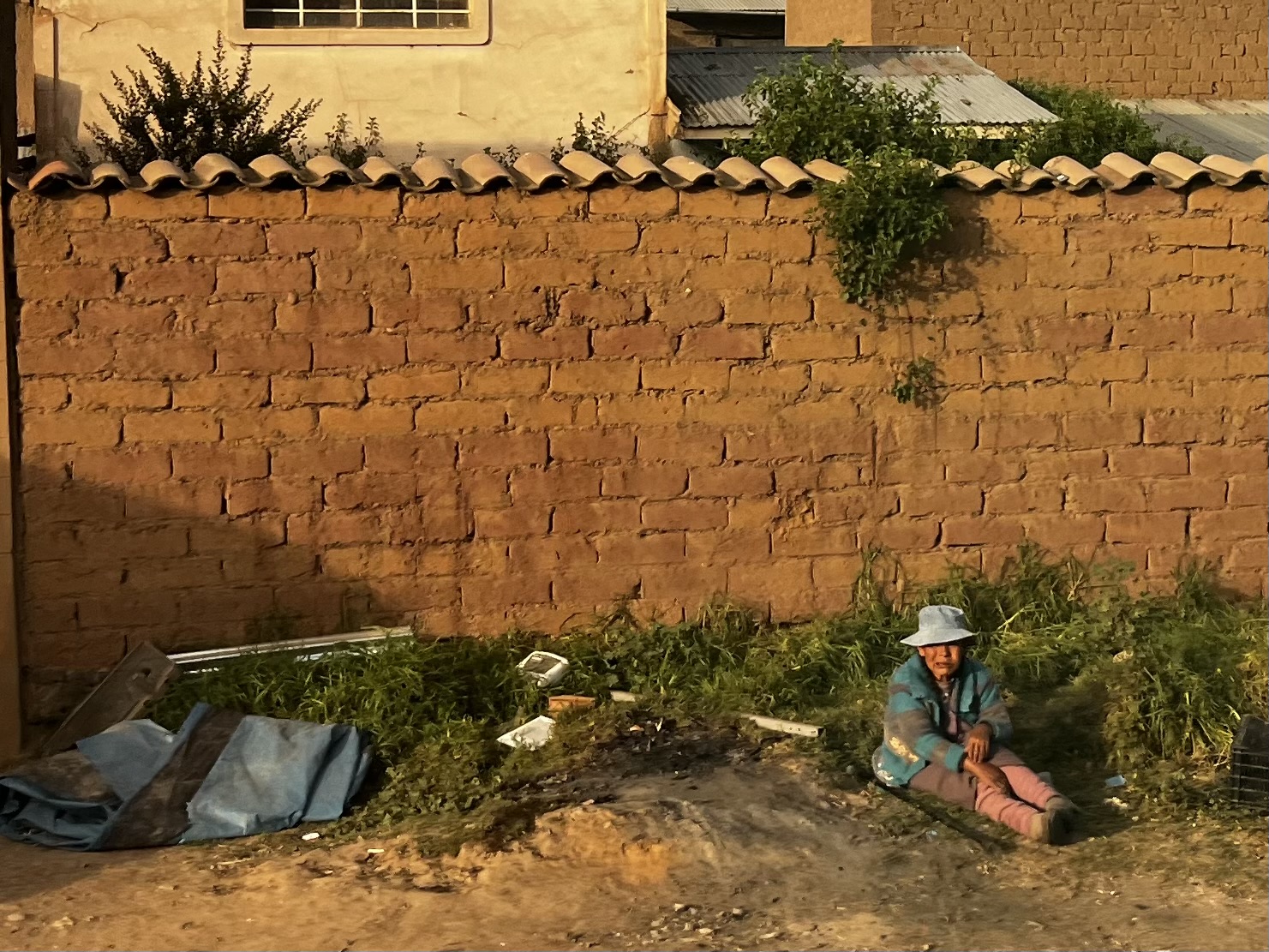
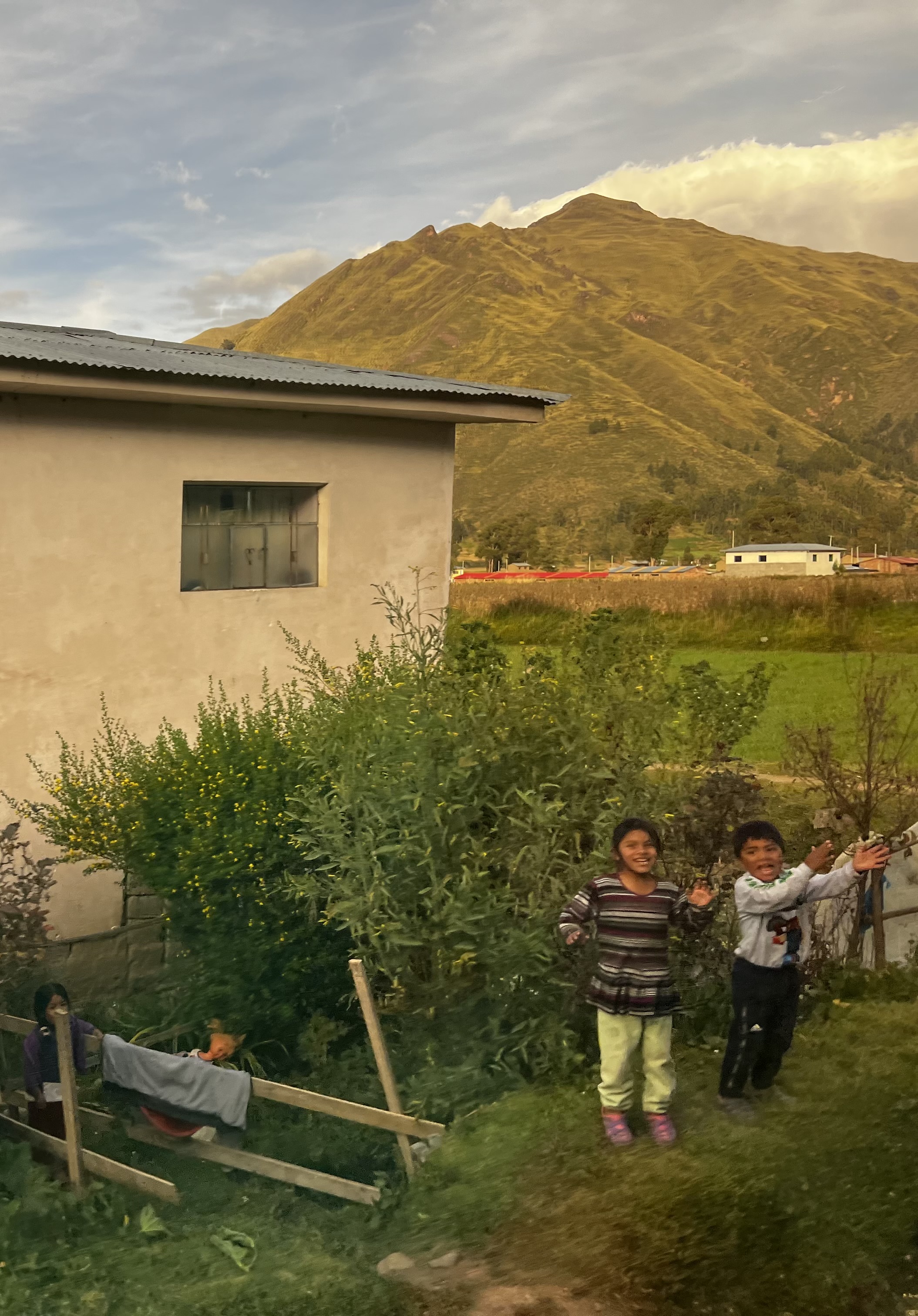
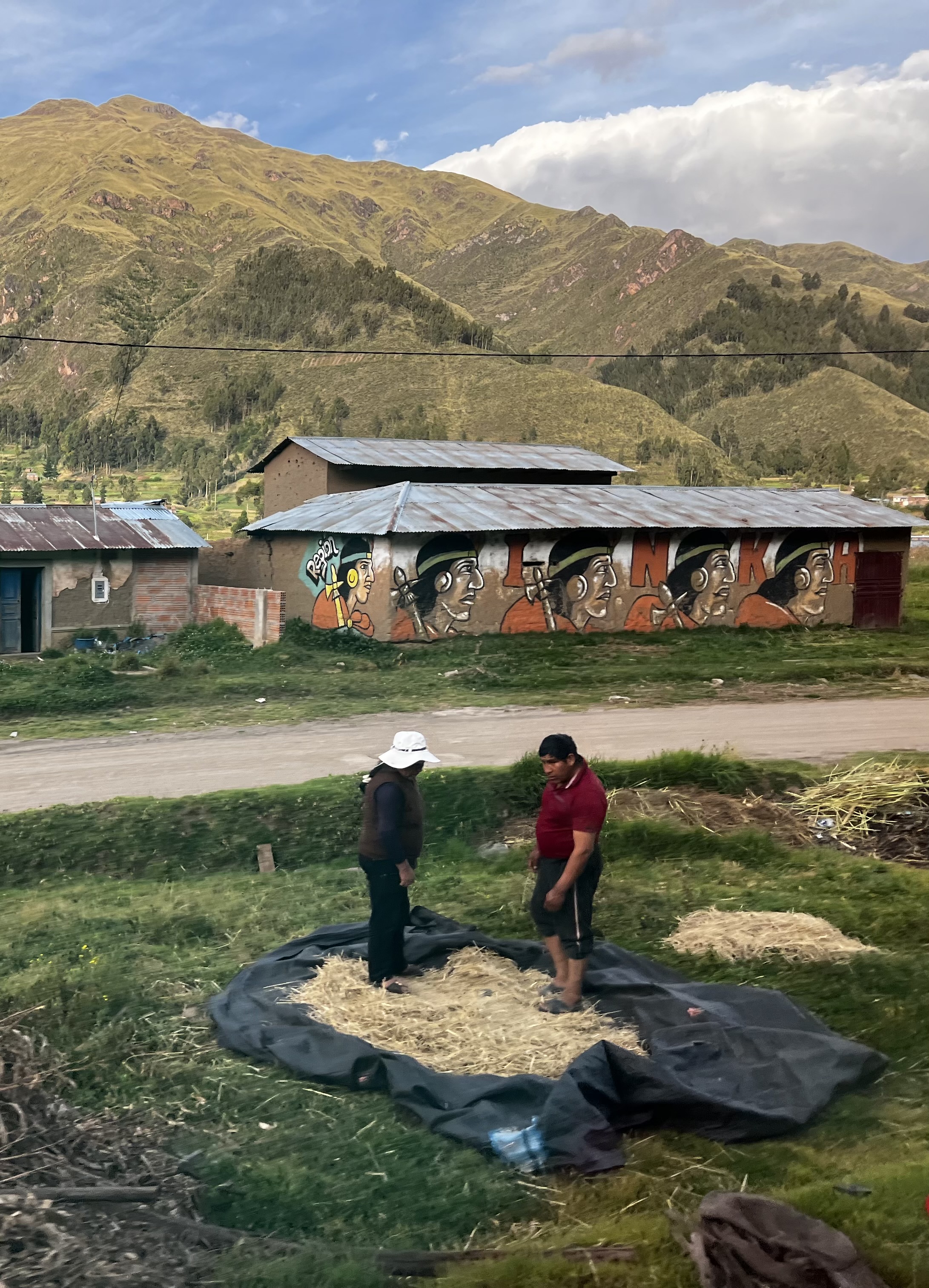
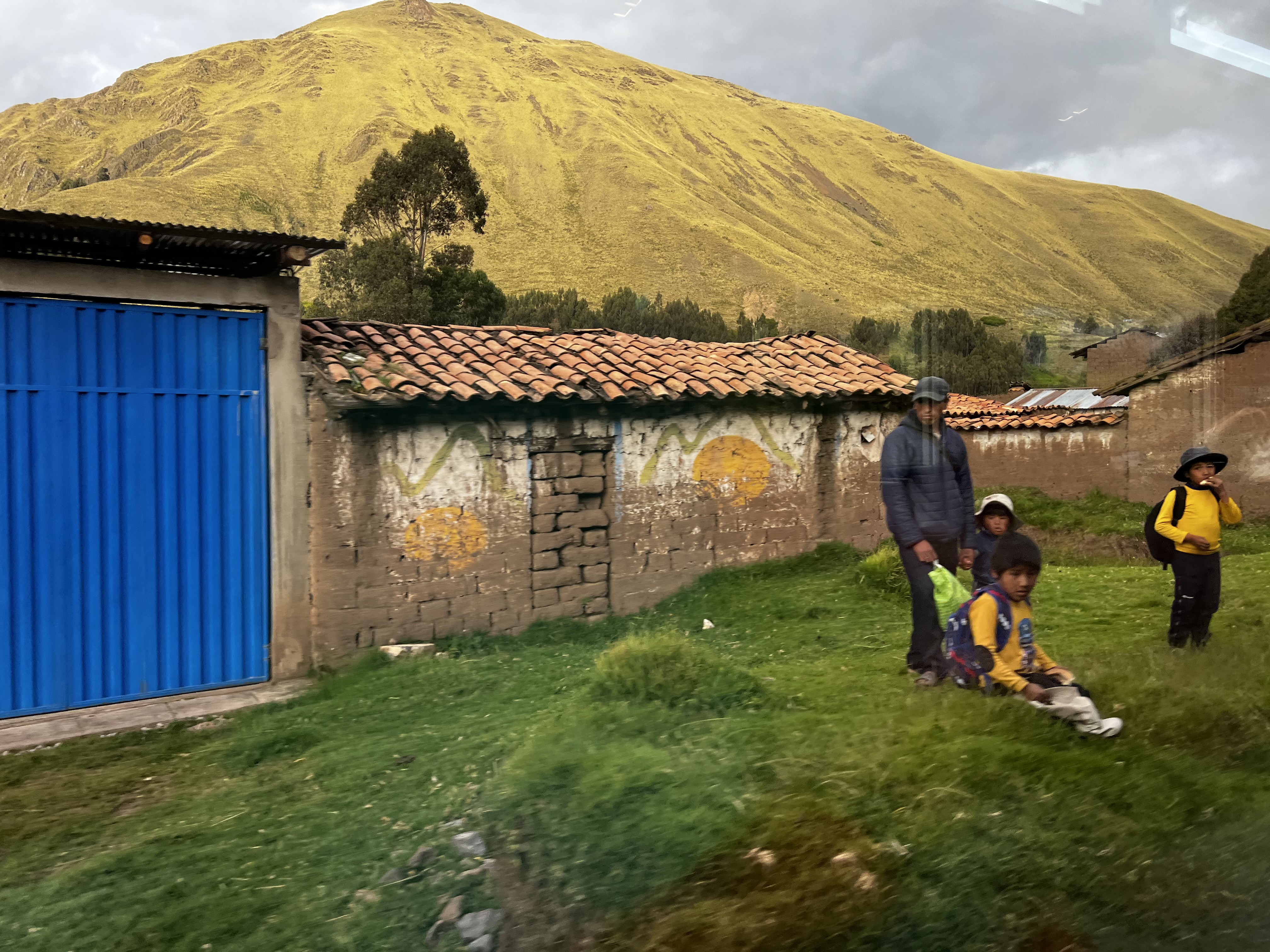
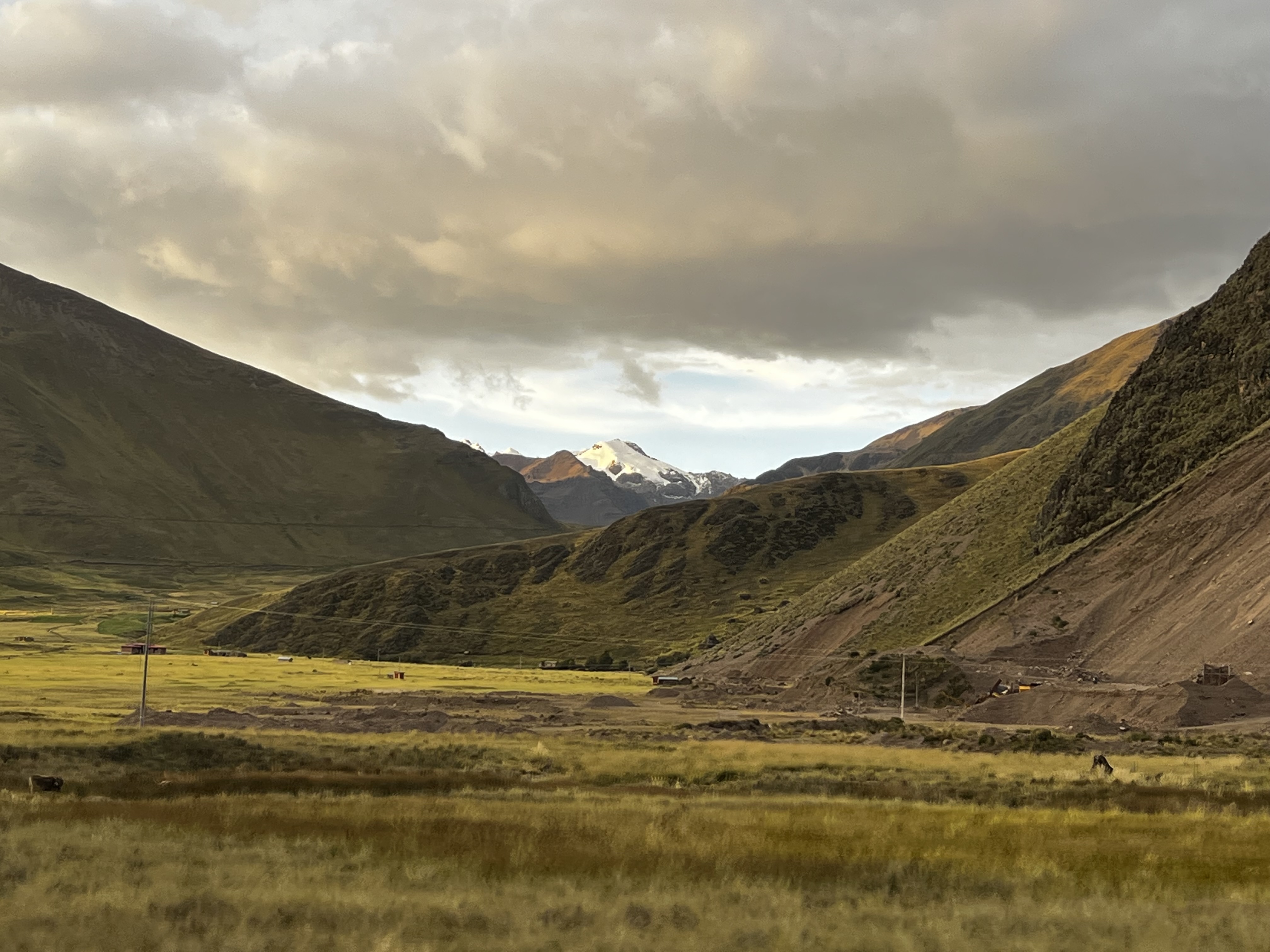
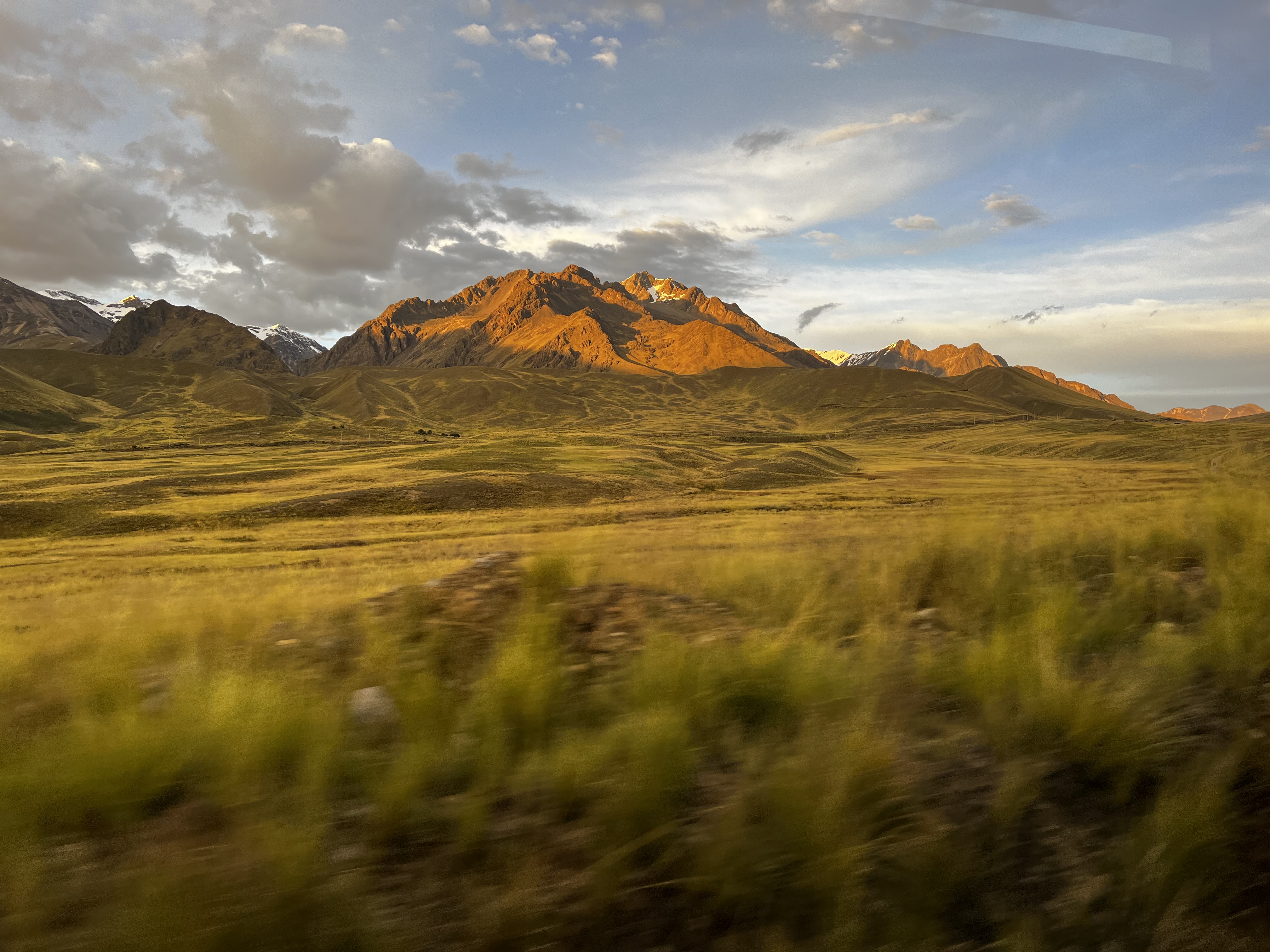
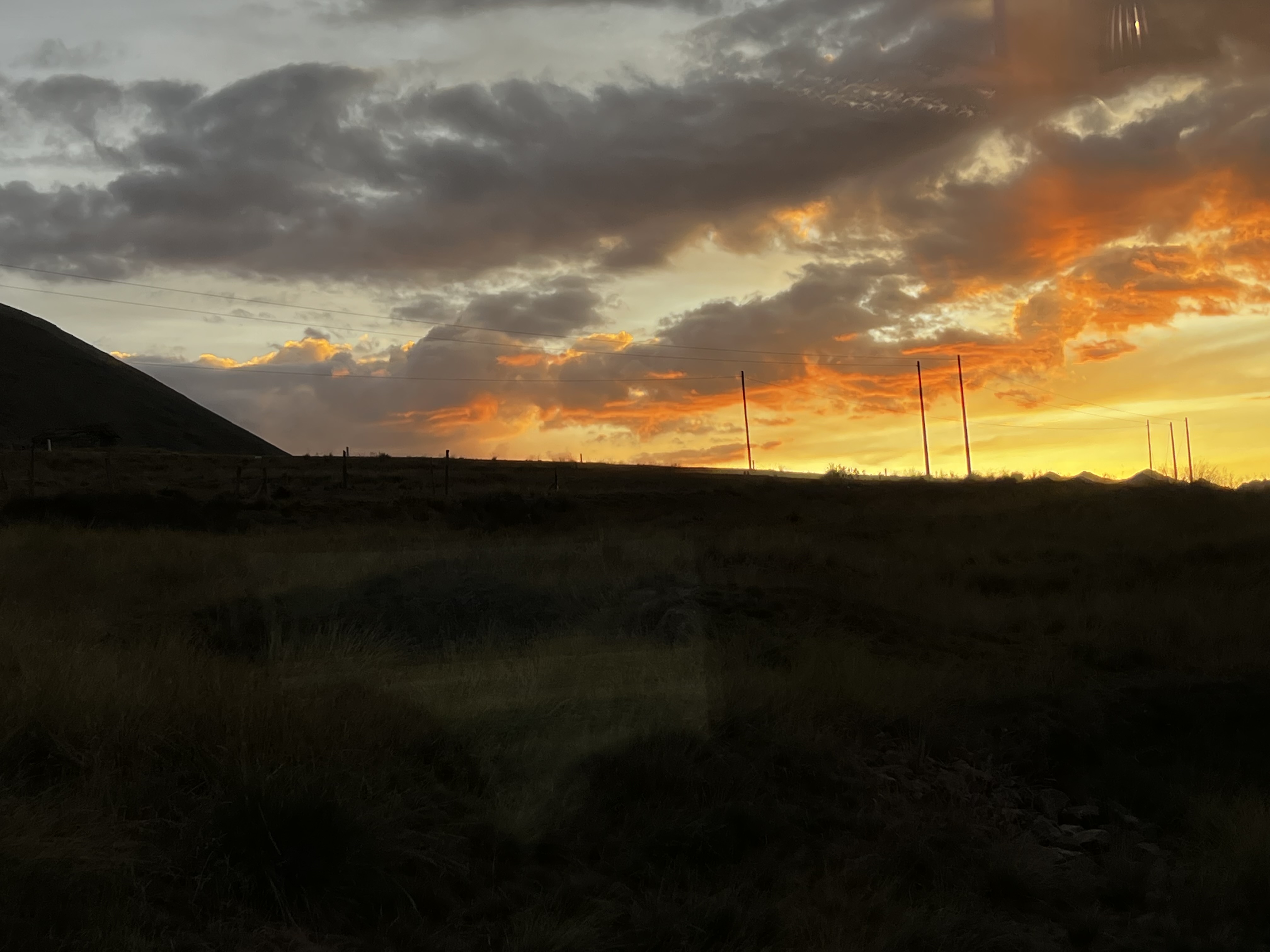
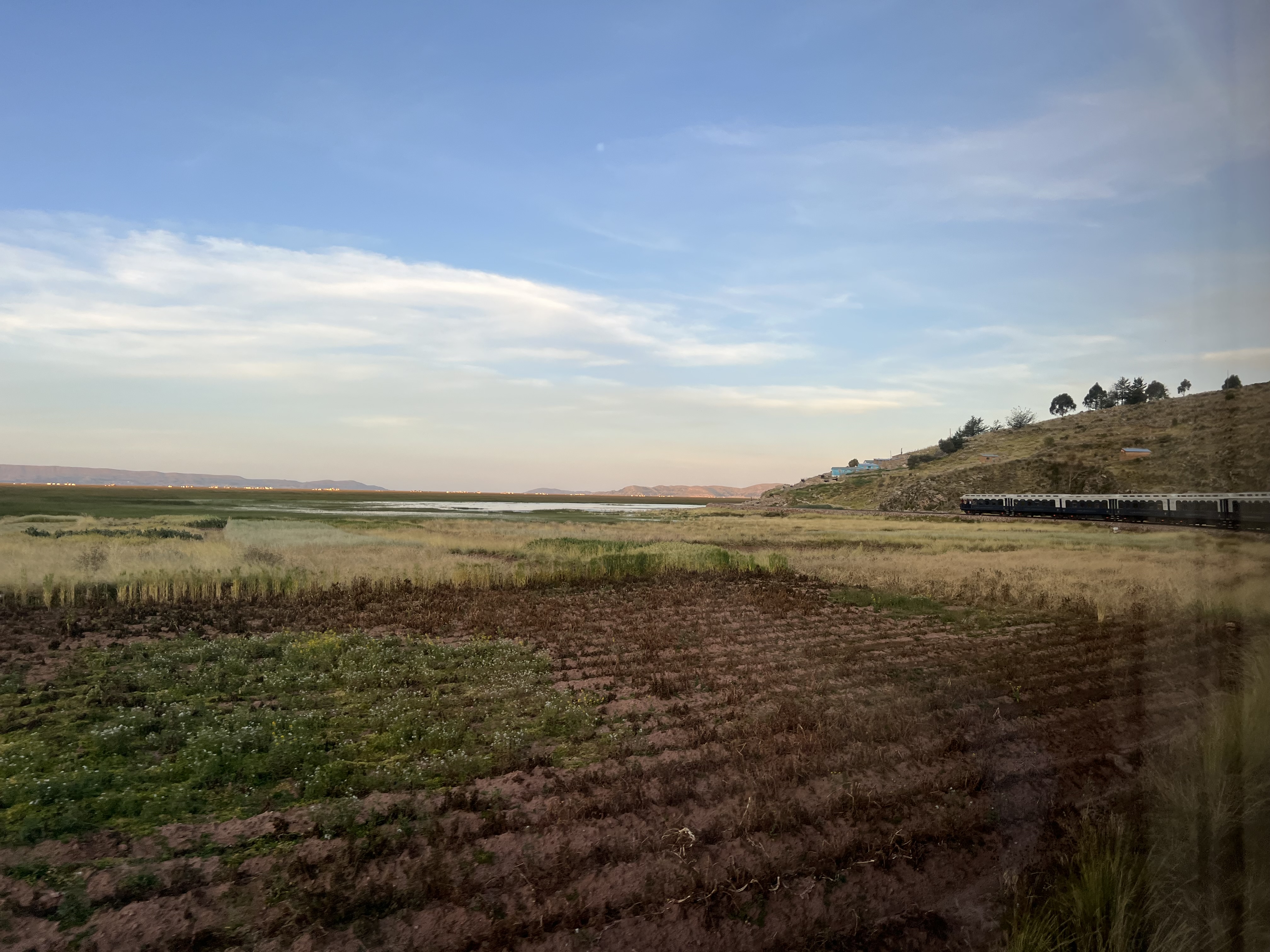
Traveling through cities we noticed people, dogs, homes and tiny cars as the sun began to cast its deeper golden shadows. Its hard to choose the best photos as so many are as stunning as the scenery. The beauty of the Peruvian countryside as we headed up the the top of the world…or so it seemed…revealed hard working farmers, eager kids who loved seeing us, colorful buildings and churches and beautiful golden hills. We encounter a truck on the tracks and had about and hour delay so we arrived at the top of the river just at dusk – in time to see the local “makers’ and artisans. When we reached 15,700′ we stopped for these artisans and then began our trip across the Altiplano into Puno and Lake Titicaca to arrive late at night. Our softest scarves were purchased very inexpensively from these wonderful artisans. I want to go back just to fill up a suitcase with more! Carry on is important…but maybe an extra bag purchased locally for the last trip home?
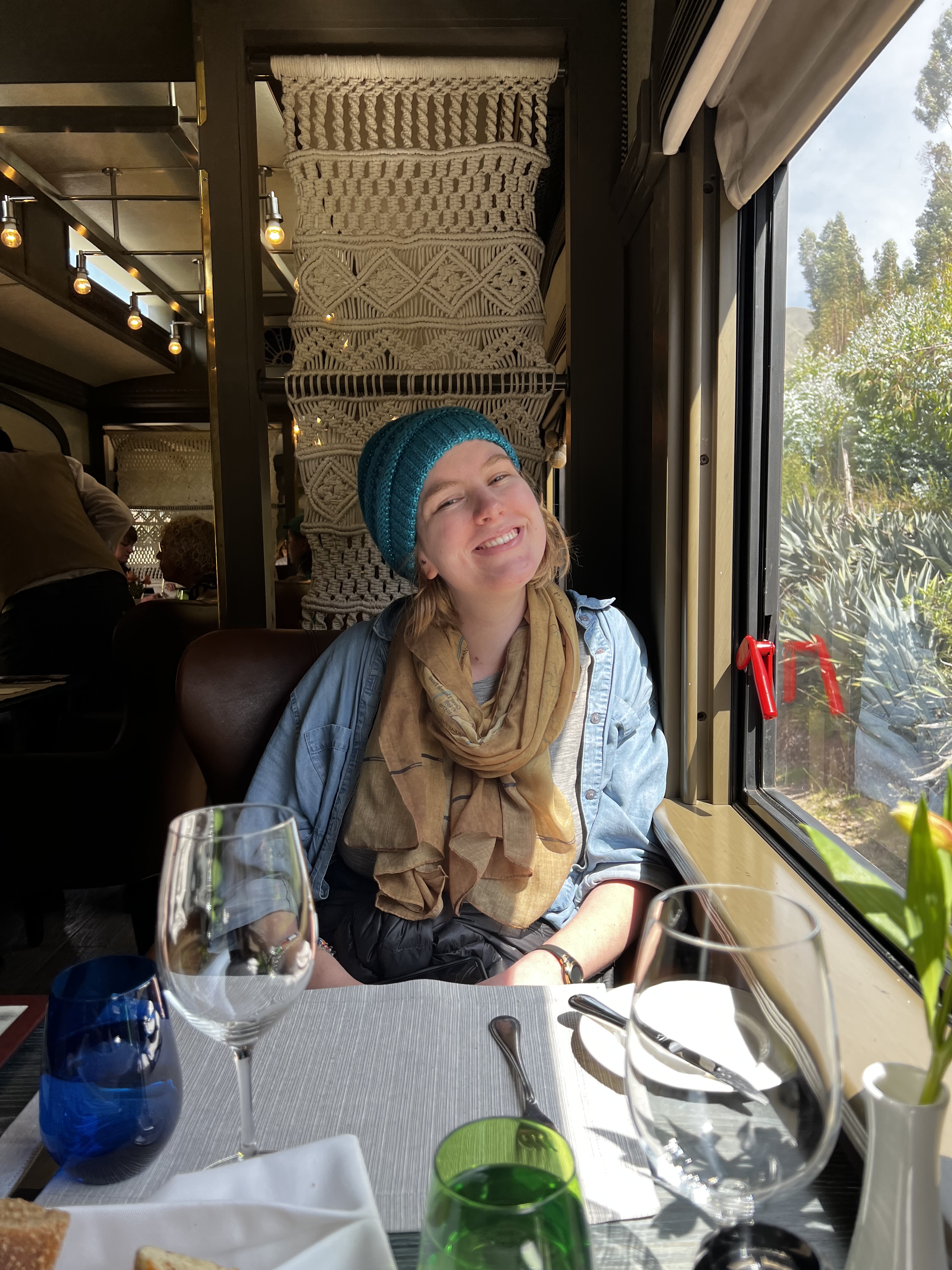
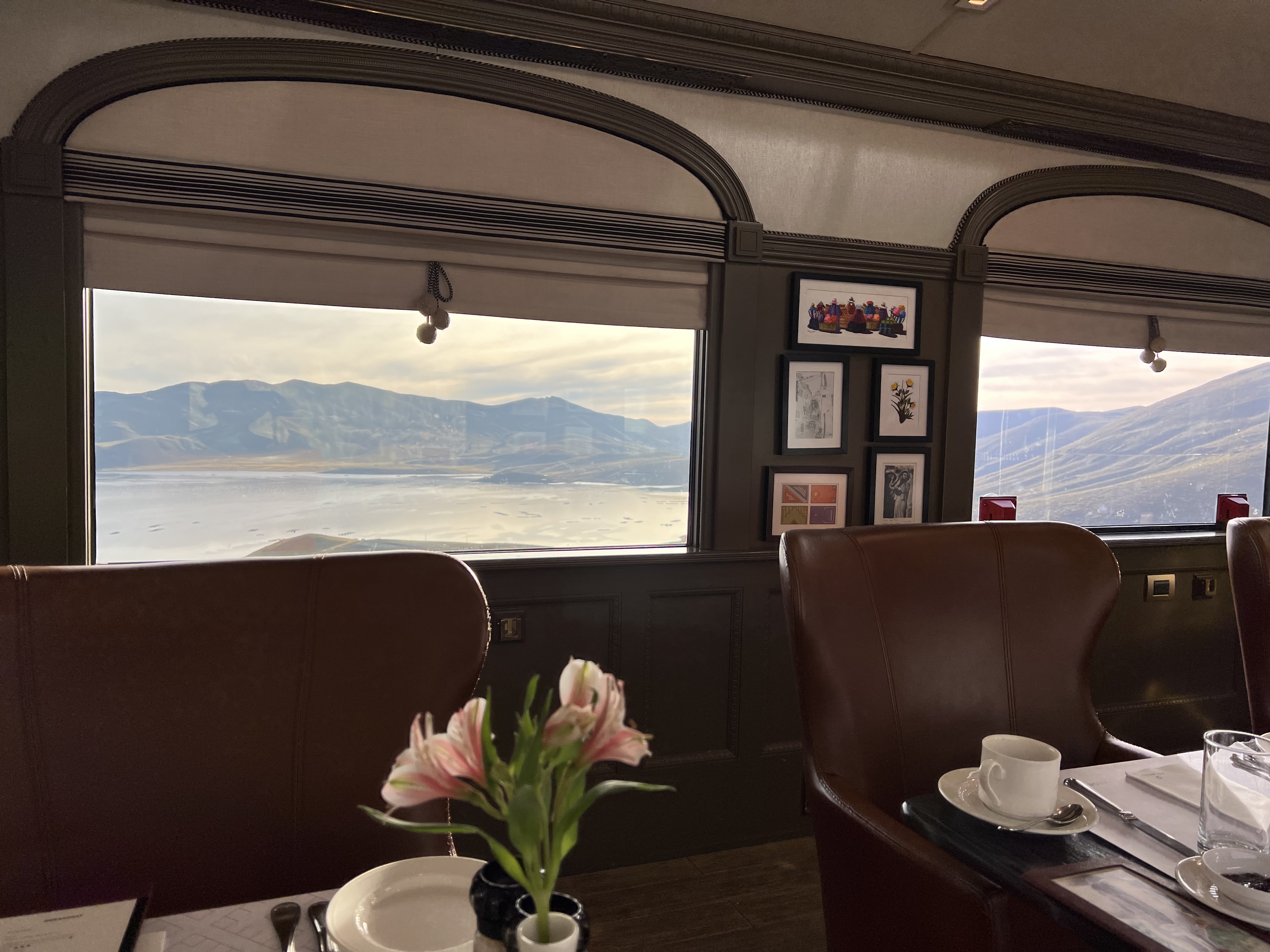
We could enjoy a drink, spend time in the Observation car at the rear and enjoy the panoramas over the snow-dusted La Raya mountains. The food was very well designed Peruvian Andean fare. The chefs knew how to use the local ingredients to create delicious potato or corn or quinoa along with a delicious meat or bird.
We were able to meet up with an Italian couple with their two children who were also in their fashion business in Milano. They were about Larkin’s age and she did do some chatting with them in Italian. They of course spoke excellent English. A few days earlier they were awakened in the Sacred Valley where we were suppose to be and spirited back up to Cusco during the strike so they had something to do during the strike. We hear it was quite the adventure for them. We were also able to enjoy dinner with them in Colca Canyon at Las Casitas.
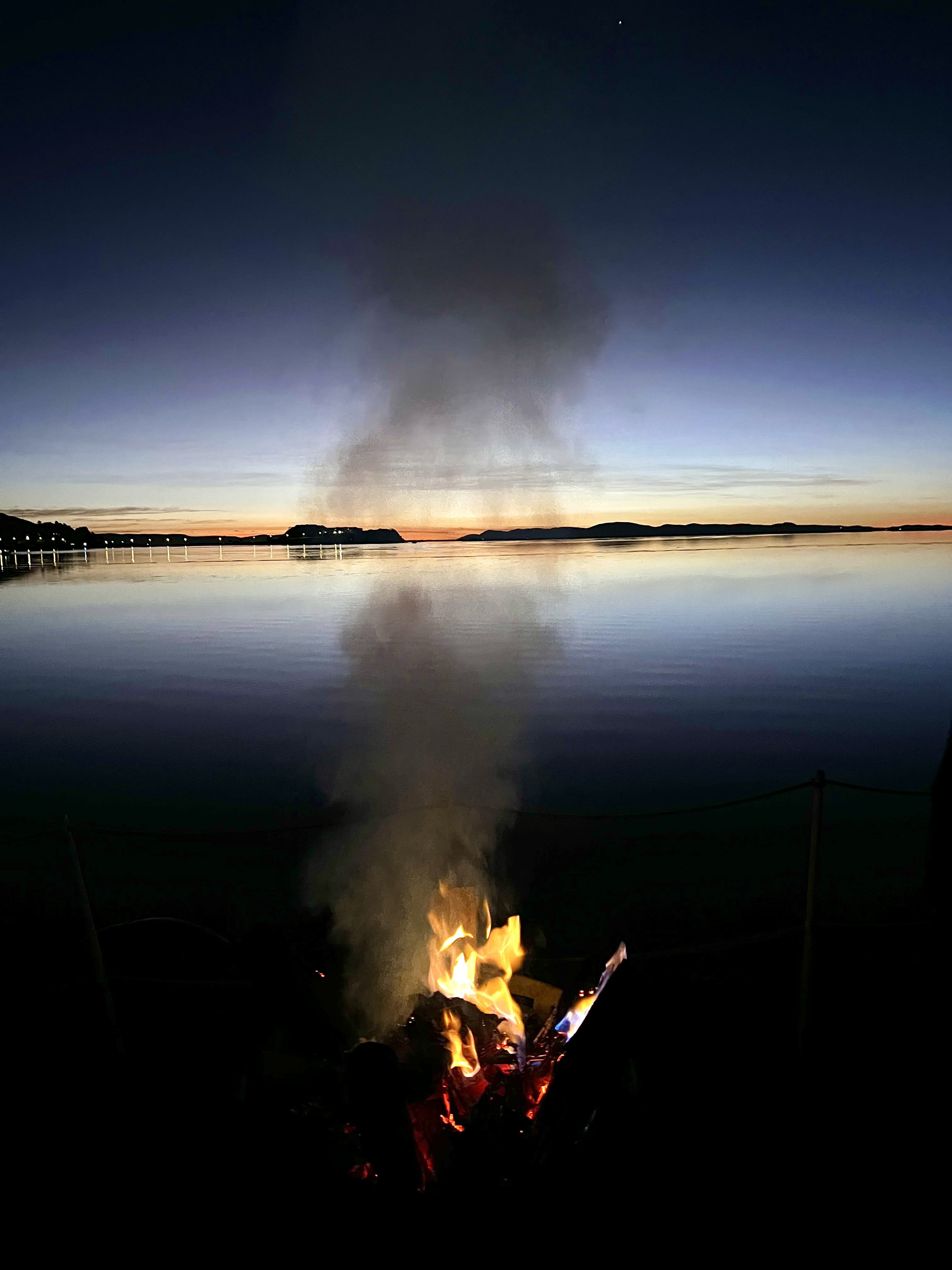
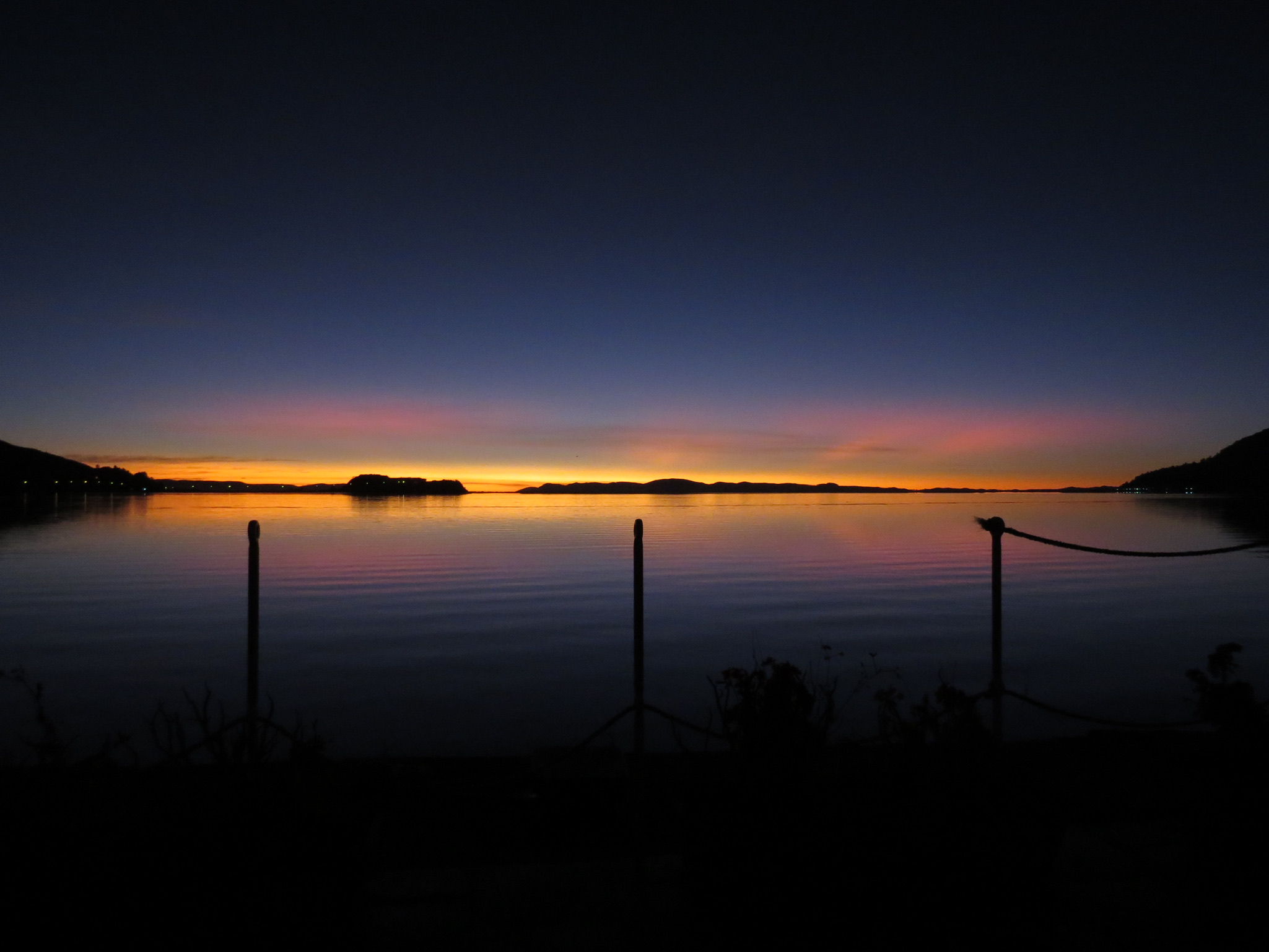
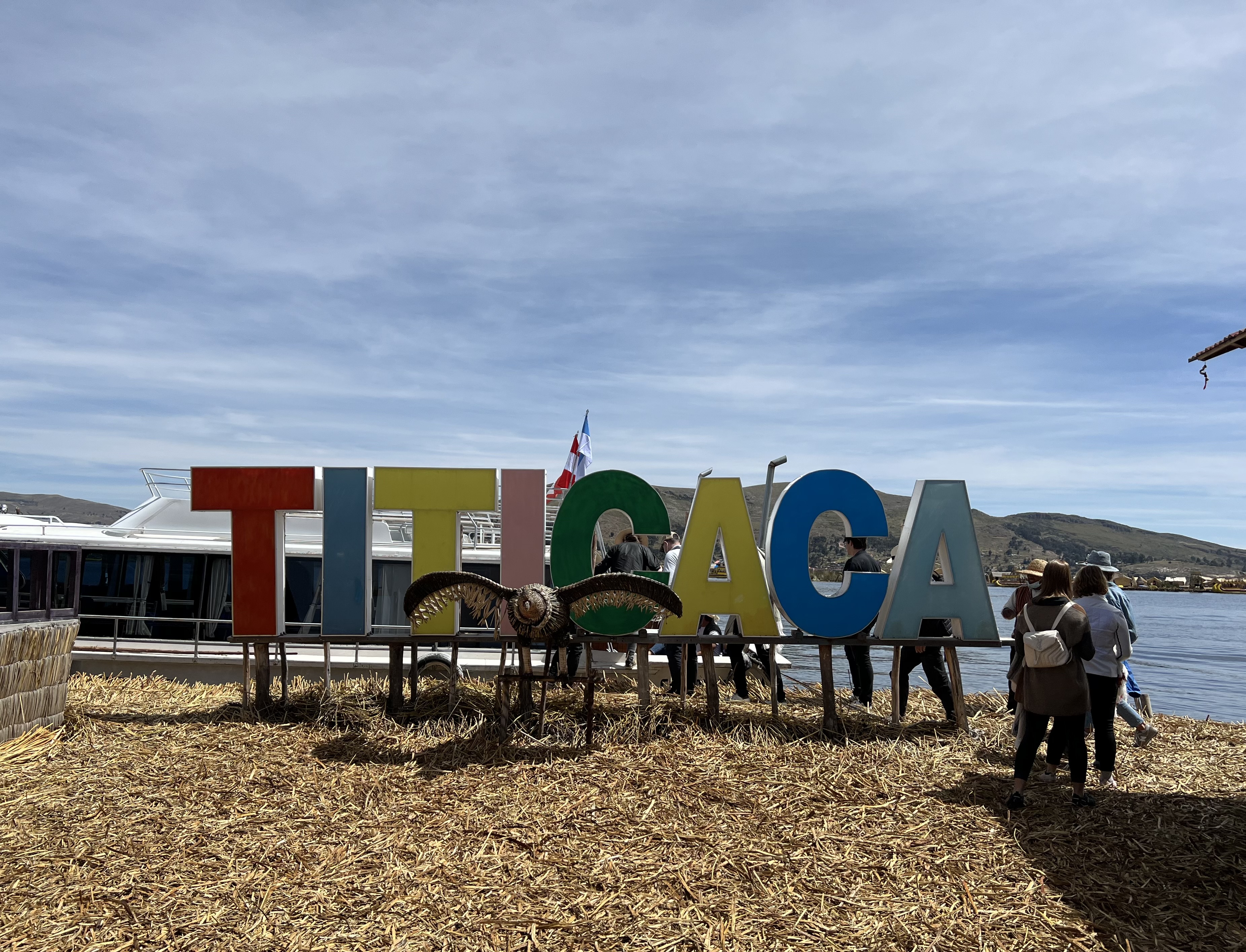
Sunrise over Lake Titicaca – a short walk down the pier as the train had pulled into a pier on the lake late in the night. It was an early, cool morning with coffee and tea and burning logs if we wanted to stay warm. Breakfast awaited us when we walked back to the train. We had a few hours before we boarded boats to head out to the floating islands of Uros near Puno in the Lake.
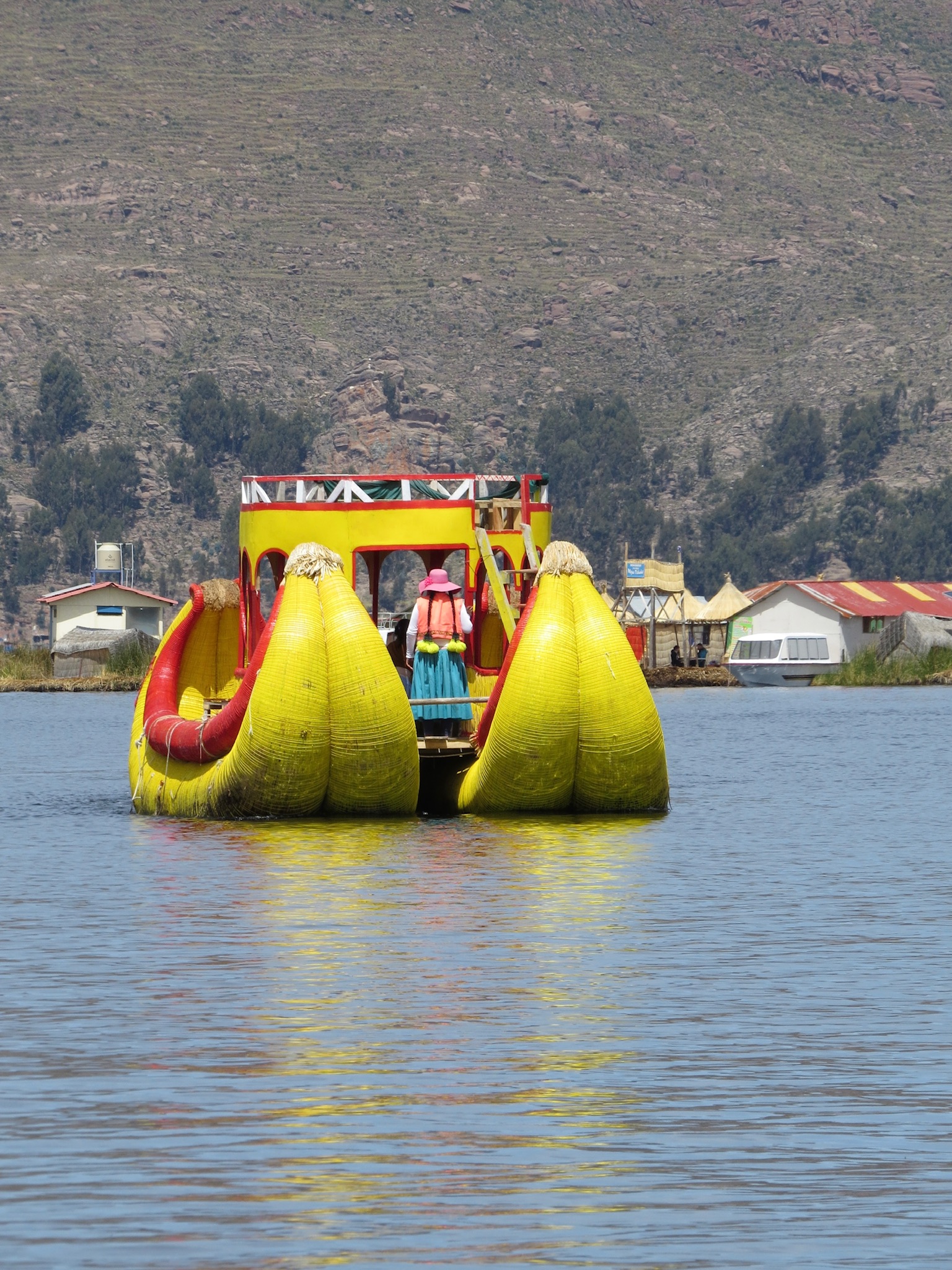
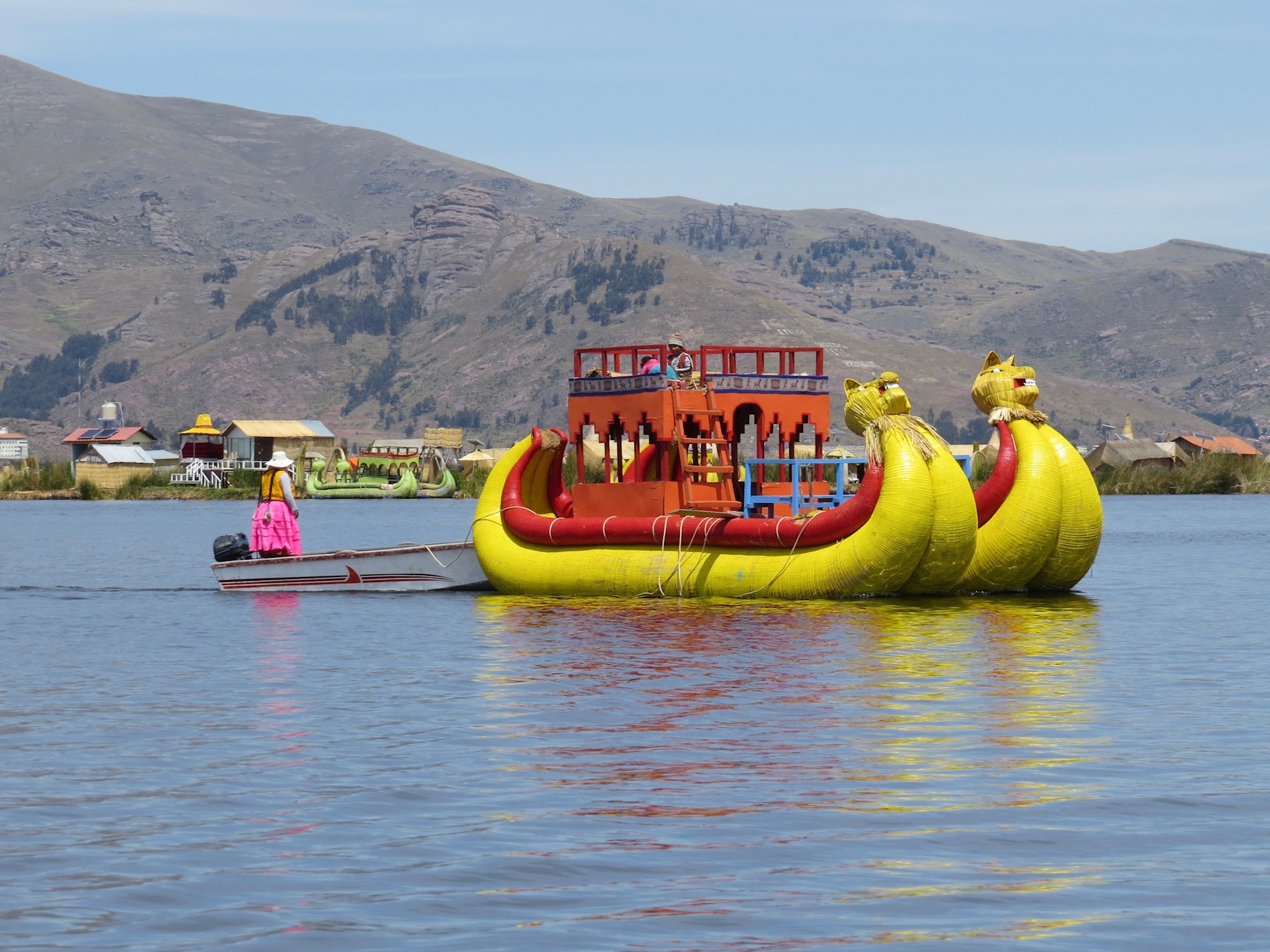
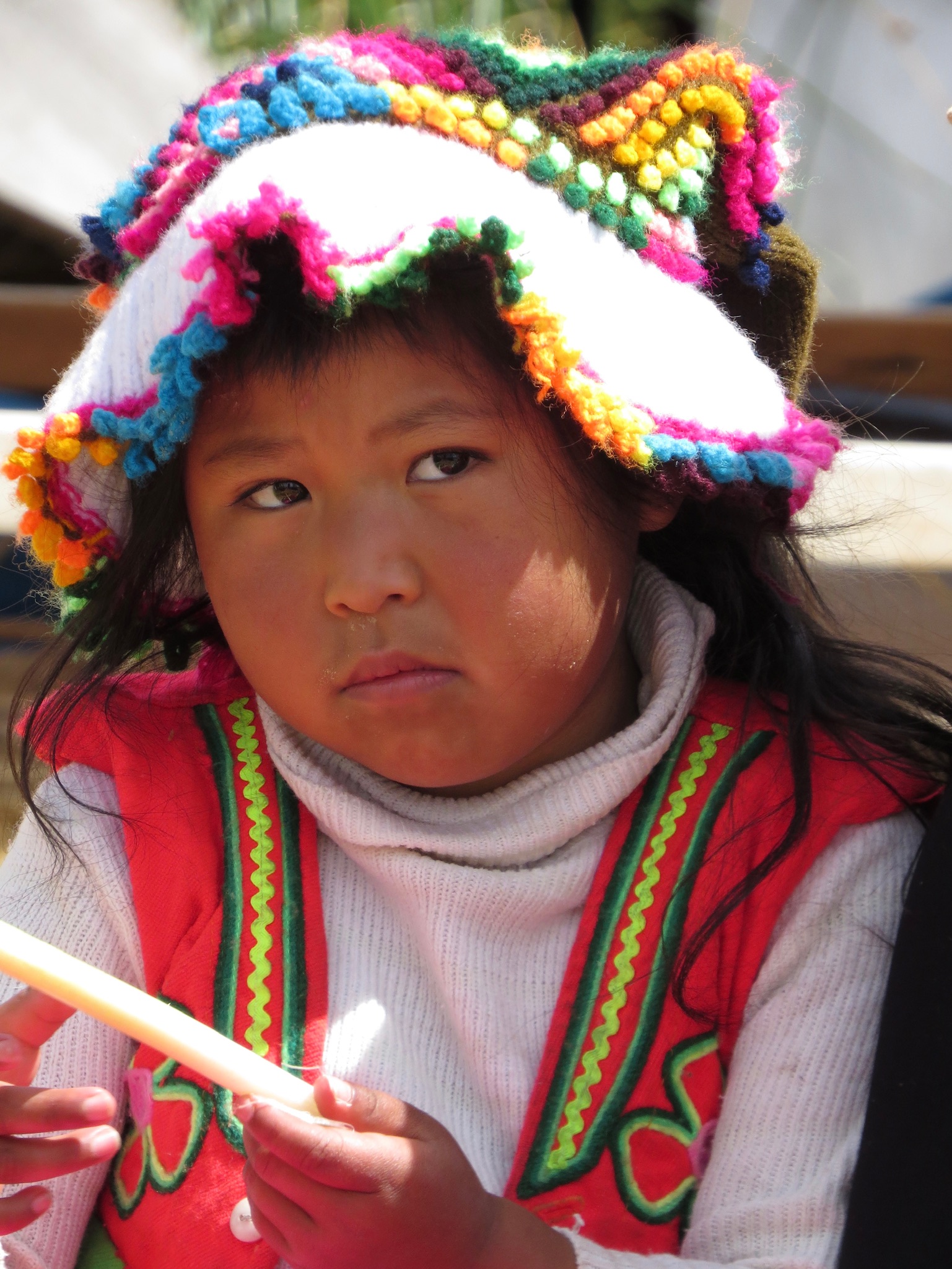
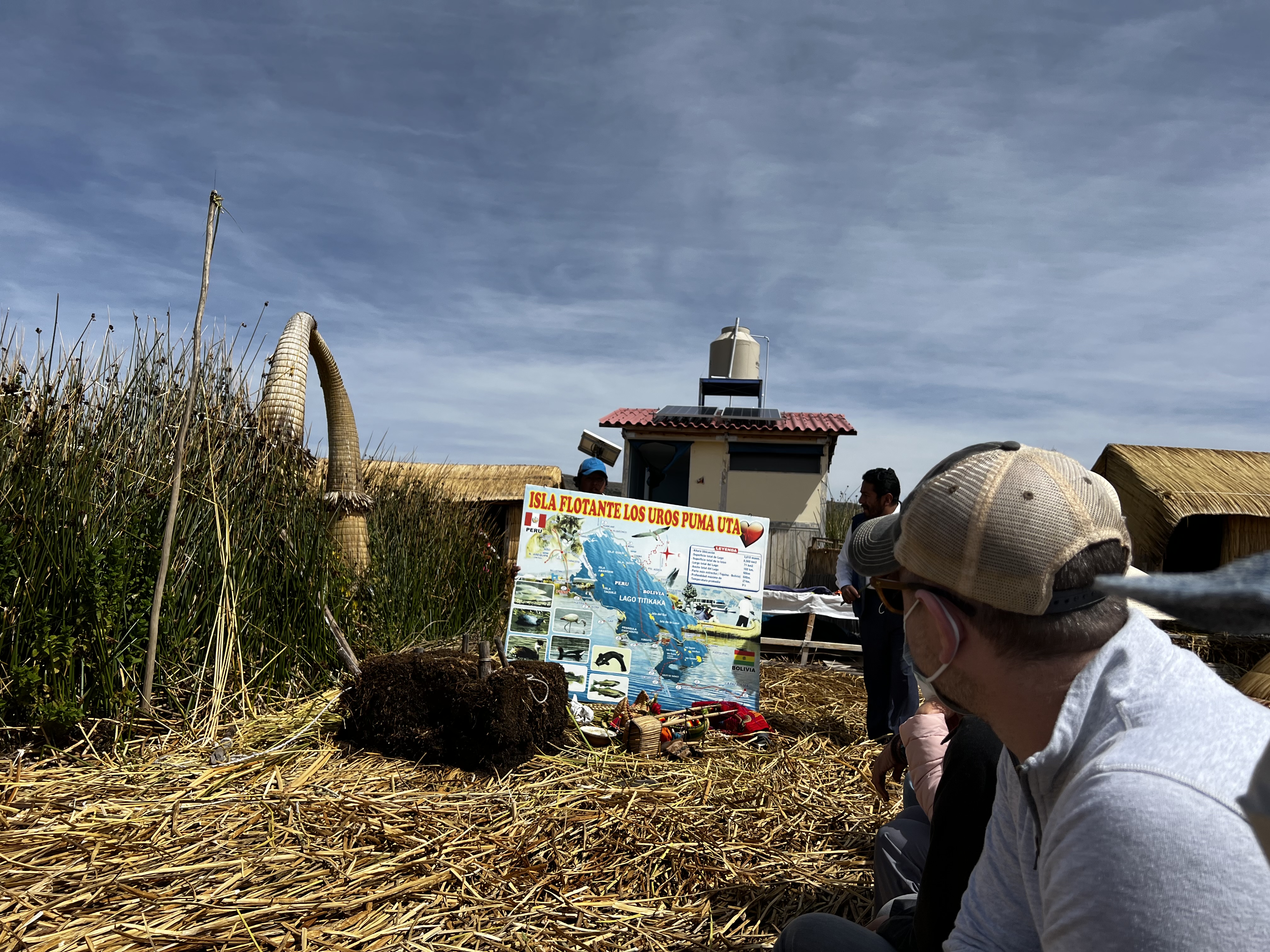
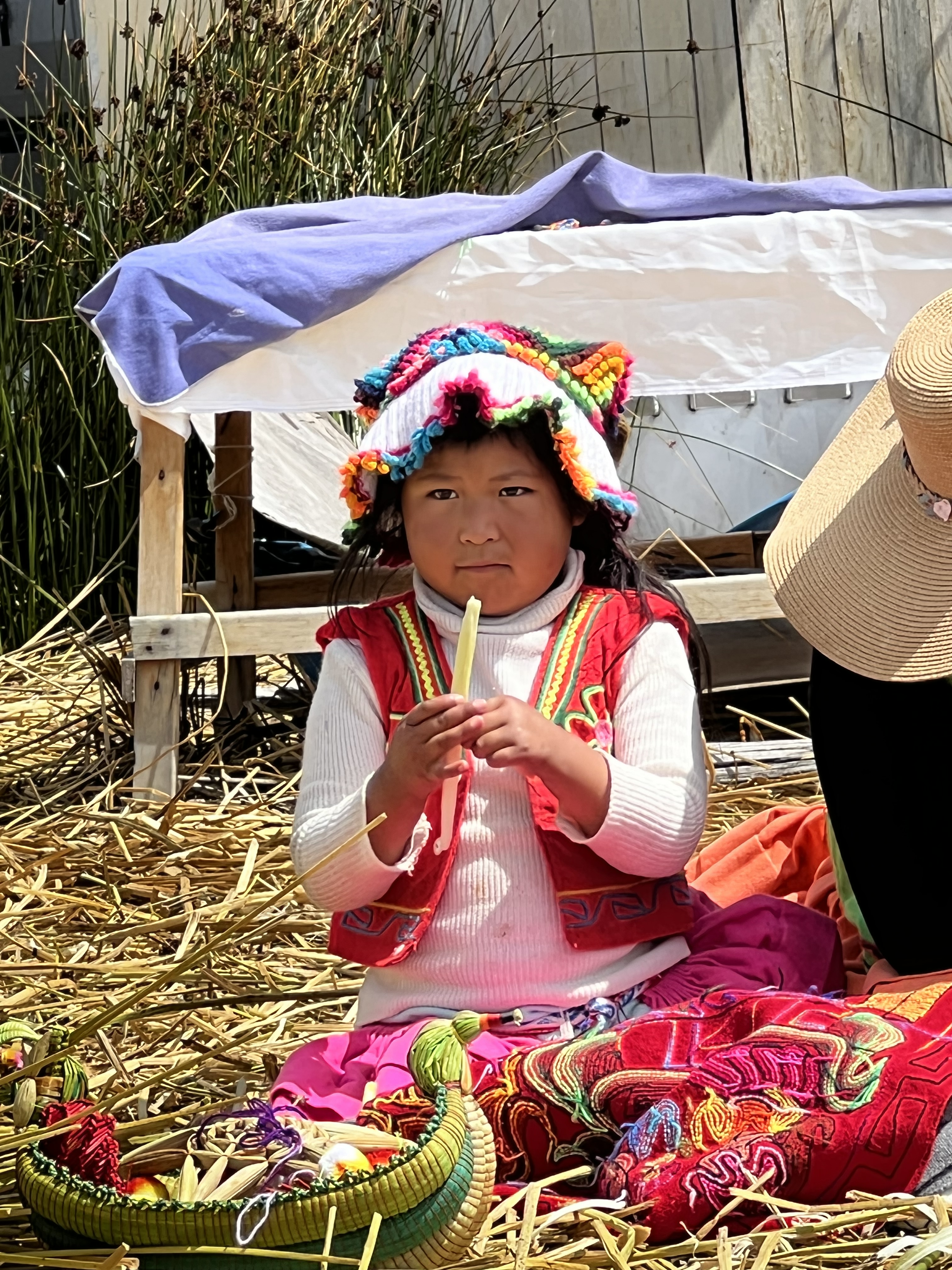
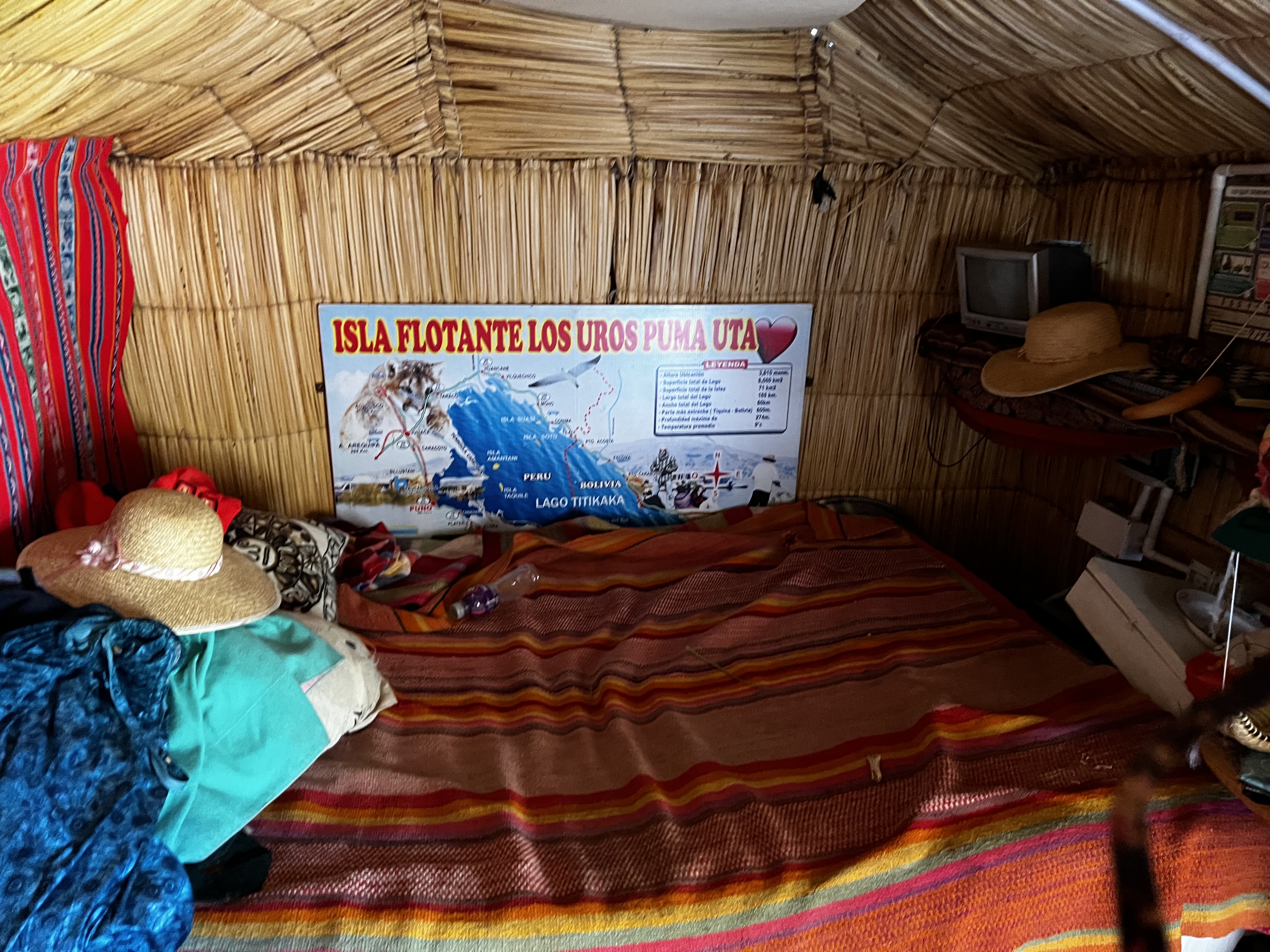
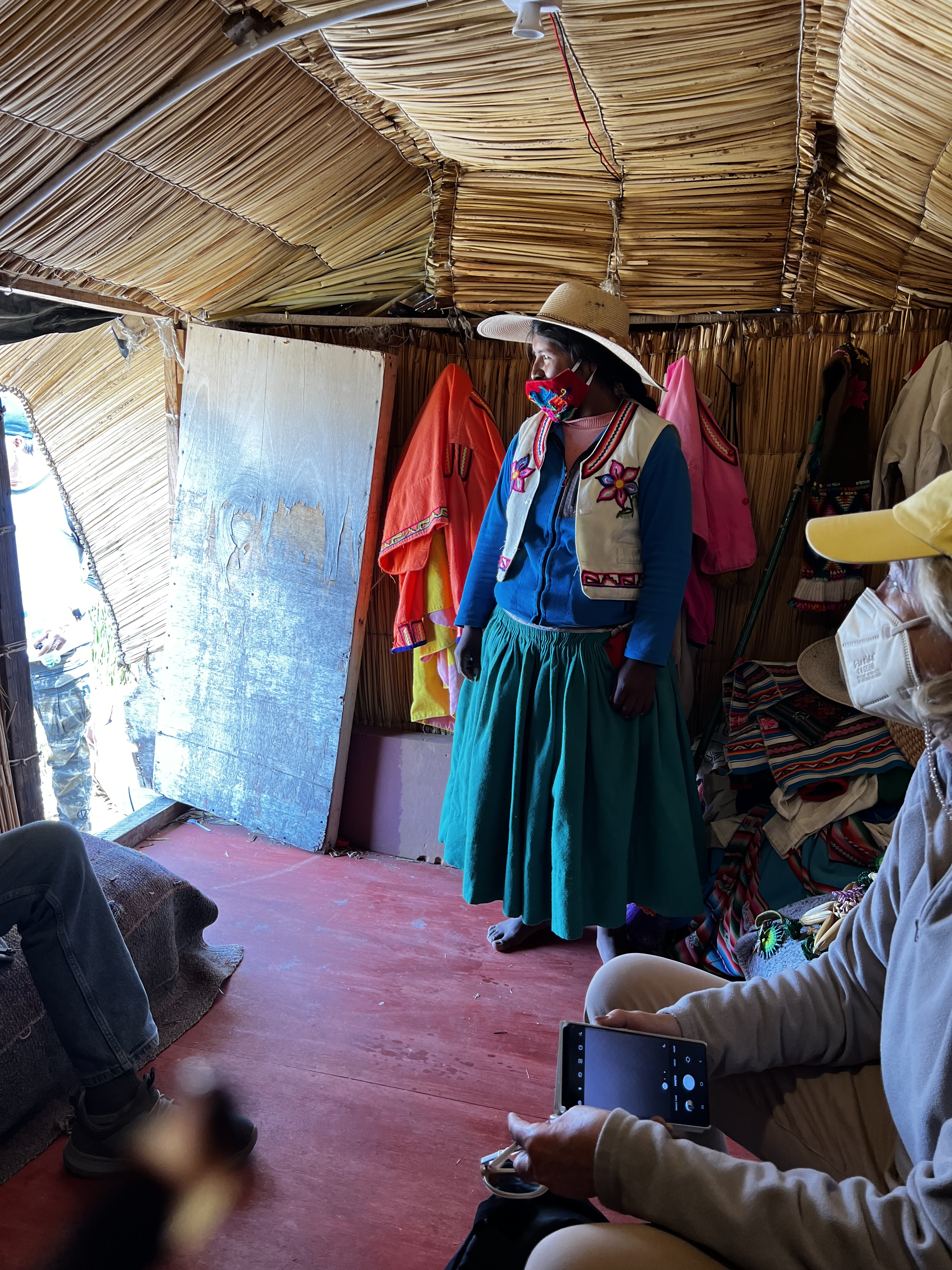
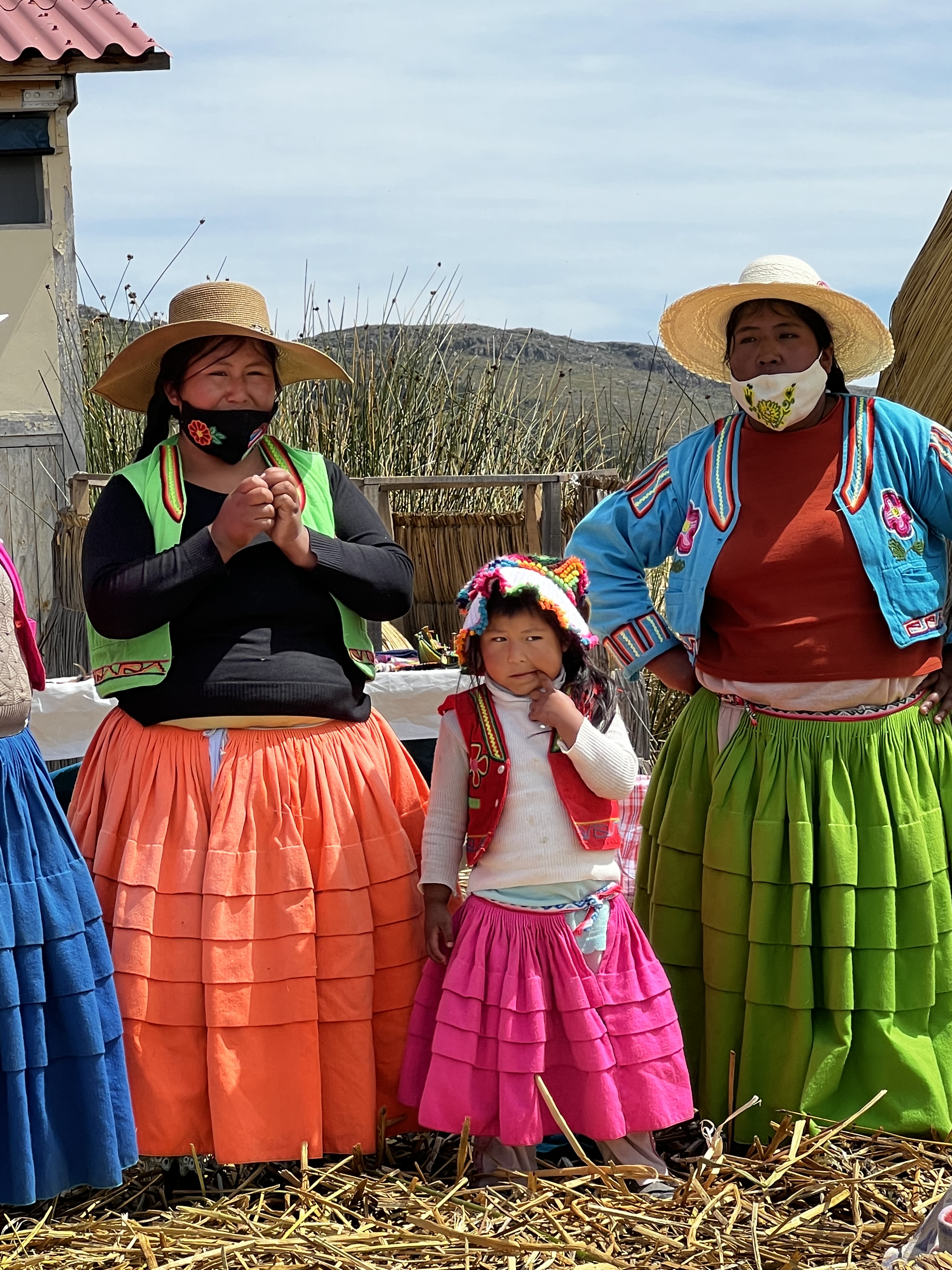
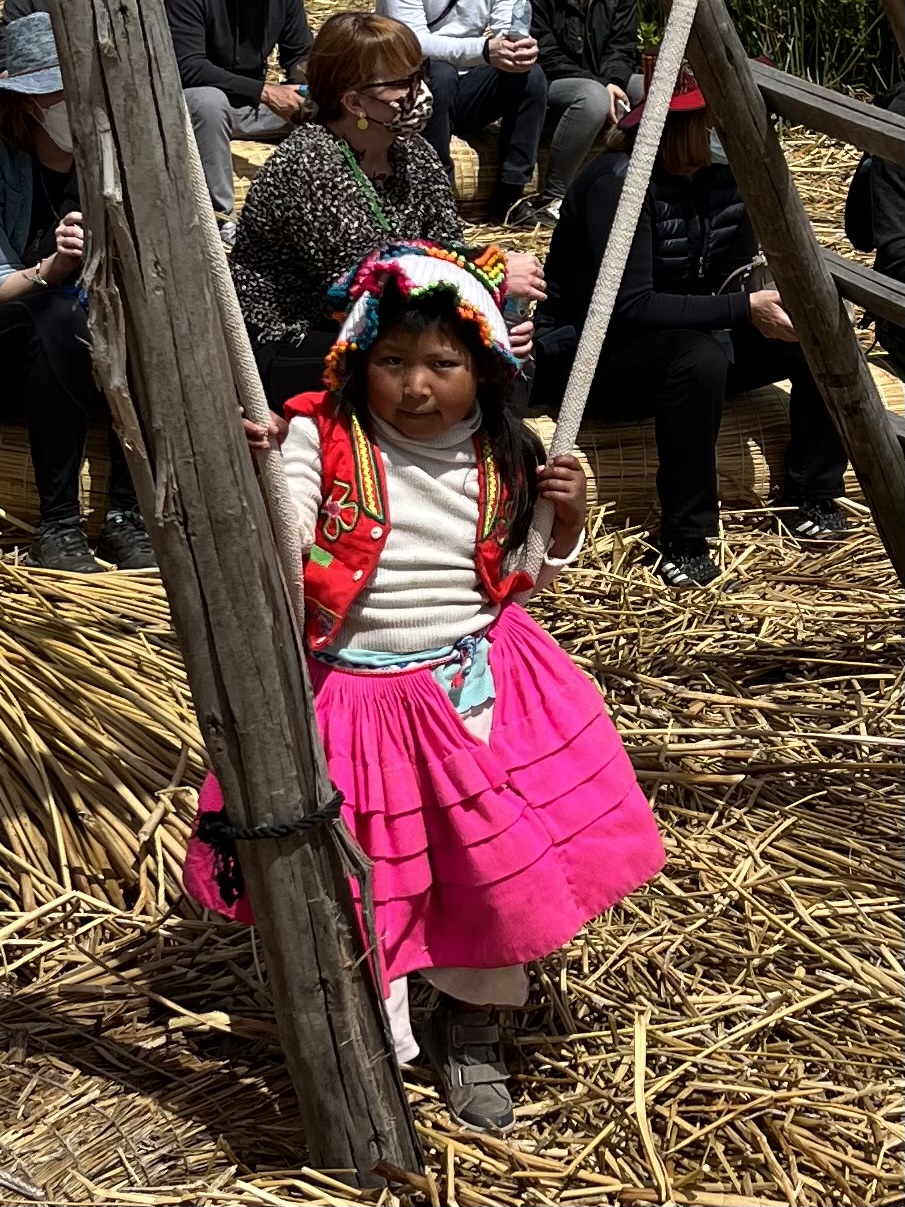
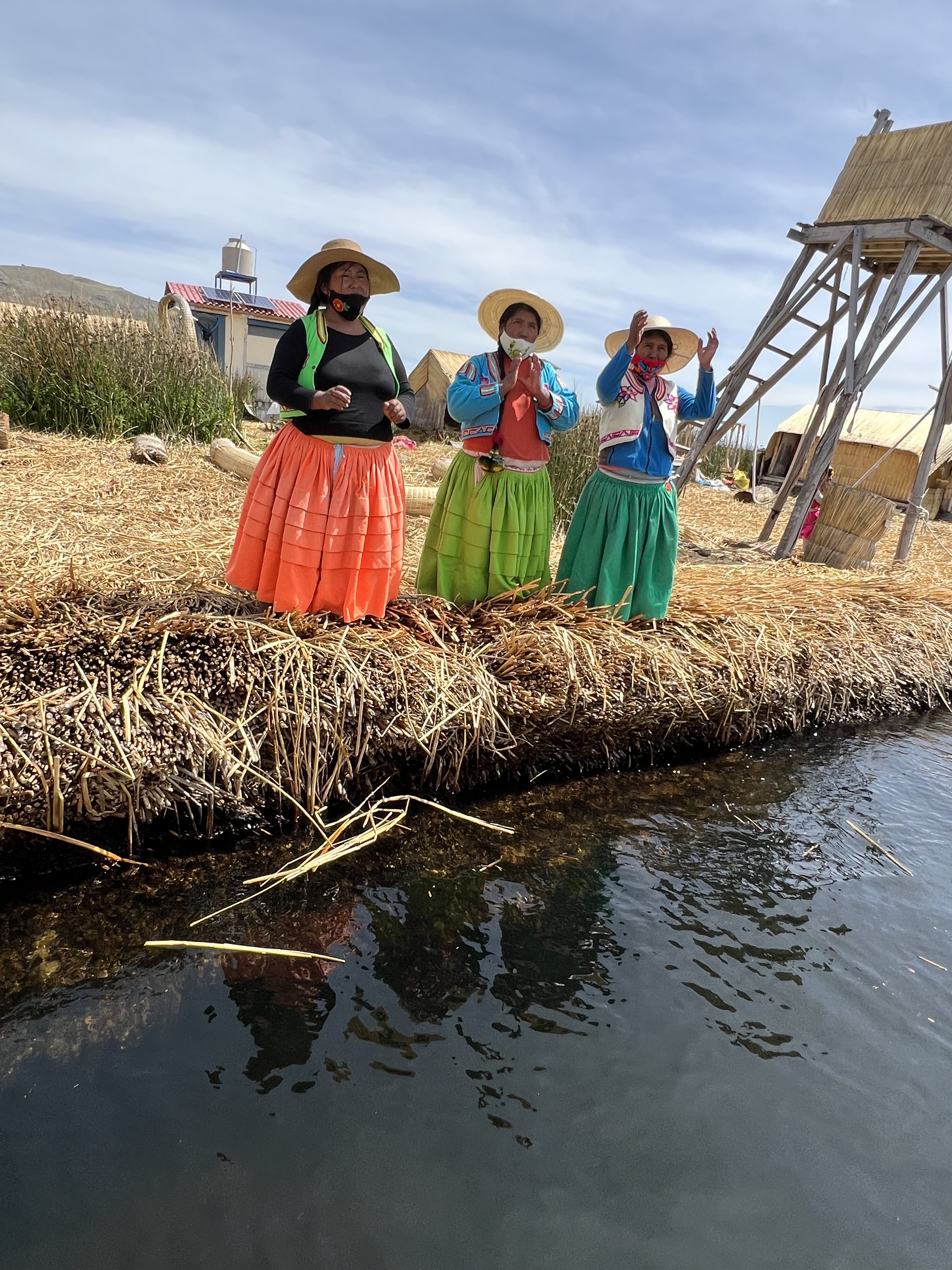
Oh my the glorious colors. It was enough to visit and enjoy them sharing their life for extra money, but I’m glad we didn’t stay overnight. Lake Titicaca is the largest high altitude lake in the world. The Uros people are mysterious and maintain traditions of pre-Inca as well as the Inca Empires. Andean culture consider Lake Titicaca as the cradle of the Sun and the Inca Empire. Lake Titicaca also borders Bolivia. We learned the history of why Bolivar has no access to the Pacific – neither Peru or Bolivia like the Chileans (we heard) and when the Chileans started a war Peru fought but Bolivia gave in. When the the Bolivians gave up, they lost access to the Pacific. I have not read up on whether this is a true account or not, but it does seem plausible.
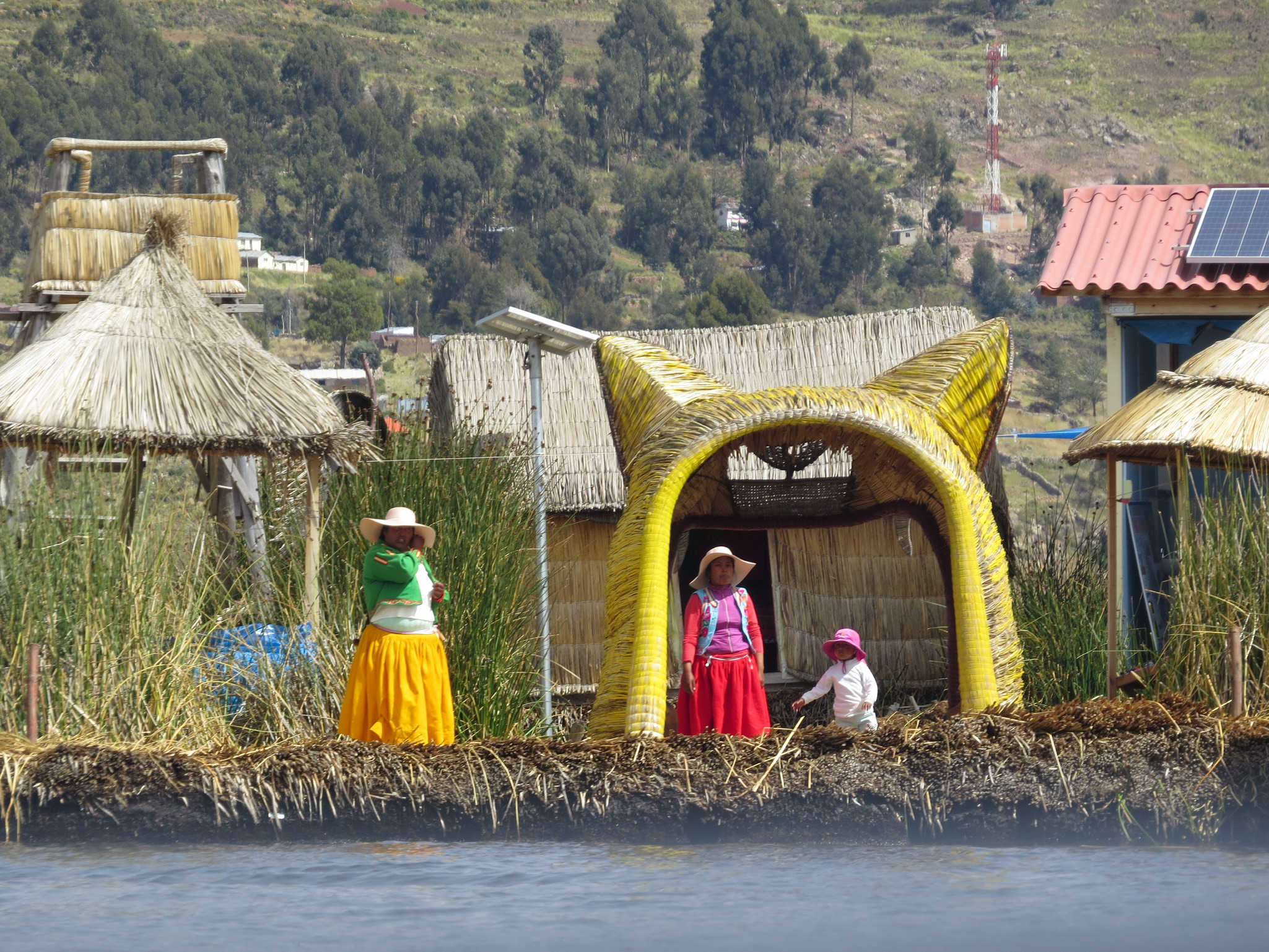
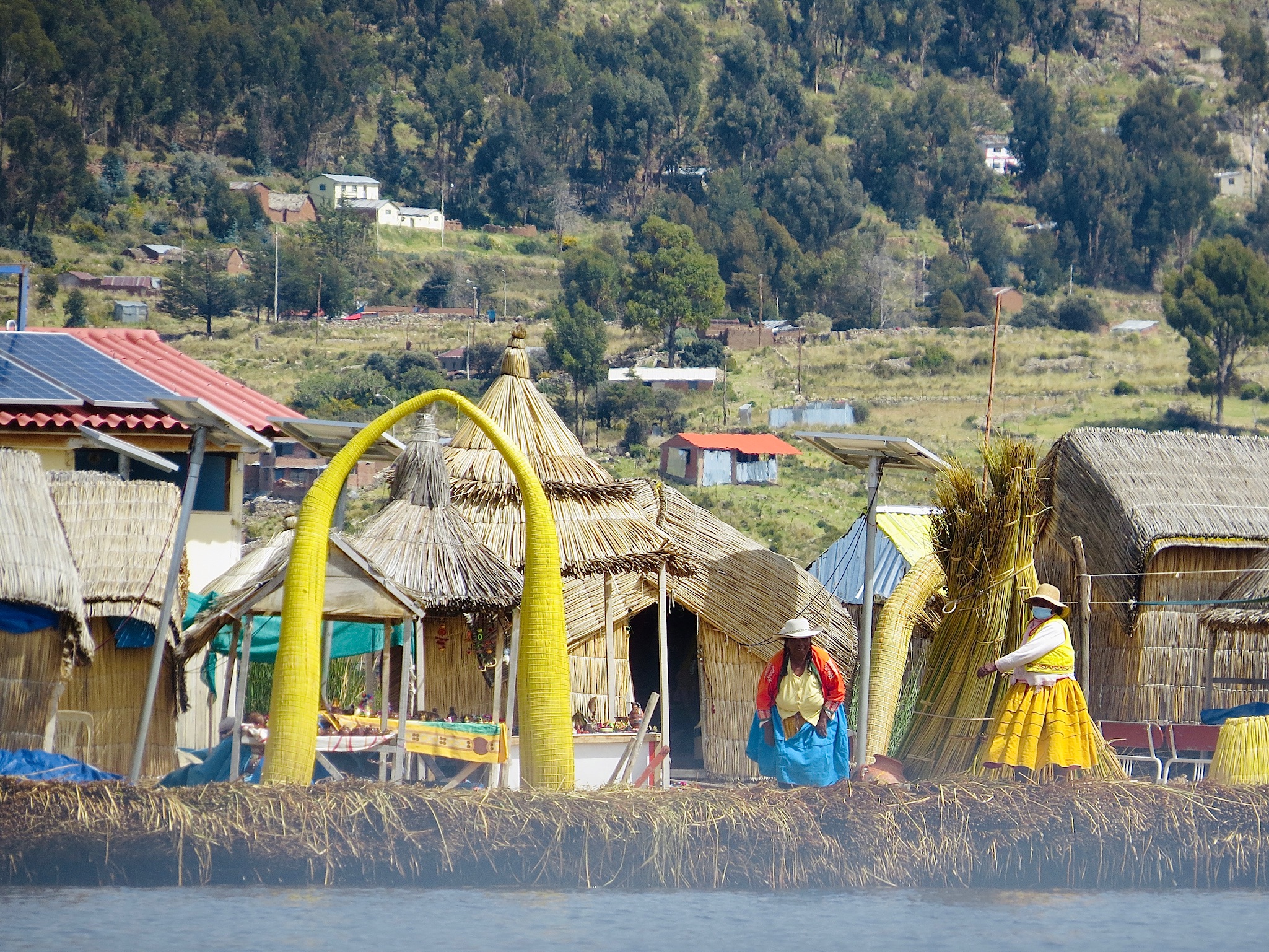
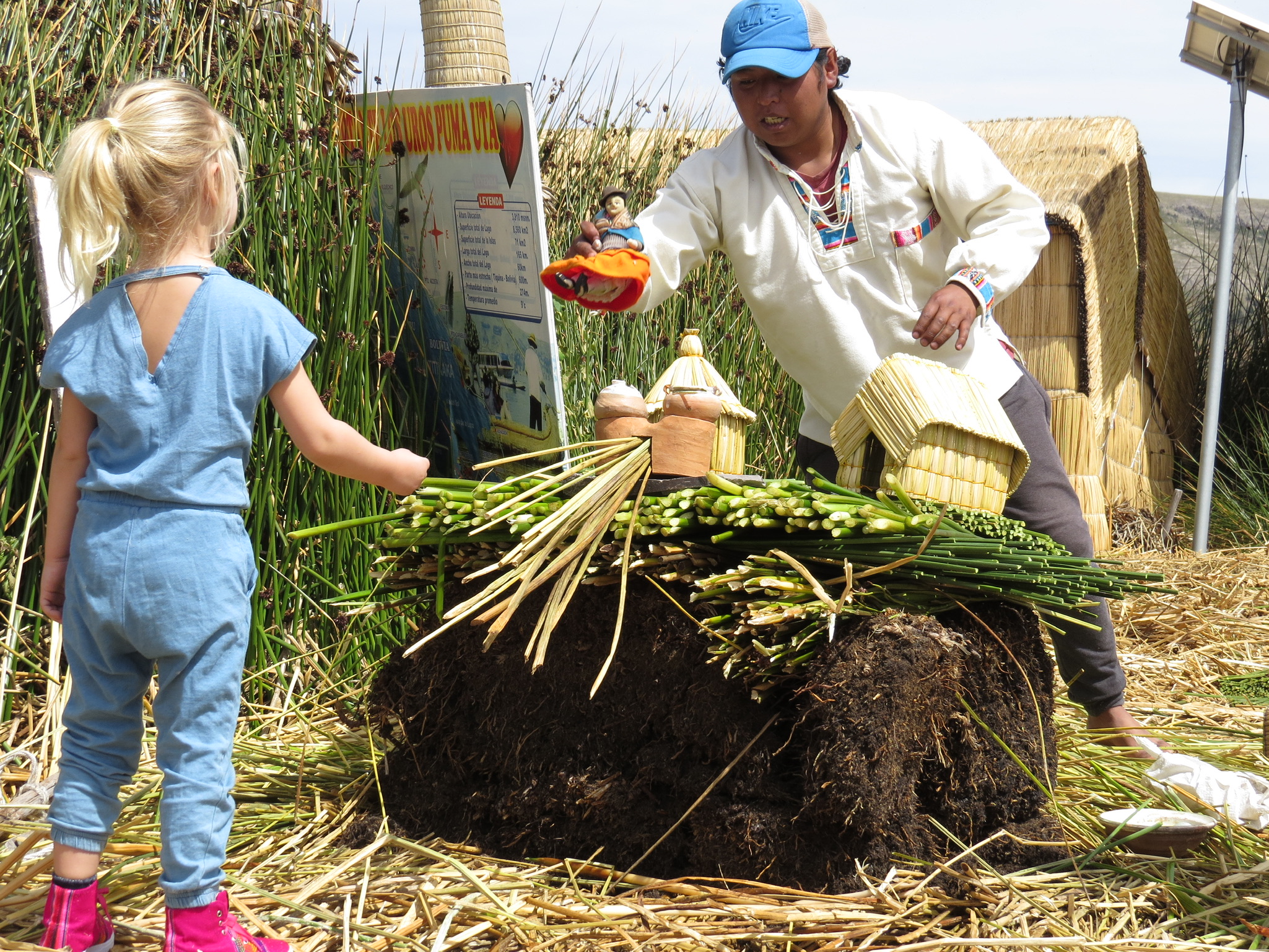
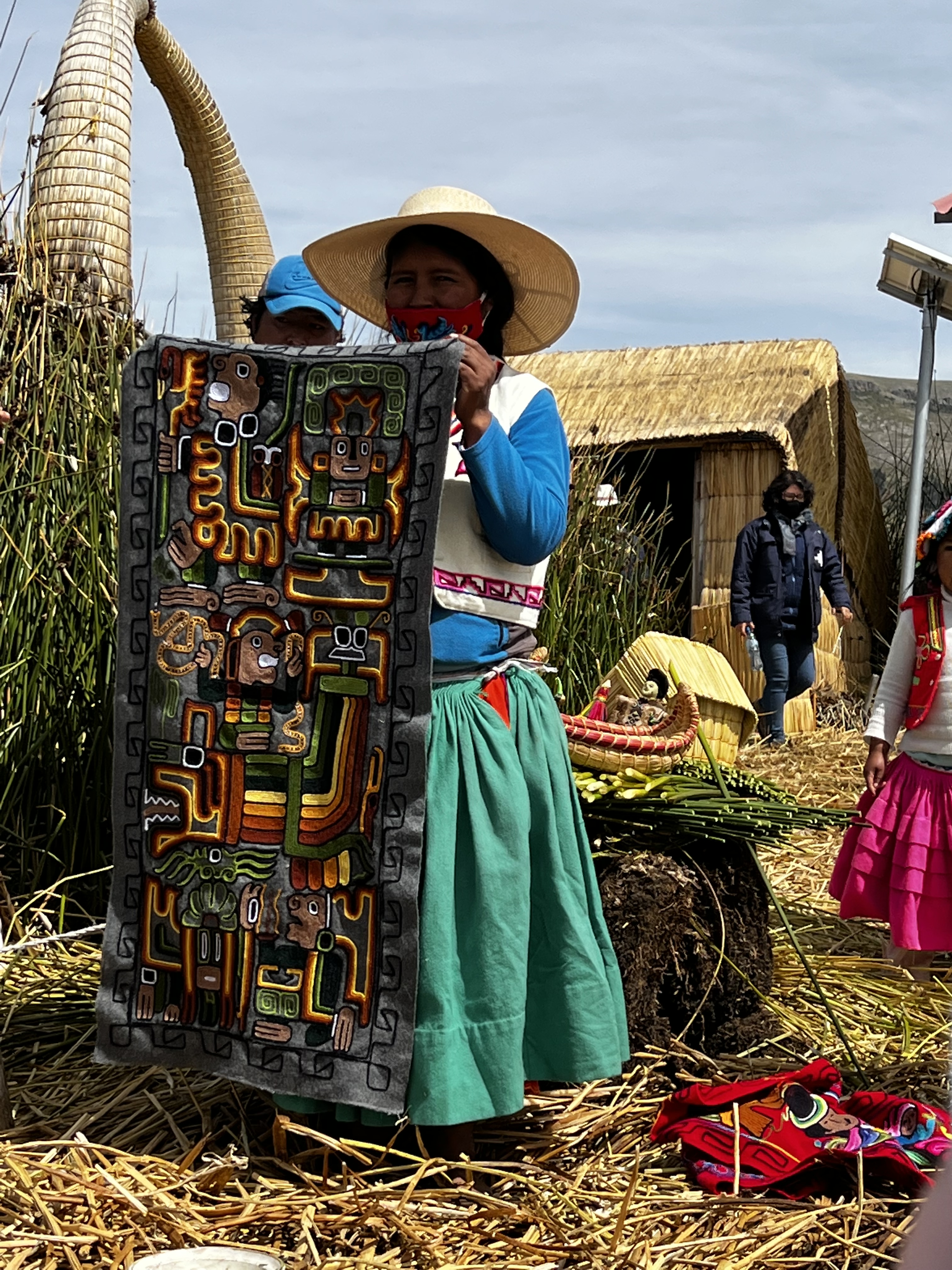
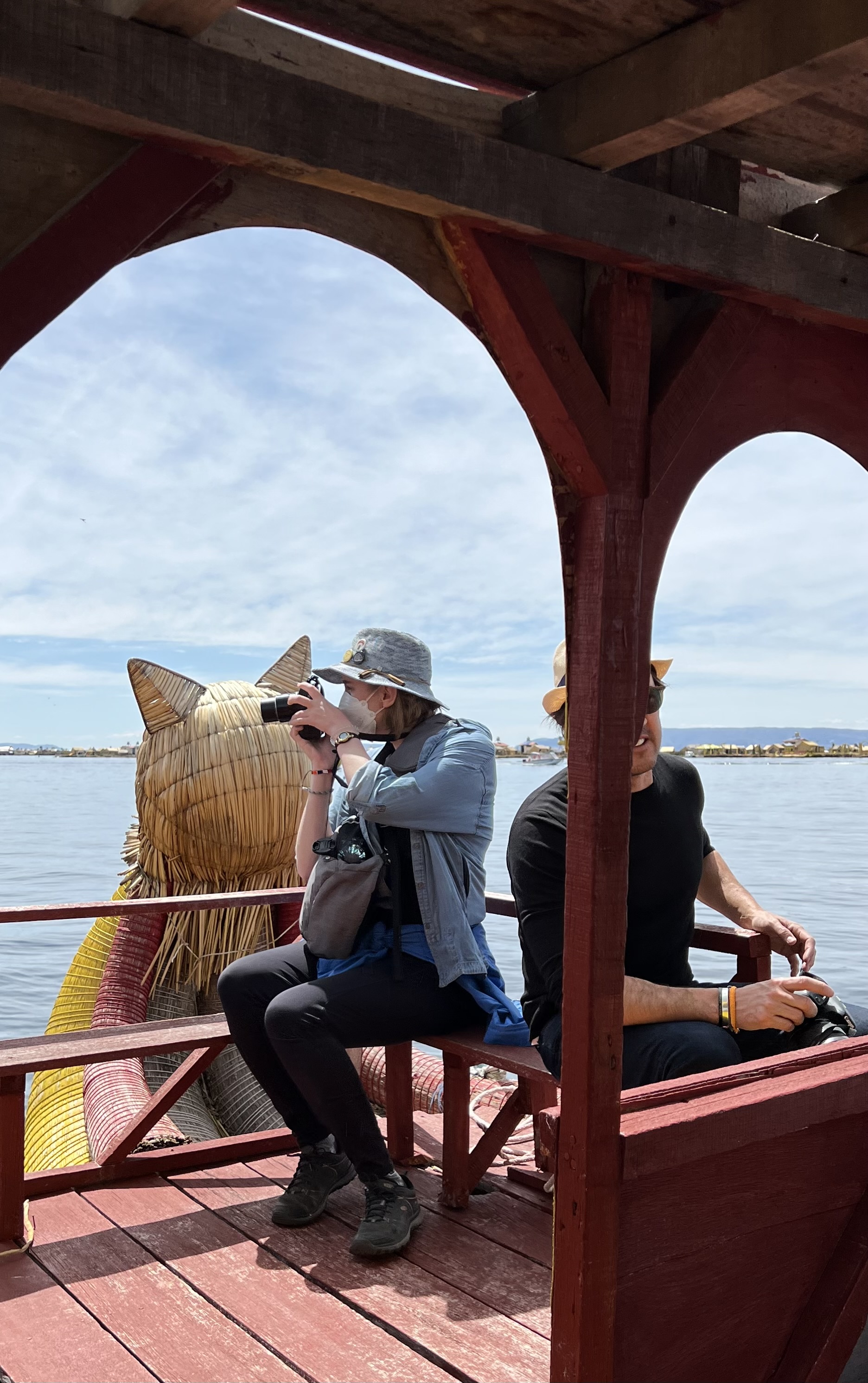
We had two boats with our train group and we went to different islands for a presentation. We laughed when they said they were not families on each island necessarily, but friend groups and if they didn’t agree with one family/friend group they simply sawed them off the island and let them float away. About 4,000 people are thought to live on the islands. We were told after a storm, the kids got ready for school only to find their island school had floated off! The Seventh Day Adventist have made sure these indigenous people have access to education! That didn’t surprise me. They did have some services with solar and toilets and other amenities which you can spot in some photos.
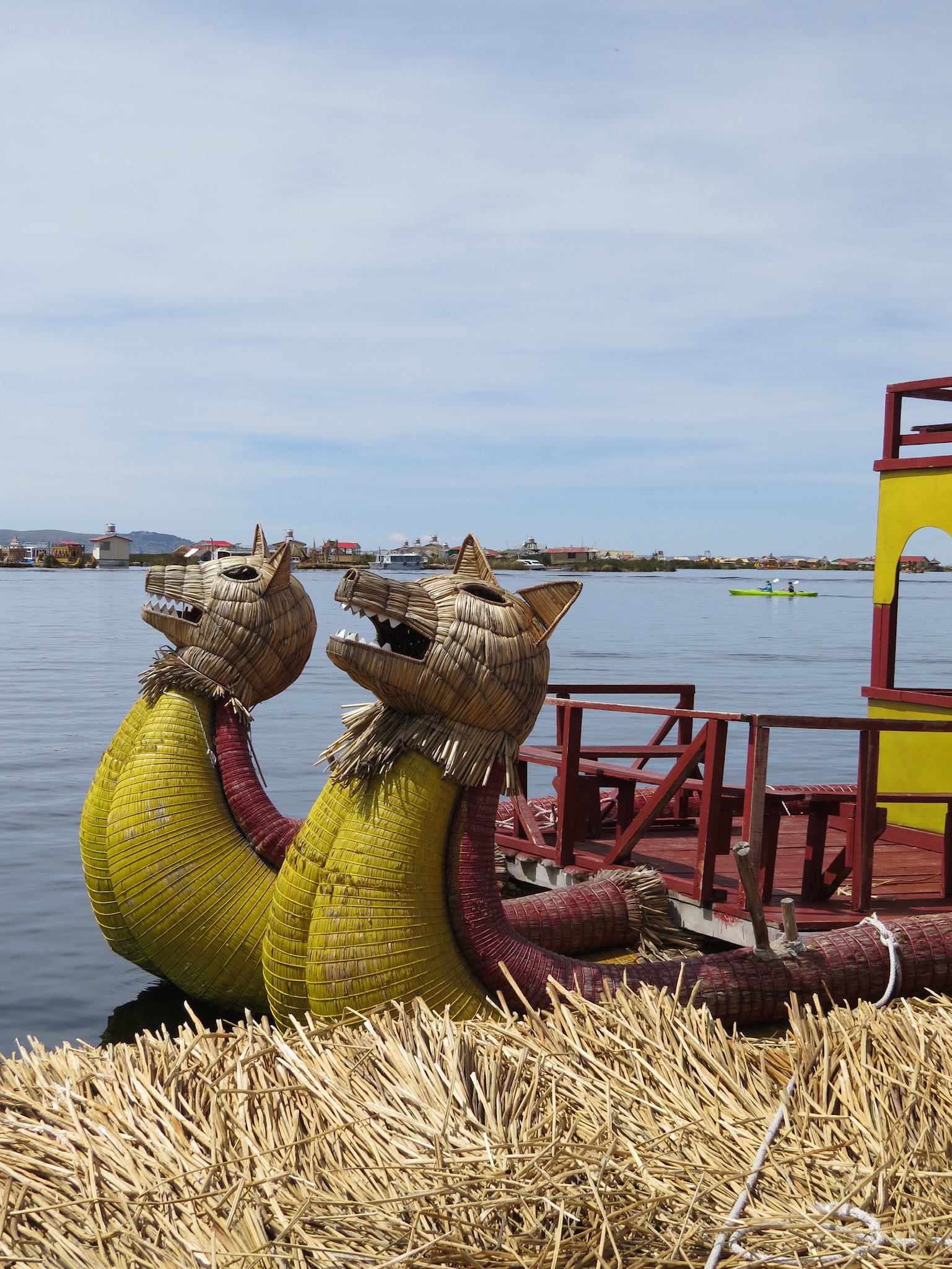
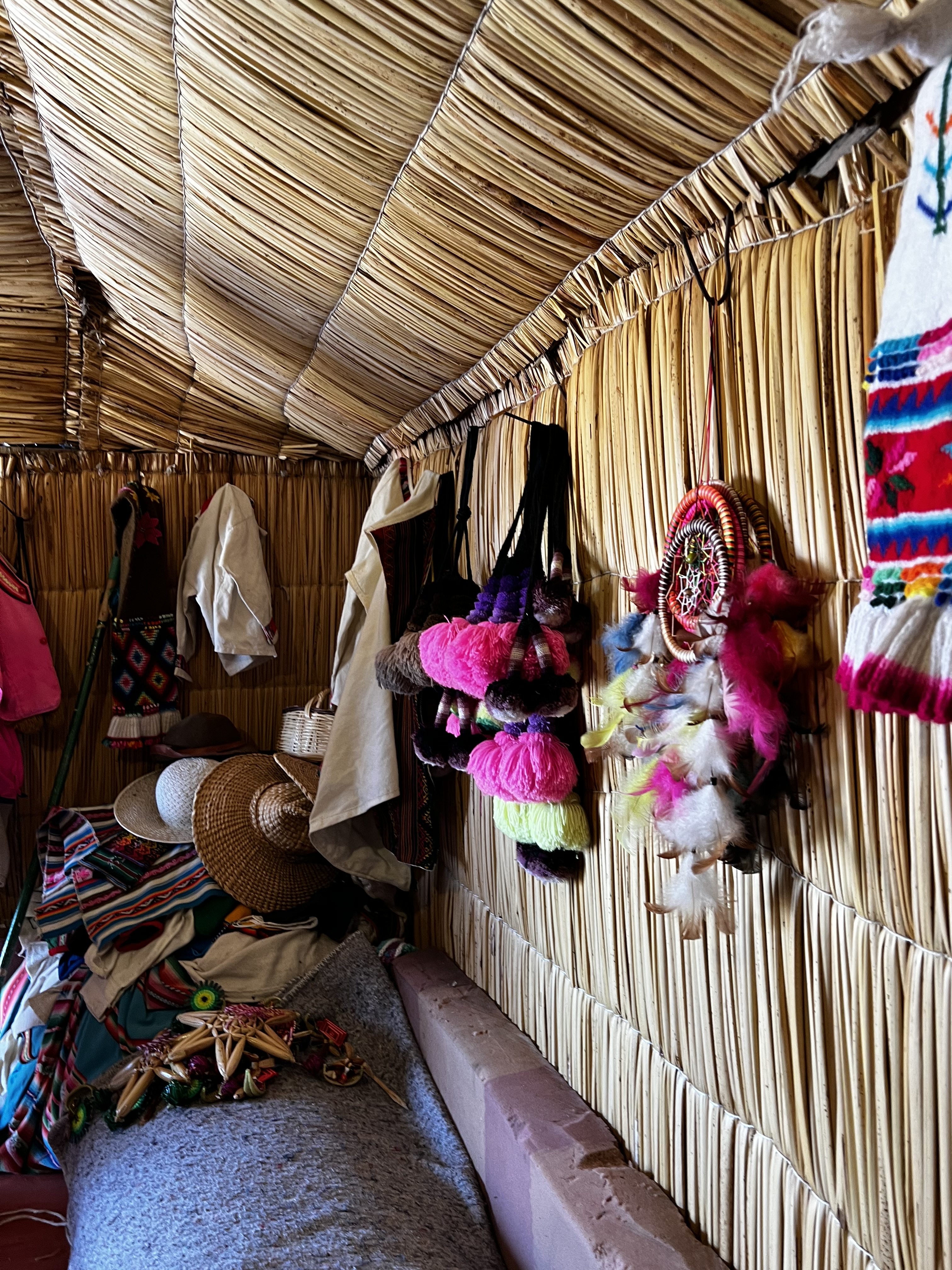
The islands are made of Totora which is a reed that grows in shallow places. They also use these reeds for boats, furniture and houses. Every 20 days the men add new layers of these reed linking them with ropes and stakes. The Uros Islanders eat the soft white part of the totora that provides them with many of the nutrients they need to survive. They also hunt and fish, raise Ibis for eggs etc and they are known to go to Puno and bring food staples back also.
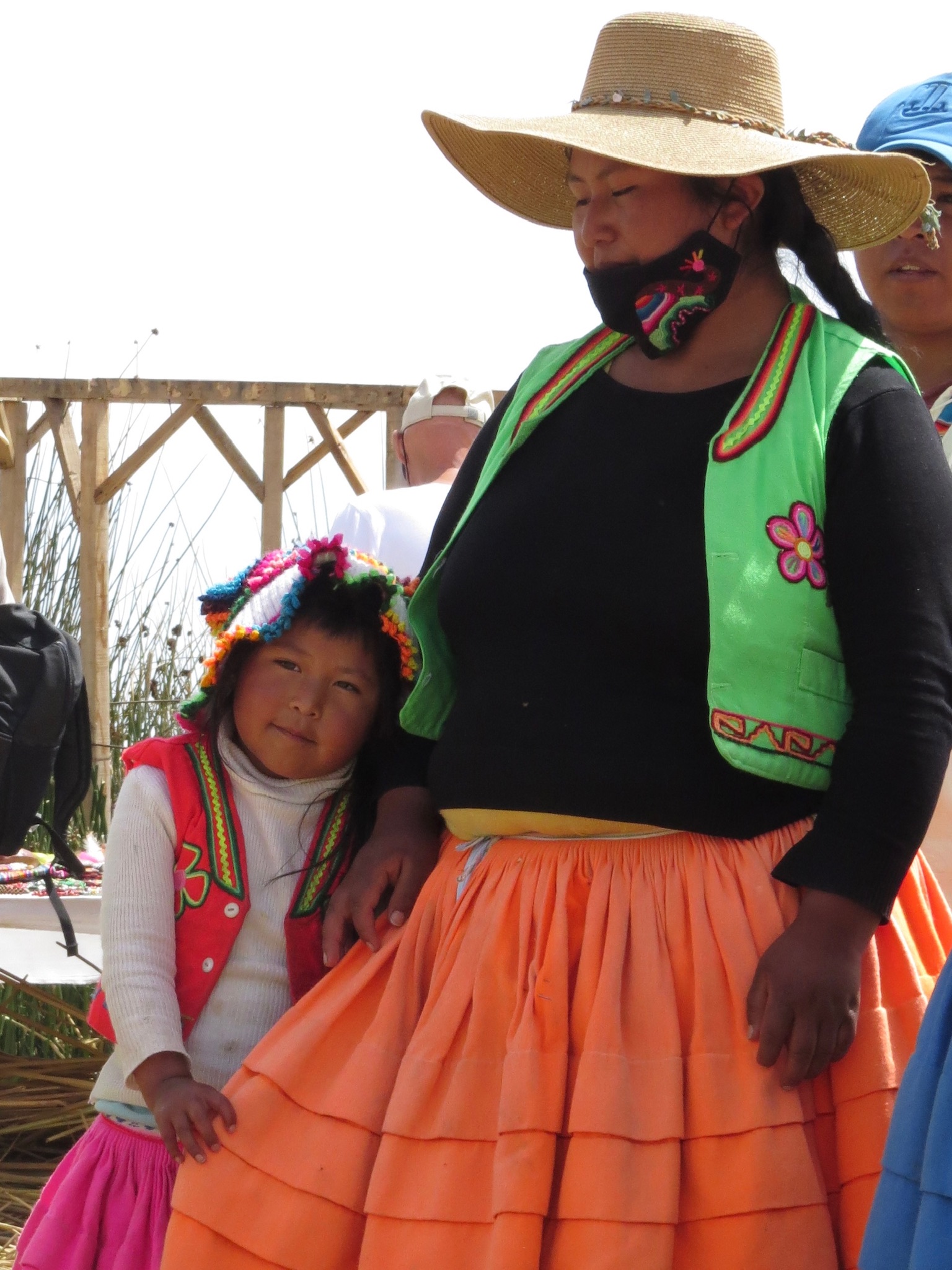
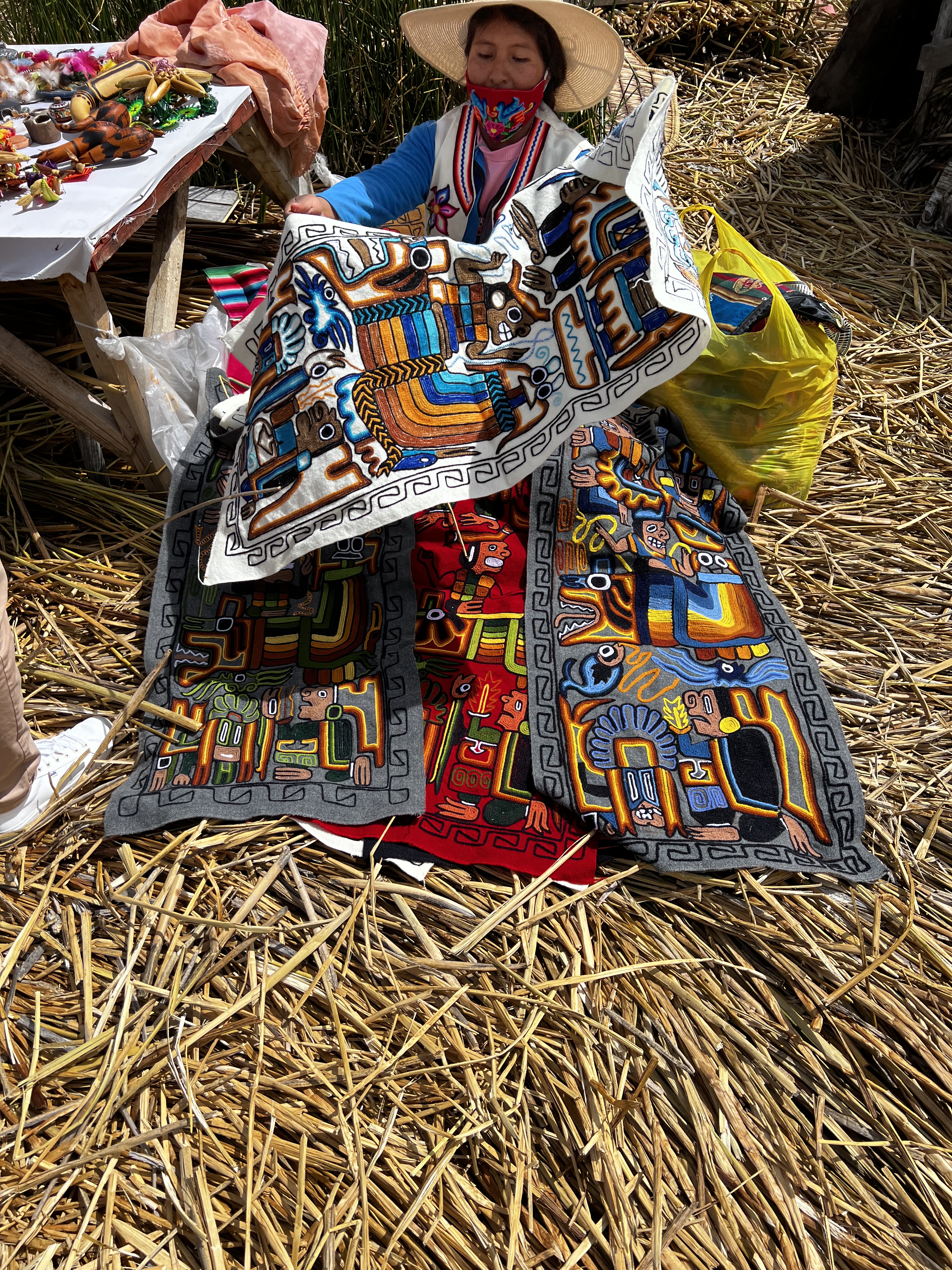
Their embroidery was incredible but I didn’t bring enough cash to take anything home. It takes a long time hence the high price and once again, since we went carry on, its probably a good thing!
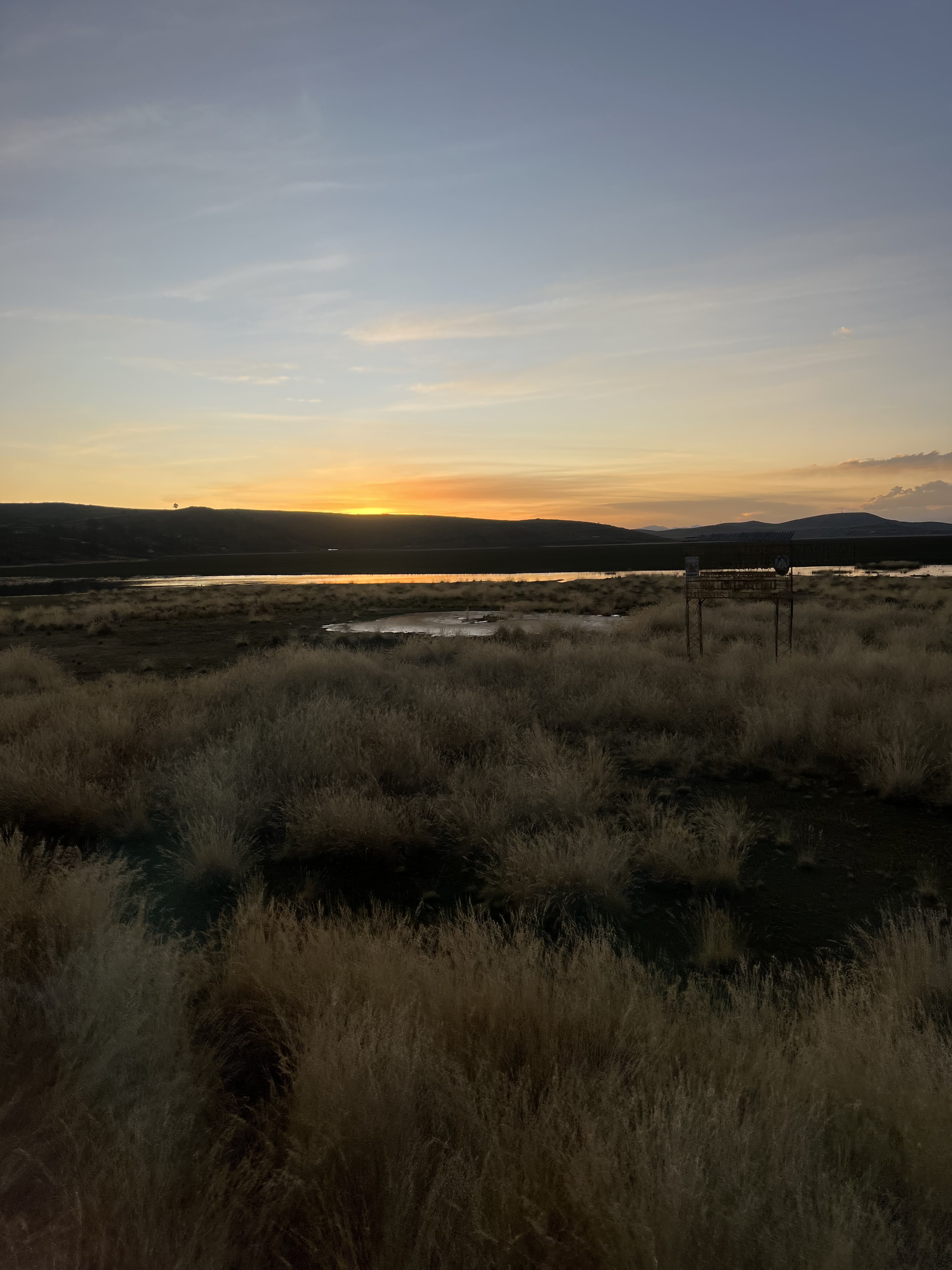
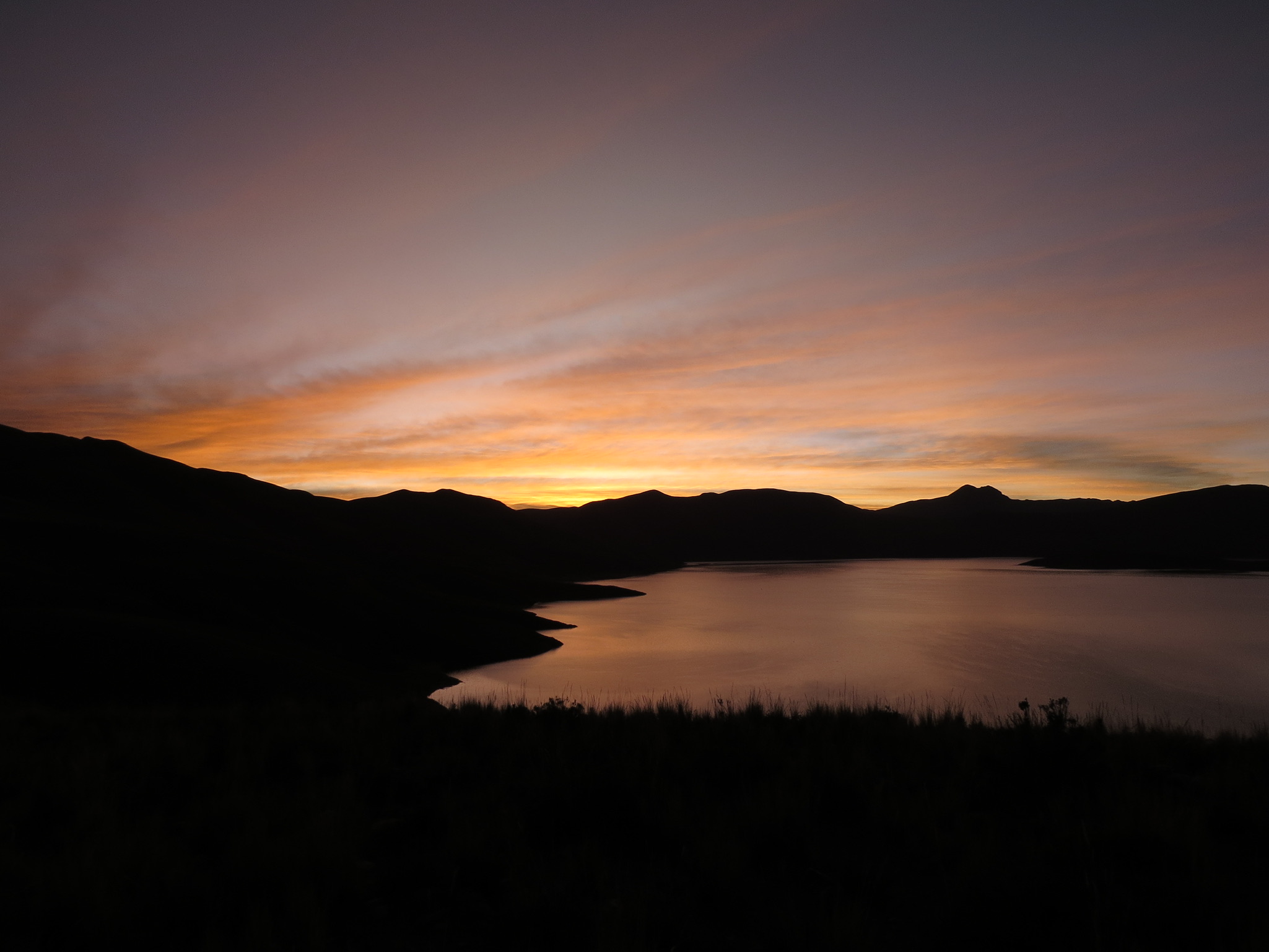
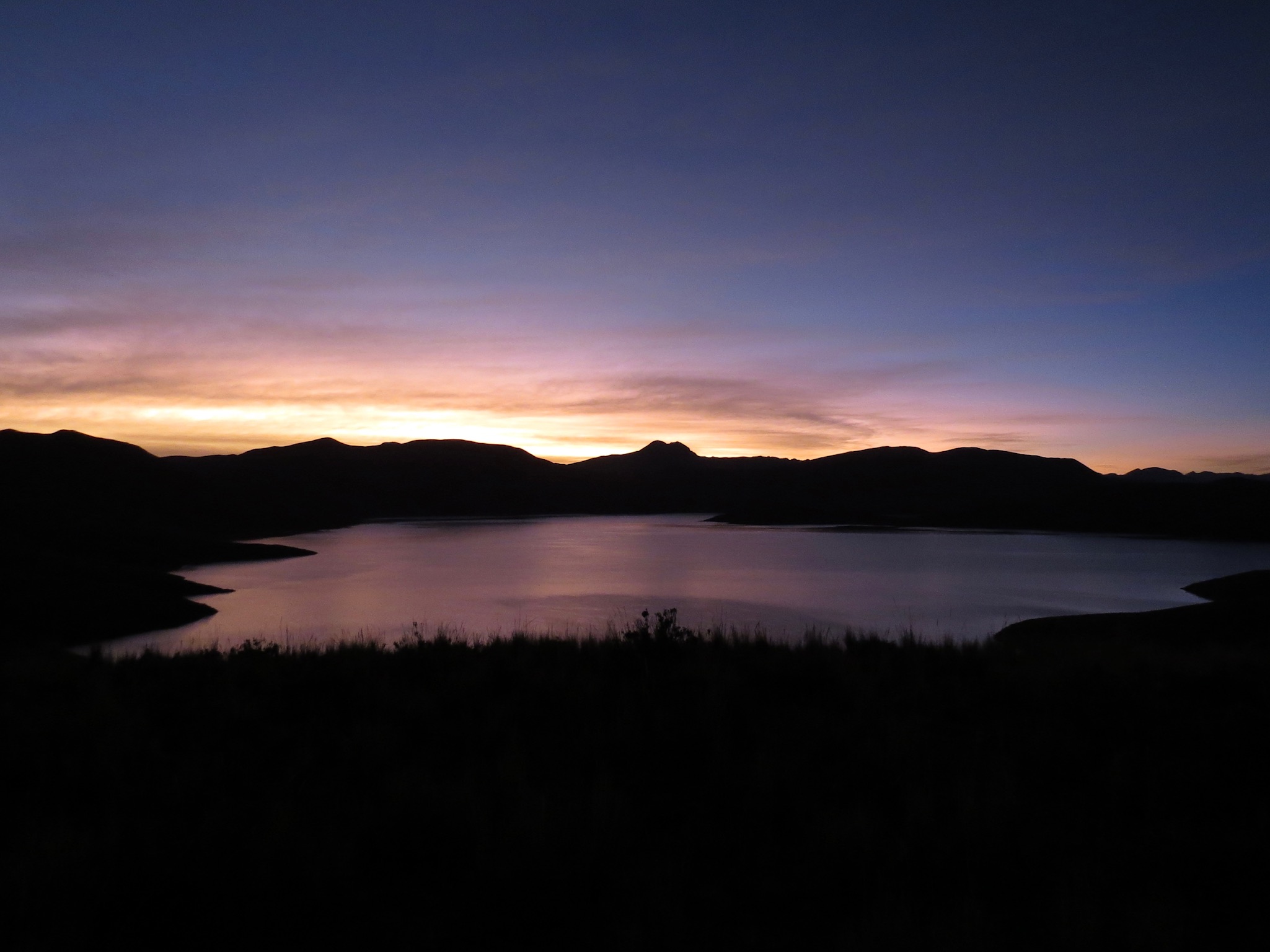
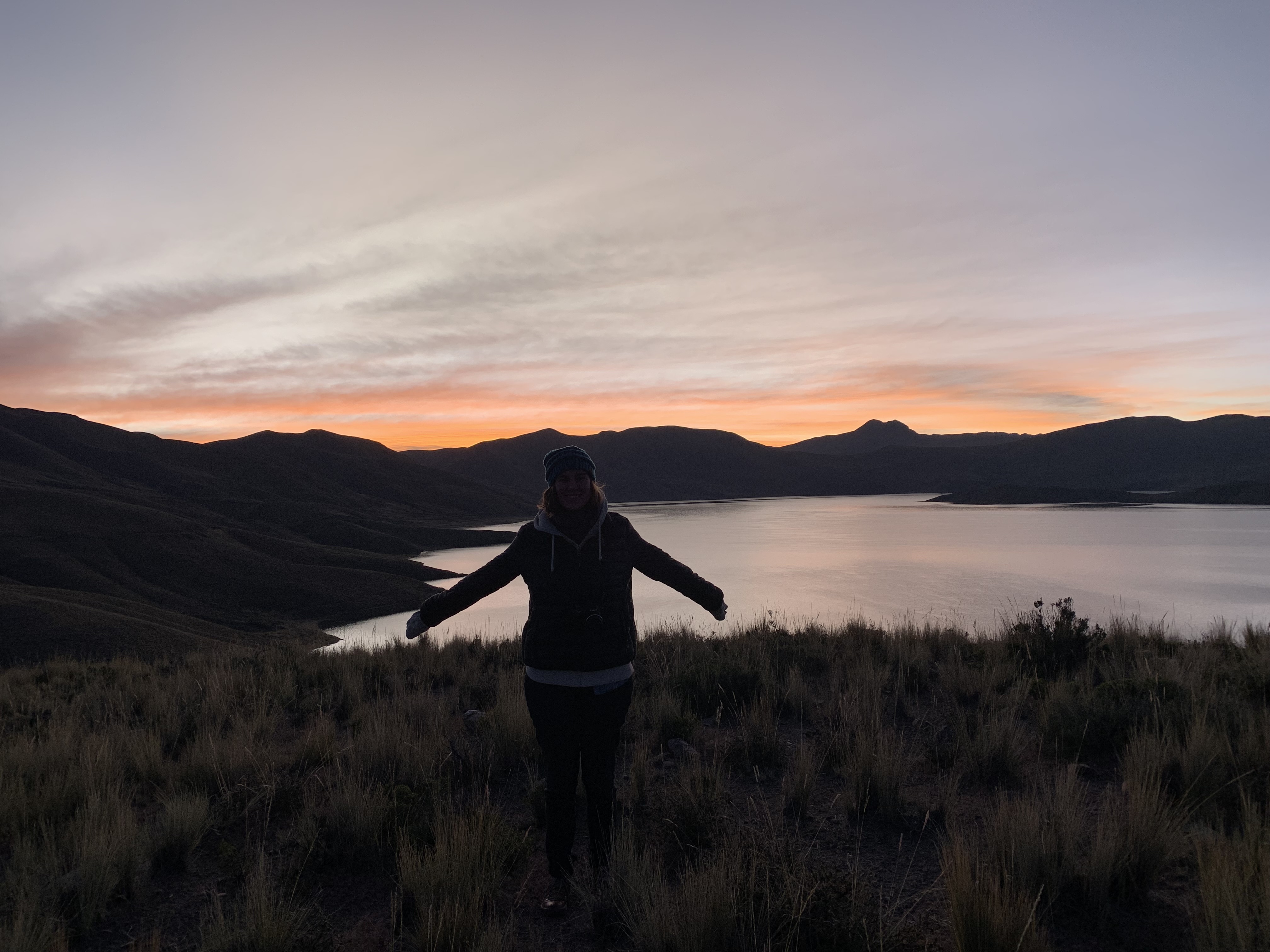
We had some time after the Uros Floating Islands to walk through the market on the pier before we took off to continue our journey. They have the cutest llama and alpaca soft fuzzy creatures! Then we took off to stop at Lake Saracocha for the overnight so a sunrise would await. I figured – NOT – as we had to hike at this high elevation more than 13,000′ and we still had caves to visit. Larkin made it up to the hill above the lake and our train with the few who did the hike and she took some good photos!
Larkin ended up having breakfast with Cenzo the Dad from Milano. His family, like me, snoozed longer but I did get up in time to see a little of the sunrise and then enjoy breakfast.
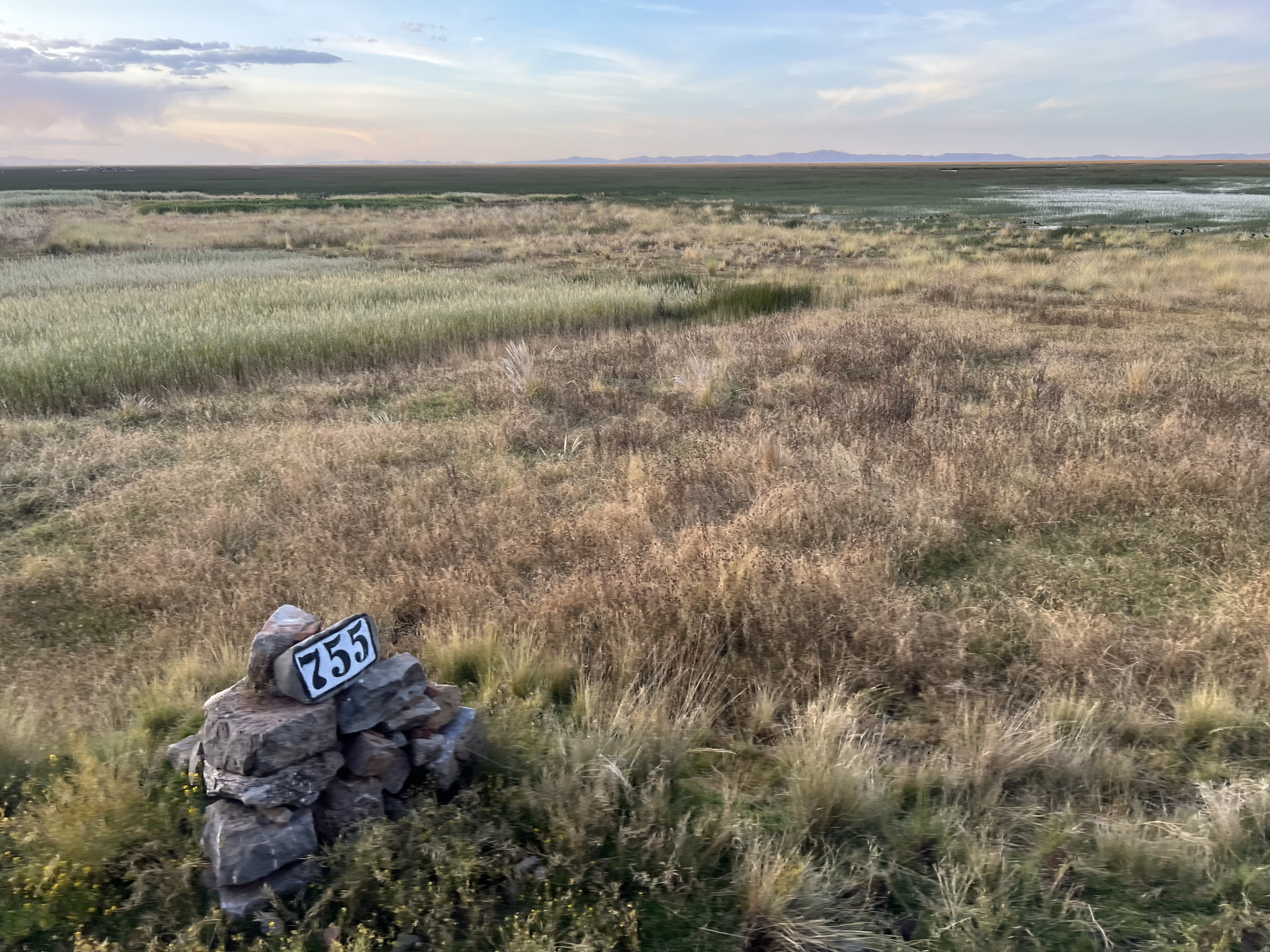
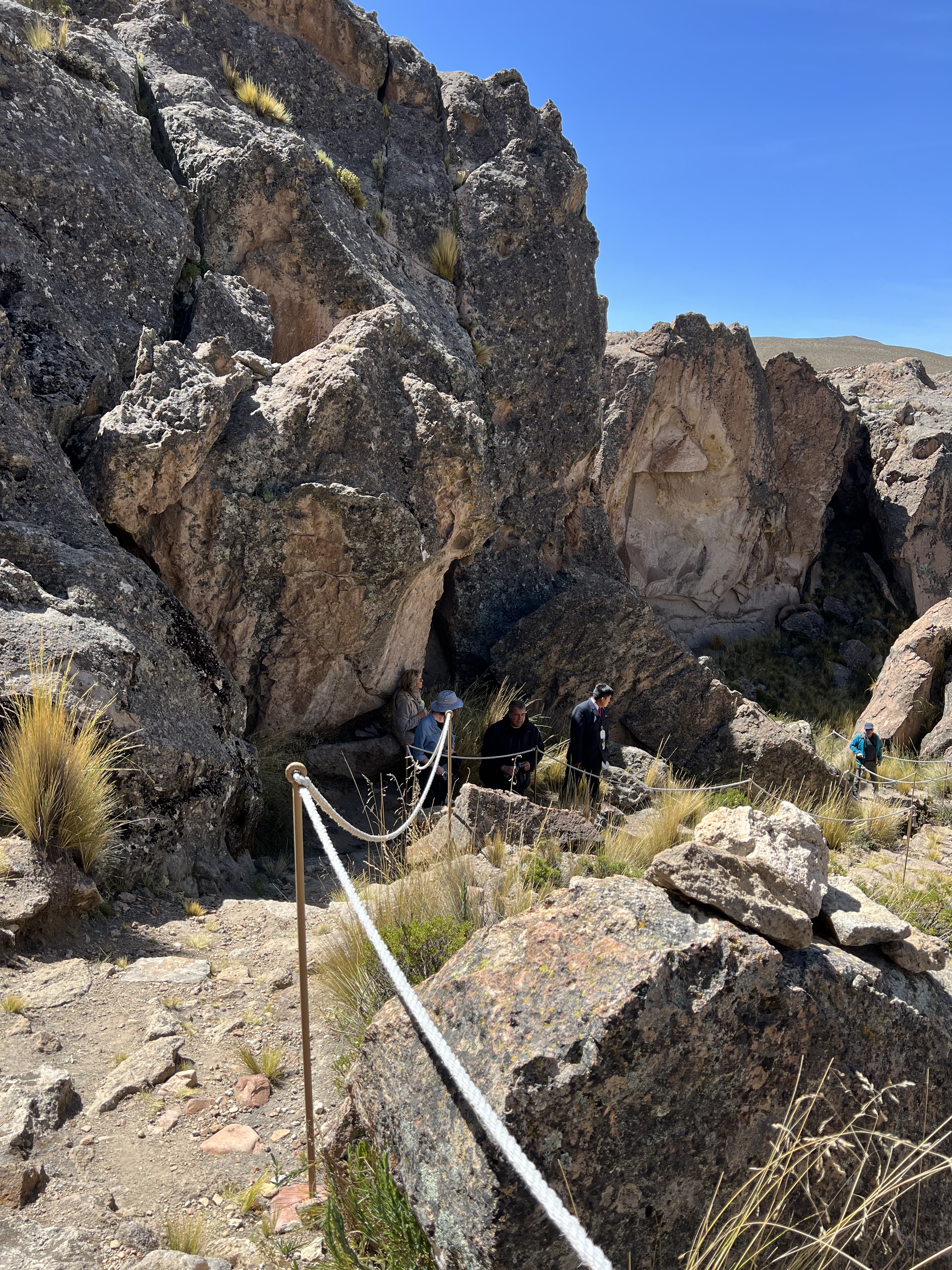
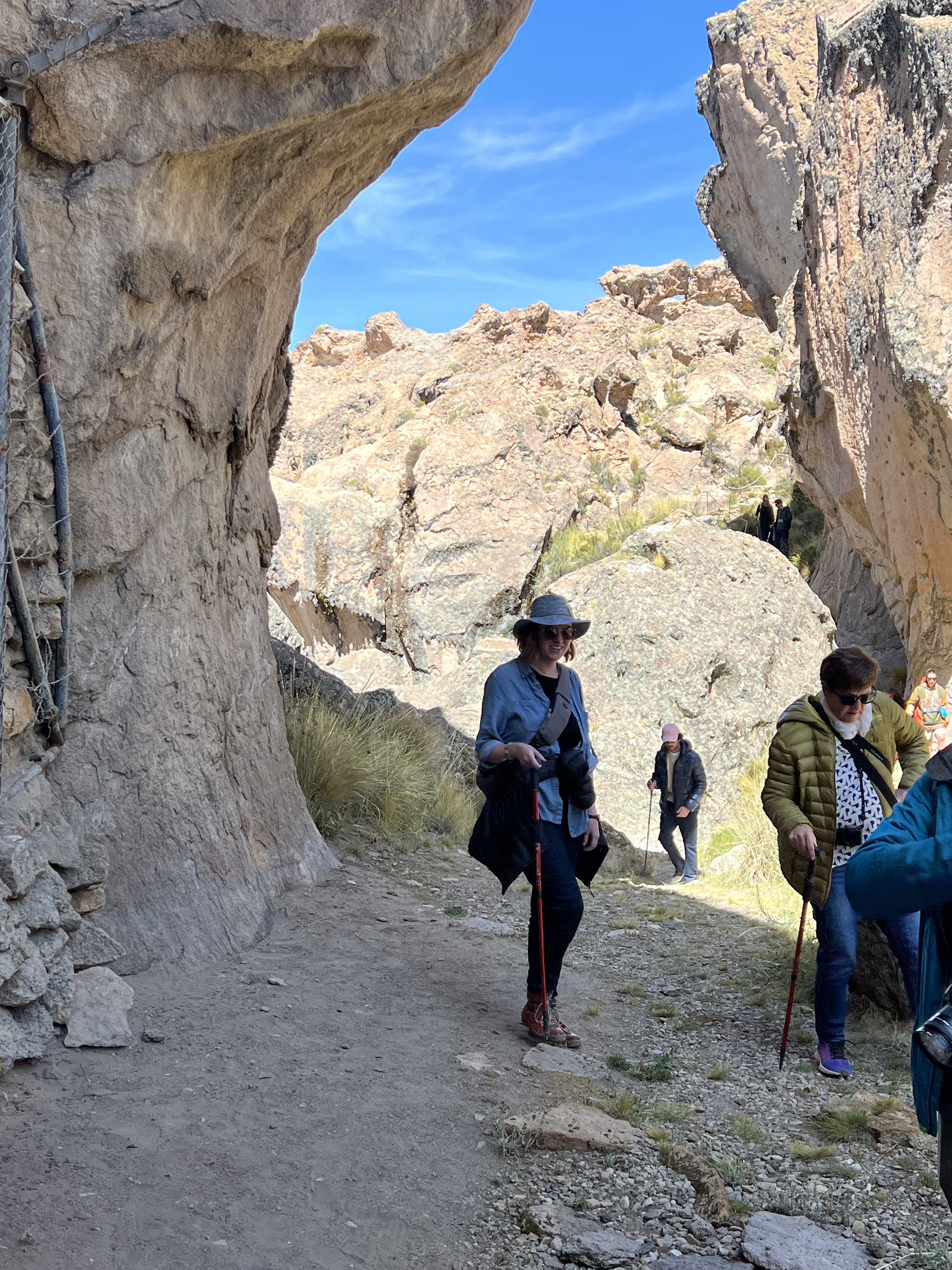
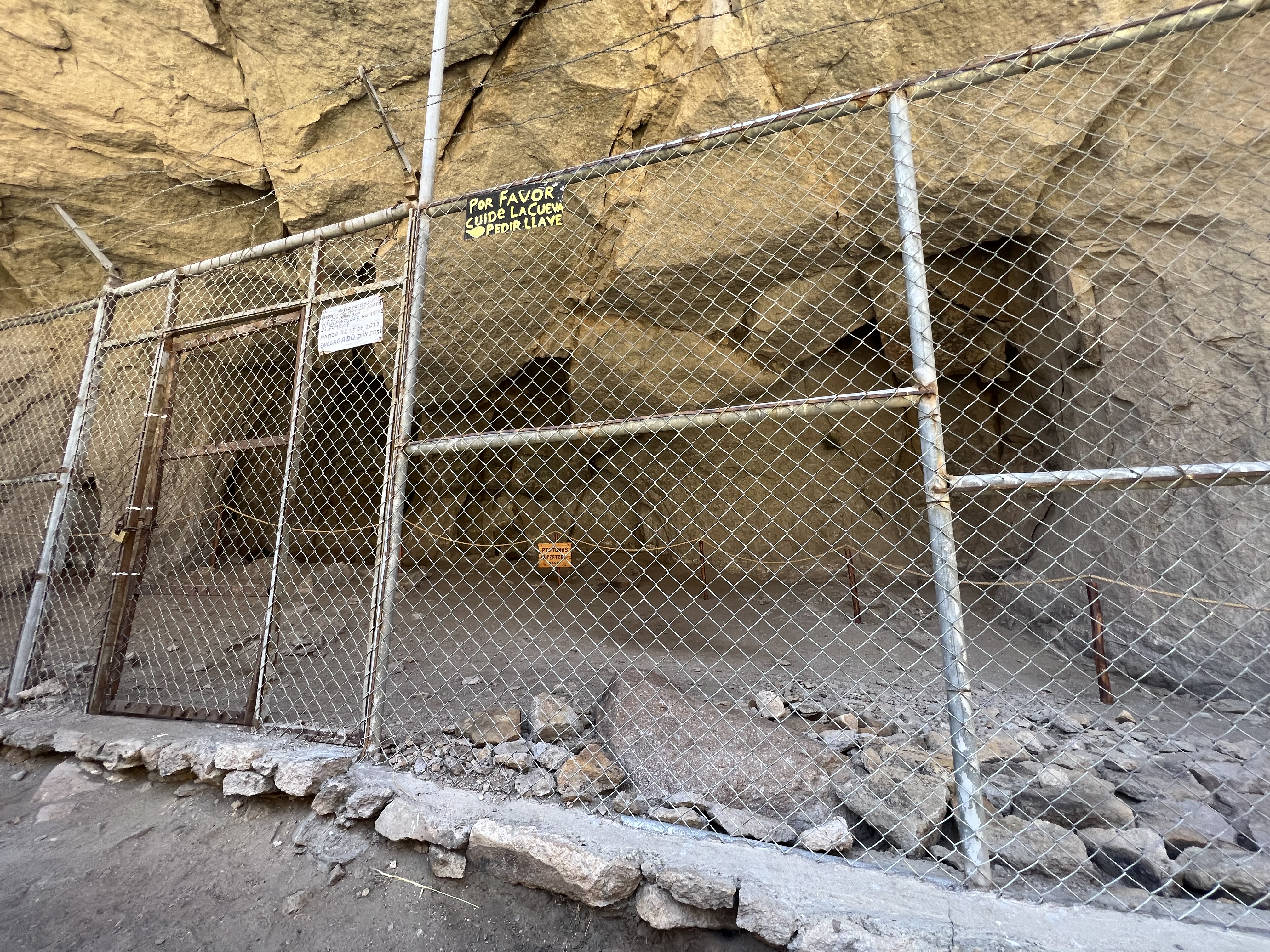
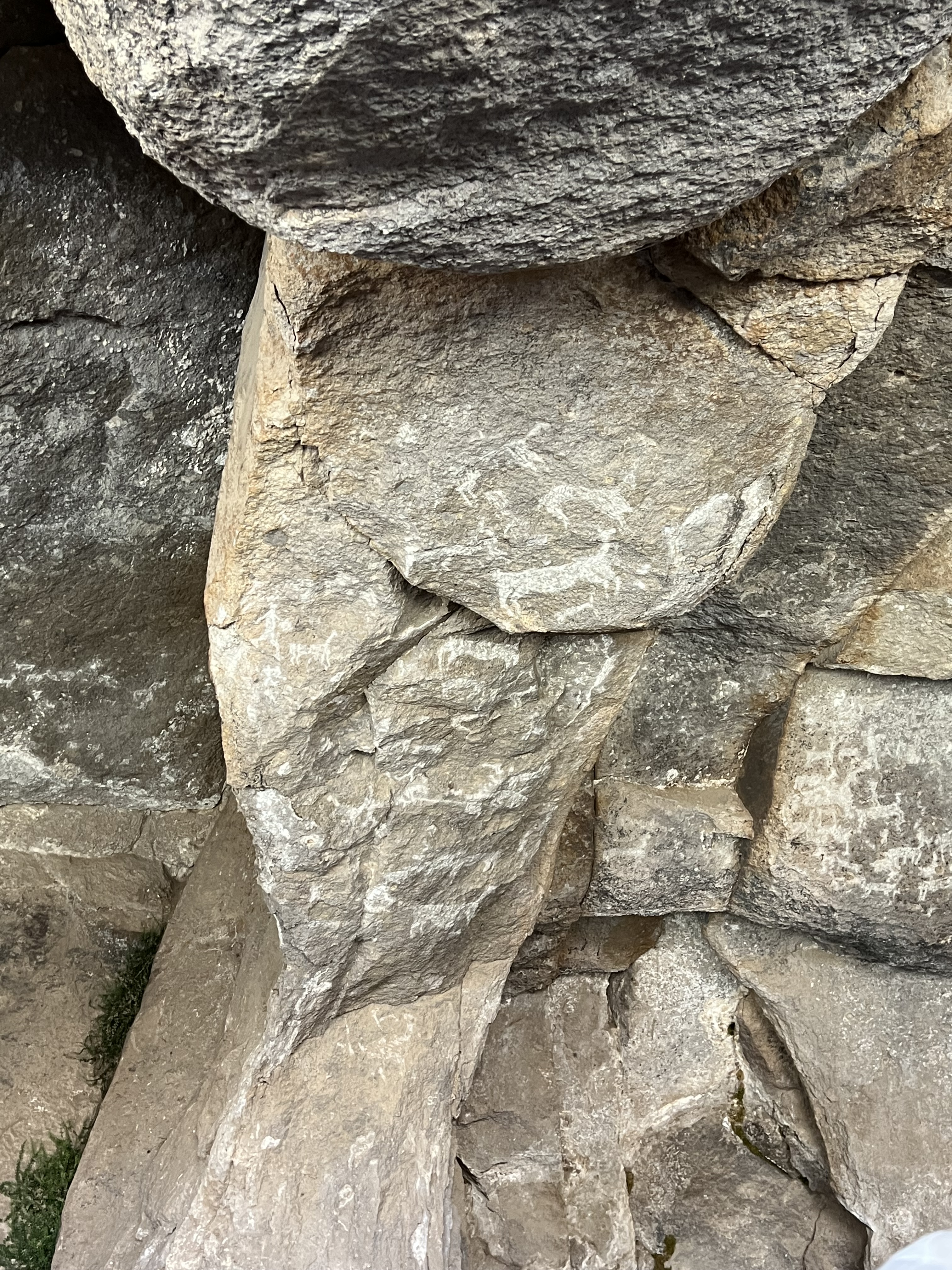
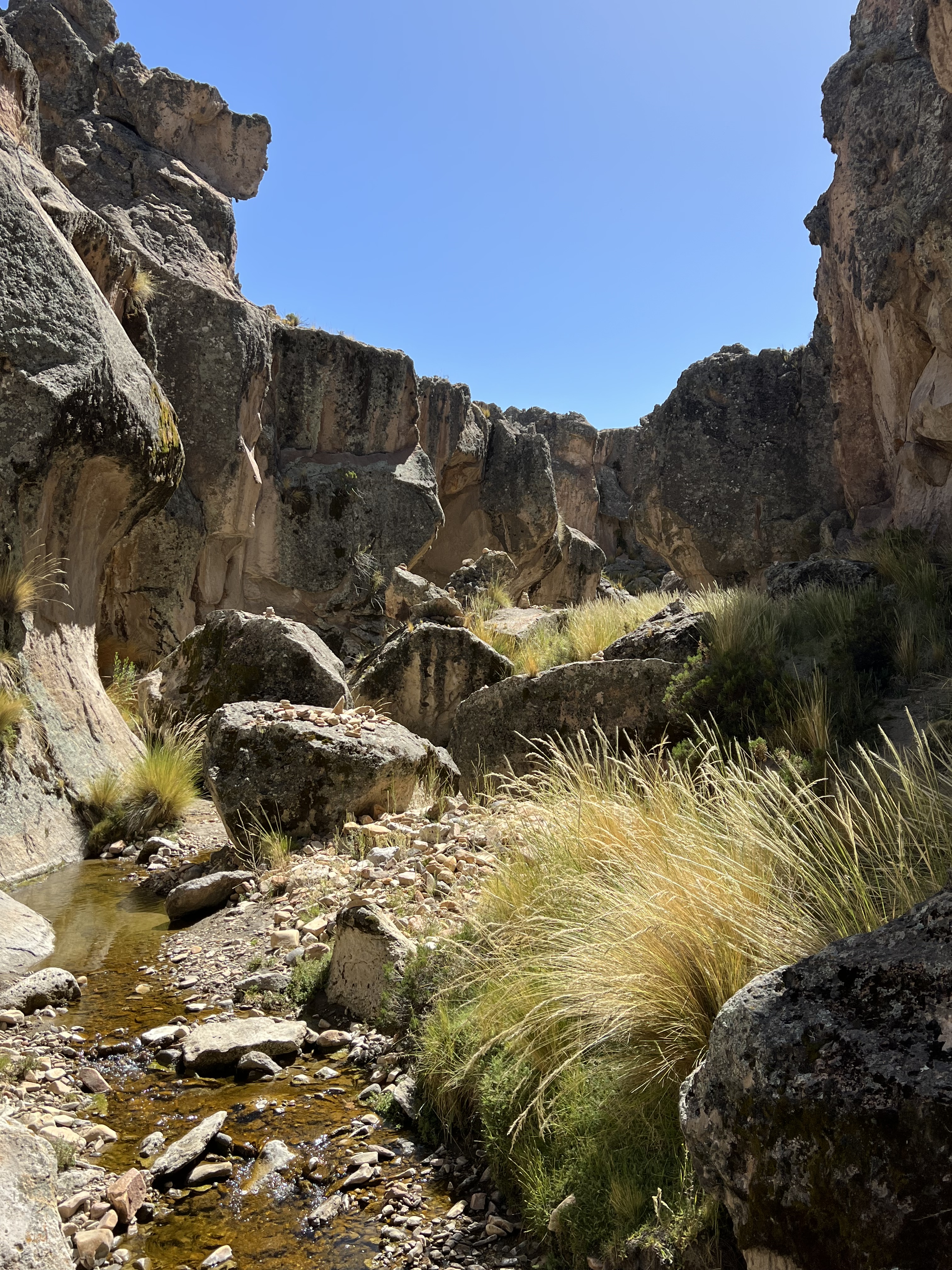
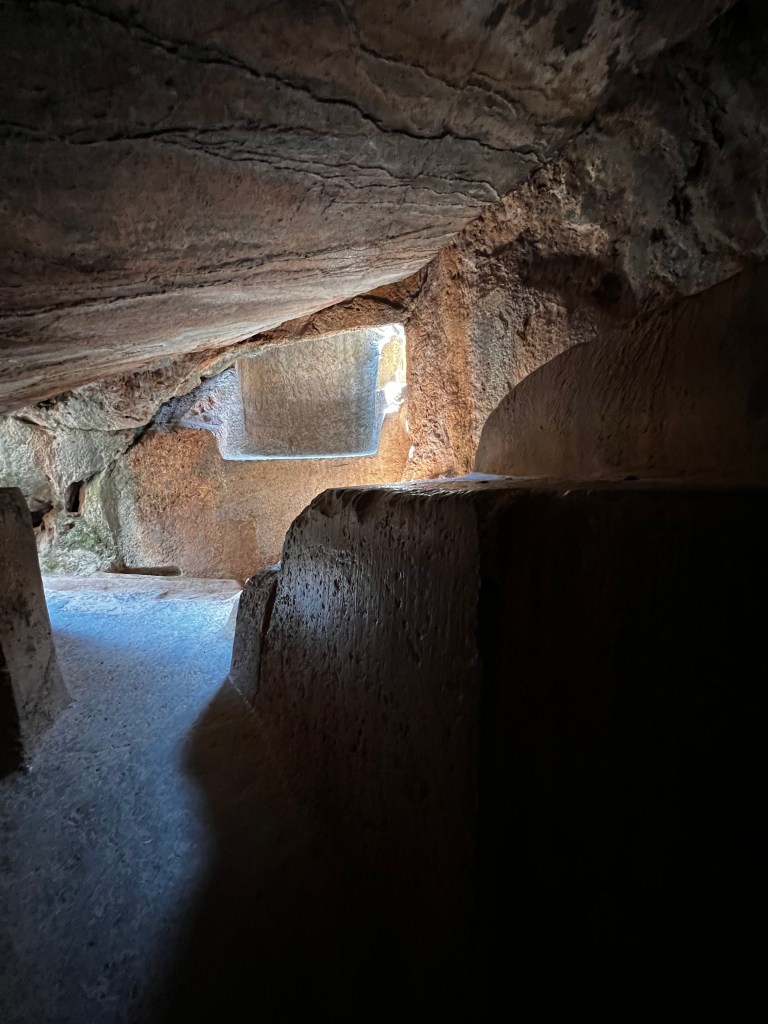
The train continued until we stopped at the Sumbay caves at marker 331. The caves are on the back slope of the Misti volcano at an altitude over 13, 500′. When the train stopped we slowly walked down as a group. Natives had met us to be able to hike down and we were also accompanied by dogs who like a pack had to fight as to who was boss. The Paleolithic cave has about 500 painted figures that can be viewed behind a chain link fence. Once again, the hike up and back was slow and deliberate seasoned with high consumption of water. The caves were discovered in 1968 and are now considered a Cultural Heritage of the Nation of Peru. The pictographs represent human figures, camelids, pumas and foxes. They were difficult to distinguish. The caves may also have been a religious center.
Next up a good portion of us exited to head to a Belmond property, Las Casitas in the Colca Canyon. The road into and out of the Sunbay Caves is not easy. It is not on many canned tours but is easily accessible from the train stop.
Previous guest before our train drew to a stop.
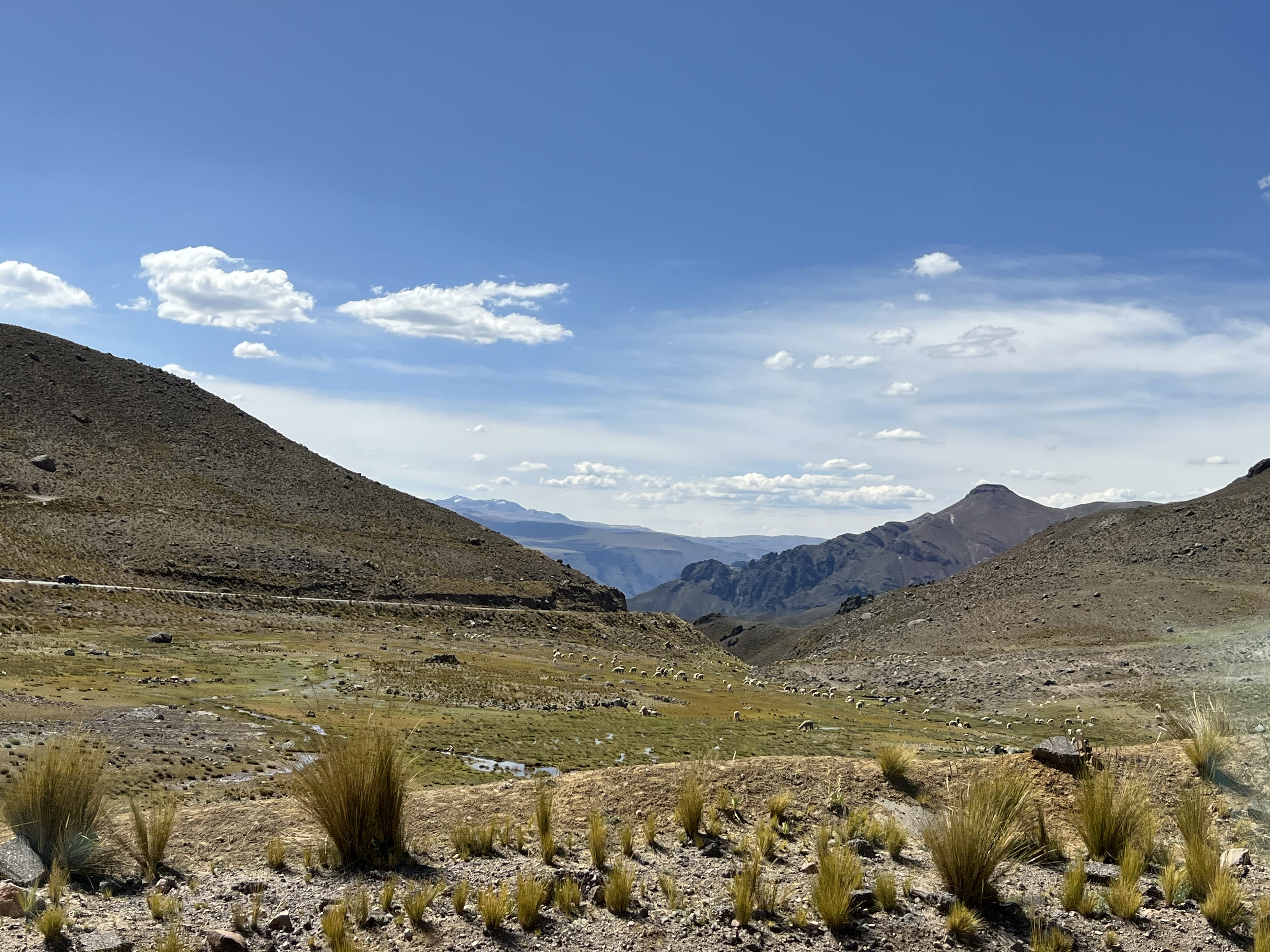
After we departed the train and gathered our luggage we met our individual guide and van. Our lady was Gaudy and we enjoyed her company too over the next two days. We were happy to finally get one of Belmond’s promised massages and I must admit our lady was spectacular. A great way to end the day. I often try to take a screen shot of where we were. It looks like the middle of nowhere…with no trees at this altitude to be seen.
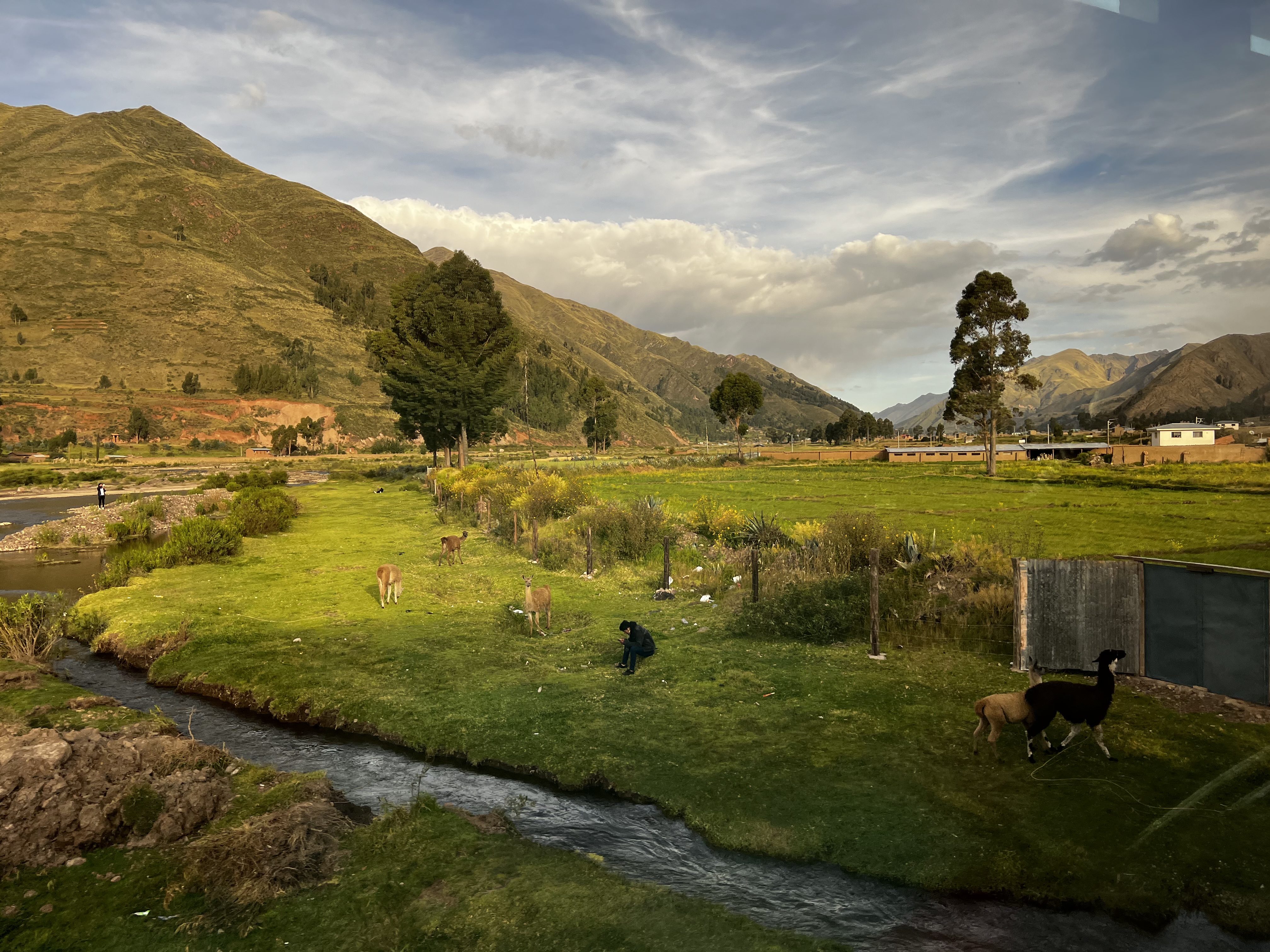
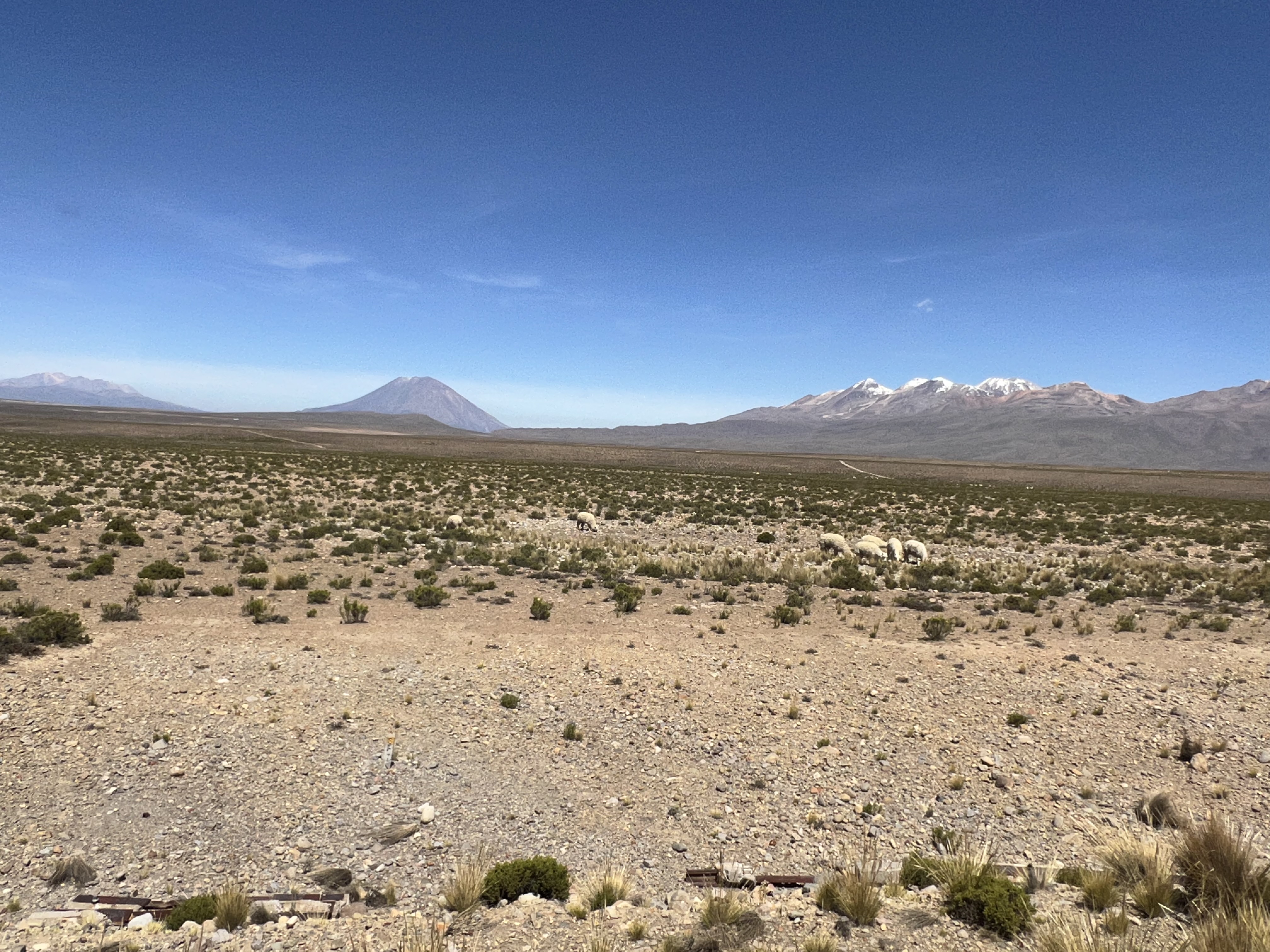
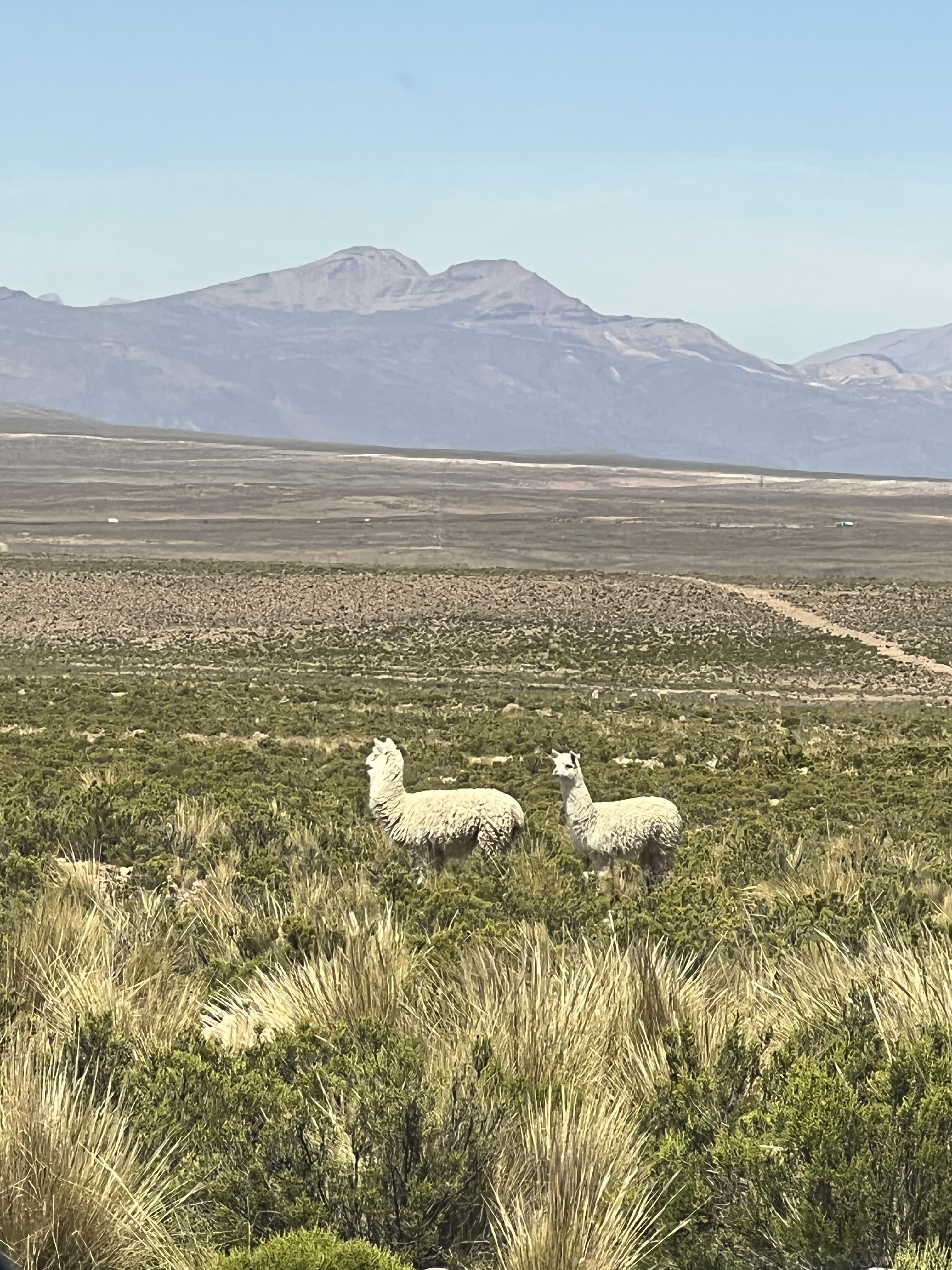
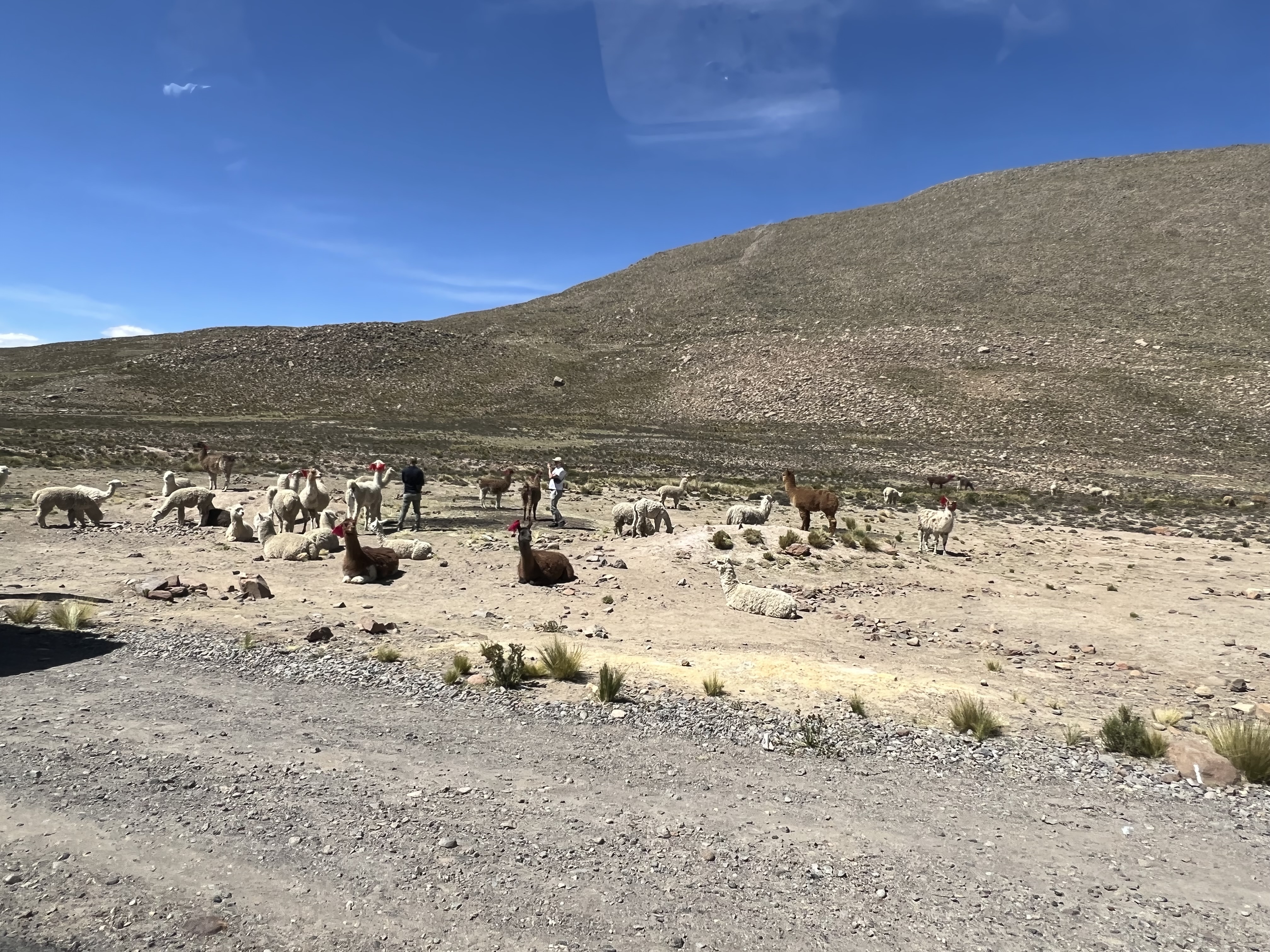
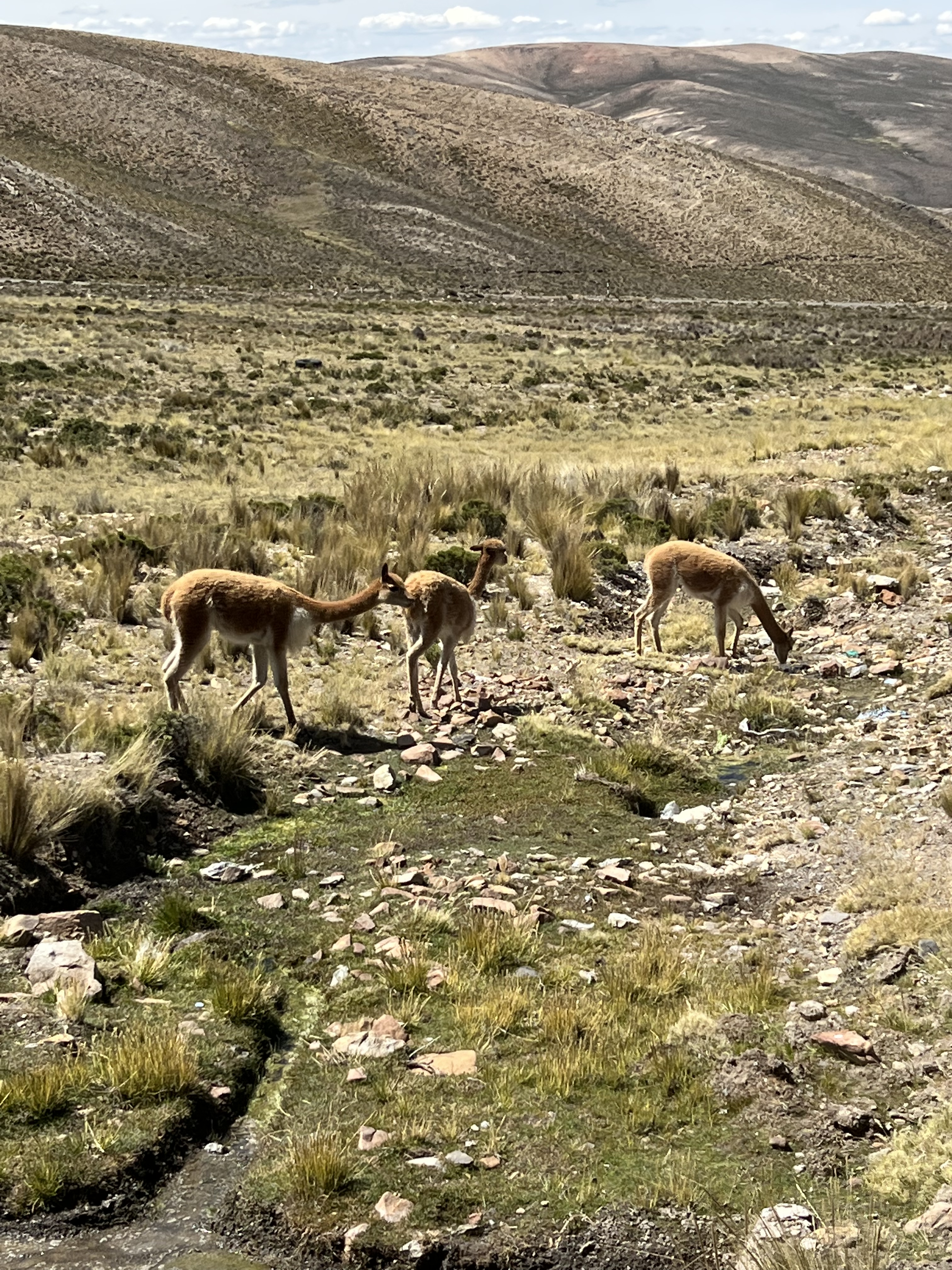
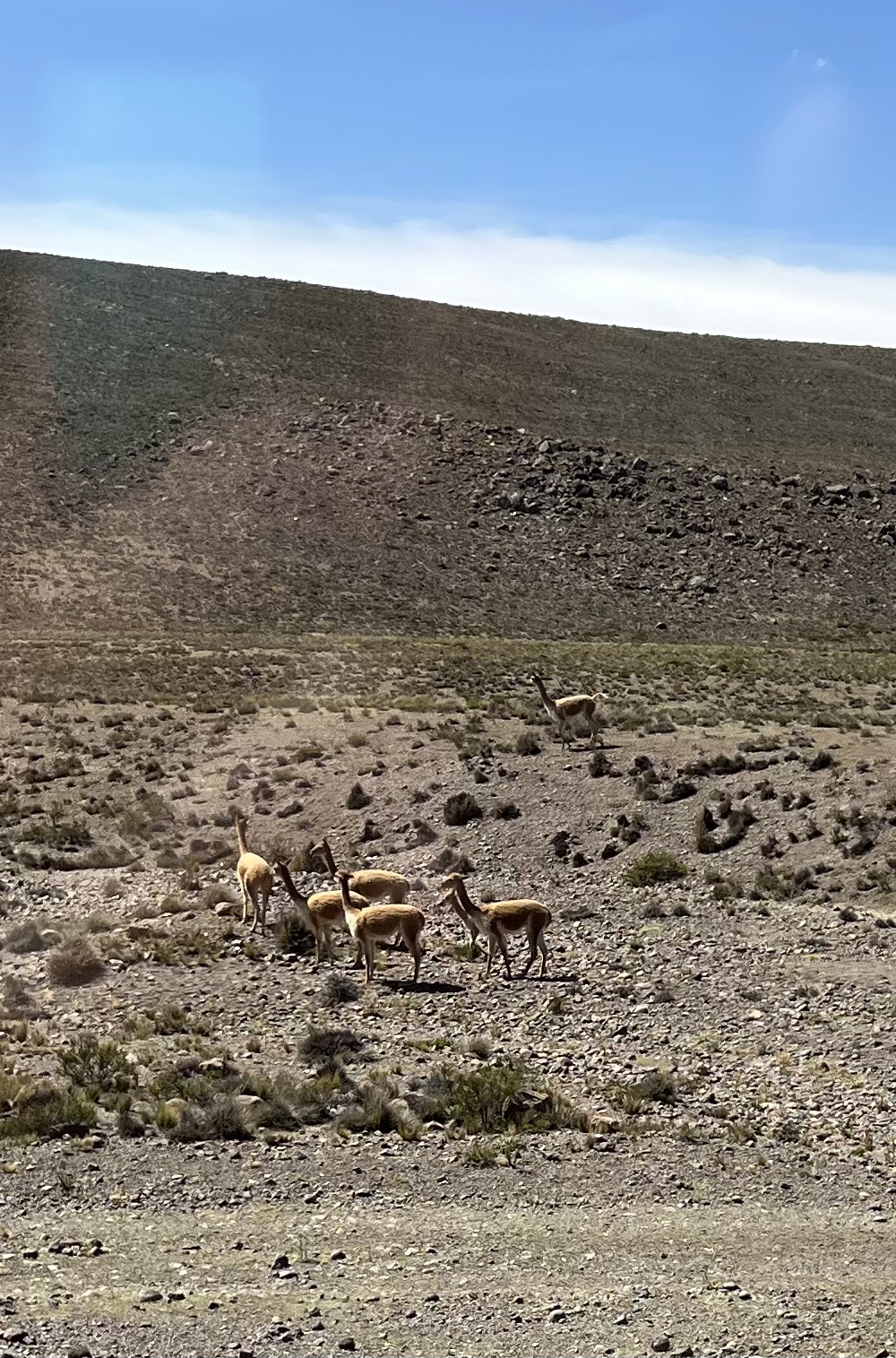
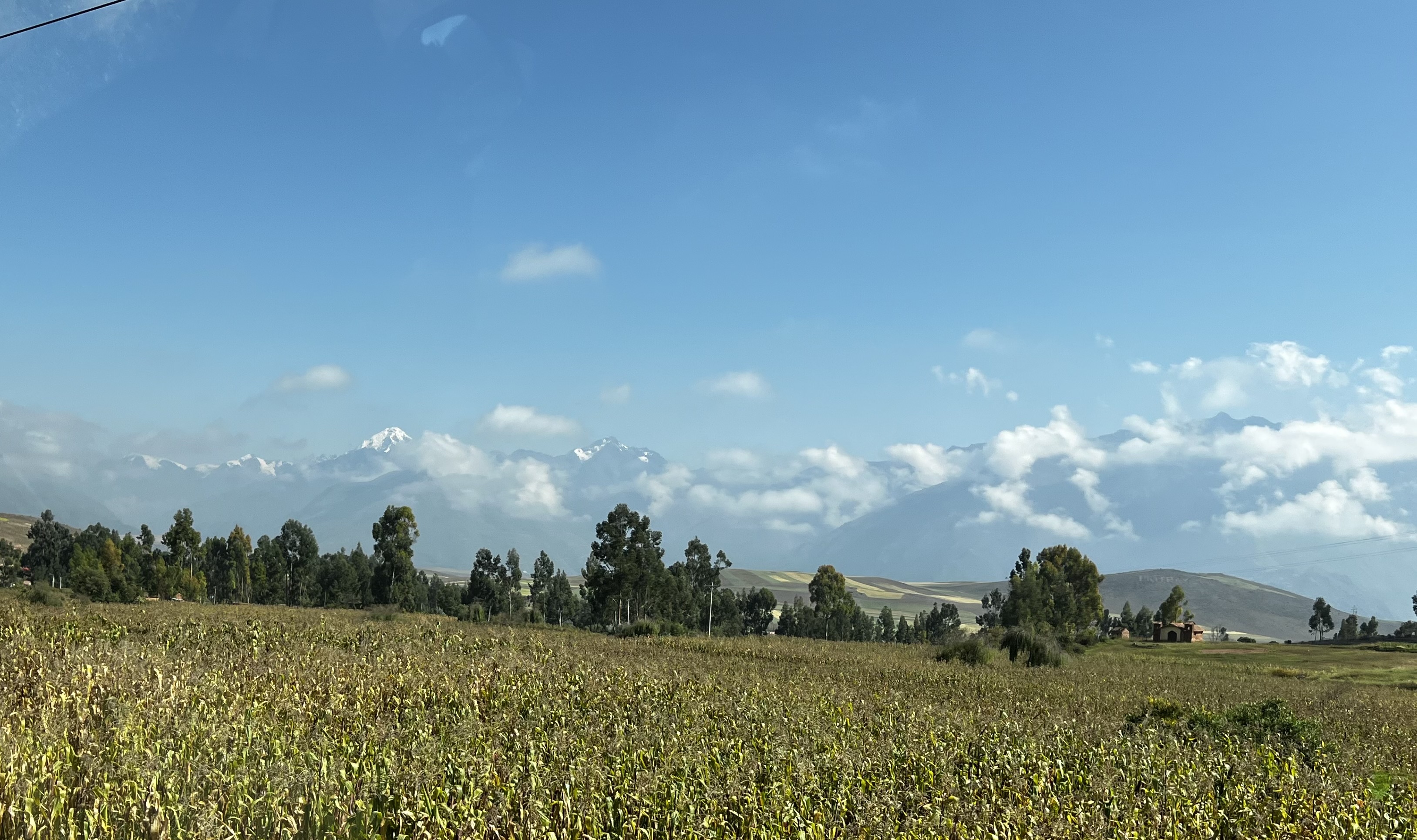
One does really feel on top of the world as one descends into the Colca Valley. The high plains had all the camelids that the local tribes raise for their valuable fiber. Vicuna’s are the softest and smallest camelid and a highly protected animal. They only live in these mountainous regions at altitudes between 12,000 and 16, 000′. They produce small amounts of extremely fine wool and it is very expensive because the animal can only be shorn every three year and has to be caught from the wild. It is now the national animal of Peru and appears on the Peruvian coat of arms.
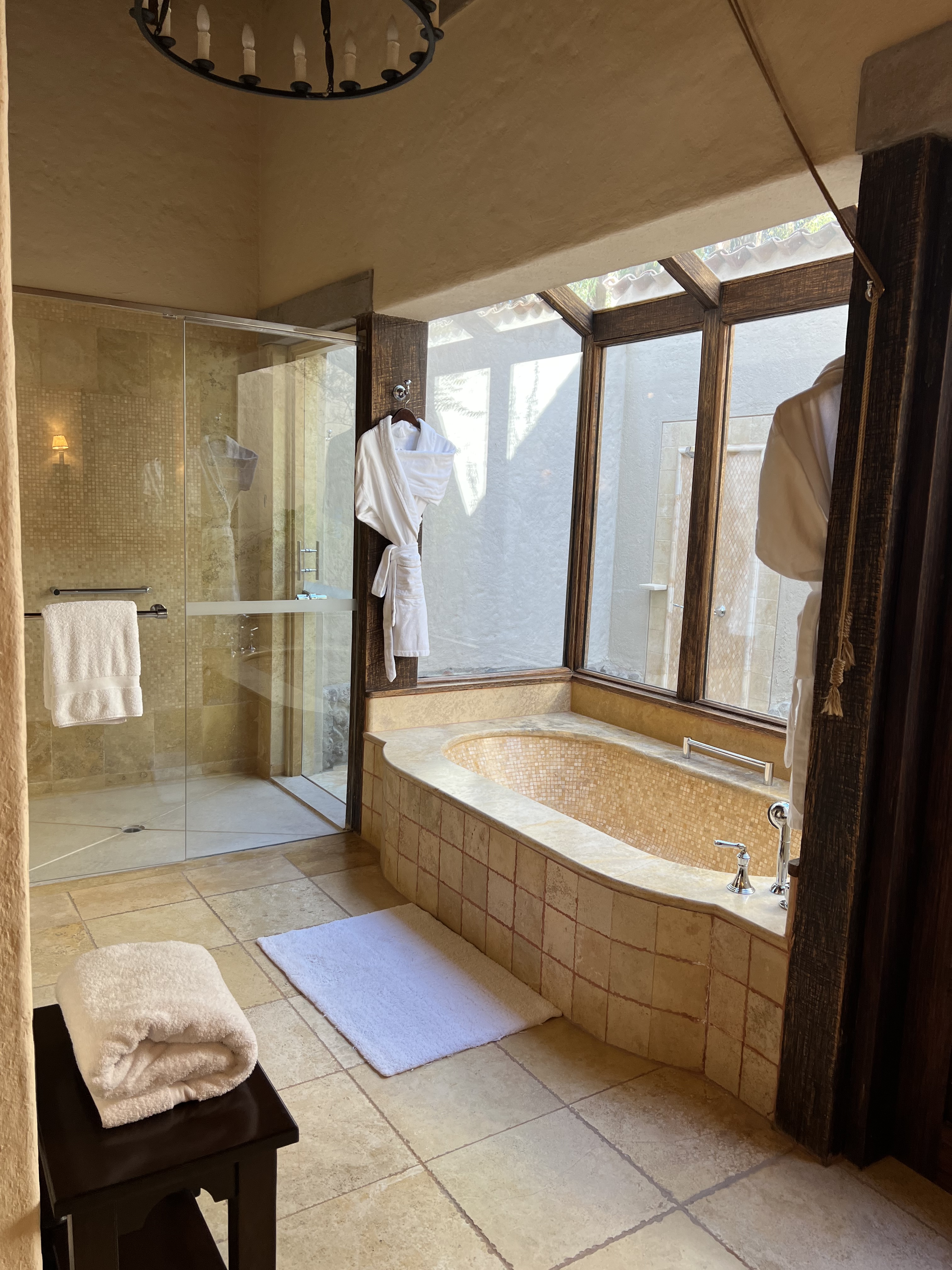
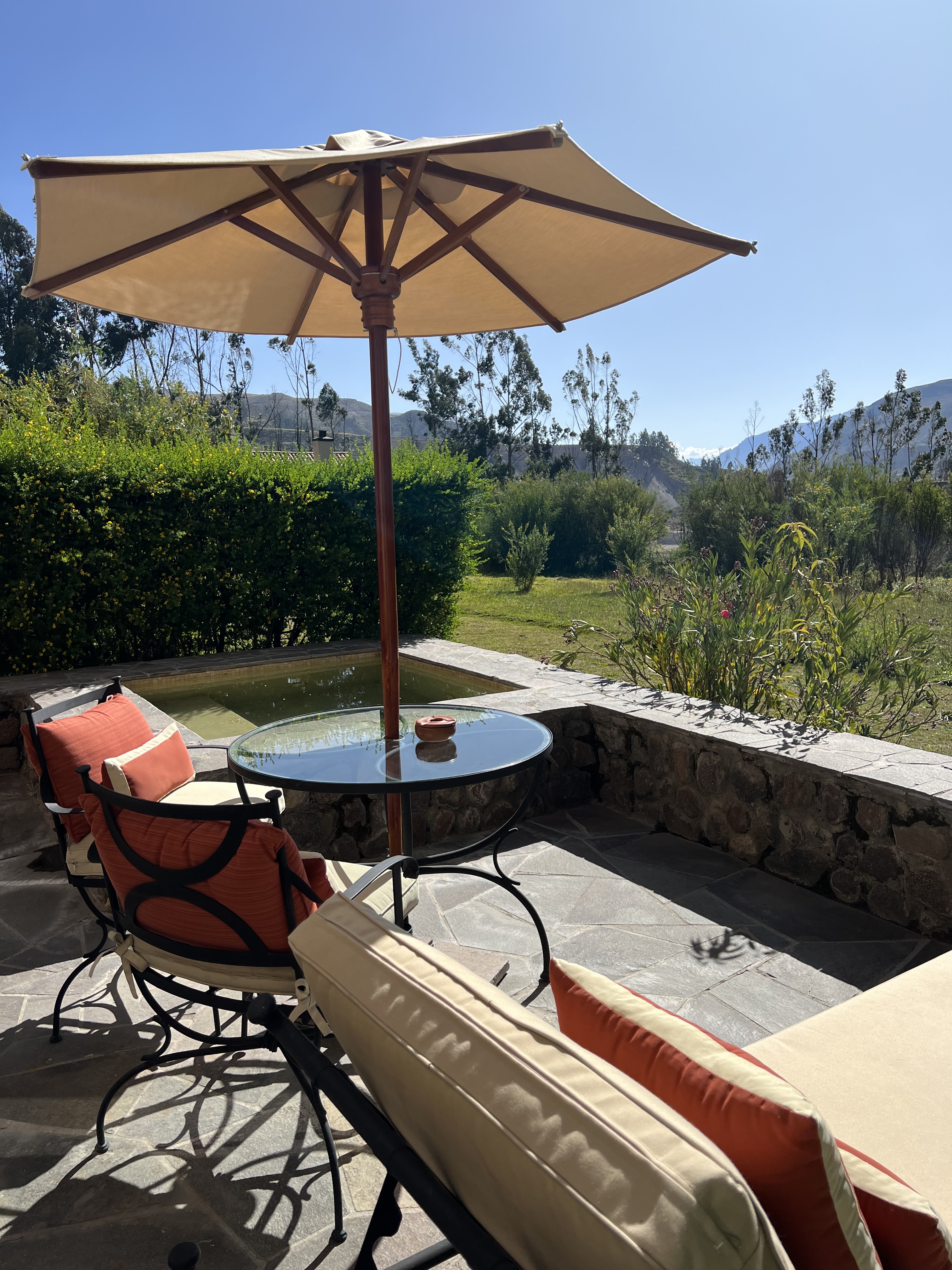
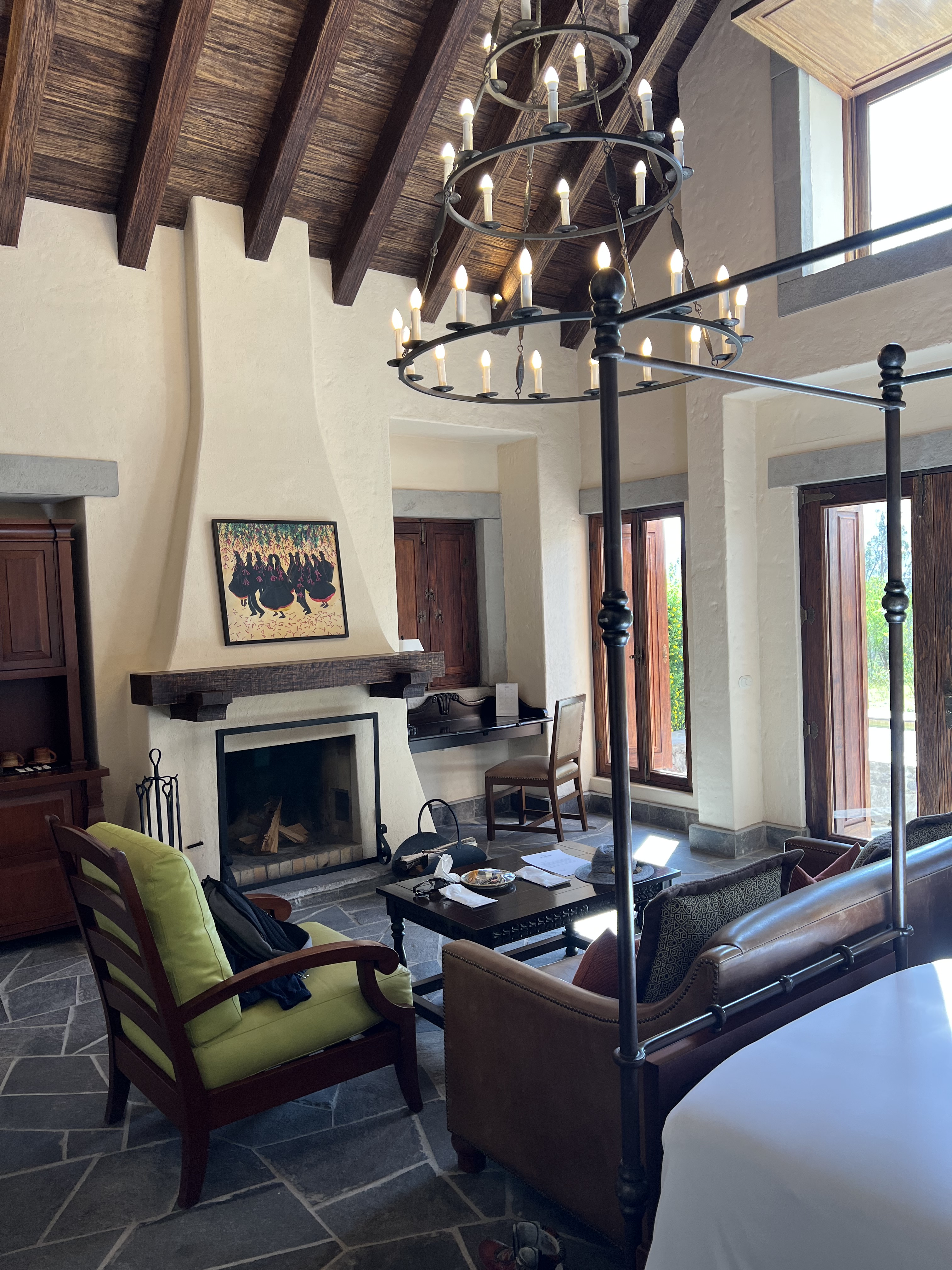
Our hotel room had its own sitting area with our two twin beds. We could waltz in the bathroom it was so huge. We both took turns taking baths in the tile tub. No major water shortage there!
Our next journey – into the Colca Canyon and the flight of the Condors!
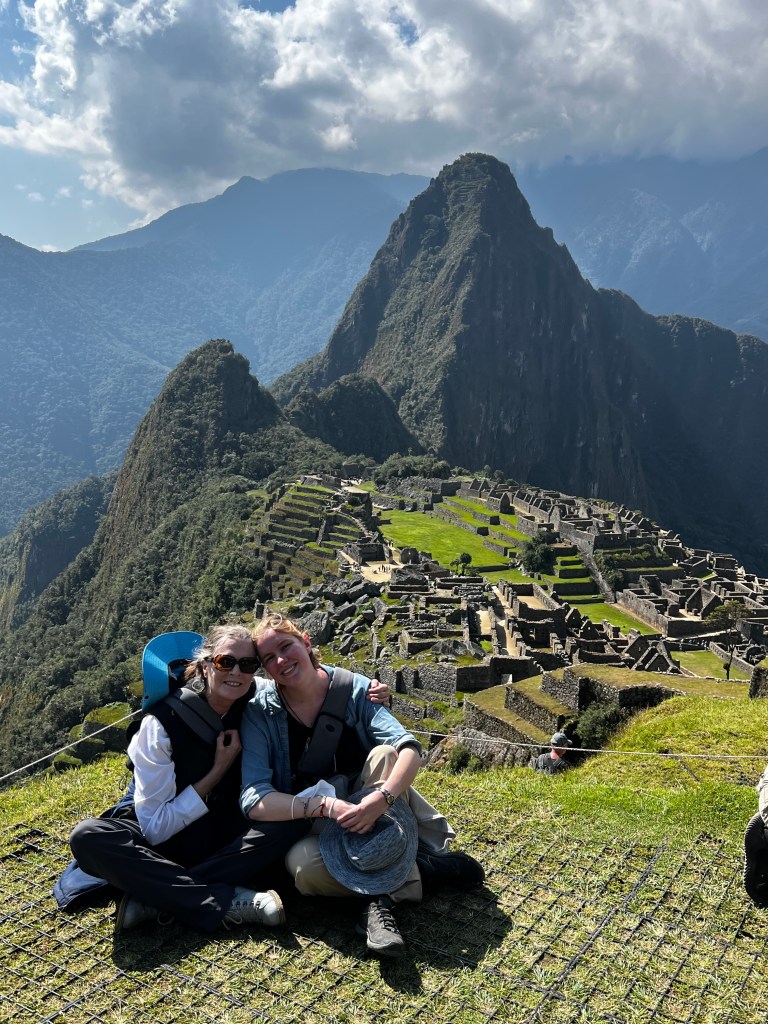
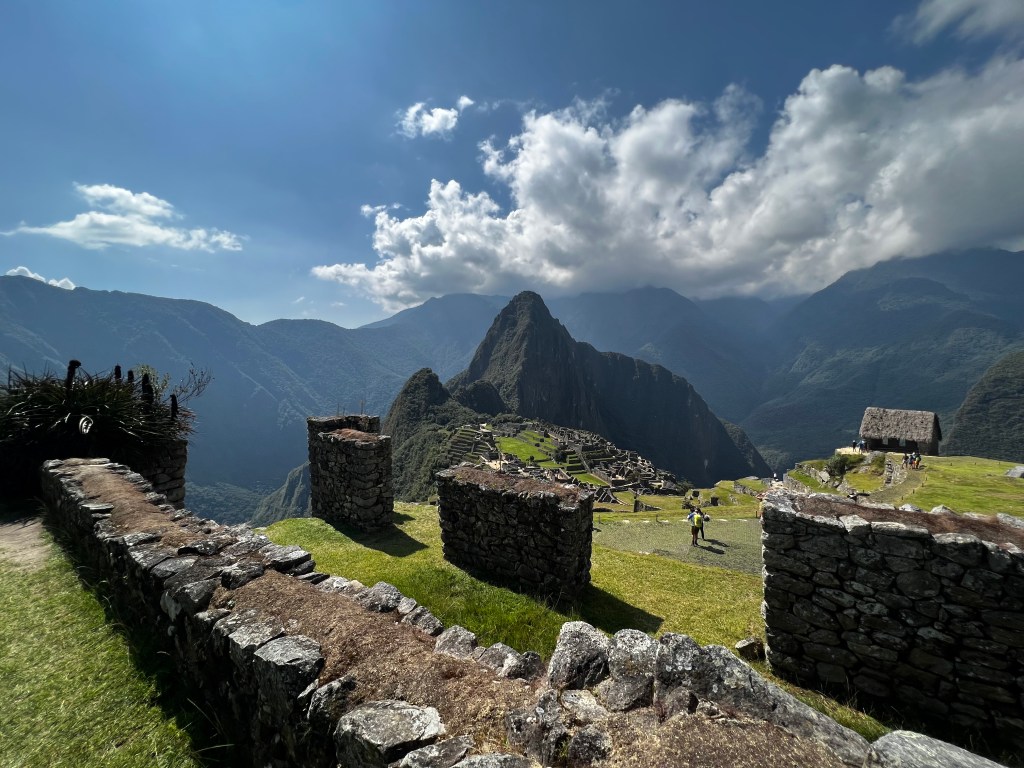
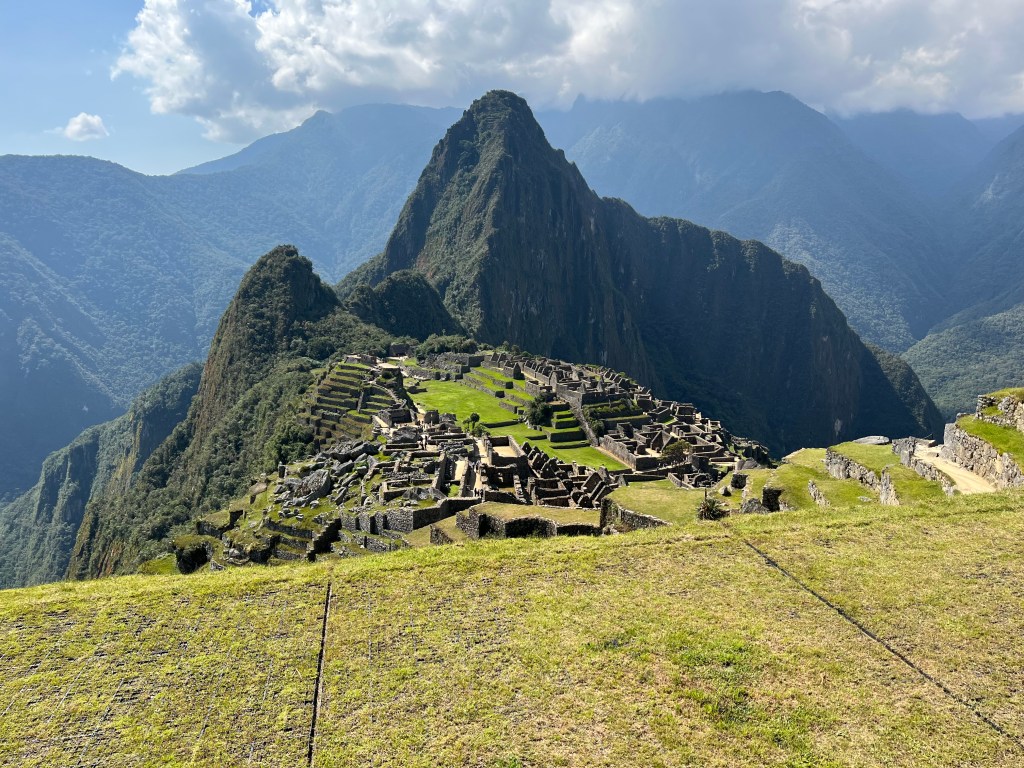
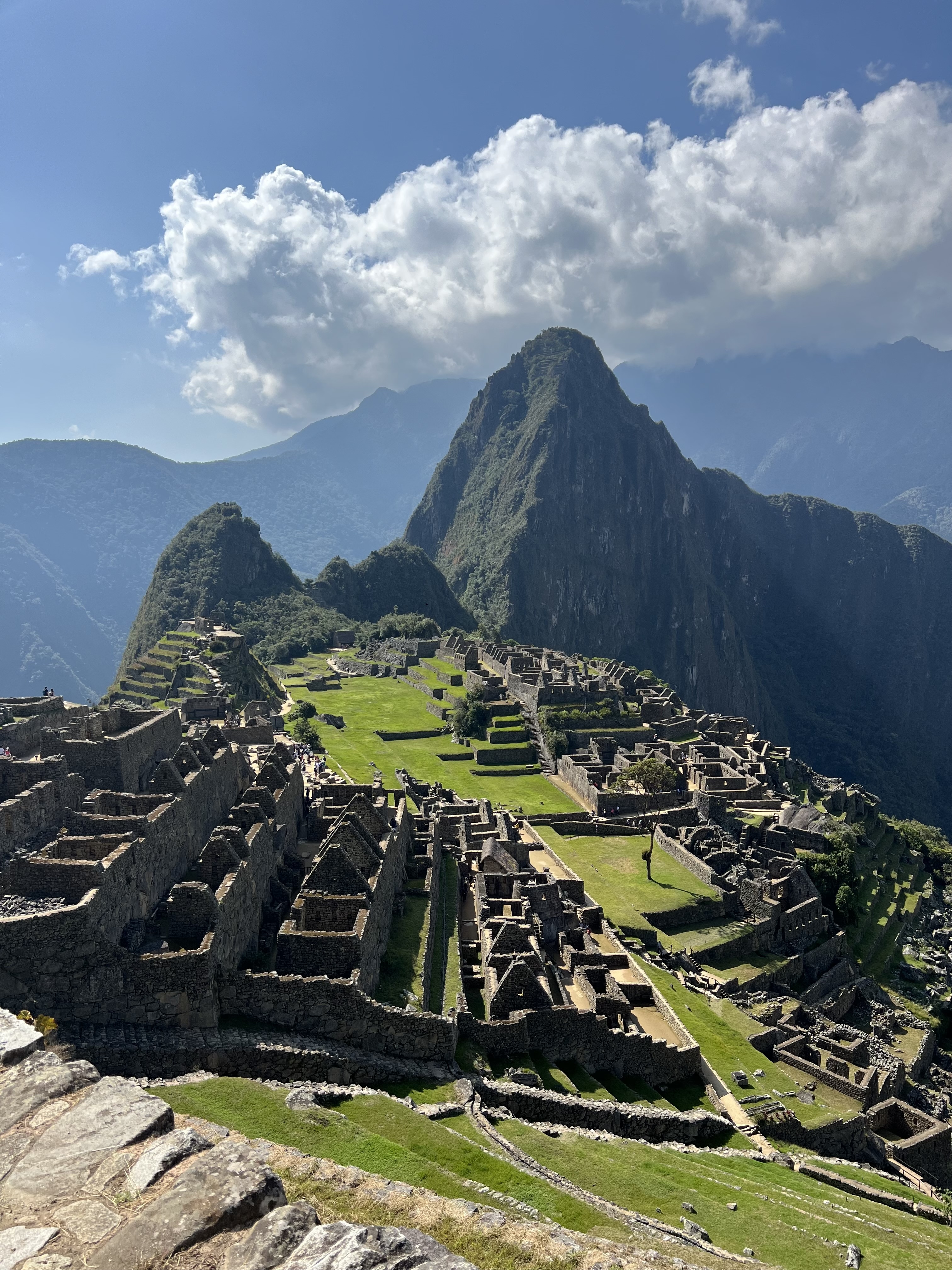
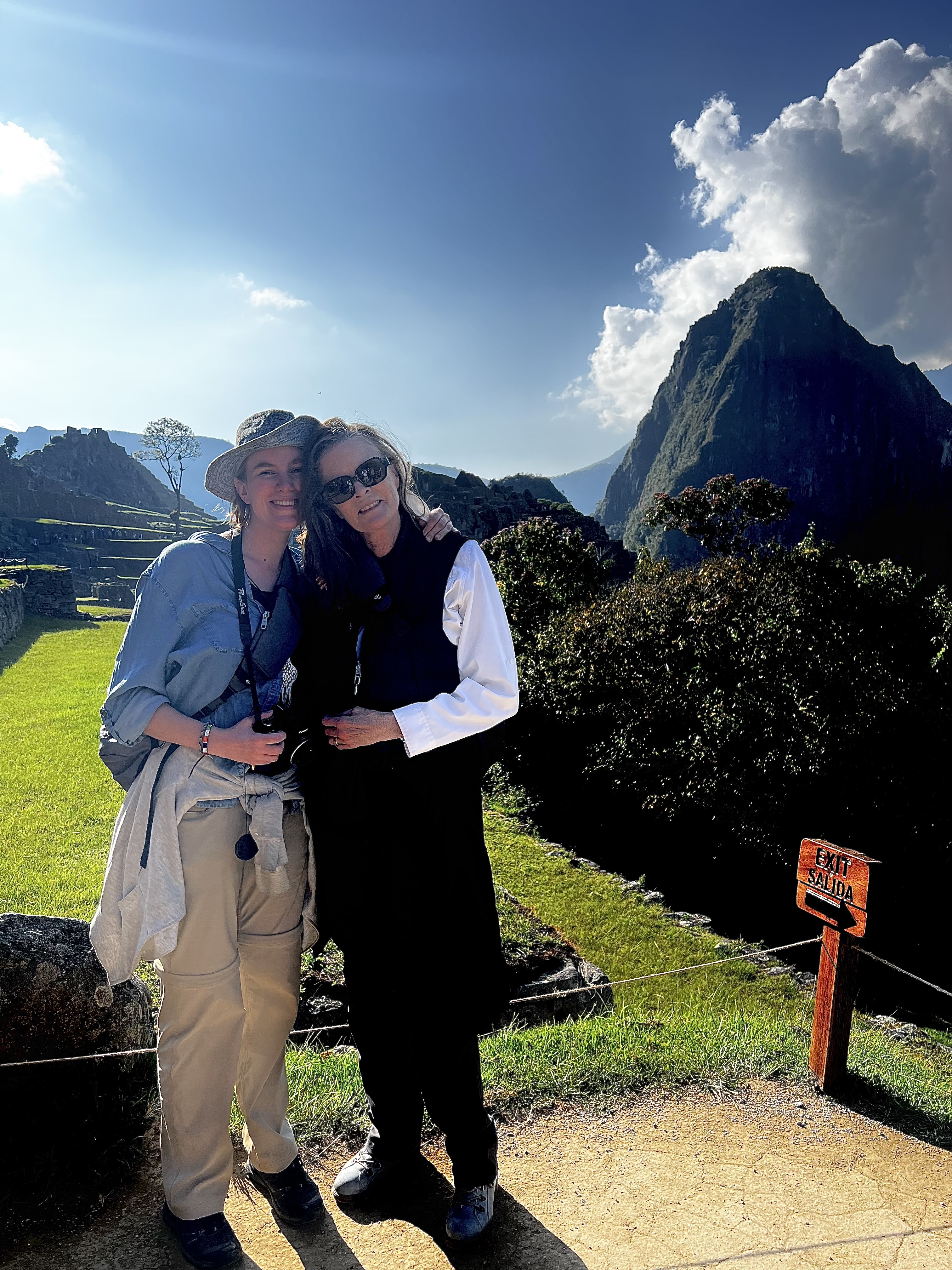
My heart still stops when I see this photo. It felt that incredible when we first saw Machu Picchu, but we had to get there!
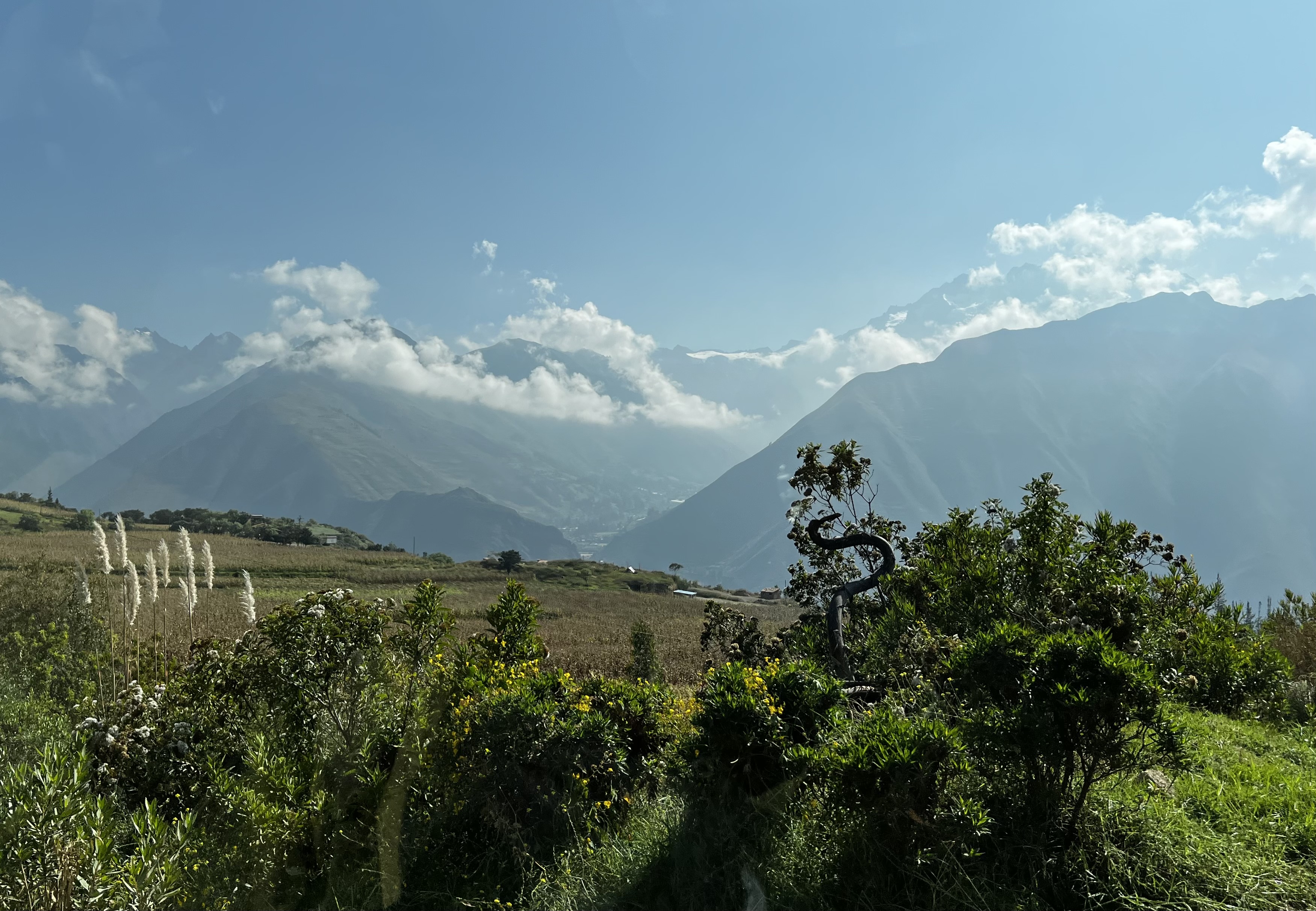
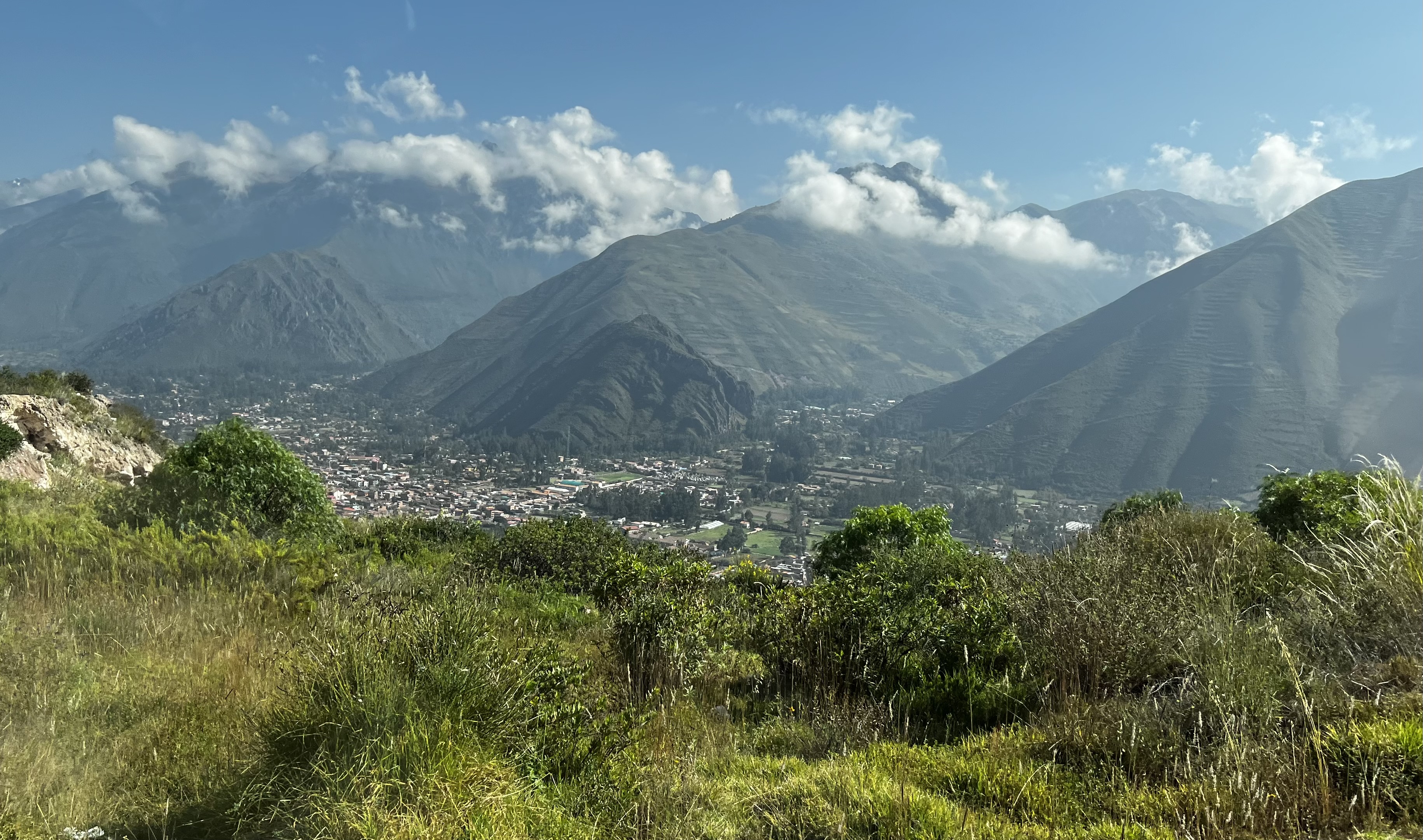
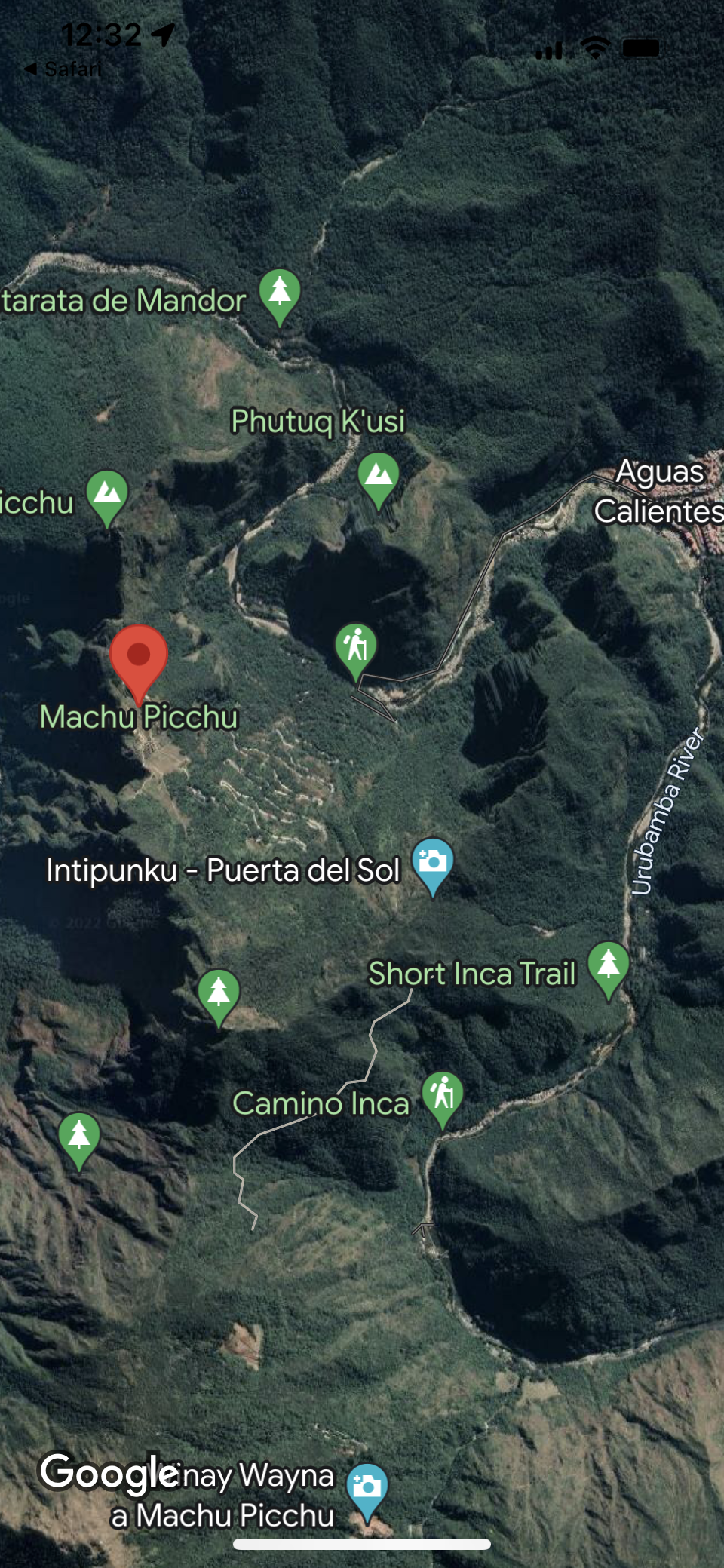
The drive over the Andes to Rio Sagrado railway stop in Urubamba located in the Sacred Valley was stunning. These photo’s below don’t even begin to capture the beauty of the countryside – and the people. It took my breath away. Peru is currently building a new airport at the top of the hill in Chinchero to bring tourist into the area. 2025 looks to be the completion date. It is about 1,000′ higher than Cusco and the airport will help to accommodate more tourists. The problem with Machu Picchu like the Antarctic or the Galapagos is they are over loved so there are many restrictions – which there should be! We could have hiked up the Inca trail and come in the Intipunku or Puerta del Sol (basically the sun gate) – ha ha ha or take the Hiram Bingham Train which ends in Agua Caliente. Train -our travel choice.
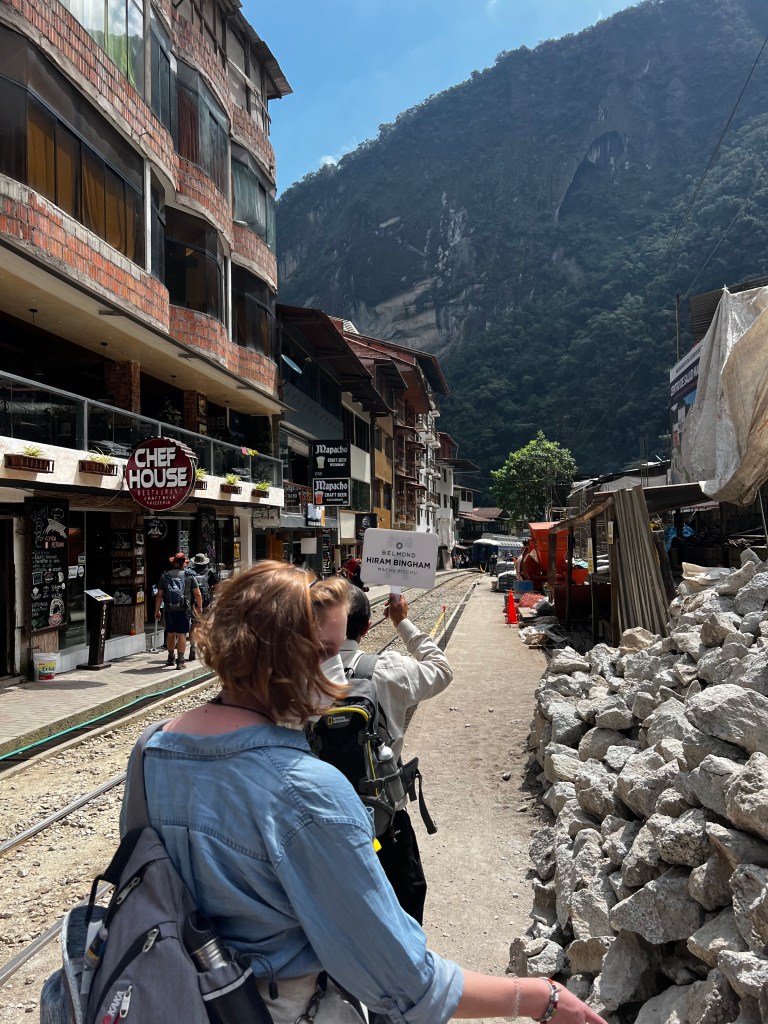
When we arrived at Rio Sagrado all the folks who missed the train the day before and those who were scheduled for the same day boarded the train. They had added a few cars to be able to accommodate everyone. We had a leisurely ride up to Agua Caliente at the base of Machu Picchu. The scenery changed from a more arid high mountain to a tropical mountain with more greenery and more trees. The Urubamba River runs to the Atlantic Ocean and it is down river to get to Agua Caliente. Since we couldn’t stay we were able to leave our luggage and return to our same room at Palacio Nazarenas in Cusco.
Waiting for the Hiram Bingham train to fill up!
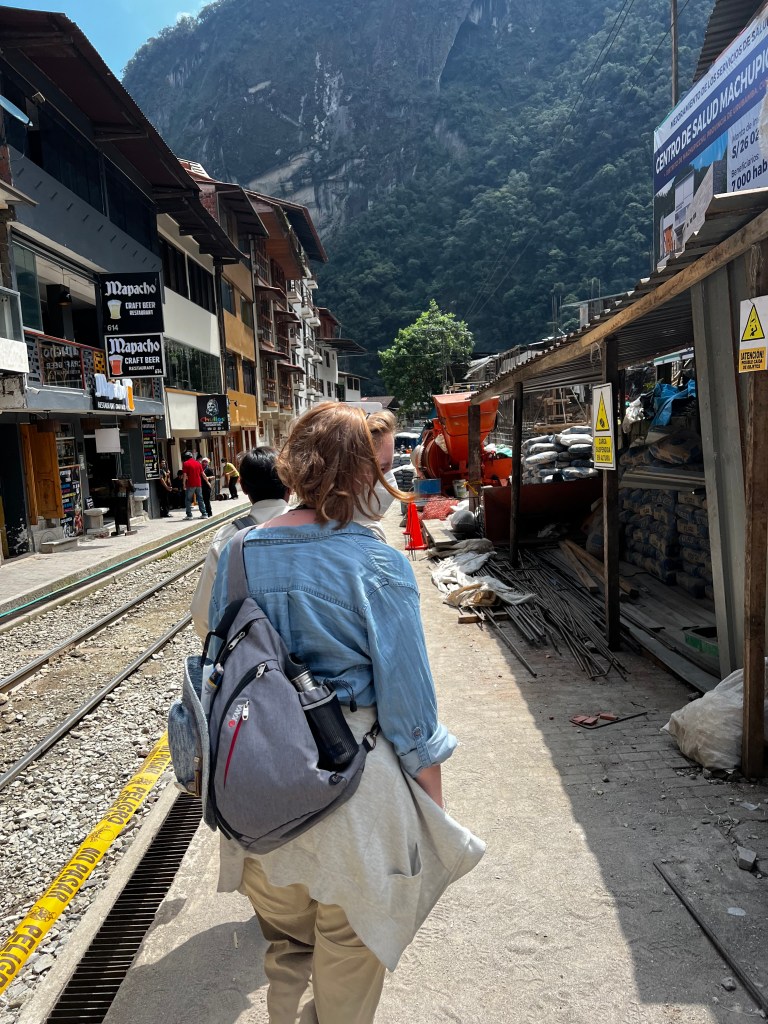
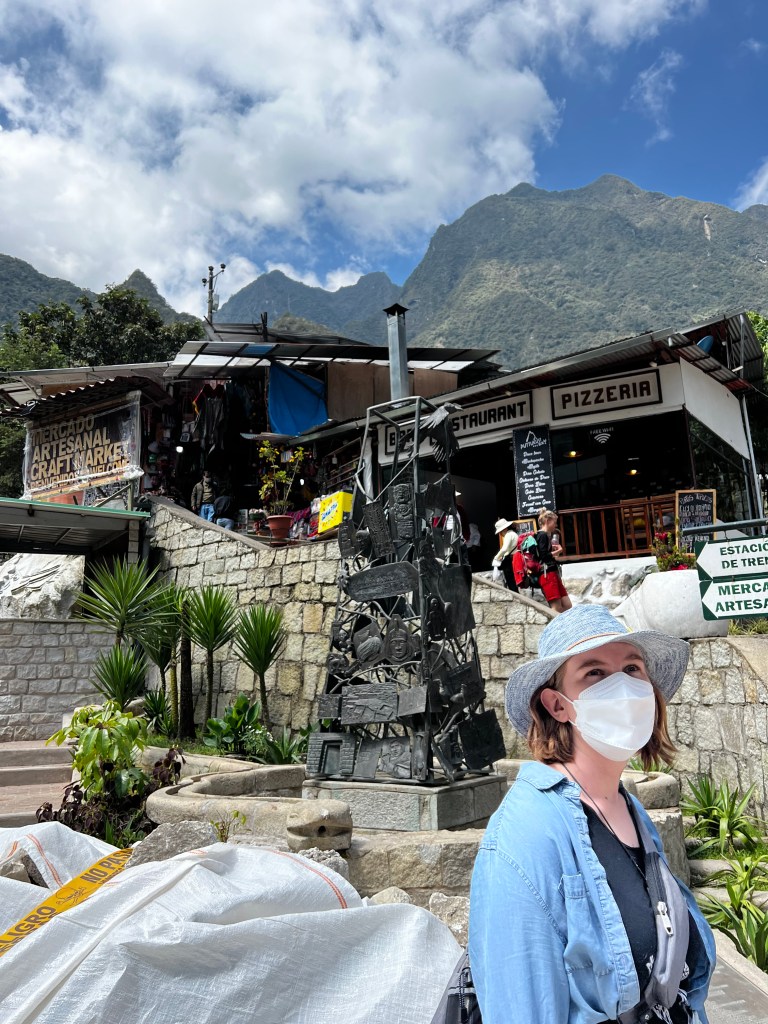
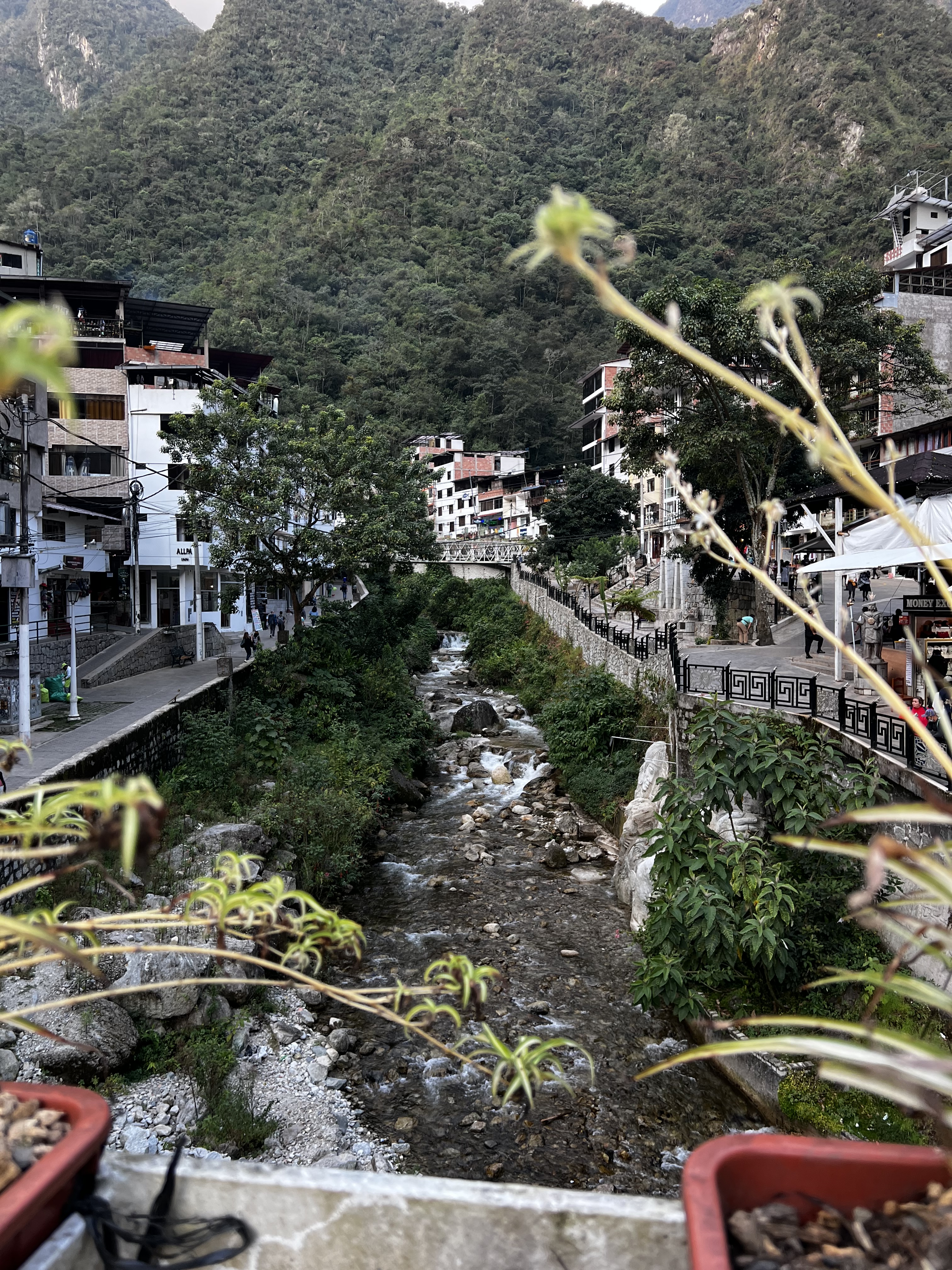
Agua Caliente via Hiram BinghamFrom the Train to the bus!The market and shops in the town
The Andes are so close to the Pacific Ocean that within a short distance from Lima, up in the mountains, all the water ruins into the Amazon River basin and out to the Atlantic Ocean.
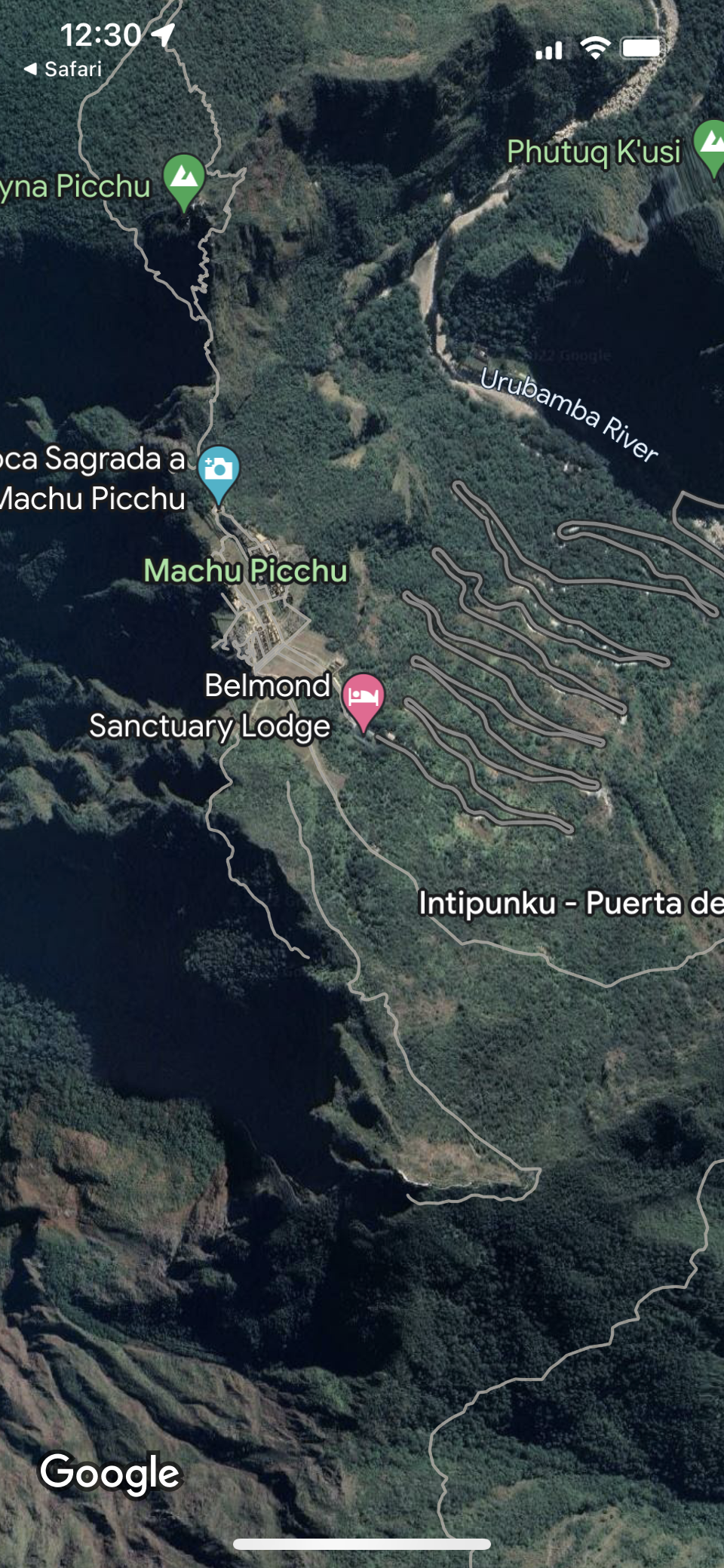
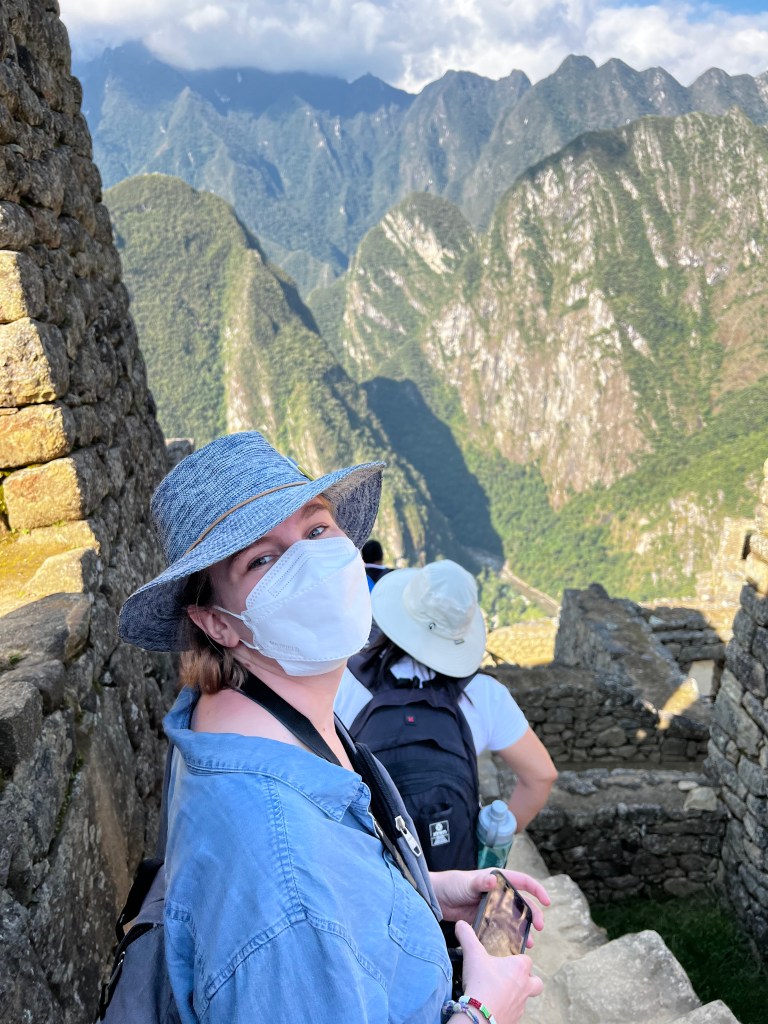
When we arrived at the end of the train line, everyone has to board buses and crawl up the switch backs to Machu Picchu. The first map shows all the switch backs. The elevation at the Urubamba River at Agua Caliente is 6778′ and the elevation at Machu Picchu is 7,982. We thought since we spent more time at Cusco’s 11,100′ Machu Picchu would be easier. NOT!
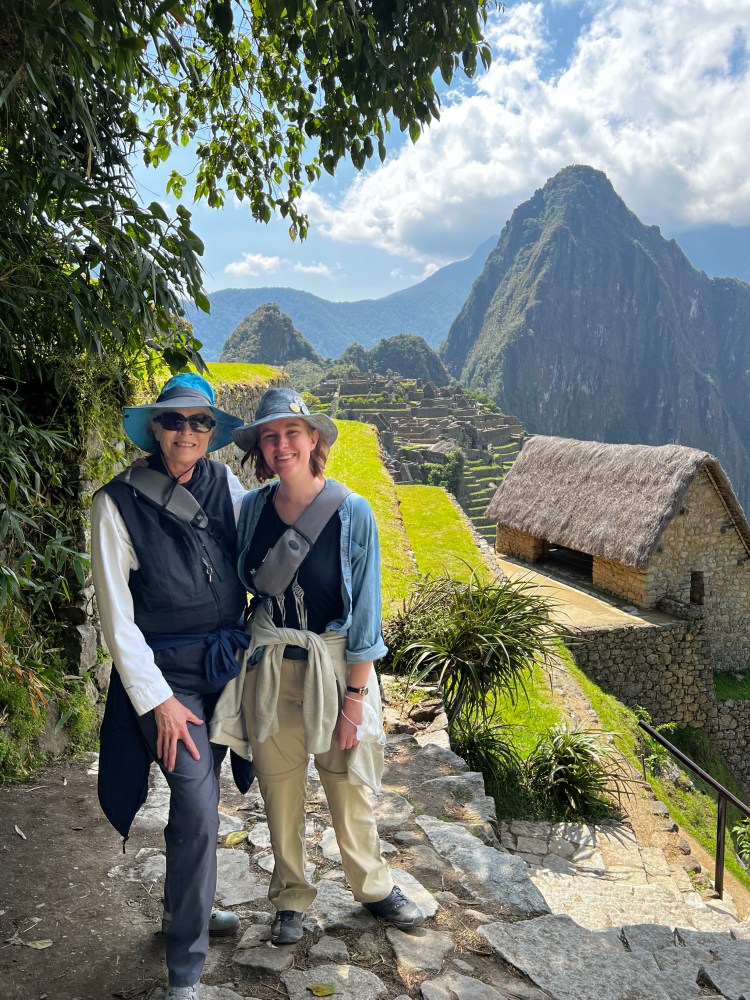
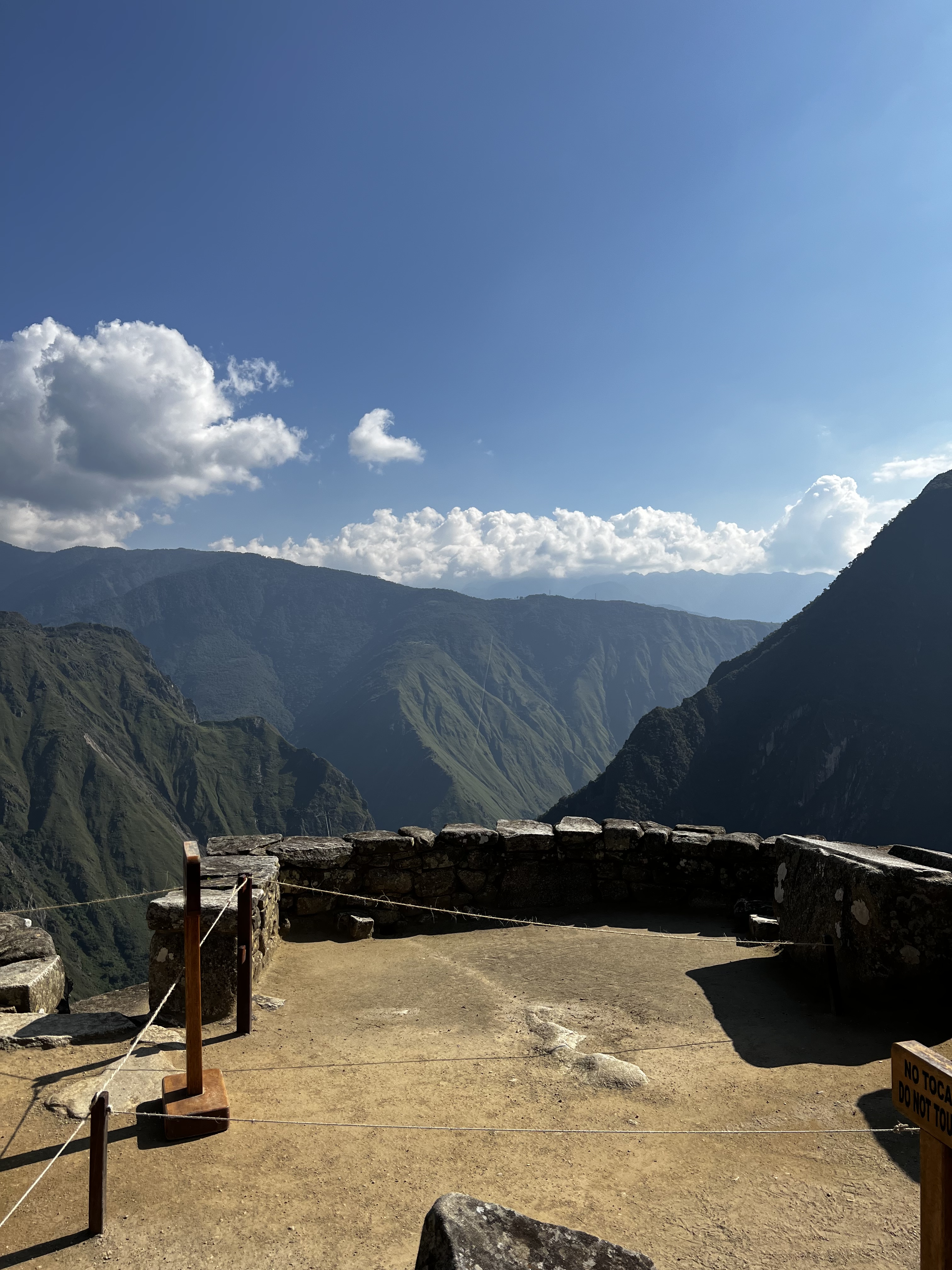
We were allowed through the gate with Sergio about half an hour before other tourist as Sergio told the guard we were suppose to have spent the night at the Sanctuary Hotel and this is our only time in the park. It gave us a few extra minutes to walk up toward the best look outlooks before more tourists arrived. Amazingly enough, it never felt too crowded. We’d walk for five or ten minutes…a couple minutes for me to get my breath and we’d kept climbing. This worked well enough as I could catch my breath and I wasn’t overwhelmed with lack of oxygen.
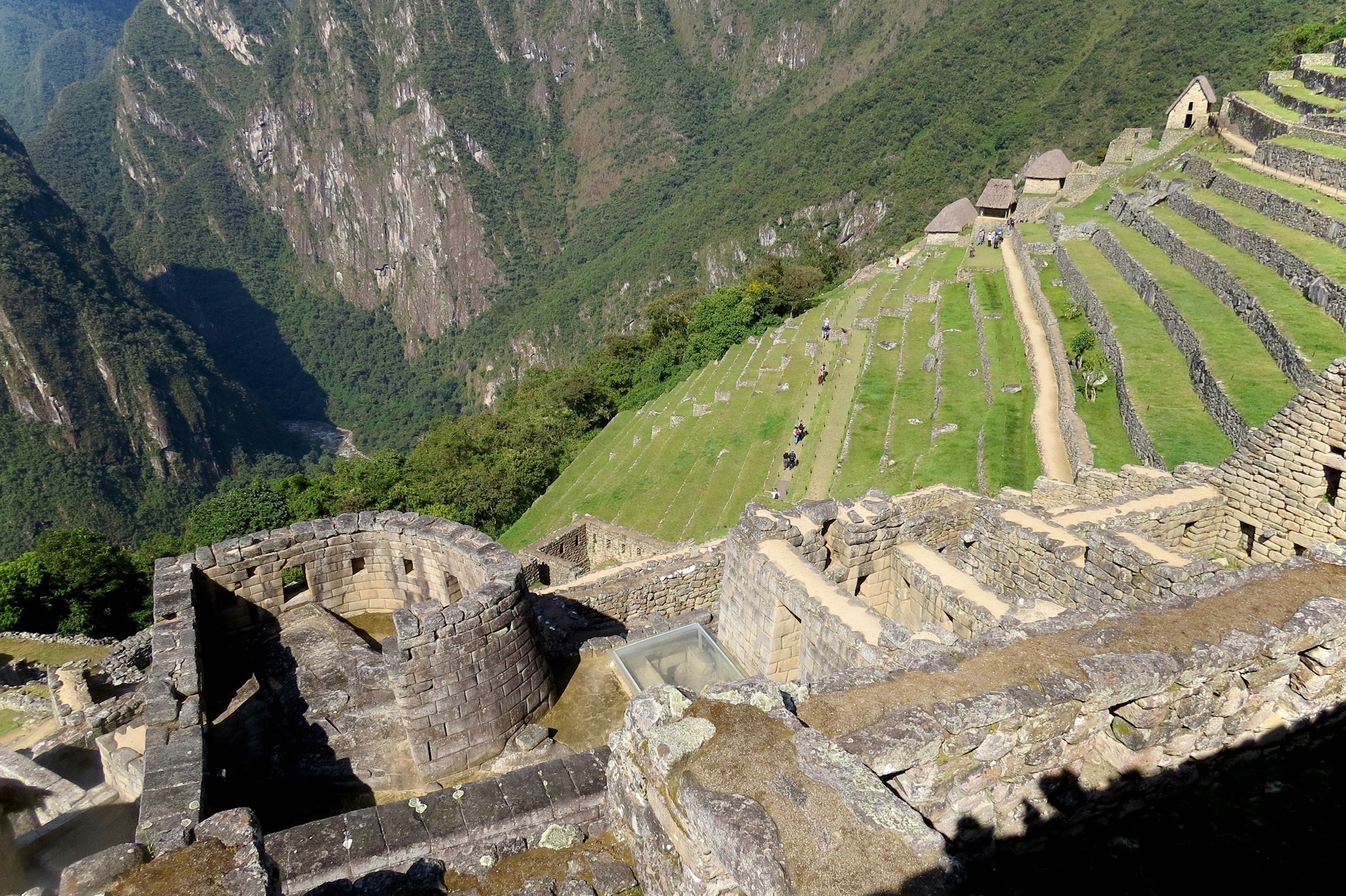
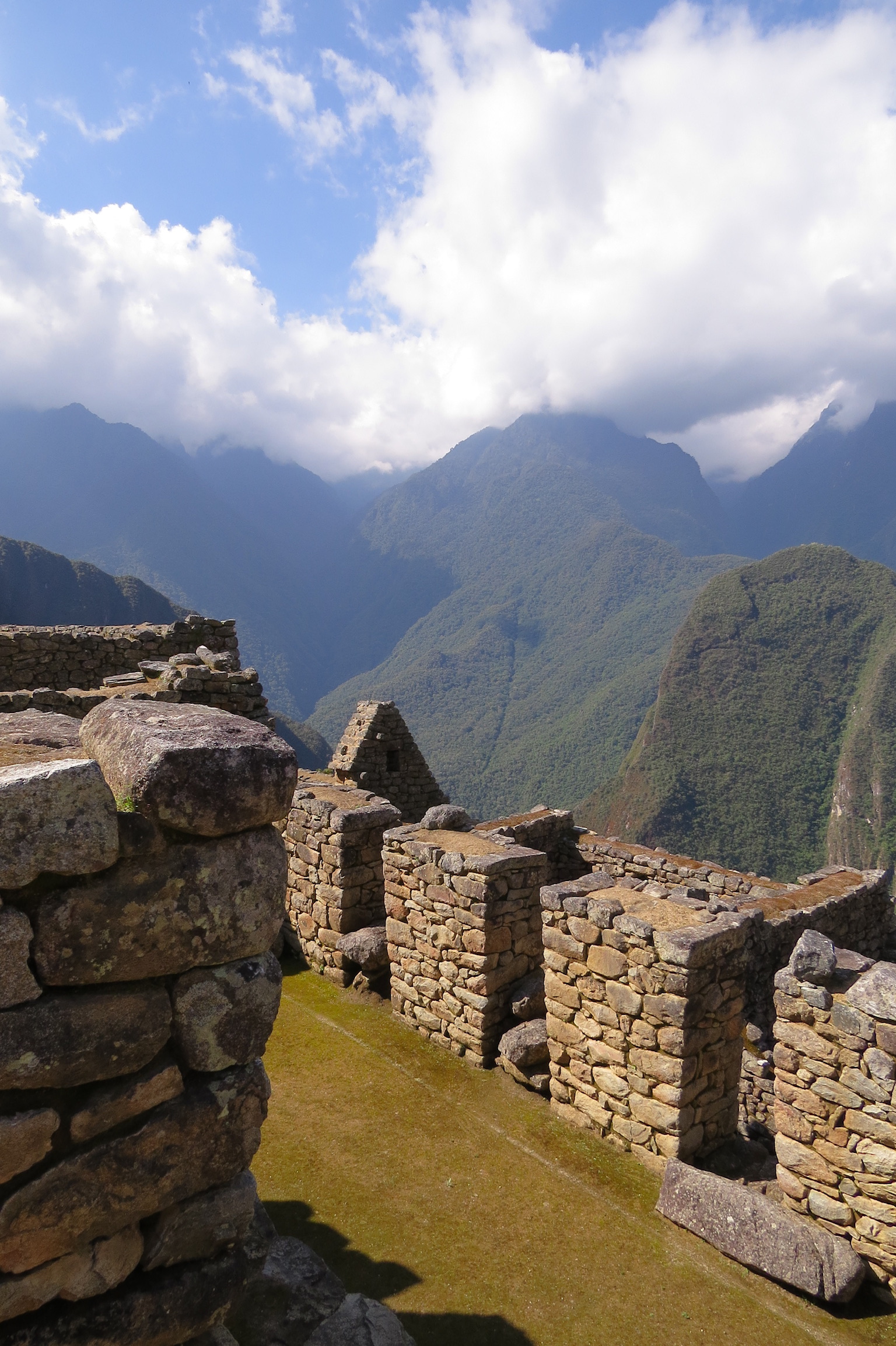
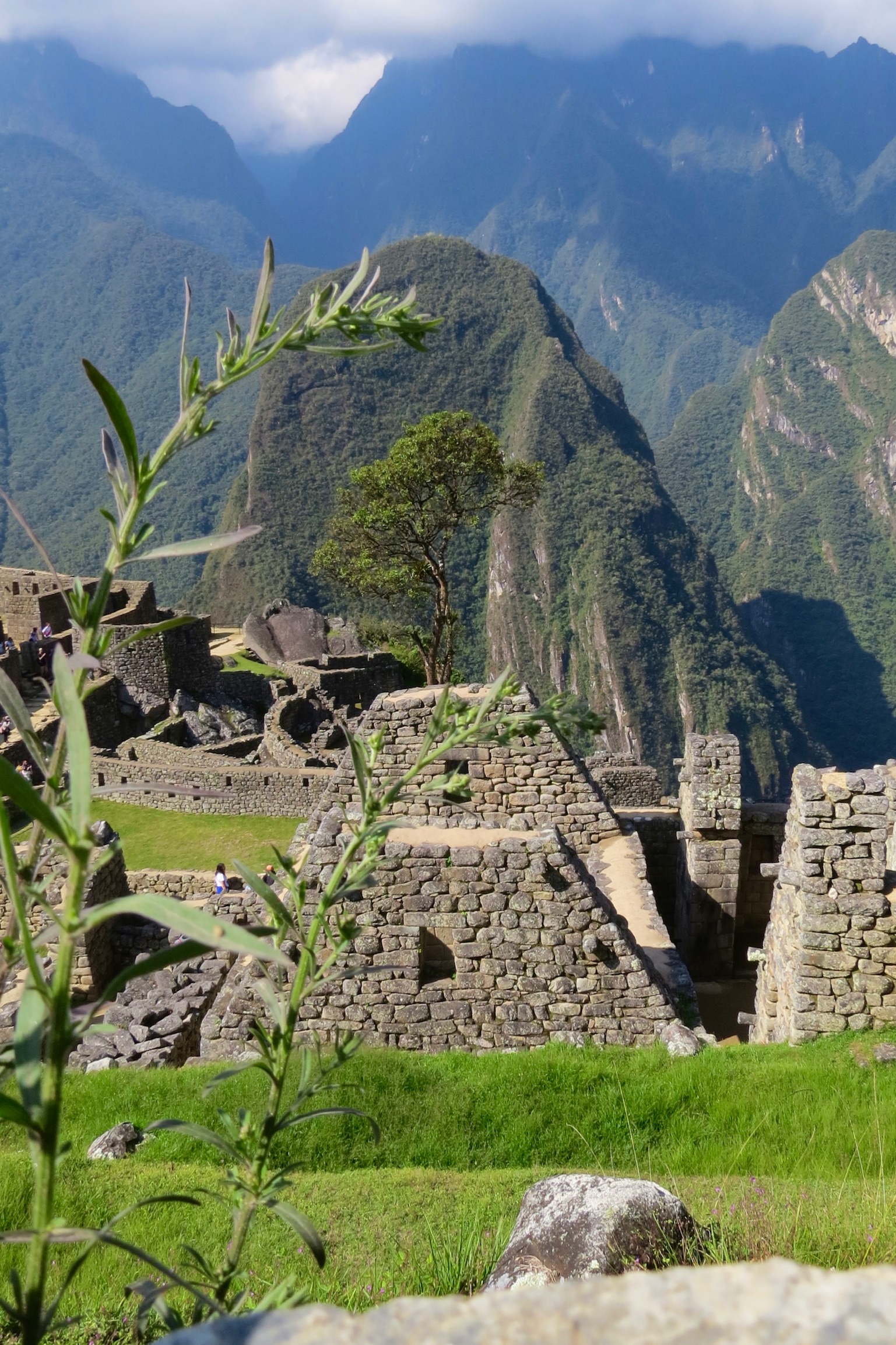
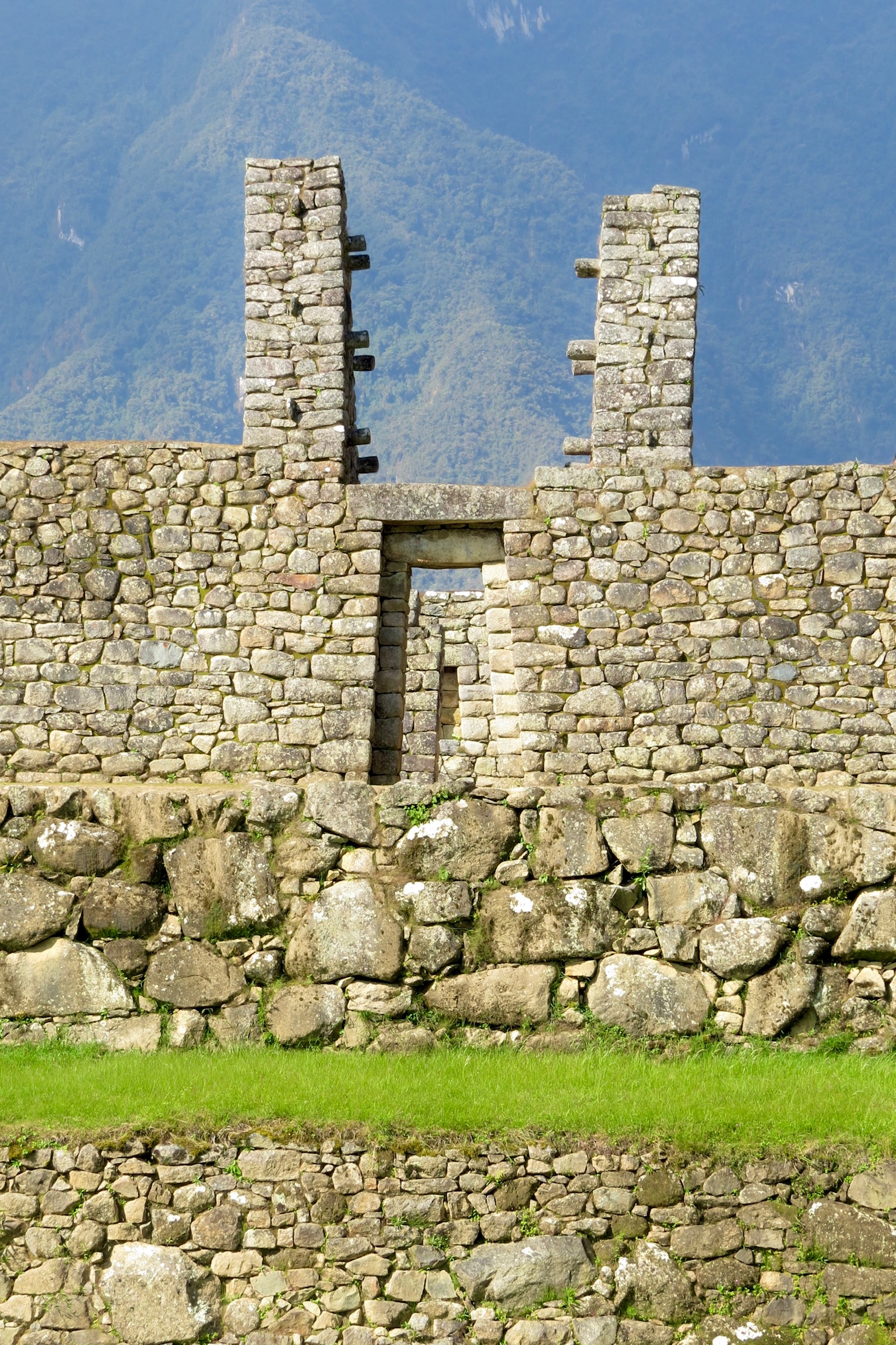
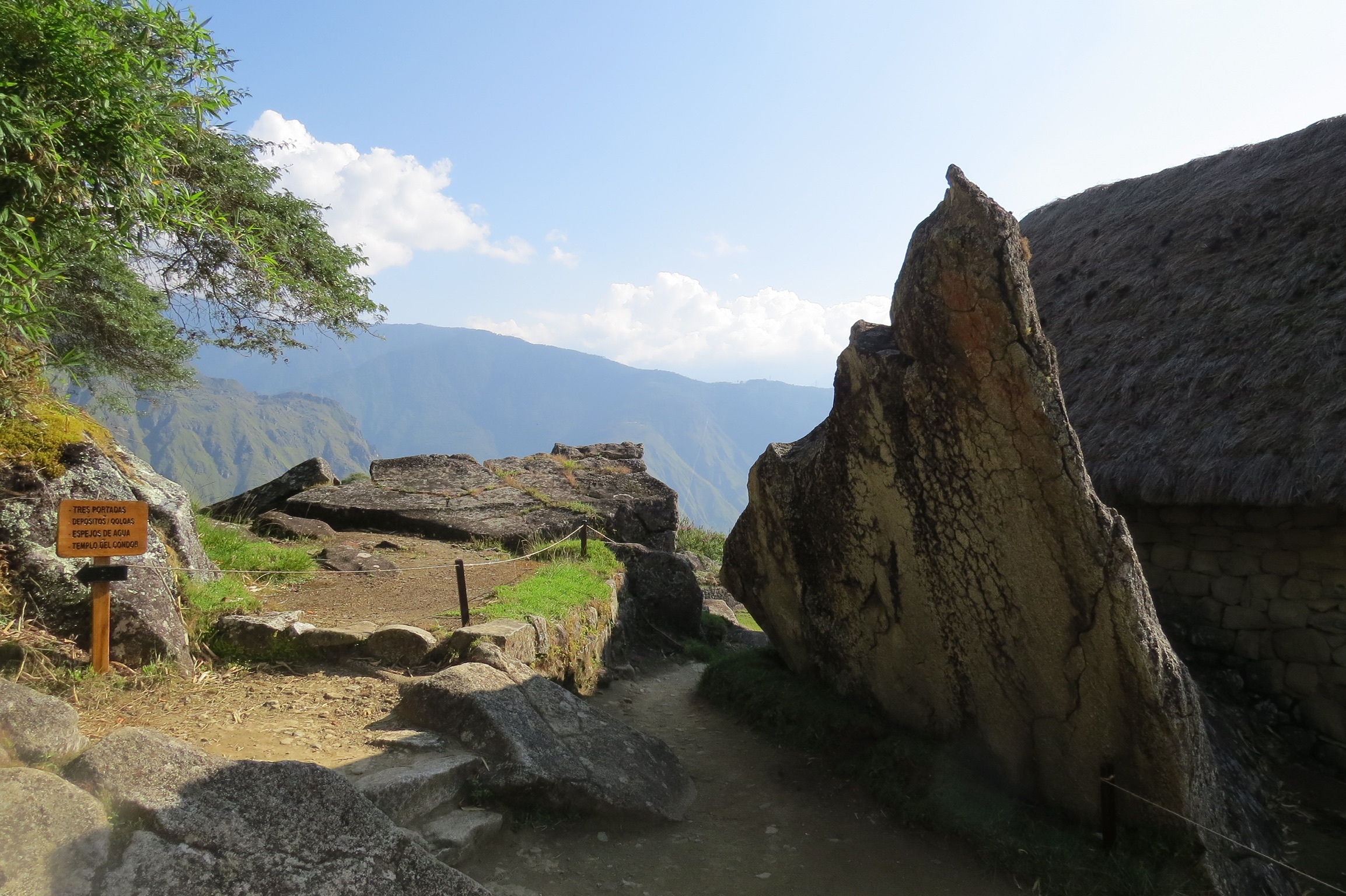
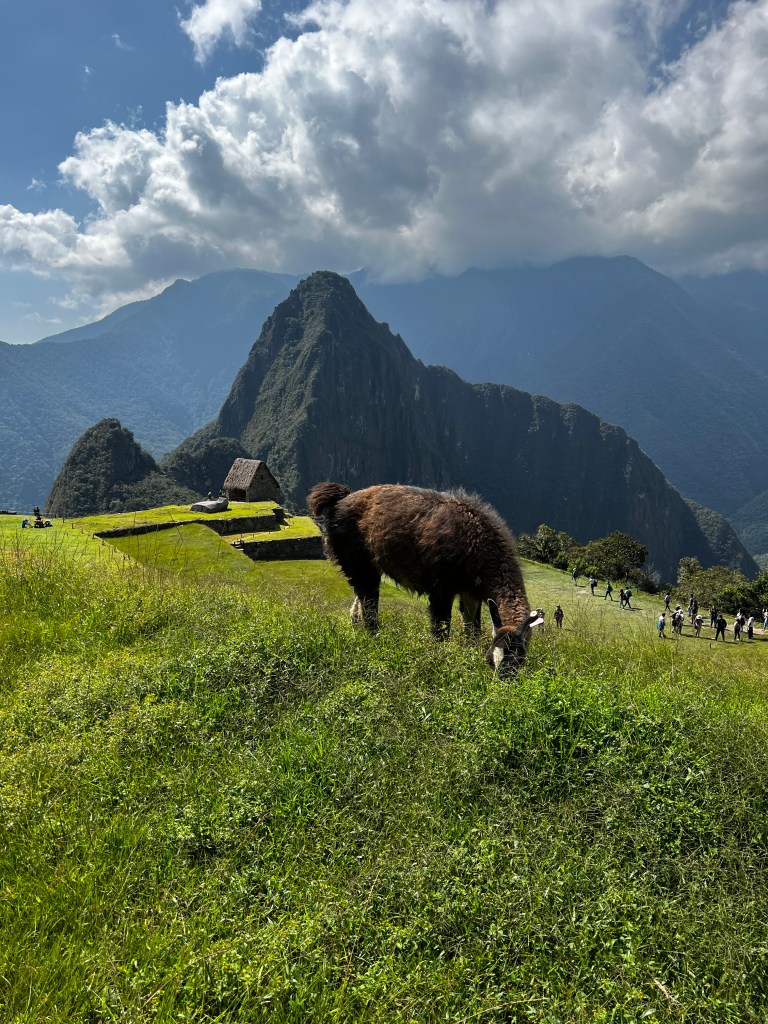
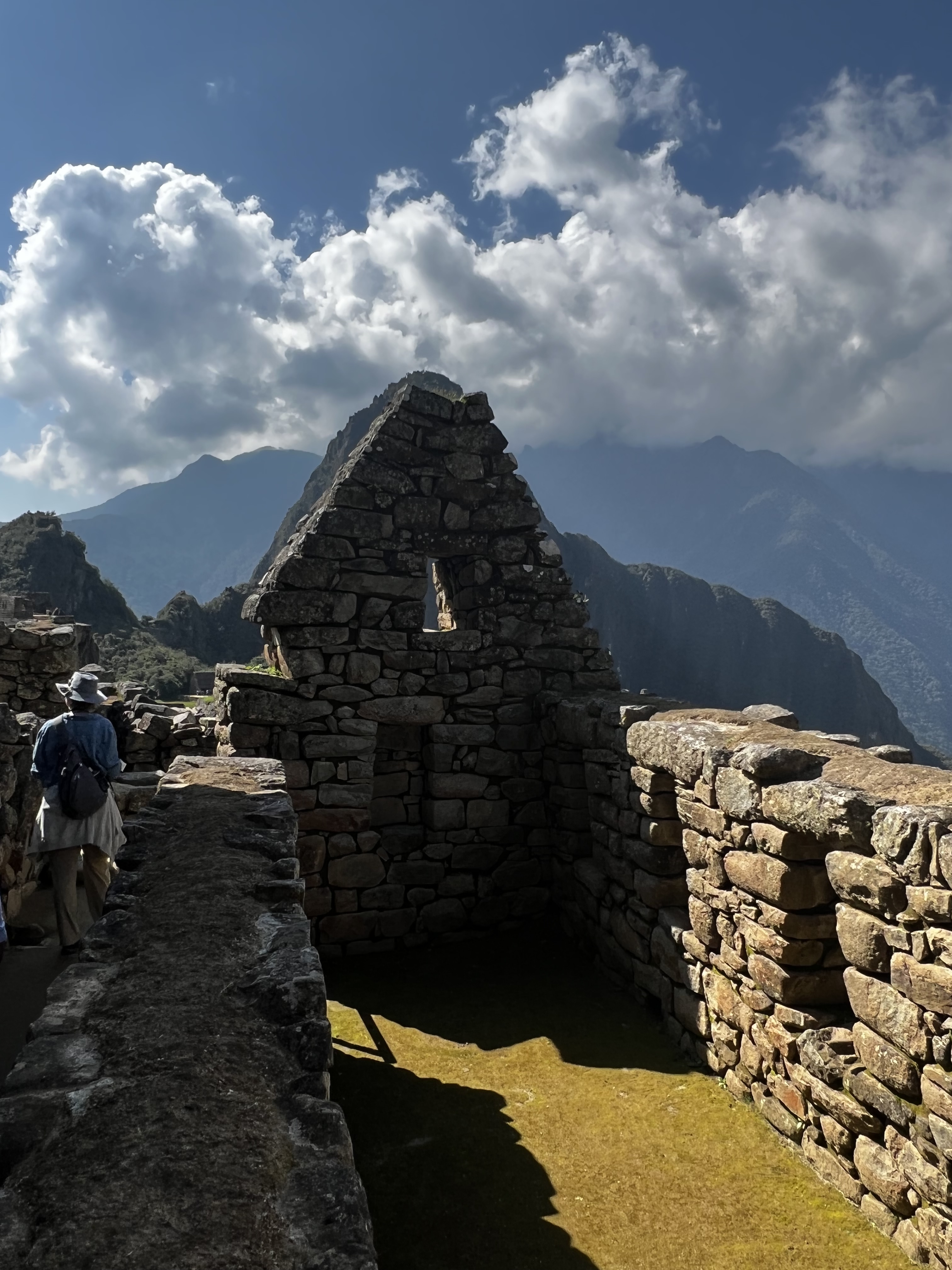
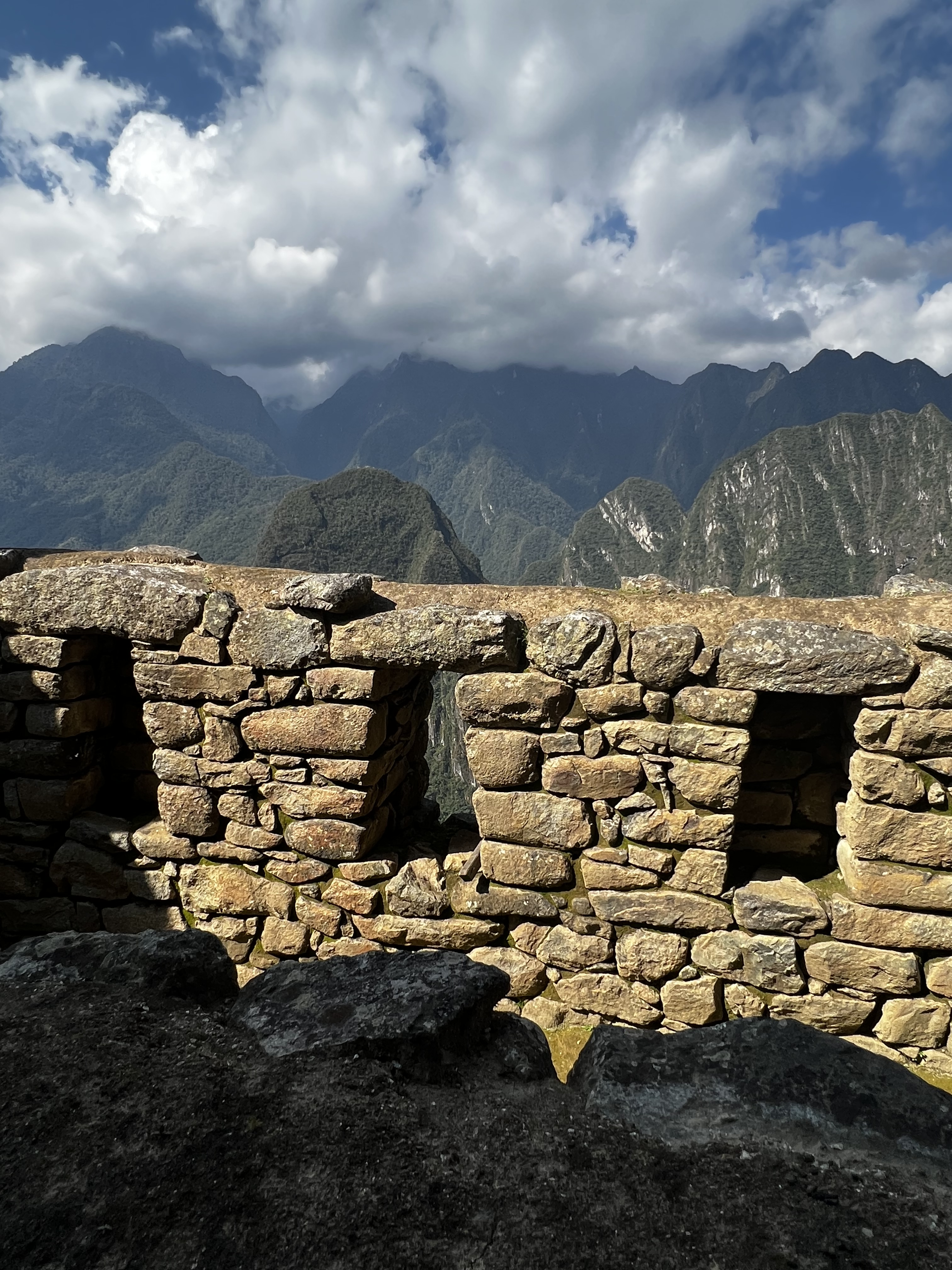
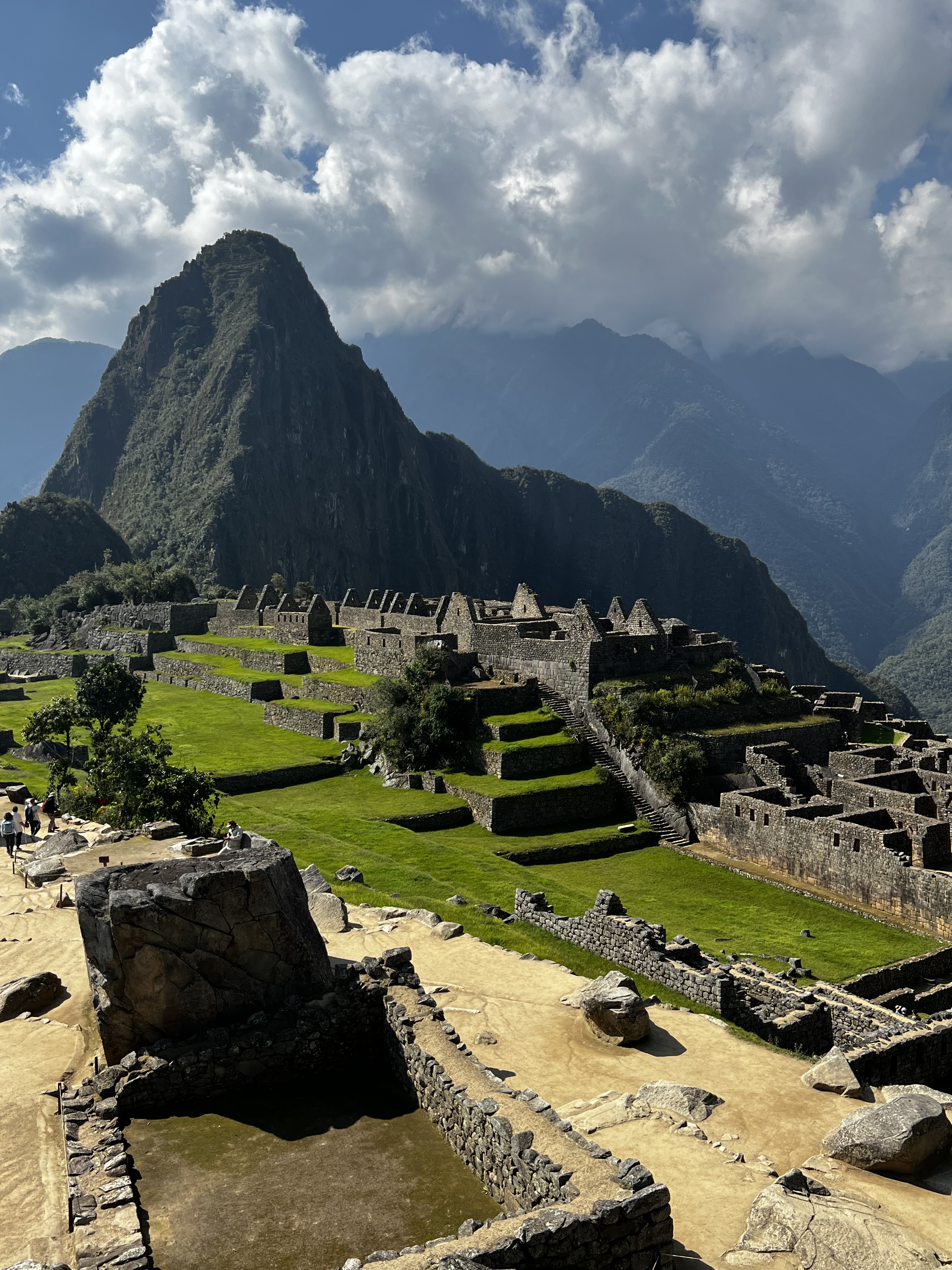
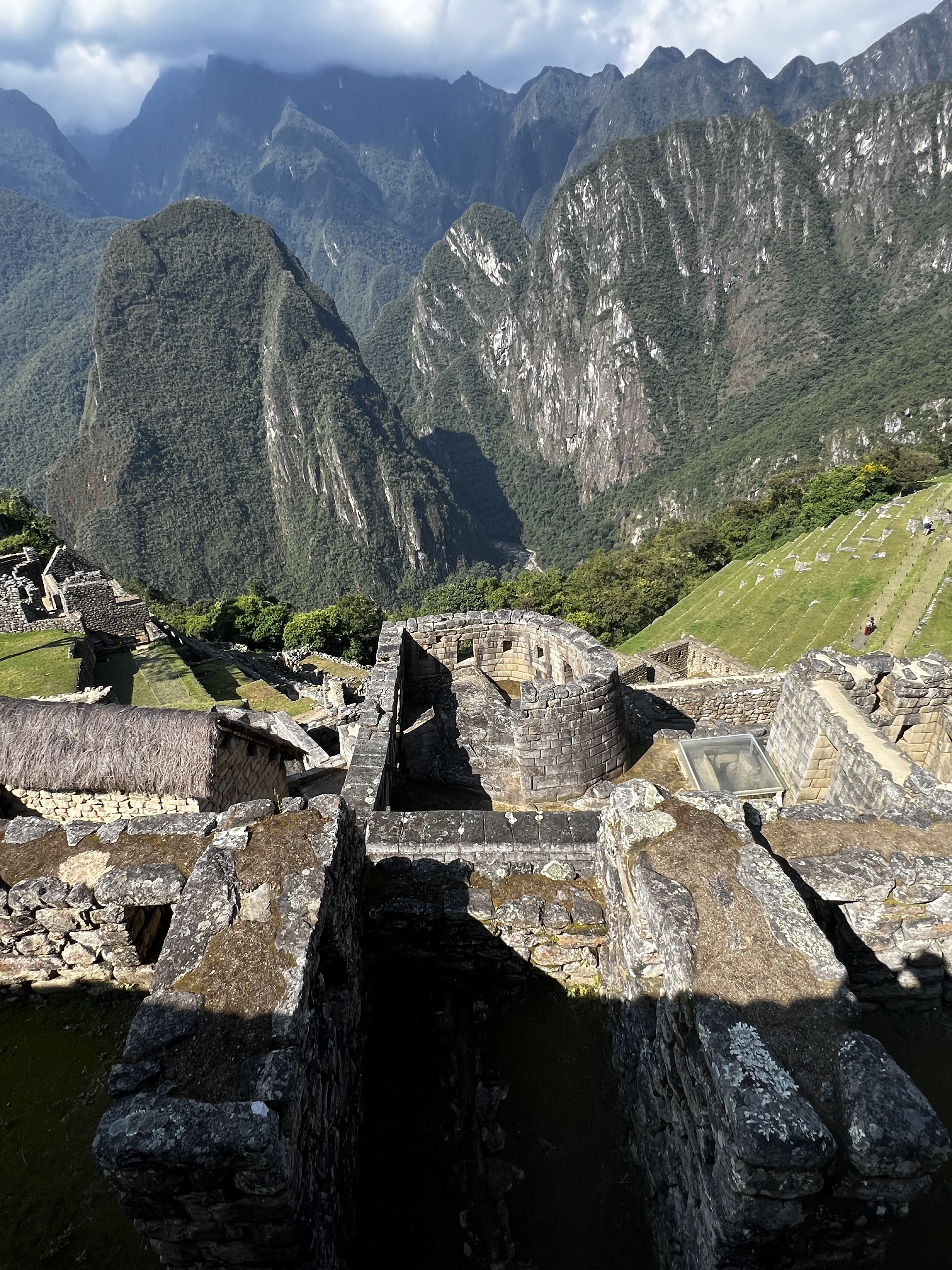
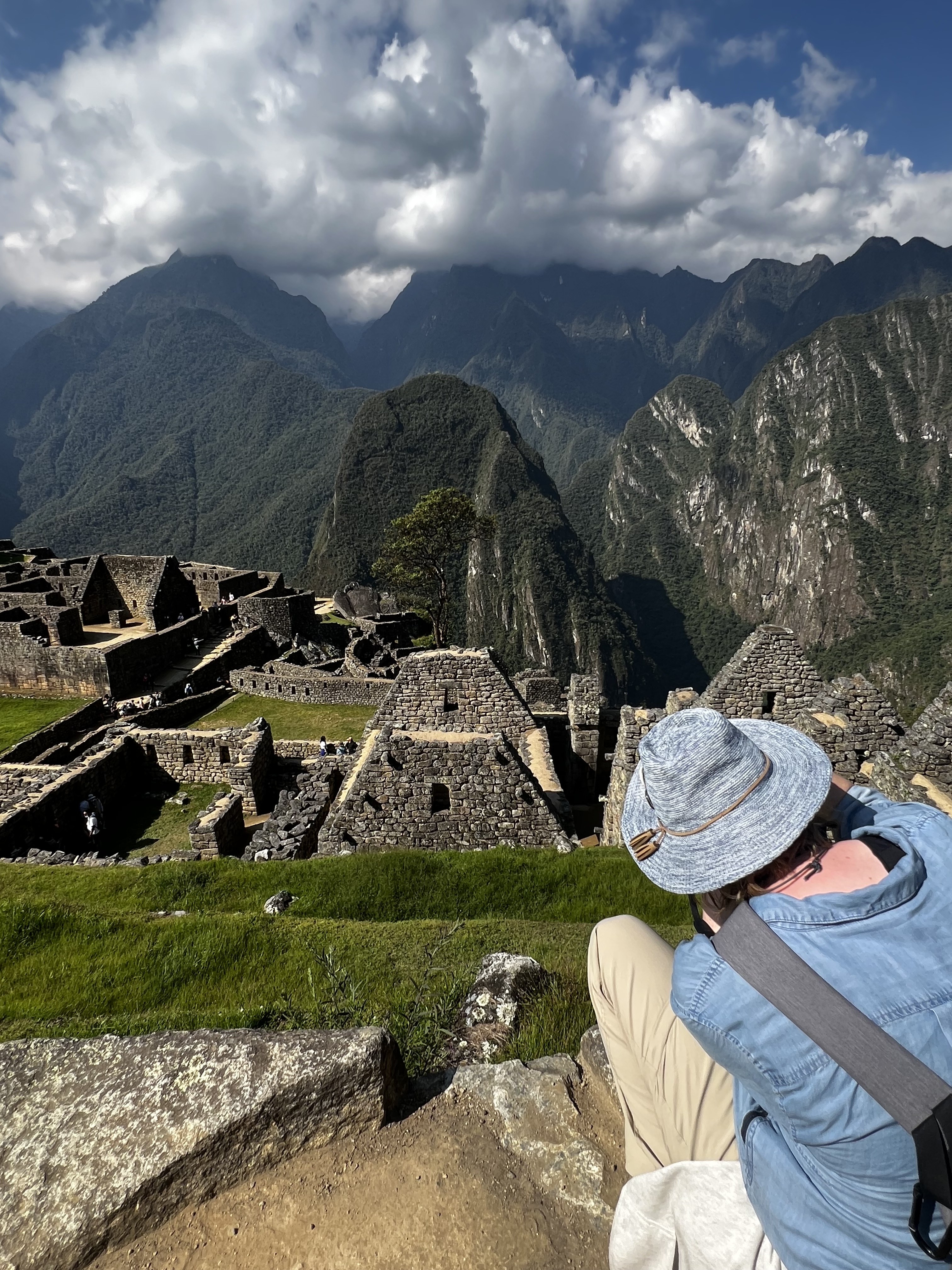
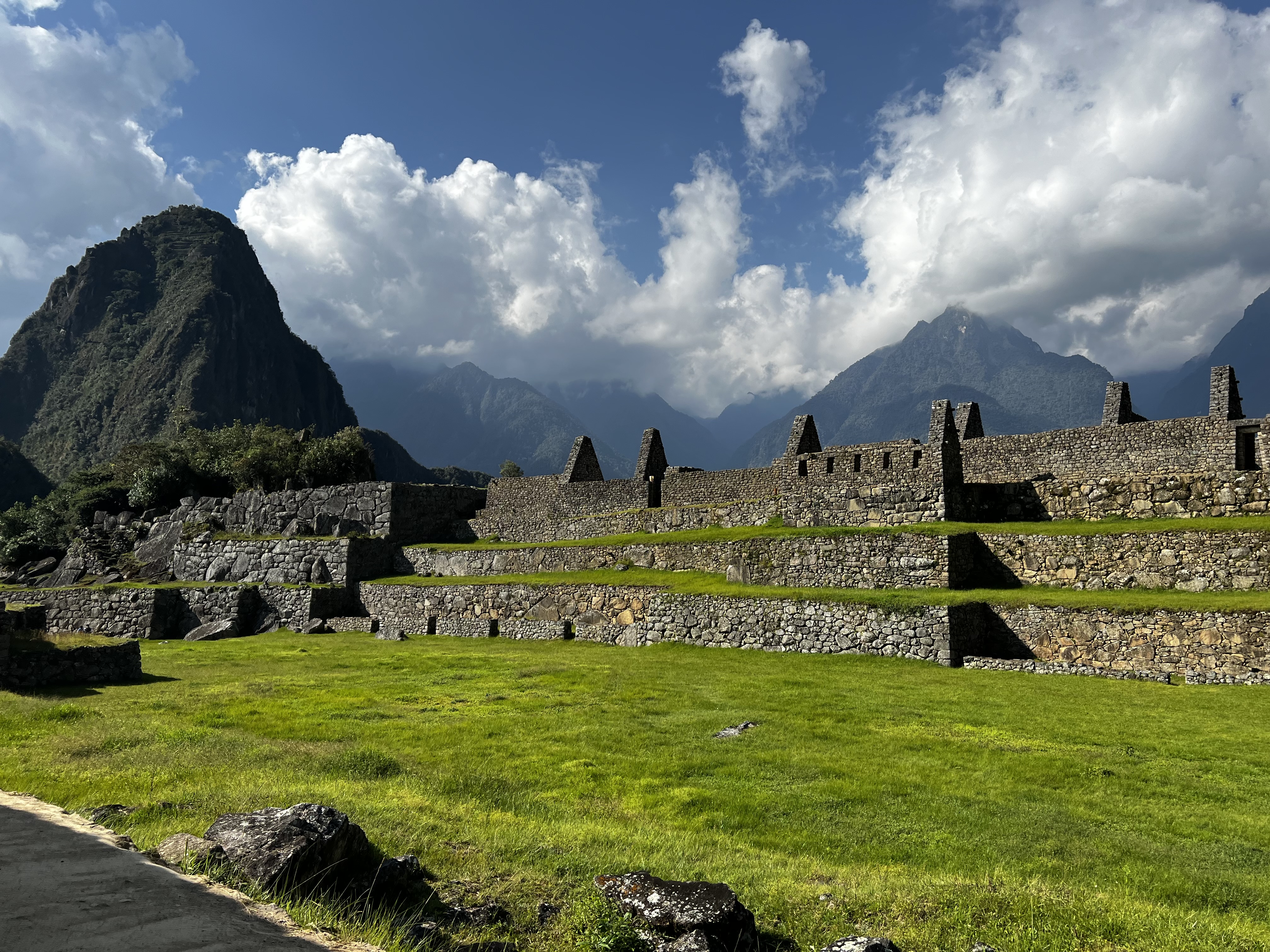
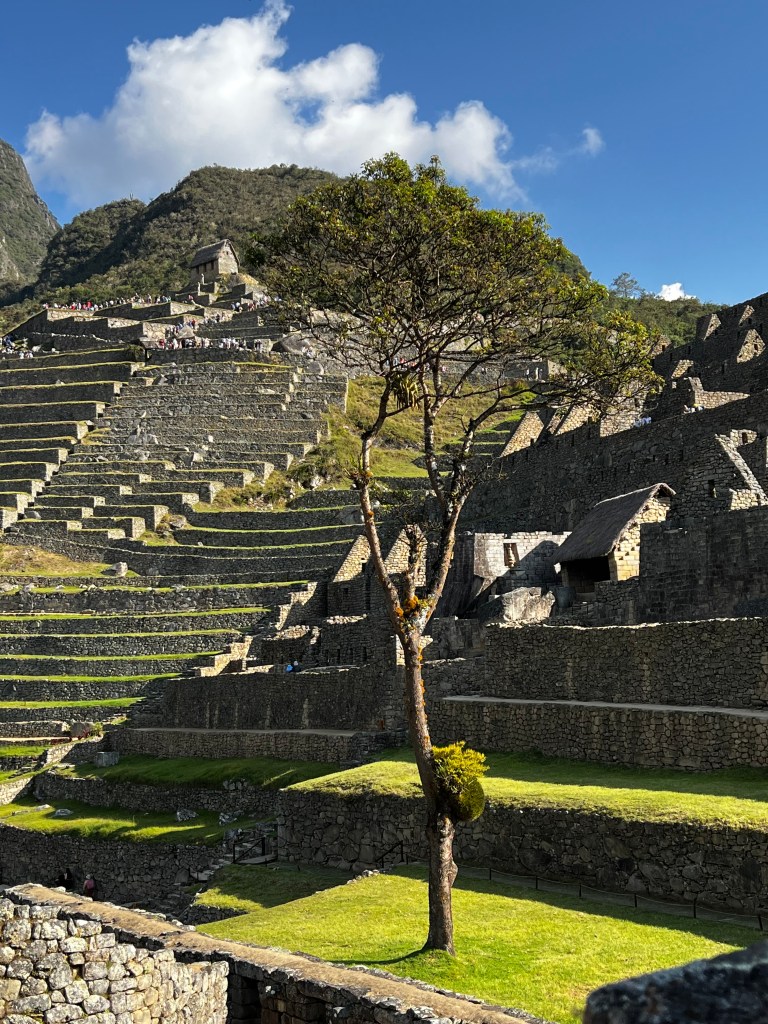
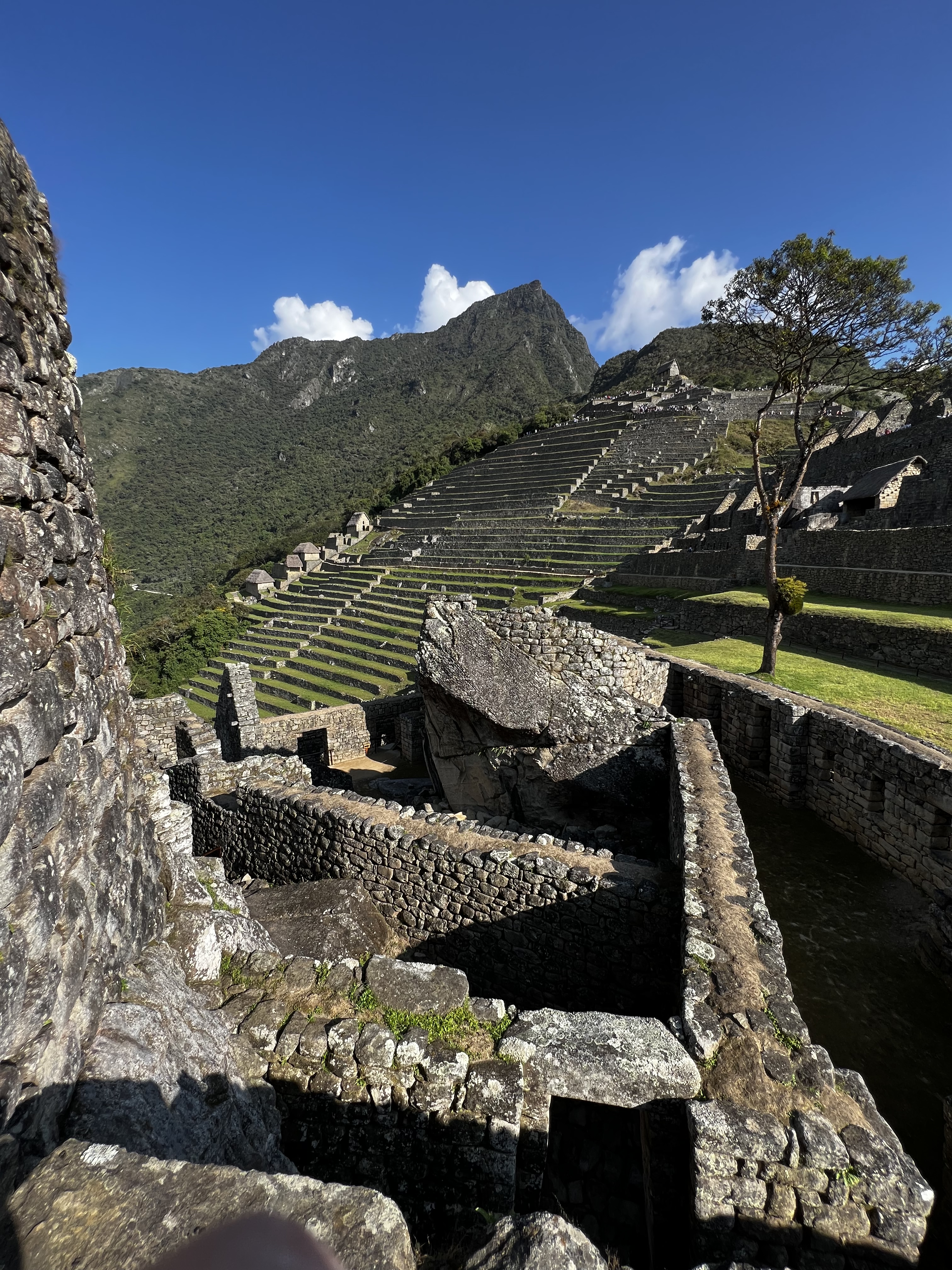
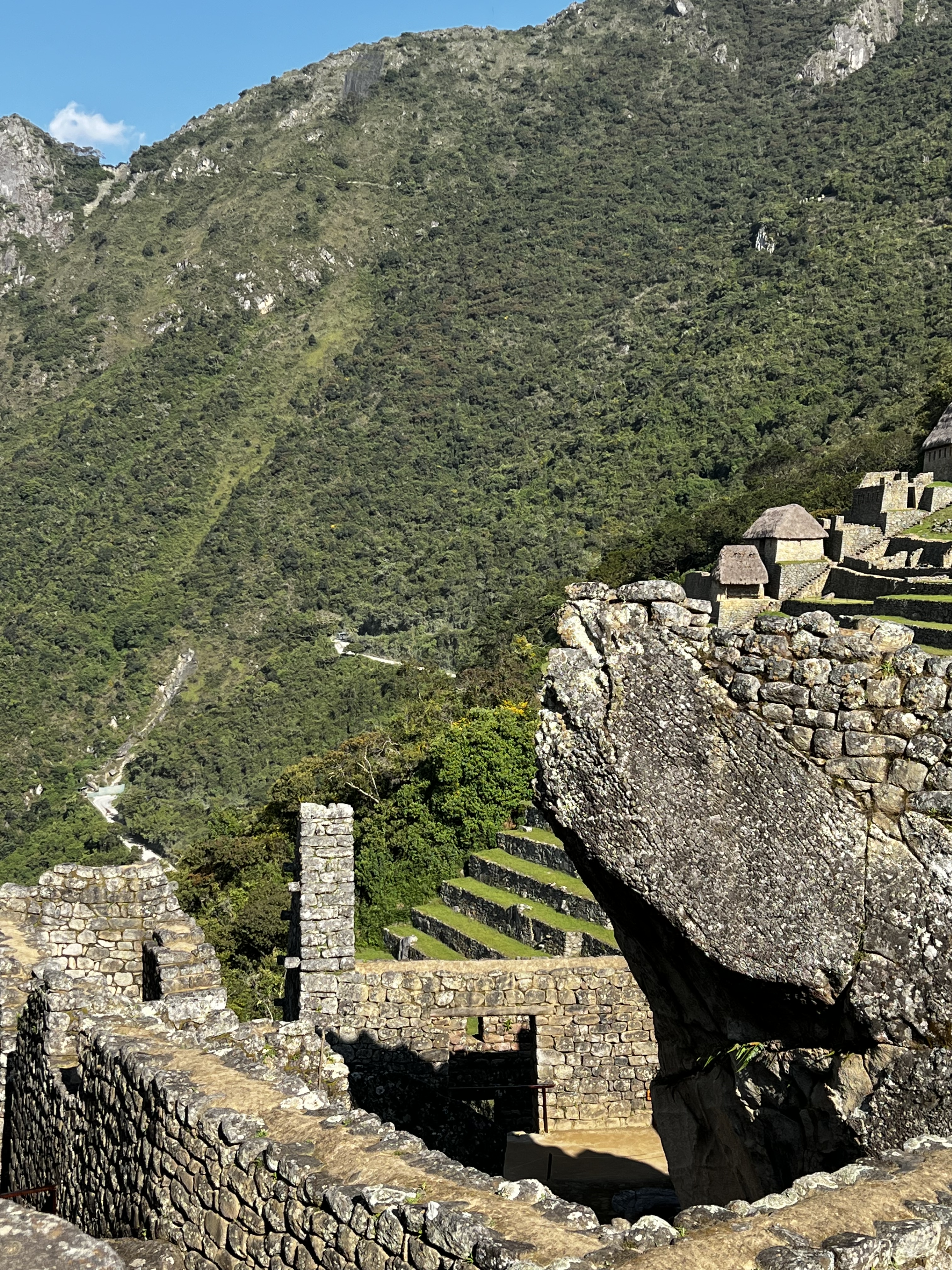
Machu Picchu, a World Heritage Site and wonder of the world, was most likely known by the Quechuan’s as Huayna Picchu. Hiram Bingham in 1909 was not the first modern man to discover this treasure but two different German men were there in the 1800’s. Hiram mostly took credit for its discovery but at least did bring it to the worlds attention! Hiram came back with the National Geographic group and archeologist from Yale to begin uncovering the site in 1911. The Royal Estate built by Pachacutec and his son Tupac had approximately 750 people in the on season and 100 in the off season living at the estate. The estate is a narrow saddle between Machu Picchu and Huayna Picchu. Our guide Sergio felt it was abandoned before the Spanish found it most likely for all the men being called to a military operation and none ever made it back. Others think those who were left may have had small box and died. Unlike the Mayan, the Incan did not have a written language so archeologist try to figure out what might have happened – often its just a best guess.
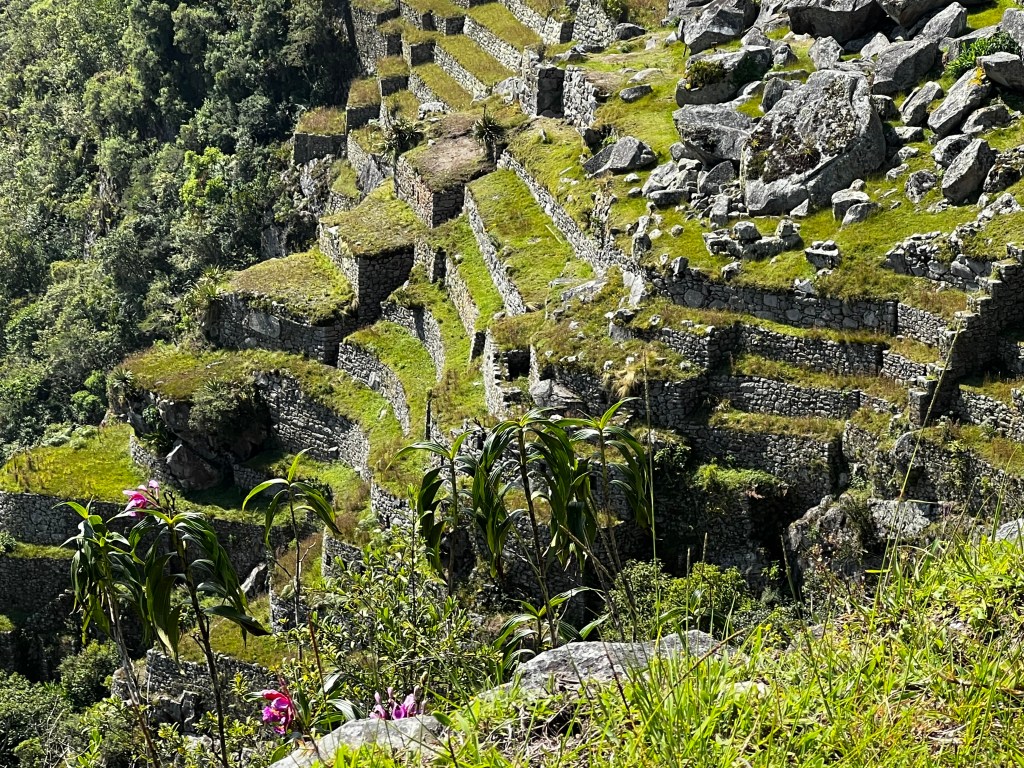
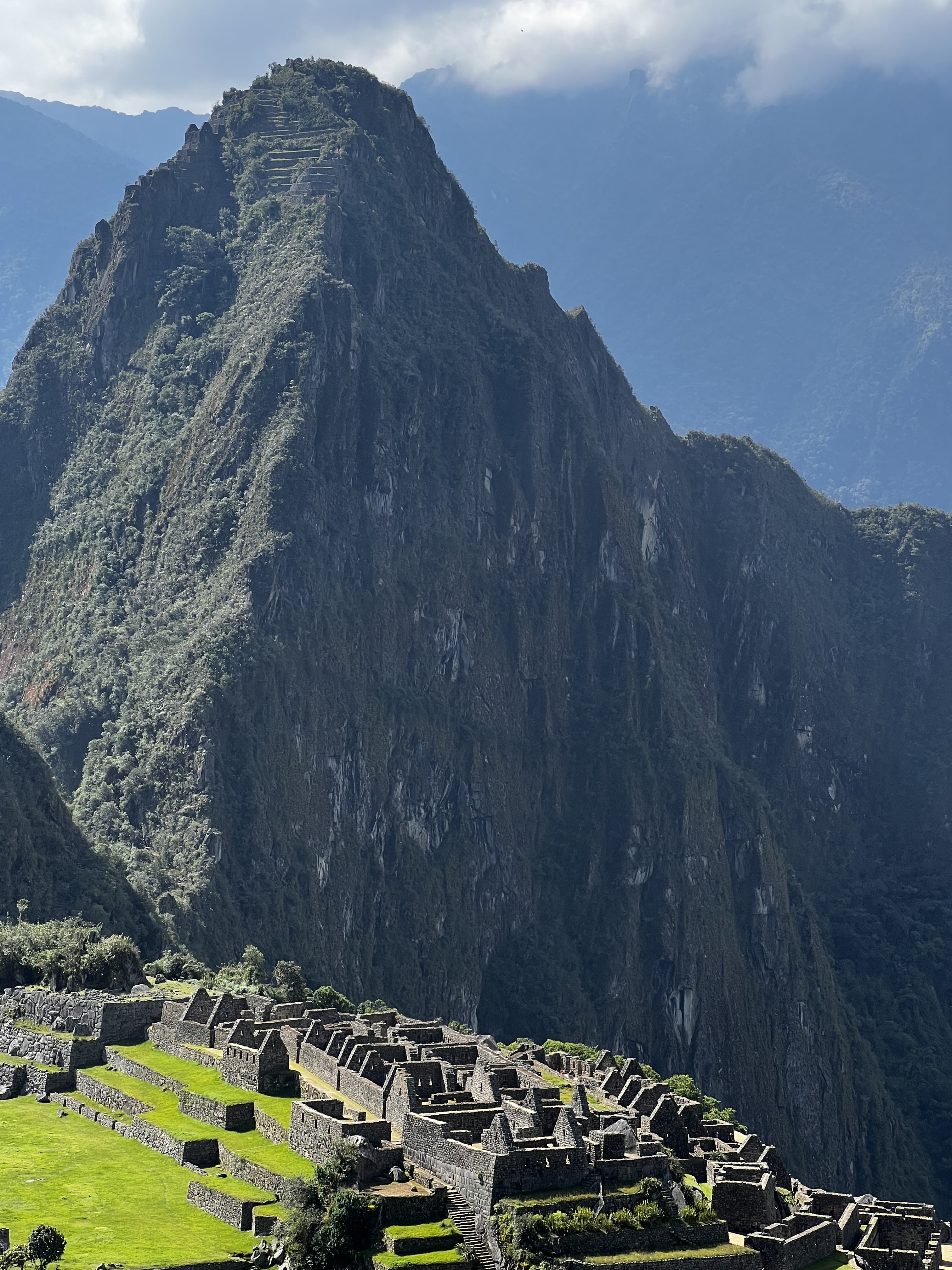
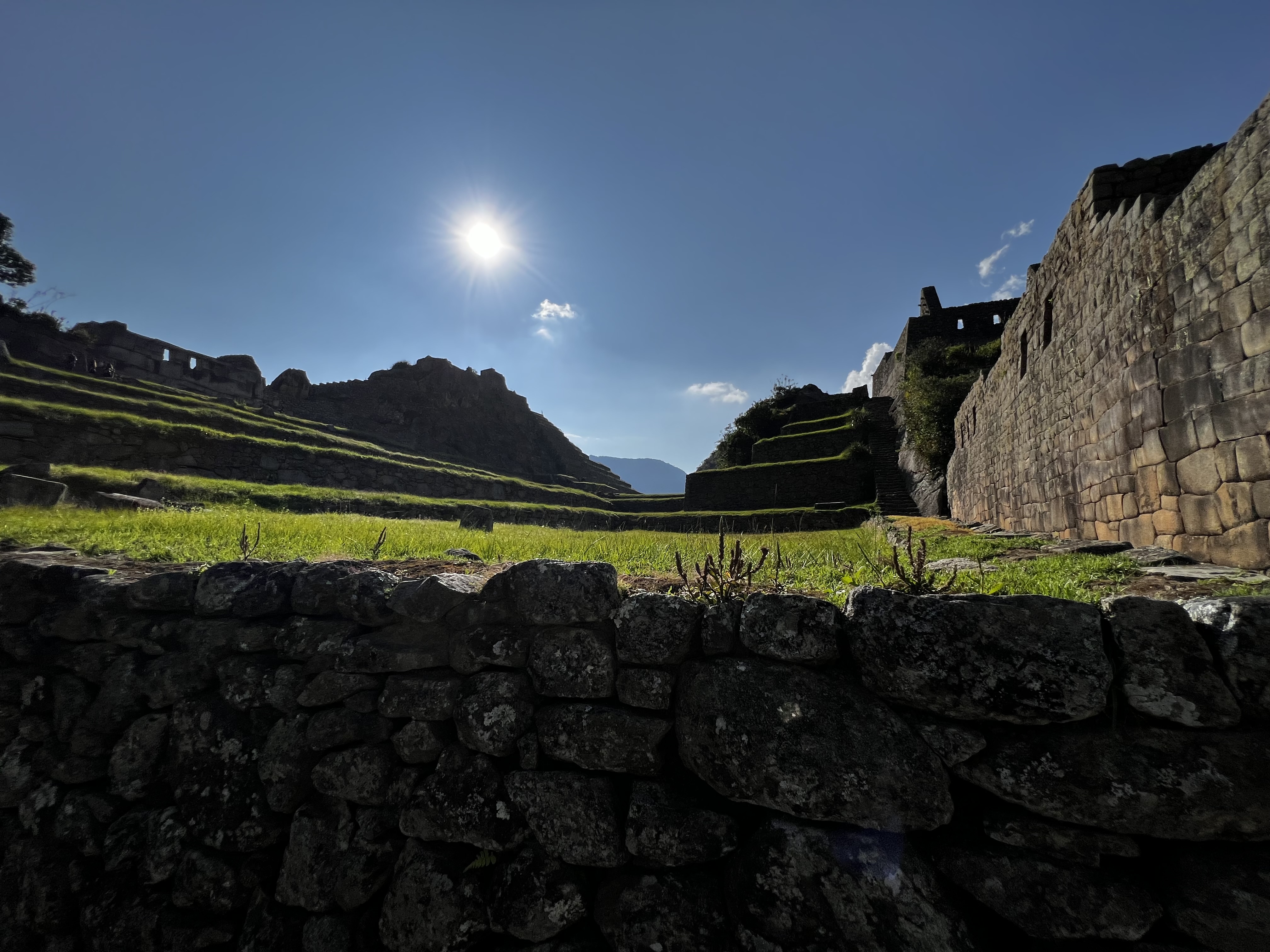
The steep sides of Huayna Picchu can be walked as you can see the steep terraces on the above photo. We heard there are incredible butterflies up there. Maybe in another younger lifetime! It takes many people working at the site to keep growth down off the walls as the tropical mountain climate keeps things growing! They experience wet humid summers and dry frosty winters. Rain falls between October and March. They are 13 degrees south of the equator and for us their days and nights seem equivalent compared to 38 degrees north!
They discovered both guinea pigs and dogs in burial tombs. They thought the guinea pigs were for sacrifice and the dogs were companions. The twelve acres of terraces weren’t enough to feed those who lived there so they brought in food…much of it corn. There were natural springs and plenty of rain so water was plentiful.
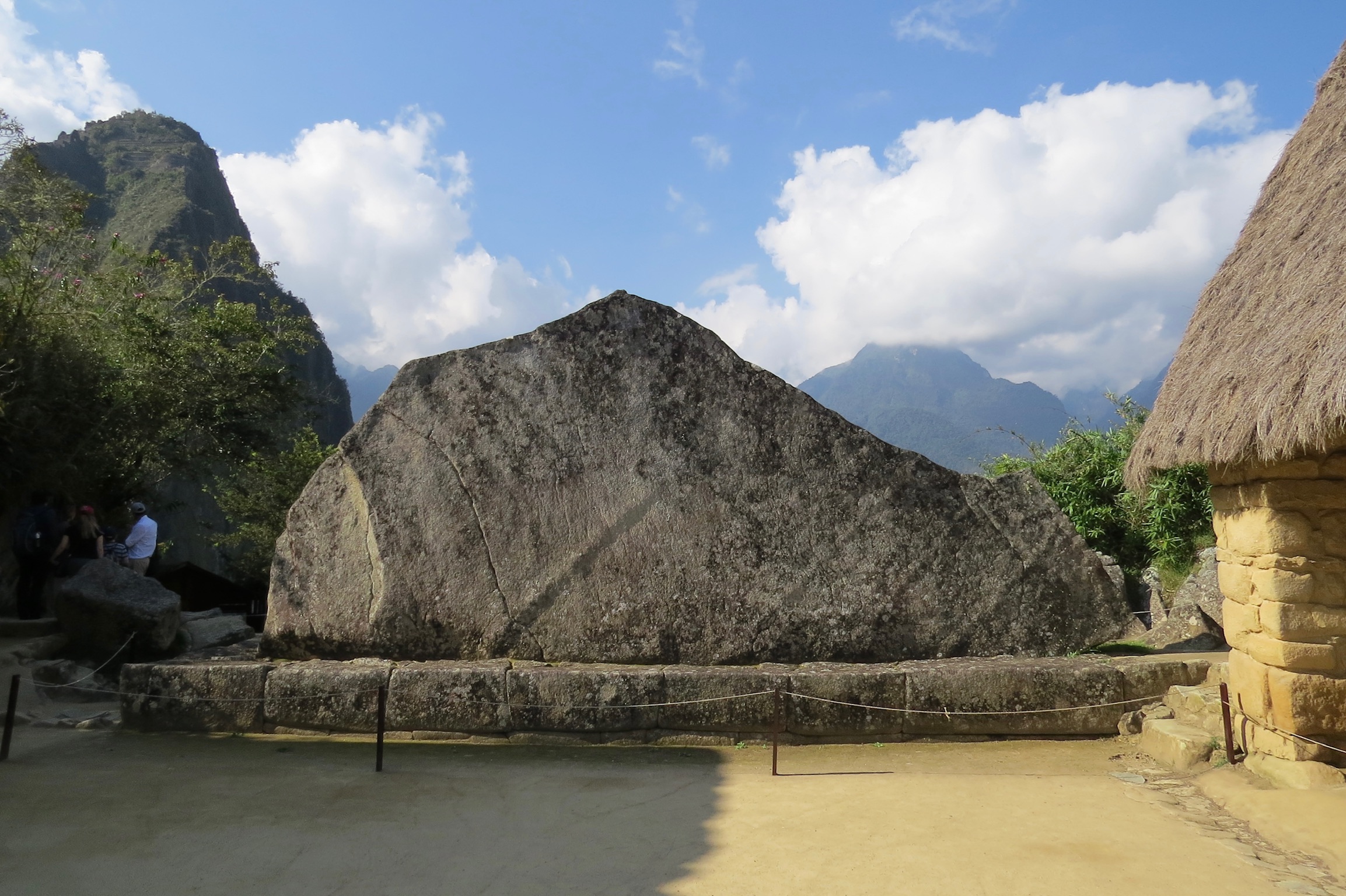
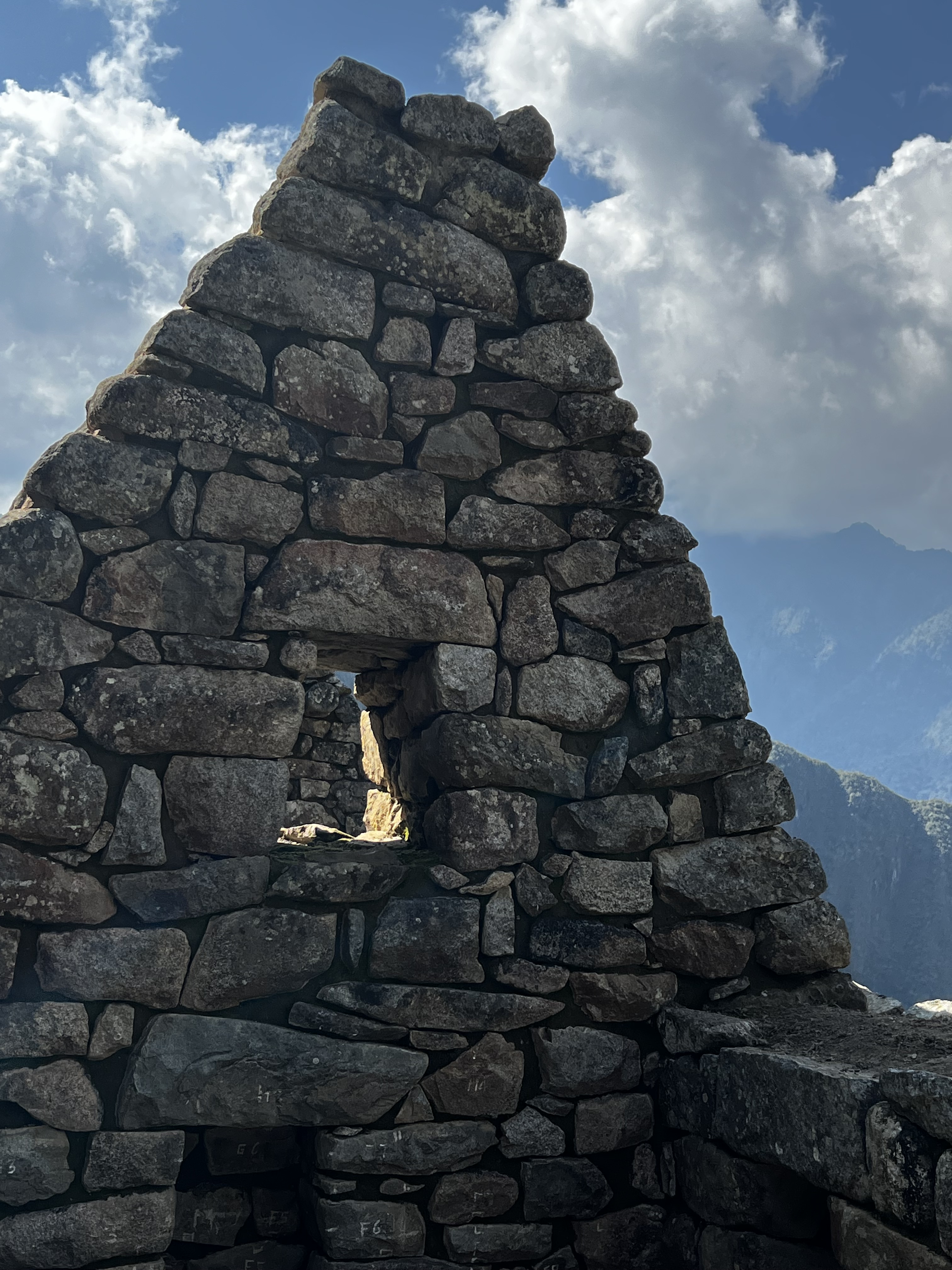
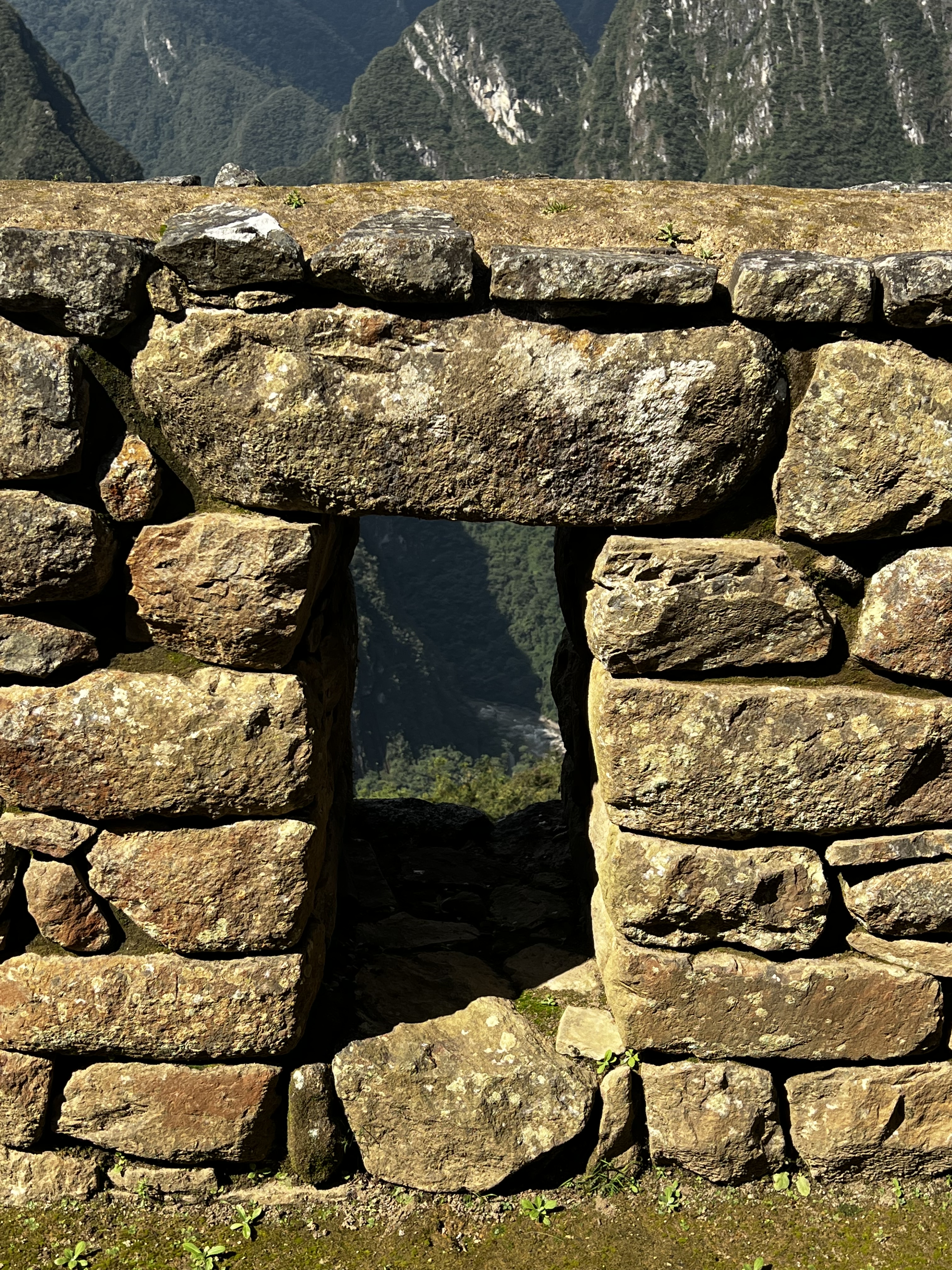
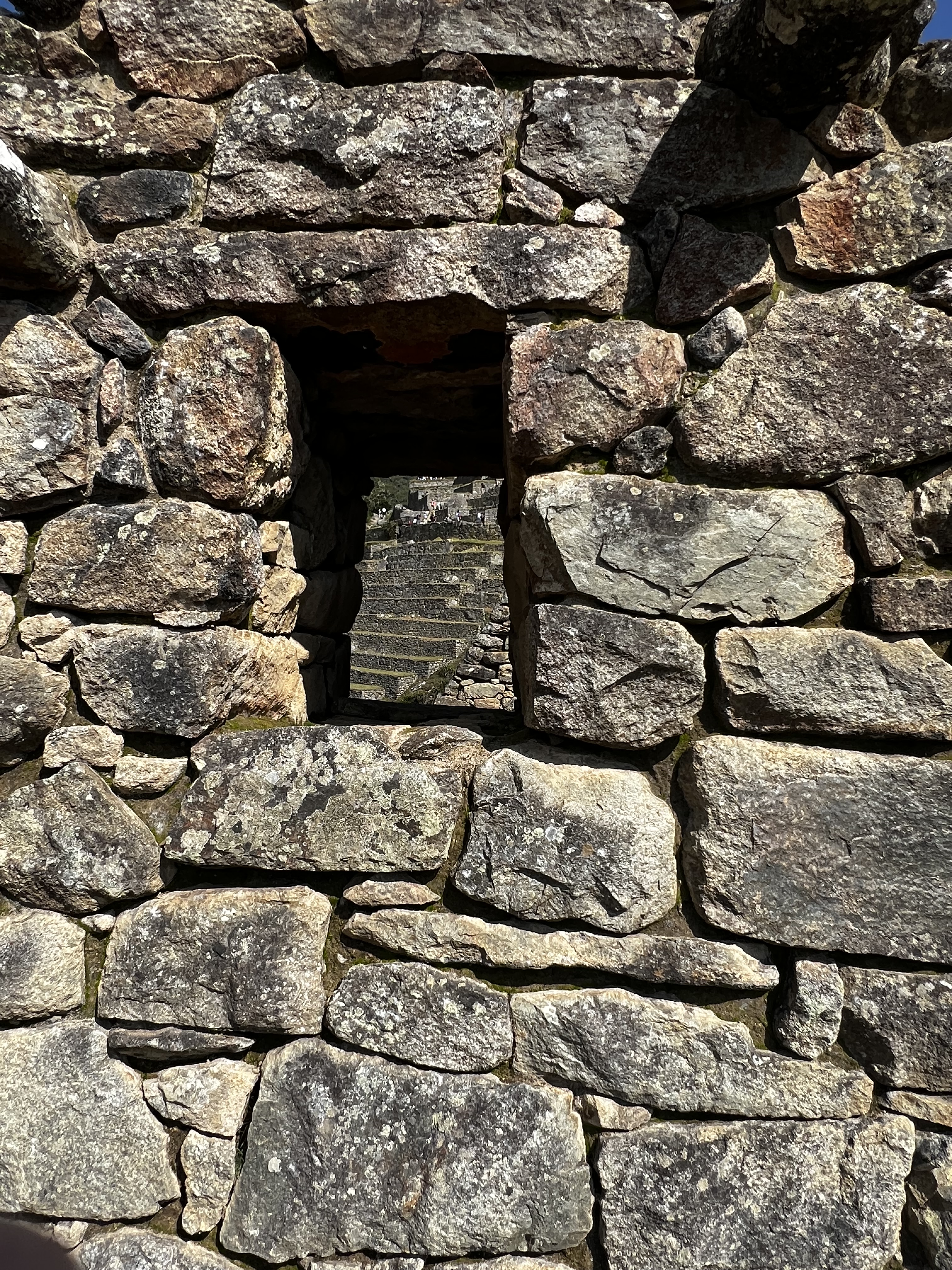
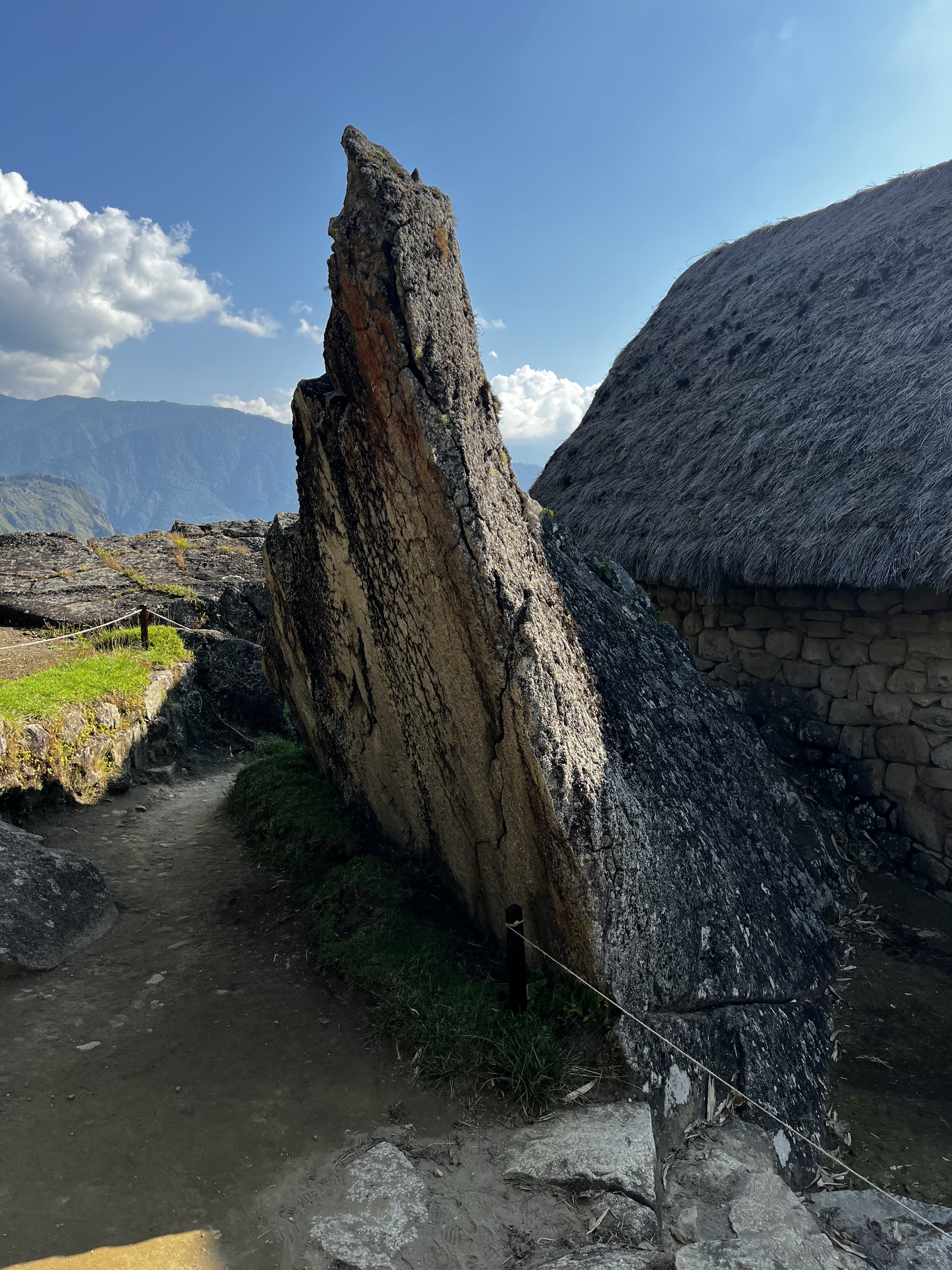
Machu Picchu is located over a fault which gave the builders access to plenty of fractionated blocks. There are definitely issues with landslides etc. and floods on the river which of course still impact this heritage site.
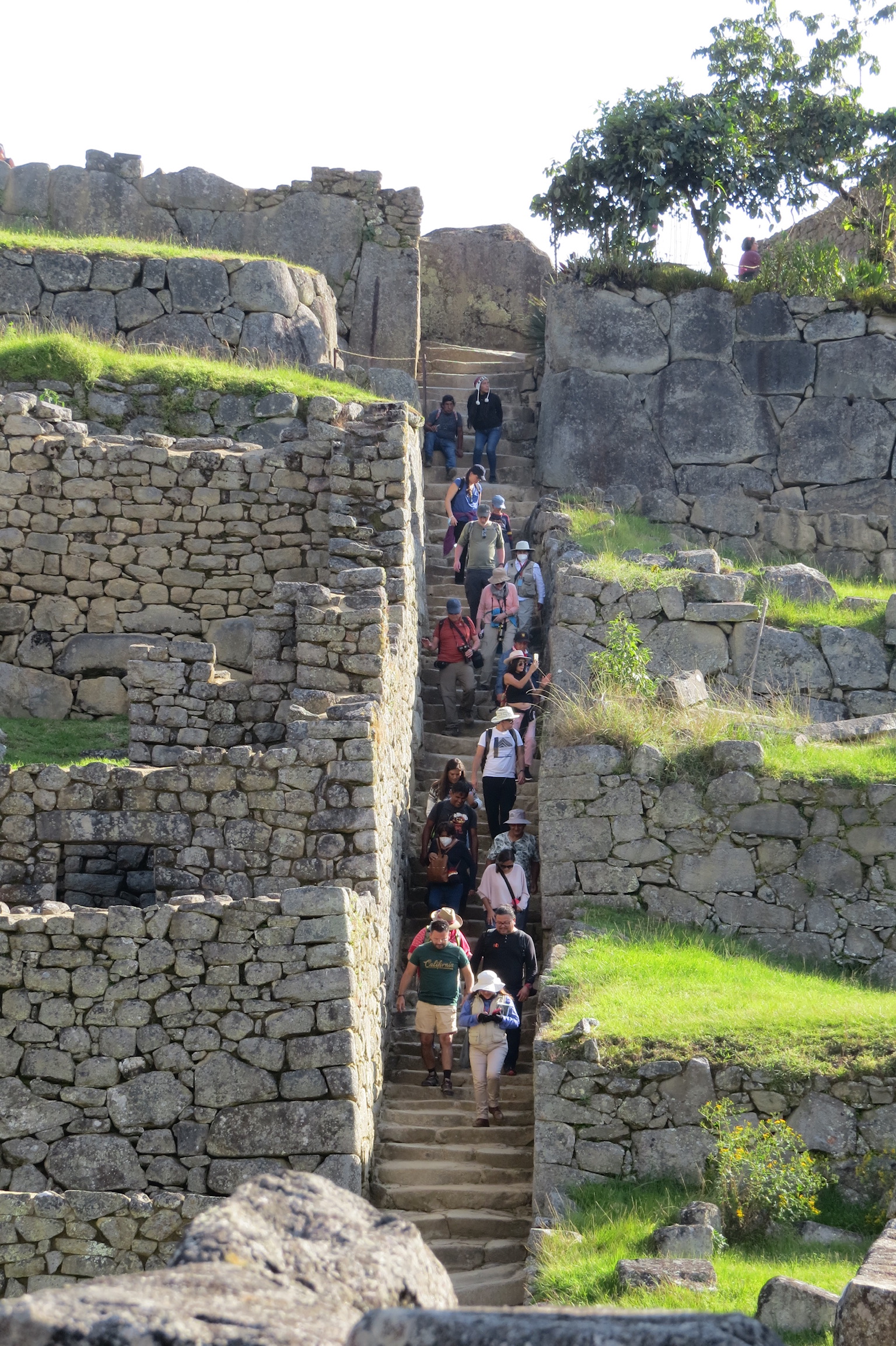
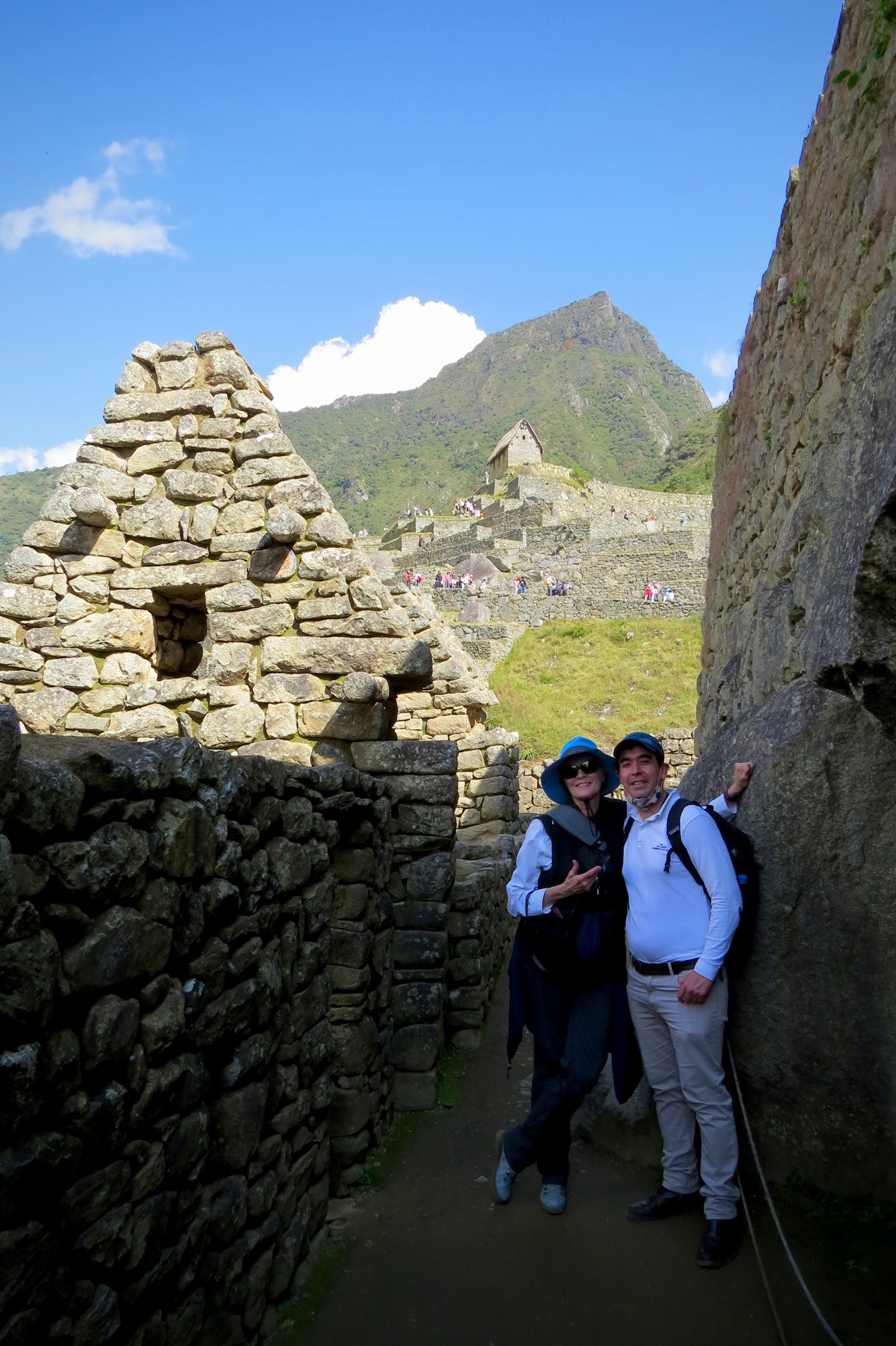
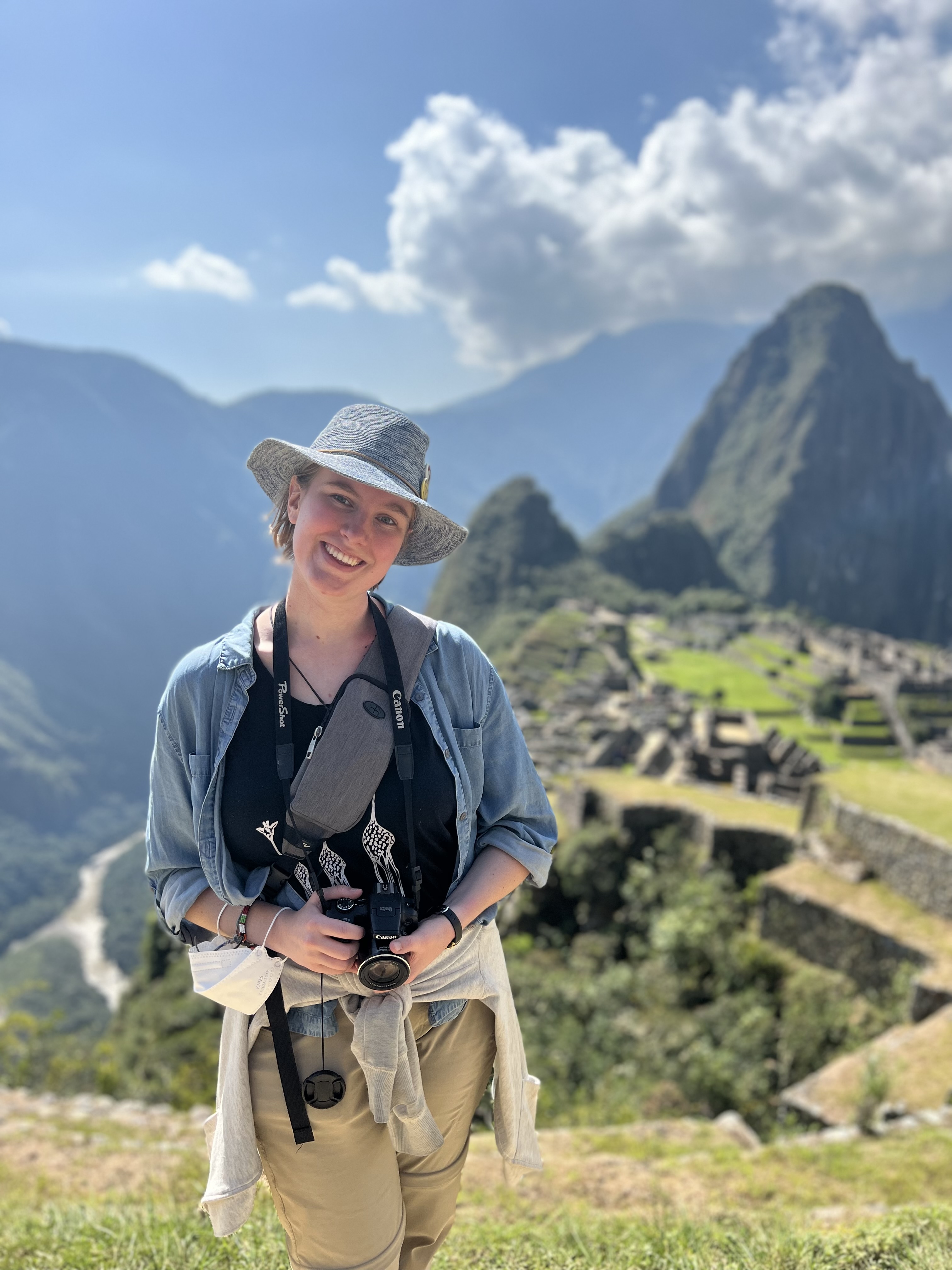
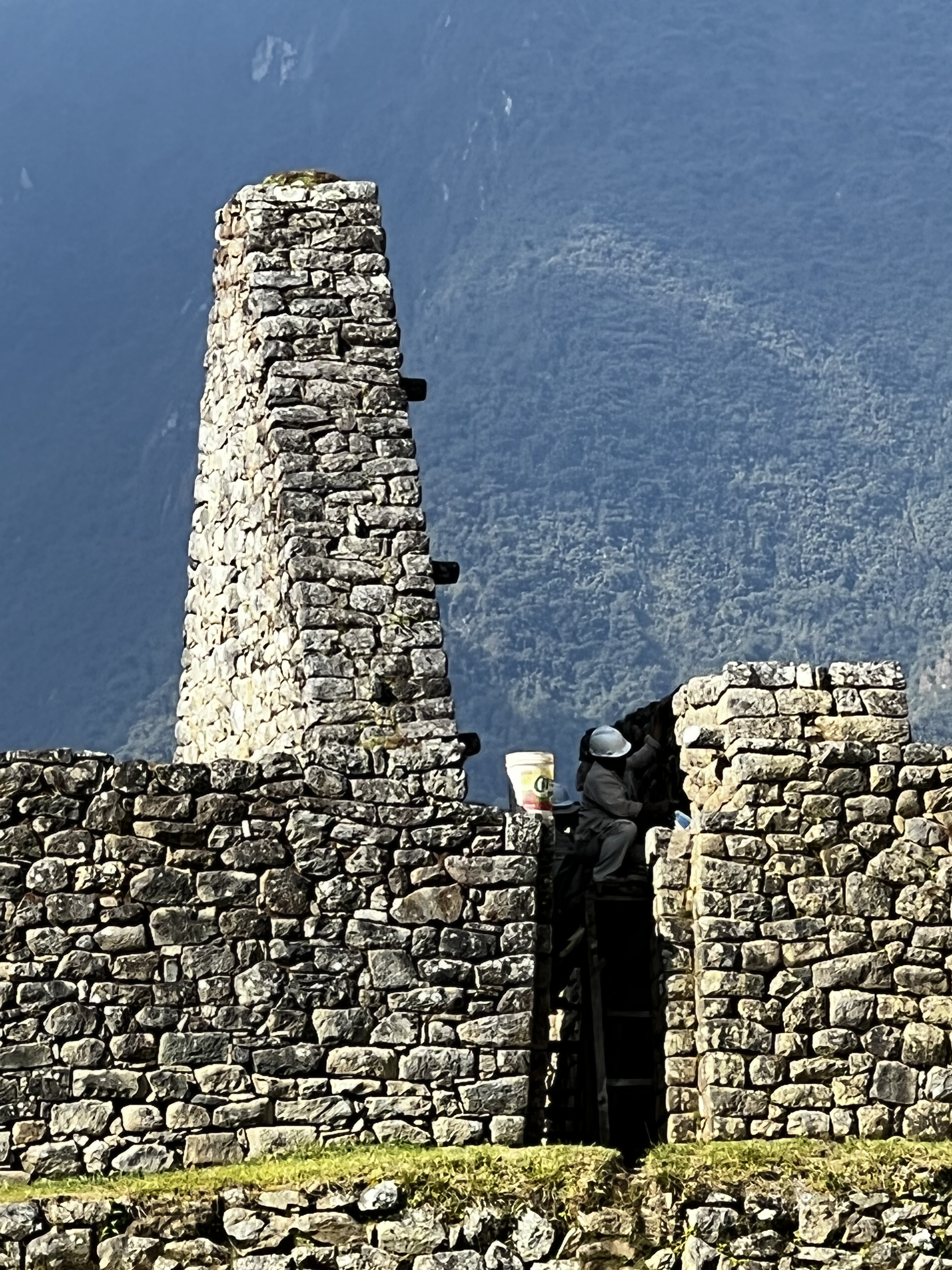
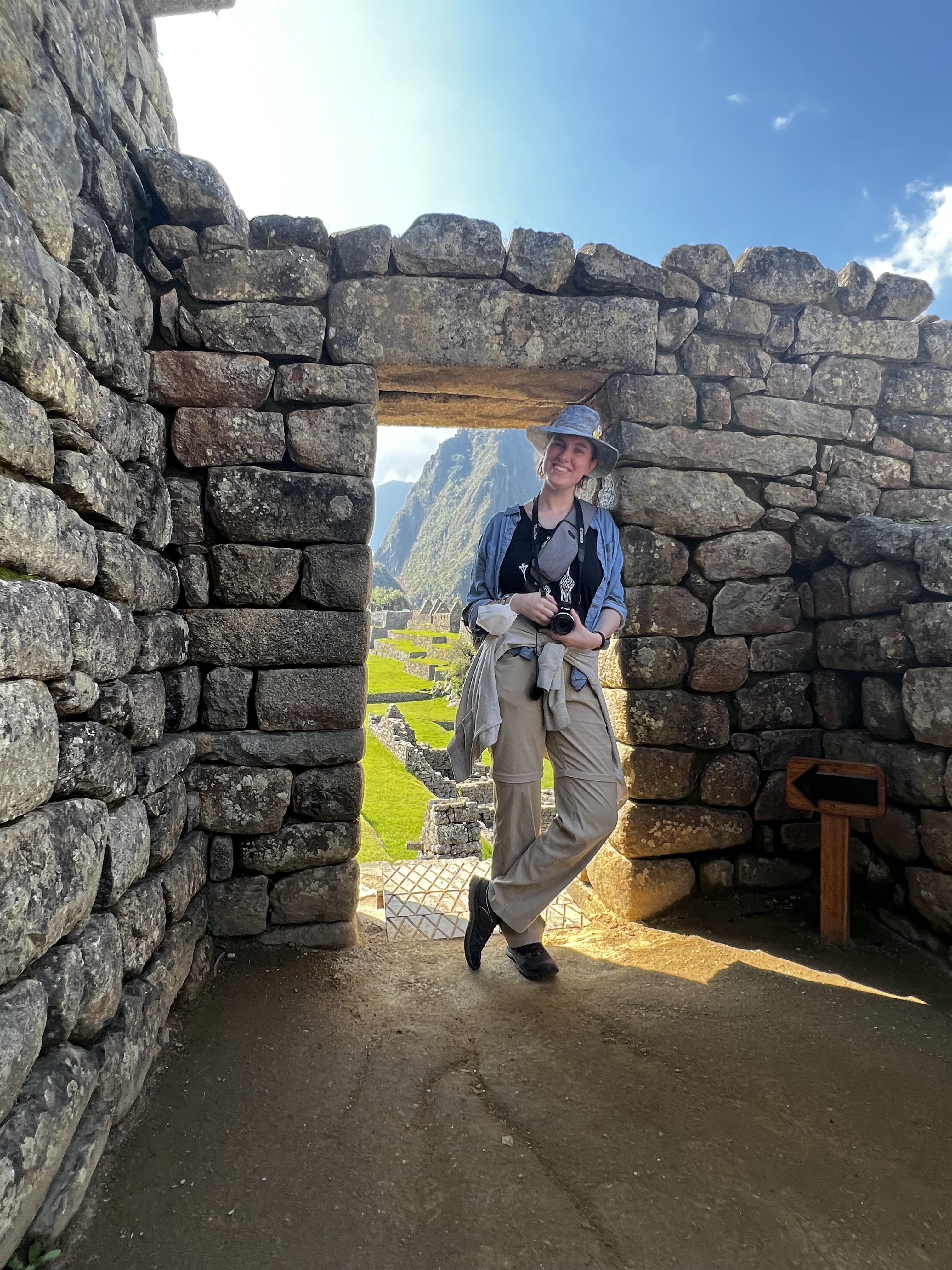
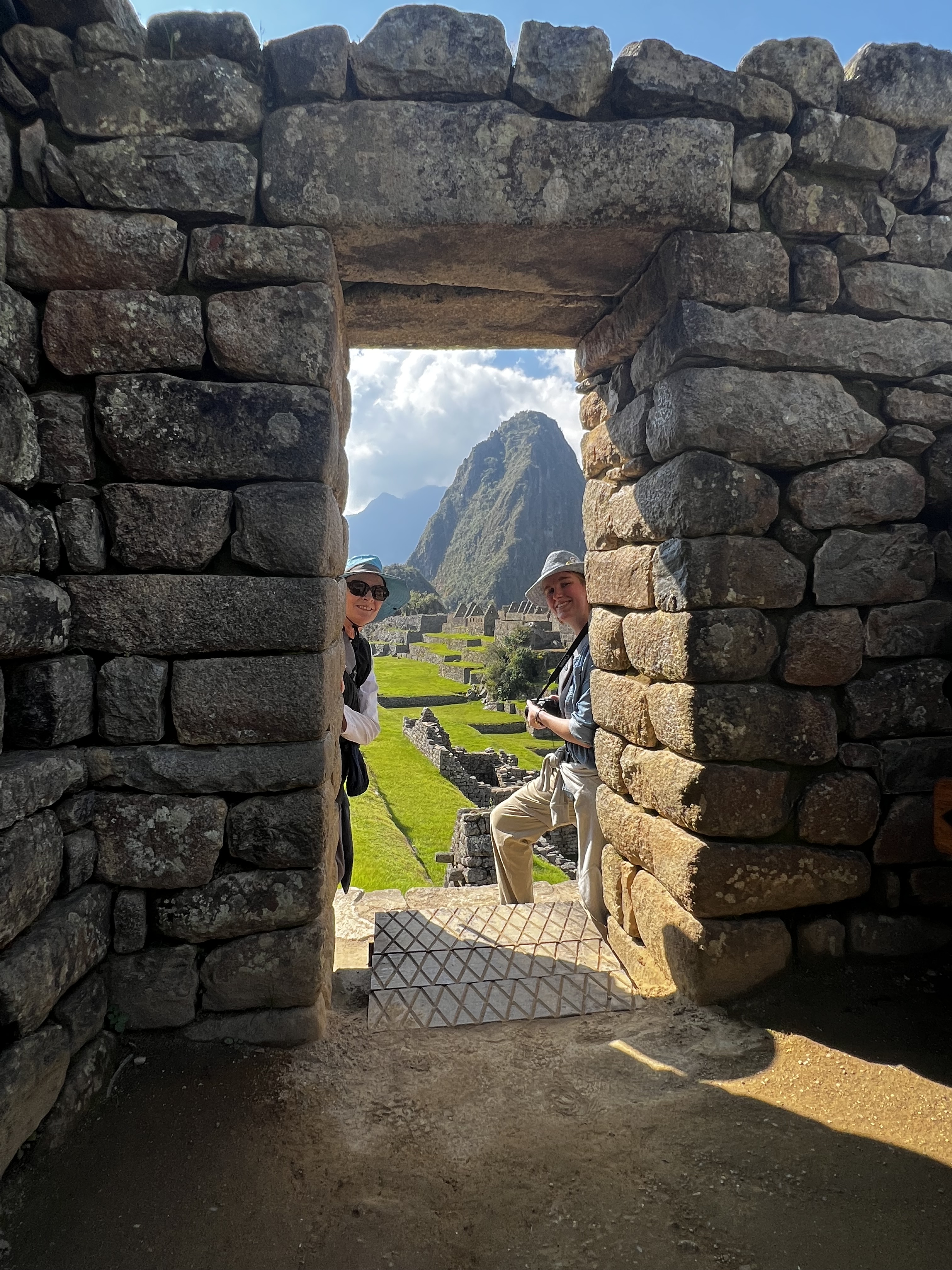
I can’t imagine what it was like living and working there. I love the photo of the guy working on the wall. I hope he feels blessed to work there! We do wish we could have spent the night at the Sanctuary Lodge and have had a more leisurely time to stroll around. I’d go back and visit – I’m really hoping Larkin can go back with friends and see it again someday!
Walking in awe…the rock work…the vistas…the greenery…all stunning…and we had to take a train back to Urubamba and a drive in our van to Cusco!
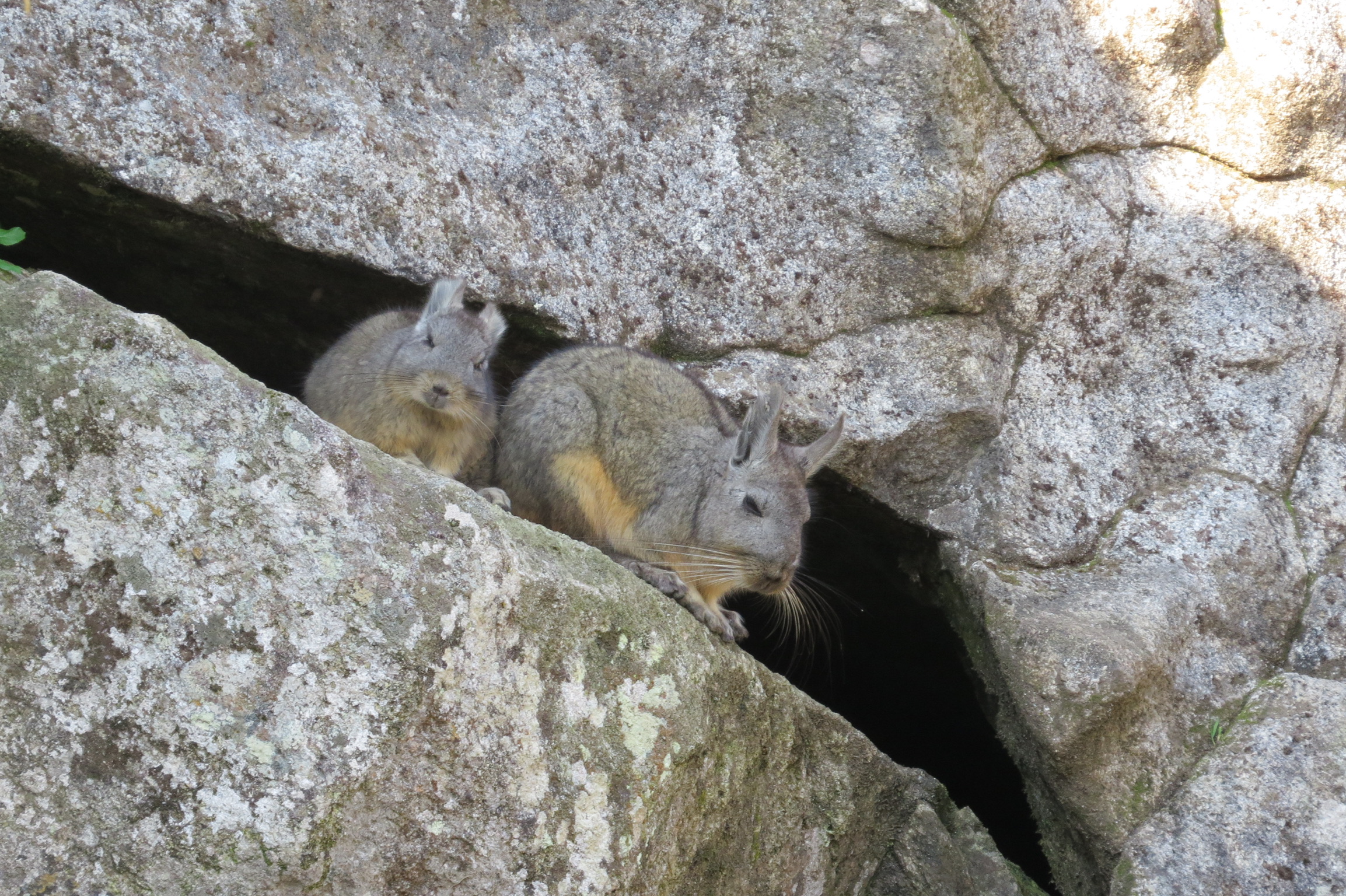
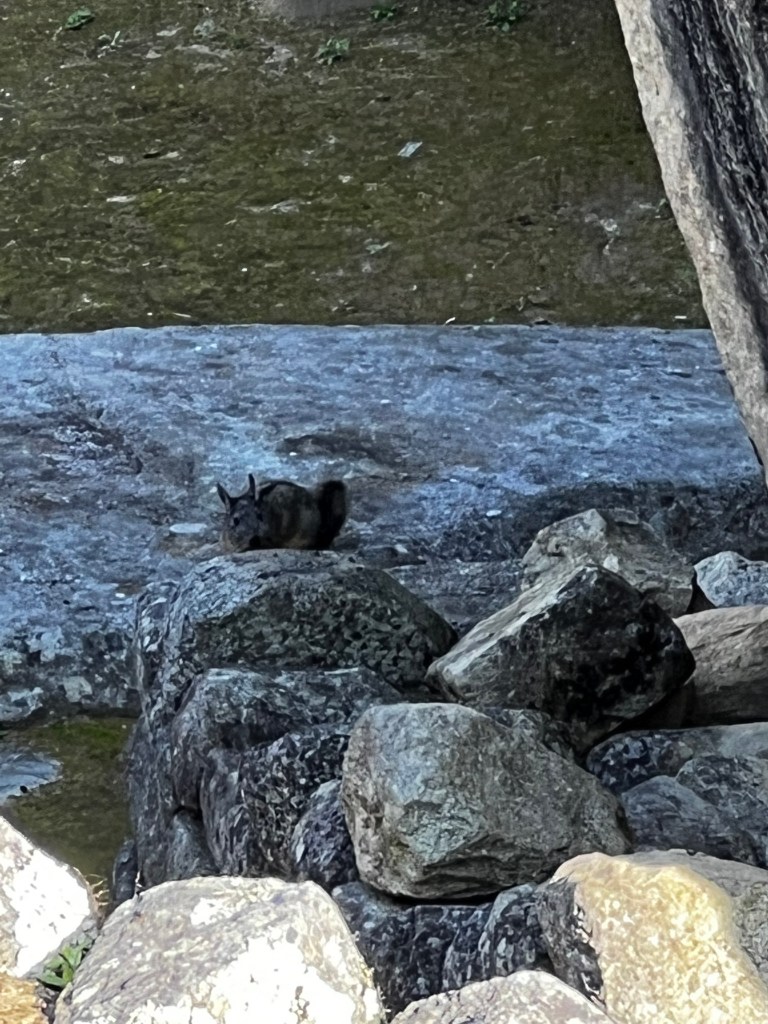
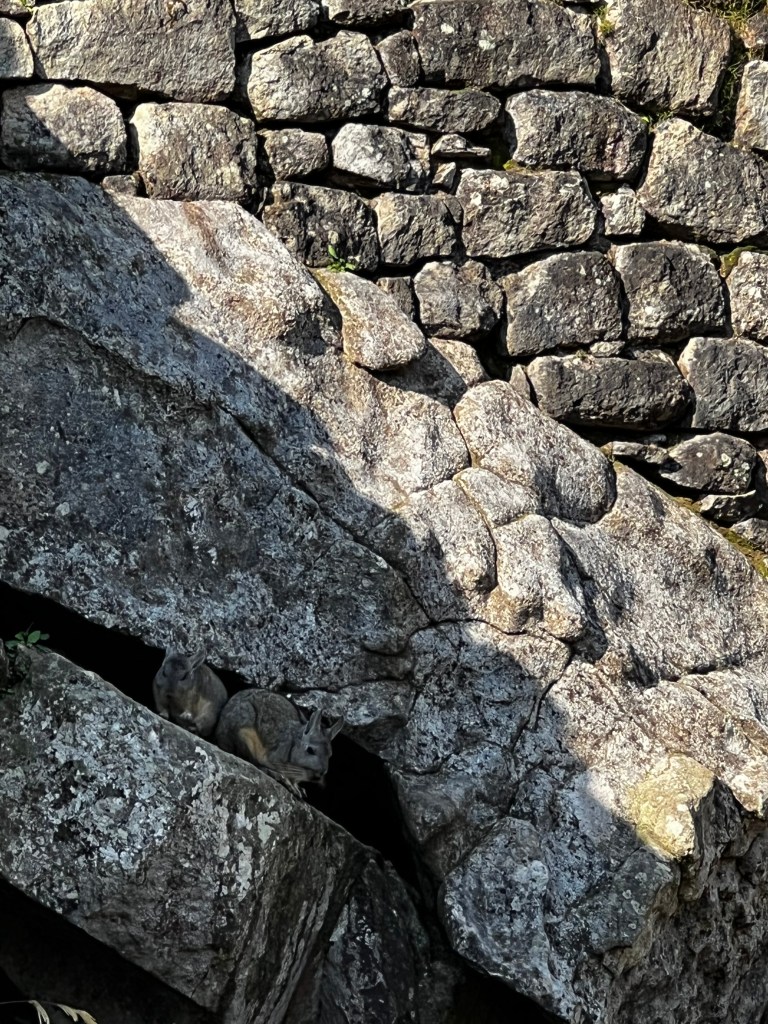
Chinchilla on the rocksAnother Chinchilla on the rocks
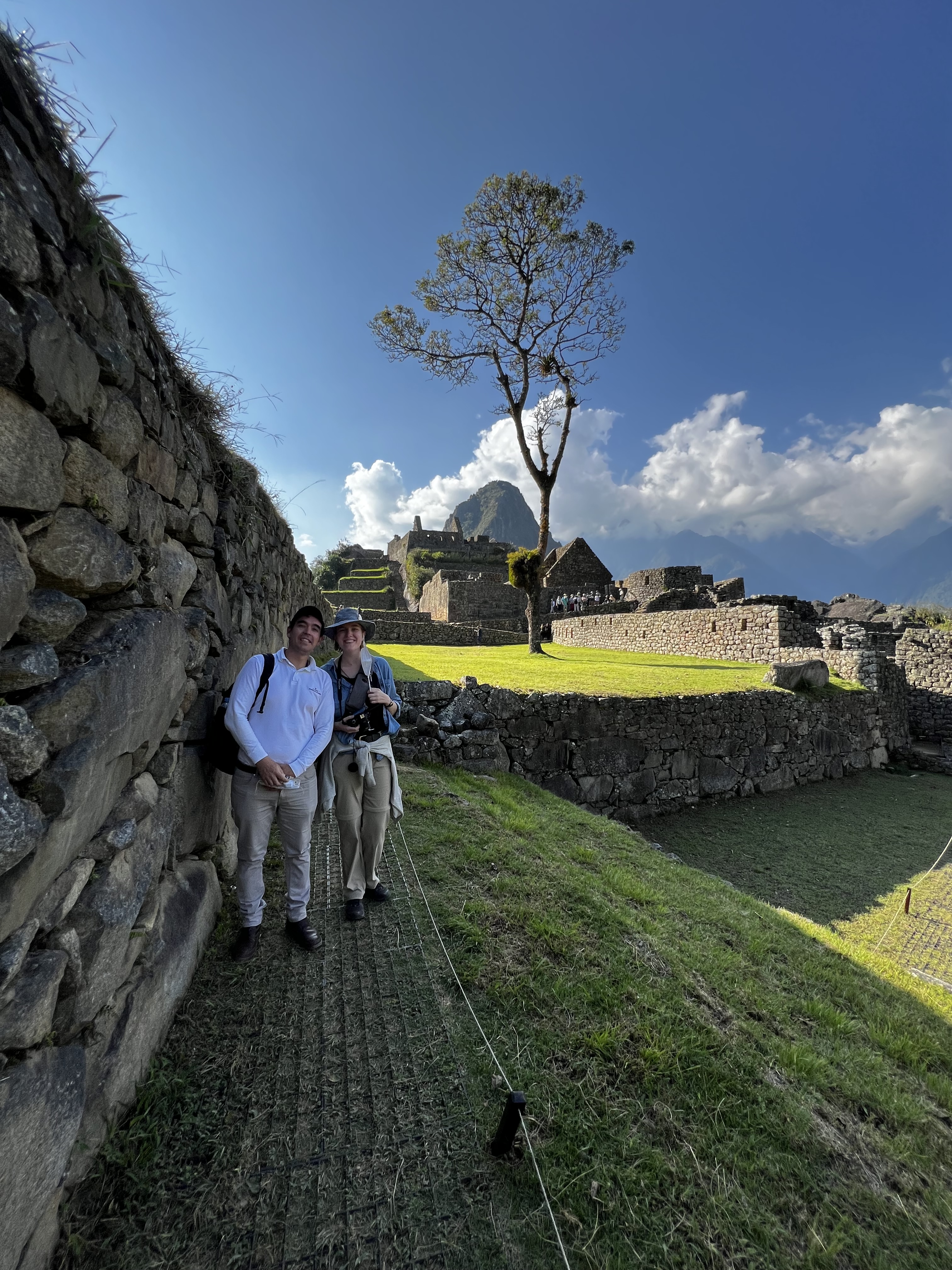
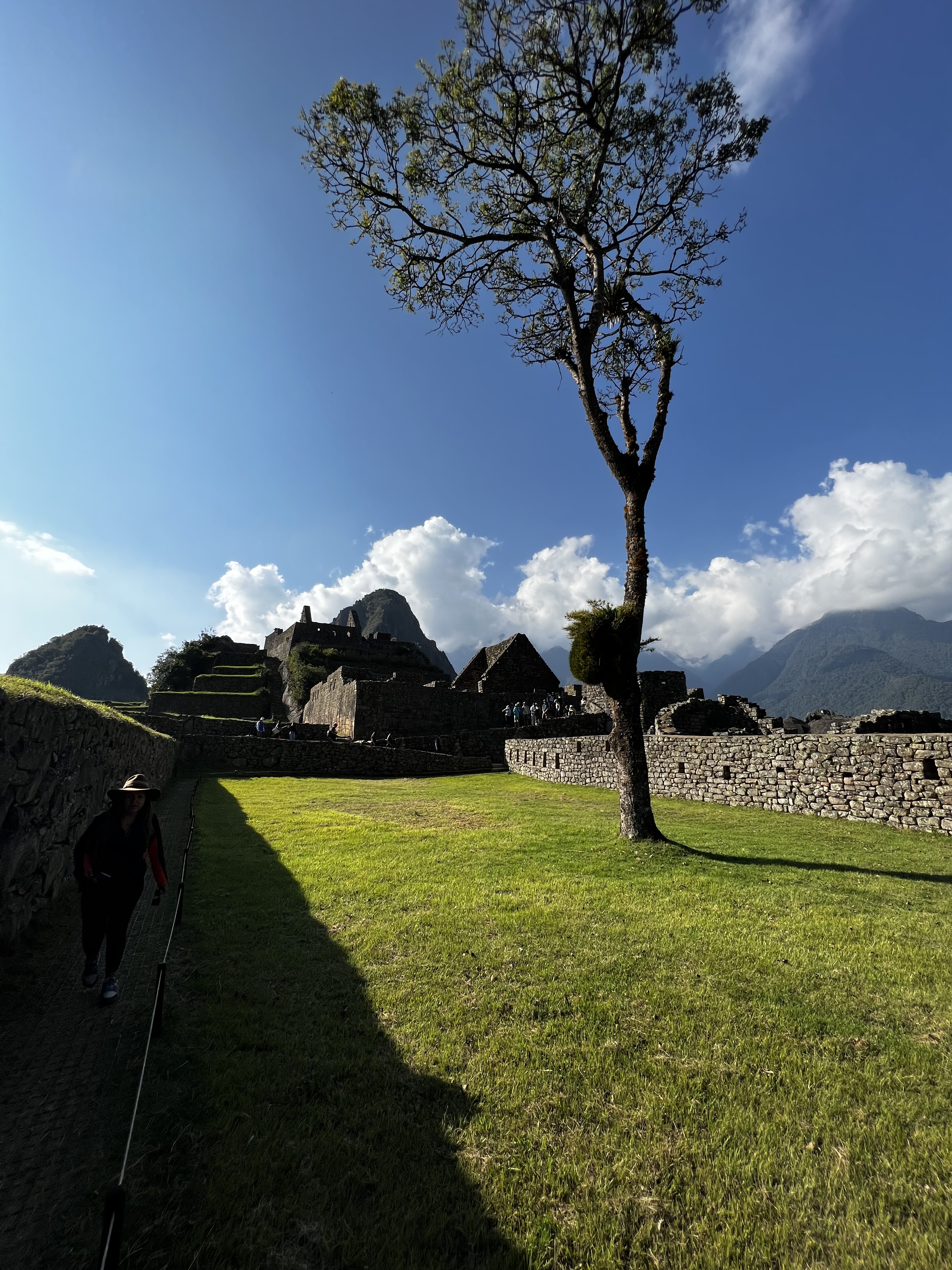
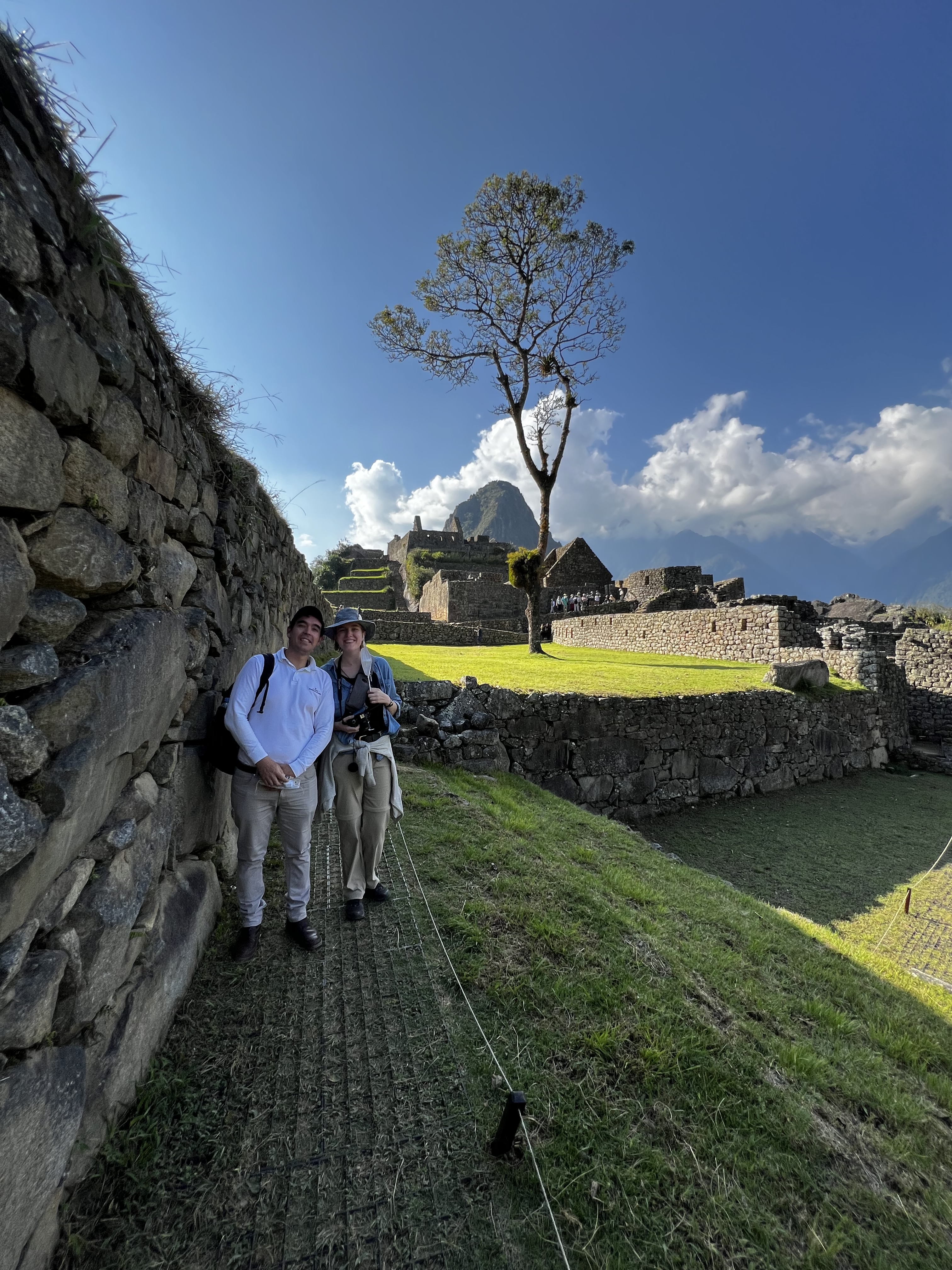
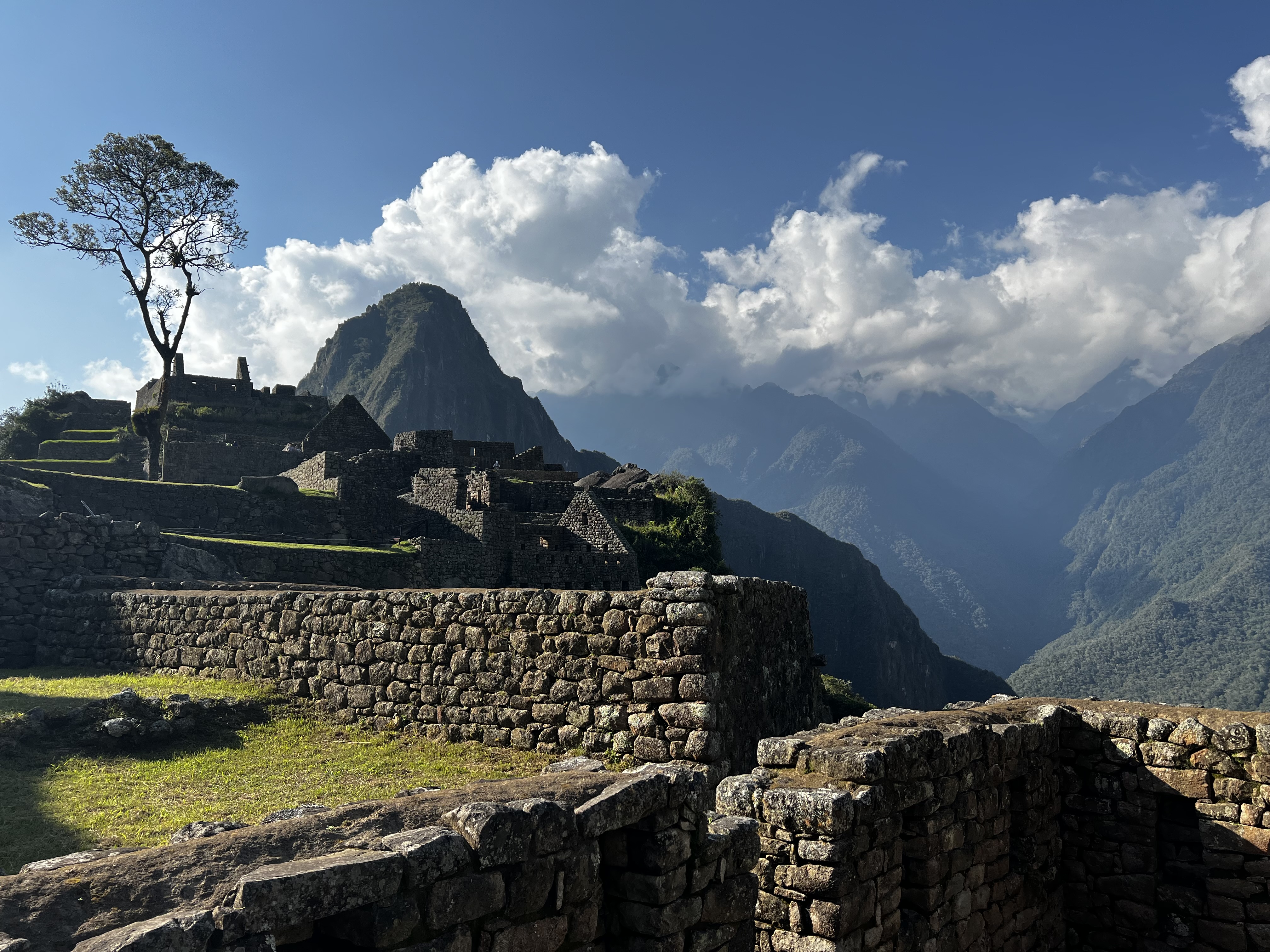
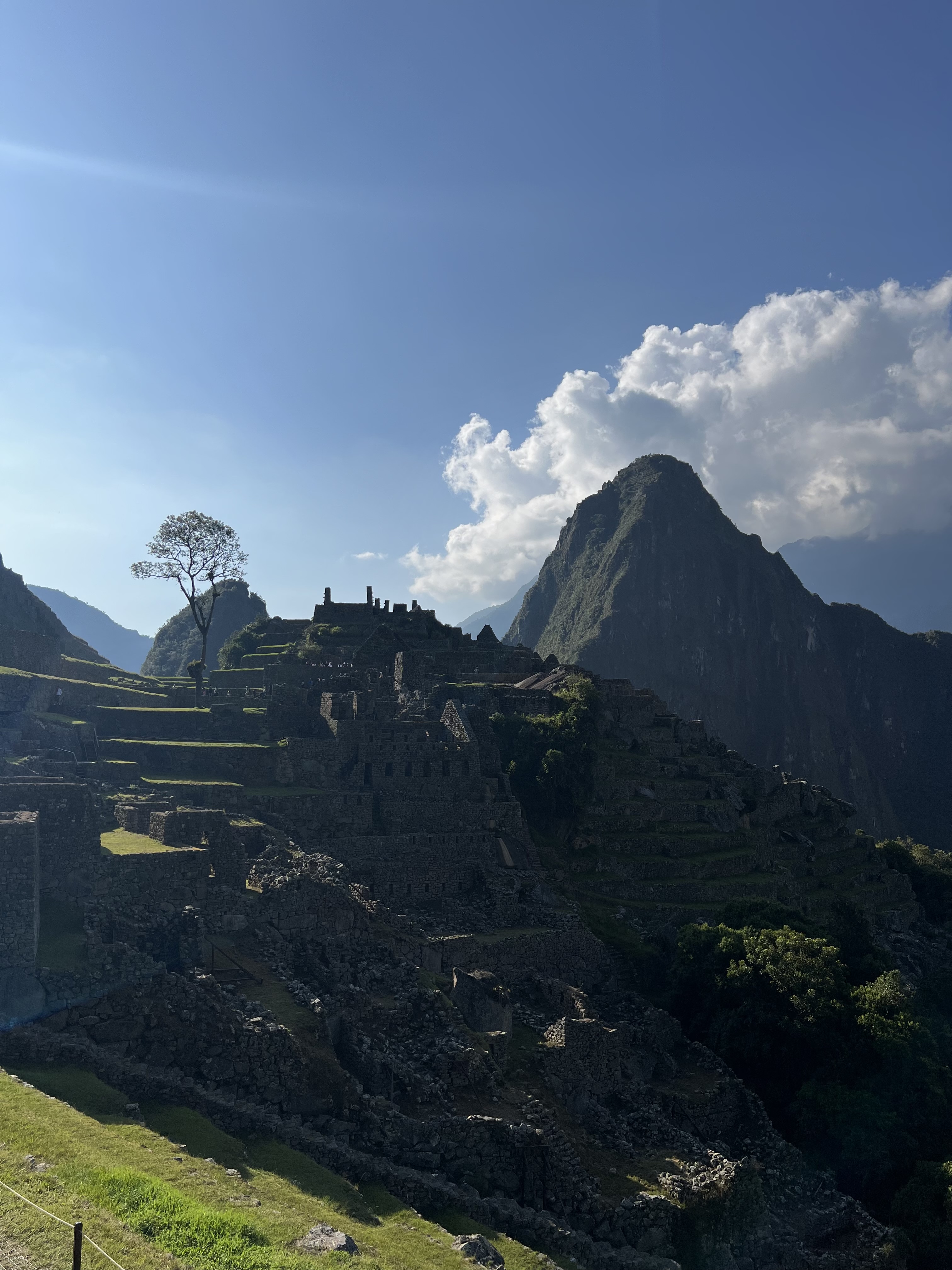
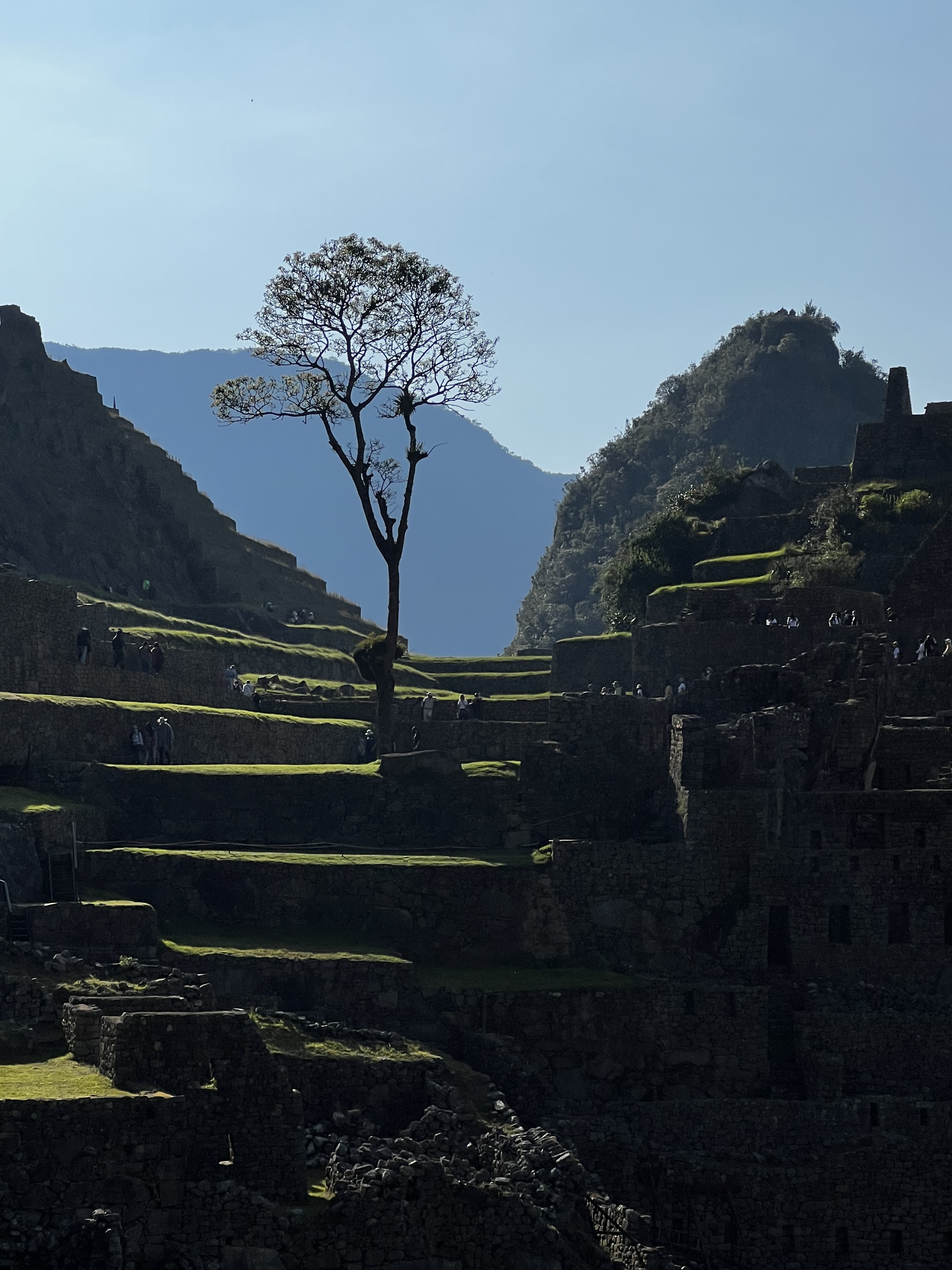
Where are the crowds? They are there but just not in the photographs. The lone tree showed up in many of my photos!
The exit, a final hug and goodbye and on our way out. We had tea in the Sanctuary Hotel while all the train passengers accumulated. Then another bus down the switchbacks to Agua Caliente. We had a few moments there in the market before we boarded the train (although we just walked through) to Urubamba. Just Magical!
Up next the Andean Explorer which had just started running again!
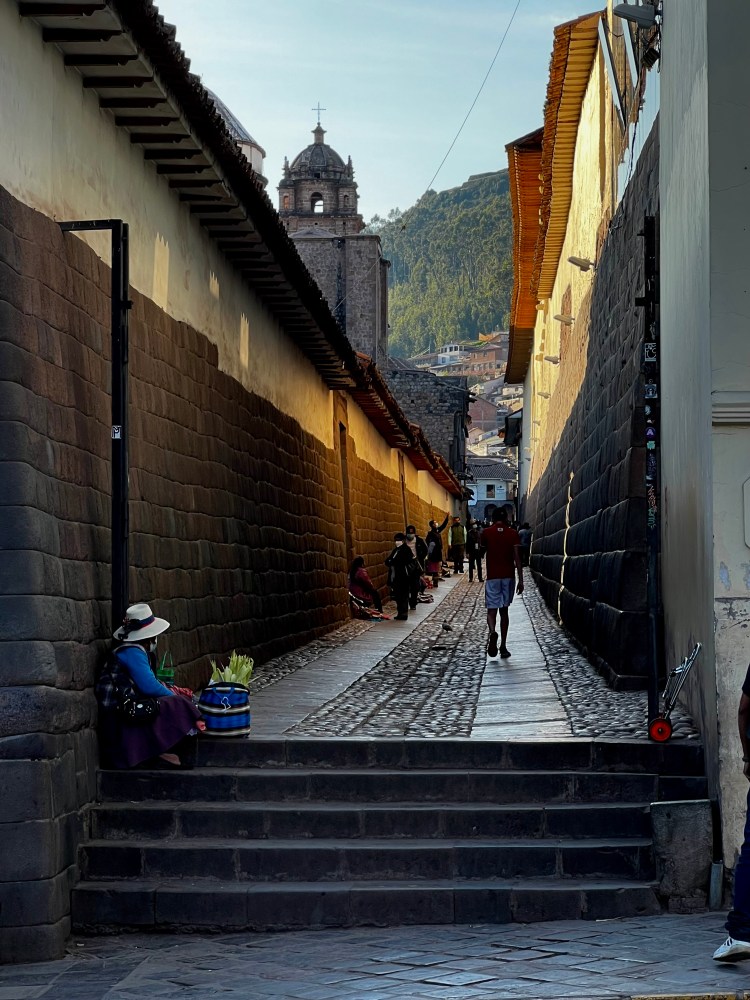
The shadows, light and architecture gave smiles at every turn –this alley is part of Amaru Kancha
What an adventure getting into Cusco the historic capital of the Inca Empire.
Gas prices rise and lets have a strike! We must strike and demand more money!! The price of gas has hit us all in our pockets. However, it was the first time that workers decided to stop the trains not just local businesses etc.! We were told while still in Lima our hotel had changed and our itinerary was to change. When we landed in Cusco, the parking lot was mostly empty except for police and buses and we had no clue how to find our ride. Police were directing people to the buses to be taken into the town center.
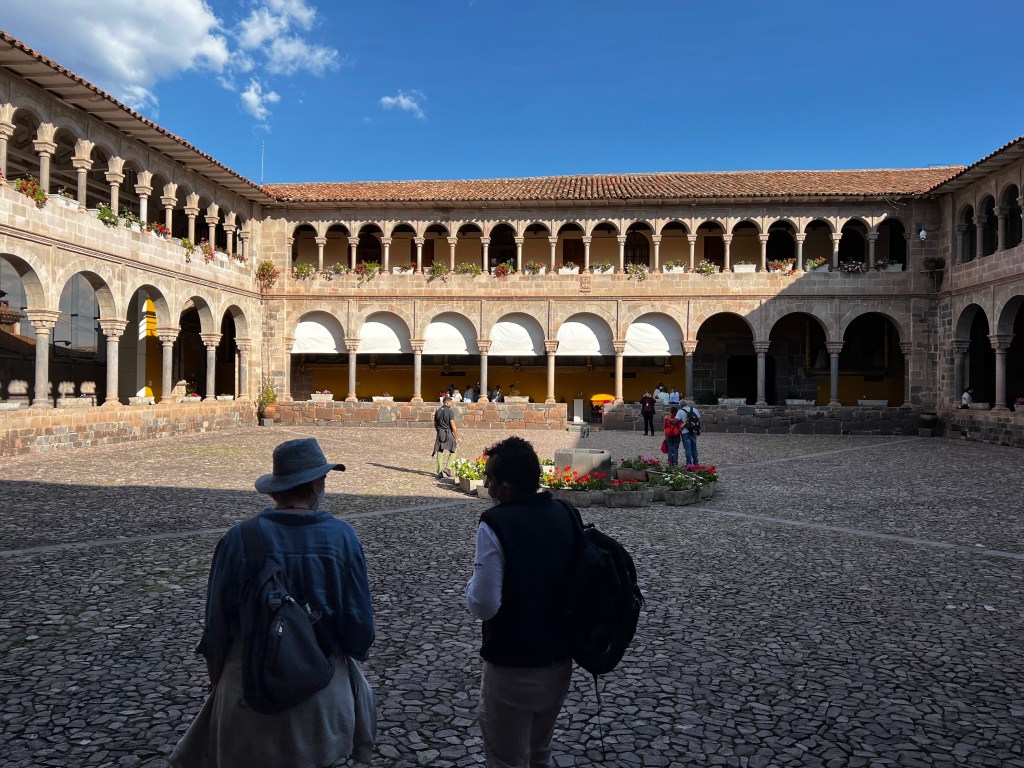
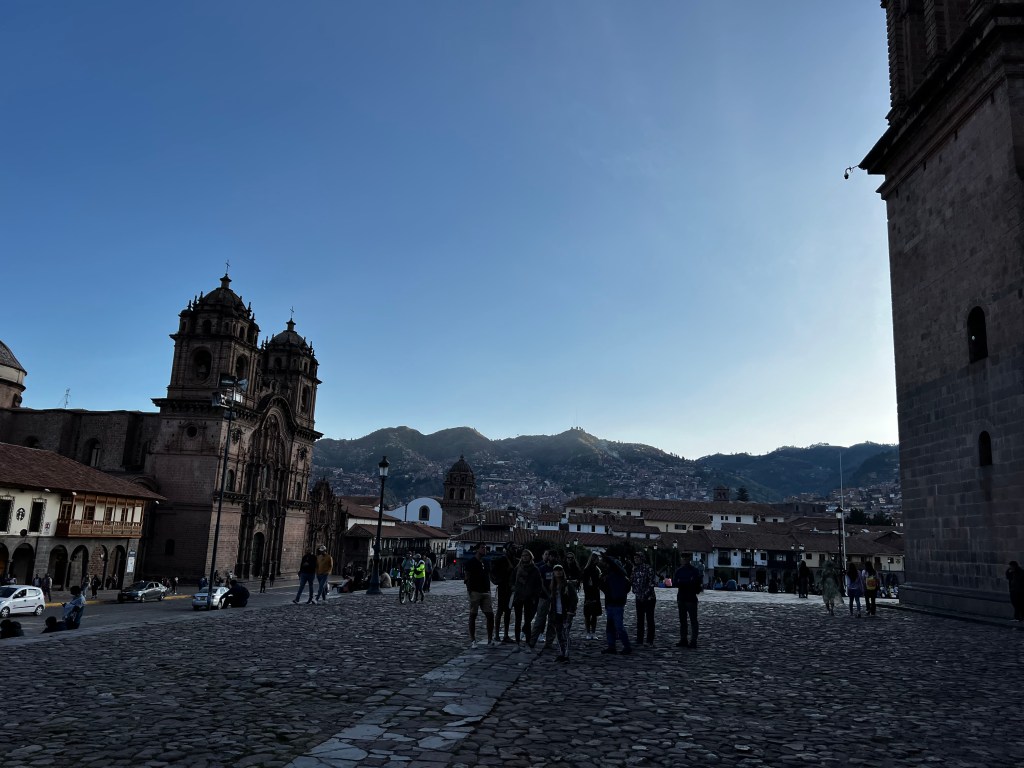
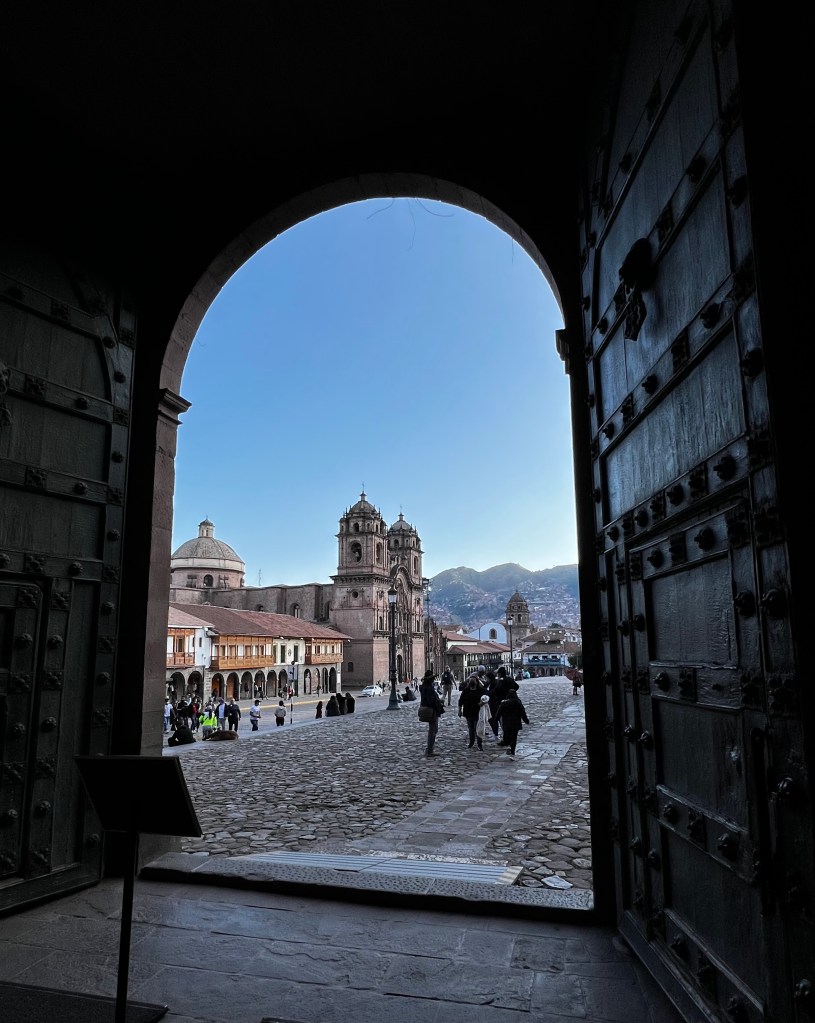
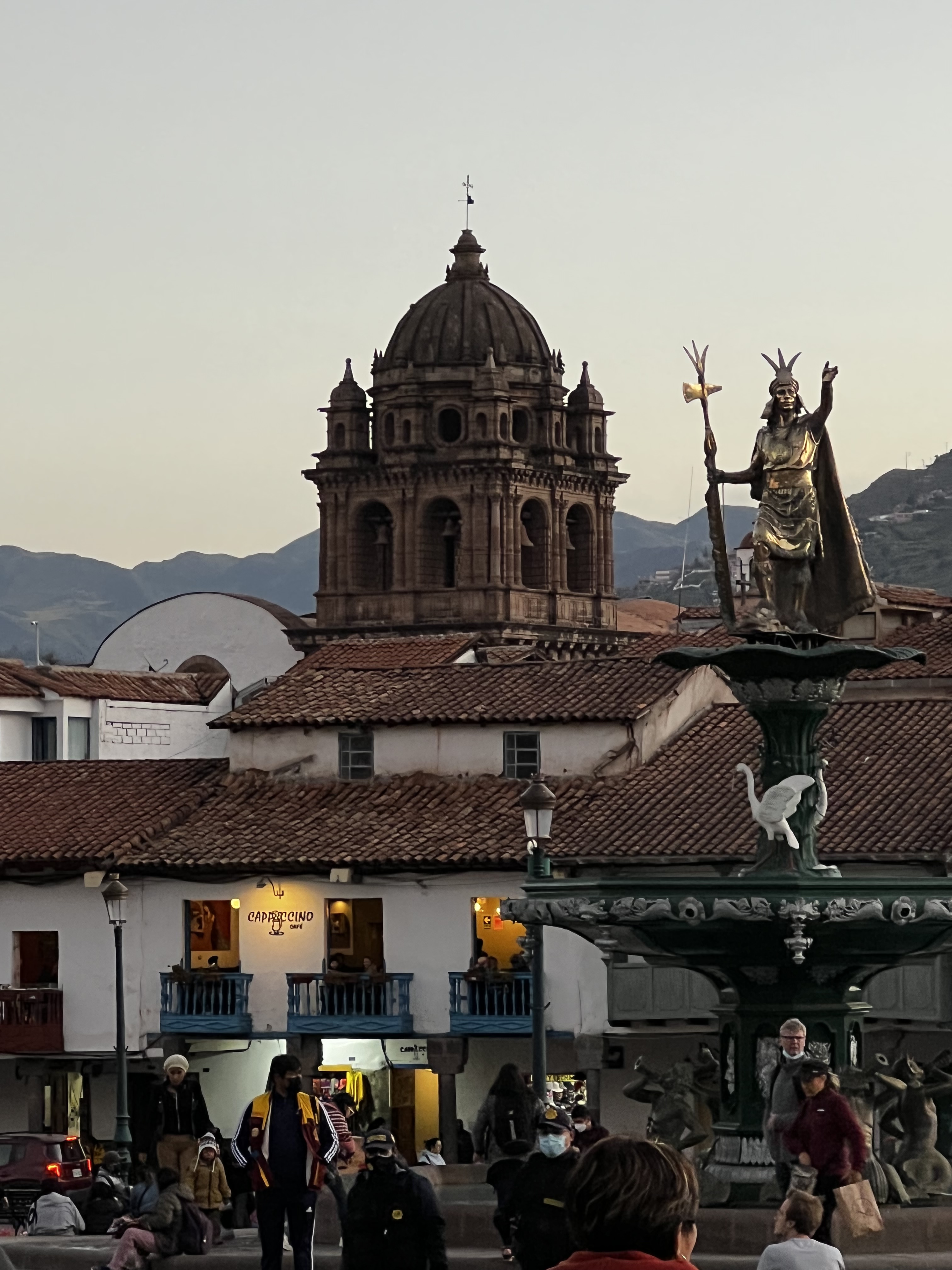
I decided to turned Verizon on and called the local number we were given by Belmond our travel group. I figured $10 was a worthy investment. We were told to walk out the gate rolling our luggage (once again we were blessedly carry on!) – lo and behold we found our name on a sign. We were rushed across the street to waiting vans and had to follow other vans as it was “safer.” I have no photos as we crept past one street toward another as many streets were blocked by logs and people and piles of trash. The entire time we felt safe. There was no violence connected with the strike only inconvenience to tourists and businesses. We eventually arrived at our last minute hotel a JW Marriott – El Convento which was about two blocks from the town square. Last minute hotels that were not Belmond were hard to find. People were stuck in Machu Picchu at the Sanctuary hotel and people in Cusco couldn’t get to Machu Picchu due to the railroad closures. We were supposed to be over the hill in the sacred valley to take the train to Machu Picchu from an overnight stay at Rio Sagrado…the strike continued. So we enjoyed Cusco first! First off Sergio our guide started by showing us areas around the Plaza de Armas.
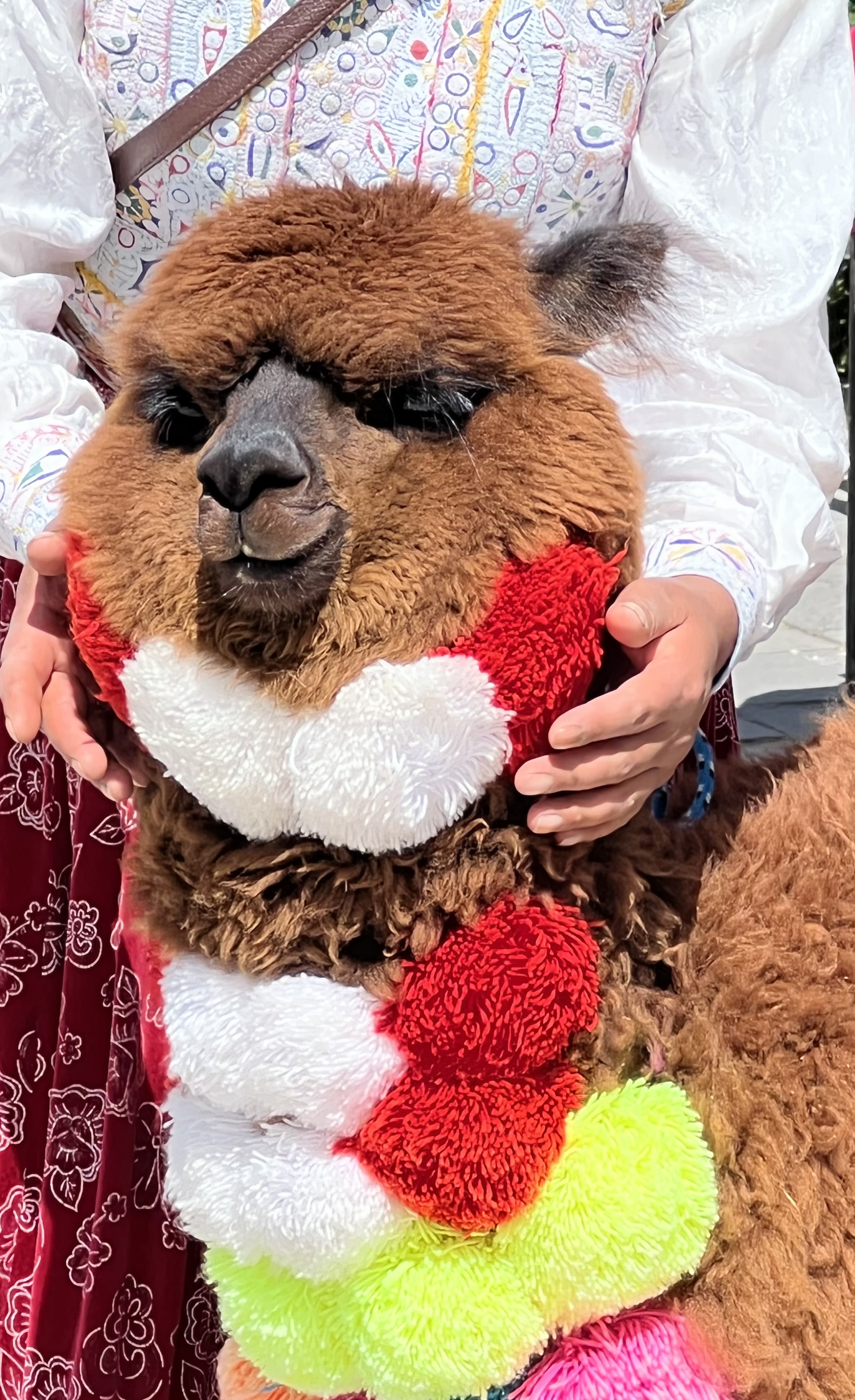
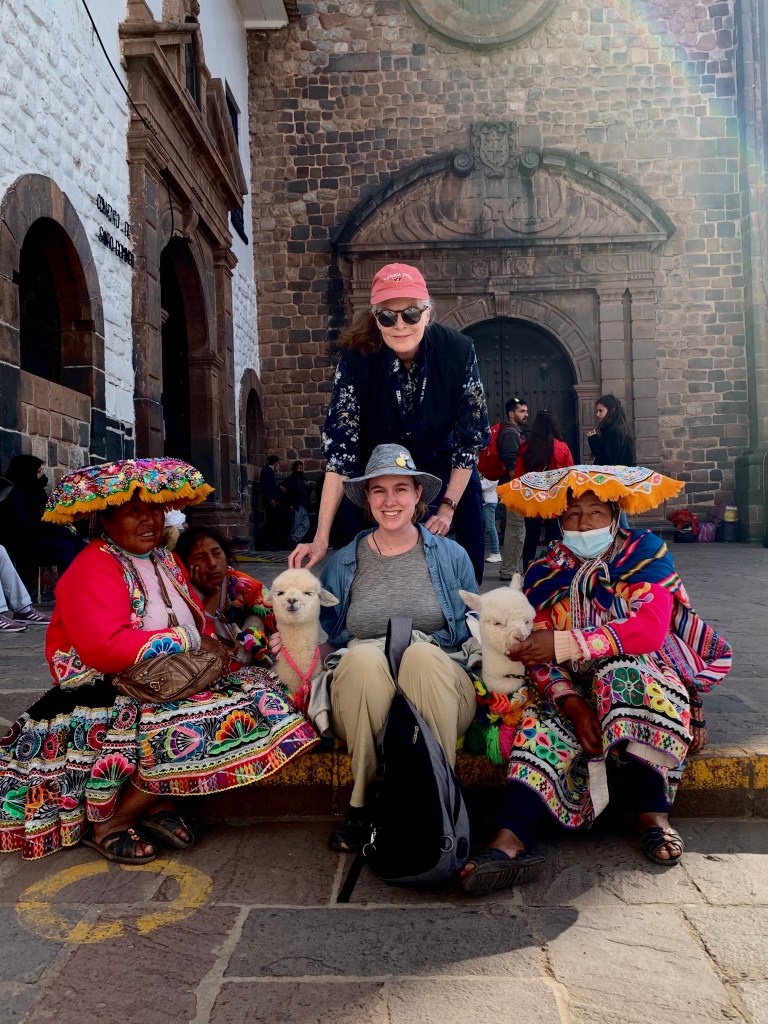
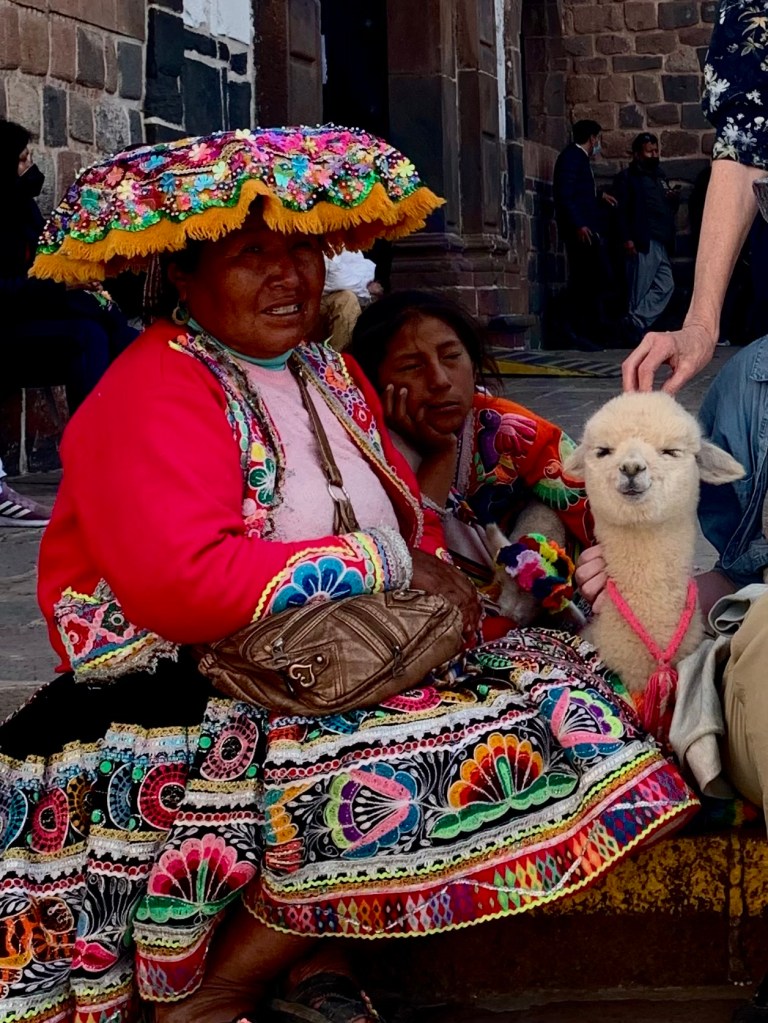
Loving Alpacas and their ownersTheir daughter is bored! Snooze! Love the colors!
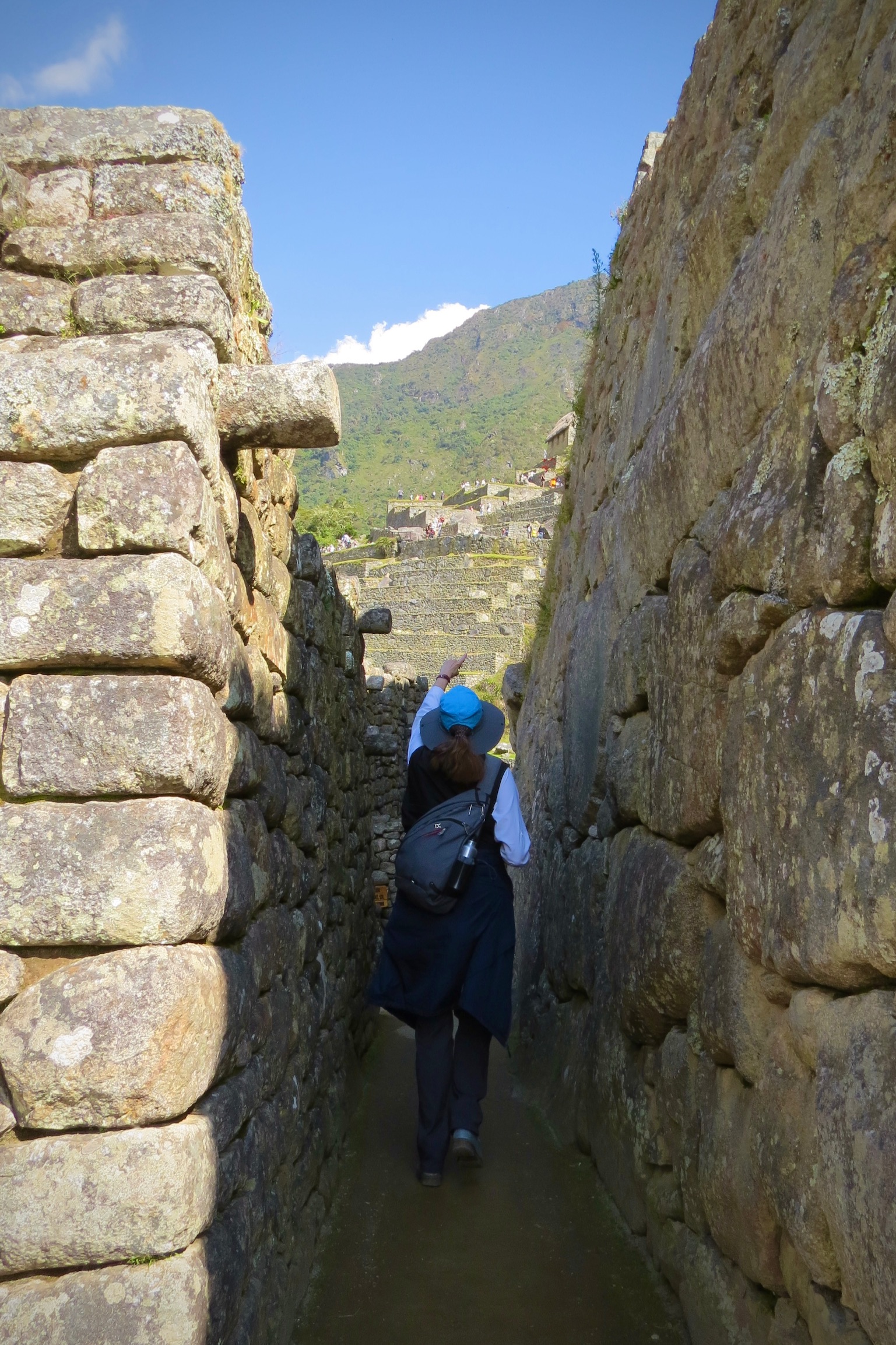
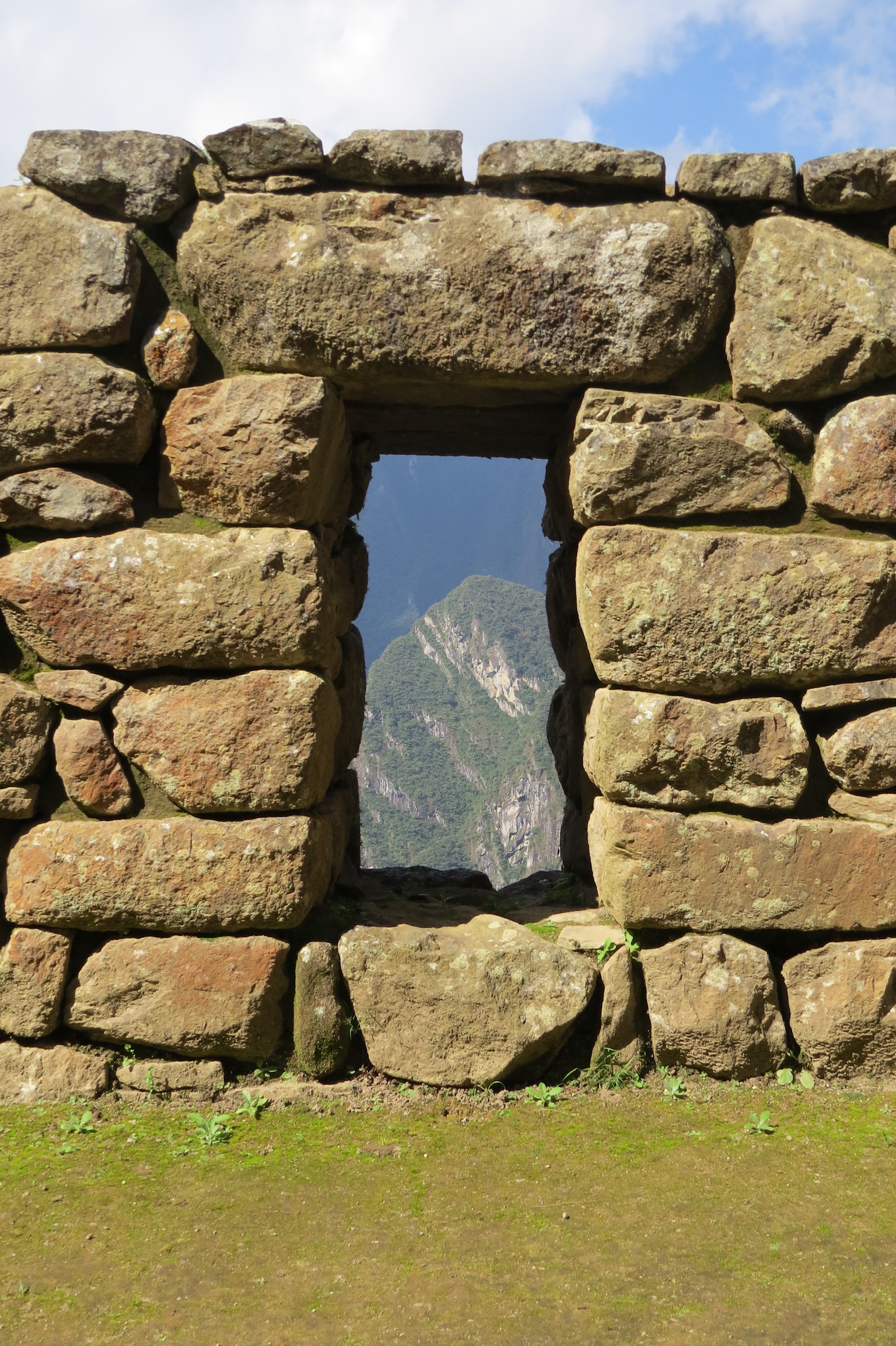
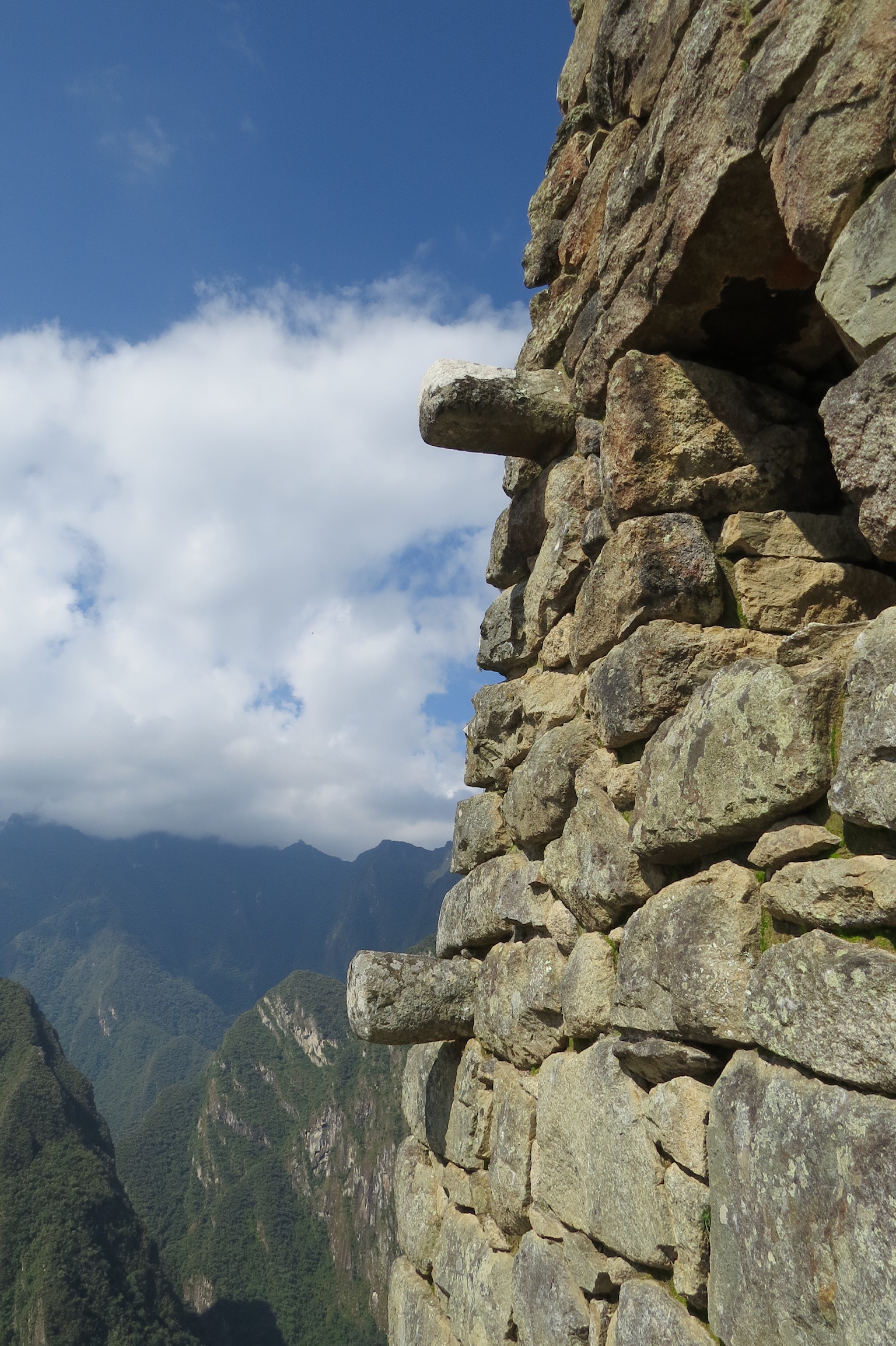
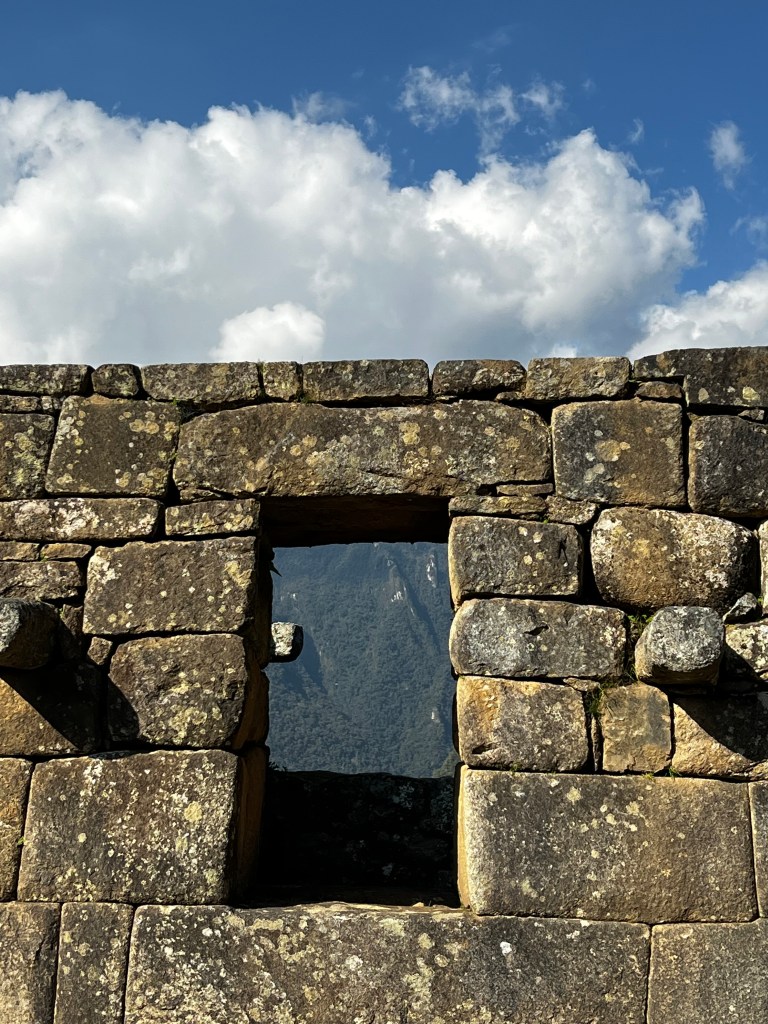
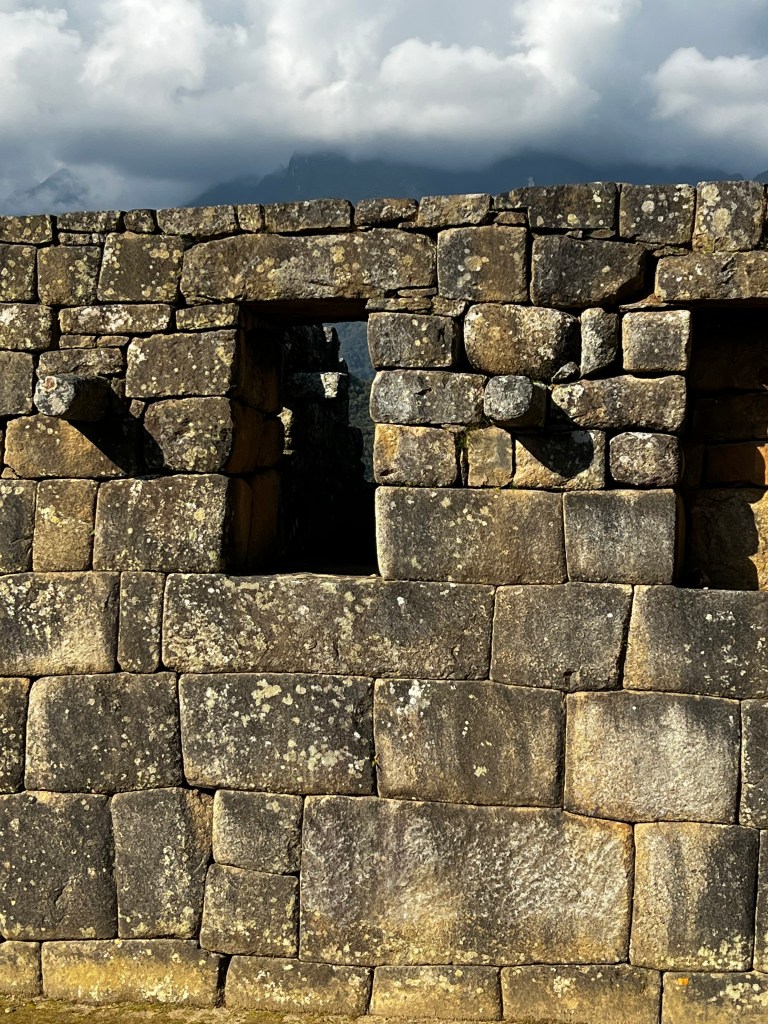
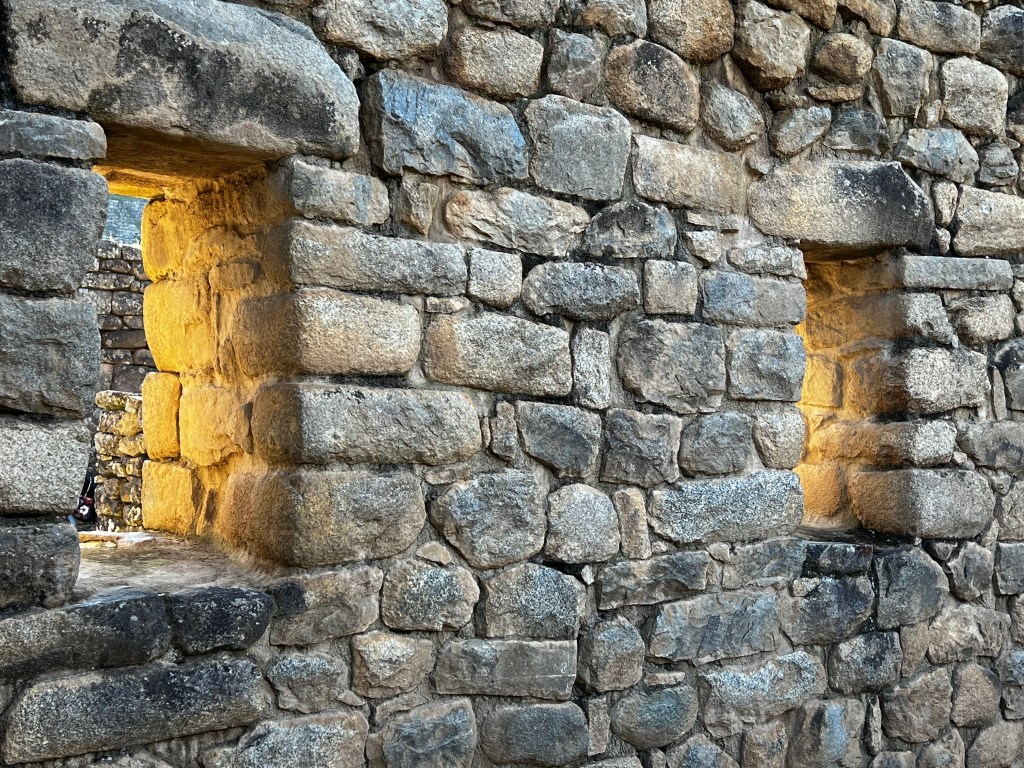
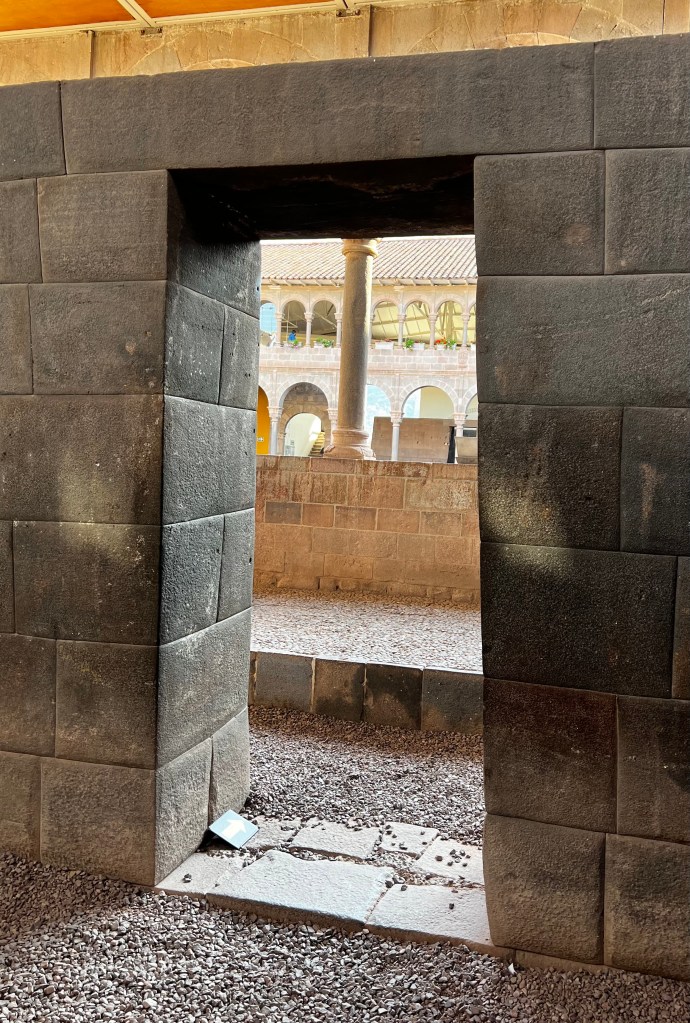
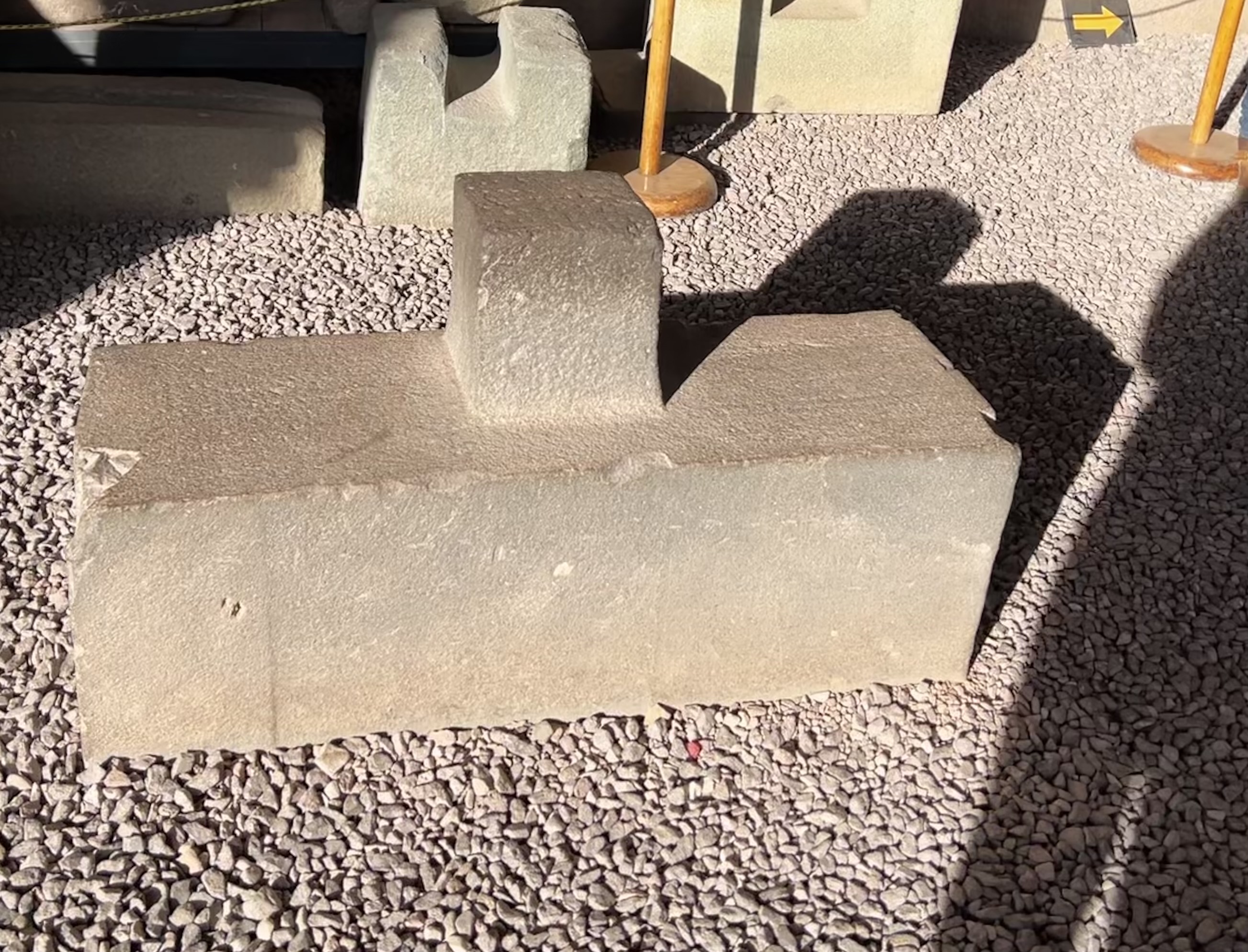
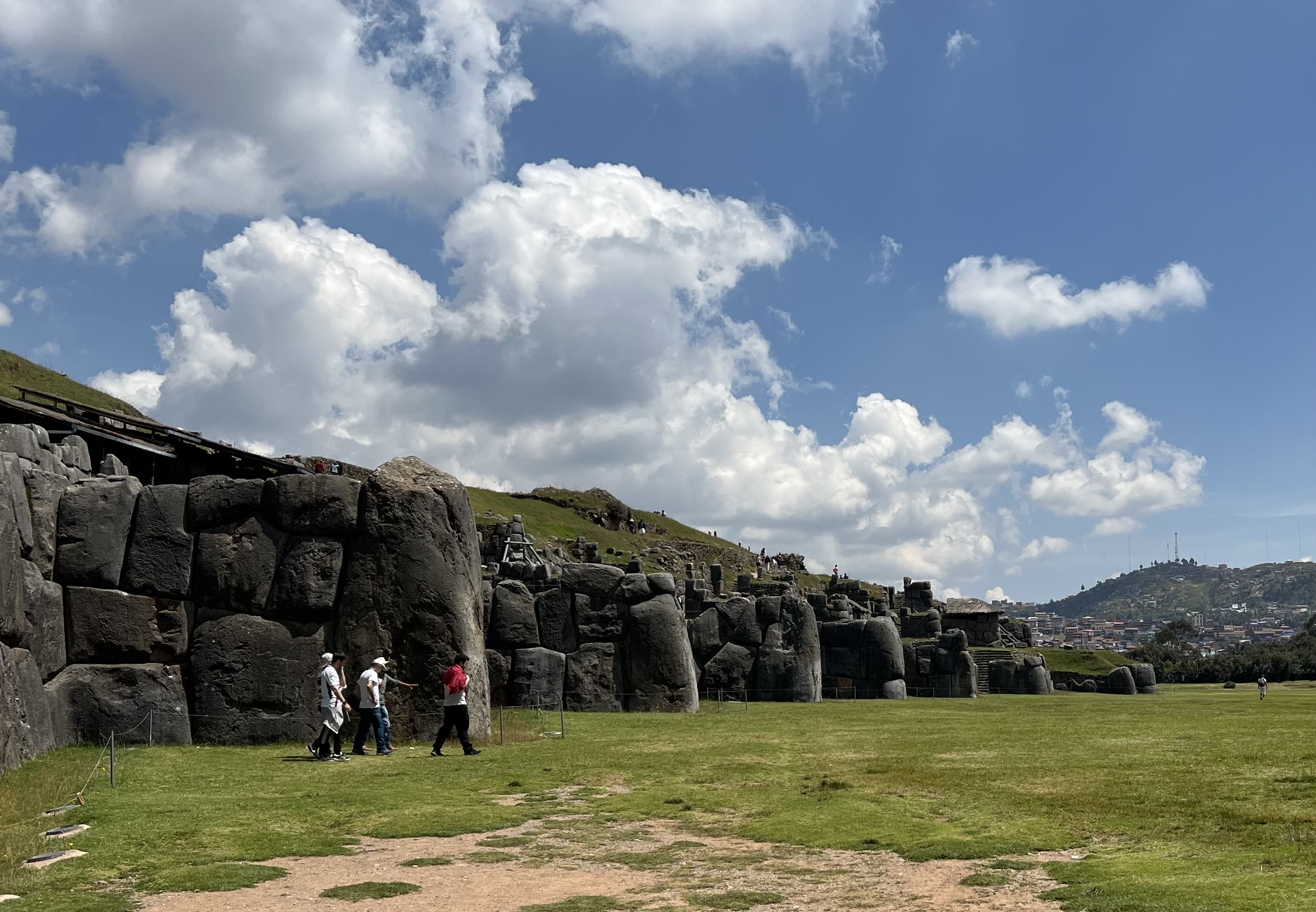
Quechua is the language and people of Peru and the other countries of the Andes. These people are pre-Incan. There are many different dialects. The Incan palaces in Cusco used a Cyclopean building style which mean large blocks of stone placed using no mortar…the most famous one known is Machu Picchu and we awaited news of when we could finally see it! To see this exquisite work like the walls of the top picture close up is just amazing. Perfectly cut and angled to fit just right with basically no major earthquake issues.
You can note the angles and snugness of the blocks
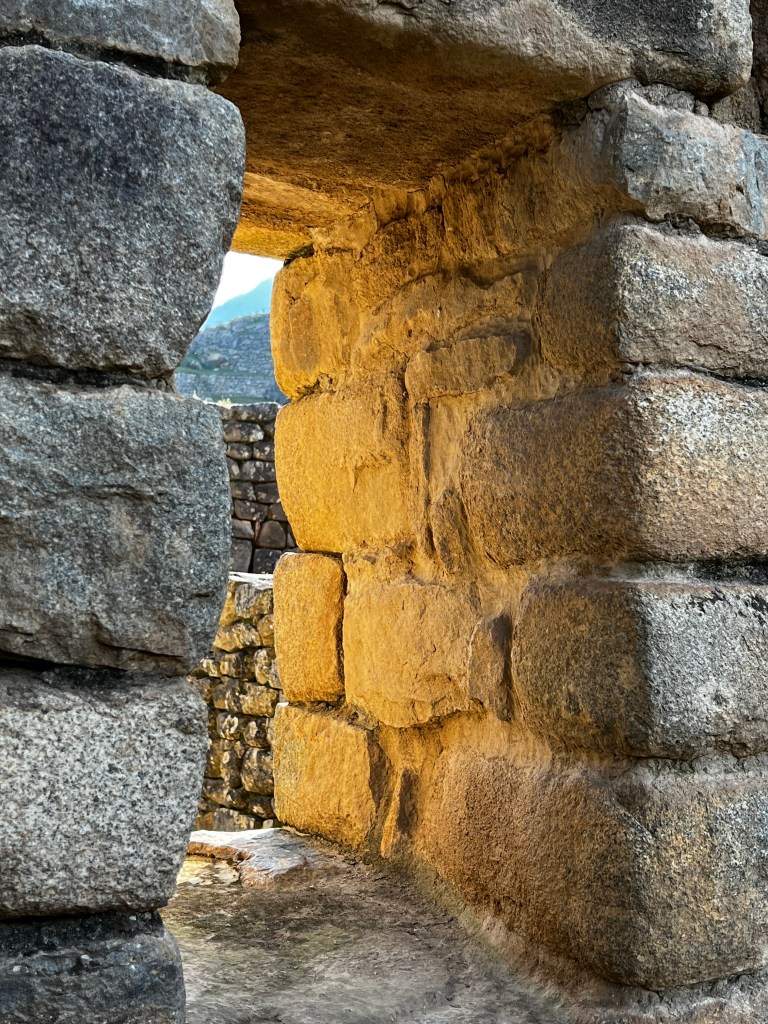
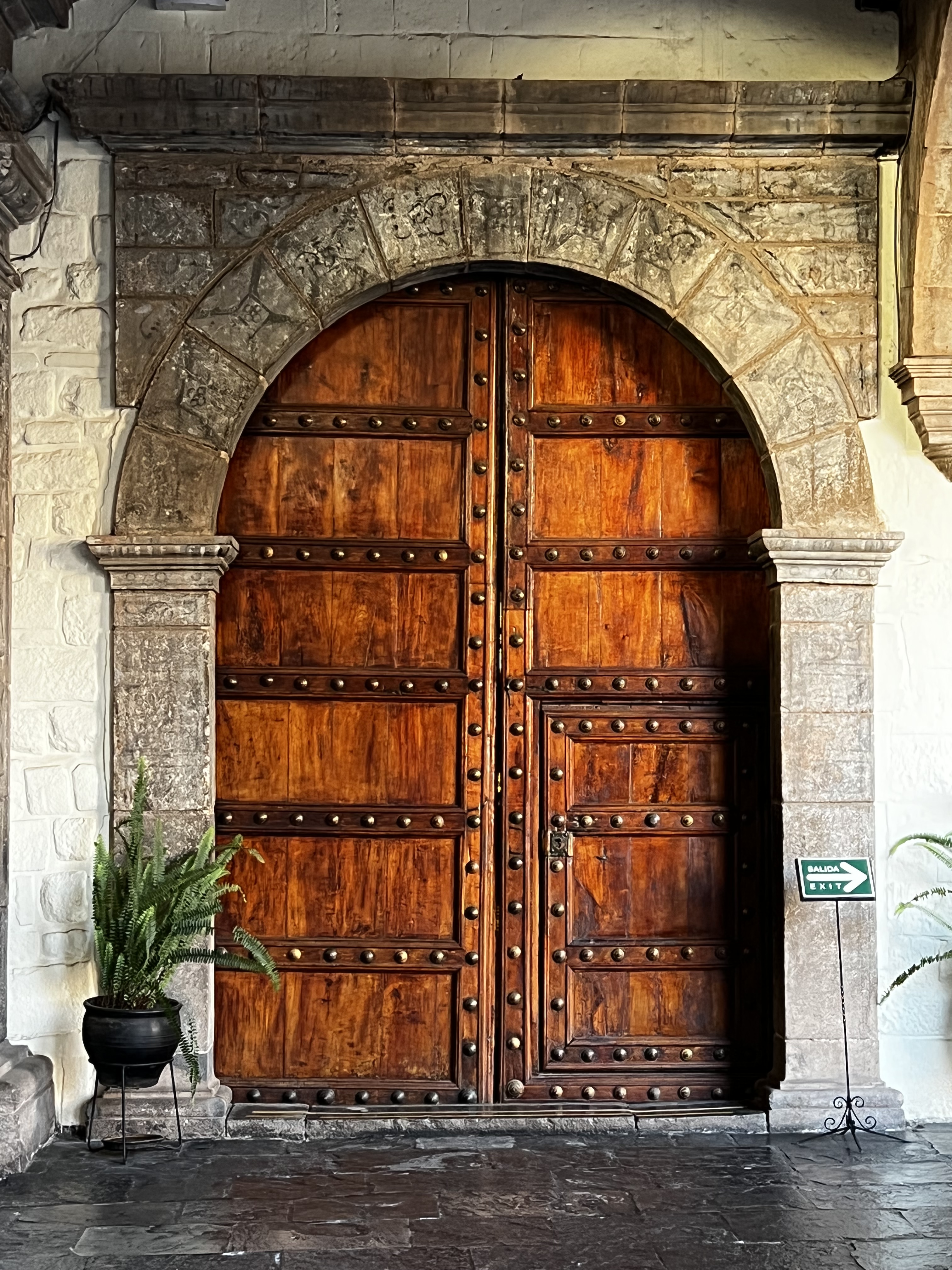
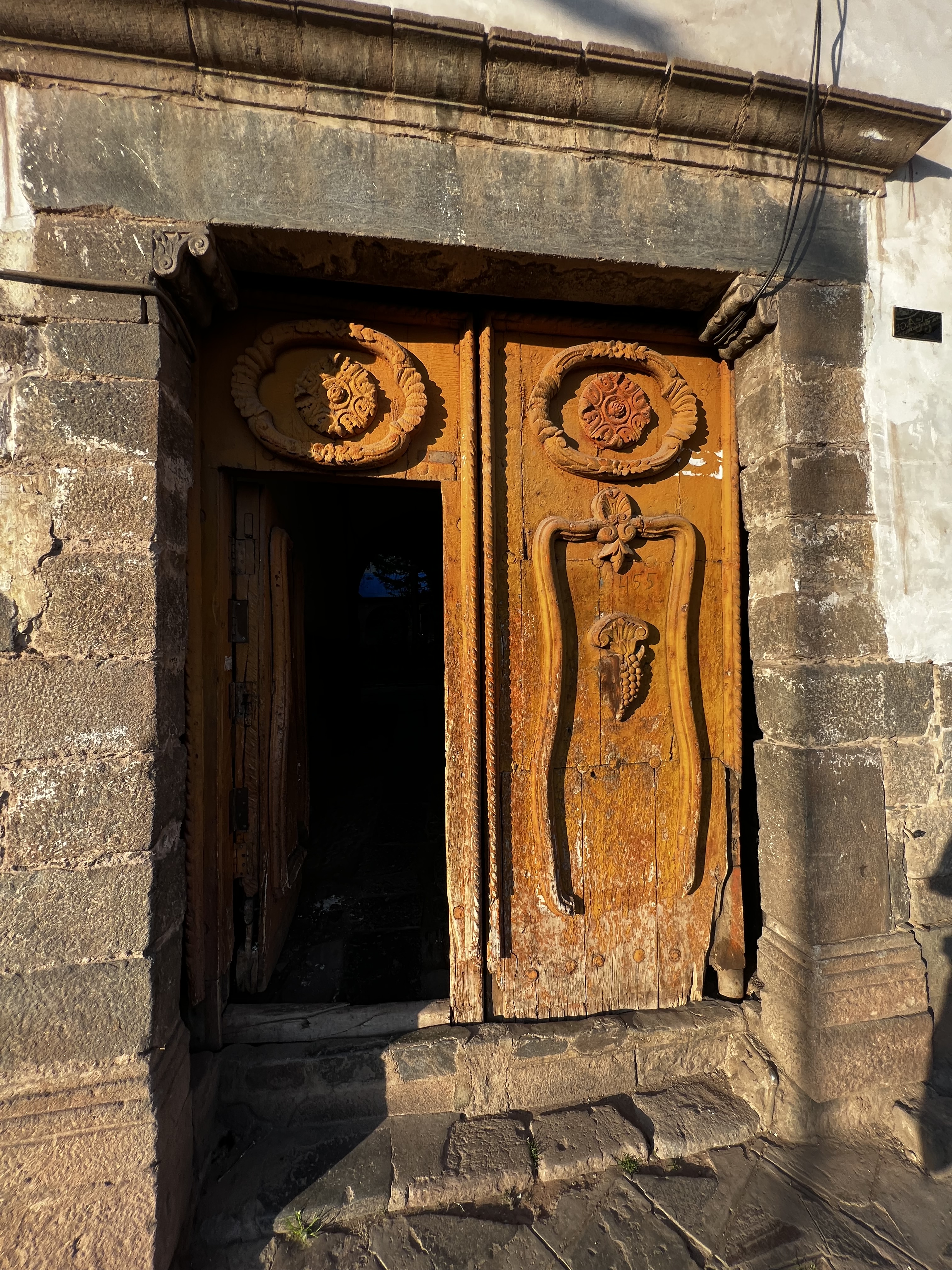
Closeups on the blocks and the doors are below. Fascinating!
More glorious doors. Can we create these at home?
Larkin and Sergio at the Inca Museum
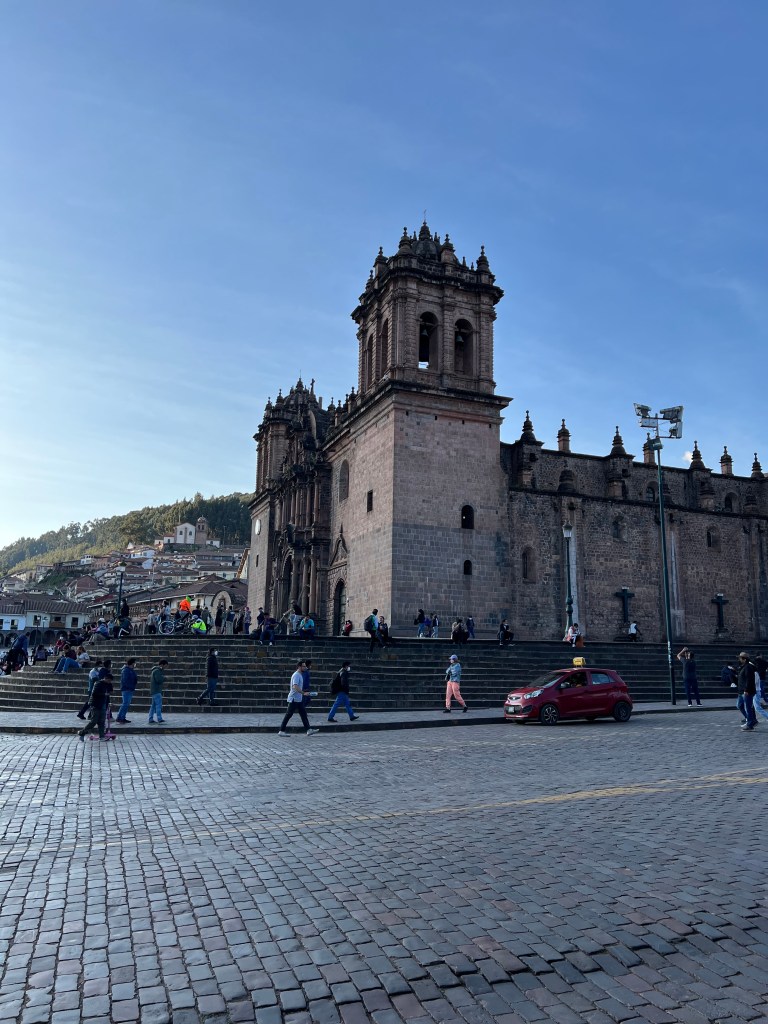
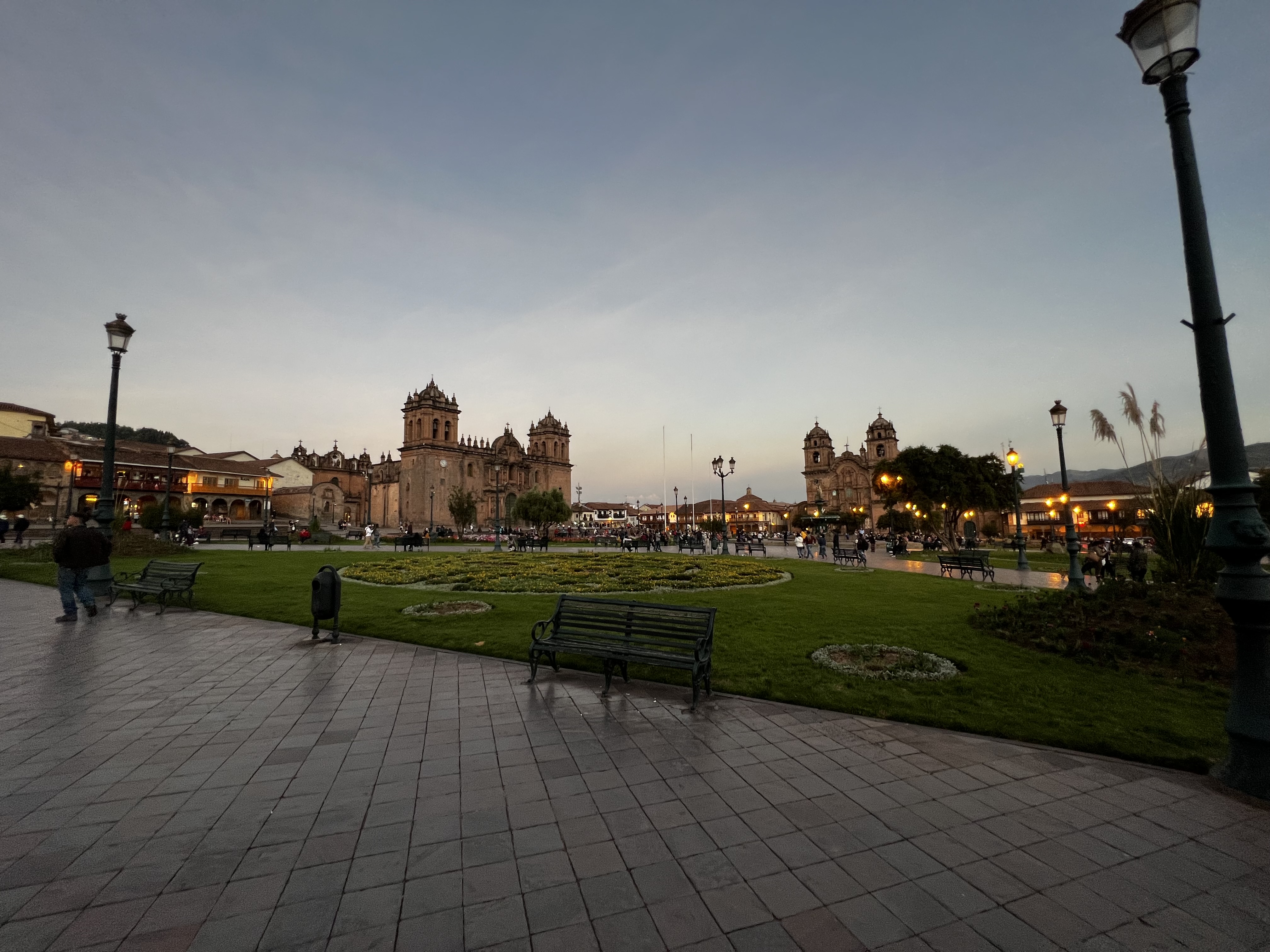
The catholic church took so many of these wonderful palaces and turned them into a site for a Catholic church or Spanish palace. They often plastered over those incredible stone walls and painted Spanish decor on them. Sergio informed us about the Quechua – their history and language and much of their history before the Spanish showed up and even pre-Incan. Basically in one ear and out the other as names like Quechua don’t stick in the grey matter because I had never heard them before. The Andean countries seems such a mix of Inca and Catholicism. We walked the Plaza near sunset before heading back to our hotel. Beautiful views of the hillsides going up from the 11,151 foot plaza.
Both Larkin and I had been taking altitude pills. We found out our extremities would often tingled over the many days we were at high altitude. My oxygen mostly stayed over 90% – but the meds didn’t seem to help the speed of our walking…nice and slow and deliberate with tons of stops!
The Inca’s controlled territory from Quito to Santiago making it the largest empire in the America’s and the largest in the world at the time. Cusco is located on an ancient glacial lake bed and the meeting point of three rivers. The Inca’s were known to adapt and not destroy the environment. They made the rivers into canals and diverted the water to make space for their city. Cusco was the administrative and religious capital and the inhabitants must have had incredible lungs to adapt to the lack of oxygen at this altitude!
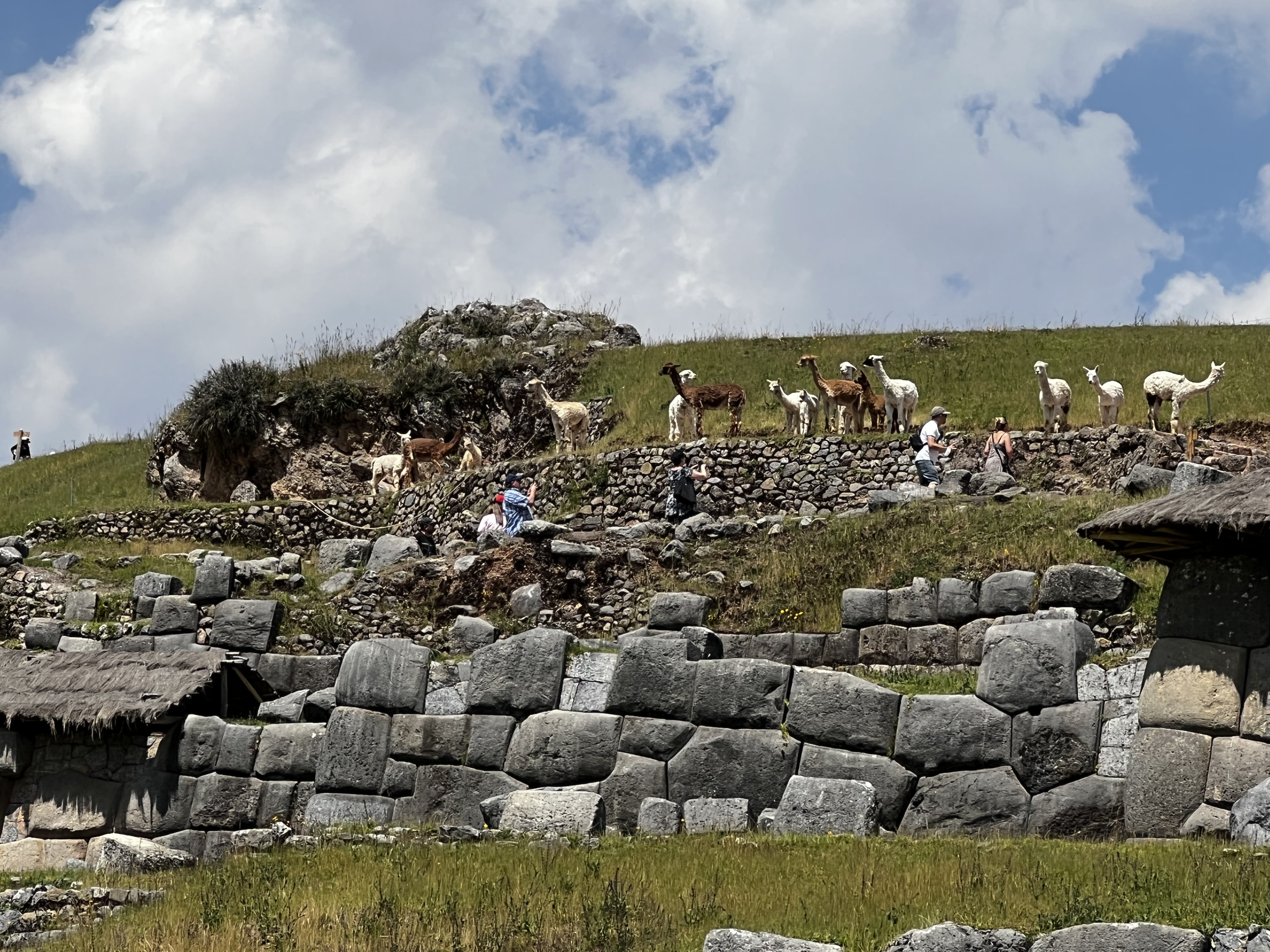
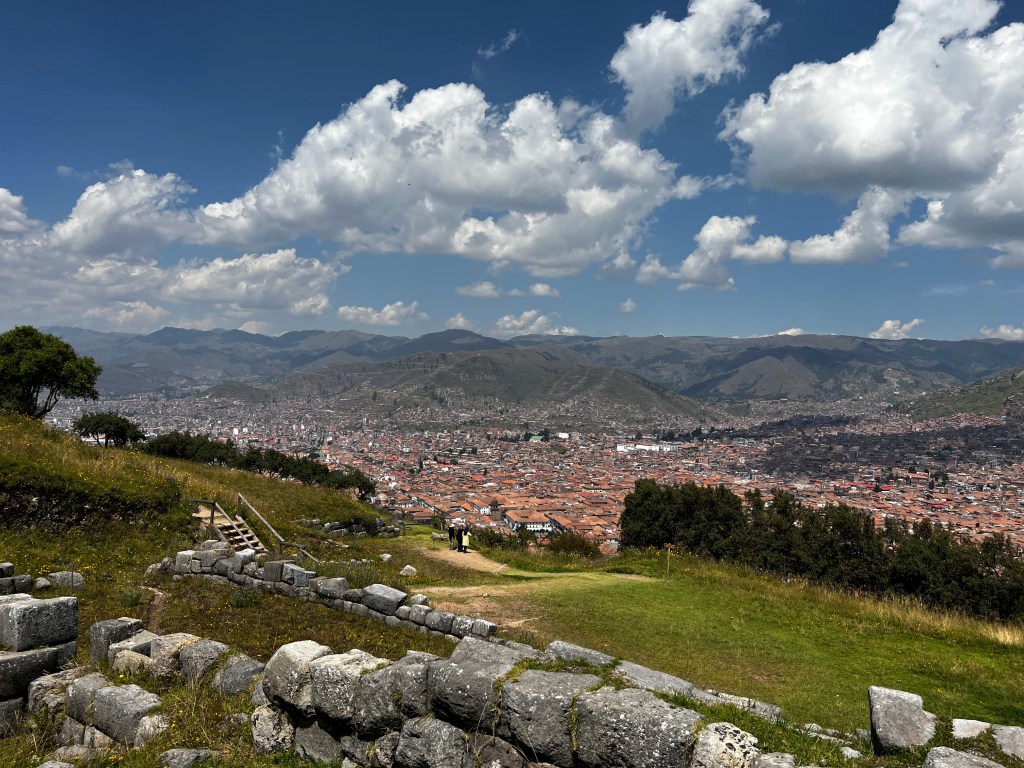
The next day was the day we were suppose to take the train for an overnight at the Sanctuary Lodge in Machu Picchu. We discovered by accident that one of the best months to be in Peru is April. They open up new routes on trains and the weather is the best. Sergio took us up the hill to another Quechuan area, a citadel called Saqsaywaman…meaning Royal Eagle.
SEXY WOMAN is the pronunciation!
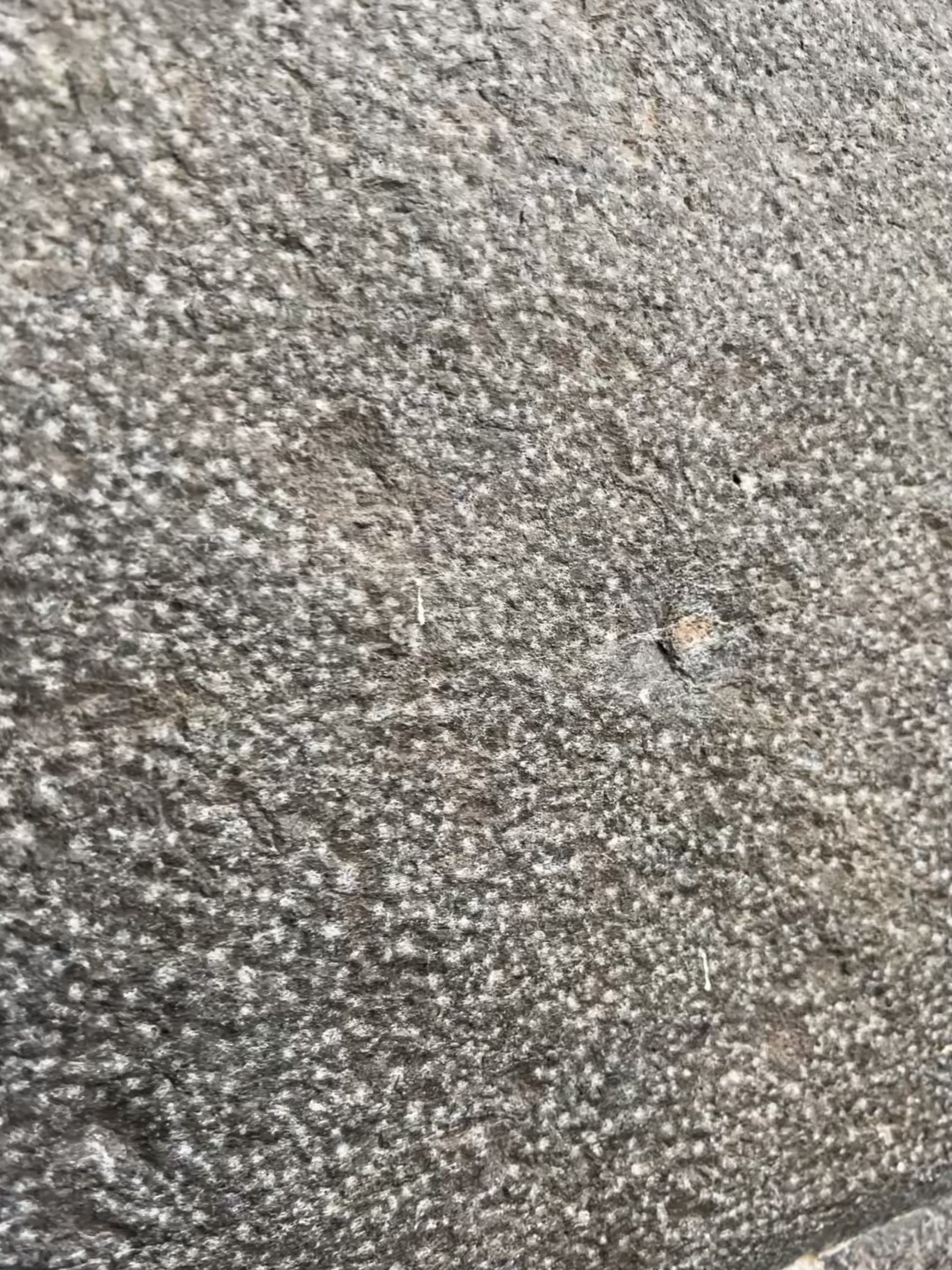
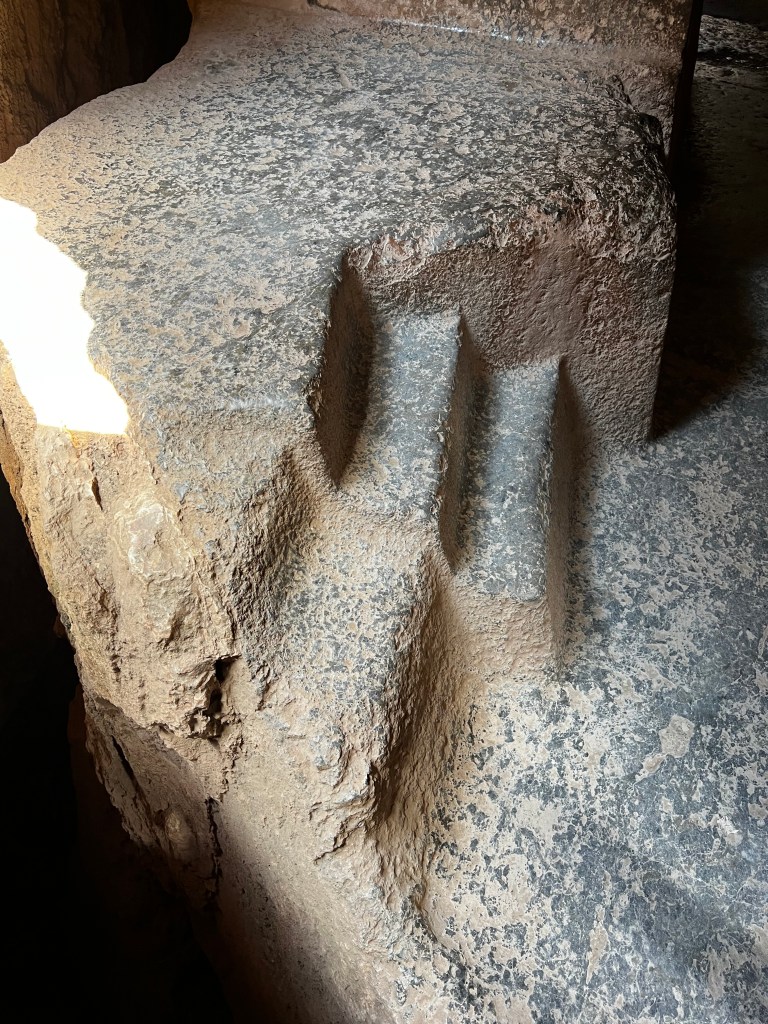
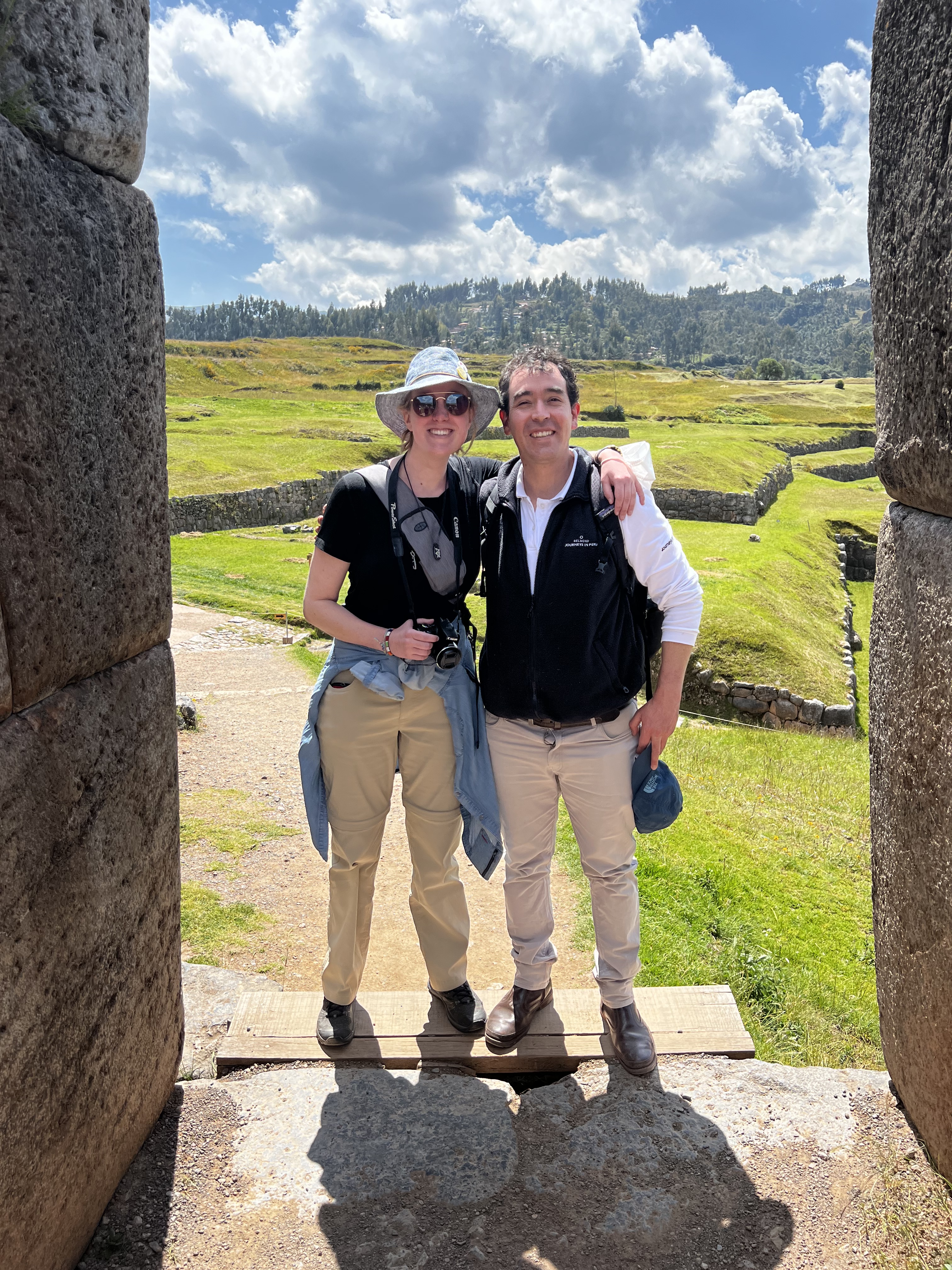
This Inca fortress is the largest structure built by the Incas. It was constructed during the reign of Pachacuti and son between 1437-1471. Its massive well-built walls are a testimony to Inca power and its architects. They blended this monumental structure into the natural landscape. The first structures were only mud and clay but were replaced with magnificent stonework with huge finely cut polygonal blocks many over 4 meters high and weighing over 100 tons. The Inca’s had a system of extracting goods and labor from people they conquered. They rotated 20,000 laborers doing both quarry duties, digging trenches, and laying the foundations. Each wall was probably the responsibility of one ethnic labor group. Blocks were quarried and shaped using harder stones and bronze tools. Blocks were moved using ropes logs, poles, levers, and earthen ramps. The fine cutting and setting was so precise that mortar was not necessary. The walls were sloped to minimize earthquake damage which after 500 plus years has proven to be efficient! The final finished surface was provided using grinding stones and sand.
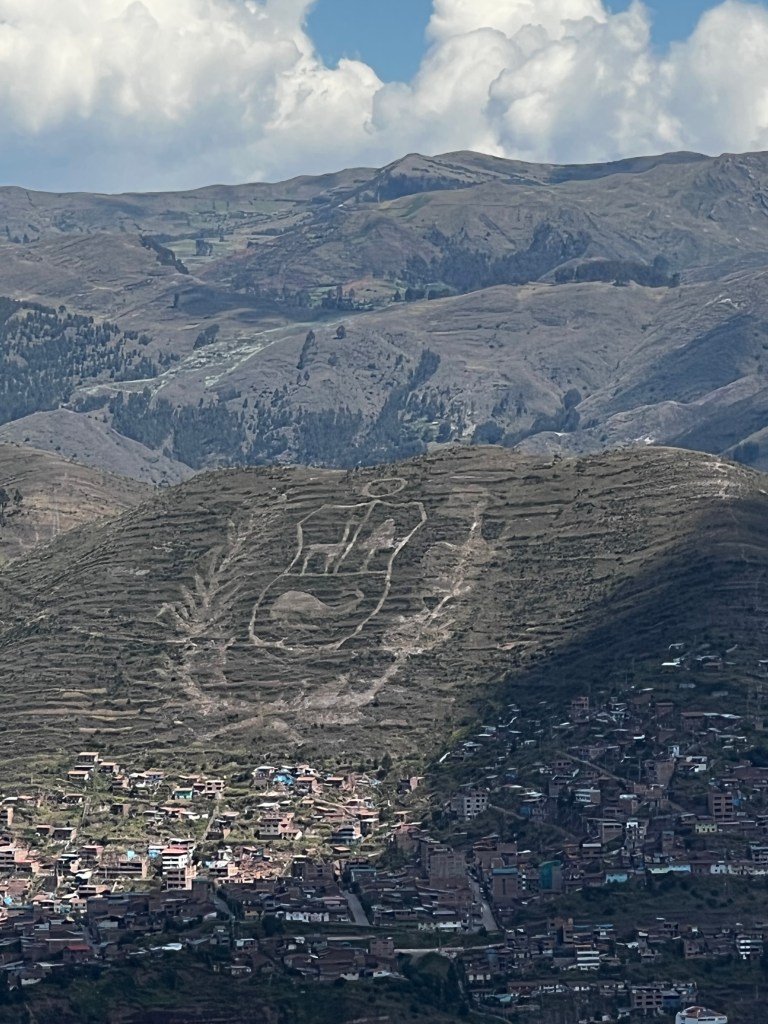
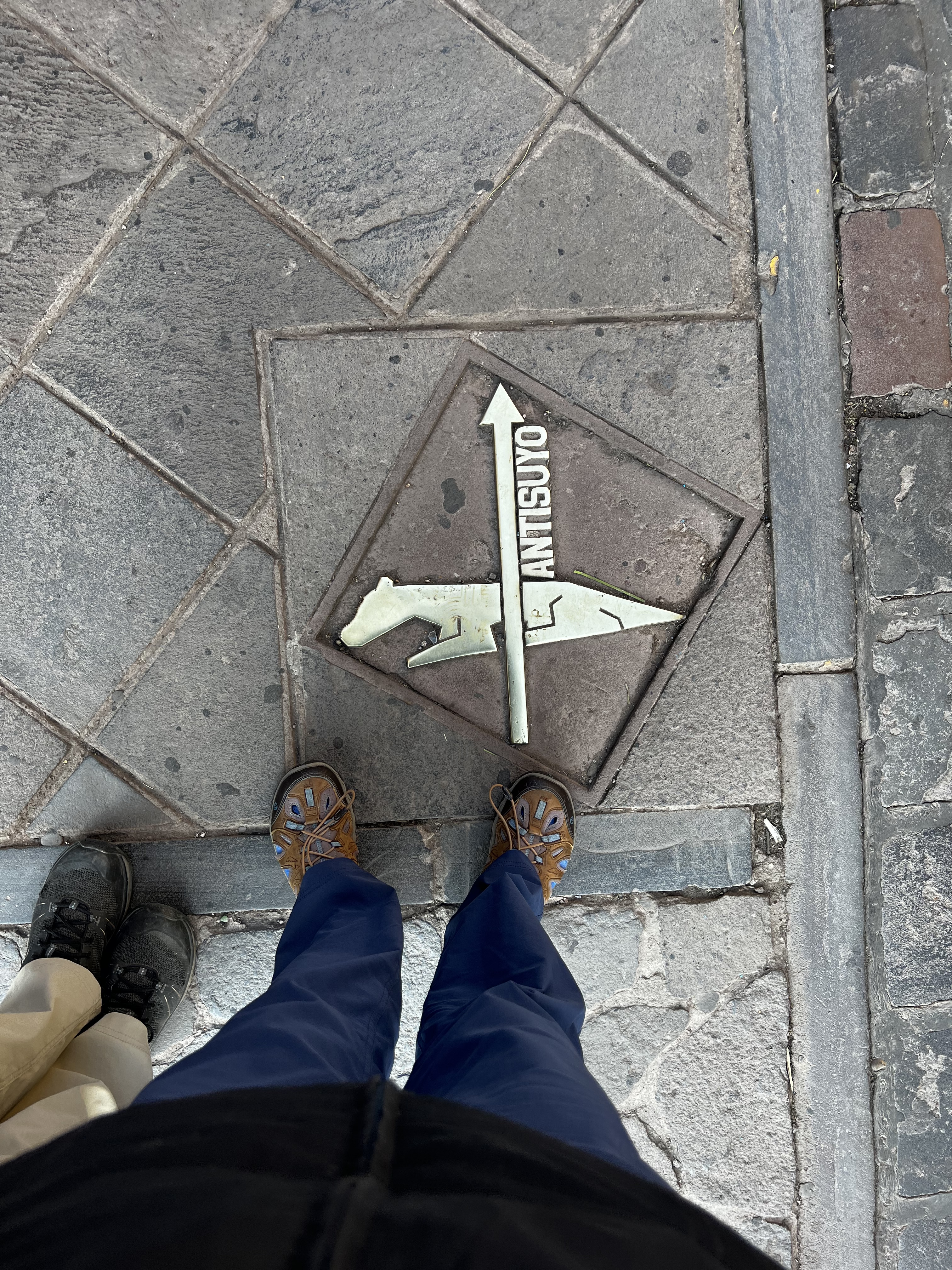
The fortress complex was used as a location for Inca ceremonies. These included temples to the Sun God Inti. In theory Cusco is laid out to form a puma shape and Sacsayhuaman is its head.
For decades after the Spanish arrived anyone could haul away any of the stones that they found. Many were reused in the colonial buildings of Cusco. The ruins were covered in earth to prevent their use by rebel Inca forces and the site wasn’t rediscovered until 1934 when excavation began.
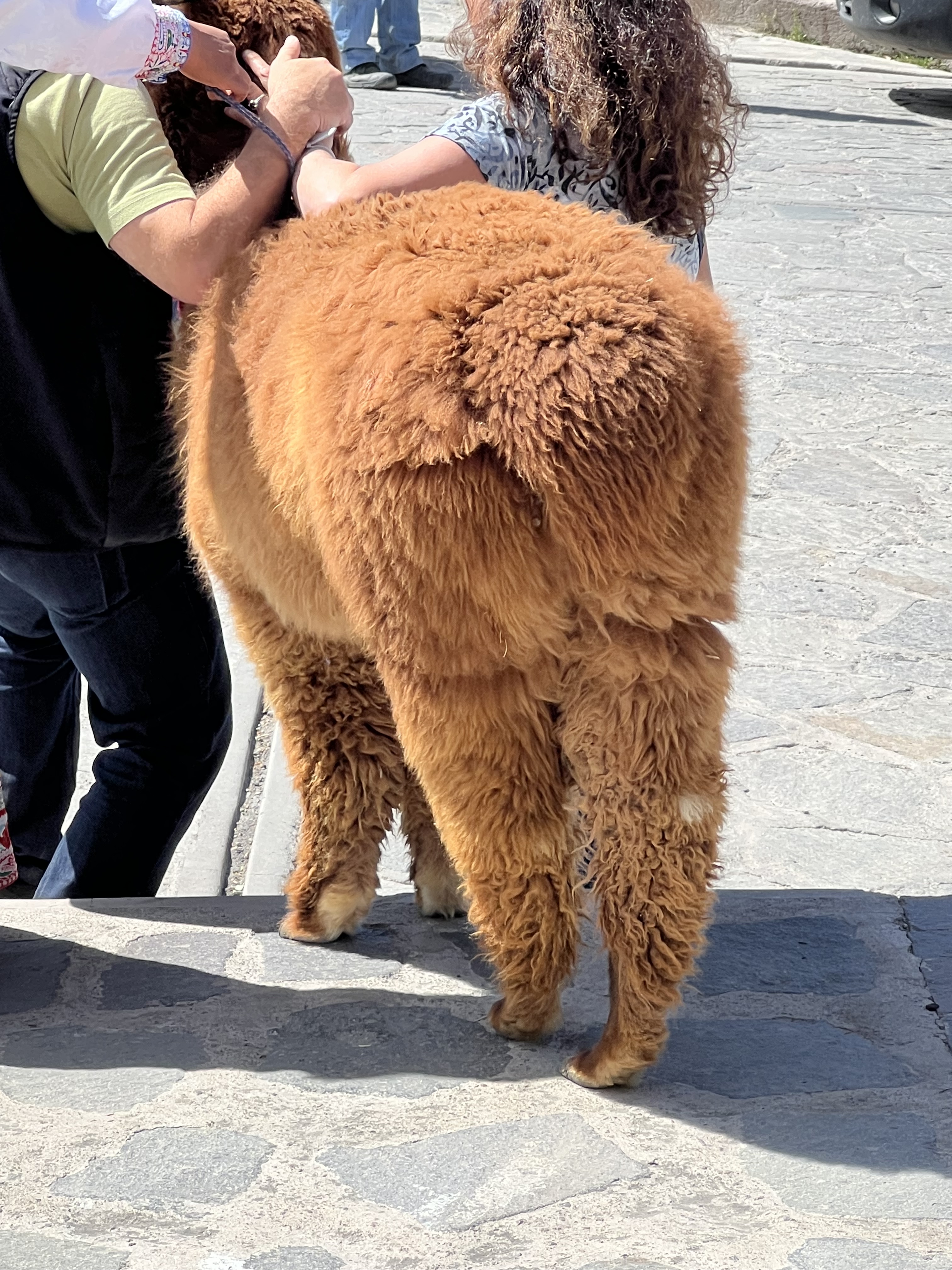
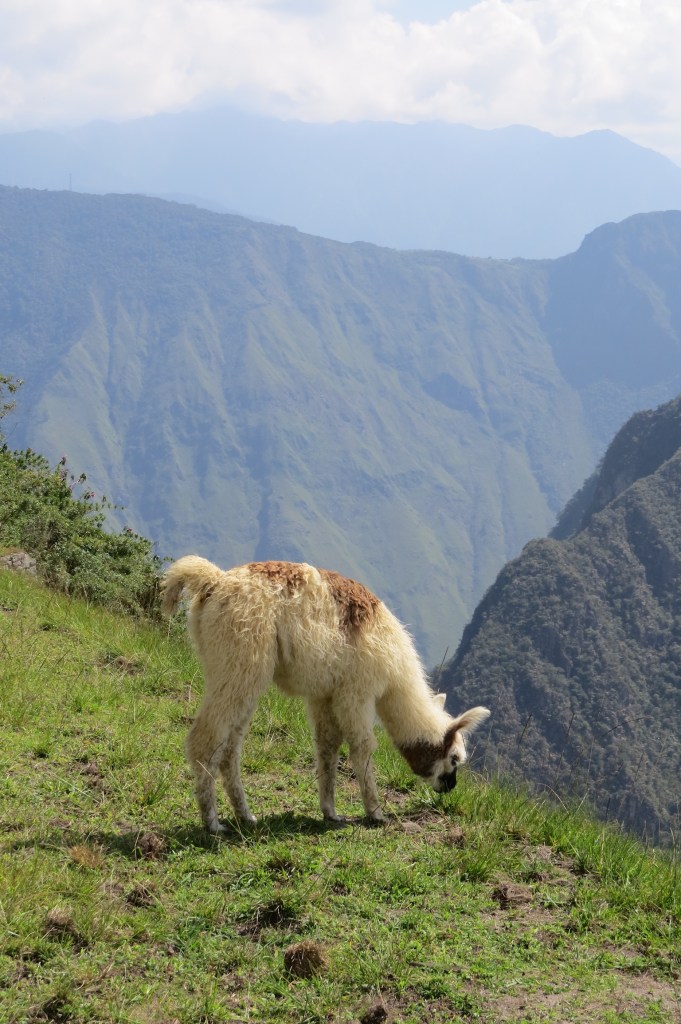
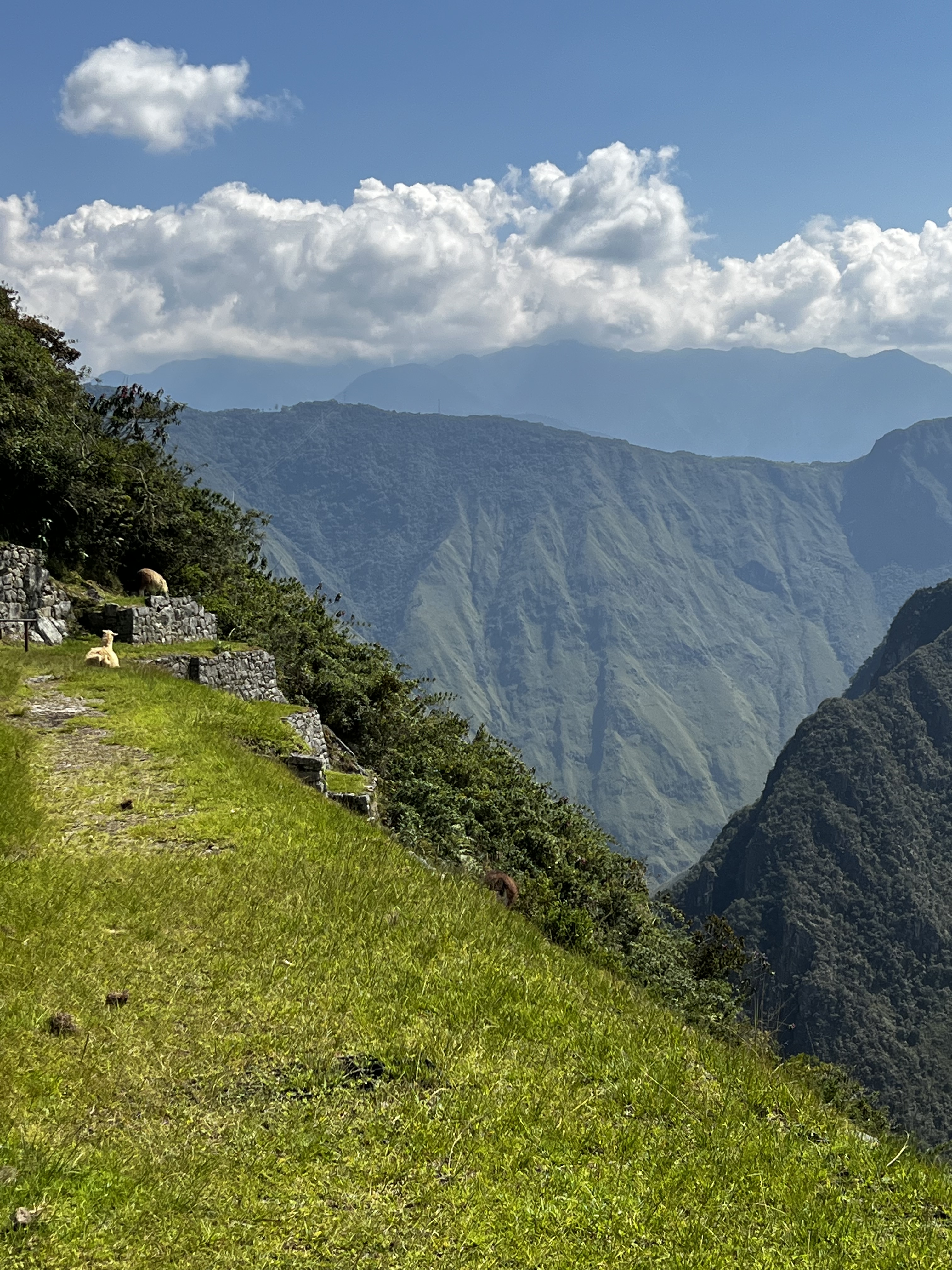
Often Llamas and or Alpacas, both south American camelids are brought in to various tourist locations so we tourists can enjoy them. Both are natives of Peru . Llamas are much larger than Alpacas and weigh up to 400 pounds. They have long banana shaped ears and longer noses with less fur on their face. Their fur is thicker and coarser so it is not generally turned into clothing. Their tails are shorter and straighter and usually stick up. They make great trekkers to carry gear.
Alpacas are smaller at around 120-150 pounds with straight shorter pointed ears and blunt nose faces with lots of fur. Their fiber is very soft and fine but doesn’t contain lanolin so it isn’t waterproof – but it is hypoallergenic. Their tails can be short and fluffy or long and curly but slop or hang down from their back. Alpacas are generally sweeter but both are known to spit on people.
View over Cuzco from Saxsayhuaman
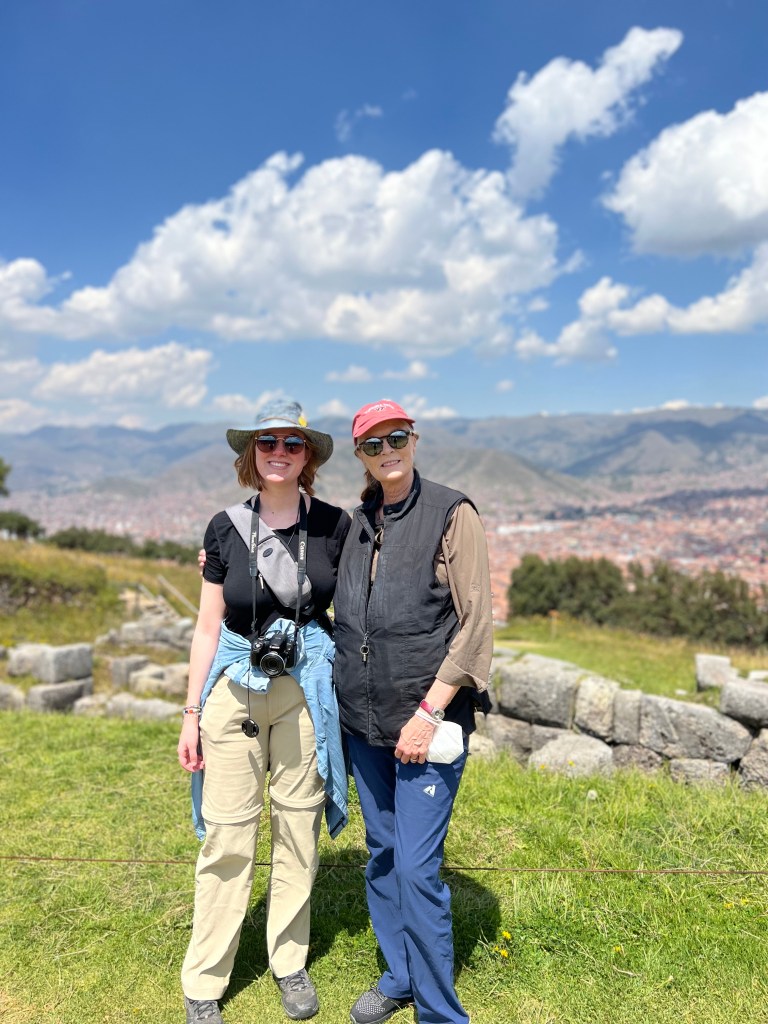
Enjoying the view!
We looked down and saw a plaza from Sacsayhuaman and I took a video with protesters chanting and singing. It was small and very peaceful. Video’s do not load on wordpress. Oh well. Sergio also tried to show us the local market but it was also closed due to the strike.
There were opportunities to spot laundry on the streets driving up and down the very narrow streets from Sacsayhuaman.
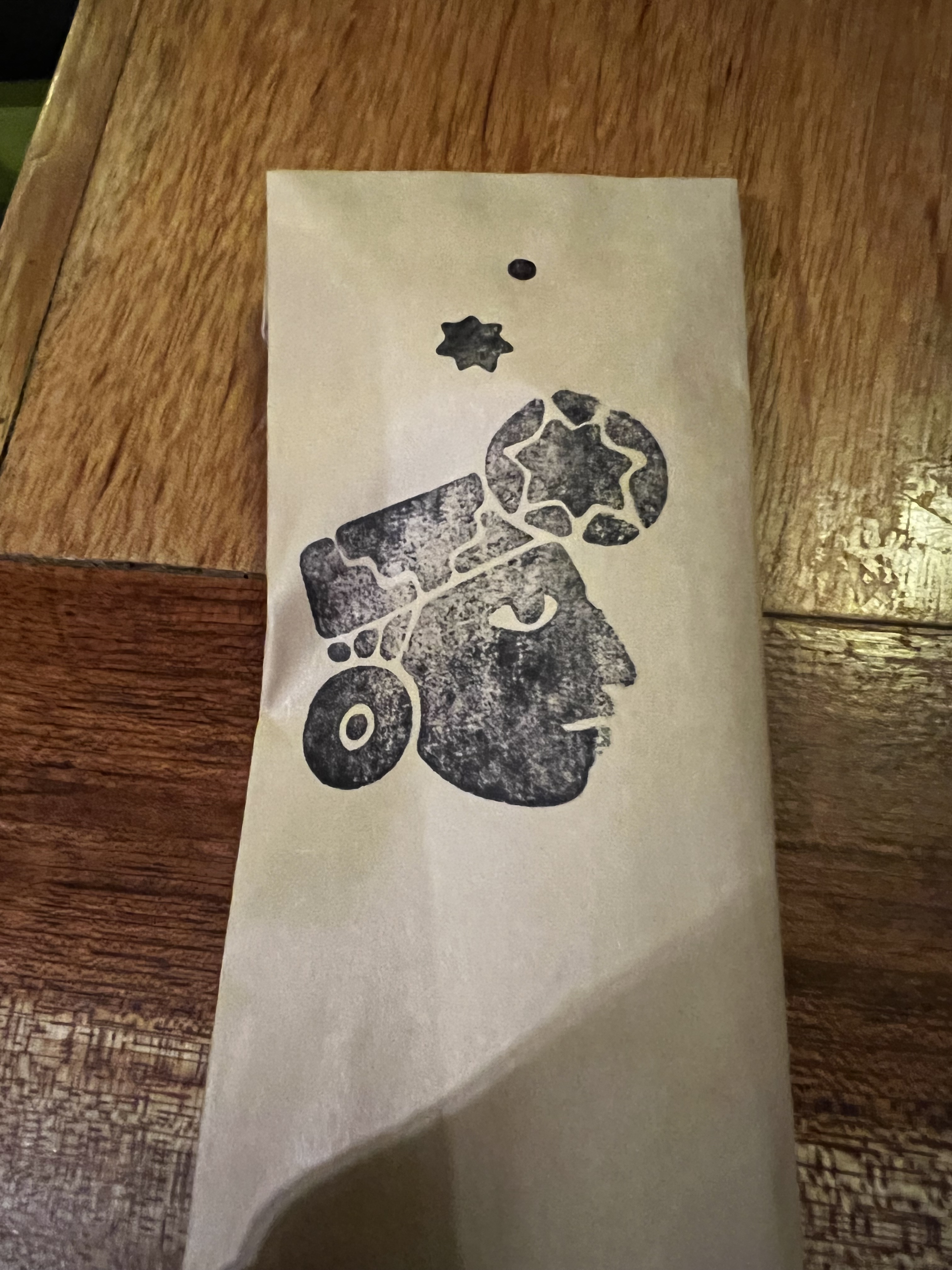
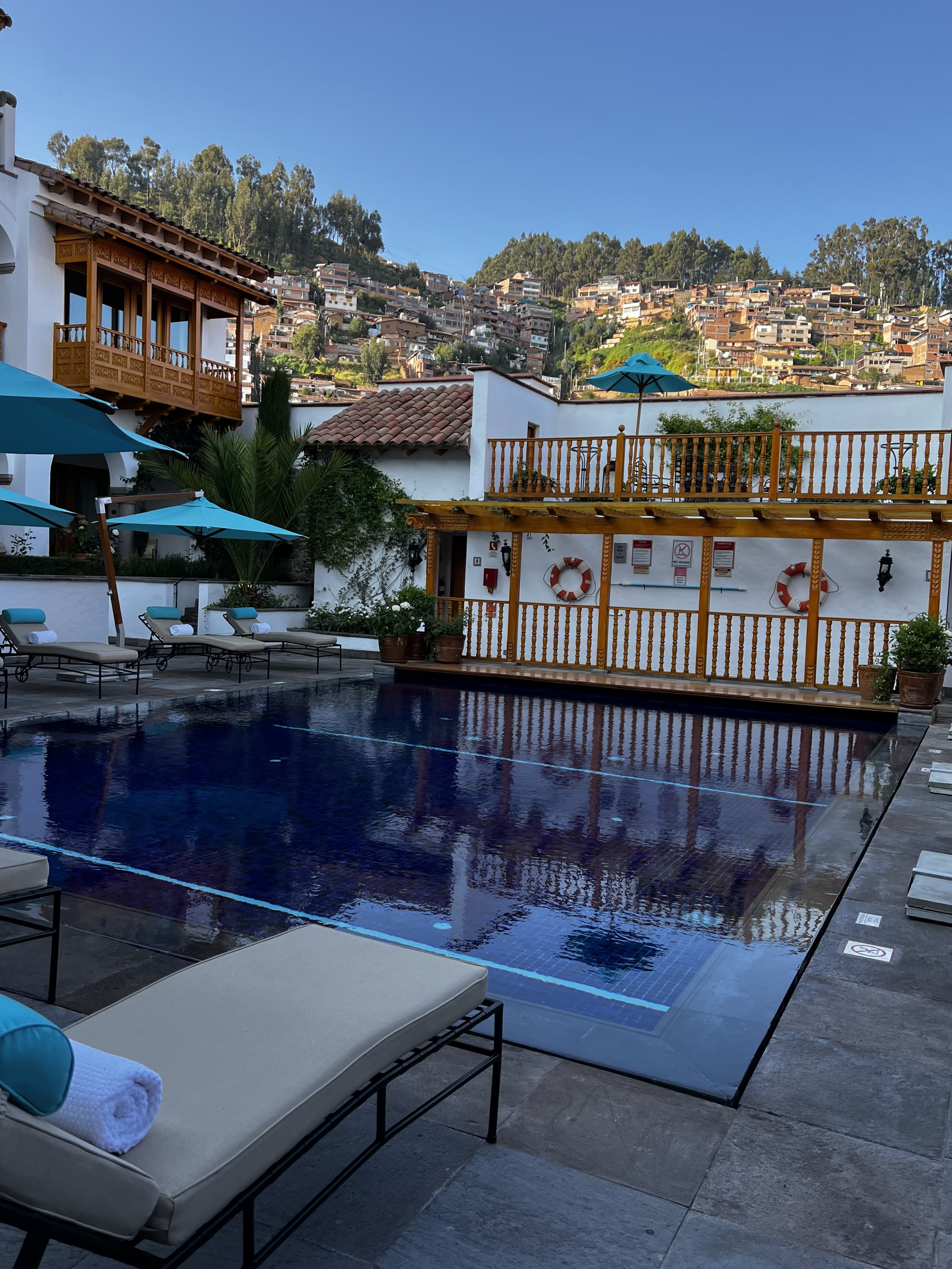
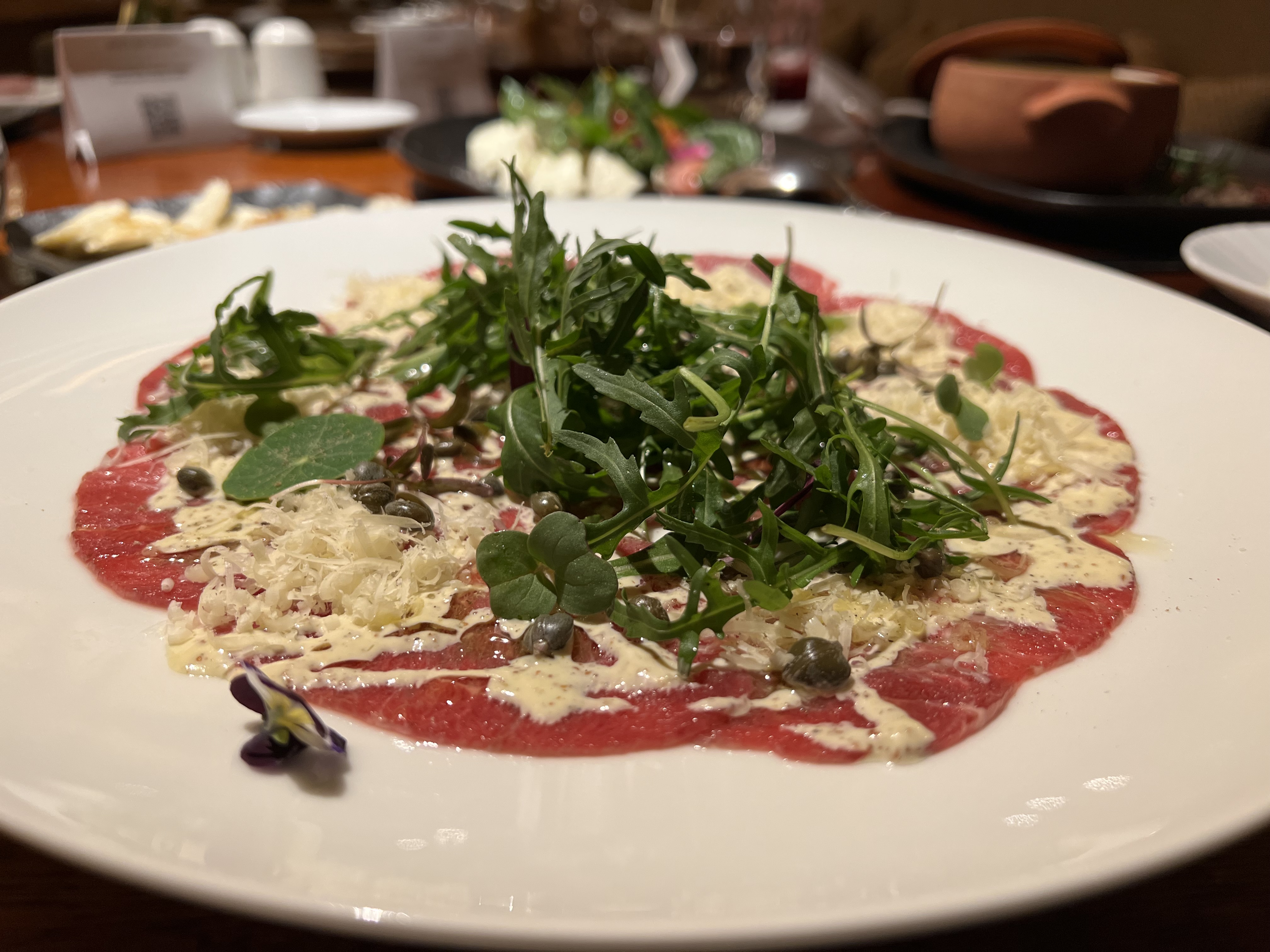
From a Puma embedded in the street to Inca heads on a napkin to the sunset view over the pool at Belmond Palazios Nazarenes and all the fabulous foods – Cusco mesmerized the two of us. The strike was finally called off and we were now ready for a good nights sleep and the train adventure to Machu Picchu.
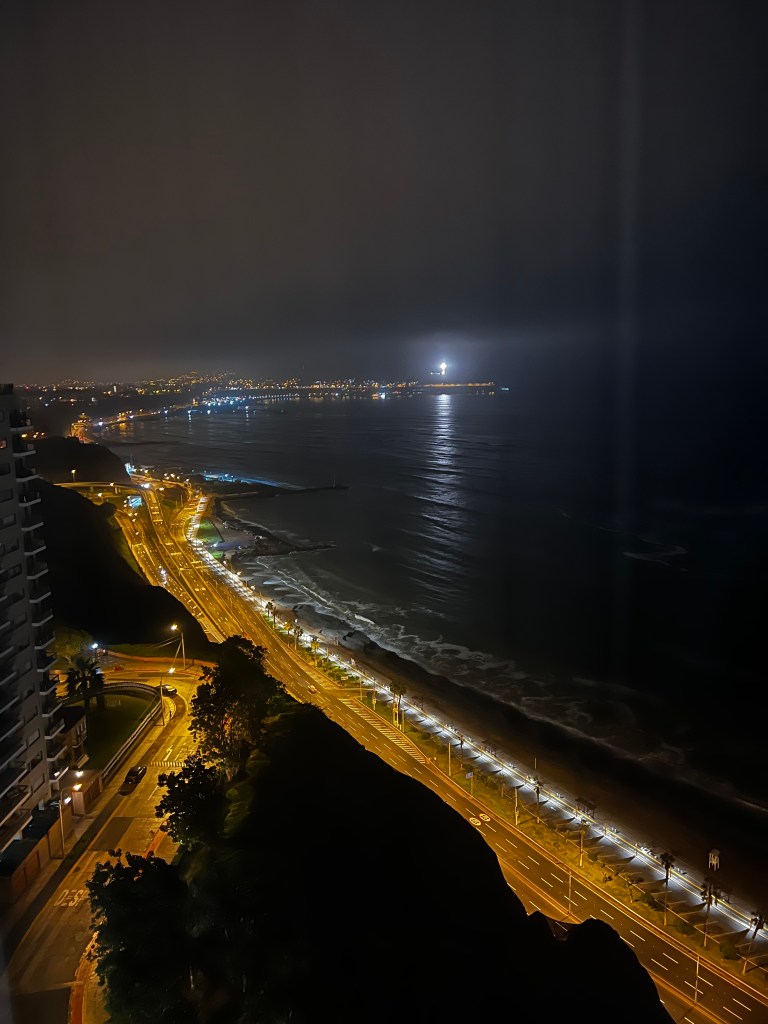
After an easy flight through DFW in April, Larkin and I landed in Lima. We had to leave Michael behind due to the extreme altitudes we were going to experience. After a unique drive south from the airport we arrived at our hotel on the coast. Driving can be crowded and harrowing where 6 lanes can all of a sudden be squeezed into 2. April is a foggy month at the coast – nothing new to us Dillon Beach creatures.
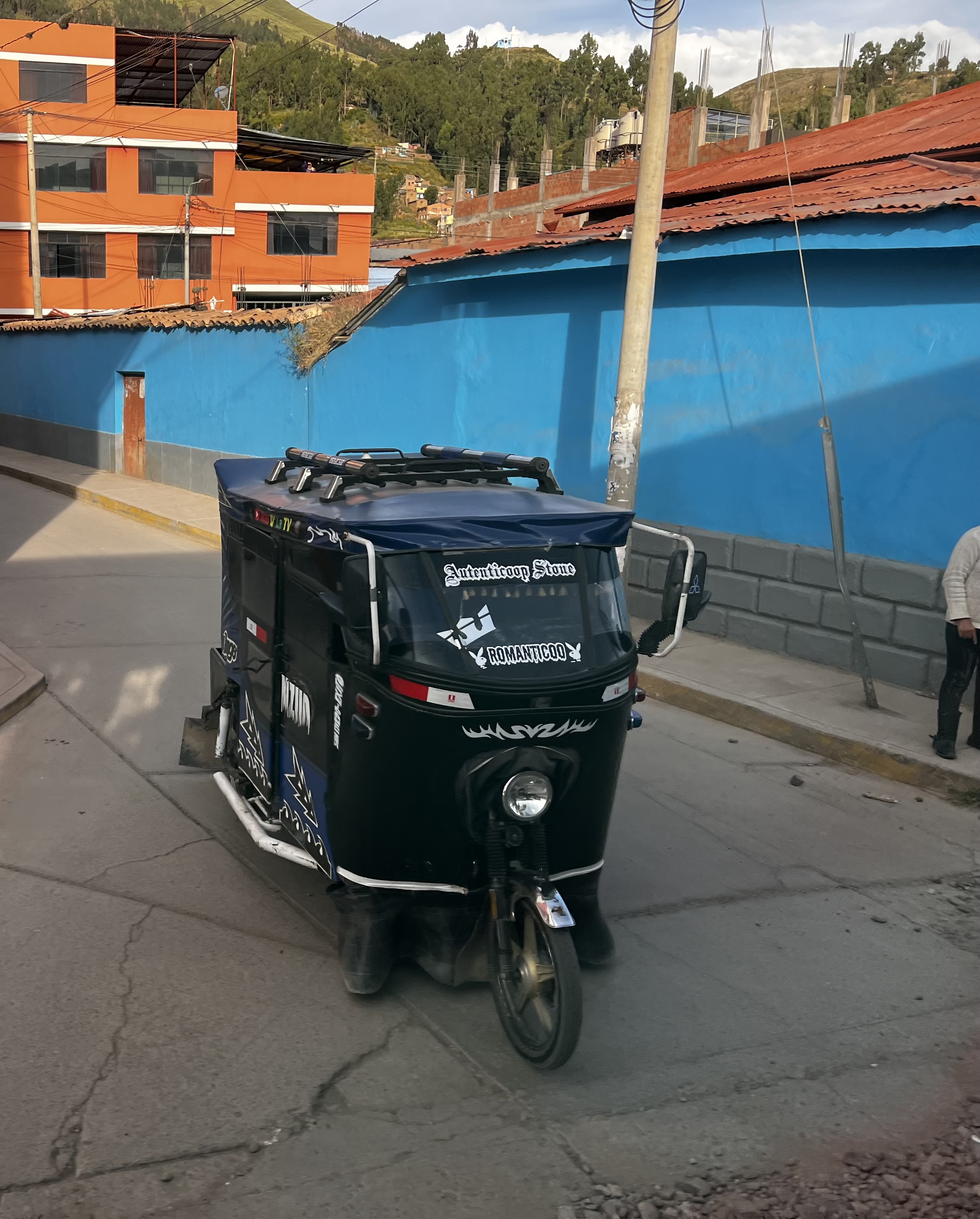
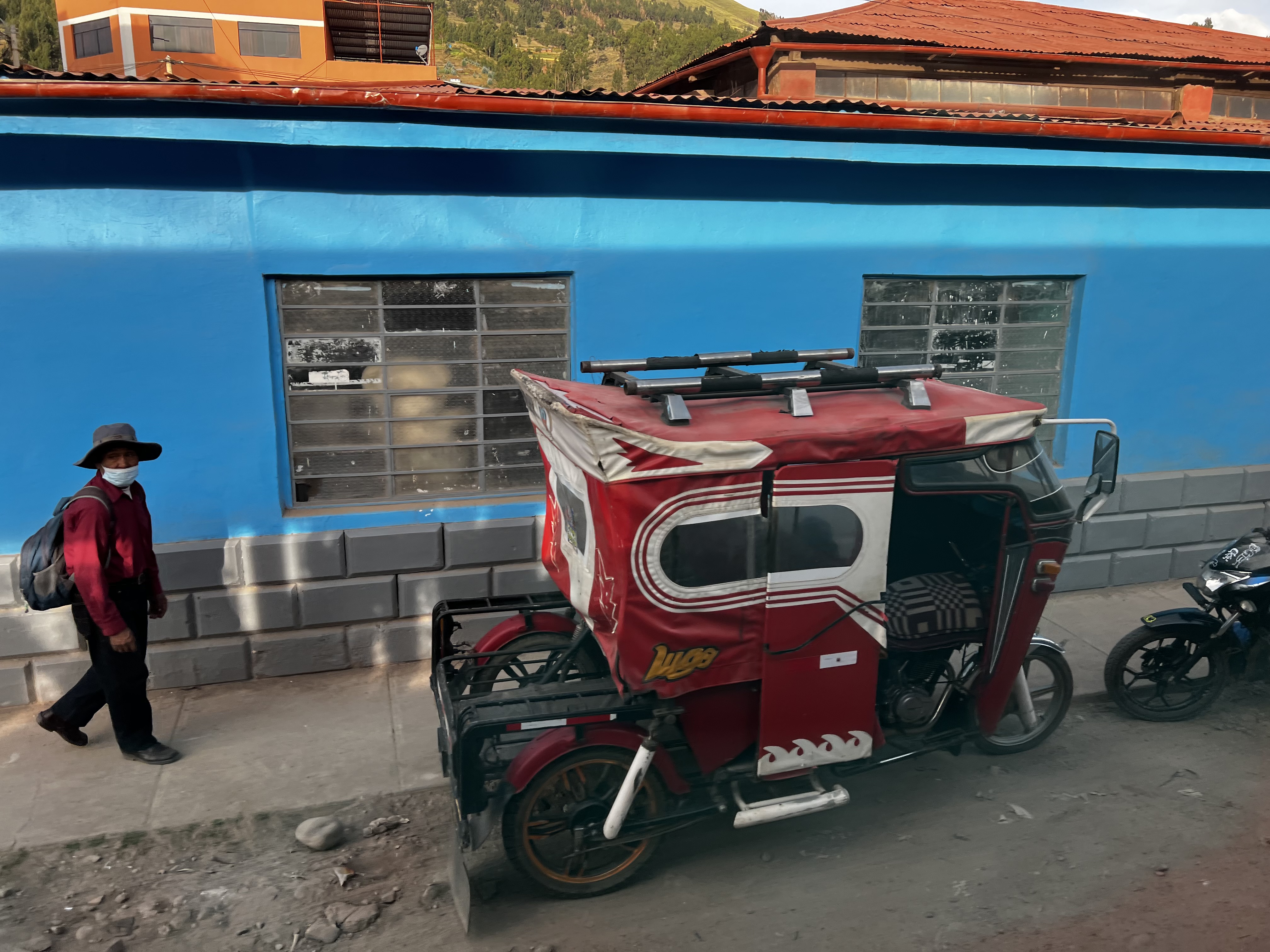
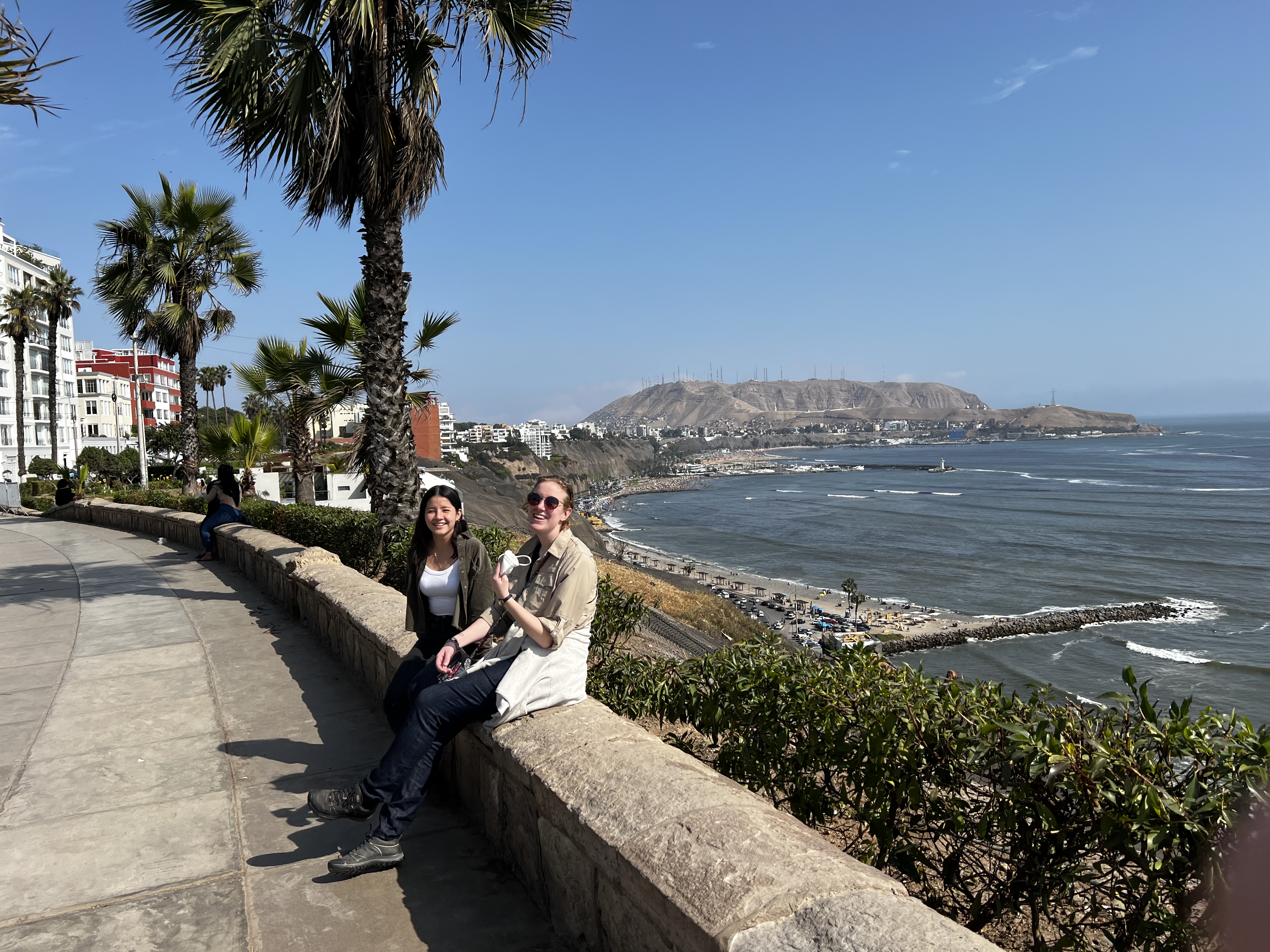
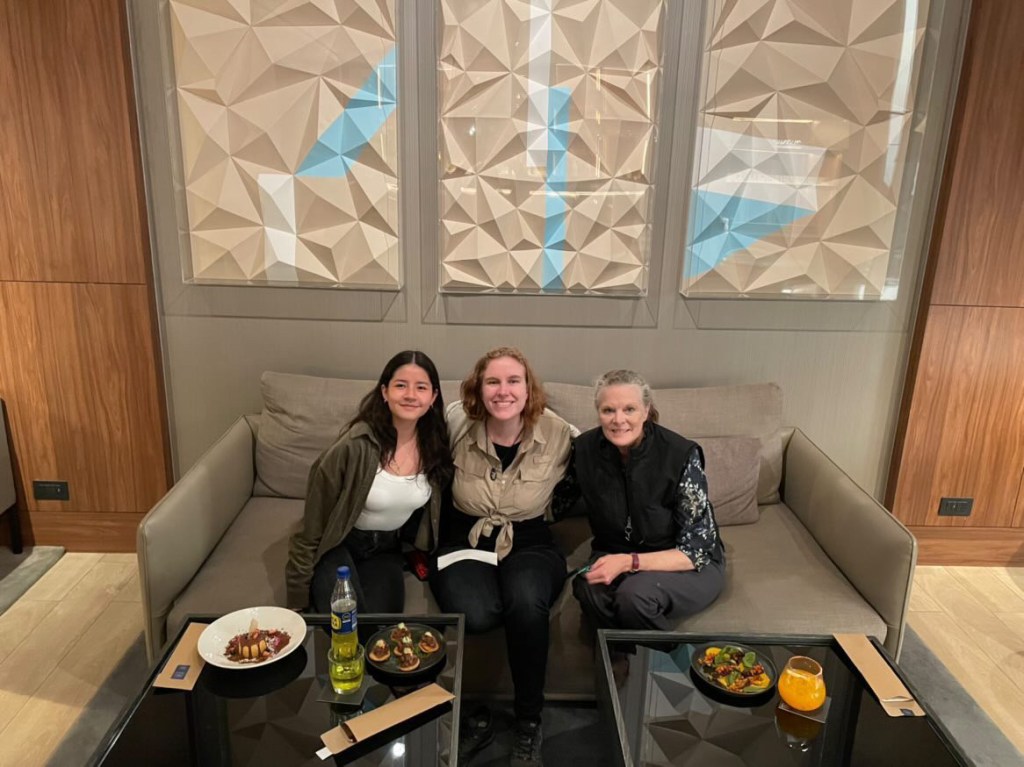
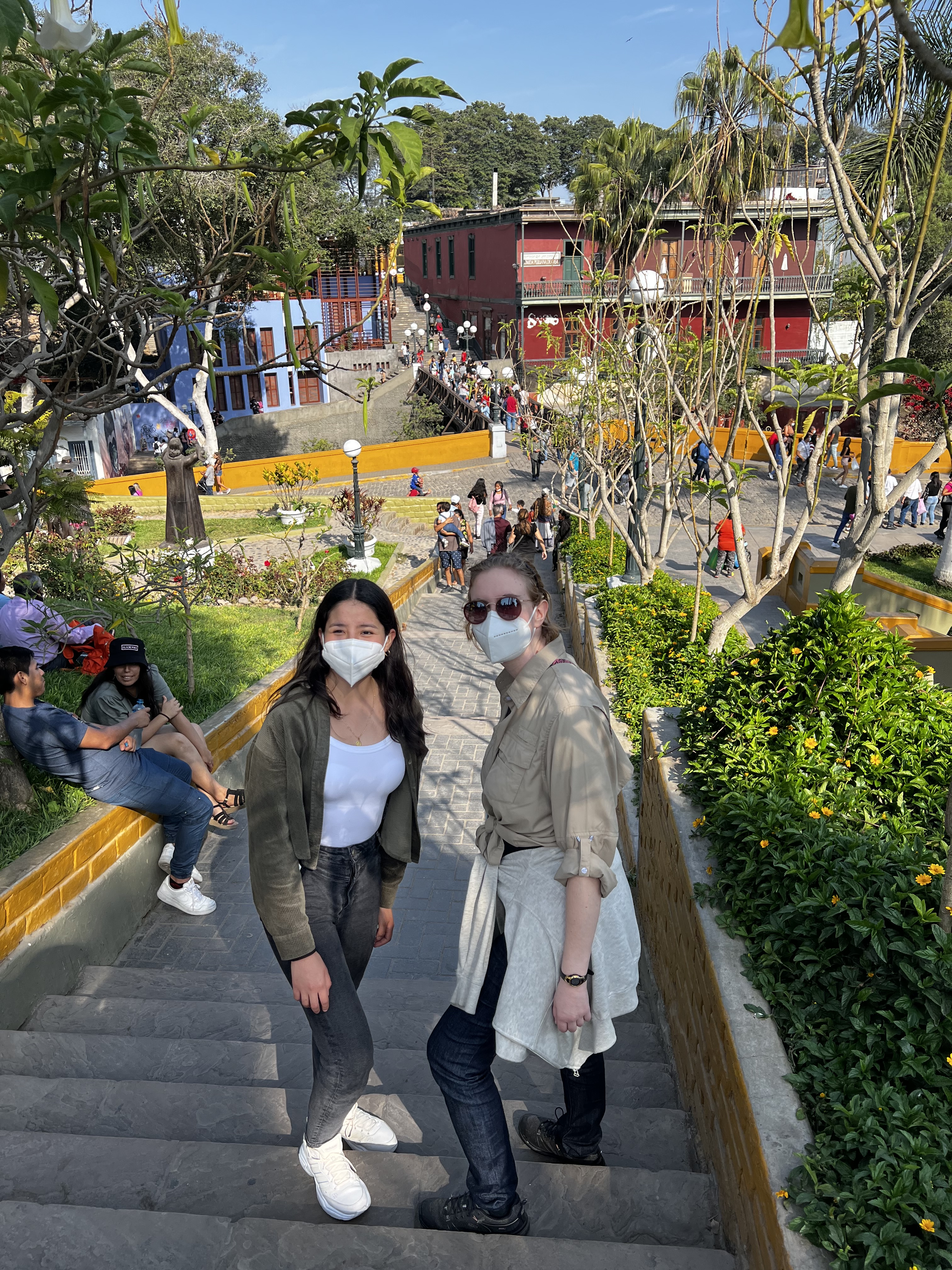
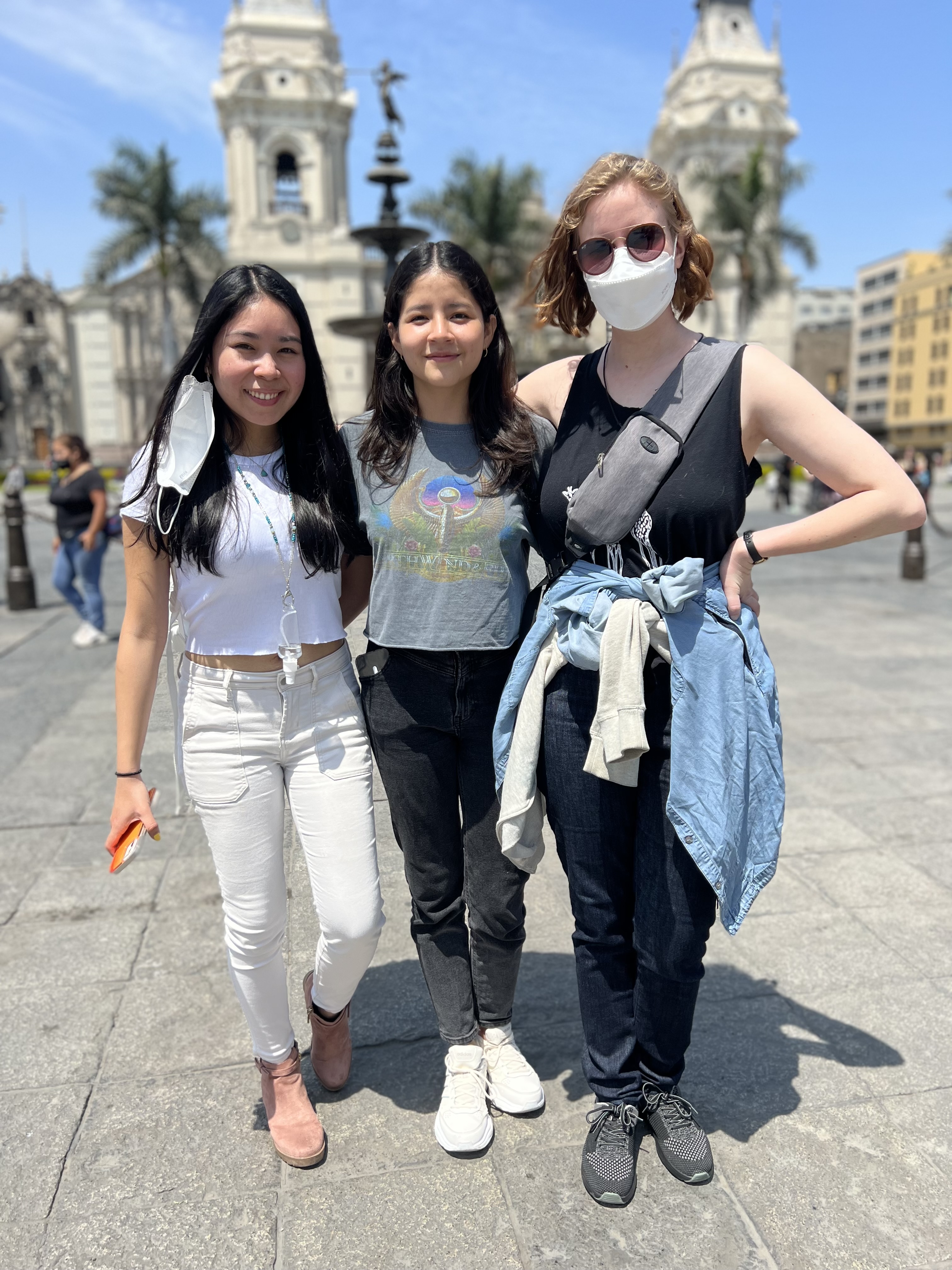
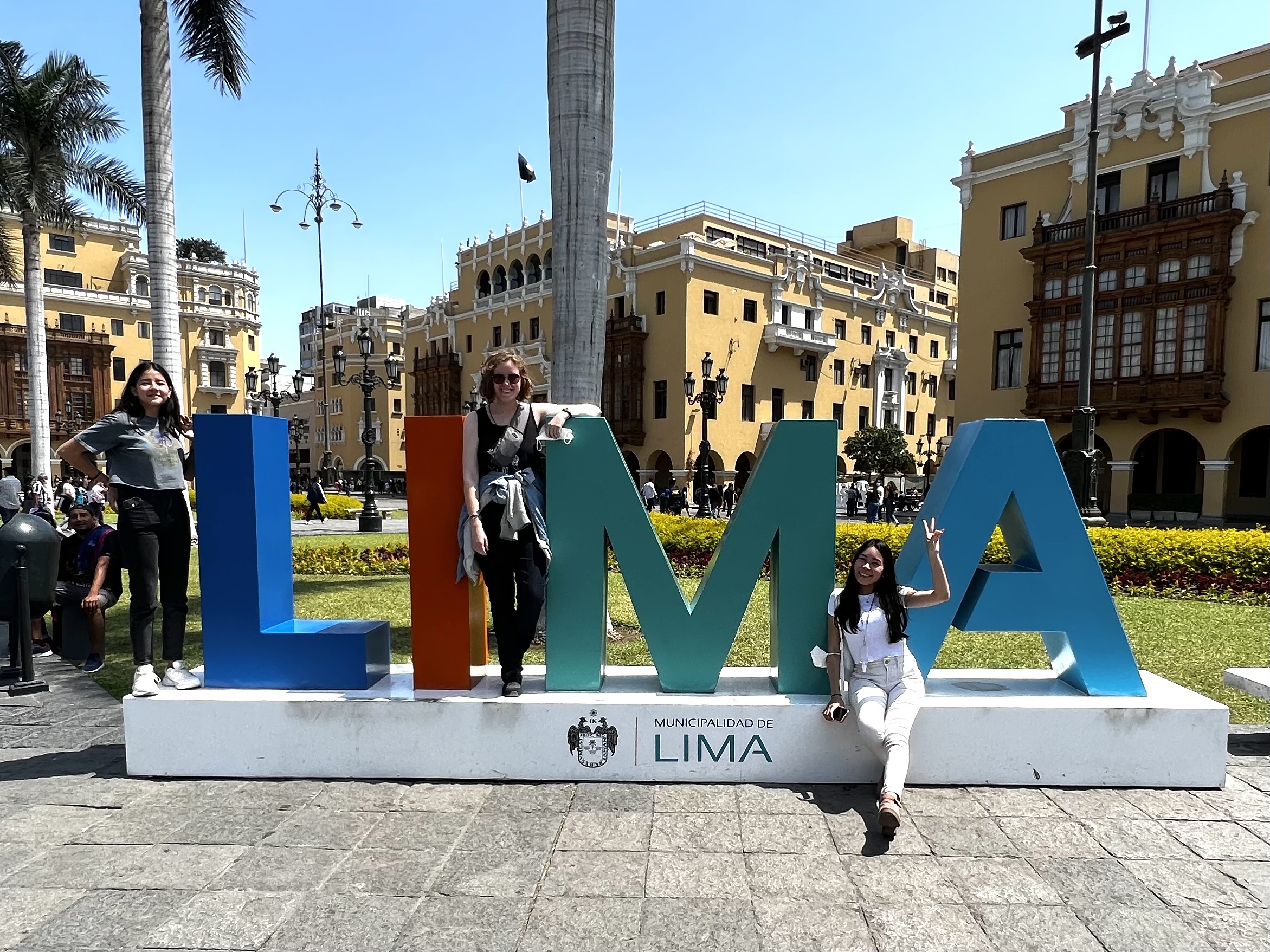
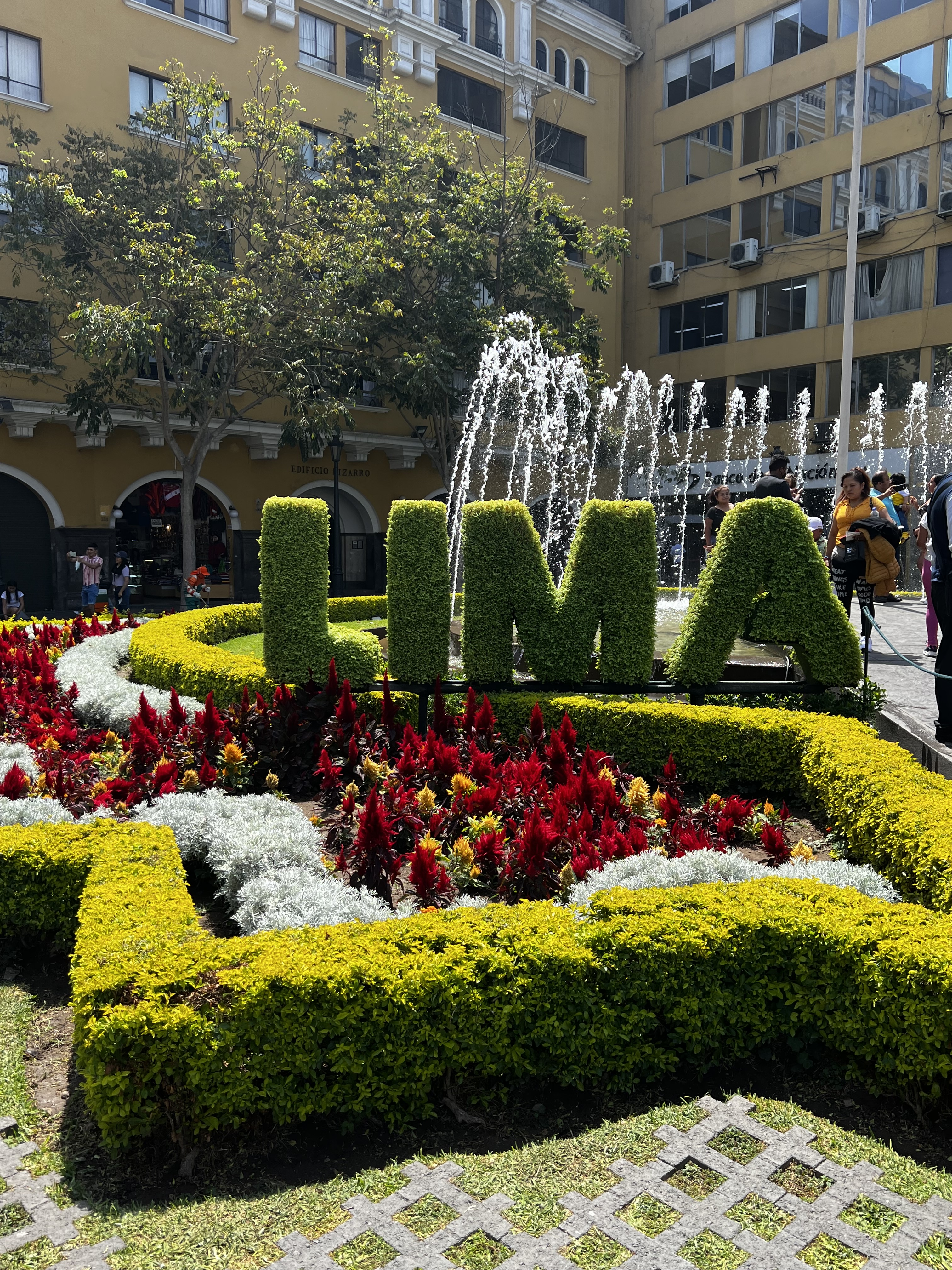
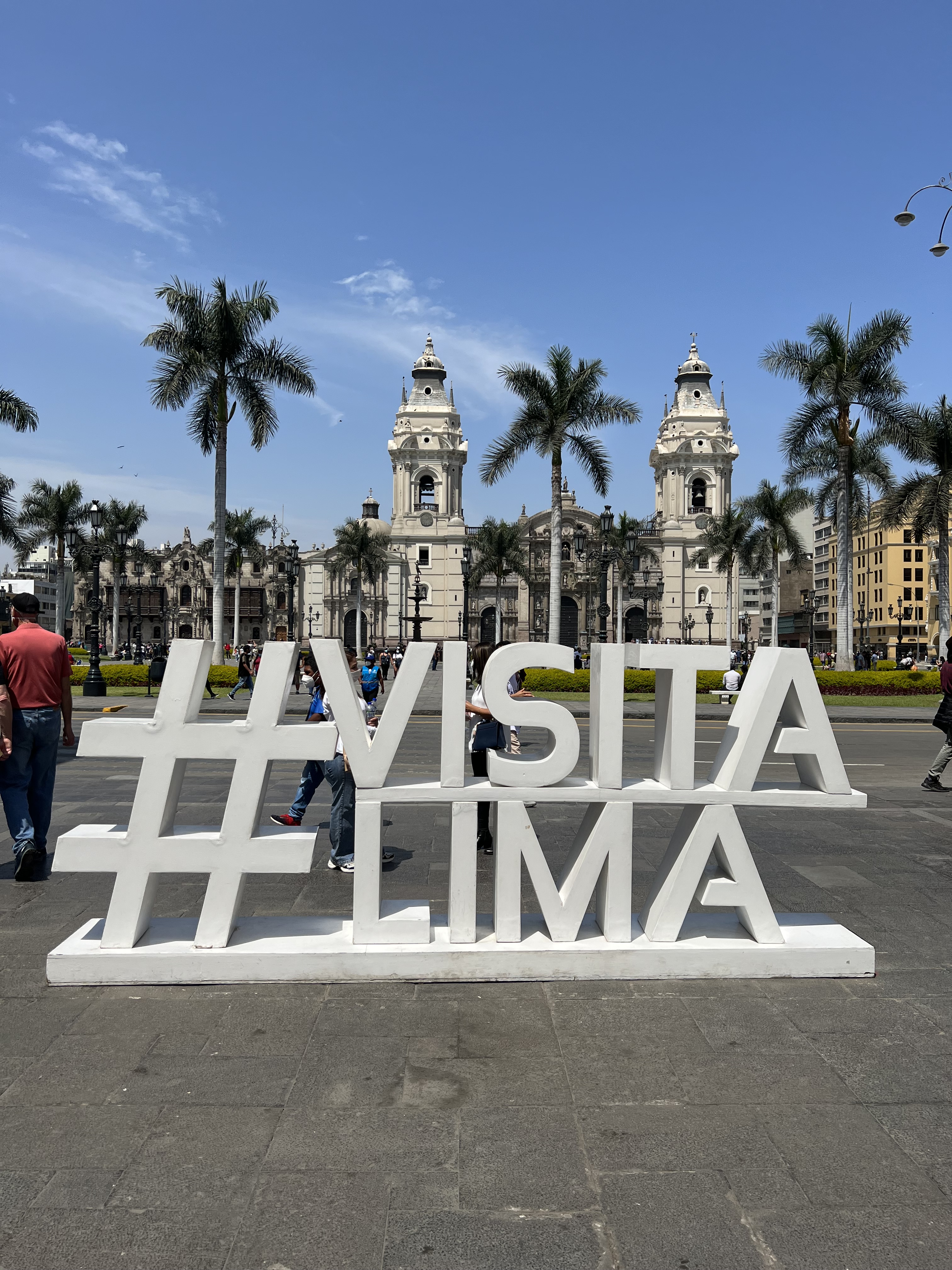
Larkin’s last roommate, Claudia is from Peru and was going to be in town on Easter break. We had Friday and Saturday to enjoy Lima with Claudia and her friend which included a day of 13,000 steps and blisters and my first Pisco Sour – one of many! Lima is the only major city in the world that doesn’t have a subway/rail system. It seems instead they have lots of taxi type smaller vehicles. We enjoyed the use of one that continued to die on the streets but limped into a gas station. We then transitioned to another one to reach Baranco and continue our many steps. They say you aren’t a real driver of people in Lima until you have your first fender bender. Thank goodness that didn’t happen to us!
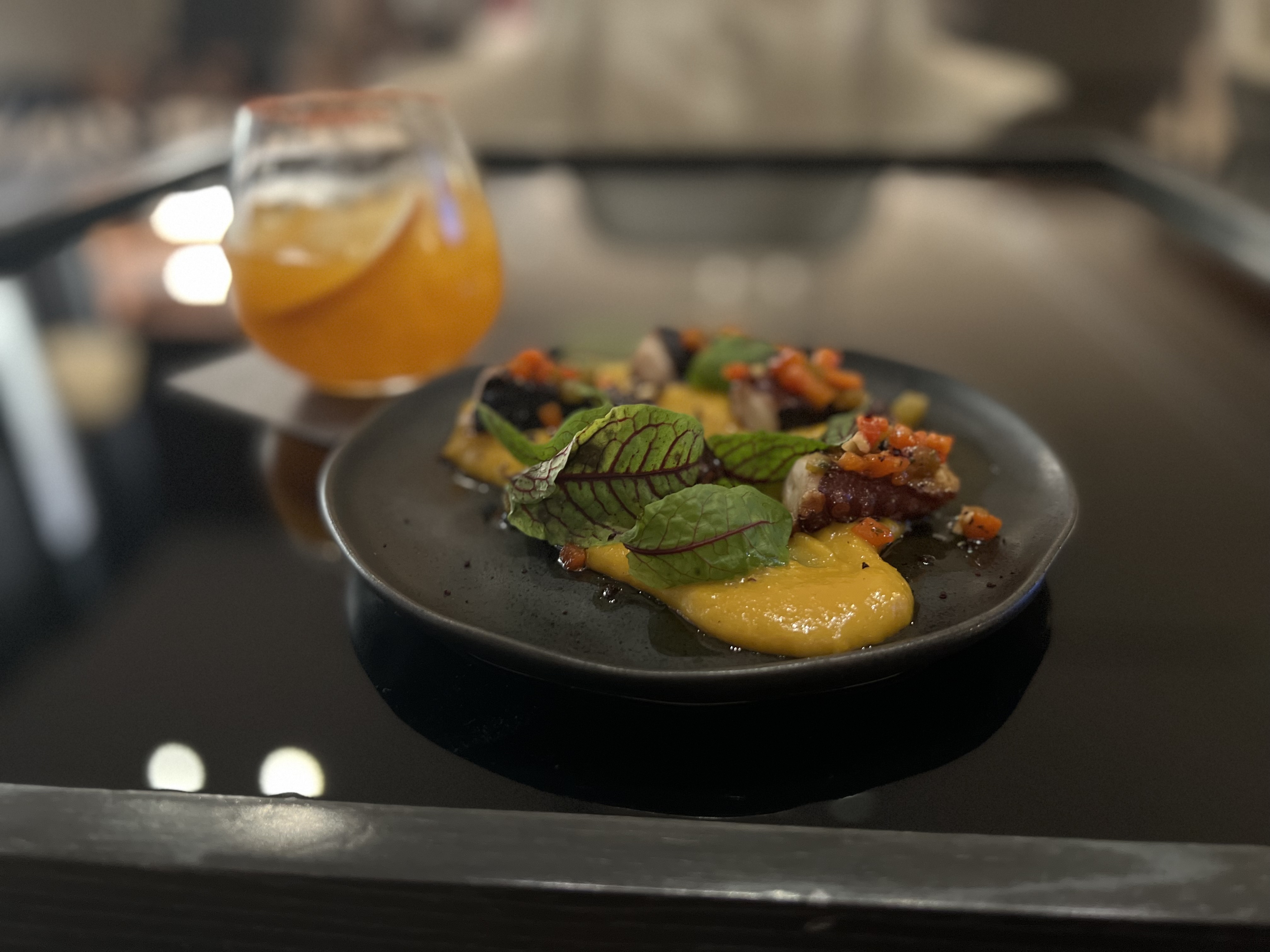
We wore masks almost everywhere except when we wanted to take pictures. Peru ended up being a very safe covid place for us! After Ecuador it was a very happy outcome! The food we found everywhere including Alpaca and Guinea Pig was delicious. Sometimes I take photos of food and actually remember what it was even if I don’t write it down. Other times I have no earthly clue like this one photo above- but it sure has pretty colors and I’d eat it again!
Creative towels in our room or unique creations as we walked around!
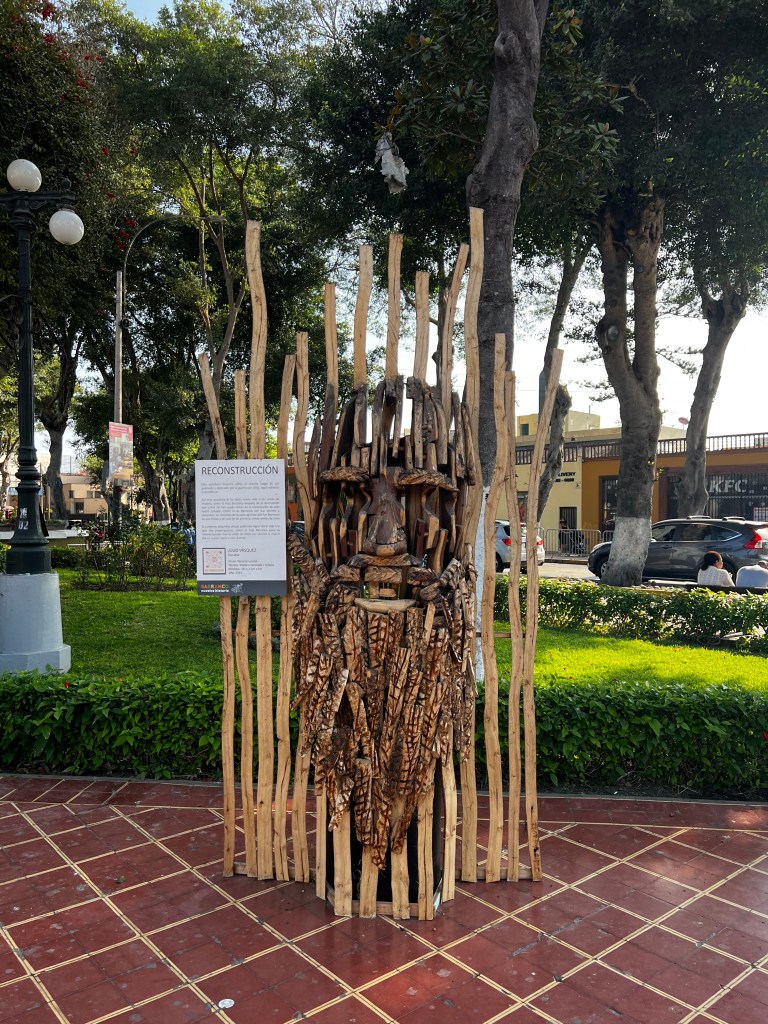
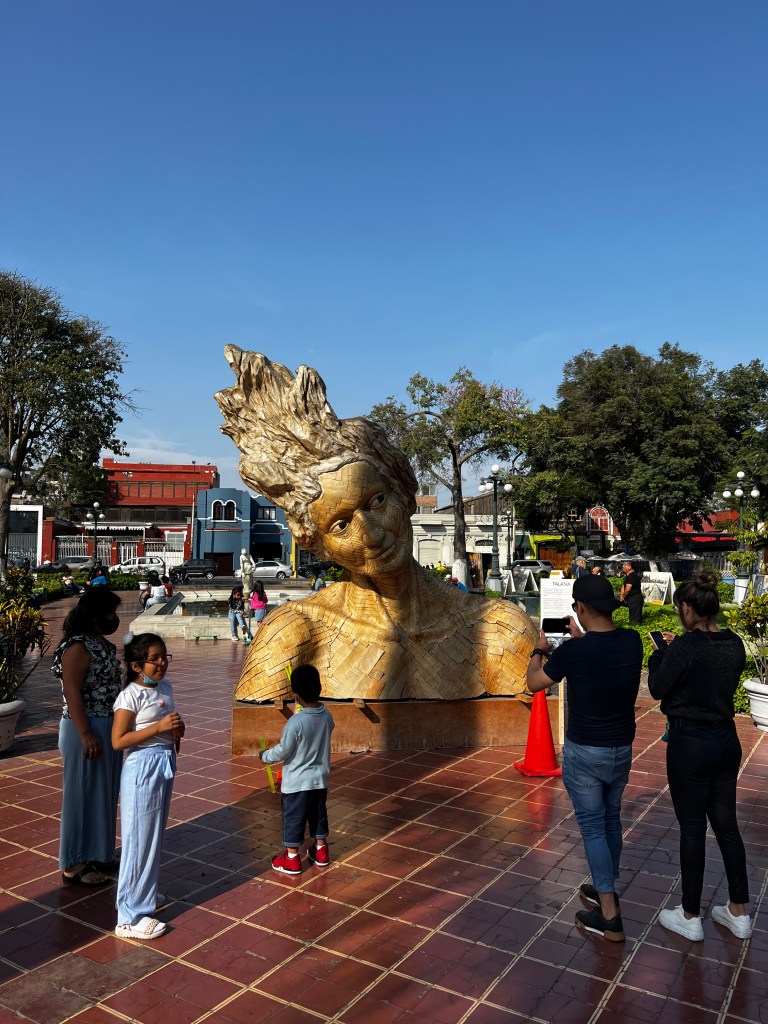
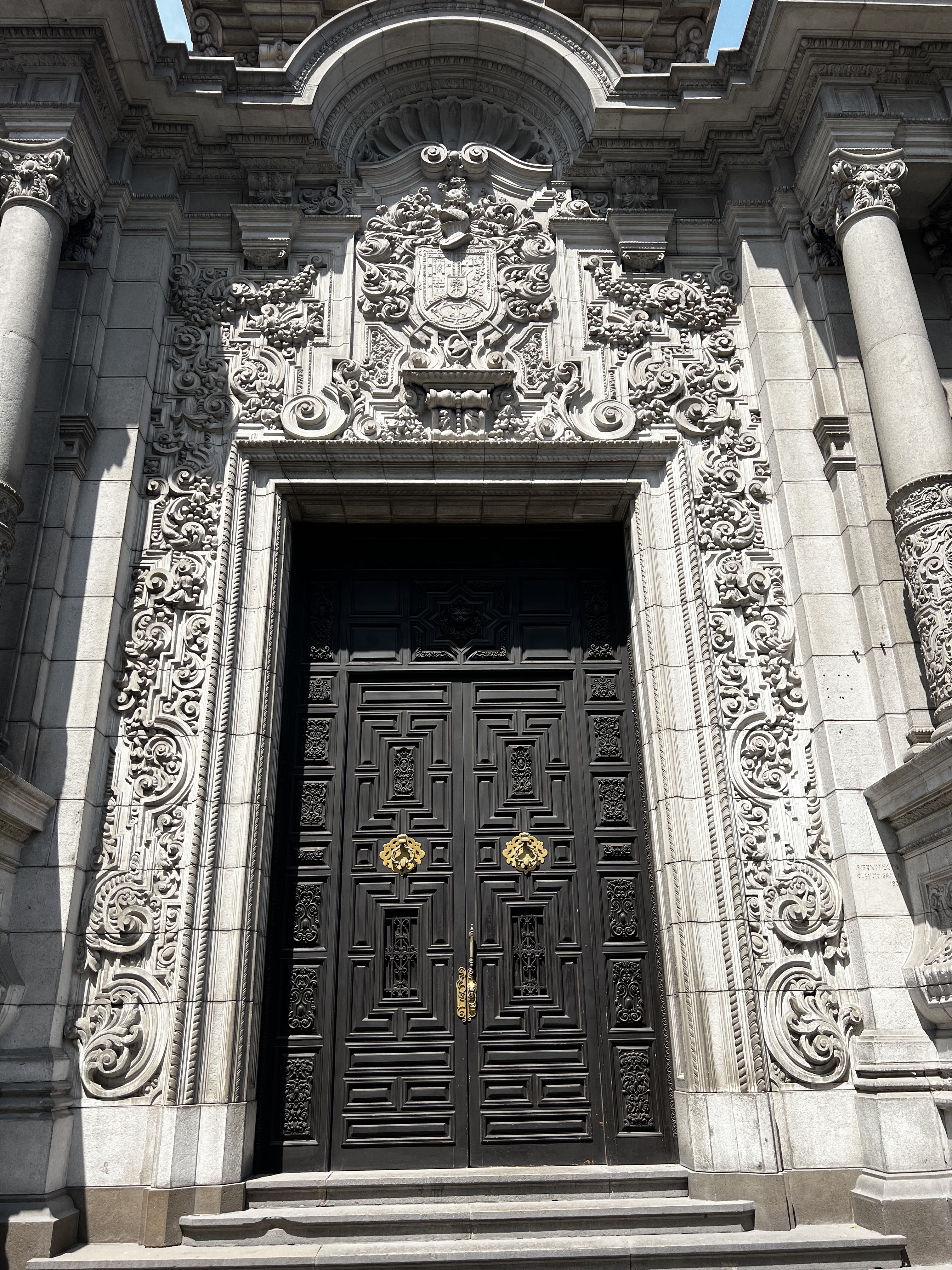
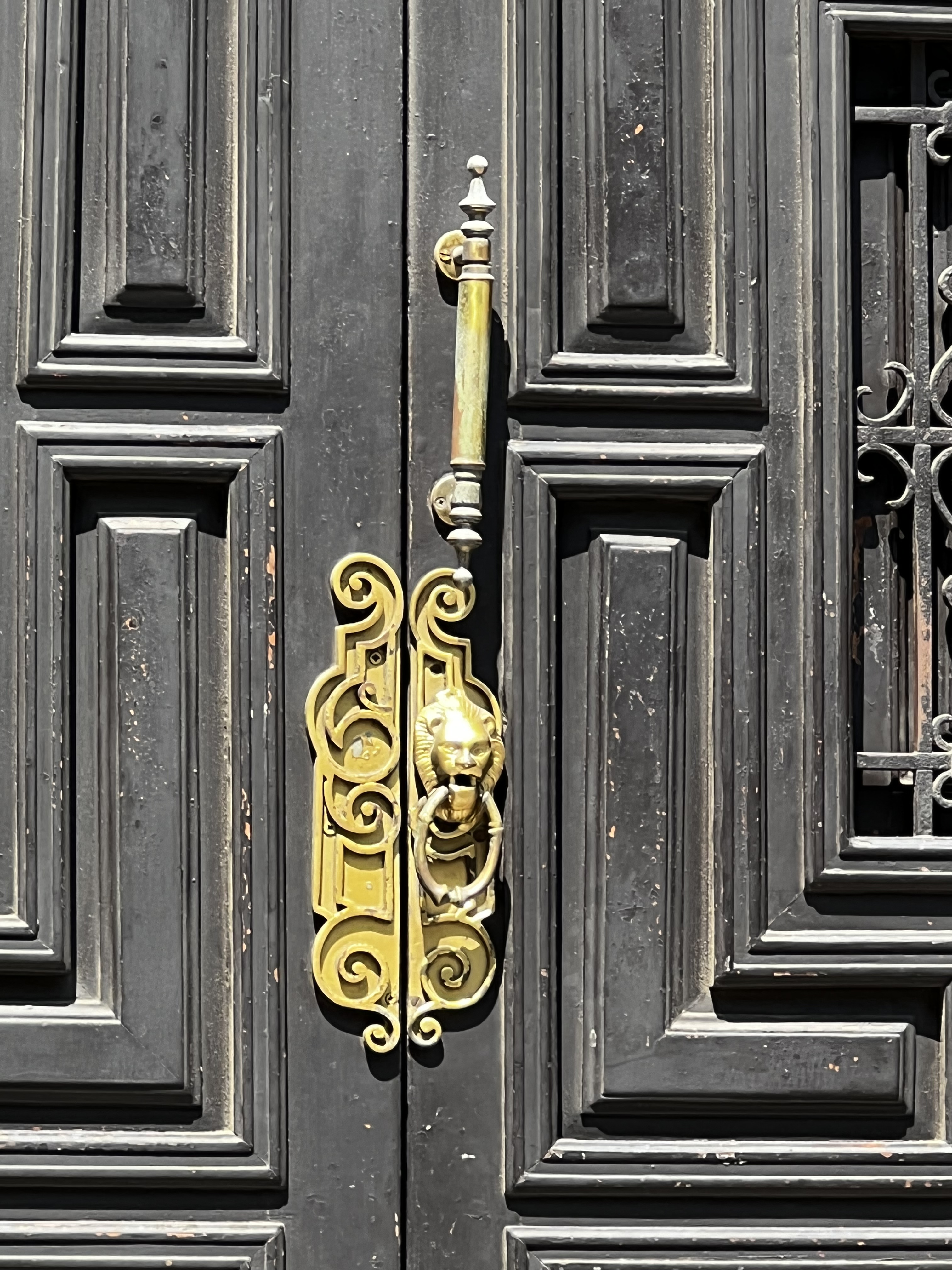
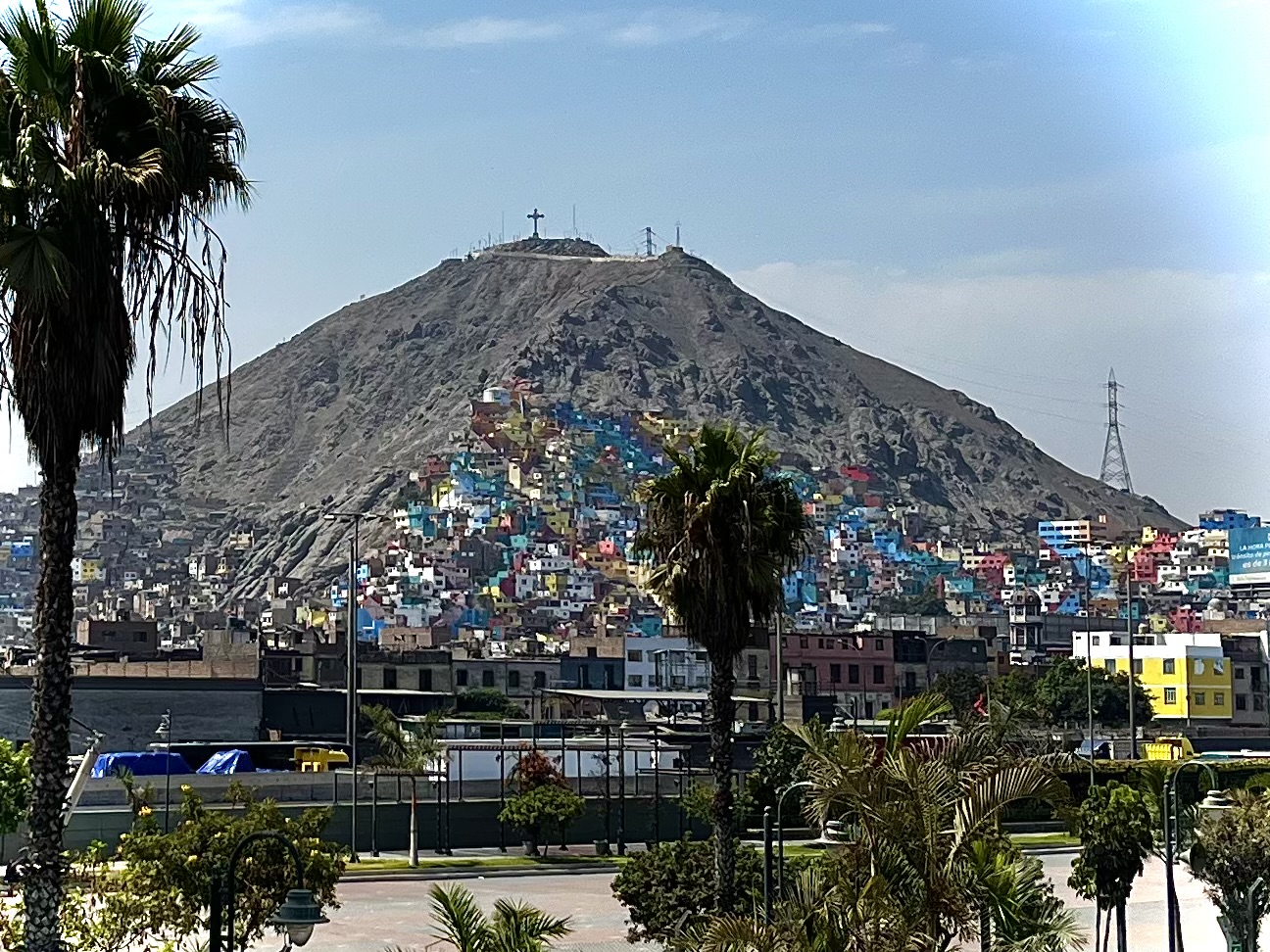
In the downtown historical area we enjoyed a museum and other old buildings. We walked toward what was considered a river, the Rimac river and it seemed much more like “streams” in Los Angeles more a highway over a culvert. It may only have been like that where we were downtown. The Peru hillside might have an incredible brightly colored palate above this River area, but it is not a safe place to visit. While I used to be able to photograph telephone booths, I now have to go for just incredible doors and doorways! I still like taking pictures of laundry but didn’t seem to notice too much on this trip.
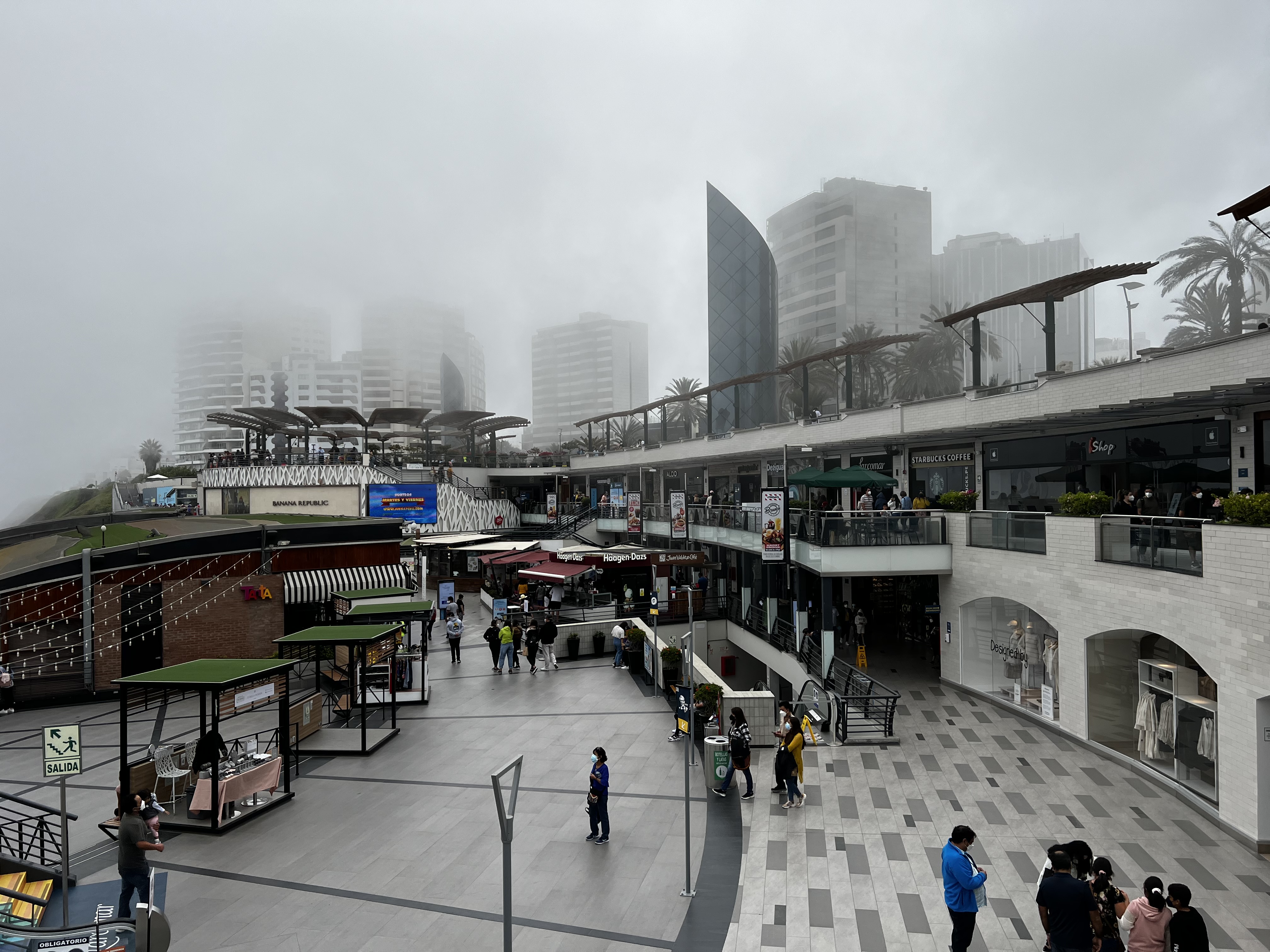
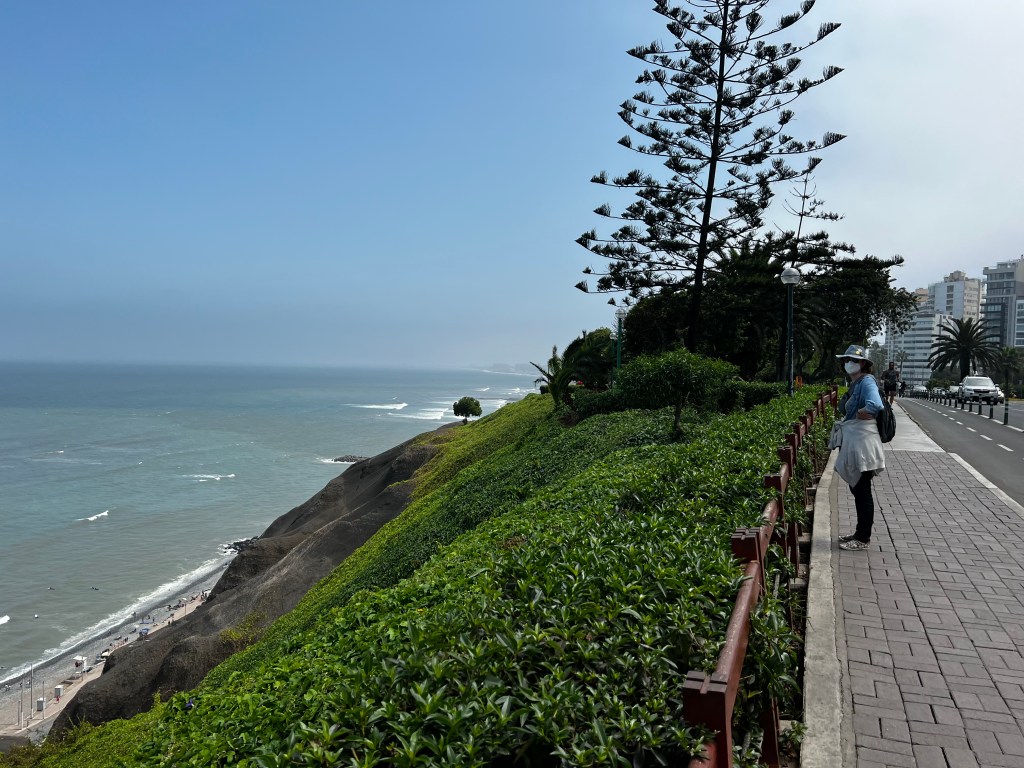
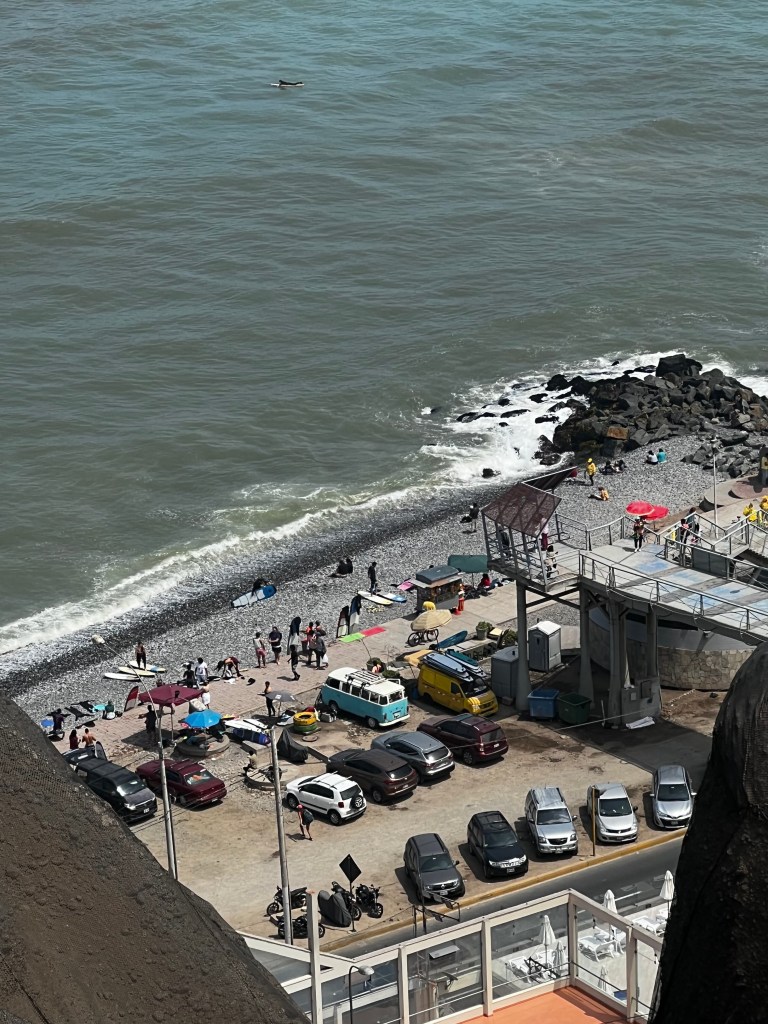
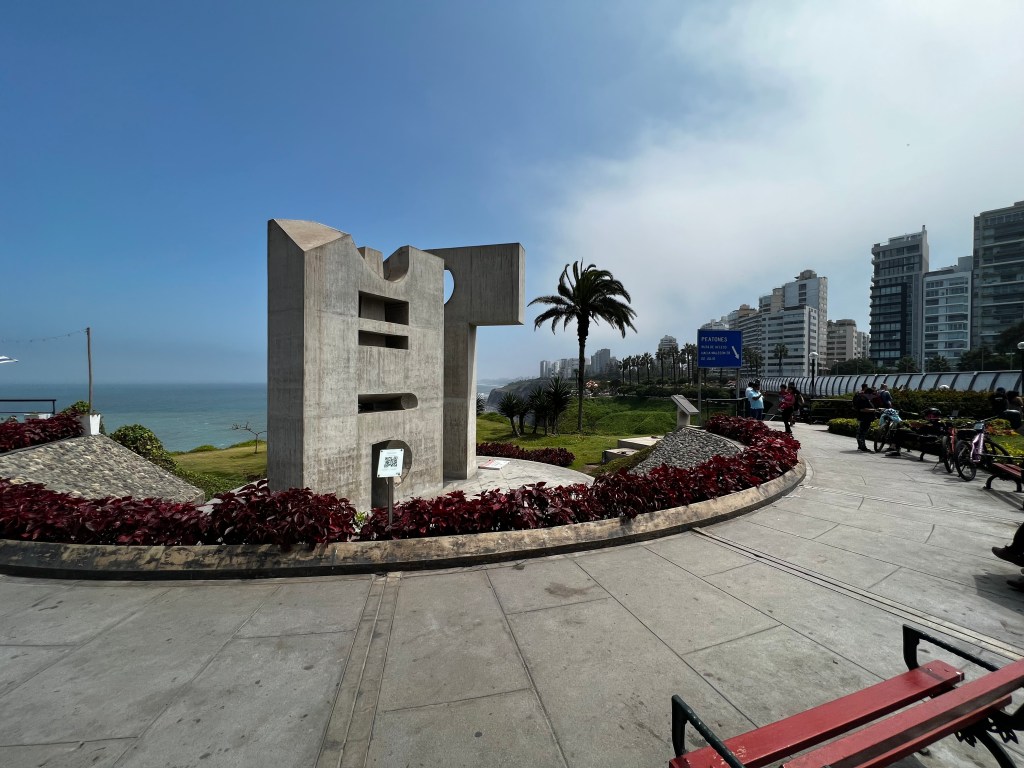
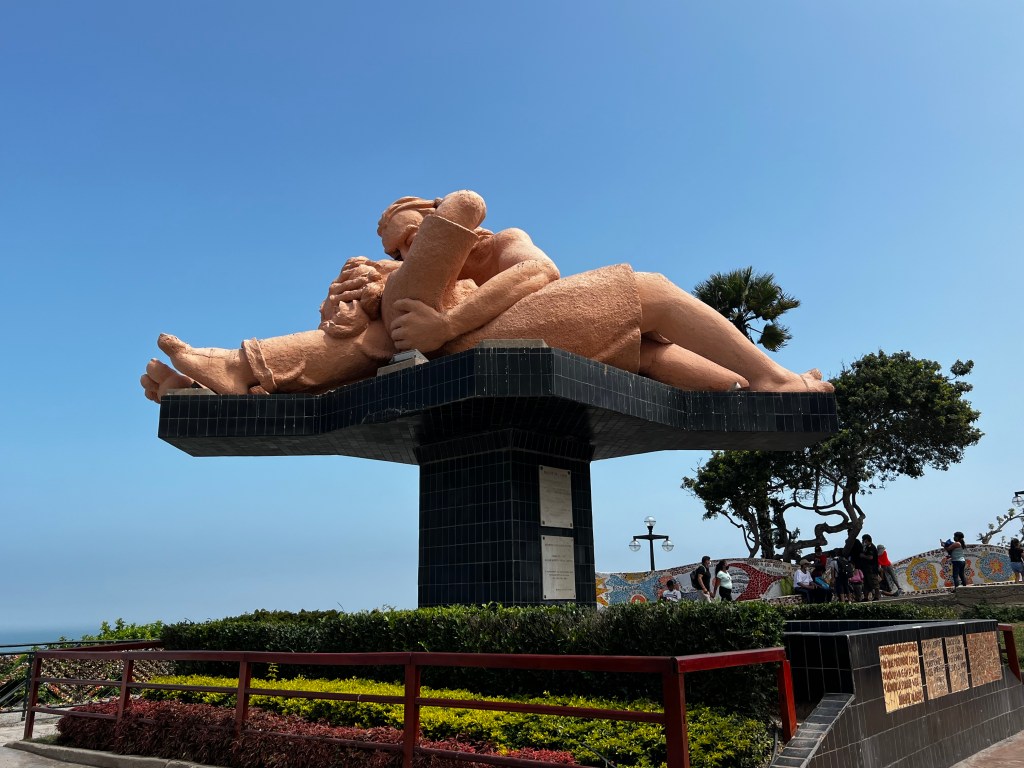
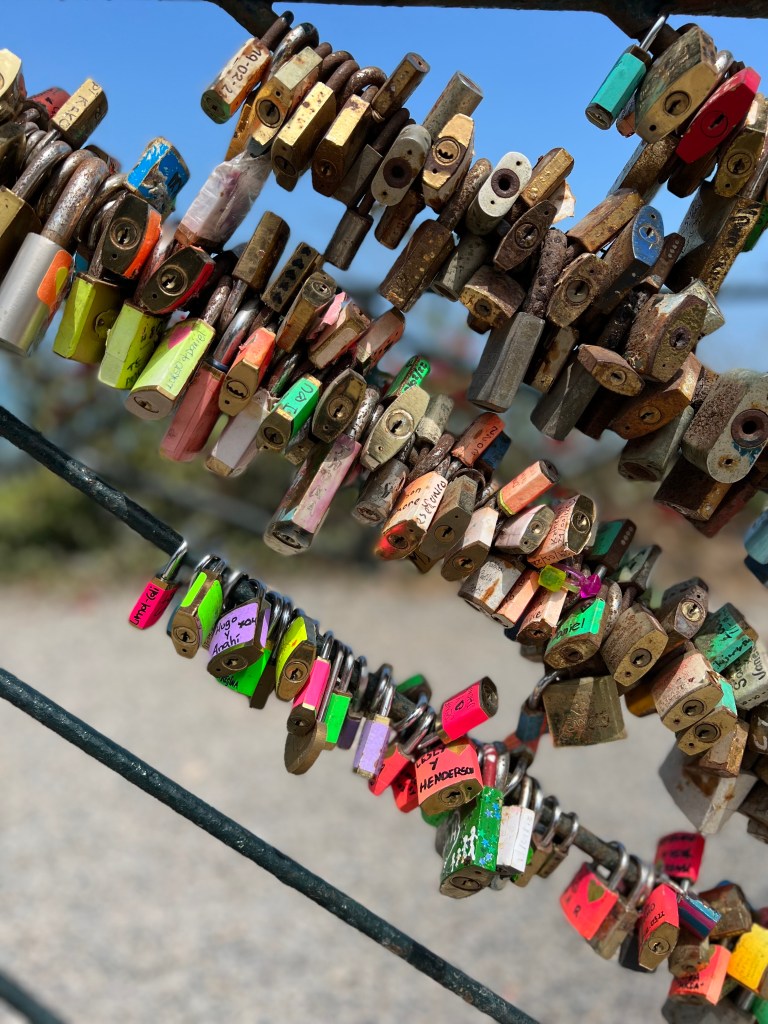
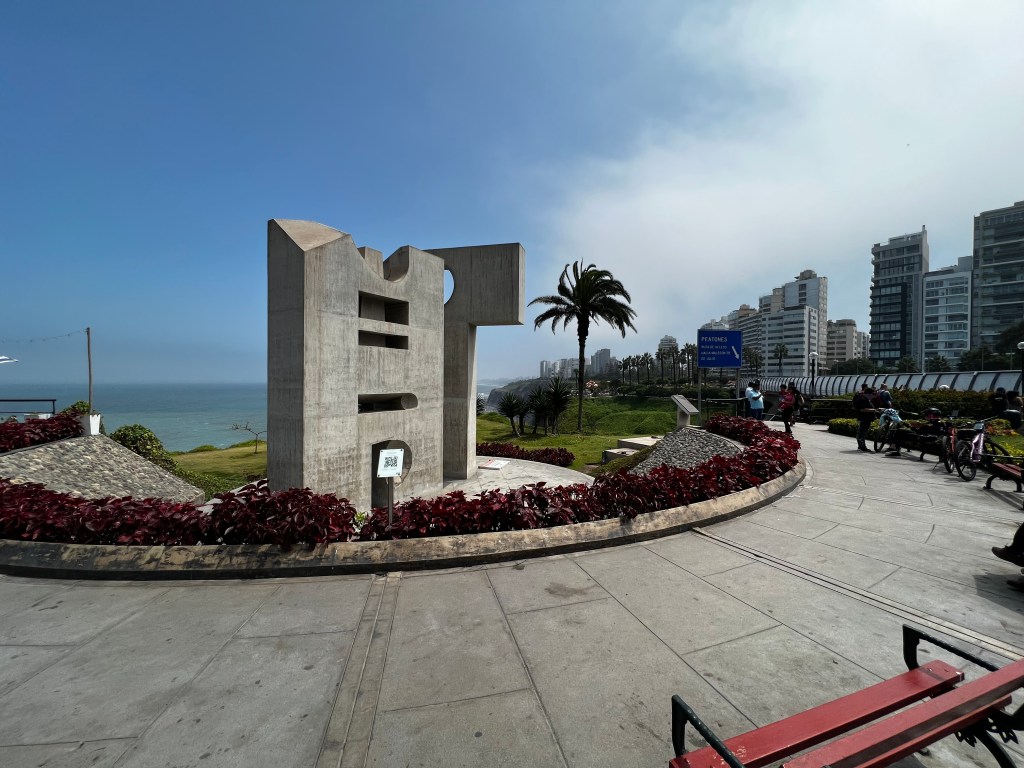
We walked the waterfront on Sunday and enjoyed the views and the shopping center Larcomar built into the hillside. The views of the beach could almost be California with the VW bug. Their park of love also has the requisite locks for the lovers and a monstrously sized couple enjoying some amour.
Onto what became our favorite city in Peru: Cusco!
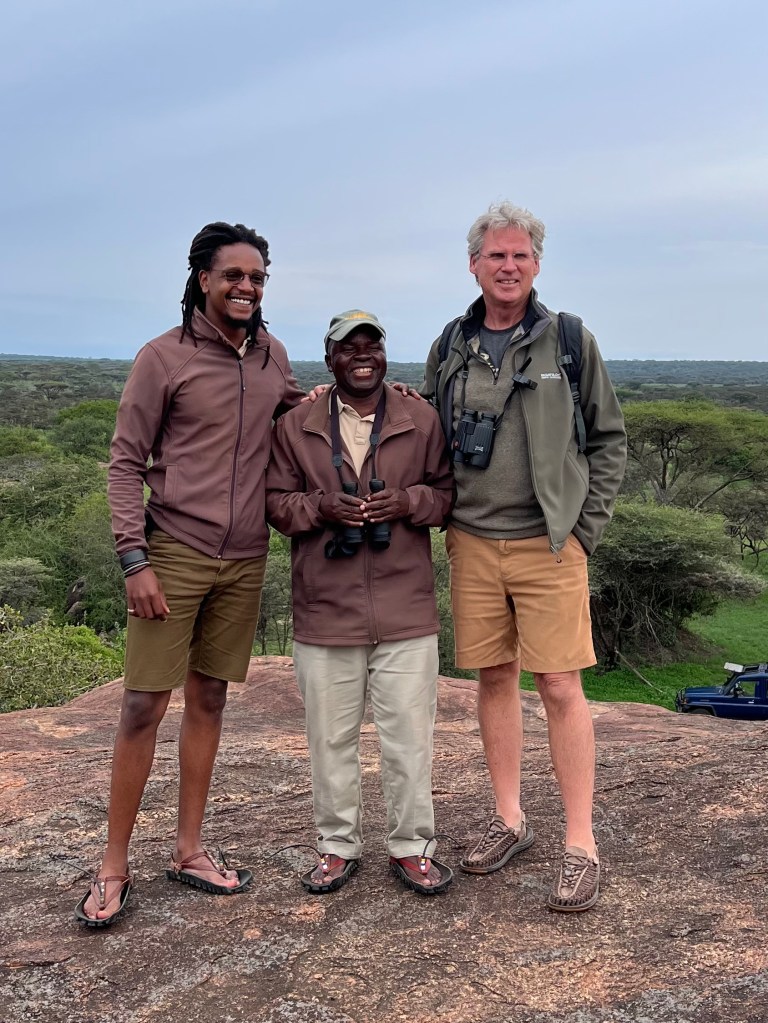
Wonderful tour guides – wonderful new friends and even some great South African Wines along with those incredible views!
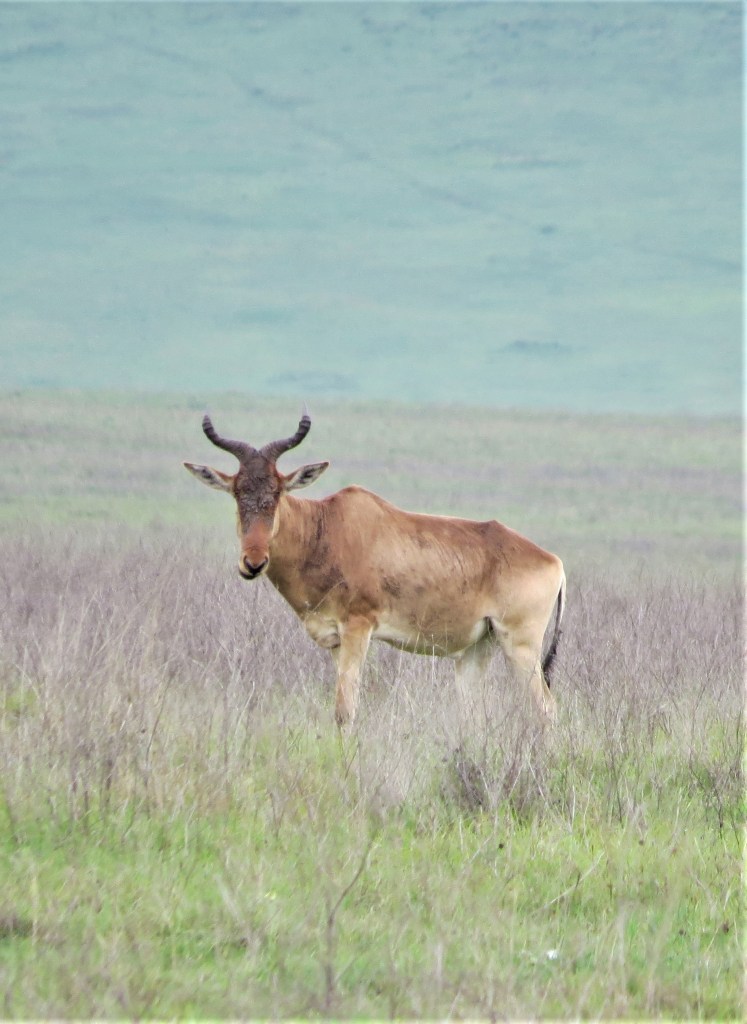
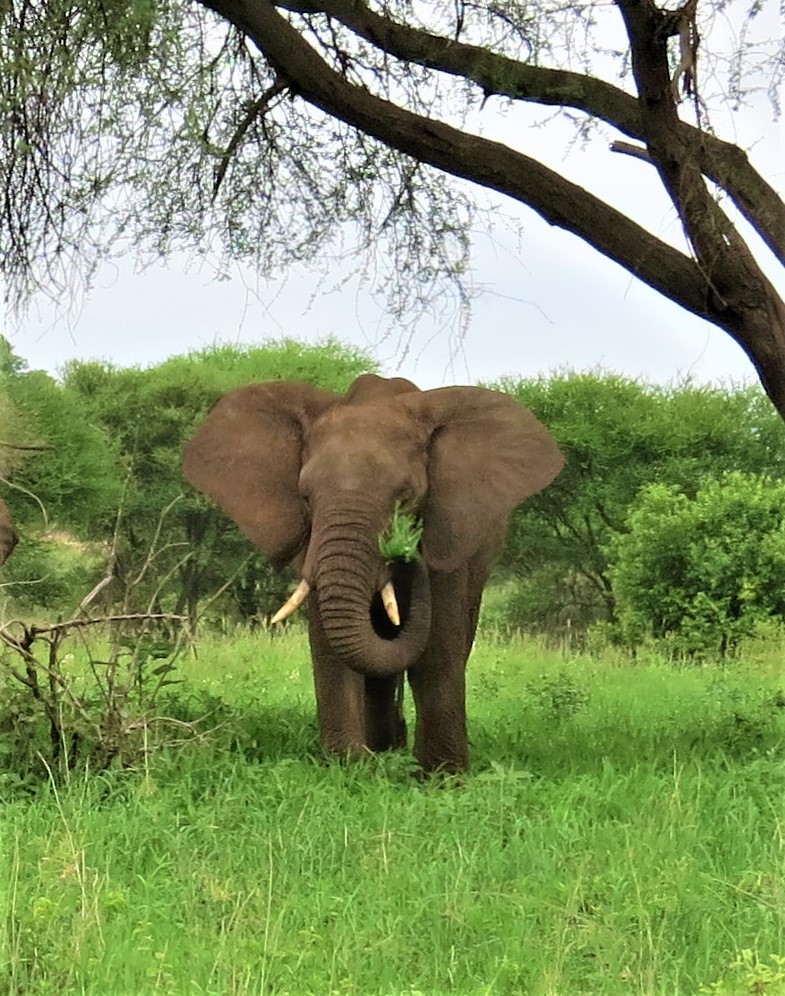
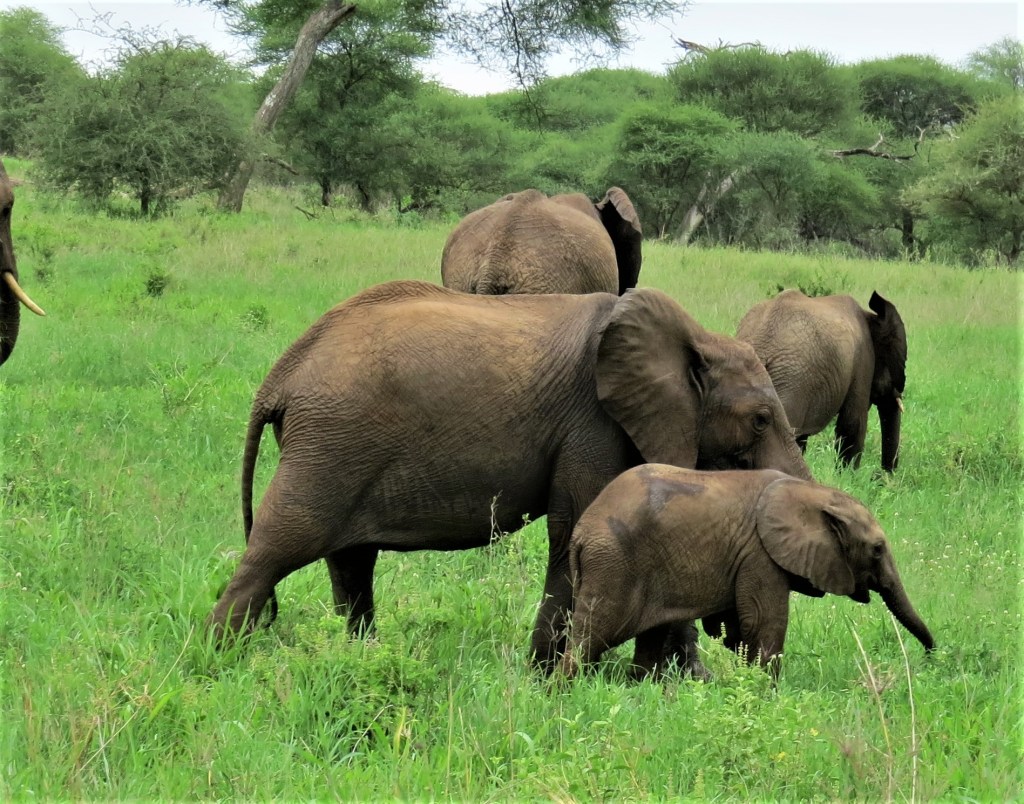
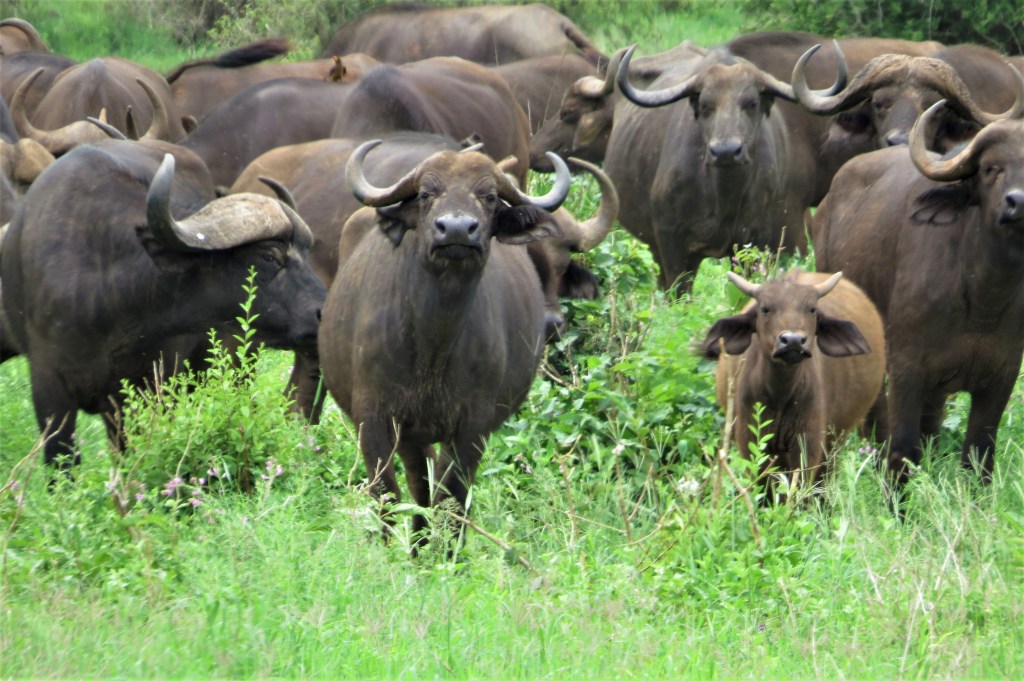
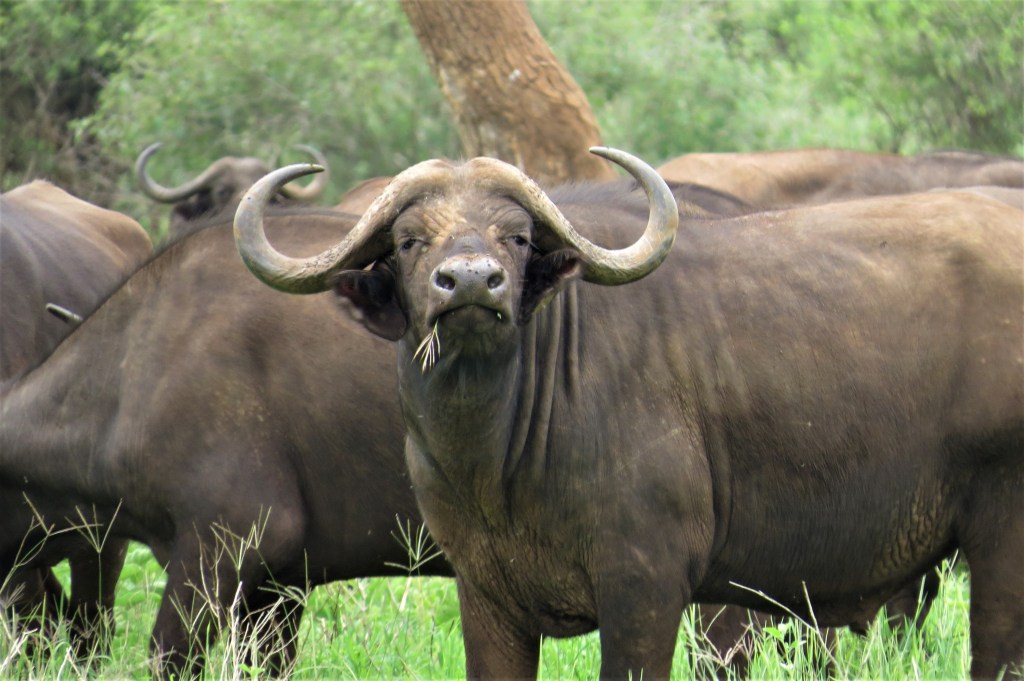
Ostrich yoga and reflections, hartebeest with his incredible horns, more impalas, elephants and cape buffalo.
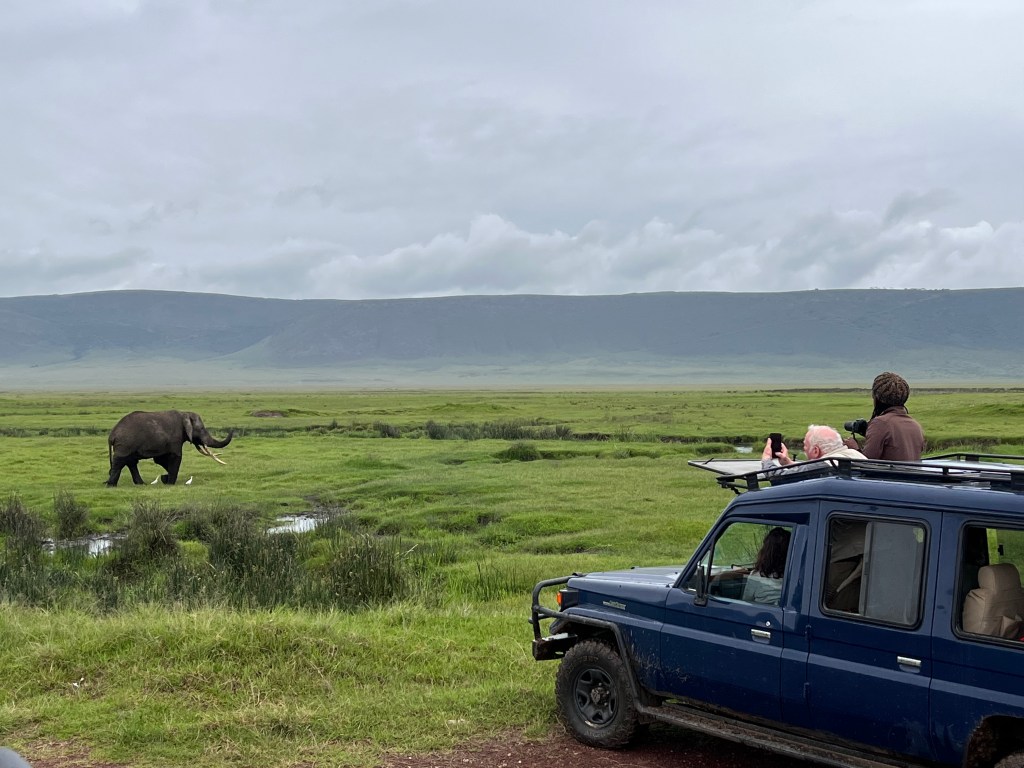
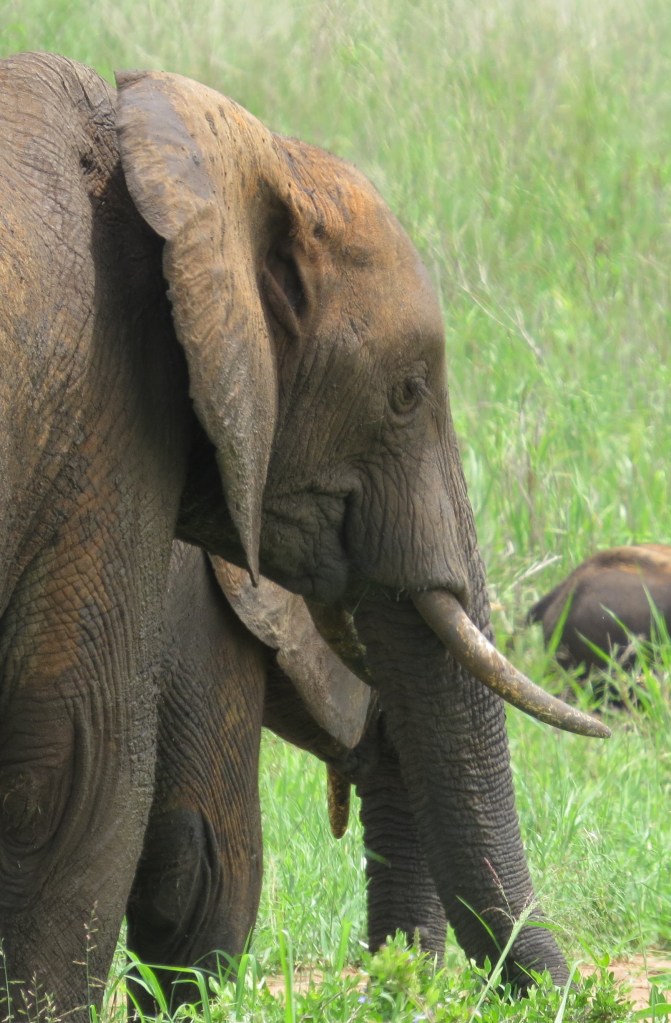
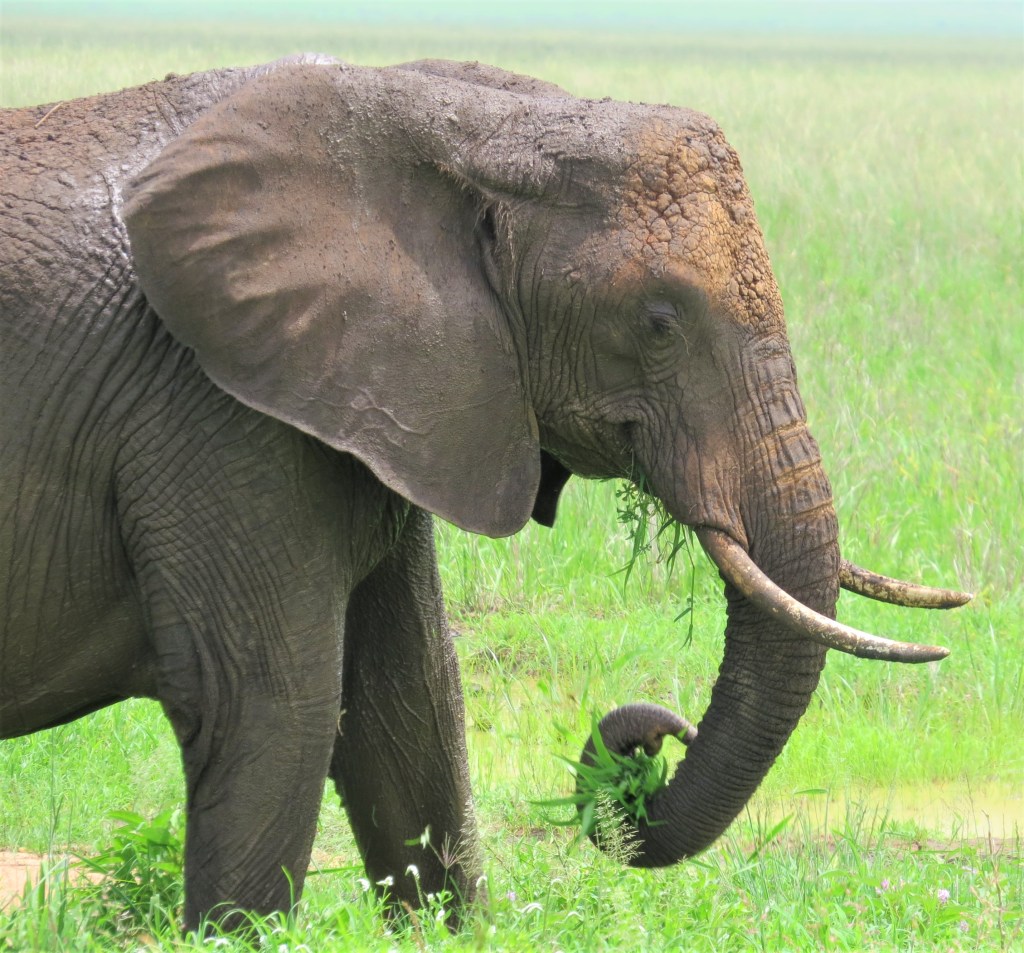
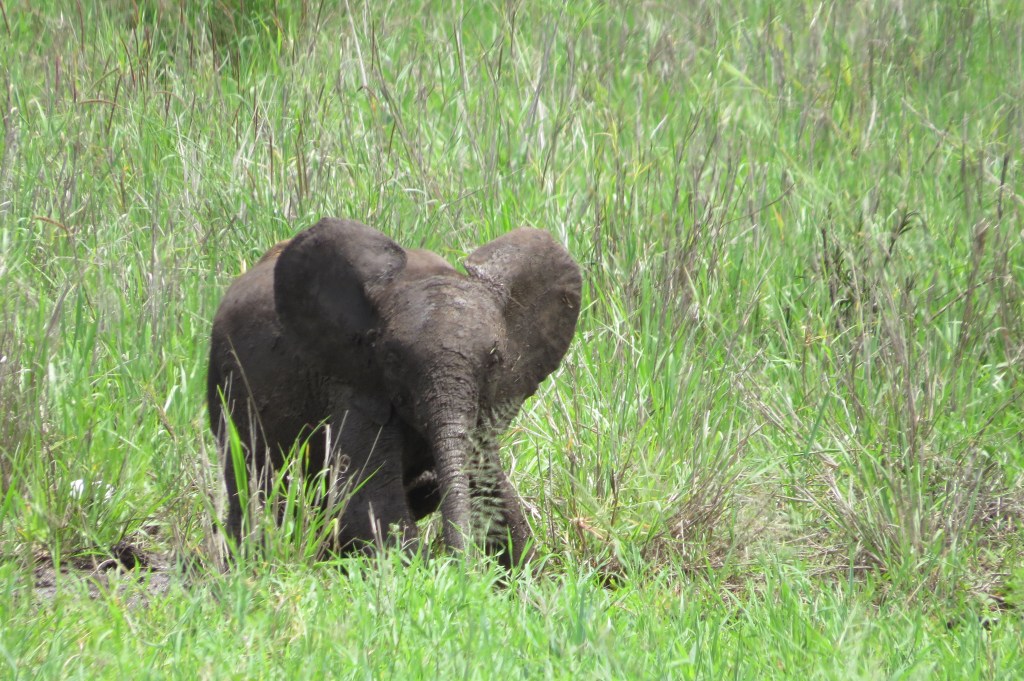
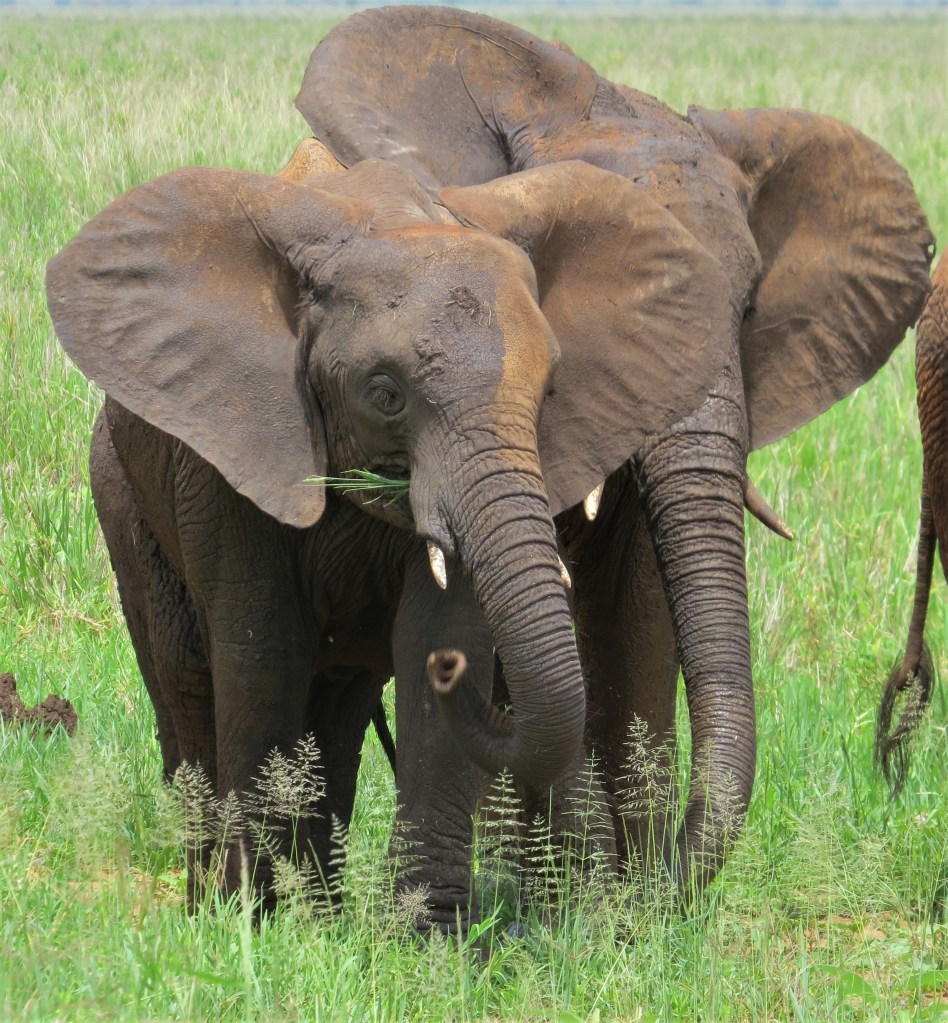
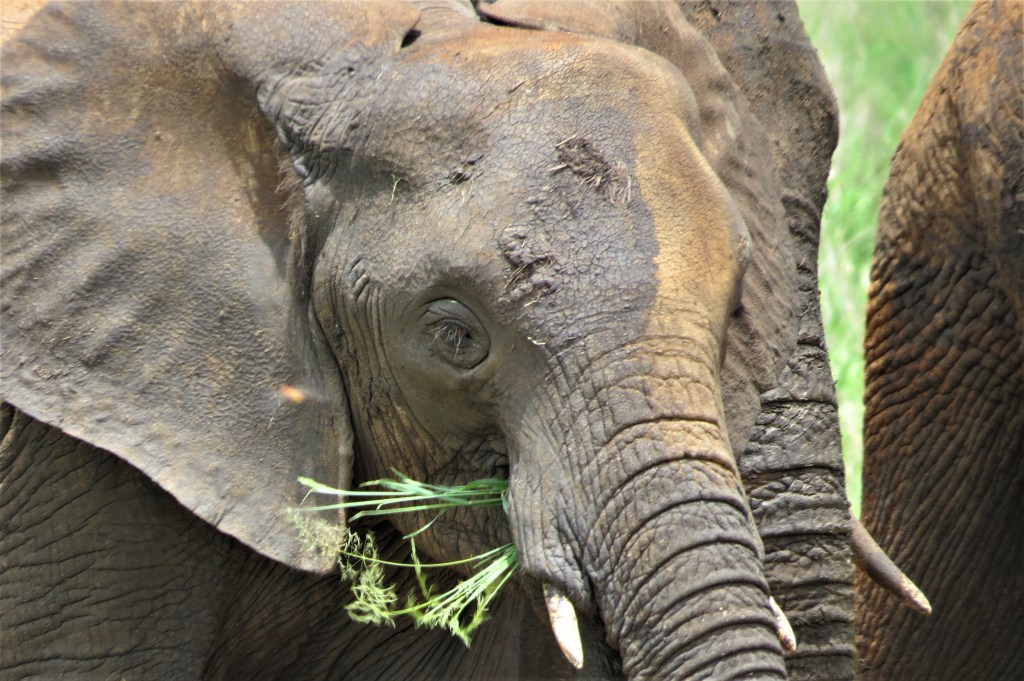
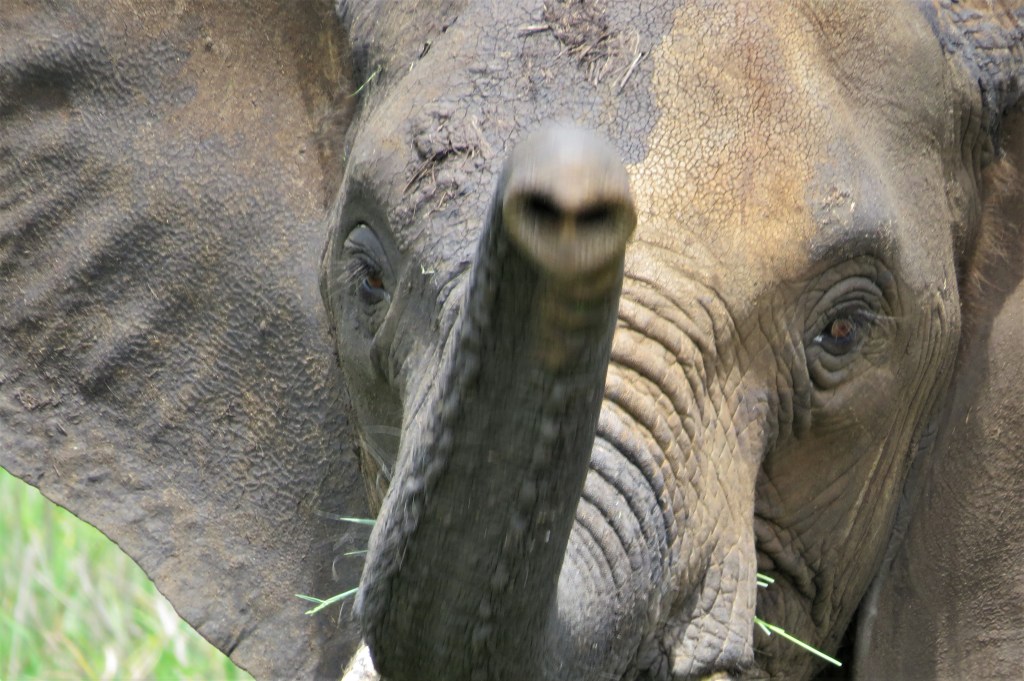
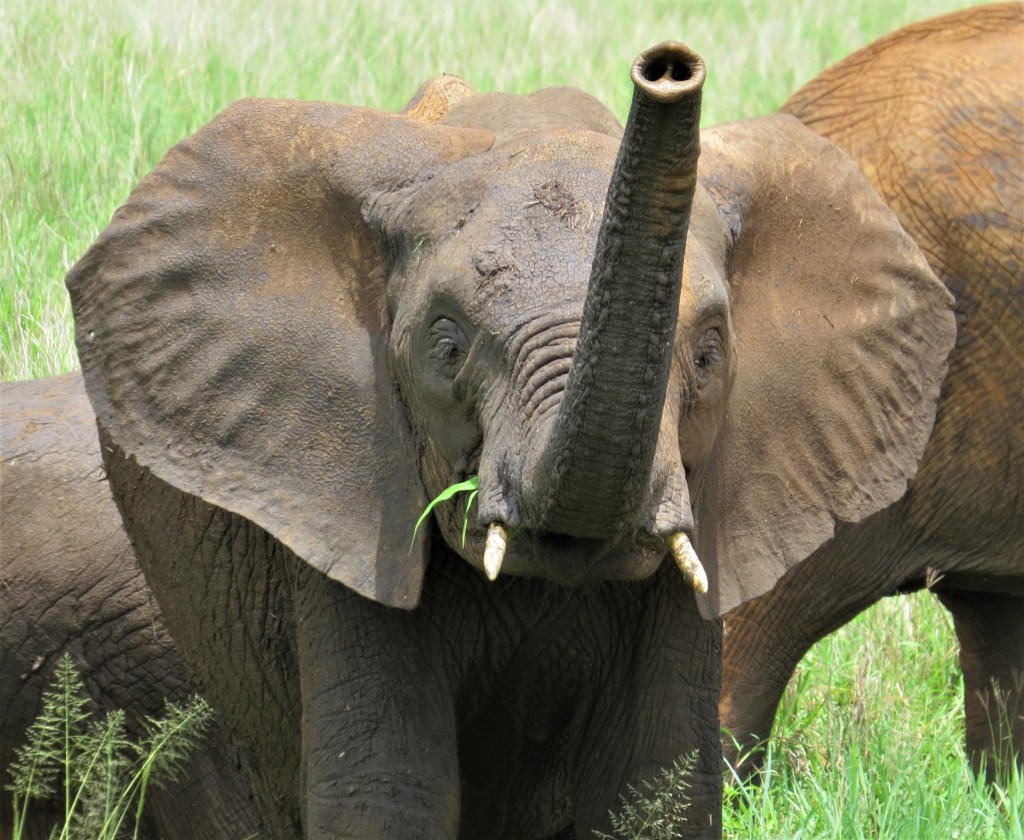
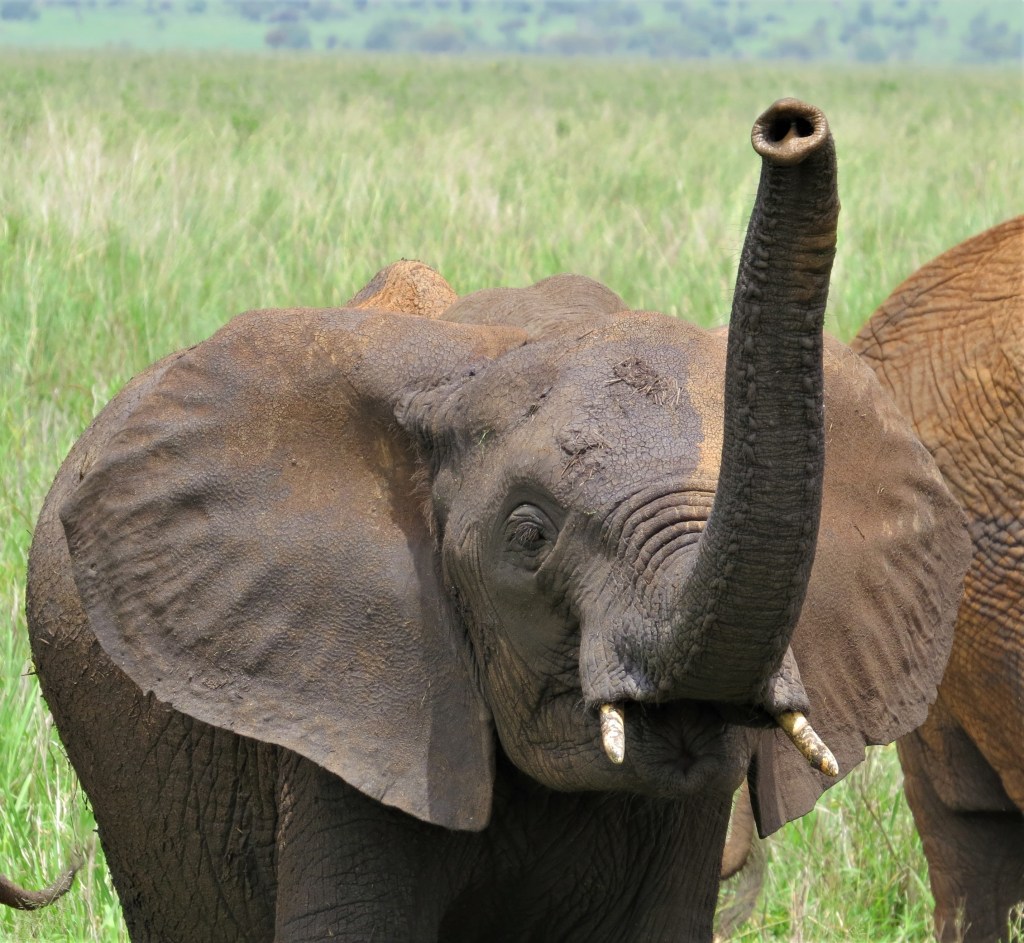
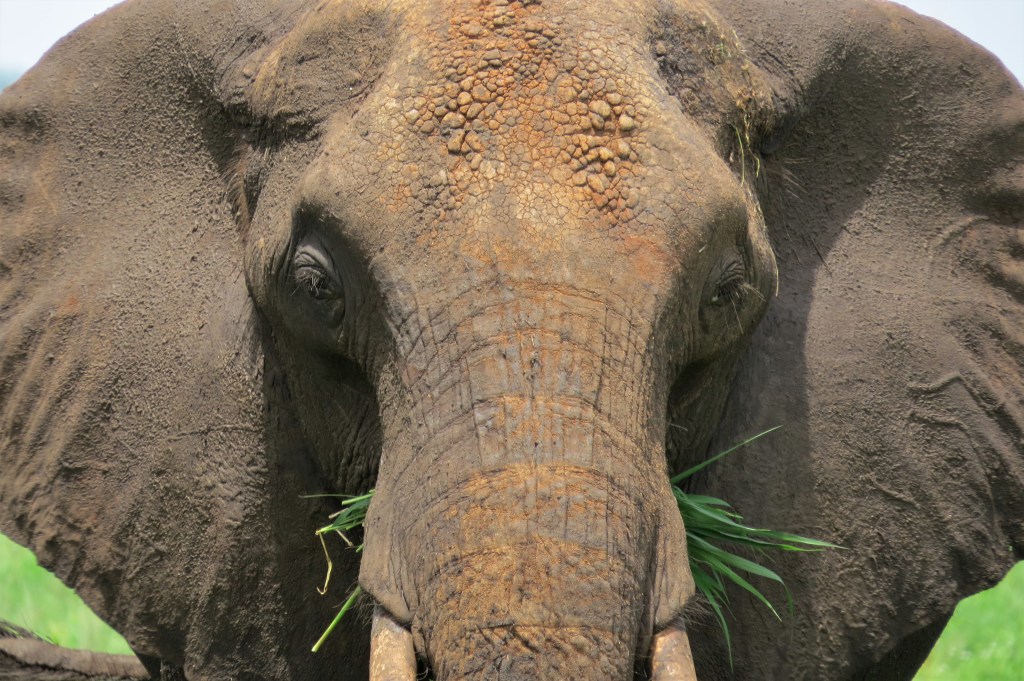
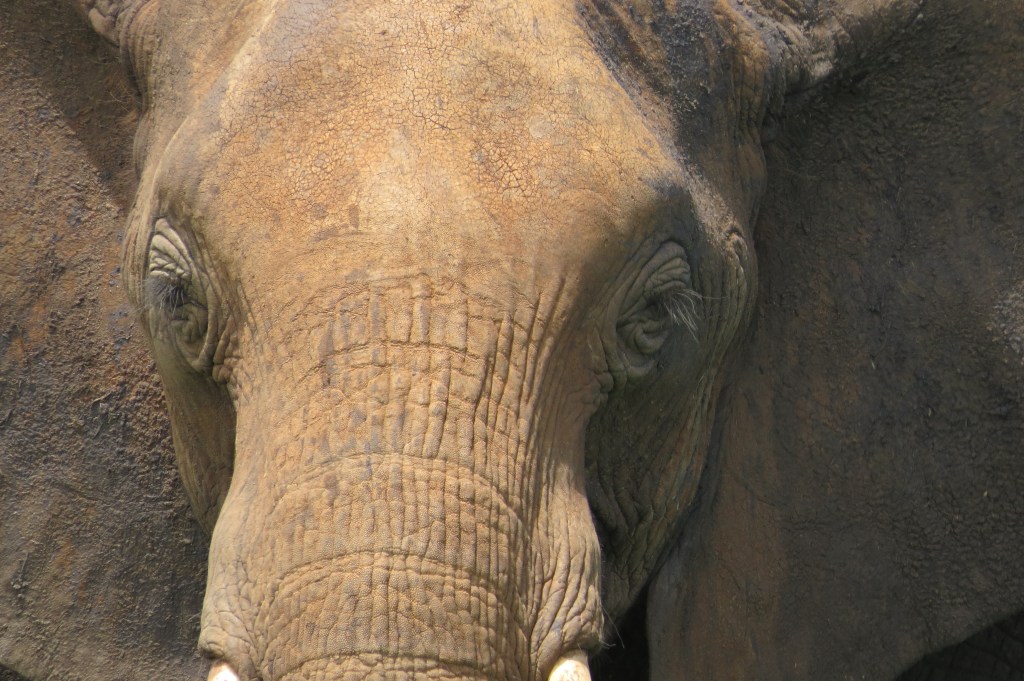
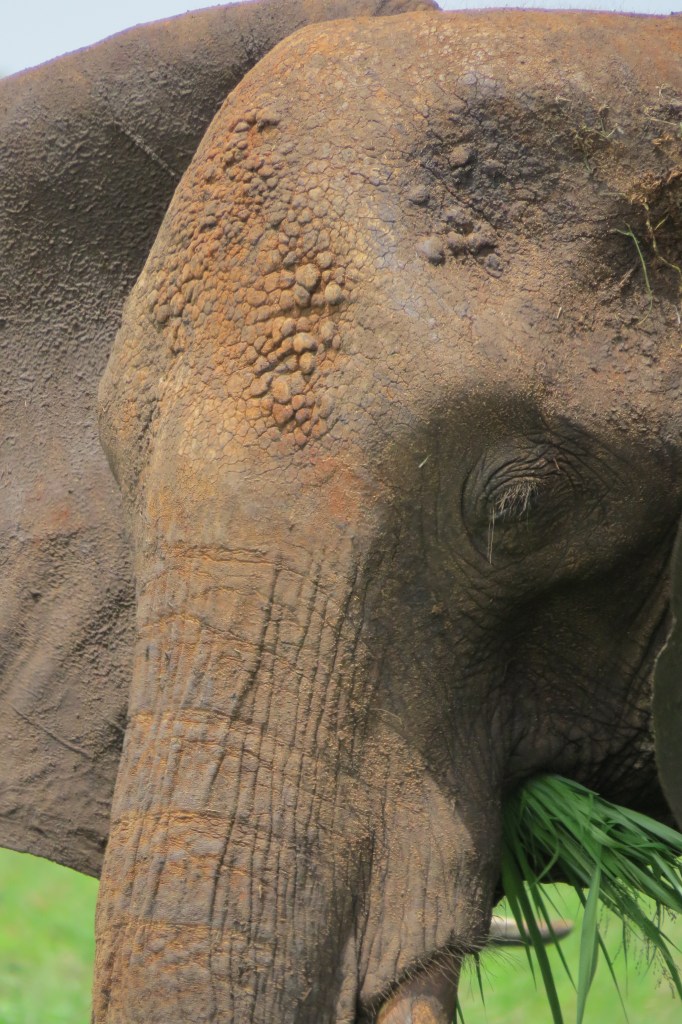
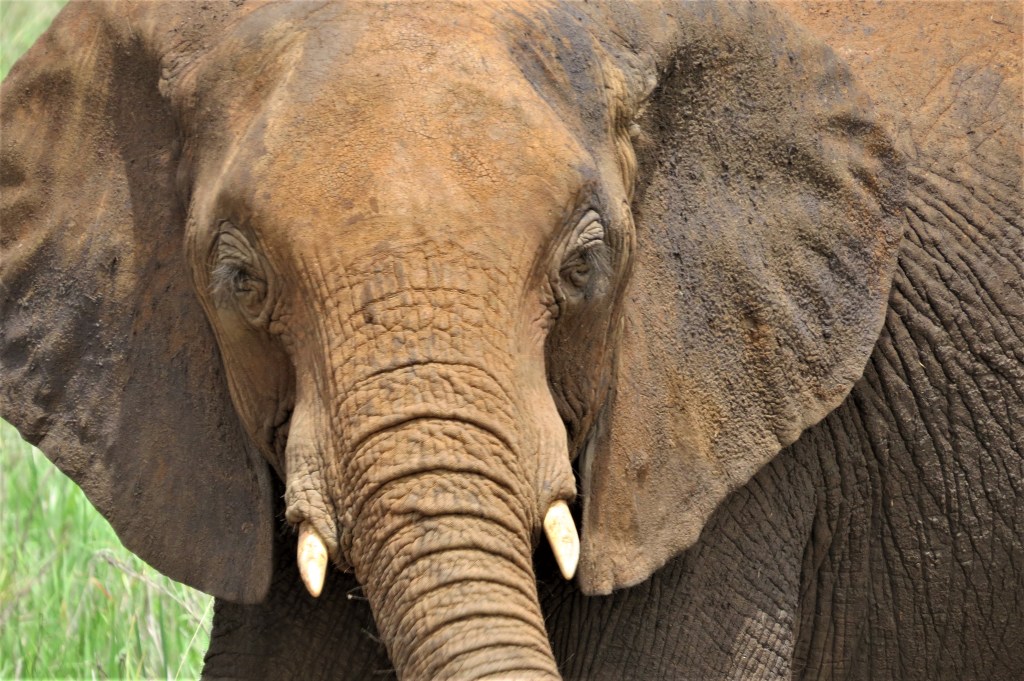
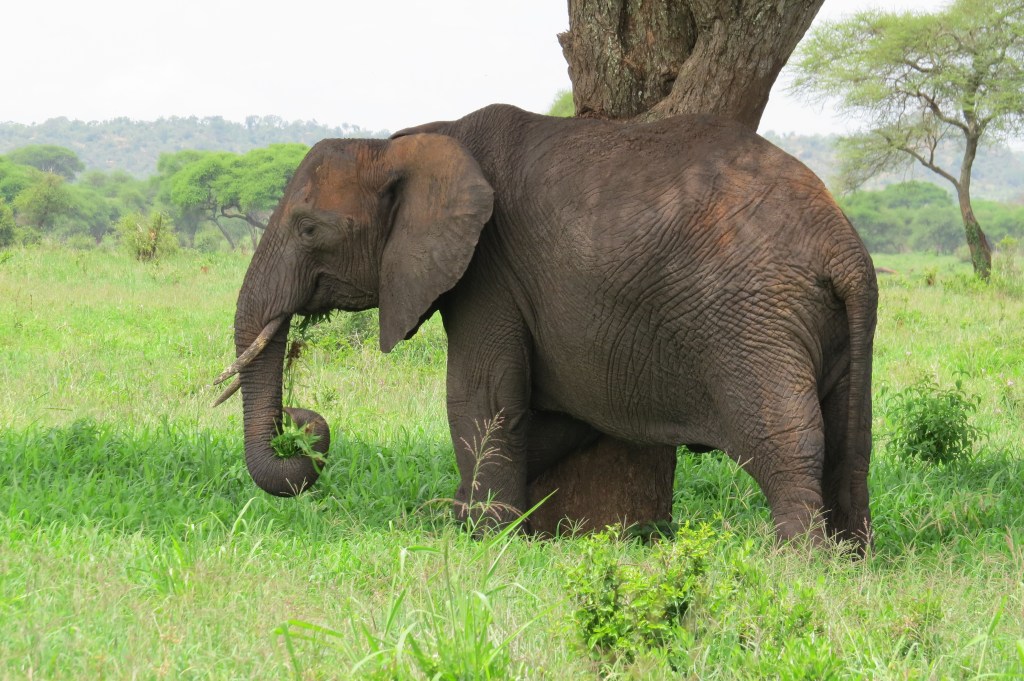
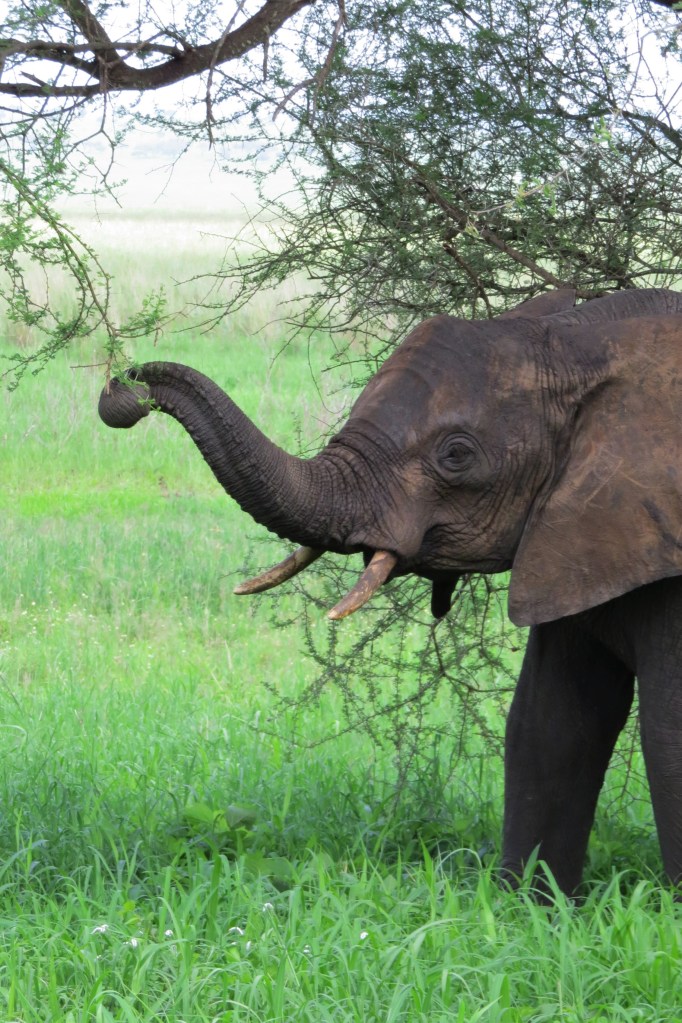
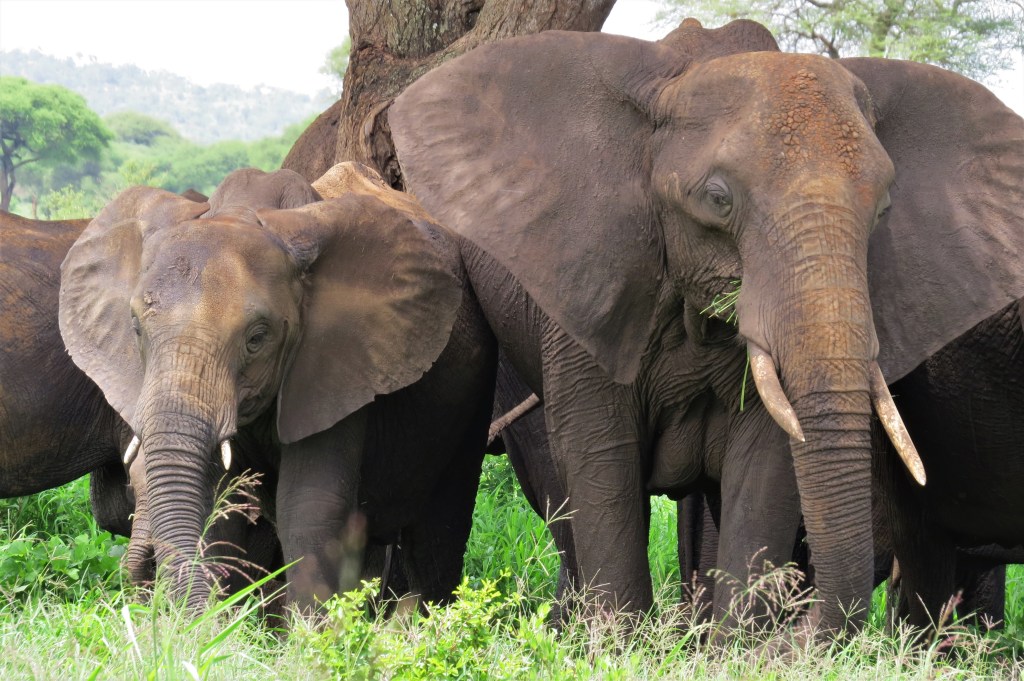
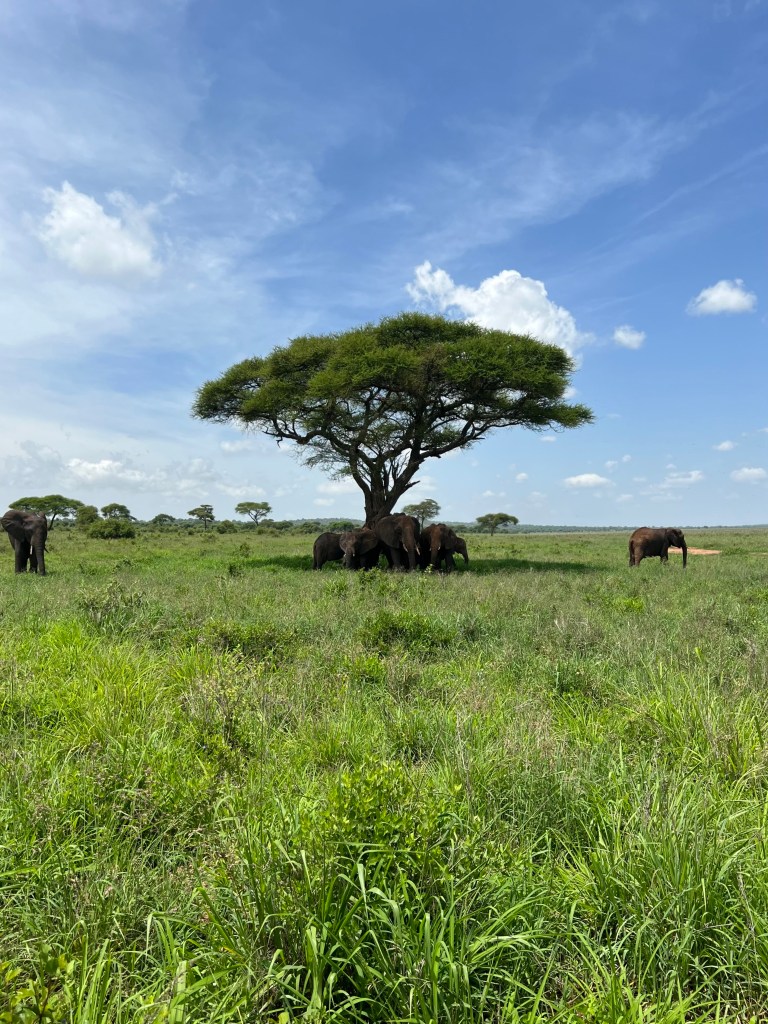
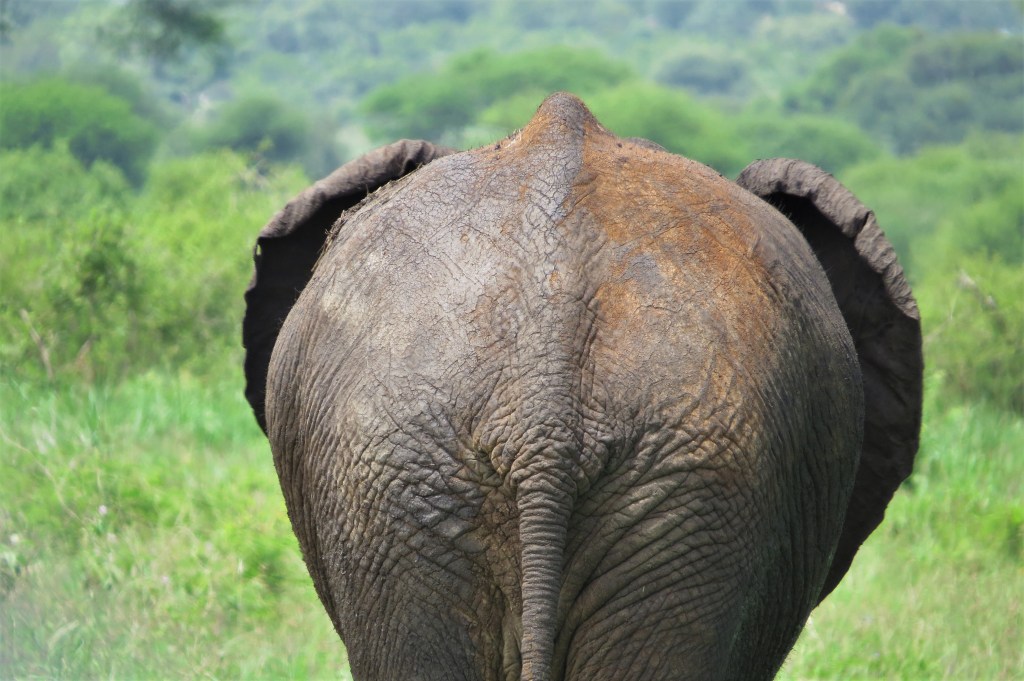
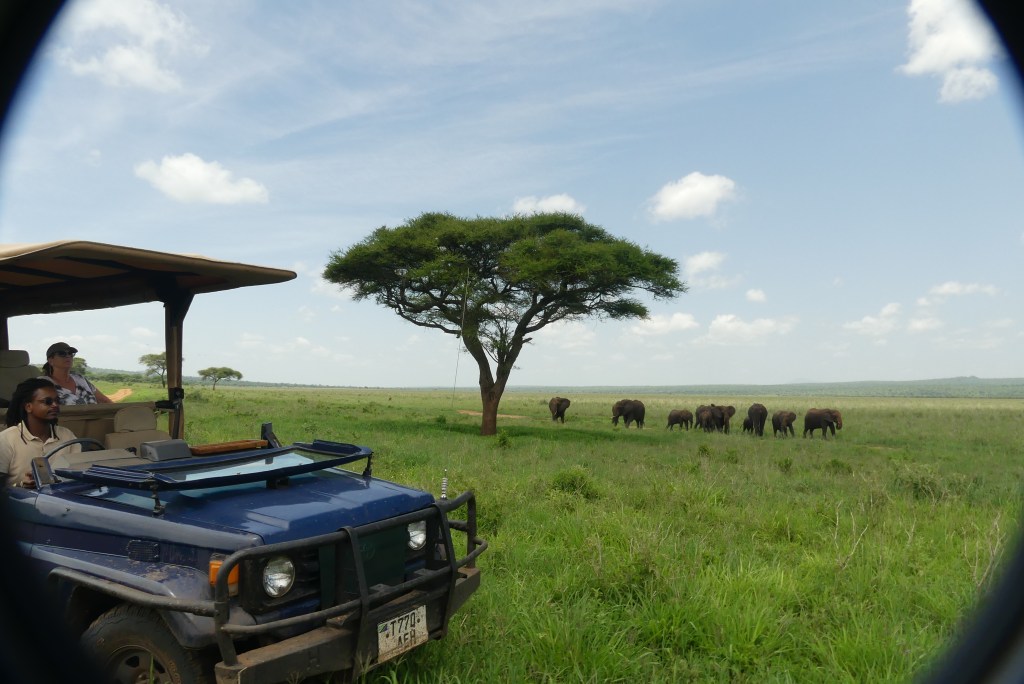
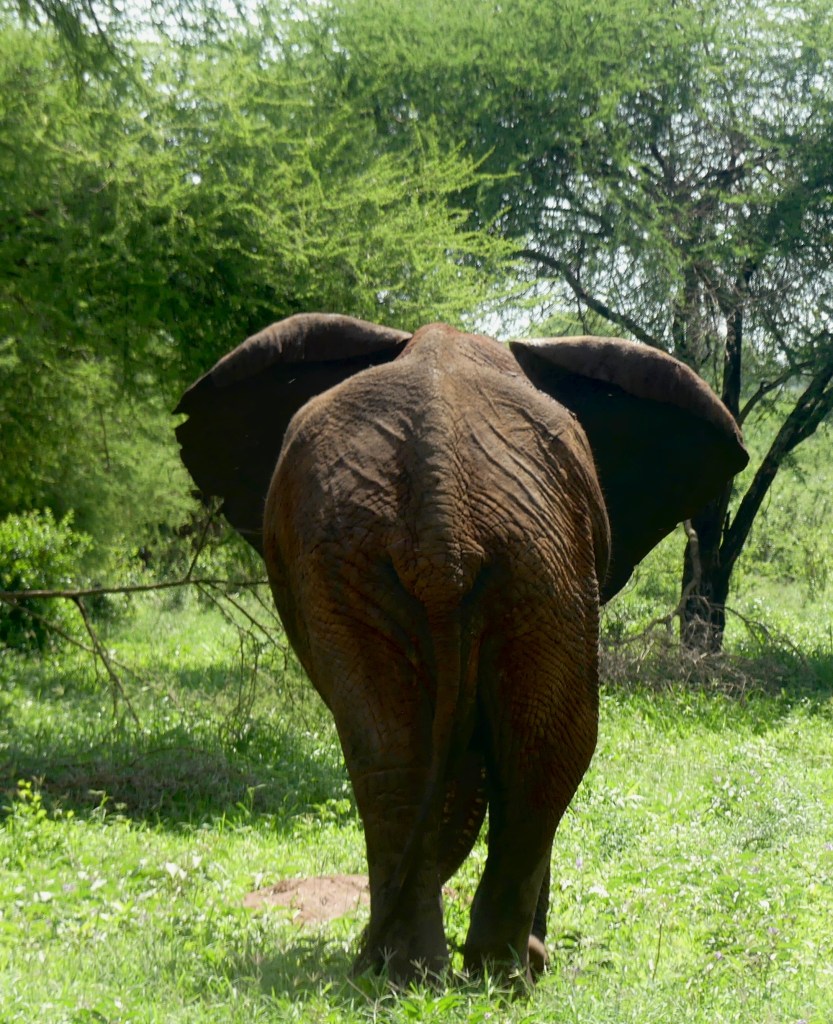
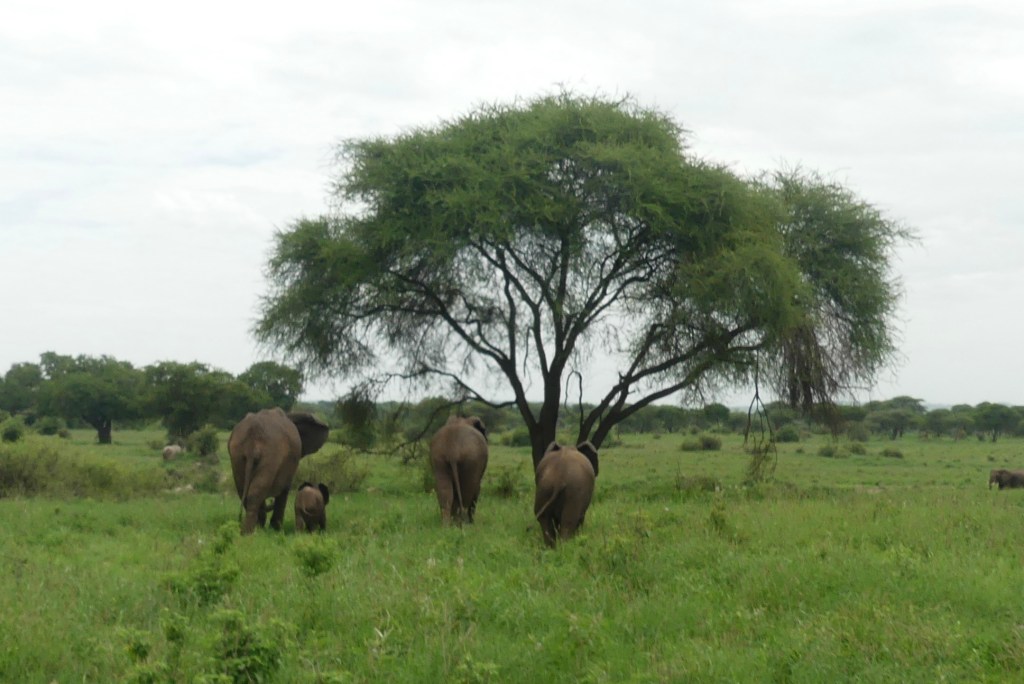
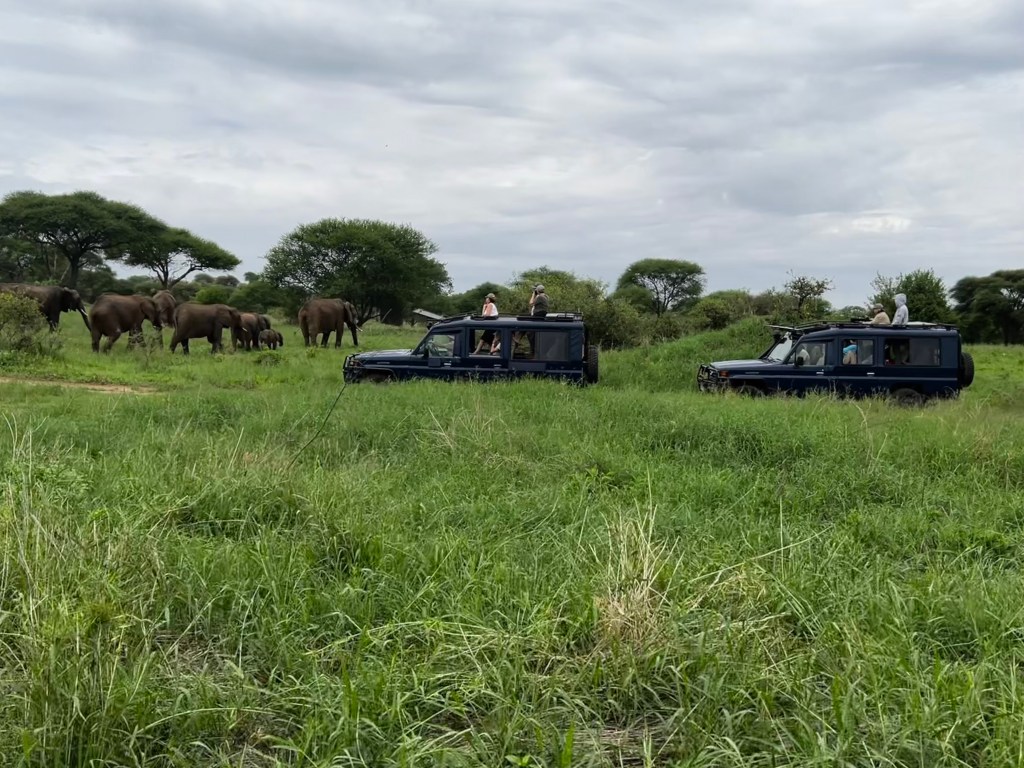
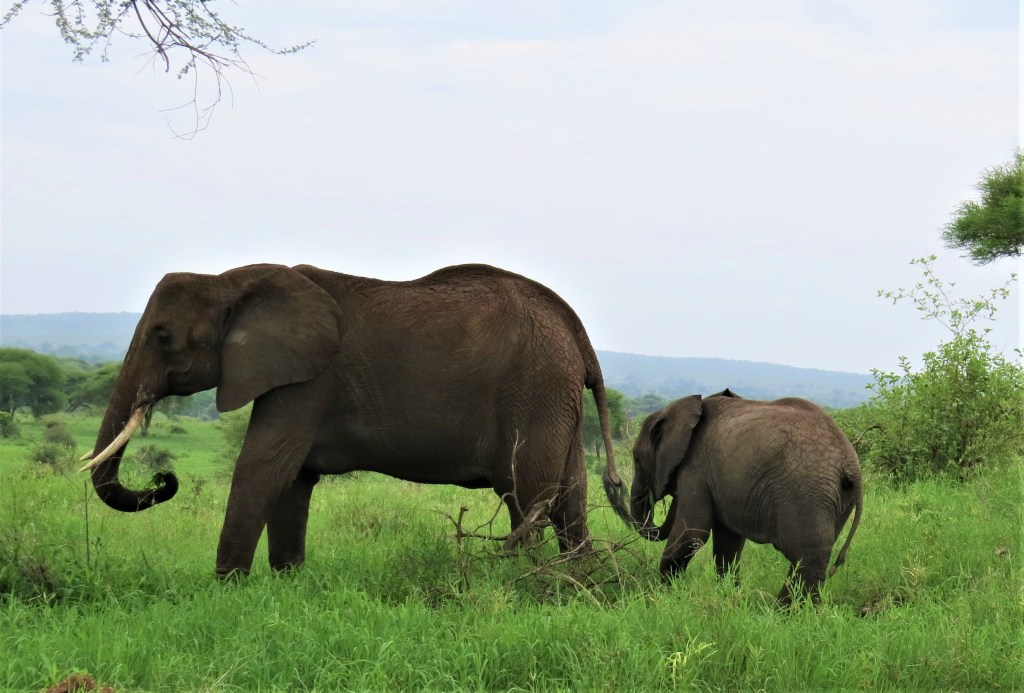
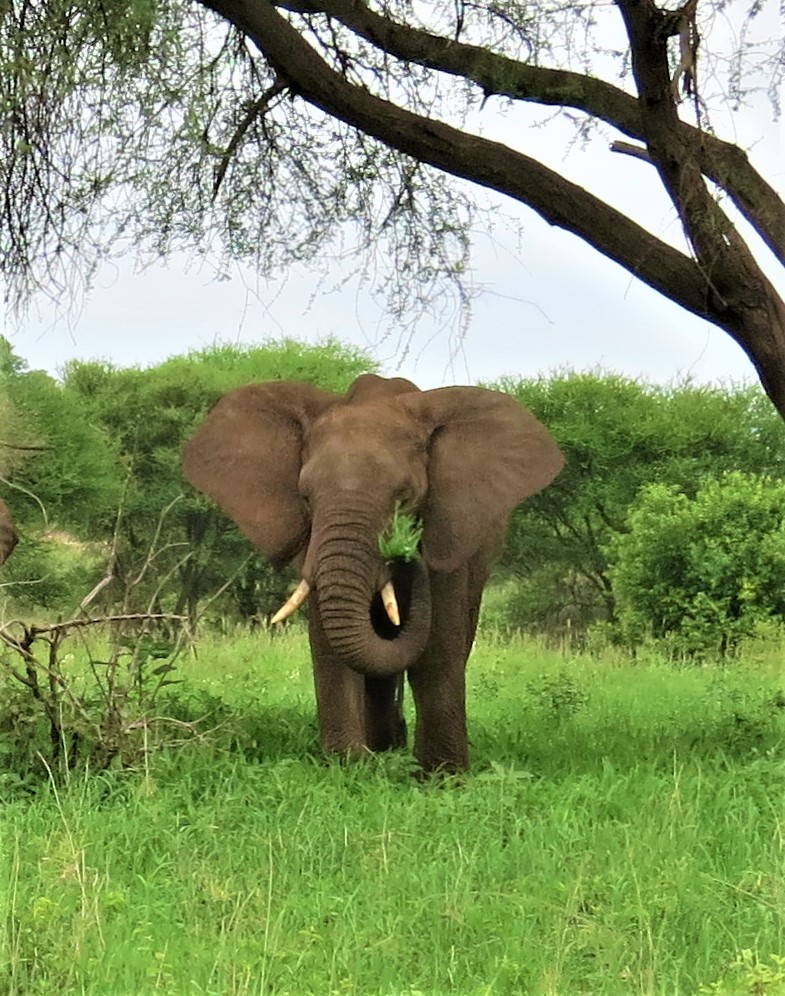
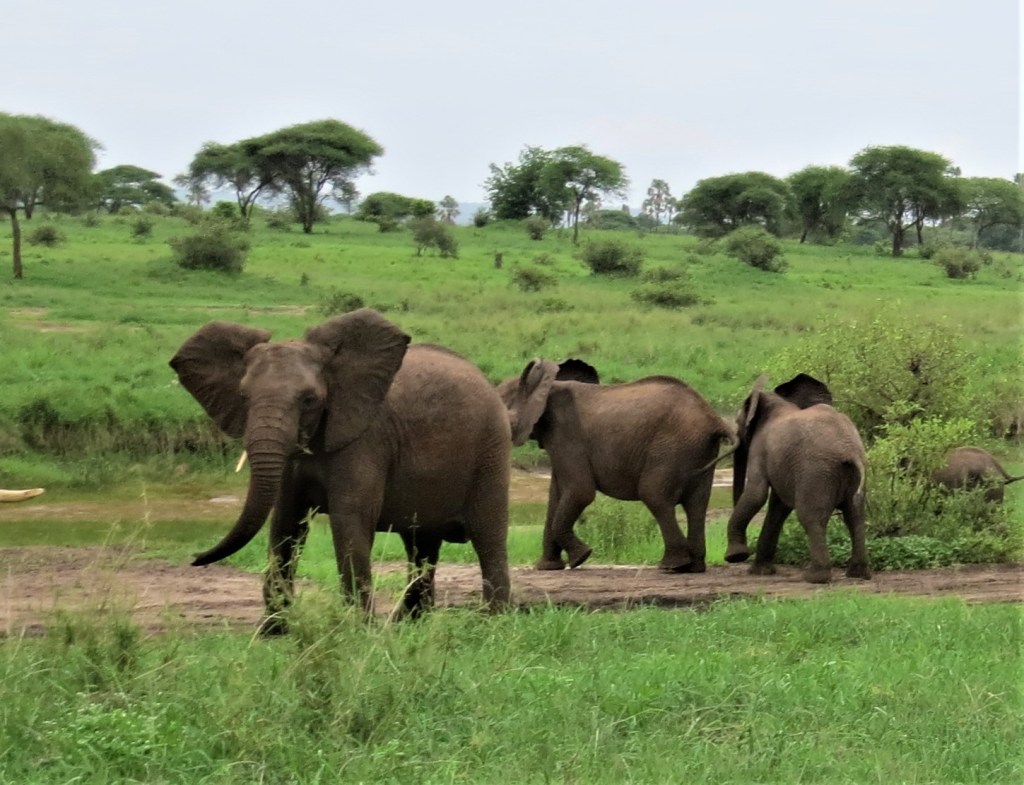
Watching elephants in the quiet of our Land Cruisers is a magnificent experience. Seeing them interact and how the babies hide just like human babies. Watching them rub up against those poor trees until they leave huge indents. Seeing the babes try to get up out of a mud hole or try to use their own trunks – ha ha ha! …and especially watching mama herd the group into a tree and then walk toward us with trunk up to smell us all – realize we’re okay – then lead the herd down toward the water. Larkin took some incredible close up photos with Michael’s Canon camera.
Somedays you have to do things you don’t want to do and get them done- like taxes! yee haw! They are done and I can enjoy re-living our last few hours at the Tarangire National Park. Hello! Jambo!
Woo told us it was our last few hours on safari?
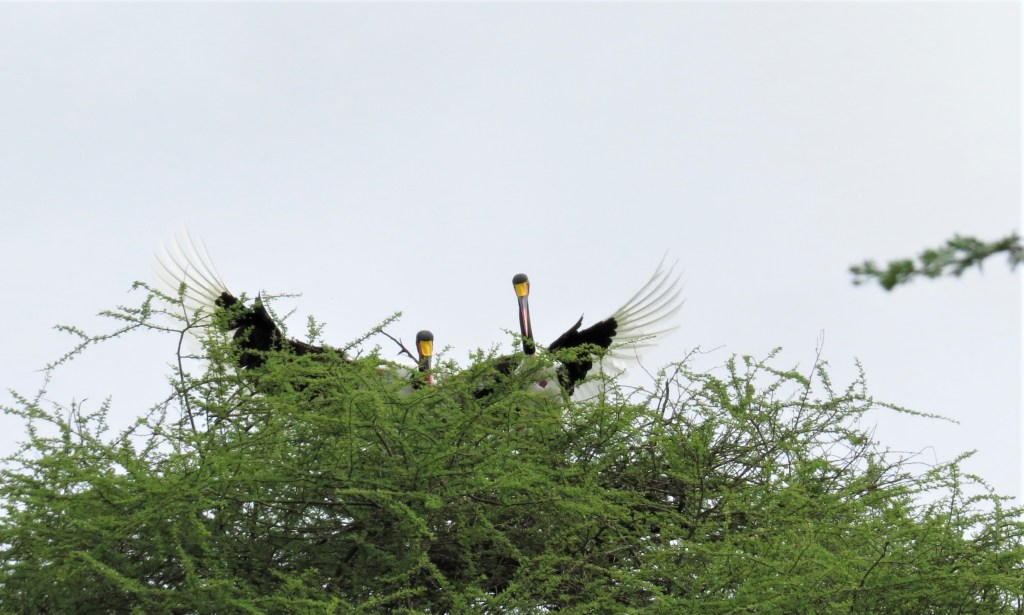
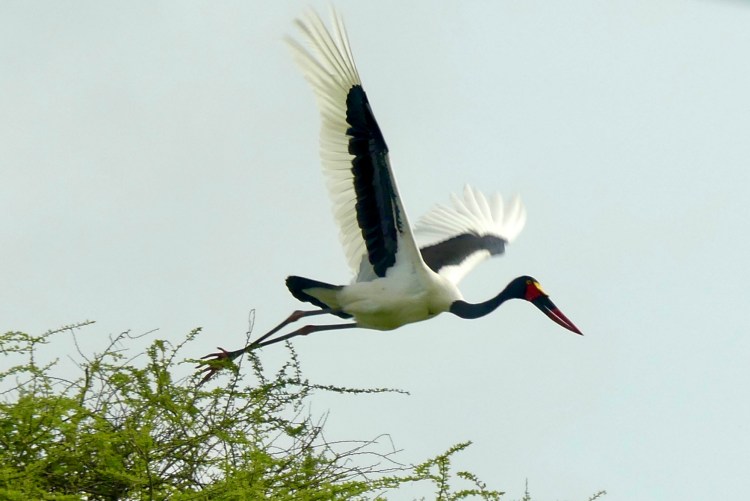
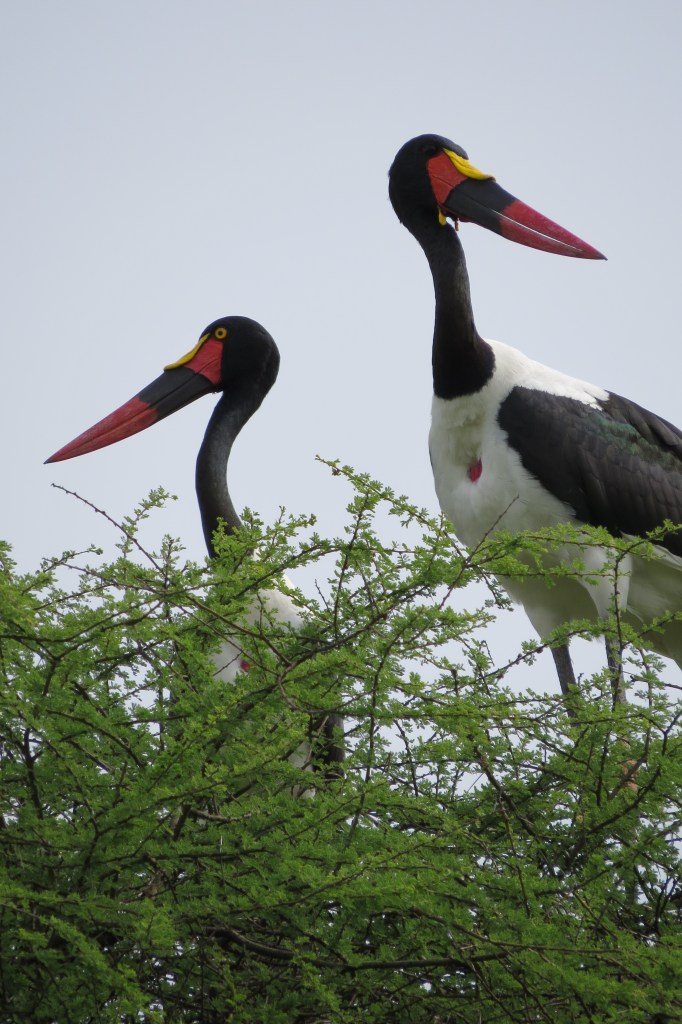
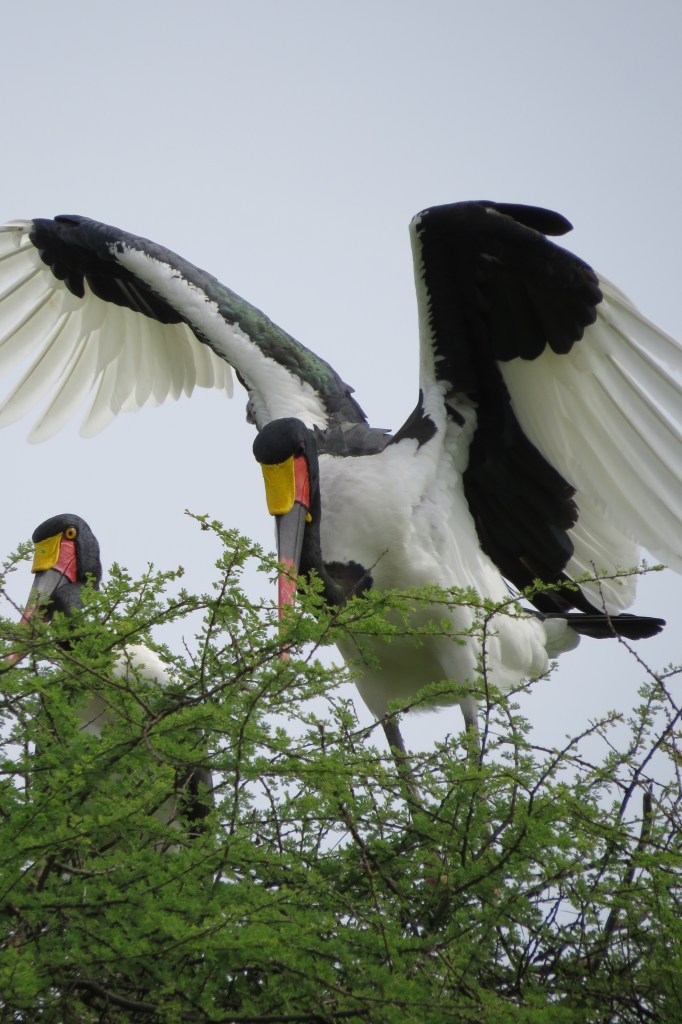
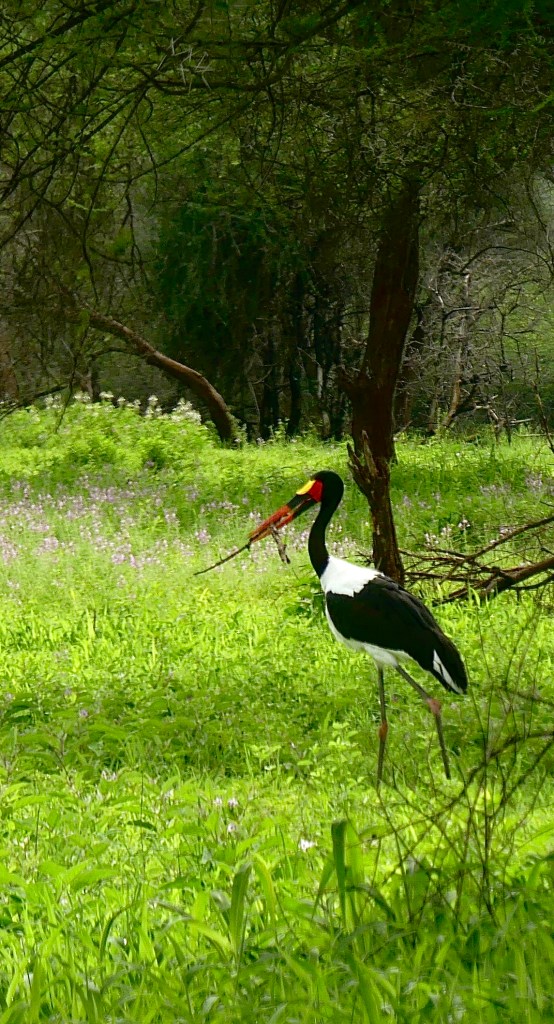
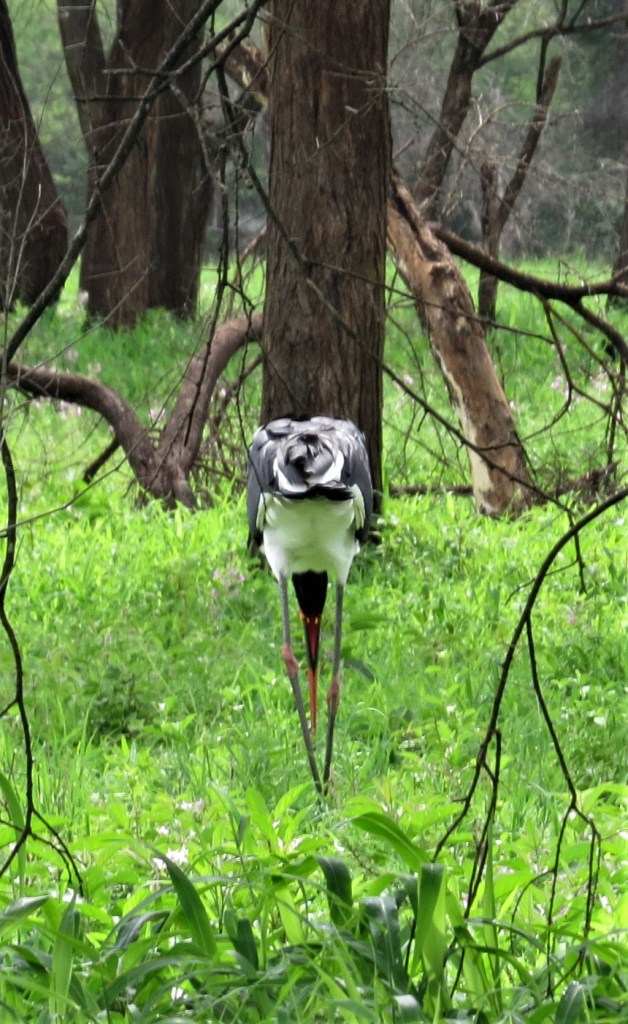
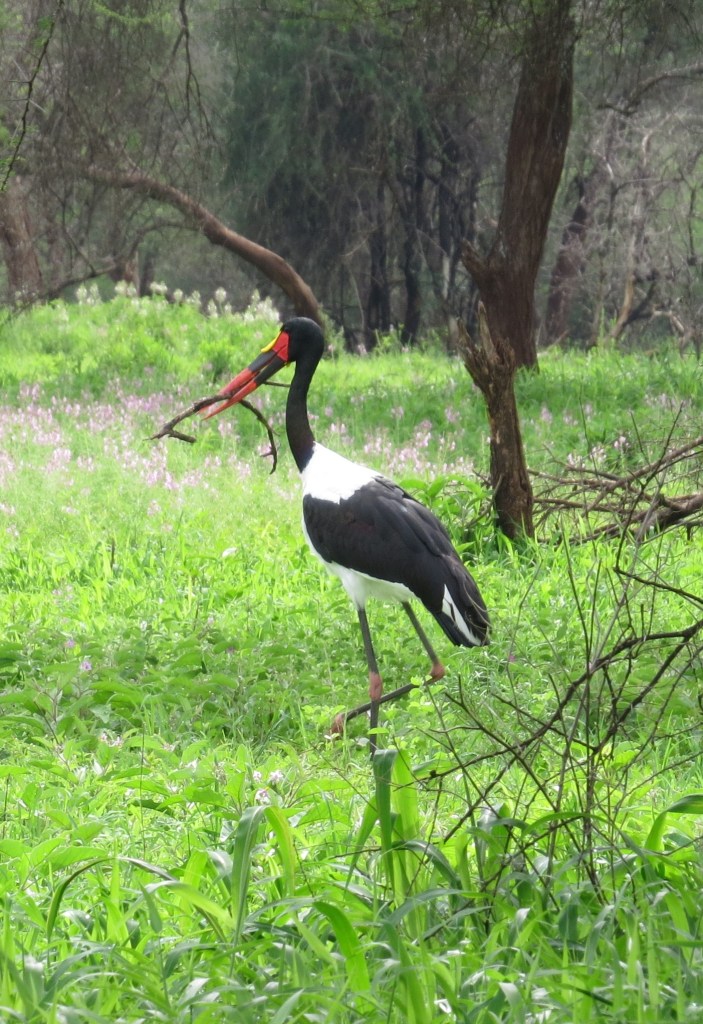
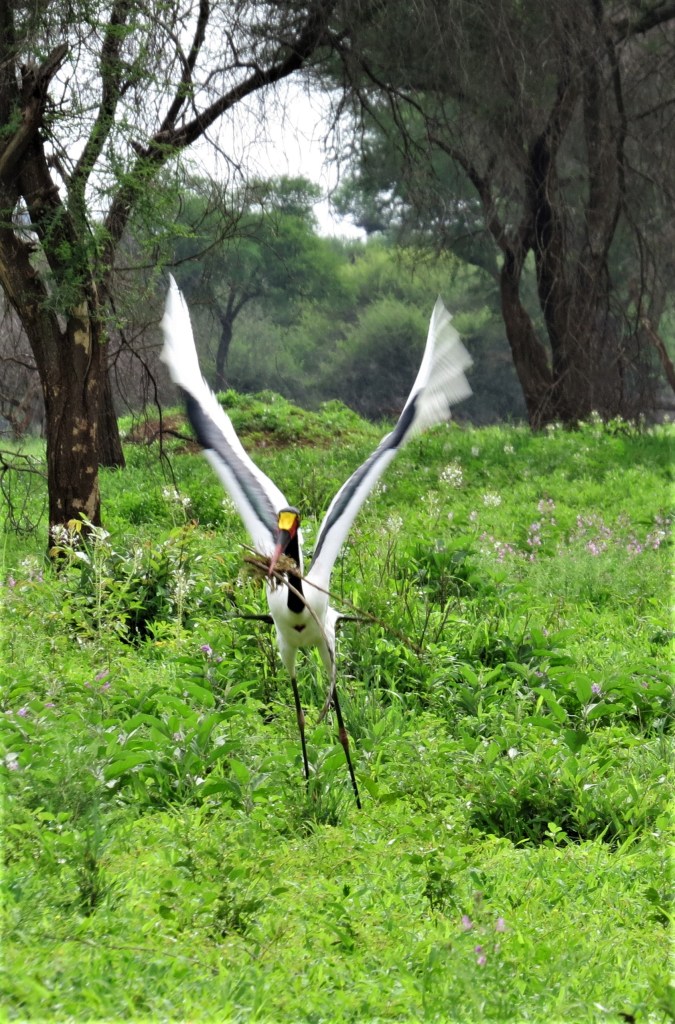
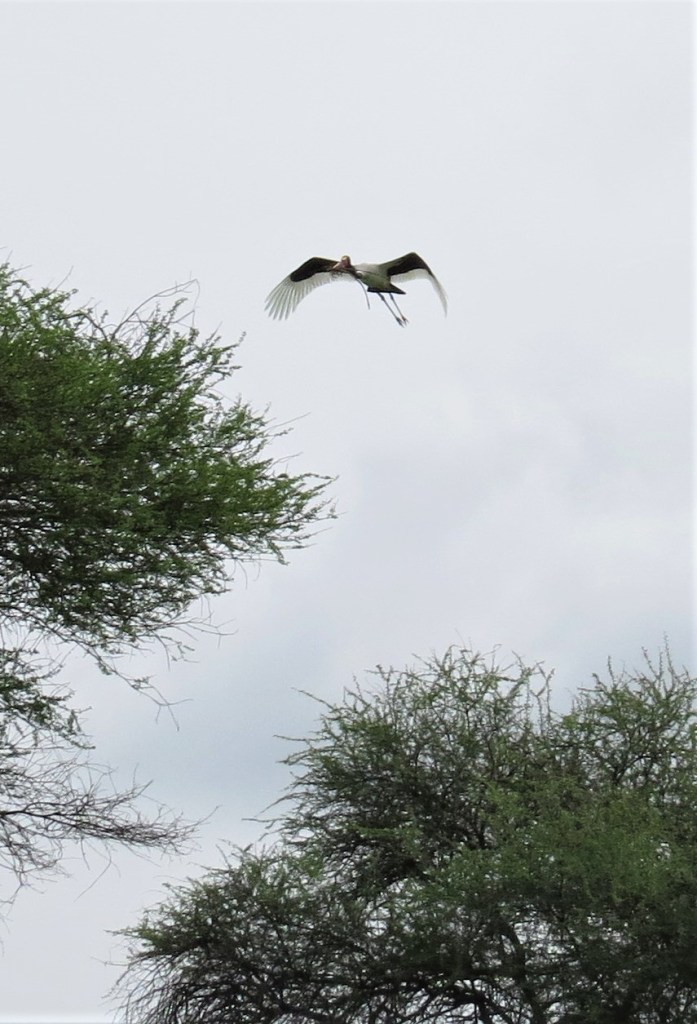
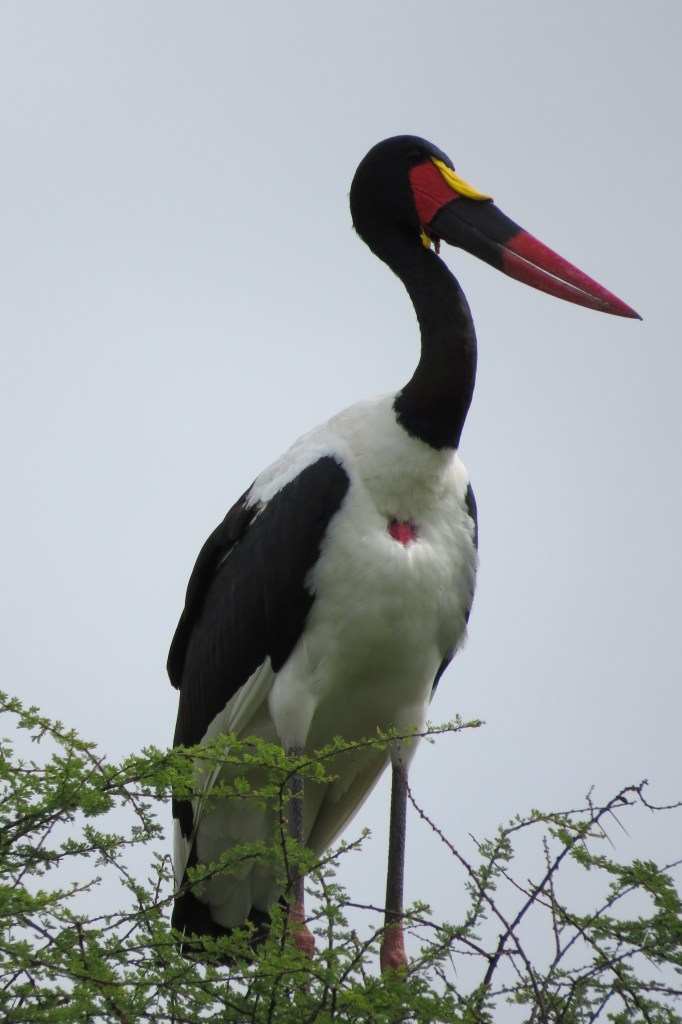
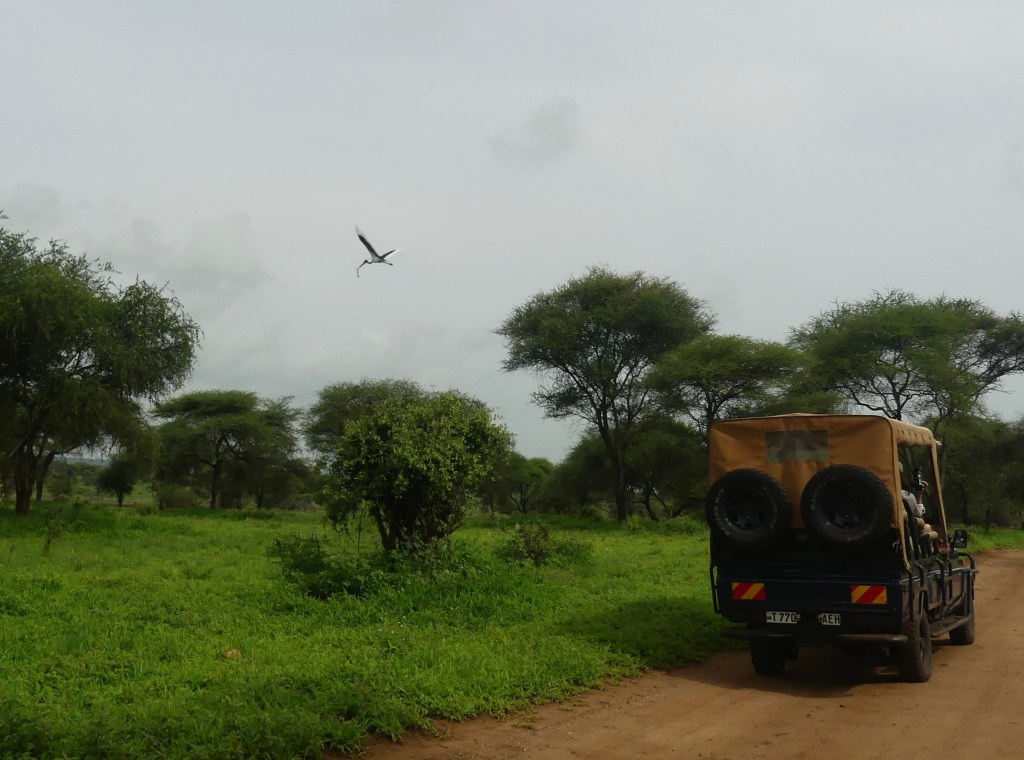
More birds…I now understand why some people become birders! We stopped and watched a breeding pair of saddle-billed storks working on their nest. Both would fly down and pick up twigs and sticks and then fly back with them up to their nest. They are the tallest of the storks due to their long legs. The female has the golden irises while the male has brown irises and a yellow wattle. On their chest is a bare patch of skin tinted red whose color darkens during breeding season.
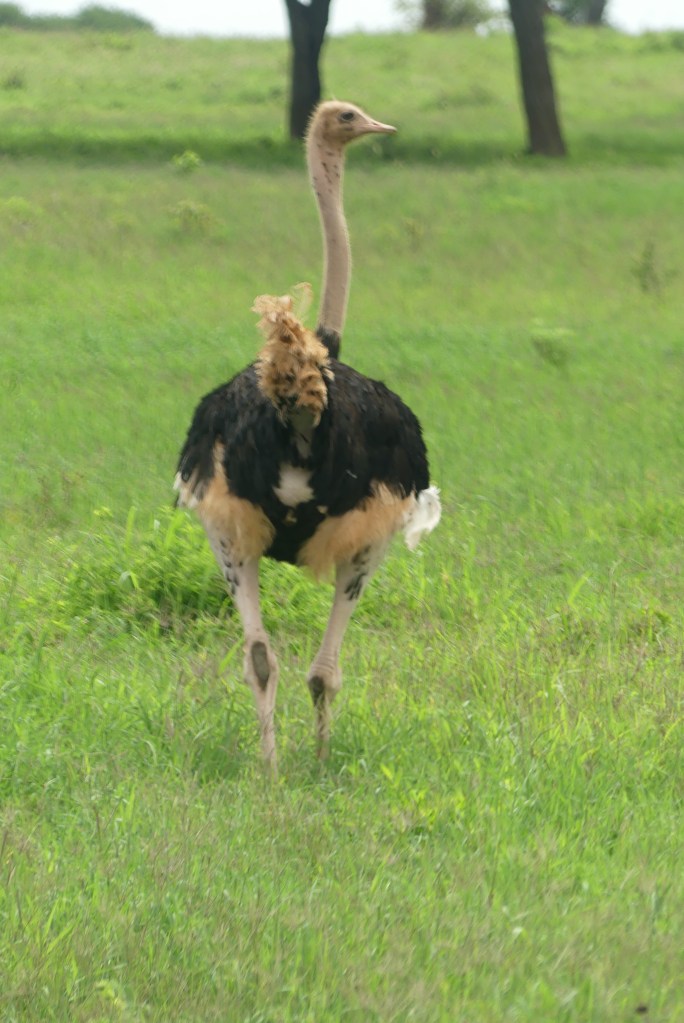
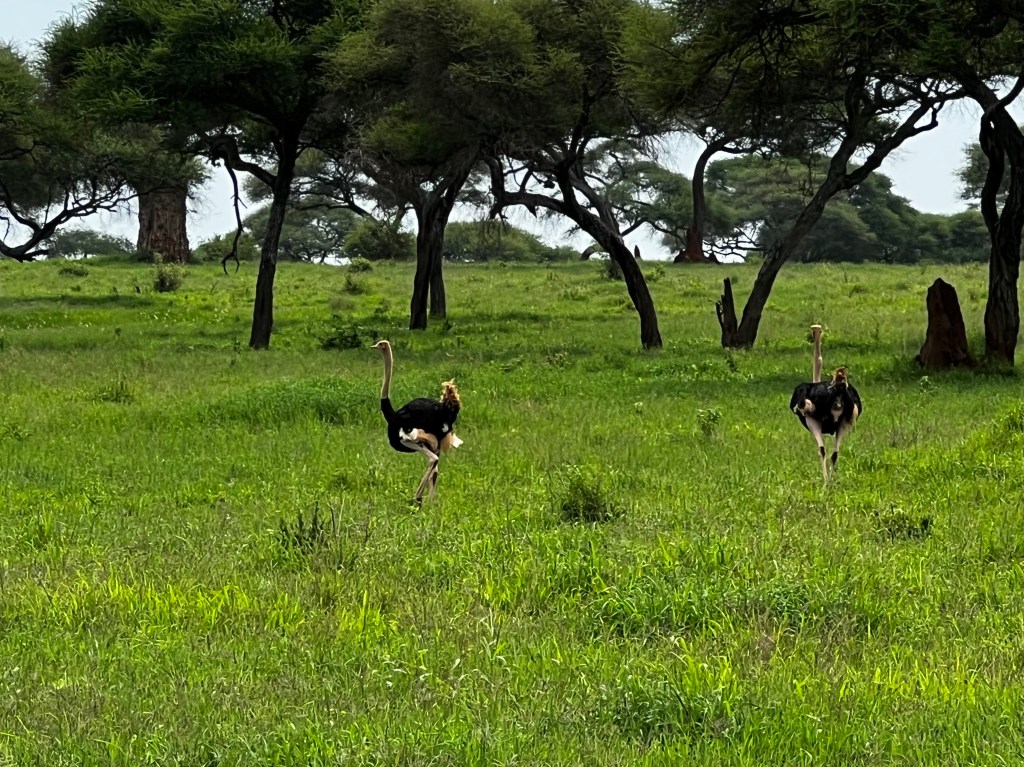
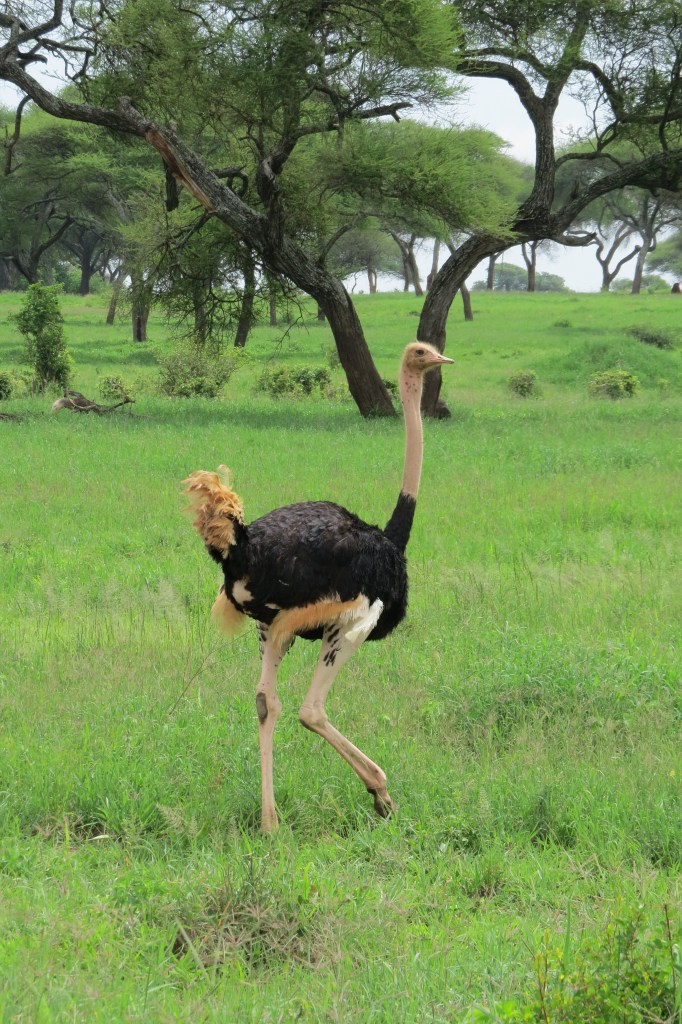
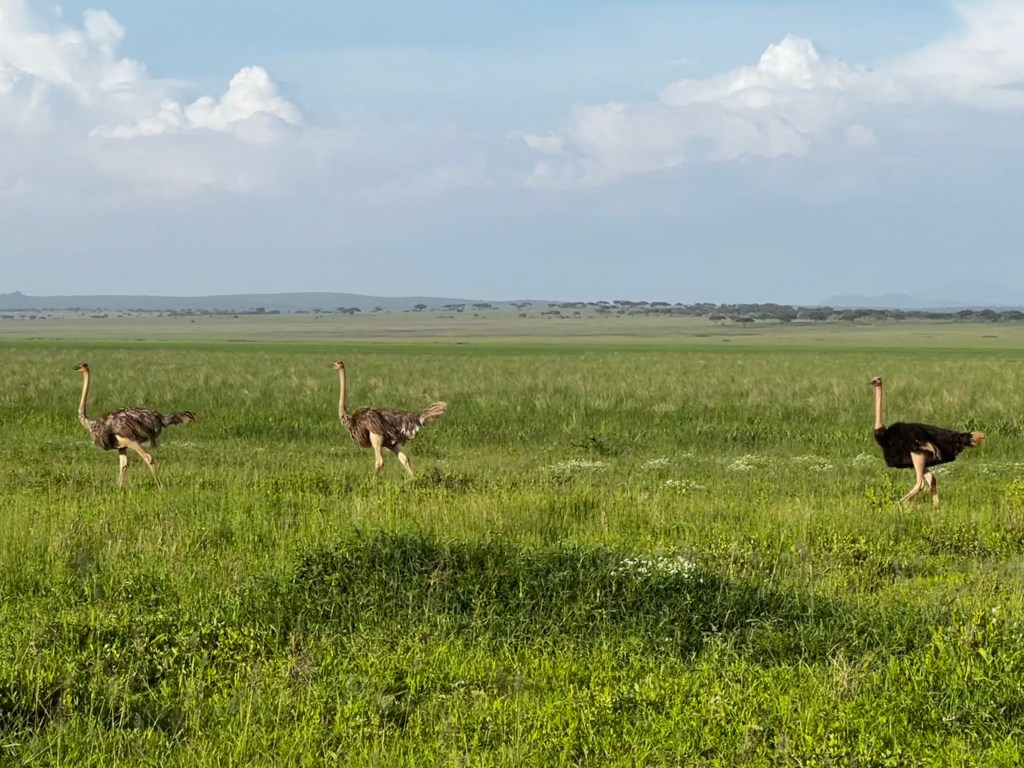
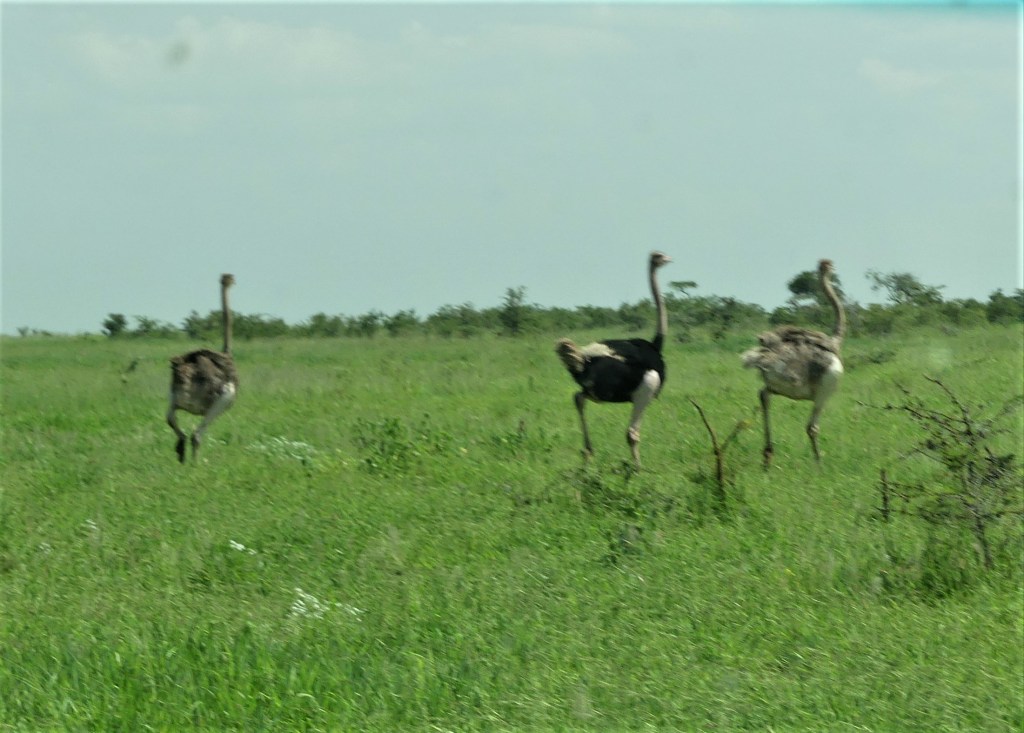
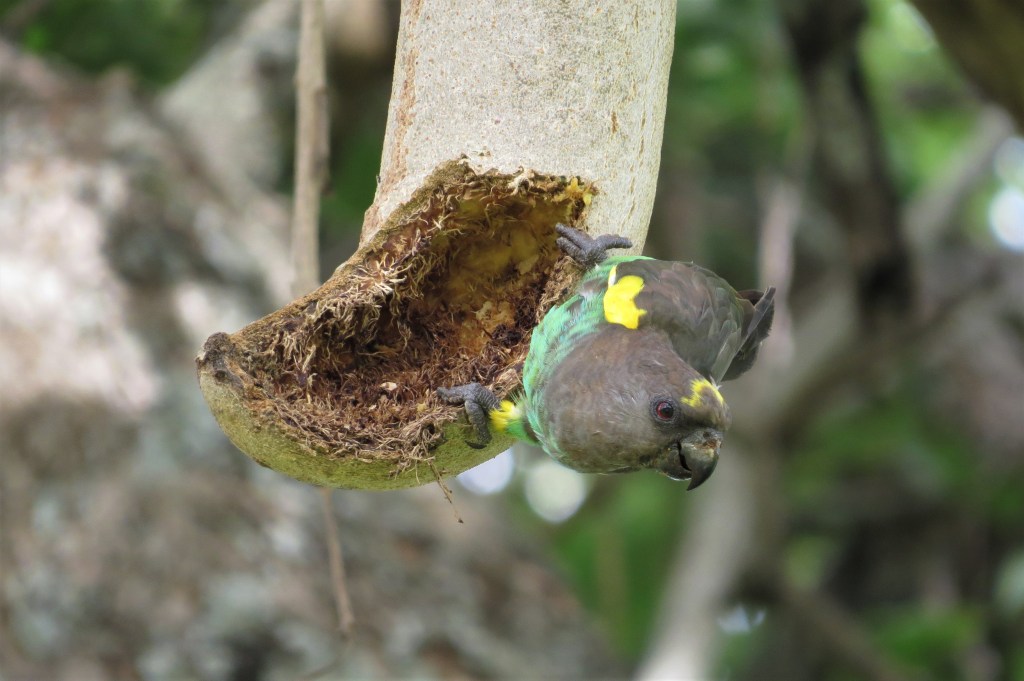
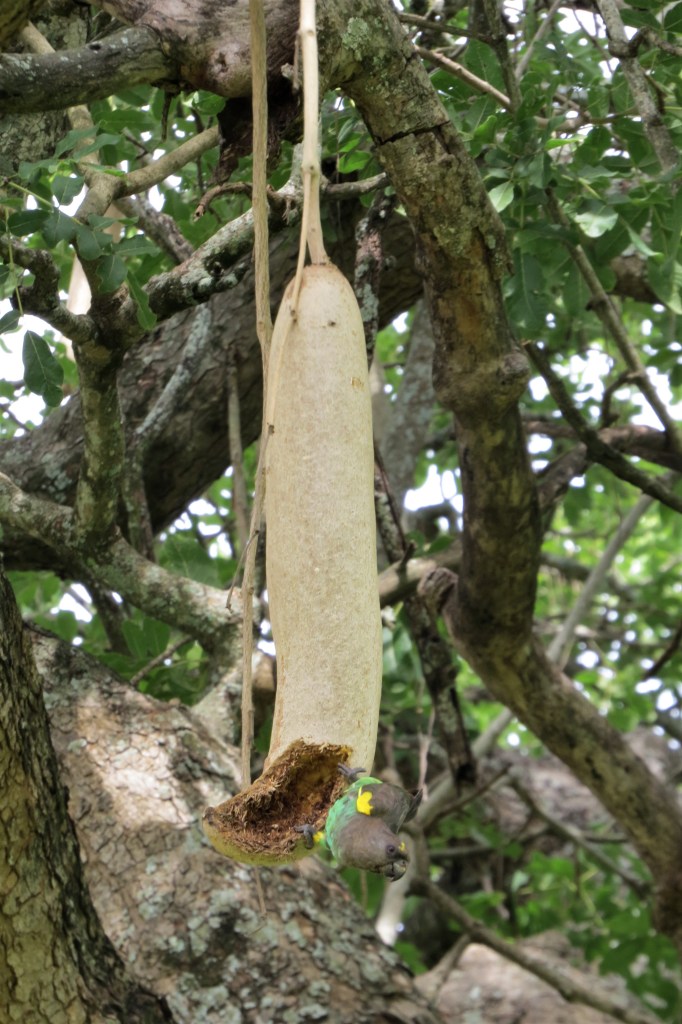
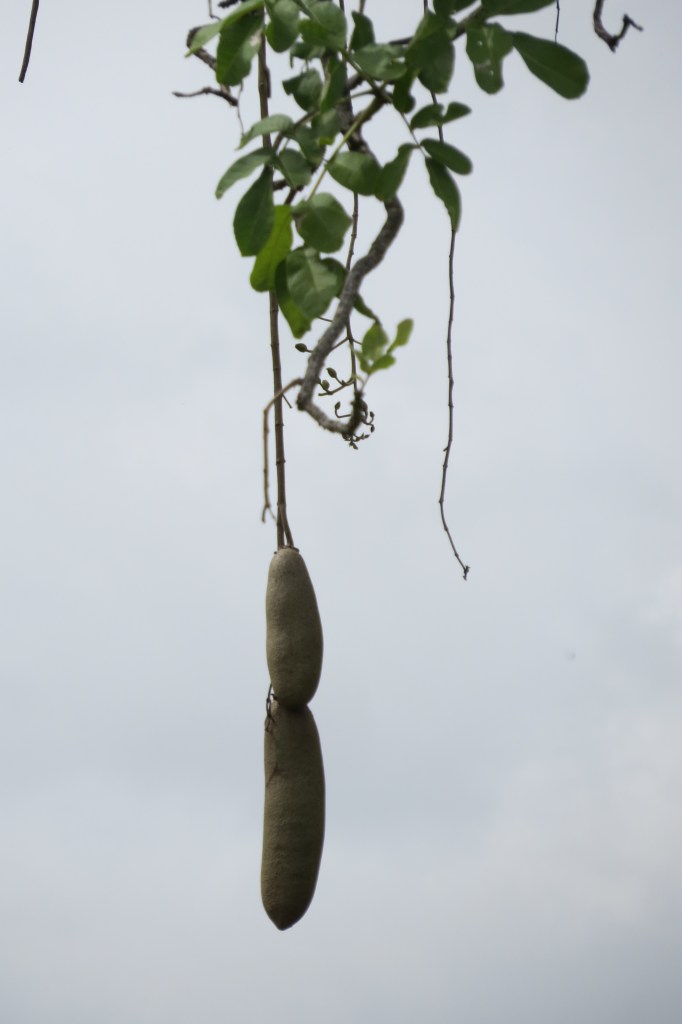
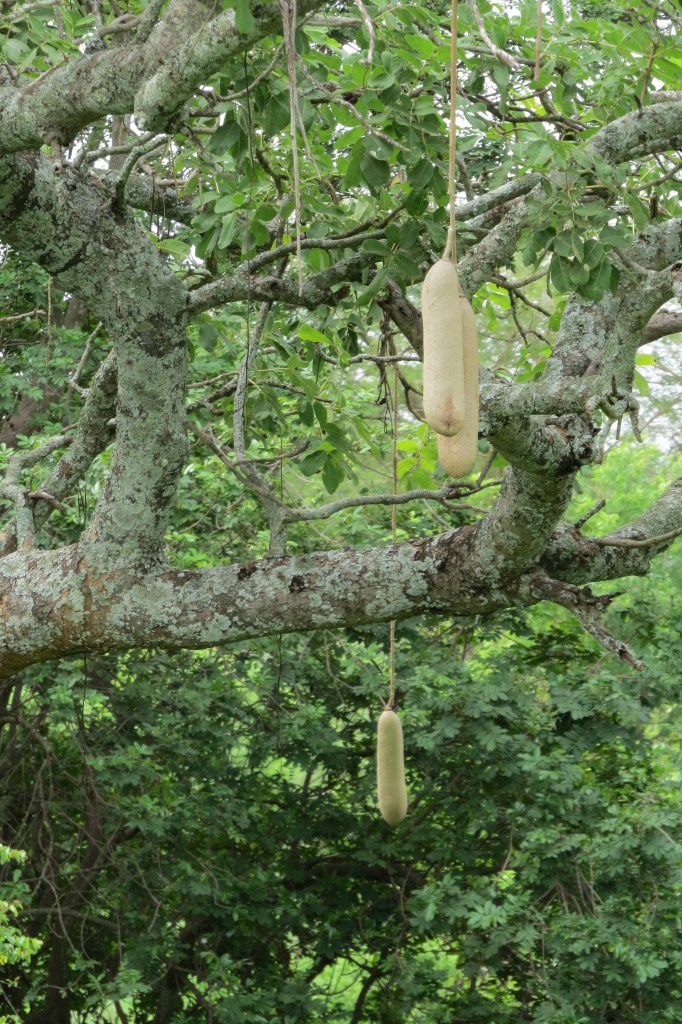
The male ostriches are darker – black and tan and the females are muted browns. They tend to move away as soon as vehicles approach so its hard getting really good photos of them. Sausage trees hang down with what looks like sausages. The birds love them as well as baboons, porcupines, monkeys, elephants and giraffes. The fruit has been used by tradition healers for treating skin ailments, like boils, fungal infection and eczema. It was also used for internal ailments such as tape worm, dysentery, diabetes, malaria etc. You name it, there is a use for parts of this tree including an alcoholic beverages however unripe fruit is poisonous – I’ll let the natives and animals figure this fruit out!
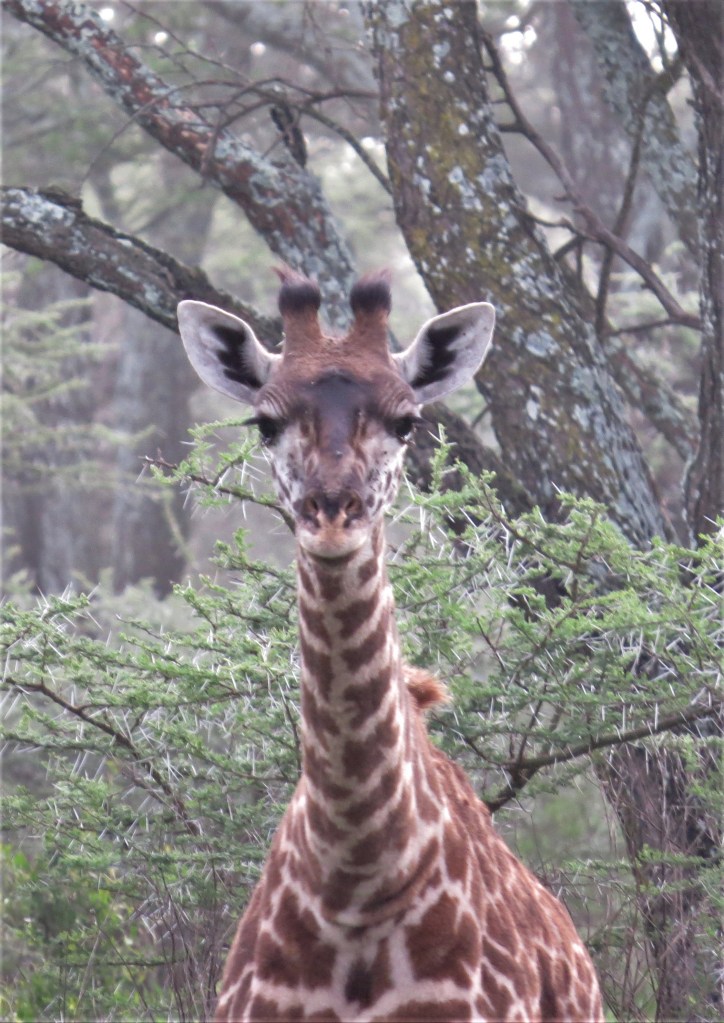
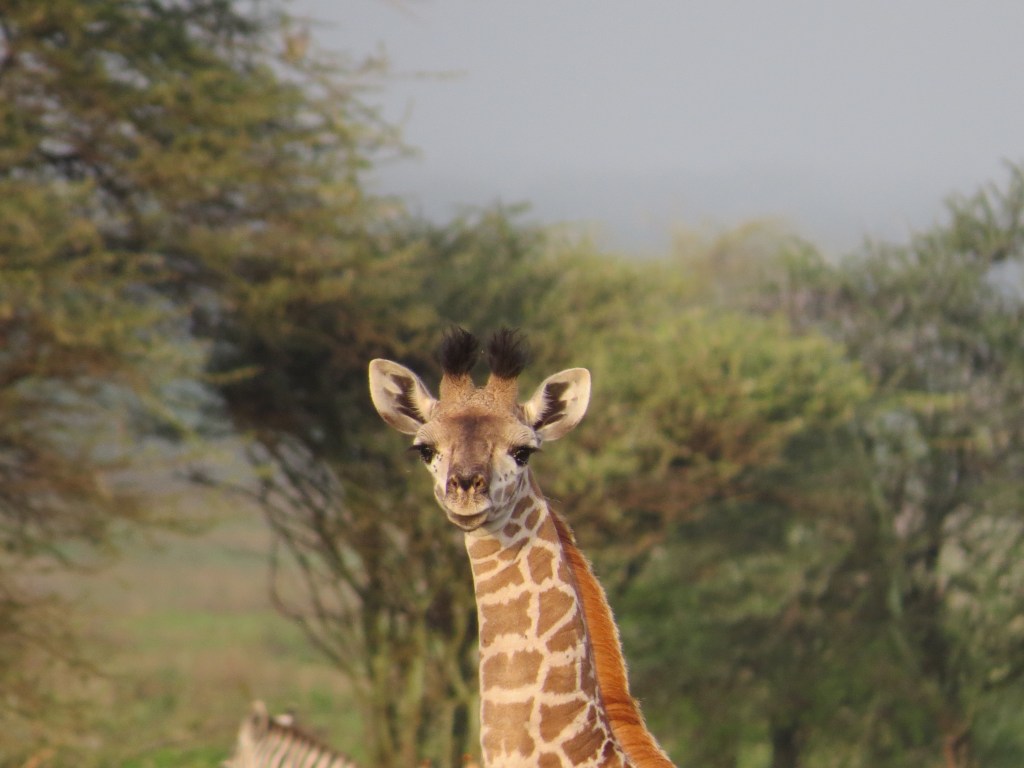
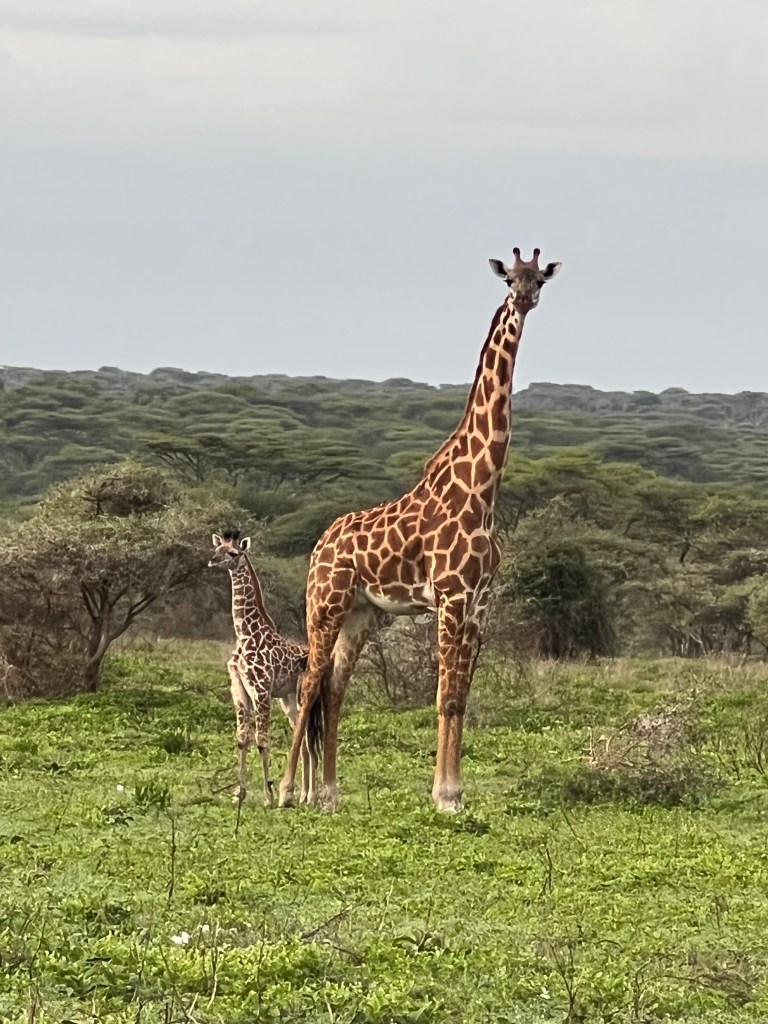
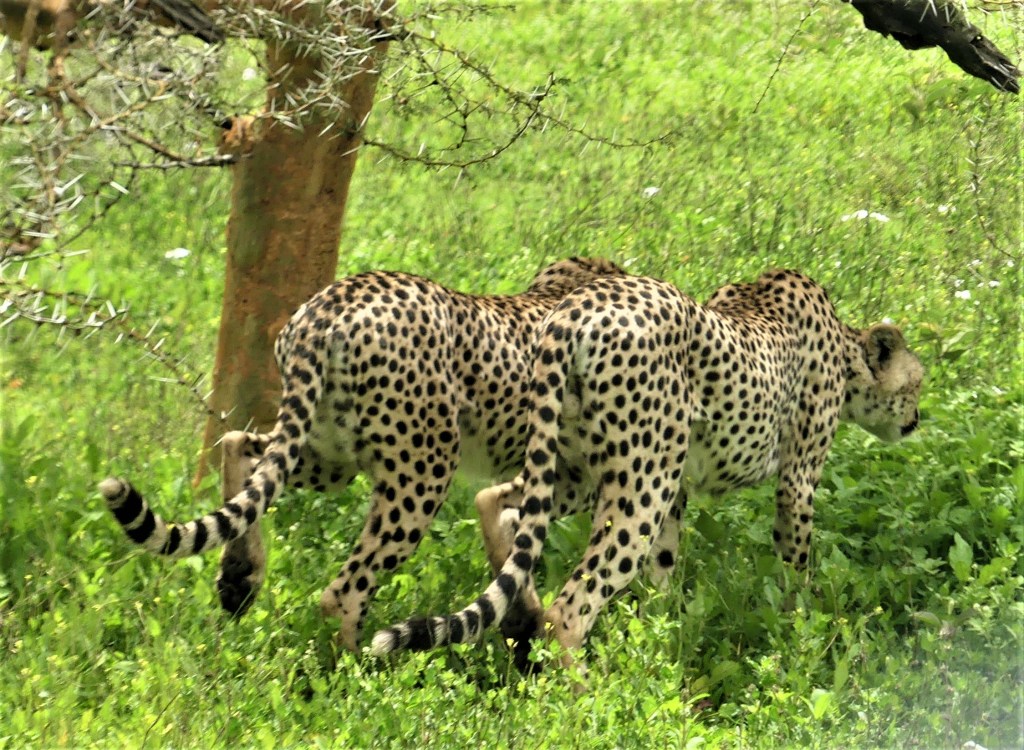
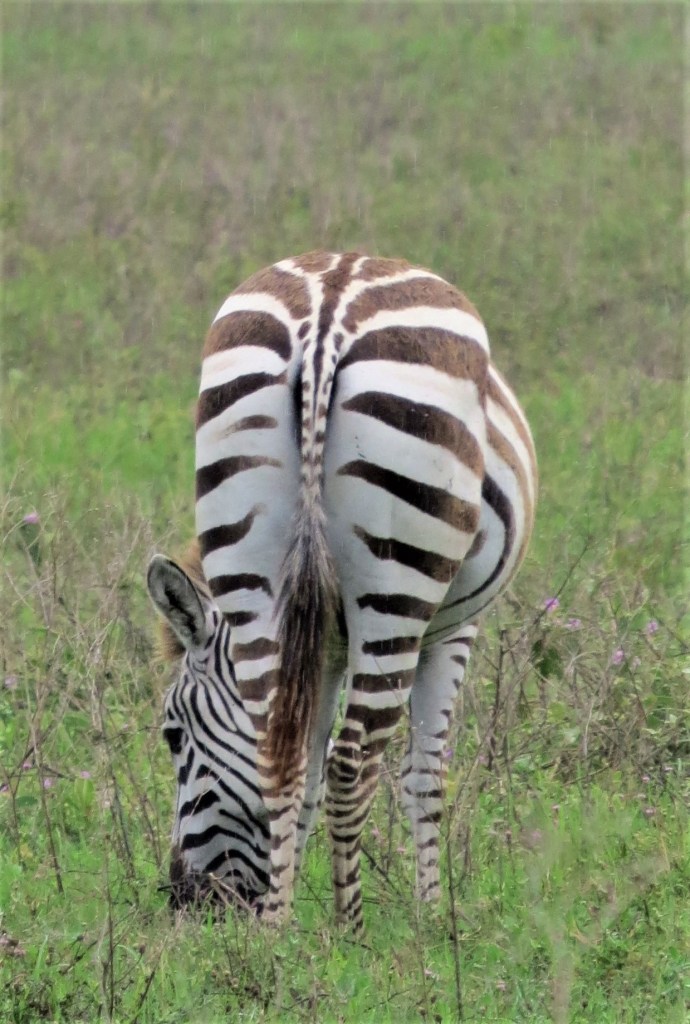
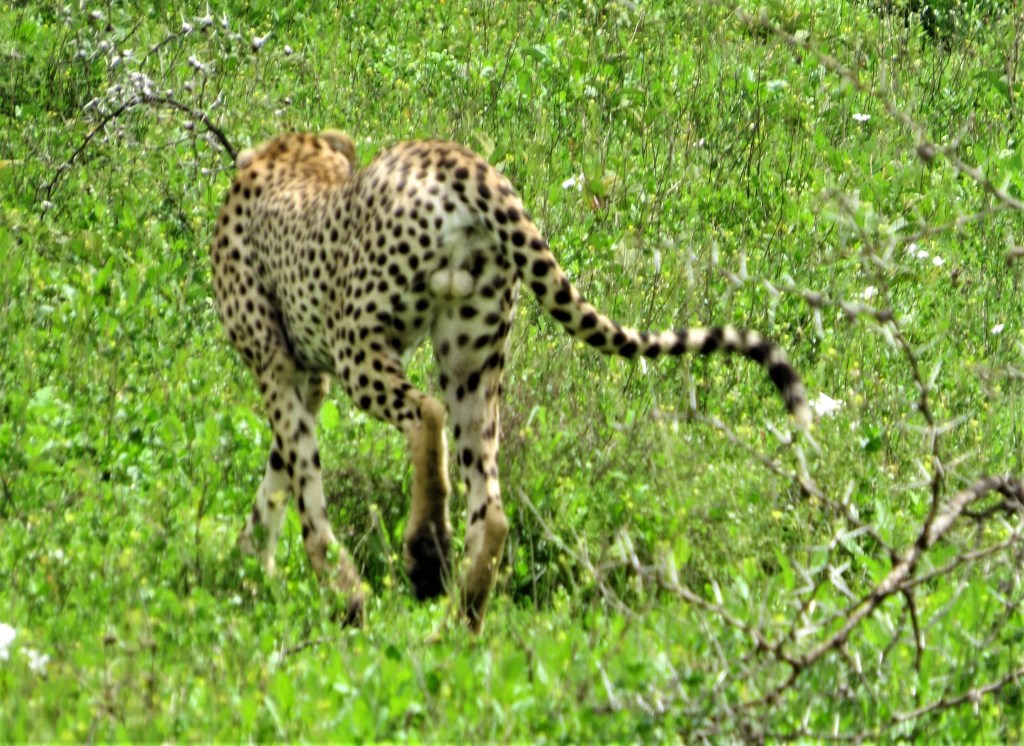
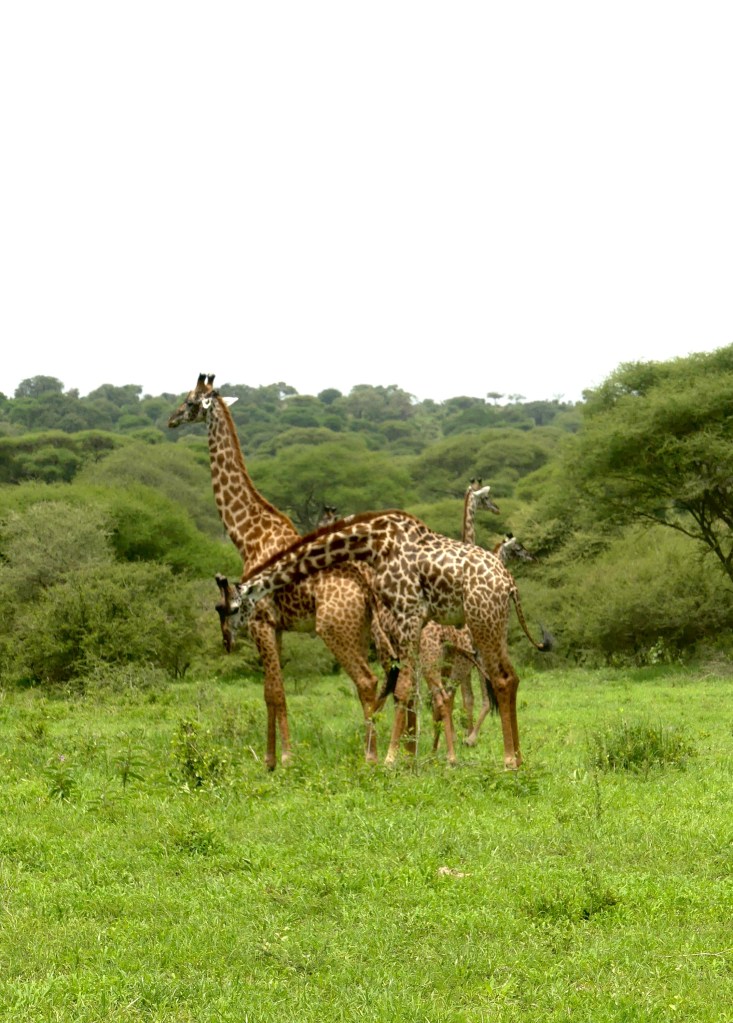
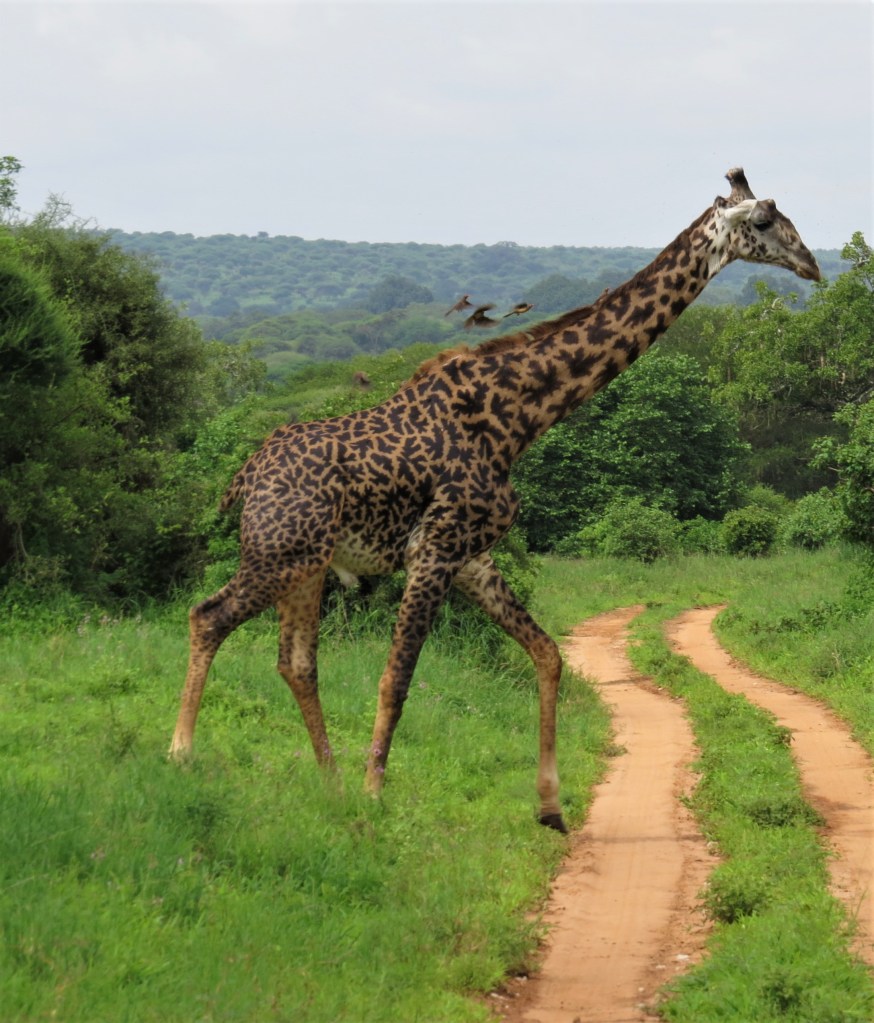
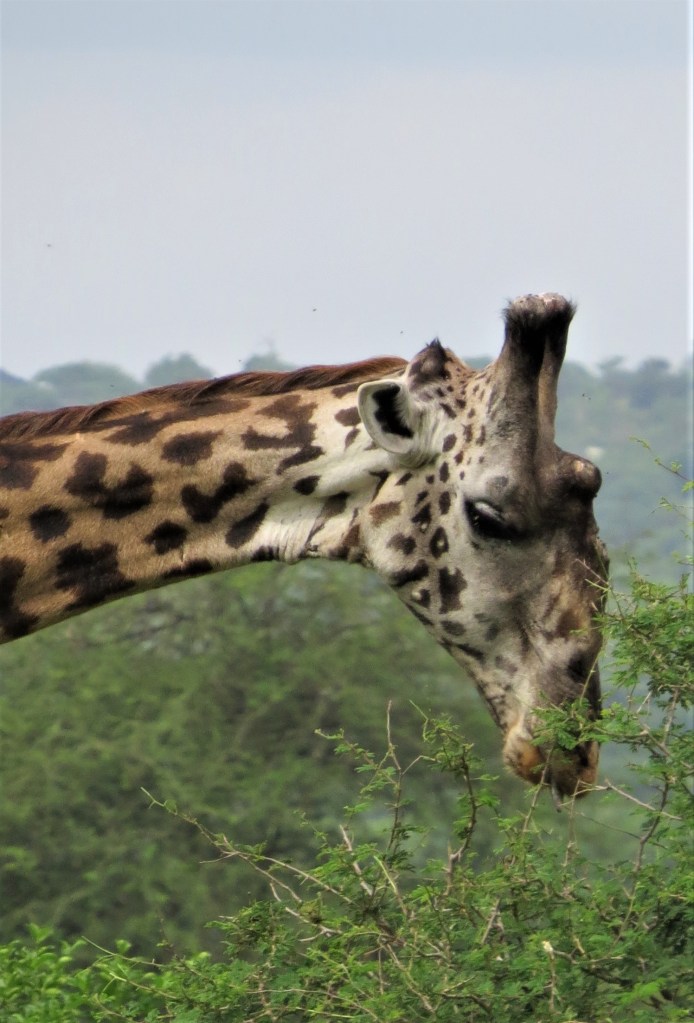
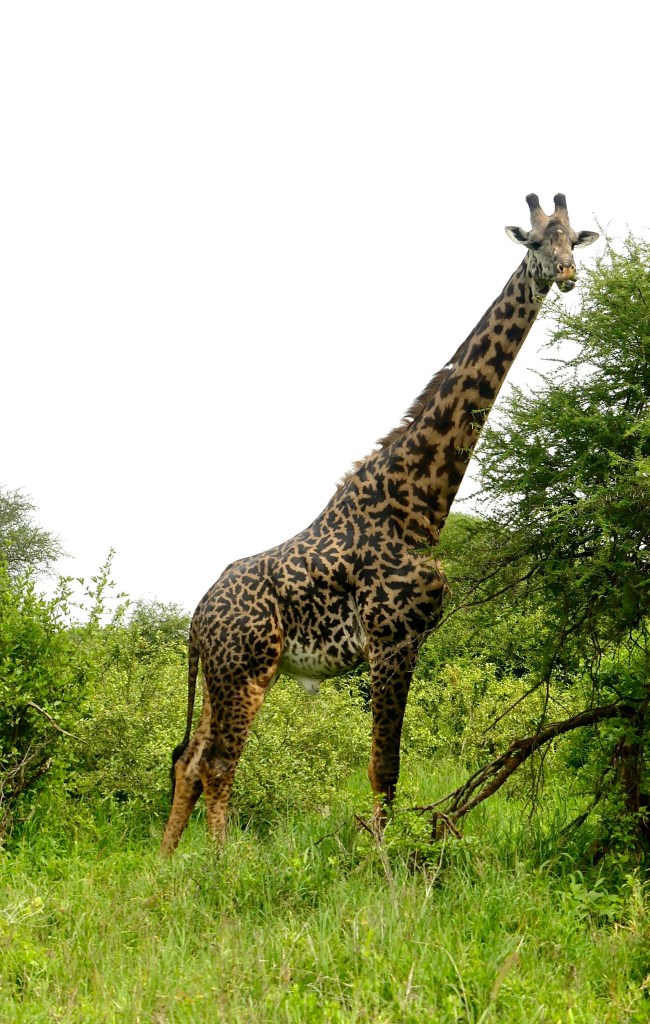
Sometimes one giraffe makes you look much closer. Their individual patterns are so much more intriguing than say stripes on a zebra or spots on a cheetah.
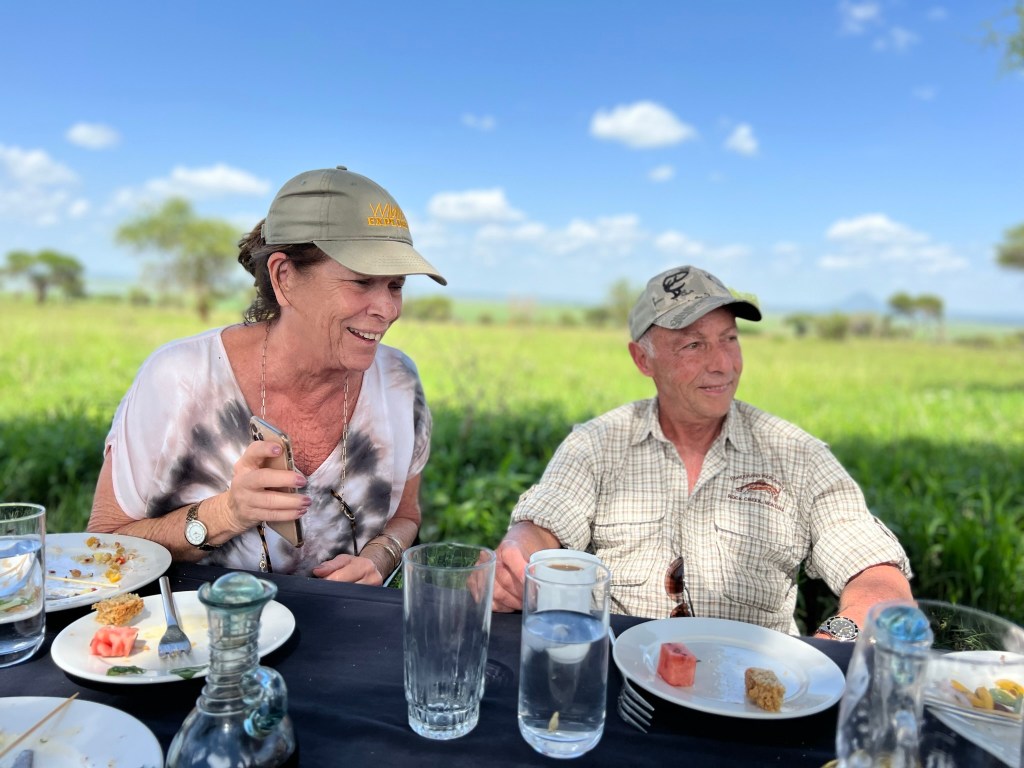
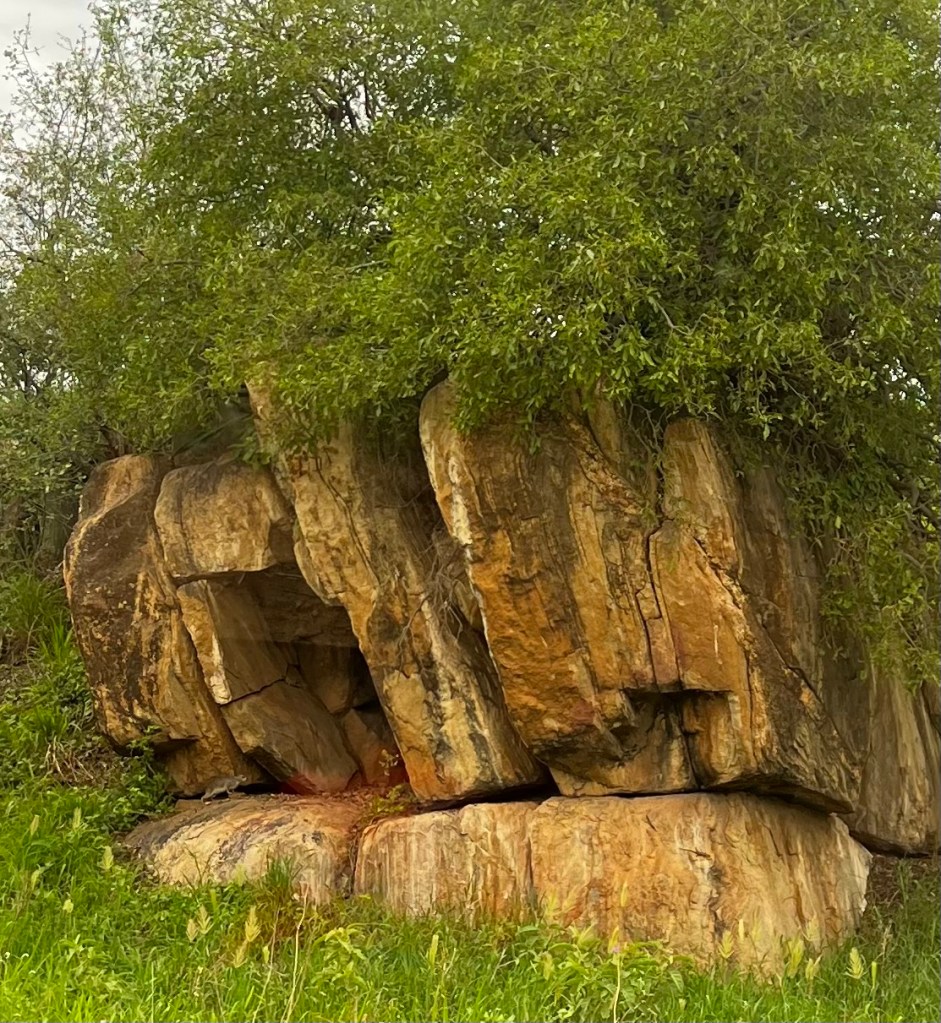
Looking across the swamp…Jess and the two of us at our lunch with rock outcrops but no toilets. Unique flowers that Mzee told me he’d find out about – Mzee??? The toilet paper definitely came in handy here and the brown bags! Our Marin cohorts Ralph and Deborah enjoying the view at another lunch.
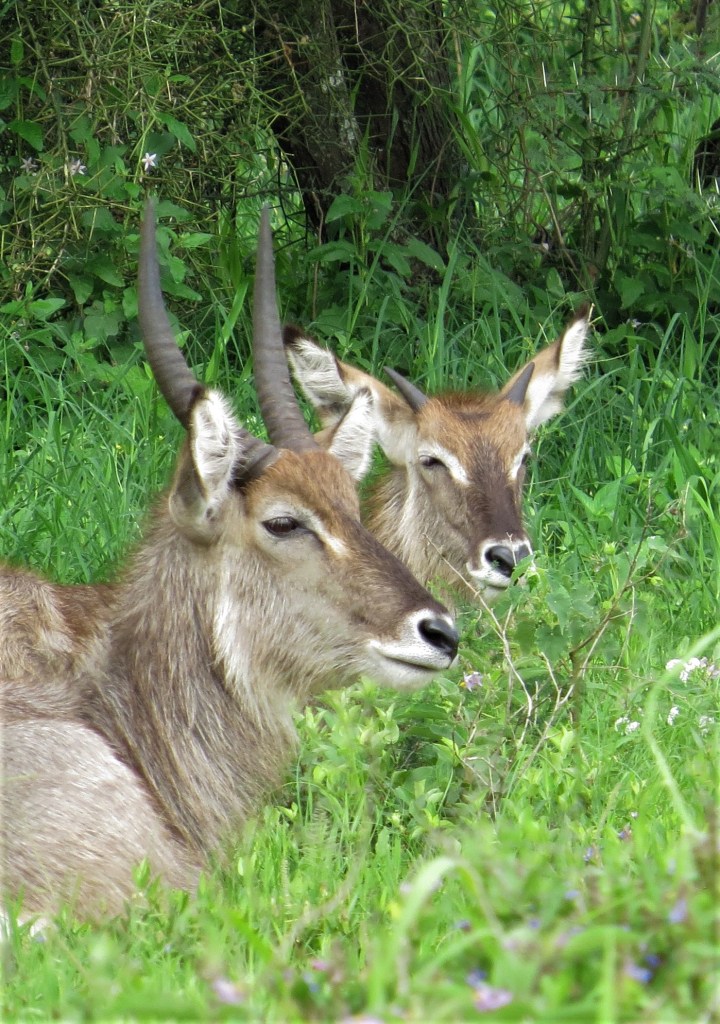
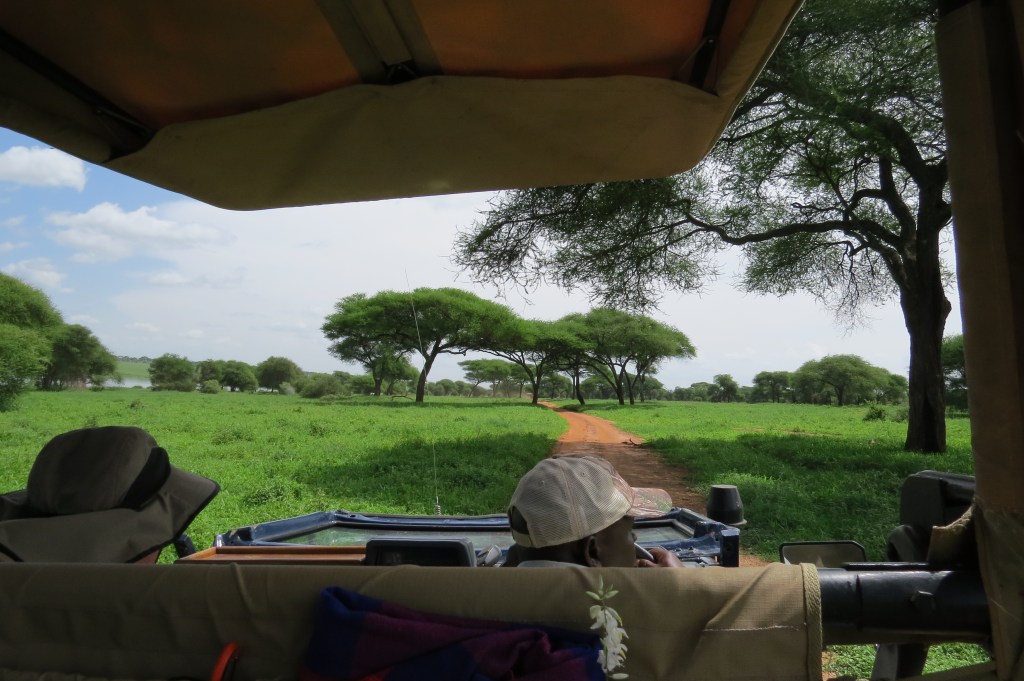
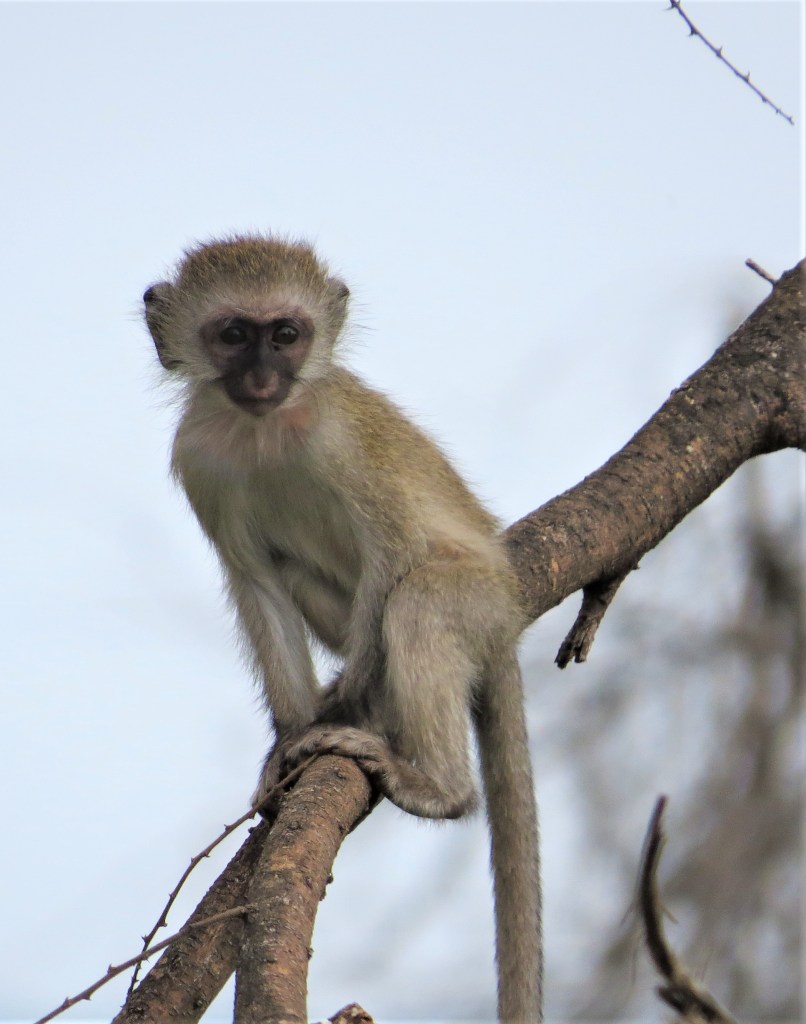
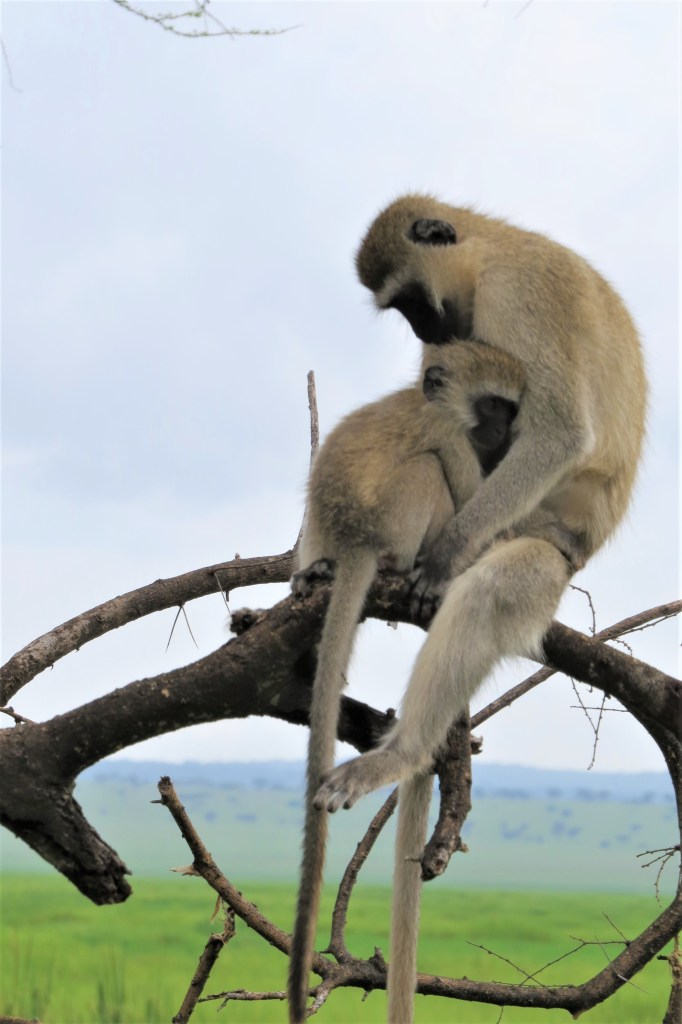
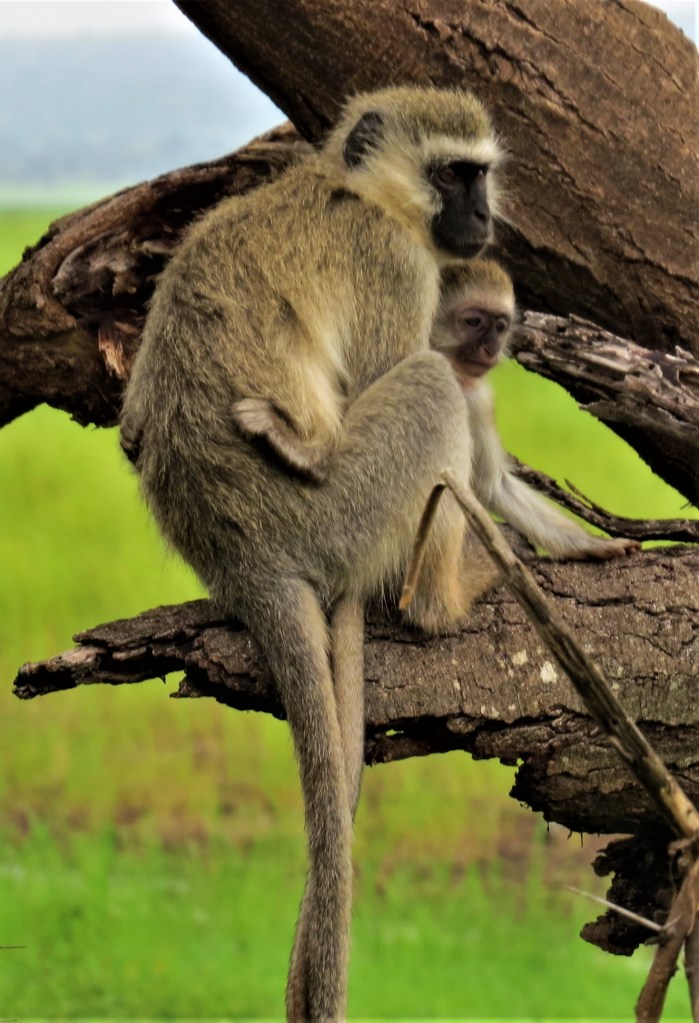
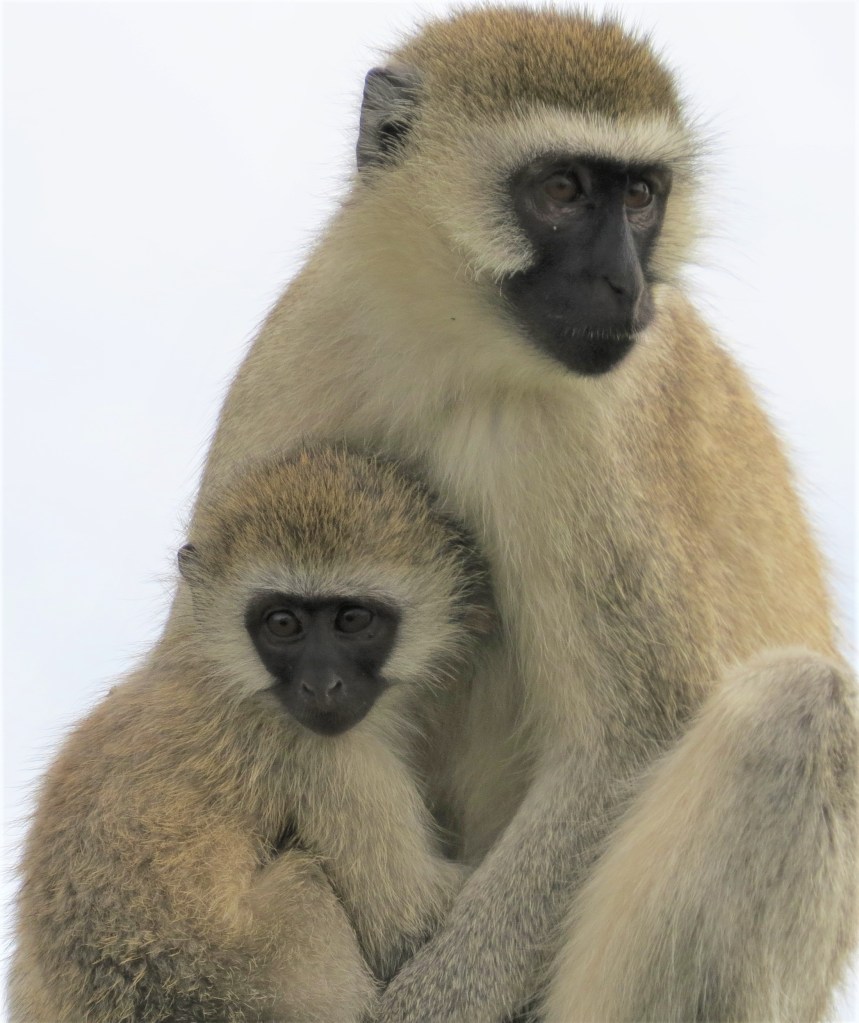
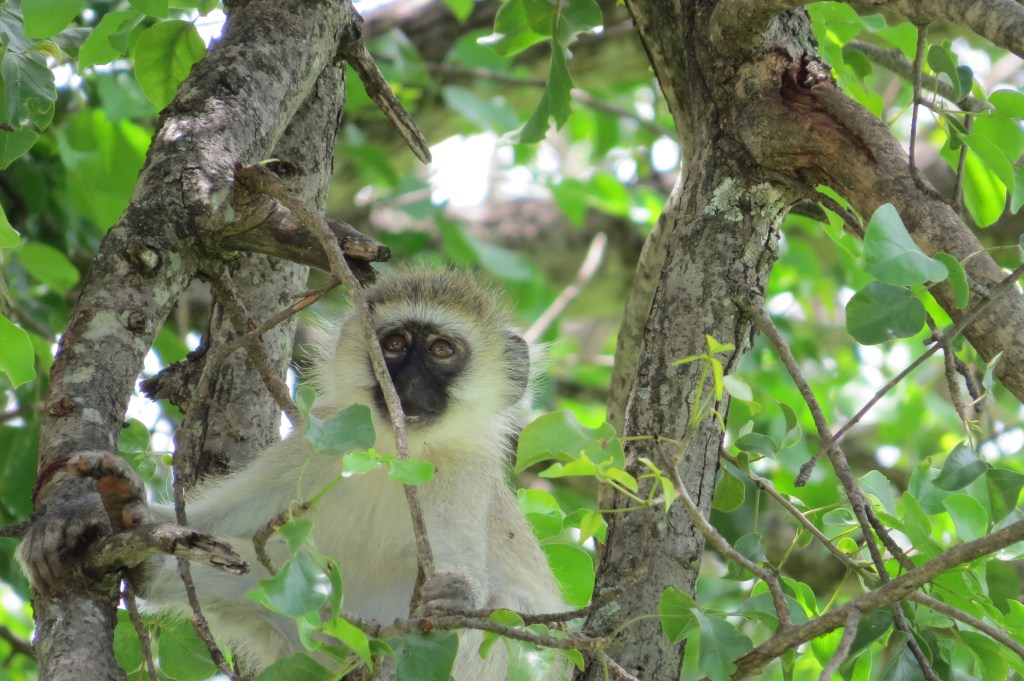
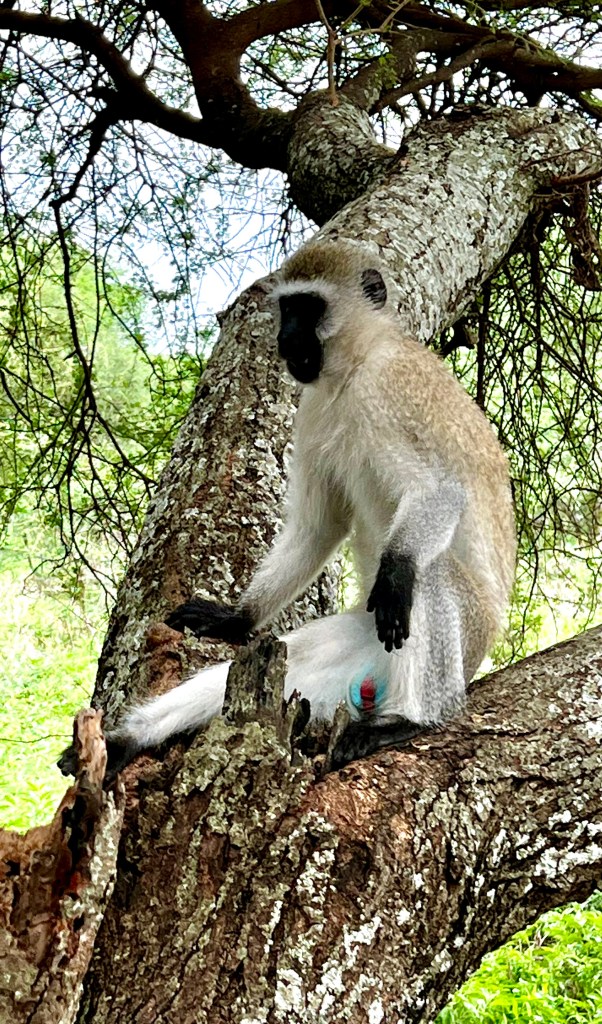
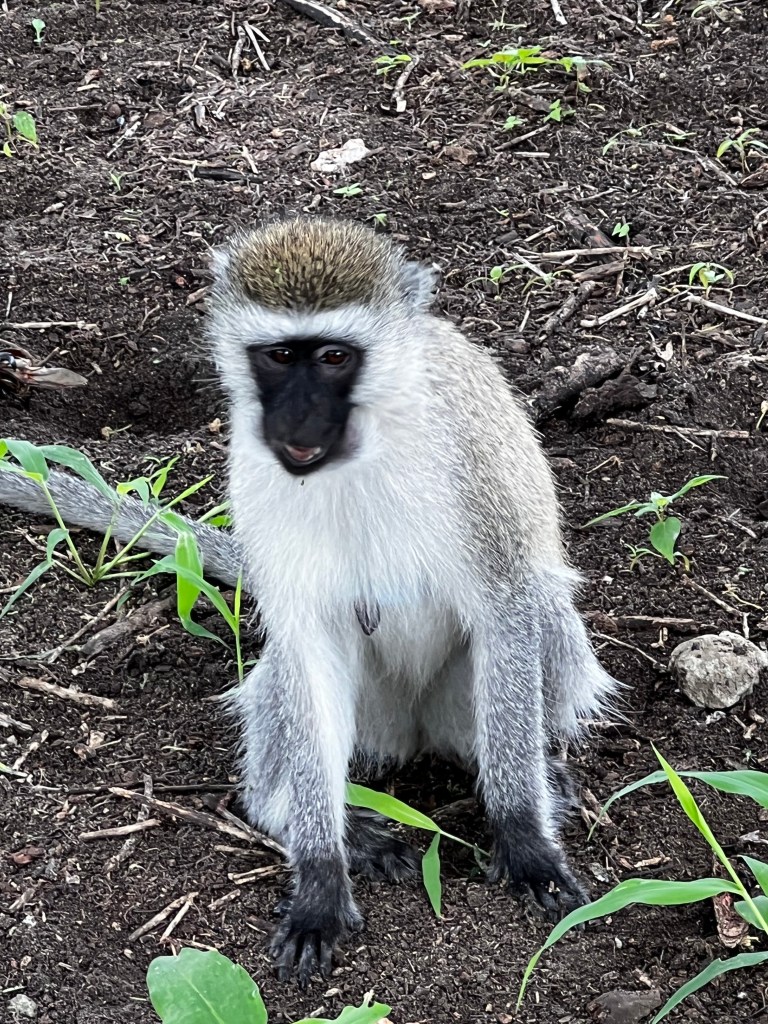
We changed vehicles to a little more open concept which was canvas sided with a lifted roof Land Cruiser. They give a little different feel but take the same photos regardless! A pair of waterbucks ..and yes the little black faced monkeys have blue balls. Proof!
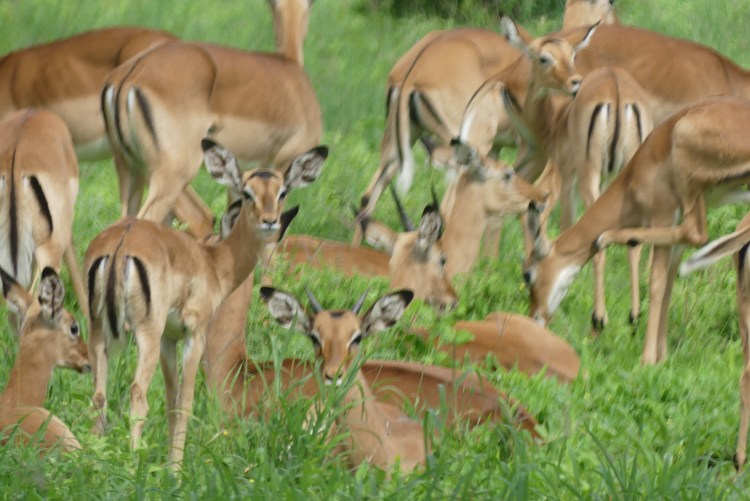
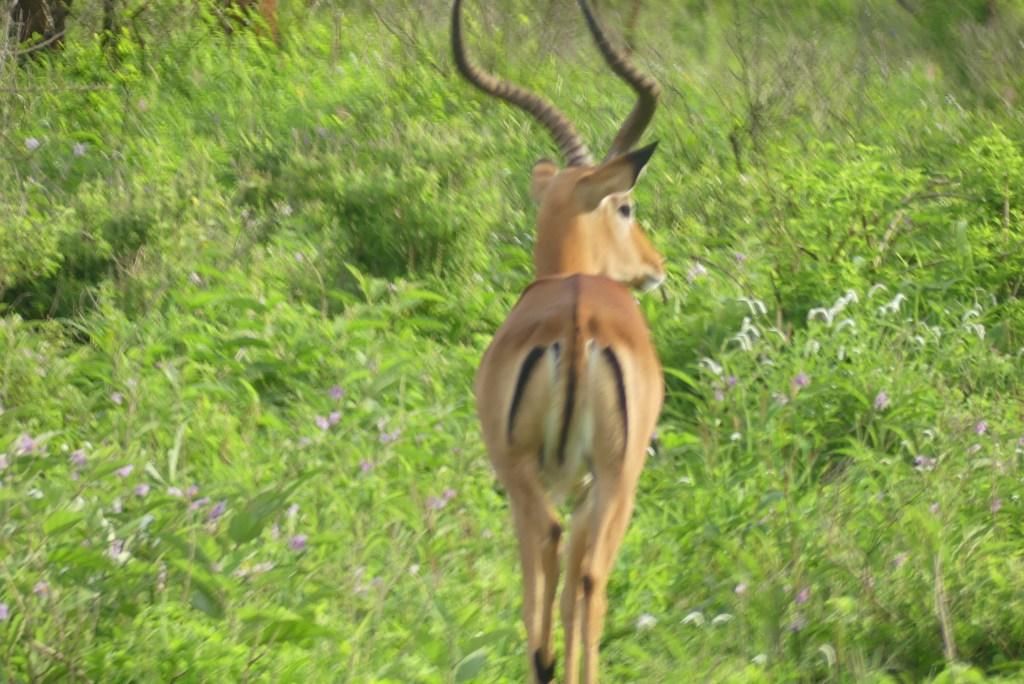
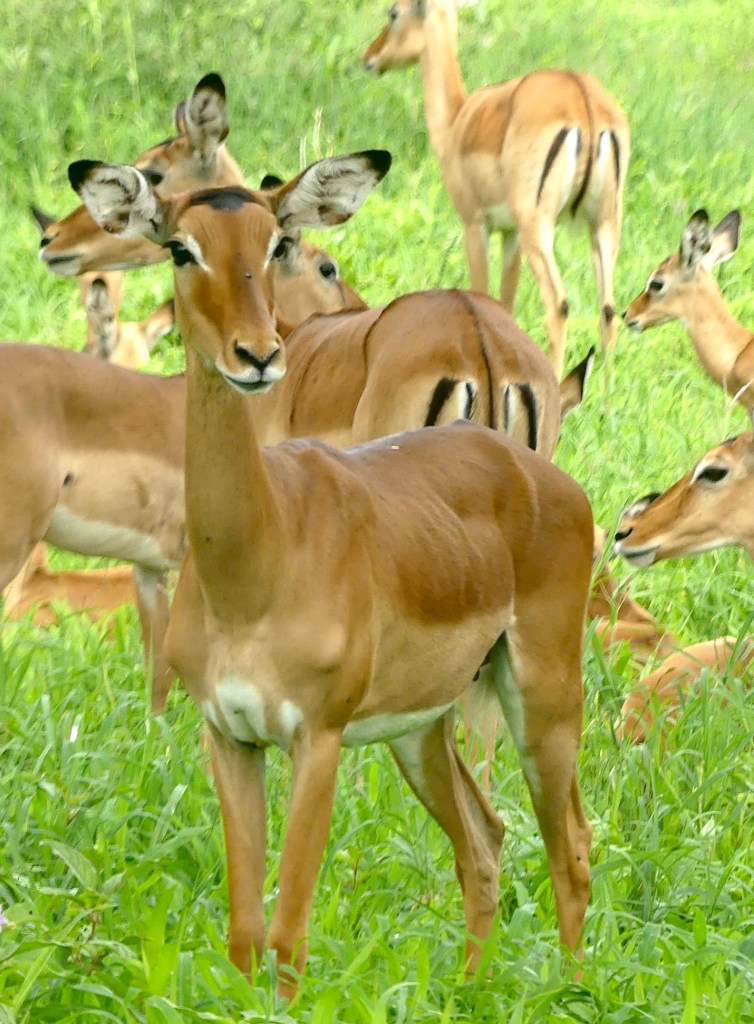
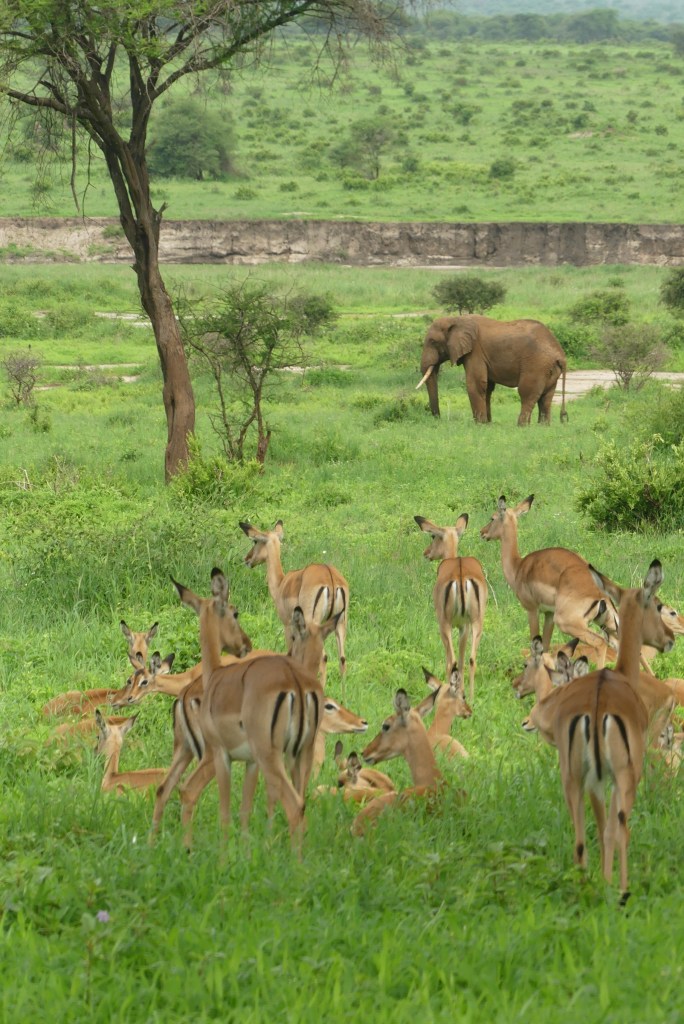
Wait…its a type of car, maybe its a Chevrolet – and Michael finally remembers its an Impala, Elephants, and both near the Tarangire River.
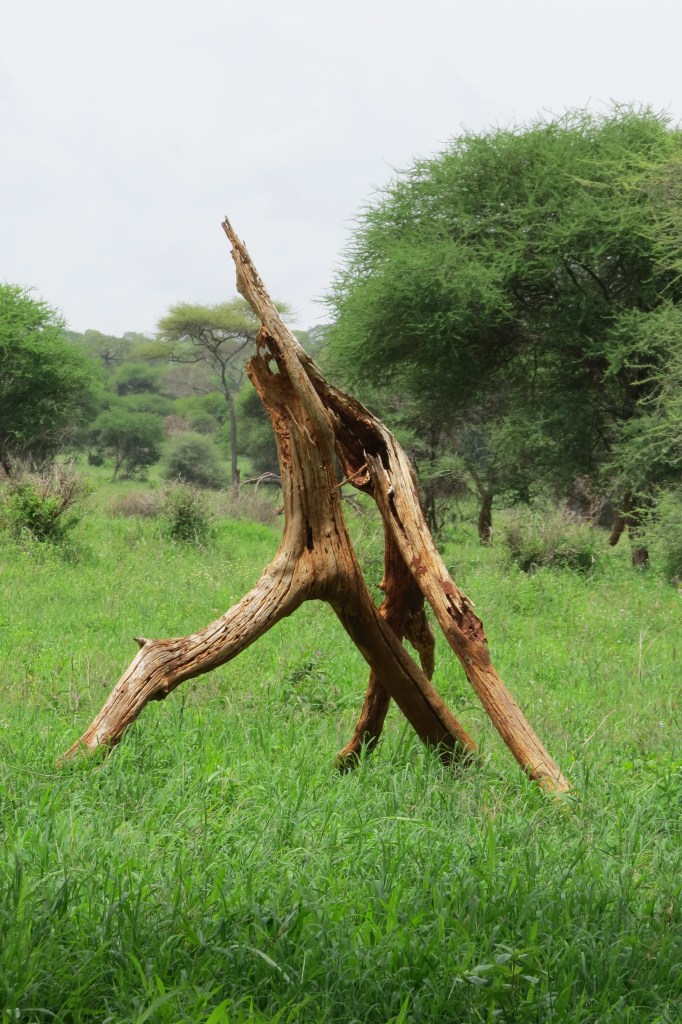
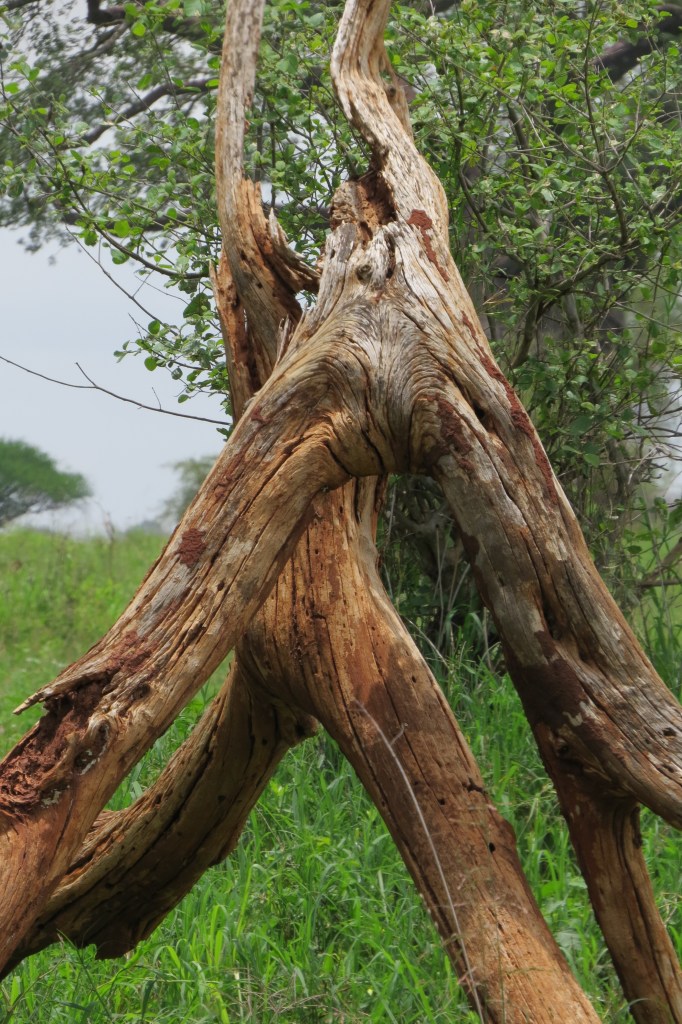
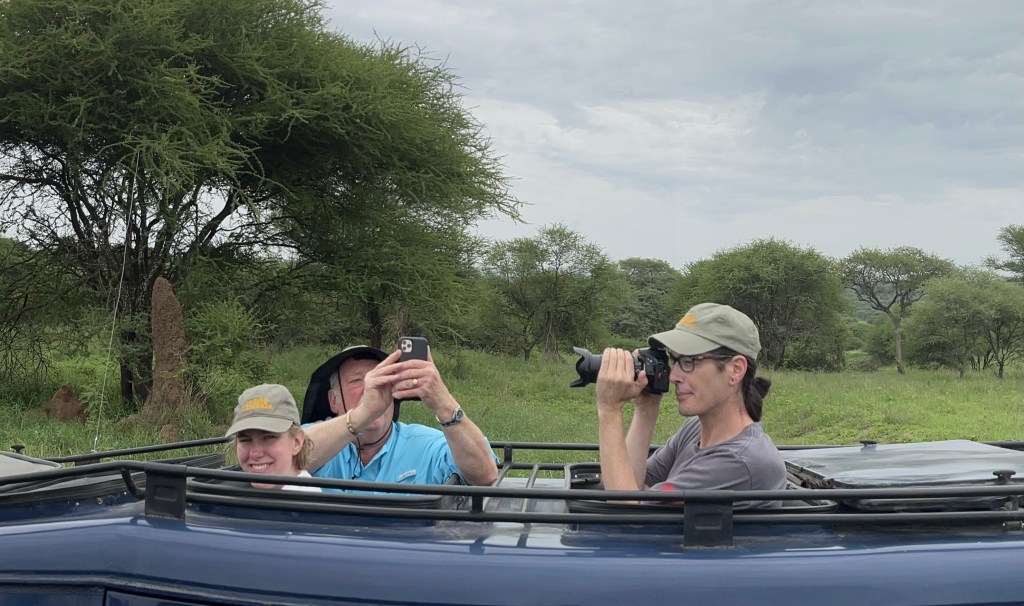
Sometimes dead wood looks like people – and we took a second look and backed up so Jess could get a fabulous photo. Termite mounds when they are abandoned often become home to mongoose and other plants that want to grow there – they can even look like a unique type of tree.
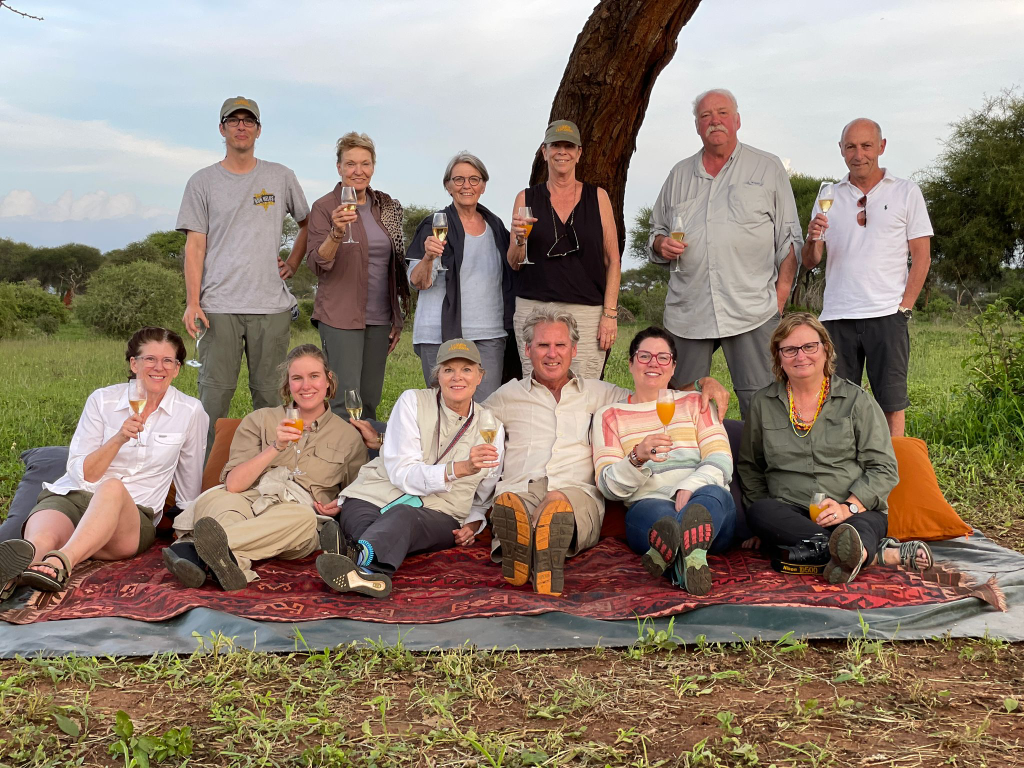
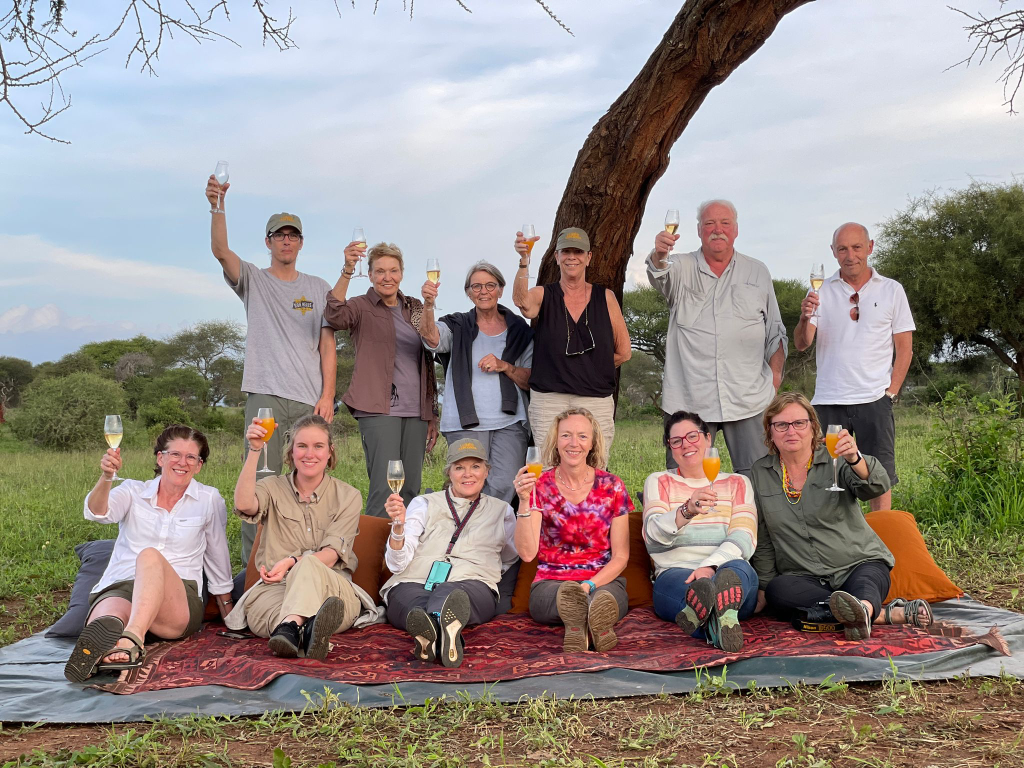
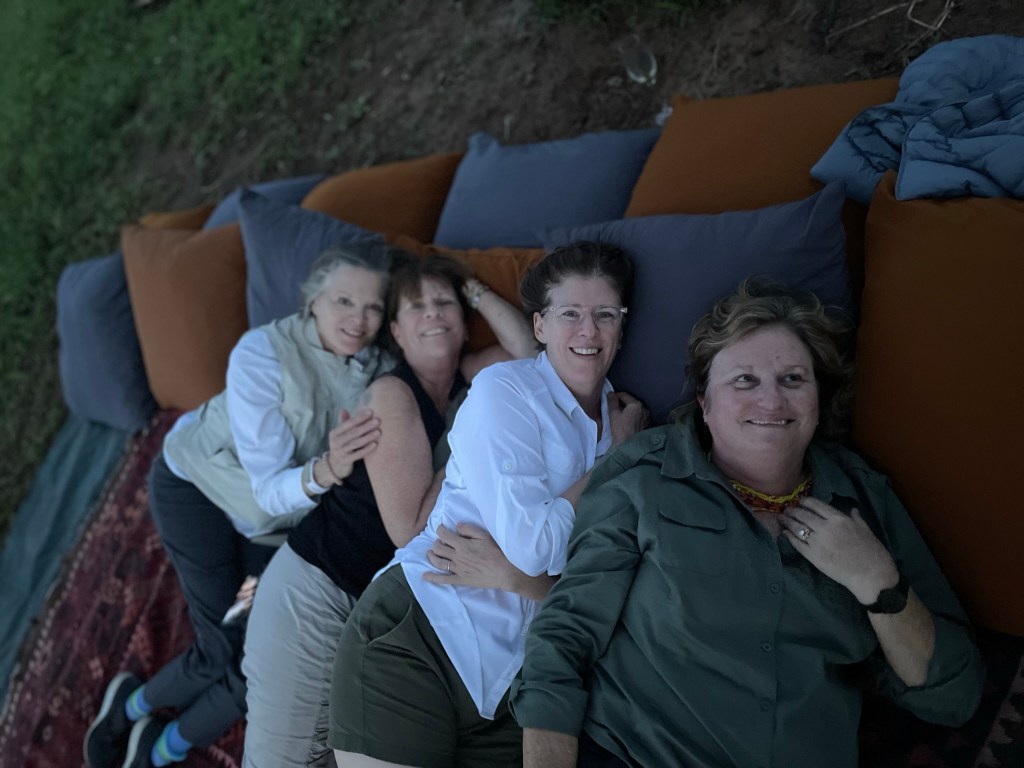
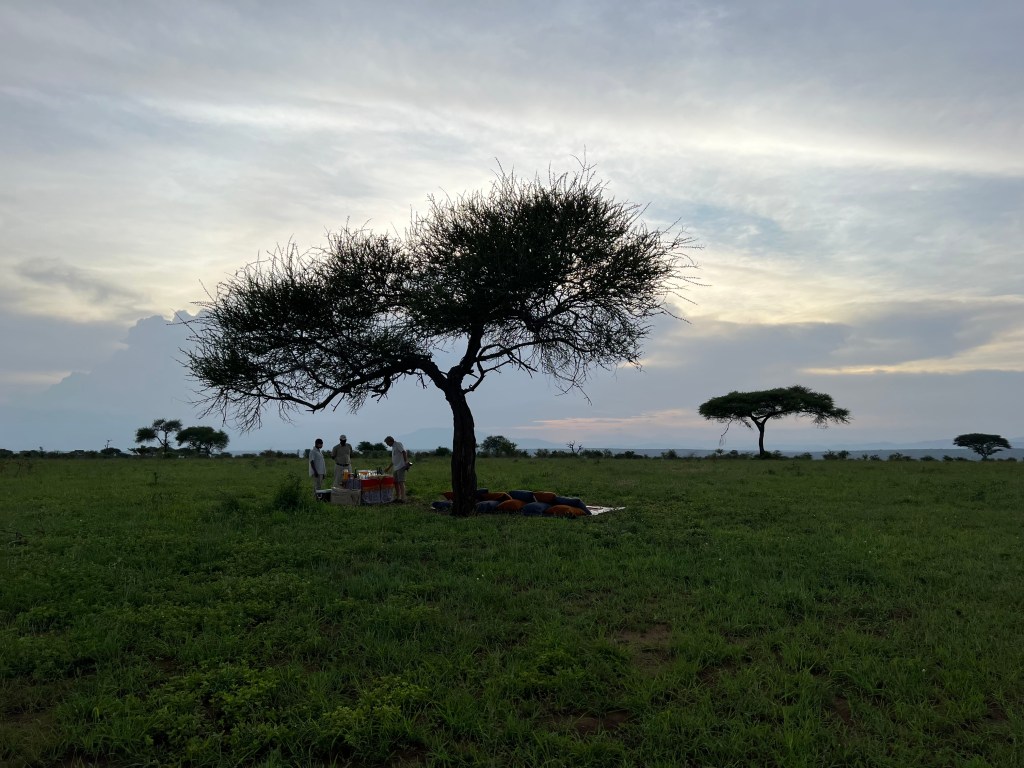
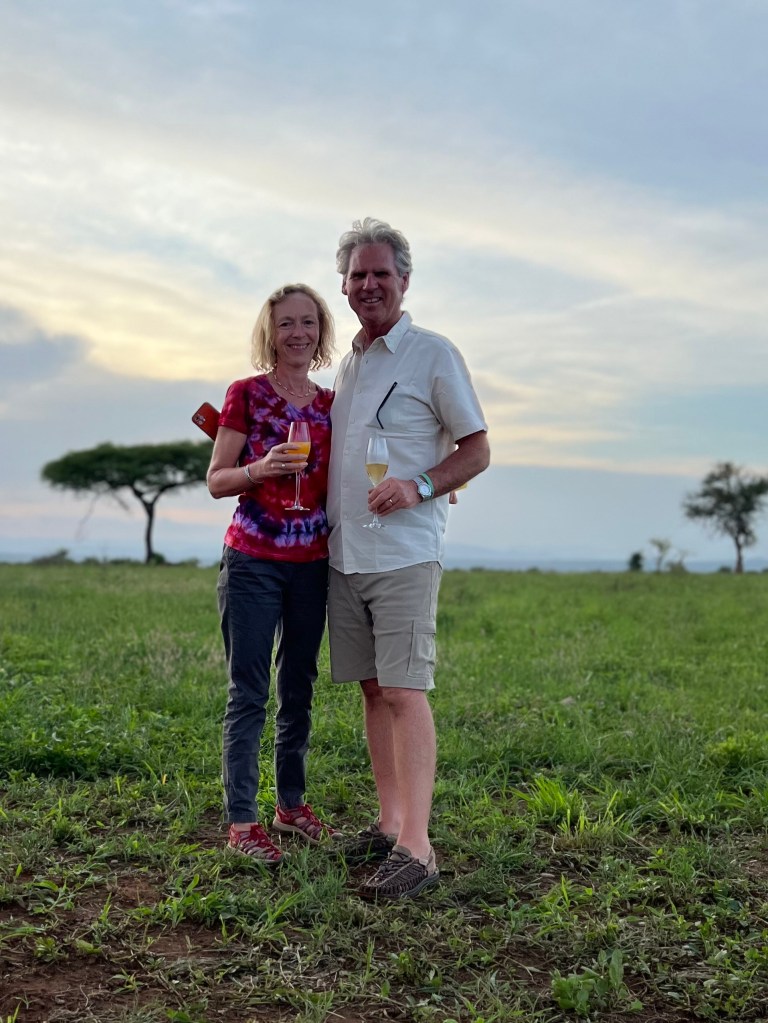
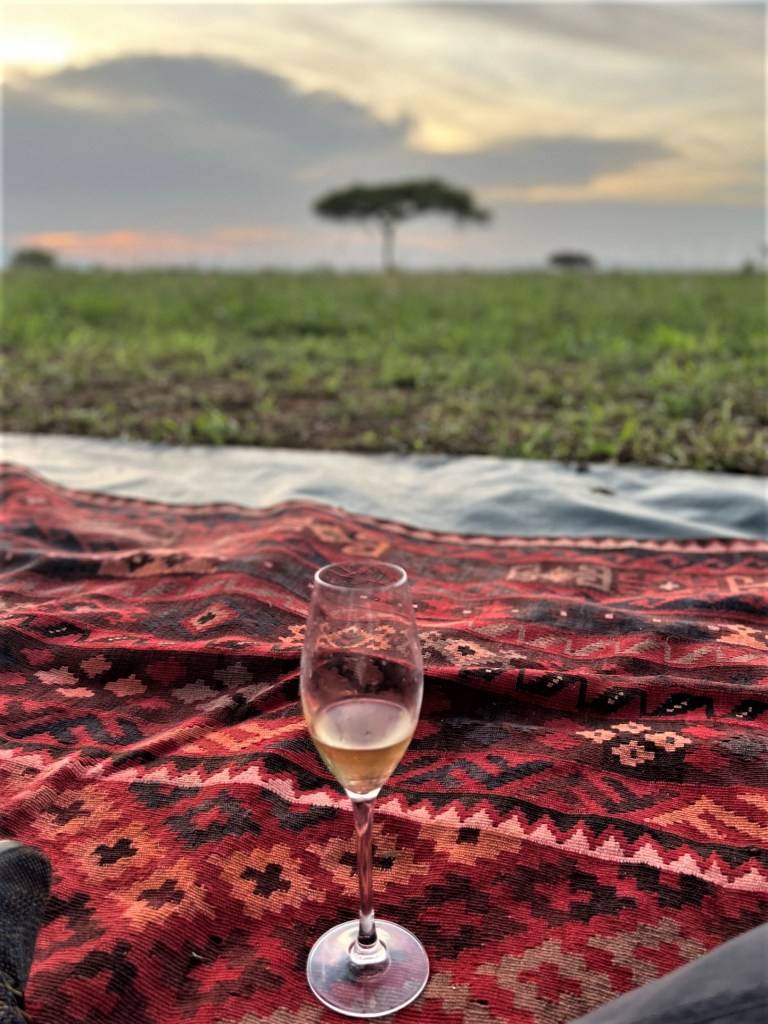
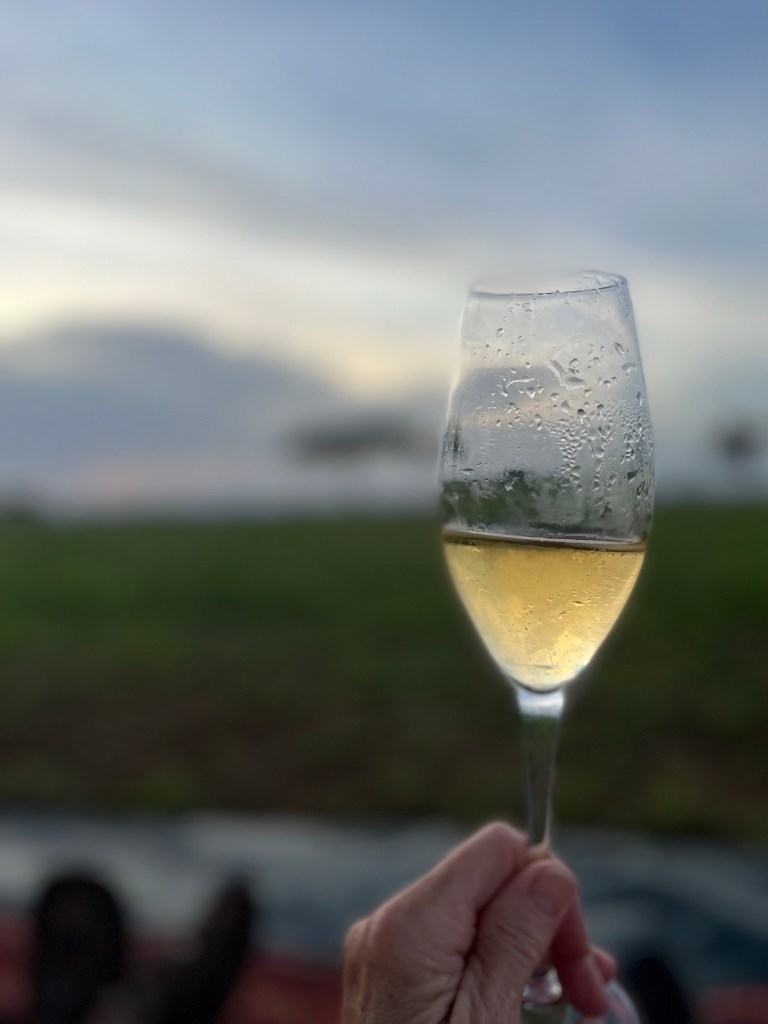
Our last evening included a sundowner with champagne and munchies and a night time drive. We didn’t see any incredible hunting but we did see some birds and a serval cat shows the incredible activity during the night.
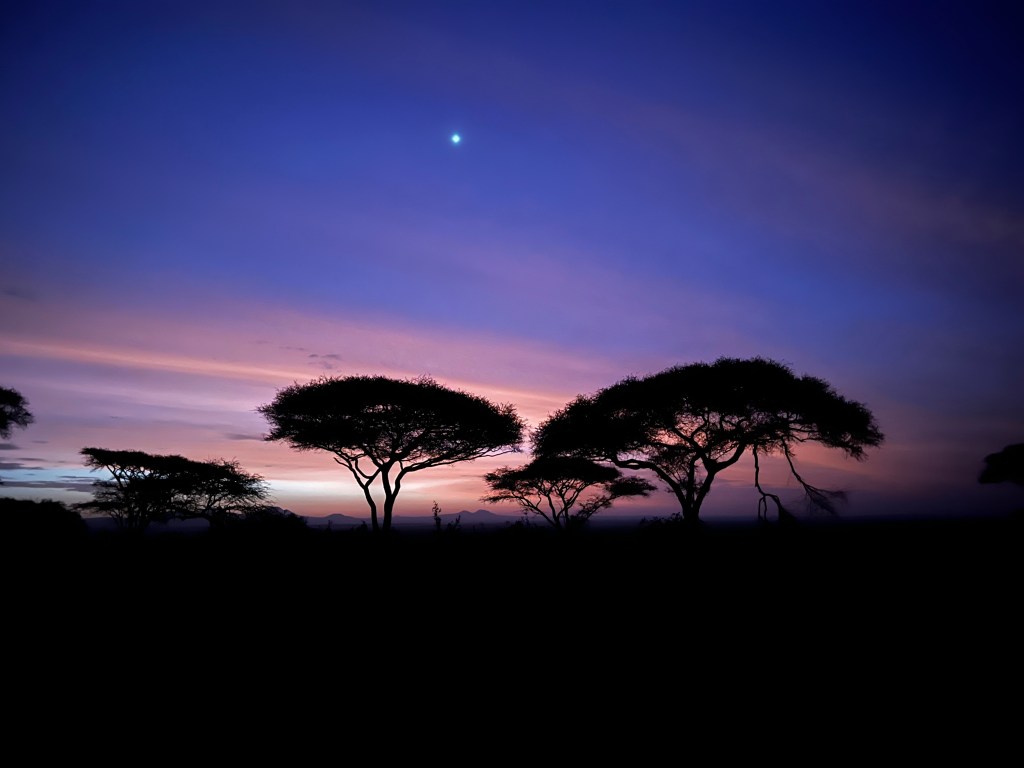
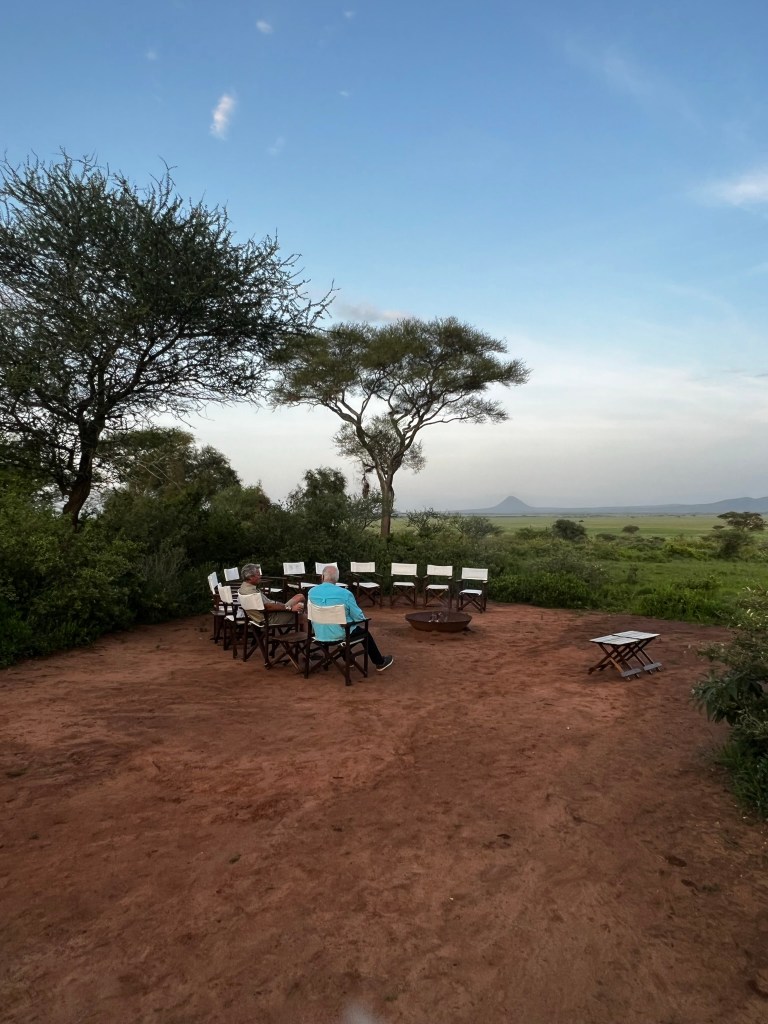
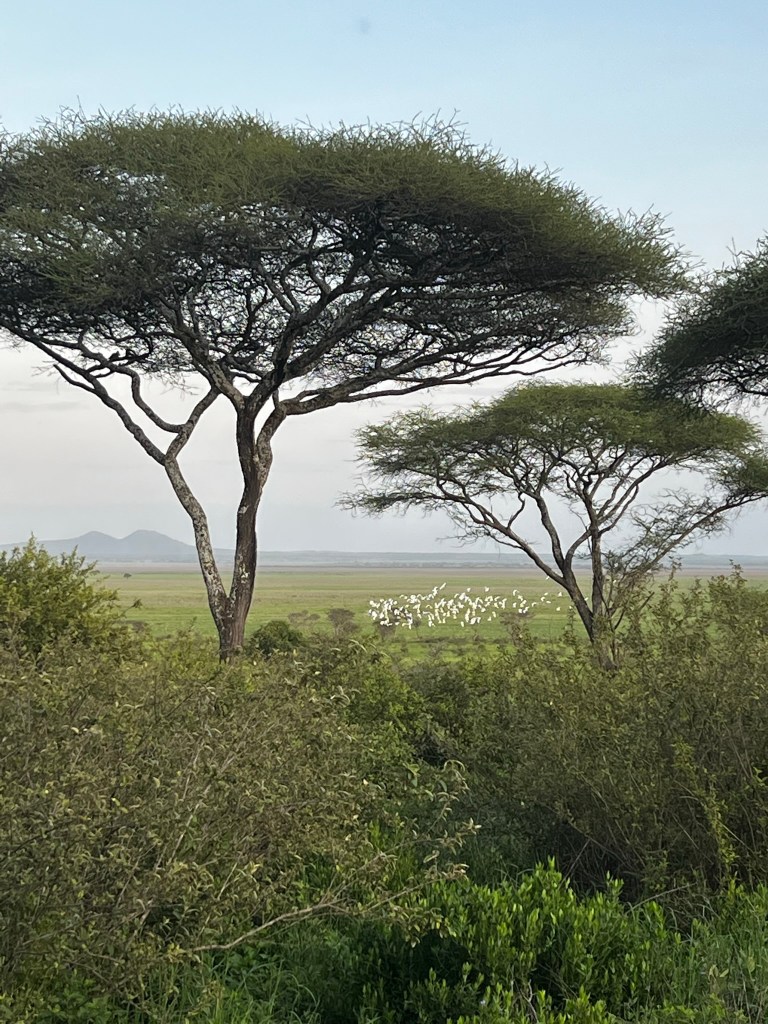
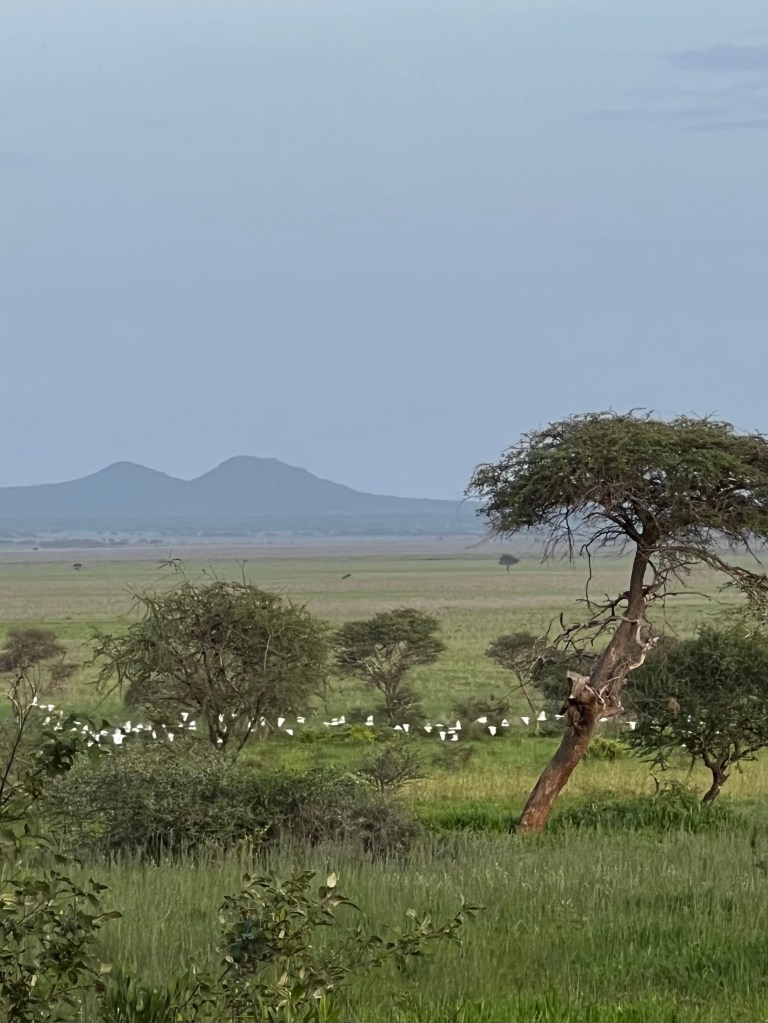
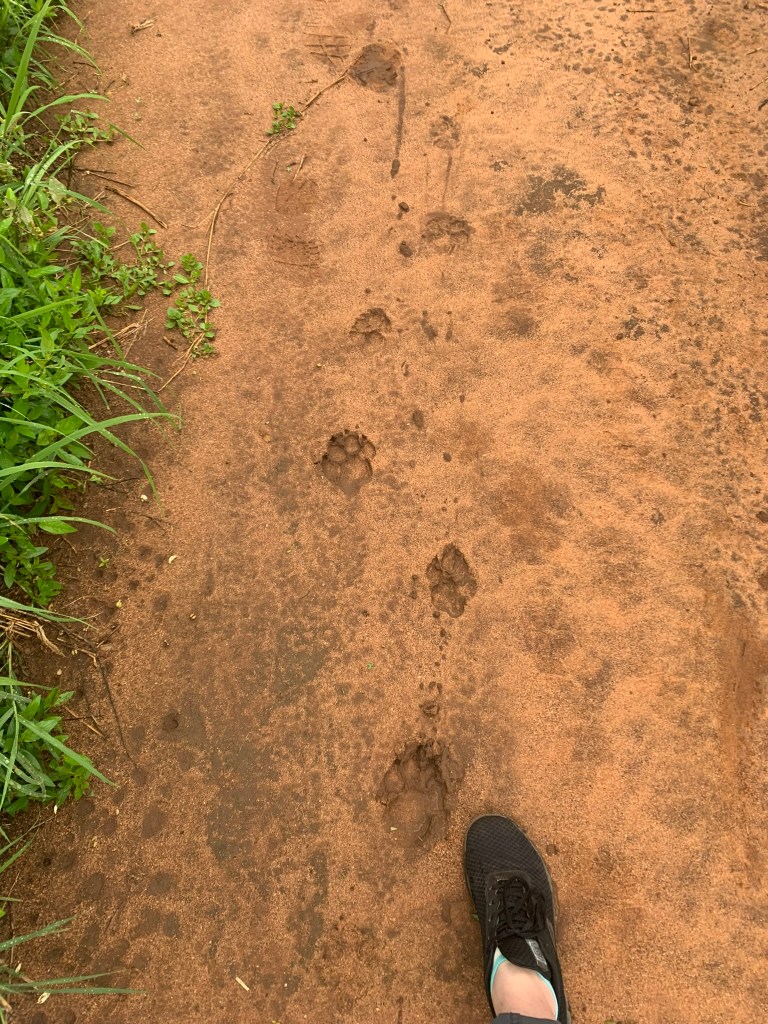
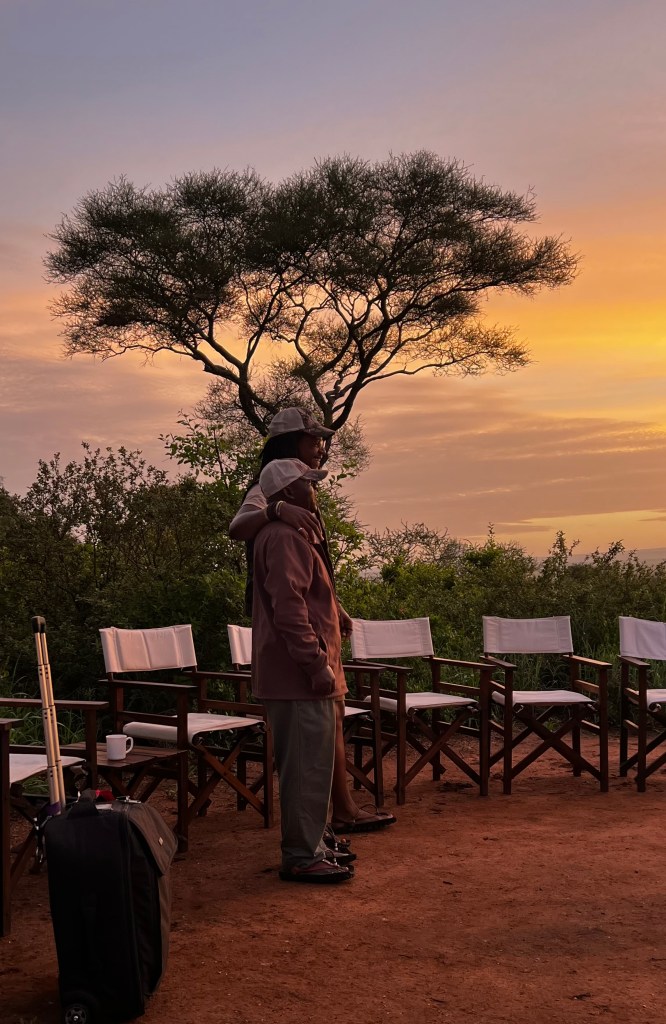
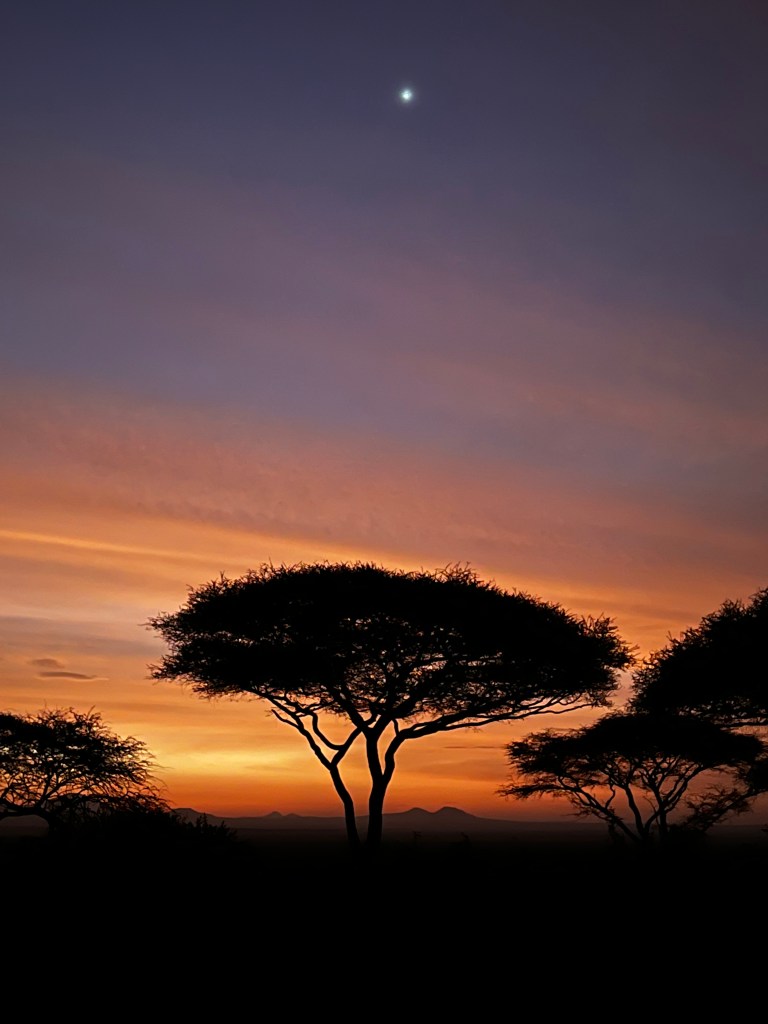
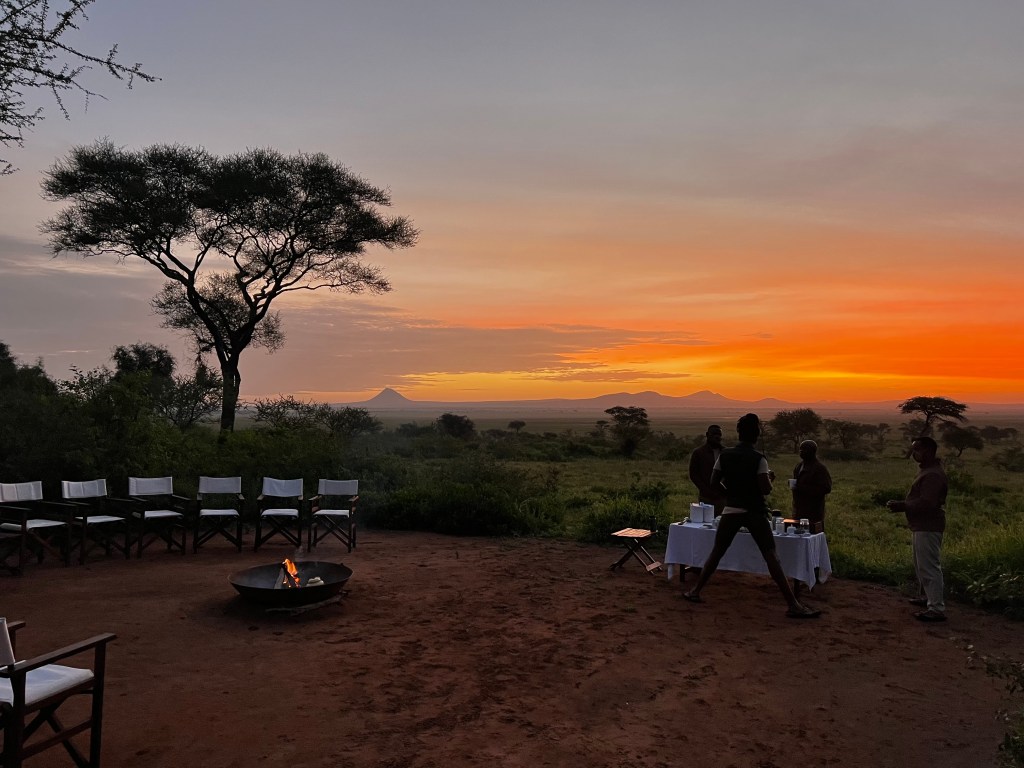
Our last evening/morning – we had an incredible thunder storm with a deluge. Larkin’s shoe points out the muddy tracks -glad I didn’t meet up with that cat! Michael had a slippery date with the mud too. Even though it looks like Monte Rosso red dirt – it does wash up fairly easy but then every thing we packed was mostly dirt brown colored. Flocks of birds float back and forth across the view – AND sunrise can be incredible as we gather.
Cheers to the next blog on closing out our time in Tanzania with some of our favorite photos!
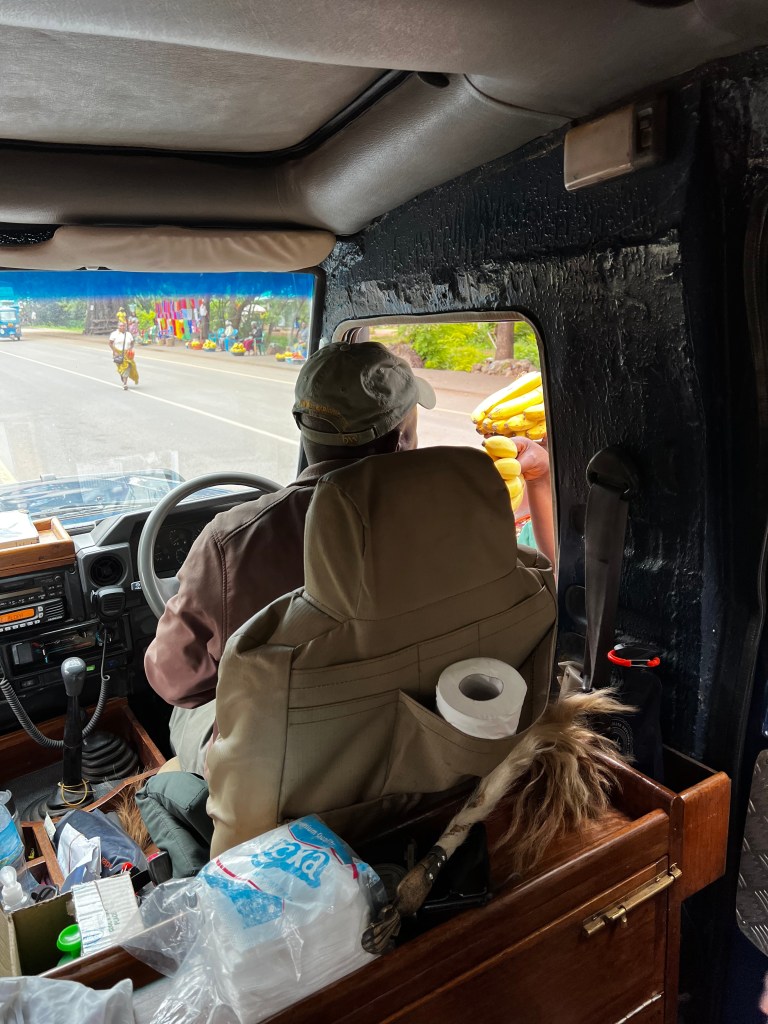
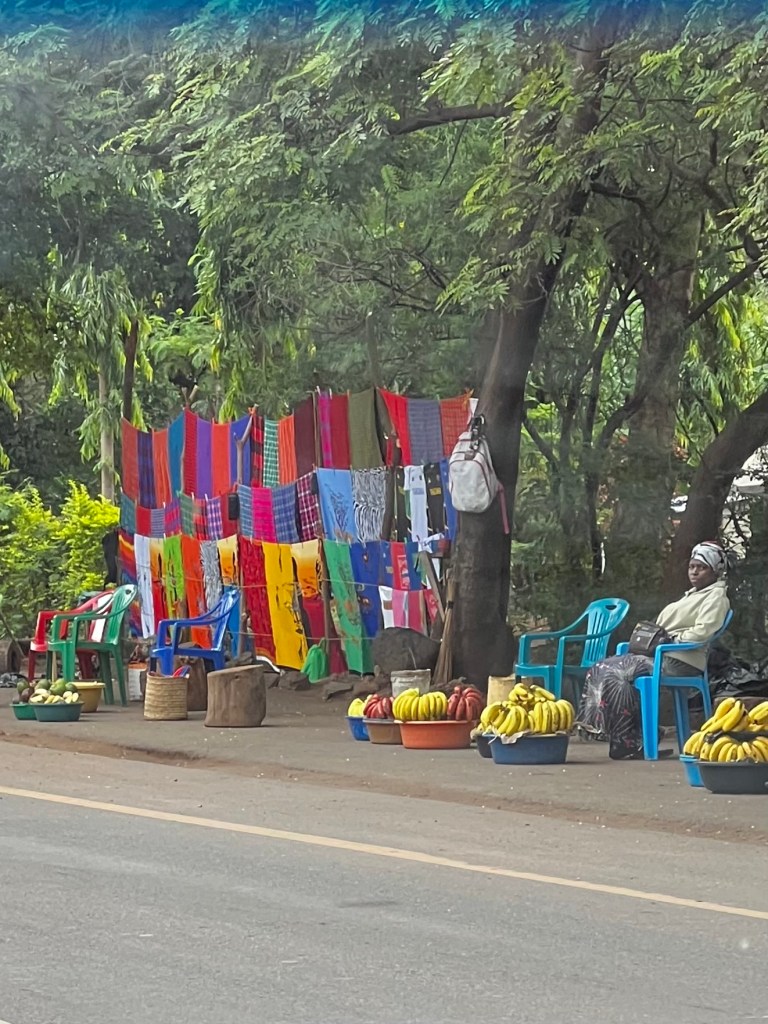
On our way to Tarangire National park from the Ngorongoro Crater we traveled on more “normal” busy roads. Mzee always stops on the way to the Tarangire for fresh bananas along this route. Once the ladies see us pull over, everyone comes running and of course bought both yellow and orange bananas. All sorts of other things are for sale on the side of the road as well – very colorfully displayed.
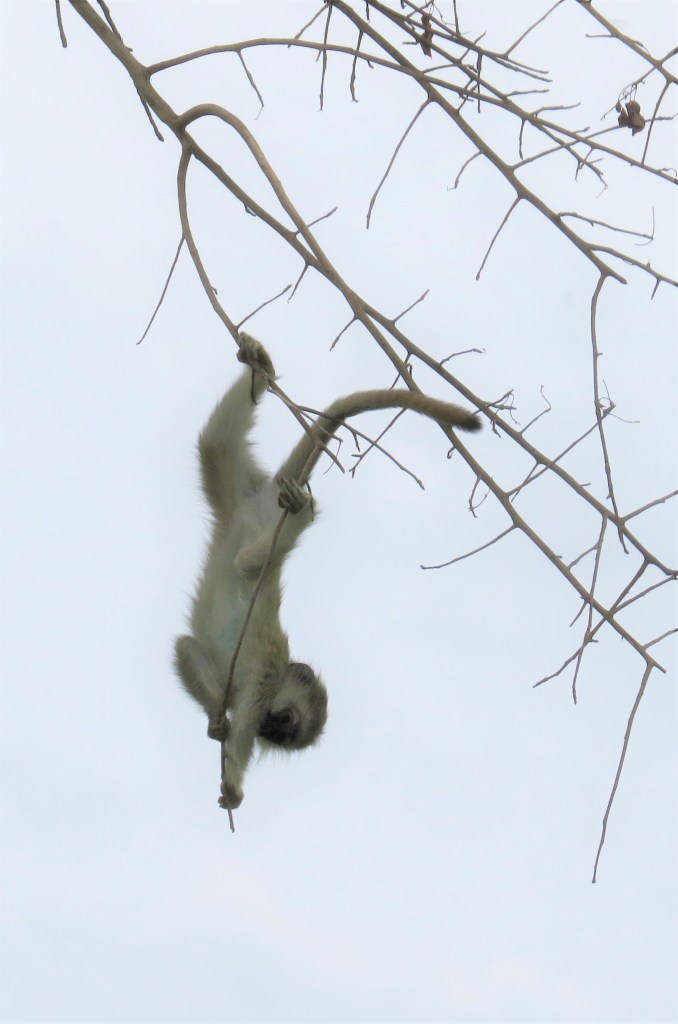
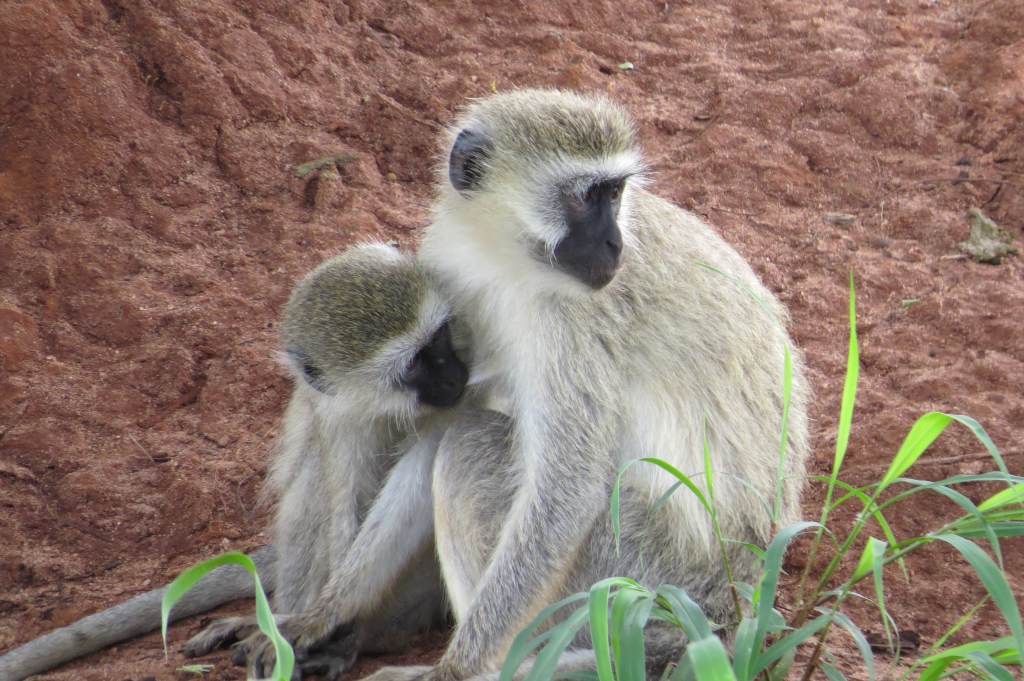
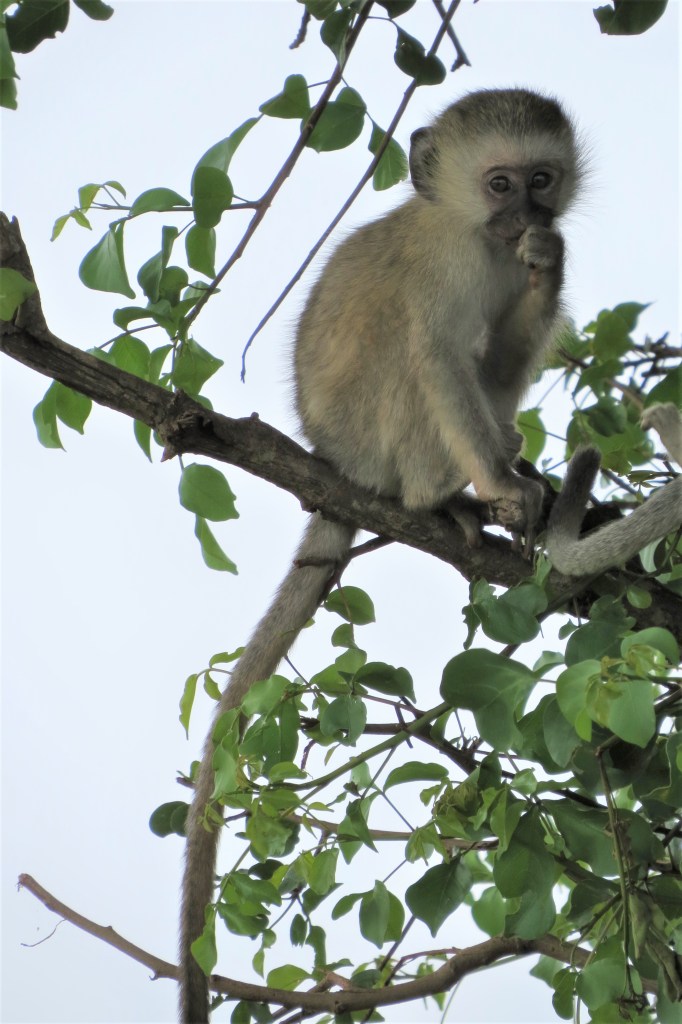
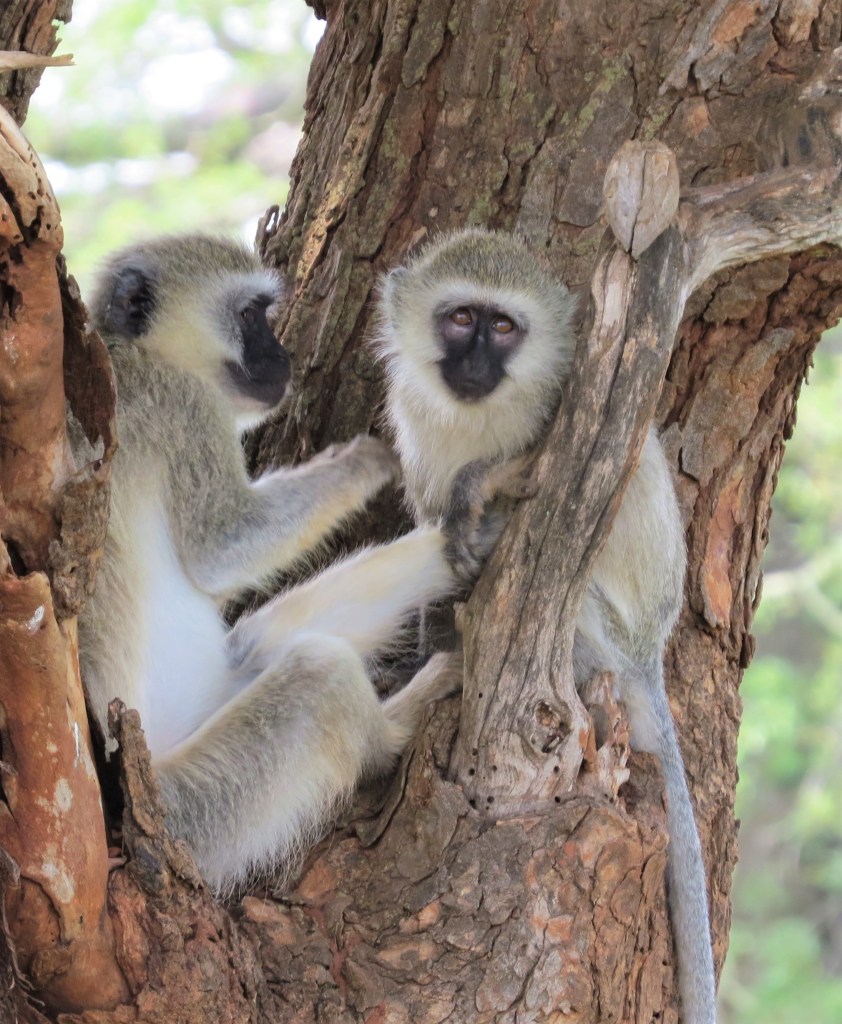
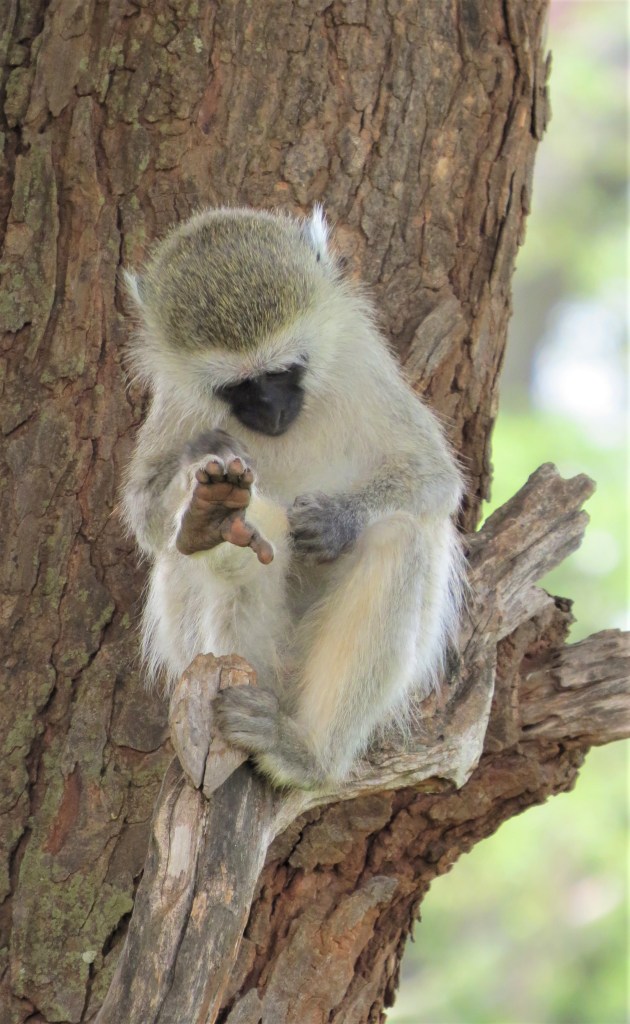
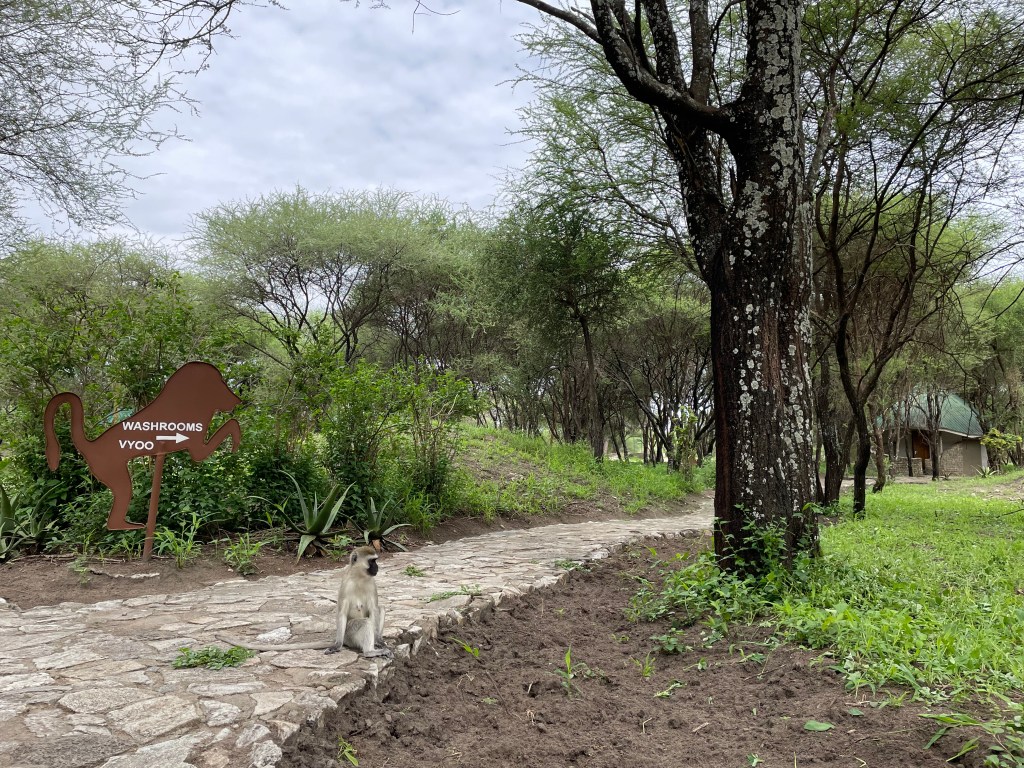
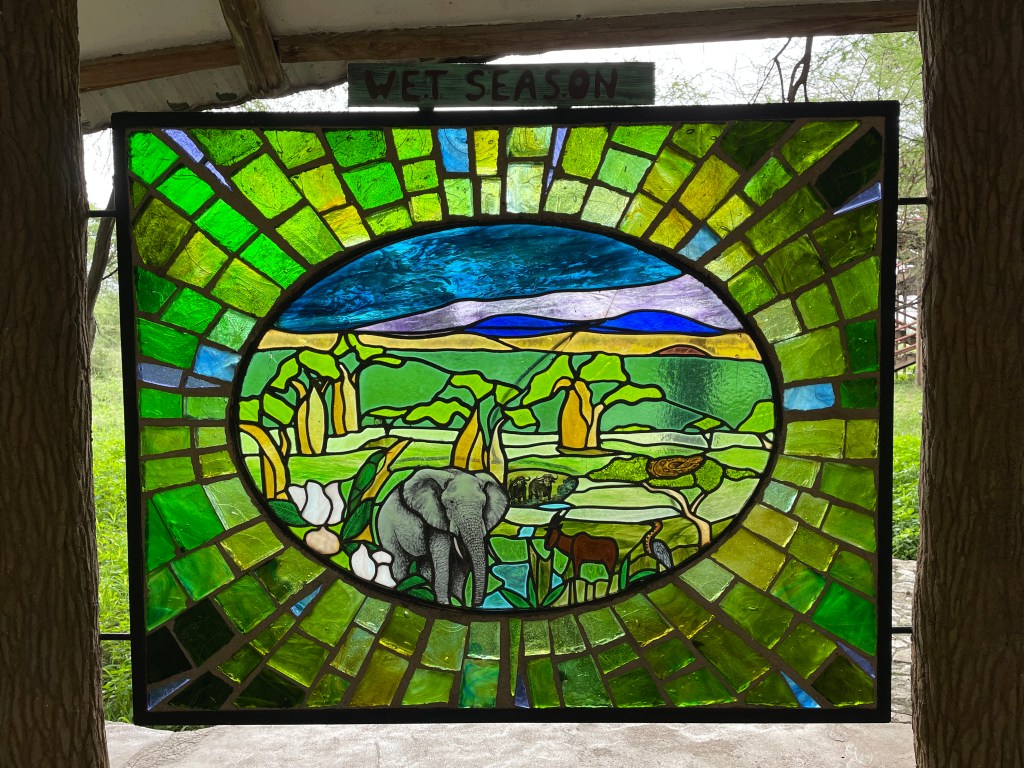
The entry into the park had nice restrooms including a stunning piece of stained glass hanging in an open building as well as black faced monkeys on the way to the restrooms and in the tree over our Land Cruisers. Someone in our group forgot to close the door on one of our Land Cruisers and in the blink of an eye a banana was gone. Note – keep telling the safarists to keep the vehicle doors shut! Those black faced monkeys are resourceful.
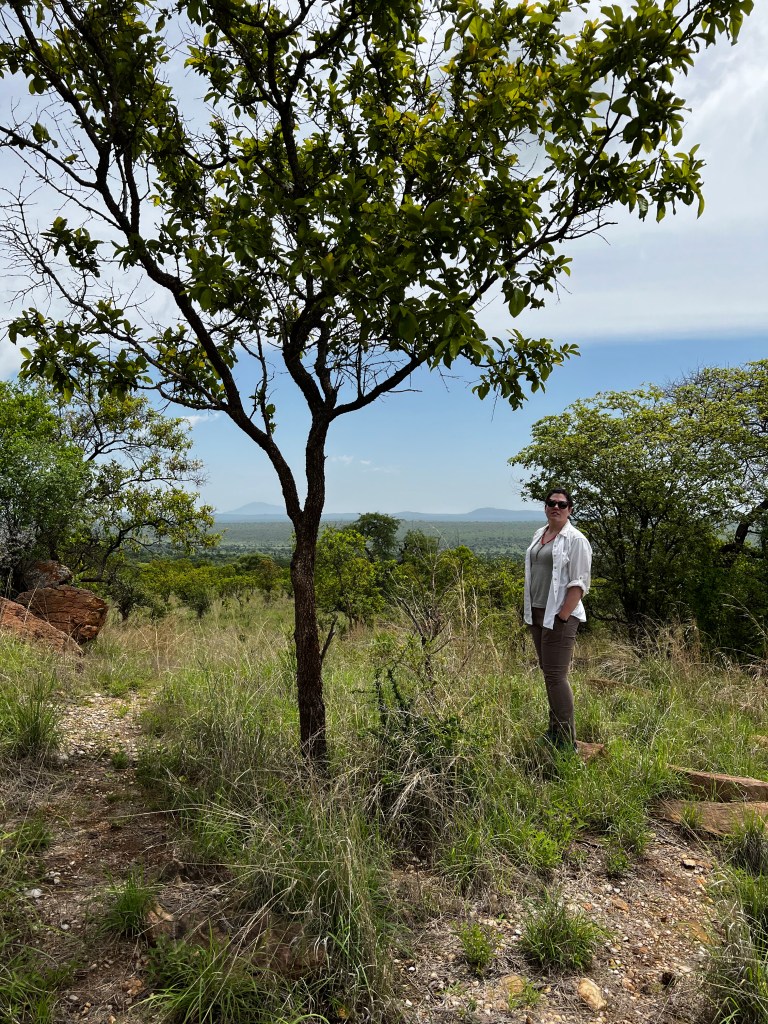
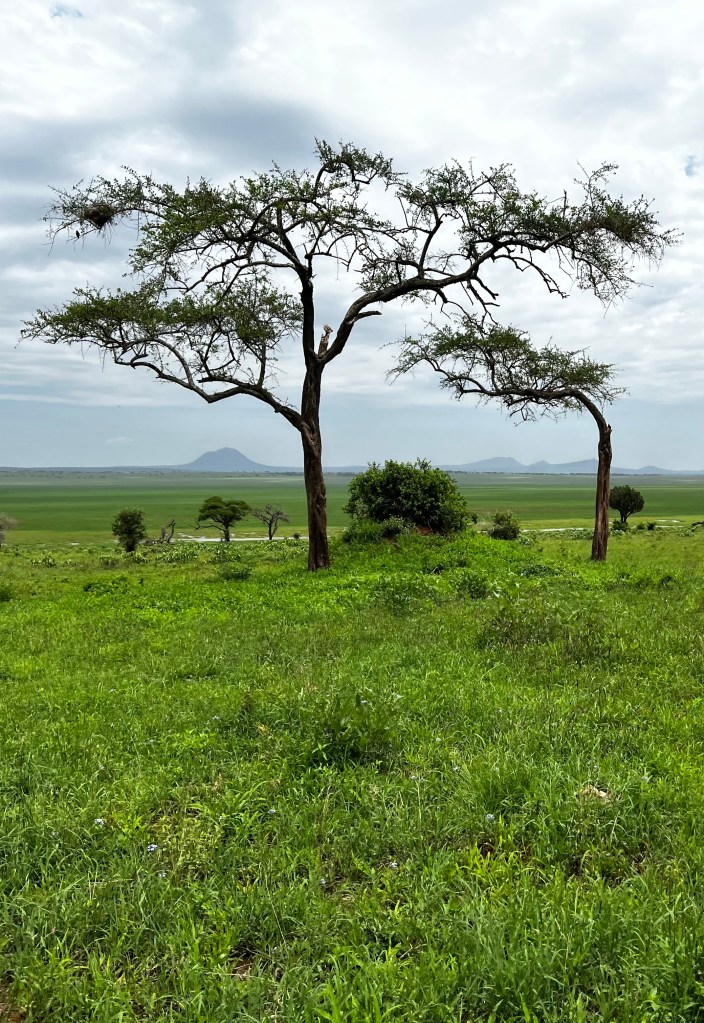
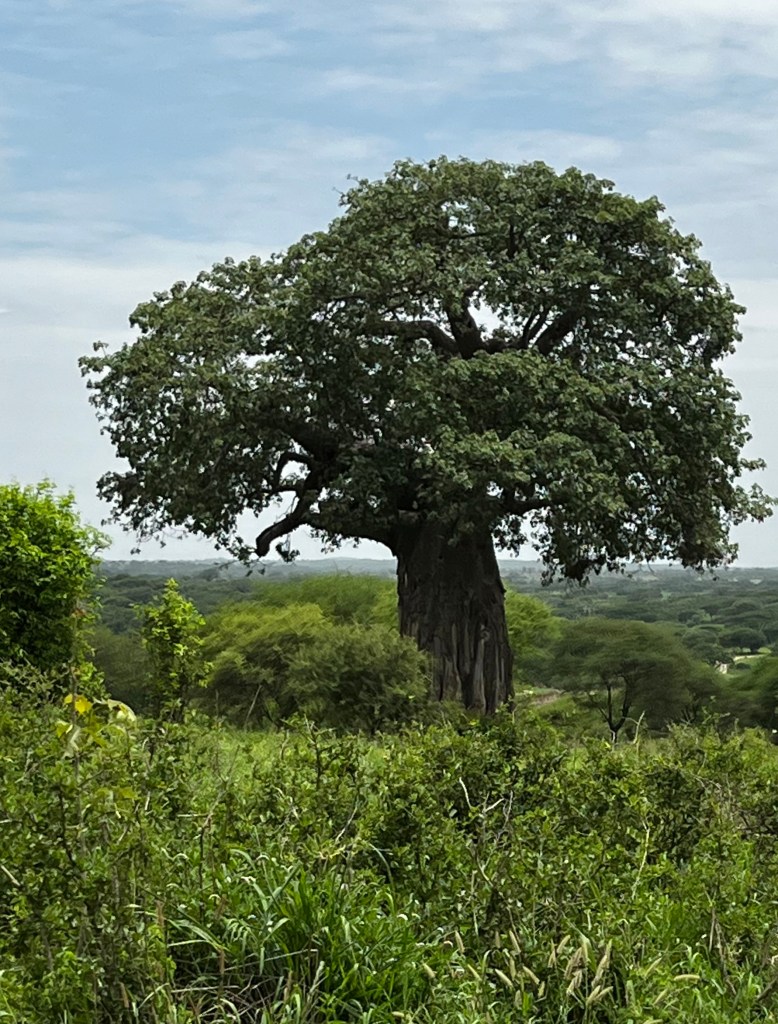
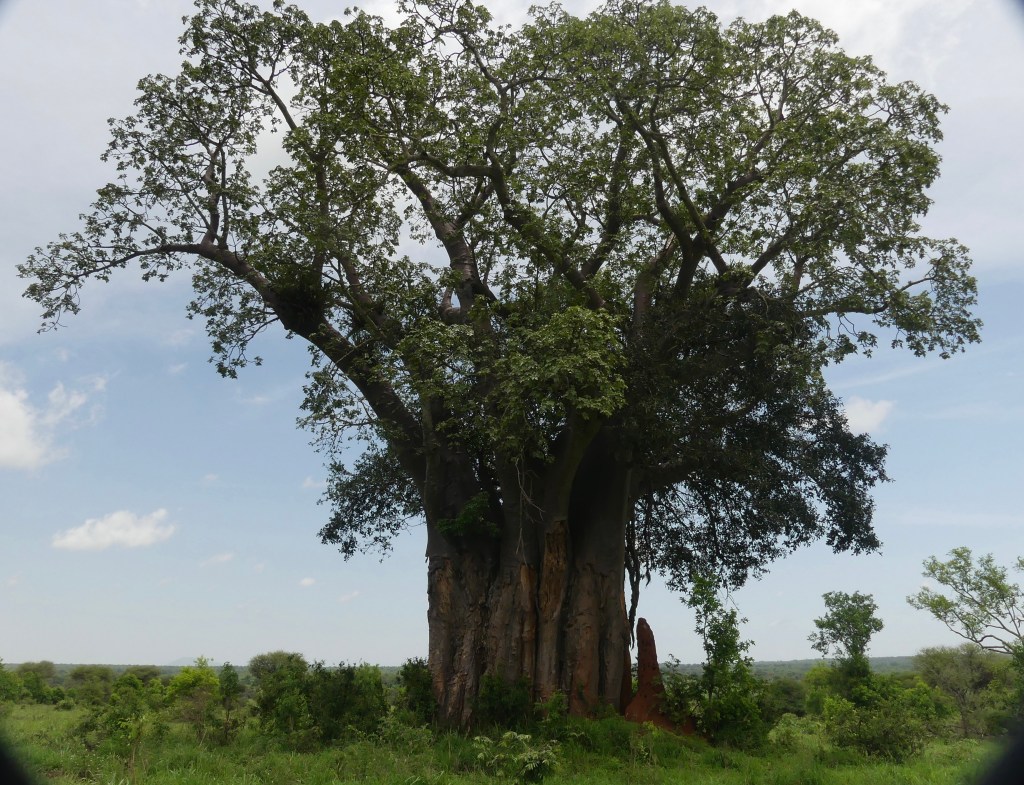
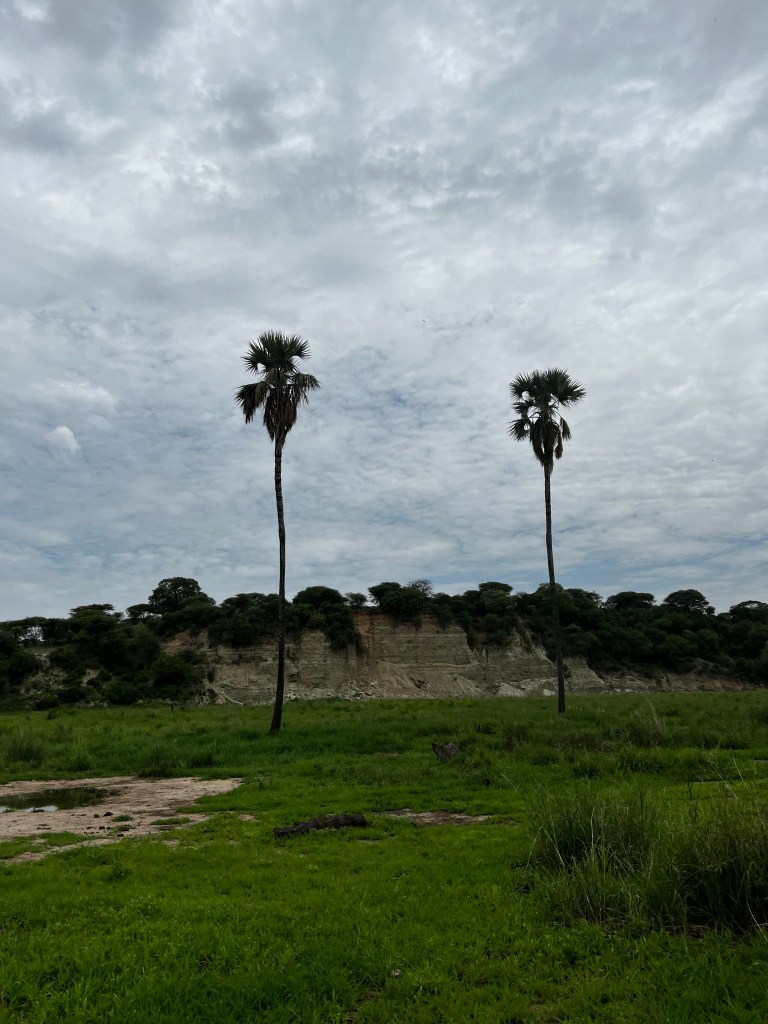
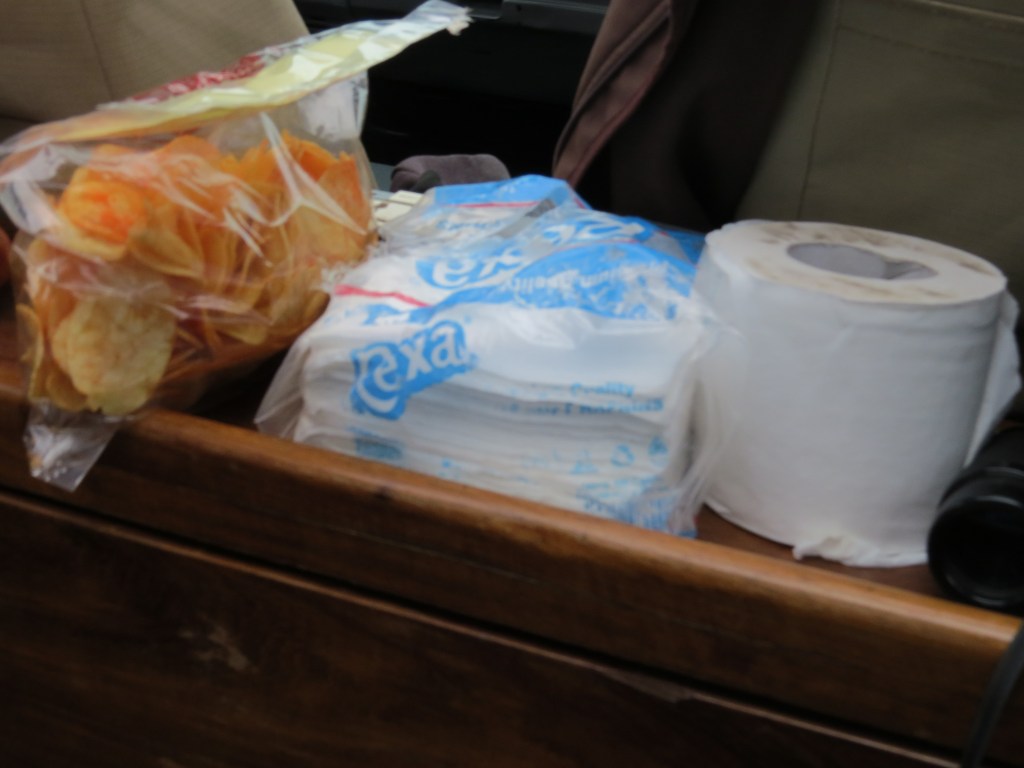
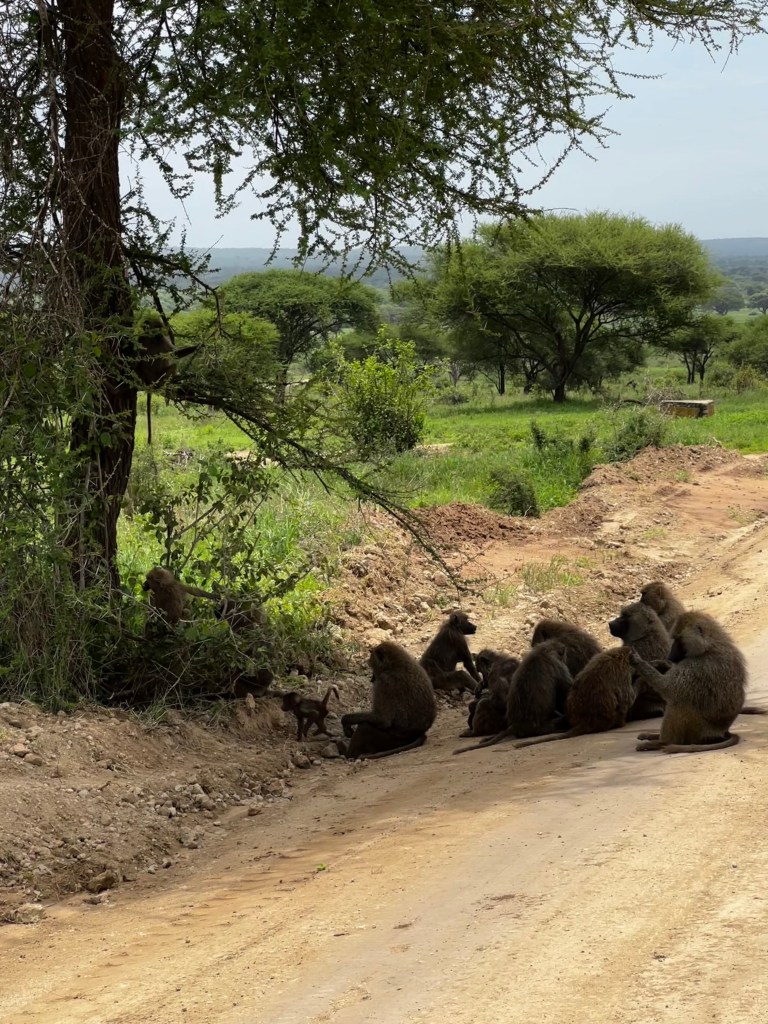
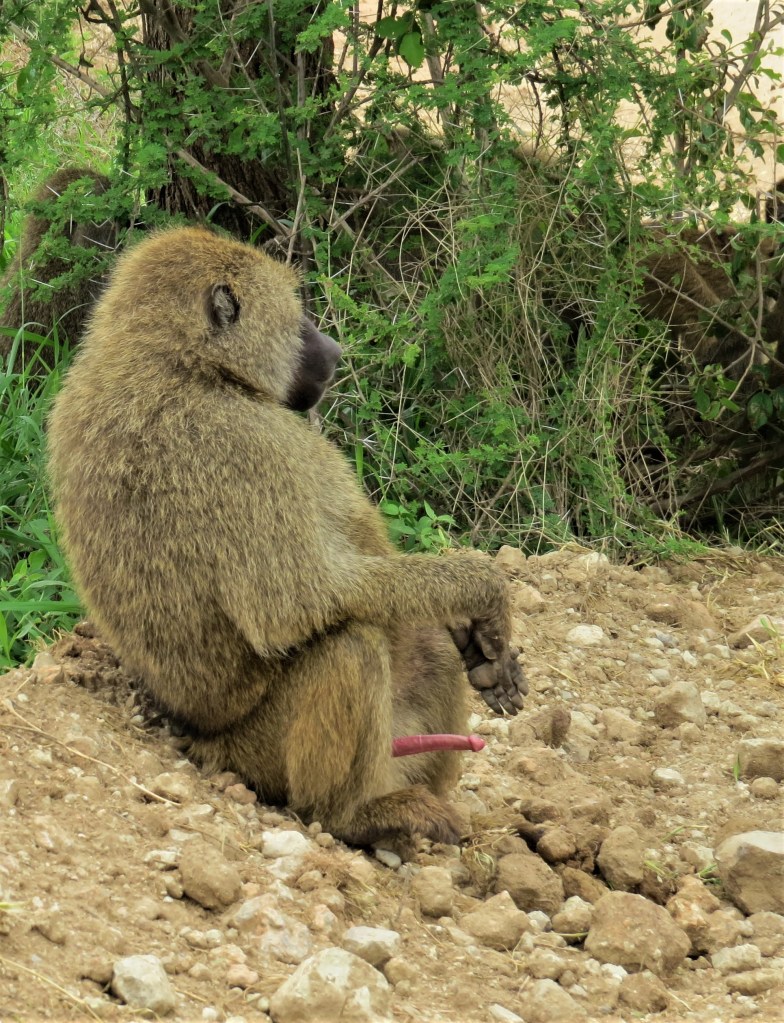
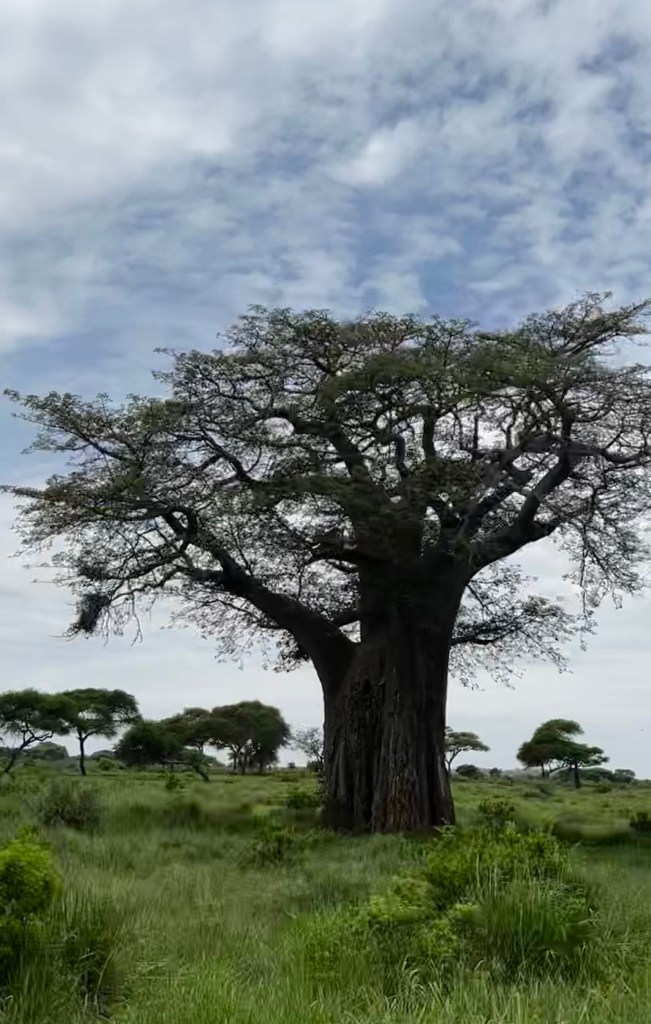
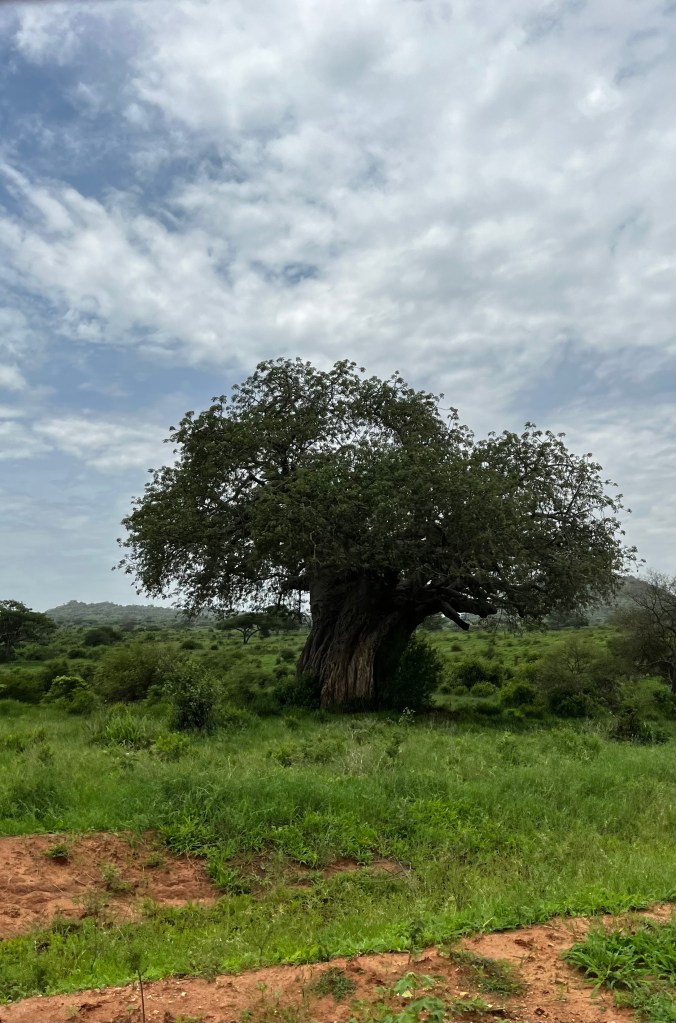
The Tarangire National Park is named after the Tarangire River which cuts the park in half mostly from north to south and supplies water year around to the wildlife. The park is nicknamed “park of the giants” with its massive ancient Baobab trees. In the Mbugwe language Tarangire means the river of the warthogs. The park has the most animals during the dry season which is June to October. We were there in February and there were still loads of animals to observe. The geology – with the river and its banks, the rocks and hills as well as the swamp were such different vistas from the mostly flat plains of the Serengeti or the enclosed crater of the Ngorongoro. Visions of majestic Baobab trees, acacias and even seeing a few palm trees were breathtaking. The park is known for its year around herds of large elephant. Elephants love to eat Baobab trees so only the huge centuries old specimens are remaining. Elephants also love mahogany trees so the ones we observed were more like short small bushes kept trimmed as their new growth emerges – almost like someone planted rows of little trees. Potato chips, napkins and toilet paper – very important supplies. The first baboon troop we came across looked to be having a convention in the street.
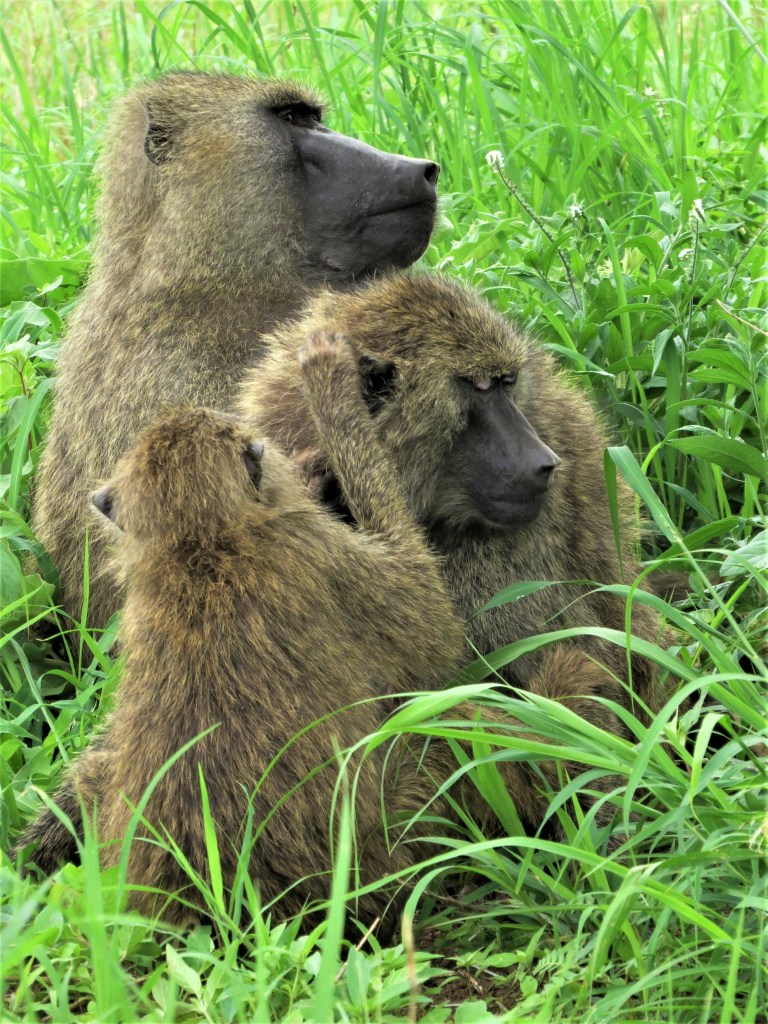
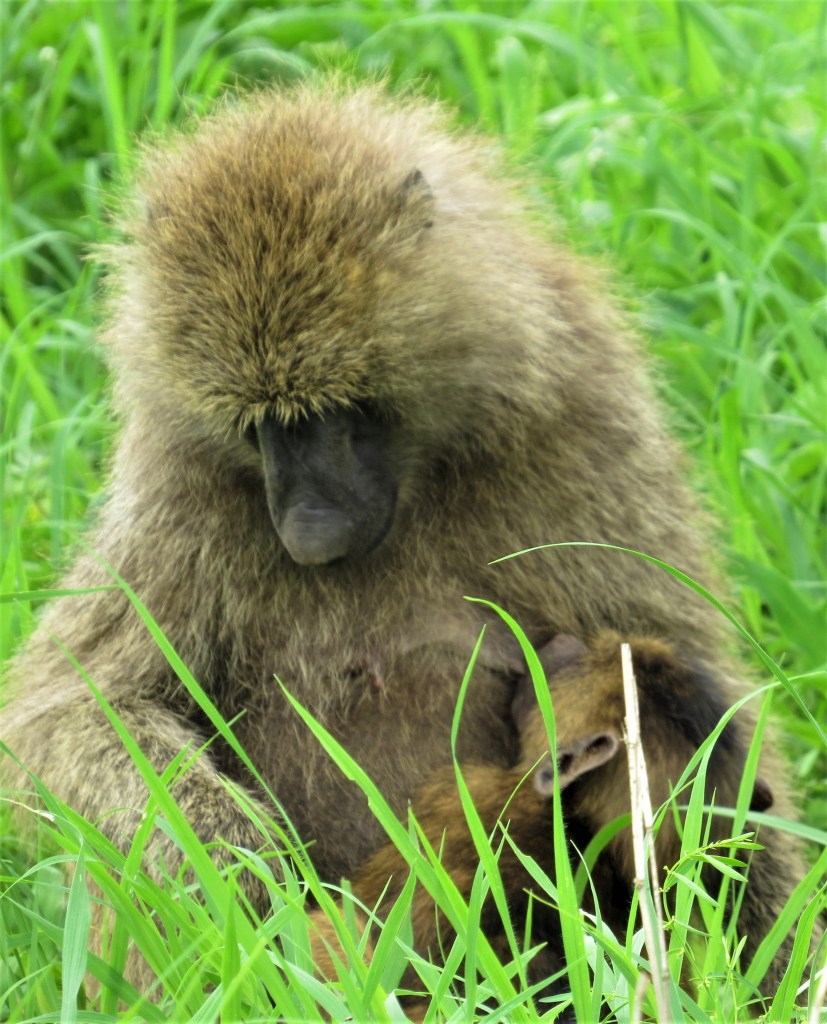
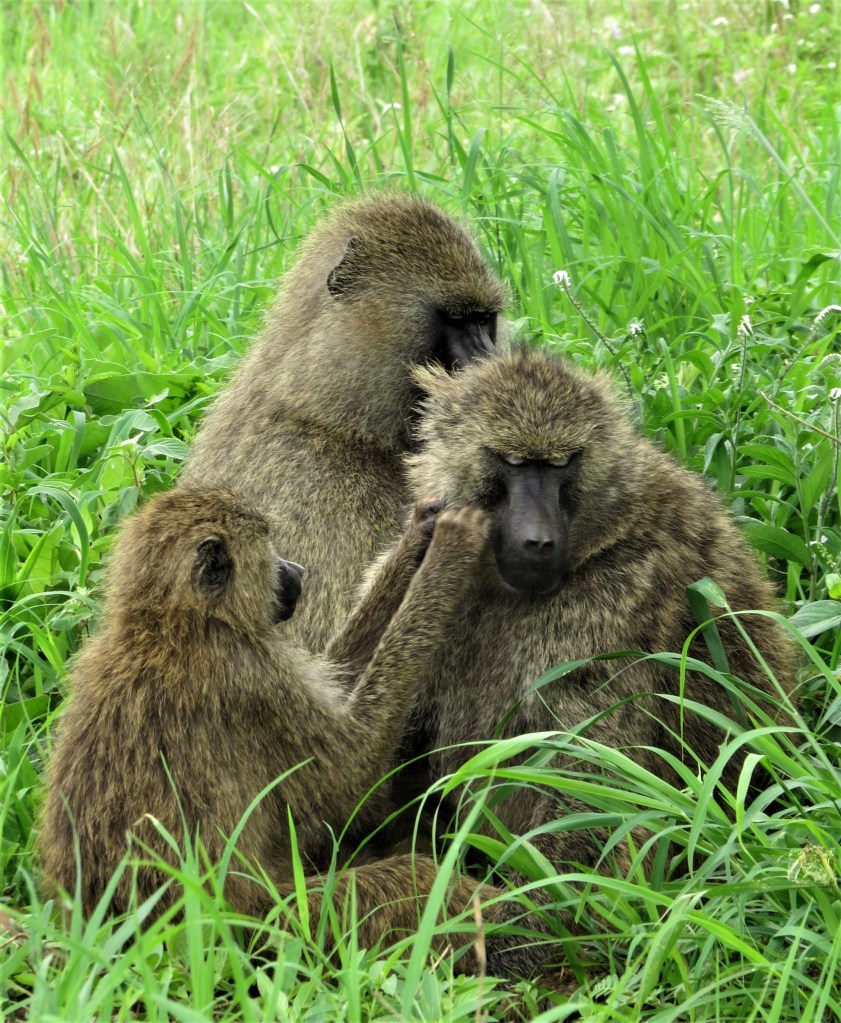
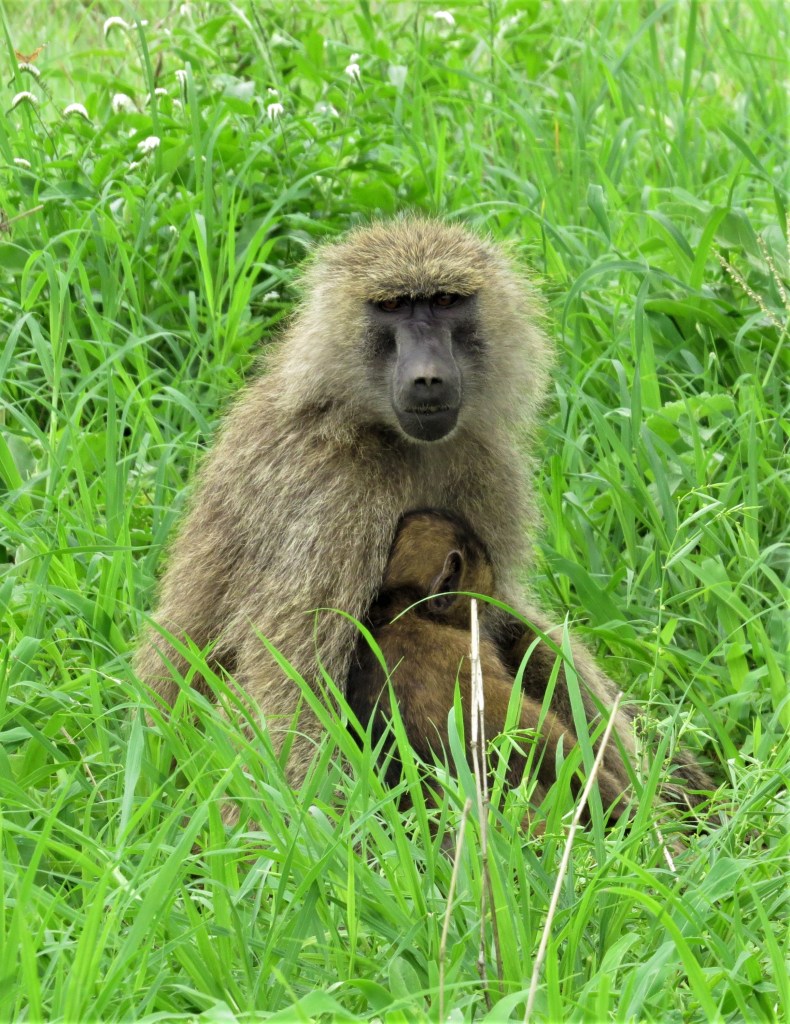
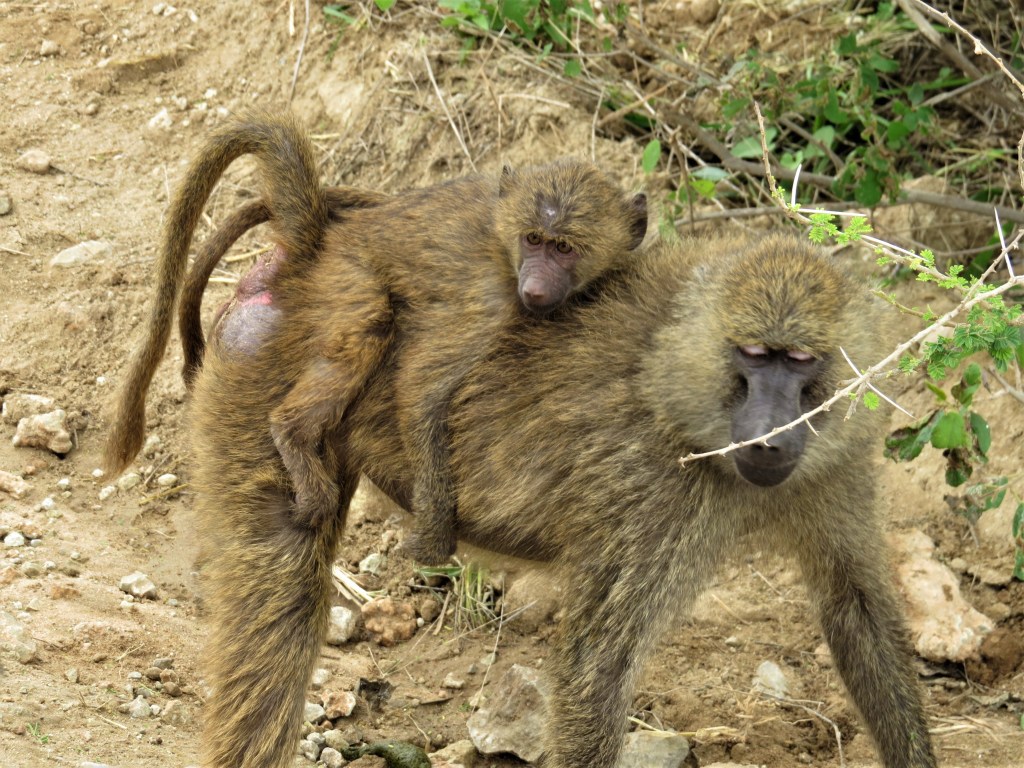
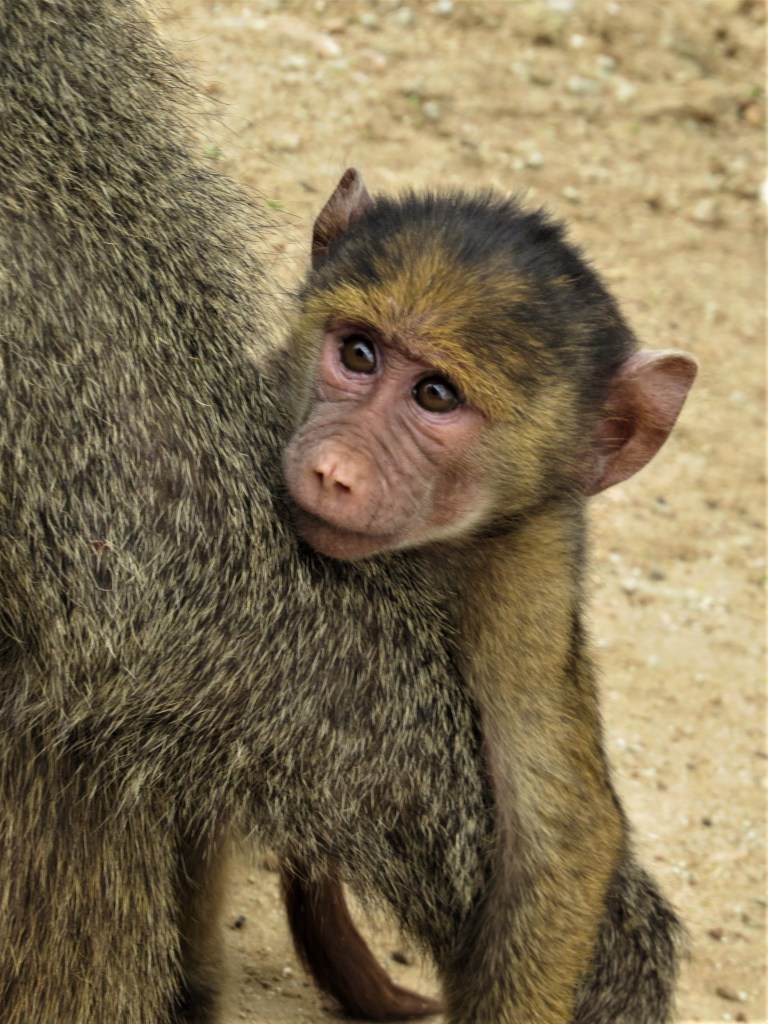
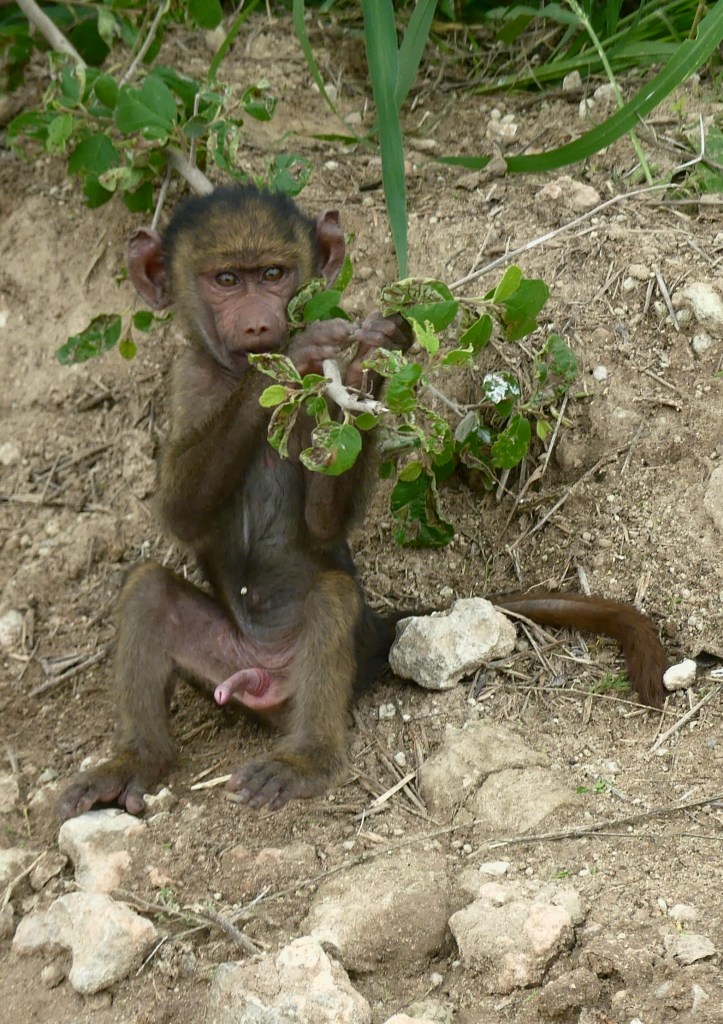
The baboons were busy grooming, nursing, cuddling and showing us their various parts. Like the Ngorongoro Crater we stayed on the dirt roads and these baboons were on the road as we headed south to our camp. We did see other vehicles and stopped along the road observing herds of elephants. We arrived at a terraced picnic area called Matete which is an area overlooking the river that had some shade and picnic tables to enjoy the view. That area was “rare” with toilets available. After our lunch break we descend toward the river for a change of perspective driving toward the southern part of the park, where the marshy area known as Silale (Silale swamp) shows quite a different vista across to volcanic rocks in the distance. Our new camp was awaiting us…Osunyai Lamarkau. But there were birds along the way…
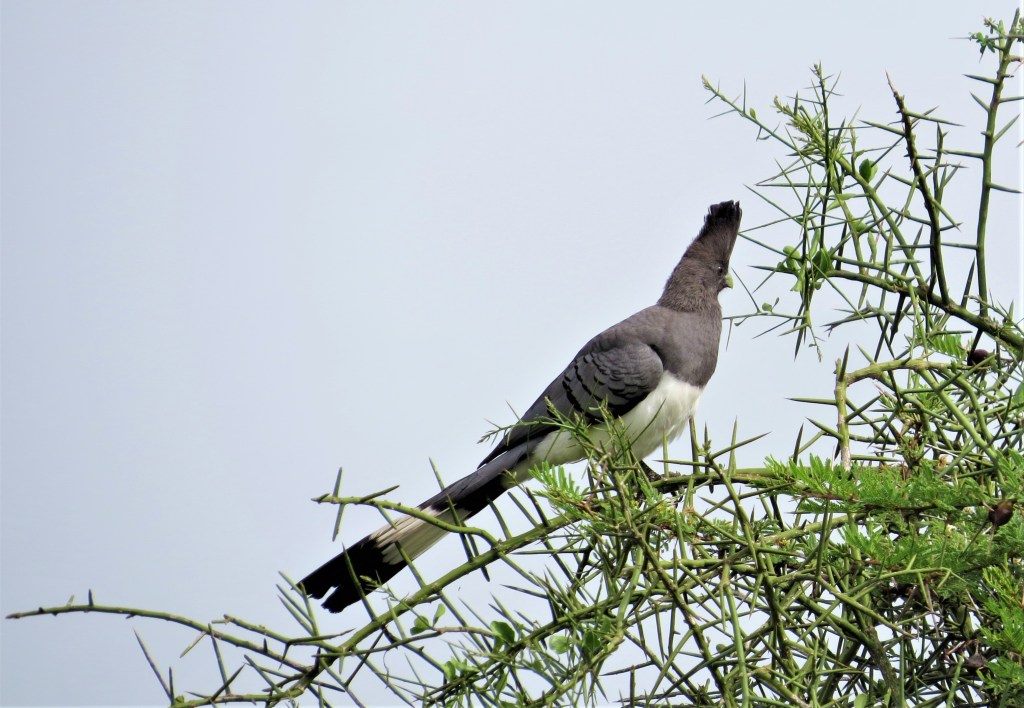
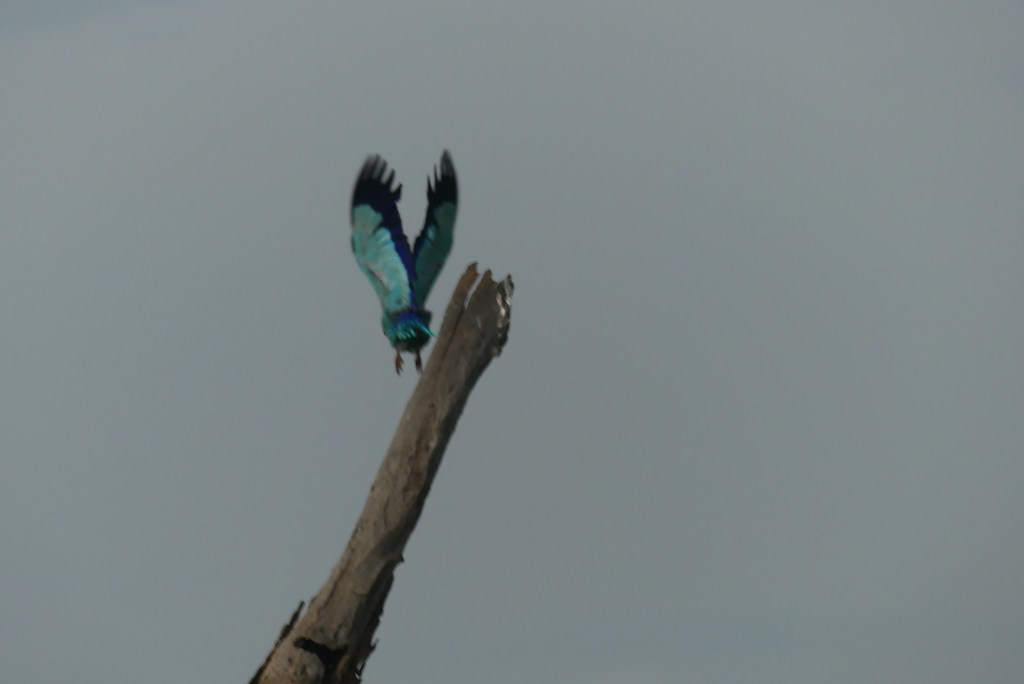
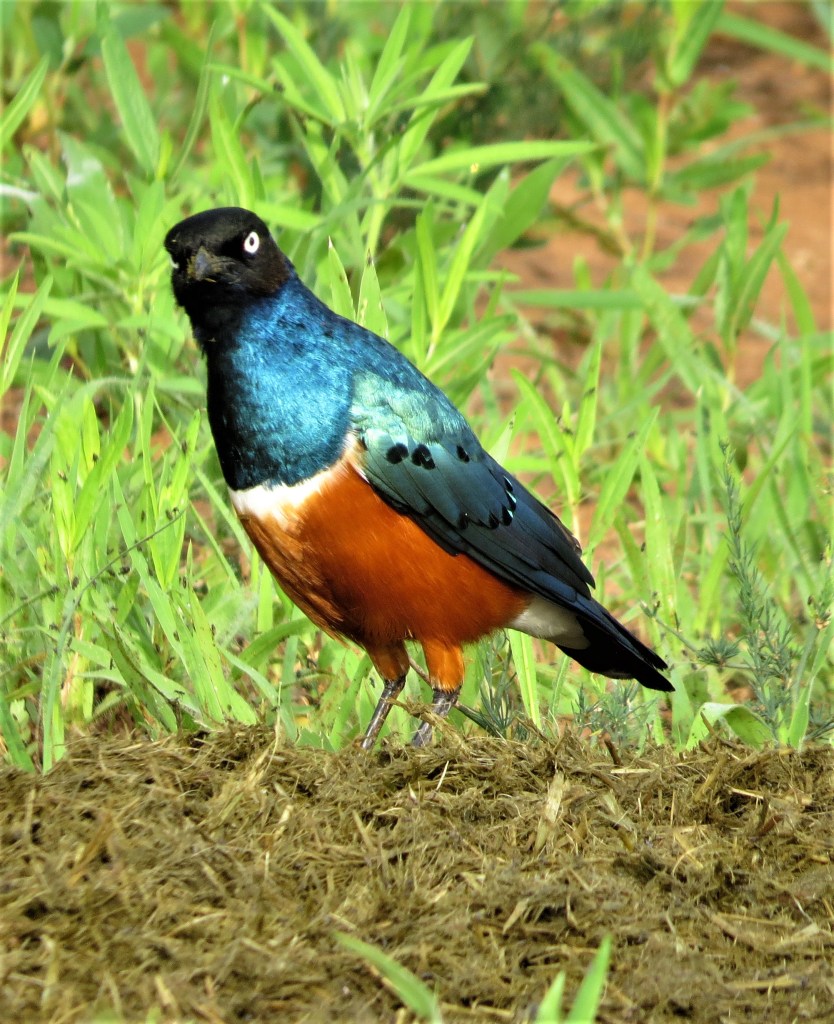
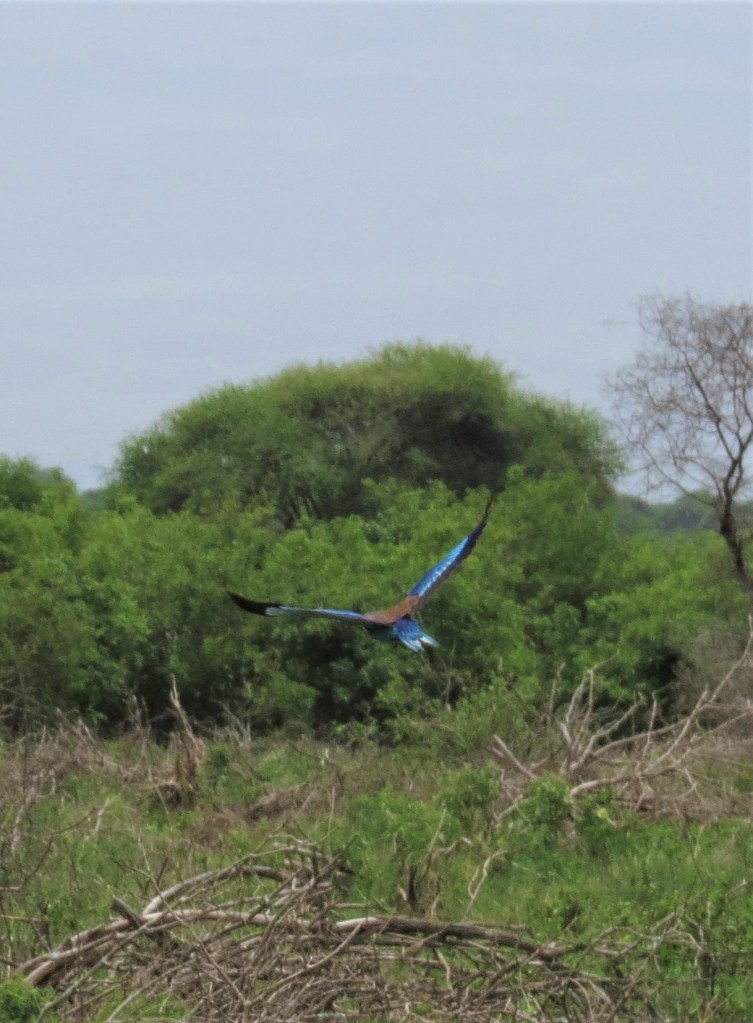
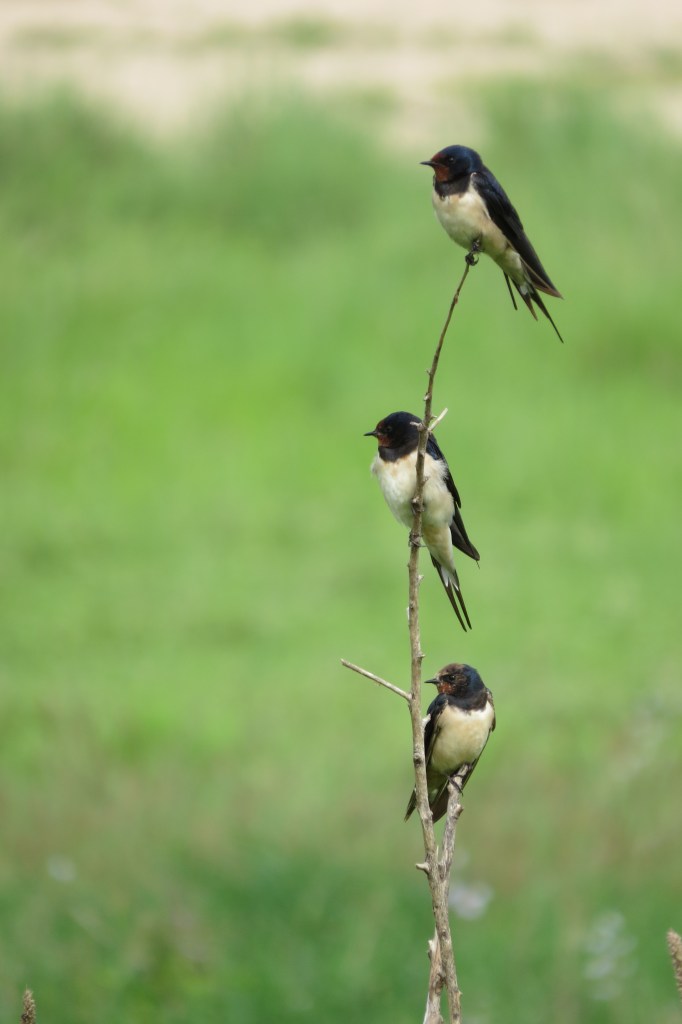
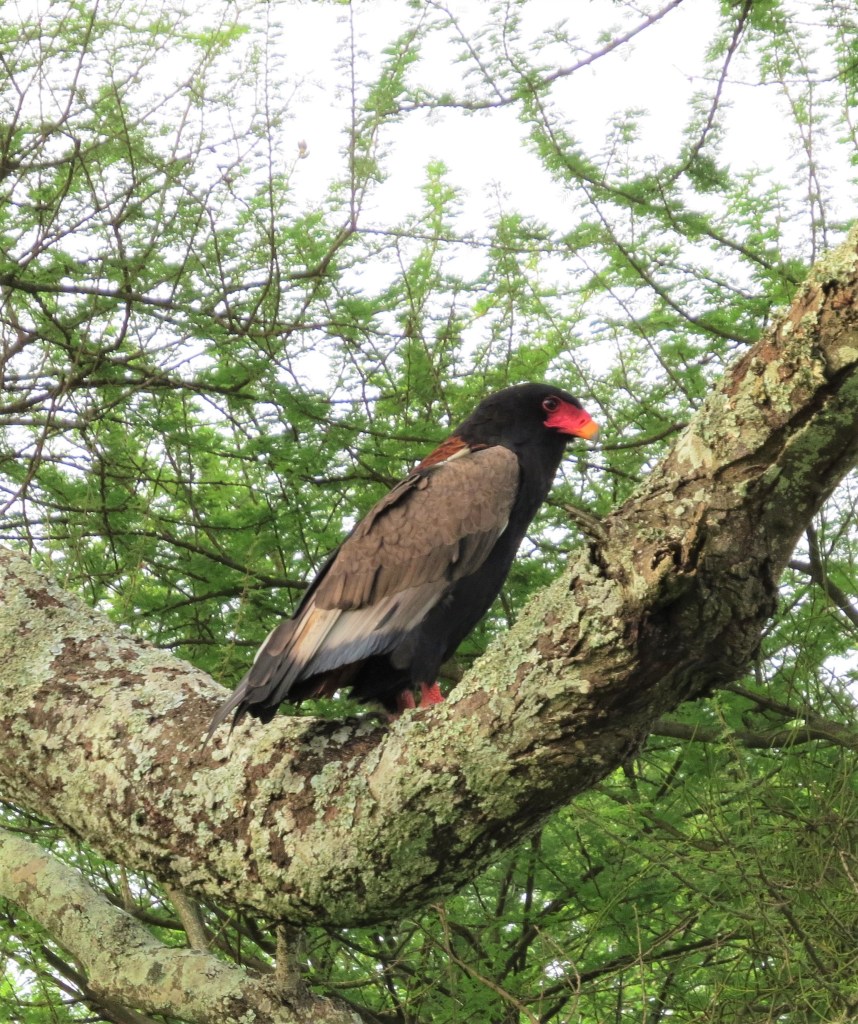
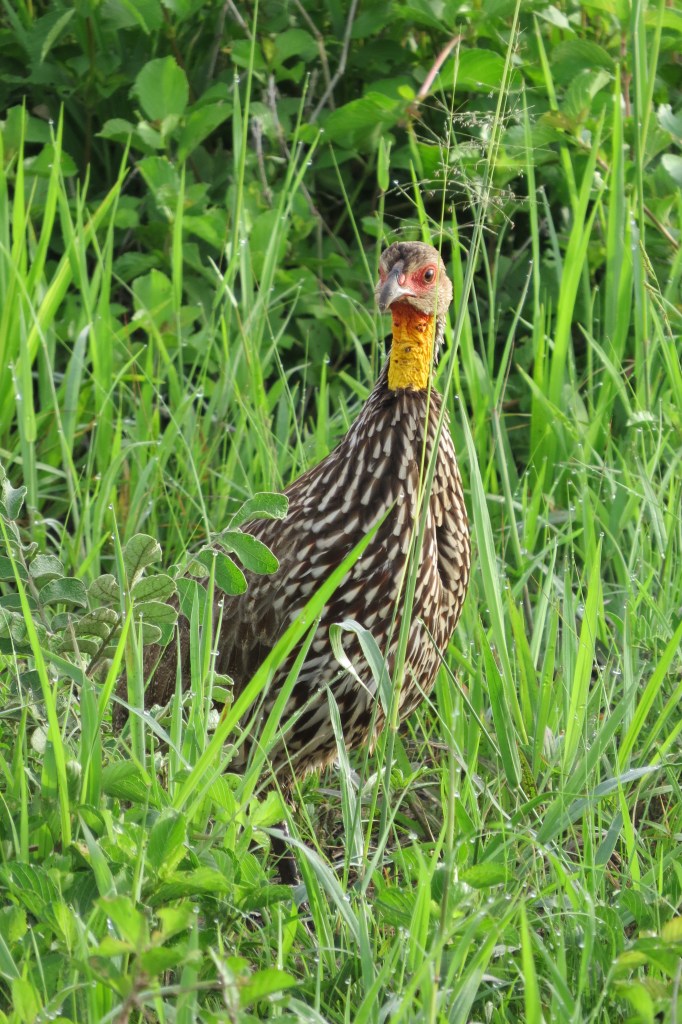
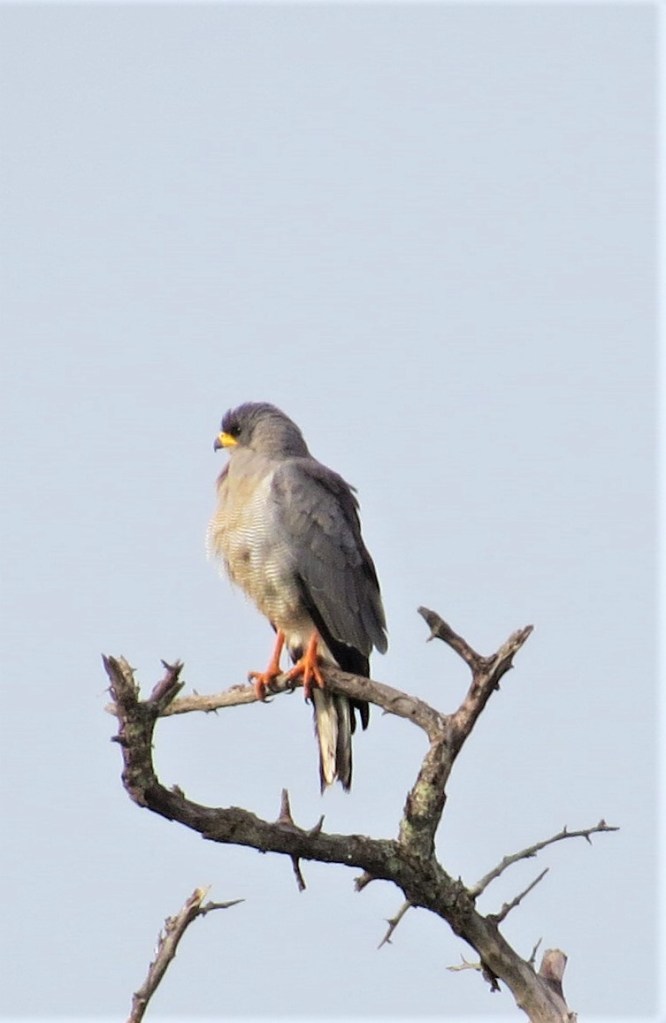
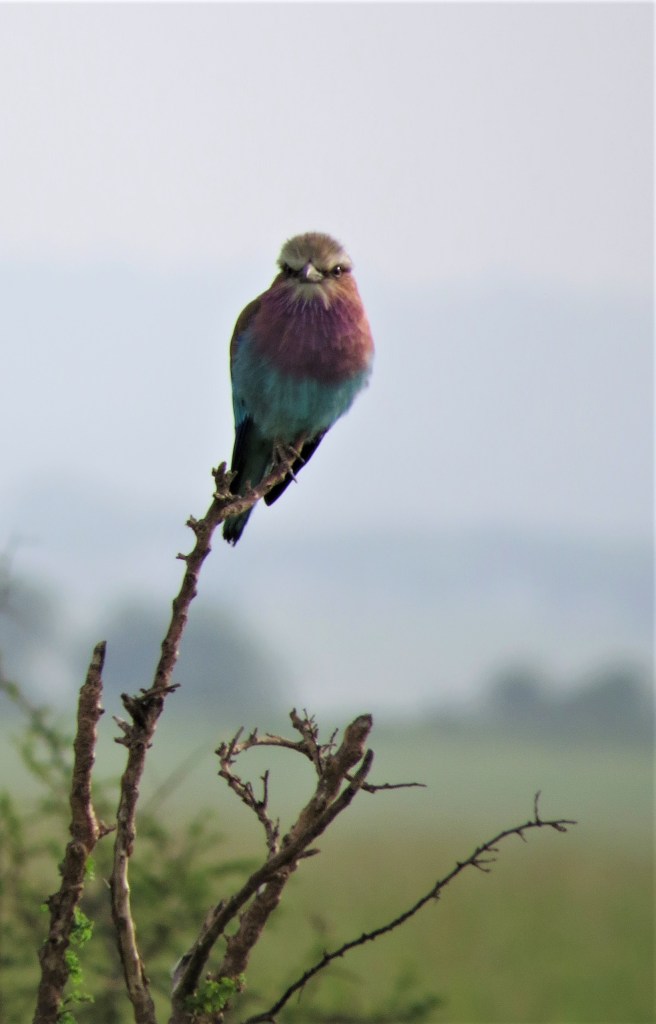
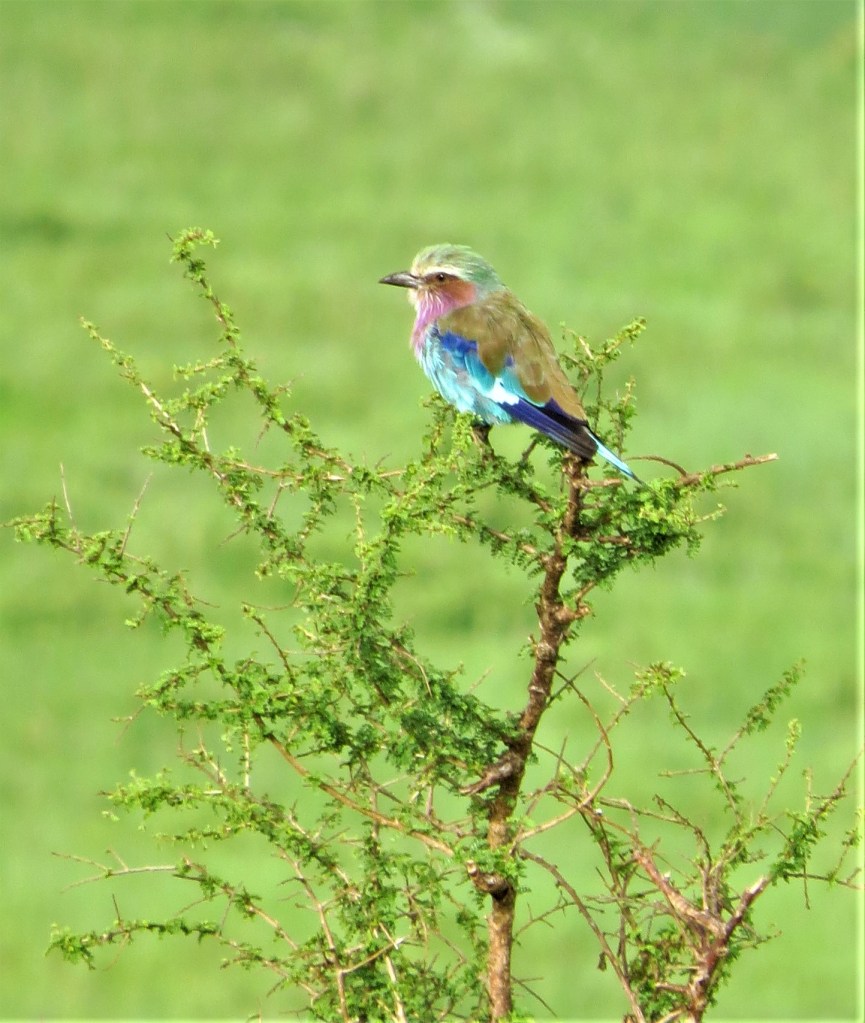
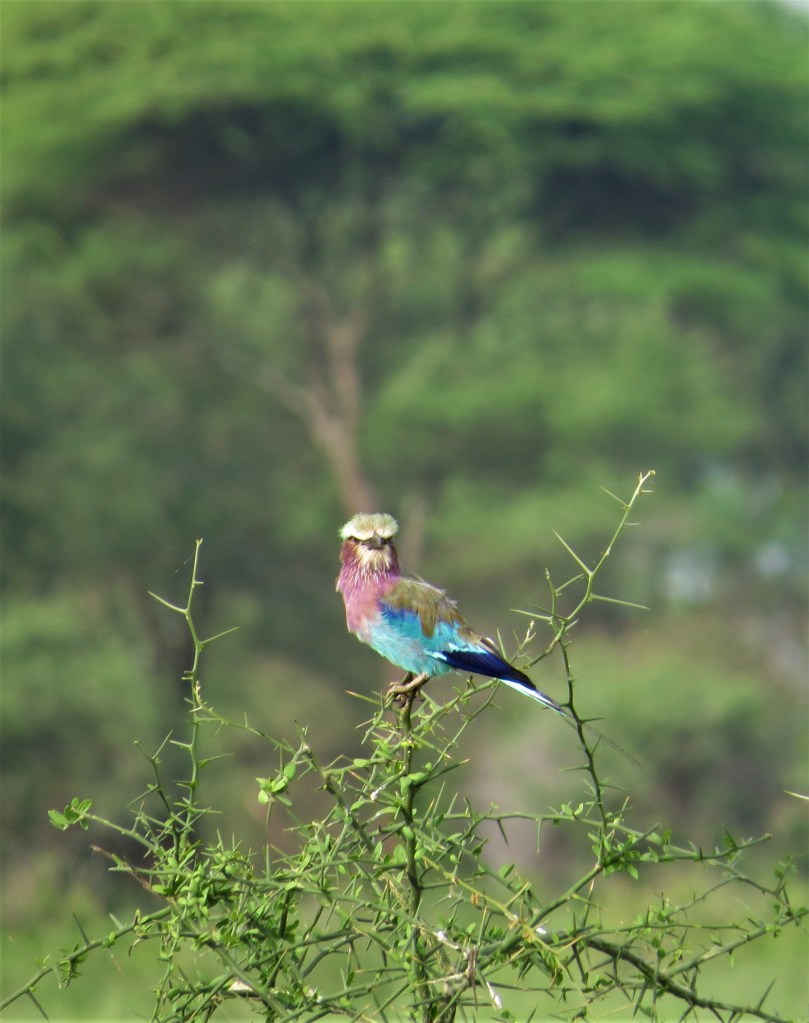
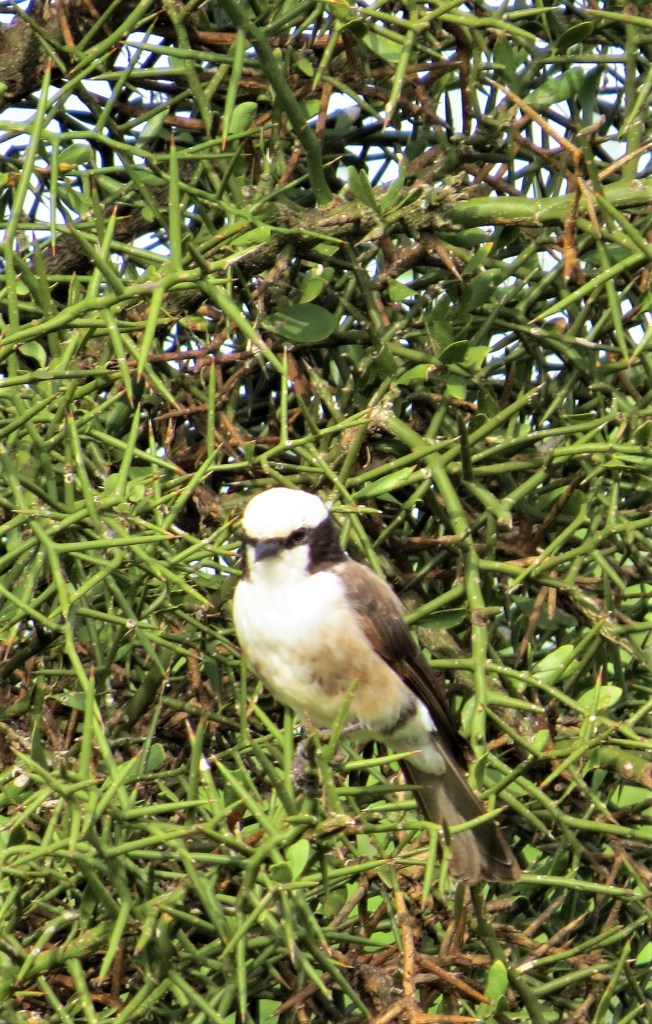
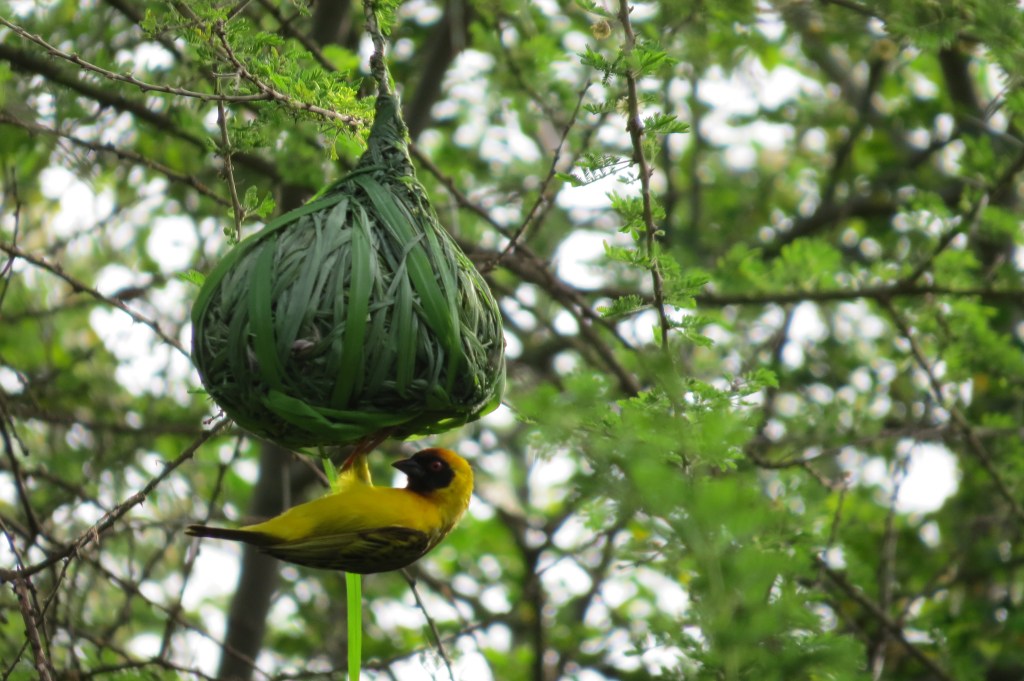
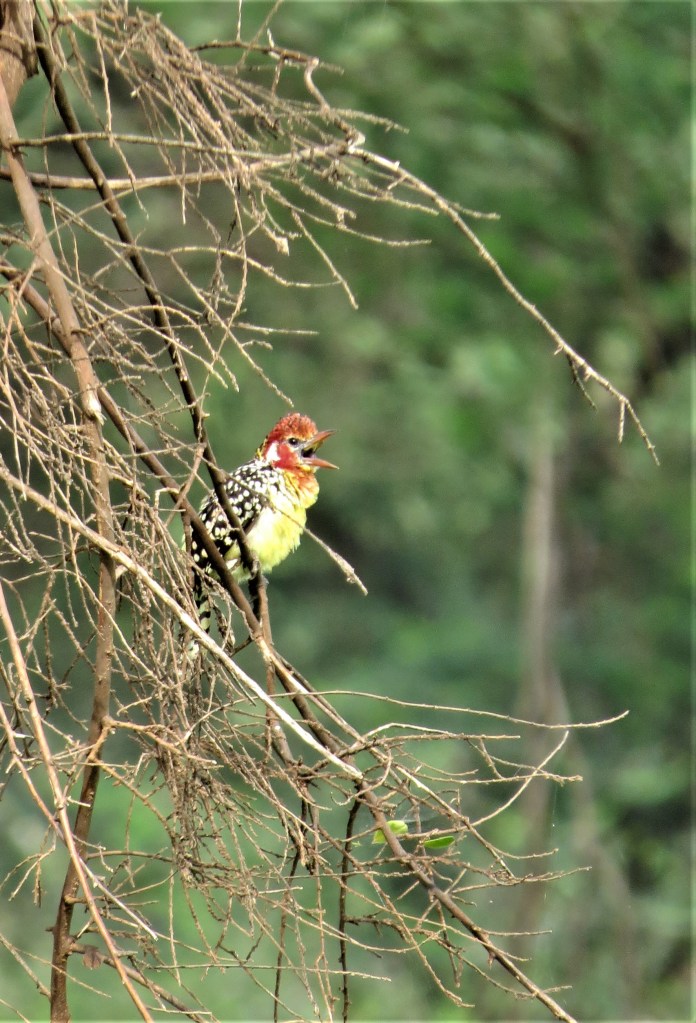
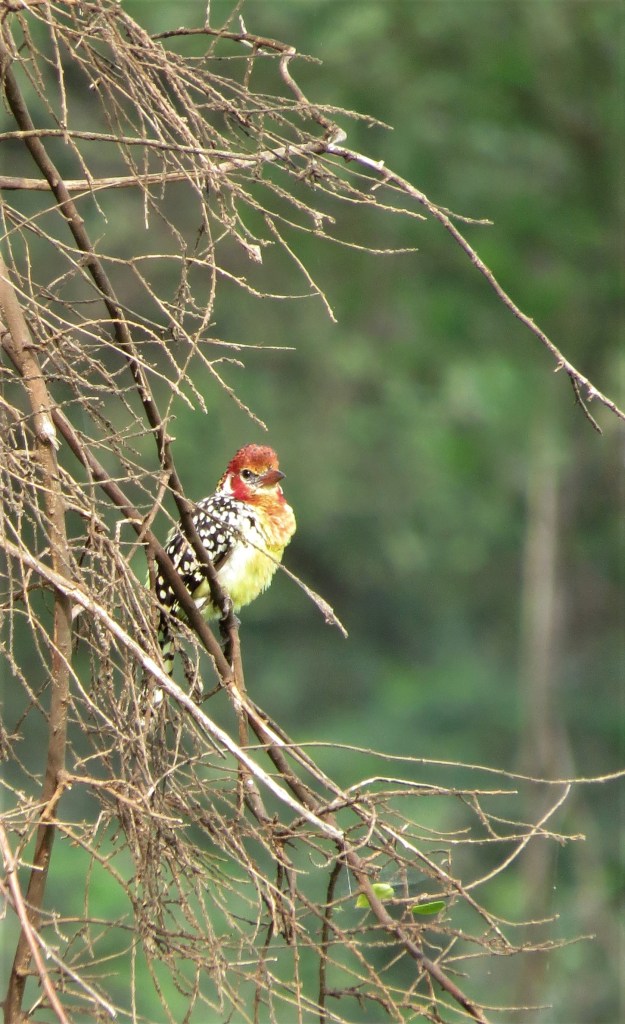
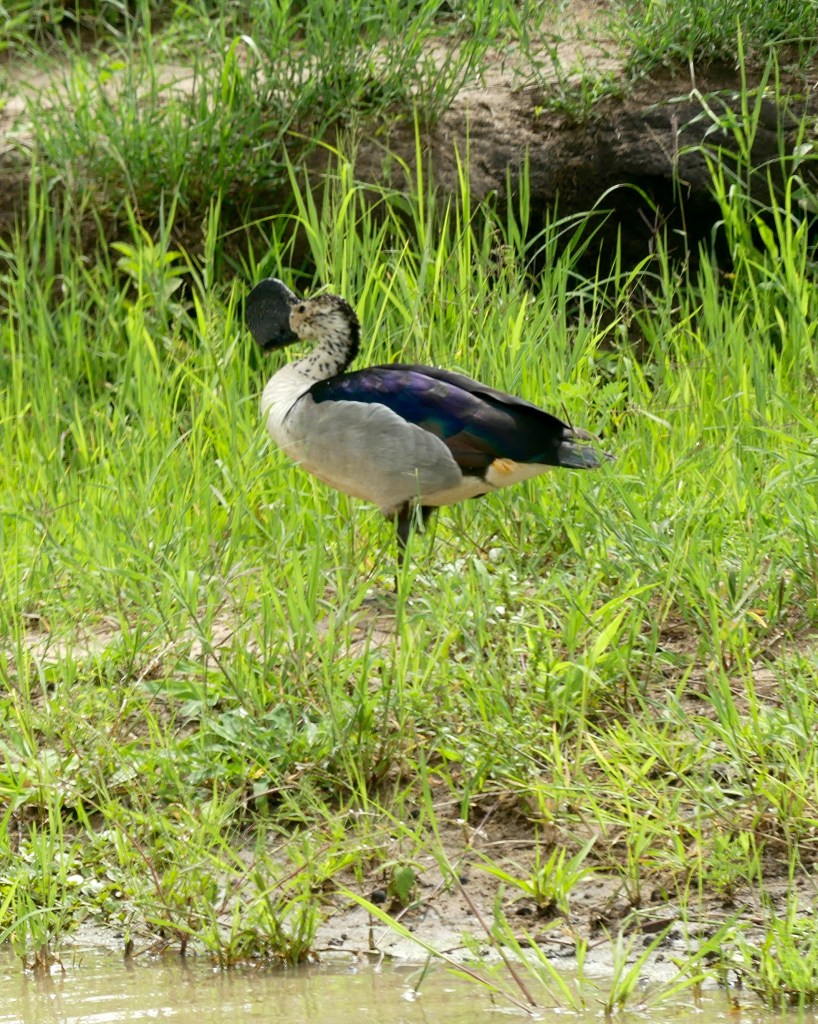
Birds birds and many more birds. Larkin did a great job of taking many of their portraits. White-bellied go-away-bird, Eastern Chanting Goswhawk, Vitalline masked weaver on her green woven nest, Northern White-crowned shrike, superb starling, red and yellow barbet, lilac-breasted Roller, yellow-necked Spurfowl, knobbed billed duck.
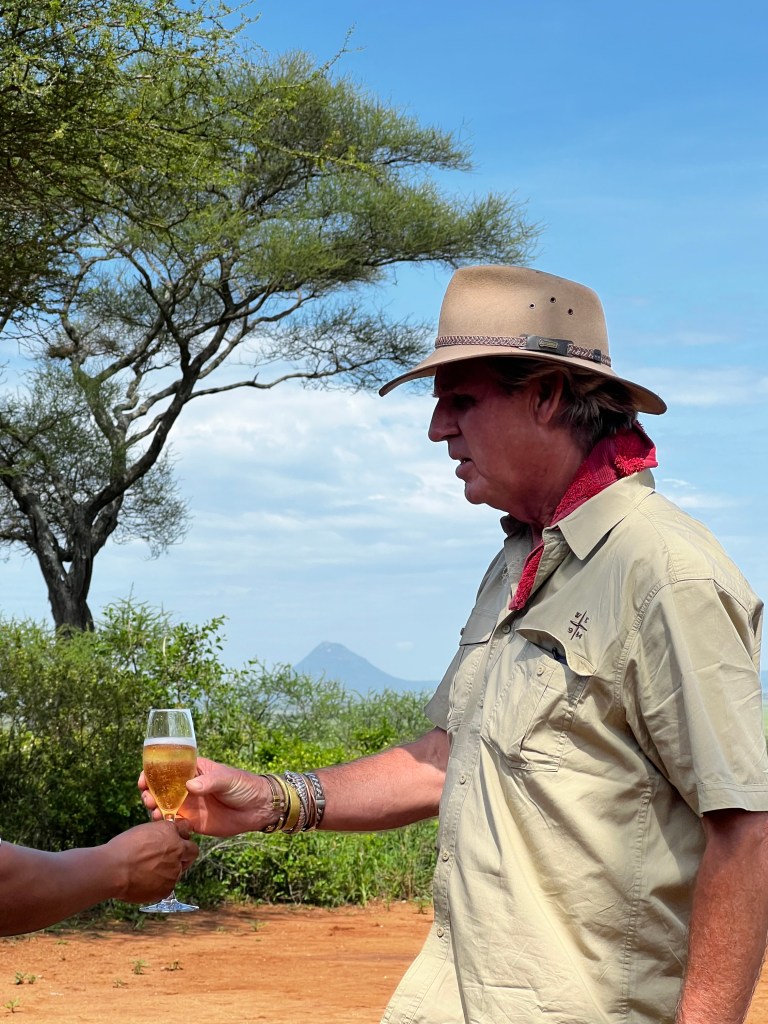
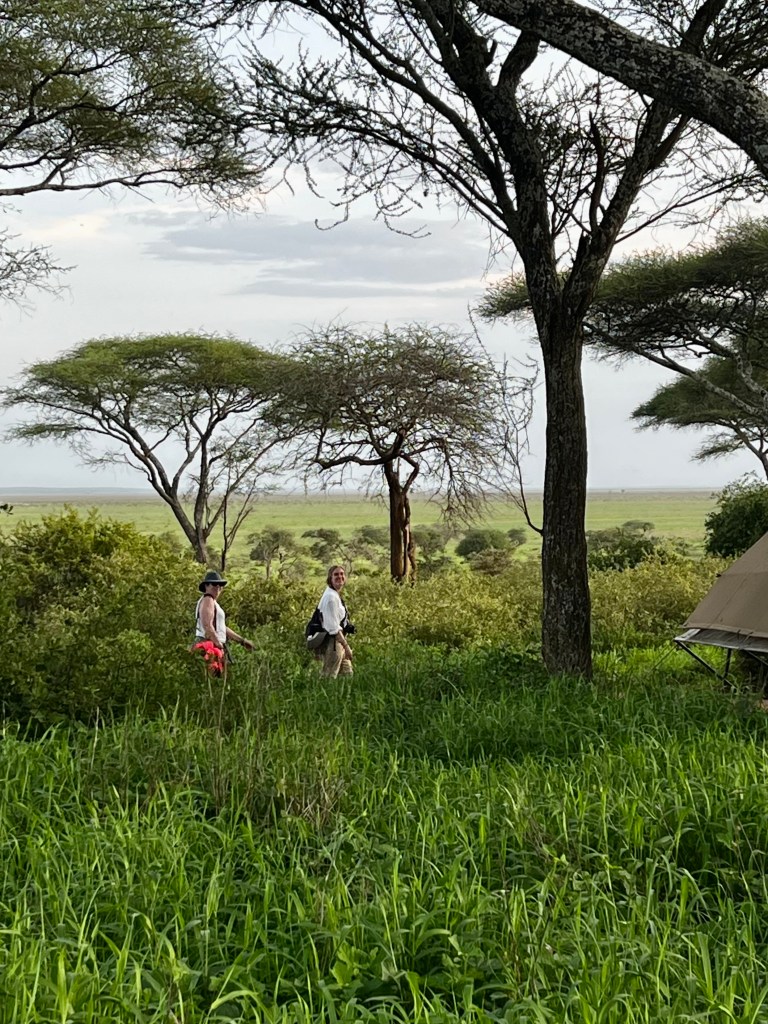
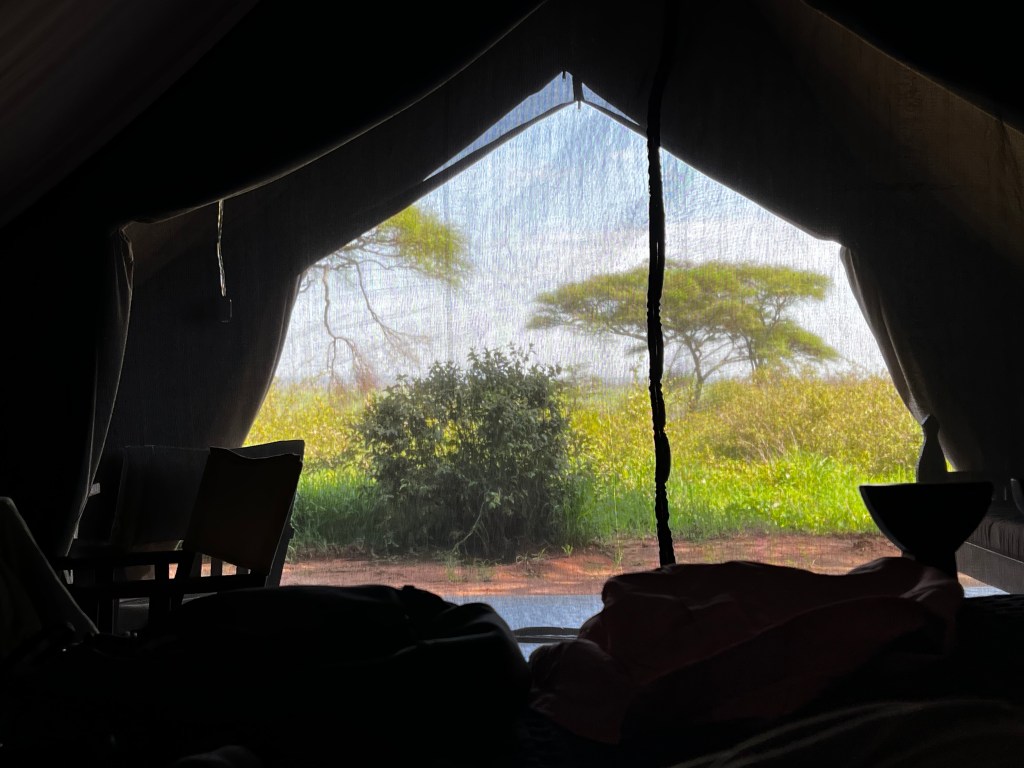
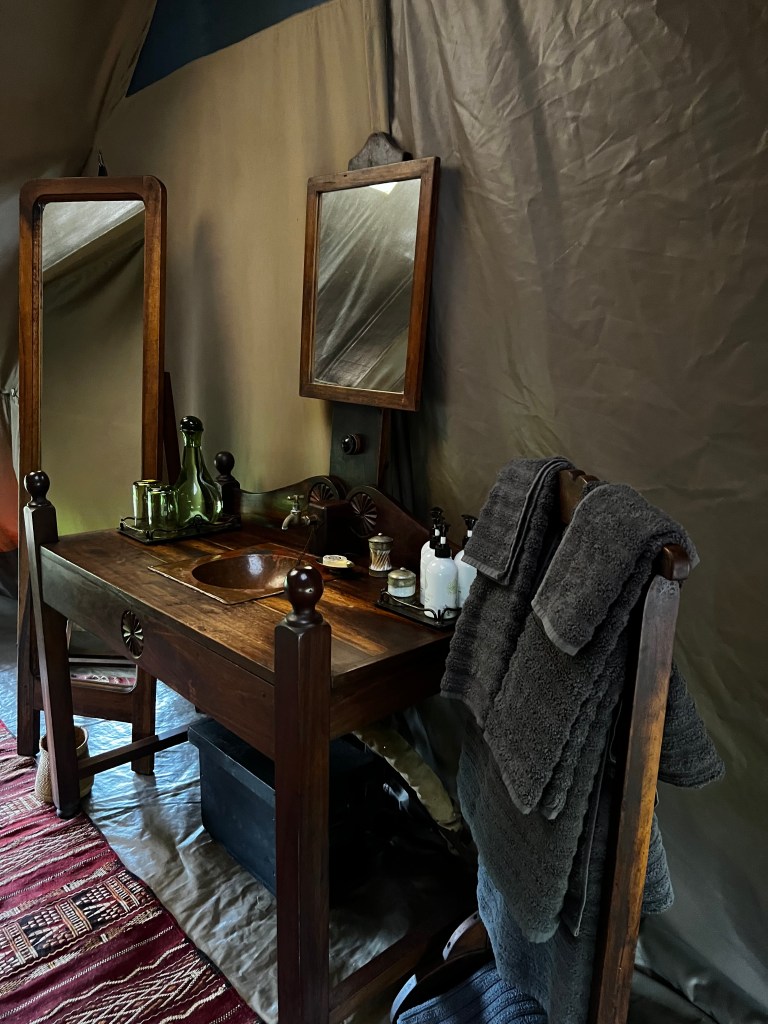
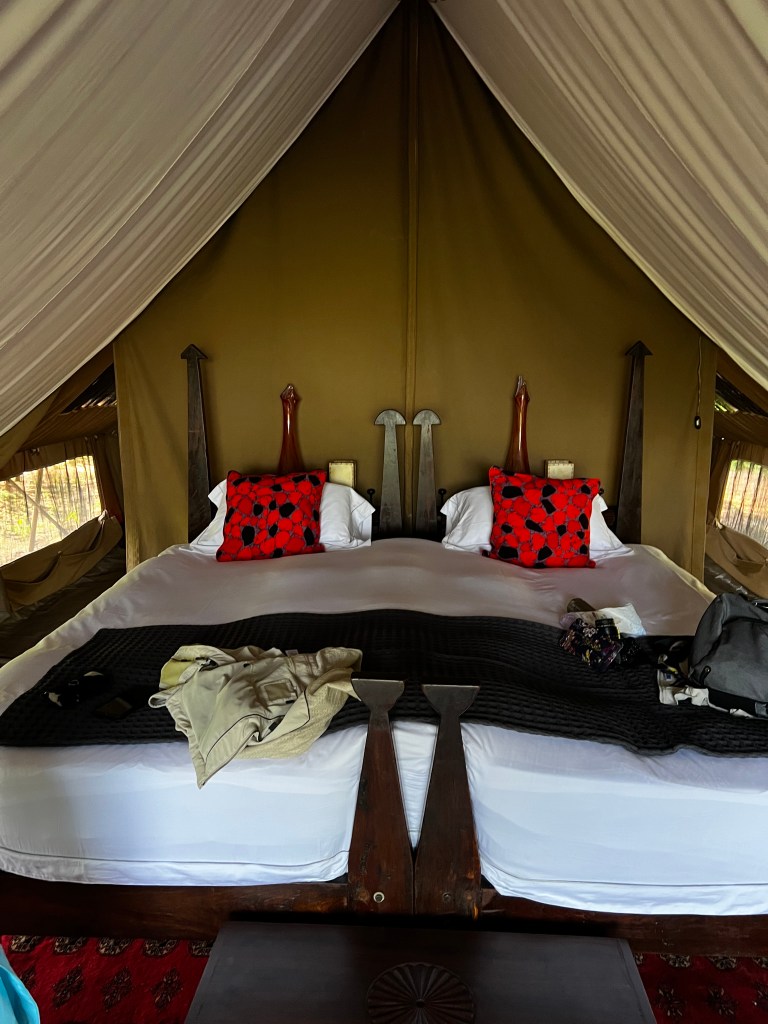
More visions across the landscape including baobab trees and acacia’s. Gary enjoying a nice glass of sparkling wine as we arrived in camp. Larkin and Jess heading to their tent which was just before ours. They had a nice tall termite mound which helped Michael and I realize the next tent was ours. They do all look the same – with incredible views looking out on the park. These tents were slightly more angular so we had to duck our heads to get in the the bathroom area but it also had a screened in veranda.
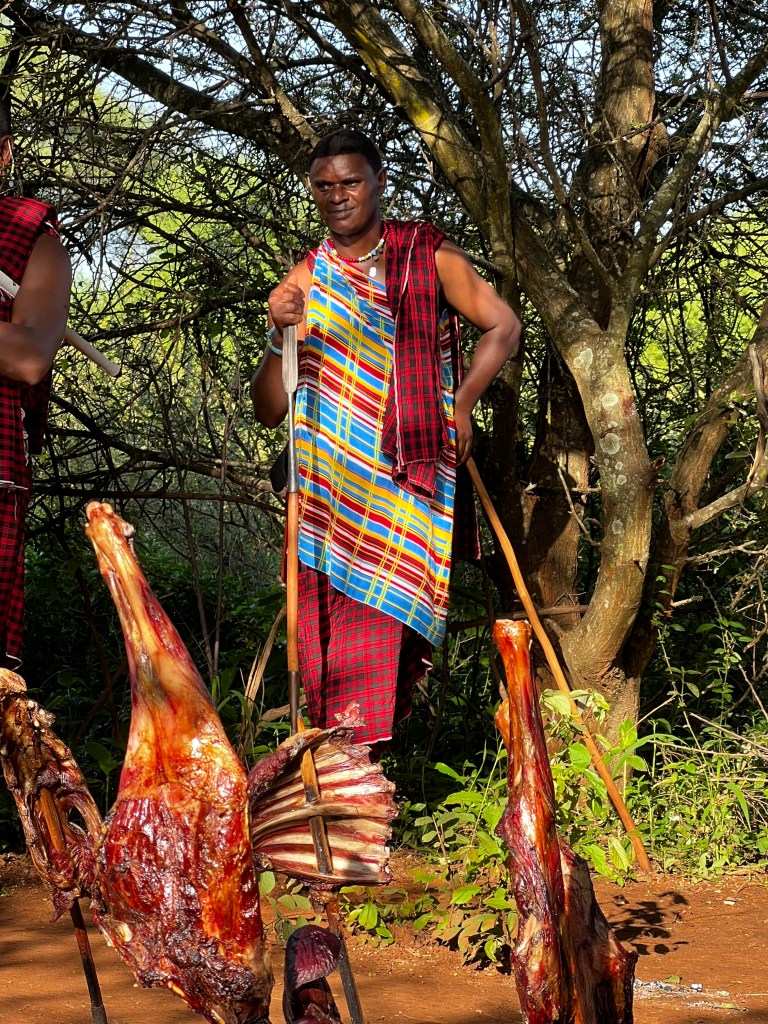
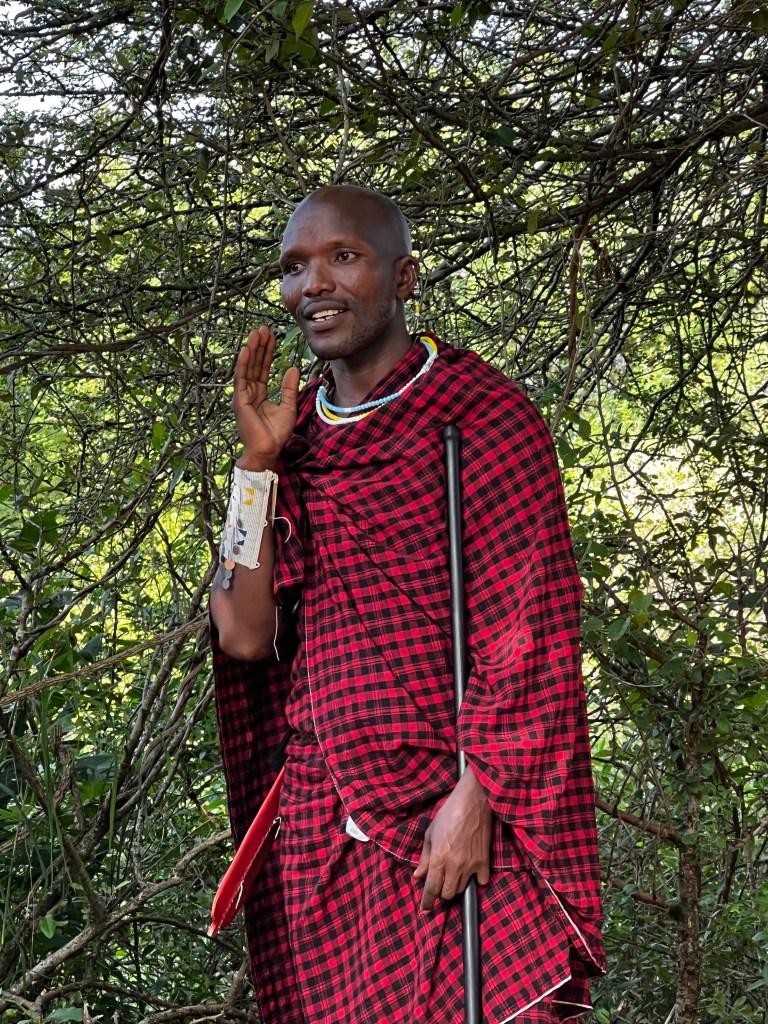
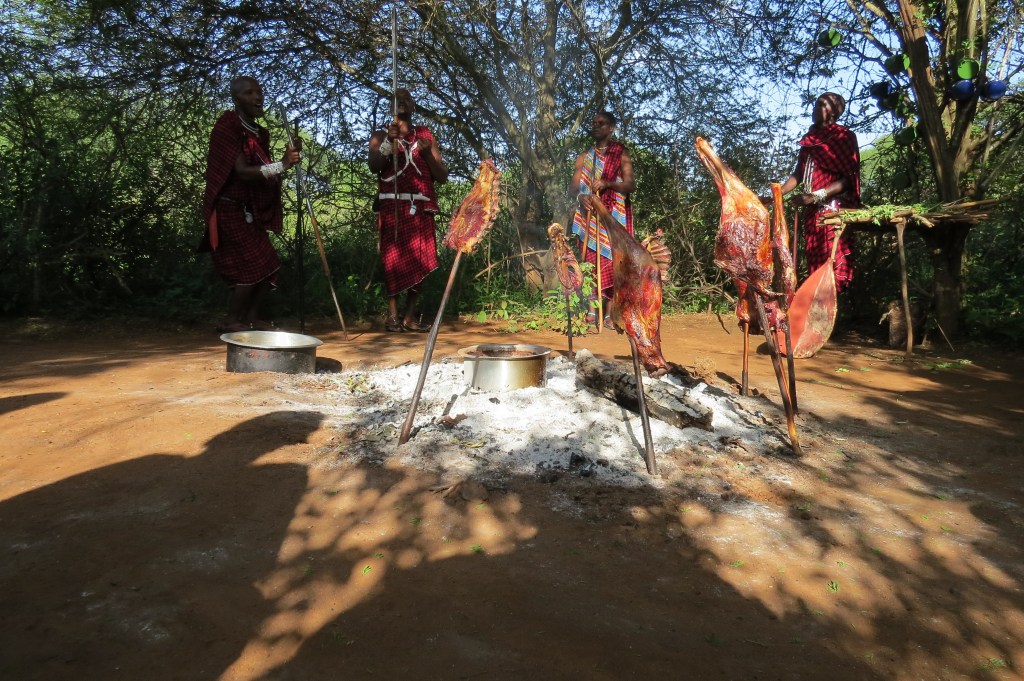
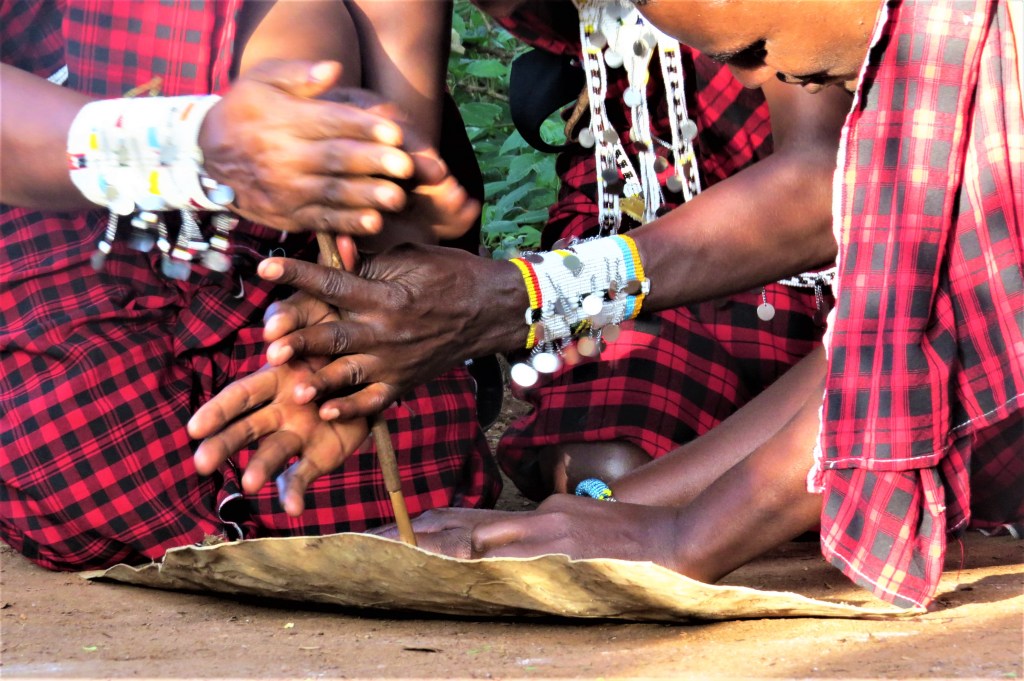
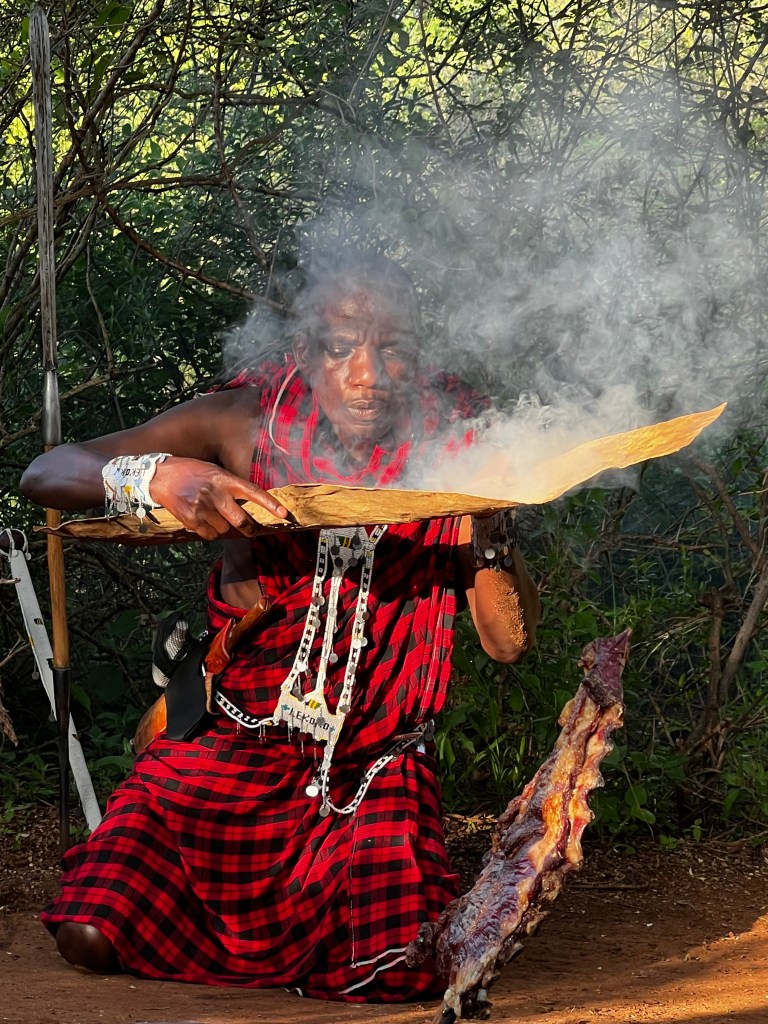
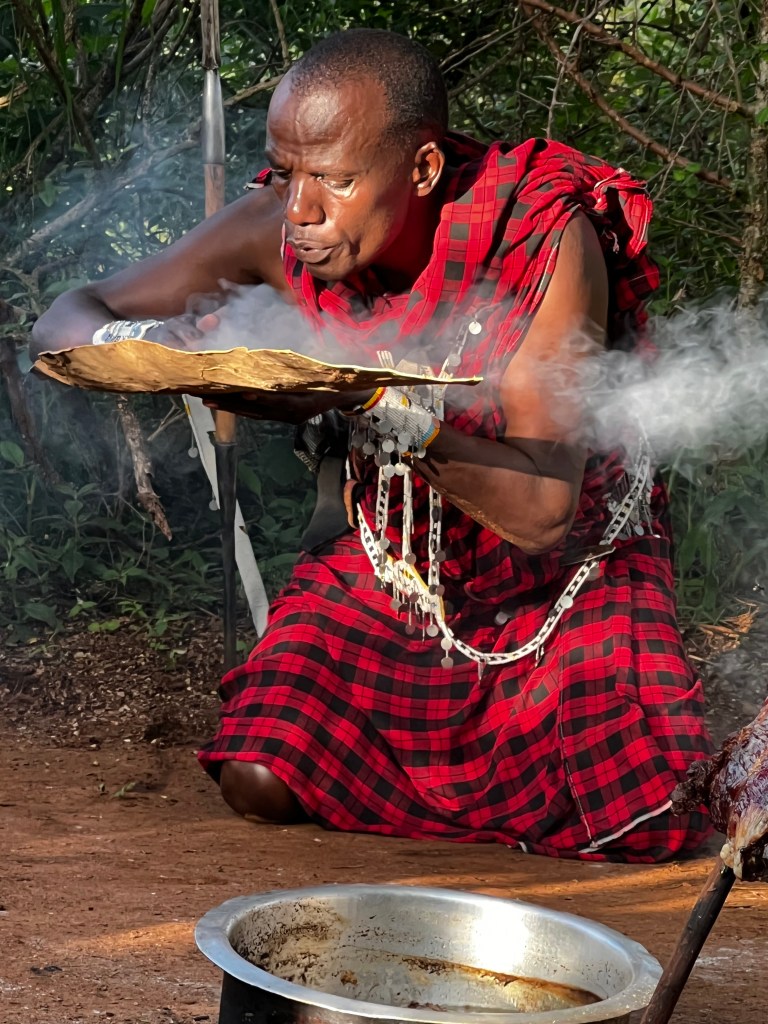
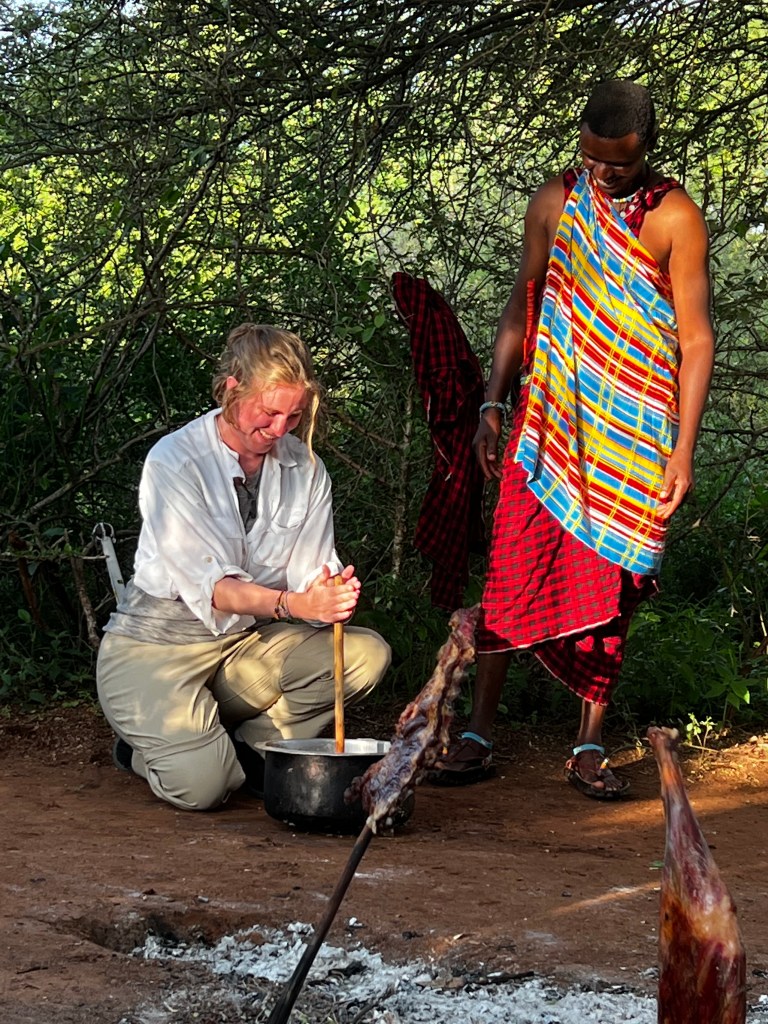
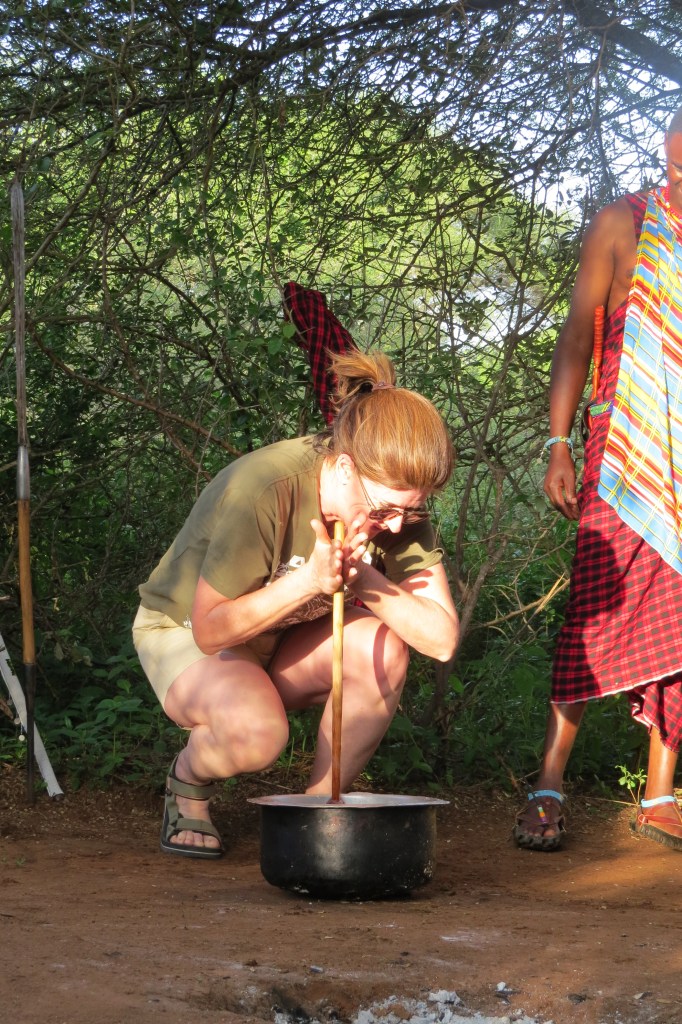
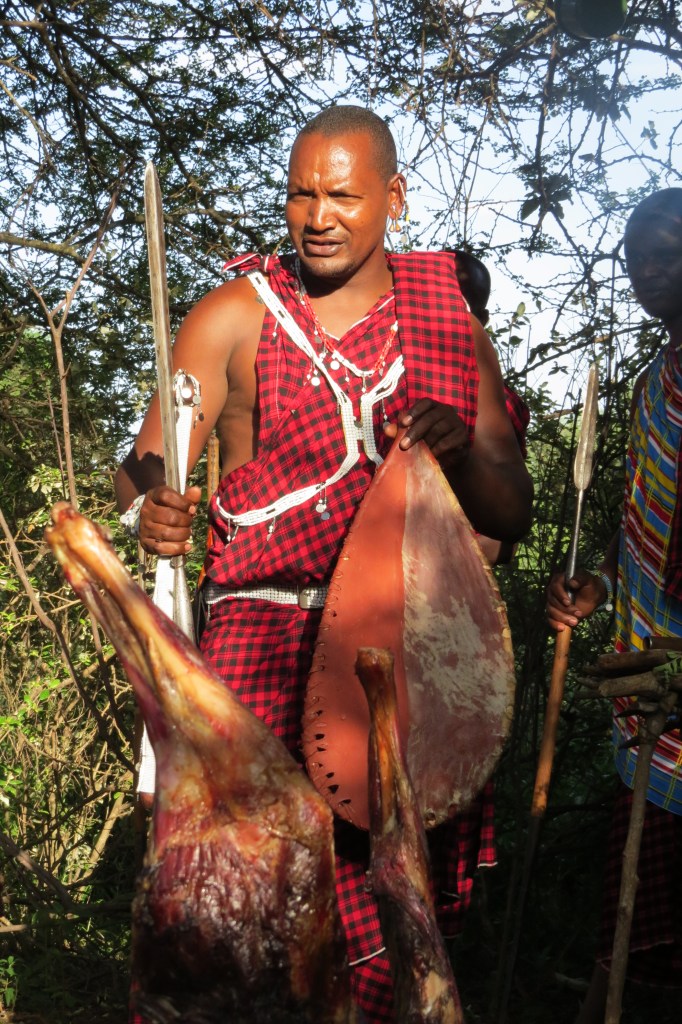
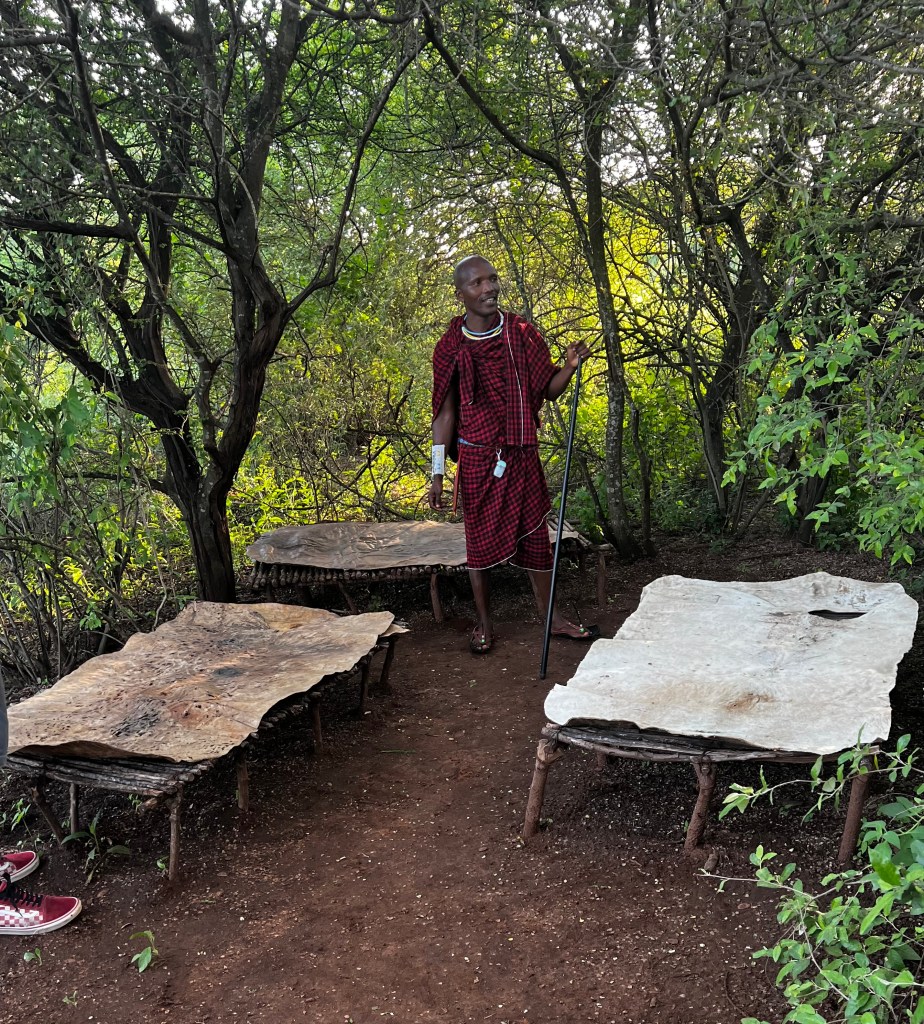
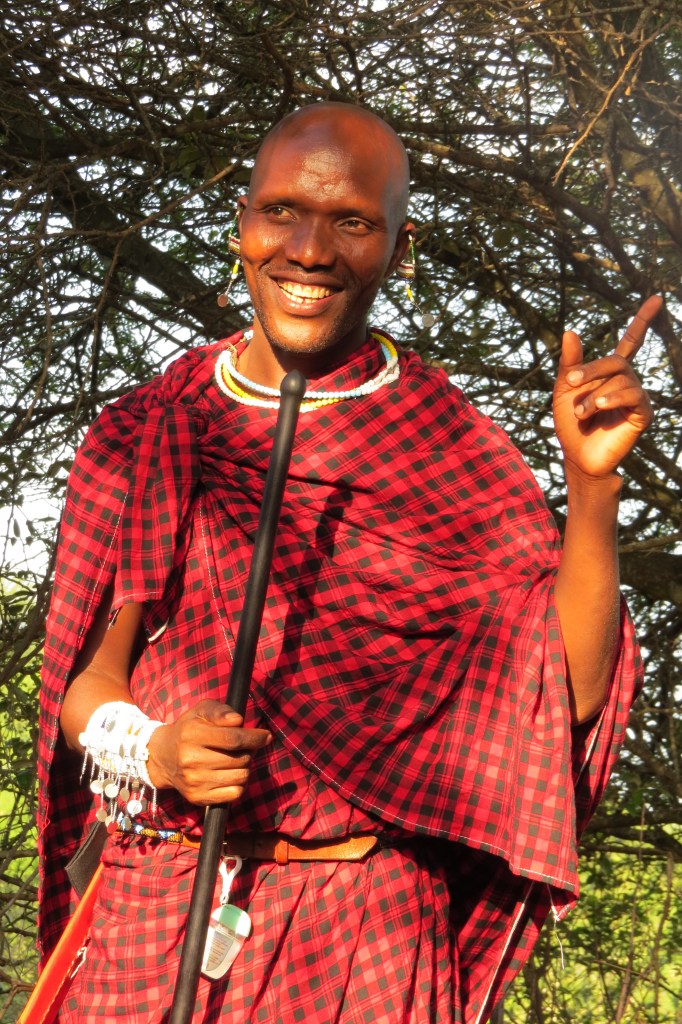
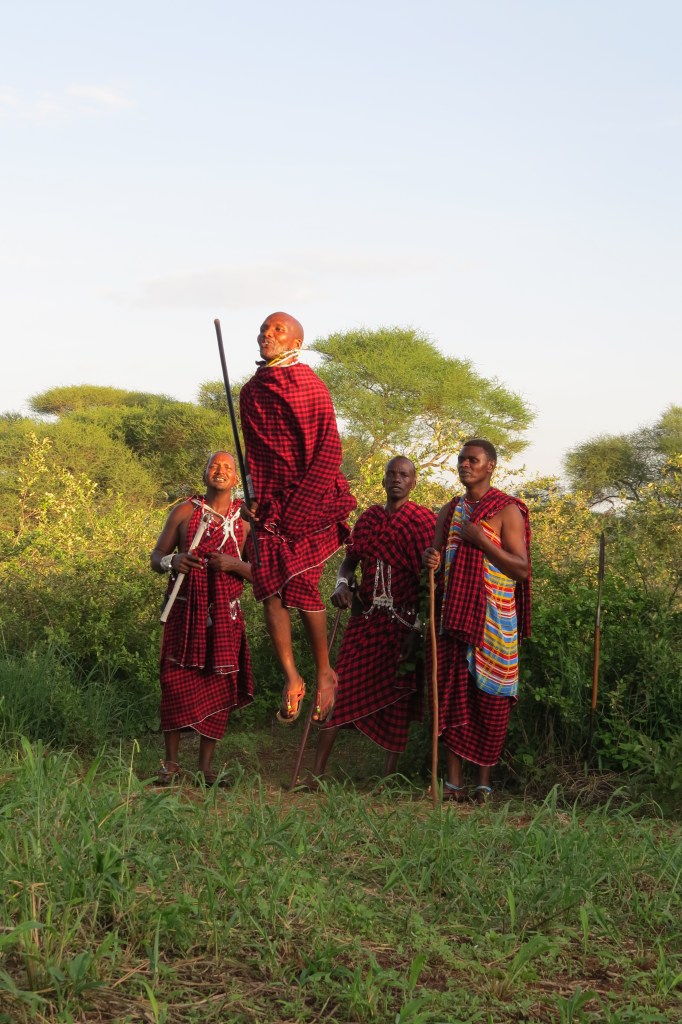
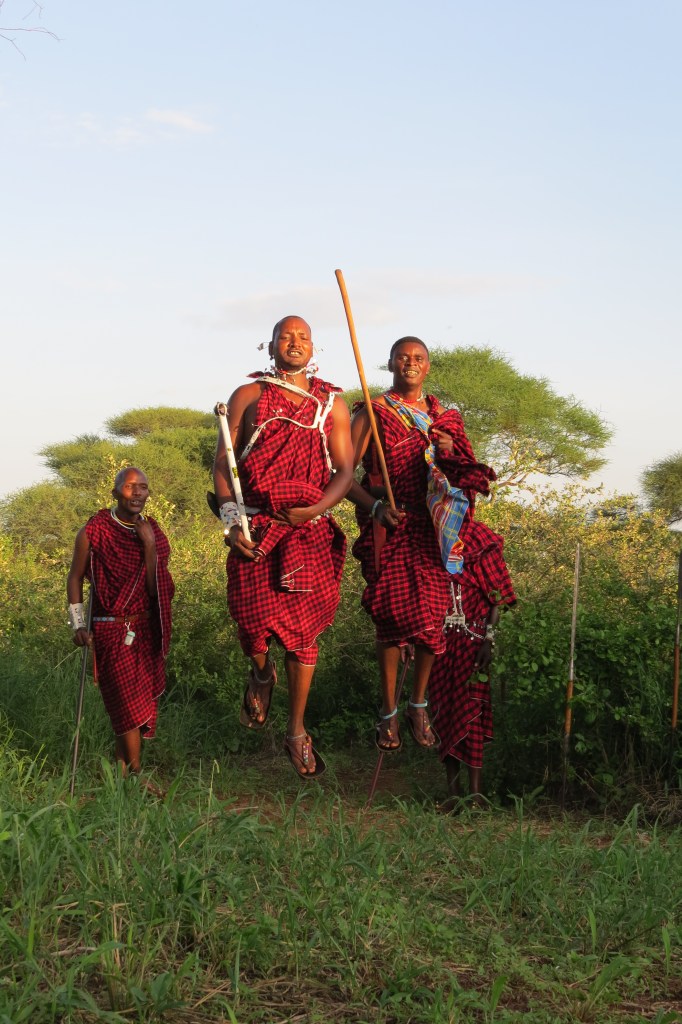
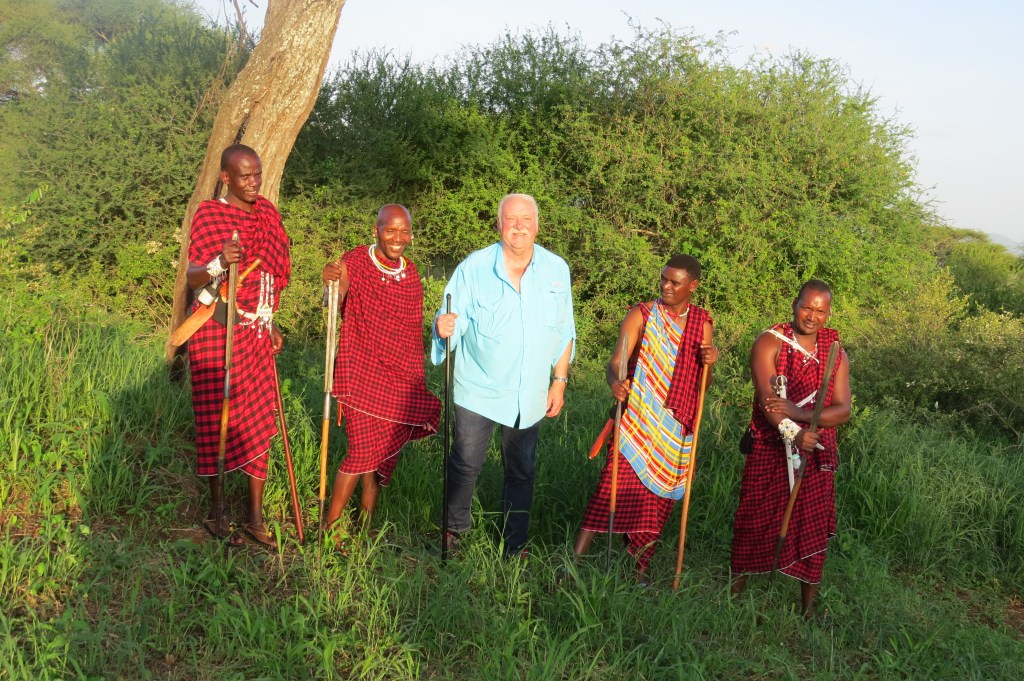
When we were settled into our tent we were hosted by the Maasai team to have an experience of the traditional Olpul. The team had been preparing goat for us all afternoon. Oh joy! We did taste it – my oh my, the goat stew might have been more tasty with longer prep time and more spices! However I did enjoy the goat ribs as it was more like jerky – the liver stayed on the board when it came by my location – not thanks. We were shown how they start fires and how to stir the soup properly. Within this Boma we were also shown their “cots” where they would traditionally sleep. Michael and Larkin took a walk to be shown the native plants that are used in traditional medicines. They also did a traditional dance – Maasai men can jump!
We were preparing for a goodnights sleep so we could get up to enjoy our very last night in the bush. We were sad knowing it was all coming to an end.
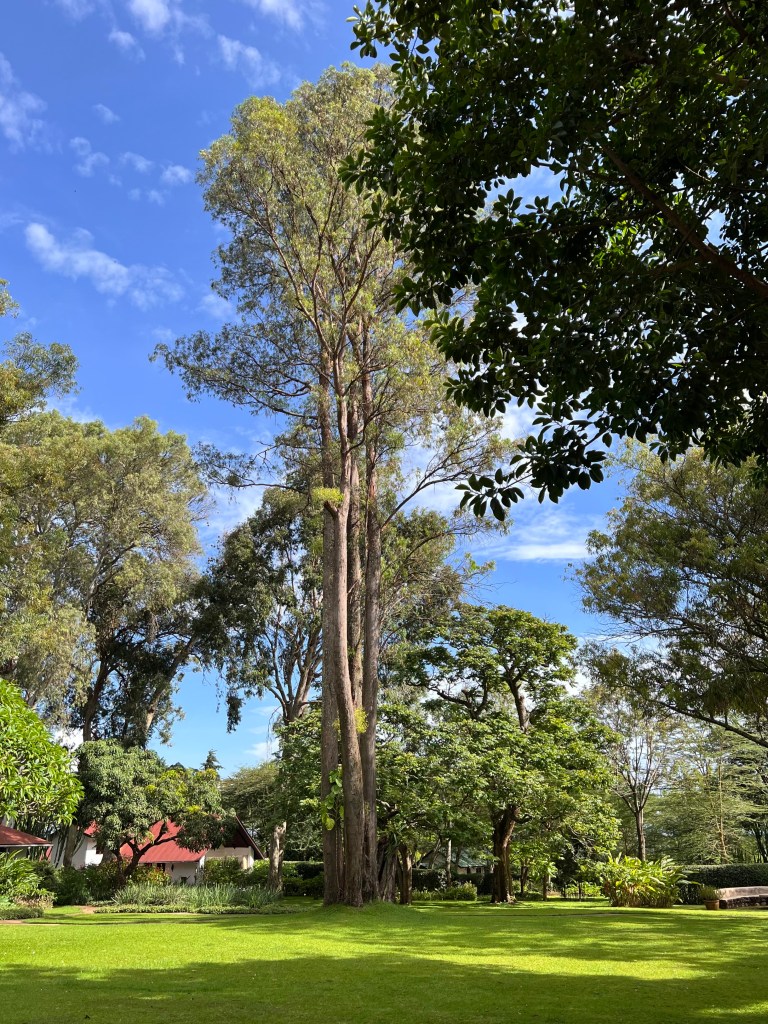
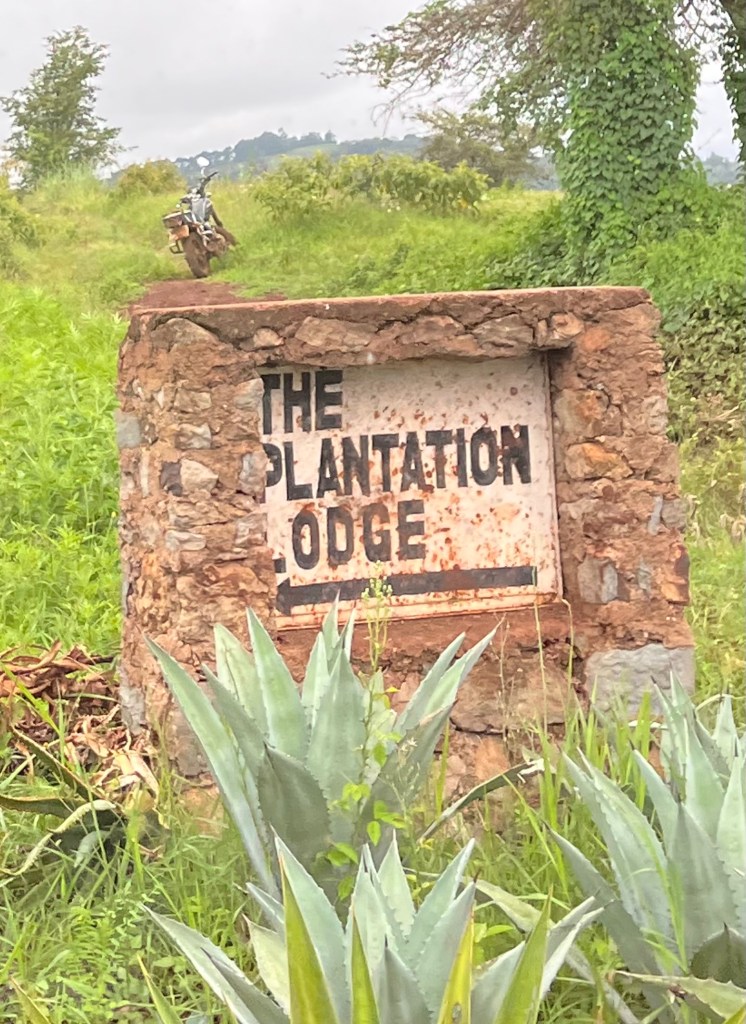
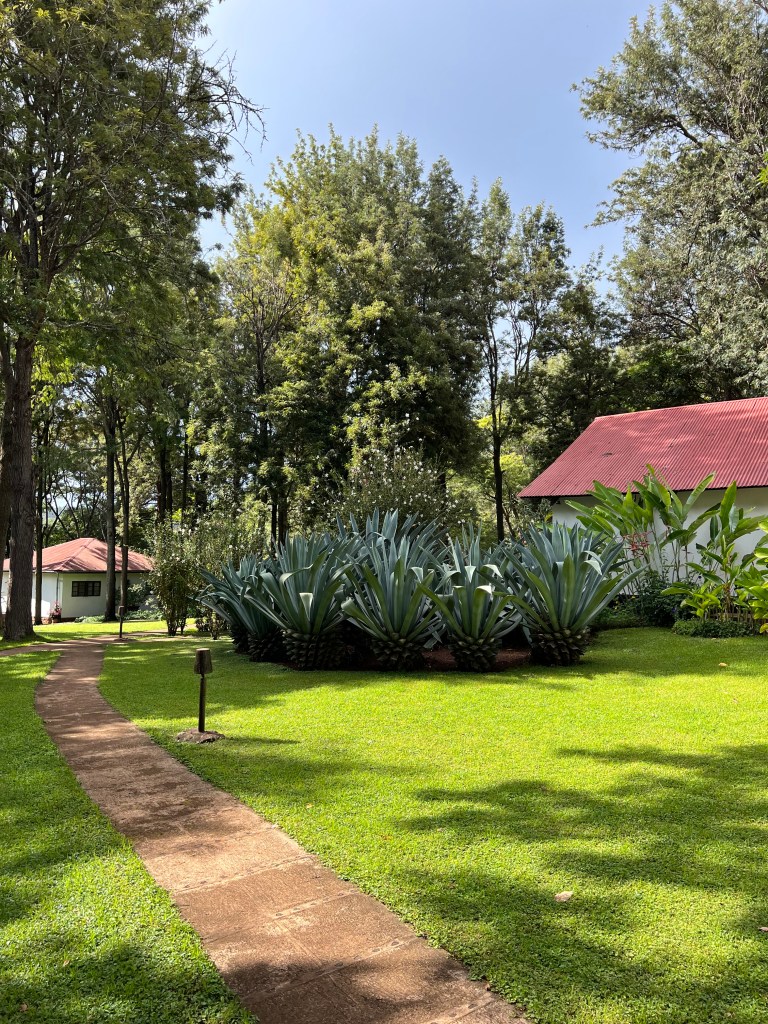
The Plantation Lodge Karatu, Tanzania The elegant farm houses along with beautiful tropical gardens
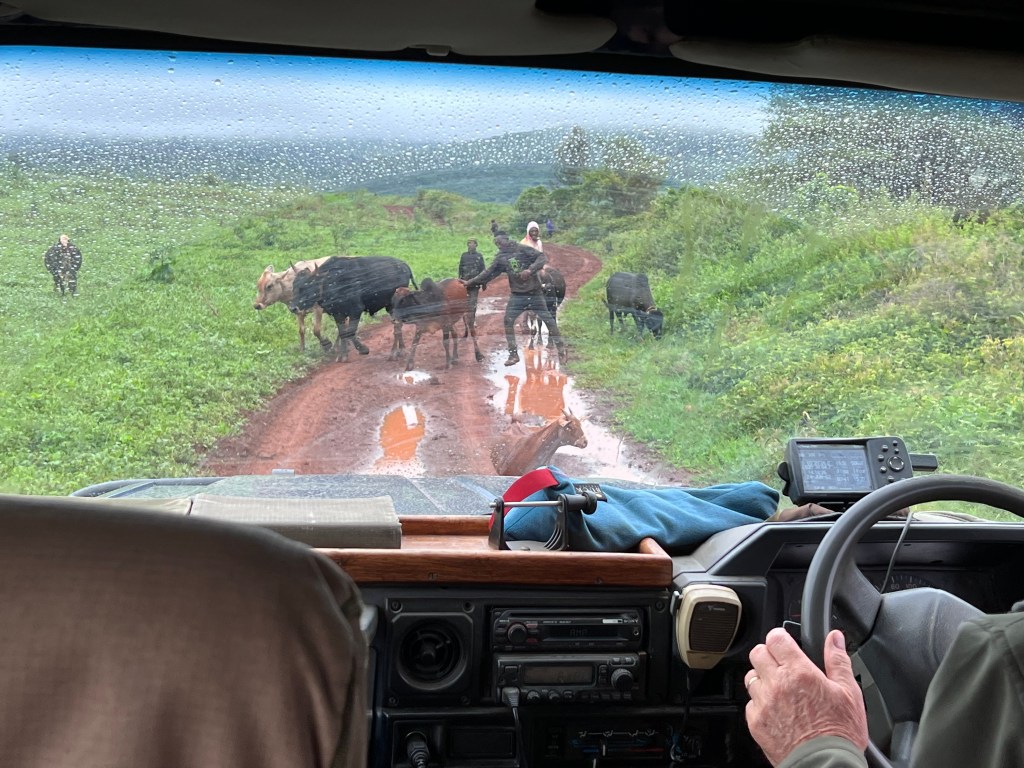
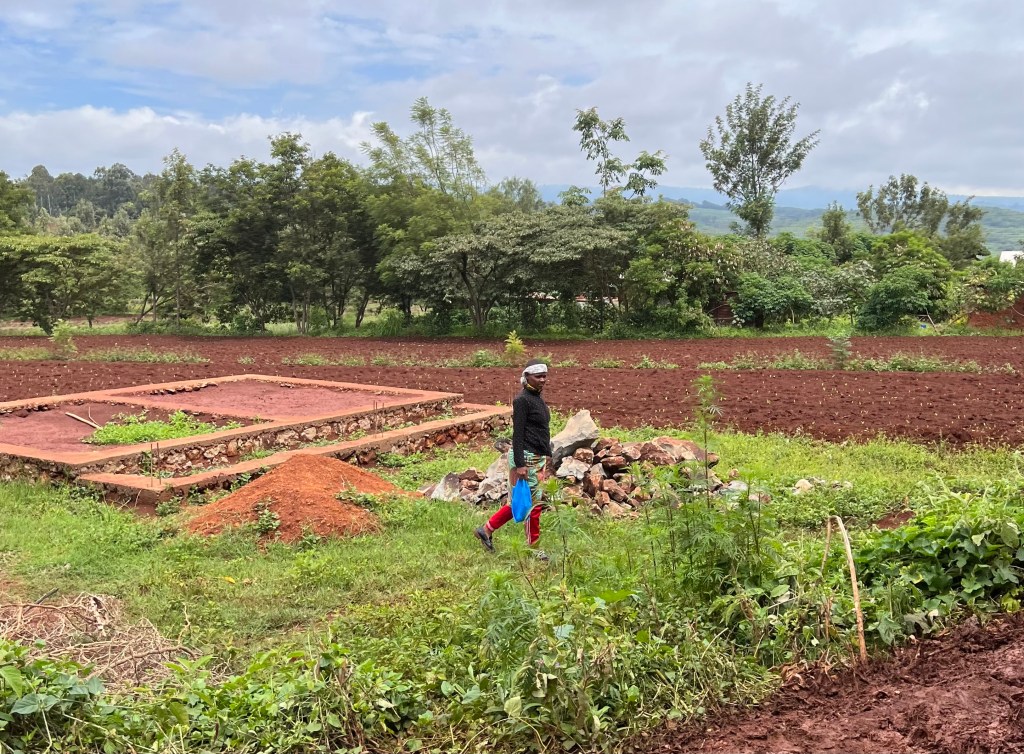
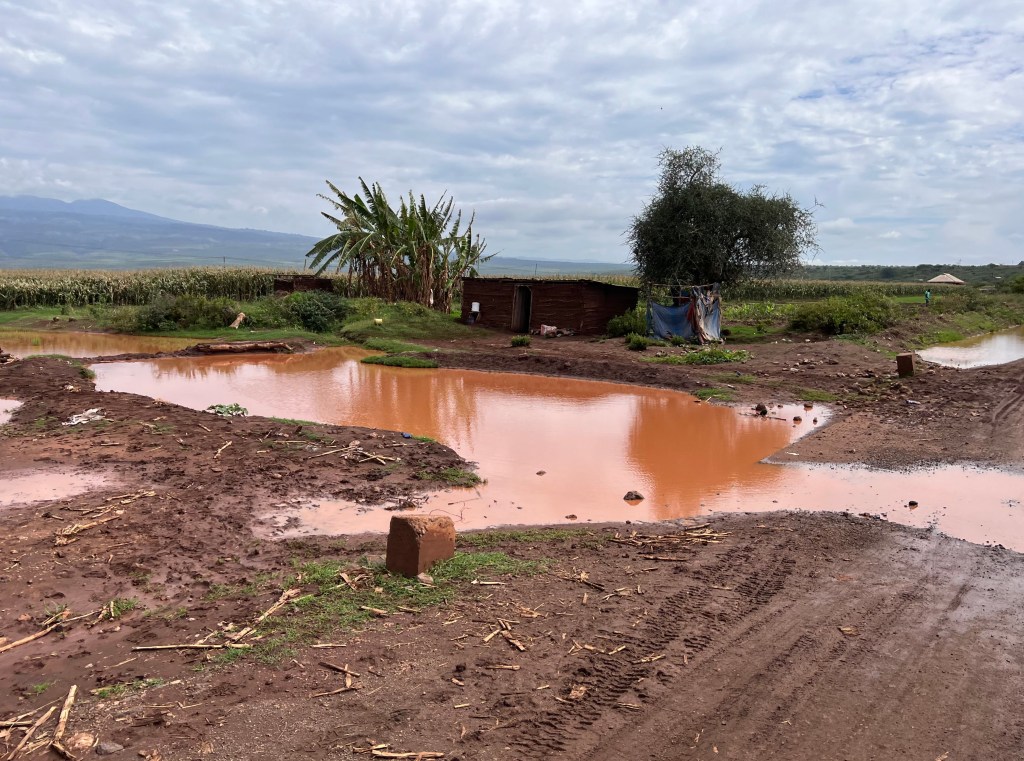
What the roads were like and yes we turned left Gary! Homes often are started with the money they have at the time and left until they have more money to add the walls etc. This foundation was on the road up to the plantation. Note the wonderful red volcanic soils.
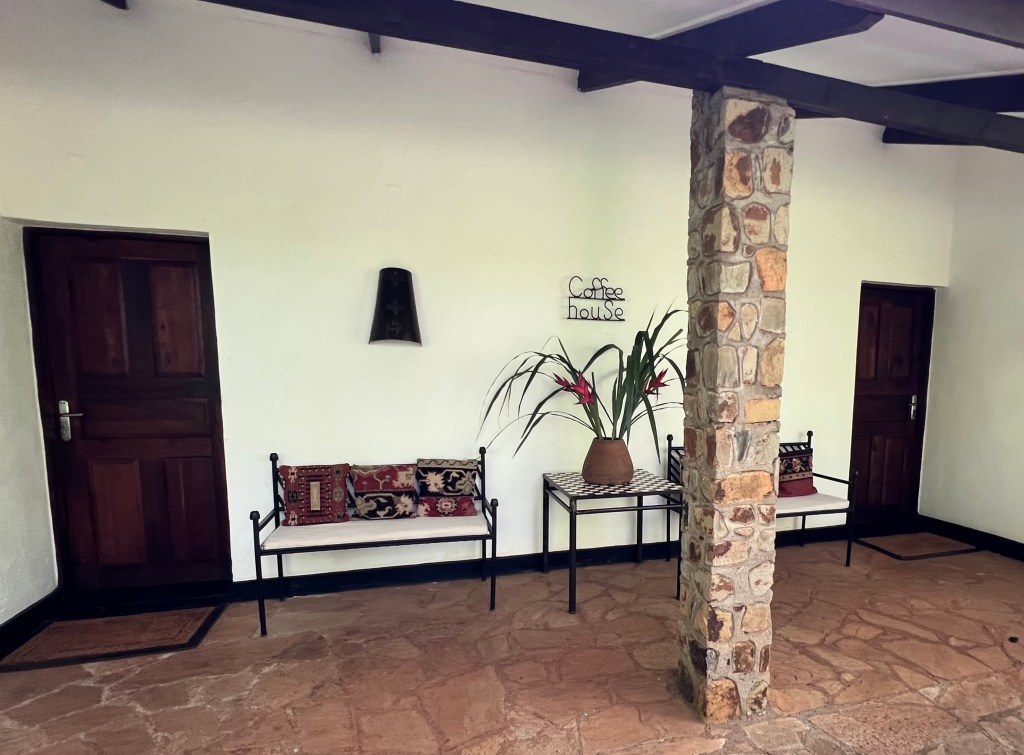
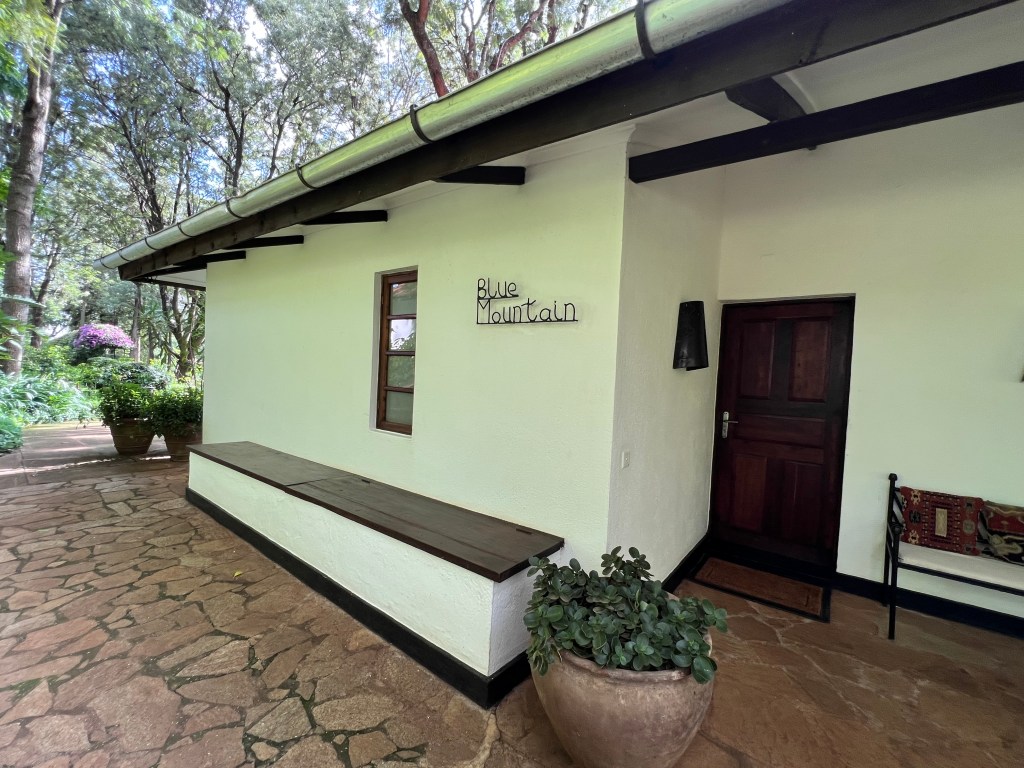
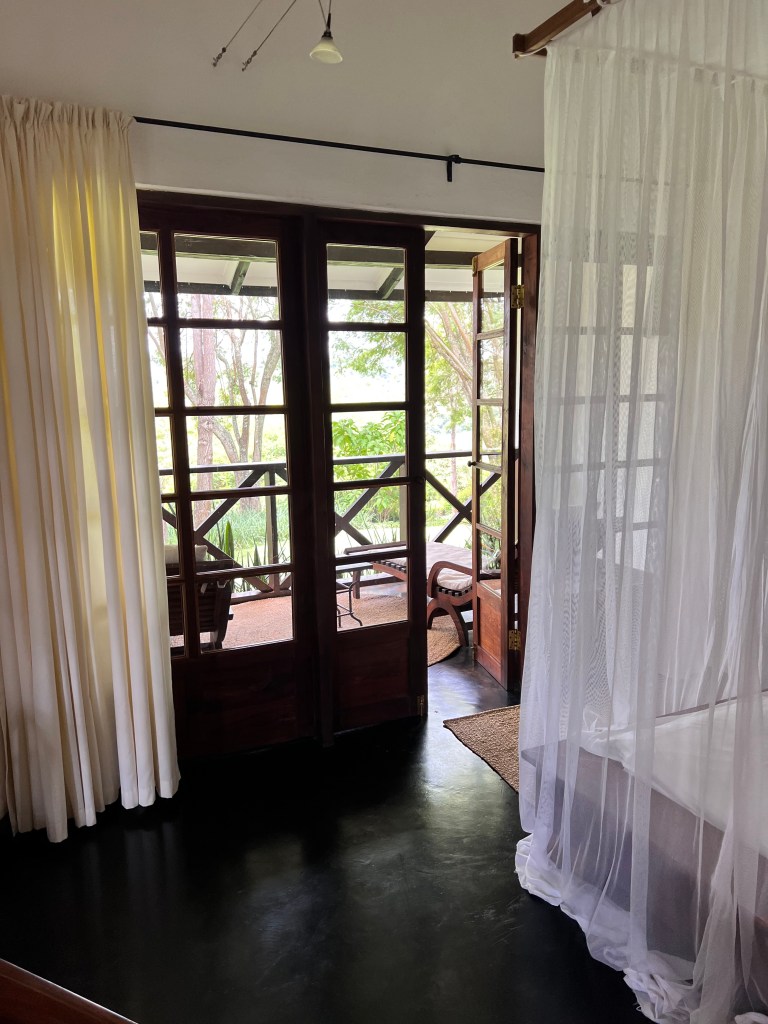
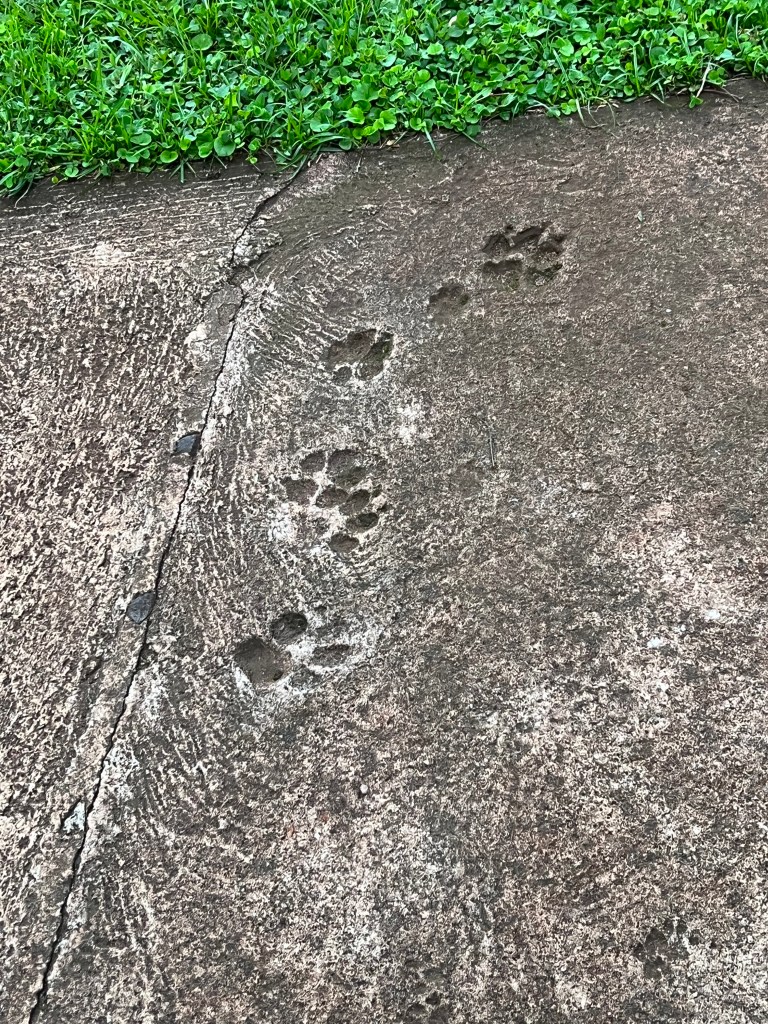
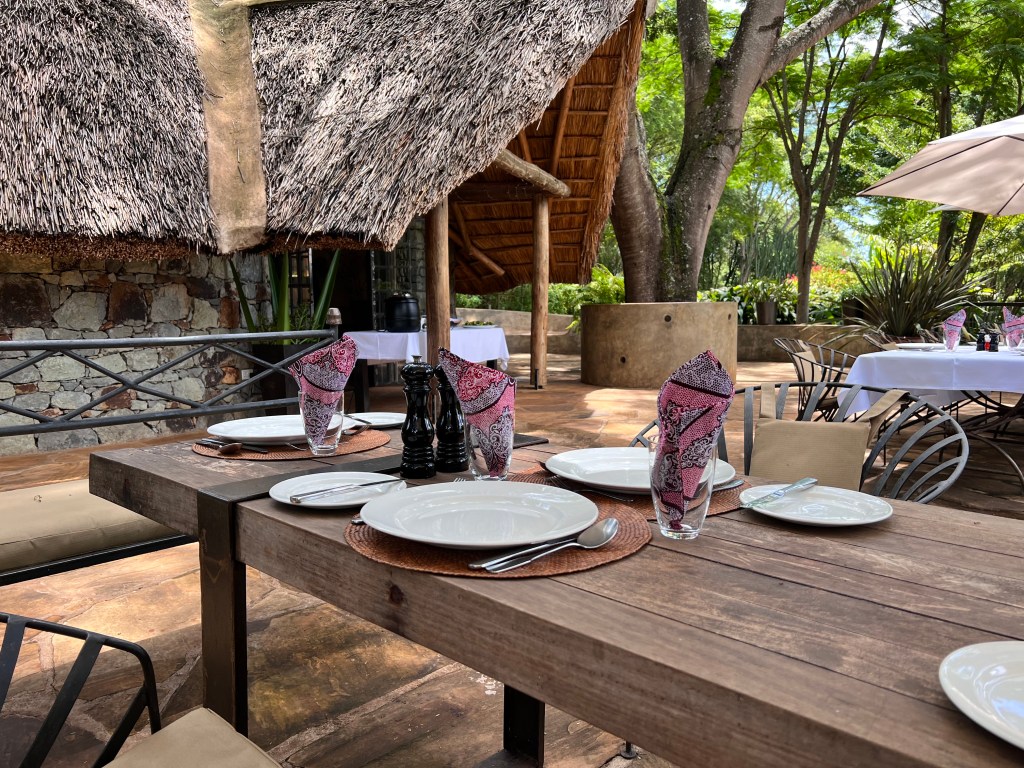
We spent our first night at the Plantation Lodge in Karatu where we arrived late afternoon after our full day in the Ngorongoro Crater. We each had a part of our own house. We were Blue Mountain at the Coffee House. The far side of camp folks we’re once again relegated to walking the farthest. Ralph and Deborah Mcleran who were always in tent one were in the right side of the Coffee House. Our room had a shower and a bathtub. A yummy bathtub! The big cat paws were in the concrete as we walked back and forth. Not sure if they were real but it did makes us very aware of where we were. The Lodge was totally fenced and seemed secure but you never know!
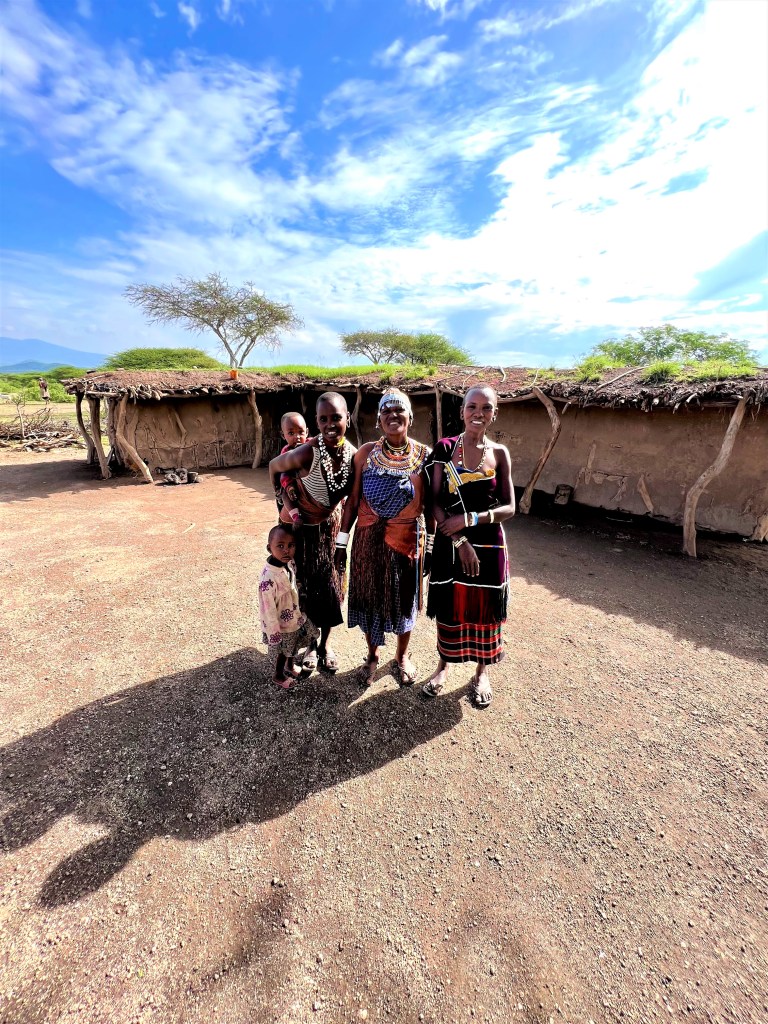
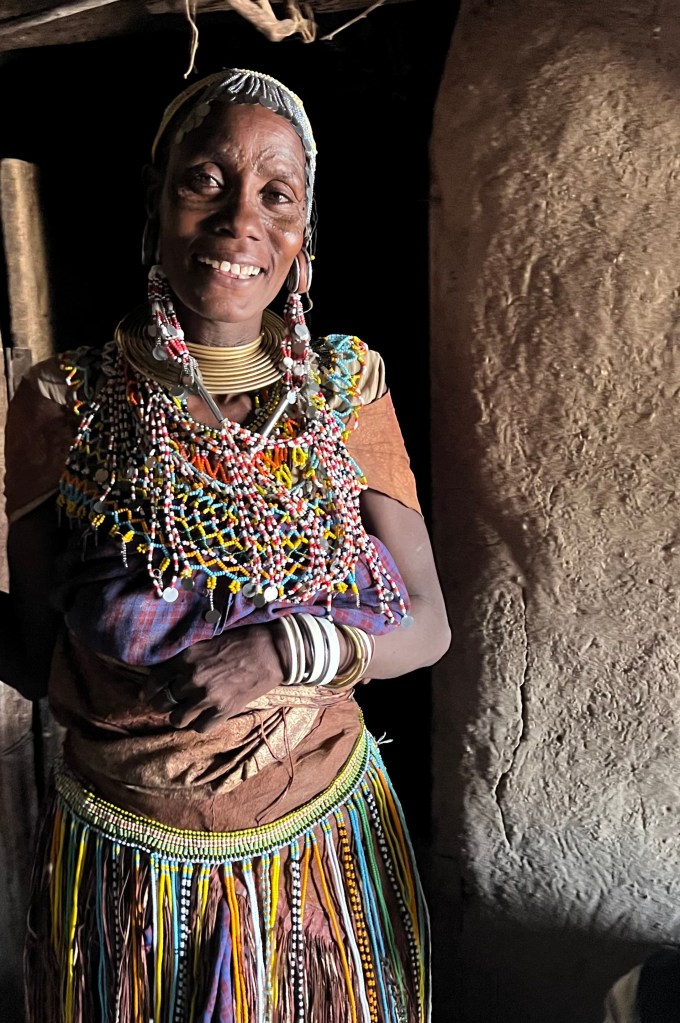
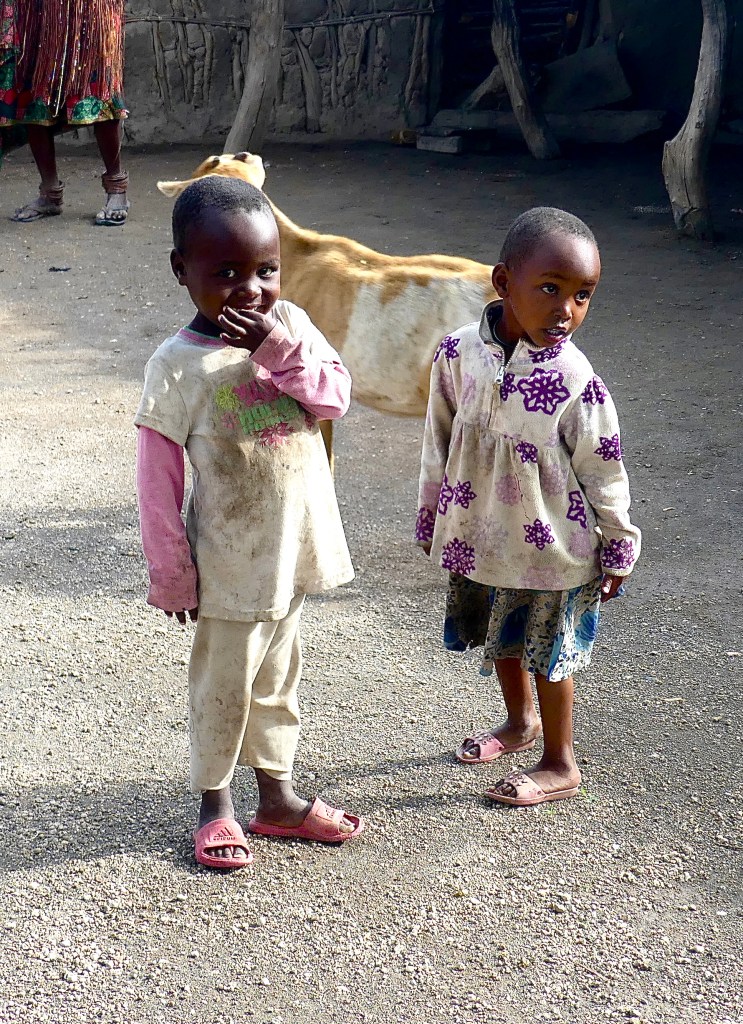
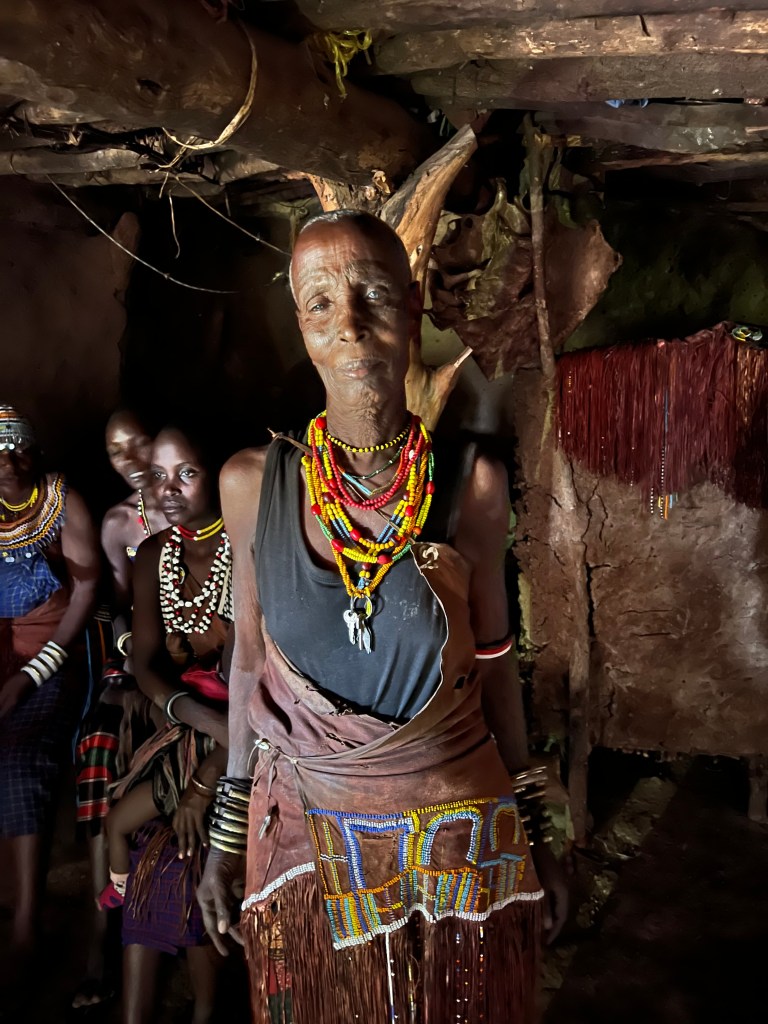
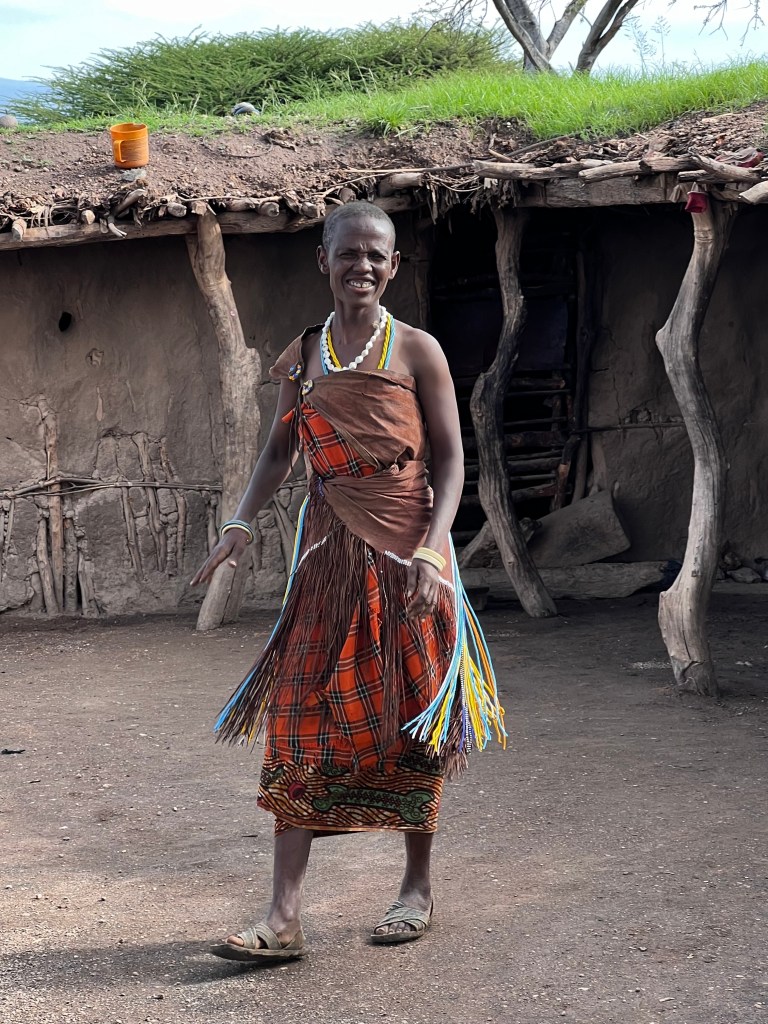
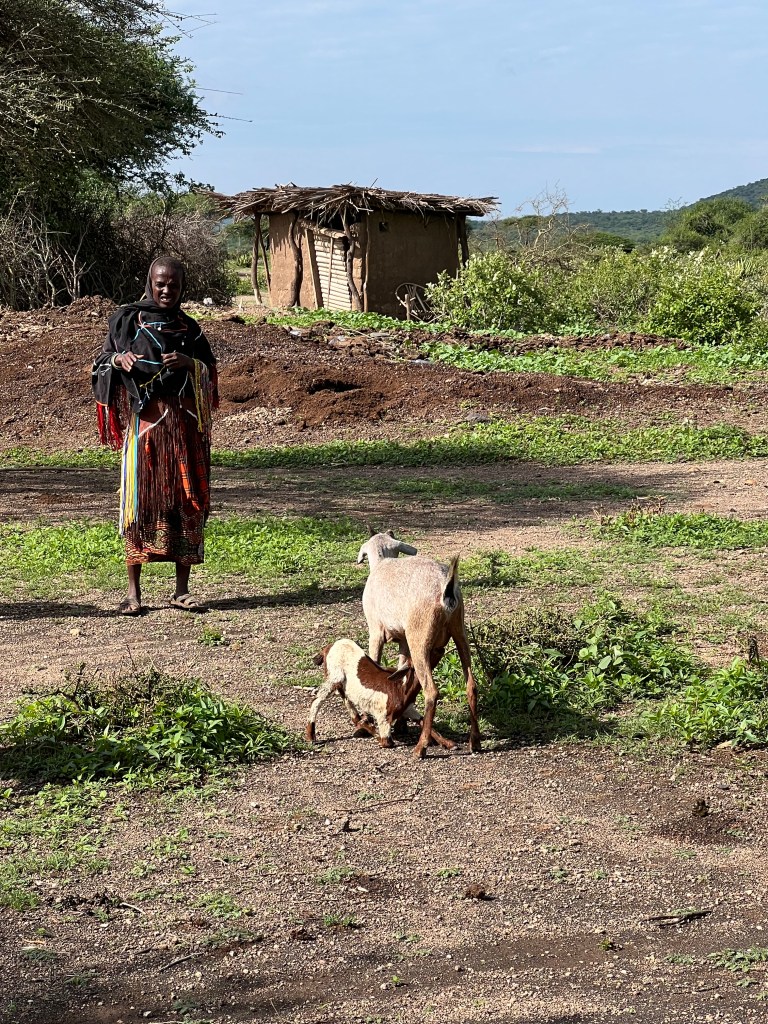
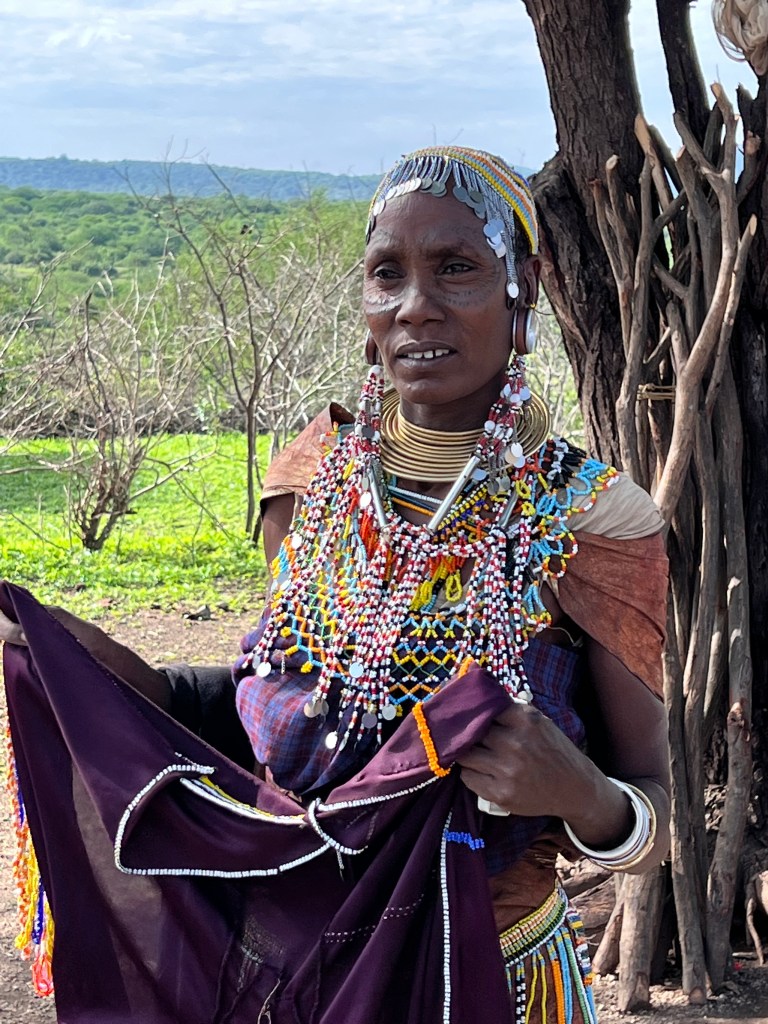
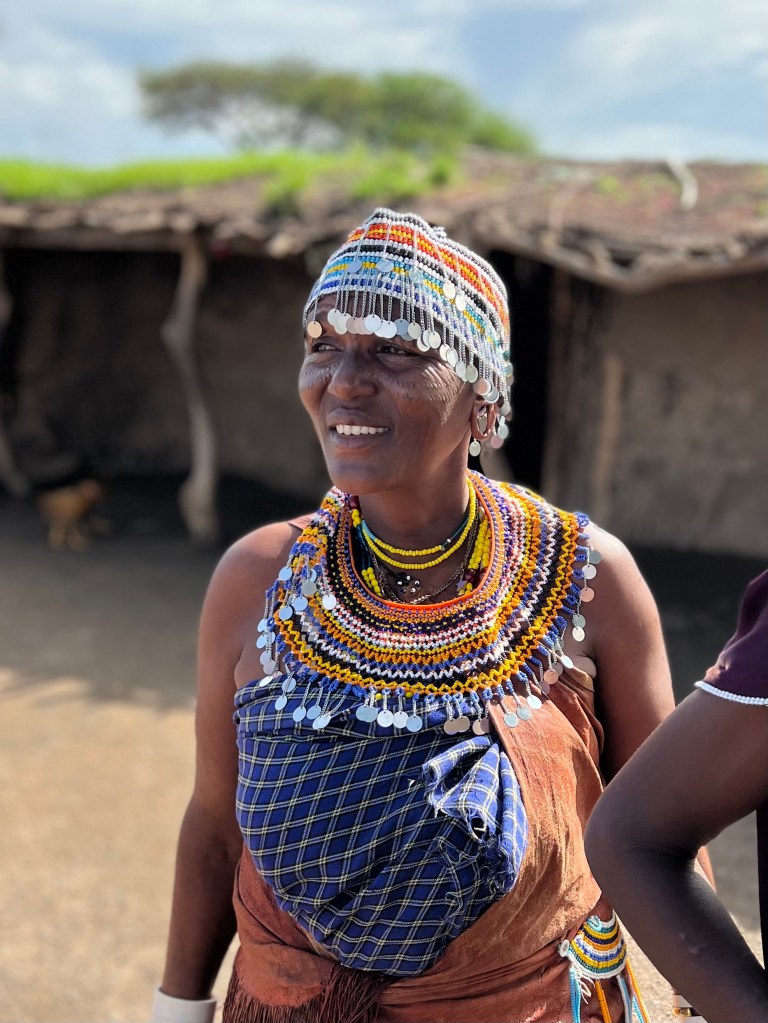
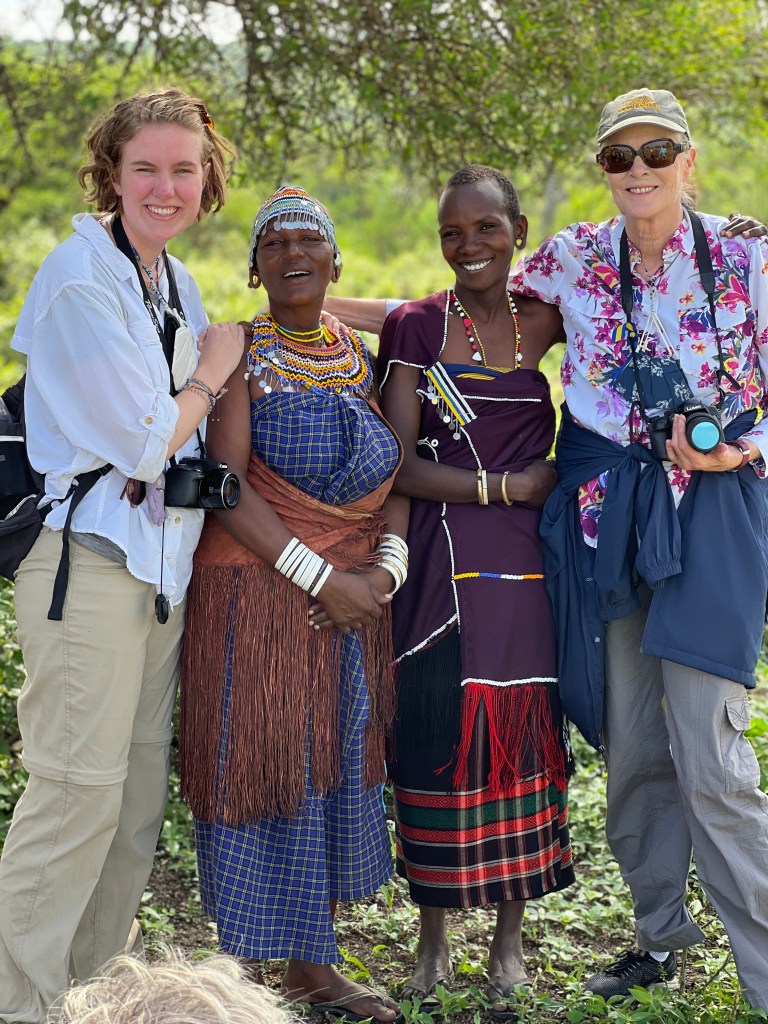
Our Datoga Ladies greeting us from their womans encampment.
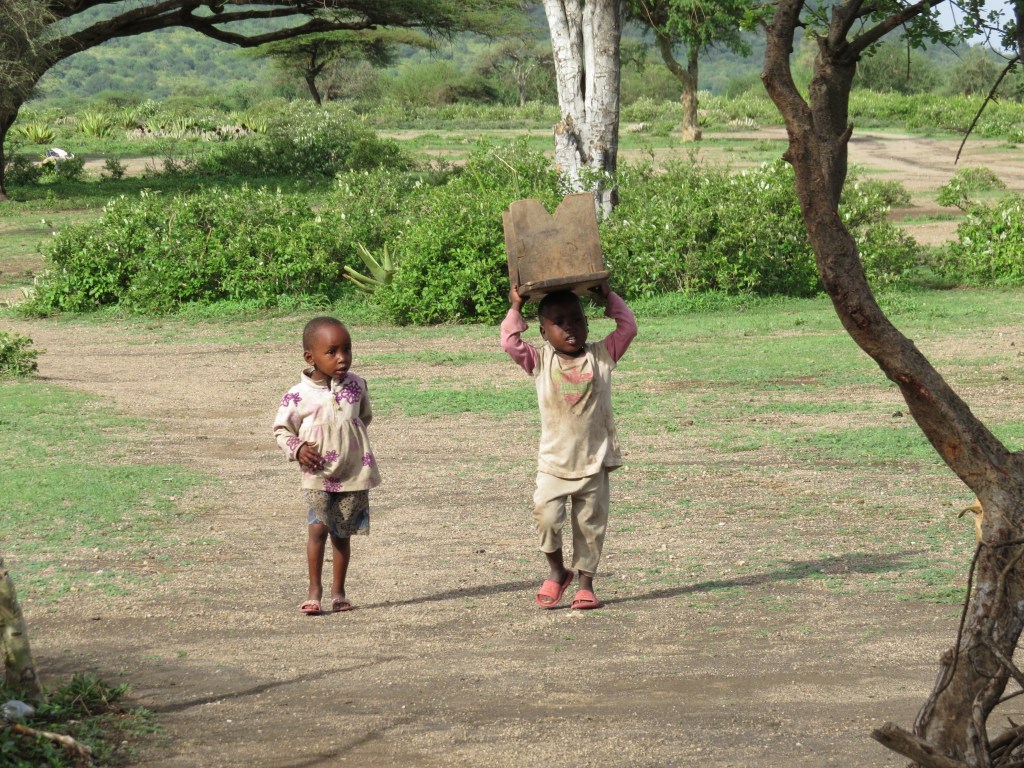
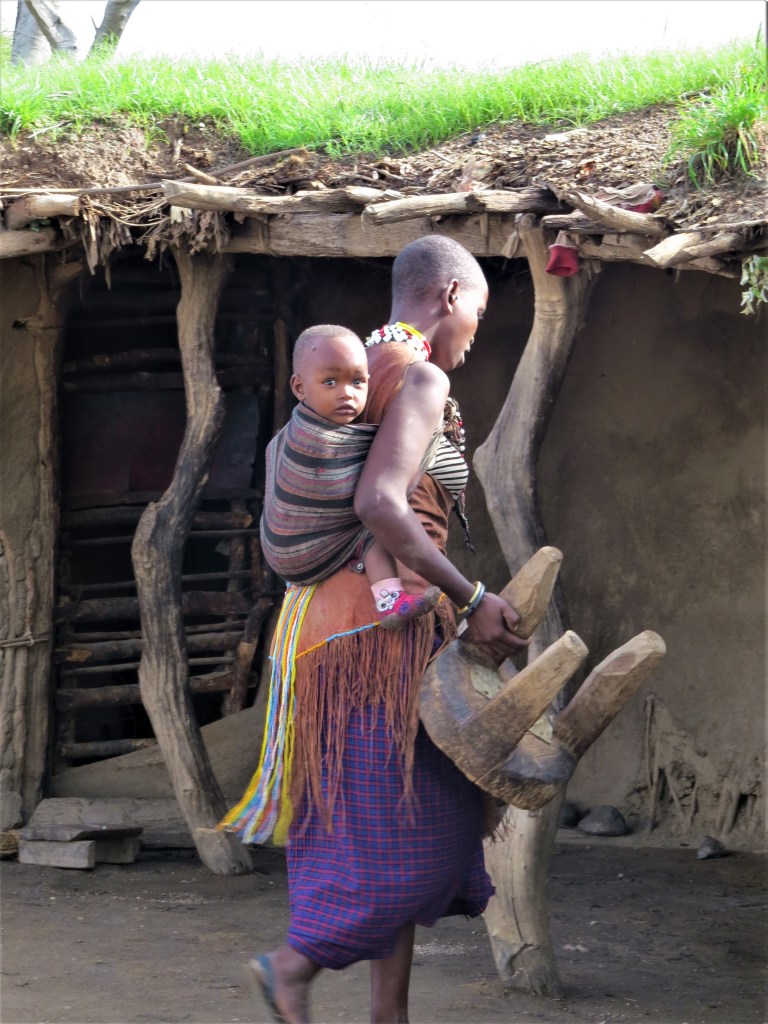
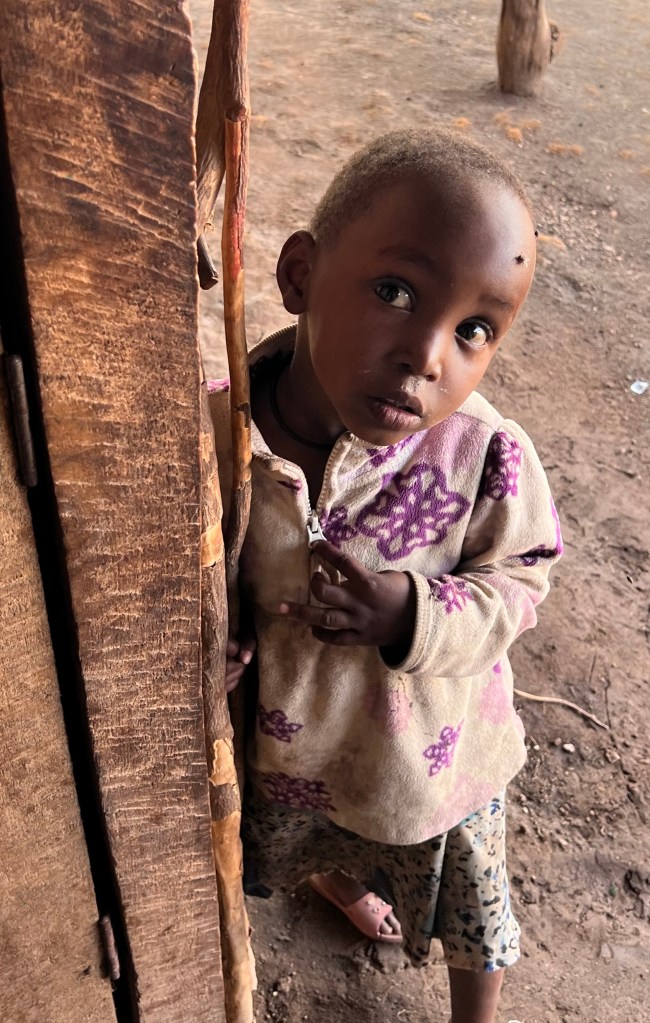
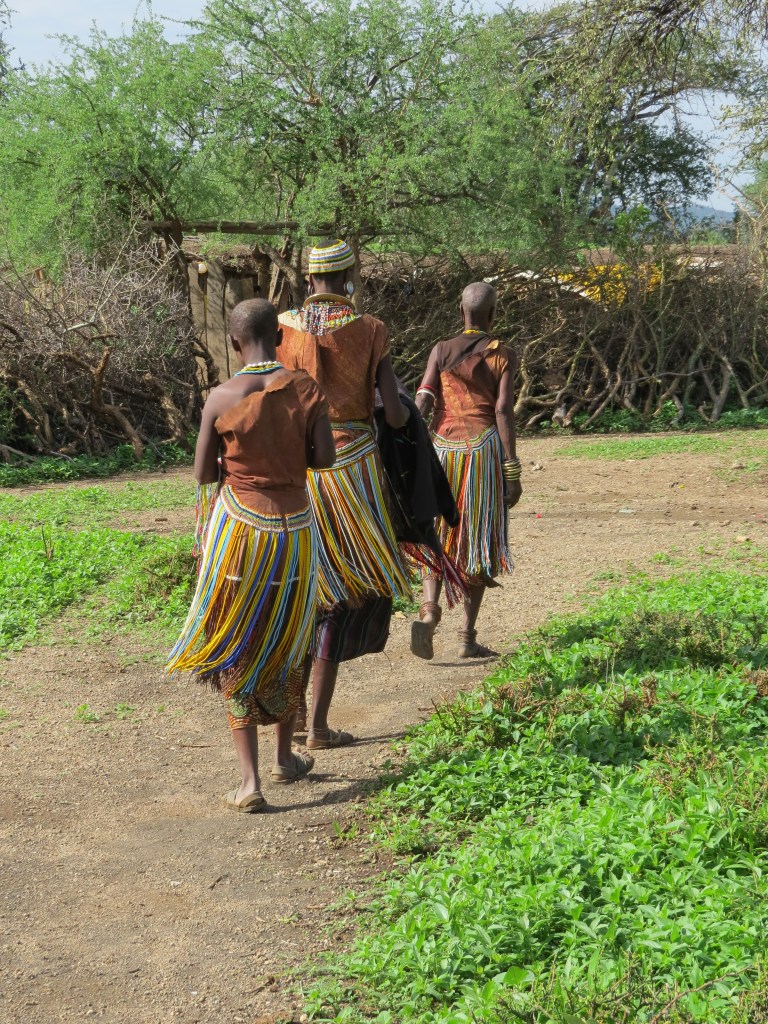
The Datoga live on the shores of Eyasi Lake near Karatu in their traditional huts. They descend from populations of the Nilotic strain who settled in Northern Tanzania over 3,000 years ago from Ethiopia and South Sudan. Their main source o living may be animal breeding but over the centuries they introduced farming and grow corn and millet. They are decreasing in numbers . The government in the past have canceled local traditions and have let other tribes immigrate onto their ancestral lands. The Maasai are not their friend.
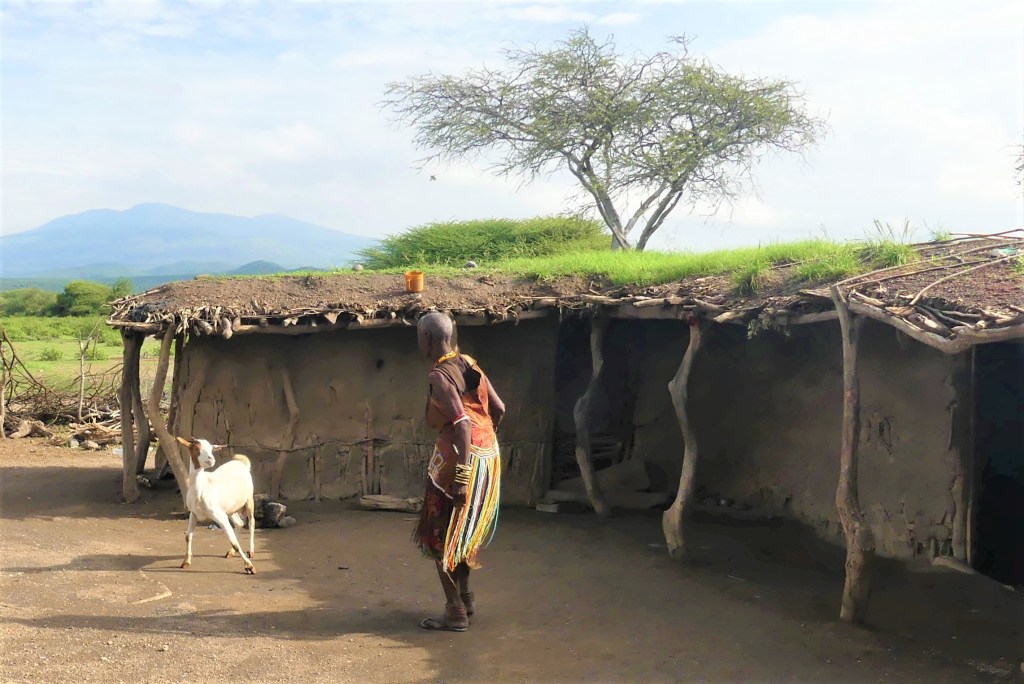
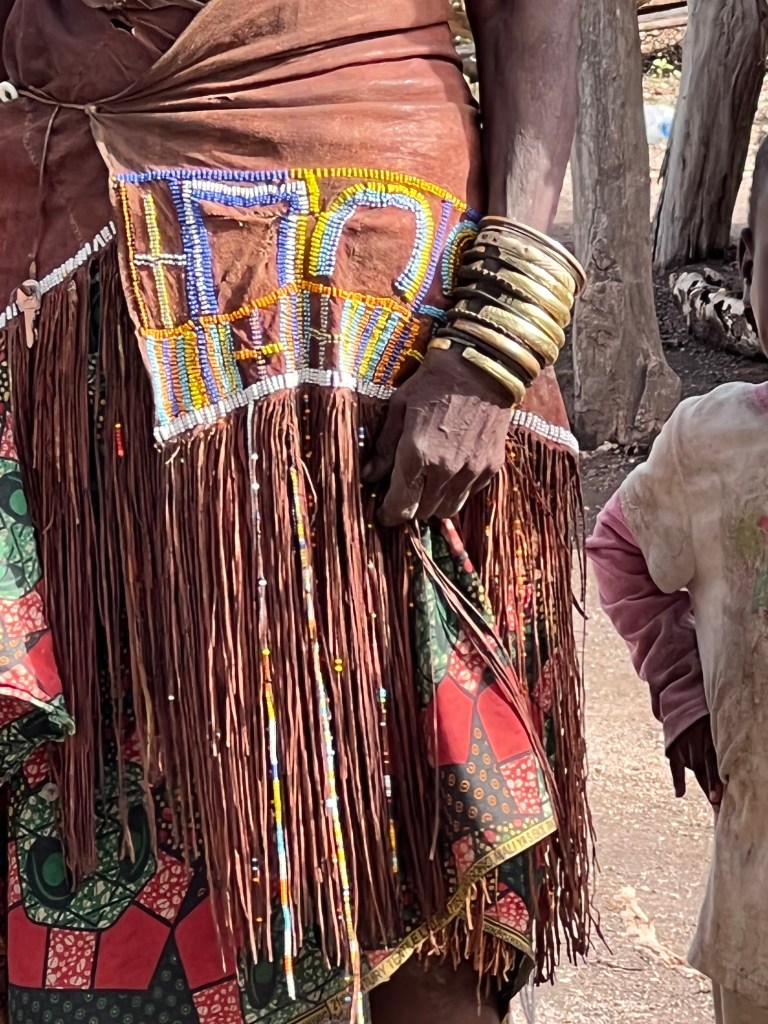
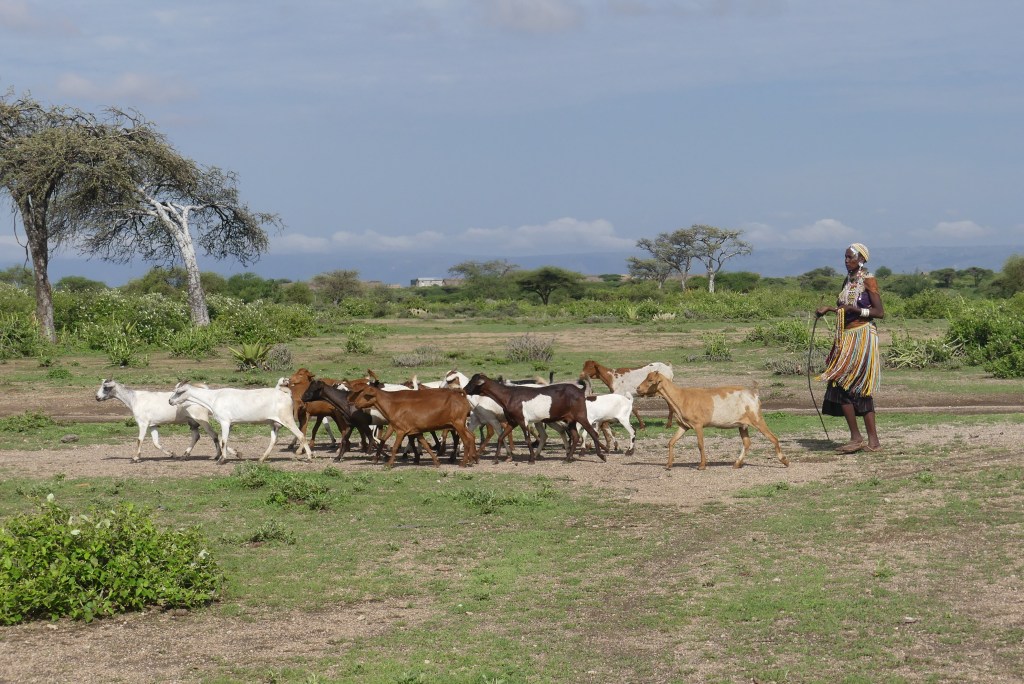
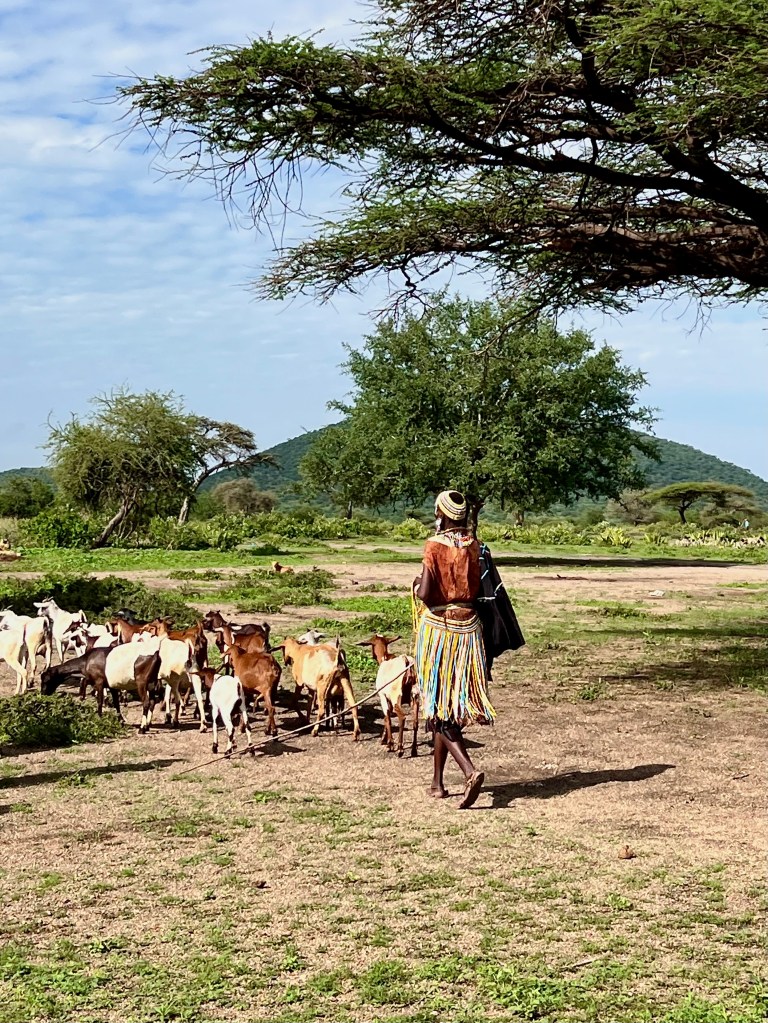
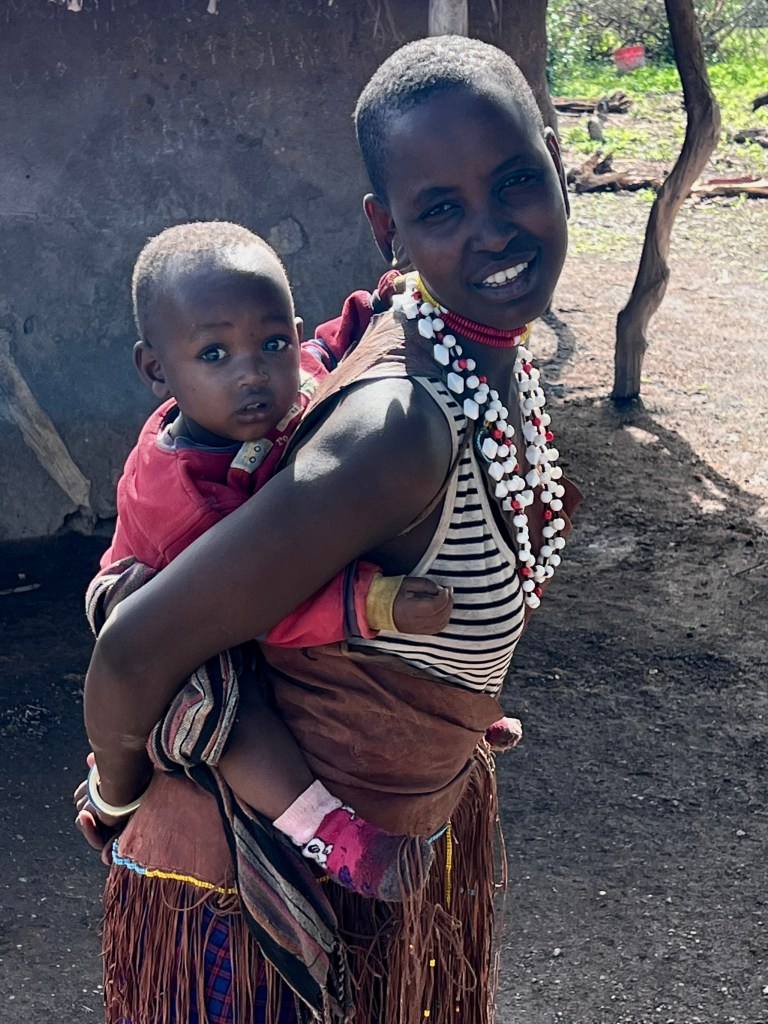
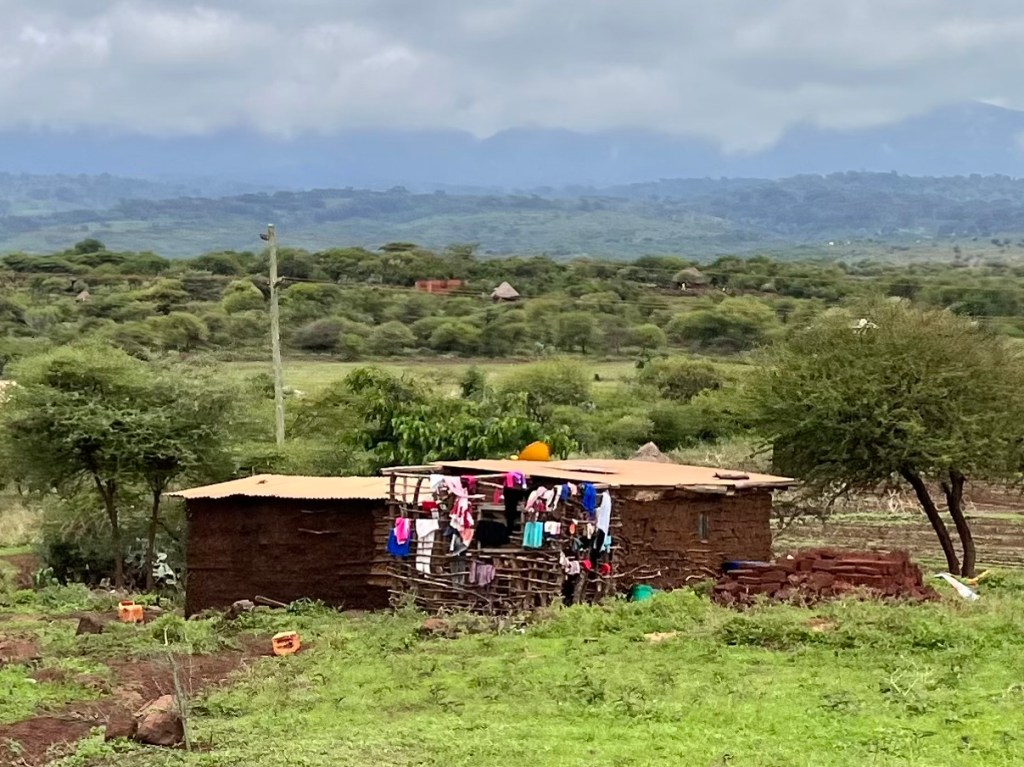
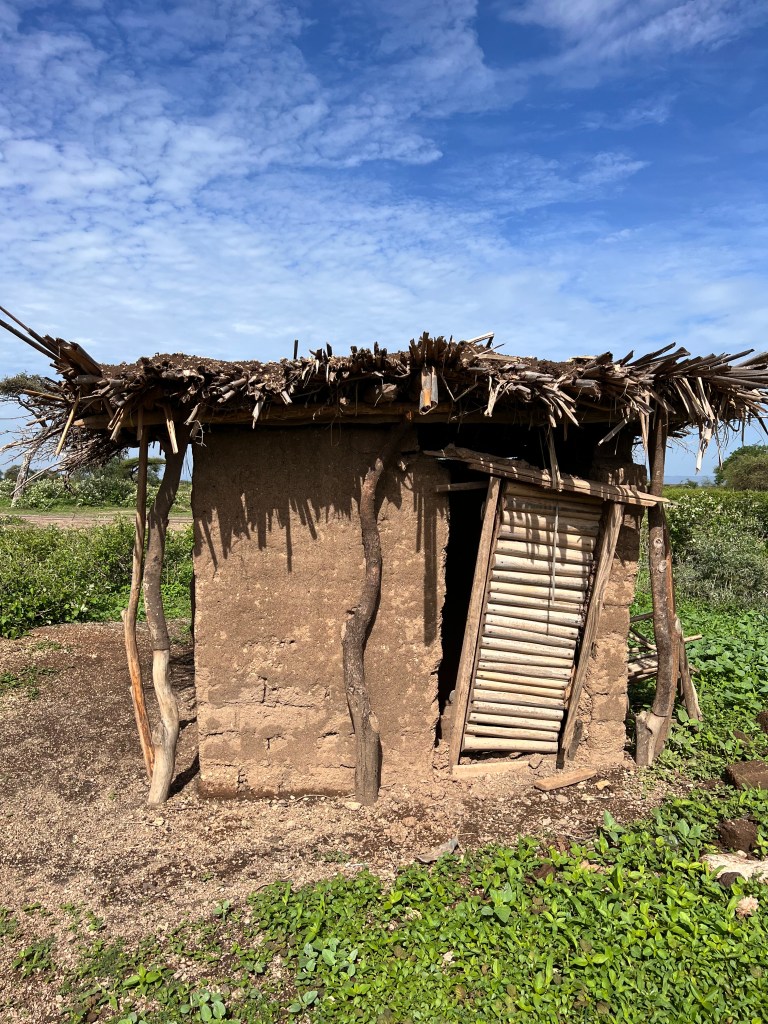
The women are beautiful and graceful and some still have the mask-shaped tattoo and large holes in their ear lobes although this tradition is being lost. Their buildings are rectangular buildings using branches and mud. They are mostly goat herders in comparison to the Maasai who still believe tribes wealth is only the number of cattle they own and all the cows in the world belong to the Maasai – although the government is trying to help various tribes diversify their wealth.
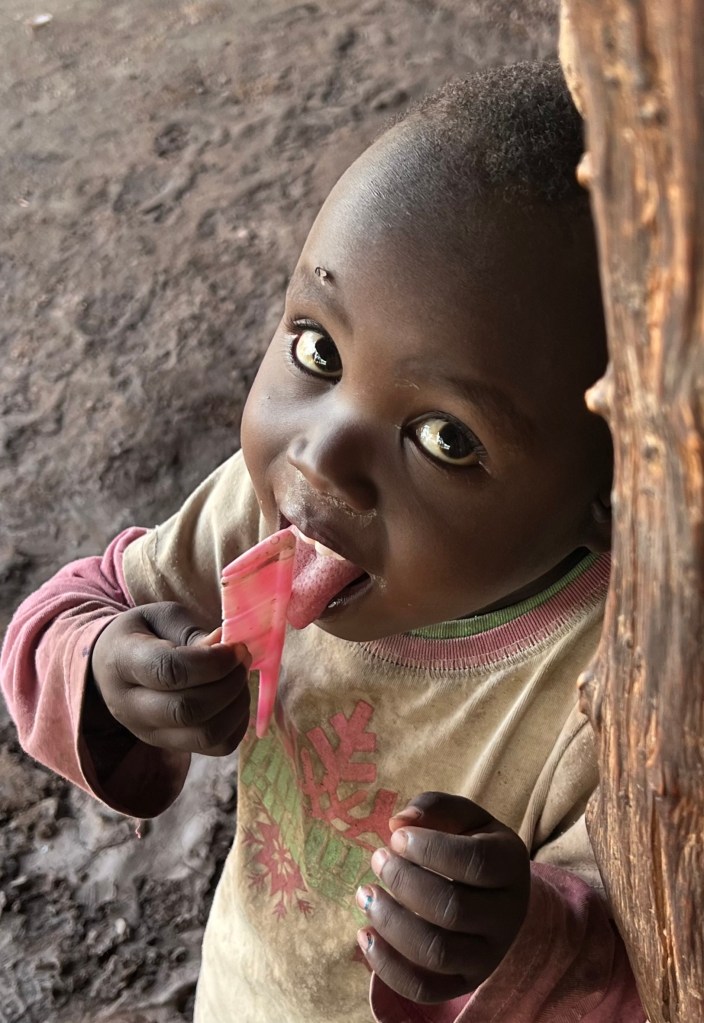
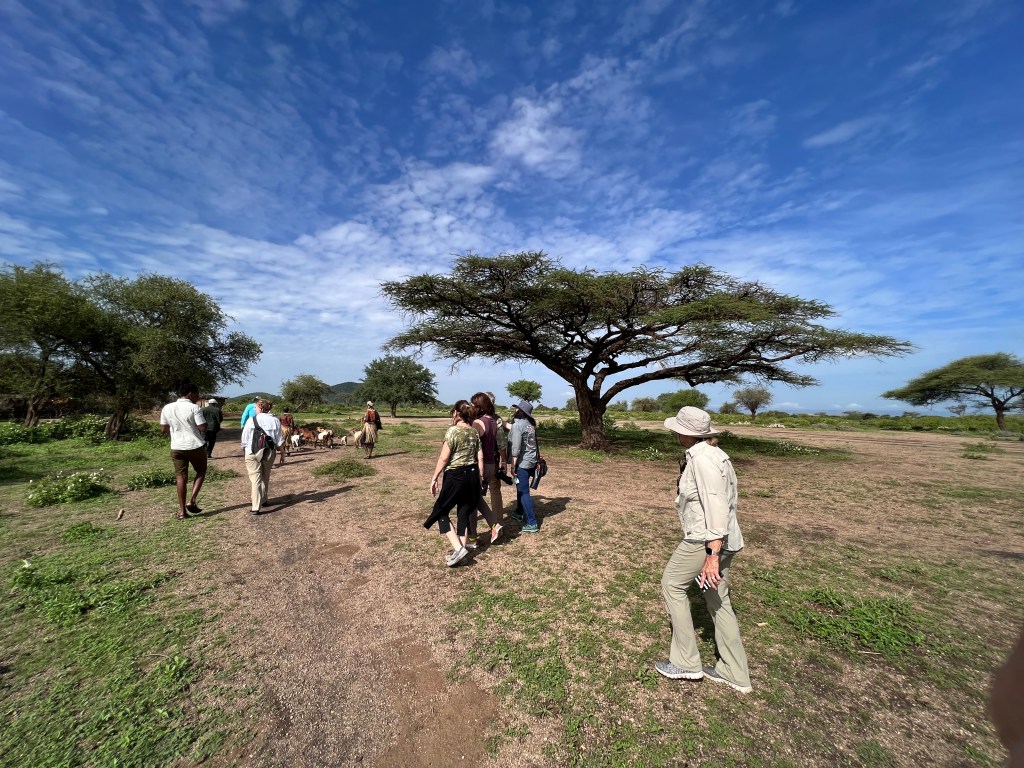
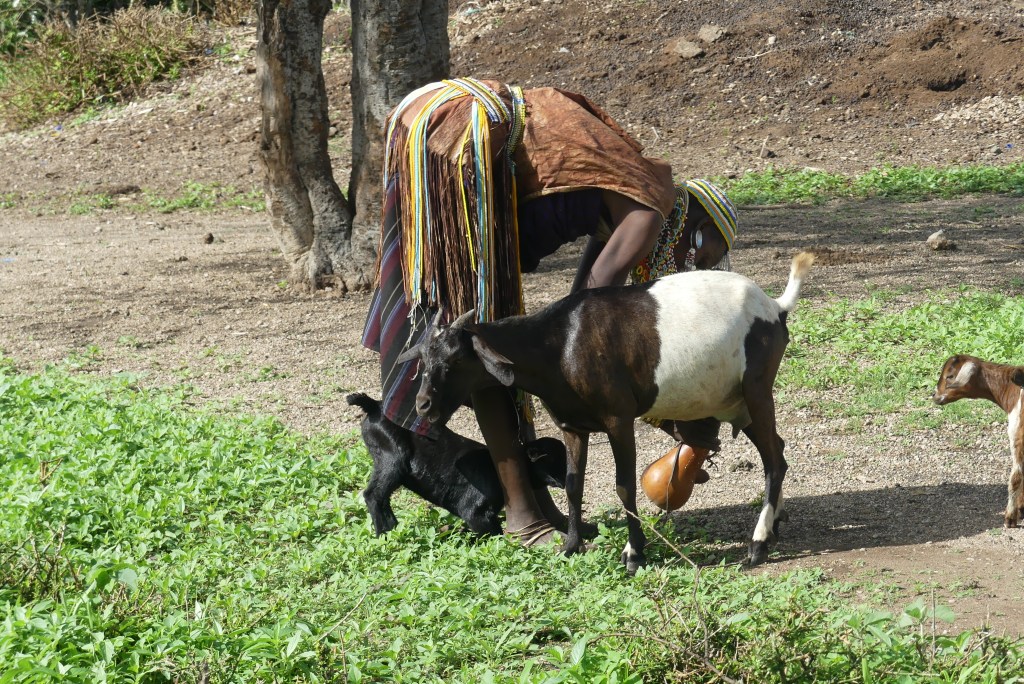
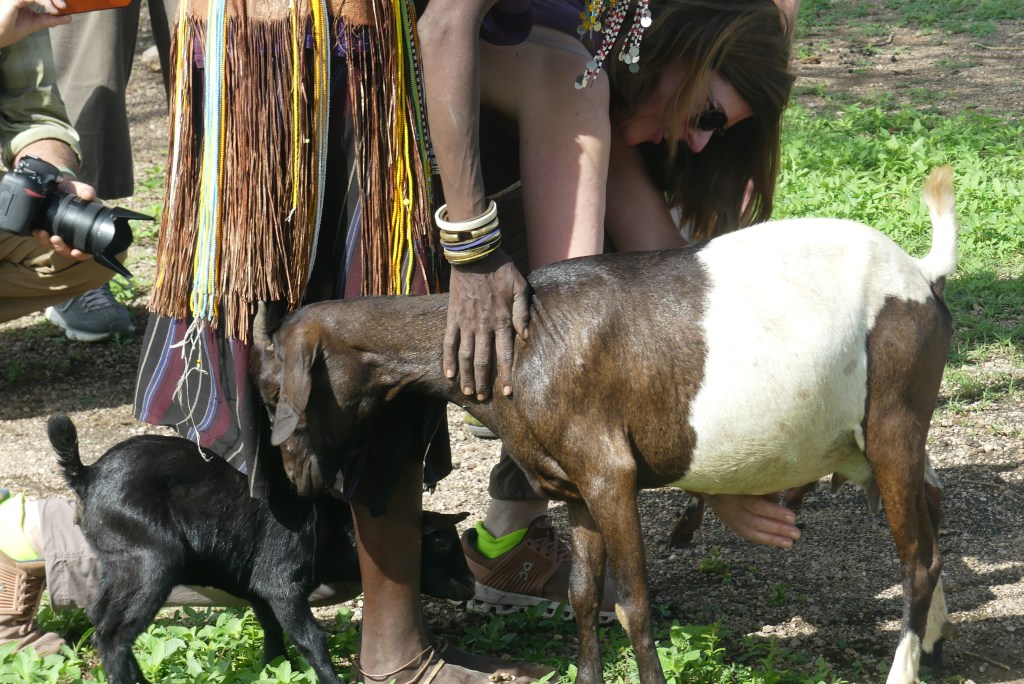
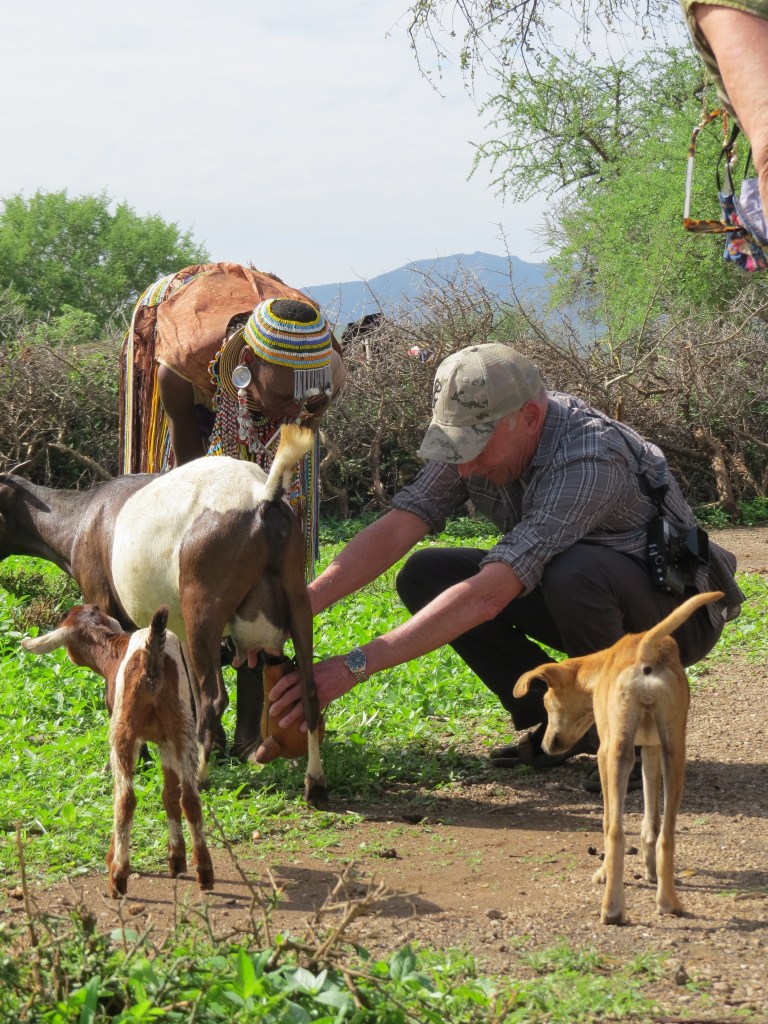
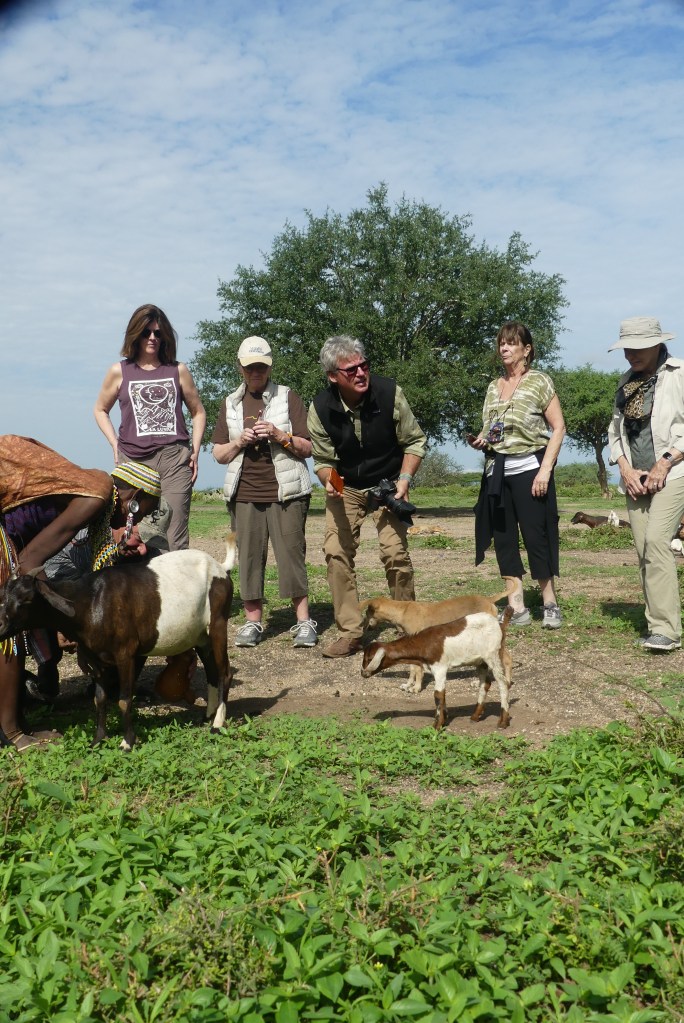
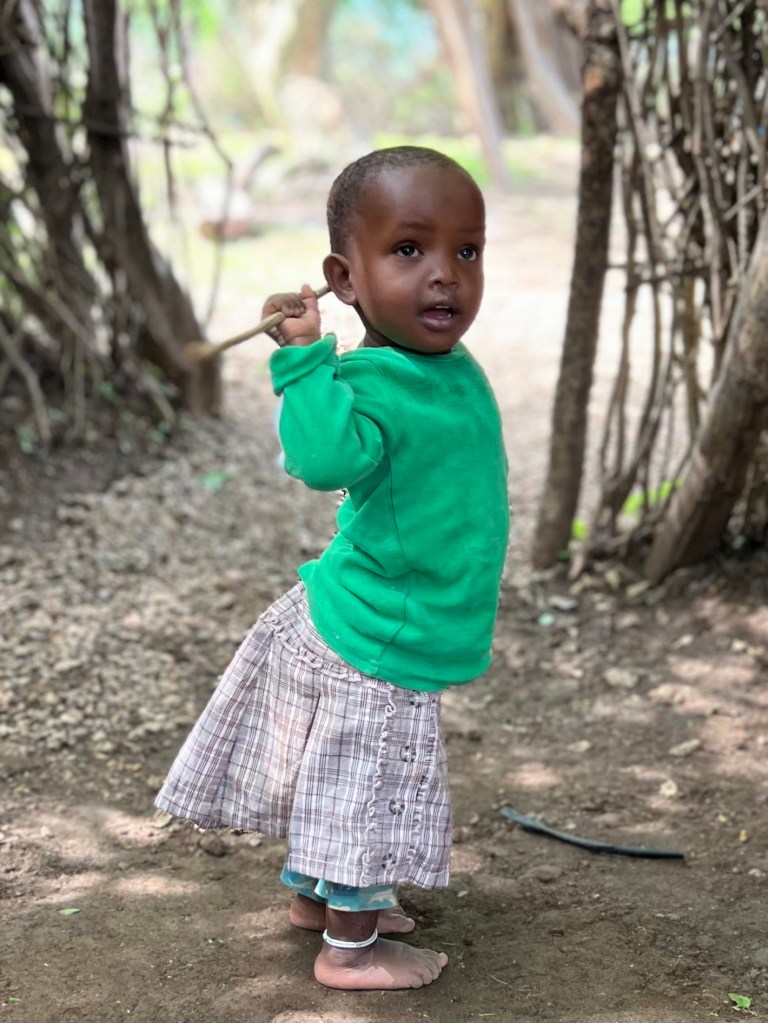
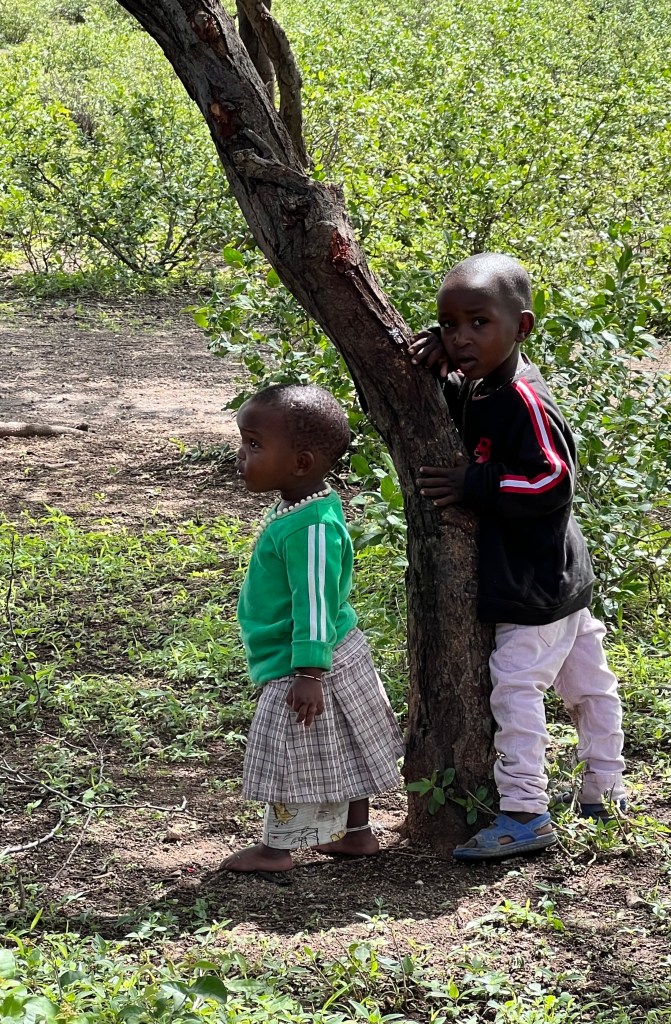
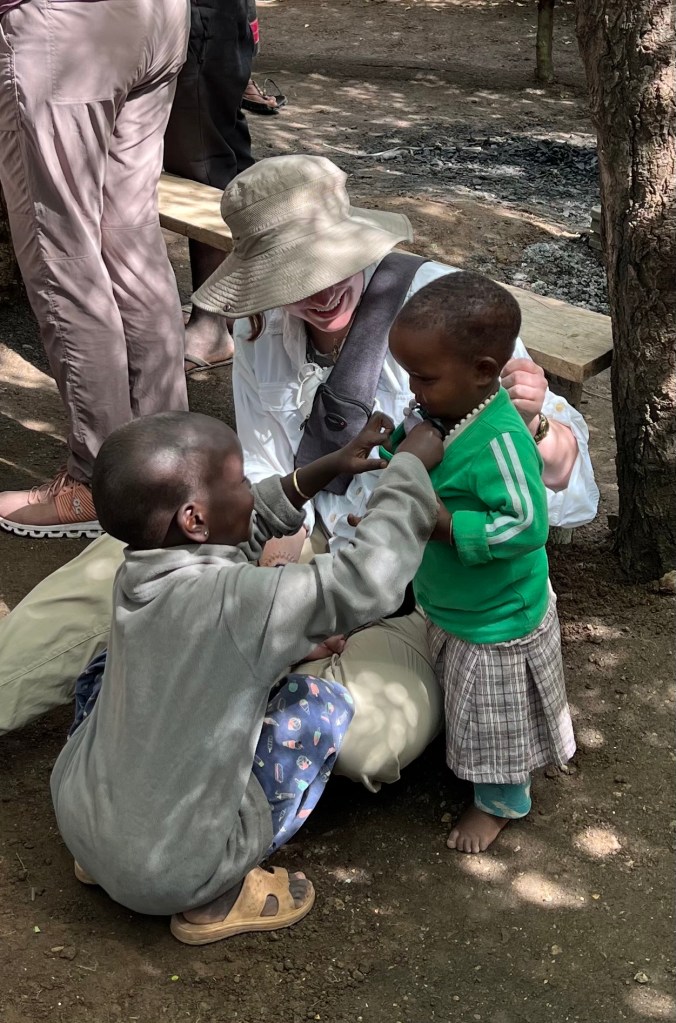
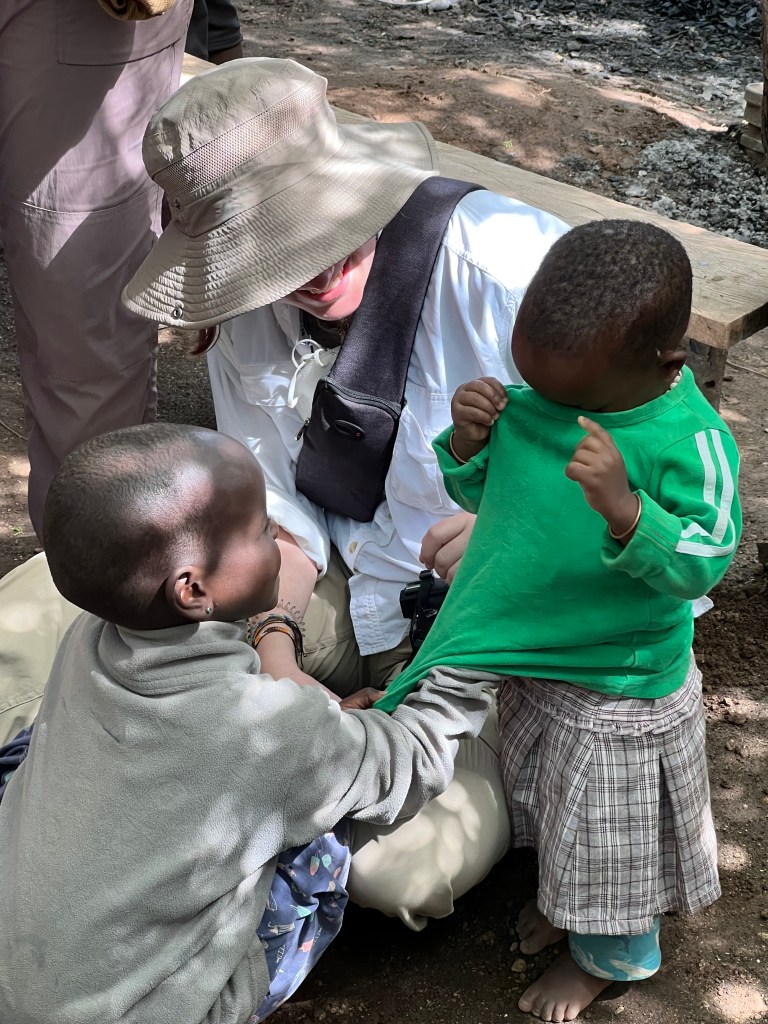
The Datoga speak a different language than Swahili and we had a translator. While looking over these photos, tears still come to my eyes as I remember the morning they shared their life with our group. No language to bond over …just love of a simple life and moms and kids. Both human and goat…lol!
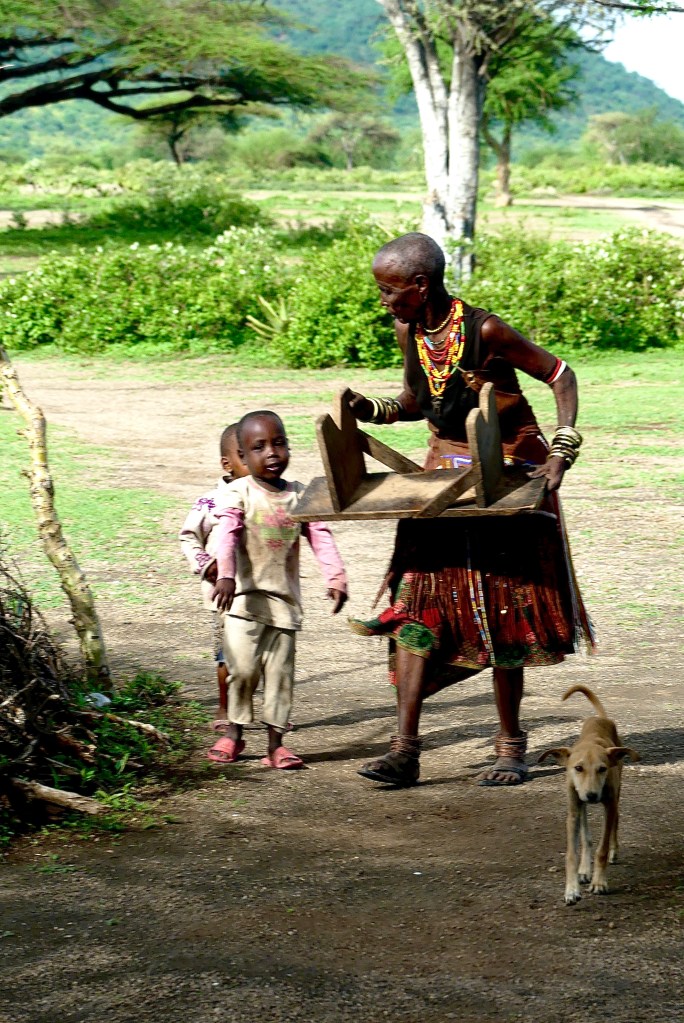
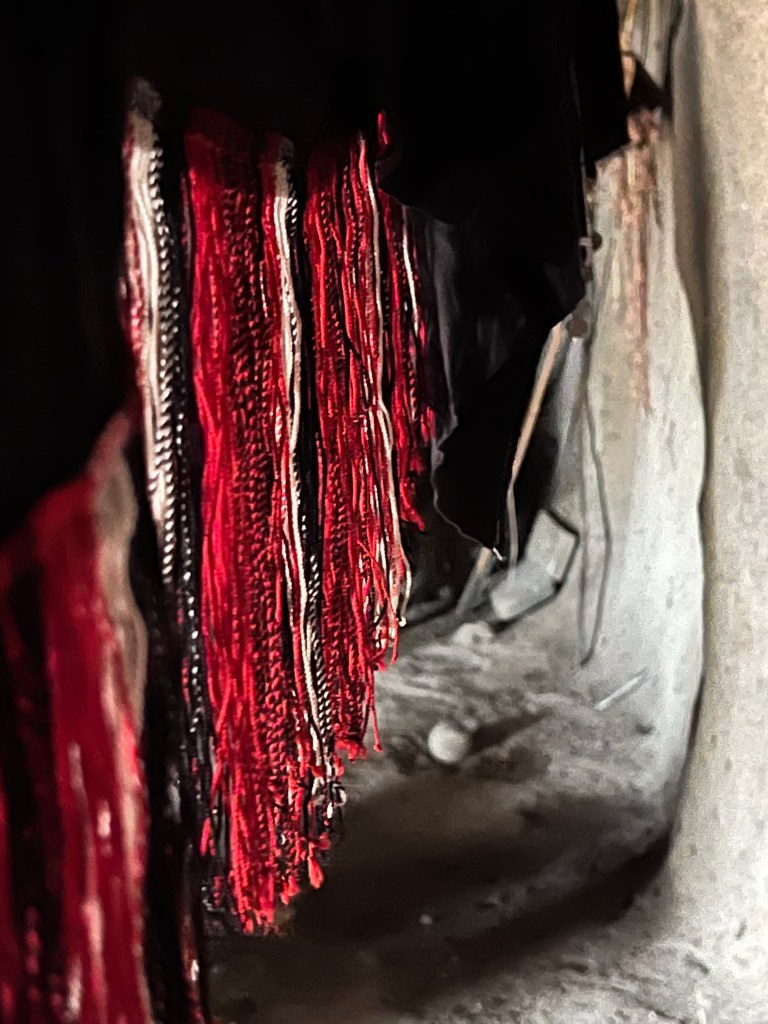
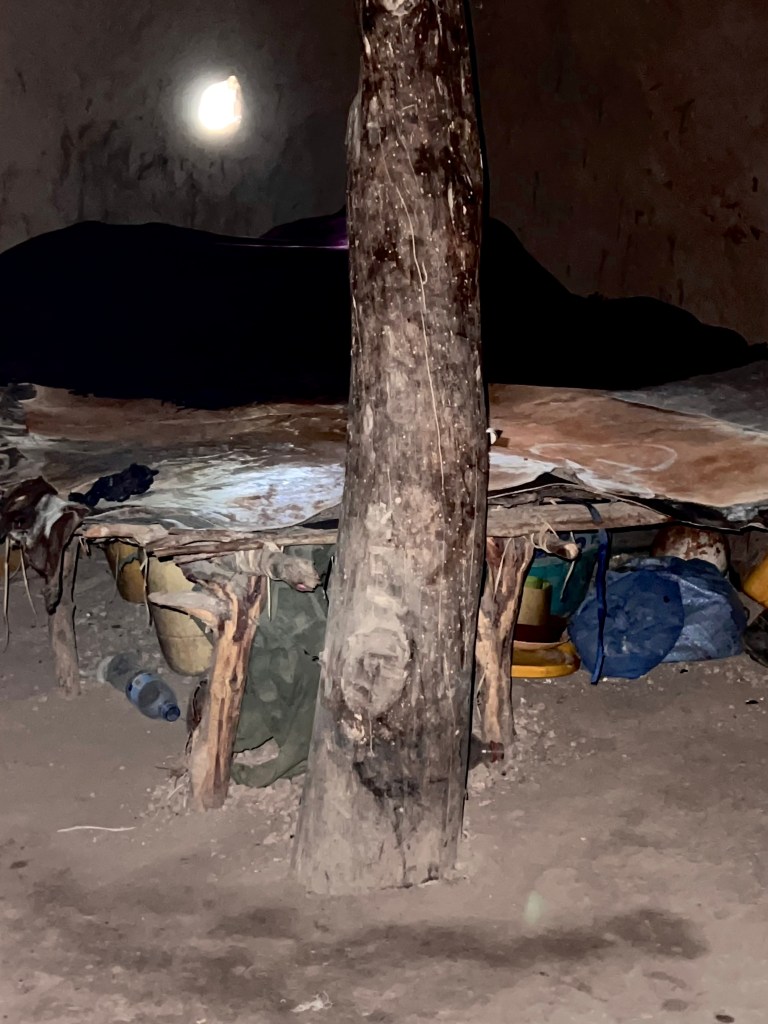
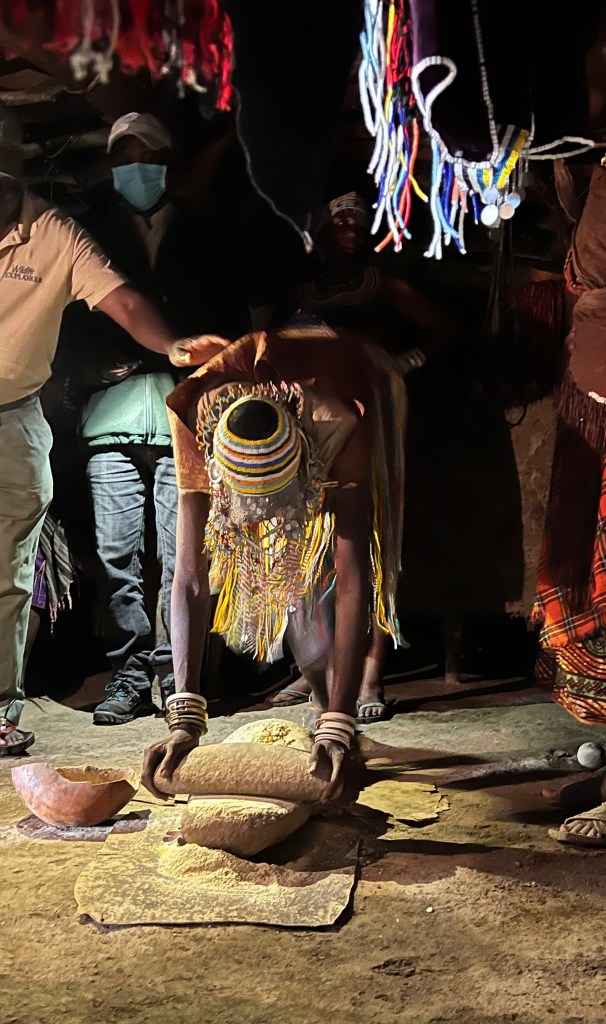
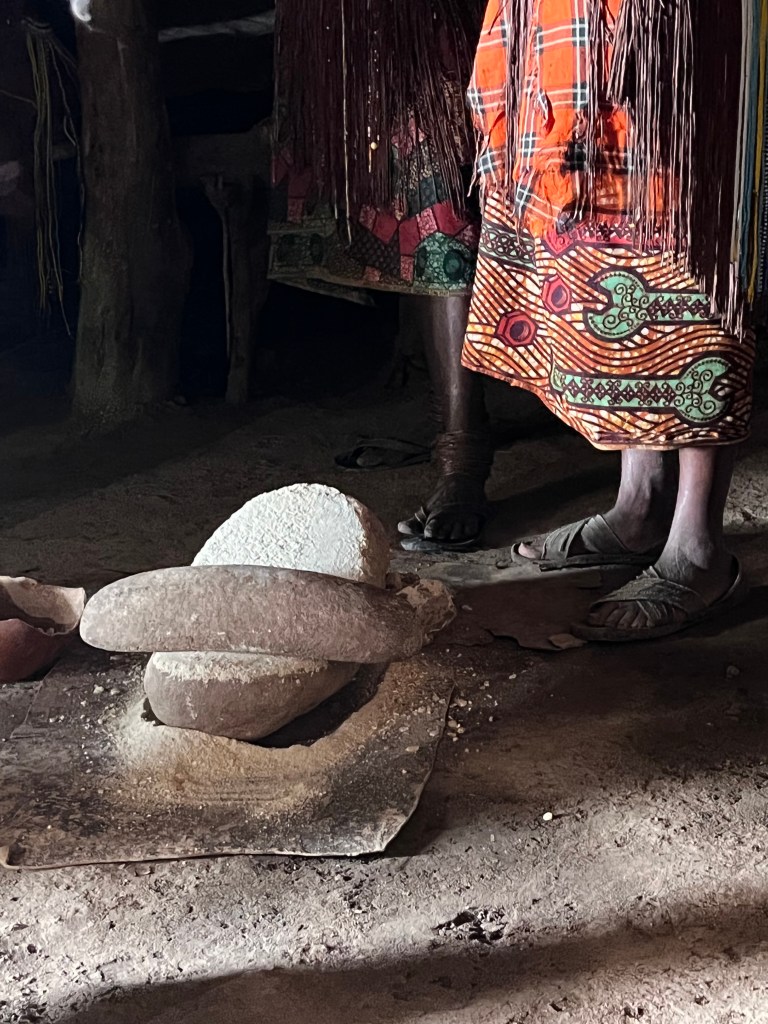
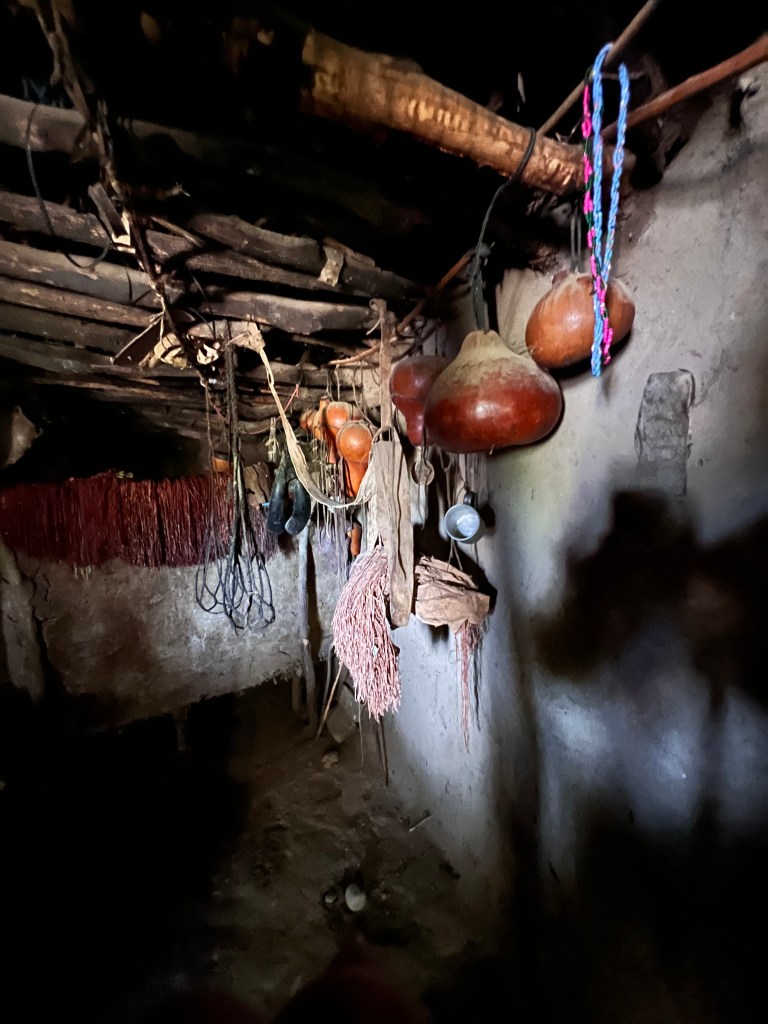
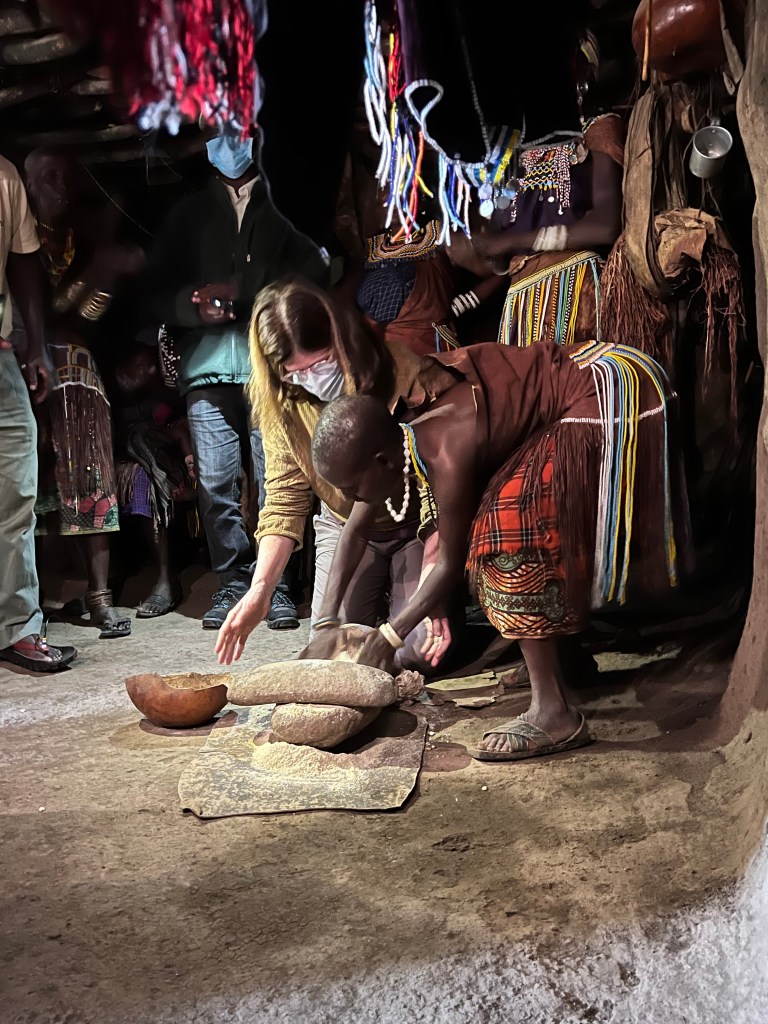
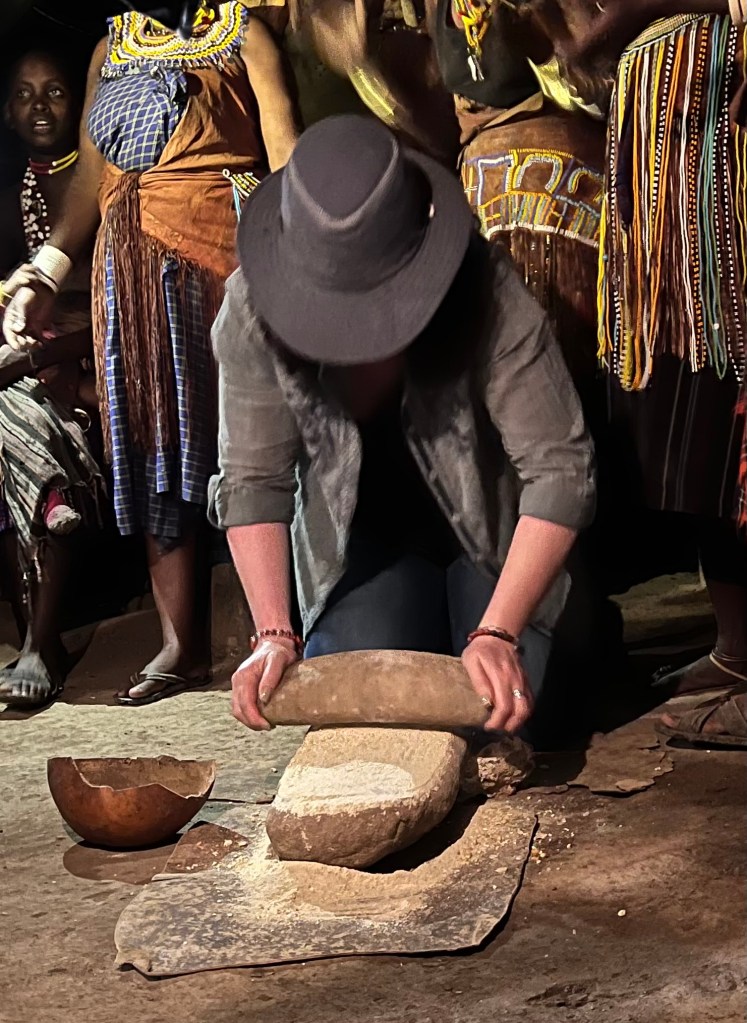
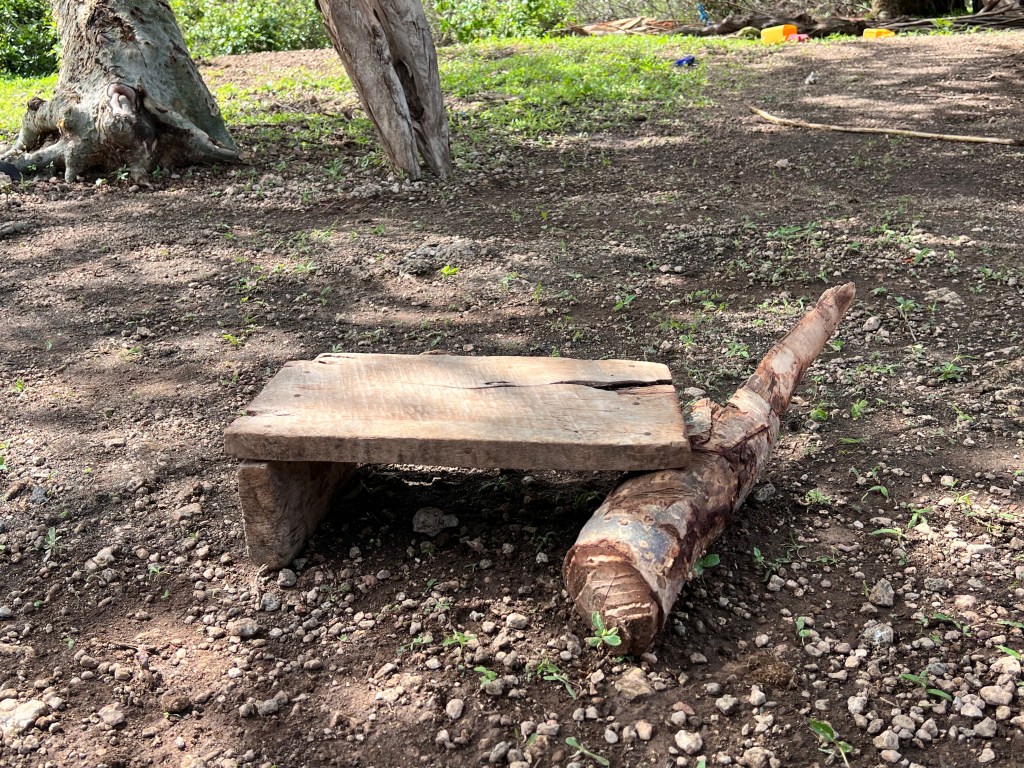
As we gathered, the women brought stools for us to sit on as they showed us their hut and how to grind corn. They spent time chasing goats away before we could enter. For some reason the goats always headed toward the door to get into the huts. The huts are dark with no windows. The first room was where they sang as Karen, Jess and Larkin helped grind the corn. The other room was where they slept. They uses white corn which they grind into flour using the stone. They then cook ugali which is basically white polenta – a diet of many east African cultures.
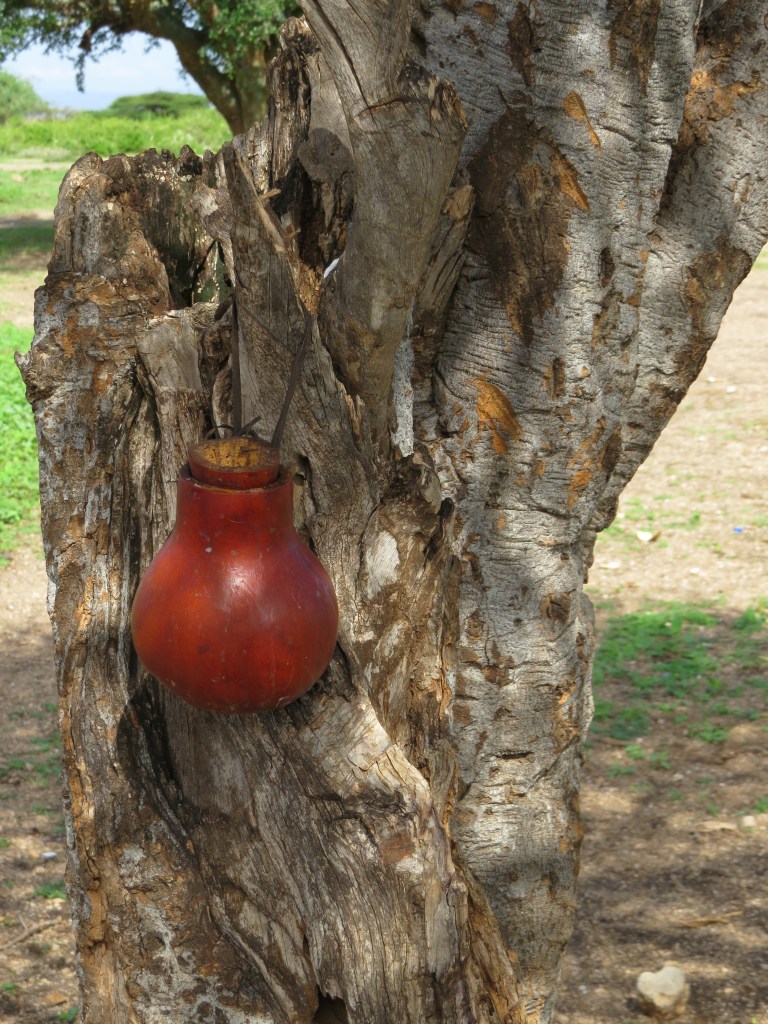
The pumpkin gourds are hung on the walls and are used to store and transport milk. The largest ones are used to collect water. I understand the largest are used to produce a local liqueur made from agave – it is used to celebrate weddings or funerals.
Karen started the grinding as the women sang
Jess grinding corn
A few kids were watching us and the beautiful faces of the women including what we believe was the matriarch. Jill in our group had been to visit these women last year with Gary on a safari. She graciously brought beads from America and handed them over to the matriarch. They all appreciated the gesture and will use the beads in their beautiful creations.
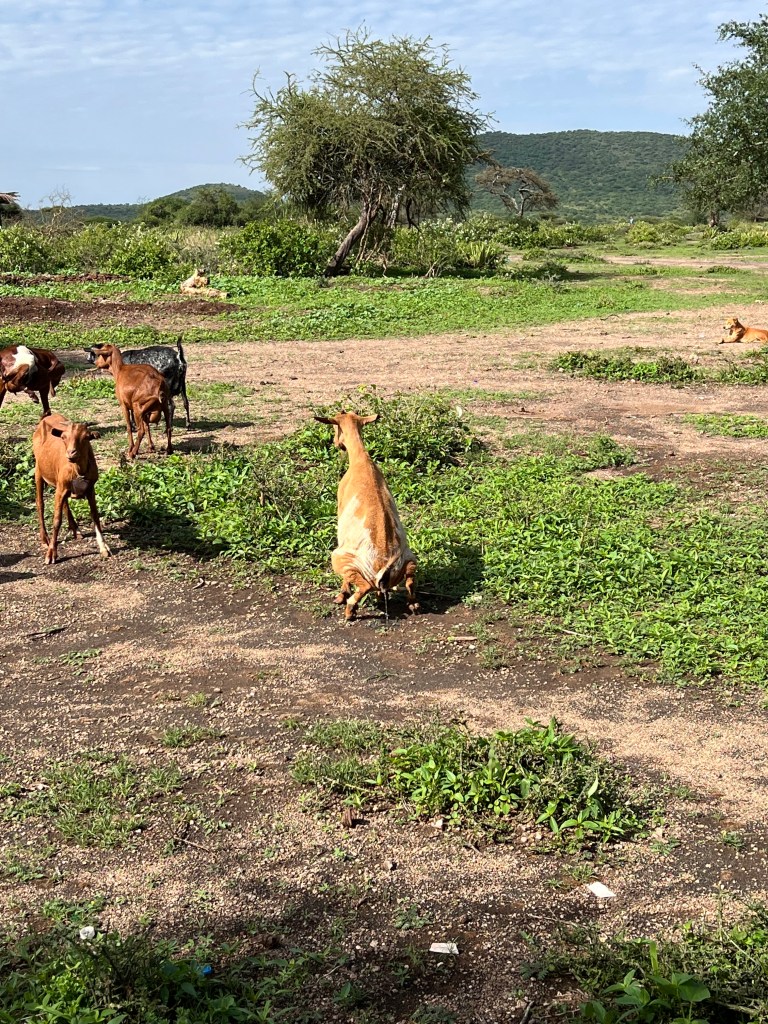
When the corn demonstration was over we worked our way over toward the goats and had a milking demonstration. It was fun to watch the kids released from where they stay and run to find their own mothers. When they start to suckle is when they can be milked. The moms all recognized the bleat of their own offspring.
Mamas and daughters and portraits on our way to the mens metal working enclosure.
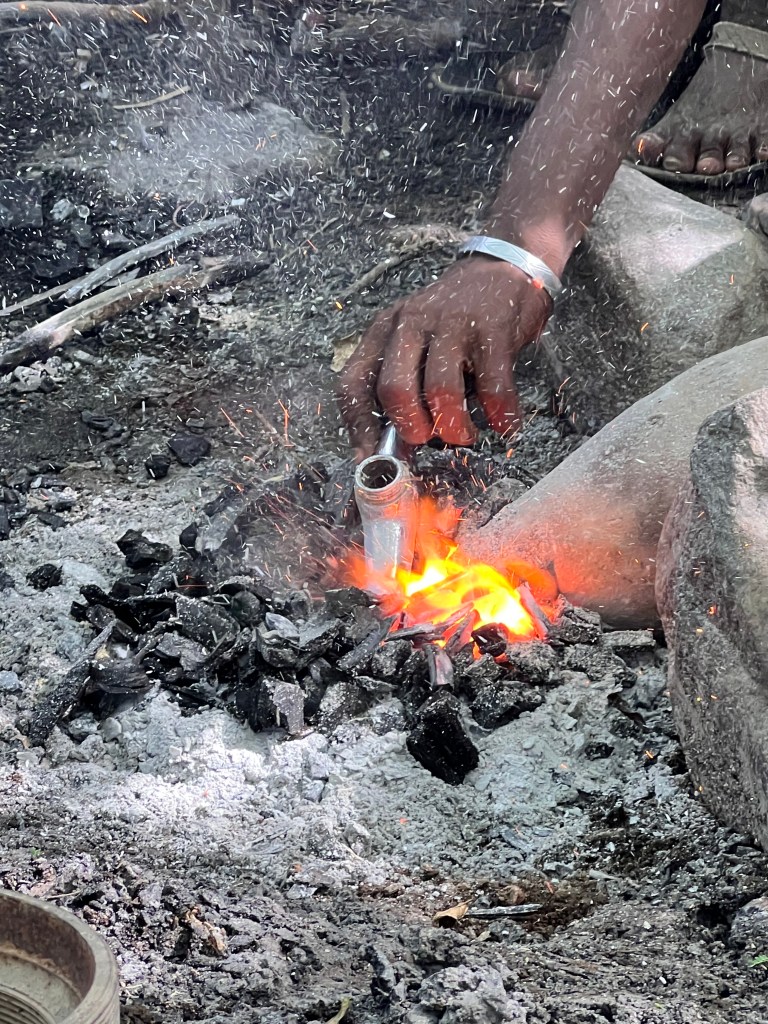
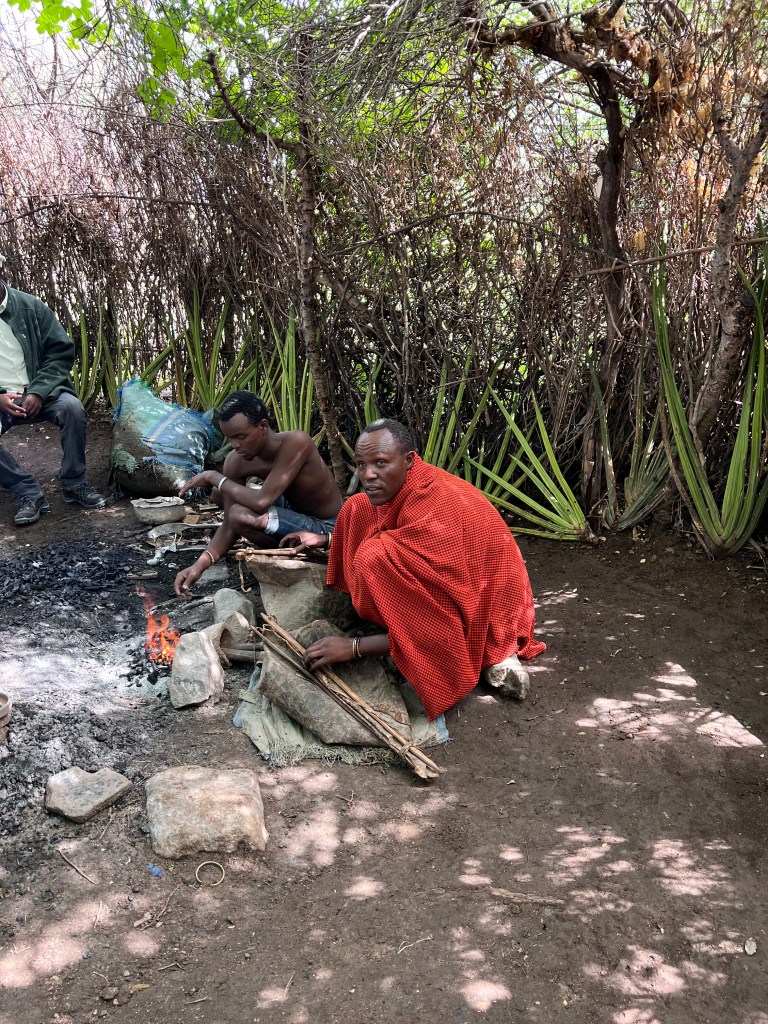
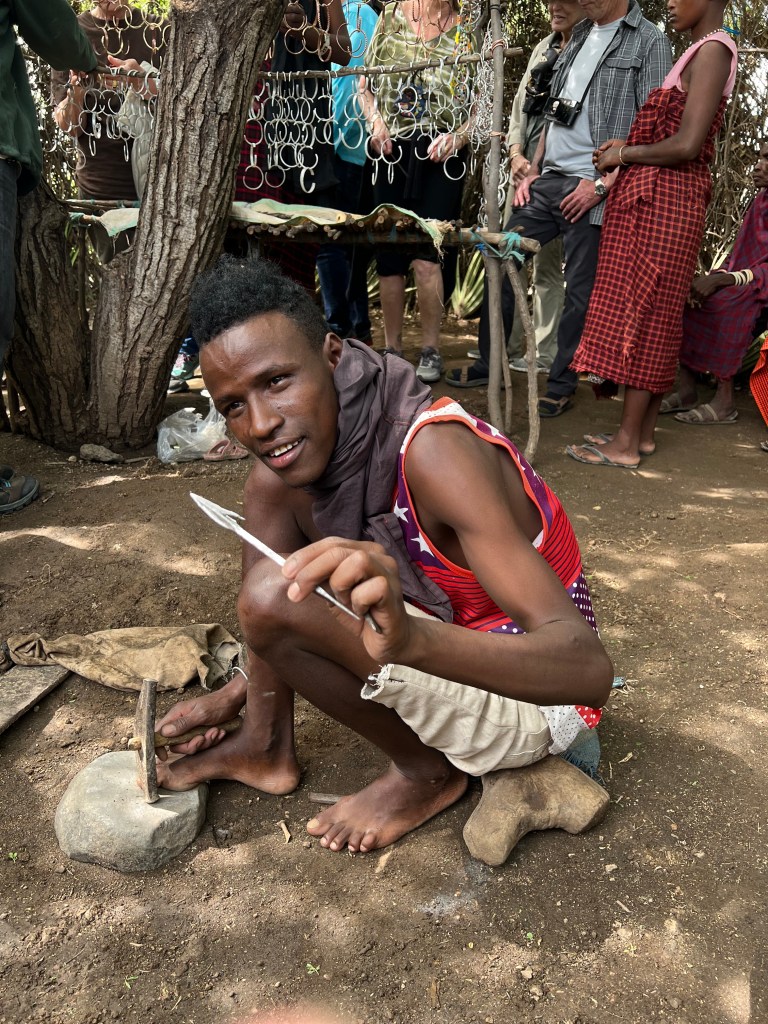
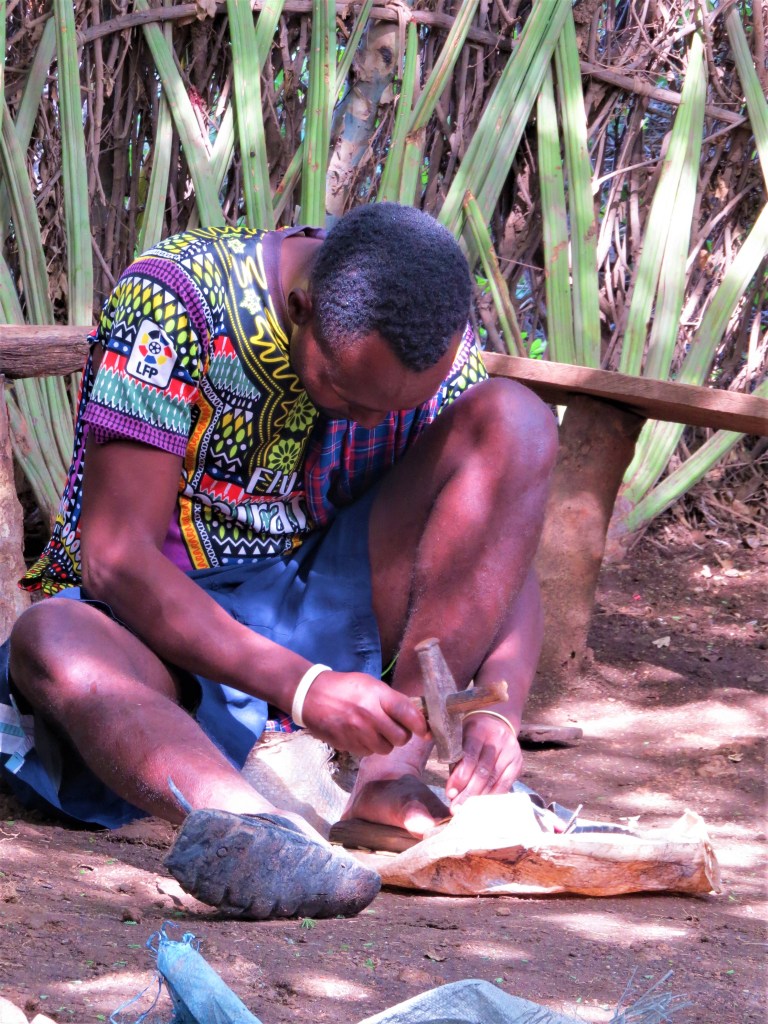
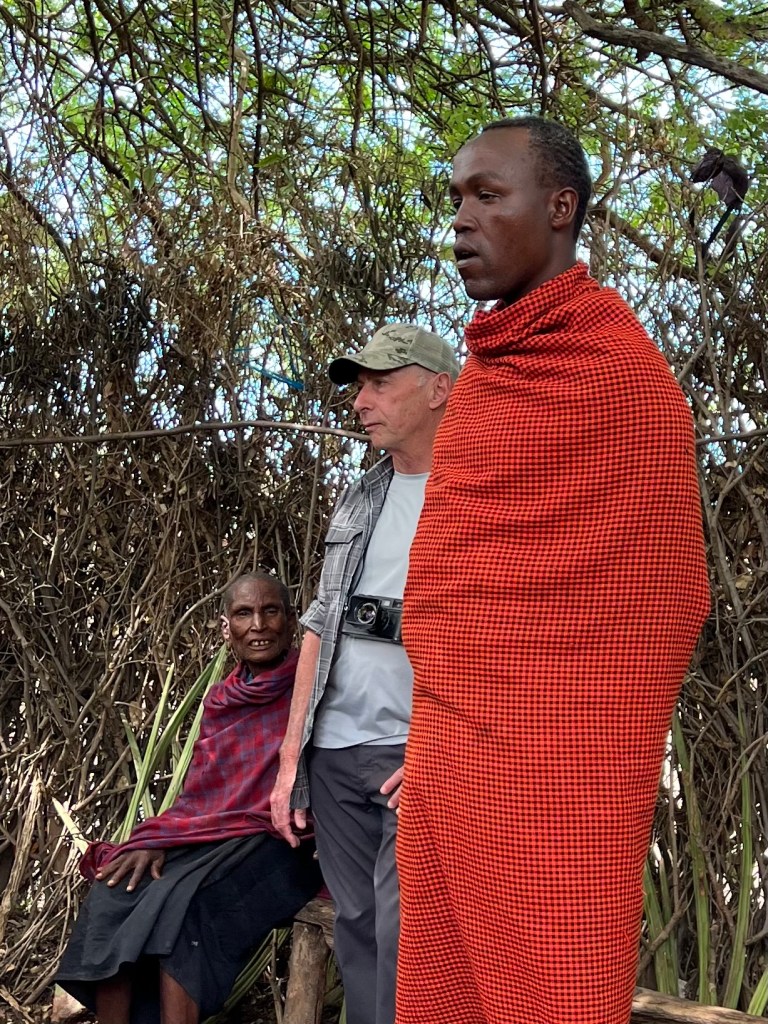
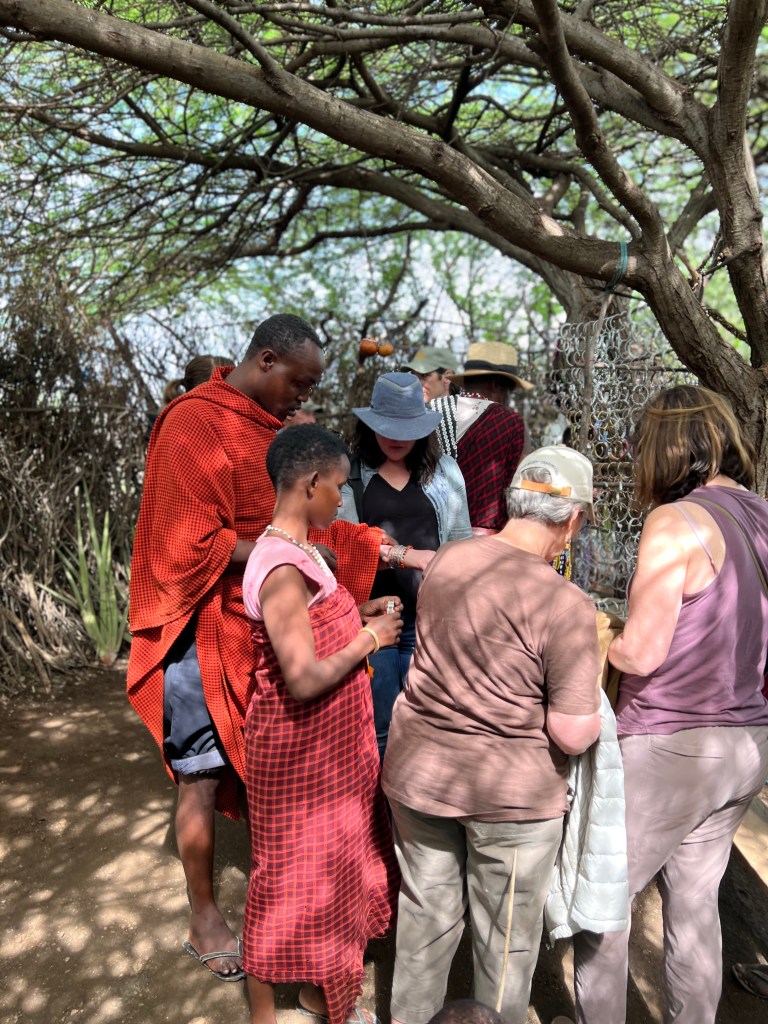
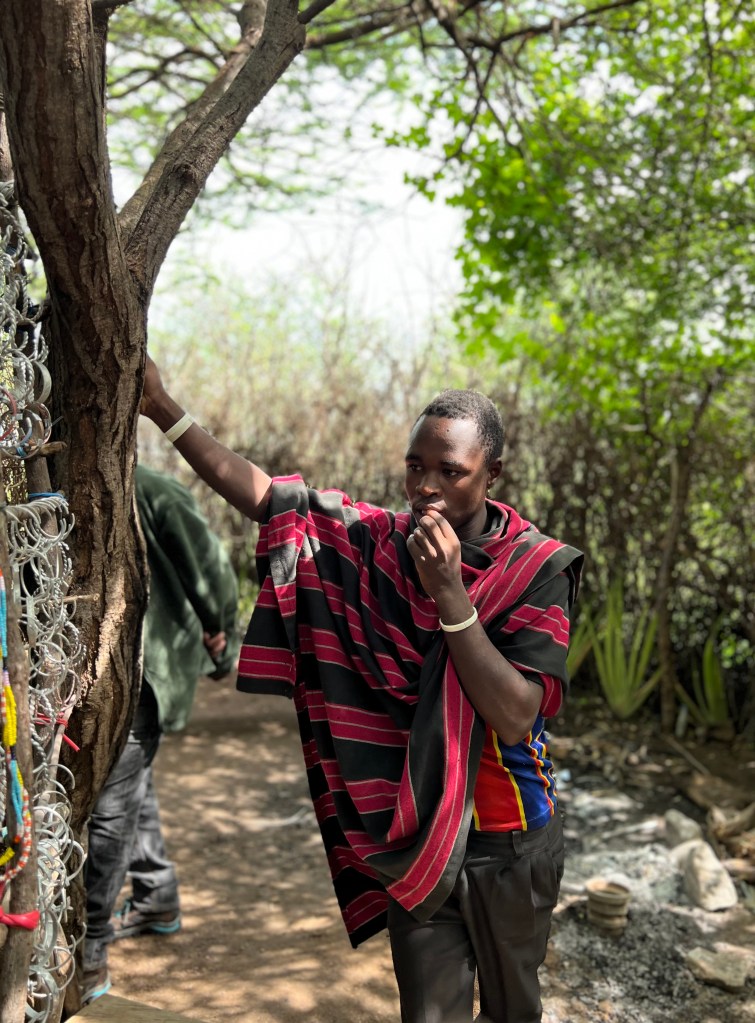
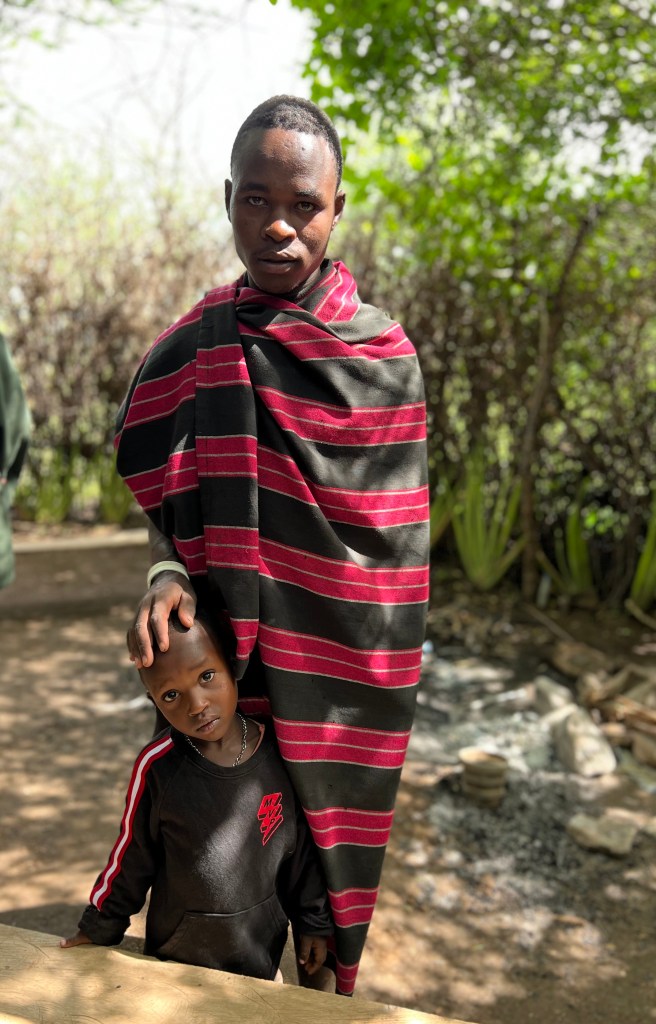
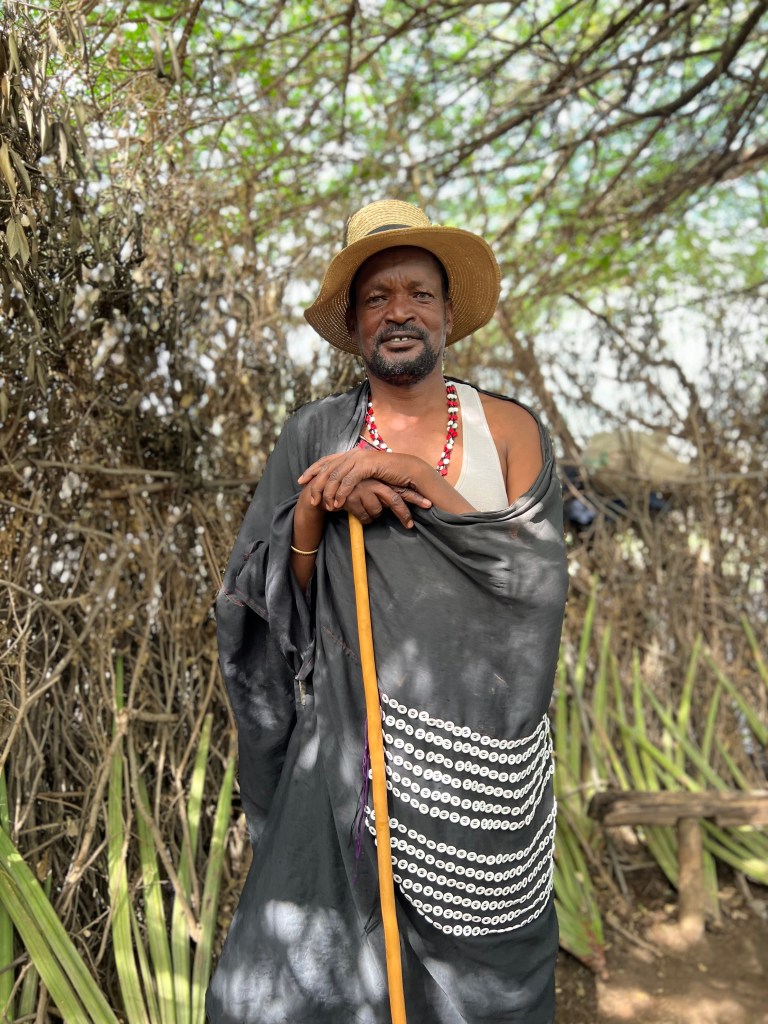
The Datoga men showed us how they used their bellows to heat up discarded plumbing faucets etc to melt and manipulate the metal. They use what they can to create jewelry or needed metal items like arrow tips and hooks to exchange for honey or money. I loved our orange adorned gentleman who looks like OJ Simpson and whose undergarments were jeans rolled up and our sober faced guy in red and black with his soccer shirt and also one standing with his son. Michael even bought himself a copper bracelet and wears it.
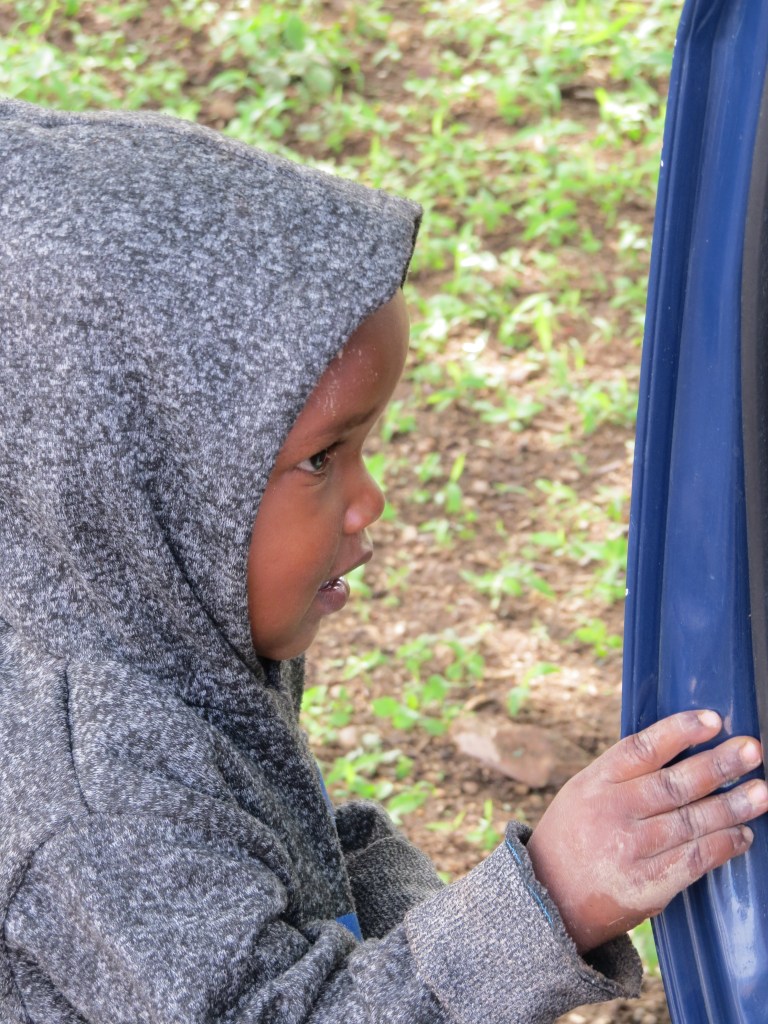
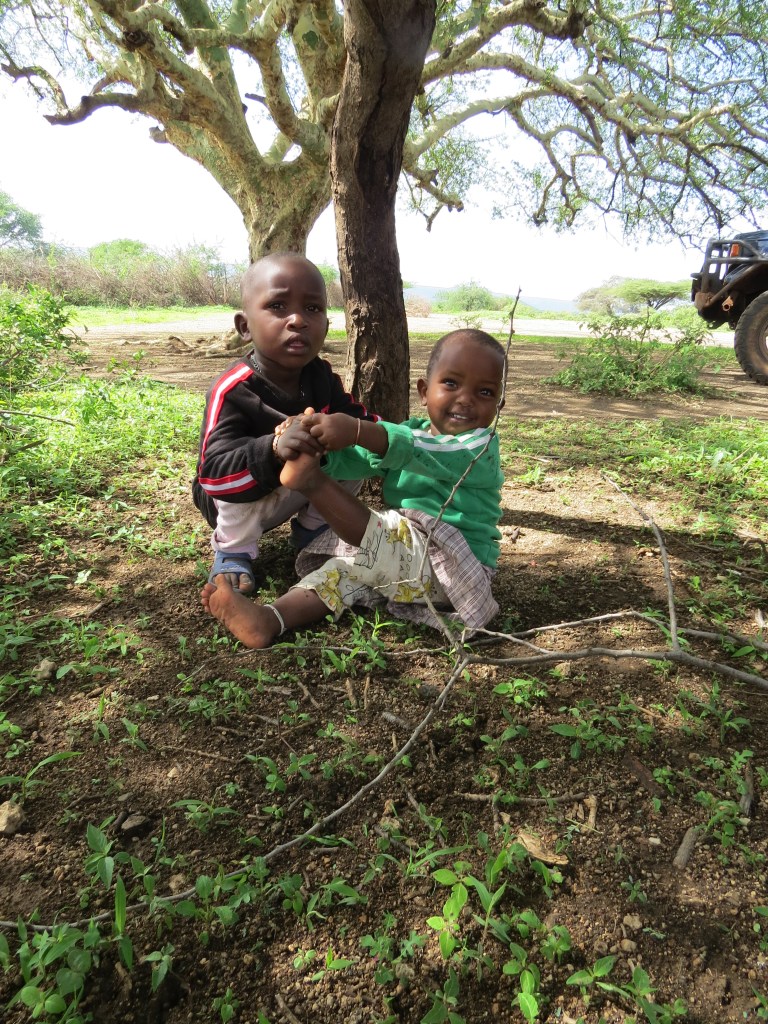
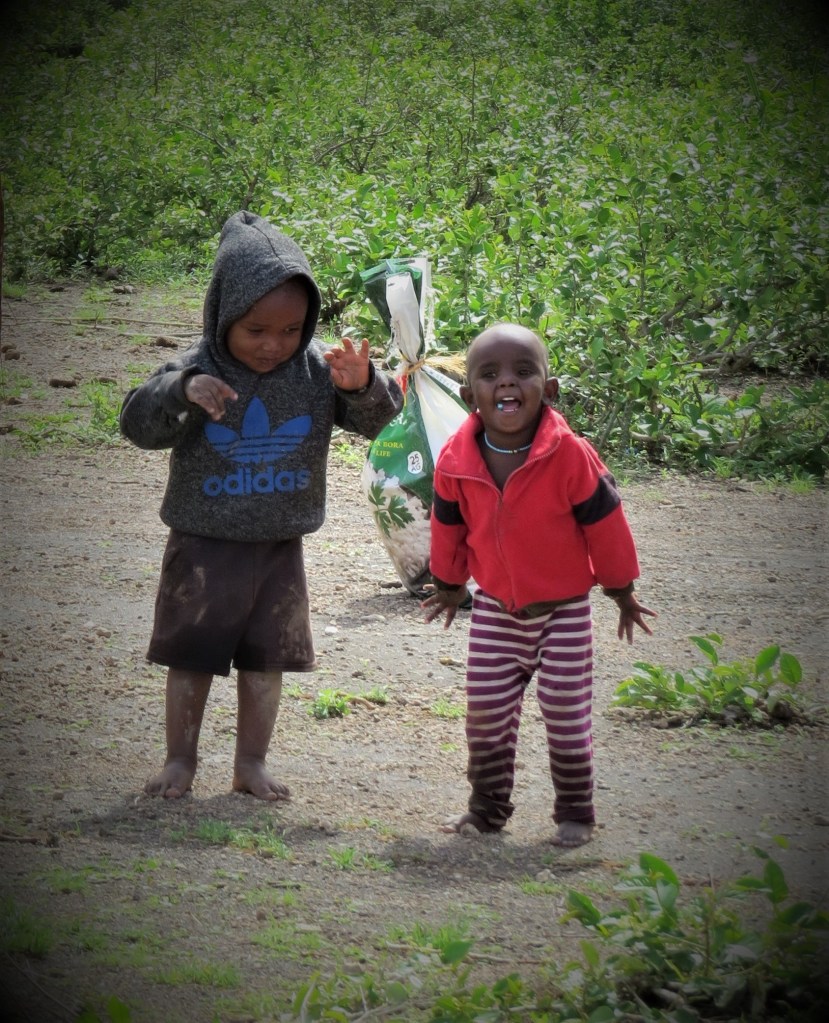
Loved portraits of the kids!
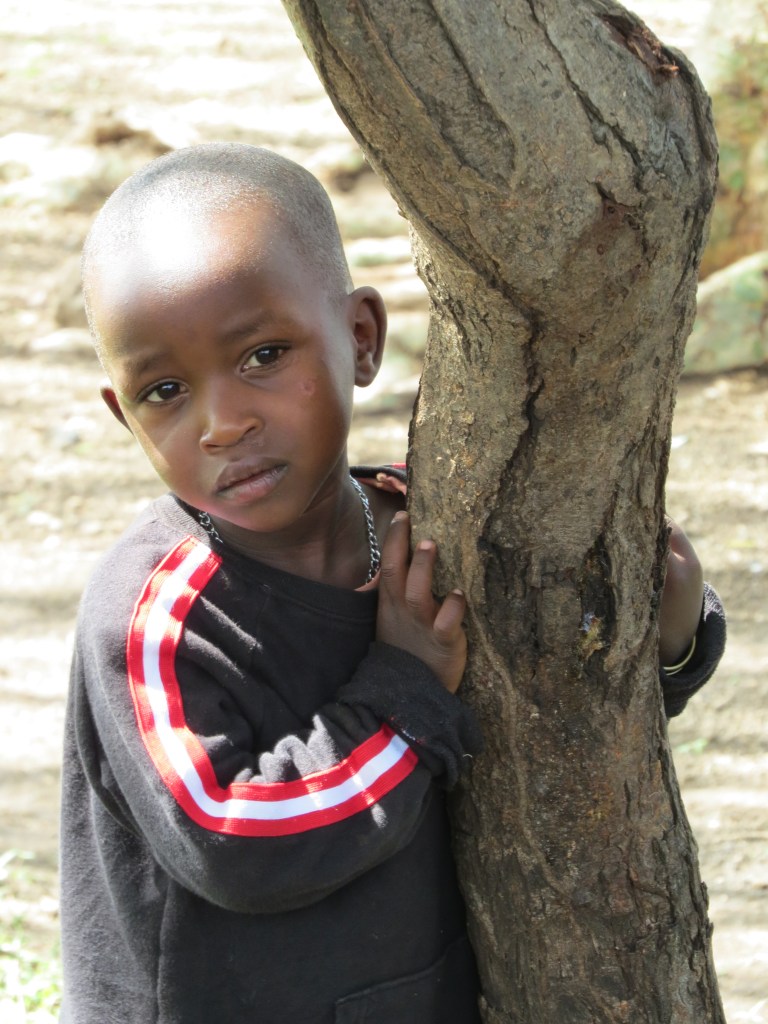
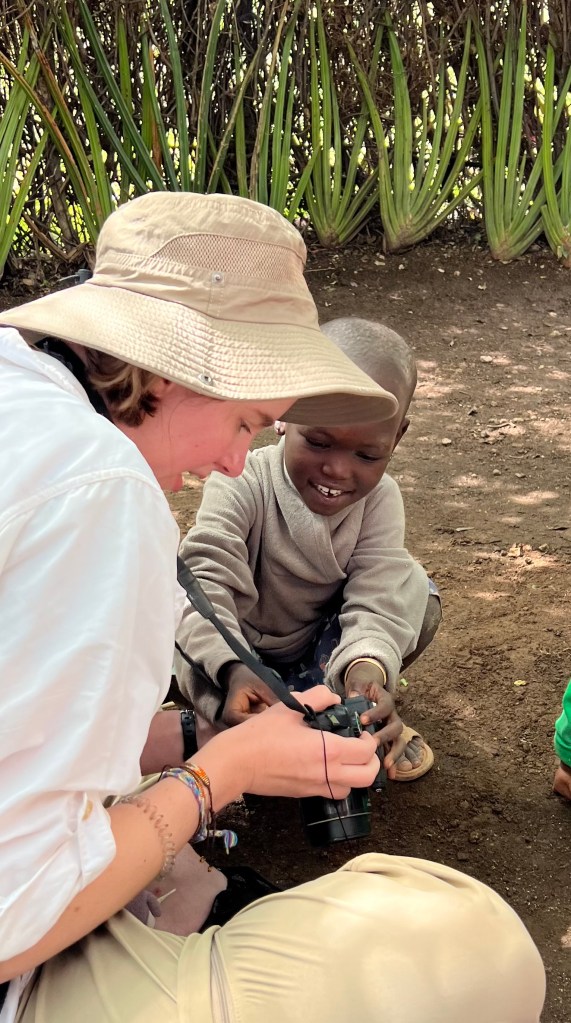
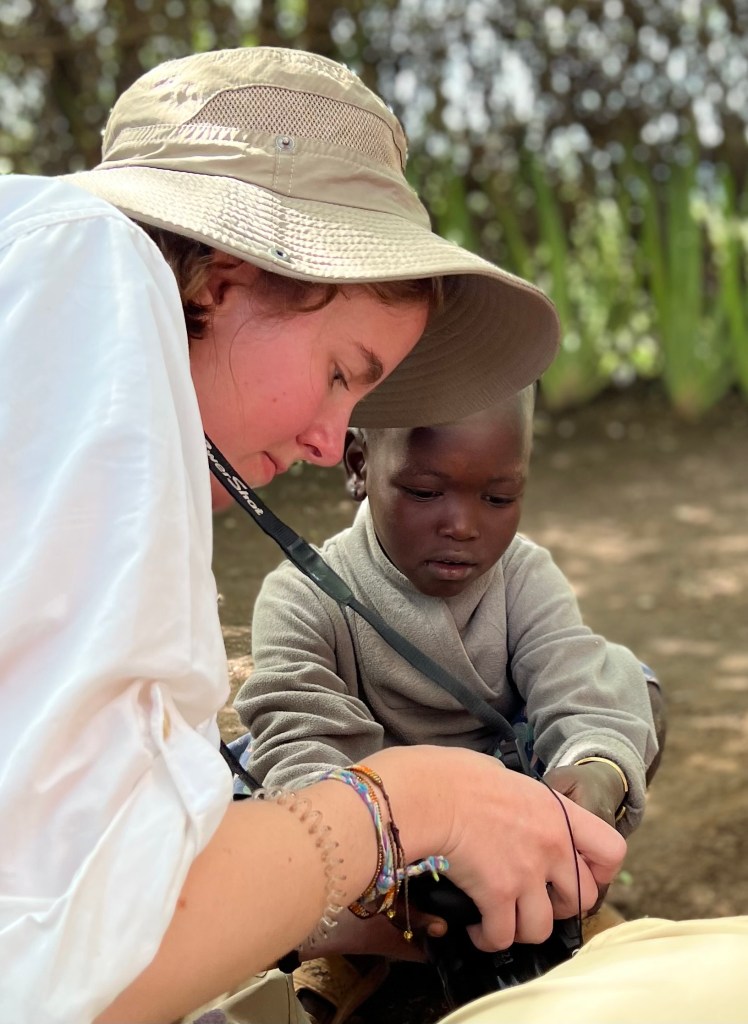
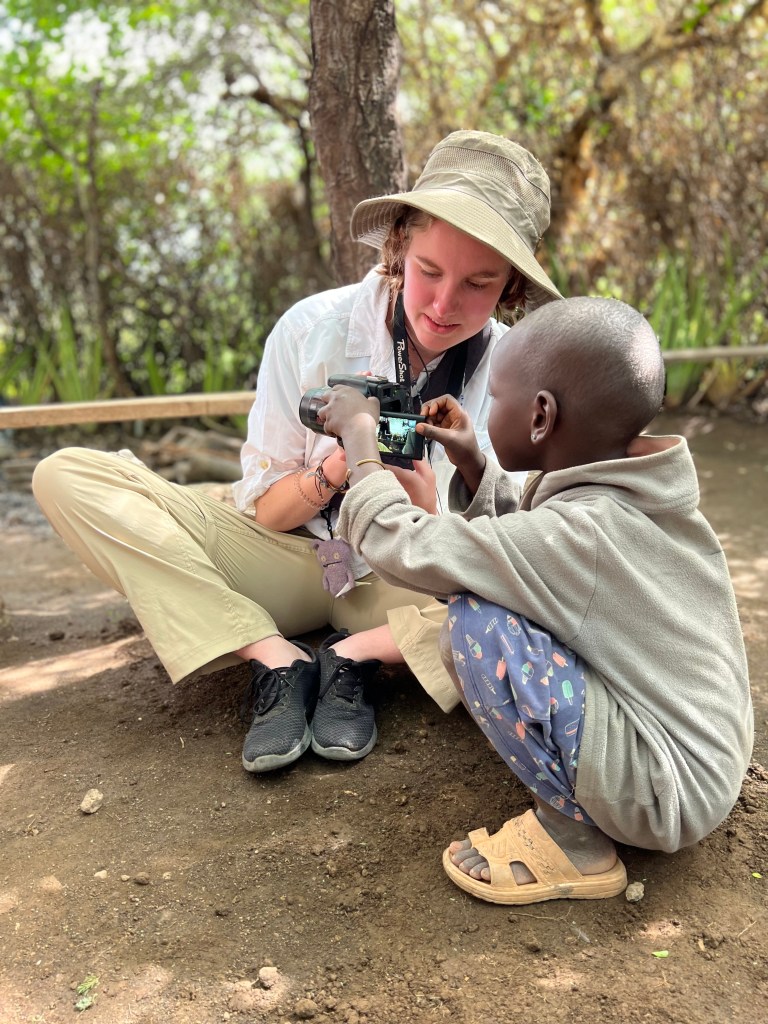
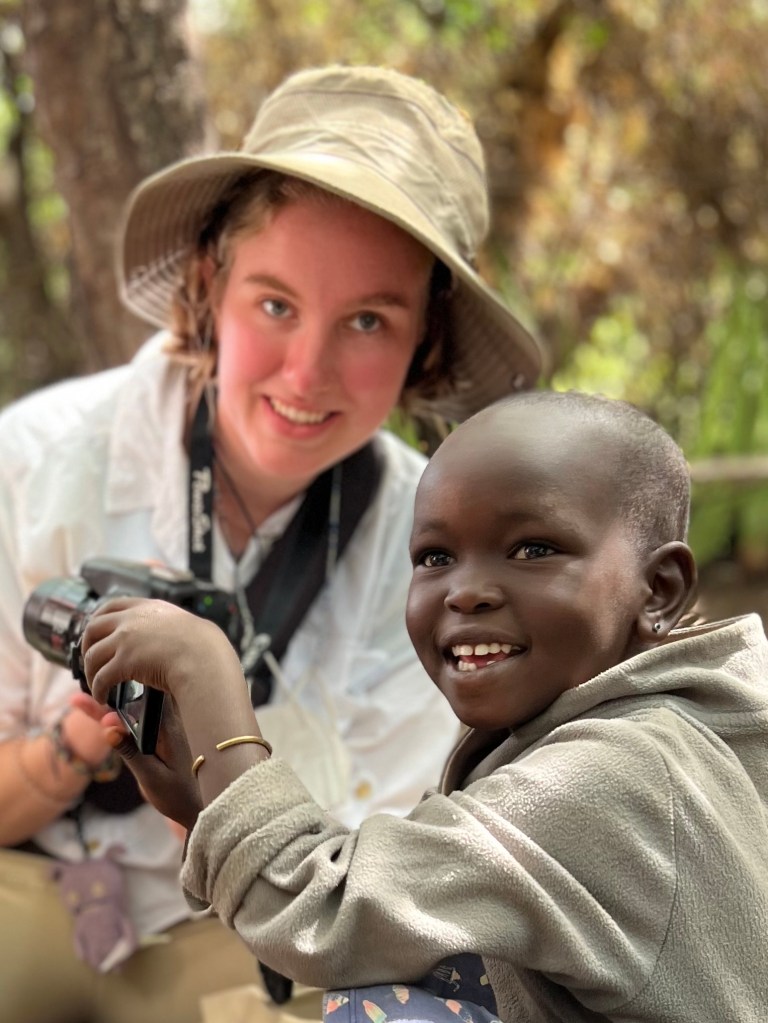
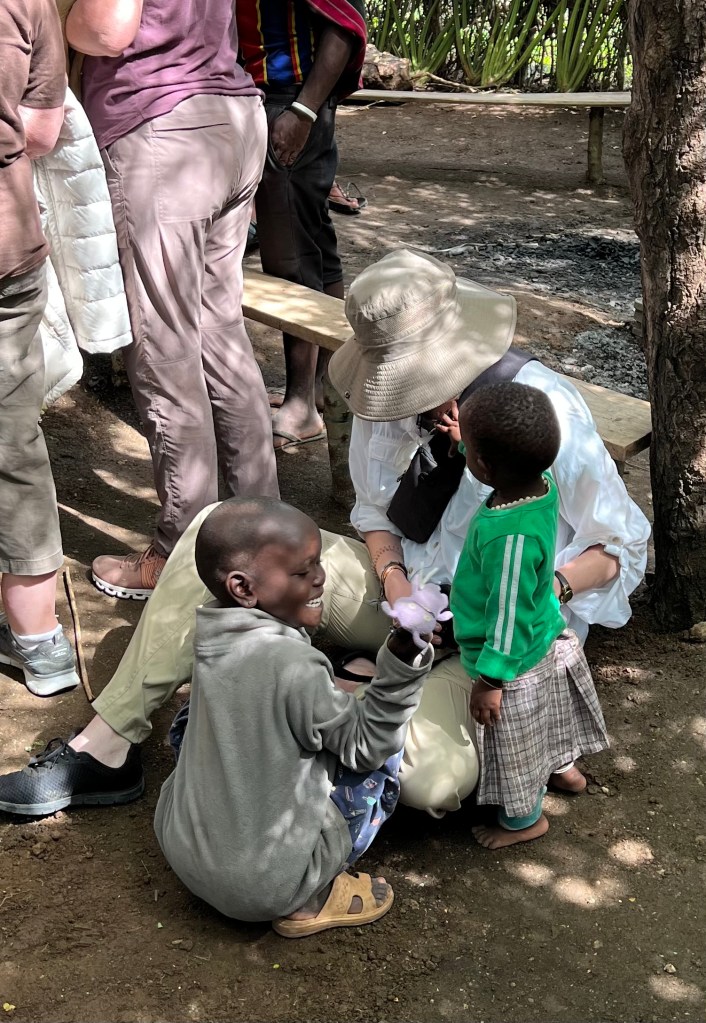
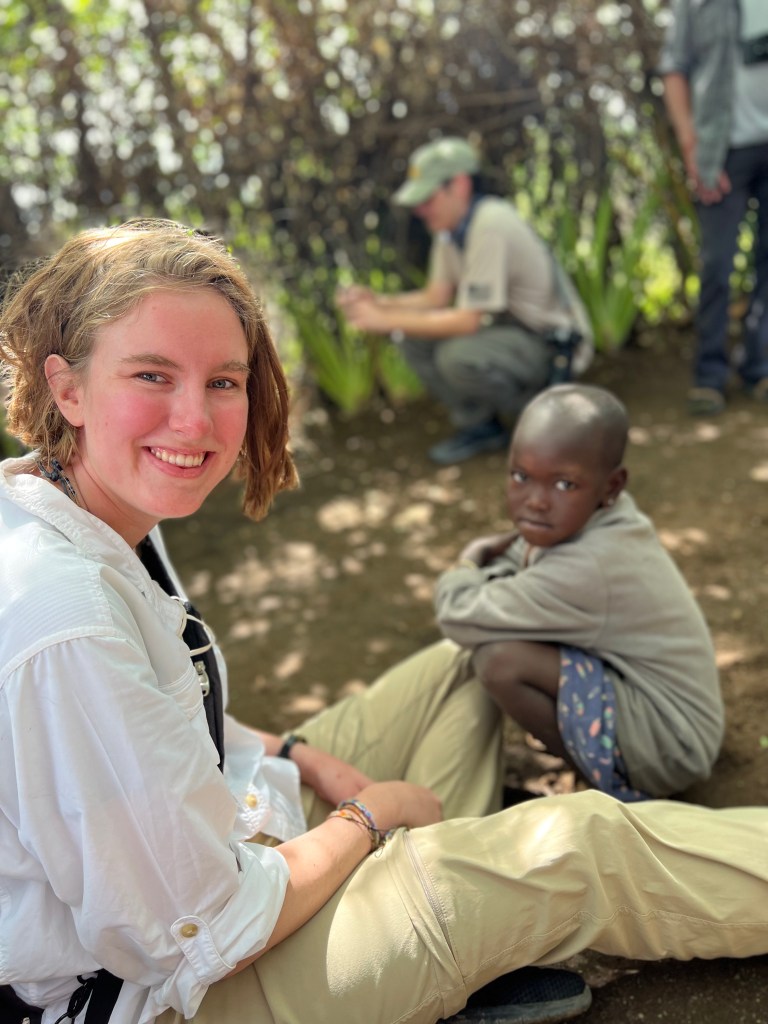
Larkin enjoyed sharing her camera with the girls. Her little purple uglydoll hooked to her backpack stayed behind. They were intrigued including a self portrait!
One of the things I’ve always enjoying photographing is laundry. Tanzania did not disappoint. Laundry with a view while driving down the road.
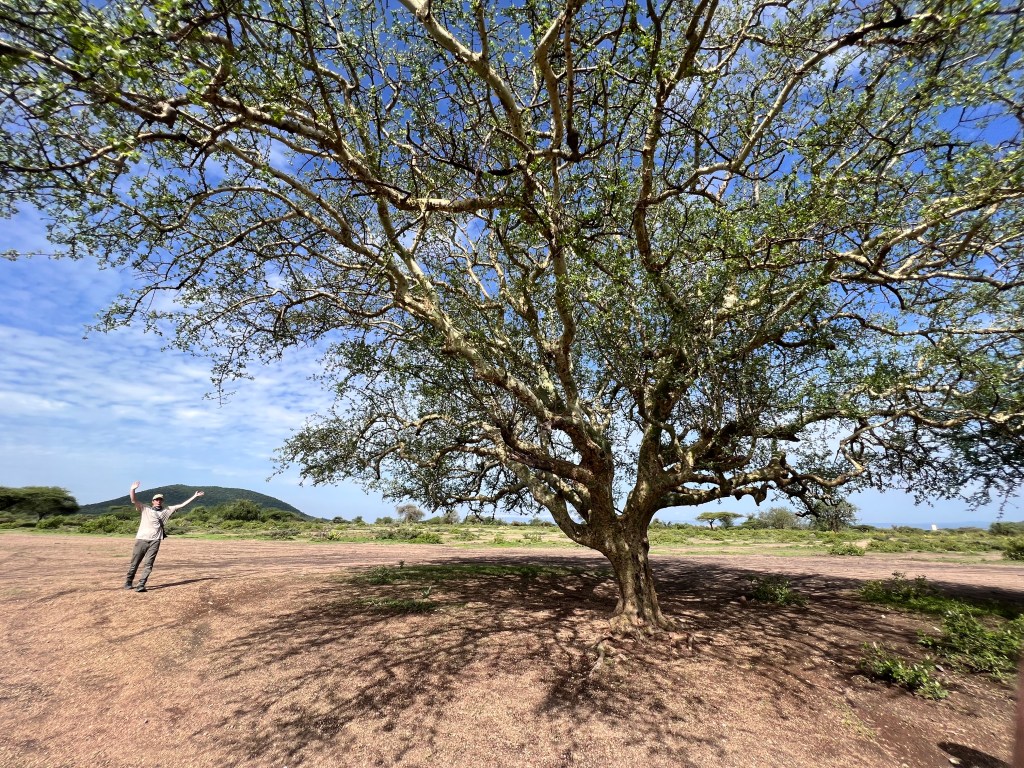
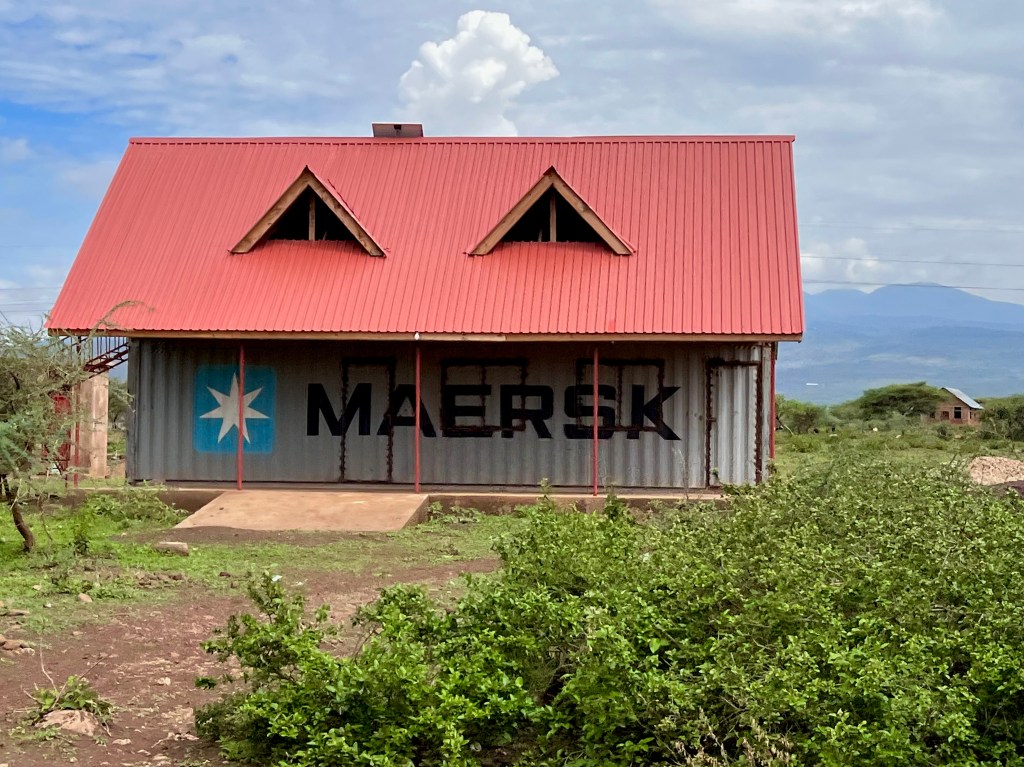
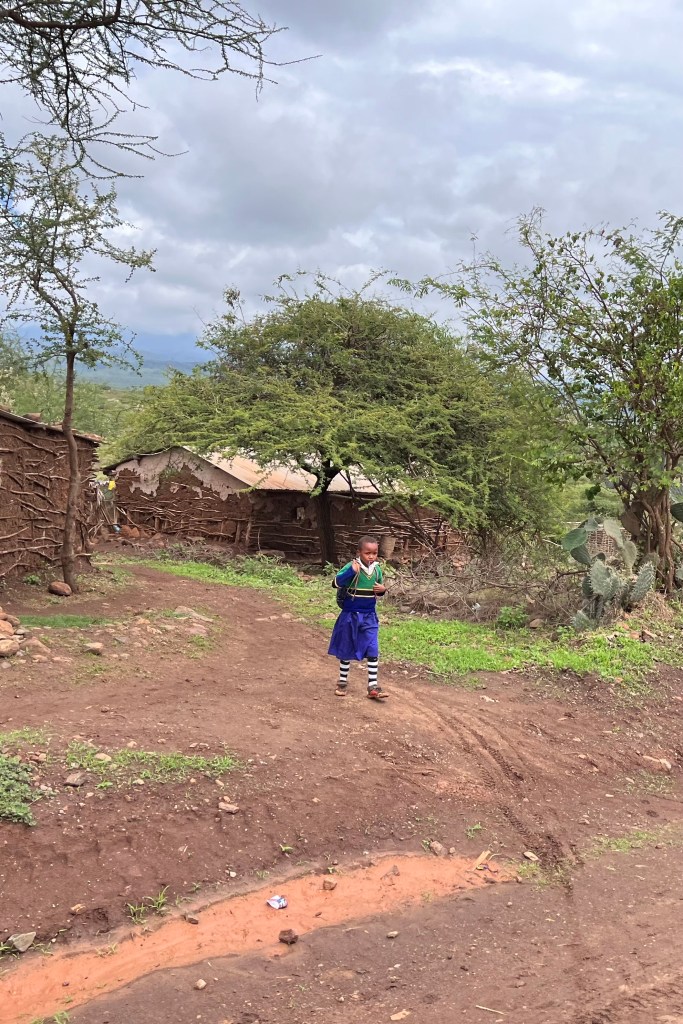
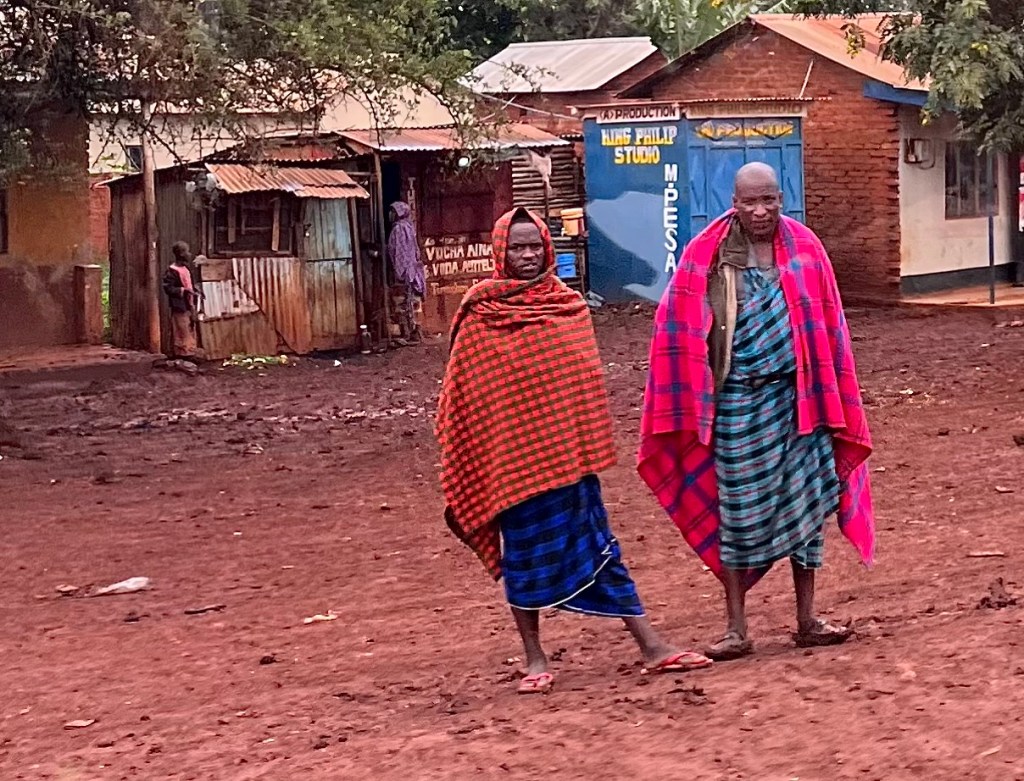
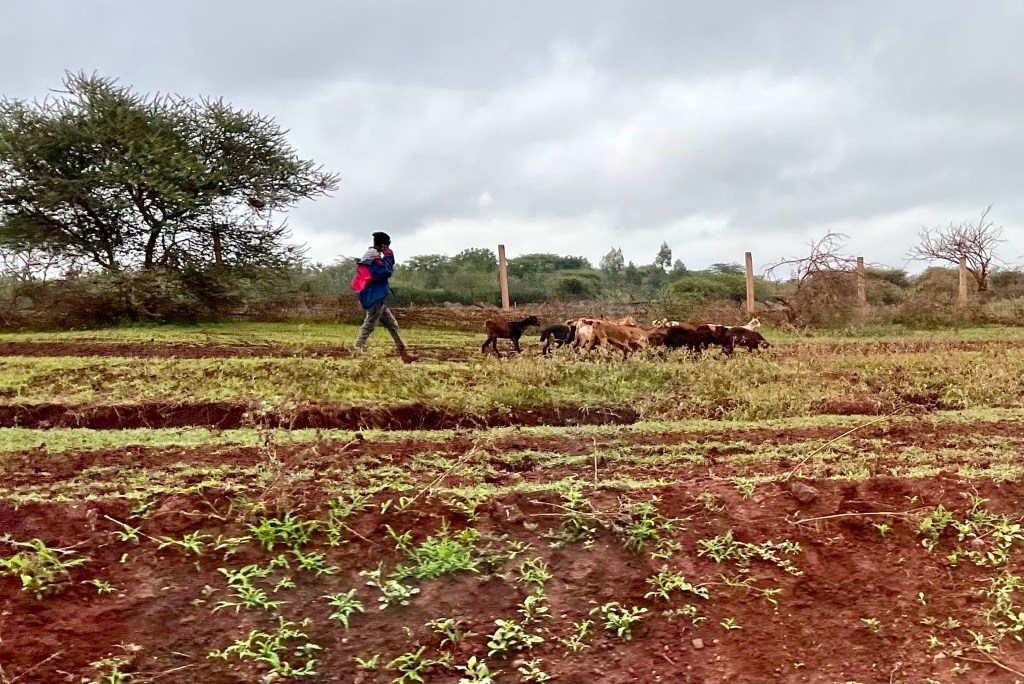
Miscellaneous photos on the drive back and forth to visit the Datoga tribe. Why a Mississippi butcher? Phil under a Datoga tree. When you don’t have a bench support use a log. The red volcanic mud is indigenous and ubiquitous. Shipping containers are often found and it seems they are used for all sorts of things. Mostly kids walk with groups of kids to school. This little girl is on her own walking in her school uniform. Phones are also ubiquitous. I thought seeing the Dakota tribe in their clothes might have just been for us but photos along the road show anything goes.
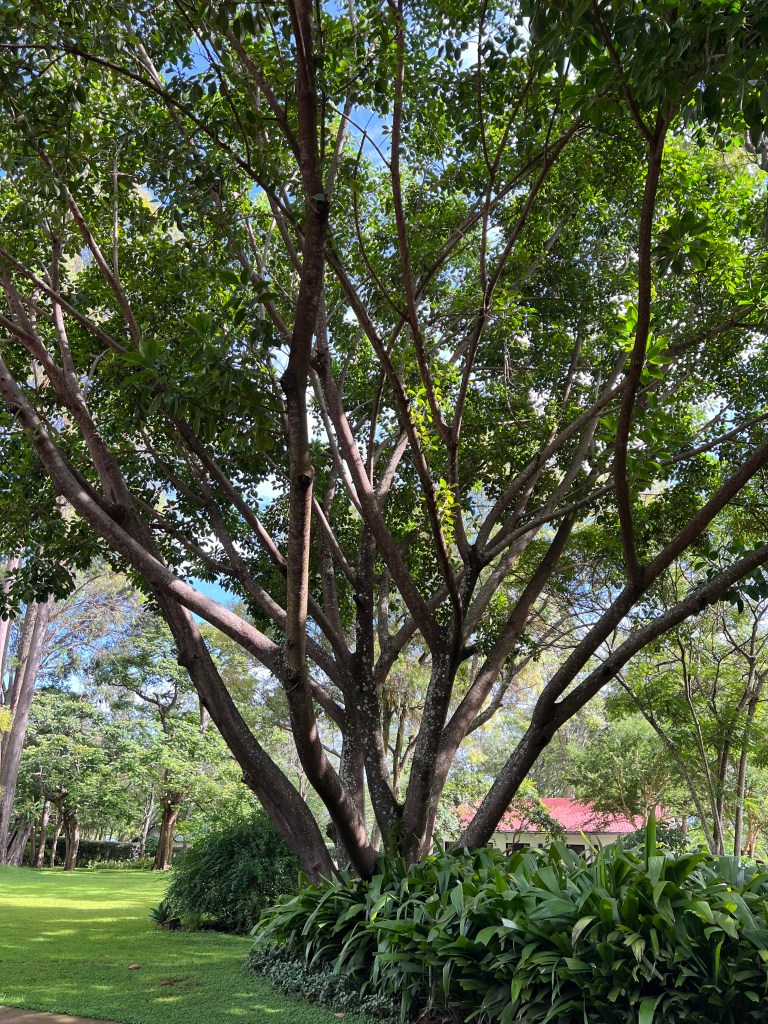
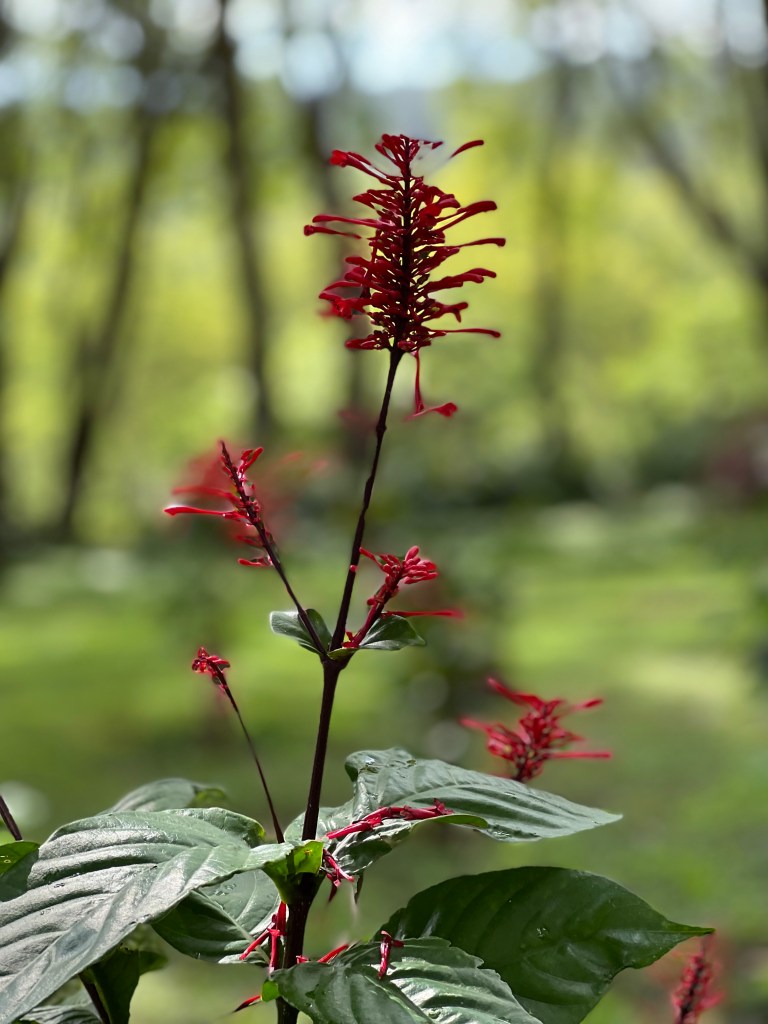
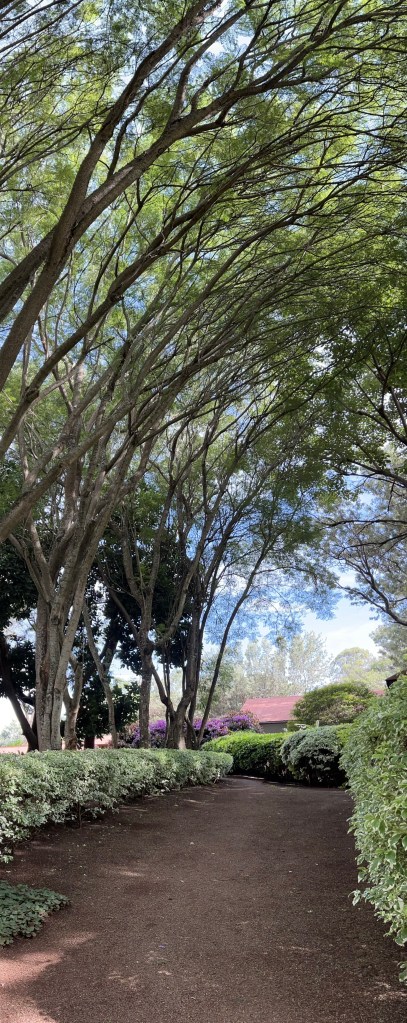
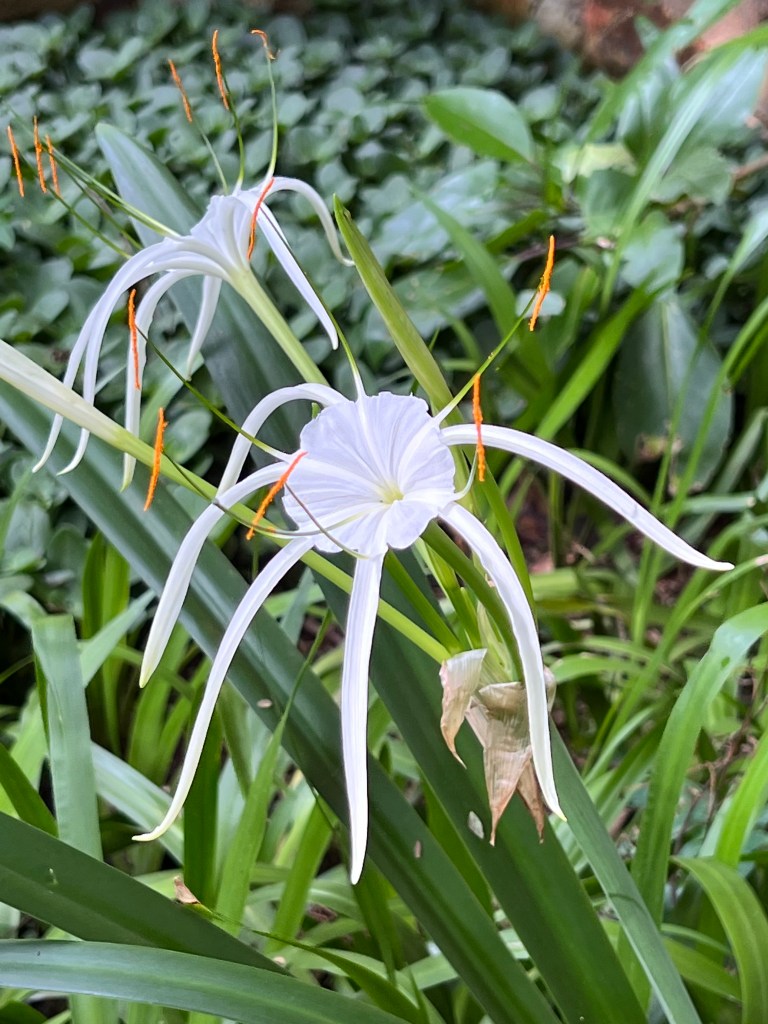
We came back for a beautiful outdoor lunch and an afternoon of down time. Tropical flowers grace all the pathways around the lodge. Walking around to soak up the tropical flowers and take photos was calming. We had the opportunity to get a massage on our down time. Mine was followed by a nice soak in the tub before dinner. Some folks had pool time as we went from a rainy entry day to a sunny midday at the lodge. We were all able to repack using our freshly laundered clothes. Late afternoon we could hear distant thunder and see the clouds build.
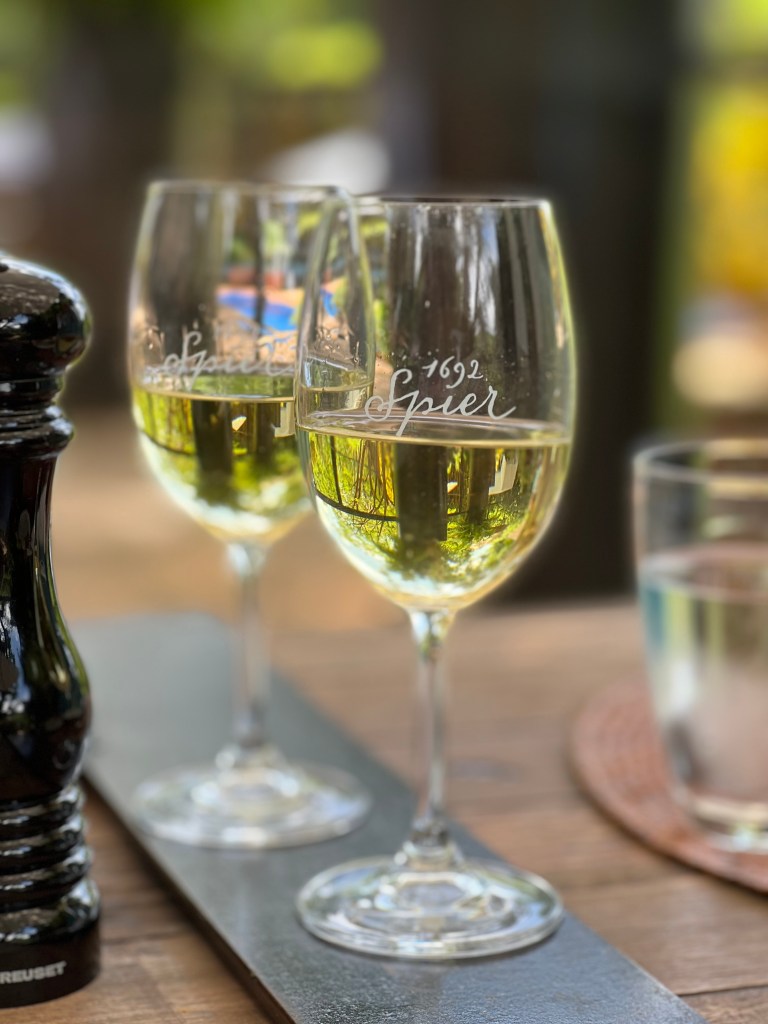
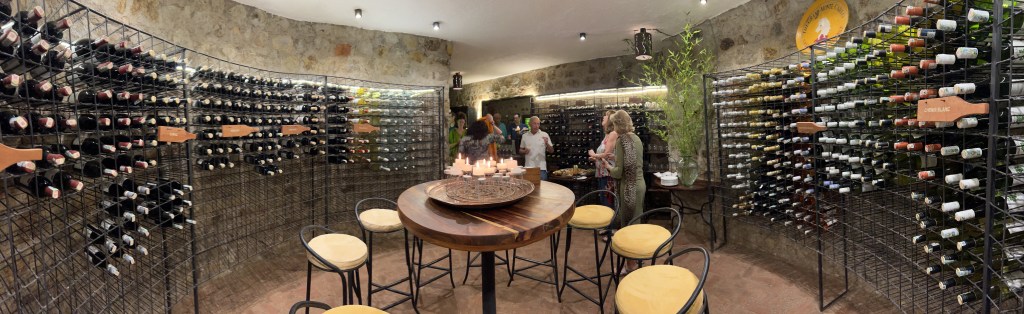
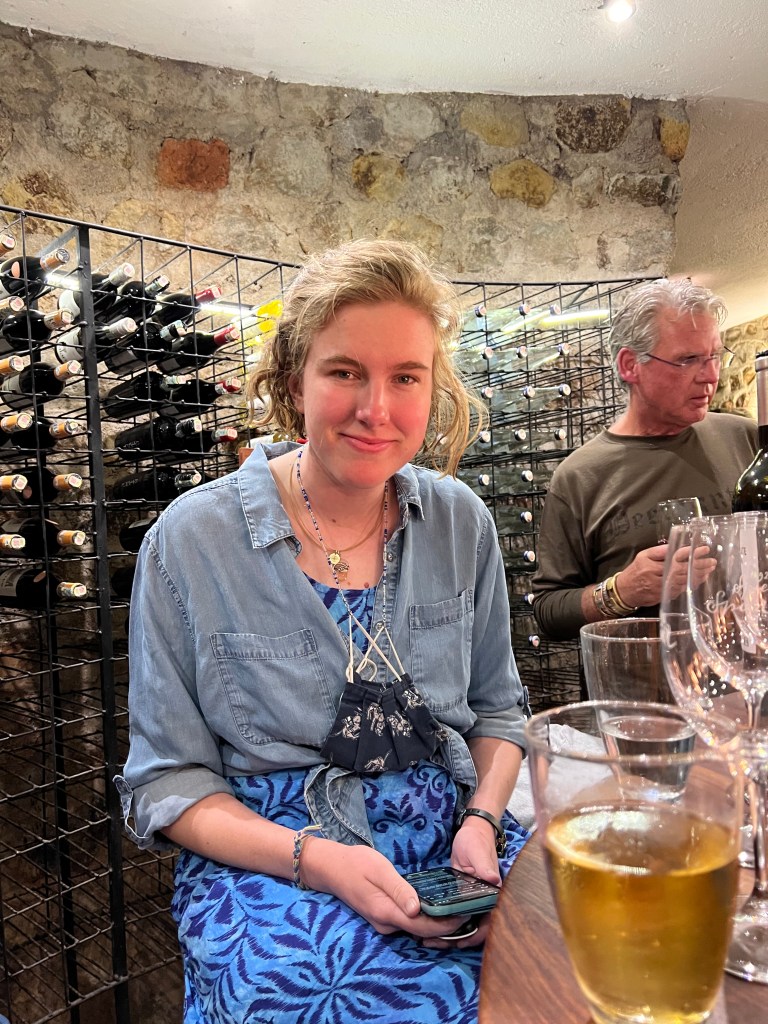
A pano of the wine cellar as we awaited dinner.
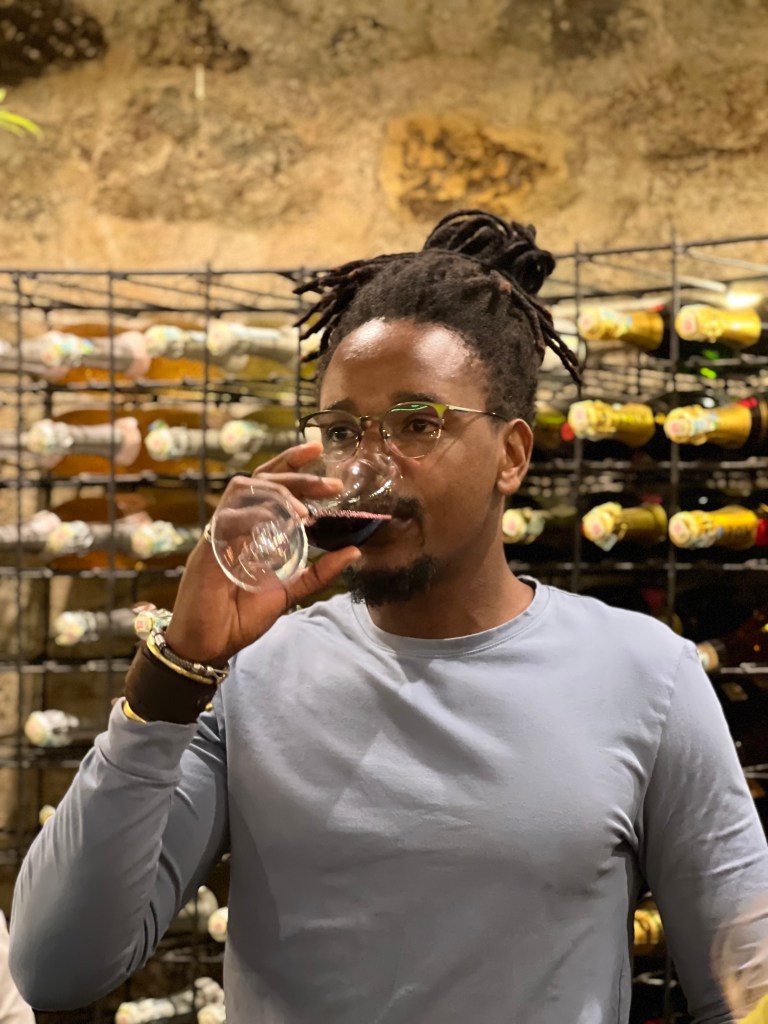
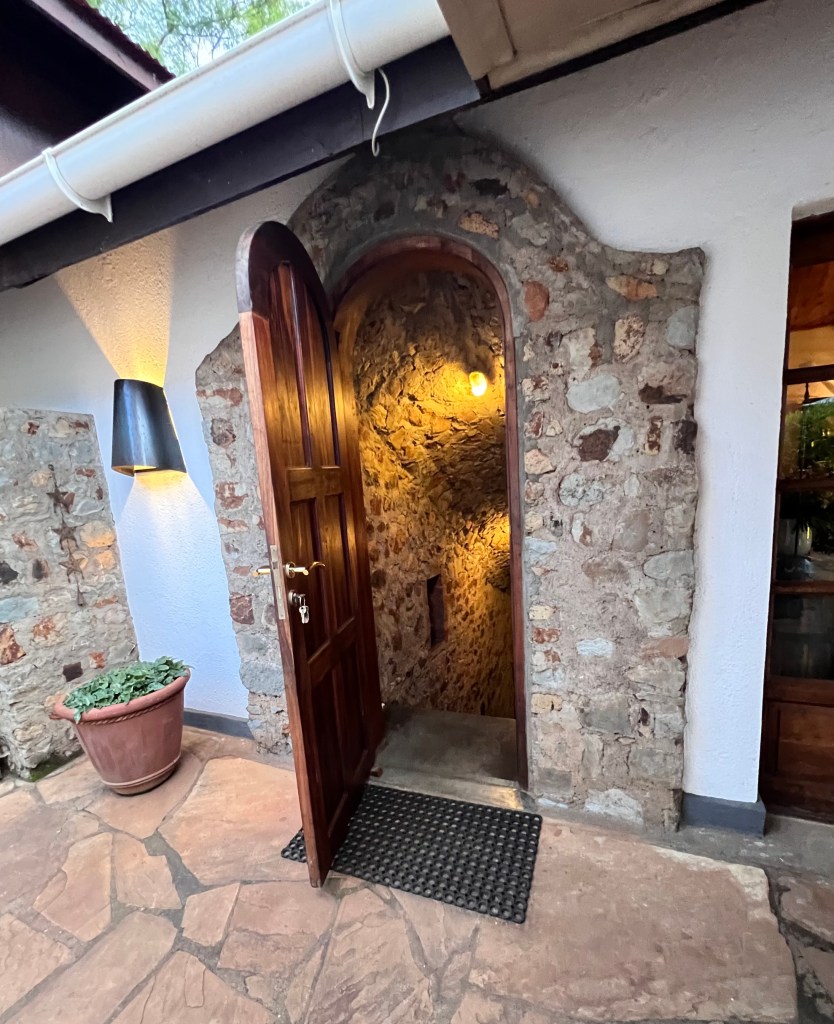
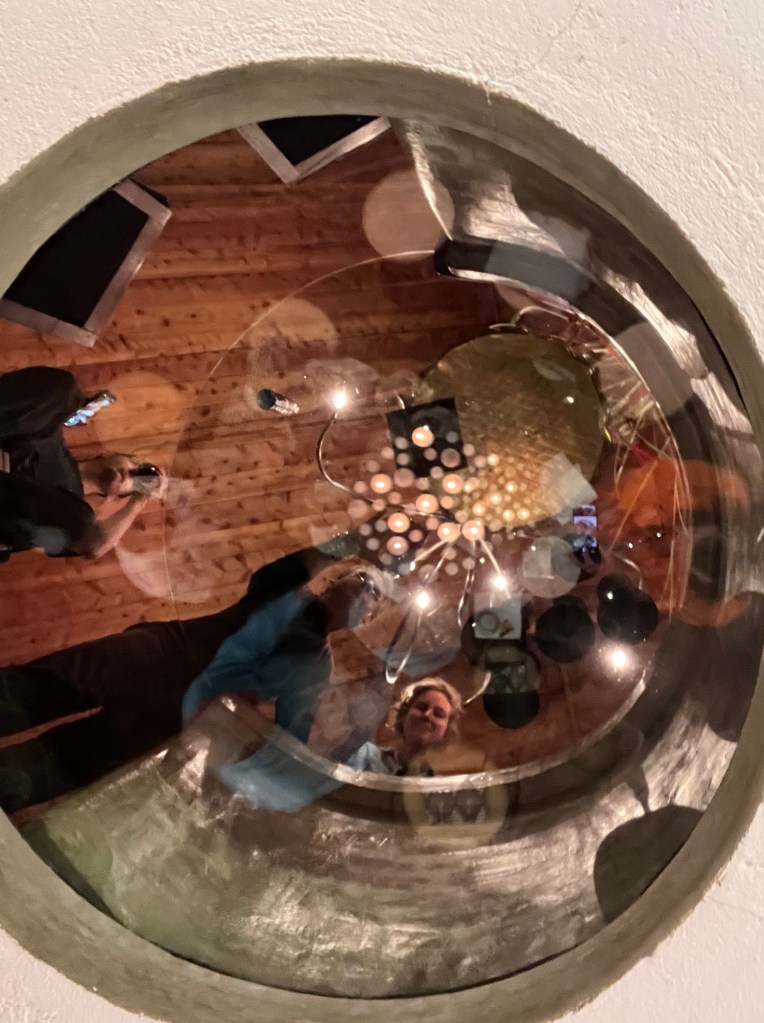
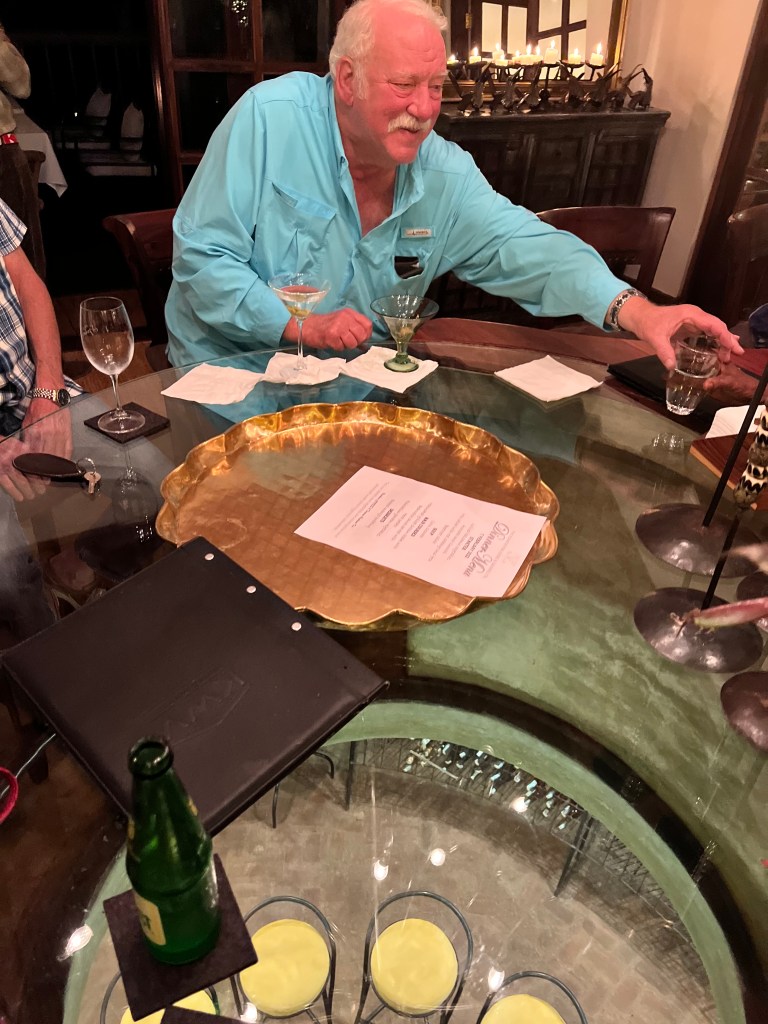
The door to the cellar, the bar above has a glass floor – you can see Larkin looking down before she joined us, Michael at the bar upstairs, Larkin in the cellar and Michael talking about how wine labels work with Gary and Jess.Most of the wines served are from South Africa and are very delicious.
Off to Tarangire National Park with fresh clothes. Tarangire has many elephant herds and plenty of monkeys and baboons gracing the trees.


































































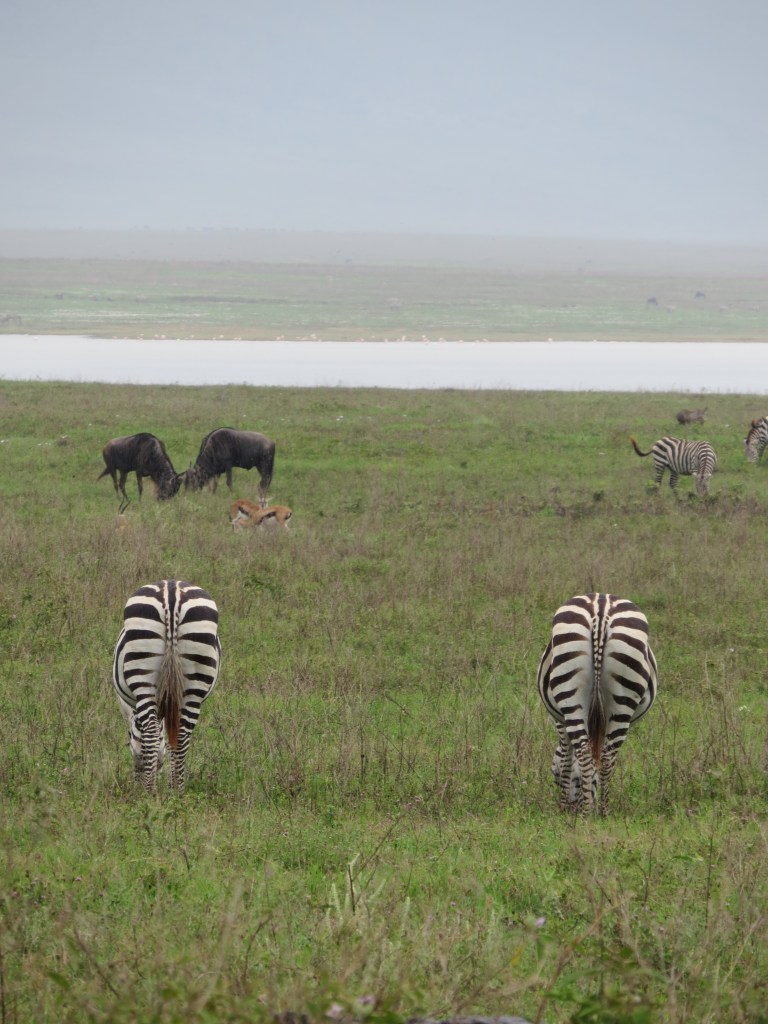
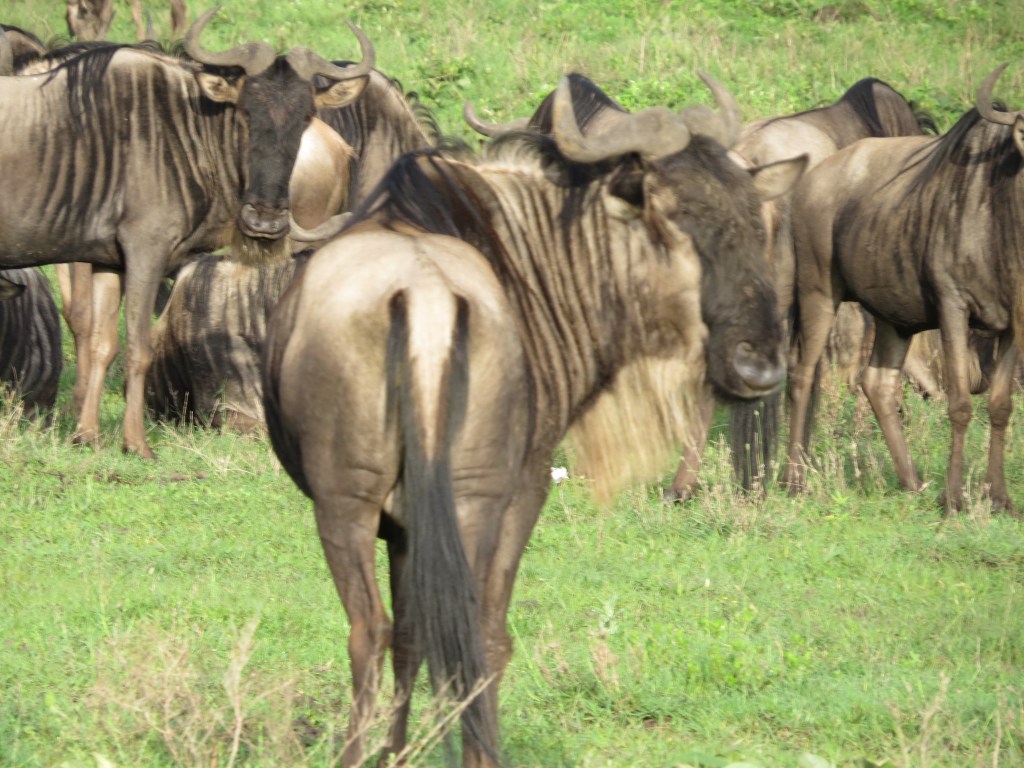
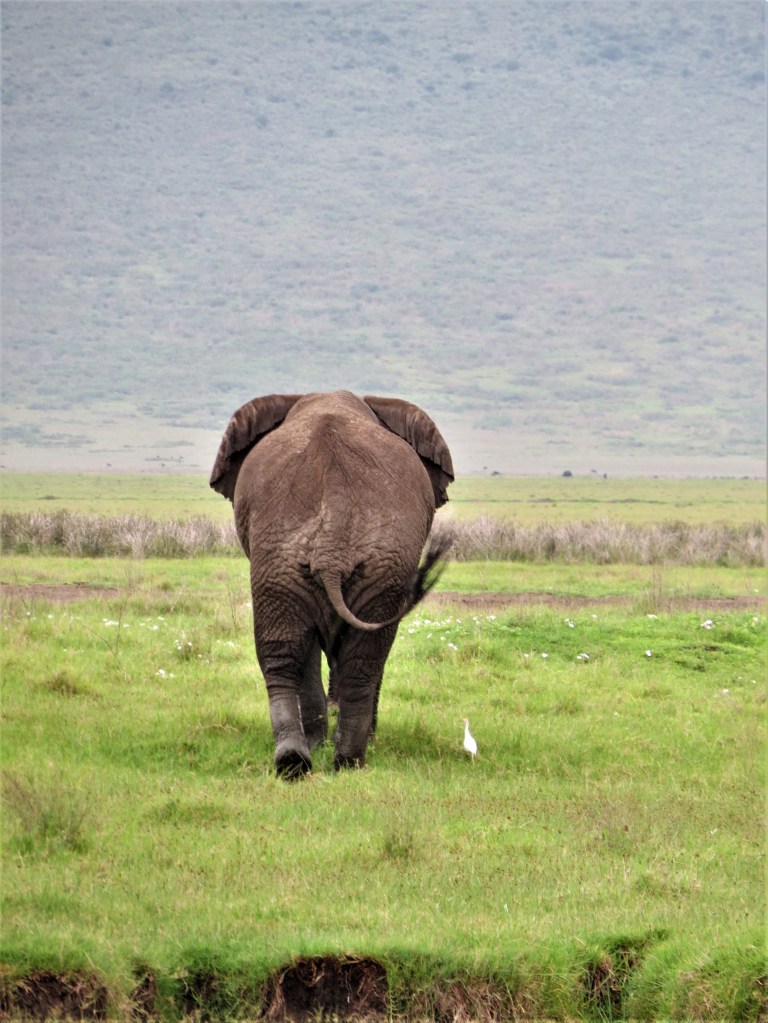
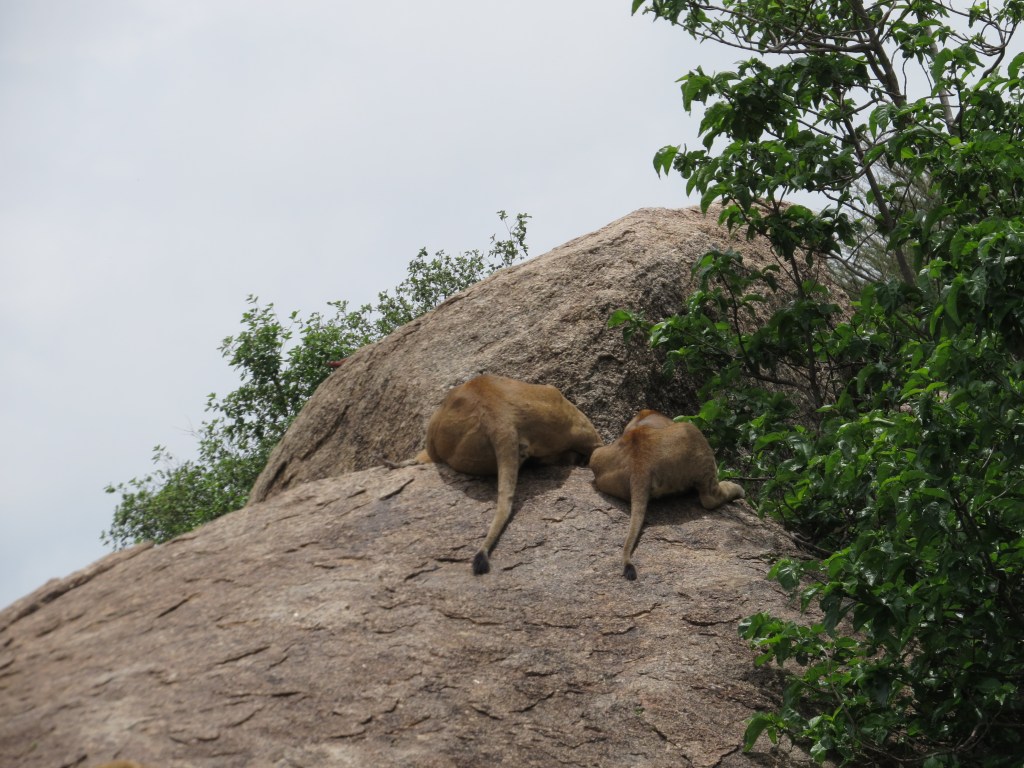
































 THE TRAVELING MARTINI'S