All three of us Martini’s have enjoyed all the “Up’s” around the southwest cape. Gnarabup Beach has been the extended beach area next to us here at Prevelly Beach and is where we are headed tomorrow. Marmaduke will be our new street and after walking in the cemetery in May, I realized it is also a local first name. We also decide this month that as long as we cross or travel on Caves Road which runs the length of the Southwest cape, we might as well visit one cave.
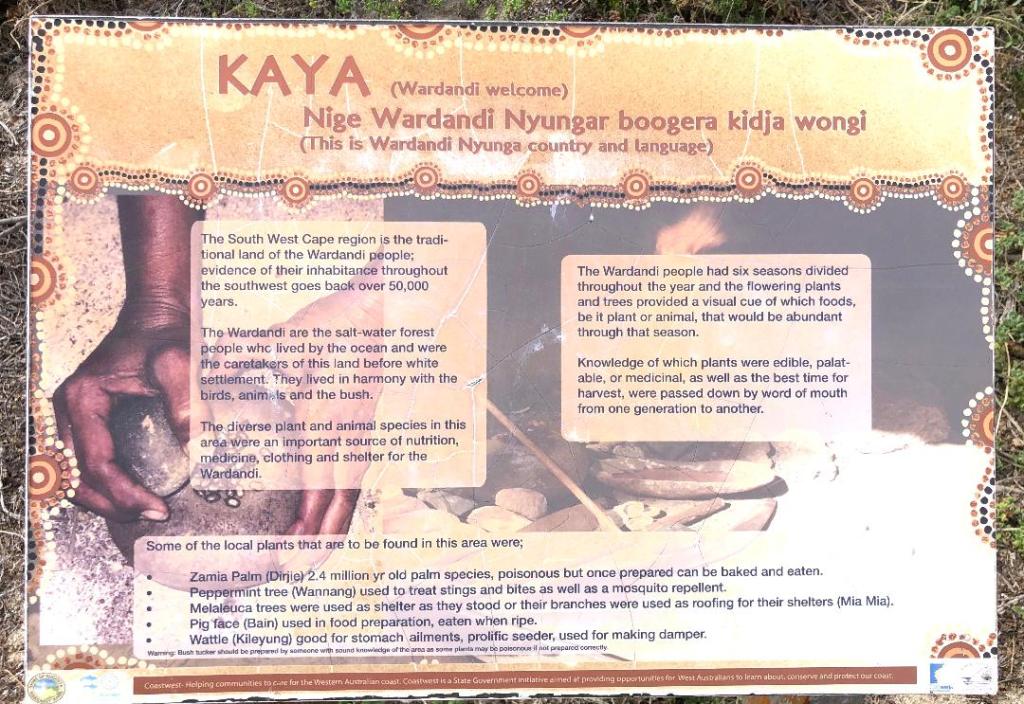
To the Noongar people, the Margaret river is known as Wooditchup, named after the magic man, Wooditch, who created the river in the Nyitting or the Dreaming. Noongar people have a long and continuing connection to this south west cape area. Devil’s Lair cave, south of Margaret River, is one of the earliest sites of human occupation in Australia. Evidence of Noongar existence dates back about 48,000 years. Excavations have uncovered stone artifacts, animal bones, hearths, bone artifacts and human remains.
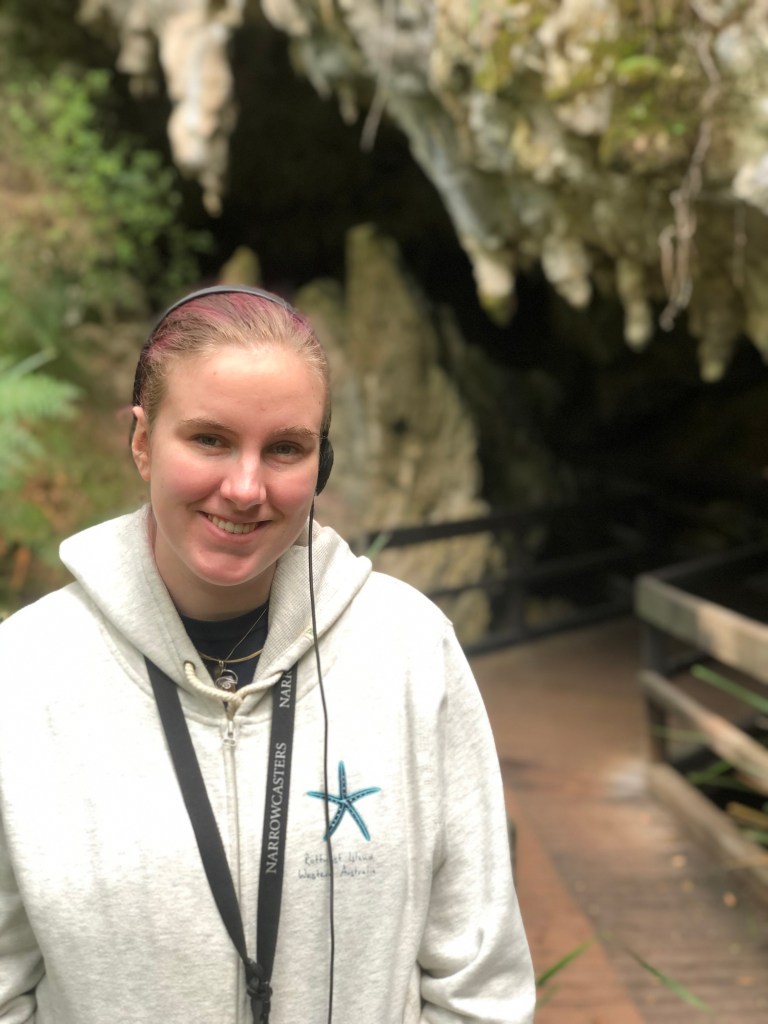
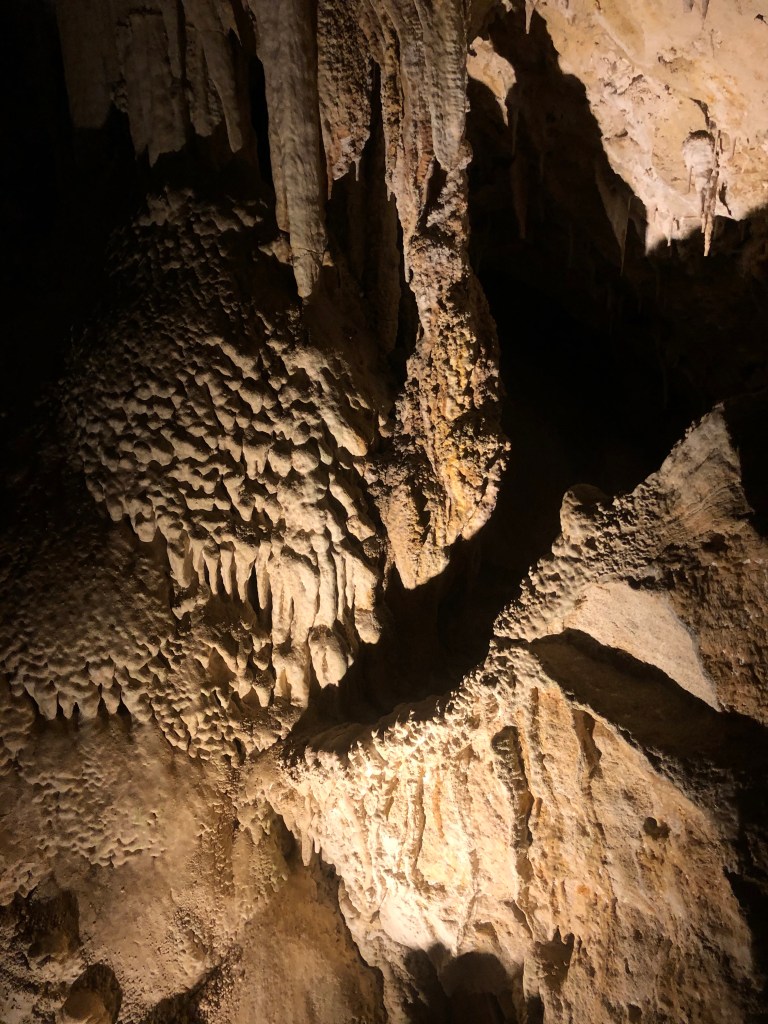
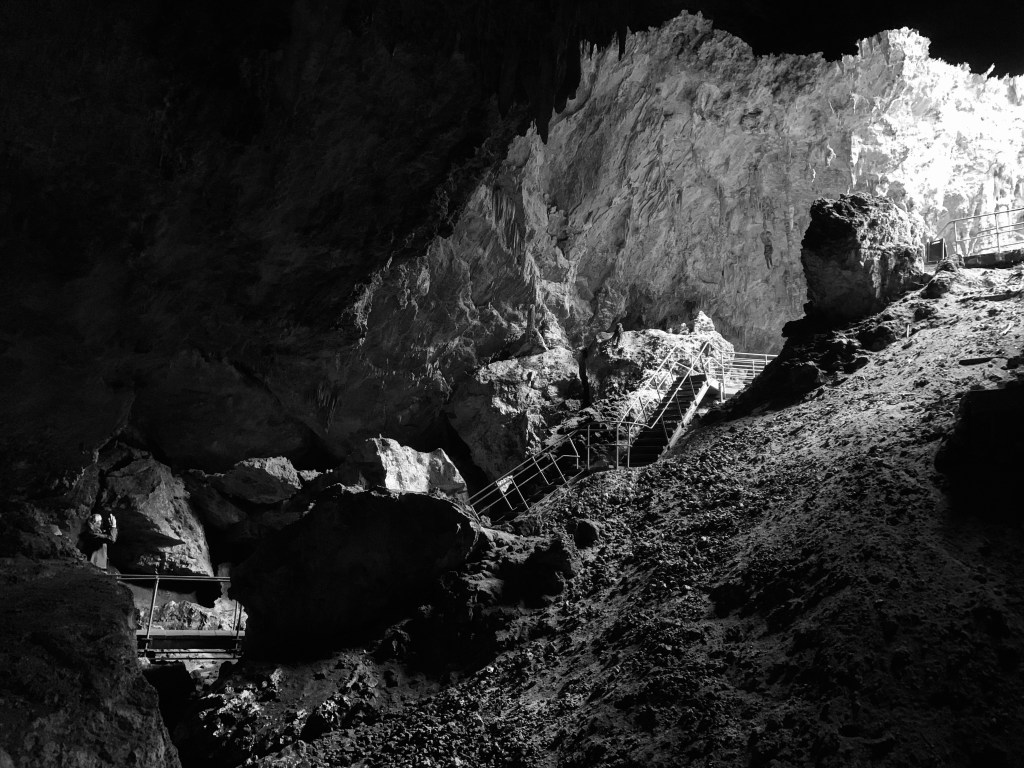
The cave we chose last week was the largest and closest. All these caves are located along a massive limestone ridge that runs the length of the Cape. Mammoth Cave had a lovely self-guided audio tour to describe what we were soaking up as we walked through. Over 10,000 fossils had at one time accumulated inside this cave. Many of these remains were found to be Australian Megafauna (giant animals) that became extinct around 46,000 years ago. We even saw the 50,000 year old ‘zygomaturus’ jaw bone embedded in the cave wall. If there is enough rain during this time of year (winter down under), you can see a stream flowing. This Western Australia area around Perth is just now coming close to their average rainfall for June as we close out the month tonight. However while we were in the cave we saw evidence of a stream but no flowing water. We walked along sturdy walkways and up and down various stairs to reach different areas. It was quite the walk and the end was on the other side of Caves Road with over 100 stair to climb to the surface. Not at any time did we feel claustrophobic. It was an amazing journey!

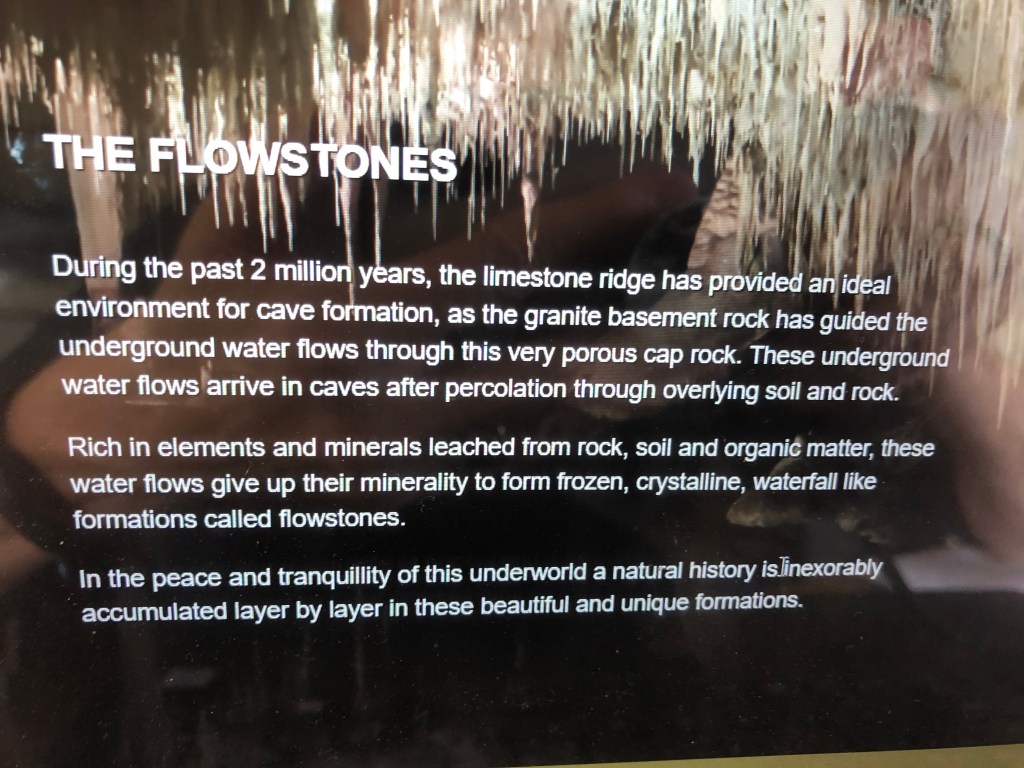
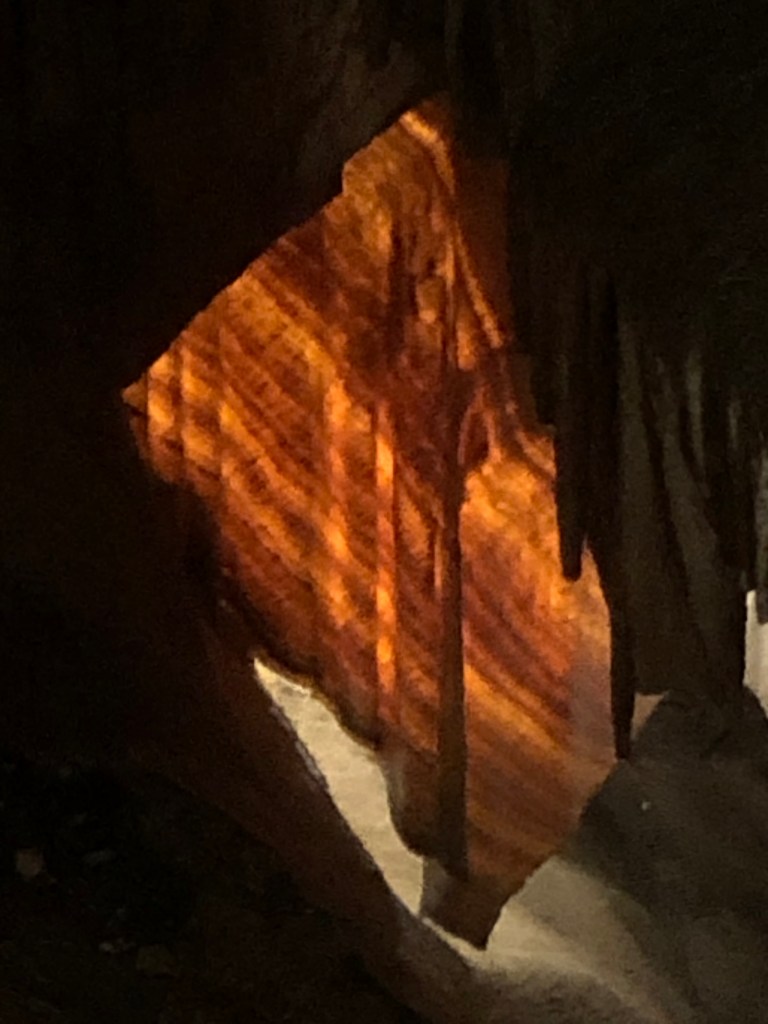

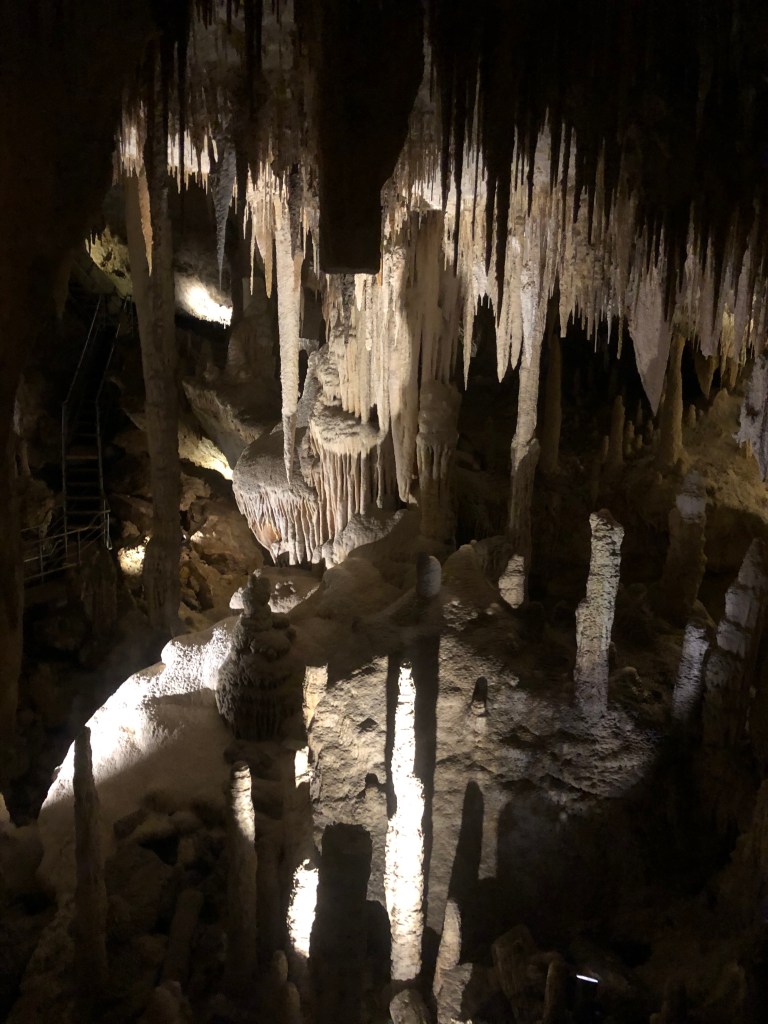
One formation is called Cave bacon and it was appropriately lit up to look just like bacon!
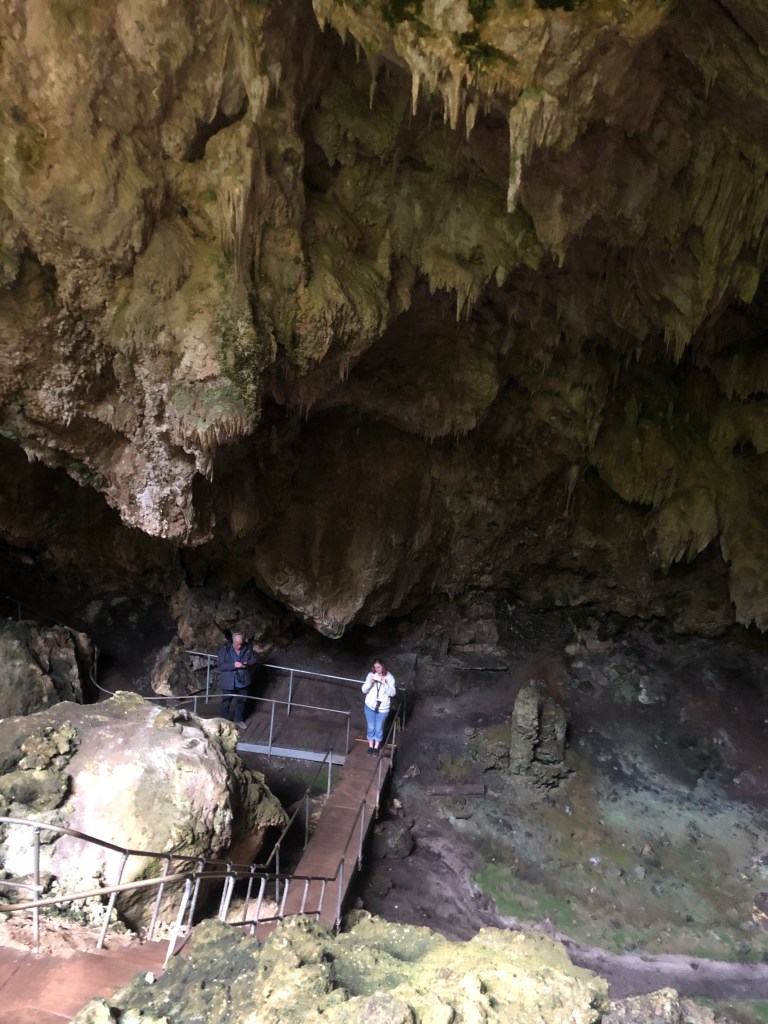
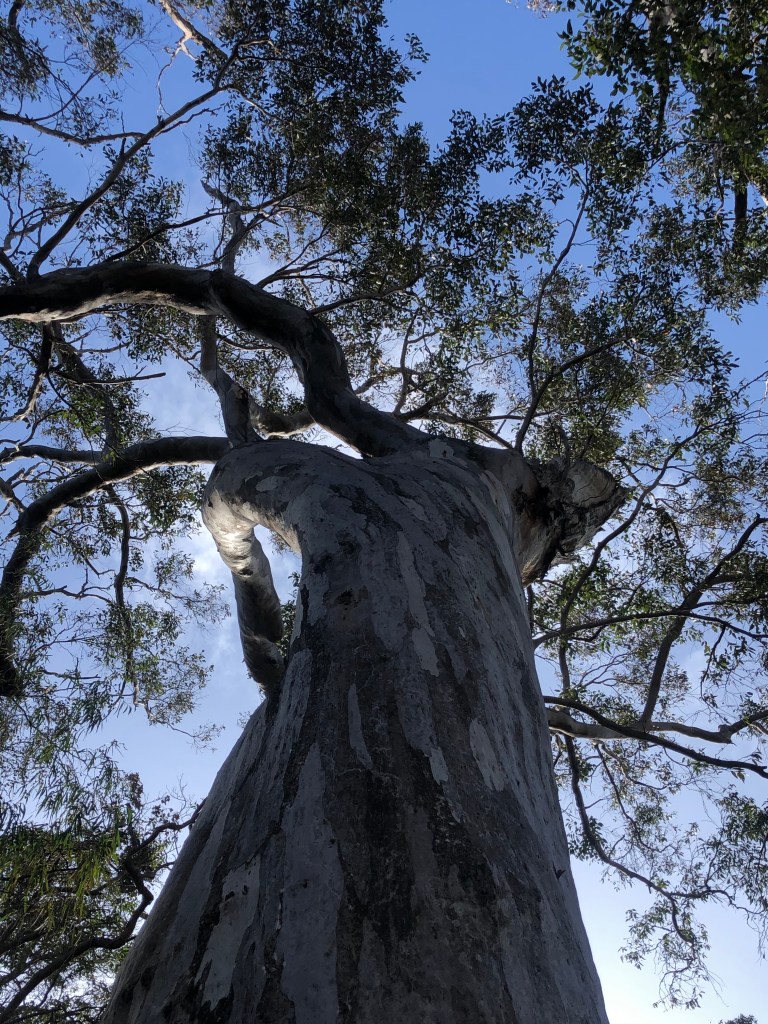
As we climbed the stairs we were greeted by Eucalyptus trees including the Marri which is also called the red gum tree. The Noongar people collected red ooze that was pushed out by the tree when insects burrowed into the tree and damaged it. This Kino (botanical gum) was used as an antiseptic and also used in a tea for diarrhea. Its amazing how there are approximately 900 types of eucalptus species and the USA only brought in a few. Like the redwood tree, the eucalptus tree uses fire to procreate.
Eucalypts typically let through a lot of light, allowing other vegetation types such as scrub and grass to grow beneath them. They can live for maybe 700 years. But they won’t regenerate, Kirkpatrick explains in Wildfire News Today, if what is growing beneath them over the years becomes too dense. Most eucalypt species, therefore — there are more than 600 in Australia, have evolved traits that allow them to survive and prosper in the fires that will clear that undergrowth.
The myriad bright green buds that sprout spectacularly from the trunks of other eucalypts in the aftermath of a big fire are another kind of regeneration mechanism, bursting through the scorched and blackened bark within weeks of a blaze.
At the center of it all, though, is the eucalypt. Because these trees do not just resist fire, they actively encourage it. ‘They withstand fire, they need fire; to some extent, they create fire,’ Bowman says. ‘The leaves, the bark, don’t decompose. They’re highly, highly flammable. And on a hot day, you can smell their oils.’
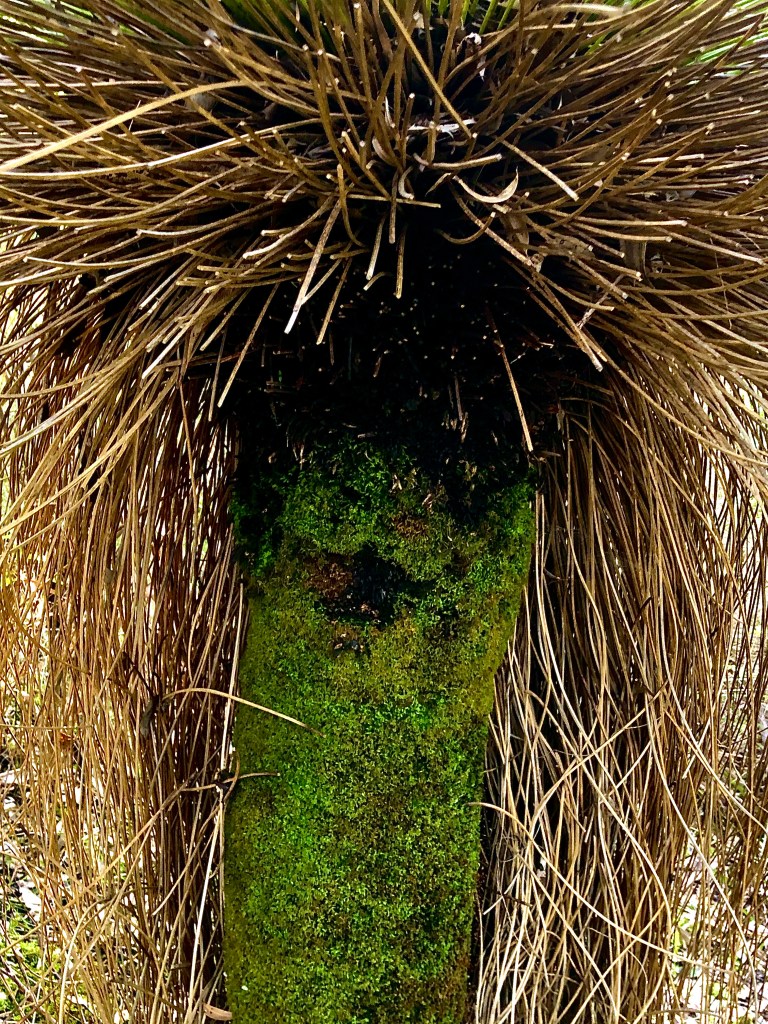
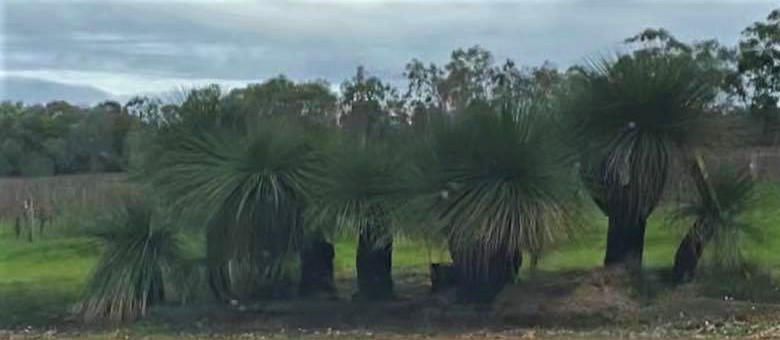
Grasstrees or Xanthorrhoea, commonly know as Blackboy is a uniquely Australian plant, which epitomises the Australian landscape and can live for 600 years and are among the oldest living plants on the planet. They embody the spirit of the Australian bush. They are so well adapted that they can flourish on poor, sandy soils, resisting drought and fire. Bushfires will burn the foliage and blacken the stump, but then it regrows. In fact often a bushfire will encourage flower development.
Cowaramup is a town north of the town of Margaret River and it has adopted “cows” around the town and locals are known to call it, Cow Town. The townsite was gazetted in 1925, and the name is believed to be derived from “Cowara”, the Aboriginal name for the Purple Crowned Lorikeet.
We have enjoyed meeting some of the locals in Cow Town at a coffee shop and local art stores. Everyone is extremely friendly and learn to deal with what is and isn’t in the town. The best Margaret River Bottle Shop sells only Margaret River wines. Coffee shops, simple cafes, used and new clothing stores, a tasting room in a bike and garage shop, a pharmacy, the best computer store around that helped Michael when he trashed his computer, a post office, but alas no grocery store. One of the Cafes is also a tea shop on one side and a chocolate shop on the other. Some of the stores will bring in a few staple items in case you don’t want to drive 15 minutes to Margaret River to get flour or butter or laundry soap. Cow town deals with issues as do almost all Australians and we love their attitude and of course are still loving our time in this marvelous area.
Many of the beaches along the coast of southwestern Australia are UP’s include Yallingup, Boranup, Indijup, Boodjidup, and of course Gnarabup.
Towns and areas include Wyadup,Wilyaprup, Carbunup, Quindalup, Quendijup, Kalooraup, Metricup, Kudardup, Nilup, Darradup, Jalbarragup, Barrabup, Cundinup, Nannup, Peerabeelup, Beedelup, Calicup, Yeagarup, Channybearup, Quinninup, Dingup, Balbarrup, Manjimup, Palgarup, Yornup, Benjinup, Winnejup, Mordalup, Chowerup, Mayanup, Perup and even more! It is always pronounced like Up as in up and down not oop.
Boyanup is an Aboriginal name, having been first recorded by an explorer in 1852. It is also on the main road south, and is shown on a road survey in 1869 as Boyinup. It is said to mean “a place of quartz” – Boya means “rock” or “stone”. Many locals think “up” has always meant a place of water but the aboriginal’s used it to mean the place OF something.
Dwellingup is an Aboriginal name said to mean “place of nearby water”. The town was burnt out by a bushfire in 1961 but was rebuilt. The name Nannup is derived from Nannup Brook, a stream which flows north westerly into the Blackwood River just south of Nannup. It has been shown on maps since first recorded by surveyors in the 1860s. It is of Aboriginal origin, one source giving the meaning as “stopping place”, and another as “place of parrots”.
Yongerup is derived from the aboriginal word “yonger”, meaning the male kangaroo, and means “place of the male kangaroo”. Quindalup is an Aboriginal name meaning “the place of quenda’s”. The Quenda is a small bandicoot common in the area.
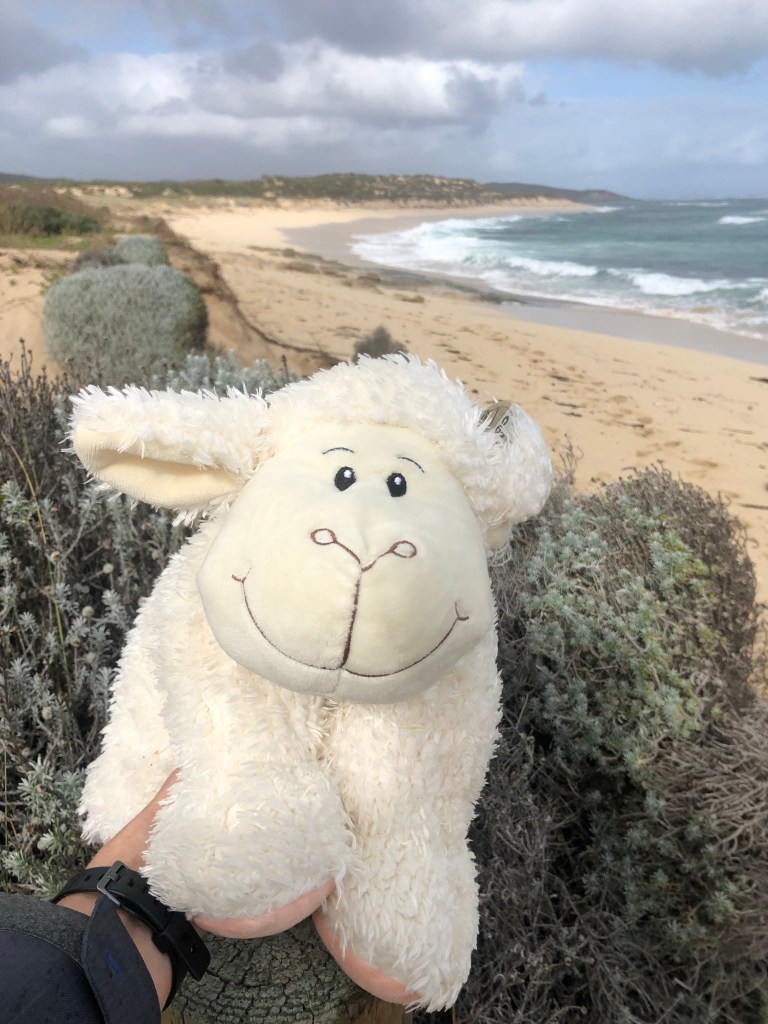
The rain showers continue to pass through our area along with 30-60 mph winds. Yesterday we all took a quick hike to the beach. I was even hit by a sleeper wave but kept my footing. Today I did another quick jaunt to the beach as this was our last day on Papadakis and we will be further up a hill from the beach. I took Bilbo Baabins to his photo shoot. Little did I know I’d be rained on and nearly blown away as I headed out to the beach. The wind was relentless!
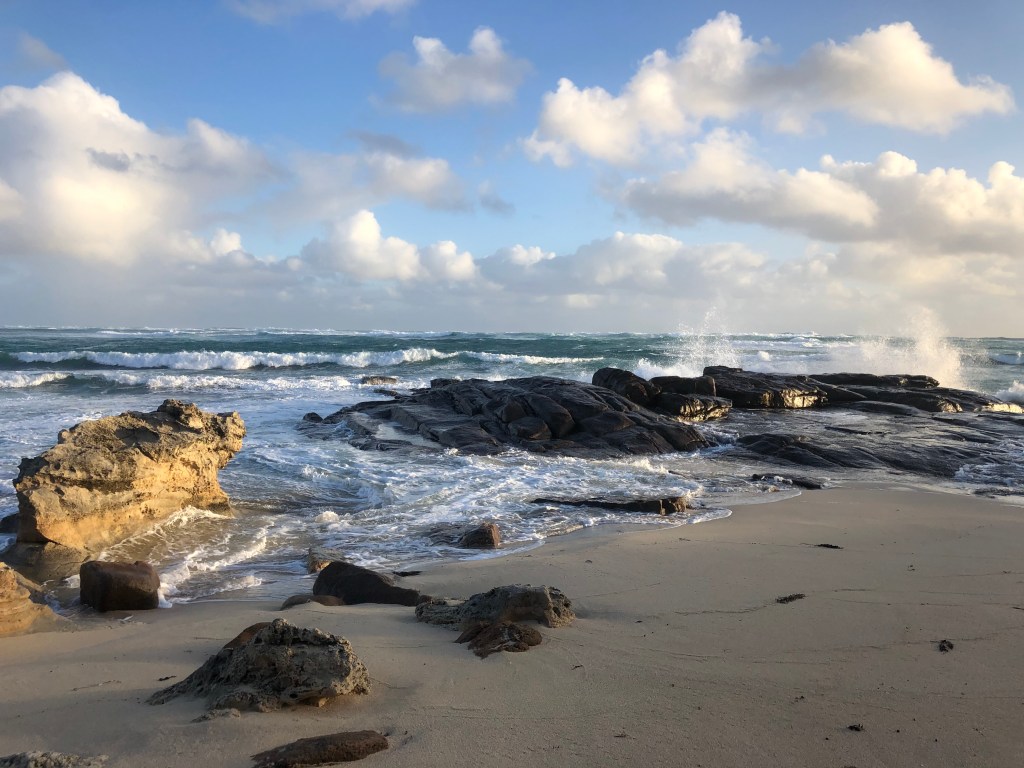
What we love about this winter weather is when a fronts move through, you may have showers on and off all day but it comes replete with rainbows and a white water churned up ocean and huge breaks of blue skies. We are also very happy that fog does not raise its cold grey head here! We are two weeks from spending the Fogust summer in Dillon beach!

Happy July and Happy fourth for all our American Friends. Stay safe and healthy and for Pete’s sake wear a mask when you’re out in public.
 THE TRAVELING MARTINI'S
Really have enjoyed the travelogue and seeing all the wonderful photos, Jacque! Our love to you all, Kathy P.S. It really does look like bacon, and the pic with you in photographer’s stance is a LIFE cover ! ~.~.~.~.~.~.~.~.~
>
LikeLike
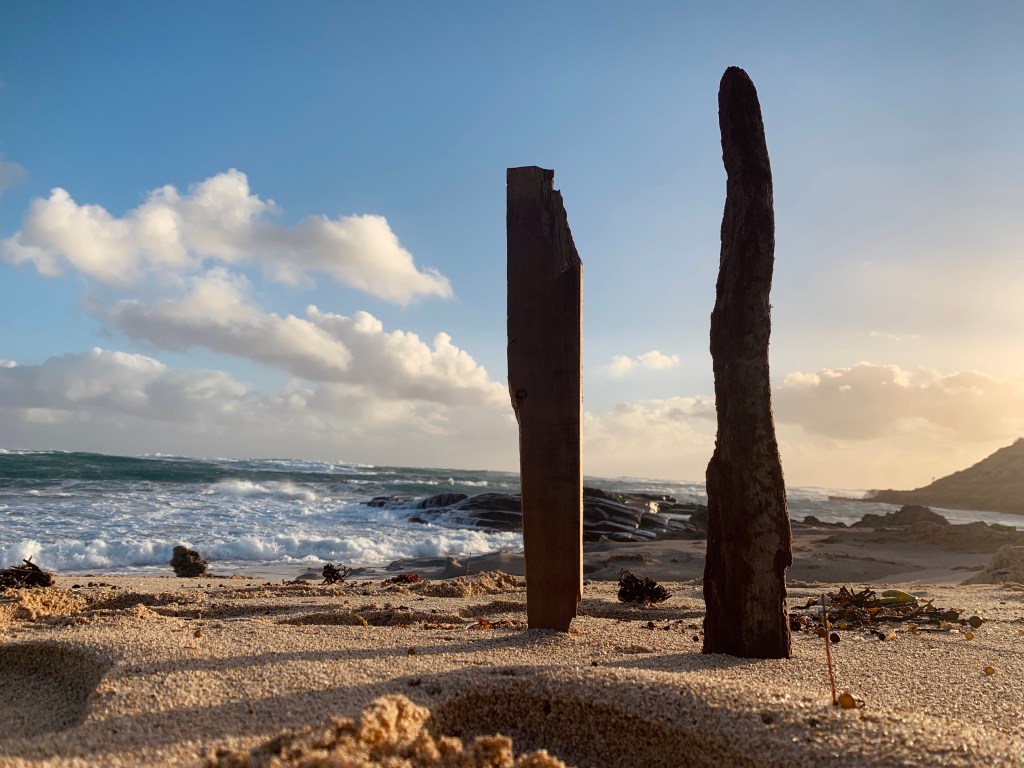
Larkin does take some magical photographs as hers is the cave w me in it and the two pieces of wood sticking out of the beach…I laugh because I have to end over to do photos like that and she squats. Care to watch me get up??? LOL!
LikeLike
What fun!!!!! The virus is exploding all over the US. STAY THERE but send me a ticket. I want to join in the “ups!” Your photos are delughtful!!!! Hugz……Janie
LikeLike
We wish we were staying but Larkin needs to get home so she can start school. We have to face the music someday! July 13th is the eta!
LikeLike
Great article- wow on those names- keep having fun!!!
LikeLike