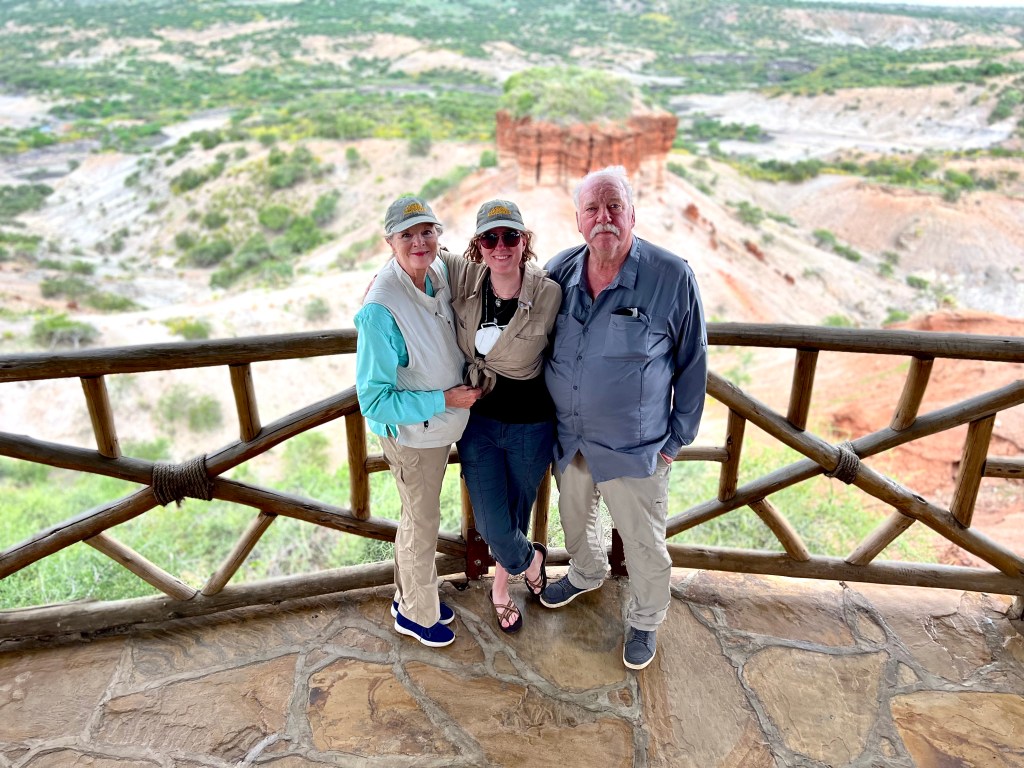
What an amazing journey from our first camp at Dulana through the Serengeti plains and ancient rocks, past the shifting sands toward the Ngorongoro Crater. We stopped at Olduvai Gorge which is one of the most important paleoanthropological locations in the world. It became a World Heritage Site in 1979. It is called the “cradle of mankind”. Louis and Mary Leakey’s discoveries of early humans and stone tool artifacts found in the exposed geology of the area are explained as you walk through the museum. The Leakeys started visiting and excavating in the 1930’s . Richard Hay started working with the Leakey’s to understand the geology of the gorge. If you click on the title Human Origins at the top of the email you can get a better view of the blog.
Docents walked us through the history of man as we looked out on this beautiful gorge from a theater built into the hillside.
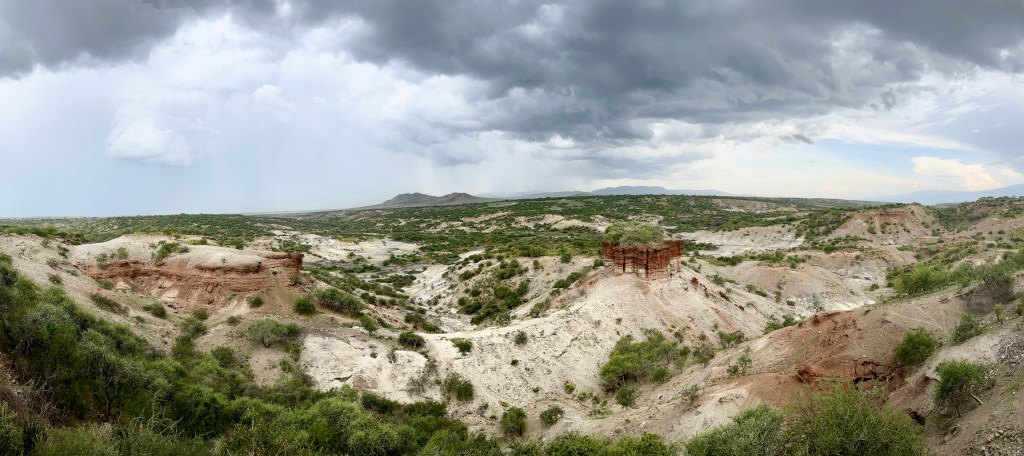
There are many books and websites available if you want to learn all about these early humans and this stunning location. From beautiful blue skies with puffy white clouds, the skies started looking ominous and followed us into the gorge and up to the volcanic crater at Ngorongoro.
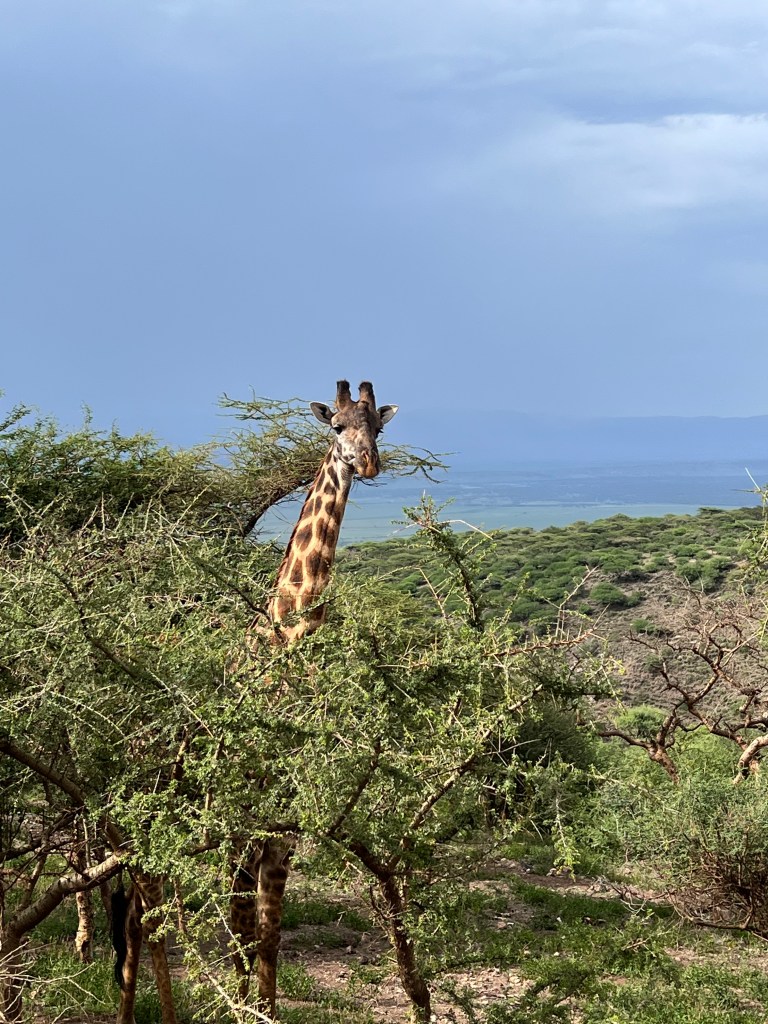
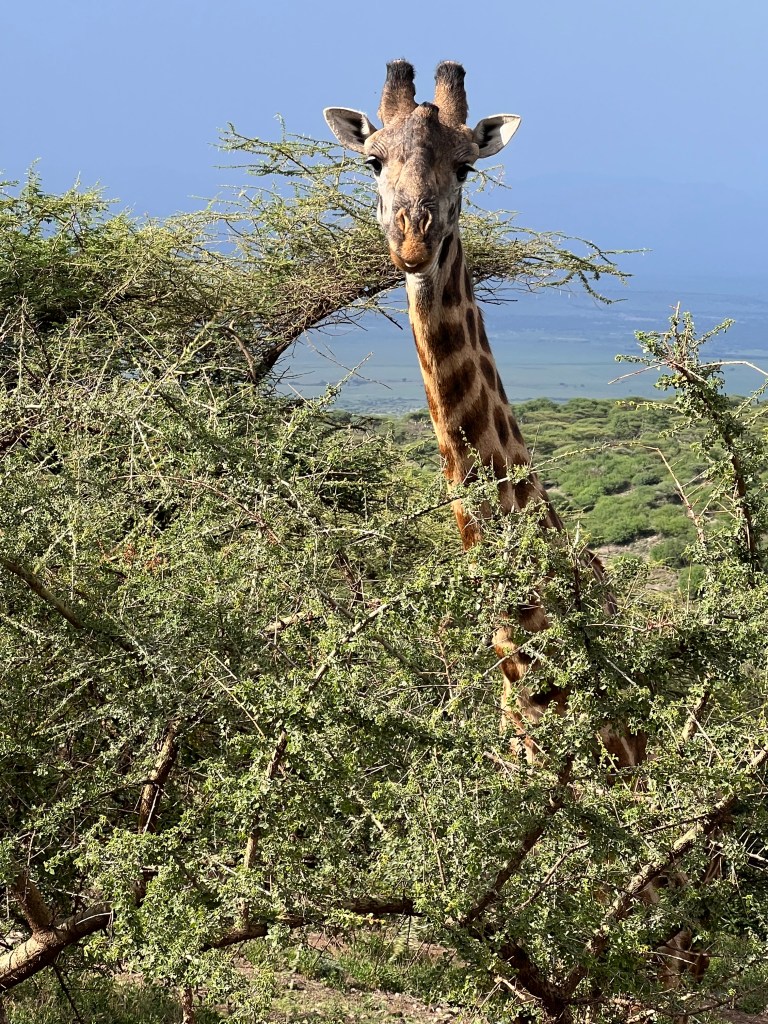
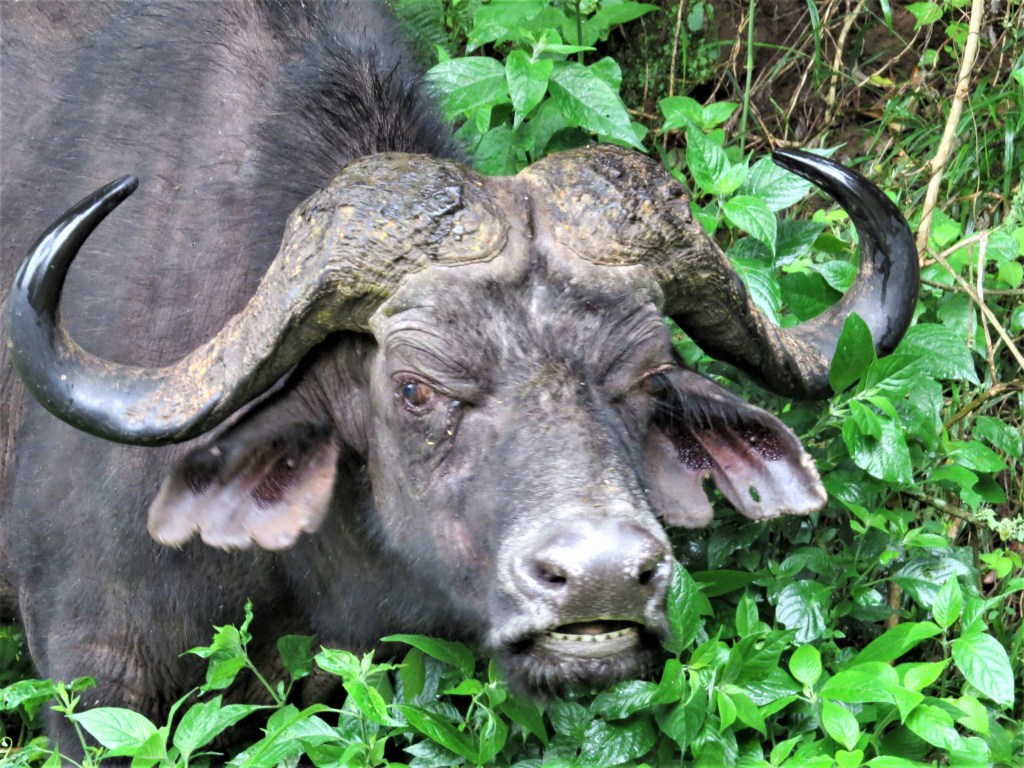
Sometimes surprises pop their heads up over the delicious acacia to say hello!

Cheers to our first long hot shower since the beginning of the safari. It felt so wonderful and all of us came to dinner with fresh scrubbed skin and wet hair. It almost felt like a miracle!
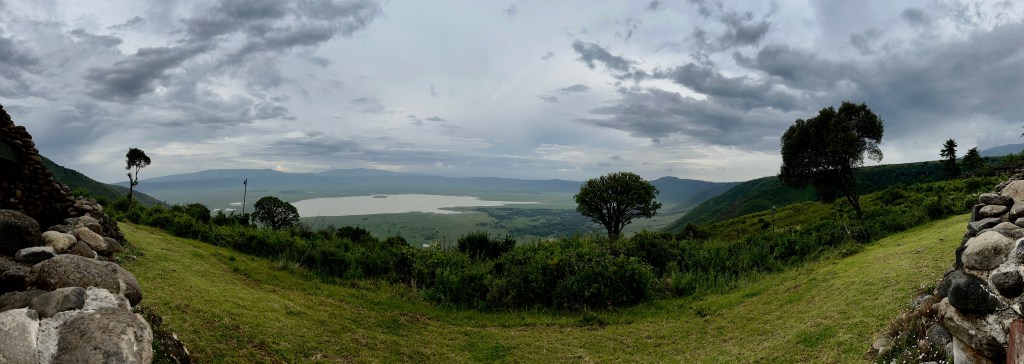
The Ngorongoro crater was formed 2 million years ago when the volcano erupted on itself forming the caldera. It is statistically the largest unfilled volcanic caldera in the world. The floor of the caldera is 2,000′ beneath the rim and is approximately 100 square miles in area. It was named by the Maasai after the Ngoro-Ngoo-Nogor sounds which they thought the grazing animals in the area made. Before the formation of the crater the volcano was said to be the same size as Kilimanjaro. Some people call it Africa’s Garden of Eden. Wildebeests and zebra still migrate in and out of the crater and the cape buffalo’s migrate in during the rainy season.
Next up the crater and its creatures on a misty overcast day.
 THE TRAVELING MARTINI'S
Excellent blog and great photos. Good job. Almost want to hop on the plane.
LikeLike
We’re ready to hop on a plane and go back….
LikeLike
Jacque your Photography Work is SO special !! I cannot believe how close you are getting to all the Great Animals!
I send my love to you, Mike and Larkin! David
LikeLike
Thanks David – so many of our group I imagine have even better photos with better cameras but the memories are the same.
LikeLike
Fascinating history . . . and I love the giraffe showing above the trees!!! 🙂 Judy
LikeLike