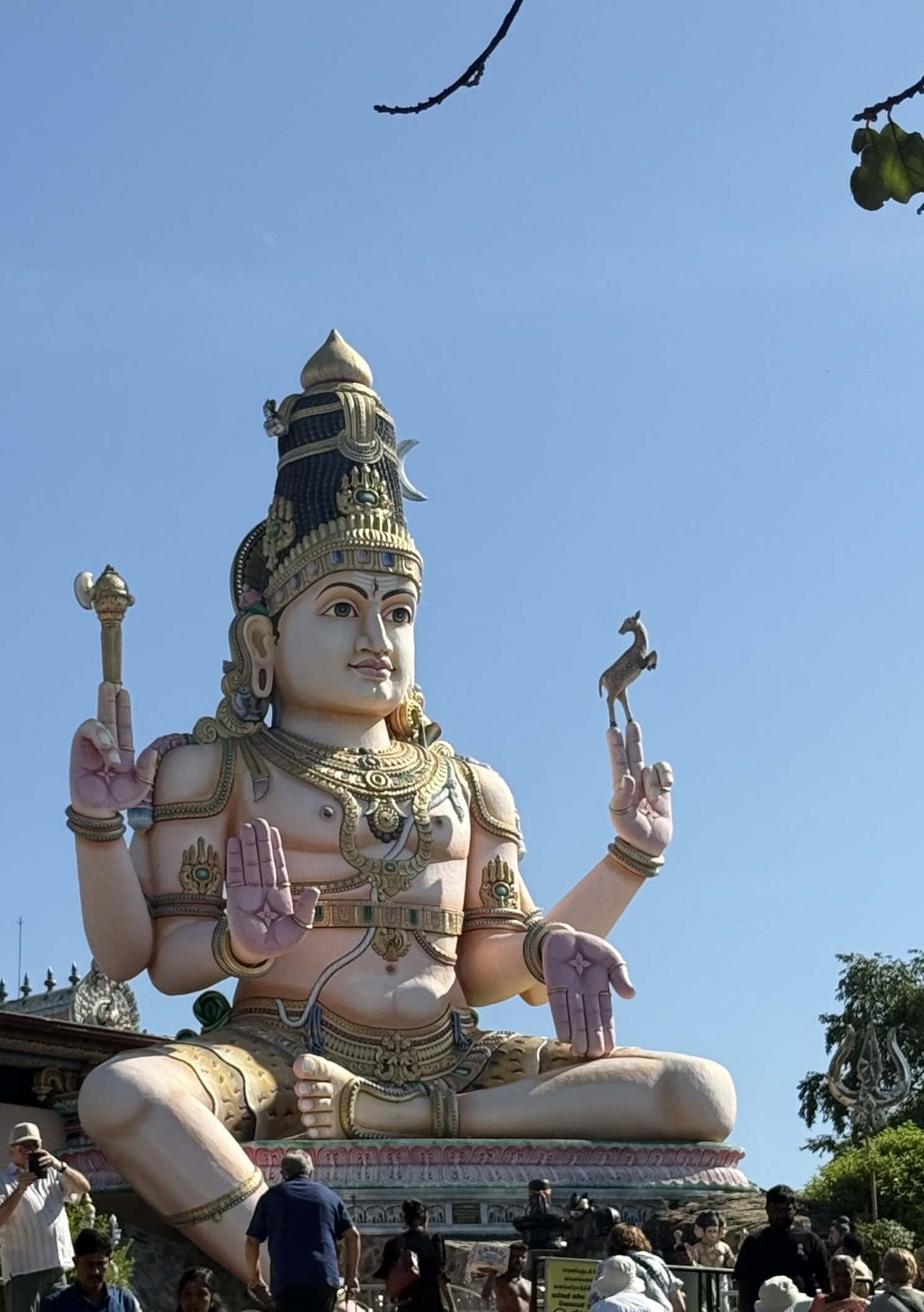

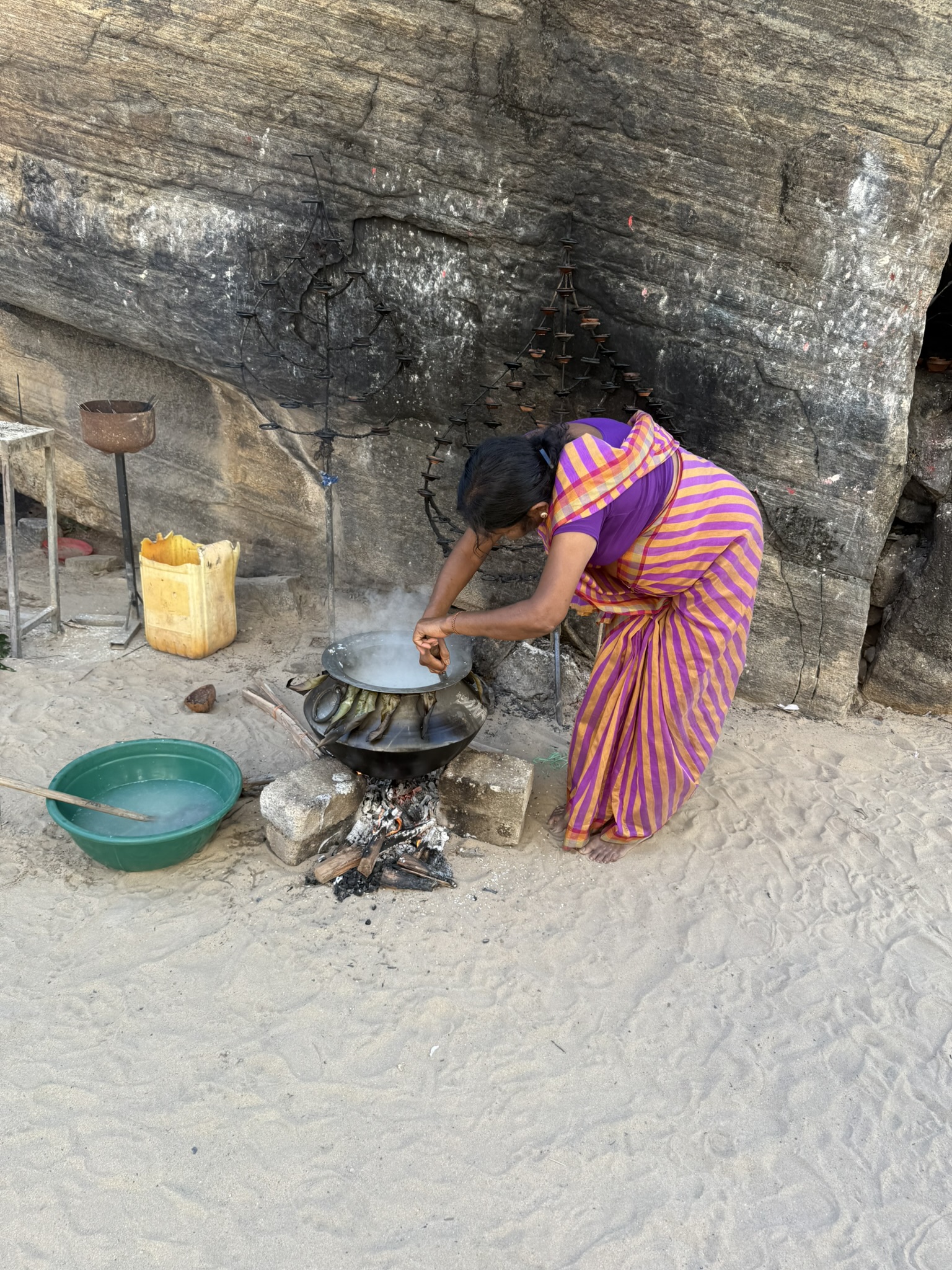
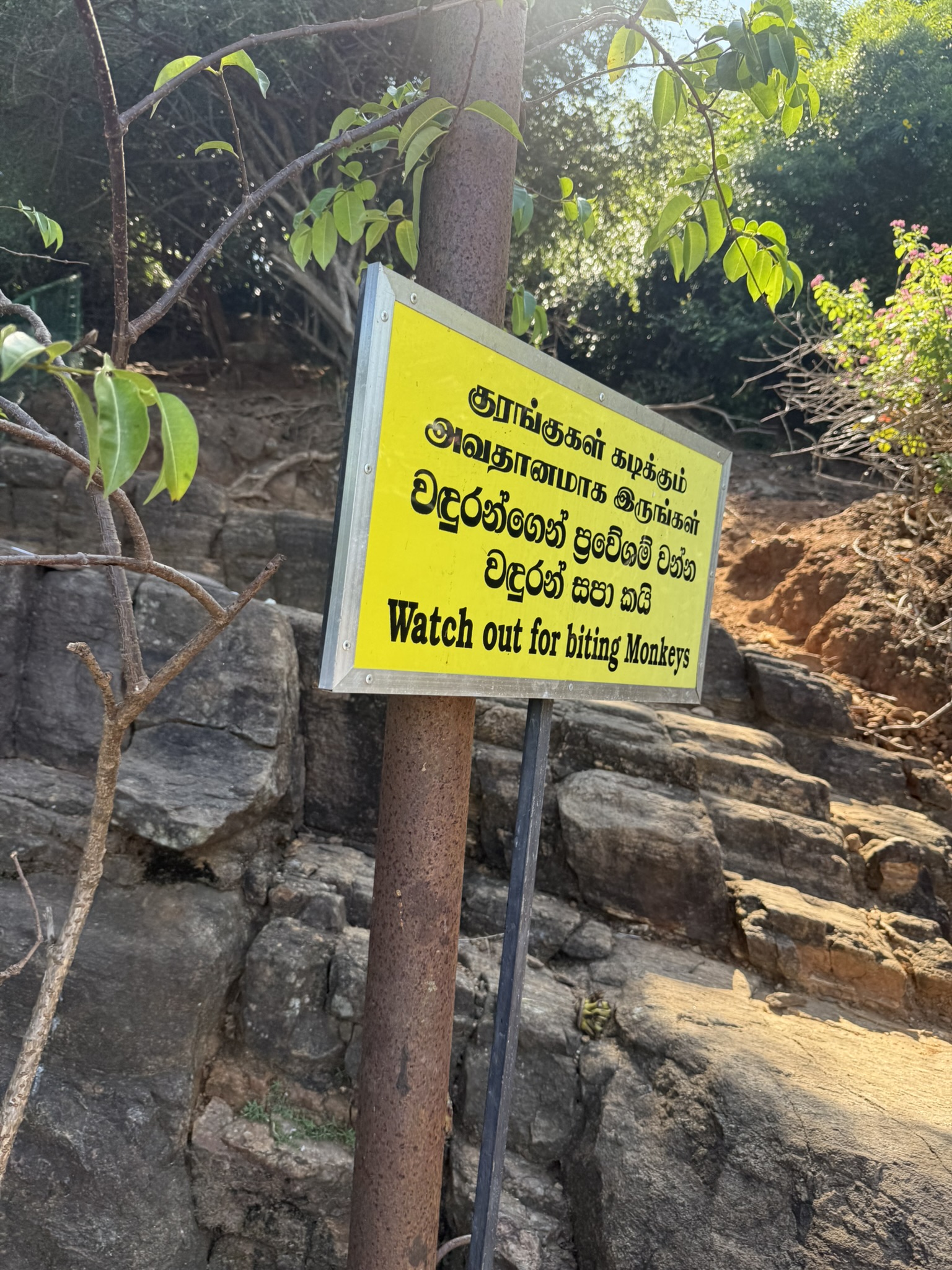
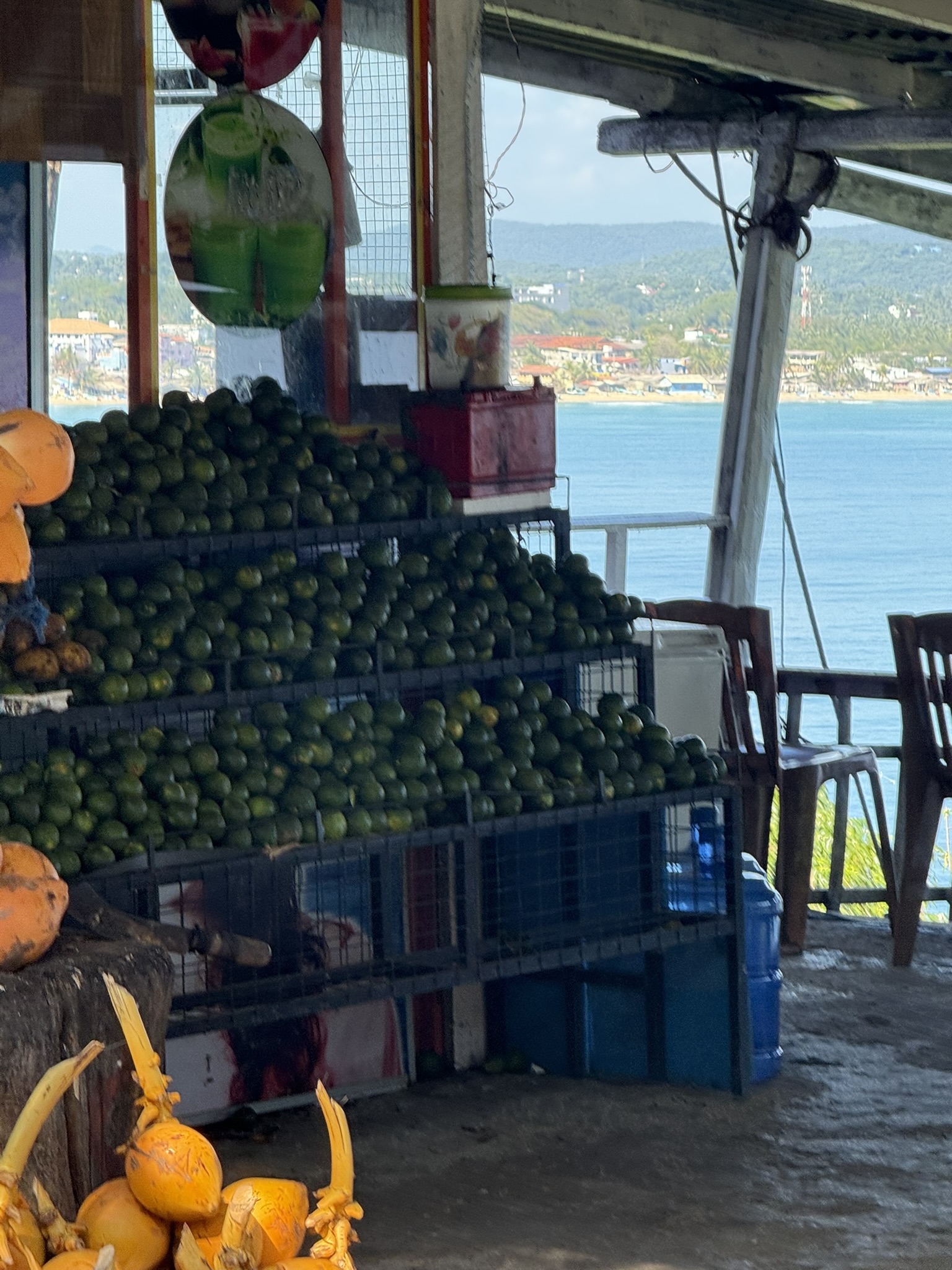
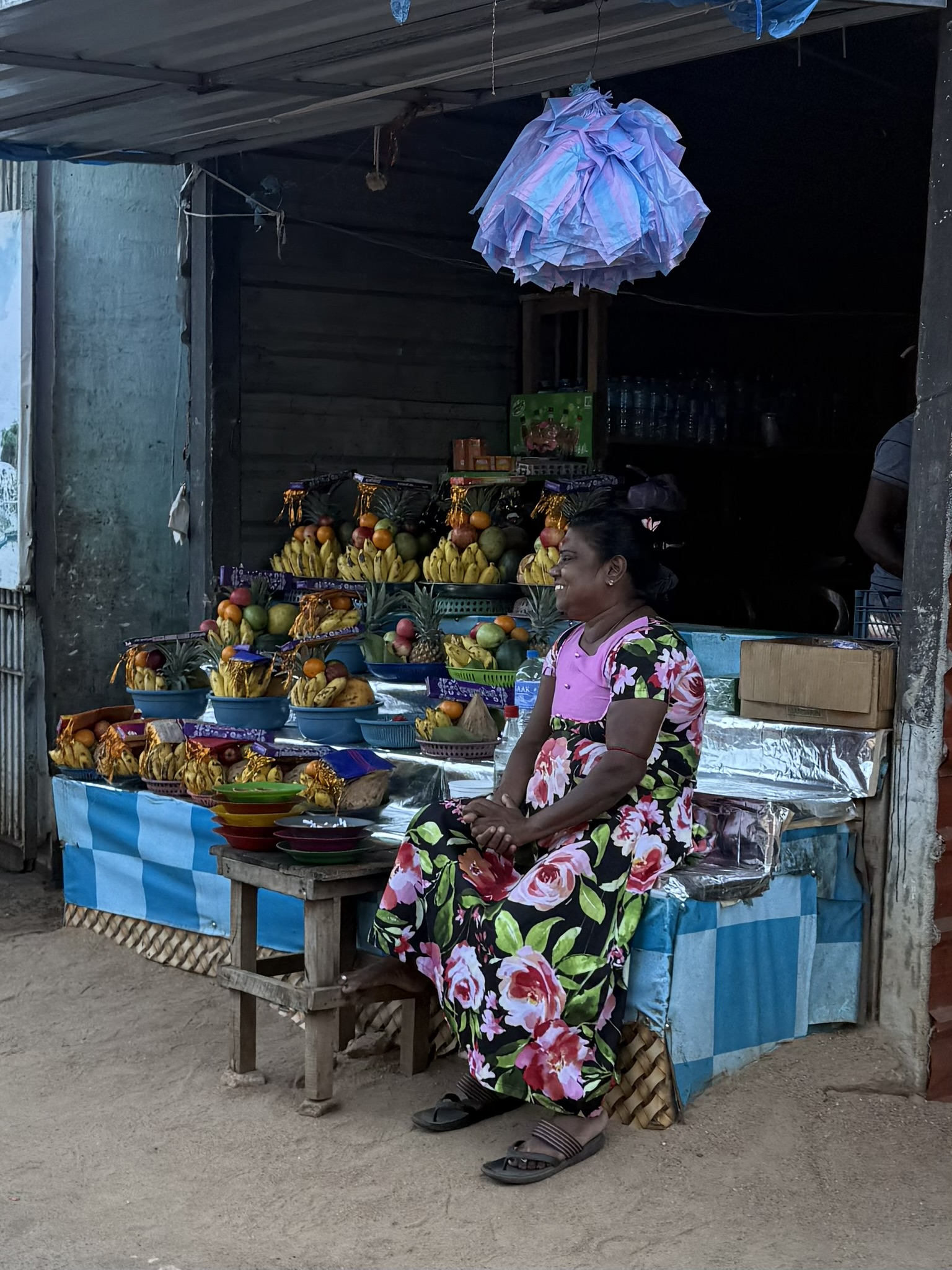
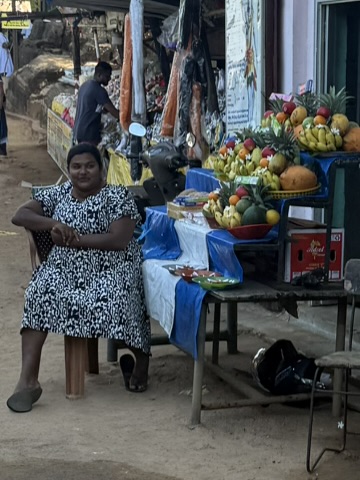
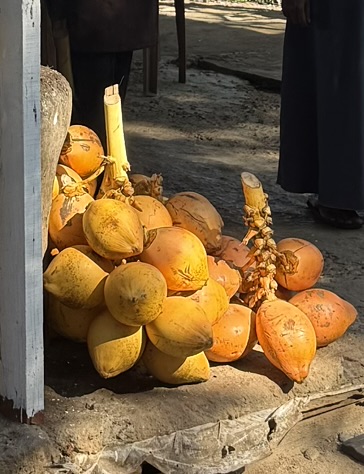
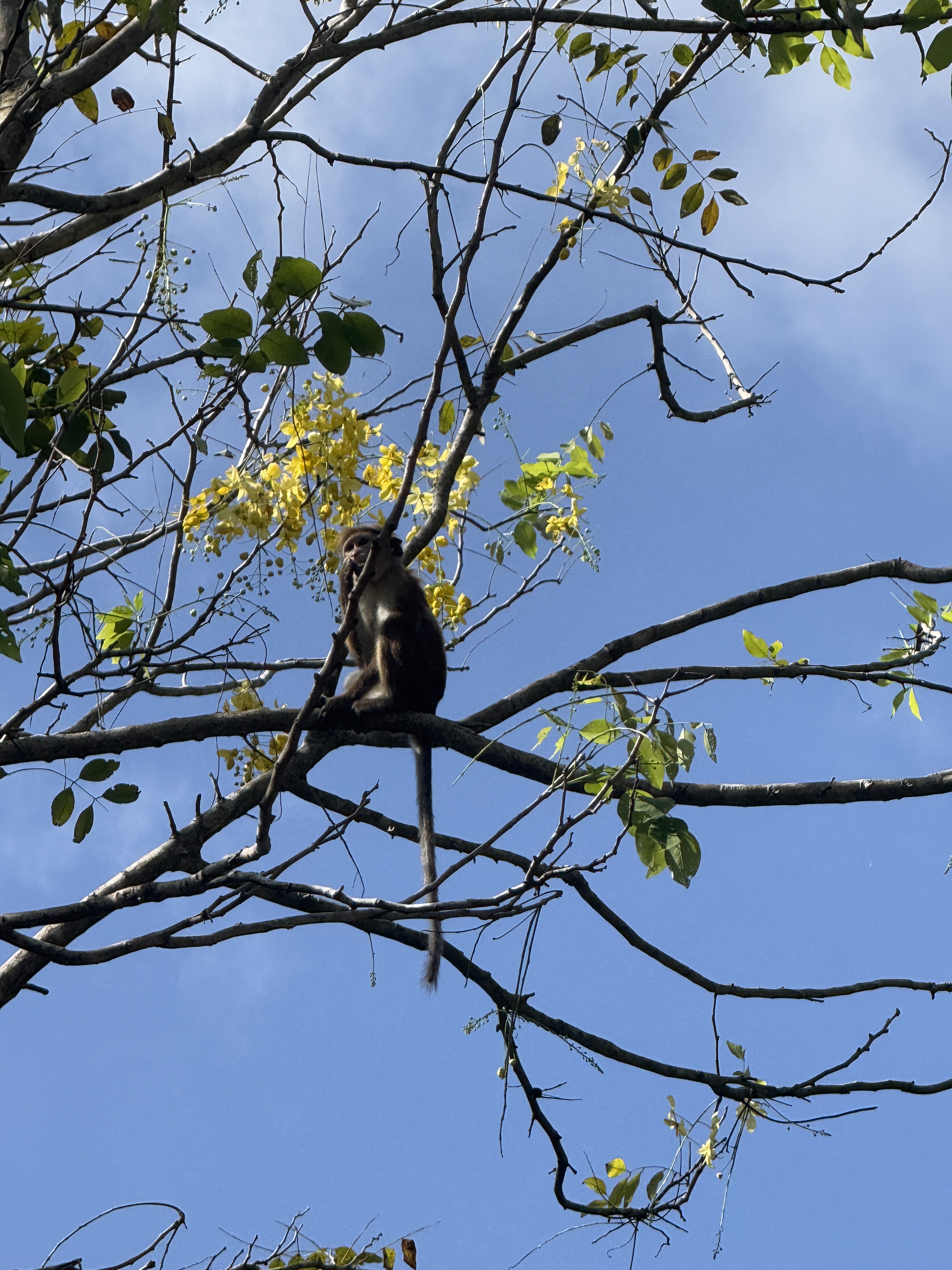
The first stop in Sri Lanka was Trincomalee, which is on the eastern side of the island of Sri Lanka. The first excursion was to temples and sites of the city. First up was the temple, Koneswaram inside Fort Frederick. It was a Hindu temple complex found BCE, described in 400-100 texts. It was destroyed by the Portuguese in 1622 and a fort was built on the site. It was preserved through restorations in 1952 after Worldwide interest was renewed following the discovery of its underwater and land ruins, sculptures and Chola bronzes by archaeologists and Arthur C Clarke. The walk up had plenty of food items to buy for an offering, tourist things and children’s toys. We never saw a monkey at this location. However there were plenty of limes – ready for a margarita?


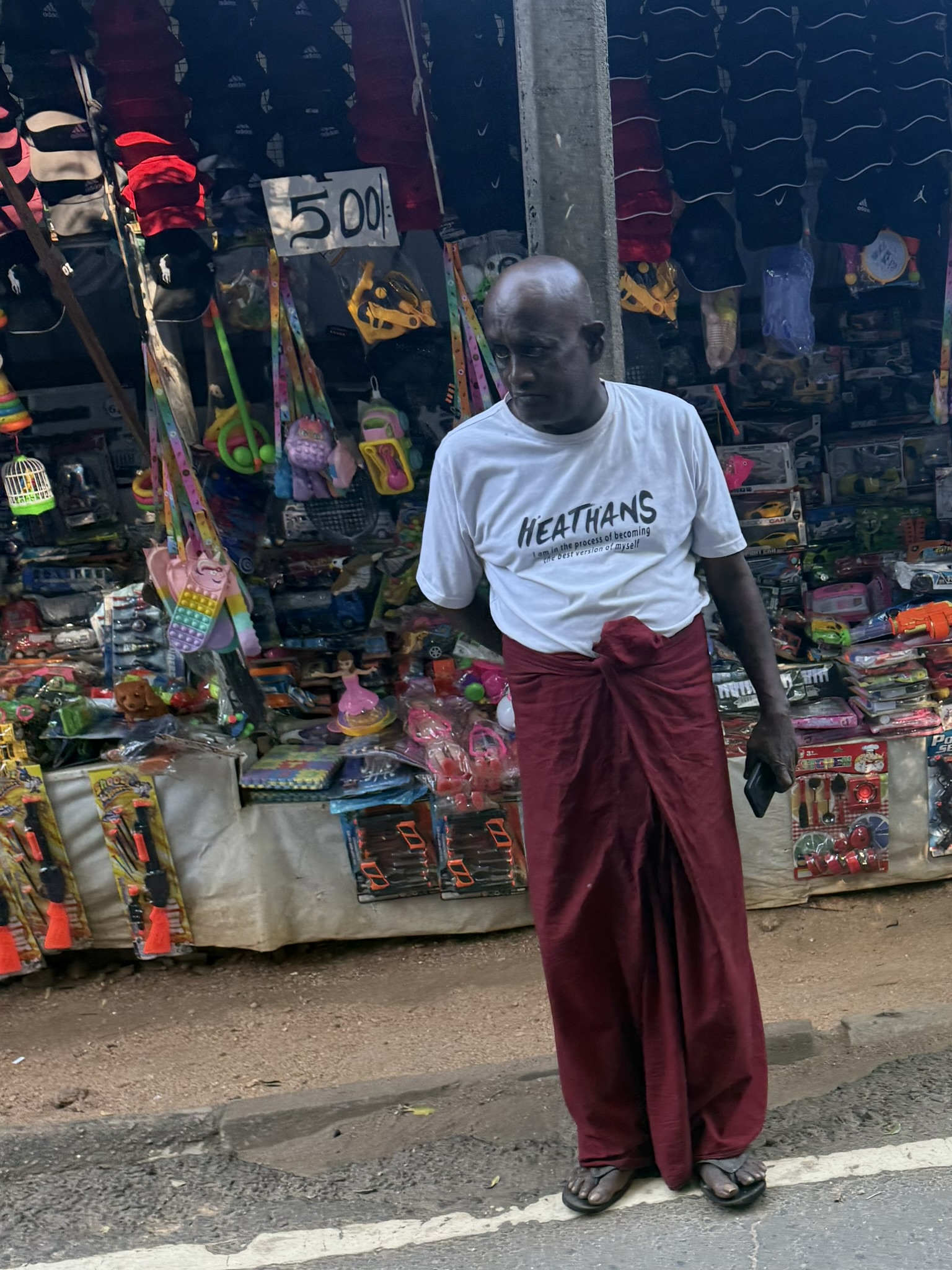
My favorite t-shirt on the excursion was on this beautiful man…Heathans, I am in the process of becoming the best version of myself. We should ALL aspire to that teaching!

The temple and everything surrounding it was so colorful. Women would tie a little wooden cradle on the fences with bright colored ribbons as an offering to the gods to bless them with a baby!
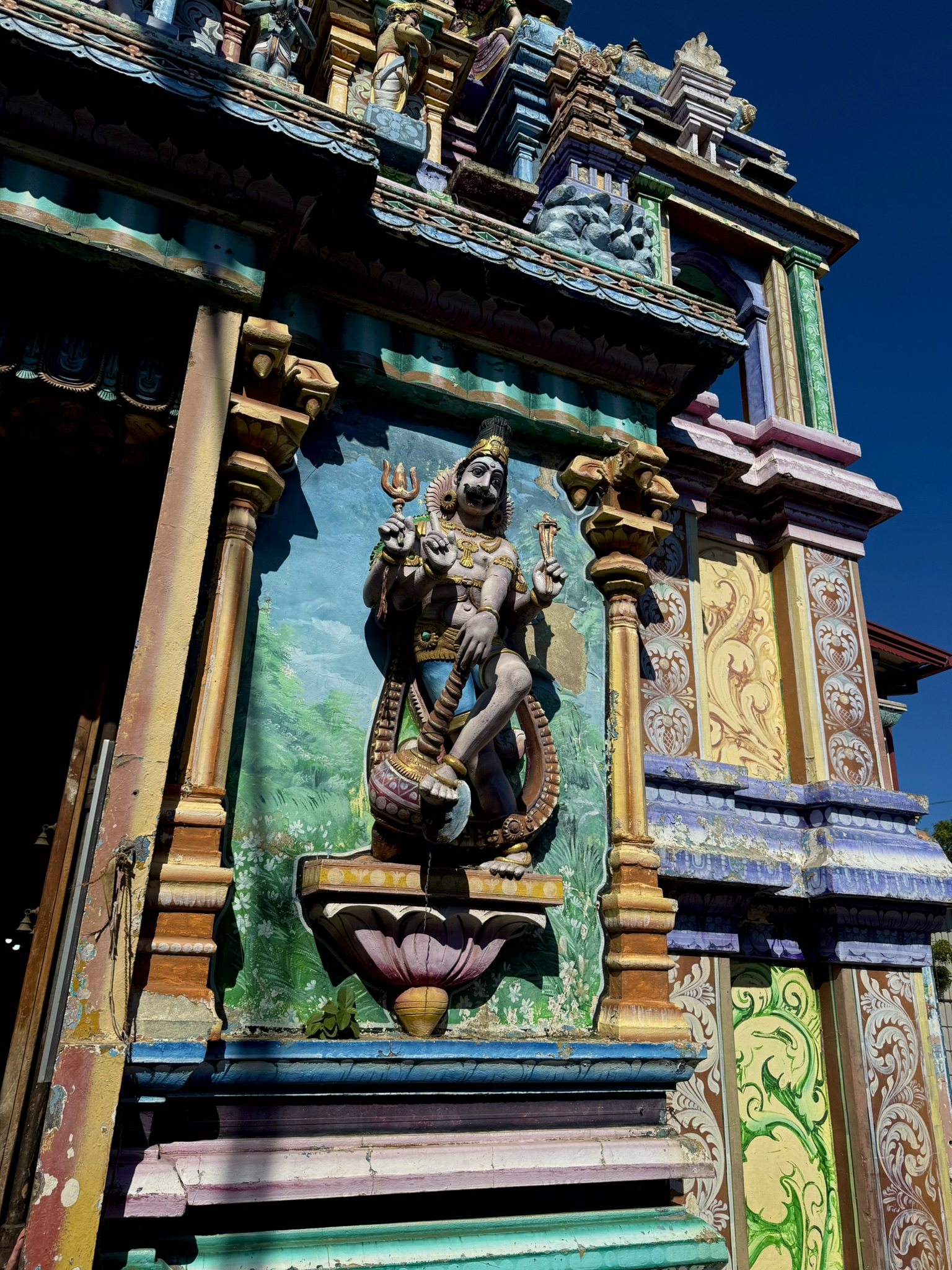
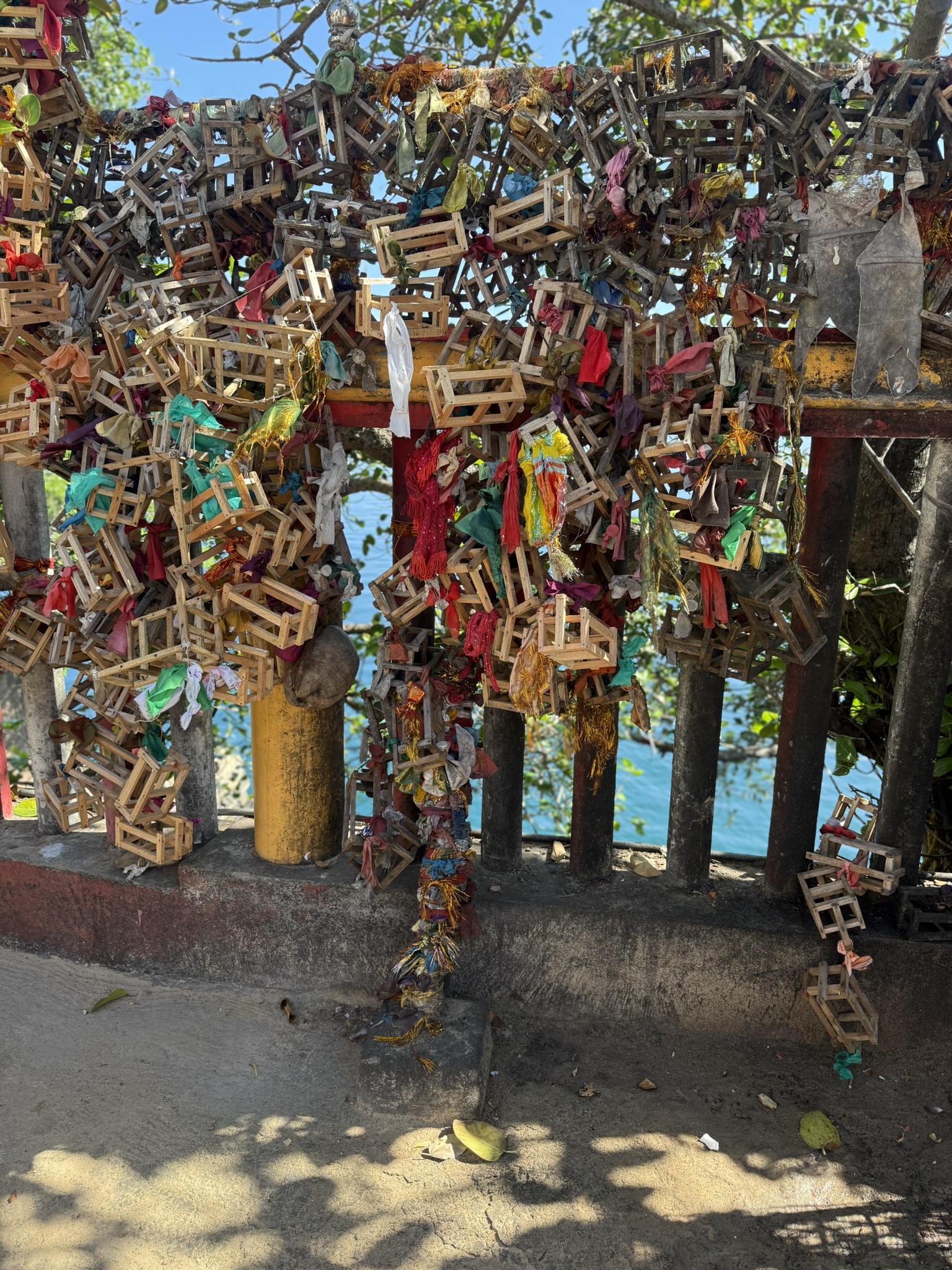

Ravana’s Cleft near the temple at Swami Rock is 350 feet above the sea level and looks straight down into the ocean below. The geology is interesting but Hindu legend says that King Ravana cut the rock and was punished and this cleft is the result. The colorful detailed temples while driving from place to place truly are amazing in their use of so much color!



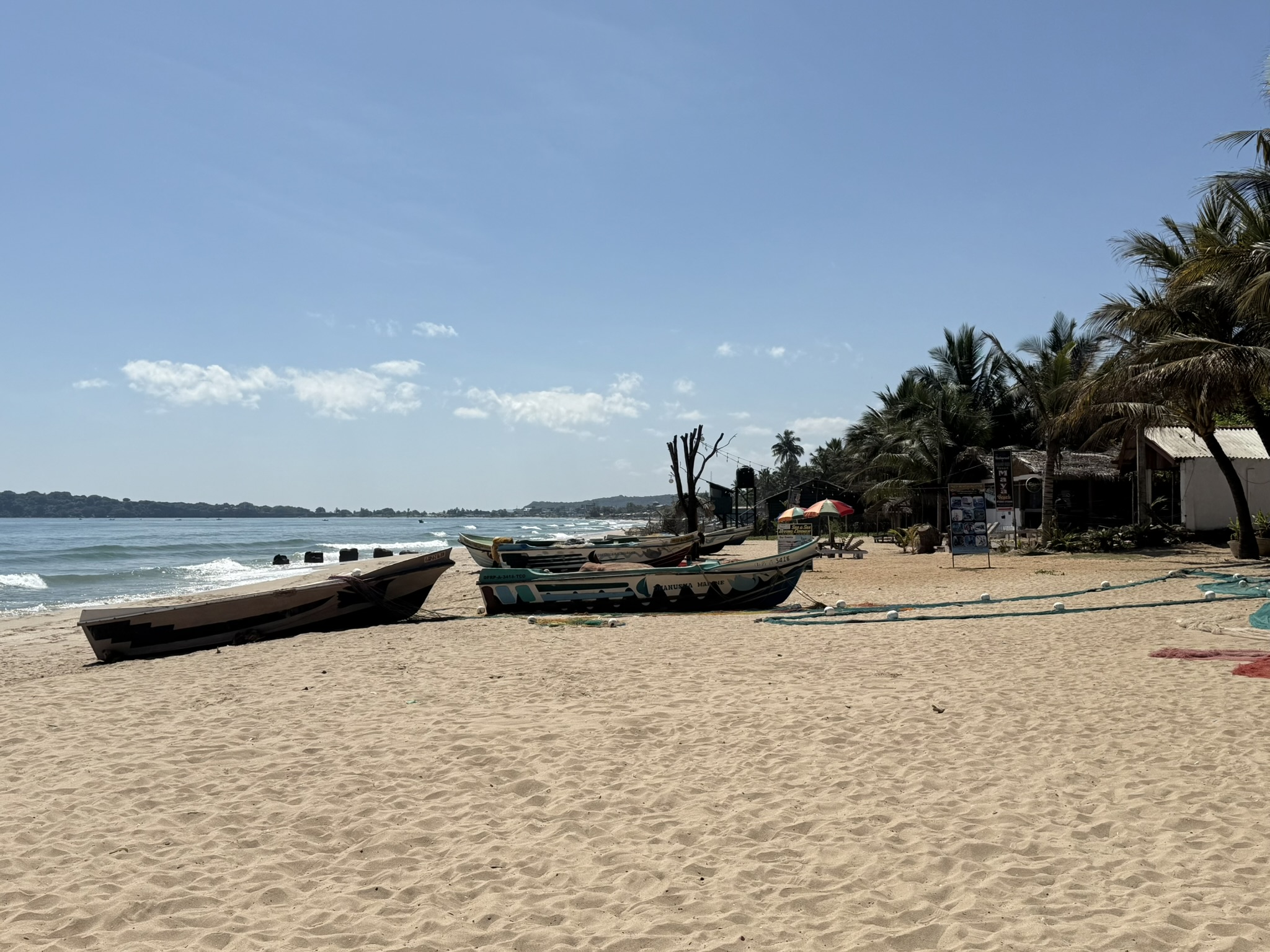
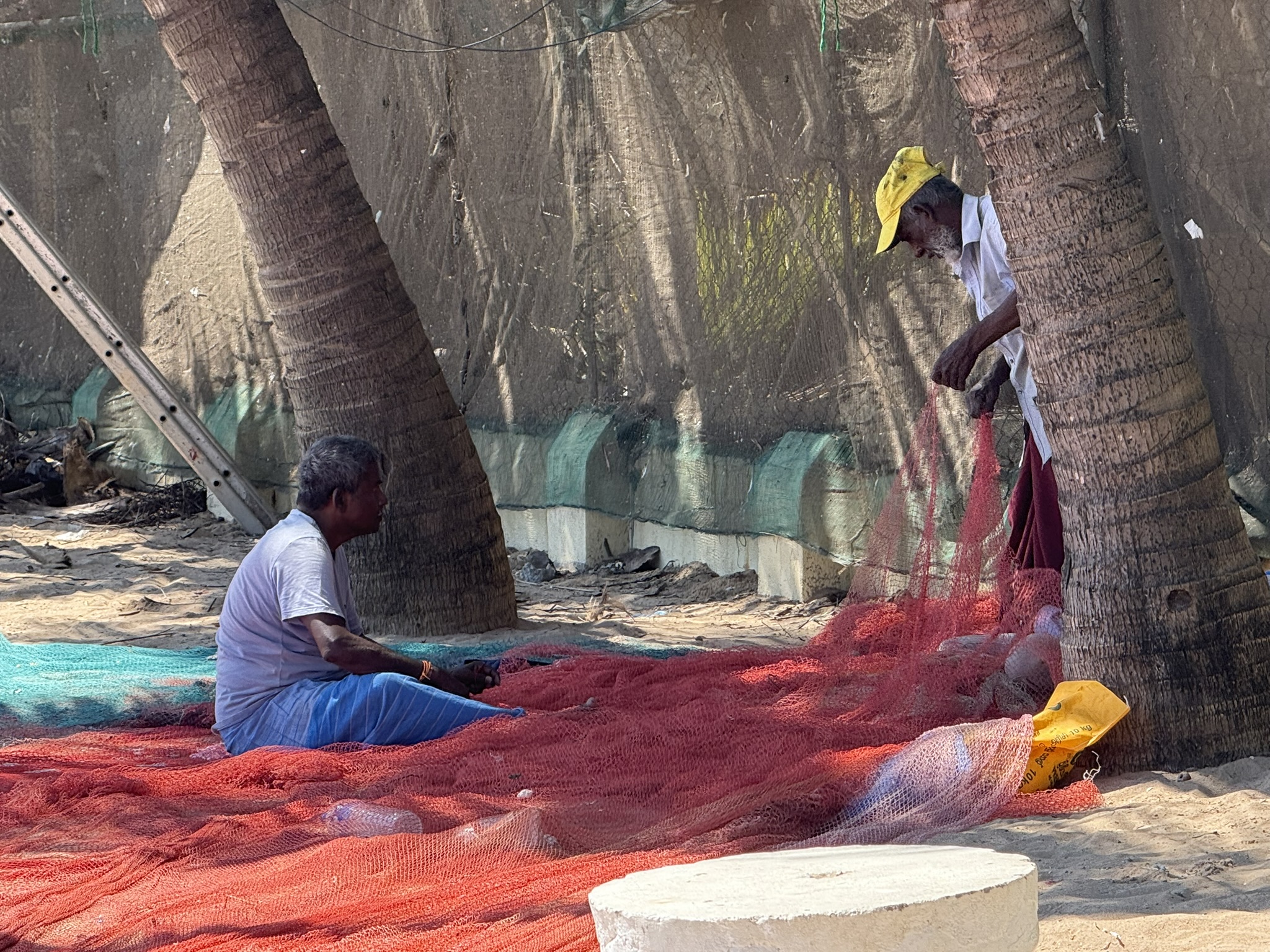
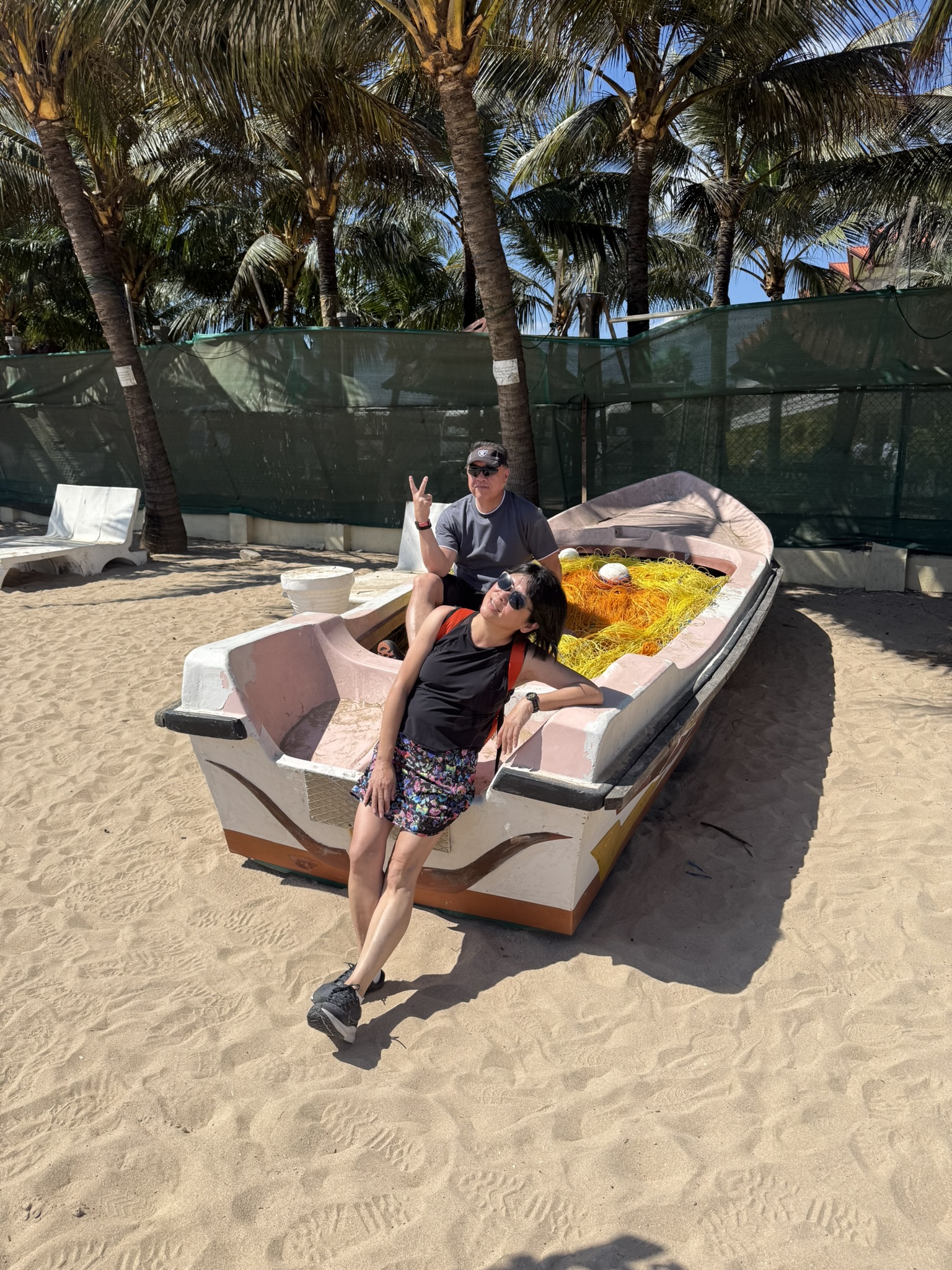
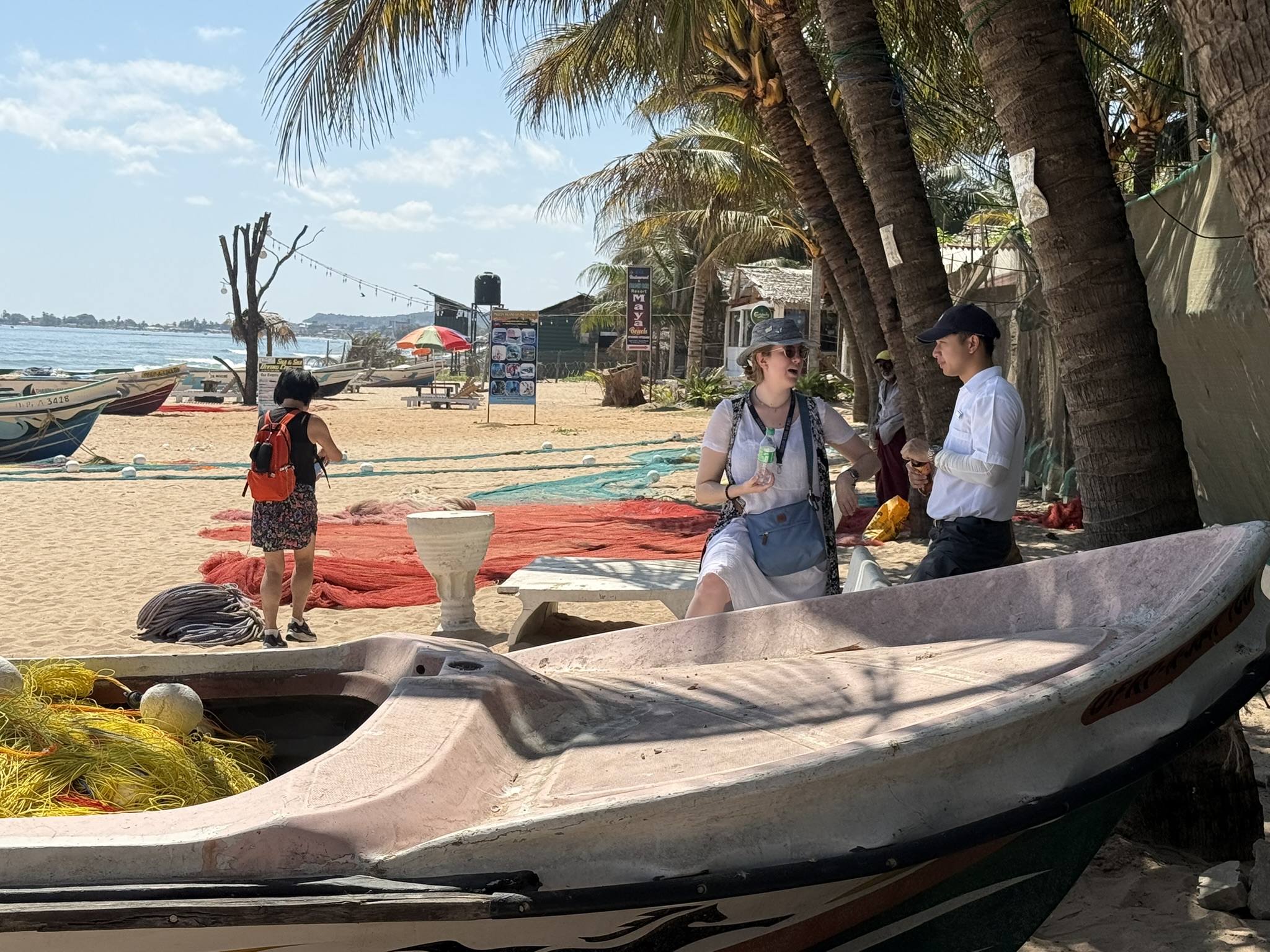
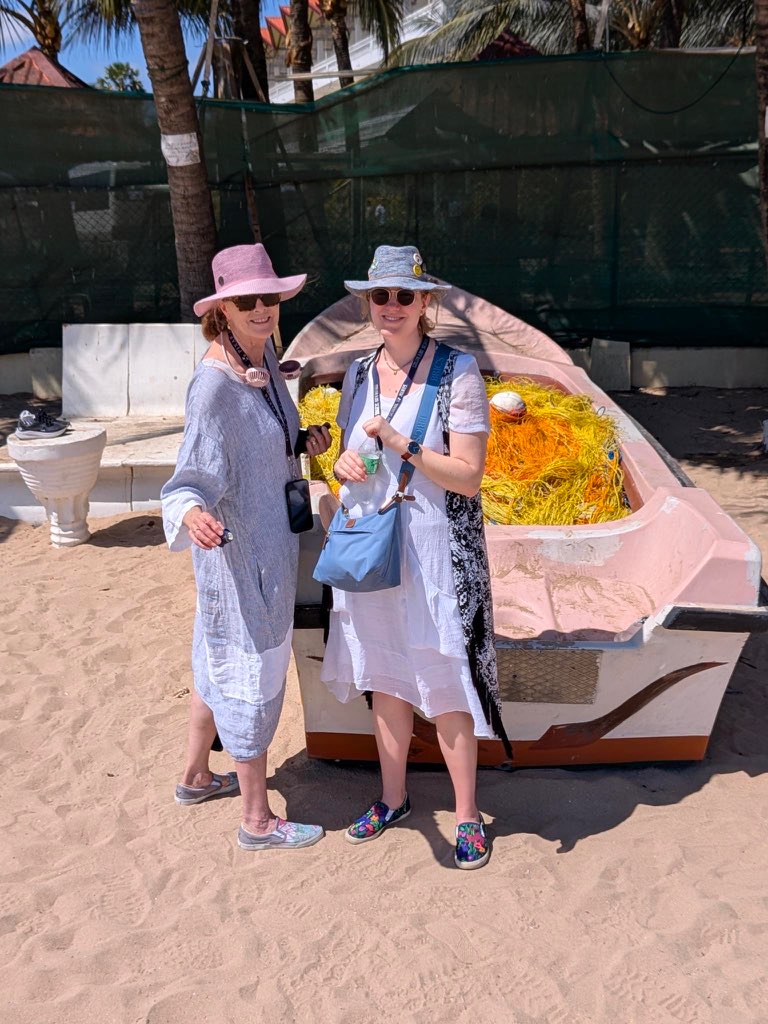
We stopped by a beach with all the bus tours and had a chance to get a drink (hot coffee was NOT my idea of a refreshing drink !) We enjoyed the walking on the beach watching men fixing their nets and friends enjoying the parked? boats!

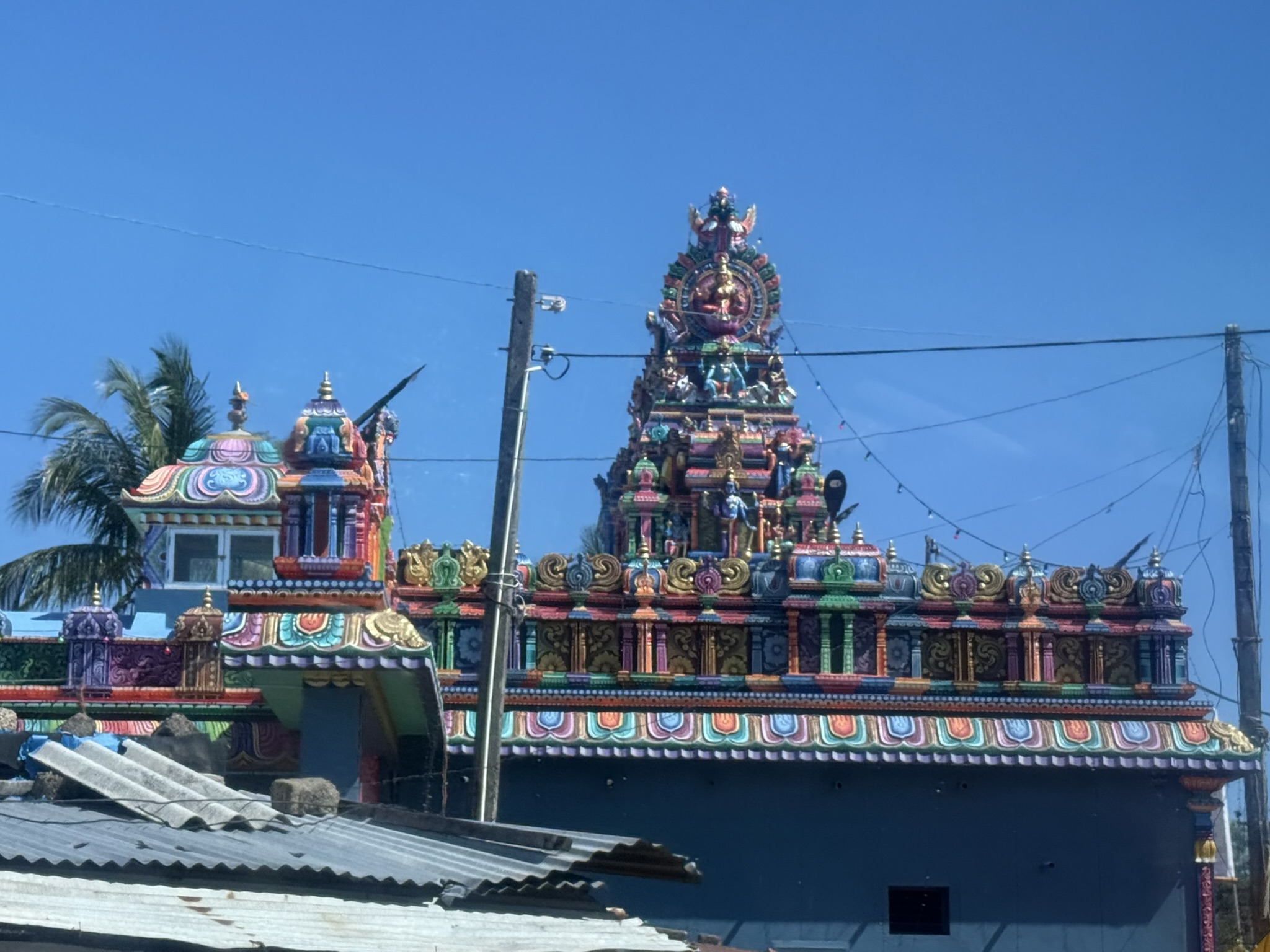
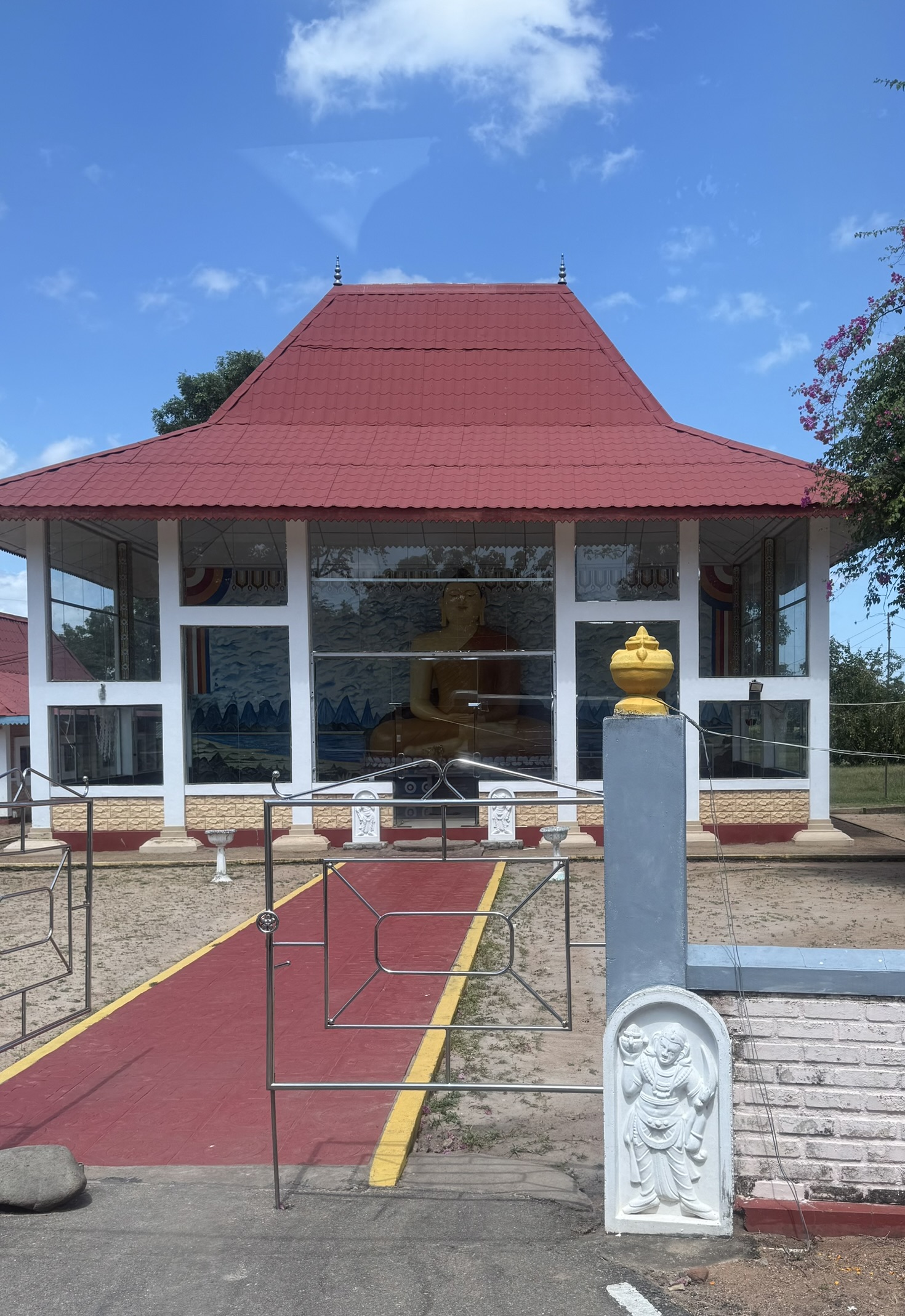
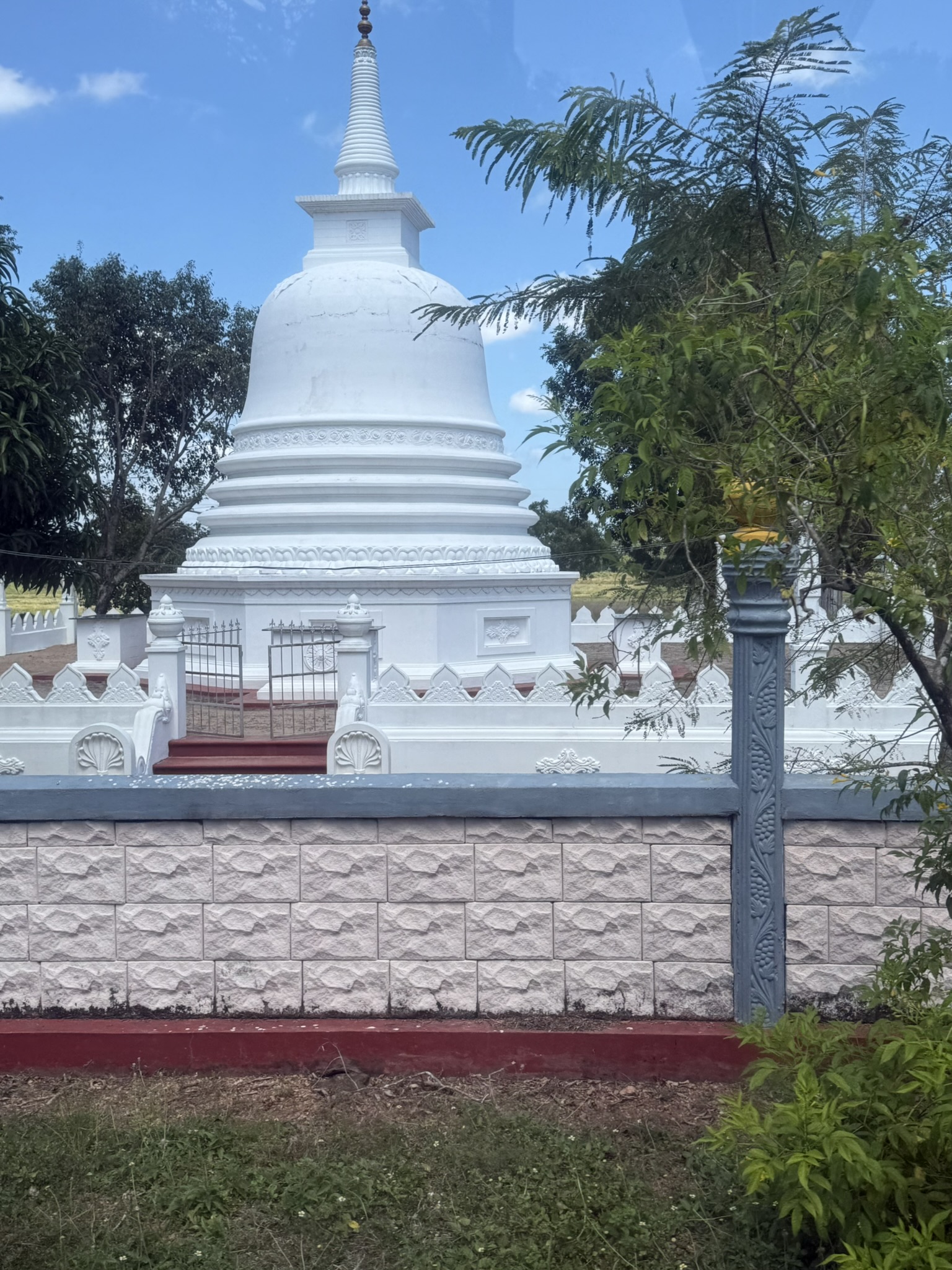
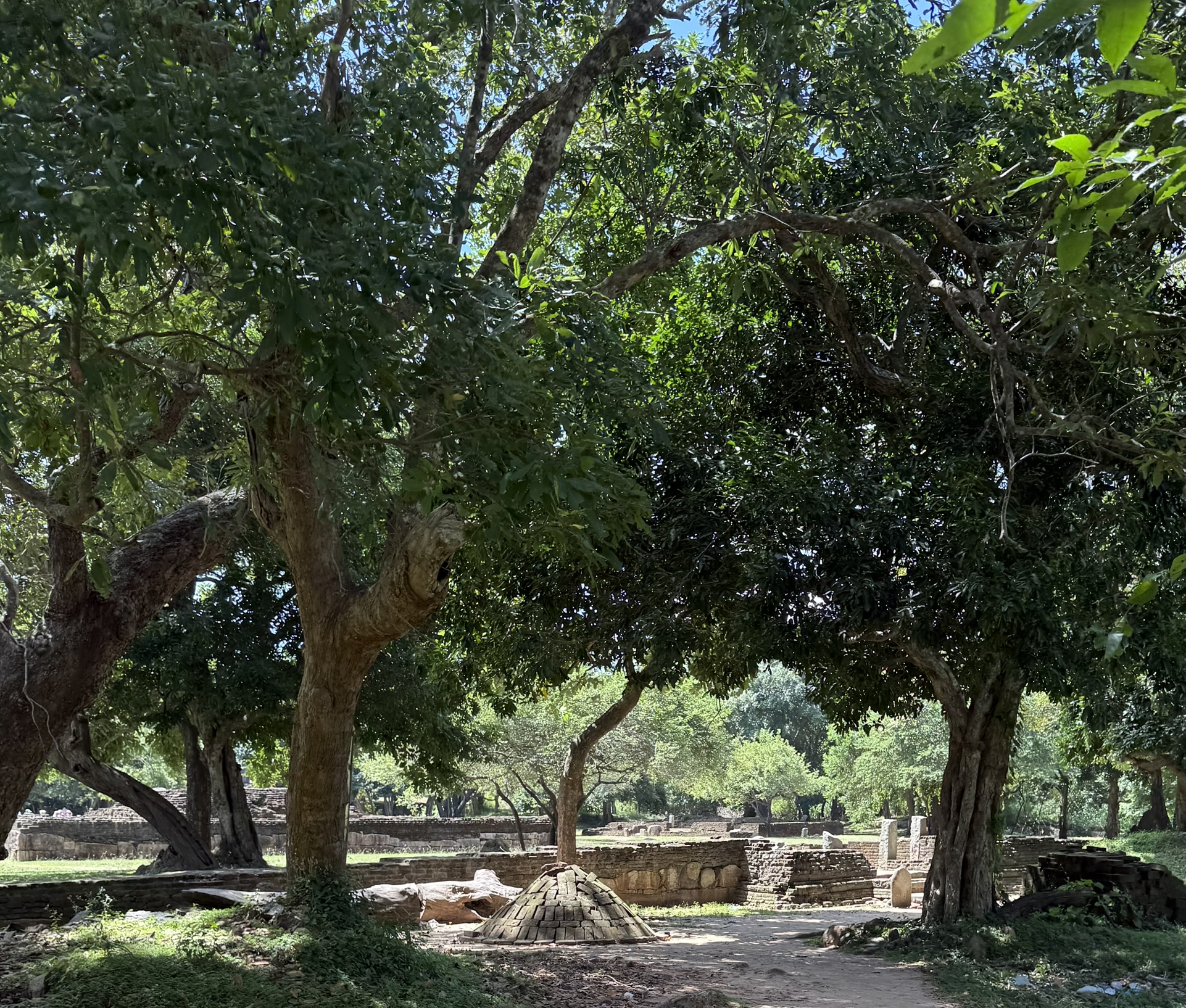
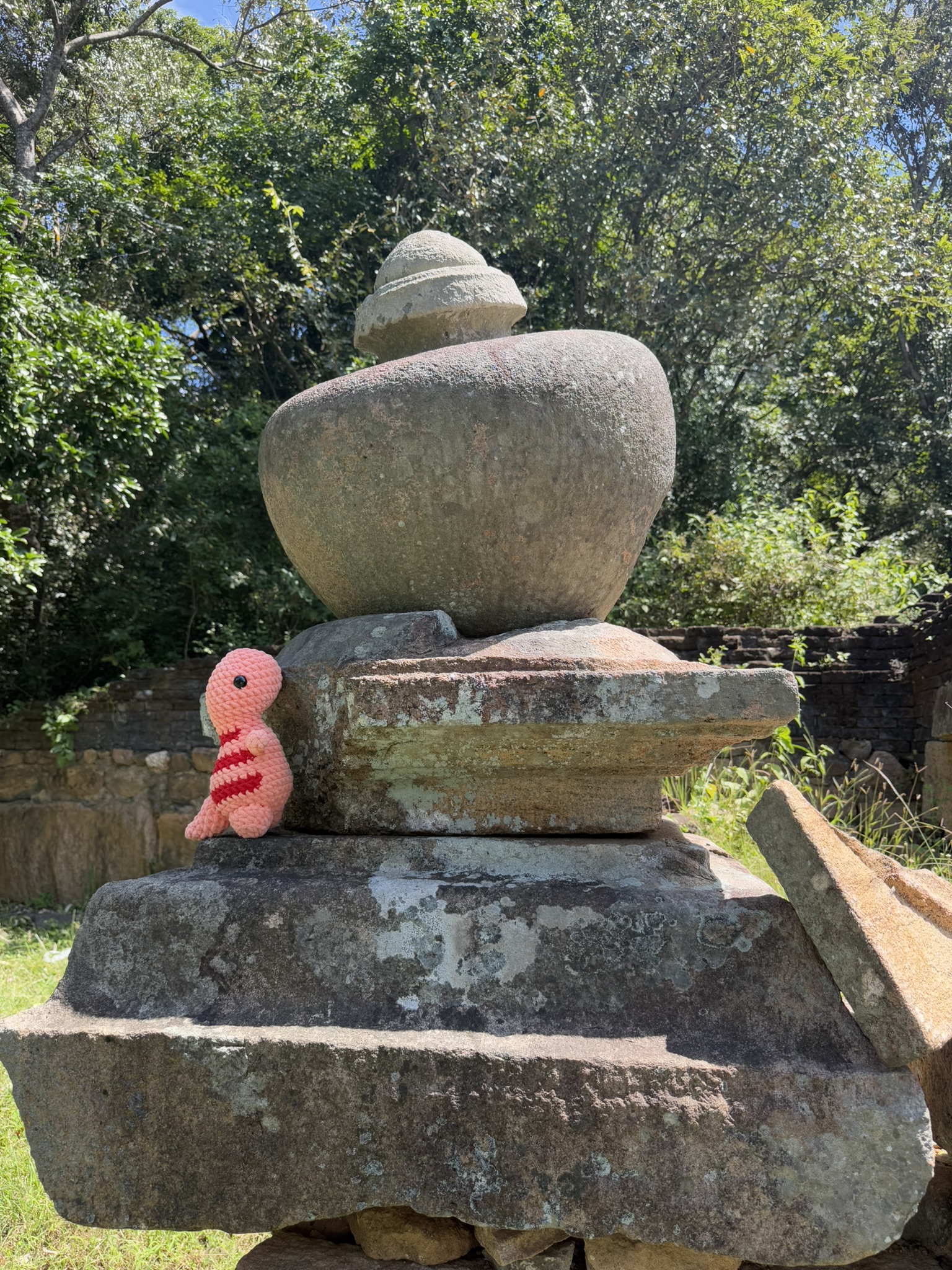
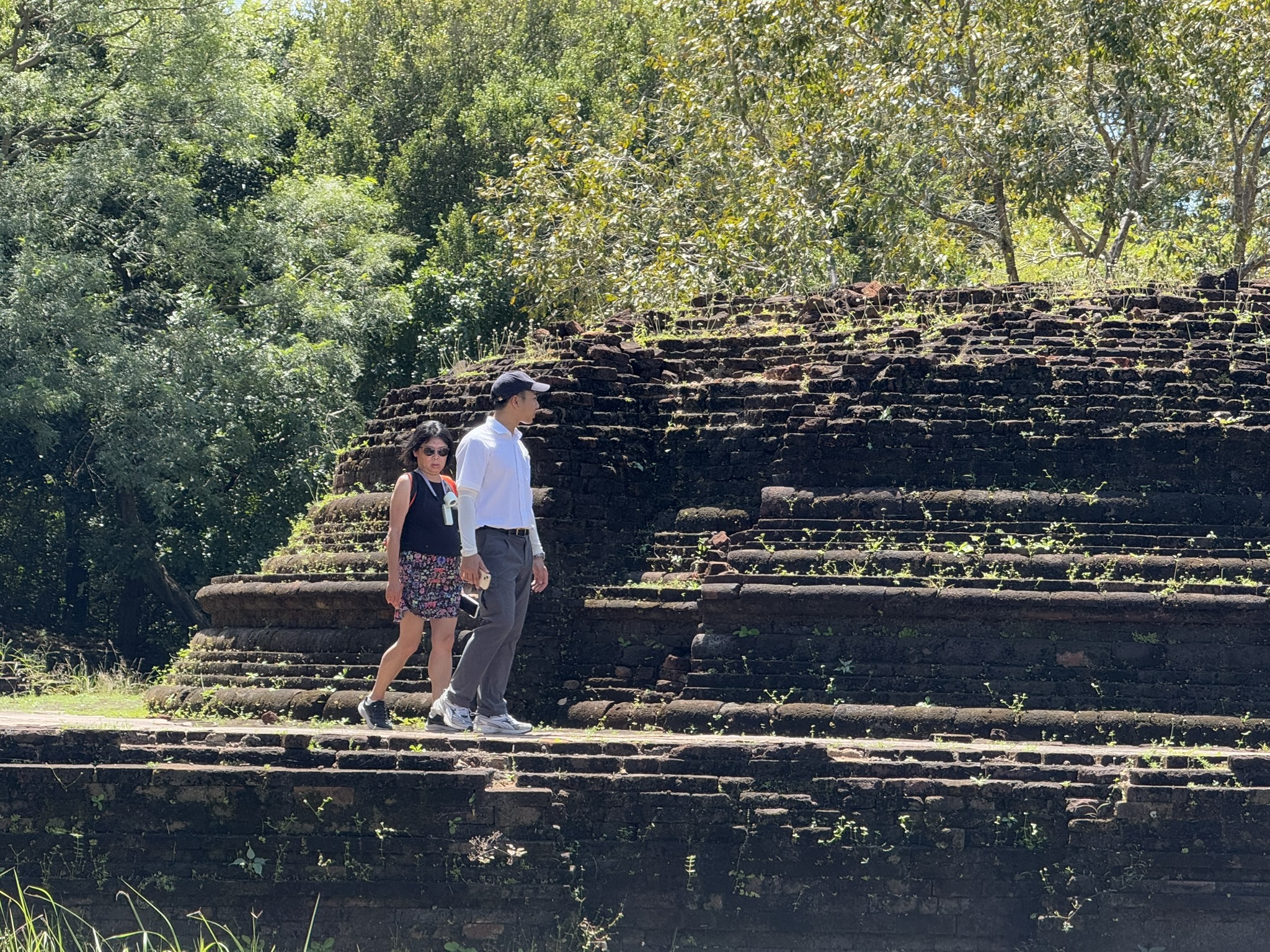
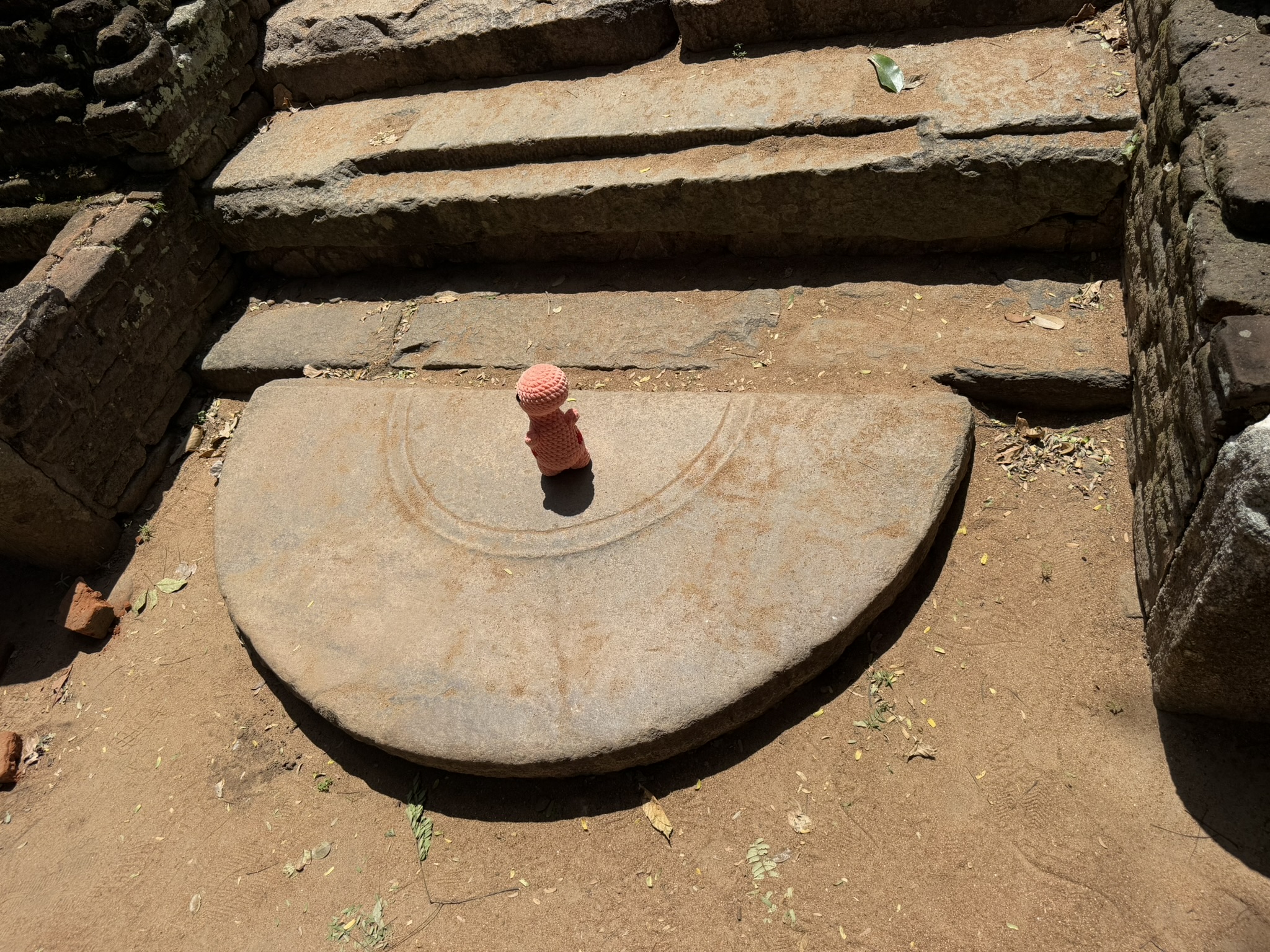
We went by a modern temple to arrive at the ruins of Velgam Vehera. It is an historical Buddhist temple. It also known to Hindus as Natanar Kovil. Historically Velgam Vehera was a very important Buddhist temples in the country. The temple has been declared as an archaeologically protected site.
This temple is believed to be built during the reign of King Devanampiyathissa (307–267 BC) with later renovations haven been undertaken by other King’s. Following the collapse of the Anuradhapura and Polonnaruwa Kingdom’s, the population migrated to the southern part of country, which resulted in the temple being abandoned and falling into ruin. With the invasion of Cholas from India in 993 AD, many of Buddhist shrines were destroyed in the country. Velgam Vehara however managed to survive unscathed. The Cholas instead renovated the temple, adding their own structures and renamed it Rajarajaperumpalli. In 1929 the ruins of Velgam Vehera were discovered by the Sri Lanka Archaeological Department and in 1934 the site was declared as an archaeological protected reserve.


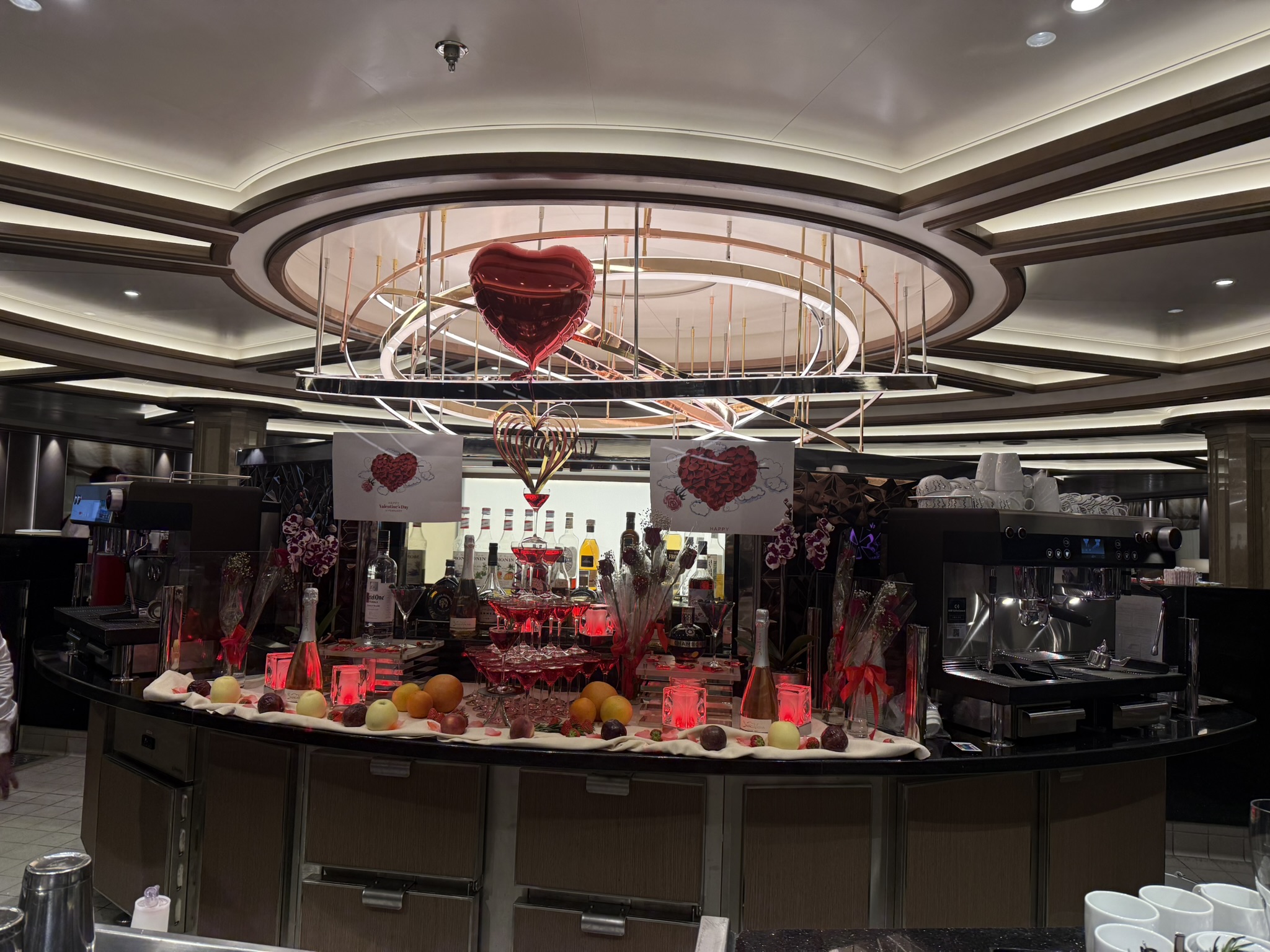
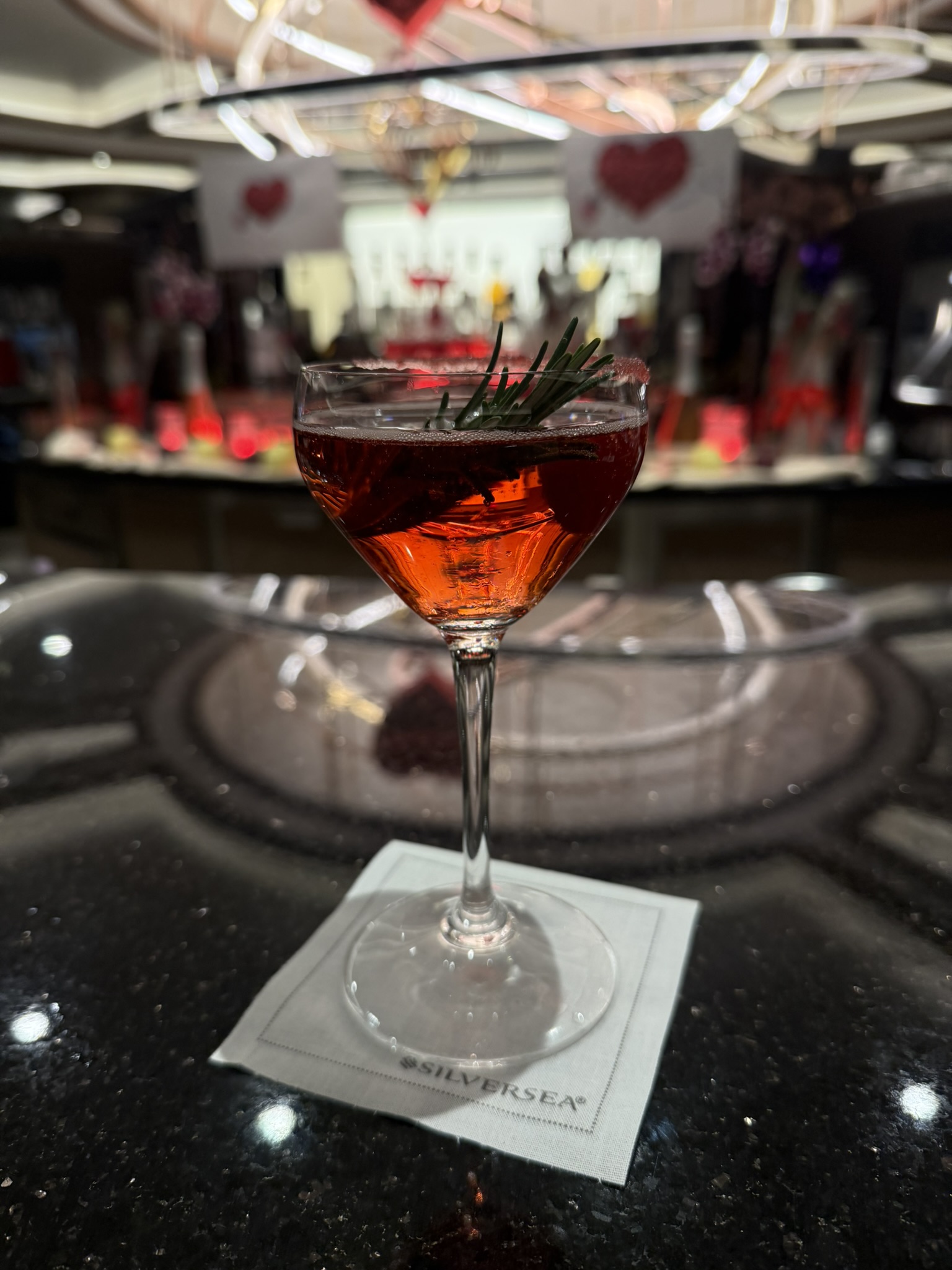
We had a beautiful valentines evening and Larkin and I were invited to the hotel managers table for other women on their own. It was special and we enjoyed being included!
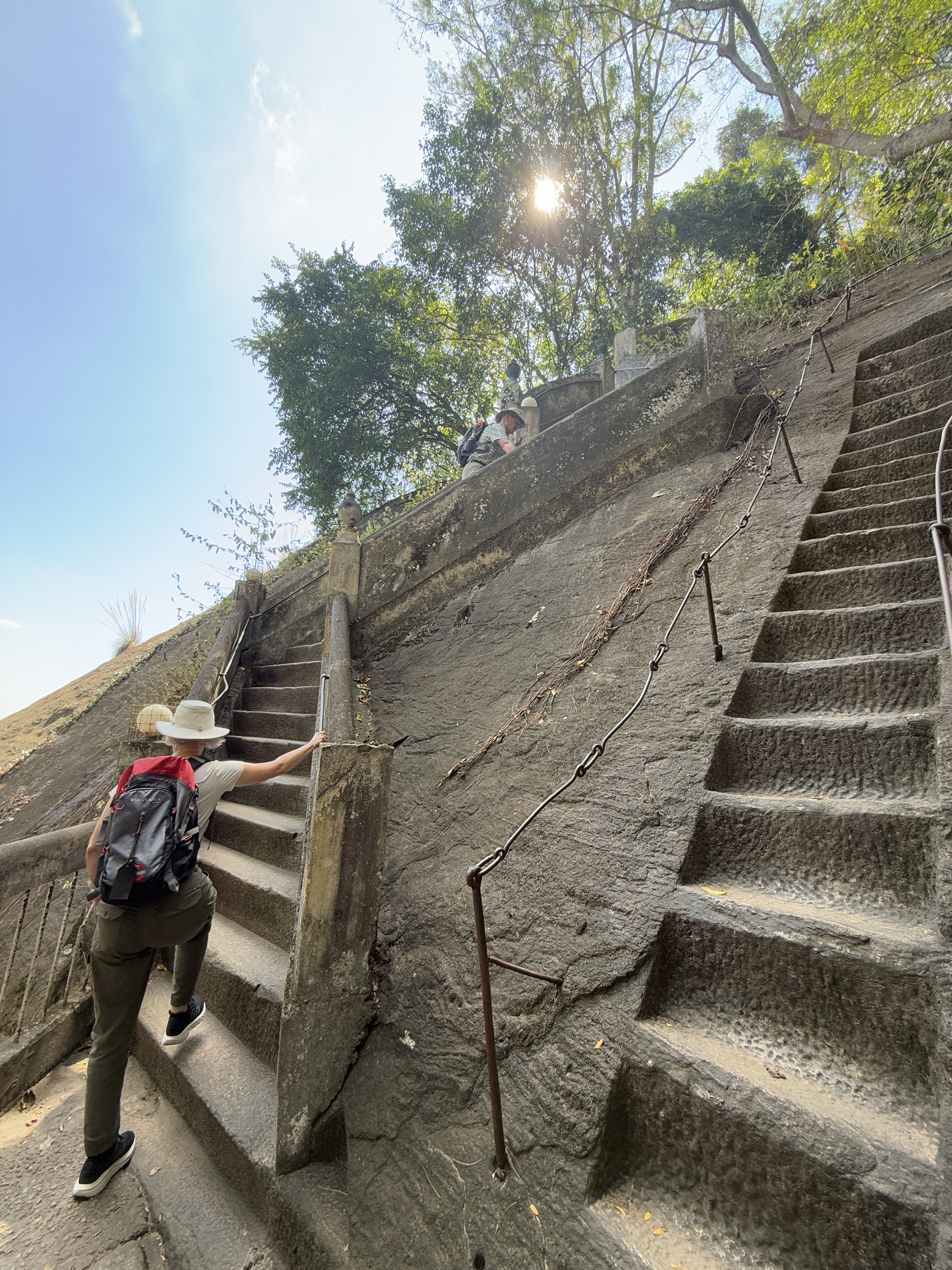
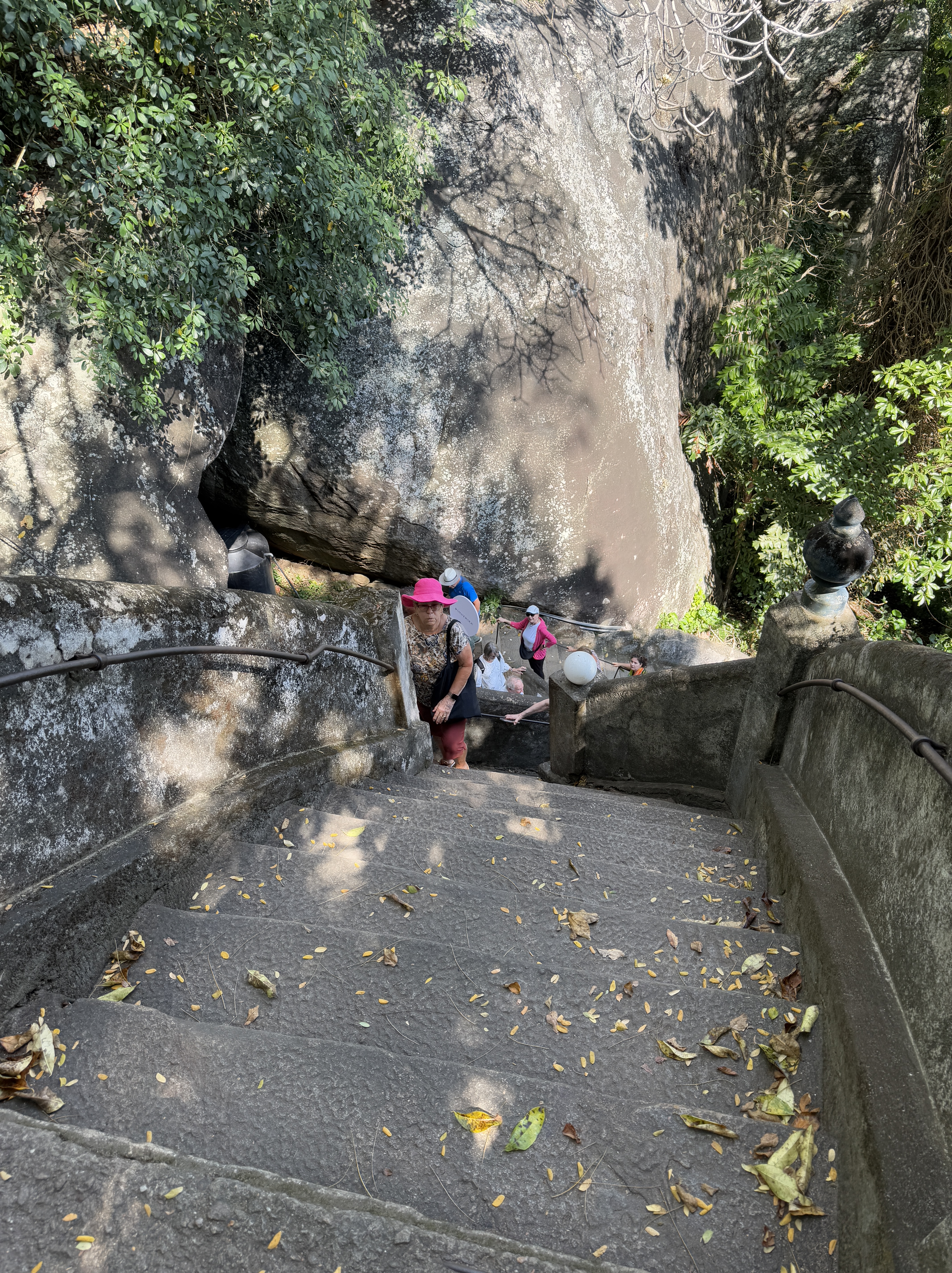
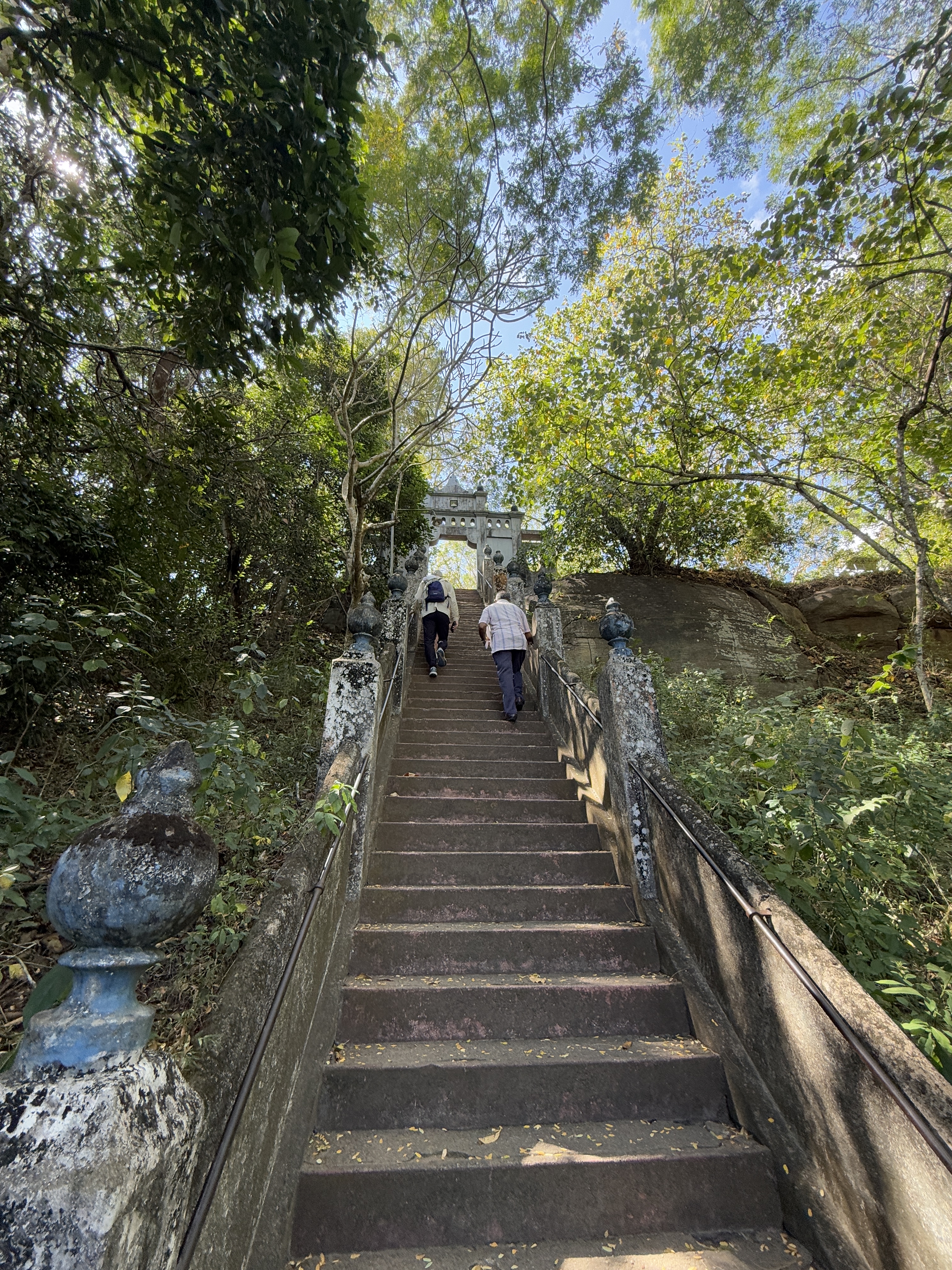
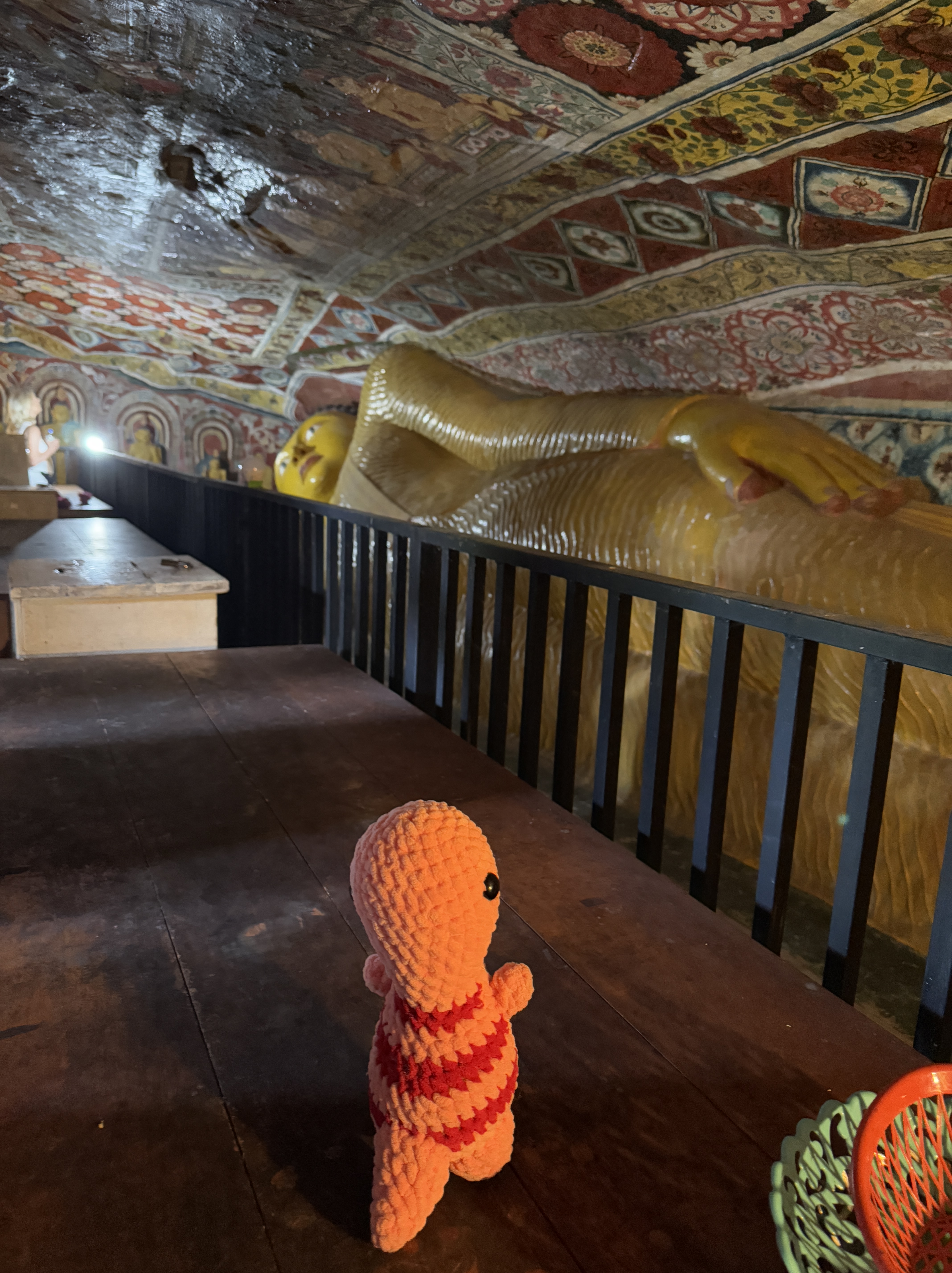
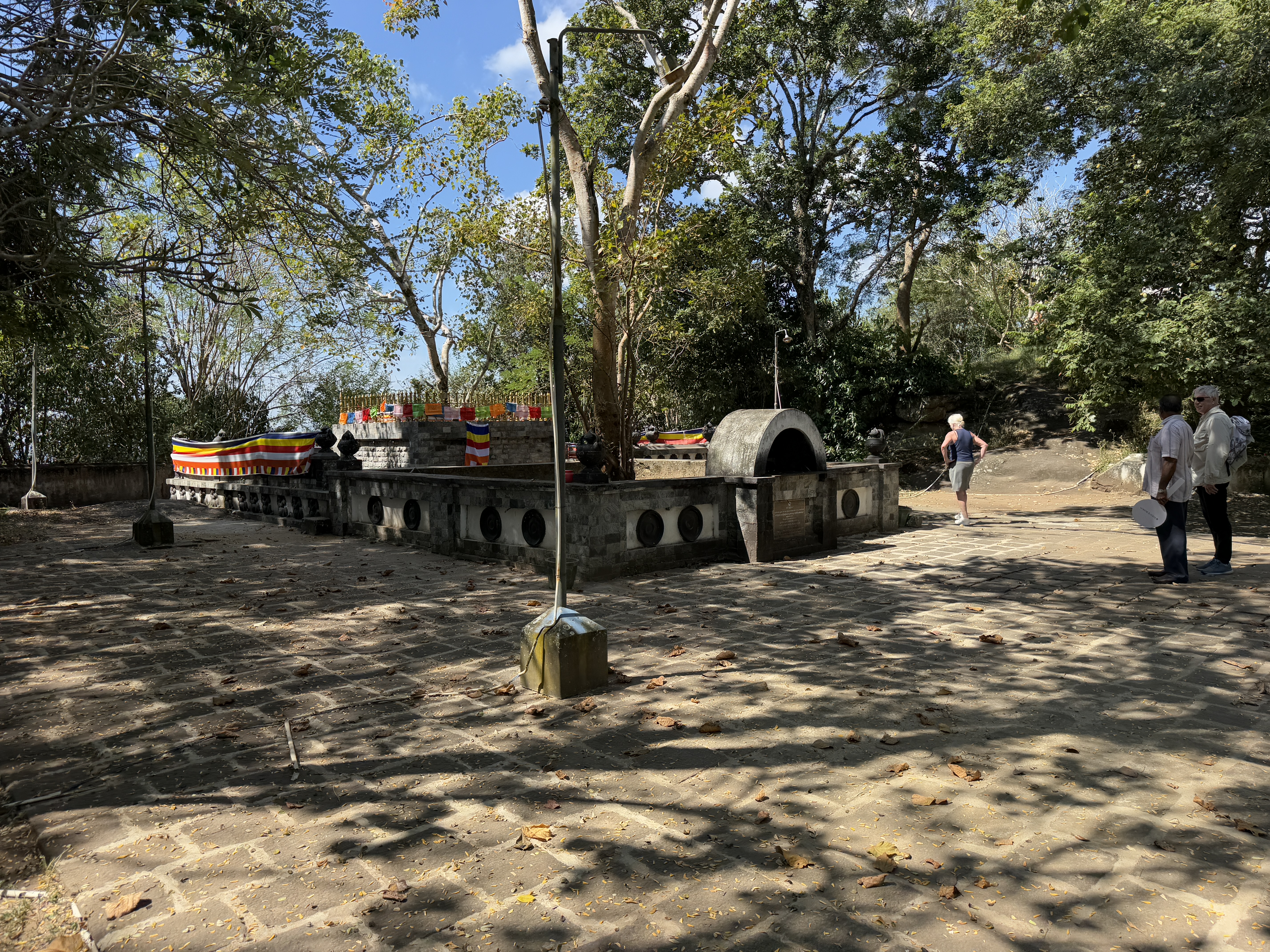
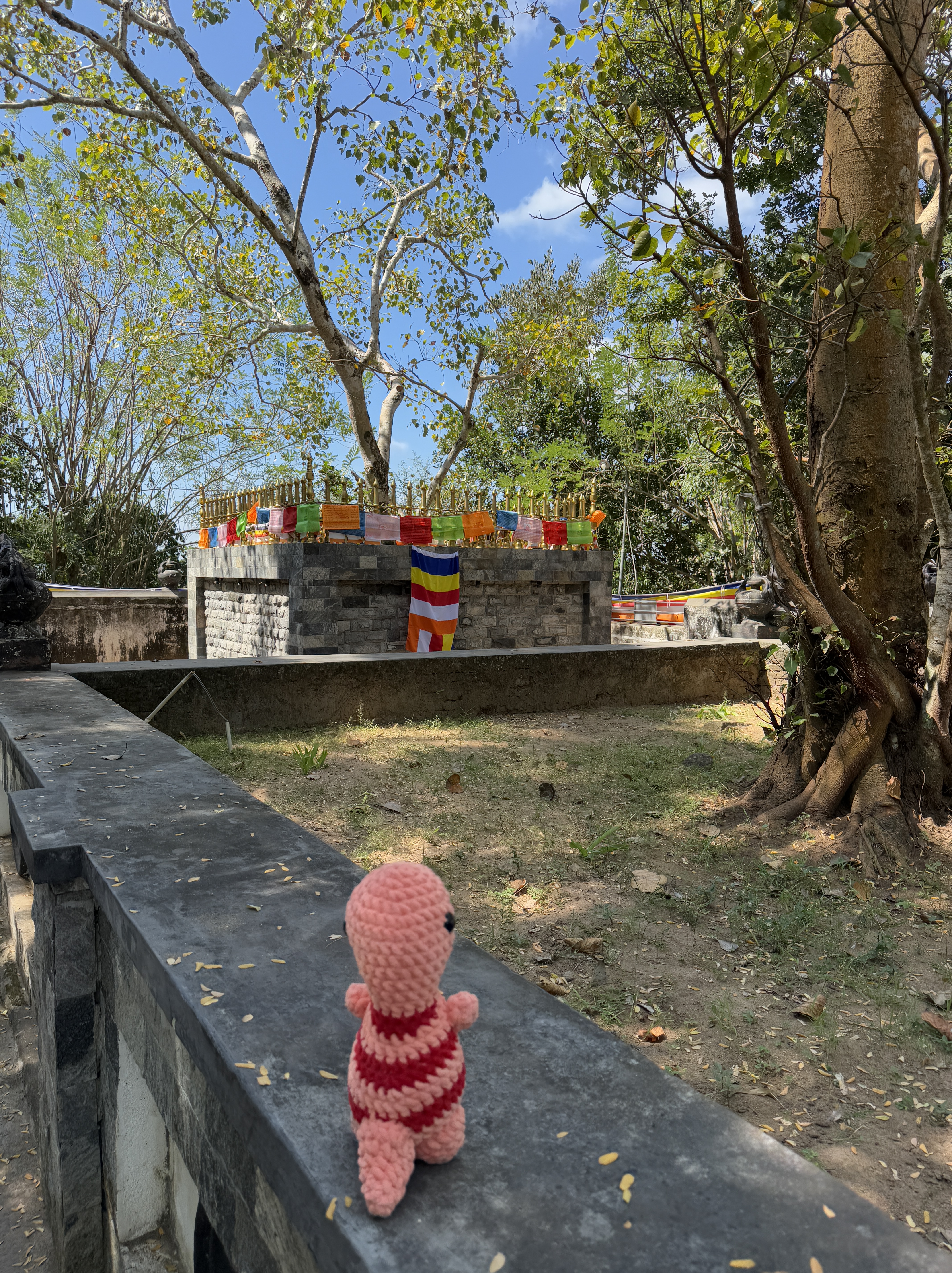
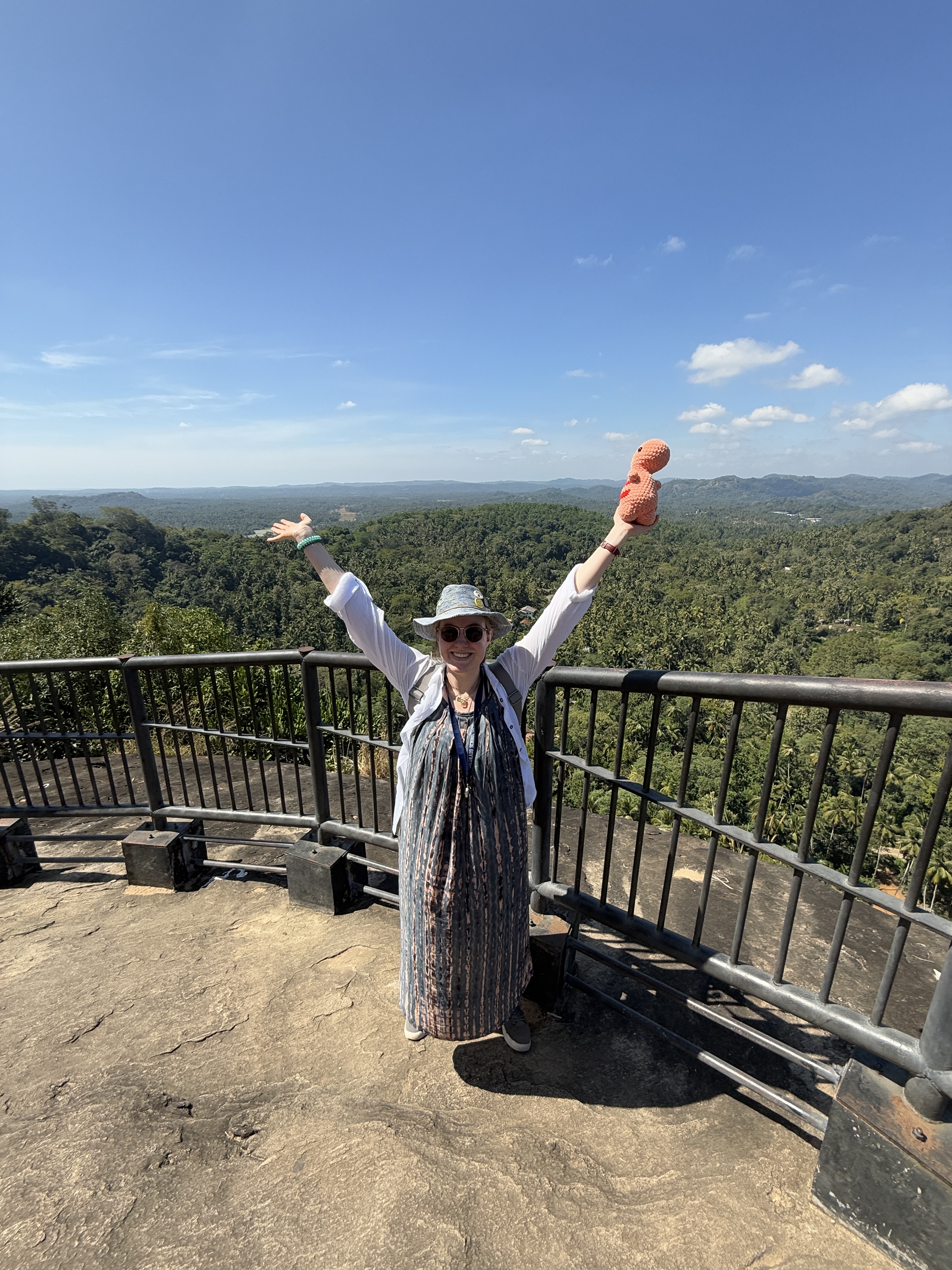
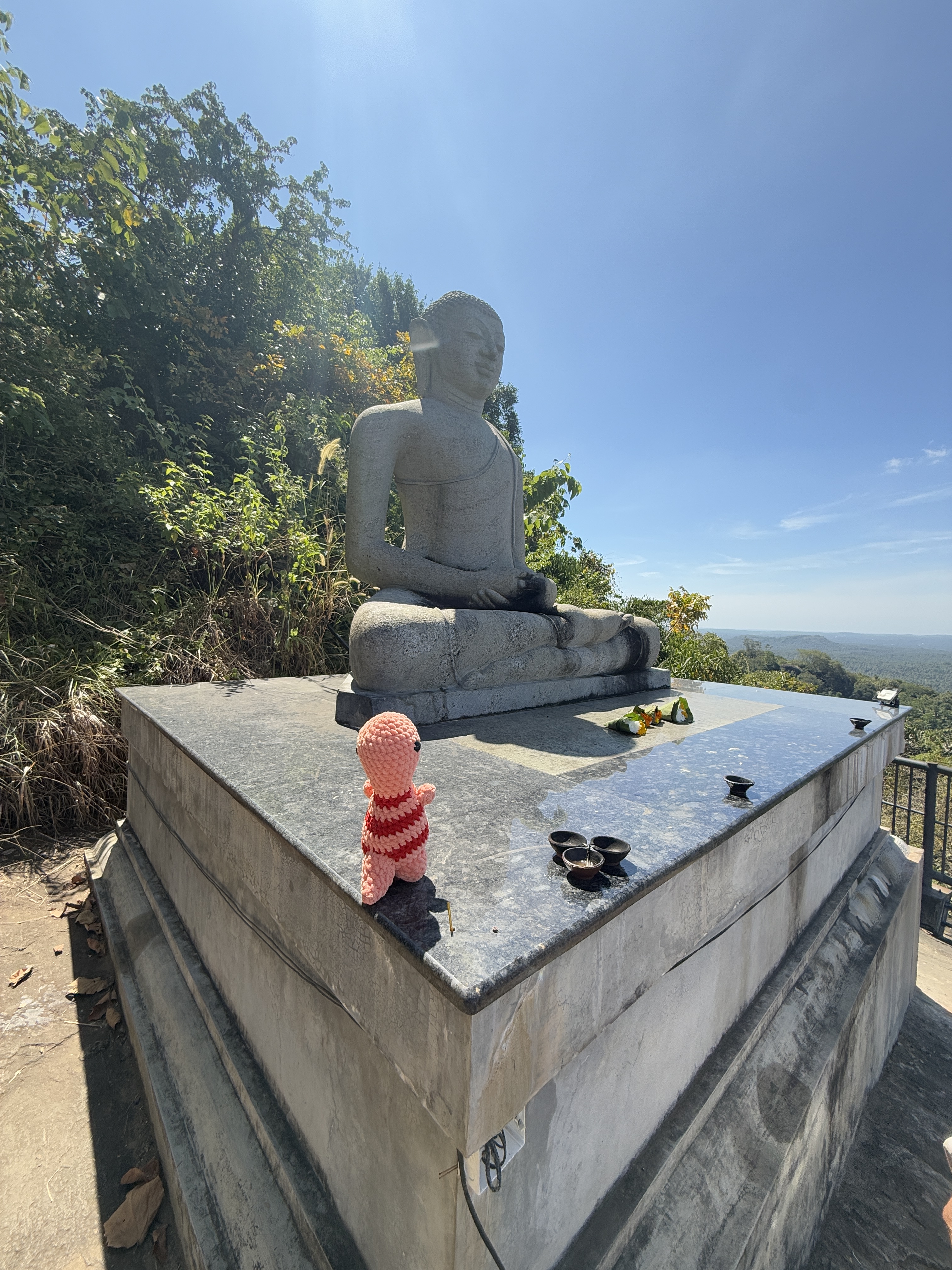
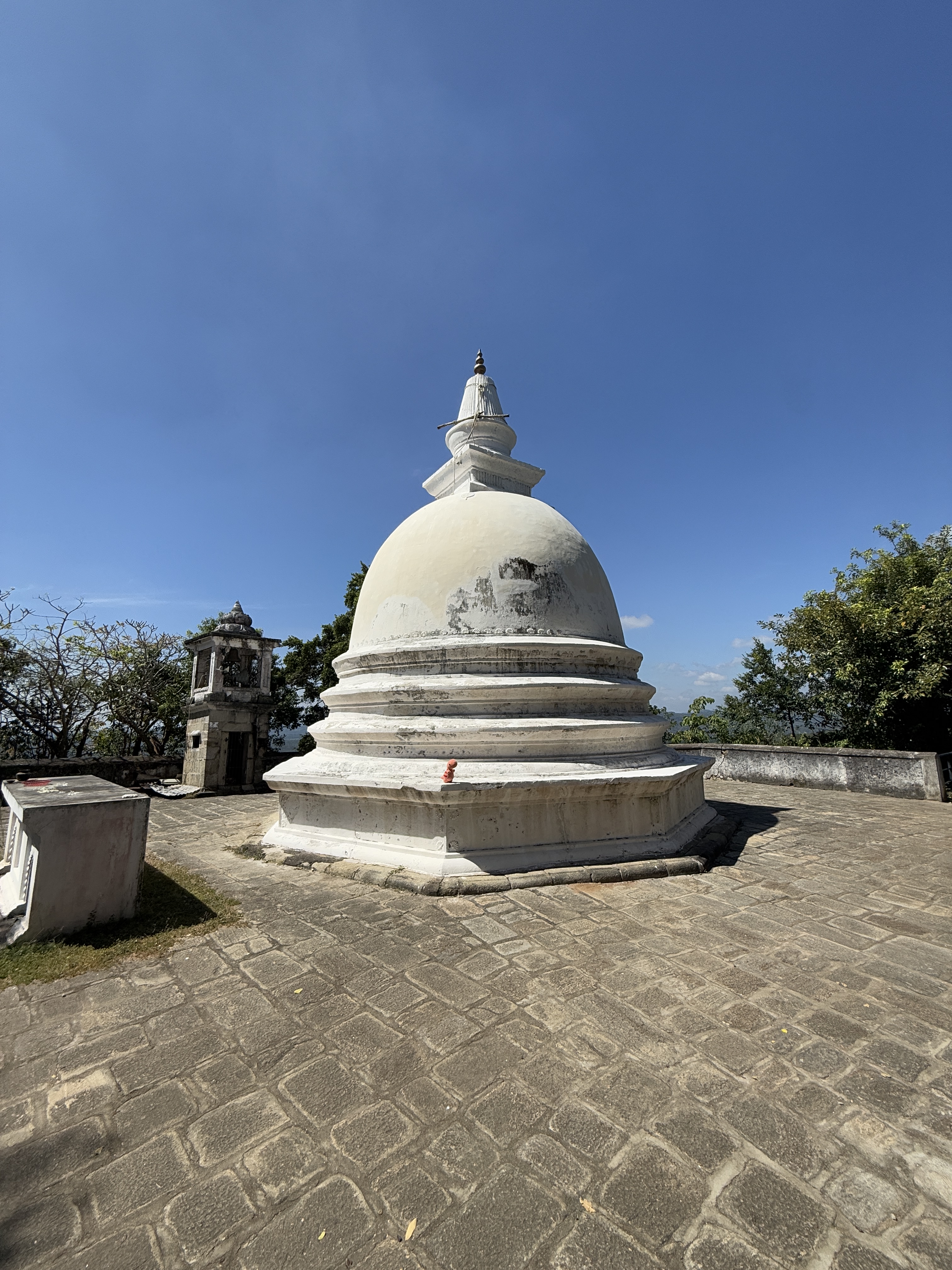
The next day, Larkin went to Mulklirigala, temple of the great kings. She enjoyed many steep steps…hence I did not go on this jaunt! She made it to the top! The temple was built on a 673 foot high natural rock, surrounded by another four rocks. The temple has been formally recognized as an archaeological sire in Sri Lanka. According to the ancient chronicle Mahavamsa, the Mulkirigala Vihara was constructed by King Saddhatissa in the third century. After that the temple received royal patronage by numerous successive kings. During the 461-479 AD time period a Stupa, a mound-like or hemispherical structure containing relics that is used as a place of meditation, was added to the temple by King Datusena, and it was further developed by King Kirti Sri Rajasinghe (1747–1782).

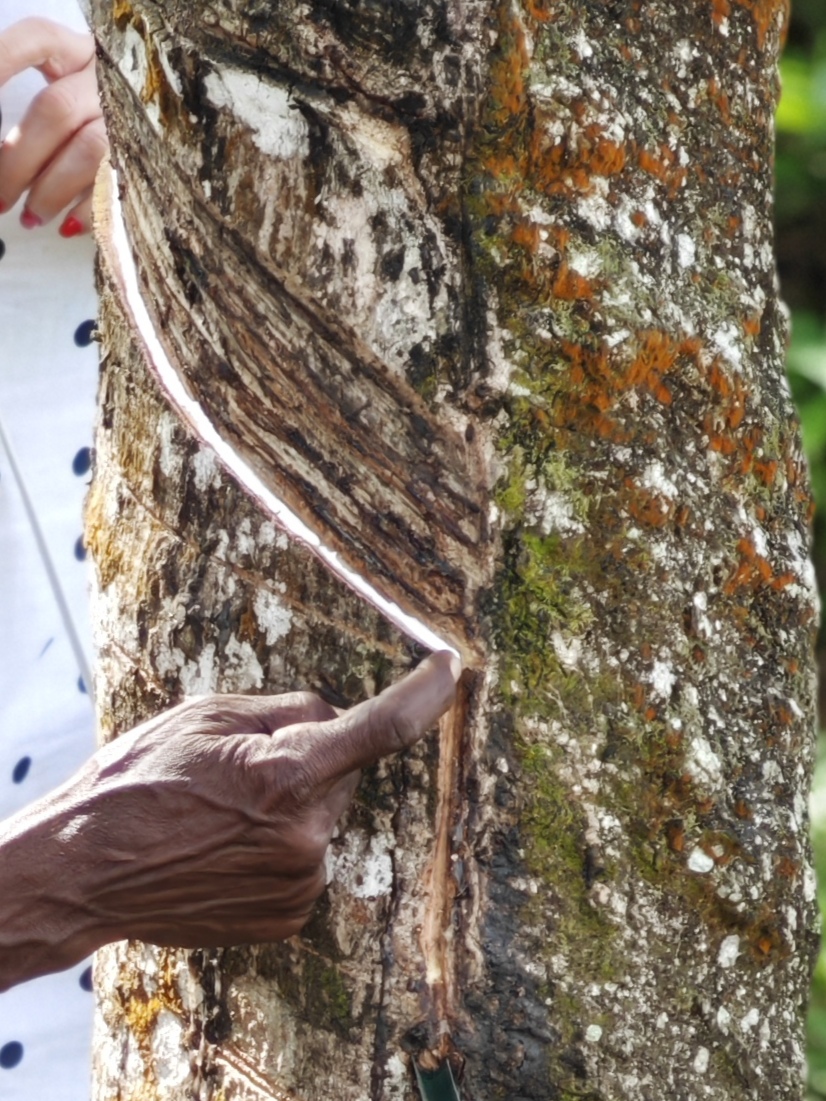
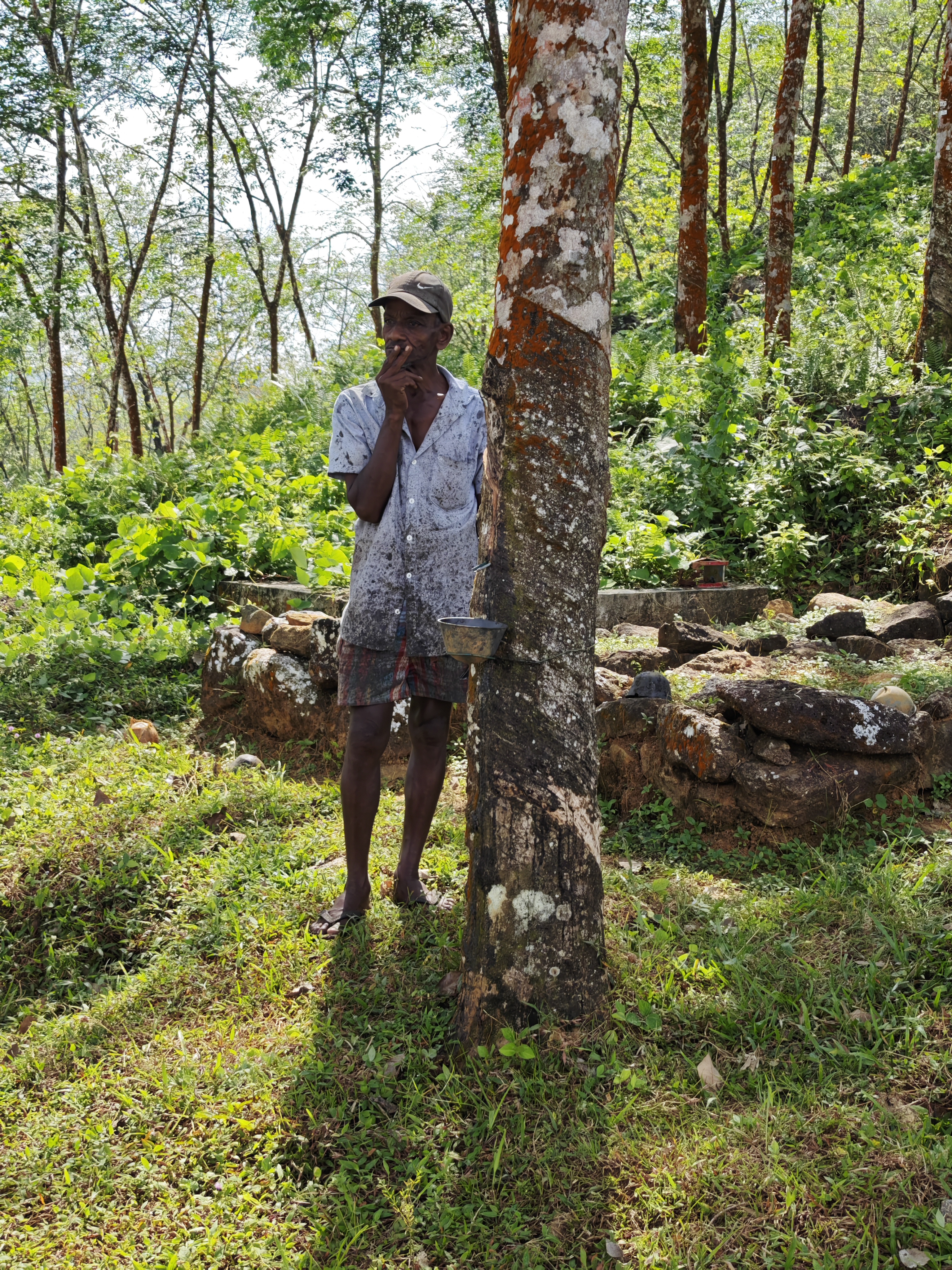
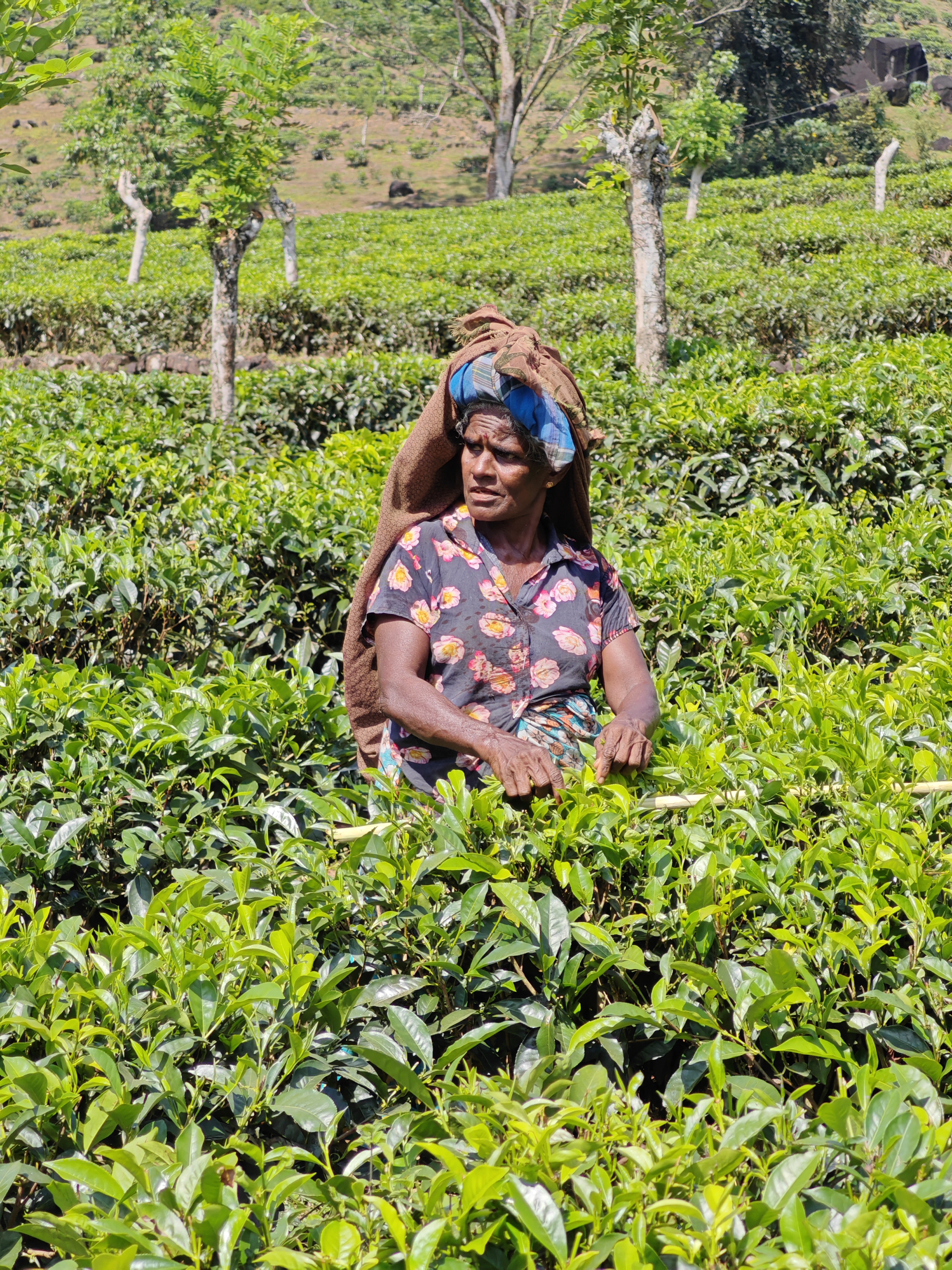
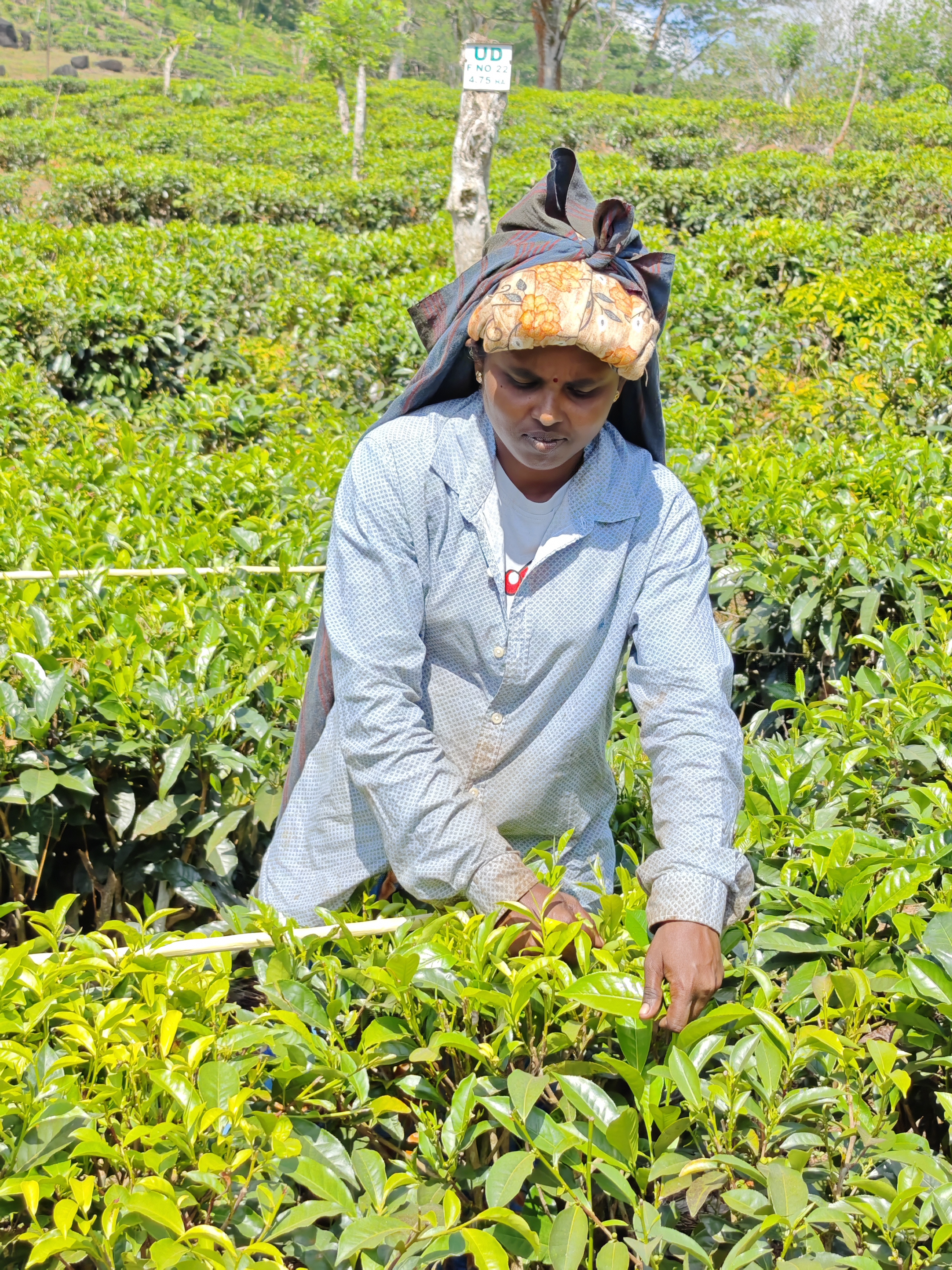
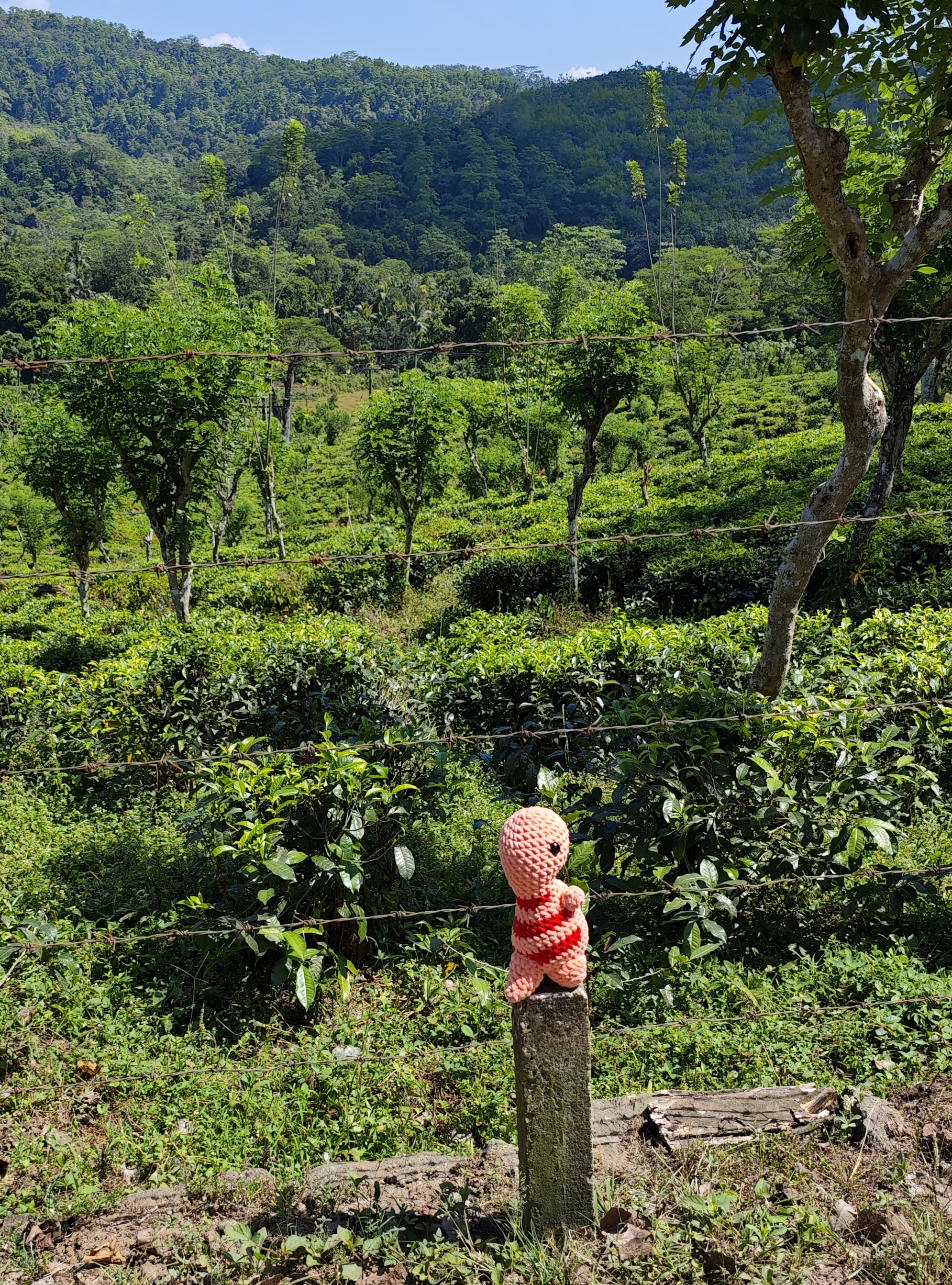
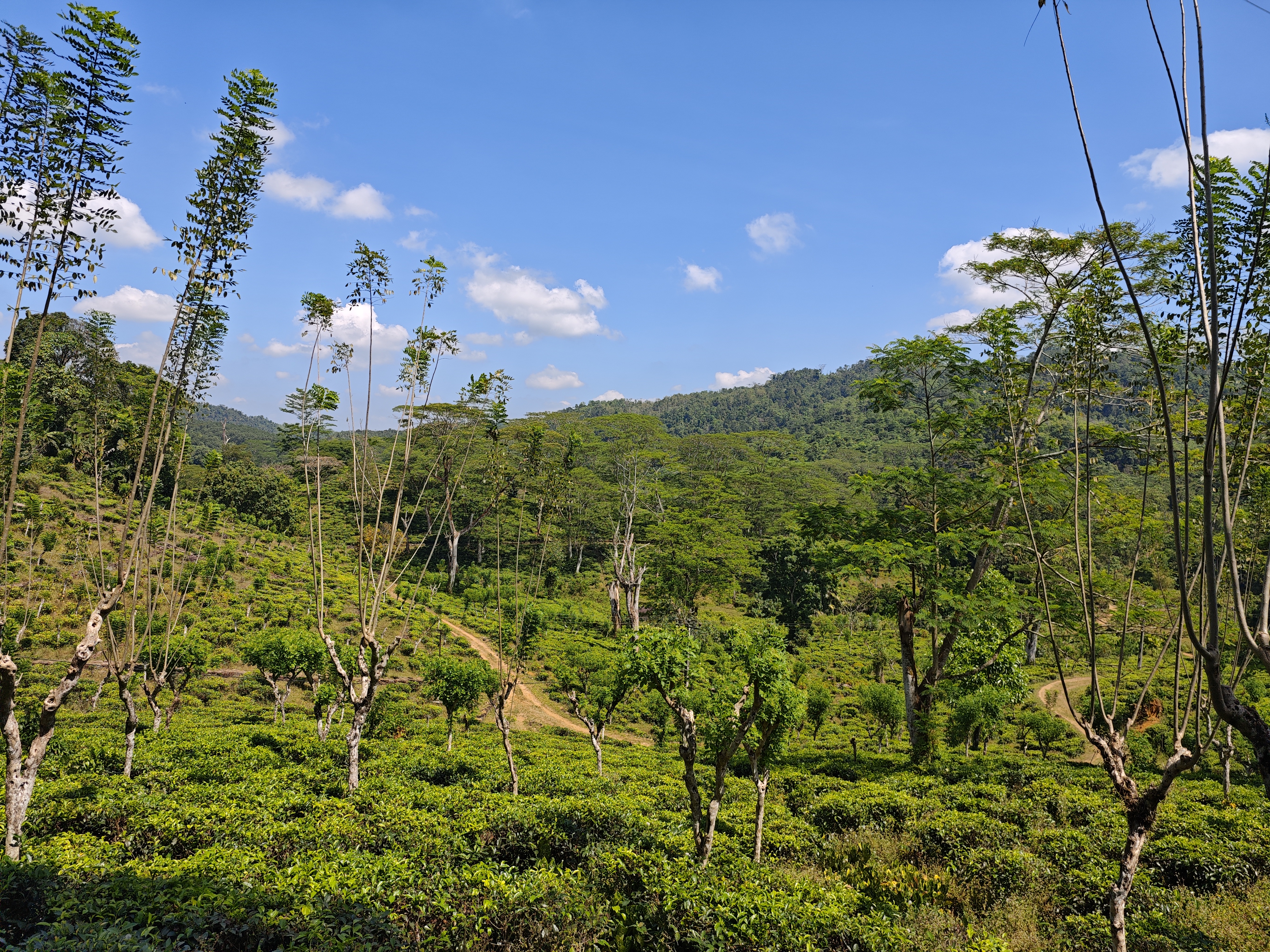
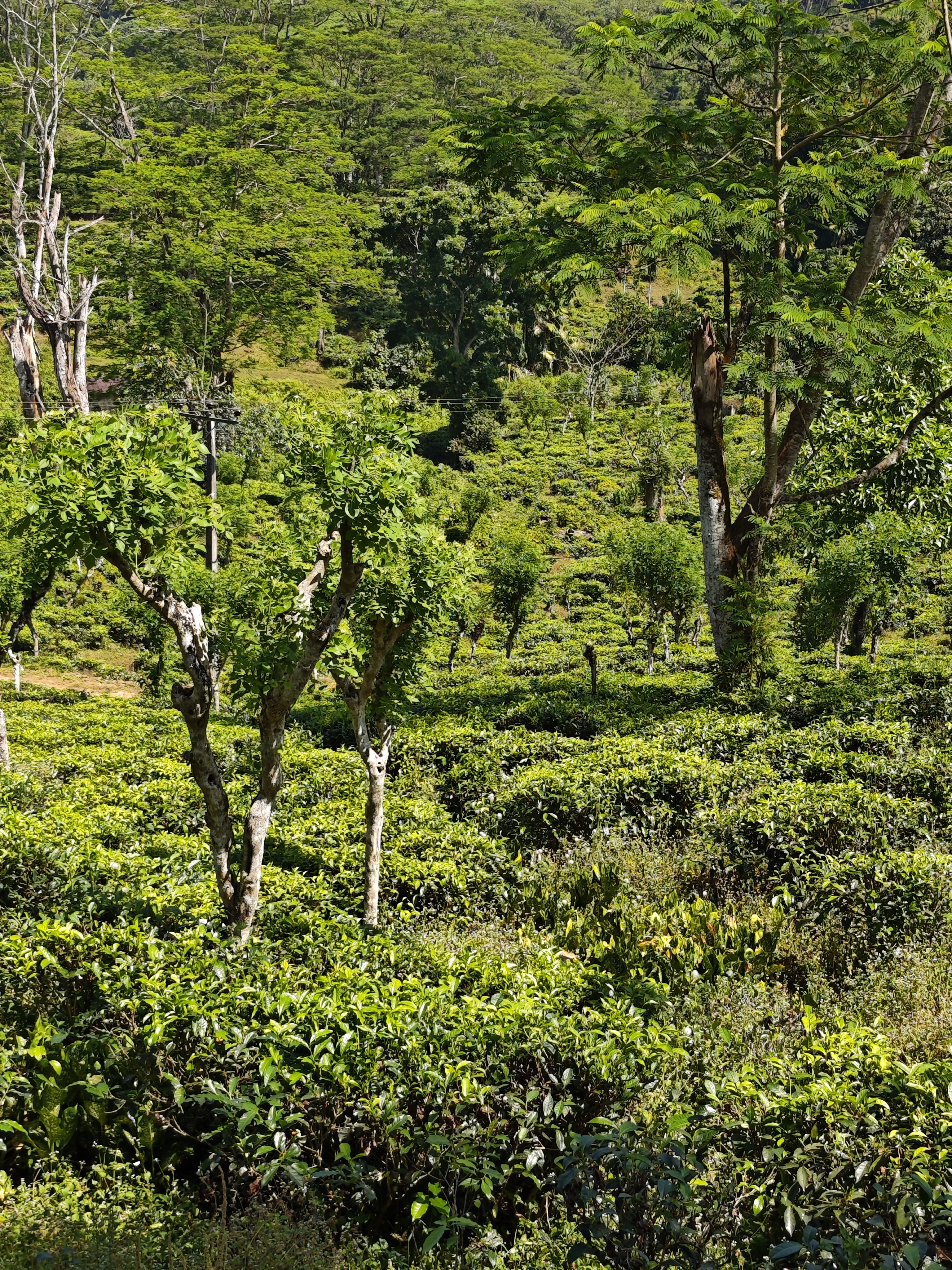
Our last stop on Sri Lanka was the capital, Colombo which is on the west side of the island. We visited a tea plantation, Ingiriya. We stopped on our way up to the plantations to see a rubber tree where we were shown how the latex was tapped. Natural latex of the rubber tree is still used for many applications despite Synthetic rubber being developed! We were also shown how the women pick the tea leaves. Of course this was set up for us, but it is how they harvest the leaves, usually in the morning when it is cooler and those particular plants are ready to be harvested again.

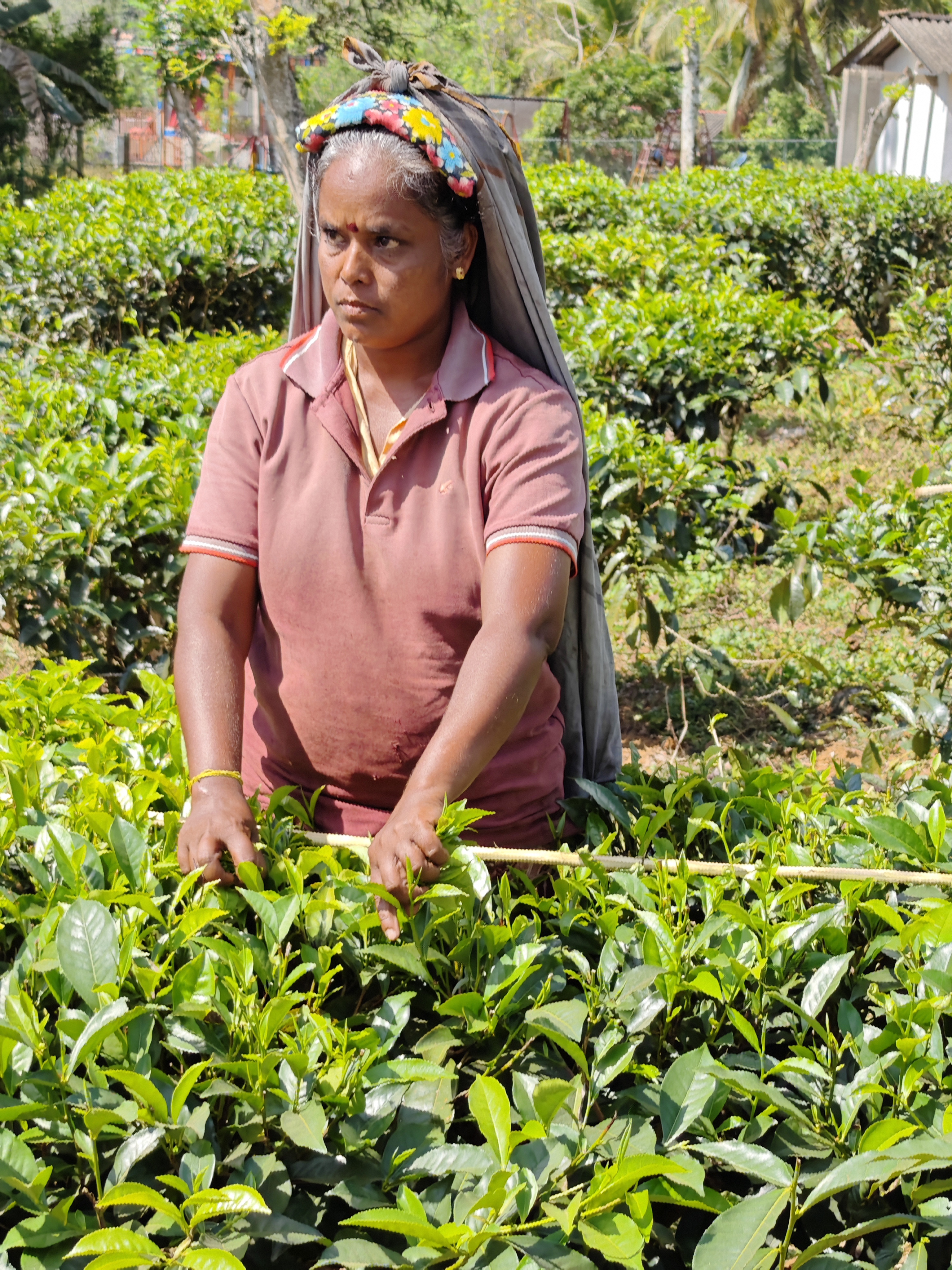
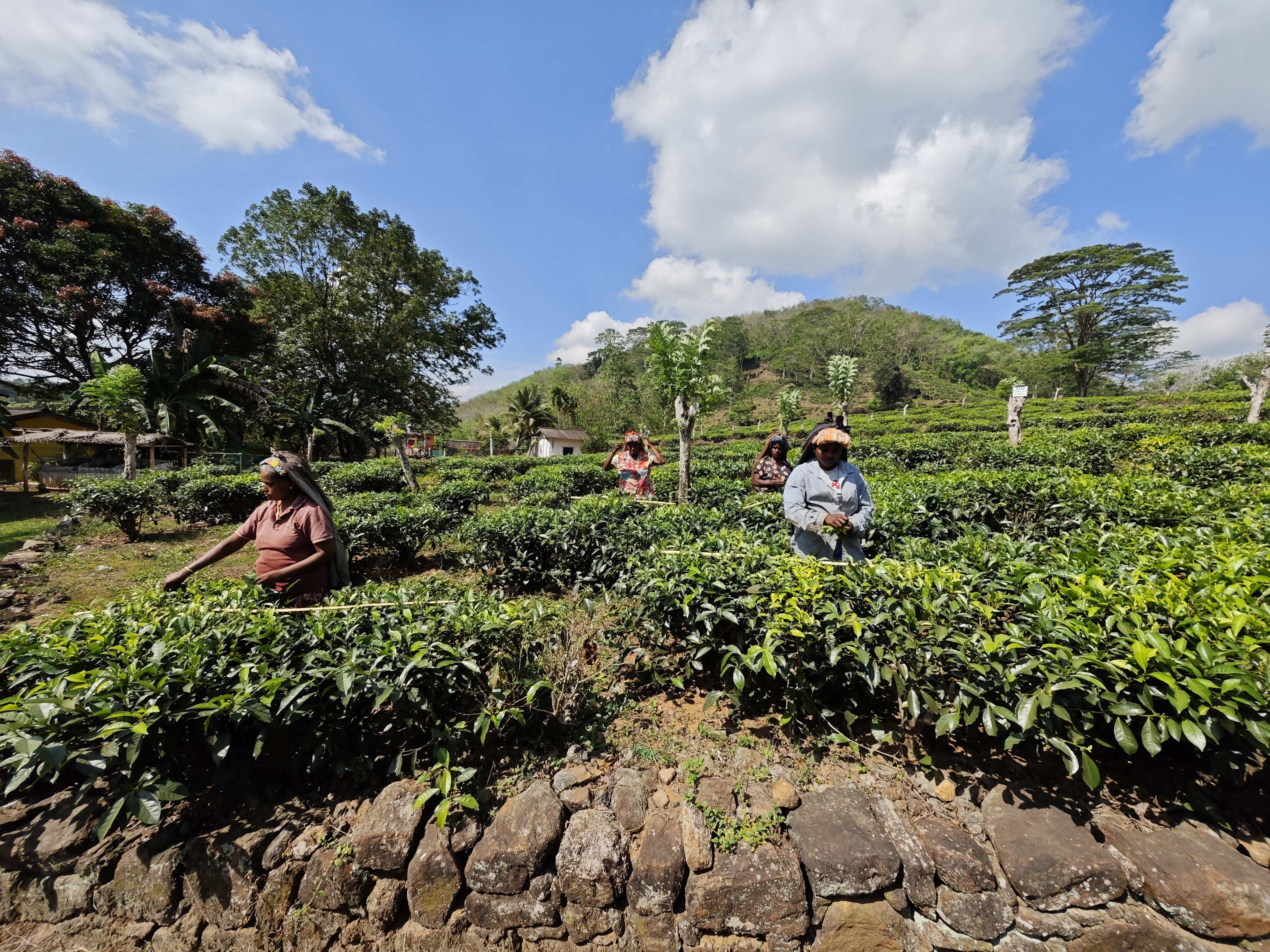
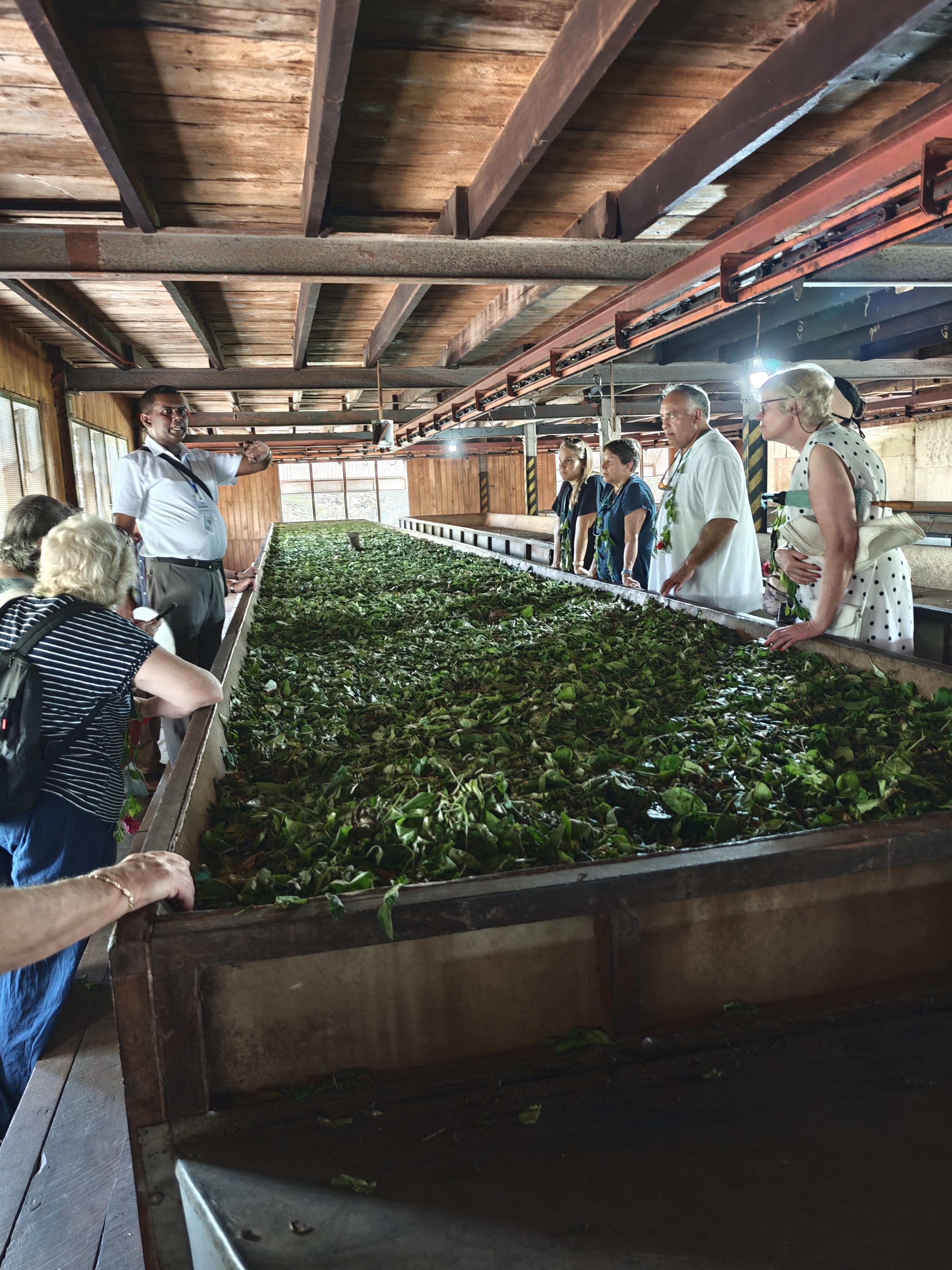
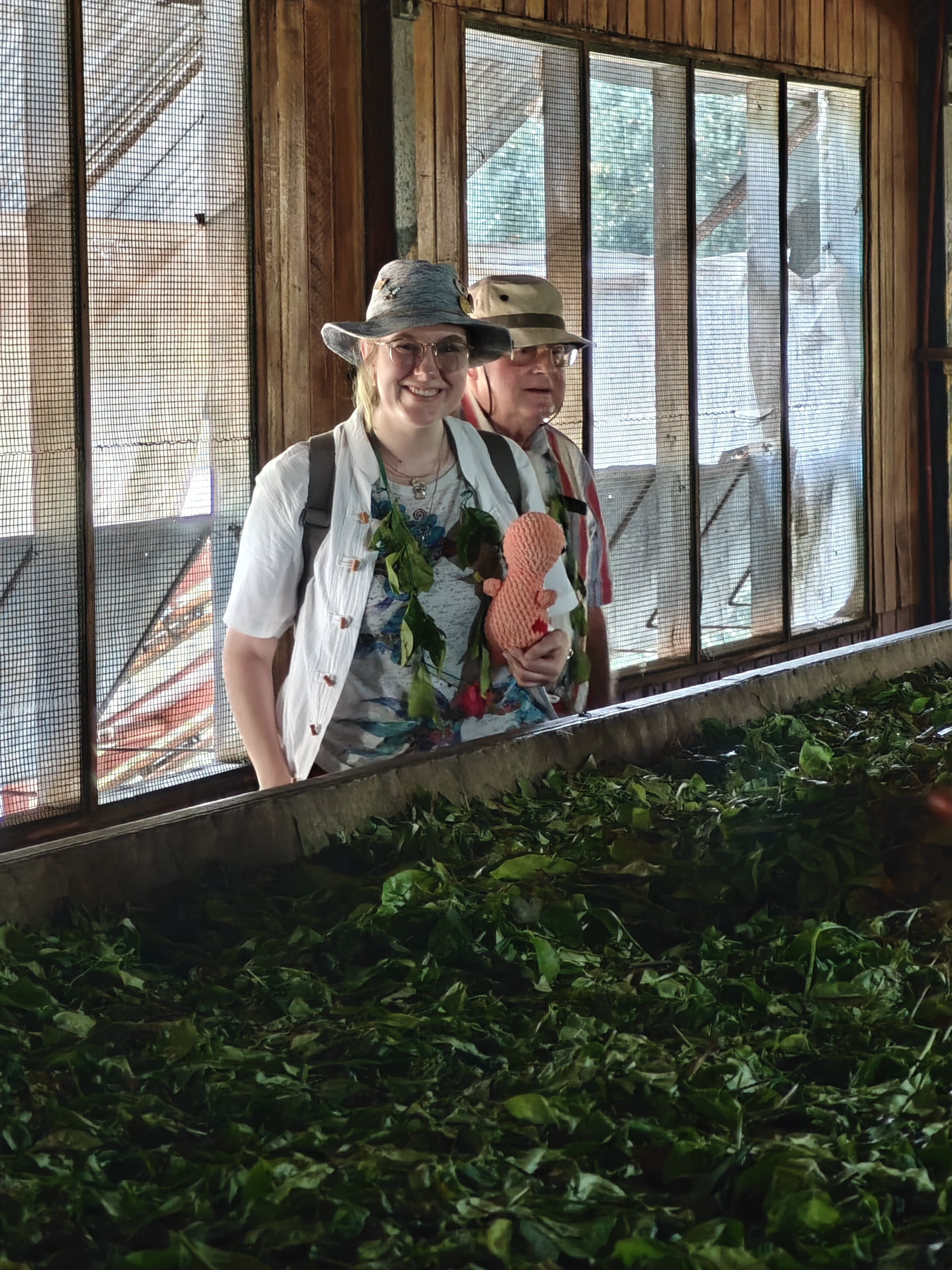
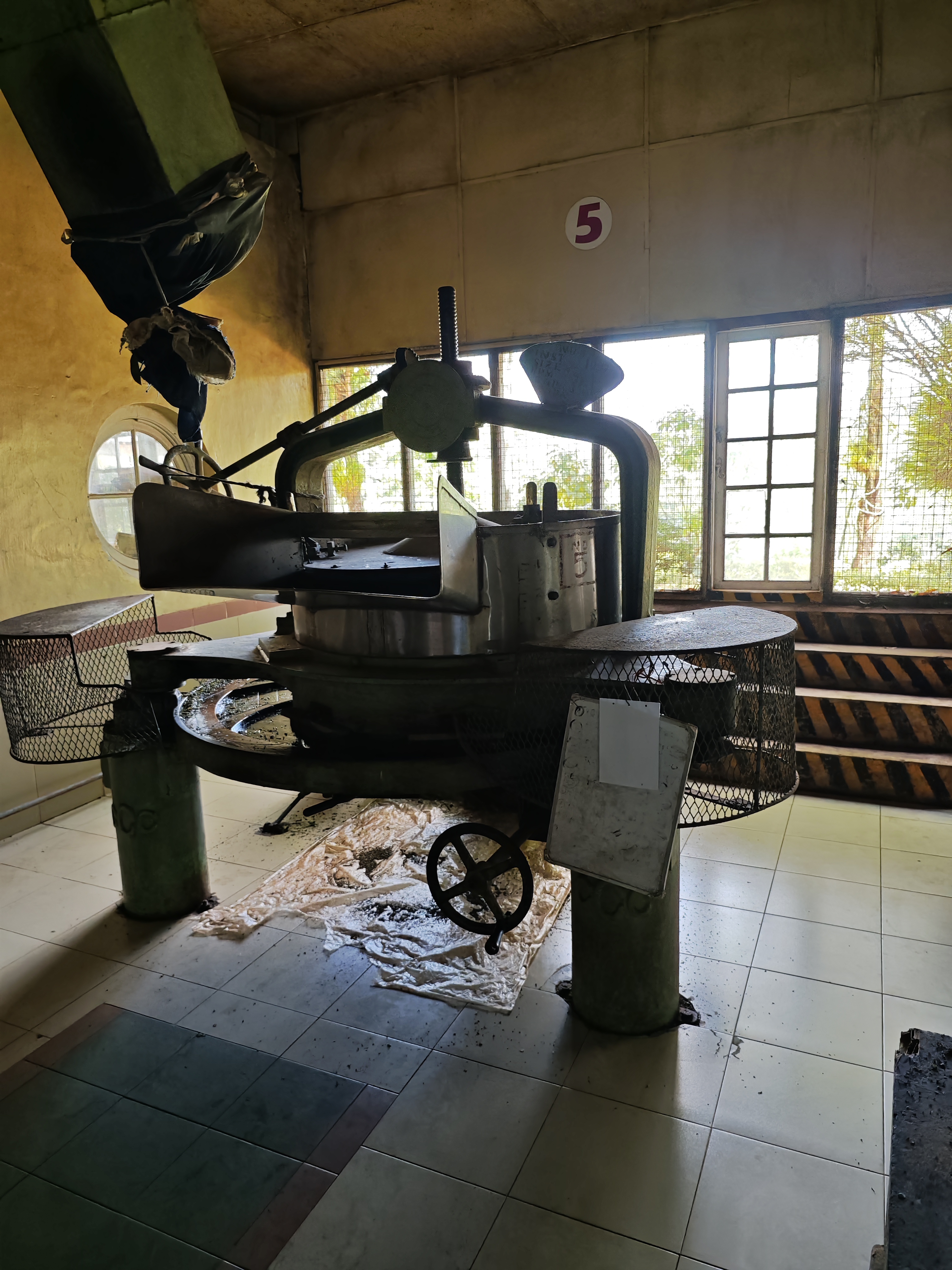
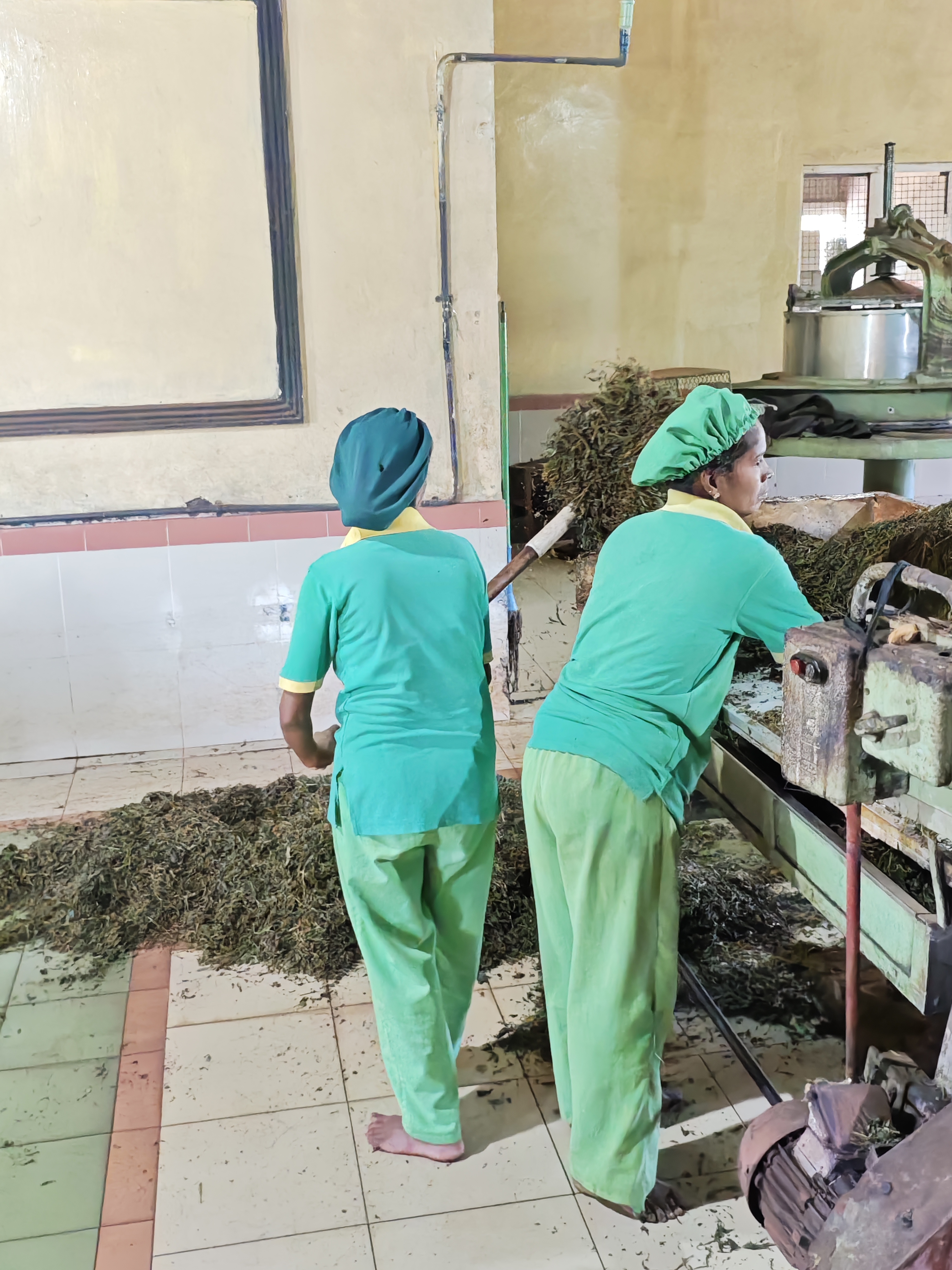
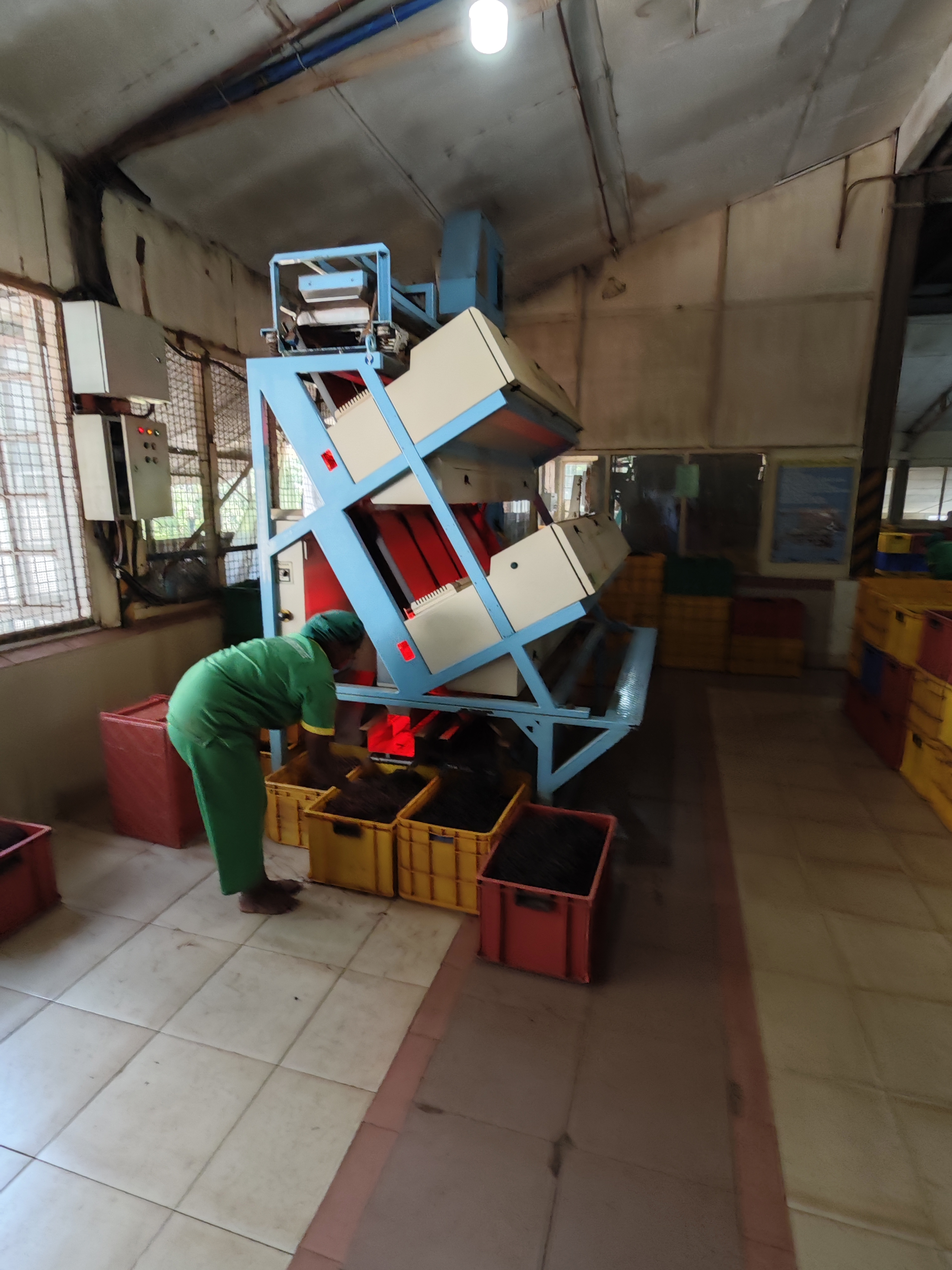
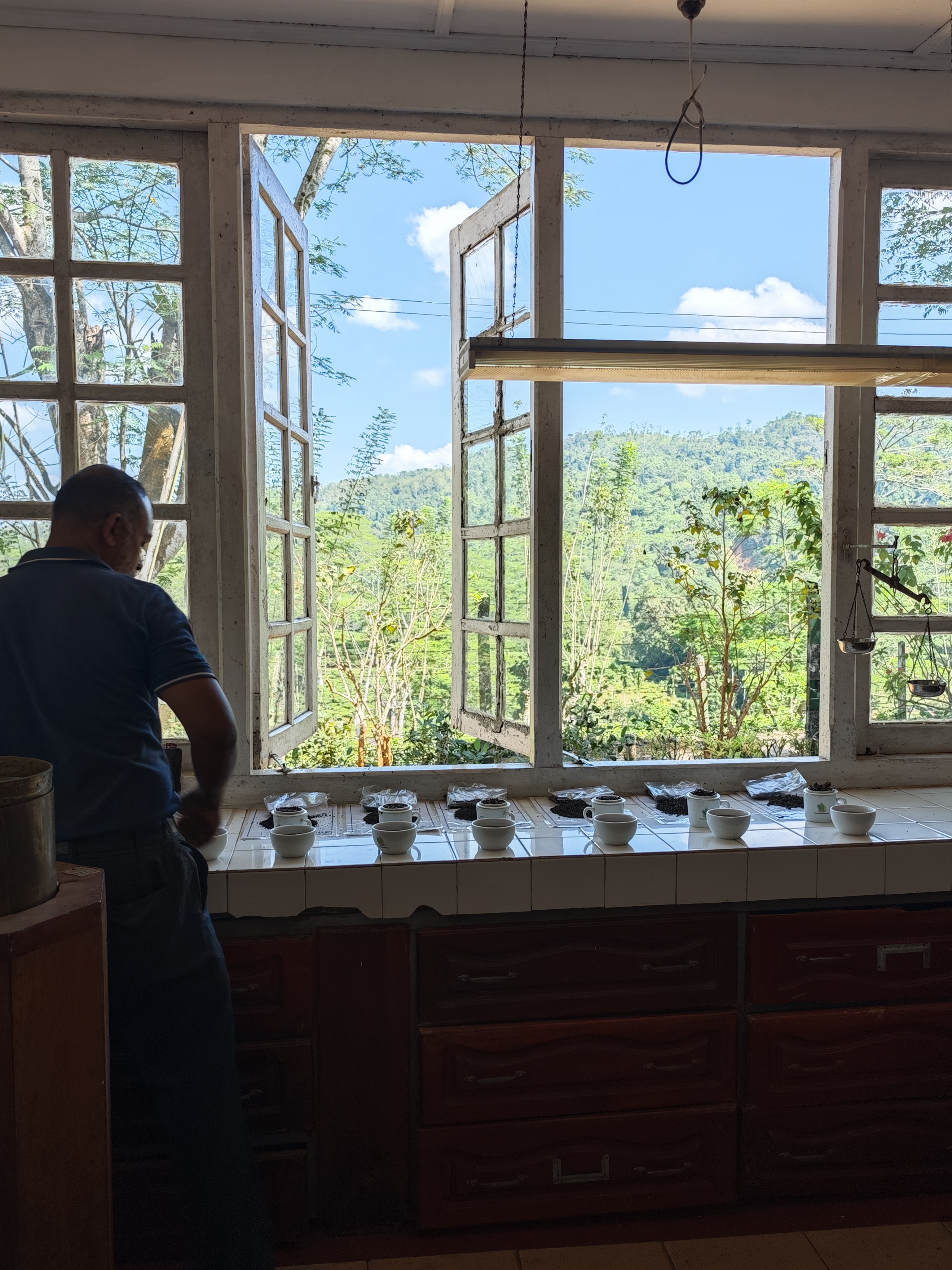
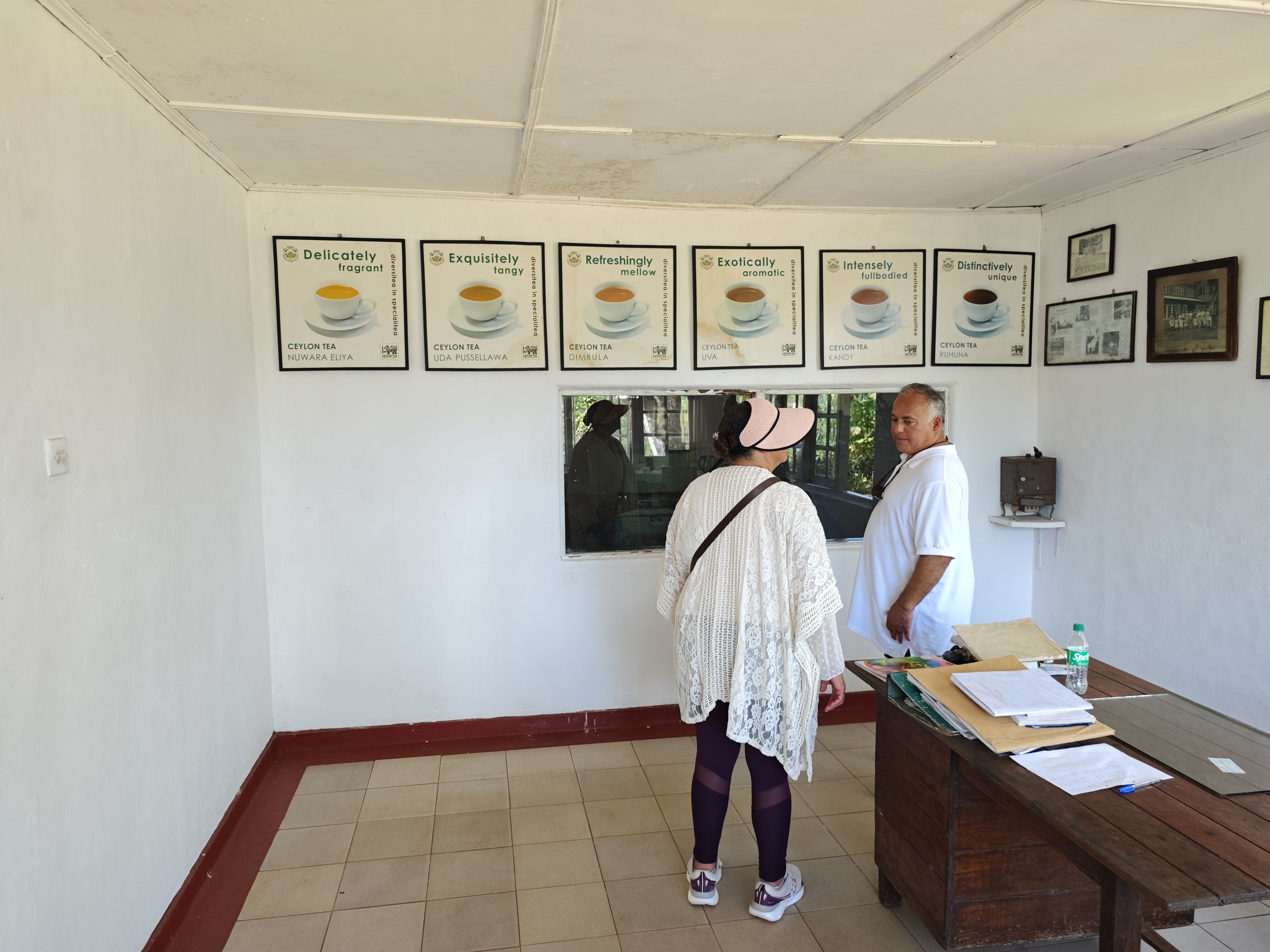
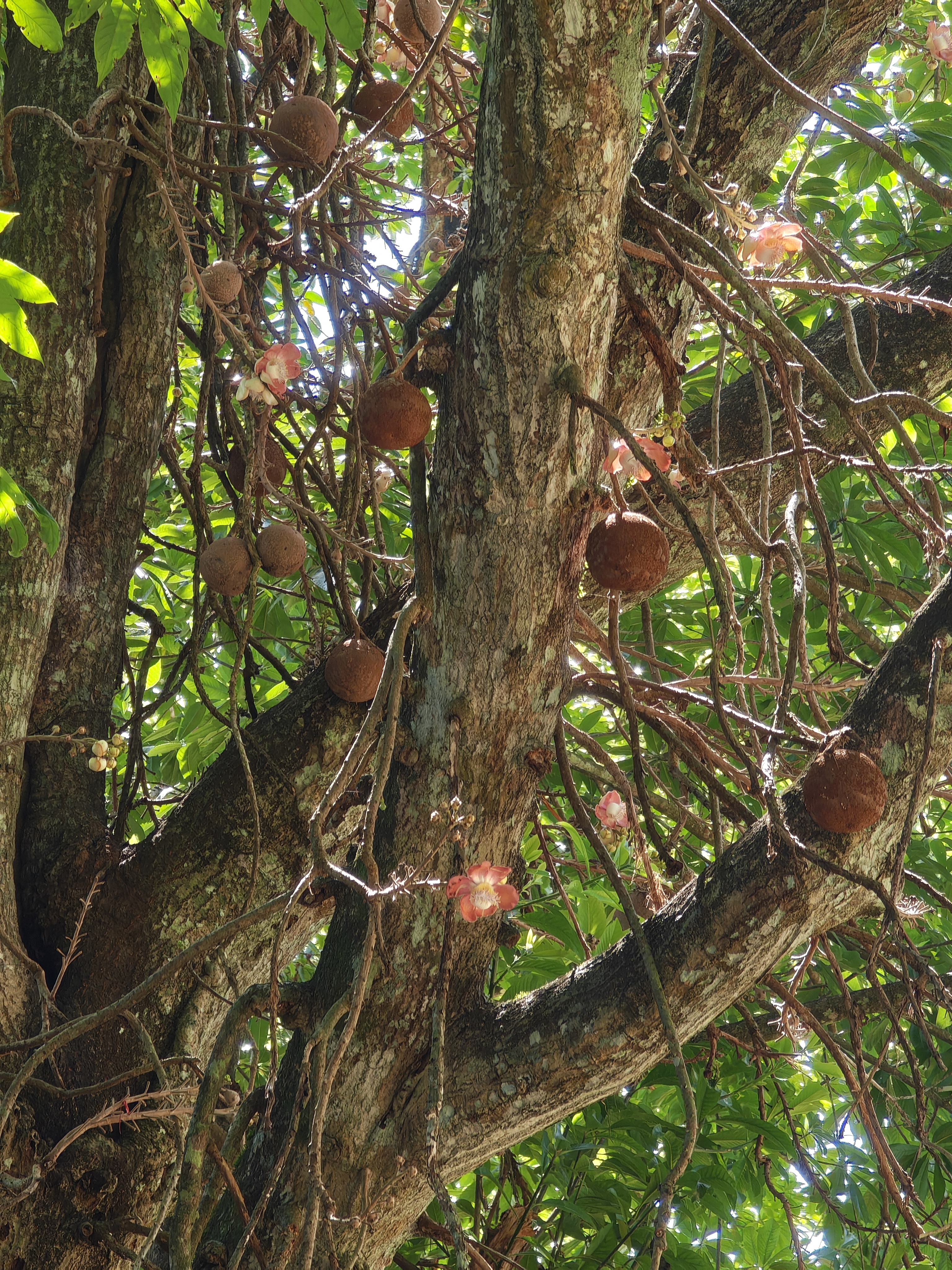
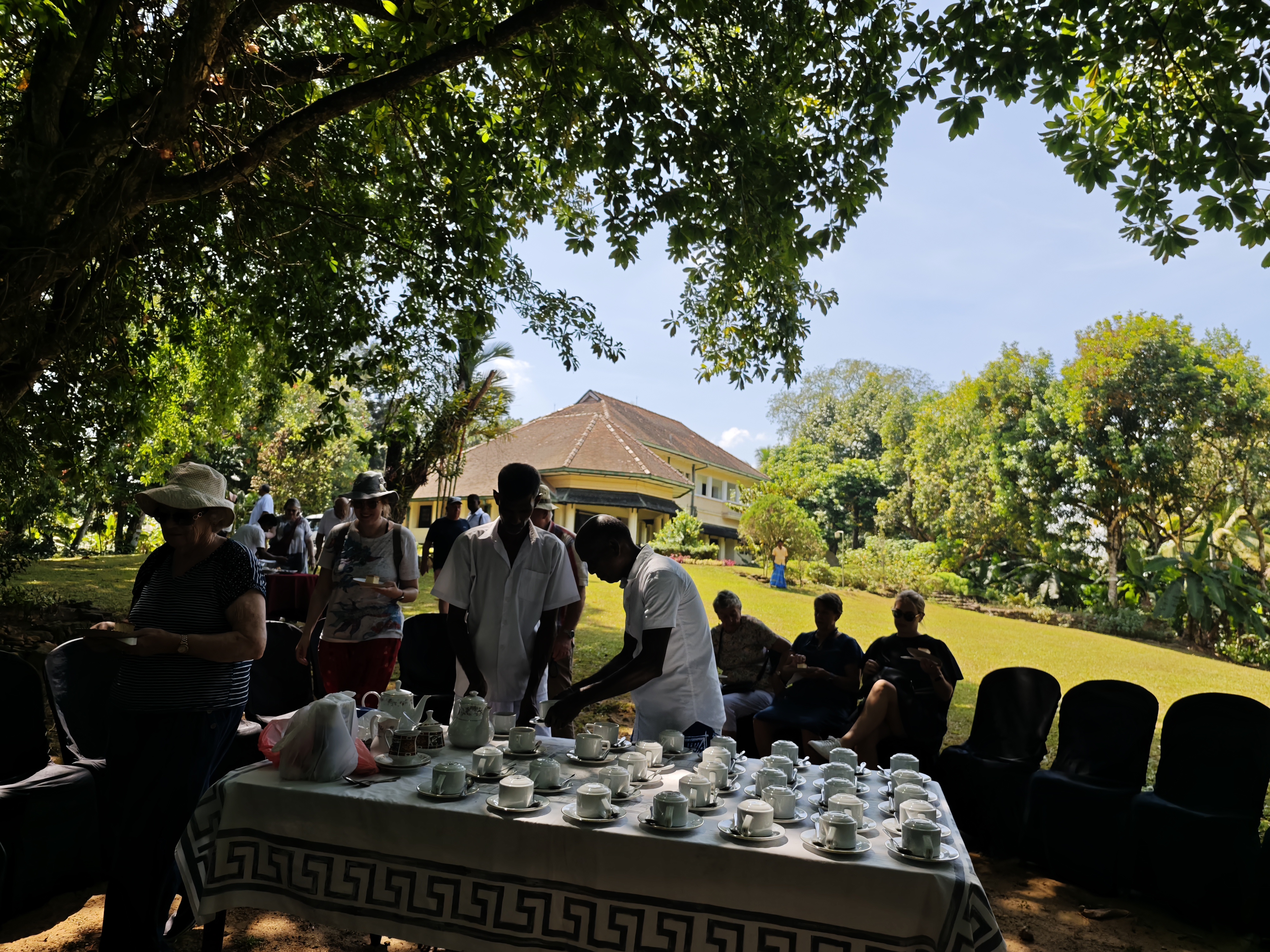
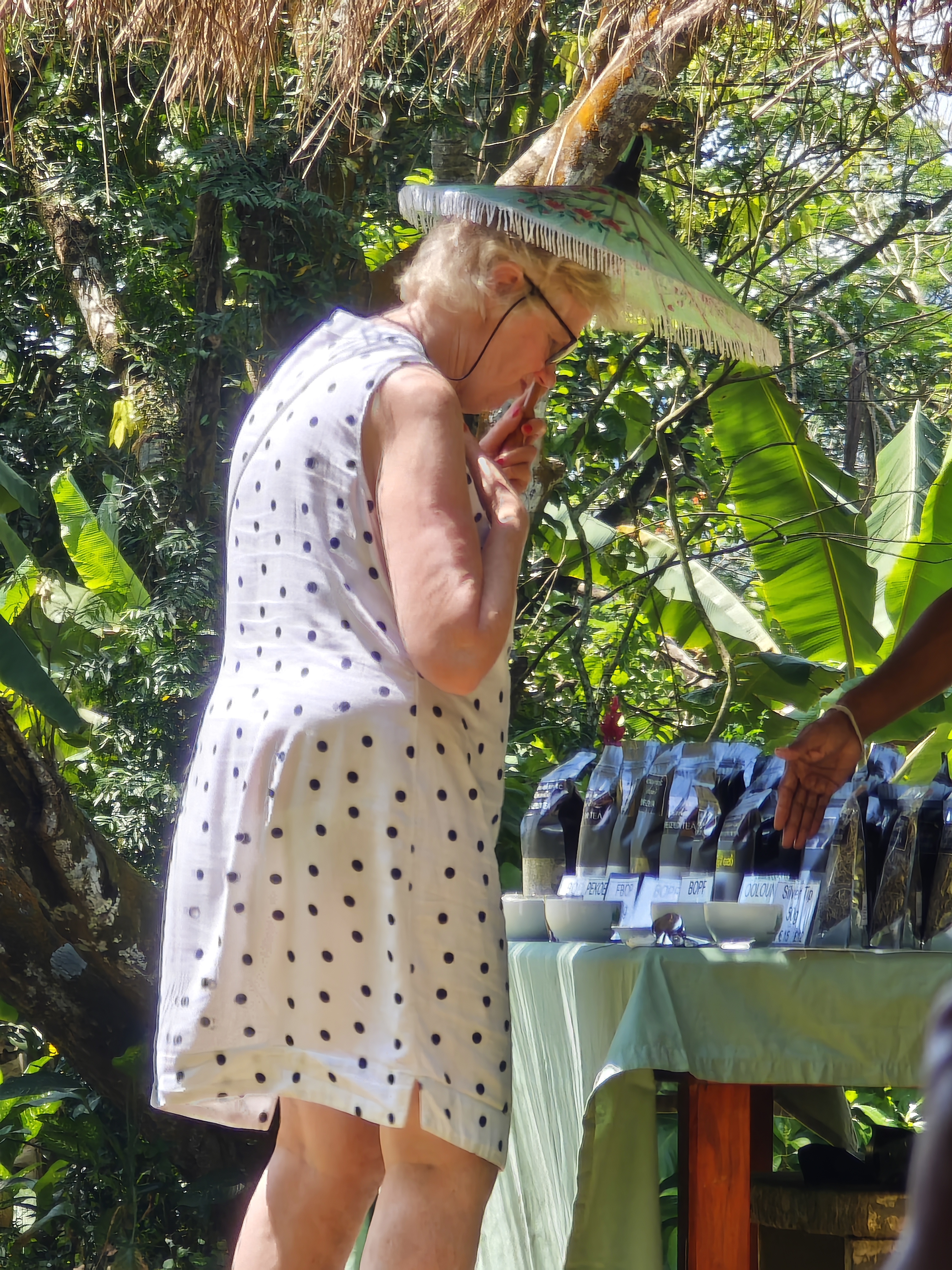
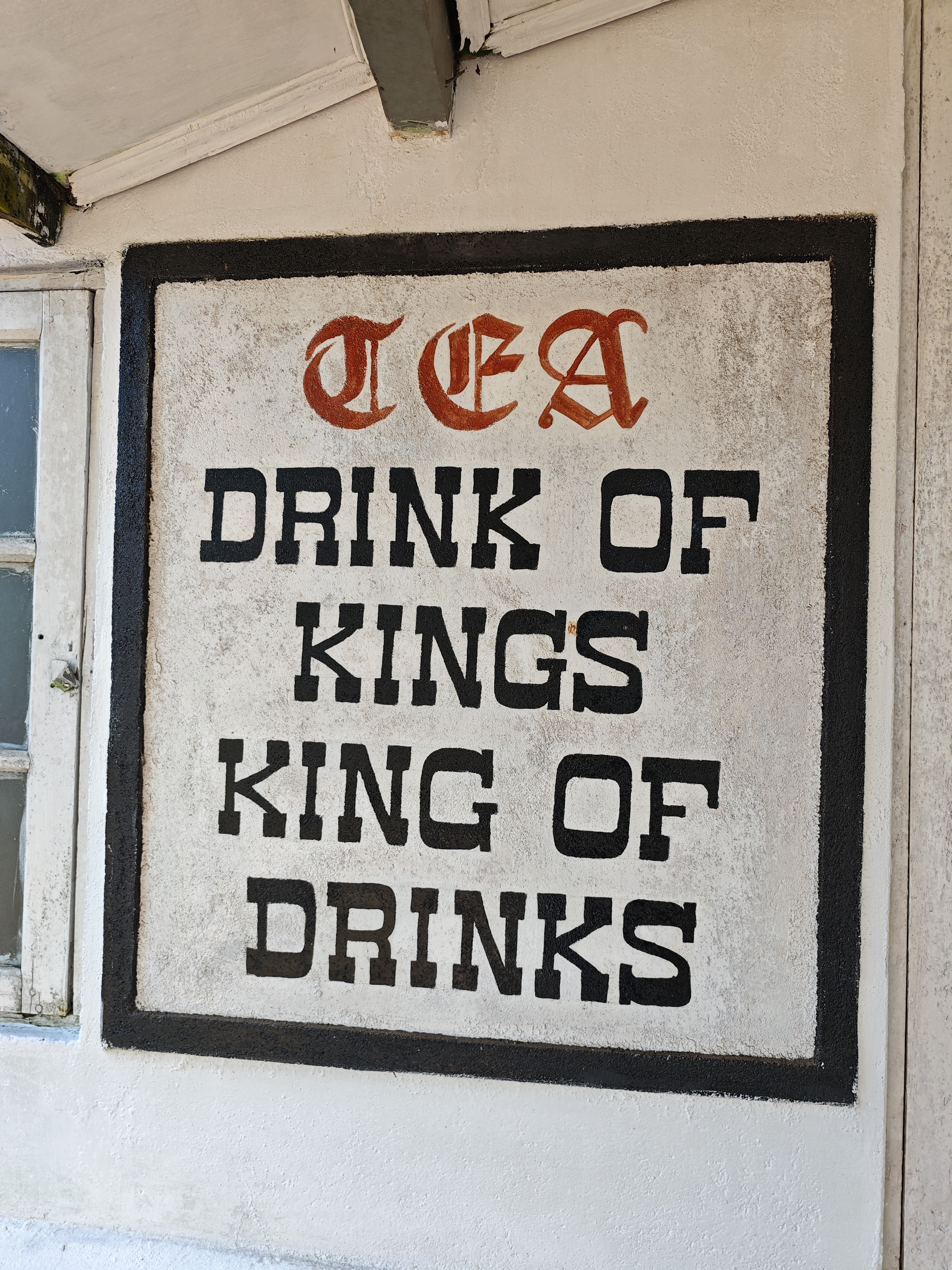
We toured the tea factory at the plantation and saw the various processes and the old machines. At the end, the had us do more of a tea sniffing instead of tasting at the factory. From that stop, we went to the lawn of the owners house and had little cakes and tea and could buy various teas if we wished. The tree we sat under was called a cannonball tree – for obvious reasons! None fell when we were there!



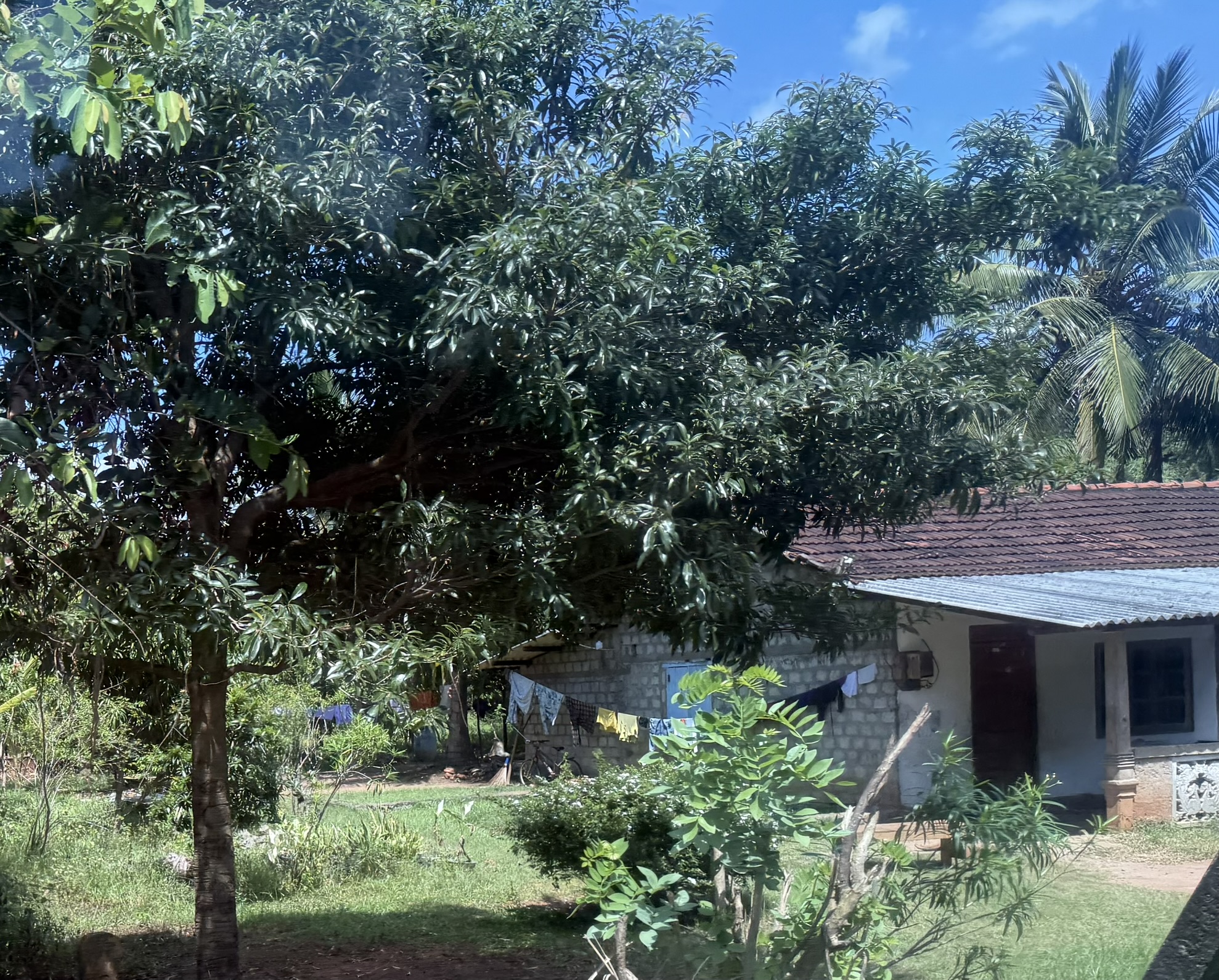
Again what is a trip riding around the various cities on Sri Lanka without noticing the laundry?

Next up…Male in the Maldives!
 THE TRAVELING MARTINI'S
Another great Chapter! Thank you
LikeLike
You guys look like you’re taking all this gre
LikeLike